
Purpose
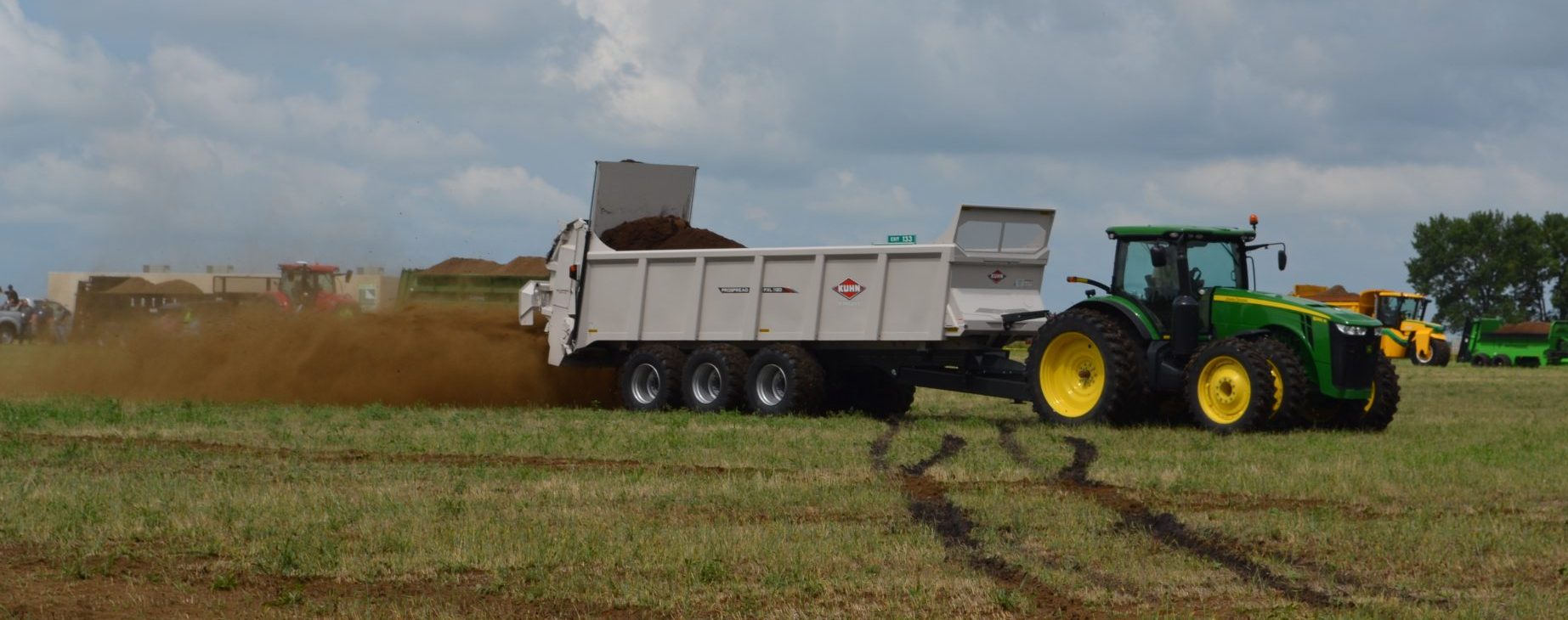
Soil health is crucial for sustainable crop production, which can differ from conventional soil nutrient considerations. Analyzing a multiyear, state-wide dataset can greatly improve the understanding of soil health status. In collaboration with the Missouri N340 cover crop cost-share program, this research compiled multiyear soil sample results from fields throughout Missouri and assessed the effects of manure application strategies on soil properties.
What Did We Do?
A total of 14,473 soil samples were collected from 2015 to 2022 across Missouri. The physicochemical properties of soil samples were analyzed by the University Soil Health Assessment Center (SHAC). To evaluate the impacts of manure application, results were first compared with fields that received inorganic fertilizer, followed by the interaction with soil texture. The effects of manure type and their application method were further studied in this research.
What Have We Learned?
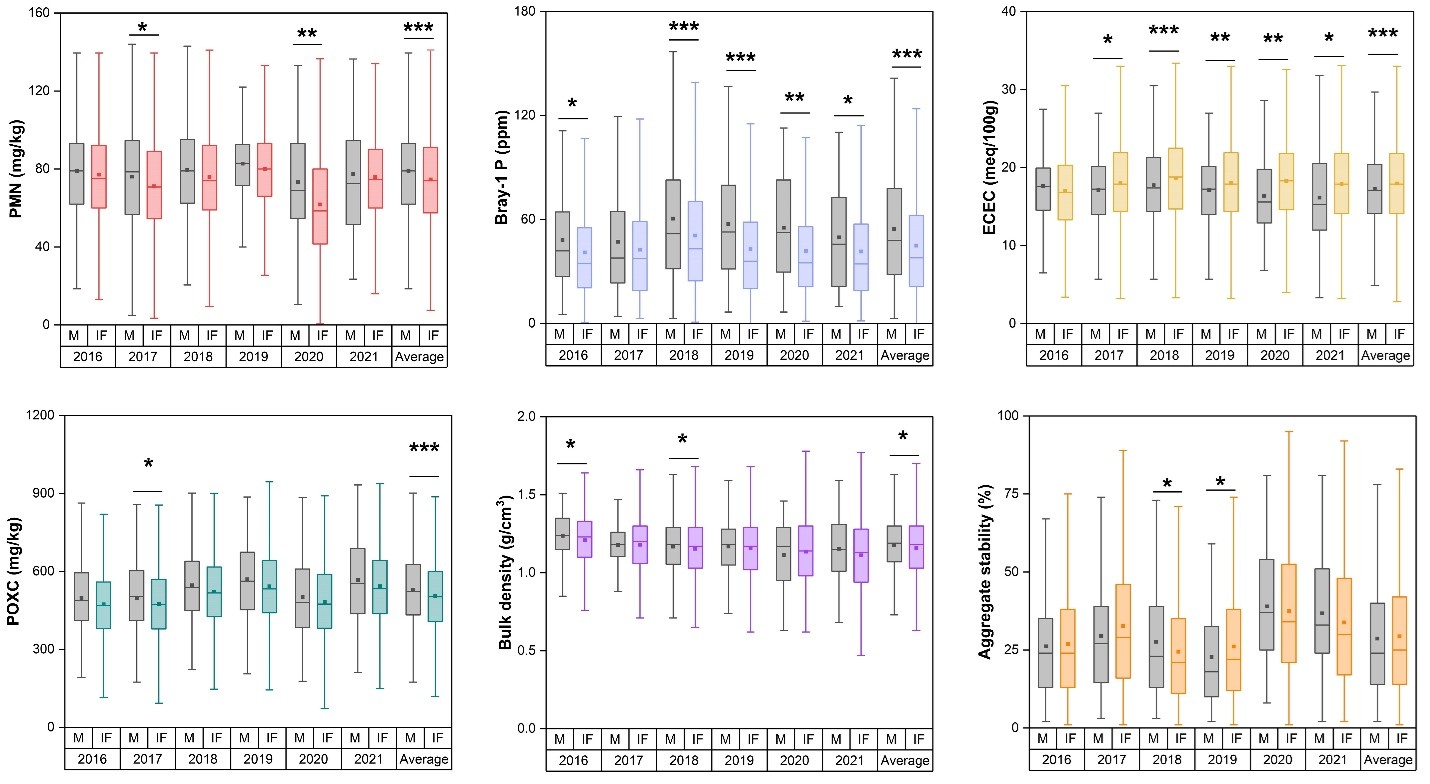
In most years, manure application increased potentially mineralizable nitrogen (PMN), Bray-1 phosphorus (P), permanganate-oxidizable carbon (POXC), and organic carbon, showing more significant differences in some years compared to inorganic fertilizer. There was no improvement in effective cation exchange capacity (ECEC), but aggregate stability was highly variable for manure application (Figure 1).
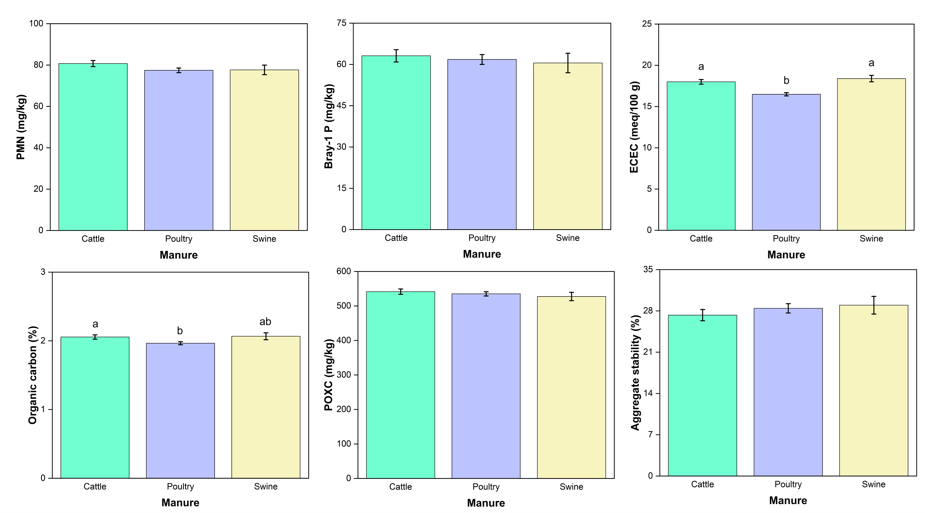
The interaction between manure and soil texture significantly (p<0.01) affected PMN, ECEC, organic carbon, and POXC, but no significant difference in aggregate stability was observed. There was also a significant effect of manure type on ECEC and organic carbon, as shown in Figure 2. The organic carbon of fields that received cattle and swine manure was significantly higher (p<0.05) than poultry manure-receiving fields, but there was no significant difference between cattle and swine manure.
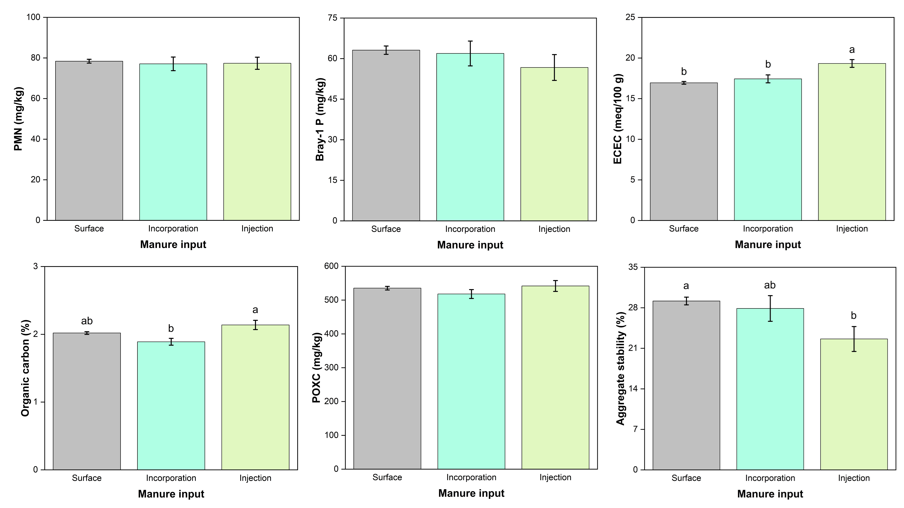
In Missouri, surface application is the most commonly used application method, followed by incorporation and injection. Figure 3 illustrates the effects of different manure application methods on soil properties. There was no significant difference in PMN and Bray-1 P across the application methods. However, the application method significantly affected ECEC and organic carbon, which were higher for manure injection. Surprisingly, the aggregate stability was the lowest for fields with manure injection.
Future Plans
Data from management practices reveals notable variations in manure types and application rates across the state. Additionally, many farms have adopted cover crop practices and mixed tillage methods, including no-till, reduced tillage, and conventional tillage. Given the diversity of agricultural practices in Missouri, data collection and analysis are ongoing, with a field experiment at a university farm currently underway to provide further insights and validation.
Authors
Presenting author
Manobendro Sarker, Graduate student, University of Missouri, Columbia
Corresponding author
Teng-Teeh Lim, Extension Professor, University of Missouri, Columbia, limt@missouri.edu
Additional authors
Morgan Davis, Assistant Professor, University of Missouri, Columbia
Donna Brandt, Lead Research Specialist, Soil Health Assessment Center, University of Missouri, Columbia
Timothy Reinbott, Director, Field Operations, Agricultural Experiment Station
University of Missouri, Columbia
Additional Information
Please email us at limt@missouri.edu (Teng-Teeh Lim) or ms59d@umsystem.edu (Manobendro Sarker).
Acknowledgements
We gratefully acknowledge the Missouri Department of Natural Resources, Soil and Water Conservation Program for funding the project. We also thank Moh Moh Thant Zin, Rana Das, and Ravi Mishra from our research group for their assistance with field operations.
The authors are solely responsible for the content of these proceedings. The technical information does not necessarily reflect the official position of the sponsoring agencies or institutions represented by planning committee members, and inclusion and distribution herein does not constitute an endorsement of views expressed by the same. Printed materials included herein are not refereed publications. Citations should appear as follows. EXAMPLE: Authors. 2025. Title of presentation. Waste to Worth. Boise, ID. April 7–11, 2025. URL of this page. Accessed on: today’s date.