Small to Mid-Sized Dairies: Making Compact Anaerobic Digestion Feasible

Why Consider Small or Medium Digester Projects?

Anaerobic digestion (AD) is an environmentally-friendly manure management process that can generate renewable energy and heat, mitigate odors, and create sustainable by-products such as bedding or fertilizer for dairies and farmers. However, due to economics, a majority of commercially available AD technologies have been implemented on large farming operations. Since the average herd size of dairies across the country is below 200 head of milking cows, there is a need for small-scale AD systems to serve this market.

eucolino allen farmsWhat did we do?

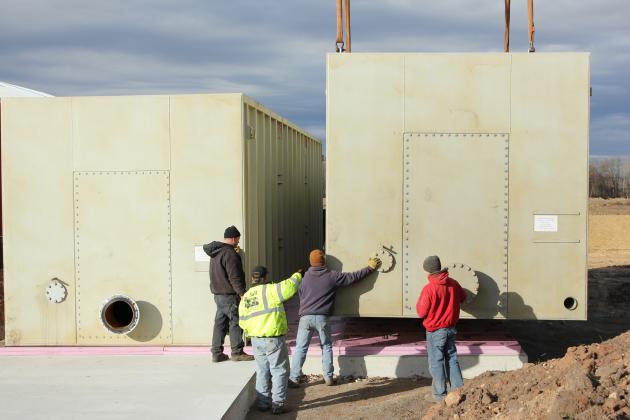
The University of Wisconsin-Oshkosh, in collaboration with BIOFerm™ Energy Systems, installed the EUCOlino—a small-scale, mixed, plug-flow digester—onto on a 136 milking head Wisconsin Dairy. The system is pre-manufactured, containerized and requires very limited on-site construction.   This includes grading, pouring a concrete pad for the containers and electrical services installation.

Start-up and commissioning were performed after the delivery of the 64 kWe combined heat and power (CHP). The input materials consist of bedded-pack dairy manure (corn or bean stover and straw), parlor wash water, and minor additional substrates such as lactose or fats, oils, and grease.

Solid materials are dumped via bucket tractor into a hopper feeder system that uses an auger to feed substrate into the anaerobic digestion tank. Additional parlor water is piped directly into the anaerobic digestion tank and mixed with the solids to make a feedstock of approximately 13% total solids. The solids are fed hourly, which is controlled by the PLC system.

The digester has a ~30-day retention time and the biogas produced is stored in a bag above the fermenters. Biogas produced is conditioned and combusted in a CHP mounted on a separate skid. Effluent from the system is pumped directly to an open pit lagoon for storage and subsequently land applied as fertilizer. The system produces approximately 25 – 33 m3/hour of biogas, with a raw biogas quality of 52-60% CH4 and less than 700 ppm H2S.
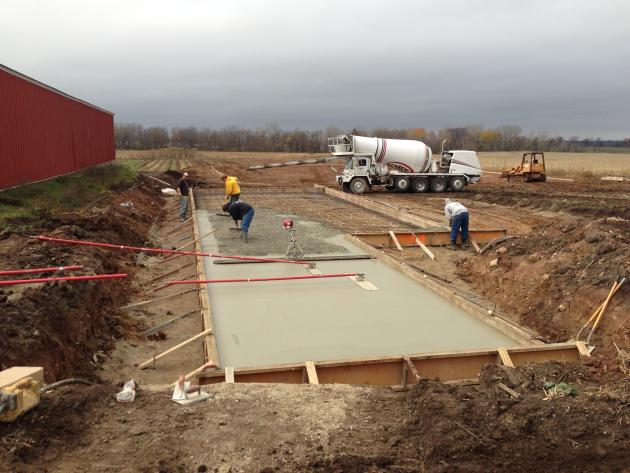
concrete pads for installation
installation
input

What have we learned?

This project has been an important step forward in developing future small-scale anaerobic digesters across the U.S.  Notably, our installation has given us insight into balancing system economics with the size of small-scale models; the energy output of the system must exceed pre-processing energy requirements and the digester must still be large enough for the designed residence time. Our experience has shown that, while reducing the size of a digester, these requirements remain essential for an installation to economically make sense.

Additionally, challenges involved in AD at the small-scale are related to pre-processing or feedstock conveyance. Once suitable consistence or size for conveyance, anaerobically digesting the organic fraction can be relatively easy. Inconsistency of incoming feedstocks is very detrimental to the system’s stability. Additionally, exterior feedstock storage and above ground piping can limit processing potential when severe cold weather settles in. While all of these are challenges that are easily overcome with engineering, they come at a cost and that can make or break the economics at this scale.

Future Plans

For the small-scale EUCOlino to be effective in the United States, it is key to establishing a U.S.- based manufacturing location. Pre-processing needs to be well-suited to the incoming feedstock. Post-digestion products need established off-takers, for electricity generation, bedding, fertilizer, etc.

Authors

Steven Sell, Manager Application Engineer, BIOFerm™ Energy Systems beaw@biofermenergy.com

Whitney Beadle, Marketing Communications, BIOFerm™ Energy Systems

Additional information

The following publications offer additional information on the Allen Farms digester:

Readers interested in this topic can also visit our website for more information on the Allen Farms digester and other BIOFerm projects. We can also be found on Facebook, Twitter, and LinkedIn.

The authors are solely responsible for the content of these proceedings. The technical information does not necessarily reflect the official position of the sponsoring agencies or institutions represented by planning committee members, and inclusion and distribution herein does not constitute an endorsement of views expressed by the same. Printed materials included herein are not refereed publications. Citations should appear as follows. EXAMPLE: Authors. 2015. Title of presentation. Waste to Worth: Spreading Science and Solutions. Seattle, WA. March 31-April 3, 2015. URL of this page. Accessed on: today’s date.

The Great Biogas Gusher


Why Pursue Bio-Energy?

The great Texas Oil Boom, also referred to as the Gusher Age, provided for dramatic economic growth in the US in the early 20th century, and ushered in rapid development and industrial growth. Although we typically think of the Middle East when we consider the impacts of oil discoveries on local economies (reference Dubai), at the time of its discovery, the oil finds in Texas were unprecedented; and the US quickly became the world’s top producer of petroleum.

As we all know, the rest of the world came to the party, and the US was soon falling in the ranks of top petroleum producers. Though the US oil reserves are vast, increasing concerns over the environmental impacts of finding, mining, extracting, refining, and consuming fossil fuels has incentivized the development of renewable energy resources, such as solar, wind, hydro, and bioenergy. Of these forms of renewable energy, bioenergy holds the promise for replacement of fossil fuels for transportation use.

a biogas collection systemWhat did we do?

Bioenergy may be described as fuels derived from organic materials, such as agricultural wastes, through processes like anaerobic digestion. The US has even more organic resources above the Earth’s surface than are identified in the petroleum and natural gas deposits yet to be exploited, yet the development of agricultural bioenergy systems seems to be progressing at a snail’s pace, as compare to the great Oil Boom. There is enormous potential in producing biogas from agricultural, industrial, municipal solid waste, sewage and animal byproducts which can be used to fuel vehicles. The EPA estimates that 8,200 US dairy and swine operation could support biogas recovery systems, as well as some poultry operations. Biogas can be collected from landfills and used to power natural gas vehicles or to produce energy. Wastewater treatment plants are estimated by the EPA to have the potential of about 1 cubic foot of digester gas per 100 gallons of wastewater, this energy could potentially meet 12% of the US electricity demand. Industrial, commercial and institutional facilities provide another source of biogas, in particular supermarkets, restaurants, and educational facilities with food spoilage.

What have we learned?

This presentation compares and contrasts the historical development of fossil fuel reserves with the potential for development of bioenergy from agricultural sources, such as animal wastes and crop residues. The US energy potential from these sources is grossly quantified, and current development inhibitions are identified and discussed. Opportunities for gathering biogas and bioenergy from multiple regional sources, similar to the processes used in the Texas oil fields, are discussed. The presentation offers insight into overcoming these obstacles, and how the US may once again rise to the top of the energy development rankings through efficient use and stewardship of our organic resources.

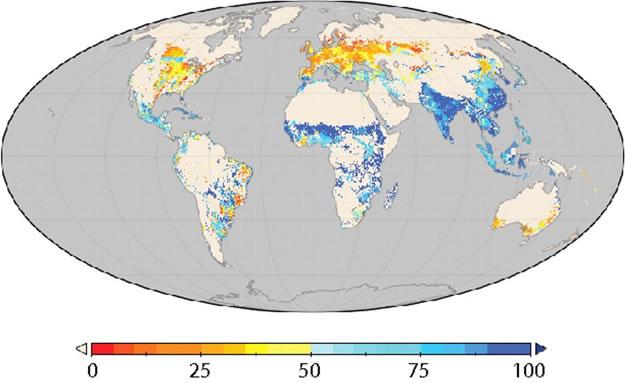
Percentage of waste water treatment plants that send solids to anaerobic digestion broken out by state

Future Plans

Biogas and bioenergy resources present an enormous opportunity for renewable energy development, and progression toward energy independence for the U.S. The U.S. currently has more than 2,000 active biogas harvesting sites, but claims more than 11,000 additional sites can be developed in the U.S., with the potential to power more than 3 million American homes if used to fuel electricity generating power plants. The USDA, EPA and DOE recently created a US Biogas Opportunities Roadmap which is off to a good start, which hopefully will initiate biogas programs, and foster investment in biogas systems to improve the market vitality in each state. To move the process forward, policy-makers, investors and the public need to have improved collaboration and communication on the state level. We need to develop a clear plan and strategy for developing these valuable biogas resources to promote environmental sustainability and economic growth of our b ioenergy sector.

Author

Gus Simmons, P.E., Director of Bioenergy, Cavanaugh & Associates, P.A. gus.simmons@cavanaughsolutions.com

Additional Information           

http://www.cavanaughsolutions.com 1-877-557-8924

http://www.epa.gov/climatechange/Downloads/Biogas-Roadmap.pdf

Acknowledgements      

USDA/DOE/EPA US Bioenergy Roadmap

The authors are solely responsible for the content of these proceedings. The technical information does not necessarily reflect the official position of the sponsoring agencies or institutions represented by planning committee members, and inclusion and distribution herein does not constitute an endorsement of views expressed by the same. Printed materials included herein are not refereed publications. Citations should appear as follows. EXAMPLE: Authors. 2015. Title of presentation. Waste to Worth: Spreading Science and Solutions. Seattle, WA. March 31-April 3, 2015. URL of this page. Accessed on: today’s date.

Money to Burn: How to Capitalize on BioCNG at Your Wastewater Plant

Purpose  

Across the globe, units of government are struggling with the balance of deriving clean energy with economics and environmental protection. This struggle has led to the development of many renewable energy innovations and inventions, such as rapid improvement in the cost and efficiencies of photovoltaic solar (PV) systems and the development of large off-shore wind turbine systems. The challenges imposed on energy utilities associated with managing grid variability leads emphasis on the development of ‘baseload’ alternative energy systems, like bioenergy systems. We should recognize, however, that we have a bounty of organic wastes generated by society each day, and systems that are able to recycle these organic resources into energy are capable of more consistent energy generation, as compared to the intermittency of solar and wind. In this regard, such bioenergy systems hold promise for balancing our energy needs.

Waste to worth mtb figure 1.What did we do?  

Bioenergy systems based on the utilization of organic wastes, such as municipal wastes, food wastes, and crop residues provide the additional benefits of supporting improved pollution prevention and waste treatment systems.

Of the organic wastes available for us in bioenergy systems, one may be directly correlated to the increasing energy needs and clean energy desires of the global population – waste organics associated with municipal wastewater treatment. Municipal wastewater treatment strategies vary by geography, climate, and level of development across our globe. However, in all cases, opportunities exist to utilize these waste as feedstocks for the creation of biogas that may be used to fuel electricity generators, farm implements, and the transportation needs of our population.

****the above writing doesn’t explain the work that was conducted as requested

What have we learned?  

Many municipal and industrial wastewater treatment plants (WWTP) across the U.S. already utilize anaerobic digestion as a primary treatment process to reduce sludge or reduce organic loading, expressed as Biochemical Oxygen Demand (BOD), to subsequent aerobic treatment processes. However, most of these facilities presently flare the biogas that is produced from the digestion process. Most often, these managers report the following reason for lack of implementation of energy harvesting. WHAT REASON???

We continue to seek clean, renewable energy sources across the globe to reduce our dependency on fossil fuels for improved air quality and economic stability. While solar, wind, and other renewable energy sources play a vital role in a diversified energy strategy, the development of bioenergy systems that continuously operate in ‘base load’ fashion is very important for grid stability. Additionally, unlike solar and wind, bioenergy systems that convert organic wastes into fuels have opportunities to positively impact transportation fuel needs. The development of systems that harvest biogas from anaerobic digesters employed at municipal wastewater plants can serve to fill a portion of this need, and create improved revenues for the wastewater treatment utility. Often, anaerobic digesters serving municipal wastewater treatment plants are operating well under their optimum capacity, creating opportunities for municipalities to engage in partnerships with private sector waste generators, such as food and beverage processors, restaurants, and farmers.

Many commercial fleets are converting to natural gas fuel to realize the cost savings and participate in programs that reward cleaner air quality through reduced emissions. Each commercial waste truck that is converted to natural gas from diesel has a comparable impact to removing 325 cars from the road. Currently the costs of natural gas-fueled vehicles are slightly higher (10-15%) than conventionally-fueled vehicles. However, as the costs of fossil fuels rise, and more CNG vehicles are manufactured, the costs are likely to become very similar.


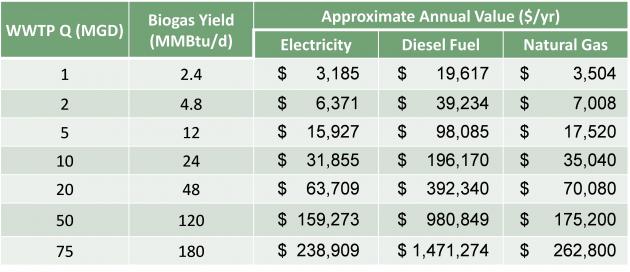
****An explanation of the table below would be useful.. You should use this document to outline how you conducted the study and what you found, most of the information contained is introductory in nature.

Table 1.

Table 2.Future Plans    

Unlike fossil fuels, which are finite in quantity, bioenergy and biogas systems convert the organic wastes that are generated each day into fuel; often in only a few days’ time. In this regard, bioenergy systems offer a truly infinite resource for renewable energy, while providing the added benefit of pollution reduction and additional revenues to support existing wastewater treatment infrastructure systems.

Author

Gus Simmons, Director of Bioenergy, Cavanaugh & Associates, P.A. gus.simmons@cavanaughsolutions.com

Additional information

www.cavanaughsolutions.com

1-877-557-8924

Acknowledgements      

Clean Water Needs Survey, 2008

Loyd Ray Farms, Yadkinville, NC

Duke University Carbon Offsets Initiative

The authors are solely responsible for the content of these proceedings. The technical information does not necessarily reflect the official position of the sponsoring agencies or institutions represented by planning committee members, and inclusion and distribution herein does not constitute an endorsement of views expressed by the same. Printed materials included herein are not refereed publications. Citations should appear as follows. EXAMPLE: Authors. 2015. Title of presentation. Waste to Worth: Spreading Science and Solutions. Seattle, WA. March 31-April 3, 2015. URL of this page. Accessed on: today’s date.


Farms of the Future: Seeking Agricultural Energy Independence


Why Look to Agriculture and Bioenergy?

As the world population continues to grow at an exponential rate, the ability to nourish this planet’s inhabitants with clean water and safe, healthy food are of paramount importance. This paper describes some of the considerations for and impacts of the demand for the production of food in developed and developing countries on energy resources, and ways in which advancements in on-farm, bioenergy production systems may help farms achieve the incredible production requirements of the next thirty years. Our challenge is to expand agriculture’s output to accommodate the increasing population, without hindering its environmental footprint.

What did we do?  

Today only roughly two percent (2%) of the population produces the food for our plant. This includes all the fruits, vegetables, meats and dairy products that the world’s population of over 7 billion people acquires and eats from markets, grocers, and restaurants. Our global population is projected to exceed nine billion people by the year 2050, all of who will need to be supplied with food derived from the farms of the future. Through technological advances, and improvements in motorized equipment, each farmer is now able to feed roughly 150 people, compared to only 19 people in the 1940’s (Prax, 2010). In the year 2050, a farmer will be required to feed at least 200 people, and based on the rate of reduction in both the number of farms and the amount of land under agricultural production, that number may reach 300 people. But what will these ‘Farms of the Future’ be like? The number of actively producing farms in the developed world has suffered a slow, steady decline over the past two decades, while the global demand for fresh foods, protein and feedstocks have steadily increased. How will we feed a population of more than nine billion with fewer and fewer farms, and how will we feed the livestock needed to feed the increased population?

Figure 1.

What have we learned?  

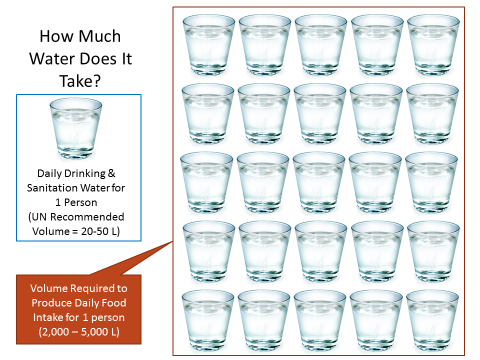
The growth in our global population also means a growth in the need for clean water, which is a somewhat fixed volume on planet Earth. More importantly, though, the growth in the demand for clean water for drinking purposes also places a greater constraint on the amount of fresh water available for irrigation of crops and to provide for the drinking water required of livestock. The increase in our population means much greater demands for energy – for everything from transportation, lighting, and communications devices to water treatment, agricultural production, and food processing. The culmination of these increasing demands on our planets finite resources has been dubbed by many as the “Food-Water-Energy Nexus.”

Future Plans  

The interdependency of agriculture, water, and energy has become commonly referred to as “the Nexus.” This term does not indicate a crossroads, where a pathway to agricultural production is independent of impacts on water supply and energy availability. Instead, it denotes a relationship of give and take: the decisions we make to utilize, exploit, or economize one of these critical elements of human existence are likely to have broad-reaching impacts on the other two.

Figure 2.The realization of these interdependencies, and more importantly, the fragility of the balance of satisfying these needs must lead us to proactively invest in agricultural innovations, as much as we have with water and energy. The needs for energy innovations have been wildly popularized in society, such as may be seen through promulgation of solar panels the world-over. Similarly, water sustainability innovations, such as reclaiming water from wastes, water conservation devices, and even desalinization. However, the drive for innovations in maximizing the productivity of healthy foods through sustainable agricultural practices seems, by many, silent in comparison.
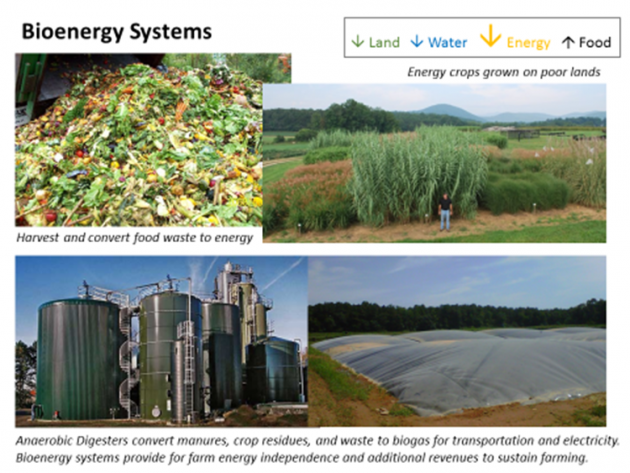
There is no doubt that the ‘Farms of the Future’ must be able to be self-sustaining; but what does that mean? Will they be able to take the manures from livestock, swine and poultry, convert them to biogas to run the machinery serving their farms, and also provide the nutrient-rich fertilizers for their crops, and bedding for their animals? Will they be able to return nutrients, water, and carbon to the land in which the food is produced in such a manner that none is wasted (meaning the only export from the farms is the food products that are to be consumed, rather than in the form of air emissions, water waste, and exported solid wastes)? What alternate sources of revenue may be developed to sustain small, locally sourced farms?

Demand Placed on Lands

This presentation will discuss how farms of the future can prepare to deal with issues of climate change and greenhouse gas reduction and what is needed in agriculture, water conservation, and stewardship to prepare our world for the additional people inhabiting the Earth in 2050.

Figure 3.

Author         

Gus Simmons, P.E., Director of Bioenergy, Cavanaugh & Associates, P.A. gus.simmons@cavanaughsolutions.com

Additional information  

www.cavanaughsolutions.com

Gus Simmons, P.E. 1-877-557-8924

Acknowledgements      

Sources:

1. Monfreda, C., N. Ramankutty, and J. A. Foley (In Press), Farming the Planet. 2: The Geographic Distribution of Crop Areas, Yields, Physiological Types, and NPP in the Year 2000, Global Biogeochemical Cycles, doi:10.1029/2007GB002947.

The authors are solely responsible for the content of these proceedings. The technical information does not necessarily reflect the official position of the sponsoring agencies or institutions represented by planning committee members, and inclusion and distribution herein does not constitute an endorsement of views expressed by the same. Printed materials included herein are not refereed publications. Citations should appear as follows. EXAMPLE: Authors. 2015. Title of presentation. Waste to Worth: Spreading Science and Solutions. Seattle, WA. March 31-April 3, 2015. URL of this page. Accessed on: today’s date.


University and Anaerobic Digestion Industry Partnerships – Laboratory Testing

The anaerobic digestion (AD) industry often is in need of laboratory testing to assist them with issues related to project development, digester performance and operation, and co-digestion incorporation. This presentation will highlight laboratory procedures that can be carried out through a University partnership, including biochemical methane productivity (BMP), specific methane activity assays (SMA), anaerobic toxicity assays (ATA), solids, nutrient and elemental proximate analysis for inputs, outputs and co-products, as well as a host of other activities. The presentation will illustrate the lessons that can be learned from the results of these tests, using real-life examples of testing already completed for industry partners.

Why Provide Guidance on Laboratory Testing for Anaerobic Digestion?

Laboratory testing allows characterization of anaerobic digestion (AD) inputs, outputs, and process stability. Testing can be carried out within AD industry laboratories, and they can also be carried out through partnerships with active AD research laboratories at academic institutions. The purpose of this project was to provide a document that summarizes common laboratory procedures that are used to evaluate AD influents, effluents, and process stability and to illustrate real-life examples of laboratory test results.

What did we do? 

The overview of common laboratory procedures was written based on the need to introduce third-party AD developers and government agencies to evaluating AD outputs and process stability. The authors are practiced at performing AD laboratory tests and have expertise and valuable information concerning these types of evaluations. Following a description of each test, we included the purpose of the test and an example of how the test results can be interpreted.

What have we learned? 

Laboratory testing of AD samples is performed to determine the concentration of certain constituents such as organic carbon, volatile fatty acids, ammonia-N, organic-N, phosphorus, and methane. Contaminants can be tested for such as fecal coliform indicator pathogens, pesticides, and pharmaceuticals. Understanding the concentration of specific constituents enables informed decisions to be made about appropriate effluent management.

Biochemical methane potential (BMP) and specific methanogenic activity (SMA) tests are used to estimate the biogas and methane that can be produced from an organic waste or wastewater during AD. These tests are often used by industry during the design phase to predict total biogas output, allowing for correct sizing of engines and estimation of potential revenue.

Anaerobic toxicity assays (ATAs) test the effect of different materials on biogas production. Unknown inhibitors may reside within new feedstock materials which can lead to an unanticipated reduction in digester performance, so it is important to use ATAs to test the effect of new feedstock material on the AD system before it is used. A common example is when energy-rich organic materials are added to a digester that practices co-digestion.

Future Plans 

Future plans are to prepare an extension fact sheet about the basics of anaerobic digestion effluents and processes, including the overview of common laboratory testing used to evaluate AD influents, effluents, and process stability.

Authors

Shannon Mitchell, Post-doctoral Research Associate at Washington State University shannon.mitchell@email.wsu.edu

Jingwei Ma, Post-doctoral Research Associate at Washington State University

Liang Yu, Post-doctoral Research Associate at Washington State University

Quanbao Zhao, Post-doctoral Research Associate at Washington State University

Craig Frear, Assistant Professor at Washington State University

Additional information 

Craig Frear, PhD

Assistant Professor

Center for Sustaining Agriculture and Natural Resources

Department of Biological Systems Engineering

Washington State University

PO Box 646120

Pullman WA 99164-6120

208-413-1180 (cell)

509-335-0194 (office)

cfrear@wsu.edu

www.csanr.wsu.edu

Acknowledgements

This research was supported by funding from USDA National Institute of Food and Agriculture, Contract #2012-6800219814; and by Biomass Research Funds from the WSU Agricultural Research Center.

The authors are solely responsible for the content of these proceedings. The technical information does not necessarily reflect the official position of the sponsoring agencies or institutions represented by planning committee members, and inclusion and distribution herein does not constitute an endorsement of views expressed by the same. Printed materials included herein are not refereed publications. Citations should appear as follows. EXAMPLE: Authors. 2015. Title of presentation. Waste to Worth: Spreading Science and Solutions. Seattle, WA. March 31-April 3, 2015. URL of this page. Accessed on: today’s date.

Antibiotic Degradation During Anaerobic Digestion and Effects of Antibiotics on Biogas Production


Purpose 

The purpose of this research was to investigate the degradation of four animal husbandry antibiotics during anaerobic digestion (AD) and study biogas inhibition from the antibiotics. This study was designed to fill information gaps related to AD inhibition by different antibiotic classes in diluted manures received by anaerobic digesters, particularly cattle manure, and the need to more thoroughly investigate antibiotic degradation products from the AD process.

What did we do? 

We conducted AD bench-scale experiments that investigated biogas inhibition and antibiotic degradation. First, cattle manure was added to glass bottles. A known amount of antibiotic standard was added to the manure. A small amount of dilution water was added and the manure-antibiotic slurry was mixed briefly. Then, anaerobic digestion inoculum was added to the bottle. The air in the bottle was purged with nitrogen gas. Finally, the bottles were sealed and placed in an incubator set at 37°C. Biogas measurements and small liquid samples for antibiotic analysis were taken daily. At the end of the 40 day AD study, the solids were extracted to determine the amount of antibiotic adsorbed to the solids.

What have we learned? 

Results from our research showed that three out of four antibiotics degraded within 5 days of AD. Several degradation products were detected, some of which could be biologically active. The antibiotic that did not degrade was mostly found in the liquid phase of the AD reactor slurry and a small portion was adsorbed to the solids. Our results suggest that when antibiotic contaminated feedstocks are added to AD reactors, persistent antibiotics and transformation products may contaminate the liquid and solid effluents.

Our results showed the one of the antibiotics tested was more toxic to the AD process. Approximately 6.4-36 mg/L florfenicol lowered biogas production by 5-40%. Greater than 91 mg/L of the other antibiotics was needed to lower biogas production. These higher concentrations can be found in urine and feces of treated animals but they are not typical for the AD reactor following the addition of multiple feedstocks, inoculum, and dilution water. Our results suggest that there is little concern for these antibiotics to lower biogas production when cattle manure is used as an AD feedstock because the antibiotic concentration should be below inhibitory concentrations.

Future Plans 

Future research plans are to investigate the microbial population change in anaerobic digesters due to antibiotic contaminated cattle manure.

Authors

Shannon Mitchell, Post-doctoral Research Associate at Washington State University shannon.mitchell@email.wsu.edu

Craig Frear, Assistant Professor at Washington State University

Additional information 

http://www.ncbi.nlm.nih.gov/pubmed/24113548

Acknowledgements

This research was supported by Biomass Research Funds from the WSU Agricultural Research Center; and by the BioAg (Biologically Intensive Agriculture and Organic Farming) Grant Program of the Washington State University Center for Sustaining Agriculture and Natural Resources.

The authors are solely responsible for the content of these proceedings. The technical information does not necessarily reflect the official position of the sponsoring agencies or institutions represented by planning committee members, and inclusion and distribution herein does not constitute an endorsement of views expressed by the same. Printed materials included herein are not refereed publications. Citations should appear as follows. EXAMPLE: Authors. 2015. Title of presentation. Waste to Worth: Spreading Science and Solutions. Seattle, WA. March 31-April 3, 2015. URL of this page. Accessed on: today’s date.

Co-Digestion: A Primer on Substrate Utilization and Project Considerations

Why Study Co-Digestion?

An overwhelming percentage of farm-based, anaerobic digestion projects practice co-digestion for improved business models that result from revenues enhanced by tipping fees and extra biogas production. This presentation utilizes over a decade of research and practical experience available within the Pacific Northwest regarding co-digestion, highlighting its benefits, potential pitfalls, and project considerations. Throughout, specific industry examples, made available through a scientific survey of experts, are used to relay information.

What did we do?

To provide an insider’s look at design and management considerations, five individuals with extensive experience in co-digestion at dairy digesters were interviewed. Interviewees included a project developer who has successfully implemented co-digestion at a number of dairy digesters, a dairy farmer who owns and operates a co-digestion project, a scientist with in-depth knowledge of AD and co-digestion, and two system engineers who have designed numerous digesters. The sample size was relatively small, but few individuals have technical expertise in co-digestion in the US, and not all individuals with expertise were willing to be interviewed. Several of these individuals work primarily in the Pacific Northwest where authors are located; however, to the extent possible, individuals with broader experience throughout the US were included.

costs and revenue streams for codigestion compared to baseline manure only digestion

Figure 1. Costs and revenue streams for codigestion compared to baseline manure only digestion

What have we learned?

Co-digestion can provide a significant economic boost to AD operations at dairies. However, after talking with numerous experts in the field of co-digestion, it is clear that careful consideration and planning is required to successfully incorporate substrates. Substrates should be chosen to complement existing waste streams, and should be carefully screened to avoid inhibition. In most cases, the selection of a substrate will be limited by location and volume attainable, and project developers may need to invest considerable time and effort into developing and maintaining the necessary relationships for acquiring substrates. Regulatory restrictions and nutrient management implications are also important. A solid understanding of these issues can contribute to successful implementation of co-digestion.

Successful co-digestion depends on multiple factors including but not limited to type of substrate, hauling costs, location of digester compared to substrate, local substrate competition, tipping fees, and nutrients. Before beginning co-digestion, developers need to first determine whether co-digestion makes economic sense at a particular dairy operation. Otherwise, co-digestion may turn into an economic burden for project developers that are already economically strained by high AD capital costs and low received electrical rates. If a sound business plan is developed and implemented, co-digestion can provide additional profit to project owners.

Future Plans

In the US, most post-consumer food scrap recycling is currently achieved via composting. For example, in western Washington State, many residents of Seattle and King County have their food scraps recycled along with yard waste into saleable compost. While this effectively diverts food scraps from landfilling, AD could capture the energy within food scraps and use it to replace fossil-derived energy, providing additional benefits. When linked with nutrient recovery, the process could also produce saleable fertilizers. If dairy farmers are located near post-consumer food scrap sources, they may be able to position themselves well as an environmentally conscious (lower odor production) and less expensive (shorter hauling distances and lower tipping fees) recycling option.

Existing barriers to co-digestion of post-consumer food wastes include current regulations excluding these wastes from AD, and the extensive pretreatment required so that these wastes could be viably fed to digesters. However, if solutions to these issues could be found, it could be a win-win scenario for food waste diversion and AD projects looking to remain viable.

Authors

Jingwei Ma, Research Associate at Washington State University mjw@wsu.edu

Nick Kennedy, Associate in Research at Washington State University, Georgine Yorgey, Research Associate at Washington State University, Chad Kruger, Director of CSANR, Craig Frear, Assistant Professor at Washington State University

Additional information

https://pubs.extension.wsu.edu/considerations-for-incorporating-codigestion-on-dairy-farms

Acknowledgements

This research was supported by funding from USDA National Institute of Food and Agriculture, Contract #2012-6800219814; National Resources Conservation Service, Conservation Innovation Grants #69-3A75-10-152; Biomass Research Funds from the WSU Agricultural Research Center; and the Washington State Department of Ecology, Waste 2 Resources Program.

The authors are solely responsible for the content of these proceedings. The technical information does not necessarily reflect the official position of the sponsoring agencies or institutions represented by planning committee members, and inclusion and distribution herein does not constitute an endorsement of views expressed by the same. Printed materials included herein are not refereed publications. Citations should appear as follows. EXAMPLE: Authors. 2015. Title of presentation. Waste to Worth: Spreading Science and Solutions. Seattle, WA. March 31-April 3, 2015. URL of this page. Accessed on: today’s date.

Anaerobic Digestion Projects: Environmental Credits 101

Several renewable natural gas (RNG) projects are either recently completed or on the books as potential new projects. With such a new business model, Washington State University, in concert with State officials embarked on a feasibility study to investigate costs/revenues as well as project consideration, hurdles and options for production of RNG as compared to an industry standard combined heat and power (CHP) model. The feasibility study was for an existing dairy anaerobic digestion project located near the Yakima Valley of Washington State.  

What Are Some of the Benefits of Anaerobic Digestion?

One of the major advantages of anaerobic digestion (AD) is the environmental benefits that accompany the technology. AD systems mitigate greenhouse gas (GHG) emissions, can contribute to reducing nutrient export from dairies to surface and ground water, can reduce the risk of pathogen spread, and can improve air quality. In the field of economics, many of these types of environmental benefits and harms fall into the realm of market externalities. Externalities are outputs of a production process that are “external” to the producers’ decision-making process, such as methane emitted from a manure lagoon. A common way governments have attempted to reduce harmful environmental externalities is through emissions regulations. An alternative way to mitigate negative externalities that we have seen in recent years has been the formation of markets for environmental attributes. This induces producers to internalize the environmental costs and benefits of production. Existing environmental markets contribute revenue gains to AD adopters, and with further development have the potential to result in even larger revenue gains for AD projects.

What did we do?

We explored available and potential environmental credits that could be available to AD projects and classified them by environmental attribute. These include carbon credits, renewable energy / fuel credits, tax and utility credits, and nutrient credits. We present examples of types of these environmental credits and their impacts on AD project profitability under various scenarios. We further discuss questions of eligibility and considerations for project developers and managers in the context of positioning for future environmental credit opportunities.

Table 1: Available sources of environmental revenues for anaerobic digester owners based on combined heat and power (CHP) or compressed natural gas (CNG) generation.

AD Methane Use Environmental Credit Market Price Yearly Revenue $/Head Market Price Yearly Revenue $/Head Market Price Yearly Revenue $/Head
    Low Scenario Medium Scenario High Scenario
Combined Heat & Power Carbon Credit $10/tCO2e $42.13 $15/tCO2e $63.19 $20/tCO2e $84.25
REC $2.00/MWh $3.08 $4/MWh $6.16 $8/MWh $12.32
Compressed Natural Gas Carbon Credit $10/tCO2e $42.13 $15/tCO2e $63.19 $20/tCO2e $84.25
RIN $0.005/Mbtu $158.34 $0.01/Mbtu $316.68 $0.02/Mbtu $633.36
LCFS $12/tCO2e $380.02 $24/tCO2e $760.04 $48/tCO2e $1,520.07

What have we learned?

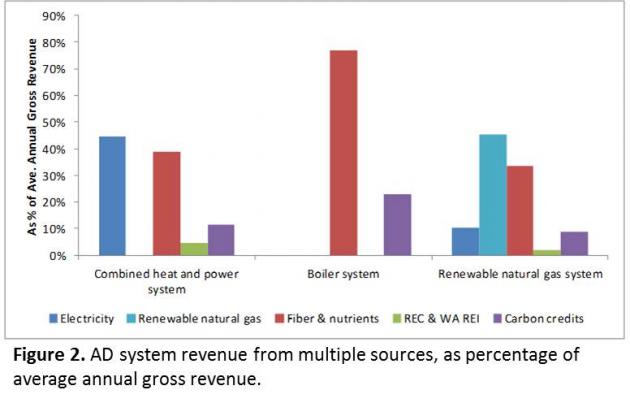
Environmental crediting options are highly variable both in terms of the types and mechanisms for the credit and their availability across space (jurisdiction) and time. History indicates there is likely to be continued variability and limited predictability for environmental crediting. Economic analyses show that AD projects can be profitable under many different scenarios, but is most sustainable when it allows for multiple revenues from electricity or renewable fuel, fiber products, nutrients, and carbon credits for avoided methane emissions. Environmental incentives like carbon credits and RFS credits (i.e., RIN) have a significant contribution to the profitability of an AD project, particularly when the project produces renewable natural gas.

Products AD-Combined heat and power (CHP) AD-Boiler AD-Renewable natural gas

Table 2: Net present values of alternative anaerobic digester (AD) systems given different revenue streams.

Energy1 -$2.1 million NA -$4.8 million
Energy, and fiber and nutrients $4.8 million $1.3 million $1.5 million
Energy, fiber and nutrients and environmental incentives2 $8.0 million $3.6 million $4.1 million
Note: NA – means not applicable for AD-Boiler Project because it does not produce electricity.
1Energy refers to electricity produced by the AD-CHP and AD-Boiler Projects, and electricity and renewable natural gas produced by the AD-RNG Project.
2Environmental incentives include the: Washington Energy Initiative, Renewable Energy Certificates, and carbon credits.

Future Plans

We will be publishing a Fact Sheet through WSU Extension providing more detailed discussion of environmental credits for AD projects. This fact sheet is part of an Anaerobic Digestion Systems Manual under development with support from USDA NIFA.

Authors

Chad Kruger, Director, WSU CSANR cekruger@wsu.edu

Greg Astill, Graduate Student WSU Econ; Suzette Galinato, Research Associate, WSU IMPACT Center; Craig Frear, Assistant Professor, WSU Biological Systems Engineering; Georgine Yorgey, Associate in Research, WSU CSANR; Jim Jensen

Additional information

Coppedge, B., G. Coppedge, D. Evans, J. Jensen, E. Kanoa, K. Scanlan, B. Scanlan, P. Weisberg and C. Frear. 2012. Renewable Natural Gas and Nutrient Recovery Feasibility for DeRuyter Dairy: An Anaerobic Digester Case Study for Alternative Off-take Markets and Remediation of Nutrient Loading Concerns within the Region. A Report to Washington State Department of Commerce. <http://csanr.wsu.edu/publications/deRuyterFeasibilityStudy.pdf>.

Galinatto, S.P., C.E. Kruger, and C.S. Frear (2015). Anaerobic Digester Project and System Modifications: An Economic Analysis. WSU Extension Publications EM090

Acknowledgements

The preparation of this fact sheet was funded by the WSU ARC Biomass Research Program, and USDA National Institute of Food and Agriculture Award #2012-6800219814.

The authors are solely responsible for the content of these proceedings. The technical information does not necessarily reflect the official position of the sponsoring agencies or institutions represented by planning committee members, and inclusion and distribution herein does not constitute an endorsement of views expressed by the same. Printed materials included herein are not refereed publications. Citations should appear as follows. EXAMPLE: Authors. 2015. Title of presentation. Waste to Worth: Spreading Science and Solutions. Seattle, WA. March 31-April 3, 2015. URL of this page. Accessed on: today’s date.

Renewable Natural Gas – Economics


Can We Approach Anaerobic Digestion Differently?

Anaerobic digestion (AD) system installations are costly and projects vary significantly depending on local circumstance. One possible business model proposed to improve the economic performance of AD systems is to use the biogas as renewable natural gas (RNG) rather than heat and electricity. Washington State University partnered with state agencies and a private project developer to study the feasibility of adding RNG to an existing commercial AD project in the Yakima Valley of Washington State.

What did we do?

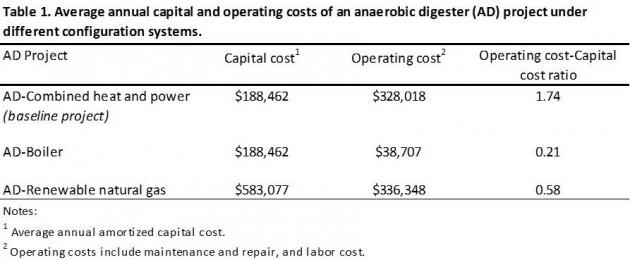
We examined three alternative AD system modifications: (a) combined heat and power, which is the baseline system; (b) boiler as a substitute for combined heat and power; and (c) renewable natural gas infrastructure. Our primary objective was to highlight the findings of a case study (Coppedge et al., 2012), particularly the identification of various factors that may affect the feasibility of an AD project. We answered the following questions:

  1. What is the importance of the relative difference of an AD project’s operating cost with respect to its capital cost?
  2. How do different end-uses for biogas (e.g., heat, electricity, renewable natural gas for pipeline or transportation fuel) affect the profitability of a digester project?
  3. How important is revenue from fiber and nutrient co-products to digester profitability?
  4. How important are environmental payments (Renewable Energy Certificates, Renewable Fuel Standards credit, carbon credits) to digester profitability?

This presentation focuses on questions 2 and 4 – end-uses for biogas and environmental payments tied to the alternative renewable energy options.

What have we learned?          

RNG offers promising opportunities. When available and potential renewable fuel credits are added to the commodity price of RNG, the AD project with this system can generate more net returns than with a combined heat and power system (baseline). Furthermore, if renewable fuel is sold as transportation fuel in the retail compressed natural gas market, the renewable natural gas system is more profitable than the baseline system with or without the addition of environmental incentives.Table 1. Average annual operating and capital costs of an anaerobic digester project under different configuration systems


Figure 2. AD system revenue from multiple sources, as percentage of average annual gross revenue.

Future Plans  

We have published a fact sheet (forthcoming) through WSU Extension providing a synthesis of the economic evaluation from the main feasibility study. This fact sheet (EM090E) is part of an Anaerobic Digestion Systems Manual under development with support from USDA NIFA.

Authors      

Chad Kruger, Director, WSU CSANR cekruger@wsu.edu

Suzette Galinatto, Research Associate @ WSU IMPACT Center; Craig Frear, Assistant Professor @ WSU Biological Systems Engineering

Additional information

Coppedge, B., G. Coppedge, D. Evans, J. Jensen, E. Kanoa, K. Scanlan, B. Scanlan, P. Weisberg and C. Frear. 2012. Renewable Natural Gas and Nutrient Recovery Feasibility for DeRuyter Dairy: An Anaerobic Digester Case Study for Alternative Off-take Markets and Remediation of Nutrient Loading Concerns within the Region. A Report to Washington State Department of Commerce. <http://csanr.wsu.edu/publications/deRuyterFeasibilityStudy.pdf>.

Galinatto, S.P., C.E. Kruger, and C.S. Frear (2015). Anaerobic Digester Project and System Modifications: An Economic Analysis. WSU Extension Publications EM090E.

Acknowledgements      

This project was supported by the WSU ARC Biomass Research Program, and USDA National Institute of Food and Agriculture Award #2012-6800219814.

The authors are solely responsible for the content of these proceedings. The technical information does not necessarily reflect the official position of the sponsoring agencies or institutions represented by planning committee members, and inclusion and distribution herein does not constitute an endorsement of views expressed by the same. Printed materials included herein are not refereed publications. Citations should appear as follows. EXAMPLE: Authors. 2015. Title of presentation. Waste to Worth: Spreading Science and Solutions. Seattle, WA. March 31-April 3, 2015. URL of this page. Accessed on: today’s date.

Anaerobic Digestion – Highlights of Successful Project Feasibility Studies


Purpose  

Feasibility studies are a form of decision-making tool that require research, data collection and analysis to evaluate investments in new technology or projects. They answer key questions about a project’s technical and financial viability, including project structure and organization and the costs, benefits, and risks involved. The analyses completed are so important that many grant programs require feasibility studies before making project grant awards. Financial investors and banks commonly may require the most rigorous form of feasibility study prior to making any investment.

What did we do?             

To develop a catalog of steps needed to perform a successful feasibility study, we reviewed the literature on feasibility studies, as well as dozens of studies done on the subject of anaerobic digestion. We also talked with a range of experts in project development.

What have we learned?

General Assessment Study or Screening—Most basic feasibility studies assess the viability of different opportunities within a defined industry or geographic area. On a project level, a general assessment determines if a potential project meets basic criteria thresholds to support more in-depth analysis?

Project-Based, Techno-Economic Study—A higher level of research and analysis is used to establish project viability. These studies consider the costs, benefits, and risks of building a specific type of project, with specific technology, on a specific site. For this purpose the study might incorporate readily available data about technology choices and make assumed adjustments about how it would perform under site-specific conditions. This level of analysis forces project advocates to put their ideas and assumptions on paper and test whether the conclusion is sound and realistic.

Investment-Grade Study—The most rigorous feasibility study is used to validate the marketability of a specific project from an investment perspective. It would look beyond basic techno-economic viability to establish the actual planned inputs and outputs of a project. It can include detailed equipment specifications and estimates, as well as detailed mass, energy, and water balance calculations. It may also identify key providers of feedstocks as well as potential end users. Detailed scheduling may be required to complete financial analyses accurately. With a detailed proforma showing financial analyses of cash flow and return on investment, this high level of feasibility study is sometimes termed “investment-grade.” These types of studies often include sensitivity analyses to explore the impact on a project’s viability from changes to one or more key assumptions. Sensitivity analyses can clarify which of the many assumptions made are most critical to project success.

Getting the best, most reliable and accurate data is perhaps the most critical element of a successful feasibility study. Typical steps observed in many feasibility studies:

  •  Define project goals and scope
  •  Establish the project criteria necessary for success
  •  Inputs: potential feedstocks from measured results, existing data, or surveys of sources
  •  Outputs, calculated from inputs: biogas, liquid and solid effluents and nutrients, and environmental attributes
  •  Financial costs: capital expenses, including cost of money, and ongoing operation and maintenance expenses
  •  Revenues (10 or more): methane energy power or fuel, surplus thermal energy, tip fees, value of solids, liquids-water, liquids-nutrients, environmental attributes, ecosystem services (e.g., GHG offsets, water quality/quantity benefits), carbon dioxide, and/or bioplastics.
  •  Cost offsets as revenues: e.g., rainwater diversion, reduction in manure handling/spreading, odor reduction, avoided disposal, etc.
  •  Financial analyses: cash flow, simple payback, EBITA (earnings before interest, taxes and amortization), net present value, return on investment, sensitivity analyses, life-cycle analyses
  •  Project finance: grants and loan guarantees, debt, and equity
  •  Project ownership and liabilities: including design, build, own, operate, maintain

Future Plans      

We will continue to evaluate methods to add value and publish the full results in a Anaerobic Digestion technology brief on this topic.

Authors    

Jim Jensen, Sr Bioenergy & Alt Fuel Specialist, Washington State University Energy Program jensenj@energy.wsu.edu

Craig Frear, Chad Kruger, and Georgine Yorgey, Center for Sustaining Agriculture and Natural Resources, Washington State University

Additional information                 

http://www.energy.wsu.edu/

http://csanr.wsu.edu/

Acknowledgements      

This research was supported by Biomass Research Funds from the WSU Agricultural Research Center; and by the Washington State Department of Commerce.

The authors are solely responsible for the content of these proceedings. The technical information does not necessarily reflect the official position of the sponsoring agencies or institutions represented by planning committee members, and inclusion and distribution herein does not constitute an endorsement of views expressed by the same. Printed materials included herein are not refereed publications. Citations should appear as follows. EXAMPLE: Authors. 2015. Title of presentation. Waste to Worth: Spreading Science and Solutions. Seattle, WA. March 31-April 3, 2015. URL of this page. Accessed on: today’s date.