Assessment of Coordinated Anaerobic Digestion of Dairy Manure


Proceedings Home | W2W Home w2w17 logo

Purpose            

Improving the economic feasibility of anaerobic digestion projects for processing dairy manure.

What did we do? 

We completed a study that evaluated the economics of dairy manure granulation as means to export phosphorus from P-sensitive watersheds. To achieve this goal we developed a techno-economic optimization model that considers all dairy farms within the watershed simultaneously to determine the minimum break-even price for the granulated manure.

A second study was developed to assess the economics of anaerobic digestion using a techno-economic optimization model. We incorporated different revenue sources (power sale, methane destruction credits, renewable energy certificates (RECs) and tipping fee (if co-substrate is available). The model evaluated the project feasibility over ranges of values for technical and economic parameters to quantify the project resilience to uncertainty in process conditions.

What have we learned? 

The results from the first study indicated that multi-farm participation can significantly improve feasibility and overall economics of manure granulation. Herd sizes were found to be a critical parameter in deciding whether a farm can economically participate in coordinated management. For manure granulation projects, liquid-solid separation followed by transportation of separated solids was always more economical than transporting raw manure from satellite farm to central processing facility. In the second study, electricity sale price was found to be the key parameter that determines the feasibility of anaerobic digesters. The hub-spoke configuration, where a large central farm hosts the digester and smaller surrounding farms contribute to it was found to be the most favorable arrangement. The size of the hub farm was critical to the feasibility of the project. Similarly, transportation distance was a critical factor that constrained the extent of cooperative digesters.

Future Plans    

The information generated from these studies is being written into peer-review publications and factsheets to share insights of collaborative manure management with a wider audience.We are currently expanding the model by adding the option for manure transportation via pipelines. Furthermore, we are also incorporating additional biogas utilization technologies,i.e., natural gas sale over pipelines and also the utilization of power/heat on-site in manure upgrading and processing.

Corresponding author, title, and affiliation        

Troy M. Runge, Associate Professor, University of Wisconsin-Madison

Corresponding author email    

trunge@wisc.edu

Other authors   

Mahmoud A. Sharara, Rebecca Larson

Additional information

1. http://www.are.wisc.edu/

2. Sharara, Mahmoud, Apoorva Sampat, Laura W. Good, Amanda S. Smith, Pamela Porter, Victor M. Zavala, Rebecca Larson, and Troy Runge. “Spatially explicit methodology for coordinated manure management in shared watersheds.” Journal of Environmental Management 192 (2017): 48-56.

3. Sharara, Mahmoud, Qiang Yang, Thomas L. Cox, and Troy Runge. “Techno-economic assessment of dairy manure granulation.” In 2016 ASABE Annual International Meeting, p. 1. American Society of Agricultural and Biological Engineers, 2016.

Acknowledgements       

This work is based on research supported by the USDA National Institute of Food and Agriculture for its financial support (USDANIFABRDI Grant No. 2012-10006-19423) and funding from Dane County, Wisconsin under Award Number 12486.

Integrating Small Scale Digestion Systems in Developing Regions


Proceedings Home W2W Home w2w17 logo

Purpose           

People in developing countries regularly lack access to energy or their energy source is not reliable. Low cost anaerobic digestion systems have the potential to provide methane to be used in a variety of end uses. Unfortunately, many low cost systems are not evaluated and it is unclear if they are living up to the expectations of the end users or those that are promoting or financially supporting their installation.

What did we do? 

We have evaluated multiple small scale anaerobic digestion systems in Uganda and Bolivia to assess their energy production potential, impact of digestate as a fertilizer (using plot studies), pathogen reduction through the digester, and impact to kitchen air quality when biogas stoves replace firewood. Based on feedback we have also designed, tested and implemented a low cost separation system for handling digestate to recycle separated liquids and improve handling of solids. We have also modified an absorption chiller to run on biogas and are in the process of wider spread adoption and evaluation.

What have we learned? 

Throughout this assessment we have learned that many institutional level digestion systems in developing countries are not meeting the biogas demands of the end users. While they like the improved cooking time and reduced air quality impacts in the kitchen, only small households are producing enough gas to realize many of these benefits. Biogas poses a reduction in PM2.5 (fine particulates) within kitchens when compared to firewood stoves. However, when any amount of firewood is used in the kitchens (when there is not enough biogas), much of this benefit is lost. Therefore it is critical to improve the biogas production of these systems.

Maize plot trials show that compared to control plots digestate applied in any form (slurry or separated solids) significantly improves yields. When compared to inorganic fertilizer applications the grain yields are statistically similar but the stover yields increase significantly. End users show a preference for using the separated solids and the reduction in water needed to operate the systems. While these benefits seem appealing, there may be concern for the risks associated with pathogens in the digestate when applied to food crops. While digesters showed a significant reduction in pathogen related to the system retention time, pathogen remained in the effluent and must be handled properly to limit transfer to food and the human health risks after ingestion.

Increasing the end use of biogas beyond cooking to chillers has shown great potential for implementation and has high demand for end users. Systems have been able to provide cooling at multiple locations for extended periods with low biogas demands. Additional materials are needed to provide end users with guidance on troubleshooting and operation.

Future Plans    

Based on the results of these studies we are moving forward with farmer trials of the digestate to assess end user issues and motivations. In addition, we are currently designing a low cost heating system to improve biogas production efficiency in order to meet end user needs or decrease the size of digesters. Finally we are working on an evaluation of chiller biogas needs and providing training on all aspects of the digestion systems.

Corresponding author, title, and affiliation      

Rebecca Larson, Assistant Professor at the University of Wisconsin-Madison

Corresponding author email    

rebecca.larson@wisc.edu

Other authors   

A. McCord, Associate Director at University of Wisconsin-Madison, Vianney Tumwesige, CEO at GreenHeat Uganda, Dorothy Lsoto at W2E Uganda

Additional information              

http://www.greenheatinternational.com/

http://www.waste2energyltd.com/

McCord, A.I., S.A. Stefanos, V. Tumwesige, D. Lsoto, A. Meding, A. Adong, J.J. Schauer, and R.A. Larson. 2017. Biogas and the impacts of fuel choice on institutional kitchen air quality in Kampala, Uganda. Indoor Air. In Review, revisions requested.

McCord, A.I., S.A. Stefanos, V. Tumwesige, D.T. Lsoto, M. Kawala, J. Mutebi, I. Nansubuga, and R.A. Larson. 2017. Anaerobic digestion and public sanitation in Kampala: risks and opportunities. In Review.

Effectiveness of Different Dairy Manure Management Practices in Controlling the Spread of Antibiotics and Antibiotic Resistance


Proceedings Home W2W Home w2w17 logo

Purpose            

Even when antibiotics are used judiciously, antibiotic residues, antibiotic resistant bacteria (ARB) and antibiotic resistance genes (ARG) can accumulate in human waste and manure and contribute to the spread of antibiotic resistance. Modern U.S. dairy farms use antibiotics for disease treatment and prevention according to the guidance of veterinary physicians. While dairy manure handling and treatment systems may effectively mitigate antibiotic resistance, the fate of antibiotic residues, ARB and ARG through these systems has not been adequately investigated. 

What did we do? 

Working cooperatively with 11 dairies in 3 states (NY, PA, MD) our multi-institutional (U. Buffalo, Cornell, U. Maryland, U. Michigan), interdisciplinary team is investigating the effect different manure management practices (e.g. long-term storage, composting, anaerobic digestion, etc.) have on antibiotic residue levels, ARB and ARG. Every 6 weeks for 2 years manure is being collected pre- and post- each treatment step of the various manure handling systems used by each farm. All samples are being characterized and tested for select antibiotic residues (tetracyclines, macrolides, sulfonamides, penicillins and ceftiofurs), with select samples also analyzed for ARB and ARG. To guide these efforts, antibiotic usage and manure treatment system operational data are also being collected for each farm.

What have we learned? 

A year of samples has been collected with analysis of antibiotic residues, ARB and ARG on-going. Based on the preliminary data, antibiotic residues are detectable at low-concentrations (< 200 mg/L) in each farm’s manure. Antibiotic residue levels are generally lower in treated manure compared to levels in raw manure, though mitigation efficacy is variable. Early findings show some composting systems have the capacity to lower antibiotic residue levels. Antibiotic residue levels are also lower in separated manure solids, with evidence for partitioning of soluble antibiotic residues into separated manure liquids. At this time, the effects of anaerobic digestion and long-term anaerobic manure storage on antibiotic residue levels remain unclear. Select samples are currently being analyzed for ARB and ARG.

Future Plans 

We are entering our second year of field monitoring and ARB and ARG analysis is on-going. Laboratory efforts are also beginning to test the effectiveness of specific anaerobic digester operational parameters at mitigating antimicrobial resistance. Extension/outreach meetings with stakeholder groups are also being planned. The ultimately project goals are to discern the fate of antibiotic residues, ARB and ARG as they move through dairy manure handling systems, identify the efficacy of different manure treatment systems at mitigating antibiotic resistance and extending this knowledge to dairy operators.

Corresponding author, title, and affiliation      

Jason Oliver, Postdoctoral Associate at Dept. of Animal Science, Cornell University

Corresponding author email    

jpo53@cornell.edu

Other authors   

Curt Gooch, Senior Extension Associate at Cornell University, Dept. of Animal Science, PRO-DAIRY

Additional information               

Additional project information can be found on the dairy environmental system webpage: www.manuremanagement.cornell.edu

Acknowledgements

This material is based upon work that is supported by the National Institute of Food and Agriculture, U.S. Department of Agriculture, under award number 2016-68003-24601. Any opinions, findings, conclusions, or recommendations expressed in this publication are those of the author(s) and do not necessarily reflect the view of the U.S. Department of Agriculture.

Project collaborators include: (PD) Diana Aga, University of Buffalo, Dept. of Chemistry (Co-PI); her students Mitch Mayville and Jarod Hurst; (Co-PD) Lauren Sassoubre , University of Buffalo, Dept. of Civil, Structural & Environmental Engineering; (Co-PDs) Stephanie Lansing and Gary Felton, Associate Professors at University of Maryland, Dept. of Environmental Science & Technology; their student Jenna Schueler; (Co-PD) Krista Wigginton, Assistant Professor at University of Michigan, Dept. of Civil & Environmental Engineering; Lutgarde Raskin, Professor at University of Michigan, Dept. of Civil & Environmental Engineering; and their student Emily Crossette.


The authors are solely responsible for the content of these proceedings. The technical information does not necessarily reflect the official position of the sponsoring agencies or institutions represented by planning committee members, and inclusion and distribution herein does not constitute an endorsement of views expressed by the same. Printed materials included herein are not refereed publications. Citations should appear as follows. EXAMPLE: Authors. 2017. Title of presentation. Waste to Worth: Spreading Science and Solutions. Cary, NC. April 18-21, 2017. URL of this page. Accessed on: today’s date.

Innovative Business Models for On-farm Anaerobic Digestion in the U.S.

Proceedings Home W2W Home w2w17 logo

Purpose

AgSTAR is a collaborative voluntary program of the Environmental Protection Agency (EPA) and United States Department of Agriculture (USDA). AgSTAR promotes the use of anaerobic digestion (AD) systems to advance economically and environmentally sound livestock manure management. AgSTAR has strong ties to industry, government, non-profit and university stakeholders and assists those who enable, purchase or implement anaerobic digesters by identifying project benefits, risks, options and opportunities.

Anaerobic digestion (AD) continues to be a sustainable manure management opportunity with growing interest in innovative business models for project development.   AD systems provide a number of benefits, including improved nutrient management, locally sourced renewable energy, and diversified revenue streams for farmers.   As energy prices remain low across the country, and interest grows in managing food waste and organics outside of landfills, new business models have been implemented to make these on-farm AD projects viable. This presentation will provide a national overview of the livestock AD sector, explore new AD projects across the U.S., and highlight successful projects with innovative business models.

The presentation will cover several case studies of AD projects on topics including:

  • Third-party ownership and development of projects;
  • Food waste collection and boosting project profitability through tip fees and increased biogas production;
  • Eco-market products from dairy manure fibers; manure-based alternatives to peat moss for the horticulture industry; and
  • Biogas to vehicle fuel; opportunities and financial considerations.

With only 244 operating on-farm AD projects across the U.S., there exists a great opportunity for market share growth at the approximately 8,000 farms that could support a project. This, coupled with the desire for alternative management of organic waste streams, provides a unique opportunity for this sector to grow in the near future.

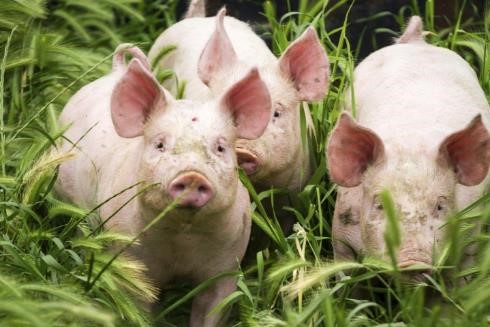
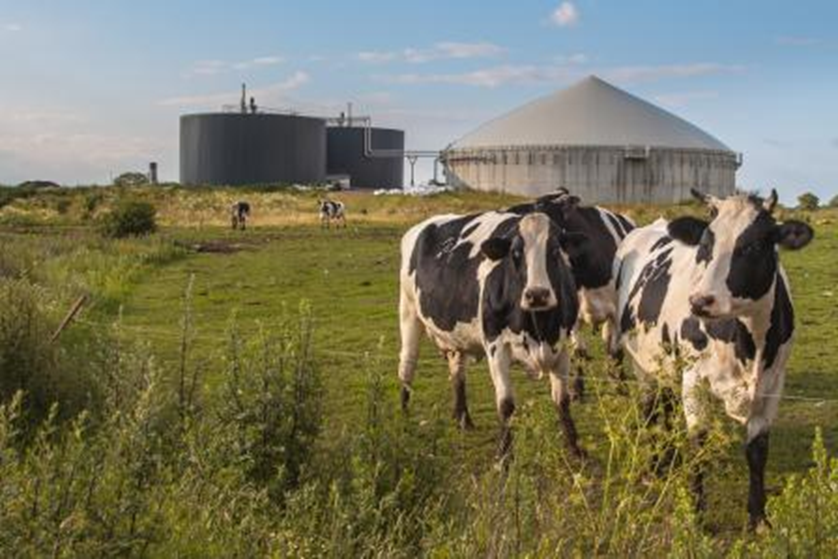
Pigs in a fieldCows in a field

Corresponding author, title, and affiliation

Nick Elger

Program Manager

AgSTAR & Global Methane Initiative

U.S. Environmental Protection Agency

1201 Constitution Ave NW, Mail code: 6207J

Washington, D.C. 20460

Phone: 202.343.9460

Email: elger.nicholas@epa.gov

https://www.epa.gov/agstar

https://www.globalmethane.org/

Manure Treatment Technology Proceedings for Waste to Worth 2013

W2W13 proceedings | Waste to Worth home
On this page: Anaerobic Digestion | Composting | Separation |
Vegetative | ThermalNutrient Recovery


Composting Thermal Technologies & Biochar

In Vessel Composting of Horse Manure (Case Study)

Financial Benefits of Composting Stable Waste

Effect of Fractionation and Pyrolysis on Fuel Properties of Poultry Litter

Developing Alternative Markets for Poultry Litter Biochar

The Farm Manure to Energy Initiative

Solid-Liquid Separation Nutrient Recovery

Solid-Liquid Separation Alternatives for Manure

Benefits of Liquid-Solid Separation with Lagoons

Recovery of Phosphorus from Solid Manure
Vegetative Treatment Systems (VTS)  

Automating Management for a VTS


 Anaerobic Digestion

Cattle Manure/Solid Manure Feedstocks

Anaerobic Digestion of Finishing Cattle Manure

Trickle Flow Leach Bed Reaction for Solid Cattle Waste

Pilot Scale Leach-bed Multistage Digester for Dry-lot Wastes

Dry Anaerobic Digestion (AD) for High Solids Manure

Feasibility at Cattle Operations and Demonstrations of a Decision Support Tool

Valuing Feedstocks–Balancing Energy Potential & Nutrient Content

Improving Methane from Manure Solids through Pretreatment

Co-Digestion and Operational Issues

Dairy Manure Digestion Influenced by Wasted Milk

Systems Nutrient Recovery

Design, Construction, and Implementation of a Pilot Scale Digester

Coupling Dairy Manure Digesters with Commercial Greenhouses

On-Site Analytical Laboratories to Monitor Process Stability

Operation of Internal Combustion Engines

Economical Recovery of Ammonia from Digestate
Pathogens Uses for Solids

Inactivation of Dairy Manure-borne Pathogens

Organic Mulches in Ginseng Production


A Novel Multiple Staged Leachbed Digestion System for the Treatment of Dry-lot Feedlot and Dairy Manures

A multiple staged digestion system capable of digesting drylot manures is currently under development. The system is currently being validated at the pilot scale with three 1.5 cubic meter batch reactors. The system shows promise with various animal manure wastes as well as other common waste products. The first stage of the process is a dry digestion leachbed process in which the hydrolysis of solid waste products is optimized. The liquid leachate produced by the first stage is then transferred to a storage tank where the leachate is accumulated before use in the last stage. The last stage is optimized for methanogenesis and consists of a high rate methane reactor. 

What Have We Learned?

This configuration of system components lends itself to a variety of potential advantages for regional digestion of animal wastes. Wastes of various solids contents can be segregated into the appropriate reactors, with high solids wastes placed in the first stage, moderate solids in the second stage, and primarily soluble wastes can be sent straight to the last stage. This inherent substrate flexibility could enable the construction of regional digesters capable of treating a wide array of wastes. As the solid wastes are dry digested dewatering at the end of the process is less challenging and leads the production of a high nutrient content soil amendment. 

Future Plans

 Plans are currently in the works to begin scaling this pilot system to build a 100-500kw on farm digester system. 

Author

Lucas Loetscher  lloetscher@gmail.com   Colorado State University

The authors are solely responsible for the content of these proceedings. The technical information does not necessarily reflect the official position of the sponsoring agencies or institutions represented by planning committee members, and inclusion and distribution herein does not constitute an endorsement of views expressed by the same. Printed materials included herein are not refereed publications. Citations should appear as follows. EXAMPLE: Authors. 2015. Title of presentation. Waste to Worth: Spreading Science and Solutions. Seattle, WA. March 31-April 3, 2015. URL of this page. Accessed on: today’s date.

Poultry Digestion – Emerging Farm-Based Opportunity

While EPA AGSTAR has long supported the adoption of anaerobic digestion on dairies and swine farms, they have not historically focused on the use of anaerobic digestion on egg laying and other poultry facilities. This has been because the high solids and ammonia concentrations within the manure make anaerobic digestion in a slurry-based system problematic. Development of enhanced downstream ammonia and solids recovery systems is now allowing for effective digestion without ammonia toxicity. The process also generates dilution water, avoiding the need for fresh water consumption, and eliminating unwanted effluent that needs to be stored or disposed of to fields. The system produces high-value bio-based fertilizers. In this presentation, a commercial system located in Fort Recovery Ohio will be used to detail the process flow, its technologies, and the co-products sold.

Why Examine Anaerobic Digestion on Poultry Farms?

The purpose of this presentation is to supply a case study on a commercial poultry digestion project for production of combined heat and power as well as value-added organic nutrients on a 1M egg-layer facility in Ohio.

What did we do?

In this study we used commercial farm information to demonstrate that poultry digestion is feasible in regard to overcoming ammonia inhibition while fitting well into an existing egg-layer manure management system. Importantly, during the treatment process a significant portion of nutrients within the manure are concentrated for value-added sales, ammonia losses to the environment are reduced, and wastewater production is minimized due to recycle of effluent as dilution water.

What have we learned?

In this study, commercial data shows that ammonia and solids/salts levels that are potentially inhibitory to the biology of the digestion process can be controlled. The control is through a post-digestion treatment that includes ammonia stripping and recovery as ammonium sulfate as well as fine solids separation using a dissolved air flotation process with the addition of a polymer. The resulting treated effluent is sent back to the front of the digester as dilution water for the high solids poultry manure. The separated fine solids and the ammonium sulfate solution are dried using waste engine heat to produce a nutrient-rich fertilizer for off-farm sales. The stable anaerobic digestion process resulting from the control of potential inhibitors that might accumulate in the return water, if no post-treatment occurred, leads to production of a significant supply of electrical power for sales to the grid.

Demonstration at commercial scale shows the promise anaerobic digestion with post-digestion treatment and effluent recycle can play in a more sustainable poultry manure treatment system including managing nutrients for export out of impacted watersheds.

Future Plans

Future plans include continued work with industry in developing and/or providing extension capabilities around novel digestion and post-treatment processes for a variety of manures and on-farm situations. Expansion of such processes to poultry and other on-farm business plans will allow for improved reductions in wastewater production, concentrate nutrients for export out of impacted watersheds and do so within a positive economic business plan.

Authors

Craig Frear, Assistant Professor at Washington State University cfrear@wsu.edu

Quanbao Zhao, Project Engineer DVO Incorporated, Steve Dvorak, President DVO Incorporated

Additional information

Additional information about the corresponding author can be found at http://www.csanr.wsu.edu while information about the poultry project and the industry developer can be found at http://www.dvoinc.net. Numerous articles related to anaerobic digestion, nutrient recovery and separation technologies for climate, air, water and human health improvements can be found at the WSU website using their searchable articles function.

Acknowledgements

This research was supported by funding from USDA National Institute of Food and Agriculture, Contract #2012-6800219814; National Resources Conservation Service, Conservation Innovation Grants #69-3A75-10-152; and Biomass Research Funds from the WSU Agricultural Research Center. 

The authors are solely responsible for the content of these proceedings. The technical information does not necessarily reflect the official position of the sponsoring agencies or institutions represented by planning committee members, and inclusion and distribution herein does not constitute an endorsement of views expressed by the same. Printed materials included herein are not refereed publications. Citations should appear as follows. EXAMPLE: Authors. 2015. Title of presentation. Waste to Worth: Spreading Science and Solutions. Seattle, WA. March 31-April 3, 2015. URL of this page. Accessed on: today’s date.


Effects of Mixing Duration on Biogas Production and Methanogen Distribution in Dairy Manure Anaerobic Digesters

Why Did We Study Mixing Duration?

Mixing is an important parameter for anaerobic digesters for both design and operation. This is especially true for digesters that treat diary manure, which is a mixture of feces, urine, blood, food wastes, and bedding. Many of the solids fed to the digester have no or low degradability, and some of the large fibers can clog pumps or pipes in the transfer system. Mixing also plays an important role in maintaining a uniform environment for biological processes. However, the energy input for operating mechanical mixers requires a large part of the total energy for a biogas plant. Previous studies have suggested that optimum biogas production does not require continuous active mixing. It is essential to evaluate the mixing duration in order to balance energy inputs and biogas production rates.

What Did We Do?

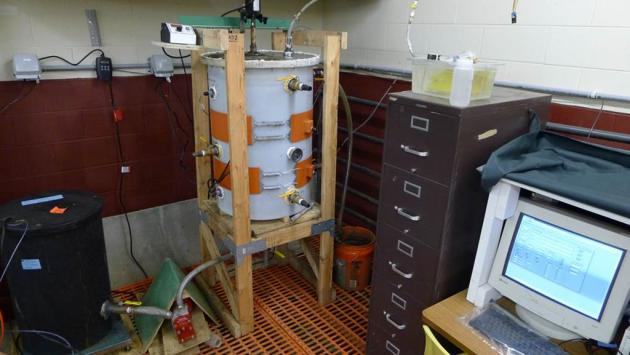
The study was designed as a one factor (mixing duration) experiment with three levels and was carried out in triplicates. Three pilot scale anaerobic digesters were used to compare the impact of different mixing duration (continuous – CON, intermittent – INT, and no mixing – NO) on the performance of biogas production from dairy manure, Figure 1.

Figure 1. a laboratory scale digester

Figure 1: Digester Design

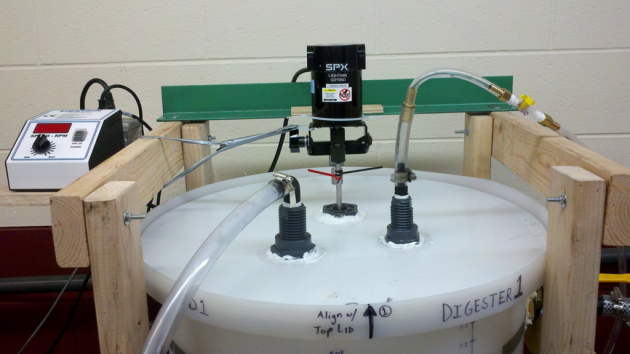
During the experiment, all digesters were fed 8 kg of dairy manure daily (total solid content = 5.5%), and operated at 37oC with a hydraulic retention time (HRT) of 21 days.  The mixing and feeding were controlled by an automated computer system, Figure 2. Mixers were set at a speed of 450 revolution per min (RPM). Biogas production was recorded three times a week and the percentage of methane content was analyzed weekly. Manure samples were collected weekly from the feed tank, top, middle & bottom of the digester, and from the effluent tank for volatile solids (VS), chemical oxygen demand (COD), pH, carbon to nitrogen ratio (C/N), and violate fatty acids (VFAs).  The concentration of archea and five common methanogens found in digesters was also determined using quantitative polymerase chain reaction (qPCR).

Figure 2. A closeup of the top of the lab-scale digester

Figure 2: Digester Mixing System

What Have We Learned?

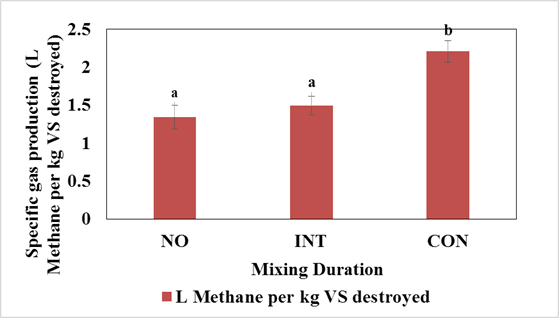
The cumulative biogas production from digesters with no mixing was statistically significantly higher than intermittent and continuous (CON) mixing at the same loading rate. However, CON had a higher methane production rate per kg of volatile solids destroyed, Figure 3.

Figure 3: Methane Production Rate per Volatile Solids Destroyed

Future Plans

We are currently exploring the settling of manure solids in digesters with different mixing duration through a tracer study. The impact of different settling time on the hydraulic retention time (HRT), would help us better understand the performance of the anaerobic digesters with different mixing duration.

Authors

Hui Wang, Graduate Research Assistant, University of Wisconsin-Madison, hwang355@wisc.edu

Rebecca A. Larson, Assistant Professor and Extension Specialist, University of Wisconsin-Madison, ralarson2@wisc.edu

Acknowledgements

This material is based upon work supported by the National Institute of Food and Agriculture, United States Department of Agriculture, under ID number WIS01693.

Institute for Environmentally Integrated Dairy Management (Marshfield, WI), United States Dairy Forage Research Center

The authors are solely responsible for the content of these proceedings. The technical information does not necessarily reflect the official position of the sponsoring agencies or institutions represented by planning committee members, and inclusion and distribution herein does not constitute an endorsement of views expressed by the same. Printed materials included herein are not refereed publications. Citations should appear as follows. EXAMPLE: Authors. 2015. Title of presentation. Waste to Worth: Spreading Science and Solutions. Seattle, WA. March 31-April 3, 2015. URL of this page. Accessed on: today’s date.

Low Tech Waste to Energy Applications in Developing Countries


Abstract

Animal waste is fully utilized in most developing countries, particularly in Afghanistan, Pakistan and Sri Lanka.  Utilization of animal waste for energy, cooking and heating is often of greater importance than use for soil conditioning and fertilization.  The simplest processing of manure, including gut waste from slaughter operations, is to sun-dry the material which is then burned in small, efficient clay burners.  Specialized cooking equipment such as pressure cookers designed to derive the maximum benefit from these low energy fires are also used.Natural gas burners are also employed where the gas is available and offer a much healthier and sanitary option.

A variety of very simple and efficient digesters have been built, and are now employed in many homes, to convert animal waste to useable gas by employing low cost materials. Most of these digesters serve a single home producing cooking, heating and even lighting energy from the waste of a single animal or a small flock or herd.

This presentation will present examples of these systems and discuss how they can be effectively employed by others around the world, including small and hobby farmers in the Pacific Northwest.

Author

BLEDSOE, GLEYN              GLEYN@WSU.EDU          School of Food Science, WSU-UIdaho

The authors are solely responsible for the content of these proceedings. The technical information does not necessarily reflect the official position of the sponsoring agencies or institutions represented by planning committee members, and inclusion and distribution herein does not constitute an endorsement of views expressed by the same. Printed materials included herein are not refereed publications. Citations should appear as follows. EXAMPLE: Authors. 2015. Title of presentation. Waste to Worth: Spreading Science and Solutions. Seattle, WA. March 31-April 3, 2015. URL of this page. Accessed on: today’s date.

Farm-Based Anaerobic Digestion Projects – Wastewater Disposal and Nutrient Considerations

While anaerobic digestion is often touted for producing renewable energy/fuels, producers at concentrated animal feeding operations (CAFOs) are often most concerned about nutrient loading, an issue that has garnered increasing regulatory scrutiny. Anaerobic digestion, while a carbon management tool capable of producing carbon fuels, does little in regard to nitrogen and phosphorus management. Thus digestion projects, if they are to meet producer needs, must incorporate downstream separation to recover nutrients and protect soils. This presentation highlights the key environmental issues and hurdles facing manure management and disposal and lays the framework for a needed focus on combined anaerobic digestion and nutrient recovery systems capable of meeting producer and regulatory needs regarding nutrient management.

Why Review Nutrient Recovery Technologies for Anaerobic Digestion?

A literature review and conversations with dairy farmers both suggest that improving manure nutrient management is a major concern for dairy producers. This supports the conclusion that ongoing research and development efforts to support development of nutrient recovery technologies, including those that can be used in concert with anaerobic digestion (AD), will be key to enhancing adoption rates for AD technology.

What did we do?

A literature review was used to support and enhance findings from conversations with farmers about anaerobic digestion technologies.

What have we learned?

Managing manure is major consideration for dairy producers, and one that comes with high potential costs in areas where there are few crop producers willing to accept manure (USDA ERS 2009). Dairies in many regions of the U.S. are facing increased pressure from growing public concern about nutrient-related water and air quality issues. In some cases, regulation of dairies has increased.

As a result, there is increased interest from dairy producers and others in nutrient recovery technologies. Although no technologies are widely commercialized at present, several emerging nitrogen and phosphorus recovery technologies exist. Some of these technologies are most appropriately used on specific forms of untreated dairy manure (e.g. scrape, flush), while others are more appropriate when combined with AD as part of an AD system (Figure 1).
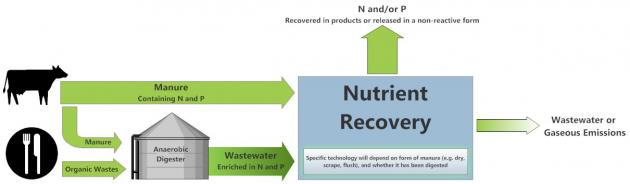
Figure 1. Nutrient recovery fact sheet diagram

Figure 1. Nutrient recovery fact sheet diagram

figure 2. overhead view of nutrient recovery system

Figure 2. Overhead view of a nutrient recovery system for nitrogen and phosphorus.

Approaches also vary in that some recover both phosphorus and nitrogen (Figure 2), while others focus on only one nutrient (Figure 3). Some nutrient recovery processes dispose of these nutrients in form that is non-reactive, and therefore not problematic environmentally. However, most nutrient recovery technologies produce concentrated nutrient products that can be transported more easily, and economically, than manure. The most promising technologies also make products with characteristics (e.g. homogenous and predictable nutrient content, easy to handle, reduced pathogen counts or pathogen-inert chemicals) that make them more appealing to crop producers than manure.
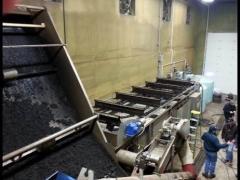
figure 3. commercial scale recovery of phosphorus

Figure 3. Commercial scale recovery of phosphorus.

With further technological and market development, these technologies have the potential to transform dairy manure nutrient management. They may also become a cost-effective approach to improving nutrient management at a watershed level, through the replacement of imported chemical nutrients by crop-farms with manure-derived nutrients already in the watershed. However, nutrients can still be lost from nutrient recovery products or from the wastewater that normally is a by-product of nutrient recovery. This is especially true if these are applied with improper application rates or timing. Nutrient recovery technologies therefore need to be used as part of a comprehensive watershed-level strategy that addresses nutrient balance, equitable distribution of costs and benefits, and improved nutrient application timing and methodology.

Nutrient recovery could also encourage adoption of anaerobic digestion technologies. Although anaerobic digestion changes the form of nitrogen and phosphorus in manure, it does not appreciably decrease the total amount of nutrients, most of which are concentrated in the liquid effluent that is a product of the AD process (Frear et al. 2012). Also, co-digestion of dairy manure with additional organic food wastes can import nutrients to the farm, exacerbating existing nutrient management issues. Nutrient recovery can make AD more appealing to dairy producers by addressing one of their most important concerns. Meanwhile, potential income from the sale of recovered nutrients can contribute to the economic feasibility of an AD project.

Future Plans

The authors and collaborators are continuing efforts to review existing information about nutrient recovery systems (see talk by Jingwei Ma et al., Nutrient Recovery Technologies—A Primer on Available and Emerging Nitrogen, Phosphorus, and Salt Recovery Approaches, their Performance and Cost). They are also continuing technological development and commercialization efforts for specific nutrient recovery technologies.

Authors

Georgine Yorgey, Research Associate at Center for Sustaining Agriculture and Natural Resources, Washington State University yorgey@wsu.edu

Craig Frear, Assistant Professor in the Department of Biological Systems Engineering, Washington State University, and Chad Kruger, Director, Center for Sustaining Agriculture and Natural Resources, Washington State University

Additional Information

The topics covered in this presentation are covered in more depth in a factsheet that is available from Washington State University Extension. The Rationale for Recovery of Phosphorus and Nitrogen from Dairy Manure is available at https://pubs.extension.wsu.edu/the-rationale-for-recovery-of-phosphorus-and-nitrogen-from-dairy-manure-anaerobic-digestion-systems-series. This document is part of a series of extension documents on Dairy AD Systems, being prepared by the authors and other colleagues at Washington State University.

References:

Frear, C., W. Liao, T. Ewing, and S. Chen. 2012. Evaluation of Co-digestion at a Commercial Dairy Anaerobic Digester. Clean Water, Air, and Soil, 39 (7): 697-704.

USDA-ERS. 2009. Manure Use for Fertilizer and for Energy. Report to Congress. United States Economic Research Service. Washington, DC.

Acknowledgements

This work was supported by funding from USDA National Institute of Food and Agriculture, Contract #2012-6800219814; National Resources Conservation Service, Conservation Innovation Grants #69-3A75-10-152; and Biomass Research Funds from the WSU Agricultural Research Center.

The authors are solely responsible for the content of these proceedings. The technical information does not necessarily reflect the official position of the sponsoring agencies or institutions represented by planning committee members, and inclusion and distribution herein does not constitute an endorsement of views expressed by the same. Printed materials included herein are not refereed publications. Citations should appear as follows. EXAMPLE: Authors. 2015. Title of presentation. Waste to Worth: Spreading Science and Solutions. Seattle, WA. March 31-April 3, 2015. URL of this page. Accessed on: today’s date.