Seasonal greenhouse gas emissions from dairy manure slurry storages in New York State

Due to a technical glitch, the beginning of the recorded presentation was not recorded. Please accept our apologies.

Purpose

As the adoption of dairy manure storage systems has increased as a best management practice for protecting water quality, the anaerobic conditions in these systems has inadvertently led to an increase in emission of the greenhouse gas methane. Current inventory and modeled estimates of this potent greenhouse gas are based on limited datasets, and there is a need for methodologies to better quantify these emissions so that the impacts of storage conditions, manure treatments and seasonality can be better assessed, mitigation strategies can be implemented, and greenhouse gas reduction estimates can be correctly accounted for.

What Did We Do?
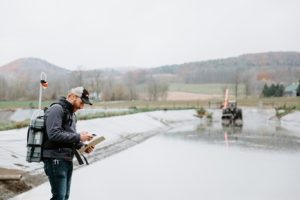
We are developing a ground-based, mobile measurement approach where manure storage systems are circled with a backpack methane gas analyzer and measurements are integrated with on-site wind measurements to calculate emission flux rates. Twelve commercial dairy farm manure storage systems, representing a range of herd sizes and pre-storage manure treatments are collaborating on the research. Once per month, each manure storage structure at each site is circled 10 consecutive times with a methane gas analyzer. A drone equipped with a separate methane analyzer is also used to verify ground-based measurements amidst the methane plumes. Divergence (Gauss’s) theorem is then applied to concentration measurements and anemometer wind data to estimate the net rate of methane flux. These observed methane emission fluxes are compared to International Panel of Climate Change (IPCC) modeled emissions as well as state inventories.

What Have We Learned?

We find that this methodology provides a reliable, cost-effective way to estimate methane emissions from manure storages. Observed emissions track modeled emissions with similar magnitudes, though models may be overestimating emissions during the growing season and underestimating during the winter months in this region (Figure 1). While emissions patterns are generally similar for each of the farm sites, with some farms and some individual monthly observational estimates there can be substantial deviation from predicted emission rates.
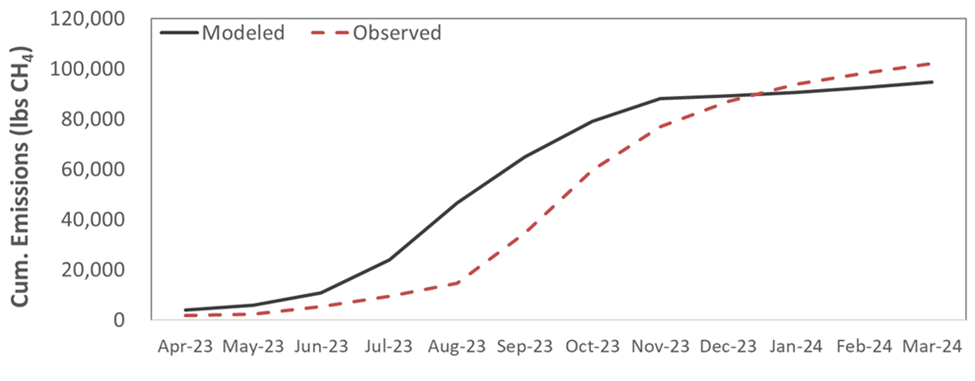
Figure 1. Modeled and measured cumulative methane emissions from a dairy manure storage system over a 12-month period.

Future Plans
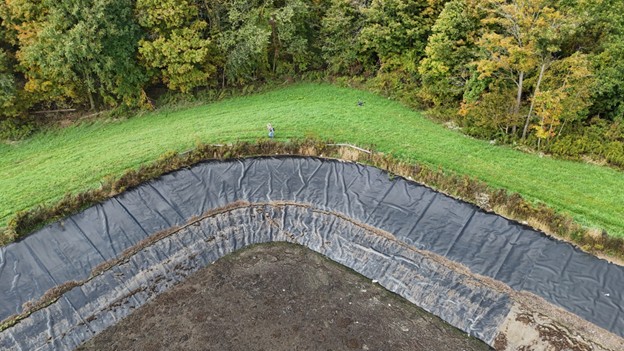
Evaluation of 2024 field data is ongoing, and we will continue to measure methane around storages with ground-based and drone measurements into the summer of 2025. We will explore plume dynamics and the effects of pre-storage treatments on measured methane emission flux. For select sites, measurements will be expanded to include continuous, open-path laser absorption spectroscopy to verify this novel measurement approach, footprint emissions, and explore the implications of pre-storage manure treatments.

Authors

Presenting & corresponding author

Jason P. Oliver, Dairy Environmental Systems Engineer, Cornell University | PRO-DAIRY, jpo53@cornell.edu

Additional authors

Lauren Ray, Agricultural Sustainability and Energy Engineer, Cornell University | PRO-DAIRY

Eric Leibensperger, Associate Professor, Physics and Astronomy, Ithaca College

Additional Information

https://cals.cornell.edu/pro-dairy/our-expertise/environmental-systems/climate-environment/greenhouse-gas-emissions

https://leibensperger.github.io/

Acknowledgements

Funding for this work was provided by the New York State Department of Agriculture and Markets. Agreement #  CM04068CO


The authors are solely responsible for the content of these proceedings. The technical information does not necessarily reflect the official position of the sponsoring agencies or institutions represented by planning committee members, and inclusion and distribution herein does not constitute an endorsement of views expressed by the same. Printed materials included herein are not refereed publications. Citations should appear as follows. EXAMPLE: Authors. 2025. Title of presentation. Waste to Worth. Boise, ID. April 711, 2025. URL of this page. Accessed on: today’s date.
Sustainable Approach to Agriculture Education: Making the Most of Dairy Waste Byproducts

Purpose

The purpose of the project has been to develop a scientifically grounded, curriculum-ready educational framework that equips educators, especially those in Idaho, with the knowledge and instructional tools necessary to introduce students to the dairy industry and specifically, the environmental and economic benefits of dairy waste by-products. This project aimed to bridge the gap between industry practices and secondary agricultural education by highlighting sustainable waste management strategies within the dairy sector, including manure management, organic fertilizer production, methane gas utilization for renewable energy, and innovative by-product applications.

By integrating interdisciplinary concepts in agricultural science, environmental sustainability, and economics, we have worked to enhance students’ understanding of circular bioeconomy principles, real-world waste management challenges, and the importance of dairy sustainability in mitigating environmental impact while generating economic value. The ultimate goal is to foster a new generation of agriculturally literate students who can critically evaluate and contribute to sustainable innovations in the dairy industry.

What Did We Do?

We are presenting a comprehensive, two-week educational curriculum designed to equip Idaho educators with a resource on the state’s dairy industry. The curriculum encompasses foundational topics, including an introduction to dairy cattle, dairy nutrition, production facilities, and the processes involved in milk and cheese production. However, its primary emphasis is on the sustainable management of dairy by-products, addressing key environmental challenges associated with dairy operations.

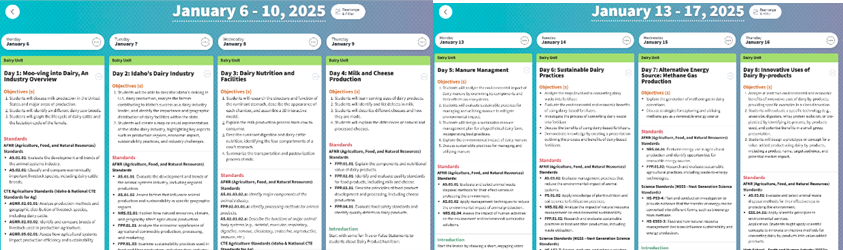
The above figure is an of the instructional framework for the dairy unit, illustrating the progression of concepts in the unit and the layout of including daily objectives and alignment to state and national academic standards.

This interdisciplinary curriculum explores advanced dairy waste management strategies, including manure management, biochemical conversion into organic fertilizers, and anaerobic digestion for methane gas production. Through hands-on learning and real-world case studies, the curriculum connects industry practices with secondary agricultural education, fostering a deeper understanding of the ecological and economic impacts of sustainable dairy waste repurposing.

What Have We Learned?

Our findings indicate that students are both prepared and capable of engaging with new scientific and industry-specific information when presented through differentiated and interactive instructional methods. A pre-unit assessment was administered on 2/25/2025 prior to introducing the first-time curriculum, with students averaging 59% on the assessment. Following the conclusion of the unit on 3/14/2025, the average score on the same material rose to 89%. We believe even in the initial rollout of curriculum, this significant increase reflects meaningful learning gains, especially when considering the variability in student learning styles and attendance. The incorporation of varied learning modalities—ranging from hands-on applications to case-based discussions—provided sufficient cognitive engagement, contributing to sustained student interest and improved comprehension throughout the unit.

Furthermore, this approach facilitates exposure to specialized aspects of the dairy industry that may otherwise remain unexplored, even by students residing in regions with high dairy production. By integrating diverse educational strategies, the curriculum broadens students’ conceptual understanding of sustainable dairy waste management, reinforcing the applicability of these practices within both local and global agricultural contexts.

Future Plans

Moving forward, the curriculum will be made available to agricultural educators across Idaho and the broader Northwest region, providing a flexible instructional resource that can be implemented in whole or adapted to meet specific classroom needs. By offering the curriculum in a digital format, accessible from anywhere, educators will have the ability to customize content to align with their students’ learning objectives while maintaining the integrity of the scientific and industry-relevant information presented.

This resource serves as a readily accessible tool for high school instruction, facilitating an in-depth exploration of the dairy industry, milk and cheese processing, and the complex sustainability challenges faced by modern dairy operations. By emphasizing the innovative repurposing of dairy by-products into value-added commodities, the curriculum equips students with a critical understanding of the environmental and economic imperatives driving sustainability within the dairy sector.

Authors

Presenting & corresponding author

Melissa A. Renfrow, University of Idaho, renfrow@uidaho.edu

Additional author

Dr. Kattlyn Wolf, Professor, Department of Agricultural Education, Leadership and Communication, University of Idaho

Additional Information

Acknowledgements

This Idaho Sustainable Agriculture Initiative for Dairy project is supported by USDA-NIFA SAS award #2020-69012-31.


The authors are solely responsible for the content of these proceedings. The technical information does not necessarily reflect the official position of the sponsoring agencies or institutions represented by planning committee members, and inclusion and distribution herein does not constitute an endorsement of views expressed by the same. Printed materials included herein are not refereed publications. Citations should appear as follows. EXAMPLE: Authors. 2025. Title of presentation. Waste to Worth. Boise, ID. April 7-11, 2025. URL of this page. Accessed on: today’s date.

Sustainability of the Dairy Industry in the United States

Purpose

The U.S. dairy industry recognizes its environmental impact and has committed to achieving carbon neutrality by 2050, aiming to significantly reduce greenhouse gas (GHG) emissions while maintaining production efficiency. The primary sources of dairy-related emissions include enteric methane from cows, manure management, feed production, and energy use on farms.

Improvements in feed efficiency and manure management have already led to reductions in emissions per unit of milk produced. For instance, Idaho has successfully reduced enteric methane emissions per unit of milk by 25% since 1990, and methane emissions from manure per unit of milk have declined by about 20% (O’Hara, 2022). However, the total emissions from manure have increased by 20% due to herd growth in Idaho. These figures highlight the challenge of balancing productivity with environmental stewardship. Despite these difficulties, advancements in animal nutrition, manure management, and emerging technologies provide a promising path toward sustainability.

What Did We Do?

Over the past several decades, remarkable advancements in dairy farming have significantly improved milk production efficiency. Since the 1940s, the industry has nearly quadrupled milk output per cow through genetic improvements, optimized nutrition, and better overall management. This increase in productivity has allowed farmers to produce more milk with fewer cows, reducing the environmental footprint of each unit of dairy produced. Beyond improvements in feed efficiency, nutritional interventions such as adding feed additives like 3-NOP (3-nitrooxypropanol), seaweed, and oilseeds have been shown to reduce enteric methane emissions by altering rumen microbial activity. Research suggests that 3-NOP, for instance, can reduce methane emissions by up to 30% without negatively affecting milk yield or composition (Hristov, 2021).

Manure management is another critical area of focus. Technologies such as anaerobic digesters, composting systems, and improved storage techniques have been implemented to mitigate methane emissions from manure. Anaerobic digesters convert manure into biogas, which can be used as a renewable energy source, reducing the reliance on fossil fuels and lowering overall carbon emissions. Other strategies, such as mechanical separators and compost-bedded pack barns, have also been explored as effective methods for reducing methane release from stored manure.

What Have We Learned?

Several key strategies have emerged as effective pathways for improving dairy sustainability. The first is continued advancements in genetics, which allow farmers to breed more productive cows that require fewer resources per unit of milk produced. Selective breeding programs targeting low-methane-emitting cows could further contribute to sustainability efforts. Precision feeding techniques, which ensure cows receive the optimal balance of nutrients without overfeeding, are also crucial for reducing emissions. Feed additives such as tanniferous forages, alternative electron sinks like nitrates, and certain types of fats have shown potential in mitigating enteric methane production. However, long-term research is still needed to assess their effectiveness and potential side effects on animal health and productivity.

Another significant finding is the role of manure management systems in influencing overall farm emissions. Studies indicate that farms implementing covered liquid slurry storage and anaerobic digesters experience lower methane emissions compared to traditional open-lagoon systems. Additionally, manure treatment systems that integrate composting or separation techniques have been identified as key factors in reducing GHG emissions. Beyond farm-level practices, the industry has recognized the importance of collaboration across the supply chain. Processors, retailers, and policymakers must work together to promote sustainable practices, invest in research, and provide incentives for farmers to adopt new technologies.

Future Plans

Moving forward, the dairy industry will continue to focus on increasing milk production efficiency as a means of reducing emissions per unit of milk produced. Advances in genetics, feed optimization, and herd management will further contribute to sustainability efforts. Additionally, manure management will play a pivotal role in achieving sustainability goals. Expanding the use of anaerobic digesters and nutrient recycling technologies will help reduce emissions while providing renewable energy and valuable soil amendments.

Investment in research and innovation will be essential for identifying new strategies and improving existing ones. Research into alternative feed additives, precision agriculture, and digital monitoring tools will enable farmers to make data-driven decisions that enhance both productivity and environmental sustainability. Policy support and financial incentives will also be critical in accelerating the adoption of sustainable practices. Government programs and industry initiatives should continue to provide funding for technology adoption, carbon offset programs, and educational resources for farmers. Ultimately, the U.S. dairy industry is well-positioned to make significant strides toward its sustainability goals. By leveraging innovation, research, and collaboration, the industry can continue to provide essential nutrition while reducing its environmental footprint and working toward carbon neutrality by 2050.

Authors

Presenting & corresponding author

Mark A. McGuire, University Distinguished Professor, Department of Animal, Veterinary and Food Sciences, University of Idaho, mmcguire@uidaho.edu

Additional Information

Capper, J. L., Cady, R. A., & Bauman, D. E. (2009). The environmental impact of dairy production: 1944 compared with 2007. Journal of Animal Science, 87(6), 2160–2167. https://doi.org/10.2527/jas.2009-1781

El Mashad, H. M., Barzee, T. J., Franco, R. B., Zhang, R., Kaffka, S., & Mitloehner, F. (2023). Anaerobic digestion and alternative manure management technologies for methane emissions mitigation on Californian dairies. Atmosphere, 14(1), 120. https://doi.org/10.3390/atmos14010120

Godber, O. F., Czymmek, K. J., van Amburgh, M. E., & Ketterings, Q. M. (2024). Farm-gate greenhouse gas emission intensity for medium to large New York dairy farms. Journal of Dairy Science. https://doi.org/10.3168/jds.2024-25874

Hristov, A. N., Melgar, A., Wasson, D., & Arndt, C. (2021). Symposium review: Effective nutritional strategies to mitigate enteric methane in dairy cattle. Journal of Dairy Science, 105(10), 8543–8557. https://doi.org/10.3168/jds.2021-21398

Innovation Center for U.S. Dairy. (2022). U.S. Dairy Sustainability Report 2021-2022. Retrieved from https://www.usdairy.com/about-us/innovation-center

Kreuzer, M. (2024). Feed additives for methane mitigation: Introduction—Special issue on technical guidelines to develop feed additives to reduce enteric methane. Journal of Dairy Science.

Nguyen, B. T., Briggs, K. R., & Nydam, D. V. (2023). Dairy production sustainability through a one-health lens. Journal of the American Veterinary Medical Association, 261(1). https://doi.org/10.2460/javma.22.09.0429

O’Hara, J. K. (2022). State-level trends in the greenhouse gas emission intensity of U.S. milk production. Journal of Dairy Science, 106(10), 5474–5484. https://doi.org/10.3168/jds.2022-22741

Rotz, C. A. (2017). Modeling greenhouse gas emissions from dairy farms. Journal of Dairy Science, 101(7), 6675–6690. https://doi.org/10.3168/jds.2017-13272

U.S. Farmers & Ranchers in Action (USFRA). (2024). Potential for U.S. Agriculture to Be Greenhouse Gas Negative. Retrieved from https://www.usfraonline.org

Acknowledgements

Supported by USDA-NIFA SAS 2020-69012-31871

Modeling ammonia and greenhouse gas emissions from dairy manure management in organic dairy farms

Due to a technical glitch, we did not get this presentation recorded. Please accept our apologies.

Purpose

Dairy farms are important contributors to greenhouse gas (GHG) and ammonia (NH3) emissions. Dairy producers in the U.S. have established net zero goals, with organic farms implementing payments from voluntary carbon in-setting programs. However, organic dairy farms have extra challenges when compared to conventional farms as there are limited studies reporting methods and emission outputs from organic dairy operations. Moreover, available carbon accounting tools, such as COMET-Farm and Cool Farm Tool, are not specific for organic farms. As organic farms have different management practices than conventional farms, estimated emissions of GHGs with these tools might not be representative. Moreover, understanding the sources and magnitude of NH3 emission is critical to implement mitigation strategies, yet NH3 emission factors from different management practices at dairy operations are lacking in the literature. This study presents the results from a national life cycle assessment (LCA) study of organic dairy farms in the US, focusing on GHG and NH3 emissions from manure management, establishing baselines, and analyzing mitigation practices

What Did We Do?

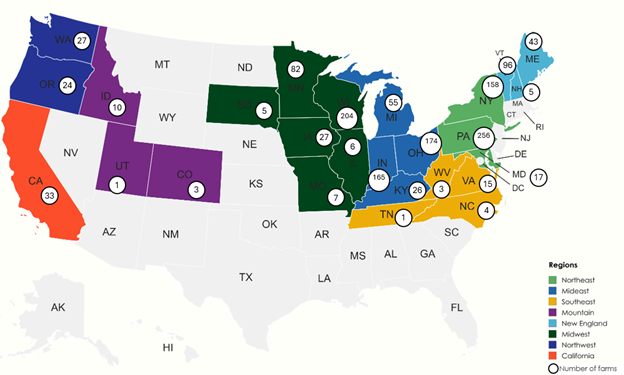
A total of 32 archetypical organic dairy farms, part of Organic Valley, were defined across the United States (US), which was divided into eight regions (Figure 1). Each archetypical farm, or farm scenario, is named depending on the number of lactating cows, animal breed (H=Holstein, J = Jersey, XB=Cross breed), manure type (Sol = solid, Slu = slurry, Bp = bedded pack), certified grass-fed organic farm (Grass), and isolation from the electricity grid (OGNG=Off-grid powered by natural gas, OGD=Off-grid powered by diesel). Farm activities (e.g., dairy diet production and composition, manure management, etc.) are differentiated between grazing and non-grazing months but emission results are averaged throughout the year. The grazing season lasts a minimum of 4.5 months and up to a maximum of 9 months, depending on the region. Similarly, the amount of manure that is collected and stored varies between grazing and non-grazing seasons before manure land applications,  2 times a year in spring and fall. For example, farm scenarios collect and store between 10 to 50% of manure excreted by the herd (with the rest deposited directly on pastures) during the grazing season. During the non-grazing season, nearly 80 to 90% of manure is collected and stored. This is important as the amount and timing of manure storage affects both GHG and NH3 emissions.

Figure 1. Defined regions and number of Organic Valley dairy farms per state. States with no numbers indicate that there are no dairy farms in that state. The number of farms is for reference only as not all farms have been modeled in the study. Only 5 farms were modeled in the Midwest, 5 farms in New England, 2 farms in California, 2 farms in the Northwest, 9 farms in the Mideast, 5 farms in the Northeast, 3 farms in the Southeast, and 1 farm in the Mountain region.

A dairy farm LCA model was fitted to accommodate organic dairy farm practices throughout farm management, animal diet, manure management, energy and material use, and carbon sequestration from grasslands and feed production. Estimated environmental impacts include GHG emissions, NH3 emissions, eutrophication potential, water use, energy use, and land use, expressed per fat and protein corrected milk (FPCM). This paper focuses on GHG and NH3 emissions from manure management. A sensitivity analysis was conducted to evaluate the effect of different variables and management practices on GHG emissions to highlight avenues for mitigation.

What Have We Learned?

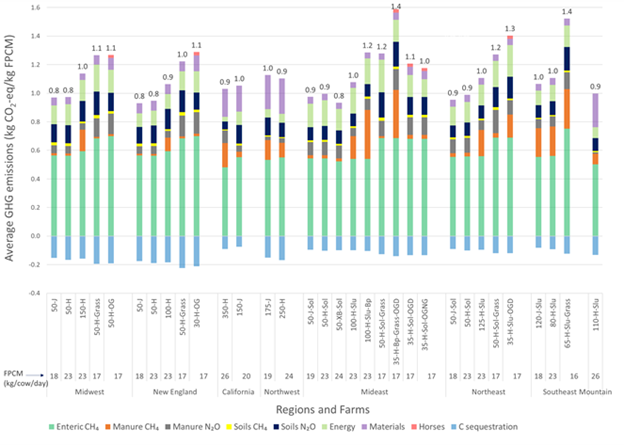
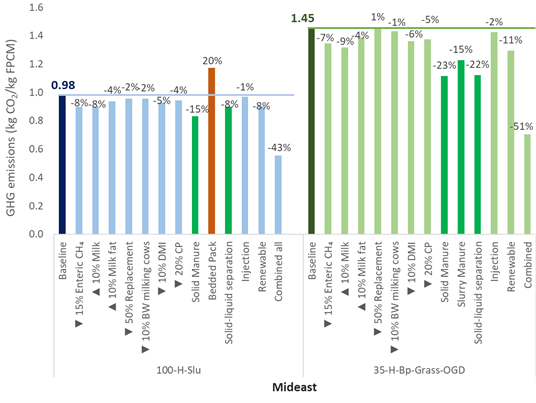
Enteric methane (CH4) continues to be the main source of GHGs throughout all modeled farm scenarios (Figure 2). GHG emissions are closely related to milk productivity, as FPCM is defined as the denominator, or functional unit. As a result, scenarios with higher milk productivity have lower GHG intensity and scenarios with lower milk productivity have higher GHG intensity. After enteric CH4, manure management is the second source of GHGs in farms managing slurry manure and with bedded packs, with emissions from manure storage (manure CH4 and N2O) and land application (soils CH4 and N2O) accounting for up to 42% of farm level GHGs. Overall, farms with <100 cows manage solid manure, while farms with >100 cows handle slurry manure. Storage of slurry manure promotes anaerobic conditions that lead to emission of CH4, the main source of GHG emissions from these farms. CH4 emissions from slurry manure storage are directly related to temperature and presence of volatile solids (VS) in storage, hence, most CH4 from slurry manure storage is emitted during the grazing season (hotter temperatures) despite a lower manure collection rate vs non-grazing months. Emissions of CH4 from bedded packs are even more important than from slurry manure, given that bedded packs create ideal conditions for CH4 emissions (high temperatures, accumulation of VS, etc.) that remain during winter and summer months. Sensitivity analysis on different herd productivity, feed efficiency, and management practices show altering manure management can achieve important GHG mitigation (Figure 3).

Figure 2. Greenhouse gas emissions (GHGs) (average for grazing and non-grazing seasons) for each modeled farm scenario and region after accounting for carbon sequestration (negative). Fat and protein corrected milk (FPCM) production per scenario is shown to relate GHGs to milk production.
Figure 3. Sensitivity of different farm efficiency variables and management practices on greenhouse gas (GHG) emissions for two farms modeled in the Mideast region.

As with GHGs, scenarios with lower FPCM have higher intensity of NH3 emissions (Figure 4). Manure storage and land application are the main sources of NH3 emissions, but the ratio varies among farm scenarios. For example, soils are the main source of NH3 in the Mideast Grass scenarios, as most manure is deposited directly on pastures. Grass farms have diets high in grass and forage that result in higher nitrogen excretion and potential for NH3 to be volatilized. However, manure storage remains the main source of NH3 emissions even for Grass scenarios in the Northeast and Southeast regions, which have higher monthly temperatures than the Midwest region. Overall, solid manures have higher NH3 intensities than slurry manures given higher pH during storage. In addition, farms storing slurry manure have a crust that acts as a barrier to wind that promotes NH3 loss.

Figure 4. Ammonia (NH3) emissions from modeled farms and regions. Manure management includes barn and manure storage, and soil with manure land application.

Future Plans

Temperature is a key driver of both GHG and NH3 emissions from organic dairy farms. Future work will explore how temperature increments could affect overall emissions to identify which regions are more susceptible to GHG increments. The degree of this impact will be compared against the effect of alternative management practices to identify those with the highest mitigation potential.

Authors

Presenting & corresponding author

Horacio A. Aguirre-Villegas, Scientist III, University of Wisconsin-Madison, aguirreville@wisc.edu

Additional authors

Rebecca A. Larson, Professor, University of Wisconsin-Madison; Nicole Rakobitsch, Director of Sustainability, Organic Valley; Michel A. Wattiaux, Professor, University of Wisconsin-Madison; Erin Silva, Professor, University of Wisconsin-Madison

Additional Information

Aguirre-Villegas HA, Larson RA, Rakobitsch N, Wattiaux MA, Silva E, Environmental Assessment of Organic Dairy Farms in the US: Mideast, Northeast, Southeast, and Mountain Regions, Cleaner Environmental Systems, 15:100233, https://doi.org/10.1016/j.cesys.2024.100233

Acknowledgements

This material is supported by the National Institute of Food and Agriculture, U.S. Department of Agriculture, under award number 2021-51106-35492. Any opinions, findings, conclusions, or recommendations expressed in this publication are those of the author(s) and do not necessarily reflect the view of the U.S. Department of Agriculture.

The authors are solely responsible for the content of these proceedings. The technical information does not necessarily reflect the official position of the sponsoring agencies or institutions represented by planning committee members, and inclusion and distribution herein does not constitute an endorsement of views expressed by the same. Printed materials included herein are not refereed publications. Citations should appear as follows. EXAMPLE: Authors. 2025. Title of presentation. Waste to Worth. Boise, ID. April 7-11, 2025. URL of this page. Accessed on: today’s date. 

Assessing the impacts of crop and nutrient management practices on long-term water quality and quantity in a dairy intensive irrigated agricultural region using the SWAT model

Purpose

The dairy industry in Idaho has grown substantially over the past 30 years and is the state’s largest agricultural commodity, accounting for $3.7 billion in sales in 2022. Roughly 500,000 of Idaho’s 660,000 dairy cows reside in a six-county region known as the Magic Valley, a name originating in the early 1900s when large canal irrigation projects turned a dry landscape into verdant farmland. The Magic Valley is semi-arid, receiving around 254 mm of precipitation each year and requiring cropland to be irrigated throughout the growing season. Due to a limited amount of water available for irrigation each season cropland area has not expanded since the 1980s.

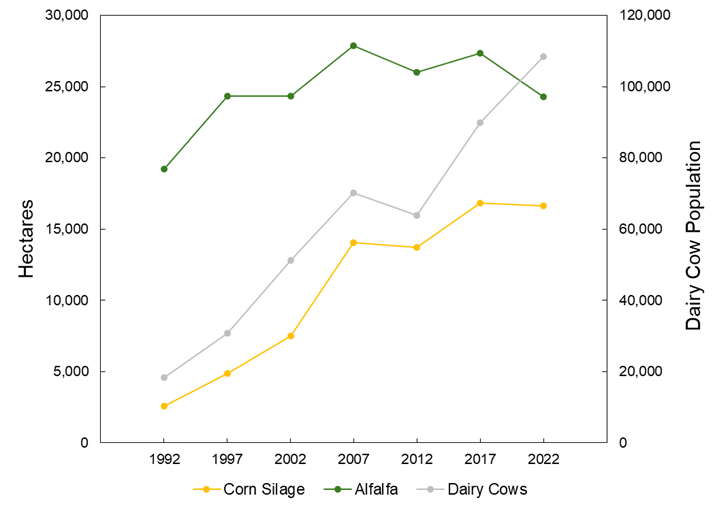
The large number of dairy cows in the Magic Valley has shifted crop production towards forage crops, predominantly silage corn and alfalfa. For example, between 1992 and 2022 the number of dairy cows in Twin Falls County increased from 18,000 to 108,000. During this same timespan corn silage and alfalfa saw a 14,000 and 5,000 hectare increases in land cover, respectively (Figure 1). This change in land cover has potentially increased consumptive water use within the region through the replacement of crops with shorter irrigation seasons (e.g., wheat and beans) with forage crops. In addition to changes in water use, the increase in dairy cattle has resulted in greatly increased manure applications to surrounding fields. It is typical for cropland to receive manure at rates of 52 Mg ha-1 year-1, which can input high amounts of nitrogen and phosphorus beyond what is removed by the crop. Over time, this could result in soil phosphorus enrichment and the leaching of nitrate to groundwater.

Figure 1. Population of dairy cows in Twin Falls County from 1992 to 2022 along with total hectares of corn silage and alfalfa.

What Did We Do?

The study area for this project was the Twin Falls Canal Company, a large irrigation project in southern Idaho. Investigation into potential changes in water quality and quantity brought about by the growing dairy agriculture in southern Idaho was carried out using the Soil and Water Assessment Tool (SWAT) model. SWAT is a physically based geospatial watershed-scale hydrologic model that incorporates climate, topography, soils, land cover, and management practice data. Model scenarios included examining changes in consumptive water use over time, effects of irrigation practices on the leaching of water and nutrients, and the impact of continuous manure applications on the buildup and leaching of nutrients. Nutrient cycling and crop nutrient uptake were calibrated in the model using two USDA-ARS eight-year studies. The first study applied manure under a corn-barley-alfalfa rotation only when soil nutrient concentrations were deficient, and the second study applied manure on a yearly basis in the spring at a rate of 52 Mg ha-1 under a barley-sugar beet-wheat-potato rotation.

Table 1. Crop areas and percentages under the 1992 and 2022 scenarios.

1992 km2 (%) 2022 km2 (%)
Alfalfa 189 (25.3) 244 (32.8)
Barley 104 (13.9) 132 (17.7)
Beans 169 (22.7) 60 (8.0)
Corn Silage 55 (7.4) 191 (25.7)
Potatoes 35 (4.6) 34.5 (4.6)
Sugar Beets 46 (6.2) 26 (3.5)
Wheat 148 (19.8) 57 (7.6)

Table 1. Crop areas and percentages under the 1992 and 2022 scenarios.

Consumptive water use within the Twin Falls Canal Company was compared between two distinct time periods: pre-dairy and present. 1992 was selected as the pre-dairy benchmark due to being before large increases in dairy cattle numbers. Modeled crops were alfalfa, barley, beans, corn silage, potatoes, sugar beets, and wheat, which account for over 95% of irrigated cropland within the TFCC. Land cover in 2022 was used as the present scenario, and crop distributions were altered for the 1992 scenario based on USDA agricultural census data (Table 1). The model was run using climate data from 2002 to 2022 to have consistency between the two scenarios and to allow for year-to-year variability weather patterns. Automatic irrigation routines were used in the model, with a 9.1 mm irrigation event being triggered when soil water content dropped 5 mm below field capacity. 9.1 mm was chosen as the daily irrigation amount because it is roughly equivalent to the flow rate of an 850 gallon per minute center pivot. Irrigation schedules varied by crop within the April 15th – October 31st irrigation season (Table 2).

Table 2. Irrigation seasons for modeled crops.

Irrigation Season
Alfalfa April 15th – October 9th
Barley April 15th – July 25th
Beans June 26th – September 10th
Corn Silage May 25th – September 18th
Potatoes May 15th – September 1st
Sugar Beets April 20th – September 25th
Wheat April 15th – July 16th

What Have We Learned?

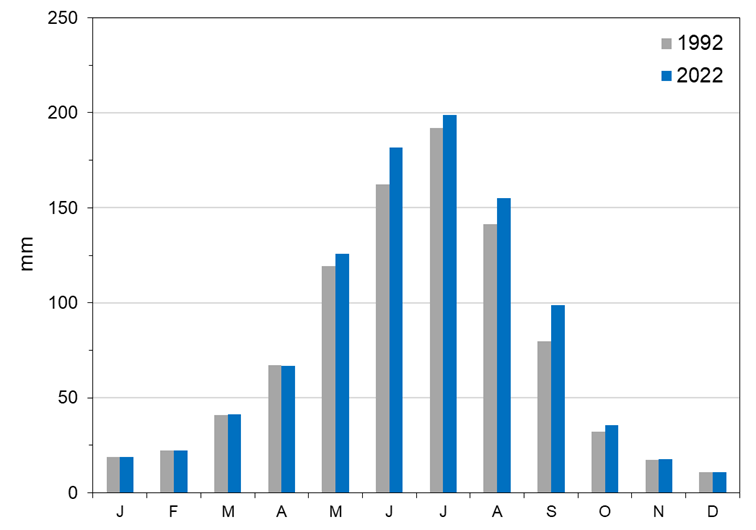
Modeled changes in land use within the Twin Falls Canal Company towards forage crops for dairy cattle have increased consumptive use during the year by 9% on average. June, August and September showed the greatest average increases in evapotranspiration (ET) (Figure 2). Irrigation amounts increased under the 2022 land use scenario for all months except April. Percolation under the 2022 scenario also increased to an average of 155 mm each year, up from 132 mm in the 1992 land use scenario.

Figure 2. Modeled monthly average cropland ET for the pre-dairy (1992) and post-dairy (2022) land cover scenarios.

Typical yearly water diversions for the Twin Falls Canal Company were sufficient to meet the current and future irrigation demand. Diversion reductions in August and September are common depending on reservoir storage and the timing and volume of snowmelt. A shift towards greater cropland area irrigated during those months could require deficit irrigation during extreme drought years, which are likely to become more common given climate change projections indicating reduced snowpack and earlier snowmelt runoff.

SWAT was able to reasonably represent manure nitrification, including the increases in nitrification during the year following sugar beet and potato residue being left on the field (Table 3).  Crop nutrient uptake in the two USDA-ARS studies was also able to be accurately modeled after adjusting nutrient uptake parameters. Modeled soil nitrate and plant-available phosphorus concentrations were similar to field samples. Changes to SWAT source code was necessary to better partition “fast” and “slow” organic nitrogen fractions in manure between the two pools and limit mineralization when the air temperature is below 6 degrees Celsius. Under a manure application rate of 52 Mg ha-1 soil plant-available phosphorus levels exceed the allowed maximum of 40 mg kg-1 in just two years. Applying manure only when needed to satisfy crop nutrient requirements did not result in soil plant-available phosphorus approaching or exceeding the 40 mg kg-1 threshold. In addition to high soil phosphorus levels, nitrogen mineralization from yearly applications of manure resulted in high soil nitrate levels. Modeled percolation using actual irrigation amounts over the eight-year study totaled 1,176 mm and resulted in 1,256 kg ha-1 of leached nitrogen. This highlights the risk that yearly manure applications can have to water quality, especially if water is applied in excess of crop needs when also accounting for soil moisture. In addition, high variability in manure nitrogen and phosphorus concentrations suggests yearly fixed-rate applications are not the ideal for managing nutrient budgets.

Table 3. Yearly and in-season manure nitrogen mineralization from the SWAT model output compared to in-season nitrogen mineralization collected from field samples during the long-term manure study. Asterisks denote years in which sugar beet or potato residue was left on the field, resulting in greater N mineralization the following year.

Year SWAT N Mineralization SWAT In-Season N

Mineralization

Field In-Season Mineralization
kg ha-1 kg ha-1 kg ha-1
2013 211 117 180
2014* 287 192 110
2015 442 308 280
2016* 321 205 190
2017 399 242 250
2018* 297 197 150
2019 393 285 230
2020 357 145 150
Total 2,707 1,690 1,540

Future Plans

Now that the SWAT model has been fully calibrated, the next step will be to test various scenarios in which yearly manure application amounts, crop rotations, and irrigation schedules are adjusted. Typical regional dairy crop rotations include silage corn, alfalfa, wheat, barley, triticale, and occasionally potatoes or sugar beets. Manure is not applied to alfalfa, possibly allowing for a drawdown of phosphorus that has accumulated over previous years. Changing irrigation schedules will alter the timing and quantity of percolated water which will change nutrient export characteristics. Incorporating these scenarios over a large irrigation district with variable soils should identify areas that are more at risk of nutrient losses through runoff or leaching. Results from this research will be used to inform management agencies on the water use and water quality implications of crop rotations, manure applications, and irrigation schedules in southern Idaho.

Authors

Presenting & corresponding author

Galen I. Richards, PhD Candidate, University of Idaho, grichards@uidaho.edu

Additional authors

Erin Brooks, Professor, Department of Soil and Water Systems, University of Idaho

Linda Schott, Assistant Professor and Nutrient & Waste Management Extension Specialist, Department of Soil and Water Systems, University of Idaho

Kossi Nouwakpo, Research Soil Scientist, USDA-ARS Northwest Irrigation and Soils Research Station

Daniel Strawn, Professor, Department of Soil and Water Systems, University of Idaho

Additional Information

https://www.uidahoisaid.com/

Acknowledgements

This research was funded under the University of Idaho Sustainable Agriculture Initiative for Dairy (ISAID) grant USDA-NIFA SAS 2020-69012-31871

I would like to thank USDA-ARS researchers April Leytem, Robert Dungan, and Dave Bjorneberg at the Northwest Irrigation and Soils Research Station in Kimberly, ID for providing me with data from their long-term research studies and general assistance in accurately modeling regional agricultural practices.

The authors are solely responsible for the content of these proceedings. The technical information does not necessarily reflect the official position of the sponsoring agencies or institutions represented by planning committee members, and inclusion and distribution herein does not constitute an endorsement of views expressed by the same. Printed materials included herein are not refereed publications. Citations should appear as follows. EXAMPLE: Authors. 2025. Title of presentation. Waste to Worth. Boise, ID. April 7-11, 2025. URL of this page. Accessed on: today’s date. 

Moving the “Sustainability” Needle

Purpose

Most farms are on a continuous journey of environmental stewardship. This journey includes voluntary and regulatory pathways (e.g., programs, regulations) and checkpoints (e.g., certifications, production goals). Industry initiatives like the Net Zero Initiative (US Dairy) and Pork Cares (National Pork Board) provide goals that serve as destination descriptions, motivating collective action amongst their farms. However, industry initiatives do not dictate which mitigation actions can serve as the route.  Every farm has a unique starting point in the present, and there are many pathways for the future that can be illuminated, shaped and supported by advisors.

This workshop was designed to provide the advisor community insights on opportunities to support the industries’ sustainability commitments through data, methods, and tools related to mitigation adoption.  The desired outcome was to accelerate adoption by strengthening a community of support for sustainability initiative practices.

What Did We Do?

This workshop used multiple formats to engage participants in discussion and ideation, recognizing there is a need not only for purposeful planning, but also for quick action. There were brief introductions to a suite of tools and resources that support on-farm decision-making, and opportunities for crowd-sourcing additional material. Collective discussions charted networks and roles for advisors to support farmers in the implementation process for select scenarios. Activities considered both one-on-one advisor-advisee relationships, as well as the role of advisors within a broader network of actors involved in sustainability initiatives.  The workshop culminated in identifying basic, finite steps for the promotion of action.

What Have We Learned?

The workshop content supports advisors for all types of livestock farms, but draws heavily from experiences in the swine and dairy industries. In extension work, we observed that advisors can serve as connectors, motivators, and informers. We noticed that exploring options for mitigation pathways can require a variety of advisor services.

Summary of Workshop Findings

Following the workshop, an accessible guide of resources to support participants and LPELC community members was compiled, available here:

2025 W2W Moving the Needle Summary Document

Authors

Presenting authors

MaryGrace Erickson, Postdoctoral Associate, University of Minnesota

Mahmoud Sharara, Extension Specialist, North Carolina State University

Erin Cortus, Extension Engineer, University of Minnesota

Corresponding author

Erin Cortus, Extension Engineer, University of Minnesota, ecortus@umn.edu

Additional Information

FARM Environmental Stewardship – https://nationaldairyfarm.com/dairy-farm-standards/environmental-stewardship/

Pork Cares Sustainability Report – https://www.porkcares.org/

Acknowledgements

This workshop is supported by Multistate Project S1074 – Fostering Technologies, Metrics, and Behaviors for Sustainable Advances in Animal Agriculture.  This workshop benefitted from supporting materials provided by National Pork Board and the National Milk Producers Federation Farmers Assuring Responsible Management Program.

The authors are solely responsible for the content of these proceedings. The technical information does not necessarily reflect the official position of the sponsoring agencies or institutions represented by planning committee members, and inclusion and distribution herein does not constitute an endorsement of views expressed by the same. Printed materials included herein are not refereed publications. Citations should appear as follows. EXAMPLE: Authors. 2025. Title of presentation. Waste to Worth. Boise, ID. April 7-11, 2025. URL of this page. Accessed on: today’s date. 


Building Value in Baseline Sustainability Assessments

Purpose

Environmental assessments are core to sustainability initiatives in several livestock sectors. For example, the Farmers Assuring Responsible Management Environmental Stewardship Program and the National Pork Board’s On-Farm Sustainability Reports support dairy and swine farms, respectively, in documenting baselines and improving environmental performance. Although many farms have a long history of environmental stewardship, farms may have limited experience in quantifying and communicating about farm environmental performance. In these cases, an environmental stewardship assessment or other evaluation can be an opportunity to learn about sustainability metrics and discuss their farm impacts. Farms, advisors, processors, and other stakeholders share responsibility in conducting and responding to environmental assessments. Uniquely, advisors and educators can build value in environmental assessment processes by assisting stakeholders in interpreting and communicating results.

What Did We Do?

To improve the translation from assessments to action, we designed a cross-institutional extension program for farmers and advisors in 2023. This W2W workshop shared key findings from this extension program by immersing participants in similar activities. The workshop included two parts. In Part I “Understanding environmental assessment models,” participants discussed fictional assessment results–reviewing inputs, then outputs, then discussing unknowns to the calculation processes. In Part II “Your role in assessment processes,” participants developed an action plan for incorporating environmental assessments into their own advising and professional work through facilitator-guided ideation activities. In summary, our workshop sought to empower participants to:  1) accurately interpret and explain the results of an environmental assessment; 2) develop strategies for incorporating environmental assessment results into their professional activities; 3) build confidence in initiating and leading discussions on environmental sustainability assessments.

What Have We Learned?

In brief, based on the perspectives of farmers and advisors in our Fall 2023 focus groups, an advisor can recognize:

    • Environmental assessments and reports can be relatively simple;
    • Assessments will not capture all the specifics for every farm;
    • Assessments enumerate key environmental indicators (greenhouse gases and energy consumption), and this can help processors and retailers sell more animal products;
    • More support, beyond an assessment, is needed to inform on-farm decision-making.

These acknowledgments are a starting point to establish a common understanding between advisors and others involved in environmental assessment processes.

Summary of Workshop Findings

This workshop generated ideas that we collected into a summary document to distribute to the broader community of Livestock and Poultry Environmental educators and advisors, available below:

2025 W2W Building Value in Baselines Summary Document

Authors

Presenting author

MaryGrace Erickson, Postdoctoral Associate, University of Minnesota

Corresponding author

Erin L. Cortus, Associate Professor and Extension Engineer, University of Minnesota, ecortus@umn.edu

Additional authors

Maristela Rovai, Associate Professor and Dairy Extension Specialist, South Dakota State University

Patricia Villamediana, Dairy Field Specialist, South Dakota State University

Amy M. Schmidt, Professor & Animal Manure Management Extension Specialist, University of Nebraska-Lincoln

Richard R. Stowell, Professor, University of Nebraska-Lincoln

Additional Information

University of Minnesota Guidance for Milk Processors – https://z.umn.edu/processorguidance

FARM Environmental Stewardship – https://nationaldairyfarm.com/dairy-farm-standards/environmental-stewardship/

Pork Cares Sustainability Report – https://www.porkcares.org/

Acknowledgements

We thank Midwest Dairy for supporting the original work. Additionally, we are grateful to participants in these focus groups and surveys for sharing their experiences. This workshop benefitted from supporting materials provided by National Pork Board and the National Milk Producers Federation Farmers Assuring Responsible Management Program.

The authors are solely responsible for the content of these proceedings. The technical information does not necessarily reflect the official position of the sponsoring agencies or institutions represented by planning committee members, and inclusion and distribution herein does not constitute an endorsement of views expressed by the same. Printed materials included herein are not refereed publications. Citations should appear as follows. EXAMPLE: Authors. 2025. Title of presentation. Waste to Worth. Boise, ID. April 7-11, 2025. URL of this page. Accessed on: today’s date. 

Can Environmental Data Spark a Circular Economy? Exploring the Potential of a California Dairy Manureshed

Purpose

California’s San Joaquin Valley (SJV) has uniquely “wicked” problems with nitrogen (N) management as it is a highly productive agricultural region where many communities rely on nitrate-contaminated groundwater for drinking. Some of this N loading is attributed to manure from dairies whose N output often exceeds the requirement of forage N, resulting in surplus manure N. The counties in the SJV have the worst groundwater quality and represent the 8 highest dairy populations. But, they also make up 7 of the 10 counties with the highest fertilizer inputs which also contributes to groundwater degradation. There is no doubt that California dairies contribute to N loading, but they also hold unique potential to utilize their surplus manure N to replace a portion of the 550,000 tons of N fertilizer applied to California’s diverse agricultural production. If appropriate measures are taken, the California dairy industry is well positioned to improve water quality in California by limiting its own excess N application while simultaneously replacing its neighbors’ synthetic inputs. The purpose of this preliminary manureshed analysis is to: 1) identify where surplus manure may become a primary N resource in California and 2) quantify its potential to reduce synthetic fertilizer inputs.

Past manureshed analyses have demonstrated manure’s potential to address crop nutrient requirements while acknowledging difficulties with pathogens, lack of spatially available data for CAFOs, and unpredictable manure nutrient variability within and across facilities. A California manureshed is uniquely challenging because of its large proportion of human-consumed crops and surplus dairy manure, which has a low value-to-mass ratio. However, there has been a concerted effort from government entities and the dairy industry to properly account for dairy manure properties to understand the potential expansion of a dairy manure market. Part of this effort has led to reporting requirements, leading to an abundance of facility-level data including location and N generated. These data can be analyzed to understand the economic and environmental potential of using dairy manure beyond its current practices.

What Did We Do?

We applied past manureshed approaches with California-specific data to understand available dairy manure and crop N need in 2021, which was the most recent crop data available to the authors at the time of publishing these proceedings.

To account for N generated on each dairy, we used the herd data from the California Dairy & Livestock Database (CADD), compiled by the California Air Resources Board. We assumed a milk cow produced 70 lbs of milk a day and, per the ASABE standard, that resulted in 0.92 lbs N per milk cow per day. A calf, dry cow, and heifer were assumed to produce 0.14, 0.5, and 0.26 lbs N per animal per day, respectively.

To calculate recoverable plant available N (PAN) (Figure 1) from manure generated on-farm, we assumed that 30% was lost to ammonia before any land application (Chang et al. 2006) and that manure was 21% organic matter (with 30% of that becoming plant available) and 79% inorganic (NH4+). Of the inorganic fraction available for land application, we assumed that 40% was lost to leaching, volatilization, or denitrification (Chang et al. 2006). We acknowledge that these assumptions about manure handling and, therefore, N forms and transformations are highly variable depending on local conditions, but we feel confident that this represents an accepted target “average” as described by Chang et al. 2006. This paper is a result of an expert panel review and informed California’s current regulatory framework for dairies. We also highlight that our “recoverable” manure only includes that year’s plant available portion and does not account for organic N from previous manure applications that may be contributing to actual available N.

Figure 1: Assumptions to calculate recoverable plant available N

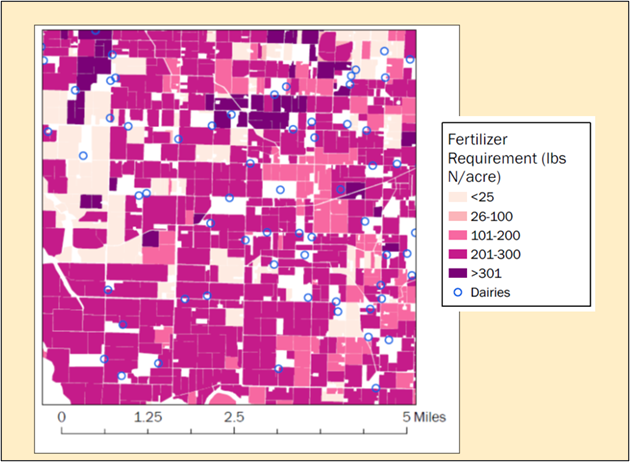
For crop N needs, we first identified farm boundaries and crops grown (up to 4 per year) based on LandIQ data and fertilizer N requirements from the California Crop Fertilization Guidelines and average county yields from USDA NASS. We assigned each LandIQ polygon a value for fertilizer N required (Figure 2). We summed N fertilizer requirements for all land polygons that were within 2, 5, and 10 miles of each dairy. A polygon was considered within a specified distance of a dairy based on the distance from any edge of the field to the latitude/longitude provided in the CADD database. Finally, all fertilizer requirements were multiplied by 1.16 to account for a 60% efficiency for manure and a 70% efficiency for fertilizer.

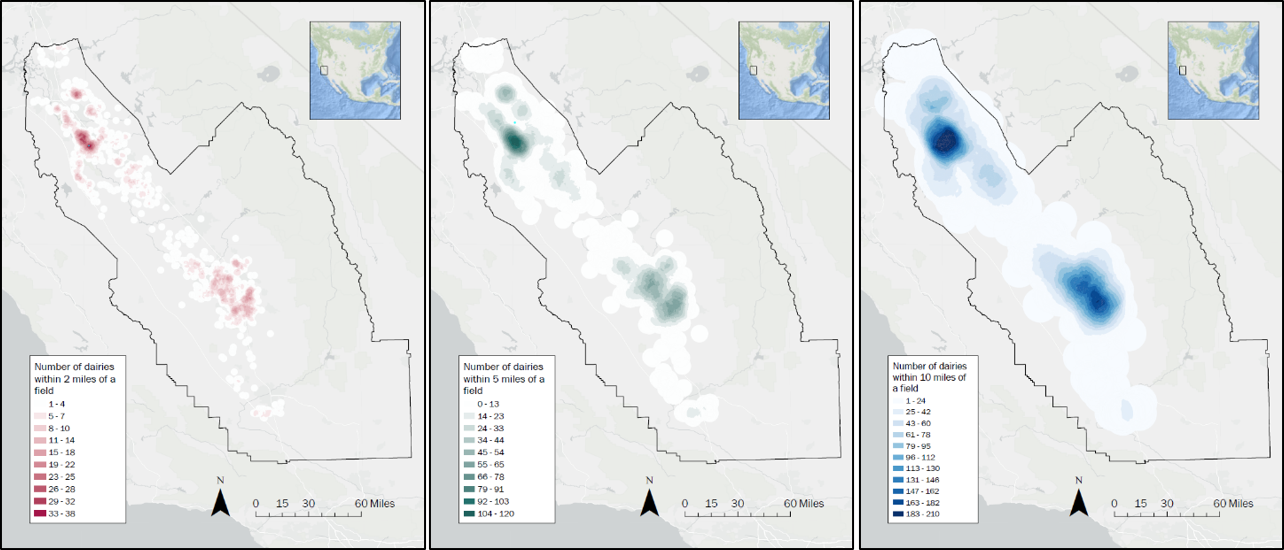
To determine (hypothetically) allocated manure to nearby fields, we used the Ford Fulkerson algorithm to maximize flow. This algorithm was necessary because there are areas with significant concentration of dairies (Figure 3). Therefore, if a dairy is within 2 (or 5 or 10) miles of a field, it would be competing with other dairies to supply the demand. There would be several combinations possible for each dairy (could access multiple fields) and each field (accessible by multiple dairies) (Figure 4). The algorithm maximized the amount of manure used, and prioritized forage fields (wheat/corn/grass). We assumed that a field could supply manure from multiple dairies and that a dairy could supply manure to multiple fields.

Figure 2: (Left) Recoverable Plant Available Nitrogen generated by dairy facility. (Right) N fertilizer requirement by polygon (lbs/acre) for 2021 (up to 4 crops in one year). Calculated via LandIQ (crop classification) and FREP (fertilizer recommendations, mostly pre-plant).
Figure 3: Number of dairies within 2, 5, or 10 miles of a field.
Figure 4: 5-by-5 mile area with dairies and field boundaries (actual data, chosen arbitrarily).

What Have We Learned?

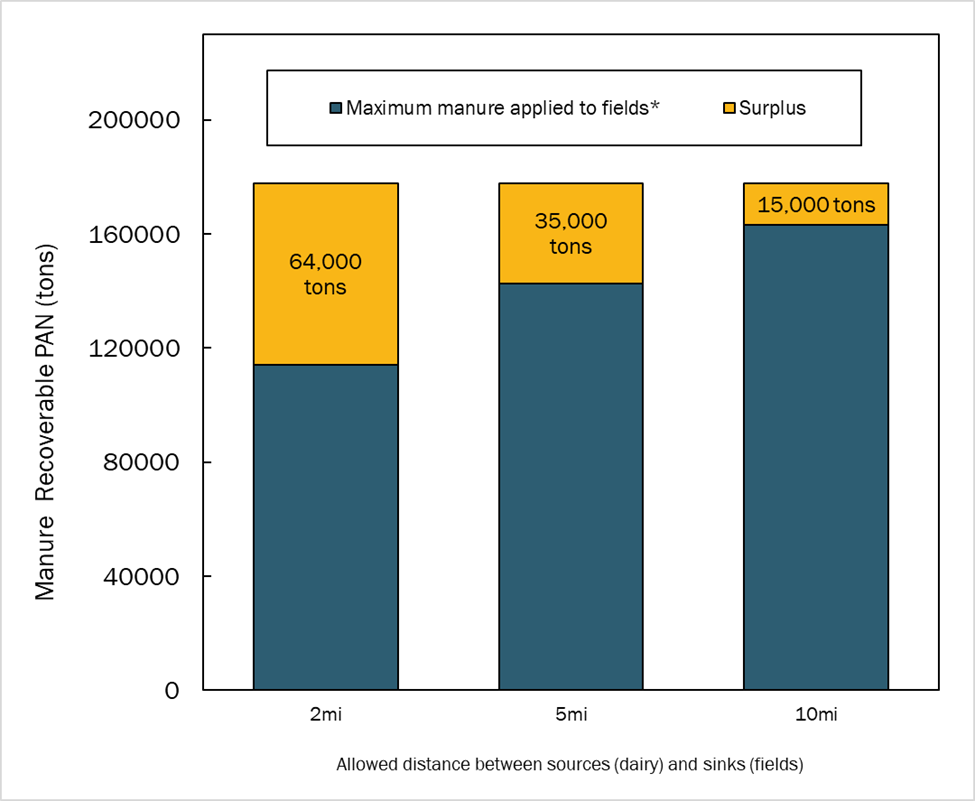
Total manure N generated was 298,000 tons, and we estimate that 178,000 tons of that was plant available N (Figure 4). It should be noted that our assumptions about N loss are aligned with ambitious environmental goals and resulted in much higher recovery rates compared to NuGIS. We also make a blanket assumption about relative organic / inorganic forms. In our hypothetical exercise where this manure could be applied to all fields (prioritizing forage first) within 2 miles of dairies, 114,000 tons were allocated, leaving 64,000 tons of surplus manure N. If the boundary were expanded to 5 miles, 143,000 tons could be allocated leaving 35,000 tons of surplus manure N. Surplus manure N was only 15,000 tons if manure could be applied up to 10 miles away from dairies where 163,000 tons were applied. Note that these simulations assume that manure can be applied to any crop (including human-consumed ones), which is not currently realistic.

Figure 5: Recoverable PAN (tons) summed over 8 counties for the 2021 crop year. *Maximum manure applied to fields is hypothetical and based on the Ford Fulkerson Algorithm where the goal was to maximize flow of manure to fields from dairies within 2, 5, or 10 miles from the field’s edge.

The amount of manure available for application varied by county. In Tulare, there was still a surplus N of 10,500 tons when assuming manure could be applied to all acreage within 10 miles of a dairy (Figure 6). However, in 3 counties (Fresno, San Joaquin, Madera), all hypothetical fertilizer N requirement could be met by applying manure within just 5 miles. Merced, Stanislaus, and Kern had fertilizer requirements met by expanding the allowed distance traveled to 10 miles. The crop types that were fulfilled by manure also differed by county (Figure 7, aggregated by county of field receiving manure).

Figure 6: Recoverable nitrogen (tons) summed by 8 counties for the 2021 crop year. *Maximum manure applied to fields is hypothetical and based on the Ford Fulkerson Algorithm where the goal was to maximize flow of manure to fields from dairies within 2, 5, or 10 miles from the edge.
Figure 7: Nitrogen fertilizer requirement fulfilled by manure*, categorized by crop. *Maximum manure applied to fields is hypothetical and based on the Ford Fulkerson Algorithm where the goal was to maximize flow of manure to fields from dairies within 2, 5, or 10 miles from the edge.

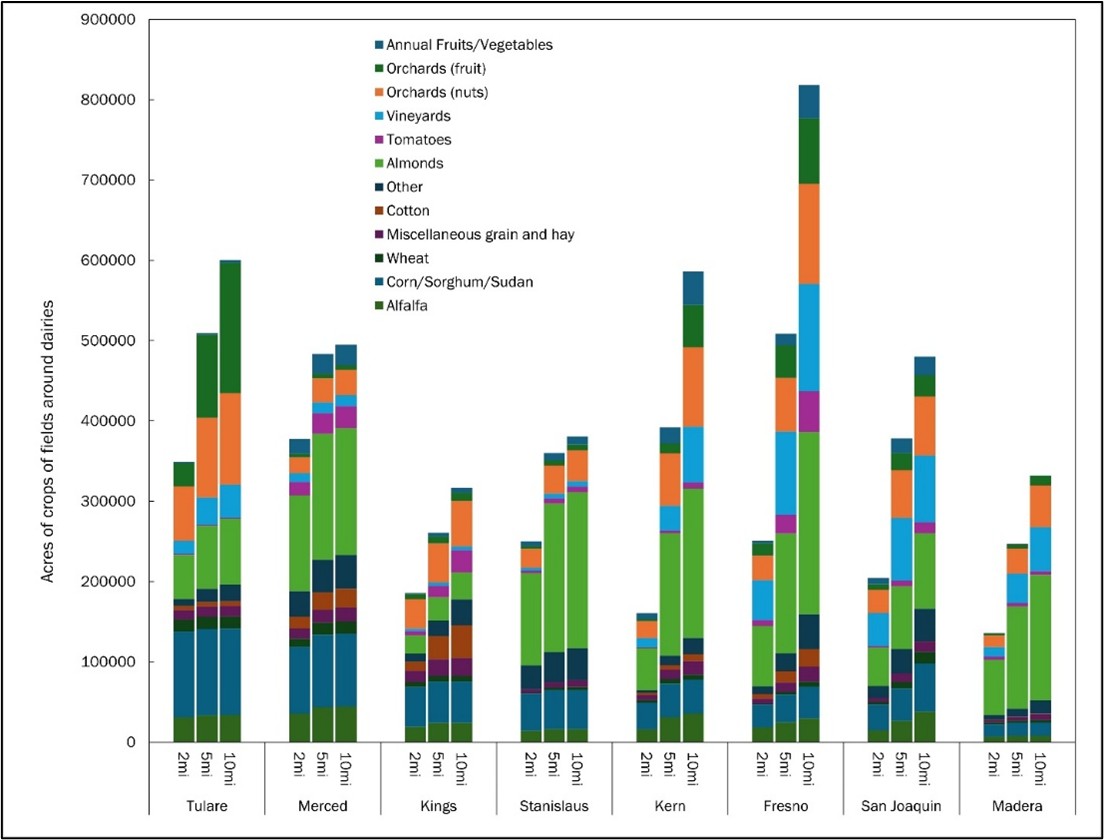
The California agricultural landscape, with many fruits and vegetables that go directly to human consumption, makes our hypothetical application rate currently unviable. For example, the only dairy forage crops with substantial acreage that are currently eligible for raw manure application are wheat, alfalfa (which does not receive N), and corn. These make up between 18-44% of area within 2 miles of a dairy, and increasing the distance from a dairy up to 10 miles decreases the percentage of crops that are forage (Figure 8). In other words, the farther away from a dairy, the more likely land use is classified as a crop that would be flagged for pathogen concerns. This highlights that to effectively use manure in the SJV, there will need to be a concerted effort to address logistical issues associated with human-consumed crops. However, these crops are generally high value, and some commodities are concentrated within a county (Figure 7).

Figure 8: Crop acreage of fields around dairies. Fields were included if their edge was within 2, 5, or 10 miles of a dairy.

Future Plans

This phase of the manureshed analysis was intended to demonstrate the potential for manure to reduce fertilizer inputs; however, its practical applications are limited. In the next phase, we hope to improve our analysis by accounting for more details of manure, such as solid vs. liquid (for improved predictions of N content/transformation/transportability) and phosphorus and potassium concentration/stoichiometry. We will work with commodity groups, with a focus on those within 10 miles of dairies, to understand the current level of interest and obstacles for integrating different manure products into their cropping systems. These improvements to our methodology will result in a quantification of environmental and economic opportunity to increase the likelihood of a circular economy by expanding the use of dairy manure.

Authors

Presenting & corresponding author

Emily R Waring, Agricultural Practice Impact Analyst, Sustainable Conservation, ewaring@suscon.org

Additional authors

    • Ryan Flaherty, Senior Director of Circular Economies, Sustainable Conservation
    • Sarah Castle, Senior Scientist, Sustainable Conservation
    • John Cardoza, Project Director, Sustainable Conservation

The authors are solely responsible for the content of these proceedings. The technical information does not necessarily reflect the official position of the sponsoring agencies or institutions represented by planning committee members, and inclusion and distribution herein does not constitute an endorsement of views expressed by the same. Printed materials included herein are not refereed publications. Citations should appear as follows. EXAMPLE: Authors. 2025. Title of presentation. Waste to Worth. Boise, ID. April 7-11, 2025. URL of this page. Accessed on: today’s date. 

Changes in amount and location of US dairy manure production from 1970-2023

Purpose

We estimated milking cow manure production for US states from 1970 to 2023 with the aim to provide a broad perspective to stakeholders who manage and optimize the use of dairy manure. Stakeholders include producers and those working on their behalf such as agronomists, applicators, engineers, extension agents, researchers, governmental agencies, cooperatives, and markets.

It is hoped that with increased understanding of how manure production has changed over time and location stakeholders can better understand trends and historical conditions which impact their efforts.

What Did We Do?

We estimated milking cow manure production for 48 US states from 1970 to 2023 using an empirical equation estimating manure production as a function of milk production published by the American Society of Agricultural and Biological Engineer’s Manure Production and Characteristics standard. To apply this equation to each state we utilized two data sources produced by the United States Department of Agriculture’s National Agricultural Statistics Service (NASS), annual milk production and annual milking cow herd size. To gain further insight data sources reporting the number of dairy farms and land available for manure application in each state were additionally gathered from NASS and reported in combination with manure production. The workflow and references for combining this data are displayed in the following figures.

Figure 1. Workflow to estimate annual dairy manure production using ASABE’s Manure Production and Characteristics standard and NASS milk cow production and cow herd inventory data sources.
Figure 2. Workflow to estimate number of dairies and acres for manure application from NASS data sources.

What Have We Learned?

Nationally annual dairy manure production has decreased from 1970-2023 by approximately 4% (2.2 billion gallons). From 1998 to 2023 annual dairy manure production increased by approximately 13% (6.4 billion gallons). Although national milking cow numbers generally declined from 1970 to 1998 then nearly remained constant until 2023, this trend was offset by continual increase in manure production per cow from 1970-2023 due to the direct relationship with milk production, which has continued to increase from 1970-2023. Also, the annual number of gallons of manure per dairy farm has increased from 1970-2023 due to a decrease in number of dairies combined with an increase in manure production per cow. It is accepted that the US dairy industry has consolidated over time, this data supports that its’ manure production has consolidated as well.  The author posits based on experience and this analysis that nationally, over time, manure systems in support of livestock production have contributed to an increase in volume of manure being managed to date. As dairy cows move to increasing levels of confinement, from pasture and lots which utilize land base as a manure system to barns with more engineered manure systems, greater collection of manure occurs and therefore must be managed. Regarding the impact of the specific type of engineered manure systems impact on volume of manure that must be managed the author posits this currently varies based on the kind of manure system selected, either adding or subtracting to the managed manure stream, which is a function heavily dependent on local climate (precipitation, evaporation, and length of storage period) and technology adoption (covers, flush systems, separation, and advanced treatment). In the upper Midwest with relatively high precipitation, low evaporation, and long winter periods dairy manure systems are predominantly collect and store only, overall adding to the volume of manure to be managed as additional precipitation is also captured by the uncovered nature of most storages in this region.

Figure 3. National change in manure and milk production, milking cow inventory, and number of dairies from 1970 to 2023.

At the state level the change in manure production has varied. From 1970 to 2023, 12 states have increased manure production, the remaining 26 states have decreased manure production. This has resulted in a change in the location of where manure is produced. In 2023, most manure was produced in a few states. In 2023, 10 states produced 70% of the total annual US dairy manure production, with 6 states producing over 50%.

Figure 4. 2023 annual milking cow manure production, millions of gallons, and percent change of annual milking cow manure production from 1970 to 2023.

Future Plans

Authors seek to maintain this data analysis in a method available to stakeholders, additionally incorporating manure production from swine, beef, and poultry into it, and updating it as future NASS reports are published.

Authors

Presenting & corresponding author

Mike Krcmarik, Professional Engineer, mikekrcmarik@gmail.com

Additional Information

Email corresponding author for copy of all data and figures used in this analysis, including figures published on the poster only.

Acknowledgements

    • American Society of Agricultural and Biological Engineers, Engineering Practices Subcommittee of the ASAE Agricultural Sanitation and Waste Management Committee responsible for standard ASAE D384.2 Manure Production and Characteristics used in this analysis.
    • United States Department of Agriculture’s National Agricultural Statistics Service responsible for the various surveys and reports used in this analysis.
    • Allen Young, Eric County Soil and Water Conservation District (New York) providing valuable review and discussion.

The authors are solely responsible for the content of these proceedings. The technical information does not necessarily reflect the official position of the sponsoring agencies or institutions represented by planning committee members, and inclusion and distribution herein does not constitute an endorsement of views expressed by the same. Printed materials included herein are not refereed publications. Citations should appear as follows. EXAMPLE: Authors. 2025. Title of presentation. Waste to Worth. Boise, ID. April 711, 2025. URL of this page. Accessed on: today’s date.

Manure nutrient trends from 2012-2022

Purpose

Livestock manure nutrients can be variable depending on animal species, age, diet, management, housing, climate, and manure storage and handling. Thousands of samples are analyzed every year by agricultural laboratories across the United States (U.S.). While many published manure characteristics are two decades old, this study provides an updated glimpse into more recent manure data from thousands of samples across the country and reviewed possible trends from 2012-2022 by U.S. regions for common animal categories.

What Did We Do?

We collected manure nutrient data from participating U.S. laboratories and this data was aggregated by researchers at the University of Minnesota into ManureDB, a manure nutrient test database. By February 2024, ManureDB included over 490,000 samples from across the U.S. With ManureDB, data was filtered for the time period from 2012-2022 and common U.S. animal manure categories (solid beef, liquid beef, solid dairy, liquid dairy, solid chicken-broiler, solid chicken-layer, solid turkey, and liquid swine manure) to update nutrient summary statistics for total nitrogen (TN), ammonium-N (NH4-N), phosphorus (P2O5), and potassium (K2O) using the approximately 325,000 samples. Samples were divided by designating samples with <10% total solids as liquid manure and samples with >10% total solids as solid manure. Data was also analyzed to assess regional nutrient comparisons and trends for regions with sufficient samples.

What Have We Learned?

Regional differences impacted nutrient concentrations in solid and liquid manures. When comparing regions with at least 500 samples per animal manure category across 2012-2022 we found significant differences in nutrient concentrations in 66% of the individual year comparisons for solid manures and 91% of comparisons for liquid manures for all four analytes.

Between 2012 and 2022, significant increasing or decreasing nutrient (TN, NH4-N, P2O5, K2O) trends were evident in 25% of solid samples and 18% of liquid samples. The only significant trend for solid beef manure was a decreasing trend in the SE region for NH4-N. Both the solid chicken-broiler SE and NE regions had significant decreases in NH4-N, and only the SE had an increasing trend for K2O. The SE region for solid chicken-layer had decreasing trends for NH4-N, P2O5, and K2O. For solid dairy manure, the MW region only had a decreasing trend for P2O5, while the NE region had decreasing trends for N and NH4-N. Solid turkey manure only had significant trends for P2O5, with the MW increasing and the SE decreasing. Liquid beef manure had no significant trends. For liquid dairy manure, only the NE region had significant decreasing trends for all four nutrients. For liquid swine manure, only the SE region had significant increasing trends for NH4-N.

Standardizing nomenclature and increasing manure sample details, especially with animal life stage and manure storage information on manure sample submittal forms, will further improve ManureDB’s usefulness.

Future Plans

We continue to expand and refine ManureDB by adding data each year, additional labs, making the website more user-friendly, and enhancing data quality control. We archived the first set of data with Ag Data Commons in 2024 and plan to do that annually. We also plan to publish several papers regarding the development of the database and analysis of the manure nutrient data.

Authors

Presenting & corresponding author

Nancy L. Bohl Bormann, Researcher, University of Minnesota, nlbb@umn.edu

Additional authors

Melissa L. Wilson, Associate Professor, University of Minnesota

Erin L. Cortus, Associate Professor and Extension Engineer, University of Minnesota

Additional Information

Acknowledgements

ManureDB is supported through USDA NIFA Award 2020-67021-32465 and Cooperative Ecosystem Studies Unit program [grant no. NR253A750008C001] from the U.S. Department of Agriculture — Natural Resources Conservation Service.

The authors are solely responsible for the content of these proceedings. The technical information does not necessarily reflect the official position of the sponsoring agencies or institutions represented by planning committee members, and inclusion and distribution herein does not constitute an endorsement of views expressed by the same. Printed materials included herein are not refereed publications. Citations should appear as follows. EXAMPLE: Authors. 2025. Title of presentation. Waste to Worth. Boise, ID. April 711, 2025. URL of this page. Accessed on: today’s date.