Benefits of Bedding Reuse for the Equine Industry

Waste to Worth: Spreading science and solutions logoWaste to Worth home | More proceedings….

Why Studying Bedding Reuse for Horses?

To examine the financial, operational and health benefits of re-using composted bedding in the equine industry.

What Did We Do?

Stable waste, consisting of manure, urine and wood shavings, is a readily compostable feedstock that generates heat and can be transformed into finished homogenous compost, which can be used as bedding for horses and other livestock.  This transformation can be completed in as little as 2 weeks with in-vessel technologies, 15-25 days in aerated site-built systems and 20-30 days in aerated static pile (ASP) systems.  If composting is done in a biologically active, aerobic environment such as the systems mentioned above, the process destroys weed seed, parasites and harmful pathogens. These benefits are the result of system controls such as a correct ratio of C:N, moisture, porosity of the pile, and temperature.  The in-vessel composting system offers the most comprehensive control of these factors ensuring the most favorable results. 

The biological process that occurs when the stable waste is blended utilizes the leachable N and binds it in the organic matrix keeping it secured.  There is also a reduction in N during the process as it becomes volatile and escapes through vaporization.  The phosphorus is utilized by the bacteria during the process, reducing the amount available to leach by at least 50%.   Since both N and Ph are needed for cellular growth, they get locked in the cells of the growing bacteria.  This process generates heat, removing the moisture, killing pathogens and creating drier and more absorbent material for bedding re-use.

IOS Ranch, a private 20 horse show stable on Bainbridge Island, Washington, was the study site for this paper.  They purchased an Earth Flow in vessel system and it is from this system that the lab results and observational data were collected.  Their bedding of choice is medium sized bulk shavings.  Also studied over the same period of time was the Earth Flow in-vessel system at Joint Base Myers/Henderson in Arlington, Virginia.  The US Army Caisson horses stabled there are bedded on pelletized bedding.  Lab data from this composting mix contributed to this study as well.

Washington State University, encouraged by the potential of financial savings, started using composted material as bedding in the school’s dairy farm.  An unexpected benefit of this decision was the reduction of mastitis in the dairy herd.  The change in bedding was the only variable altered in the care of the herd when this observation was noted.  A study conducted by Cornell University’s Waste Management Institute studied the financial effects of using manure solids (DMS) as bedding.  This study showed an average of $37,000 was saved annually by the diary farms who switched to re-use bedding.  It was from these observations that we decided to apply the same questions to the equine industry. 

A study conducted by Caitlin Price Youngquist of the Snohomish Conservation District, and funded by Western SARE is searching for the health benefits to horses with the use of composted stable waste as bedding. Preliminary examination has shown an increase in foot and leg health and a decrease in thrush, scratches and dermatitis seen on the horses in the study.  General foot and leg health was also attributed to compost bedding by Dr. Hannah Mueller of Cedarbrook Veterinary Clinic and Northwest Equine Stewardship Center.  She documented relief for a horse with chronic hives and a horse with a tracheotomy.   The reduction of dust has been cited as a benefit to the horses suffering from heaves and other dust related ailments such as skin and respiratory irritations.  The compost material has the  unique quality of a large capacity for absorption while at an already higher level of moisture that makes the compost bedding less dusty. Both pellets and shavings exhibit this attribute.Youngquist’s assumption for the benefit composted bedding offers is based in the process itself.  She states, “The compost has been through a very hot phase to kill all pathogens and parasites. It now has a thriving microbial population that competes aggressively with the fungal and bacterial pathogens that cause infections and irritations on skin and hooves (similar to the concept of a pro-biotic).”

Stable waste compost as bedding can be used in its entirety or screened to collect the larger remaining pieces of shavings for bedding, leaving the fines for soil amendment. Testing has shown in either case the composted material to have high absorbency, more so than green shavings.  When mixed with 50% new or green shavings, the stall is at its most efficient for health and comfort for the horse.  The composted material offers higher absorption, soaking up the urine off the stall floor.  With a top dressing of new shavings the stall is aesthetically pleasing to the human eye, light in color and offering the horse a barrier to the wetter, compost material below.  The compost bedding is odor free when reintroduced to the stall.   The introduction of at least 50% new shavings also supports the ongoing composting system, refilling the system when it has its 40-50% reduction of volume and the eventual breakdown of the shaving pieces with multiple trips through the system.    Continuing research is being done to understand the effect of pelletized bedding used in the bedding re-use loop without the introduction of a larger substance to affect the integrity of the material as it continues to be re –used.

The first test done was to measure the absorption ability of the three types of bedding mixes.  Two inches of material was placed in a plastic container.  The first test done on 2” of green shavings, the second test done on 2” of a 50/50 mix of green shavings and compost, and the third test done on 2” of compost.  Each of the variations was weighed before the introduction of water.  One gallon of water was poured over the material and allowed to stand for 2 minutes.  The container was then drained of any standing water which was measured.  The container was again weighed in each case after the water had been drained.  This procedure allowed for the measurement of absorption by both the increase in weight and the volume of water not absorbed by the material.

The new shavings taken from a loose pile absorbed the least, the 50/50 mix the next higher amount and the compost bedding absorbed the most moisture.  This is impressive when one considers that the density of compost bedding is higher before the introduction of the test water.  The compost material is comprised of the same woody fiber as the shavings but the edges have softened and loosened, and it is possible that the breakdown of the resins, which can be hydro phobic, allows for additional absorption ability.

We also tested for the moisture content of each bedding type with a simple oven test.  The material was measured by a two cup measuring cup and poured into a glass baking dish.  The material was weighed before going into the oven, set at 200°.  The material was then weighed again to determine the moisture content after 12 hours.

These preliminary tests were performed to study initial benefits noted with bedding re-use.  These are not scientific studies and are only intended to show possible indications for the purpose of this paper and to encourage further study.  With composting and bedding re-use, barns close the waste stream loop and create a value added product.

What Have We Learned?

The viability of composted stable waste to be re-used as bedding is proven to provide financial benefits by saving  on the cost of material purchase and in the disposal of stable waste.  It provides  further savings in health care costs.

Laboratory Results for Composted Stable Waste

Laboratory Results for Composted Stable Waste

Laboratory Results for Composted Stable Waste
 

Future Plans

We will continue to support the Snohomish Conservation District study run by Caitlin Youngquist by supplying composted stable waste and collaboration. 

We plan to run our dust measurement during the summer months when we actually have dust in the Pacific Northwest. A furnace filter attached to the intake side of an 18” x 18” fan would be left on at ground level in a newly bedded stall for three minutes while the horse was hand walked around the stall.  This would be repeated for the three bedding variations.  The filter would be weighed before being attached to the fan and again after the three minute period.   

Study of pellets as bedding re-use material will be done, measuring the health benefits and the viability of the product over multiple uses.

A controlled trial on direct contact allergens will be conducted on the three bedding mixtures.

We will continue to educate the equine industry and encourage a broad scale adoption of this closed waste system.

Authors

Mollie Bogardus, MBA Sustainable Business, Equine Specialist, Green Mountain Technologies, Inc. and Michael Bryon Brown, President, Green Mountain Technologies, Inc.

Mollie Bogardus, mollie@compostingtechnology.com, Michael Bryon Brown, mbb@compostingtechnology.com

Additional Information

Bogardus, Mollie. “Equine Applications/Case Studies/ IOS  Ranch and Fort Myer/Henderson.” Green Mountain Technologies. Green Mountain Technolgies, Inc., n.d. Web. 15 Mar. 2013. http://compostingtechnology.com/equine/.

Cohen, Jamie. “Composted Horse Manure:  The Pros and Cons.” The Florida Horse Feb. 2013: 23. Print.

“Equine Applications.” Green Mountain Technologies- lab results. N.p., 12 Dec. 2012. Web. 1 Mar. 2013. http://compostingtechnology.com/equine.

LeaMaster, Brad, James R.  Hollyer, and Jennifer L. Sullivan. “Composted Animal Manures: Precautions and Processing.”   Cooperative Extension Service,College of Tropical Agriculture and Human Resources, University of Hawai‘i. University of Hawaii at Manoa, n.d. Web. 6 Mar. 2013. http://www.ctahr.hawaii.edu/oc/freepubs.

Price Youngquist, Caitlin. “Composted Horse Manure and Stall Bedding Pilot Project – YouTube.” YouTube. Snohomish Conservation District, 17 Jan. 2013. Web. 1 Mar. 2013. https://youtu.be/B91U5UjuaXI.

Schwartz, Mary, Jean Bonhotal, and A. Edward Stachr. “Use of Dried Manure Solids as Bedding for Dairy Cows.” Cornell Waste Management Institute. Cornell University, n.d. Web. 1 Oct. 2012. http://cwmi.css.cornell.edu>.

Wheeler, Eileen , and Jennifer Smith Zajaczkowski. “Horse Stable Manure Management.” Cornell Cooperative Extension, Orange County Equine, Saratoga County Equine. Penn State University, n.d. Web. 6 Mar. 2013. http://cceequine.org.

Zaborski, Ed. “Composting to Reduce Weed Seeds and Plant Pathogens – eXtension.” eXtension – Objective. Research-based. Credible.. University of Illinois at Urbana Champaign, 22 Oct. 2012. Web. 2 Oct. 2012. http://www.extension.org/pages/28585/composting-to-reduce-weed-seeds-and….

Acknowledgements

This report could not have been done without the support of Philippe Le Dorze at IOS Ranch.  His interest and pursuit of knowledge pushed us to continue to search for improvements and greater knowledge.

The staff at Joint Base Myer/Henderson, Amy Fagan especially, were also willing participants in the pursuit of the perfect compost recipe.  Paul Brezovec at Concurrent Technologies Corp was a tremendous support to the project and continues to encourage the use of Earth Flow vessels for other bases.

A special thanks to Caitlin Price Youngquist for her ongoing dedication, collaboration and interest in the phenomena of bedding re-use.


The authors are solely responsible for the content of these proceedings. The technical information does not necessarily reflect the official position of the sponsoring agencies or institutions represented by planning committee members, and inclusion and distribution herein does not constitute an endorsement of views expressed by the same. Printed materials included herein are not refereed publications. Citations should appear as follows. EXAMPLE: Authors. 2013. Title of presentation. Waste to Worth: Spreading Science and Solutions. Denver, CO. April 1-5, 2013. URL of this page. Accessed on: today’s date.

Quantification of Sodium Pentobarbital Residues from Equine Mortality Compost Piles

Waste to Worth: Spreading science and solutions logoWaste to Worth home | More proceedings….

*Abstract

Preliminary research has shown that sodium pentobarbital, a euthanasia drug, can persist up to 180 days in equine mortality compost piles. This experiment attempts to expand upon past research by quantifying pentobarbital residues in equine mortality compost piles over a longer duration using innovative sampling schemes. Six, 3.7 m2 plots were used to construct separate compost bins with 3 bins serving as control. Each bin was constructed with 1.2 m high horse panels. Soil samples were collected in each bin area. The carbonaceous material consisted of wood chips that were added at a depth of 0.46 m creating the base. Twenty-four whiffle balls, pre-filled with wood chips were placed on the center of each pad.  Nylon twine was tied to each ball for retrieval.

A licensed veterinarian provided six horse carcasses for use in the experiment.  These horses had required euthanasia for health reasons. All horses were weighed and then sedated with an intravenous injection of 8 ml of xylazine.  After sedation the three horses in the treatment group were euthanized by intravenous injection of 60 ml of sodium pentobarbital. The three control group horses were anesthetized by intravenous injection of 15 ml of ketamine hydrochloride and then humanely euthanized by precise gunshot to the temporal lobe. Following euthanasia, each carcass was placed on the center of the woodchip pad and surrounded with 0.6 m of additional wood chips. Serum and liver samples were immediately obtained while whiffle ball, soil and compost samples were obtained over time. Each sample was analyzed for pentobarbital residues. Compost pile and ambient temperatures were also recorded. Data illustrates pentobarbital persistence up to 367 days in compost piles with no clear trend of concentration reduction.

Why Be Concerned with Equine Mortality Management?

Equine mortality is an issue encountered by every horse owner. Mortality may be associated with disease, injury, age or a catastrophic event. For horses suffering from an incurable illness or injury, euthanasia is often the most humane option. The American Veterinary Medical Association (AVMA) approved methods for horse euthanasia include barbiturate overdose and captive bolt or gunshot to the temporal lobe (AVMA, 2007). Following mortality, the carcass must be properly disposed of according to local regulations. For many horse owners, carcass disposal options are limited and can be costly.  Improper disposal of animal carcasses can present potential environmental, animal and public health risks.

Recent interest has focused on the common euthanasia barbiturate, sodium pentobarbital, and its persistence in the animal carcass following euthanasia. In 2003 the FDA added environmental warning labels to euthanasia products containing pentobarbital in regards to proper carcass disposal (FDA, 2003). Barbiturates accumulate within the carcass and can cause sedation or death of animals that may consume the body (AVMA, 2007).

Questions exist regarding the potential environmental risk of improperly disposed animal carcasses following euthanasia with pentobarbital. It has been suggested that proper composting of animal carcasses euthanized with pentobarbital may degrade drug residues to negligible concentrations. However, preliminary research has shown that pentobarbital can persist up to 180 days in equine mortality compost piles (Cottle et.al, 2010). The researchers identified a need for controlled experiments investigating the persistence of sodium pentobarbital in animal carcasses during composting. The objectives of this experiment were to expand upon previous research by quantifying pentobarbital residues in equine mortality compost piles over a longer duration using innovative sampling schemes and to determine the efficacy of wood chips as a carbonaceous material for degrading equine carcasses.

Compost bin with pad.

What Did We Do?

Six, 3.7 m2 plots were used to construct separate compost bins. Each compost bin was constructed with 6.1 m x 1.2 m metal horse panels supported by 3 steel t-posts. The bulking agent for construction of compost piles consisted of hardwood chips that were wetted to approximately 50% moisture content. Bulking agent was added at a depth of 0.46 m creating the pad. Twenty-four whiffle balls pre-filled with wood chips were centrally placed on each pad.  Nylon hay twine was tied to each whiffle ball for retrieval during required sampling times.

A licensed veterinarian provided six horse carcasses for use in the experiment.  These horses had required euthanasia for health reasons. All horses were weighed and then sedated with an intravenous injection of 8 ml of xylazine.  After sedation the three horses in the treatment group were euthanized by intravenous injection of 60 ml of sodium pentobarbital (Beuthanasia-D, Schering-Plough Animal Health).  The three control group horses were anesthetized by intravenous injection of 15 ml of ketamine hydrochloride and then humanely euthanized by precise gunshot to the temporal lobe.

Compost bin after carcass placement.

Following euthanasia, each carcass was placed on the center of the woodchip pad and surrounded with 0.6 m of additional wood chips. Serum and liver samples were immediately obtained while whiffle ball, soil and compost samples were obtained over time. Each sample was analyzed for sodium pentobarbital residues. Compost pile and ambient temperatures were also recorded throughout the duration of the study.

What Have We Learned?

The findings from this experiment indicate that wood chips were effective at decomposing equine mortalities within 129 days of composting. Nearly all of the soft tissue was completely degraded with only large bones present. Compost temperatures met EPA class B biosolid standards for pathogen reduction. At day 367, sodium pentobarbital still persisted in the treatment group with no clear trend of concentration reduction from day 7 to day 367. Enveloping the carcass with carbonaceous material and constructing a barrier reduces the risk of secondary toxicosis from scavenging animals. Moreover, carcass degradation by composting followed by homogenous compost mixing allows for dilution of any remaining sodium pentobarbital residues.

Future Plans

Future research could focus on alternative livestock mortality management options and their impact on sodium pentobarbital residues.

Authors

Josh Payne. Ph.D. Area Animal Waste Management Specialist. Oklahoma State University.   joshua.payne@okstate.edu

Rodney Farris. Ph.D. Senior Research Station Superintendent. Oklahoma State University.

Gene Parker. D.V.M. Area Food/Animal Quality and Health Specialist. Oklahoma State University.

Jean Bonhotal. Director. Cornell Waste Management Institute.

Mary Schwarz. Extension Support Specialist. Cornell Waste Management Institute.

Additional Information

Managing Livestock Mortalities Link

Horse Mortality: Carcass Disposal Alternatives Link

Acknowledgements

Appreciation is extended to Ted Newell, Tommy Tucker, Robert Havener and Bobby Adams for their assistance with field work as well as Cheryl Ford for her assistance with data entry.

The authors are solely responsible for the content of these proceedings. The technical information does not necessarily reflect the official position of the sponsoring agencies or institutions represented by planning committee members, and inclusion and distribution herein does not constitute an endorsement of views expressed by the same. Printed materials included herein are not refereed publications. Citations should appear as follows. EXAMPLE: Authors. 2013. Title of presentation. Waste to Worth: Spreading Science and Solutions. Denver, CO. April 1-5, 2013. URL of this page. Accessed on: today’s date.

Livestock GRACEnet

Waste to Worth: Spreading science and solutions logoWaste to Worth home | More proceedings….

Abstract

Livestock GRACEnet is a United States Department of Agriculture, Agricultural Research Service working group focused on atmospheric emissions from livestock production in the USA. The working group presently has 24 scientists from 13 locations covering the major animal production systems in the USA (dairy, beef, swine, and poultry). The mission of Livestock GRACEnet is to lead the development of management practices that reduce greenhouse gas, ammonia, and other emissions and provide a sound scientific basis for accurate measurement and modeling of emissions from livestock agriculture. The working group fosters collaboration among fellow scientists and stakeholders to identify and develop appropriate management practices; supports the needs of policy makers and regulators for consistent, accurate data and information; fosters scientific transparency and rigor and transfers new knowledge efficiently to stakeholders and the scientific community.  Success in the group’s mission will help ensure the economic viability of the livestock industry, improve vitality and quality of life in rural areas, and provide beneficial environmental services. Some of the research highlights of the group are provided as examples of current work within Livestock GRACEnet. These include efforts aimed at improving emissions inventories, developing mitigation strategies, improving process-based models for estimating emissions, and producing fact sheets to inform producers about successful management practices that can be put to use now.

Why Was GRACEnet Created?

The mission of Livestock GRACEnet is to lead the development of livestock management practices to reduce greenhouse gas, ammonia, and other emissions and to provide a sound scientific basis for accurate measurement and modeling of emissions.

What Did We Do?

The Livestock GRACEnet group is comprised of 24 scientists from 13 USDA-ARS locations researching the effects of livestock production on emissions and air quality.

Our goals are to:

  • Collaborate with fellow scientists and stakeholders to identify and develop appropriate management practices
  • Support the needs of policy makers and regulators for consistent, accurate data and information
  • Foster scientific transparency and rigor
  • Transfer new knowledge efficiently to stakeholders and the scientific community

Success in our mission will help to ensure the economic viability of the livestock industry, vitality and quality of life in rural areas, and provide environmental services benefits.

Authors

April Leytem, Research Soil Scientist, USDA-ARS april.leytem@ars.usda.gov

Additional Information

https://www.ars.usda.gov/anrds/gracenet/livestock-gracenet/


The authors are solely responsible for the content of these proceedings. The technical information does not necessarily reflect the official position of the sponsoring agencies or institutions represented by planning committee members, and inclusion and distribution herein does not constitute an endorsement of views expressed by the same. Printed materials included herein are not refereed publications. Citations should appear as follows. EXAMPLE: Authors. 2013. Title of presentation. Waste to Worth: Spreading Science and Solutions. Denver, CO. April 1-5, 2013. URL of this page. Accessed on: today’s date.

Extension Outreach Response to Livestock Mortality Events Associated With Algal Toxin Production in Georgia Farm Ponds

Waste to Worth: Spreading science and solutions logoWaste to Worth home | More proceedings….

Purpose

Excessive nutrient enrichment in watersheds can create harmful algal blooms (HABs) in aquatic systems, including ponds, which are frequently used to water livestock. Harmful algal blooms are typically dominated by cyanobacteria (commonly referred to as “blue green algae”) many of which produce toxins that can be harmful to fish, wildlife and humans.  In May 2012, our laboratory began receiving reports of cattle mortalities associated with HABs. We began an outreach effort to screen and identify algal species and toxins in water samples submitted by private citizens from ponds throughtout Georgia. Prior to this effort, no state or federal laboratories offered such a service. Private laboratories conduct these services, however the collection protocols and analytical costs preclude the average citizen from utilizing them. Rapid detetion of a HAB is critical for farmers so that access to the water source can be restricted. We recognized the need to provide such a service and to educate the public regarding exposure effects, preventative measures, and treatment of HABs.

During Summer 2012 sampling events we commonly encountered Microcystis blooms in both farm ponds used by humans for fishing and recreation (above) and for watering livestock (below).

What Did We Do?

We documented dense blooms of  planktonic cyanobacteria, predominantly Microcystis aeruginosa, and  extremely high levels of the potent hepatotoxin, Microcystin, in water samples submitted by Georgia cattle producers (Haynie et al. 2013). Many of these samples were submitted by producers who had experienced cattle mortalities, potentially due to algal toxin exposure.

Through a collaborative effort with UGA’s Agriculture and Environmental Services Laboratories, we established a water screening service that includes algal speciation and toxin detection. This service became available to the public in Februrary 2013. This effort included a detailed outreach letter to extension agents, sampling protocol and materials for water sample collection and shipping. This screening service is avalible for either a $30.00 (algal identification) or $45.00 (toxin analysis and algal identification) fee. The submitter will receive an electronic report within 24 hours with results, interpretation, and recommendations.

We have begun promoting this service and educating the public about HABs by participating in various short courses, meetings and outreach opportunities.

What Have We Learned?

We have demonstrated that HABs and cyanotoxins are common in Georgia agriculture ponds. Therefore, the potential for livestock exposure and subsequent effects including mortality are likely to occur. Education and establishment of a rapid toxin detection service is warranted and will be beneficial to producers. The livestock deaths have highlighted an important issue for Georgia farmers and pond owners that will likely be increasingly prevalent under projected climatic models.

Future Plans

We will continue our outreach efforts by participating in University and industry sponsored workshops and meetings. We will use these opportunities to educate and inform the public about the newly available algal screening service. We have included, in recently submitted grants, funding to subsidize testing expenses in order to encourage more farmers/pond owners to use this service. We intend to utilize the testing service to gather spatially referenced data on the prevalence of HABs and toxin levels in GA ponds. This information, which is not currently available,  will inform nutrient management plans and BMPs that will ultimately improve nutrient management and water resources in Georgia.  We hope that this effort will serve as a model for other states experiencing similar increases in frequency and severity of HABs in agricultural settings.

Authors

Rebecca S. Haynie, Post Doctoral Associate, Warnell School of Forestry and Natural Resources, University of Georgia, Athens, GA 30602 hayniers@uga.edu

Susan Wilde, Assistant Professor, Warnell School of Forestry and Natural Resources, University of Georgia, Athens, Georgia 30602

David Kissel, Director and Professor, Agriculture and Environmental Services Laboratory, University of Georgia, 2400 College Station Road, Athens, Georgia 30602-9105

Leticia Sonon, Program Coordinator, Soil, Plant, and Water Analysis Laboratory, University of Georgia, 2400 College Station Road, Athens, Georgia 30602-9105

Uttam Saha, Program Coordinator, Feed and Environmental Water Analysis Laboratory, University of Georgia, 2400 College Station Road, Athens, Georgia 30602-9105

Additional Information

Haynie, R. S., J. R. Morgan, B. Bartelme, B. Willis, J. H. Rodgers Jr., A.L. Jones and S. B. Wilde.  Harmful algal blooms and toxin production in Georgia ponds. (in review). Proceedings of the Georgia Water Resources Conference. Athens, Georgia. April 2013.

UGA Agriculture and Environmental Services Laboratory: http://aesl.ces.uga.edu/

Burtle, G.J. July 2012. Managing Algal Blooms and the Potential for Algal Toxins in Pond Water. University of Georgia Cooperative Extension Temporary Publication 101.

Haynie, R.S., J.R. Morgan, B. Bartelme, S. B. Wilde. Cyanotoxins: Exposure Effects and Mangagement Options. Proceedings of the UGA Extension Beef Cattle Shortcourse. Ed. L. Stewart. Athens, Georgia. January 2013.

News article: https://www.wsbtv.com/news/local/experts-say-toxic-algae-may-pose-threat-kids-pets/242741856/

Acknowledgements

Drs. Lawton Stewart, Gary Burtle (Animal and Dairy Science, College of Agriculture and Environmental Sciences, UGA)  coordinated sample delivery from pond owners to our laboratory. Brad Bartelme, James Herrin and Jamie Morgan (Warnell School of Forestry and Natural Resources, UGA) contributed significant technical assistance with algal screening and sample processing.

The authors are solely responsible for the content of these proceedings. The technical information does not necessarily reflect the official position of the sponsoring agencies or institutions represented by planning committee members, and inclusion and distribution herein does not constitute an endorsement of views expressed by the same. Printed materials included herein are not refereed publications. Citations should appear as follows. EXAMPLE: Authors. 2013. Title of presentation. Waste to Worth: Spreading Science and Solutions. Denver, CO. April 1-5, 2013. URL of this page. Accessed on: today’s date.
The Financial Benefits of Composting Stable Waste for the Equine Industry

Waste to Worth: Spreading science and solutions logoWaste to Worth home | More proceedings….

Abstract

Composting is becoming widely accepted as a best management practice for equine facilities.  Stable waste is a readily compostable feedstock which generates heat and transforms into a finished compost product in as little as 2 weeks using in-vessel technologies. Composting the stable waste is financially beneficial, turning a liability into an asset, negating disposal fees, offering a decrease in bedding expenses and creating a saleable product.  In- vessel composting allows for compliance with increasing environmental regulations associated with manure management.

The primary topic will be the cost analysis of in-vessel vs. open pile composting of stable waste. The author will also compare the value of the product produced, specifically the value added with weed seed kill, reduction of pathogens, and the uniform quality and dryness of end product.  The presenter will provide lab data showing compost stability and pathogen reduction using both shavings and pellet bedding.  Value of the end product is seen in bedding re-use and/or soil amendment.

Discussion of cost savings will differ for different venues in the industry.  Case studies will be shown for the financial analysis of a private 20 horse stable and the 65 horse stable at the US Army base at Fort Myer/Henderson Hall in Washington DC.

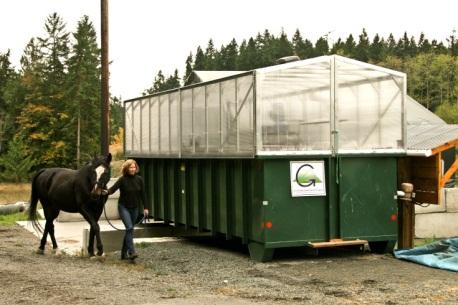
In-Vessel Earth Flow system used for manure waste at IOS Ranch, Bainbridge Island, WA

Why Study Composting Stable Waste?

To identify a financially beneficial way to dispose of stable waste for equine facilities.

What Did We Do?

Costs associated with the disposal of stable waste are increasing, taking a larger part of the operating budget for many barns.  The increasing costs are largely due to environmental awareness and new and expanded regulations for all segments of the waste stream.  Barns can no longer legally pile manure unprotected in the backyard. In many regions, haulers have to be registered and dump sites are forced to put in expensive regulation-specified collection pads.  .  Farms are less likely to take and store stable waste for land use and not all municipal dump sites have the infrastructure to handle the waste.  Barn owners are left searching for affordable solutions.

Composting came to the forefront as a proven method to dispose of stable waste by turning a cost into a revenue stream by eliminating haul off disposal fees and creating a saleable by product with stable soil amendment.  Urban locations have the added burden of odor control; also addressed with a composting system, especially with an in-vessel system.    With these systems, environmental regulations are met and even exceeded. The resulting composted material can be either sold or used on site as soil amendment or for bedding reuse. If the material is sold, the infrastructure for this sales effort will need to be established.

Existing technology for composting food waste was examined to treat stable waste.  The in-vessel composting systems with an automated auger and computer-controlled cycles adapted to stable waste easily.  In fact one of the test sites, Joint Base Meyers/Henderson, tested the use of stable waste from the Caisson Stable as the bulking agent for the food waste from their commissary and mess halls.  In a second test, the stable waste was used exclusively and proved to be a superior soil amendment that passed all laboratory testing and is currently being used at Arlington National Cemetery.

Private stables are putting in-vessel systems on site as they have small footprints, low energy consumption, low manpower hours, ease of use and comply with regulation. Medium sized barns (over 40 horses) use Site Built flow systems that have many of the same benefits as the in-vessel systems.  Larger stables, event centers and high-density equine areas are looking at large scale Aerated Static Pile (ASP) yards.  Cost models show these yards to be a lucrative financial investment when cost and difficulty of disposal is present as well as a market for the end product.  Even when conservative numbers are used for both number of horses serviced and value of end product, ASP facilities are a good business opportunity.  The investment cost for the in-vessel systems, site built systems and ASP sites vary by size and volume.  In cases where the expense of haul off of the stable waste exists, the ROI for an in-vessel system illustrates a solid investment.

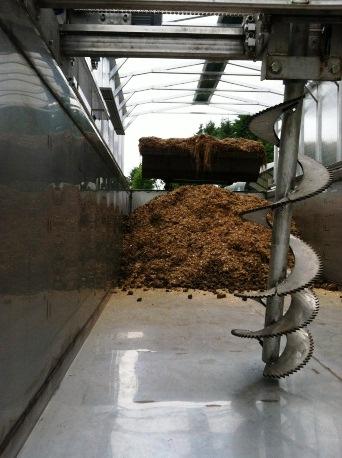
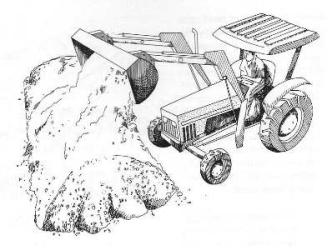
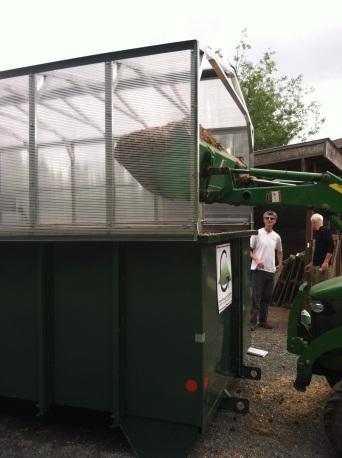
Easy loading with the front bucket of a tractor.

Horse manure and traditional wood shavings or pellets is an excellent feedstock for composting. As explained by Michael Bryon Brown of Green Mountain Technology, “Horses are not ruminants and therefore do not extract as much nutrient from the grasses they eat. This leaves more energy available for the compost process. Typically, horse manure is collected with bedding material which is saturated in urine which has available urea and ammonia. The wood shavings are also an excellent bulking agent and carbon source for the compost process. The bedded horse manure has a high C:N ratio of 30:1 or higher. However, much of the N is in the form of ammonia which is readily available. The net effect is that if the horse manure balls are blended with the shavings before the ammonia dissipates, it will create the ideal compost matrix.”      

In the auger-based systems, the horse manure is shredded and blended with the bedding, bringing the nitrogen in contact with the grass fibers.  This blended material generates heat, driving off moisture as vapor.  Temperatures rise to 135-155F sterilizing the compost, killing weed seed and drying the mixture.  In-vessel composted material is ready to exit the system in 10-14 days; in a site-built system, depending on length of the bay, 15-25 days.  The exiting material is void of any manure or ammonia smell and is homogenous in nature.  Laboratory testing has shown the compost to be stable and free of pathogens according to EPA regulations.  Composting stable waste reduces by up to 50% both water-soluble phosphorous and nitrogen that would be present in rain water runoff from an untreated pile.

Interior auger used to mix and move the stable waste material.

The price for composted material will vary across the country in accordance with the demand for the product.  In urban areas outside of Seattle, Washington, compost is selling for as much as $32 a yard at retail and $20 a yard wholesale.  Untreated aged horse manure is being sold in Florida for $5 a yard.  Historically barns have advertised manure for sale with an ad in the local paper, offering to fill up a pick up for a nominal sum.  Initial effort will be spent to set up a network of buyers for the compost material. Once the network is set it should create a steady income stream.

Options other than soil amendment include re-use as bedding for both equine and dairy businesses, lowering another cost of operation if the compost material is priced below new shavings.  Regional prices for new shavings vary by up to $8 dollars per yard and availability ranges from scarce to plentiful.  Further financial gain can occur with the added health benefits to bedding re-use, long recognized in the dairy industry and recently explored in the equine industry.

What Have We Learned?

Spread sheets supporting above findings.

Future Plans

We plan to follow development and enforcement of regulations on manure waste, support networking of compost markets, continue research on the health benefits of bedding re-use and continue to develop composting systems that are affordable for the equine industry.

Authors

Mollie Bogardus, MBA in Sustainable Business, Bainbridge Graduate Institute, Equine Specialist, Green Mountain Technologies, Inc. mollie@compostingtechnology.com

Additional Information

Bogardus, Mollie. “Equine Applications – Case Studies.” Green Mountain Technologies, Inc.. N.p., 13 Sept. 2012. Web. 27 Feb. 2013. <http://compostingtechnology.com/equine>.

Brezovec, Paul. “Evaluating Composting for Contingency Bases «  « BioCycle BioCycle.” Composting, Renewable Energy & Sustainability | BioCycle.net BioCycle. Version Nov 2012, Vol.53, No. 11, p. 20. Biocycle Magazine, n.d. Web. 27 Feb. 2013. <http://www.biocycle.net/2012/11/evaluating-composting-for-contingency-ba….

“Equine Applications- Media- lab results.” Green Mountain Technologies. Green Mountain Technologies, Inc, n.d. Web. 27 Feb. 2013. <http://compostingtechnology.com/equine>.

Price Youngquist, Caitlin. “Composted Manure and Stall Bedding Pilot Project | Better Ground.” Better Ground, the outreach program of Snohomish Conservation District. SARE, 13 Feb. 2013. Web. 27 Feb. 2013. <http://www.betterground.org/composted-manure-and-stall-bedding-pilot-pro….

Price, Caitlin. “Composted Manure and Stall Bedding Pilot Project | Better Ground.” Better Ground, the outreach program of Snohomish Conservation District. SARE, 26 Feb. 2013. Web. 27 Feb. 2013. <http://betterground.org/composted-manure-and-stall-bedding-pilot-project/>.

Sikora, Lawrence. “Composting Effects on Phosphorous availability in Animal Manures.” SERA-17 Organization to Minimize Phosphorous Losses from Agriculture. SERA-17, n.d. Web. 15 Jan. 2013. <www.sera17.ext.vt.edu/Document/BMP_composting_effects.pdf>.

Wheeler, Eileen. “Cornell Cooperative Extension, Orange County Equine, Saratoga County Equine.” Cornell Cooperative Extension, Orange County Equine, Saratoga County Equine. Penn State, n.d. Web. 27 Feb. 2013. <http://www.cceequine.org>.Zaborski, Ed. “Composting to Reduce Weed Seeds and Plant Pathogens – eXtension.” eXtension – Objective. Research-based. Credible.. University of Illinois at Urbana-Champaign, 22 Oct. 2012. Web. 27 Feb. 2013. <http://www.extension.org/pages/28585/composting-to-reduce-weed-seeds-and….

Acknowledgements

Special thanks to Caitlin Price Youngquist , Farm Planner, Snohomish Conservation District, for her continuing collaboration and dedicated work on this subject.

The authors are solely responsible for the content of these proceedings. The technical information does not necessarily reflect the official position of the sponsoring agencies or institutions represented by planning committee members, and inclusion and distribution herein does not constitute an endorsement of views expressed by the same. Printed materials included herein are not refereed publications. Citations should appear as follows. EXAMPLE: Authors. 2013. Title of presentation. Waste to Worth: Spreading Science and Solutions. Denver, CO. April 1-5, 2013. URL of this page. Accessed on: today’s date.
Horse Manure Management

With proper planning, manure management can be beneficial to both the farm and the environment. This article provides information on environmental and health impacts of manure as well as proper manure storage and management.

J.G. Davis, A. M. Swinker, and Crystal Smith

Introduction

Manure management is a vital part of modern day horse ownership. Many horses spend a significant portion of their day in stalls, accumulating large amounts of manure and stall waste. Horse owners generally have a limited amount of time to spend caring for their equine charges; thus, efficient manure removal and disposal is crucial. Additionally, horse facilities are often managed on relatively small acreage, limiting manure storage and application options.

The intent of this publication is to educate horse owners on the effective management of horse manure. Horse owners will first gain a thorough understanding of the quantity and characteristics of manure produced by horses. Finally, on-site options for handling, storing and treating manure will be discussed, keeping in mind sound facility management and environmental stewardship.

Managing horse manure can be a complex topic, and the principles presented here should be tailored to your specific situation. Please contact your local extension agent or natural resources conservation service field office for technical support.


Horse Manure Production and Characteristics

Person cleaning horse stall

Horses produce large amounts of manure. In fact, if the manure produced from one horse were allowed to pile up in a 12-foot-by-12-foot box stall for one year, it would accumulate to a height of 6 feet. On any given day, the average 1,000-pound horse will produce approximately 50 pounds of manure. This amounts to about 8.5 tons per year.

Manure is not the only material being removed when stalls are cleaned. Wet and soiled bedding material must also be removed and can equal almost twice the volume of the manure itself. The amount of bedding material removed will vary by type — shavings, sawdust, straw — but on average, totals between 8 and 15 pounds. Total stall waste produced averages between 60 and 70 pounds per day, which amounts to approximately 12 tons of stall waste per year.

When managed properly, horse manure can be a valuable resource. Manure is a source of nutrients for pasture production and can be utilized as part of a pasture management strategy to improve soil quality. The fertilizer value of the 8.5 tons of manure produced annually from a 1,000-pound horse can amount to 102 pounds of nitrogen (N), 43 pounds of phosphorous (P2O5) and 77 pounds of potash (K2O). Nutrient values for manure vary widely. The type and quantity of bedding material included also affects the overall fertilizer value. If a more accurate measure of nutrient content is needed, contact your local cooperative extension office for a list of laboratories that perform manure analysis.

Environmental and Health Impacts

Many horse owners do not have enough land or vegetative cover to properly apply large amounts of manure and nutrients. If not managed properly, manure can deposit excess nutrients into the environment via surface runoff or as a leachate, or water-contaminated with manure, from improper manure storage and land application. This can negatively impact water quality and subject landowners to investigation, and in some cases, legal action under an Agricultural Stewardship Act. For these reasons, horse operations are encouraged to use best management practices and develop a nutrient management plan. Nutrient management plans describe the farm’s manure production, soil fertility and recommended manure application and removal rates. For more information on designing a plan specific to your farm’s needs or identifying other conservation resources, contact your local cooperative extension office.

Internal parasites, insects, rodents and odors can be manure-related health concerns on horse farms. These issues can be minimized through carefully planned manure storage and handling. Internal parasites may be found in horse manure and can compromise the health and welfare of the horses stabled or grazing the land. Composting manure and properly timed land application can limit the risk of parasite exposure. Insects, especially flies, become a nuisance on farms where stockpiled manure serves as fly larvae habitat. Flies breed when spring temperatures rise above 65-degrees F. Flies deposit their eggs in the top few inches of moist manure, and these eggs can hatch in as little as seven days under optimal temperature and moisture conditions. Therefore, fewer flies will develop if you remove manure from the site or make it undesirable for fly breeding through processes such as composting within a maximum seven-day cycle. Naturally occurring fly predators can also be used to limit the fly population at the manure pile but are no replacement for sound management practices. Rodents can be a problem when manure is stockpiled for extended periods of time, providing them with a warm, safe environment. Additionally, nuisance odor from manure piles can result in strained relationships with neighbors. Composting or timely removal of manure piles will help keep odors to a minimum. Finally, keep in mind that large piles of manure are not aesthetically pleasing to your neighbors or those visiting your farm. Keeping the manure storage site screened with vegetation or fencing or by location will help to enhance the beauty of your farm.

Horse Manure Storage and Utilization

The average horse produces between 60 and 70 pounds of stall waste per day. Multiply this by several horses, and it is easy to see the importance of having methods in place to manage the manure produced on a daily basis. Letting manure pile up in stalls and paddock areas leads to a host of problems. It is not only unhealthy for your horse — inviting for pests and odors — and aesthetically unpleasing, but the sheer amount of manure produced will overwhelm you. Many handling and storage options exist, but it’s up to you to choose the method that best suits your horse operation.

Horse operations with available land may choose to apply stall waste to pastures as fertilizer. This should be done based on soil-test results and nutrient needs. A soil analysis is needed to determine the fertility needs of a pasture. Soil analysis is provided through your land-grant university’s soil testing laboratory for agricultural operations, which include horse farms, free of charge. Contact your local cooperative extension office for instructions on how to take a soil sample. There are also private laboratories that offer soil-testing services.

In many situations, manure can be picked directly from the stall, deposited into a manure spreader, applied to the pasture and harrowed into the soil. Barns not constructed with a management scheme allowing for stall access by a manure spreader require manure to be carted from the stall to the manure spreader some distance away. In this case, ramps or dropped spreader parking can be helpful to avoid lifting the heavy, cumbersome stall waste. Keep in mind that when spreading manure from stalls bedded with sawdust or shavings, the applied stall waste can stunt plant growth. Wood products contain carbon that soil microbes use for energy but not enough nitrogen to build proteins. The microbes draw nitrogen from the soil to make up for this deficit to such a degree that they can actually limit plant growth. To manage this nitrogen deficiency, nitrogen fertilizer can be applied. Or, to avoid the problem completely, manure can be composted before it is applied to the land.

When direct pasture application is not an option, manure storage facilities become a necessity. The storage facility should be convenient to the barn. A general rule of thumb is to plan for 180 days of long-term manure storage. This allows operations the flexibility to store manure when conditions are not ideal for manure application, as when fields are frozen or wet. This storage area should be accessible to the equipment that will ultimately remove the accumulated stall waste. Manure storage facilities should also be downwind and screened from nearby homes to avoid potential complaints about odors and aesthetics. The size, type and location of manure storage facilities will vary by horse operation based on the amount of manure produced, length of time the manure will be stored and available land area. Always be sure to contact your local authorities regarding zoning regulations and additional restrictions.

Minimum separation distances commonly recommended for composting and manure-handling activities. Source: On-Farm Composting Handbook, NRAES-54
Sensitive Area Minimum Seperation Distance (feet)
Property Line 50-100
Residence or place of business 200-500
Private well or other potable water source 100-200
Wetlands or surface water (streams, ponds, lakes) 100-200
Subsurface drainage pipe or drainage ditch discharging to a natural water source 25
Water Table (seasonal high) 2-5
Bedrock 2-5

Manure Storage Construction

Manure storage should be designed to limit the chance of leachate entering surface and groundwater resources. Ideally, storage piles should be placed on gravel, hardened clay or concrete pads that slope inward. The construction of manure storage sites will vary, based on individual situations and soil types. For instance, concrete pads may be necessary in areas with sandy soils where contaminants are more likely to reach groundwater. Storage piles should not be placed in low-lying or flood-prone areas, and care should be taken to direct water from higher elevations away from the site. The natural resources conservation service or local soil and water conservation district offices can provide individualized manure storage design specifications.


Composting

Composting horse manure is relatively simple but does involve more than simply piling the water. While many farms stockpile their manure, few truly compost. Composting is essentially managed decomposition. Managing the process can virtually eliminate odor, flies, weed seeds and internal parasites found in horse manure and create a valuable soil amendment for resale or for pasture application. To manage a compost pile, the following factors must be taken into consideration: carbon to nitrogen ratio, oxygen, moisture and temperature.

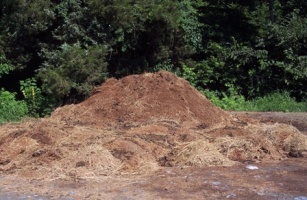
Compost Pile

The microorganisms found in compost are most active when their diet contains about 30 times more carbon than nitrogen, or a C:N ratio of 30:10. Horse manure’s C:N ratio is typically 40:1 due to the large amounts of bedding mixed with it but generally doesn’t require additional nitrogen provided it has enough moisture and oxygen.

Composting is an aerobic process, that is, it requires oxygen. If a compost pile doesn’t get enough oxygen, these anaerobic conditions can result in unpleasant odors, such as those normally associated with stockpiling manure, and slowed decomposition. There are several ways to provide oxygen to a compost pile. The most common way is to turn the pile. For large piles or windrows, turning is generally done using the bucket of a tractor or front-end loader. For smaller piles, a pitchfork will certainly get the job done; but for these operations, you may want to consider using an aerated, static-pile design, which doesn’t require turning.

Typical horse-stall waste tends to be dry and will need added moisture to create the ideal conditions for compost microbes. The moisture content should be about 50 percent, or roughly the consistency of a wrung-out sponge. If rainfall does not provide enough additional moisture, the pile may need to be watered periodically. On the other hand, too much water can also be detrimental, displacing oxygen inside the pile and causing anaerobic conditions. If environmental conditions such as rain or snow are providing too much water, the pile may need to be covered. Some compost-storage designs call for permanent roofs, but properly anchored plastic tarps can be just as effective.

Compost Trouble Shooting
Problem Possible Cause Remedy
Fresh manure, but pile won’t heat up. The pile is: 1) too dry,
2) too wet; and/or
3) Outside temp is too cold.
1) Add water evenly to pile.
2) Aerate and cover.
3) Wait for warmer temps and turn as needed.
Pile was hot, but now temps are falling. 1) Pile is settling.
2) Moisture is less than 50 percent.
1) Turn pile; and/or
2) Add water evenly to pile.
Pile is more than 160-degrees F and has gray ash-like mold. Pile is too dry. Add water evenly to pile.
Pile has gone through two or more heat cycles but still has some material that has not decomposed. Wood shavings decompose slowly. Ensure pile has proper moisture content, add water if needed.
Pile emits bad odor. Pile is too wet and has become anaerobic inside. Turn to aerate and increase water evaporation, apply cover to limit additional rainwater.

* Table does not include all scenarios, see resources/references for more in-depth publications on the subject.

One of the best ways to monitor your compost pile is by using a thermometer. Compost thermometers should have a probe at least 36 inches long and are available through many garden supply stores. The goal is to have sustained temperatures of 130- to 150-degrees F in the pile interior. This will optimize decomposition and also kill pathogens and weeds.

Compost-pile design and storage facilities will depend on the size of the operation and the equipment available. For a farm with two to six horses, small static piles, which use perforated PVC pipes to draw in air and don’t require turning, may be ideal. While not necessary, the use of multiple bins can allow separation of distinct batches. In this situation, horse manure should be piled approximately 5 to 8 feet high with a base that is two times the width and length of the height. For example, a 10-foot by 10-foot bin could accommodate a pile that is 5 feet high. PVC pipes should be placed after the pile is about 1 foot high so that the ends remain visible as more manure is added.


Aerated Static Pile with perforated PVC pipes Example of bins suitable for small farms - doors and roof are optional


For larger farms with access to bucket loaders, manure spreaders and/or specialized composting equipment, larger piles or windrows may be the most efficient design options. These piles may be slightly larger in height and width and considerably longer but will require periodic tuning.

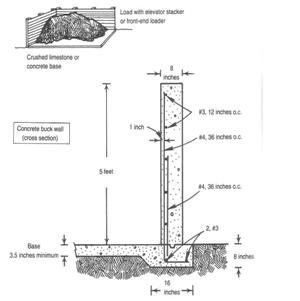
Example of mixing / storage area with buckwall


Compost will decompose more efficiently if the mix is uniform. Starting with a uniform mix is even more important in the case of static piles, since they will not be turned during the decomposition process. Some farms utilize a temporary storage and mixing area to aid in this process.


Benefits of Composting

  • Creates valuable soil amendment
  • Stabilizes nitrogen into a slow release form
  • Avoids the problem of nitrogen immobilization
  • Reduces manure volume by 50 percent
  • Destroys weed seeds, fly larvae and internal parasites
  • Eliminates or reduces the cost of off-site disposal


Conclusion

With careful planning, proper manure management not only protects the environment and increases the efficiency and aesthetics of your farm, but might also save you money while enhancing your pastures. The following resources provide more information on composting and additional facility design specifications.

Field Guide to On-Farm Composting and the On-Farm Composting Handbook, available from the Natural Resource, Agriculture, and Engineering Service(NRAES) at www.NRAES.org.

Horse Facilities Handbook, available from the MidWest Plan Service at www.mwpshq.org.

Check out your local university’s agronomy handbook containing information on soil production, soil sampling, nutrient management, utilization of organic waste and more.

Fencing To Limit Horses Access to Riparian Areas

Why Limit Horse Access to Water Bodies?

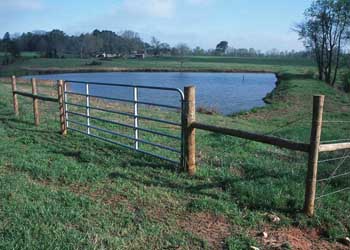
Fencing along stream banks, lakes, and wetlands (riparian areas) is important in order to limit the access horses have to the waterways. When horses area allowed free access to riparian zones, they can deposit manure on the bank or directly in the water. Horse manure may cause elevated levels of nutrients and/or microbes in water. This will be of particular concern in water bodies that are classified as impaired.

Buffer Zone

The area between the horses and the water is called a buffer zone because it buffers the water from the effects of animals. The purpose is to collect any sediment from the pastures before it runs off into the waterway. The distance that should separate the animals from the water depends on several factors including, soil type, slope steepness, and condition of the pasture.

What Type of Fencing Should Be Used?

There are many types of fencing that can be used. Your choice will depend on the potential safety concerns for animals and people, cost of the materials, equipment needed to install the fencing and the maintenance requirements.

The Natural Resource Conservation Service has guidelines that can be used for determining how and where stream bank fences should be implemented. The NRCS Field Office Technical Guide provides technical information on stream bank fencing.

Fencing

Additional Information on Horse Manure Management

Author: Michael Westendorf, Rutgers, The State University of New Jersey

Stall Waste Production and Management

livestock and poultry environmental learning center logo with cow, pig, and chicken sillhouettes over a map of the U.S. with three circling arrows

How Much Manure Will a Horse Produce?

A 1,000 pound horse will defecate approximately four to thirteen times each day and produce approximately nine tons of manure per year. The 1,000 pound horse will produce, on the average, 37 pounds of feces and 2.4 gallons of urine daily, which totals about 50 pounds of raw waste per day in feces and urine combined. A horse kept in a stall may require fifteen to twenty pounds of bedding per day. Bedding products include: wood by-product (shavings, chips, or pellets), straw, hay, or paper. Bedding must be provided in stalls with cement floors, kept reasonably clean, and changed periodically. Manure plus bedding will have a volume of between two and three cubic feet per day.

Soiled bedding can equal almost twice the volume of the manure, but will vary based on management practices. A stalled horse will require the removal of 60 to 70 pounds of waste per day. This results in between 12 and 13 tons of waste per stall per year with 9 tons being manure, 3.5 tons urine, and the remainder bedding. The density of horse manure is about 63 lb/cubic foot. Annual stall waste from one horse will fill a 12 foot x 12 foot stall about 6 feet deep. This leads to a steady stream of manure to handle.

Daily manure and waste production from a typical 1,000 lb. horse
Manure Daily 37 lbs feces 2.4 gallons urine 51 lbs manure
Stall Waste Daily 15-20 lbs bedding (1.6 cubic ft) 51 lbs manure (0.8 cubic ft) 60-70 lbs stall waste/day (2.4 cubic ft)

(Table adapted from Pennsylvania State University, 2000, Horse Stable Manure Management)

Choosing a Bedding Material

Although straw, wood shavings, and bulk and pelleted sawdust are the most popular bedding materials, other sources may also be used. Pine shavings or sawdust will result in less disposable material than straw, and cannot be disposed of with mushroom producers. Disposal with the mushroom industry is an option in some parts of the country if horse are bedded with straw. Wood shavings, sawdust, and straw are relatively absorbent. Many horse owners, particularly owners of racing or performance horses, prefer shavings over straw because they are less dusty and may result in less respiratory irritation. Shavings produced from black cherry and black walnut should not be used. Even very small amounts of black walnut in bedding products can cause laminitis and founder in horses.

Bedding should be absorbent, dust-free, easy to handle, comfortable to the horses, readily available, easily disposed of, unpalatable (i.e. the horse will not want to ingest it), and affordable. The more absorbent a bedding is, the less matieral will need to be used. All beddings should be stored in well-ventilated areas to remain as dry as possible prior to use. For more information, see the following factsheet: Horse Manure Bedding Use.

Additional Information on Horse Manure Management

Author: Michael Westendorf, Rutgers, The State University of New Jersey

Managing Manure on Horse Farms

Why Is It Important to Manage Horse Manure?

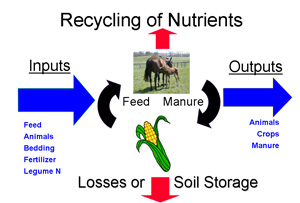
When managed properly, nutrients from manure should be seen as part of a larger cycle occurring on the farm. Nutrients enter the farm as feed or fertilizer, are excreted as manure, and are subsequently spread on the soil, taken up by plants, or transported off the farm as waste. Related: Horse Manure Composting: Facilities and Methods

The soil can store nutrients, provided the amount of manure applied to the soil is not excessive. When land has excess manure, more nutrients than crops can take up, these nutrients will build up in the soil and pose a hazard to ground or surface water. Excess nutrients can be carried by water through runoff or leaching to surface or ground water.

To minimize environmental risk, all horse farms should develop management plans that provide for proper storage, use, and disposal of horse manure.

What Is Nutrient Management?

The purpose of nutrient management is to implement practices that permit the efficient use of manure for crop production while preventing environmental damage that may be caused by nutrients. Nutrient management planning is a site specific exercise and, if the recommendations are followed, nutrient losses should be minimal. In general nutrient management considers how many nutrients are accumulating on a farm, their potential impacts on the environment, and how to best utilize them. Usually considered in nutrient management planning are:

  • goals of the farm as well as any constraints,
  • available farm resources (land, equipment, financial resources),
  • potential critical areas on the farm (sensitive water bodies, neighbors concerns, erosion, manure storage etc),
  • and nutrient balance (shown in the figure below).
Recycling Diagram

Importance of Nutrient Balance

Farm nutrient inputs consist of feed and fertilizer, but also animals, legume nitrogen, and bedding. Farms may export nutrients through outputs such as grain, animals, milk, meat, eggs, manure, and hay. Some nutrients are recycled on the farm, from feed to livestock to soil to plant and back to feed again. The optimal situation is for the farm to remain in balance between inputs and outputs without losses either as runoff to surface water or as leachate to groundwater. For more information, see Whole Farm Nutrient Balance.

Additional Articles On Horse Manure Management

The challenges of managing manure nutrients are different on a horse farms than on many larger farms. Horse farms often have fewer animals and sometimes several animal species on the same farm, but may have limited acreage for spreading manure. Some horse farms also face a challenge because they do not export nutrients from their system the way that many other farms do–by marketing outputs such as milk or selling animals that are produced.

The following articles are available on this website and include links to additional resources for each topic.

You may also want to see Nutrient Planning on Small Farms. It provides information about how to feed animals and manage their diets; calculate how much manure is produced. There is also information on basic soil science and soil fertility; and nutrient (manure) management – manure use on and off the farm and nutrient management planning.

Author: Michael Westendorf, Rutgers, The State University of New Jersey

Exercise or Sacrifice Lots for Horses

livestock and poultry environmental learning center logo with cow, pig, and chicken sillhouettes over a map of the U.S. with three circling arrowsA sacrifice or exercise area is your animal’s outdoor living space ( see Exercise Areas) . It is called a sacrifice area because you are giving up land that could be used as a pasture in order to protect the remaining pasture area, which is saved for rotational grazing, hay production, forage stockpiling, etc. Related: Horse Manure Management Overview

Sacrifice Areas Protect Pastures

A sacrifice area can be used to secure animals while stalls are cleaned in the barn or routine maintenance (dragging, clipping, etc.) is completed. The use of a sacrifice area could result in increased pasture productivity because it gives you a place to keep the horses when you need to keep them off the pasture. For example pastures cannot survive continuous grazing and trampling during non-growing seasons, winter and droughts. Other situations where they are useful are; when the ground is muddy, when there is frost on the grass, and anytime the grass needs rest like after grazing.

Locating a Sacrifice Area

Sacrifice areas should be located as far away from wetlands, surface water, and wells as possible. They should not be located in drainage flows, such as ditches, and preferably on a level area at the top of a hill. Sacrifice areas should be surrounded by a thick stand of grasses that can filter sediment and nutrients washed from the sacrifice area. A common way to do this would be to have the sacrifice area surrounded by pastures that may be used for rotational grazing. Manure should be collected from a sacrifice area for disposal. The sacrifice area should be located close enough to the manure storage area to improve the ease of collection.

Since these areas may not be vegetated, they are likely to become muddy in wet or inclement weather. Wood chips, sand, and/or gravel, or even concrete may be used to provide an improved foundation and keep the area small. Feeding, watering, and shelter areas that are in the sacrifice area should have appropriate foundations surrounding them to prevent erosion from hoof traffic.


horses

cc2.5 MIke Westendorf, Rutgers

Sizing a Sacrifice Area

They should be only as big as absolutely necessary if vegetation cannot be maintained in the sacrifice area. Because of substantial wear and tear, these areas will be sparsely vegetated; grass cover may be nonexistent. Sacrifice areas should be large enough to provide exercise for the animals using the area. Horse Facilities Handbook, by Midwest Plan Services recommends that pens be at least 1,000 square feet per horse. Don’t forget that appropriate fencing, some sort of shelter from the elements and water are necessary for horses as well.

There are two strategies to sizing and maintaining sacrifice areas: either keep the area just large enough for the needs of the animals and accept the fact that the lot surface will be bare, or use a large sacrifice area that is large enough to maintain a vegetative cover. The latter is preferred for environmental reasons.

Regulatory Implications of Continuous Use of the Sacrifice Area

Confining animals for more than 45 days in the sacrifice lot can define the area as an animal feeding operation. If that area has a connection with surface water, such as a stream or ditch running through it, or if it discharges to a water body and is deemed to be a significant risk to surface water by the state regulatory authority, the operation may be required to control the runoff from the exercise lot and obtain permit coverage. Therefore, it is strongly urged that producers manage their exercise lots and sacrifice areas as seasonal or temporary use, primarily keep animals on pastures, and not locate them in environmentally sensitive locations so as not to impact surface waters.

More information on pasture and grazing management and regulations can be found at Livestock and Poultry Environmental Stewardship Curriculum under small farms and CAFO fact sheets:

More Information on Horse Manure Management

Author: Michael Westendorf, Department of Animal Sciences, Rutgers, The State University of New Jersey