

Soil Science and Soil Health for Livestock and Poultry Production

This page is part of a series on environmental management topics developed for young or beginning farmer and ranchers. This series focuses on animal agriculture production and will also be useful to established producers as well as teachers and extension agents/educators.

Why is soil science and soil health important to animal agriculture?

Most livestock or poultry operations recycle manure on nearby land as a fertilizer. On grazing operations, this manure is deposited directly on growing plants by animals. For confined operations, manure is collected and stored until it can be land applied (spread) at an appropriate time. Understanding soil science is important for making the best decisions about manure application rate, location, and timing as well as grazing management.

Soil Science Basics

Soil Health

Soil Characteristics

Soil Sampling

Livestock and poultry farms sample soil to look at nutrient levels and use those in calculating the appropriate amount of manure and/or commercial fertilizer to apply to a field. This is an important step in a process called “nutrient management planning”. To find soil sampling recommendations and testing labs in your state, do a web search for “soil sampling” plus your state name. If you are unable to locate soil testing publications from your state, some recommended resources:

Related: Soil Testing

Knowledge and Tools For Management Decisions

Manure Impacts on Soil

Advanced Topics

Tile drainage and subsurface flow

Teacher/Educator Resources

Oregon State activity http://4hwildlifestewards.org/pdfs/soil.pdf

Acknowledgements

This Building Environmental Leaders in Animal Agriculture project was funded by the USDA National Institute for Food and Agriculture (NIFA) Beginning Farmer and Rancher Development Program (BFRDP) under award #2009-49400-05871. This project is a joint effort between University of Nebraska, Montana State University, Livestock and Poultry Environmental Learning Community and the National Young Farmers Educational Association (NYFEA). Meet the Beginning Farmer Project Team. For more information about this project or this web page, contact Jill Heemstra jheemstra@unl.edu
Cayuga County Manure Digester Virtual Tour

Anaerobic digestion is a manure treatment system that produces biogas. There are many benefits of digestion such as reductions in: odor, pathogens, and greenhouse gases (climate change). Producing biogas from manure yields useful by-products.  The economics of digestion are dependent on state energy policies and co-digestion of off-farm wastes to generate revenue.

Cayuga County Regional Digester (New York)

This virtual tour highlights the Cayuga County Soil & Water Conservation District regional digester. This facility receives manure from multiple dairy farms. The regional digester model allows smaller farms (not large enough to build their own digester) or large farms unwilling to take on the complex management of a digester to participate.sign

For more information: Cornell case study (technical details) | NRCS Newsletter (construction photos and funding information)

  • Type of digester: Pressure differential (hydraulic mix)
  • Facility began operation: March, 2012
  • Feedstocks: dairy manure, food wastes, brown fat

How Does This Anaerobic Digester Work?

The hydraulic mix or pressure differential digester type is common in Europe, but is unique in the United States. The video below explains how the material moves through the digester.

Step By Step Through The Facility

Even though we refer to this facility as an “anaerobic digester” there are actually many pieces required to make this system work. The digester is one part. The presentation below works through the entire facility.

barn

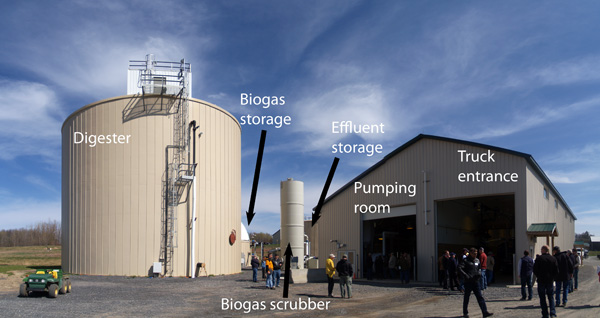
The digester tank (photo above: left) has a capacity of one million gallons. It is estimated that 40-43,000 gallons will be added to the digester per day when it reaches full production capacity. The trucks carrying raw (undigested) manure from the farms enter on the right side of the building (photo above:right) and the manure is pumped into a holding tank (not visible in photo) and mixed with food waste.

To see the captions in the slideshow, select “full screen” (lower right side of the slide) and then click on show info (upper right corner). You can also visit this photo set at: http://www.flickr.com/photos/manure/sets/72157629690139615/

In the News

This digester has been in the news as the price of power has dropped and the financial side of the operation less viable.

  • Digester is shut down to re-evaluate business plan (Jan. 2015) More…
  • California company to take over Cayuga digester (June, 2015) More…

Recommended Reading on Anaerobic Digestion

Acknowledgements:

Author: Jill Heemstra, University of Nebraska Extension
Reviewers: Thomas Bass, Montana State University, David Schmidt, University of Minnesota and Liz Whitefield, Washington State University

A big thank you goes to the Cornell University dairy manure management team for organizing the 2012 “Got Manure?” conference that included a real life tour on which we were able to obtain the media for this virtual tour.

This virtual tour was created by the LPELC Beginning Farmer team through funding from the USDA National Institute for Food and Agriculture (NIFA) Beginning Farmer and Rancher Development program under award #2009-49400-05871

Developing an Environmental Policy Statement for a Farm or Ranch Curriculum Materials

An environmental policy statement (EPS) is a proactive way to communicate about your farm, ranch or agribusiness environmental stewardship ethic. At first glance, this might seem like a “feel good” exercise with little practical value. However, experience has shown that farmers and ranchers are quick to identify ways they can use the policy statement for their operation. The exercise stimulates conversations that many farm operators have not previously initiated with family or employees.

What Is an Environmental Policy Statement (EPS)?

Example Policy Statement
Jones Family Farms is a diversified operation with poultry, cattle and alfalfa hay production. The farm employs its husband and wife owners on a full-time basis and two employees on a part-time basis. Jones Family Farm is located near a small housing development along a busy highway; therefore our relationship with our neighbors and community is an important aspect of our operations. We will strive to maintain a neat and professional appearance on our farmstead. Poultry litter applications will be made to our hay ground with consideration to potential impacts on neighbors.We are committed to compliance with all pertinent environmental laws and regulations; we are committed to continually improving conservation practices and environmental management that will benefit our farm’s value for future generations. Our profitability depends upon maintaining efficient long-term productivity. We also seek to: 1) To manage riparian areas in such a way that provides wildlife habitat and protects water quality and 2) To improve soil quality by minimizing erosion and building organic matter through calculated use of our poultry litter resources.

An EPS consists of several specific statements. These reflect a general description of the operation and its most important environmental issues. The EPS also communicates commitments to regulatory compliance, continual improvement and stewardship. While these statements appear to be prescribed, there is a great deal of room for an operation to personalize and create an EPS that reflects their individual values and goals.

An environmental policy statement (EPS) is one piece of an environmental management system (EMS). An EMS is a systematic approach to environmental decision making. It seeks to formalize processes and procedures and integrate all of the different aspect of a farm operation into a single coherent plan. More about EMS is available at Agriculture Environmental Management Systems.

Farmers, Ranchers, and Agribusiness

Step 1. Download the worksheets and complete the activities. Example policy statements are included.
Step 2. To receive a certificate of completion (optional), fill out the online form.

Teachers, Extension, Consultants

For the classroom or educational programs:

  • Instruction Guide: (PDF format) (RTF format; 13 MB ) Is a lesson plan with connections to national agriculture education standards (AFNR Career Content Cluster Standards), application to Supervised Agricultural Experience (SAE) projects and FFA contents, sample quiz/review questions, sample evaluation form, and more.
  • Download Presentation Slides (See embedded slide show below for a preview of this file).
  • Resource packet. (PDF format) (RTF format; 14 MB)Includes templates and worksheets, examples, and a discussion guide

The PDF version is best if you want to use the files “as-is”. The RTF format is best if you want to edit or customize the materials.

Acknowledgements

Authors: Jill Heemstra, University of Nebraska and Thomas Bass, Montana State University <tmbass@montana.edu>

Reviewers: Mary Catherine Barganier, NYFEA; Shannon Arnold, Montana State University; Elizabeth Burns Thompson, Drake Ag Law student; Lyle Holmgren, Utah State University; Paul Hay, University of Nebraska

Building Environmental Leaders in Animal Agriculture (BELAA) is a collaborative effort of the National Young Farmers Educational Association, University of Nebraska-Lincoln, and Montana State University. It was funded by the USDA National Institute for Food and Agriculture (NIFA) under award #2009-49400-05871. This project would not be possible without the Livestock and Poultry Environmental Learning Community the National eXtension Initiative, National Association of County Ag Agents (NACAA), National Association of Agriculture Education (NAAE), Farm Credit Services of America, American Registry of Professional Animal Scientists (ARPAS), and Montana FFA Association.

Environmental Benefits of Anaerobic Digestion

The manure handling system of any farm is made up of many different components, each with a different function and purpose. An anaerobic digester, although only one component of the system, can greatly improve the environmental performance and efficiency of the overall system. The main effect of anaerobic digestion is conversion of organic matter to biogas. This conversion has many potentially beneficial environmental and management side effects.

Odor reduction

By removing organic matter, the digester reduces the organic matter-loading and associated oxygen demand on downstream manure handling components. This may allow the downstream components to be smaller, operate more efficiently and function with less environmental impact. Anaerobic pretreatment may be a more economical method of converting an anaerobic lagoon to an aerobic lagoon, compared to mechanical aeration. Digester effluent is more stable than raw manure. It contains more stable organic material and less volatile odorants. Thus, storage and land application of digester effluent greatly reduces odor nuisance compared to raw manure.

Uses for digested solids

Manure solids are stabilized through anaerobic digestion. What was once reactive, partially digested material has been processed into stable microbial biomass and precipitated nutrients, although the majority of nutrients remain with the liquid. The potential to dry and transport digester solids is greatly improved over raw manure. The solids can be recycled and used for bedding or a soil amendment on the farm. The reduction in moisture content also increases the feasibility of selling the solids to farms that are greater distances away. In the right market conditions, composting the digested solids can result in a value-added product that can be sold to homeowners, gardeners or the landscape industry.

Plant nutrients

Plant nutrients are conserved and transformed during anaerobic digestion. Ammonium is created from manure proteins. This can be a benefit or a nuisance. If injected immediately into the soil, ammonium-rich effluent is highly available for plant growth. On the other hand, if digester effluent is stored under anaerobic conditions, ammonium will convert to ammonia gas and escape to the atmosphere. Since digesters are also a reducing environment, the potential exists for capture of ammonium and soluble phosphorus through precipitation as struvite.

Many metals are precipitated during anaerobic digestion. Sulfur is reduced to sulfide, which is generally a bad thing since it can escape as hydrogen sulfide gas. However, the digester environment can be manipulated so that sulfides are precipitated along with potentially harmful metals such as Ni and Zn.

Greenhouse gases

Anaerobic digestion results in the reduced emission of greenhouse gases. This may seem ironic, since the methane contained in the resulting biogas is a powerful greenhouse gas. An anaerobic digester is a controlled environment that captures the methane. After capture, it is either flared or used to generate electricity and/or heat.

When flared, the carbon dioxide formed in the combustion has less heat trapping potential than the original methane, and it is essentially recycled atmospheric carbon. What is released to the atmosphere through combustion of methane was once plant material formed through photosynthesis from atmospheric carbon dioxide.

When used for energy generation, the biogas replaces power that might have otherwise been created through conversion of fossil fuel. Regardless, if the biogas is flared or used for energy generation, the farmer may be eligible for carbon credit payments.

Anaerobic Digestion on Farms

With all of the potential benefits, one might wonder why relatively few farms utilize these systems. One major reason is that anaerobic digesters are expensive to install and operate. The economic benefits have, in the past, been limited to a reduction in electricity purchased by the farm, which is not enough to offset the costs of the system.

As the interest in renewable energy sources increases, farms are increasingly able to apply and receive carbon credits. Some farms also accept off-farm waste, collecting tipping fees, to co-digest with manure. In many states, more favorable net-metering laws have also made the economics more favorable. Power generated by the digester is valued at retail costs rather than wholesale costs.

The decision to install a digester is often driven by additional considerations, such as nuisance issues. A digester greatly reduces the odor potential of the manure, which also greatly reduces neighbors’ complaints and the potential for lawsuits.

At the current time, anaerobic digestion is slowly but surely increasing as a manure treatment method in the United States. Additional information is available at: Economics of Anaerobic Digesters for Processing Animal Manure.

Contributors To This Document

Author: Doug Hamilton, Oklahoma State University Waste Management Specialist

Contributors: Jill Heemstra, University of Nebraska

Reviewers: Mark Rice, North Carolina State University and Karl Vandevender, University of Arkansas

Manure Storage Safety

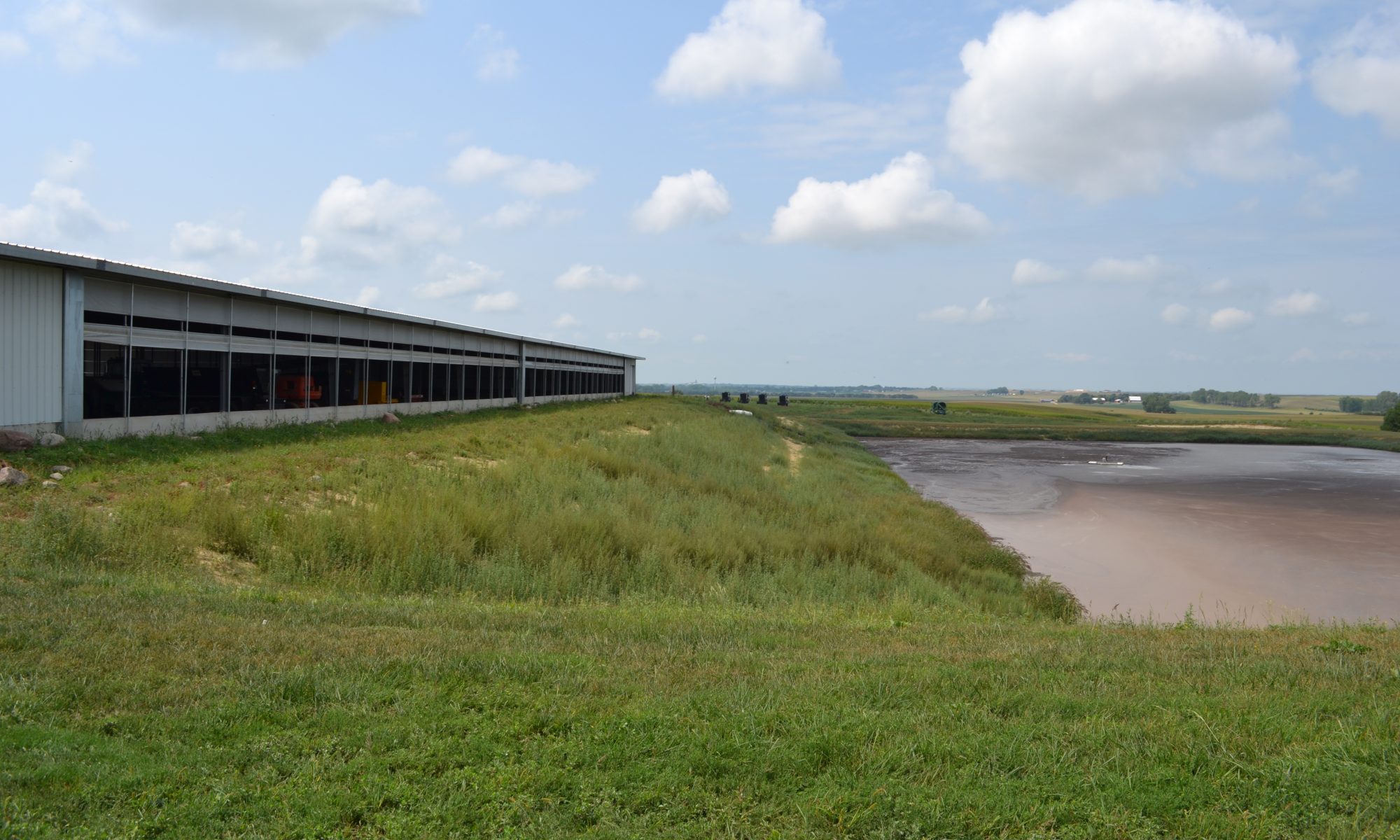
Manure storage structures are an integral part of livestock feeding operations. They allow for manure containment until conditions are favorable for land application or other treatment. Manure may be stored in enclosed structures, near or directly below the animal housing facility or it may be stored in open structures such as above ground tanks or storage ponds/lagoons.

Recommended Resources:

Archived webinar: Manure Safety & Transport

Penn State Extension Manure Pit Safety Fact Sheet Series

The risks differ for each type of manure handling system. Enclosed structures are commonly associated with asphyxiation hazards related to gases produced during manure decomposition. Open structures are most often associated with drowning. Most systems include pumps or mechanical components that present the risk of entanglement. It is critical that producers take the time to assess the risks on their operation and evaluate ways to prevent hazardous situations and to develop emergency response plans. Related: Manure Storage Safety fact sheet

Enclosed Structure Hazards

Enclosed structures, especially those located below ground, are potentially the most hazardous for people and livestock. While being stored, manure undergoes decomposition. As a result, many potentially harmful or fatal gases are produced, but most remain at low levels or are adequately diluted by the ventilation system. Situations in which these gases can become deadly include:

  • Agitation of the liquid manure prior to or during pumping from the pit
  • Power outage or other failure of the ventilation system
  • Buildup of flammable or explosive gases

Manure Gases and Their Associated Safety Concerns

Hydrogen Sulfide

lagoon

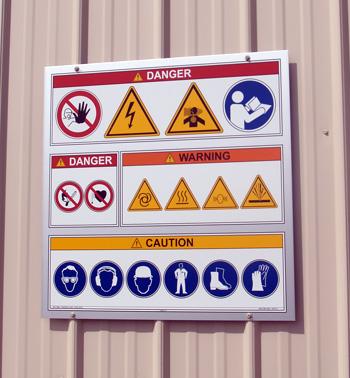
A sign like this “Danger: Liquid Manure Storage” should posted for all types of liquid manure storage, enclosed or open. Consider posting this message in other languages if there are non-English speakers living or working on or near the farm.

Hydrogen sulfide is the greatest danger to humans in enclosed manure storage areas. It has a characteristic “rotten egg” smell and is heavier than air, so it tends to collect in the lower levels of a structure and in corners of the storage area where air circulation is least available. It quickly desensitizes the sense of smell so that a person does not detect greater levels of the gas after breathing it. It can be rapidly released when manure is agitated. At low levels (10 ppm) it can irritate the eyes. Death can occur when it reaches levels of 500 ppm or greater.

Ammonia

Ammonia has a distinctive, sharp odor and is heavier than air. It becomes irritating to humans at around 50 ppm. If it reaches levels of 1000 ppm or more, it can be deadly, although most people are so uncomfortable at this level, they usually seek relief by leaving a building before it reaches dangerous concentrations. Prolonged exposure to high ammonia levels can also impact animal performance.

Methane

Methane is a concern because it is potentially explosive at levels above 50,000 ppm. It is lighter than air and odorless. In the fall of 2009, enough manure pit-related fires and explosions were reported to attract renewed attention to the safety concerns related to gas buildup. Other potentially explosive gases produced by manure decomposition are hydrogen sulfide (H2S) and phosphine (PH3, but both become lethal to animals and humans at concentrations far below that required for ignition. A literature review by Iowa State University (supported by the Pork Board) provides additional information on this topic. Deep Pit Swine Facility Flash Fires and Explosions.

In a properly designed anaerobic digester, methane production can be enhanced and possibly captured for use in electrical generation. For more information see Introduction to Biogas and Anaerobic Digestion.

Carbon Dioxide

Carbon dioxide is odorless, but can cause asphyxiation if it displaces enough oxygen in the air. It is heavier than air and tends to accumulate in the same areas as hydrogen sulfide.

Open structure hazards

image

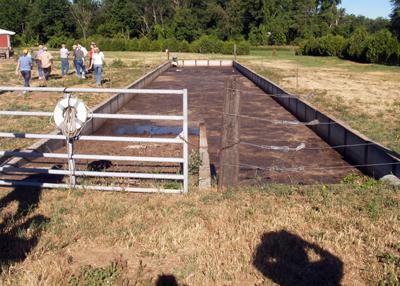
This manure storage structure is fenced and has a life preserver in a prominent location. The concrete ramp by the gate provides an easy escape point for humans and wildlife that fall into the pit. Note that this fencing will discourage entry but will not prevent a determined child from exploring the pit. If young children live on or visit your farm, a chain link fence will provide a higher degree of deterrence than multi-strand wire fences and gates such as this.

Open manure storage ponds or above ground storage tanks also pose hazards, the most obvious of which is drowning. A storage pond may form a crust on the surface that appears solid and capable of holding a person’s weight. Unfortunately, this is not always the case. Children are also at risk of drowning in these structures and safety considerations must always include ways to prevent access to these areas, such as fencing, gates with locks and outside walls on concrete structures that preclude easy entry.

To prevent drowning, it is recommended that farmers purchase and install safety measures such as life preservers or life vests, throw ropes, and/or safety harnesses (with anchor points around the structure). This equipment can save lives; not only for the victim but rescuers who can safely assist without entering the structure themselves. This was illustrated in May, 2012 in a tragic incident in Maryland. A farmer and two of his teenage sons were drowned in a manure storage structure while attempting to pump the manure out for land application. There were no surviving witnesses, but the

likely scenario is that one of the three fell into the pit and the other two died trying to rescue him.

Recommended Reading

Case Studies

Authors: Chip Petrea, University of Illinois and Jill Heemstra University of Nebraska
Reviewers: Saqib Mukhtar, Texas AgriLife Extension; Jennifer Zwicke, USDA NRCS; Troy Chockley, USDA NRCS, Greg Martin, Penn State

Land Application of Manure Nutrients

Is manure application to cropland…

A source of organic matter that improves soil quality and reduces soil erosion and runoff?   OR   A source of pathogens that limit the beneficial uses of surface water?

A means of recycling essential nutrients for crop production and reducing use of energy intensive fertilizers?   OR   A source of nutrients polluting surface and ground water?

A means of recycling and sequestering carbon in the soil?   OR   A source of gaseous emissions creating nuisance and air quality concerns?

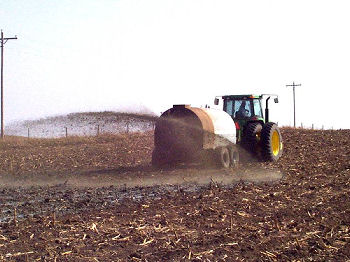
manure spreaderManure Benefits and Risks Depend on Location, Amount, and Timing

These above statements can all be true. Manure is a desirable plant fertilizer and has positive impacts on soil and soil health, but management decisions during land application influence the relative environmental benefit or risk resulting from manure. Timing, location, and amount of manure applied all must be carefully considered.

  • Manure application at amounts that match the nutrient requirements of harvested crops is the foundation of protecting water quality.
  • Preferred timing must balance multiple factors including timing of crop uptake of nutrients and probability of rainfall events following manure application.
  • Location must consider site specific field characteristics that influence environmental risks. Related Information: LPES Curriculum Lesson 33 and Lesson 34 include details on site selection.

Nutrient Management Plans

A nutrient management plan (NMP) is a document that spells out rate, timing, location, and other manure and fertilizer application factors.  The two nutrients that are watched most closely, relative to water quality, are phosphorus and nitrogen.

An NMP for any farm generally follows the same outline. Regulated or permitted operations will have the most specific requirements. In some states, even small farms are required to develop NMPs. There is a great deal of technical assistance available for developing  NMPs from extension, agencies, and private consultants. In some areas, cost-share assistance may be available. There are also many software tools available; one example is the Manure Management Planner Software. Since every state is different, it is recommended to look for state-specific resources and requirement before developing your NMP.

Amount of Manure to Apply

One of the first steps in developing an NMP is to estimate the amount of manure produced on a farm. Some other important pieces of information include: nutrient content as determined by a manure test (Related information: Sampling Manure) and the availability of nitrogen from that manure (consult your state extension service to obtain calculations on nitrogen availability appropriate for your area). Last, but not least, it is important to calibrate manure application equipment to ensure that you know how much manure was actually applied to each field.

Location, Location, Location

Manure application should be set back from wells, streams, lakes, sinkholes, or other environmentally sensitive features. Most states have rules dictating exactly how farm this setback should be.

Tile-drained fields should also receive special consideration with regard to manure application. If manure is applied while soils are saturated or right before a rainfall event, the manure may preferentially flow through tile drainage to water bodies.

Related Information: Manure Application in No-Till and the controversial topic of Manure Application to Legumes

Timing Manure Application

Manure application in spring, shortly before crops are planted, is generally recommended as it allows a short window where nutrients are prone to leaching or runoff. When manure is applied to fruit or vegetable crops, this recommendation may differ.

Manure application during crop growth will closely match nutrient needs, but can be destructive to the growing crop. One way to avoid crop damage is to apply liquid effluent through irrigation systems. (Also see Ohio research on top-dressing liquid swine manure to wheat and side-dressing on corn).

Applying manure in the fall, after the main crop is harvested, is a common practice and helps ensure manure storage structures are emptied before winter–reducing the chances of a overflow. Given the high price of fertilizer and the increased awareness of water quality, more farmers are following fall manure application with a cover crop.

Winter manure application is a controversial topic in many areas. Manure applied to snow-covered or frozen soils may be more likely to runoff under some conditions. Winter applications should only be made in order to prevent a manure storage overflow and should be done in low-risk areas with little slope or potential for runoff to water.

Evaluating if Nutrient Management Is Working

Whole Farm Nutrient Balance (WFNB) is a way to evaluate if the farm is currently accumulating more nutrients than are being exported from the farm. If this analysis is repeated from time to time, the trend can tell if a farm’s efforts are working or not. This website includes a dairy example and a swine example of WFNB.

Related information: Snap-Shot Assessments of Nutrient Use on Dairy Farms

Impacts of Feed Management or Manure Storage

Regional Topics

Economic Value of Manure for Land Application

Page Manager: Becky Larson, University of Wisconsin ralarson2@wisc.edu and Nichole Embertson, Whatcom Conservation District nembertson@whatcom.com
Reviewers: Rick Koelsch, University of Nebraska, Doug Beegle, Pennsylvania State University, Ron Wiedreholdt, North Dakota State University.

Photo: CC 2.5 Rick Koelsch

Mobile Manure Apps

This webcast features a developer who has worked extensively with university extension as well as many other clients in sports, journalism, and agriculture. Two manure management apps are demonstrated followed by a panel discussion that features more manure-related apps and discusses challenges, opportunities and lessons learned when creating those apps. This presentation was originally broadcast on January 16, 2015. More… Continue reading “Mobile Manure Apps”