Biofilters for Animal Agriculture Air Quality Curriculum Materials

Air emissions from animal agriculture operations and their associated manure storage are being examined more closely for ways to mitigate potentially harmful gases. One of the options being evaluated is biofilters.  The materials on this page were developed to assist educators and professors who include biofilters as a topic in their classrooms or educational programs.

Fact Sheets

Kevin Janni, Minnesota; Richard Nicolai; South Dakota State (emeritus); Steve Hoff, Iowa State; Rose Stenglein, Minnesota

Webcasts and Videos

Video: Biofilters for Managing Odors and Air Emissions

Technology Summaries

These are from a 2008 conference. Contact information is provided in each article for obtaining updates.

Photo Slideshow

Acknowledgements

These materials were developed by the Air Quality Education in Animal Agriculture (AQEAA) project with with financial support from the National Research Initiative Competitive Grant 2007-55112-17856 from the USDA National Institute of Food and Agriculture.

For questions about the materials on this page contact Dr. Kevin Janni, University of Minnesota (kjanni@umn.edu). For questions about the AQEAA project, contact Dr. Rick Stowell, Unviersity of Nebraska (rstowell2@unl.edu).

If you have presentations, photos, video, publications, or other instructional materials that could be added to the curricula on this page, please contact Dr. Janni or Jill Heemstra (jheemstra@unl.edu).

Manure and Litter Additives for Odor Control on Farms

Air emissions from animal agriculture operations and their associated manure storage are being examined more closely as a way to mitigate potentially harmful gases and odors. Manure additives and litter amendments go right to the source and are used to change one or more characteristics of manure to try and reduce emissions emissions of odorous gases. The materials on this page were developed to assist educators and professors who include manure additives or litter amendments as a topic in their classrooms or educational programs.

Fact Sheets

Sanjay Shah, Garry Grabow, Philip Westerman, North Carolina State University

Sanjay Shah, Philip Westerman, James Parsons, North Carolina State University

Technology Summaries

These are from a 2008 conference hosted by Iowa State University

Acknowledgements

These materials were developed by the Air Quality Education in Animal Agriculture (AQEAA) project with with financial support from the National Research Initiative Competitive Grant 2007-55112-17856 from the USDA National Institute of Food and Agriculture.

For questions about the materials on this page contact Dr. Kevin Janni, University of Minnesota (kjanni@umn.edu). For questions about the AQEAA project, contact Dr. Rick Stowell, Unviersity of Nebraska (rstowell2@unl.edu).

If you have presentations, photos, video, publications, or other instructional materials that could be added to the curricula on this page, please contact Dr. Janni or Jill Heemstra (jheemstra@unl.edu).

Wet Scrubbers for Cleaning Air Emissions from Animal Housing Curriculum Materials

Air emissions from animal housing systems are being examined more closely for ways to mitigate potentially harmful gases. Wet scrubbers are one way to remove pollutants from air being exhausted from mechanically ventilated buildings.  The materials on this page were developed to assist educators and professors who include wet scrubbers as a topic in their classrooms or educational programs.

Fact Sheets

Roderick B. Manuzun and Lingying Zhao, The Ohio State University; Allison Jonjak, Nebraska

LPES Curriculum Lessons

Technology Summaries

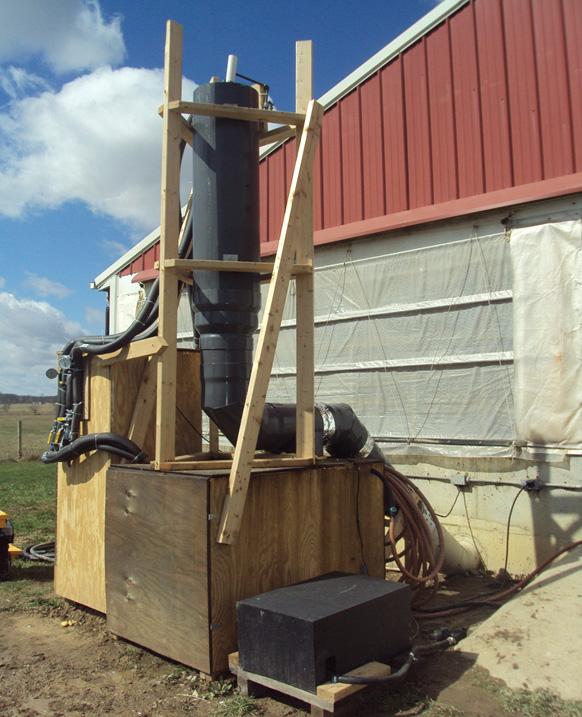
Figure 1. A prototype wet scrubber developed by the Ohio State University for a deep-pit swine facility. Photo courtesy of Lingying Zhao, Ohio State.

This is from a 2008 conference hosted by Iowa State University

Acknowledgements

These materials were developed by the Air Quality Education in Animal Agriculture (AQEAA) project with with financial support from the National Research Initiative Competitive Grant 2007-55112-17856 from the USDA National Institute of Food and Agriculture.

For questions about the materials on this page contact Dr. Linying Zhao, Ohio State University (zhao.119@osu.edu). For questions about the AQEAA project, contact Dr. Rick Stowell, Unviersity of Nebraska (rstowell2@unl.edu).

If you have presentations, photos, video, publications, or other instructional materials that could be added to the curricula on this page, please contact Dr. Zhao or Jill Heemstra (jheemstra@unl.edu).

Manure Storage Covers Curriculum Materials

Air emissions from animal agriculture operations and their associated manure storage are being examined more closely as a way to mitigate potentially harmful gases. Covers are becoming popular as a way to collect methane (a potent greenhouse gas) for beneficial reuse as a renewable energy source.  The materials on this page were developed to assist educators and professors who include manure storage covers as a topic in their classrooms or educational programs.

Fact Sheets

Rose Stenglein, Charles J. Clanton, David R. Schmidt, Larry D. Jacobson, and Kevin A. Janni, University of Minnesota

Video: Manure Storage Covers for Reducing Odor Emissions

Photo Galleries

Positive Air Pressure Covers

Negative Air Pressure Covers

Technology Summaries

These are from a 2008 conference hosted by Iowa State University

Acknowledgements

These materials were developed by the Air Quality Education in Animal Agriculture (AQEAA) project with with financial support from the National Research Initiative Competitive Grant 2007-55112-17856 from the USDA National Institute of Food and Agriculture. For questions about the materials on this page contact Dr. Kevin Janni, University of Minnesota (kjanni@umn.edu). For questions about the AQEAA project, contact Dr. Rick Stowell, Unviersity of Nebraska (rstowell2@unl.edu). If you have presentations, photos, video, publications, or other instructional materials that could be added to the curricula on this page, please contact Dr. Janni or Jill Heemstra (jheemstra@unl.edu).

Odors from Livestock Farms Curriculum Materials

One of the easiest air emissions to recognize from livestock and poultry farms is odor. It is also the most complex to characterize and study. Odors are a combination of hundreds of different emissions. Each person who smells odor interprets it differently than another person as well. With all of these variables, how can we communicate the issue of odor to students and ag professionals? These materials were developed for instructors to use in classrooms or extension programs.

Laboratory Exercise on Odor and Smell

From Dr. Doug Hamilton, Oklahoma State University

Slides and recording of author presenting the workshop. A 2 hour laboratory/workshop exercise has been presented to over 250 college freshmen.

Odor Laboratory–step by step instructions on setting up a laboratory exercise on odor

Observations and Data from Oklahoma State experience with the laboratory exercises

Video: Odors on Livestock and Poultry Farms

What role does odor play today for livestock and poultry producers? Are there ways to effectively manage odors from livestock and poultry operations and still keep the industry viable? This video examines some of the odor issues that exist in rural communities and shows examples from Nebraska of how research information is being put to use on farms.

Download a Copy of This Video

To download this video, right click on the link and select “save link as”.
Odors from Livestock Farms: A Case Study in Nebraska
File size: 34MB
Format: MP4

For More Information

Some additional resources for learning about odors and animal feeding operations:

Acknowledgements

If you have any questions or comments about the lecture or laboratory exercises, contact Dr. Doug Hamilton, Oklahoma State University dhamilt@okstate.edu. For questions on this video, contact Dr. Rick Stowell, University of Nebraska, rstowell2@unl.edu.

These materials were developed by the Air Quality Education in Animal Agriculture (AQEAA) project with with financial support from the National Research Initiative Competitive Grant 2007-55112-17856 from the USDA National Institute of Food and Agriculture.

Developing an Environmental Policy Statement for a Farm or Ranch Curriculum Materials

An environmental policy statement (EPS) is a proactive way to communicate about your farm, ranch or agribusiness environmental stewardship ethic. At first glance, this might seem like a “feel good” exercise with little practical value. However, experience has shown that farmers and ranchers are quick to identify ways they can use the policy statement for their operation. The exercise stimulates conversations that many farm operators have not previously initiated with family or employees.

What Is an Environmental Policy Statement (EPS)?

Example Policy Statement
Jones Family Farms is a diversified operation with poultry, cattle and alfalfa hay production. The farm employs its husband and wife owners on a full-time basis and two employees on a part-time basis. Jones Family Farm is located near a small housing development along a busy highway; therefore our relationship with our neighbors and community is an important aspect of our operations. We will strive to maintain a neat and professional appearance on our farmstead. Poultry litter applications will be made to our hay ground with consideration to potential impacts on neighbors.We are committed to compliance with all pertinent environmental laws and regulations; we are committed to continually improving conservation practices and environmental management that will benefit our farm’s value for future generations. Our profitability depends upon maintaining efficient long-term productivity. We also seek to: 1) To manage riparian areas in such a way that provides wildlife habitat and protects water quality and 2) To improve soil quality by minimizing erosion and building organic matter through calculated use of our poultry litter resources.

An EPS consists of several specific statements. These reflect a general description of the operation and its most important environmental issues. The EPS also communicates commitments to regulatory compliance, continual improvement and stewardship. While these statements appear to be prescribed, there is a great deal of room for an operation to personalize and create an EPS that reflects their individual values and goals.

An environmental policy statement (EPS) is one piece of an environmental management system (EMS). An EMS is a systematic approach to environmental decision making. It seeks to formalize processes and procedures and integrate all of the different aspect of a farm operation into a single coherent plan. More about EMS is available at Agriculture Environmental Management Systems.

Farmers, Ranchers, and Agribusiness

Step 1. Download the worksheets and complete the activities. Example policy statements are included.
Step 2. To receive a certificate of completion (optional), fill out the online form.

Teachers, Extension, Consultants

For the classroom or educational programs:

  • Instruction Guide: (PDF format) (RTF format; 13 MB ) Is a lesson plan with connections to national agriculture education standards (AFNR Career Content Cluster Standards), application to Supervised Agricultural Experience (SAE) projects and FFA contents, sample quiz/review questions, sample evaluation form, and more.
  • Download Presentation Slides (See embedded slide show below for a preview of this file).
  • Resource packet. (PDF format) (RTF format; 14 MB)Includes templates and worksheets, examples, and a discussion guide

The PDF version is best if you want to use the files “as-is”. The RTF format is best if you want to edit or customize the materials.

Acknowledgements

Authors: Jill Heemstra, University of Nebraska and Thomas Bass, Montana State University <tmbass@montana.edu>

Reviewers: Mary Catherine Barganier, NYFEA; Shannon Arnold, Montana State University; Elizabeth Burns Thompson, Drake Ag Law student; Lyle Holmgren, Utah State University; Paul Hay, University of Nebraska

Building Environmental Leaders in Animal Agriculture (BELAA) is a collaborative effort of the National Young Farmers Educational Association, University of Nebraska-Lincoln, and Montana State University. It was funded by the USDA National Institute for Food and Agriculture (NIFA) under award #2009-49400-05871. This project would not be possible without the Livestock and Poultry Environmental Learning Community the National eXtension Initiative, National Association of County Ag Agents (NACAA), National Association of Agriculture Education (NAAE), Farm Credit Services of America, American Registry of Professional Animal Scientists (ARPAS), and Montana FFA Association.

Educational Modules: Building Environmental Leaders in Animal Agriculture (BELAA)

These modules can be used for self-study but also include instructional materials (presentation slides, handouts, quizzes, other activities) that can be utilized by teachers or extension staff/faculty in their programs.

National Ag Education Standards

  • BELAA-AFNR Alignment Matrix (a guide to all of the modules developed in this project and the areas where they align with the Agriculture, Food, and Natural Resources career cluster content standards)

Modules

Self-Study Units

These following self-study units were primarily developed for the Environmental Leaders Award Program. However, anyone is welcome to complete them and request a certificate of completion.

Whole Farm Nutrient Balance

For most of the U.S. livestock (and poultry) industry, nutrients in manure represent the single largest threat to water quality. Thus, choices made relative to the management of nutrients within a livestock or poultry operation are absolutely critical to protecting water quality. This lesson discusses the concept of “whole farm” nutrient balance as an indicator of potential risks a particular operation can pose in contributing to excess release of nutrients to water.

It is estimated that this module will require one hour to read and complete the quiz.

Step 1. Download Lesson 2: Whole Farm Nutrient Balance (PDF file; 34 pages)
Step 2. Take the quiz. This is a 10-question, multiple-choice quiz. If you score at least 7 out of 10, you will receive a certificate of completion by email.

Manure Spills and Emergency Planning

The topics covered in these five short videos are: causes and case studies of spills, considerations for solid manure, and simple steps and technologies to prevent spills. Each of the speaker’s presentation slides are available for download as notes.

It is estimated that this module will require 75-80 minutes to watch and complete the quiz.

Step 1. View the presentations at Manure Spills and Emergency Planning. (It is recommended that you download and print the presentation slides for each of the four presenters). You can watch each individual segment separately or use the “view entire presentation” link toward the bottom of the page.
Step 2. Take the quiz. This is a 10-question, multiple-choice quiz. If you score at least 7 out of 10, you will receive a certificate of completion by email.

Livestock and Poultry Environmental Stewardship Curriculum

LPES Curriculum Lessons

The lessons are divided into six modules: Introduction, Dietary Strategies, Manure Storage and Treatment, Land Application and Nutrient Management, Outdoor Air Quality, and Related Issues.

Small Farm Fact Sheets

The small farm fact sheet series were developed to assist smaller-scale livestock and poultry producers with questions about regulations and environmental stewardship.

Agricultural Environmental Management Systems (EMS) Series

The Ag EMS series is based on the ISO 14001 international standard for environmental management systems (EMS). The series is targeted toward educators and producers and assists with integrating environmental considerations into a systematic approach to day-to-day farm management.

Ag Environmental Management Systems Publications Curriculum Materials

This series of agricultural environmental management system (EMS) publications are the result of a five year project, Partners for Livestock EMS that field tested EMS tools with over 200 beef, dairy, and poultry producers in nine states. The ag EMS processs process is aimed at helping farmers and ranchers integrate environmental decision making into the day to day management of their operation. The process emphasizes the following actions:

  • Assess current performance and regulatory compliance.
  • Establish effective communication.
  • Set priorities for environmental improvement.
  • Develop action plans focused on measurable objectives.
  • Maintain comprehensive, well-organized records.
  • Identify and control potential sources of error.
  • Monitor progress toward objectives.
  • Regularly improve plans and re-assess priorities.

Users are encouraged to create individualized approaches to achieving objectives. The result is an ag-friendly EMS that is consistent with international standards.

Who Should Download the Ag EMS Publications?

These publications are targeted for use by farmers, ranchers, and their advisers. Educators and agency staff will find them useful in program development. Download the entire package (.ZIP format – includes both Word and PDF versions of all six publications)

An Introduction to Ag EMS (PDF format) | (Word format) (Word cover)

Target audience: Farmers, educators, and coaches/advisers
Purpose: An introduction to Environmental Management Systems (EMS) concepts for farmers, educators, coaches, and others. It explains the basic requirements and the benefits of the EMS process. It can also be distributed to those potentially interested in an EMS educational program. Download PDF | Download Word & cover

EMS Fact Sheets (PDF format) | (Word format)

Target audience: Farmers
Purpose: A companion to My EMS Workbook. This publication contains a fact sheet for each step of the EMS process. It provides an explanation for each topic, examples, and a list of recommended tasks. Download PDF | Download Word

My EMS Workbook (PDF format) | (Word format)

Target audience: Ag producers
Purpose: Intended for use with the EMS Fact Sheets. This publication contains blank worksheets that producers can complete. When completed, the workbook will serve as a summary or manual of their EMS. Download PDF | Download Word

Example My EMS Workbook (PDF format) | (Word format)

Target audience: Ag producers, educators, and coaches
Purpose: This publication is an example of the My EMS Workbook already completed for a case study beef feedlot. The example is intended to provide producers with a sense of how the materials will look when completed and offer ideas for their own EMS. Educators and coaches may use the example as-is, or they can modify it to reflect a particular animal species or geographical location. Download PDF | Download Word

EMS Sample Record Keeping Forms (PDF format) | (Word format)

Target audience: Ag producers, educators, and coaches
Purpose: These forms are blank templates that can be used as-is or modified to accommodate a producer’s record-keeping systems. The publication covers a wide range of environmental record-keeping topics that are commonly required in regulatory programs, in cost share programs, and by producers wishing to demonstrate a high level of environmental stewardship. Note: The CAFO regulations have been modified since the publication of this material. It is recommended that you verify requirements in federal and your state regulations and modify the materials if necessary before distribution. Download PDF | Download Word

EMS Supplement (PDF format) | (New handout 4b) | (Word format)

Target audience: Educators and coaches
Purpose: This publication provides guidance on setting up an educational program and gives additional information related to each topic. A list of recommended tasks or activities is included. It also contains one or more handouts for each step that can be photocopied and given to producers. This publication compares the relationship between the ISO 14001 standard and the EMS model outlined in the publication. Note: You should replace the handout 4b in both versions with the file downloaded as “new handout 4b”.  (PDF format) | (New handout 4b) | (Word format)

Resources for More Information on Ag EMS
Air Quality Regulations and Animal Agriculture: An Introduction

Air emissions from animal agriculture  The materials on this page were developed to assist educators and professors who include an introduction to include ammonia emissions as a topic in their classrooms or programs.

 Fact Sheets

Video

Mandatory Reporting of Greenhouse Gas Emissions

Richard Stowell, University of Nebraska – Lincoln (31 minutes)

Presentation Slides

Acknowledgements

These materials were developed by the Air Quality Education in Animal Agriculture (AQEAA) project with with financial support from the National Research Initiative Competitive Grant 2007-55112-17856 from the USDA National Institute of Food and Agriculture.

For questions about the materials on this page contact Dr. Ron Sheffield, Louisiana State University Ag Center. For questions about the AQEAA project, contact Dr. Rick Stowell, Unviersity of Nebraska (rstowell2@unl.edu).

If you need to download a copy of a segment, submit a request.