Over-wintering beef cattle on pastures in the Eastern half of the USA has been shown to increase runoff, sediment loss and nutrient transport. Traditional barn lot winter feeding areas, or ‘sacrifice’ areas, for beef cattle can be a significant source of nutrient and sediment pollution. Sustainable and affordable approaches are needed that effectively control manure nutrients during the winter feeding period, while ensuring a healthy and comfortable animal environment. The use of woodchips as a surface material for areas used to hold cattle during wet periods is practiced on a limited basis in Ireland, Scotland, and New Zealand. The application of this simple technology in the cool Eastern part of the US that has a humid climate, has potential to improve animal comfort and health, protect winter pastures, and reduce the environmental impact of winter feeding and loafing areas.
What did we do?
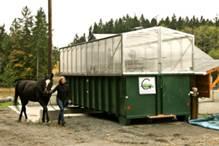
Beef cattle producers in United Kingdom, Ireland and New Zealand have shown a positive conservation effect using out wintering pads constructed with wood chips, allowing the pastures to be destocked. Out Wintering Pads (OWPs) are outside loafing areas for cattle. OWPs are typically constructed adjacent to a concrete feeding area and a watering facility. The OWP design allows for 150 square feet per cow. The chip size is critical for proper functioning of the manure storage system. Use of fist to palm sized chips are recommended to allow dung to filter into the pad. Smaller chips can be used but will need to be renewed sooner. Manure is worked down below the surface of the pad by the cattle’s hoof action. Initial depth of chips needs to be no less than 12 -15 inches deep. The site must be prepared with a drainage system using drain pipes every 10 feet to prevent moisture accumulation within the OWP (Figure 2). This effluent must be managed with a storm water retention pond and vegetated filter strip.
What have we learned?
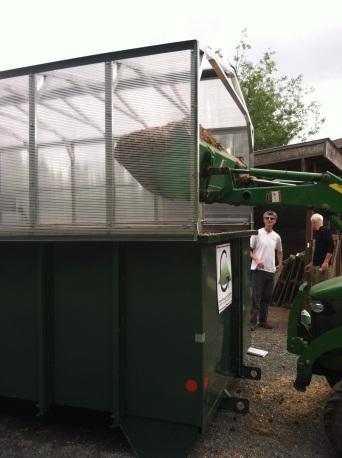
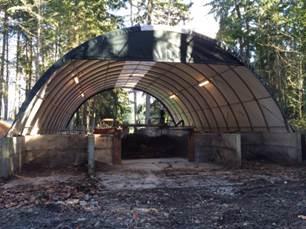
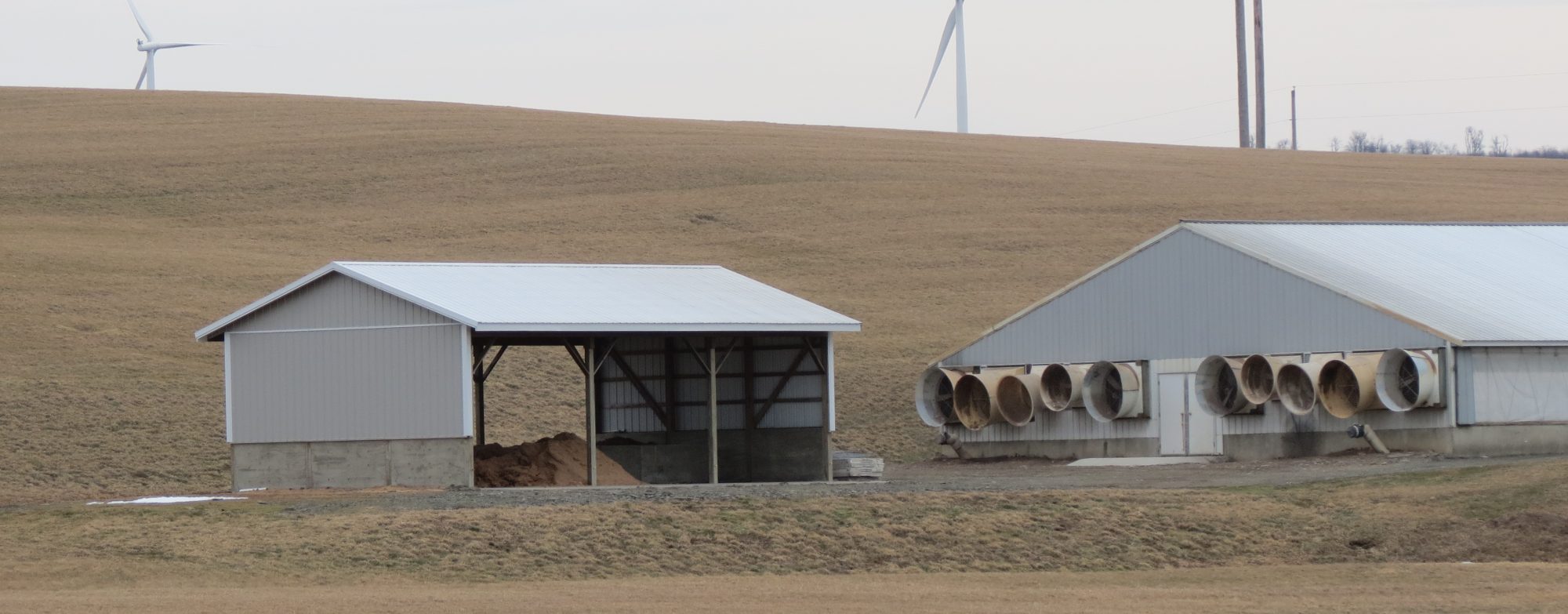
Two woodchip-surfaced heavy use areas have been installed and monitored in West Virginia. The first was installed on a private farm with a cow/calf enterprise in Northern WV during 2011 (Figure 1).
The design criteria were adopted from a guidance document developed by the Irish Department of Agriculture and Food. This wood chip pad was placed adjacent to a USDA NRCS roofed winterfeeding area and roofed manure storage. Woodchip quality was determined and temperature and precipitation monitoring occurred for a 23 month period including two winter stocking periods. Effluent water quality grab samples were taken during that monitoring period. A second chip pad was constructed in WV on the West Virginia University (WVU) Animal Science Experiment Station Farm during 2014. This area consists of two loafing paddocks, one constructed with single species white oak wood chips and the other with mixed hardwood chips made up primarily of mixed yellow-poplar and oak. Bench scale columns with various configurations of thermally treated wood chips were evaluated in 2014.
Column Study Setup
PVC pipe (8-inches in diameter) columns
Runoff water was collected from the waste water storage tank at WVU’s Animal Science Farm
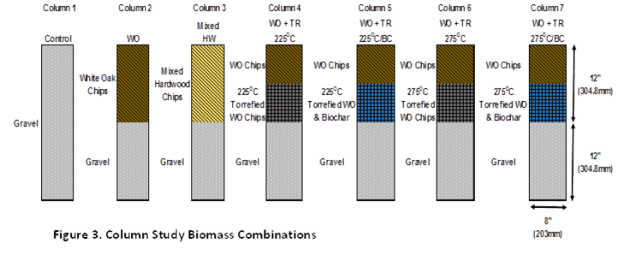
Gravel placed in each of the columns to a height of 12 inches (304.8mm) and then each column was packed with 12 inches (304.8mm) of varying media (Figure 3)
Three rain events (1cm, 2cm, and 3cm) (with 96 hours between events) were passed through the columns
Each of the columns were then cleaned and re-packed and subjected to waste water to a depth of 18 inches (459 mm) for 48 hours
Pre- and post-water samples were collected to test for phosphorous (P), ammonia, and Total Kjeldahl nitrogen (TKN)
Biomass Media Performance – Rain Events
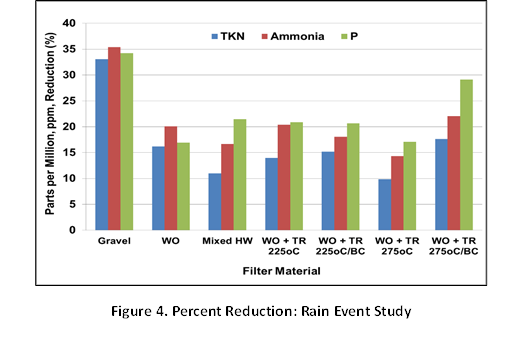
Mixed hardwood chips had superior P concentration reduction compared to white oak chips, but lower Total TKN reduction (Figure 4)
Gravel outperformed the biomass media filters (Figure 4)
Of the biomass media, the WO + TR 275OC/BC media showed the highest % reduction of P, TKN, and Ammonia (Figure 4)
Biomass Media Performance – 48 Hour Hold
White oak chips had better TKN reduction than mixed hardwood chips, but lower P reduction (Figure 5)
Mixtures containing biochar resulted in greater pollutant reductions than torrified treatments without biochar (Figure 5)
The WO + TR 275C/BC media showed the highest % reduction of TKN and Ammonia, but not the highest P % reduction (Figure 5)
The biomass mixes that have demonstrated the best performance are being added as treatments in small cell areas on the WVU woodchip heavy use area. The treatment cells are being monitored for runoff flow amounts and water quality.
Future Plans
Further research is needed to determine optimum chip species and chip size for moisture retention and nutrient capture capabilities. Development of complimentary systems to treat the effluent produced from periods of runoff are needed as vegetated treatment areas may not function well during the winter when WV soils are typically saturated and runoff occurs instead of infiltration.
Tom Basden 1060 Agricultural Sciences Building Morgantown WV 26506
The authors are solely responsible for the content of these proceedings. The technical information does not necessarily reflect the official position of the sponsoring agencies or institutions represented by planning committee members, and inclusion and distribution herein does not constitute an endorsement of views expressed by the same. Printed materials included herein are not refereed publications. Citations should appear as follows. EXAMPLE: Authors. 2015. Title of presentation. Waste to Worth: Spreading Science and Solutions. Seattle, WA. March 31-April 3, 2015. URL of this page. Accessed on: today’s date.
The research community is making good progress in understanding the mechanical, biochemical, and atmospheric processes that are responsible for airborne emissions of particulate matter (PM, or dust) from open-lot livestock production, especially dairies and cattle feedyards. Recent studies in Texas, Kansas, Nebraska, Colorado, California, and Australia have expanded the available data on both emission rates and abatement measures. Although the uncertainties associated with our estimates of fugitive emissions are still unacceptably high, we have learned from our recent experience with ammonia that using a wide variety of credible measurement techniques, rather than focusing on one so-called “standard” technique, may be the better way to improve confidence in our estimates. Whereas the most promising control measures for gaseous emissions continue to be dietary strategies with management of corral-surface moisture a close second for particulate matter, corral-surface management and moisture management play comparable roles, depending on the mechanical strength of soils and the availability of water, respectively. The cost per unit reduction of emitted mass attributable to these abatement measures varies as widely as the emissions estimates themselves, so we need to intensify our emphasis on process-based emissions research to (a) reduce the variances in our emissions estimates and (b) mitigate the contingency of prior, empirically based estimates. As a general rule, although cattle feedyard emission factors may be thought a reasonable starting point for estimating emissions from open-lot dairies, such estimates should be viewed with suspicion.
Purpose
Document the state of the art of particulate-matter (PM) emissions from open-lot livestock facilities, including emission fluxes and abatement measures.
What did we do?
We conducted (a) field research at commercial, open-lot livestock facilities in the southern High Plains and (b) an up-to-date review of the latest literature concerning primary particulate matter emission fluxes and the abatement measures appropriate to the source type. Field research included time-resolved concentration measurements upwind and downwind of the livestock facilities during the hottest, driest times of the year (in the case of dairy emissions) and throughout the year (in the case of beef feedyards); and a 5-month evaluation of stocking density manipulation using electric cross-fences that preserve optimum bunk space for beef cattle on feed. The literature review surveyed research findings from anywhere in the world that were published in refereed journals as recently as March 2015 concerning the same topics.
What have we learned?
Increasing the stocking density of fed beef cattle as compared to the industry-wide average during hot, dry weather suppresses dust emissions to a measurable and reasonably consistent degree. Concentrations of PM measured downwind of open-lot dairies vary throughout the day, though to a lesser degree and at lower overall concentrations than those measured downwind of nearby beef cattle feedyards, likely reflecting (a) the comparatively lower intensity of the dairy animal’s physical activity and (b) the greater diurnal uniformity of animal-activity patterns in dairies as compared to those in cattle feedyards. Stocking density manipulation does not appear likely to influence dairy dust emissions to the same degree as it influences feedyard dust emissions. Our confidence in emission-flux estimates from these open-lot systems suffers from a lack of methodological diversity; that confidence would be greatly bolstered by the deployment of measurement techniques that differ from the standard inverse-dispersion-modeling paradigm. The integrated horizontal flux (IHF) approach to emissions estimation, which we are now testing at a cattle feedyard in the Texas Panhandle, will provide some corroborating evidence that will allow us to narrow the range of PM flux estimates in the research literature, a range that now spans more than an order of magnitude when expressed on a per-animal-unit basis.
Future Plans
We will continue long-term, ground-level monitoring of time-resolved PM concentrations at a commercial cattle feedyard in the Texas Panhandle; continue our ongoing tests of the IHF flux-estimation technique; and evaluate eye-safe lidar as a path-averaging monitoring technology for the intermediate path lengths (50-300m) that will permit experimental discrimination of concentration data downwind of adjacent pen areas featuring different dust-abatement measures.
Authors
Brent Auvermann, Professor, Texas A&M AgriLife Extension Service b-auvermann@tamu.edu
K. Jack Bush and Kevin R. Heflin, Research Associates, Texas A&M AgriLife Research
USDA-NIFA Contract Nos. 2010-34466-20739 and 2009-55112-05235; Texas A&M AgriLife Research; JBS Five Rivers Cattle Feeding; Texas Air Research Center; Texas Cattle Feeders Association
The authors are solely responsible for the content of these proceedings. The technical information does not necessarily reflect the official position of the sponsoring agencies or institutions represented by planning committee members, and inclusion and distribution herein does not constitute an endorsement of views expressed by the same. Printed materials included herein are not refereed publications. Citations should appear as follows. EXAMPLE: Authors. 2015. Title of presentation. Waste to Worth: Spreading Science and Solutions. Seattle, WA. March 31-April 3, 2015. URL of this page. Accessed on: today’s date.
Enforcement of nutrient management regulation has forced Maryland farms and agricultural facilities to adopt new waste management practices. Few options exist that are financially sustainable. Regulatory agencies witnessed the unexpected consequence of closing small and mid-sized farms who could not afford to institute new waste management technologies. To counter that consequence, Maryland Department of Agriculture offered grants to subsidize the development of innovative technology and business practices. These new systems and business models had to offer both financial and environmental sustainability.
What Did We Do?
The first step in this project (supported by the Maryland Department of Agriculture, 2014) was to identify the biological make up and characteristics of the stable waste both before and after processing. We measured nutrient content and form (N, P, K), porosity, moisture absorption and C: N ratio. By understanding what the material consisted of pre-processing, we were able to determine what effects different controls during processing would have on the end product. As an example, when using stable waste for bedding re-use the material is run through the composting system as quickly as possible. A shorter composting period with auger mixing technology allowed the biological activity to breakdown the manure balls, support the transformation of the waste nutrients and yet protect the integrity of the shavings for second use. Related: Managing Manure on Horse Farms
Next, the local markets were studied:
Soil types and needs: compost to add porosity, water retention, nutrients to soil
Weather patterns and created needs: compost added for water retention, binding material to diminish run off
Population centers for urban market: compost for landscape needs, potting medium
Rural character for on farm market: compost for nutrient replacement, bedding re-use
Cost of operations on local farms: cost of bedding, cost of disposal, cost of landscape material, cost of synthetic or imported fertilizer
Wholesale market needs: compost for distribution centers (Scotts products), soil specialty companies, land reclamation sites, Department of Transportation needs, green house growers
Identifiable, viable market channels to move the processed stable waste were necessary components of a business model. Uses for the processed waste were identified both on site and off site.
On site uses were identified as:
Land application: field enhancement
Bedding re-use
Landscape use
Improved footing arenas
Land reclamation
Pelletized for heat systems
Off site uses were identified as:
Soil amendment
Land reclamation
Potting Medium
Food Waste Bulking agent
Whole sale distribution centers
Soil Specialty companies
What Did We Learn?
Data was gathered and studied from equine facilities with existing composting operations to illustrate what the benefits and challenges can be. IOS Ranch on Bainbridge Island Washington is a sustainably designed 7.5 acre property that supports 20-25 stalled horses. The design concentrates the structures, indoor arena, stall, office and supporting buildings, so there could be surrounding pasture turn out and an outdoor arena. The facility was paying high waste disposal fees. Their decision to bring composting technology to the farm was an effort to eliminate disposal fees and diminish their bedding cost through bedding re-use. However, once the system was installed a local landscaper visited the site and saw value in the compost. The material is now sold for $30/yard wholesale and $45/yard retail to local landscapers and gardeners. With the price of shavings for bedding delivered at $7.50/yard the business decision to sell the compost was an obvious one. The property was formerly a gravel pit with large areas of exposed pit run. Once realizing the value of the compost for land application, the owner spread on the exposed areas greatly improving grass performance in the turnout fields. This farm was saving $100-$140/day producing compost because of the reduced disposal fees plus profits from marketing, allowing for a breakeven on investment in 3 years.
Joint Base Myer Henderson Hall hosted a pilot project for composting of food waste on remote contingency bases. On this base the Army’s Caisson horses are housed in a 50+ stall barn. After the pilot was completed the in vessel composting system will revert to the base for processing the stable waste. The base has the choice of bedding re-use or using the compost for landscape needs on base and/or in the adjacent Arlington National Cemetery. Outside contractors were supplying the base with compost at nearly $400,000 per year. The project could pay for itself in the first year. Thorough lab analysis showed the compost to be consistently of high quality, pathogen free, and weed seed free.
Currently two sites in Maryland are being studied; one an equine rescue facility housing 50-80 horses, and the other a dairy with 240 head. The use of composted stable waste as a peat moss replacement will bring value to the equine and dairy farms and to the large, local greenhouse industry. Currently 80% of the peat moss used in Maryland is imported from Canada. The farms selected are large enough that they can produce enough material for bedding re-use (savings of nearly 20% of operating budget) and/or sell the material to wholesale buyers. The composting material from both sites show the favorable attributes of peat moss, porosity and moisture retention. Blending can alter the nutrient levels to what the market needs by using the more nutrient rich dairy waste. The collection of compost and blending can be done on on site or at an off site location in cooperation with other local farms, this may help meet larger volume needs of wholesale buyers.
Future Plans
The Maryland projects are both two years in duration with continual data gathering and recording. The next step is the location and operation of a collection yard for multiple local farms to send their processed stable waste. Such a yard allows for mixing to meet differing market needs and the creation of large quantities of homogenous product for local greenhouse growers.
Dr. Pat Millner, USDA Beltsville, Research Microbiologist is lead researcher and mentor on these projects in Maryland.
The authors are solely responsible for the content of these proceedings. The technical information does not necessarily reflect the official position of the sponsoring agencies or institutions represented by planning committee members, and inclusion and distribution herein does not constitute an endorsement of views expressed by the same. Printed materials included herein are not refereed publications. Citations should appear as follows. EXAMPLE: Authors. 2015. Title of presentation. Waste to Worth: Spreading Science and Solutions. Seattle, WA. March 31-April 3, 2015. URL of this page. Accessed on: today’s date.
Provide EPA’s perspective on nutrient pollution and encourage an open dialogue to help address this problem which is rapidly becoming one of the most challenging environmental problems that we face.
What Did We Do?
Although nutrients, nitrogen and phosphorus in particular, are essential for aquatic life, too many nutrients can create significant problems for our nation’s lakes, streams, and coastal waters. Nutrient pollution can degrade habitat for fish and wildlife, render water bodies unsafe for swimming and other forms of contact recreation, create a public health concern for drinking water supplies, decrease property values, and negatively impact local economies. According to national statistics, more than 45% of streams have medium to high levels of nutrients, approximately four million lake acres have been identified as threatened or impaired, and approximately 78% of assessed coastal areas exhibit signs of eutrophication.
Nutrients can be transported great distances and impact areas far downstream. One of the more prominent examples in the United States is the Gulf of Mexico “dead zone,” which can be larger than the state of Connecticut in some years. The term “dead zone” refers to waters that have been so heavily impacted by nutrient pollution that oxygen levels are depleted to the point where most aquatic life cannot survive. Nutrients are transported to the Gulf of Mexico via tributaries of the Mississippi River from as far away as Montana in the west and Pennsylvania in the eastern portion of this large watershed.
Nutrient pollution is not restricted to the Mississippi River Basin or any one region of the country. Nutrient pollution is widespread, impacting waters across the nation. As we learn more about the impacts of nutrient pollution, especially the potential for some species of algae to produce toxins that can be harmful to both people and animals, states are becoming more aggressive in reducing sources and even posting health advisories when necessary.
So, what has EPA been doing to address nutrient pollution?
Providing states with technical assistance and other resources to help develop water quality criteria for nitrogen and phosphorus;
Working with states to identify waters impaired by nutrients and developing restoration plans;
Awarding grants to states to address pollution from nonpoint sources, such as agriculture and storm water runoff;
Administering a permit program designed to reduce the amount of nitrogen and phosphorus discharged to the environment from point sources;
Providing funding for the construction and upgrade of municipal wastewater treatment plants;
Working with states to reduce nitrogen oxide emissions from air sources;
Conducting and supporting extensive research on the causes, impacts, and best approaches to reduce nutrient pollution; and
Increasing collaboration with other federal partners (e.g., USDA) to leverage financial and technical resources.
And although progress has been made over the past decade, much more is needed. Realizing a need for greater action, In March 2011, EPA issued a memorandum titled “Working in Partnership with States to Address Phosphorus and Nitrogen Pollution through Use of a Framework for State Nutrient Reductions.” This memo emphasized that nutrient pollution continues to have the potential to become one of the costliest and most challenging environmental problems that we face and reaffirmed the agencies commitment to partner with states and stakeholders to make greater progress in reducing nutrient loading to our nation’s waters. If you have not already done so, please join us in protecting and restoring our nation’s waters. For more information visit EPA’s nutrient pollution website at http://www.epa.gov/nutrientpollution/.
Author
Alfred Basile, Biologist, US Environmental Protection Agency Region 8, basile.alfred@epa.gov
The authors are solely responsible for the content of these proceedings. The technical information does not necessarily reflect the official position of the sponsoring agencies or institutions represented by planning committee members, and inclusion and distribution herein does not constitute an endorsement of views expressed by the same. Printed materials included herein are not refereed publications. Citations should appear as follows. EXAMPLE: Authors. 2013. Title of presentation. Waste to Worth: Spreading Science and Solutions. Denver, CO. April 1-5, 2013. URL of this page. Accessed on: today’s date.
Gaseous ammonia emissions from feedlot operations pose serious risks to human and ecosystem health. In particular, nitrogen deposition in Colorado‟s Rocky Mountain National Park may be associated with livestock feeding in the western Corn Belt and Colorado. Feedlot operators can implement a variety of Best Management Practices (BMPs) to reduce ammonia emissions. These BMPs vary in effectiveness, simplicity, managerial time, effort and financial capital. Although the ammonia-mitigating potential of various BMPs is well-researched, little research examines the barriers that prevent feedlot operations from adopting these BMPs.
What Did We Do?
To learn more about these barriers, a questionnaire was mailed to 1,998 dairy and feedlot producers in June 2007. Survey responses (overall response rate of 7.6% for feedlots and dairies) allow determination of current levels of BMP adoption as well as producer perceptions of the environmental impact and economic feasibility of each BMP. This research uses discrete choice modeling to evaluate factors influencing adoption for the average producer as well as subsets of producers.
What Have We Learned?
Of the thirteen BMPs surveyed, six of the BMPs had adoption rates greater than 50%, indicating sizeable overall adoption levels. Probit analysis enables estimation of the conditional probability of adoption given a set of attributes. Hiring a nutritionist, incorporating manure within 48 hours, collecting runoff from drylots and testing for nutrients are practices most amenable to large operations. These practices range from 50-75% adoption rates, indicating potential for increased adoption. The perception of high cost seems to limit the adoption of hiring a nutritionist, especially for small producers who are unable to distribute the high fixed cost across as many animals. A perception of technical expertise decreases the probability of testing manure and compost for nutrients, as well as for performing yearly soil tests. The technical expertise constraint particularly impacts smaller producers for testing manure and compost, while it persists across all sizes for conducting yearly soil tests. Both providing bedding in pens and shade in drylots (require less technical assistance than the average practice. This result, combined with the negative relationship between adoption and size indicates they are better suited for adoption by smaller operations, as well as operations where the feedlot represents the principal revenue stream
Future Plans
This study aimed to provide outreach professionals with a profile of ammonia BMP adoptees and factors influencing adoption decisions, based on findings from the survey sample. Two principal limitations characterized these findings. First, the low response rate limited the ability to generalize to the population of feedlot operators. Further research needs to improve the response rate, identifying issues that hindered operator participation. Potential reasons include the length of the survey and the sensitive political nature of ammonia emissions. Furthermore, dairy operations play a key role in managing ammonia emissions, yet the survey response rate for dairy operators was prohibitively low, preventing an empirical analysis similar to the feedlot analysis. This low response rate can likely be attributed to lower overall numbers of dairy operations, as well as reluctance to participate for unknown reasons. Our intention is to repeat the survey effort with an improved elicitation method, but also to update BP’s to those that are part of the feasible set of adoption by producers.
Authors
James Pritchett, Associate ProfessorDepartment of Agriculture and Resource Economics, Colorado State University james.pritchett@colostate.edu
Carolyn Davidson, Economic Analyst, National Renewable Energy Laboratory
Nicole Embertson, Science and Planning Coordinator, Whatcom Conservation District
Jessica Davis, Professor and Director for the Institute for Livestock and the Environment, Colorado State University
The authors are solely responsible for the content of these proceedings. The technical information does not necessarily reflect the official position of the sponsoring agencies or institutions represented by planning committee members, and inclusion and distribution herein does not constitute an endorsement of views expressed by the same. Printed materials included herein are not refereed publications. Citations should appear as follows. EXAMPLE: Authors. 2013. Title of presentation. Waste to Worth: Spreading Science and Solutions. Denver, CO. April 1-5, 2013. URL of this page. Accessed on: today’s date.
South Carolina is home to an estimated 18,000 horse owners, many of which own or house less than ten horses on their property. Owners of such small facilities regularly obtain assistance from the Clemson Extension service concerning soil fertility, forage options, and in some cases nutrient testing, but there is very little information available concerning efficient utilization of the manure produced from their facility. In many cases the manure and bedding removed from stalls is viewed as something to be disposed of rather than a possible nutrient source than can be utilized with proper management. This presentation provides an overview of horse manure production and nutrient content for the small horse facility owner, and addresses the best management techniques to utilize produced manure, including the benefits of composting the manure before utilization.
Purpose
South Carolina is home to an estimated 18,000 horse owners, many of which own or house less than ten horses on their property. Owners of such small facilities regularly obtain assistance from the Clemson Extension service concerning soil fertility, forage options, and in some cases nutrient testing, but there is very little information available concerning efficient utilization of the manure produced from their facility. In many cases the manure and bedding removed from stalls is viewed as something to be disposed of rather than a possible nutrient source than can be utilized with proper management.
What Did We Do?
Several County Extension agents offer multi-week Equine Management seminars covering a range of topics primarily for the horse owner with a small number of horses. We added a segment on horse manure production and utilization, developing a presentation detailing the manure production amounts and nutrient content of typical horse manure, and best management strategies for utilizing that manure.
What Have We Learned?
This presentation has been provided to four Equine Management Seminars to date. In each case the horse owners were surprised in the lack of immediate availability of nitrogen in the manure, and were glad to learn of methods that provide sustainable uses for their horse manure while also helping to minimize potential disease issues and other impacts. They also mentioned that they now view the manure as a resource, not as “something to be dealt with.”
Future Plans
We plan to offer this training during future Equine Management seminars and as a single-event program.
Authors
W. Bryan Smith, M.S., Area Extension Agent – Agricultural Engineer, Clemson Cooperative Extension Service, wsmth@clemson.edu
John P. Chastain, Ph.D., Professor and Extension Agricultural Engineer, Clemson University
Gary L. Heusner, Ph.D., Professor and Extension Specialist, University of Georgia
The authors are solely responsible for the content of these proceedings. The technical information does not necessarily reflect the official position of the sponsoring agencies or institutions represented by planning committee members, and inclusion and distribution herein does not constitute an endorsement of views expressed by the same. Printed materials included herein are not refereed publications. Citations should appear as follows. EXAMPLE: Authors. 2013. Title of presentation. Waste to Worth: Spreading Science and Solutions. Denver, CO. April 1-5, 2013. URL of this page. Accessed on: today’s date.
The AWM (Animal Waste Management) software is primarily a design tool. It has been traditionally used for designing animal waste storage structures (tanks, ponds, lagoons, etc). Recently, it was upgraded to incorporate the evaluation function that enables the user to evaluate existing animal waste storage structures for their design adequacy. On the other hand, SPAW (Soil-Plant-Air-Water) is a water budgeting tool for farm fields, ponds and inundated wetlands. The SPAW model performs daily hydrologic water budgeting using a modified SCS Runoff Curve Number method. The POND module of the SPAW simulates a water budget for a small pond/ reservoir/lagoon as well as performs statistical analysis of pond inundation cycles based on the wetland growing season. The SPAW water budget outputs from one or more fields are used as input for the POND module. This paper demonstrates, with an example, how these two tools (AWM & SPAW) can be used for evaluating existing animal waste storage structures for adequate design and operational feasibility. The AWM evaluates the capacity of the designed dimensions for the waste flowing into the structure and inflow from the extreme storm events; and the SPAW evaluates operational feasibility using long term simulations based on daily input of waste, rainfall, and other hydrologic interactions. The paper also elaborates the data sources such as soils, climate, evaporation, etc. and the process of compiling and formatting these data for SPAW simulations
The authors are solely responsible for the content of these proceedings. The technical information does not necessarily reflect the official position of the sponsoring agencies or institutions represented by planning committee members, and inclusion and distribution herein does not constitute an endorsement of views expressed by the same. Printed materials included herein are not refereed publications. Citations should appear as follows. EXAMPLE: Authors. 2013. Title of presentation. Waste to Worth: Spreading Science and Solutions. Denver, CO. April 1-5, 2013. URL of this page. Accessed on: today’s date.
Teaching Best Management Practices (BMP) or introducing new agricultural waste management practices to livestock producers and farmers is a challenge. This poster describes a series of on-farm field days designed to deliver information and demonstrate on-site several waste management techniques, most of them well established in other parts of the country but sparsely used in Idaho. During these field days, Extension personnel presented each technique and offered written information on how to apply them. But without a doubt, presentations by the livestock producers and farmers who are already applying the techniques and hosted each field day at their farms was the main tool to spark interest and conversations with attendees.
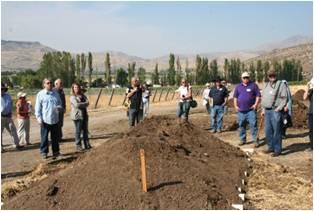
Four field days were delivered in 2012 with more programmed for 2013. Demonstrated techniques reduce ammonia and odor emissions, increase nitrogen retention from manure, reduce run-off risks, and reduce emissions of greenhouse gases. Topics addressed on each field day were, a: Dairy manure collection and composting, 20 attendees. b: Dairy manure land application ten attendees. c: Grape vine prunings and dairy manure composting, 50 attendees. d: Mortality and offal on-farm composting, 40 attendees. In all cases farm owners and their managers presented and were available to answer attendees’ questions, sharing their experience, and opinions regarding the demonstrated practices. Many attendees expressed their interest and willingness to adopt some of the demonstrated practices. On-farm field days are an excellent tool to increase understanding and adoption of BMP and new technologies. Hearing experiences first hand from producers applying the techniques and being able to see them in action are excellent outreach tools. On-farm field days also fit the fast pace, busy schedule of modern producers who can later visit with Extension and other personnel if they need more details, information, and help on how to adopt the techniques they are interested in.
Why Hold Field Days on Ag Waste Management?
The dairy industry is the number one revenue commodity in Idaho. At the same time Idaho is ranked third in milk production in the nation. Idaho has more than 580,000 dairy cows distributed in 550 dairy operations (Idaho State Department of Agriculture 1/2013). The Magic Valley area in south-central Idaho hosts 54% of those dairies and 73% of all dairy cows in the state (Idaho Dairymen’s Association internal report, 2012). Odors from dairies and other animal feeding operations are a major issue in Idaho and across the country. In addition, the loss of ammonia from manures reduces the nutrient value of the manure and generates local and regional pollution. Dairy farmers of all sizes need more options on how to treat and dispose of the manure generated by their operations. Odor reductions, capture of nitrogen in dairy manure, reduction of greenhouse gases emissions, off-farm nutrients export, water quality protection, and reduction of their dairy operation’s environmental impact are some of the big challenges facing the dairy industry in Idaho and around the country. There are many Best Management Practices (BMP) that are proven to work on providing results related to the challenges mentioned before. Some of these practices are widely adopted in certain parts of the country or in other countries, with a lack of adoption by dairy producers and farmers in other parts of the country. This poster shows a series of Extension and research efforts designed to introduce and locally test proven BMP to dairy producers and crop farmers in southern Idaho in an effort to increase their adoption and incorporate those BMP as regular practices in Idaho agriculture. The four projects described were delivered in 2012 and some will continue in 2013.
What Did We Do?
To demonstrate and test BMP we chose to develop on-farm research projects to collect data and couple these projects with on-farm field days to demonstrate the applicability of the BMP in a real-world setting. Extension personnel developed the research and on-farm field days and did several presentations at each location. But without a doubt the stars during those field days were the dairy producers and farmers who hosted the research and demonstration events and who are already using or starting to use the techniques showcased. These pioneer producers are not only leading the way in using relatively new BMP in southern Idaho, they also share their experiences with other producers and with the academia so everybody around can learn from them. Topics addressed in each field day were, a: Dairy manure collection and composting, 20 attendees. b: Dairy manure land application, 10 attendees. c: Grapevine prunings and dairy manure composting, 50 attendees. d: Mortality and offal on-farm composting, 40 attendees.
On-farm manure collection and composting field day.
Some highlights from each project are: a. The dairy manure collection and composting field day demonstrated the operation and use of a vacuum manure collection system and a compost turner. Dairy managers and machinery operators shared their experiences, benefits and challenges related to the use of these two technologies. During the field day attendees also visited the whole manure management system of the dairy and were able to observe diverse manure management techniques. As a result of this project Extension personnel determined the necessity of generating educational programs for compost and manure management operators for dairy employees. A composting school in Spanish and English proposal was presented and a grant was obtained to develop and deliver them in 2013.
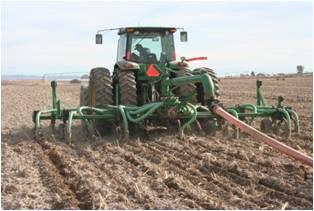
b. The dairy manure land application field day featured the demonstration of a floating manure storage pond mixer and pump, and a drag hose manure injection system. We also showed an injection tank that wasn’t operated during the demonstration. The floating pond mixer serves as lagoon mixer and pump. It mixes and pumps the manure through the drag hose system to the subsurface injector. This system dramatically reduces the time required to land apply liquid and slurried manures. It also significantly reduces ammonia and odor emissions to near background levels, as well as avoids runoff after applications. This project included research of emissions on the manure injection sites (see Chen L., et al. in this conference proceedings).
Demonstrating dairy manure subsurface injection using a drag hose system.
c. The grapevine prunings and dairy manure composting project involves research on the implications of increasing the carbon content of dairy manures using grapevine prunings and other carbon sources to retain more nitrogen in the compost, and how it varies among three diferent composting techniques. This project includes two field days, one during the project (2012), and another one at the end of it in 2013. The demonstration includes how to compost using mechanically turned windrows (common in Idaho), passive aerated, and forced aerated windrows (both very rarely used in Idaho). Another novelty in this project is that it aims to bring together dairy producers and fruit & crop producers, or landscaping insustry so they can combine their waste streams to produce a better compost and to reduce the environmental impact of each operation. Several producers of the diverse audience who attended showed interest in adopting some of the composting techniques presented during the field day.
d. The mortality and offal on-farm composting project was located at a diversified sheep farm that includes sheep and goat dairy and cheese plant, meat lambs, and chickens. A forced aerated composting box was used to compost lamb offal, hives, lamb and chicken mortalities, and whey from the cheese plant. A very diversified audience attended the field day and the composting system generated a lot of interest. The farm owner was so pleased with the system that she created a second composter with materials she had on-hand to increase her composting capabilities and compost all year round. The producer stopped disposing of lamb offal, hives, and mortalities at the local landfill.
What Have We Learned?
On-farm field days are a great tool to demonstrate and encourage the application of otherwise seldom applied techniques. They also can serve a dual purpose of demonstration and research, allowing for quality data collection if designed properly. Farmers’ collaboration and full participation during all phases of the project is paramount and pays off by having a very enthusiastic and collaborative partner. Identiying progressive and pioneer producers that are already applying new BMP or are willing to take the risk is very important to develop this kind of on-farm experience. In general these individuals are also willing to share their knowledge, experience, and results with others to increase the adoption of such techiques. Having a producer hosting and presenting during the field day, at their facilities (as opposed to a dedicated research facility) generates great enthusiasm from other producers and helps to “break the ice” and bring everybody to a friendly conversation and exchange of ideas if properly facilitated.
Future Plans
On both projects, a. manure collection and composting and b. manure injection we will generate a series of videos to demonstrate the proper application of BMP, and educational printed material will also be published. Project c. grape prunings and manure composting is still going on and we will finish collecting data by mid 2013. A second field day will be offered and videos and printed educational material will be developed. Project d. will see an expansion with a mortality composter for dairy calves being installed at a dairy, and with a field day following after the first compost batch is ready. Additional programs are in the works; these programs incorporate the on-farm demonstration and research dual purpose and have high participation from the involved producers.
Authors
Mario E. de Haro-Marti, Extension Educator, Gooding County Extension Office, University of Idaho Extension. mdeharo@uidaho.edu
Lide Chen, Waste Management Engineer
Howard Neibling, Extension Irrigation and Water Management Specialist
Mireille Chahine, Extension Dairy Specialist
Wilson Gray, District Extension Economist
Tony McCammon, Extension Educator
Ariel Agenbroad, Extension Educator
Sai Krishna Reddy Yadanaparthi, Graduate student
James Eells, Research Assistant. University of Idaho Extension.
Acknowledgements
Projects a. and b. were supported by a USDA-NRCS Conservation and Innovation Grant (CIG). Project c. was supported by a USDA-NRCS Idaho CIG. Project d. was supported by a University of Idaho USDA-SARE mini grant. We also want to thank Jennifer Miller at the Northwest Center for Alternatives to Pesticides for her help and support with projects c. and d. Finally, we want to thank all producers involved in these projects for their support and openess to work with us, and for their innovative spirit.
The authors are solely responsible for the content of these proceedings. The technical information does not necessarily reflect the official position of the sponsoring agencies or institutions represented by planning committee members, and inclusion and distribution herein does not constitute an endorsement of views expressed by the same. Printed materials included herein are not refereed publications. Citations should appear as follows. EXAMPLE: Authors. 2013. Title of presentation. Waste to Worth: Spreading Science and Solutions. Denver, CO. April 1-5, 2013. URL of this page. Accessed on: today’s date.
While large-scale farms have typically been the focus of anaerobic digestion systems in the U.S., an emerging need has been identified to serve smaller farms with between 50 and 500 head of cattle. Implementing such a small, standardized, all-in-one system for these small farm applications has been developed. Small-scale digesters open the playing field for on-farm sustainability and waste management.
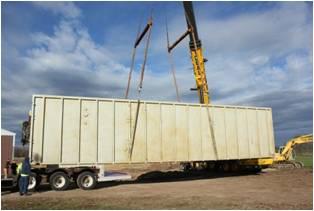
Unloading the first biodigester unit.
This presentation on small-scale digestion would discuss the inputs, processing, function, and outputs of BIOFerm™ Energy Systems’ small agitated plug flow digester (EUCOlino). This plug-and-play digester system has the ability to operate on dairy manure, bedding material, food waste, or other organic feedstocks with a combined total solids content of 15-20%. A case study would be presented that describes the site components needed, the feedstock amount and energy production, as well as biogas end use. Additional details would include farm logistics, potential sources of funding, installation, operation, and overall impact of the project.
This type of presentation would fill an information gap BIOFerm™ has discovered among dairy farmers who believe anaerobic digestion isn’t feasible on a smaller scale. It would provide farmers who attend with an understanding of the technology, how it could work on their specific farm and hopefully reveal to them what their “waste is worth”.
Why Study Small-Scale Anaerobic Digestion
To inform and educate attendees about small-scale anaerobic digestion surrounding the installation and feasibility of the containerized, paddle-mixed plug flow EUCOlino system on a small dairy farm <150 head.
Biodigester unit being installed at Allen Farms.
What Did We Do?
Steps taken to assist in financing the digestion system include receiving grants from the State Energy Office and Wisconsin Focus on Energy. Digester installation includes components such as feed hopper, two fermenter containers, motors, combined heat and power unit, electrical services, etc…
What Have We Learned?
Challenges associated with small project implementation regarding coordination, interconnection, and utility arrangements.
Future Plans
Finalize commissioning phases and optimize operation.
Steven Sell, Biologist/Application Engineer, BIOFerm™ Energy Systems
Gabriella Huerta, Marketing Specialist, BIOFerm™ Energy Systems
Additional Information
Readers interested in this topic can visit www.biofermenergy.com and for more information on our plants, services and project updates please visit us on our website at www.biofermenergy.com. You will also see frequent updates from us in industry magazines (BioCycle, REW Magazine, Waste Age). BIOFerm will also be present at every major industry conference or tradeshow including the Waste Expo, Waste-to-Worth and BioCycle– stop by our booth and speak with one of our highly trained engineers for further information.
The authors are solely responsible for the content of these proceedings. The technical information does not necessarily reflect the official position of the sponsoring agencies or institutions represented by planning committee members, and inclusion and distribution herein does not constitute an endorsement of views expressed by the same. Printed materials included herein are not refereed publications. Citations should appear as follows. EXAMPLE: Authors. 2013. Title of presentation. Waste to Worth: Spreading Science and Solutions. Denver, CO. April 1-5, 2013. URL of this page. Accessed on: today’s date.
To examine the financial, operational and health benefits of re-using composted bedding in the equine industry.
What Did We Do?
Stable waste, consisting of manure, urine and wood shavings, is a readily compostable feedstock that generates heat and can be transformed into finished homogenous compost, which can be used as bedding for horses and other livestock. This transformation can be completed in as little as 2 weeks with in-vessel technologies, 15-25 days in aerated site-built systems and 20-30 days in aerated static pile (ASP) systems. If composting is done in a biologically active, aerobic environment such as the systems mentioned above, the process destroys weed seed, parasites and harmful pathogens. These benefits are the result of system controls such as a correct ratio of C:N, moisture, porosity of the pile, and temperature. The in-vessel composting system offers the most comprehensive control of these factors ensuring the most favorable results.
The biological process that occurs when the stable waste is blended utilizes the leachable N and binds it in the organic matrix keeping it secured. There is also a reduction in N during the process as it becomes volatile and escapes through vaporization. The phosphorus is utilized by the bacteria during the process, reducing the amount available to leach by at least 50%. Since both N and Ph are needed for cellular growth, they get locked in the cells of the growing bacteria. This process generates heat, removing the moisture, killing pathogens and creating drier and more absorbent material for bedding re-use.
IOS Ranch, a private 20 horse show stable on Bainbridge Island, Washington, was the study site for this paper. They purchased an Earth Flow in vessel system and it is from this system that the lab results and observational data were collected. Their bedding of choice is medium sized bulk shavings. Also studied over the same period of time was the Earth Flow in-vessel system at Joint Base Myers/Henderson in Arlington, Virginia. The US Army Caisson horses stabled there are bedded on pelletized bedding. Lab data from this composting mix contributed to this study as well.
Washington State University, encouraged by the potential of financial savings, started using composted material as bedding in the school’s dairy farm. An unexpected benefit of this decision was the reduction of mastitis in the dairy herd. The change in bedding was the only variable altered in the care of the herd when this observation was noted. A study conducted by Cornell University’s Waste Management Institute studied the financial effects of using manure solids (DMS) as bedding. This study showed an average of $37,000 was saved annually by the diary farms who switched to re-use bedding. It was from these observations that we decided to apply the same questions to the equine industry.
A study conducted by Caitlin Price Youngquist of the Snohomish Conservation District, and funded by Western SARE is searching for the health benefits to horses with the use of composted stable waste as bedding. Preliminary examination has shown an increase in foot and leg health and a decrease in thrush, scratches and dermatitis seen on the horses in the study. General foot and leg health was also attributed to compost bedding by Dr. Hannah Mueller of Cedarbrook Veterinary Clinic and Northwest Equine Stewardship Center. She documented relief for a horse with chronic hives and a horse with a tracheotomy. The reduction of dust has been cited as a benefit to the horses suffering from heaves and other dust related ailments such as skin and respiratory irritations. The compost material has the unique quality of a large capacity for absorption while at an already higher level of moisture that makes the compost bedding less dusty. Both pellets and shavings exhibit this attribute.Youngquist’s assumption for the benefit composted bedding offers is based in the process itself. She states, “The compost has been through a very hot phase to kill all pathogens and parasites. It now has a thriving microbial population that competes aggressively with the fungal and bacterial pathogens that cause infections and irritations on skin and hooves (similar to the concept of a pro-biotic).”
Stable waste compost as bedding can be used in its entirety or screened to collect the larger remaining pieces of shavings for bedding, leaving the fines for soil amendment. Testing has shown in either case the composted material to have high absorbency, more so than green shavings. When mixed with 50% new or green shavings, the stall is at its most efficient for health and comfort for the horse. The composted material offers higher absorption, soaking up the urine off the stall floor. With a top dressing of new shavings the stall is aesthetically pleasing to the human eye, light in color and offering the horse a barrier to the wetter, compost material below. The compost bedding is odor free when reintroduced to the stall. The introduction of at least 50% new shavings also supports the ongoing composting system, refilling the system when it has its 40-50% reduction of volume and the eventual breakdown of the shaving pieces with multiple trips through the system. Continuing research is being done to understand the effect of pelletized bedding used in the bedding re-use loop without the introduction of a larger substance to affect the integrity of the material as it continues to be re –used.
The first test done was to measure the absorption ability of the three types of bedding mixes. Two inches of material was placed in a plastic container. The first test done on 2” of green shavings, the second test done on 2” of a 50/50 mix of green shavings and compost, and the third test done on 2” of compost. Each of the variations was weighed before the introduction of water. One gallon of water was poured over the material and allowed to stand for 2 minutes. The container was then drained of any standing water which was measured. The container was again weighed in each case after the water had been drained. This procedure allowed for the measurement of absorption by both the increase in weight and the volume of water not absorbed by the material.
The new shavings taken from a loose pile absorbed the least, the 50/50 mix the next higher amount and the compost bedding absorbed the most moisture. This is impressive when one considers that the density of compost bedding is higher before the introduction of the test water. The compost material is comprised of the same woody fiber as the shavings but the edges have softened and loosened, and it is possible that the breakdown of the resins, which can be hydro phobic, allows for additional absorption ability.
We also tested for the moisture content of each bedding type with a simple oven test. The material was measured by a two cup measuring cup and poured into a glass baking dish. The material was weighed before going into the oven, set at 200°. The material was then weighed again to determine the moisture content after 12 hours.
These preliminary tests were performed to study initial benefits noted with bedding re-use. These are not scientific studies and are only intended to show possible indications for the purpose of this paper and to encourage further study. With composting and bedding re-use, barns close the waste stream loop and create a value added product.
What Have We Learned?
The viability of composted stable waste to be re-used as bedding is proven to provide financial benefits by saving on the cost of material purchase and in the disposal of stable waste. It provides further savings in health care costs.
Laboratory Results for Composted Stable Waste
Laboratory Results for Composted Stable Waste
Future Plans
We will continue to support the Snohomish Conservation District study run by Caitlin Youngquist by supplying composted stable waste and collaboration.
We plan to run our dust measurement during the summer months when we actually have dust in the Pacific Northwest. A furnace filter attached to the intake side of an 18” x 18” fan would be left on at ground level in a newly bedded stall for three minutes while the horse was hand walked around the stall. This would be repeated for the three bedding variations. The filter would be weighed before being attached to the fan and again after the three minute period.
Study of pellets as bedding re-use material will be done, measuring the health benefits and the viability of the product over multiple uses.
A controlled trial on direct contact allergens will be conducted on the three bedding mixtures.
We will continue to educate the equine industry and encourage a broad scale adoption of this closed waste system.
Authors
Mollie Bogardus, MBA Sustainable Business, Equine Specialist, Green Mountain Technologies, Inc. and Michael Bryon Brown, President, Green Mountain Technologies, Inc.
Bogardus, Mollie. “Equine Applications/Case Studies/ IOS Ranch and Fort Myer/Henderson.” Green Mountain Technologies. Green Mountain Technolgies, Inc., n.d. Web. 15 Mar. 2013. http://compostingtechnology.com/equine/.
Cohen, Jamie. “Composted Horse Manure: The Pros and Cons.” The Florida Horse Feb. 2013: 23. Print.
“Equine Applications.” Green Mountain Technologies- lab results. N.p., 12 Dec. 2012. Web. 1 Mar. 2013. http://compostingtechnology.com/equine.
LeaMaster, Brad, James R. Hollyer, and Jennifer L. Sullivan. “Composted Animal Manures: Precautions and Processing.” Cooperative Extension Service,College of Tropical Agriculture and Human Resources, University of Hawai‘i. University of Hawaii at Manoa, n.d. Web. 6 Mar. 2013. http://www.ctahr.hawaii.edu/oc/freepubs.
Price Youngquist, Caitlin. “Composted Horse Manure and Stall Bedding Pilot Project – YouTube.” YouTube. Snohomish Conservation District, 17 Jan. 2013. Web. 1 Mar. 2013. https://youtu.be/B91U5UjuaXI.
Schwartz, Mary, Jean Bonhotal, and A. Edward Stachr. “Use of Dried Manure Solids as Bedding for Dairy Cows.” Cornell Waste Management Institute. Cornell University, n.d. Web. 1 Oct. 2012. http://cwmi.css.cornell.edu>.
Wheeler, Eileen , and Jennifer Smith Zajaczkowski. “Horse Stable Manure Management.” Cornell Cooperative Extension, Orange County Equine, Saratoga County Equine. Penn State University, n.d. Web. 6 Mar. 2013. http://cceequine.org.
Zaborski, Ed. “Composting to Reduce Weed Seeds and Plant Pathogens – eXtension.” eXtension – Objective. Research-based. Credible.. University of Illinois at Urbana Champaign, 22 Oct. 2012. Web. 2 Oct. 2012. http://www.extension.org/pages/28585/composting-to-reduce-weed-seeds-and….
Acknowledgements
This report could not have been done without the support of Philippe Le Dorze at IOS Ranch. His interest and pursuit of knowledge pushed us to continue to search for improvements and greater knowledge.
The staff at Joint Base Myer/Henderson, Amy Fagan especially, were also willing participants in the pursuit of the perfect compost recipe. Paul Brezovec at Concurrent Technologies Corp was a tremendous support to the project and continues to encourage the use of Earth Flow vessels for other bases.
A special thanks to Caitlin Price Youngquist for her ongoing dedication, collaboration and interest in the phenomena of bedding re-use.
The authors are solely responsible for the content of these proceedings. The technical information does not necessarily reflect the official position of the sponsoring agencies or institutions represented by planning committee members, and inclusion and distribution herein does not constitute an endorsement of views expressed by the same. Printed materials included herein are not refereed publications. Citations should appear as follows. EXAMPLE: Authors. 2013. Title of presentation. Waste to Worth: Spreading Science and Solutions. Denver, CO. April 1-5, 2013. URL of this page. Accessed on: today’s date.
Manage Cookie Consent
To provide the best experiences, we use technologies like cookies to store and/or access device information. Consenting to these technologies will allow us to process data such as browsing behavior or unique IDs on this site. Not consenting or withdrawing consent, may adversely affect certain features and functions.
Functional
Always active
The technical storage or access is strictly necessary for the legitimate purpose of enabling the use of a specific service explicitly requested by the subscriber or user, or for the sole purpose of carrying out the transmission of a communication over an electronic communications network.
Preferences
The technical storage or access is necessary for the legitimate purpose of storing preferences that are not requested by the subscriber or user.
Statistics
The technical storage or access that is used exclusively for statistical purposes.The technical storage or access that is used exclusively for anonymous statistical purposes. Without a subpoena, voluntary compliance on the part of your Internet Service Provider, or additional records from a third party, information stored or retrieved for this purpose alone cannot usually be used to identify you.
Marketing
The technical storage or access is required to create user profiles to send advertising, or to track the user on a website or across several websites for similar marketing purposes.

 What have we learned?