To study the interactive effects of large particle solids removal, anaerobic digestion and amendment of a manure additive (More than manure®), along with environmental factors on NH3 emissions from dairy slurry during storage.
To demonstrate a cost-effective and instantaneous NH3 measurement method using GasAlert NH3 detector under field conditions.
What Did We Do?
Twenty-six liters of each manure was stored in plastic storage buckets in duplicate in a barn with the surface open to the atmosphere. GasAlert readings of NH3 were obtained weekly from each container. Samples from each manure were analyzed for total N, NH4-N, total solids and volatile solids. Data collected was manure temperature, manure pH and ambient temperature. Average NH3 concentration, peak NH3 concentration and NH3 flux was calculated for each manure treatment.
Joe Harrison, professor, Washington State University, Puyallup Research and Extension Center, jhharrison@wsu.edu
Fei Sun1, graduate student
Joe Harrison1, professor
Pius Ndegwa2, associate professor
HungSoo Joo2, post Doc research associate
Liz Whitefield1, research associate
Kris Johnson2, professor
1Washington State University Research and Extension Center, 2 Washington State University
Acknowledgements
Specialty Fertilizer Products (SFP), LLC for financial support
The authors are solely responsible for the content of these proceedings. The technical information does not necessarily reflect the official position of the sponsoring agencies or institutions represented by planning committee members, and inclusion and distribution herein does not constitute an endorsement of views expressed by the same. Printed materials included herein are not refereed publications. Citations should appear as follows. EXAMPLE: Authors. 2013. Title of presentation. Waste to Worth: Spreading Science and Solutions. Denver, CO. April 1-5, 2013. URL of this page. Accessed on: today’s date.
Manure generated from concentrated animal feeding operations may serve as a source of steroids in surface water and adversely impact the development of aquatic ecosystems. The objectives of this research were to determine the amount of steroids and metabolites in manure from beef cattle production pens, and runoff from crop production fields.
What Did We Do?
Heifers were treated with zeranol, trenbolone acetate, and 17b-estradiol implants and fed melengestrol acetate, while a second group was not treated with growth promoters. Manure was sampled in the pens during feeding, run-off was collected during rainfall events, after feeding manure was collected, and either composted or stockpiled overwinter. In the following summer both composted and stockpiled manure was spread on a field, with plots subjected three tillage practices. Following application, two rainfall simulation events were conducted: one day (1 DAT) and one month later (30 DAT) to determine the effects of rainfall timing, manure handling (treated compost, untreated compost, treated stockpile and untreated stockpile) and tillage (no-till, moldboard plow+disk and disk) on the runoff losses of steroids.
What Have We Learned?
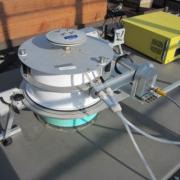
Simulated rainfall apparatus.
Results from the manure composting showed reduction in steroid concentrations over stockpiling for some compounds in manure samples such as 4-androstenedione, a-zearalenol, and progesterone, though not for all steroids. Very low concentrations of steroids were found in most runoff samples, approaching or below detection limits. Considering only detection frequency, fewer runoff samples showed traces of steroids on the 1 DAT in comparison to the 30 DAT simulations. The amount of rainfall before runoff was initiated was affected by tillage, and was different for the 1 DAT and 30 DAT events. A second year’s study with a smaller set of treatments, and use of a surrogate estrogen applied at known mass showed that disking significantly reduced runoff losses of the steroids. Runoff risk is affected by the storm event needed to initiate runoff, and also the time since manure application.
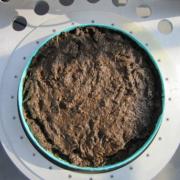
Soil during rain simulation and tube to take runoff to collection point.
Future Plans
From both the steroid runoff and general manure applications risk perspectives, how the soil receives rainfall changes during the first month after tillage. Therefore, this process needs to be investigated more closely and models predicting runoff have to take these changes into account.
Authors
Charles A. Shapiro, Professor, Department of Agronomy and Horticulture, University of Nebraska-Lincoln, Haskell Agricultural Laboratory, Concord, NE cshapiro@unl.edu
Sigor Biswas, Research Assistant, William L. Kranz, Associate Professor, David P. Shelton, Professor, Simon J. van Donk, Assistant Professor, Biological Systems Engineering; Daniel D. Snow, Associate Professor, Schol of Natural Resources; Shannon L. Bartelt-Hunt, Assistant Professor, Tian C. Zhang, Professor, Civil Engineering; Terry L. Mader, Professor, Animal Science, University of Nebraska-Lincoln; David D. Tarkalson, Soil Scientist, USDA-ARS, Kimberly-ID.
Additional Information
Bartelt-Hunt, S., D. Snow, W. Kranz, T. Mader, C. Shapiro, S. van Donk, D. Shelton, D. Tarkelson, and T.C. Zhang. 2012. Effect of growth promotants on the occurrence of steroid hormones on feedlot soils and in runoff from beef cattle feeding operations. Environ. Sci. Technol. 46(3): 1352-1360.
Biswas, S., C. A. Shapiro, W. L. Kranz, T. L. Mader, D. P. Shelton, D.D. Snow, S. L. Bartell-Hunt, D. D. Tarkalson, S. J. van Donk, T. C. Zhang, S. Enslay. Current knowledge on the environmental fate, potential impact and management of growth promoting steroids used in the US beef cattle industry. J. of Soil and Water Cons. (In press, July 2013 issue).
Acknowledgements
This research was funded by US-EPA Science to Achieve Results (STAR) grant R833423.
The authors are solely responsible for the content of these proceedings. The technical information does not necessarily reflect the official position of the sponsoring agencies or institutions represented by planning committee members, and inclusion and distribution herein does not constitute an endorsement of views expressed by the same. Printed materials included herein are not refereed publications. Citations should appear as follows. EXAMPLE: Authors. 2013. Title of presentation. Waste to Worth: Spreading Science and Solutions. Denver, CO. April 1-5, 2013. URL of this page. Accessed on: today’s date.
Quantifying the long term environmental impacts of dairy and beef production is complex due to the many interactions among the physical and biological components of farms that affect the amount and type of emissions that occur. Emissions are influenced by climate and soil characteristics as well as internal management practices. Software models are needed to perform an integrated and comprehensive assessment of all important environmental and economic effects of farm management and mitigation strategies. Related: Manure value & economics
What Did We Do?
Figure 1. The Integrated Farm System Model simulates the performance, determines the economics, and predicts the air and water emissions of farm production systems.
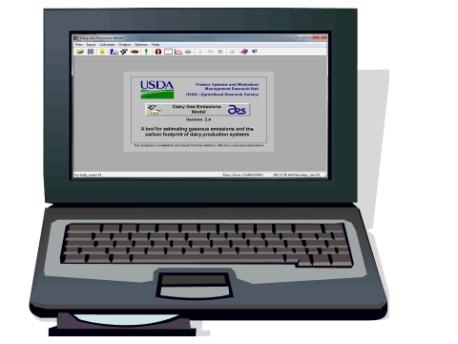
Software tools were created that perform whole-farm analyses of the performance, economics and environmental impact of dairy and beef production systems. The Integrated Farm System Model (IFSM) is a comprehensive research tool that simulates production systems over many years of weather to quantify losses to the environment and the economics of production. From the simulated performance and losses, environmental footprints are determined for carbon, energy use, water use and reactive nitrogen loss. Crop, dairy and beef producing farms can be simulated under different management scenarios to evaluate and compare potential environmental and economic benefits. The Dairy Gas Emissions Model (DairyGEM) provides a simpler educational tool for studying management effects on greenhouse gas, ammonia and hydrogen sulfide emissions and the carbon, energy and water footprints of dairy production systems.
What Have We Learned?
Analyses with either the IFSM or DairyGEM tools illustrate the complexity of farming systems and the resultant effect of management choices. Although IFSM was primarily developed and used as a research tool, it is also used in classroom teaching and other education applications. DairyGEM provides an easier and more graphical tool that is best suited to educational use.
Future Plans
Figure 2. DairyGEM is an educational tool for evaluating management effects on air emissions and environmental footprints of dairy production systems.
Development of these software tools continues. Work is currently underway to add the simulation of VOC emissions to both models. Routines are also being implemented to better represent the performance and emissions of beef feed yards.
The IFSM and DairyGEM software tools are available through Internet download [https://www.ars.usda.gov/research/software/?modeCode=80-70-05-00] for use in individual, workshop and classroom education. Reference manuals and other detailed information on the models is also available at this website.
Acknowledgements
Many people have contributed to the development of these models and software tools. Although they can not all be listed here, they are acknowledged in each software program.
The authors are solely responsible for the content of these proceedings. The technical information does not necessarily reflect the official position of the sponsoring agencies or institutions represented by planning committee members, and inclusion and distribution herein does not constitute an endorsement of views expressed by the same. Printed materials included herein are not refereed publications. Citations should appear as follows. EXAMPLE: Authors. 2013. Title of presentation. Waste to Worth: Spreading Science and Solutions. Denver, CO. April 1-5, 2013. URL of this page. Accessed on: today’s date.
The Iowa Manure Management Action Group (IMMAG) was a concept born in 1997 to provide a comprehensive vehicle to deliver manure management information. It is hard to imagine, but at that time web pages were just beginning to be used as vehicles to share information, and even harder to imagine is the fact that while information on manure management existed, it was difficult to access, and it was just not a topic that garnered much positive attention.
IMMAG began as state-level technical committee comprised of public and private-sector entities with the objectives to 1) provide access to comprehensive information on manure management issues; 2) develop relevant educational materials and 3) provide them in a format that could be easily accessible.
Now, 15 years later, what was supposed to be short-term, one-year effort, has turned into a major outreach and education effort for Iowa State University Extension and Outreach and their partners. In addition to the web page, IMMAG has hosted many field days and training workshops over the years as well as coordinated the development of countless fact sheets, newsletters and other educational pieces.
Why Was the IMMAG formed?
As the livestock sector in Iowa changed in the 1990’s it became apparent that a mechanism for information delivery was needed that could quickly evolve to keep livestock producers in tune with changing regulations, up-to-date with current research and understand best management practices to help assure manure’s value as a crop nutrient resource and help protect Iowa’s natural resources.
IMMAG was a concept born in 1997 to provide a comprehensive vehicle to deliver manure management information, develop and deliver educational programs, and design tools and resources that could be used by producers, technical agencies, educational institutions, researchers, consultants and the general public. IMMAG originated as a state-level technical committee under the leadership of the Iowa NRCS that brought together the state agencies, land-grant institution, commodity groups, environmental groups and private sector interests who proceeded to identify challenges and needs for manure management information.
What Did We Do?
After an initial needs assessment was completed, members of IMMAG agreed the highest priority was the development of an integrated Web site for all manure management information. A Web page would allow the most flexibility in keeping materials up-to-date. The members also agreed that producers and others not having internet access would be able to request printed materials from the site made available through the commodity organization. Once all existing materials were organized and included on the IMMAG Web page, a needs assessment was conducted by ISU Extension and the commodity group to determine information gaps and the kinds of new material that needed to be developed. Materials were not limited to print resources, but also included development and delivery of nutrient planning workshops, field days and tools. Along with a needs assessment, the Web site was thoroughly evaluated by members of the environmental groups and the general public to determine how accessible the information was and how easy it was to use and comprehend.
During the past 15 years, the Iowa Manure Management Action Group has distributed monthly newsletters (originally printed, now e-newletters); created 40 fact sheets; hosted over 50 field days and workshops, coordinated 3 multi-day manure clinics for producers and professionals; written over 200 popular press articles, supported and developed material for nearly 600 Extension meetings; and developed 9 video presentations.
What Have We Learned?
The biggest lesson learned from this educational outreach program was and is the success of integrating the state agency, land-grant university and livestock commodity group message to assist livestock producers. This partnership allowed the development of a consistent message among all involved when it came to manure management so producers and their technical staff were using the same recommendations and planning processes across all programs. Other important things learned include 1) longevity of programs are crucial to producer awareness and success; 2) a defined mechanism for intergrating research into extension programming is crucial for producers to make informed choices related to best management practices; 3) leveraging financial support to serve all clients helps level the playing field in terms of client access to educational materials, events and access to technical assistance and 4) when provided with appropriate training and resource materials, it is possible to develop an entire service industry to assist producers with manure nutrient management planning.
Future Plans
Many internal discussions have identified the need to continue to support this effort even with the availability of other national programs that serve as clearinghouses for manure management information. Future needs for program implementation include coordinating long-term financial support for continued programming and a needs assessment that is relevant to current production practices. Future needs for program delivery include more field days and hands-on type experiences for producers and their service providers.
Authors
Angela Rieck-Hinz, Extension Program Specialist, Iowa State University, amrieck@iastate.edu
The authors are solely responsible for the content of these proceedings. The technical information does not necessarily reflect the official position of the sponsoring agencies or institutions represented by planning committee members, and inclusion and distribution herein does not constitute an endorsement of views expressed by the same. Printed materials included herein are not refereed publications. Citations should appear as follows. EXAMPLE: Authors. 2013. Title of presentation. Waste to Worth: Spreading Science and Solutions. Denver, CO. April 1-5, 2013. URL of this page. Accessed on: today’s date.
Traditionally, small feedlots and dairies have not been engaged in environmental regulations and awareness in Iowa due to the environmental focus being directed at large feedlots and confinement feeding operations. Many small feedlot and dairy managers do not even recognize or admit that regulations do apply to their livestock operation. This effort primarily uses traditional extension outreach methods, field days and publications, to raise awareness. Unique to this outreach effort are the goal to provide a producer network to share information and ideas to learn more about manure runoff control structures and best management practices to reduce impacts on water quality, and the focus on controls beyond minimum rule requirements, but tailored to small operations.
This talk will discuss some of the challenges faced by small feedlot producers, identification of parameters to help producers overcome some of these challenges, and methods and educational materials aimed at helping raise environmental awareness and foster action among these producers.
Purpose
The Small Feedlot Project is a cooperative effort between state and federal regulatory agencies, public research and extension, technical agencies and the private sector in Iowa. The primary objectives are to 1) educate producers to better understand the pollution potential of open feedlot runoff, 2) train producers to accurately assess the water pollution potential of their own feedlots, 3) assist producers to identify and evaluate appropriate runoff control alternatives, and 4) provide technical assistance to producers to implement solutions that improve the environmental performance of their feedlots.
What Did We Do?
The first focus in regards to raising awareness about potential impacts of runoff from open feedlots was the development of two producers guides that specifically talk about open lot runoff and impacts on water quality, applicable regulations, the importance and how to assess risk, structural solutions, management solutions and a list of appropriate resources. The guides, PM 3018, Small Open Beef Feedlots in Iowa- a producer guide and PM 3019, Small Open Lot Dairies in Iowa- a producer guide, were both written and printed in 2012. These publications were peered reviewed by internal and external partners to the Small Feedlot Plan. Two-thousand copies of each publication were printed and have been widely distributed via field days, workshops and meetings. The publications have been in such demand that as of February 2013, only 26 copies of the beef publication and 630 copies of the dairy pub remain in stock.
The second focus to raising awareness was to offer multiple field days that showcased structural or management practices put in place by feedlot owners to address runoff from their farms. It is well-known that livestock producers respond well to field days where they can observe physical site conditions that impact runoff, see structural (i.e. settling basins, pumping demonstration, clean-water diversions) or management practices (i.e. pen scraping, manure removal) put in place by other producers; can ask management and cost of implementation questions to other producers; and can discuss regulations and other management decisions with Extension and agency staff.
Three field days were held in 2012 to provide options to look at different sizes of feedlots, dirt versus concrete lots and structural and management practices on farms. The first field day was a three-stop tour held on August 7 near Larchwood, IA with 26 people in attendance; the second field day was held on October 29 near Wall Lake, IA, with 22 people in attendance; and the third field day was held on October 31 near Andover, IA with 26 people in attendance.
What Have We Learned?
A post-field day evaluation was offered to attendees at the Wall Lake and Andover Field Days. A summary of the evaluations completed follows:
29% reported their understanding of impact of feedlot runoff on stream water quality “increased a lot”; while 56% reported their understanding “increased a little”.
38% reported their understanding of lost-cost methods to better control and manage feedlot runoff “increased a lot”; while 52% reported their understanding “increased a little”.
29% reported their understanding of the value of feedlot manure for crop production “increased a lot”; while 60% reported their understanding “increased a little”.
31% reported their understanding of available technical and financial assistance for feedlot runoff control improvement “increased a lot”; while 58% reported their understanding “increased a little”.
35% reported they are more likely to plan and install additional improvements to feedlot runoff controls on their farms as a result of attending a field day.
Future Plans
Future plans include the development of fact sheets that address specific practices small open lot dairy and beef operations can use to protect water quality and additional field days throughout 2013. New materials will be posted to a Web page specifically created to host resources for small open lots.
Authors
Angela Rieck-Hinz, Extension Program Specialist, Iowa State University, amrieck@iastate.edu
Shawn Shouse, Extension Field Ag Engineer, Iowa State University
The authors are solely responsible for the content of these proceedings. The technical information does not necessarily reflect the official position of the sponsoring agencies or institutions represented by planning committee members, and inclusion and distribution herein does not constitute an endorsement of views expressed by the same. Printed materials included herein are not refereed publications. Citations should appear as follows. EXAMPLE: Authors. 2013. Title of presentation. Waste to Worth: Spreading Science and Solutions. Denver, CO. April 1-5, 2013. URL of this page. Accessed on: today’s date.
The objective of this work was to investigate the feasibility of co-pyrolyzing agricultural plastic mulch wastes with animal manures. Dried swine manure and spent fumigation plastic mulch were used as a hybrid feedstock for a batch pyrolysis reactor system. The reactor sample was heated to 500 °C at an approximate heating rate of 7 °C/min and stayed at 500 oC for 2 hrs before cooled down to room temperature. Gaseous, liquid, and solid end products were analyzed for their chemical and thermal properties. Preliminary results indicated that pyrolysis of spent fumigant plastic alone produced fumigant-free combustible gases, liquid oil, and paraffin-like waxes. Results from thermogravimeteric analyses and chemical characteristics of end products will be presented at the meeting.
Why Study Co-Pyrolysis with Manure?
Pyrolyzing livestock and agricultural wastes produces combustible gas and value-added biochar. However, the combustible gas produced from manure pyroysis alone does not provide enough energy to sustain the process. Spent agricultural plastics are usually disposed in landfills, which is not only expensive, but also not environmentally sustainable as the space for landfill is increasingly limited in the U.S. Pyrolysis of spent agricultural plastic produces high energy combustible gas, oil and wax. Thus, co-pyrolyzing animal manures with plastic may achieve an energetically sustainable pyrolysis process. The purpose of this work is to investigate the feasibility of co-pyrolyzing agricultural plastic mulch wastes with animal manures. Specific objectives are to 1) identify optimal pyrolysis processing conditions, 2) characterize byproducts, 3) evaluate potential pesticide emission, 4) perform energetics, and 5) determine biochar quality.
What Did We Do?
A mixture (2:1) of dried swine manure and spent fumigation plastic mulch used for vegetable production was used as a hybrid feedstock. In addition, four different new plastic films (Hytibarrier, Thermic, Bayer CS, and 1 mil HDPE) frequently used as plastic mulch were pyrolyzed with the swine manure. Optimal pyrolysis temperatures for these hybrid feedstocks were determined via thermogravimetric analyses (TGA). Subsequently, a bach pyrolysis reactor system was used to pyrolyze the hybrid feedstock samples (21 to 54 g). The samples were heated without oxygen to 500 °C at an approximate heating rate of 7 °C/min and stayed at 500 oC for 2 hrs before cooled down to room temperature. Gaseous, liquid, and solid pyrolysis product were analyzed for thermal and chemical properties.
What Have We Learned?
1. Nonisothermal plastic pyrolysis thermograms obtained at 10 oC/min heating rate is shown in Figure 1. The plastic samples decomposed rapidly at 450 oC, liberating volatile products. In contrast, swine solids decomposed rather slowly over wider range of temperatures (161 to 891 oC) with the maximum decomposition occured at 294 oC. The TGA results showed that pyrolysis temperature higher than 450 oC is necessary to completely decompose plastic samples and maximize combustible gas production, which can reduce energy requirement for pyrolyzing swine manure.
Figure 1 – Nonisothermal thermograms of plastic mulch films
2. Selected fumigants (methyl bromide, methyl iodide, 1,3-dichloropropene, and chloropicrin) widely used for vegetable production were not detected in the used plastic mulch pyrolysis gas samples.
3. Production of energy-rich gases such as methane, ethane, and propane was substantially increased from co-pyrolyzing swine manure with plastic mulch as shown in Figure 2.
Figure 2 – Major gas compositions of product gases from pyrolyzing swine manure, used plastic, and the mixture of swine manure and plastic mulch.
Future Plans
Mass and energy balances of the pyrolysis reactions along with pytotoxicity of biochar produced from co-pyrolyzing swine manure and plastic mulch will be evaluated in the near future.
Authors
Kyoung S. Ro, Environmental Engineer: USDA-ARS Coastal Plains Soil, Water & Plant Research Center, Florence, SC. kyoung.ro@ars.usda.gov
Patrick, G. Hunt, Soil Scientist/ Research Leader; Keri B. Cantrell, Agricultural Engineer; Ariel A. Szogi, Soil Scientist: USDA-ARS, Florence, SC
Scott R. Yates, Research Leader/Technical Editor JEQ: USDA-ARS, Riverside, CA
Michael Jackson, Chemist; David Compton, Chemist: USDA-ARS, Peoria, IL
Additional Information
K.B. Cantrell, P.G. Hunt, M. Uchimiya, J.M. Novak, K.S. Ro. 2012. Impact of pyrolysis temperature and manure source on physicochemical characteristics of biochar. Biores. Technol. 107:419-428.
X. Cao, K.S. Ro, M. Chappell, Y. Li, J. Mao. 2011. Chemical structures of swine-manure chars produced under different carbonization conditions investigated by advanced solid-state 13C nuclear magnetic resonance (NMR) spectroscopy. Energy Fuels 25:388-397.
K.A. Spokas, J.M. Novak, C.E. Stewart, K.B. Cantrell, M. Uchimiya, M.G. DuSaire, K.S. Ro. 2011. Qualitative analysis of volatile organic compounds on biochar. Chemosphere 85:869-882.
K.S. Ro, K.B. Cantrell, P.G. Hunt. 2010. High-temperature pyrolysis of blended animal manures for producing renewable energy and value-added biochar. Ind. Eng. Chem. Res. 49:10125-10131.
This research was a part of USDA-ARS NP 214 Agriculture and Industrial Byproduct Utilization project. The authors are greatful to Mr. Melvin Johnson and Jerry Martin II for their technical assistance.
The authors are solely responsible for the content of these proceedings. The technical information does not necessarily reflect the official position of the sponsoring agencies or institutions represented by planning committee members, and inclusion and distribution herein does not constitute an endorsement of views expressed by the same. Printed materials included herein are not refereed publications. Citations should appear as follows. EXAMPLE: Authors. 2013. Title of presentation. Waste to Worth: Spreading Science and Solutions. Denver, CO. April 1-5, 2013. URL of this page. Accessed on: today’s date.
Fugitive dust from confined livestock operations is a primary air quality issue associated with impaired visibility, nuisance odor, and other quality-of-life factors. Particulate matter has conventionally been measured using costly scientific instruments such as transmissometers, nephelometers, or tapered-element, oscillating microbalances (TEOMs). The use of digital imaging and automated data-acquisition systems has become a standard practice in some locations to track visibility conditions on roadways; however, the concept of using photometry to measure fugitive dust concentrations near confined livestock operations is relatively new. We have developed a photometric method to estimate path-averaged particulate matter (PM10) concentrations using digital SLR cameras and high-contrast visibility targets. Digital imaging, followed by automated image processing and interpretation, would be a plausible, cost-effective alternative for operators of confined livestock facilities to monitor on-site dust concentrations. We report on the development and ongoing evaluation of such a method for use by cattle feeders and open-lot dairy producers.
Purpose
To develop a low-cost practical alternative for measurement of path-averaged particulate matter (PM10) concentrations downwind of open-lot animal feeding operations.
What Did We Do?
Working downwind of a cattle feedyard under a variety of dust conditions, we photographed an array of high contrast visibility targets with dSLR cameras and compared contrast data extracted from the photographs with path-averaged particulate matter (PM10) concentration data collected from several TEOMs codeployed alonside the visibility targets.
What Have We Learned?
We have developed a photometric method to estimate path-averaged particulate matter (PM10) concentrations using digital SLR cameras and high-contrast visibility targets. Using contrast data from digital images we expect to predict PM10 concentrations within 20% of TEOM values under the dustiest conditions. Digital imaging, followed by automated image processing and interpretation, may be a plausible, cost-effective alternative for operators of open-lot livestock facilities to monitor on-site dust concentrations and evaluate the abatement measures and management practices they put in place.
Future Plans
We intend to improve the prediction accuracy of the photometric method and automate it such that it can be easily adapted for use as a cost-effective alternative for measuring path-averaged particulate matter (PM10) concentrations at cattle feedyards and open-lot dairies.
Authors
Brent Auvermann, Professor of Biological and Agricultural Engineering, Texas A&M AgriLife Research. b-auvermann@tamu.edu
Sharon Preece, Senior Research Associate, Texas A&M AgriLife Research; Brent W. Auvermann, Professor of Biological and Agricultural Engineering, Texas A&M AgriLife Research; Taek M. Kwon, Professor of Electrical and Computer Engineering, University of Minnesota-Duluth; Gary W. Marek, Postdoctoral Research Associate, Texas A&M AgriLife Research; Kevin Heflin, Extension Associate, Texas A&M AgriLife Research; K. Jack Bush, Research Associate, Texas A&M AgriLife Research.
Additional Information
Please contact Brent W. Auvermann, Professor of Biological and Agricultural Engineering, Texas A&M AgriLife Research, 6500 Amarillo Boulevard West, Amarillo TX, 79106, Phone: 806-677-5600, Email: b-auvermann@tamu.edu.
Acknowledgements
This research was underwritten by grants from the USDA National Institute on Food and Agriculture (contract nos. 2010-34466-20739 and 2009-55112-05235).
The authors are solely responsible for the content of these proceedings. The technical information does not necessarily reflect the official position of the sponsoring agencies or institutions represented by planning committee members, and inclusion and distribution herein does not constitute an endorsement of views expressed by the same. Printed materials included herein are not refereed publications. Citations should appear as follows. EXAMPLE: Authors. 2013. Title of presentation. Waste to Worth: Spreading Science and Solutions. Denver, CO. April 1-5, 2013. URL of this page. Accessed on: today’s date.
* Presentation slides are available at the bottom of the page.
Solid-liquid separation of animal manures and other agricultural products can be an integral part of a livestock operation ranging from improved facility performance to enhanced nutrient management. A document entitled “Solid-Liquid Separation Alternatives for Manure Handling and Treatment” is being created through work by Clemson University and funding from USDA-Natural Resources Conservation Service. The purpose of this document is to assist in solid-liquid separation technology selection, evaluation of separation performance, and quantifying the impact of solid-liquid separation on manure management. This presentation will provide an outline of this document including methods of solid-liquid separation, influence of manure characteristics and handling methods, fundamentals of solid-liquid separation, performance of various solid-liquid separation technologies, separation enhancement methods, and design considerations. An overview of various farm scale separation technologies is also presented in the solid-liquid separation document.
What Did We Do?
Geobag used with metal salt and polymer to separate solids and nutrient partitioning of swine manure
In this document we have provided a detailed compilation of empirical, theoretical, and practical information related to the performance and design of solid-liquid separation systems for animal manure treatment. The information is divided into the following chapters: Methods of Solid-Liquid Separation, Fundamentals of Solid-Liquid Separation, Measures of Solid-Liquid Separation Performance, High-Rate Solid-Liquid Separation, Unique Applications of Solid-Liquid Separation Technology, and Design Considerations. Within these chapters detailed information is provided on: the influence of entrainment on the performance of mechanical separators, design of gravity settling using discrete particle settling and hindered settling theory, efficacy of combining separator methods in a single machine, benefits of using coagulants and flocculants, benefits of solid-liquid separation, and a summary of the solid-liquid separation methods that have been used with sand-laden dairy manure. The publication also provides twenty-one detailed examples such as: design of settling basins based on hindered settling velocities, calculation of the performance of a variety separator options using field data, calculation of dimensions for sand lanes, determination of chemical need to enhance mechanical solid-liquid separation, and sizing of storages for separated solids. Numerous system design diagrams are also provided to demonstrate the wide variety of ways that solid-liquid separation can be implemented into an animal manure treatment system.
What Have We Learned?
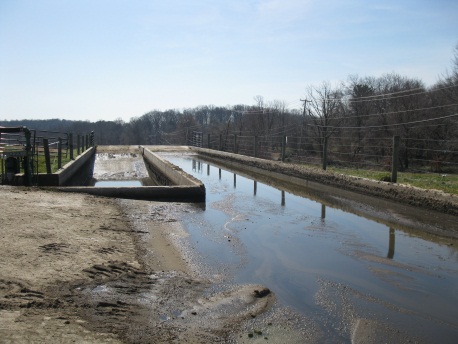
Sand settling lane for flush dairy operation
This work brings together fundamental information about solid-liquid separation, benefits and limitations of many separation technologies, performance measurement techniques along with design considerations into one document.
Future Plans
This document will be published as a USDA-NRCS technical note or as part of the National Engineering Handbook, Part 651 Agricultural Waste Management Field Handbook.
Authors
Jeffrey P. Porter, P.E. Environmental Engineer Manure Management Team USDA-Natural Resources Conservation Service; e-mail – Jeffrey.Porter@gnb.usda.gov
Dr. John P. Chastain, Professor and Extension Agricultural Engineer School of Agricultural, Forestry, and Environmental Sciences Clemson University; email – jchstn@clemson.edu
Additional Information
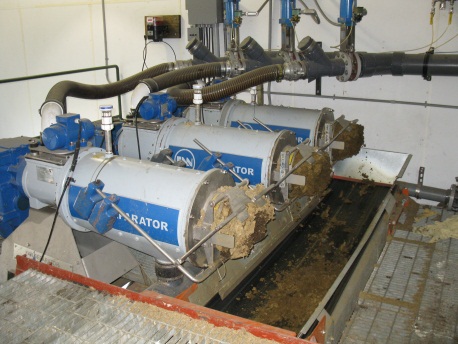
Screw presses used on a dairy farm following anaerobic digestion
A special thank you goes out to the Piedmont-South Atlantic Coast Cooperative Ecosystems Studies Unit (CESU). This Cooperative and Joint Venture Agreement allowed for this work to take place.
Additional support was provided by the Confined Animal Manure Managers Program, Clemson Extension, Clemson University, Clemson, SC.
The authors are solely responsible for the content of these proceedings. The technical information does not necessarily reflect the official position of the sponsoring agencies or institutions represented by planning committee members, and inclusion and distribution herein does not constitute an endorsement of views expressed by the same. Printed materials included herein are not refereed publications. Citations should appear as follows. EXAMPLE: Authors. 2013. Title of presentation. Waste to Worth: Spreading Science and Solutions. Denver, CO. April 1-5, 2013. URL of this page. Accessed on: today’s date.
The major source of emissions in animal production sites is from animal waste (manure), which can be in solid, slurry, or liquid states, exhibiting varying physical properties. Once manure is excreted from an animal, processes of biological decomposition and formation of gaseous compounds continue, but diminish as the manure cools and dries. However, increases in gas emissions following rewetting, particularly from precipitation, have been observed in various agricultural lands. Our study investigates changes of gaseous emissions through manure drying and rewetting processes to identify the effects of climatic conditions and manure management on gaseous emissions. We carried out drying and rewetting processes of dairy manure in a greenhouse to maintain moderate wintertime temperatures (20 – 40 C) while monitoring gaseous emissions through these processes. Closed dynamic chambers (CDC) coupled with a multiplexed Fourier Transformed Infrared (FTIR) spectroscopy gas analyzer provided gas flux estimates. The analyzer was capable of monitoring 15 pre-programmed gases simultaneously including typical gaseous compounds and greenhouse gases emitted from manure sources; namely, ammonia, carbon dioxide, methane, nitrous oxide, oxides of nitrogen, and volatile organic compounds. Magnitude of dairy manure gas emissions resulting from variations in moisture and temperature provide insight toward enhancing manure management decisions. Results from our study should further understanding of manure gas emission temporal dynamics that are largely dictated by heat and by drying and rewetting processes that impact the generation and delivery of gasses to the atmosphere. Our overall goal is to advance development of appropriate best management practices to reduce gas emissions for dairy operations in semi-arid regions.
Purpose
The objective of this project is to identify the effects of climatic conditions and manure management on gaseous emissions. The results from our study will be used to advance development of appropriate best management practices to reduce gas emissions for dairy operations in semi-arid regions.
Fig 1. Gas emissions from two dairy manure samples were monitored in a greenhouse to compare the magnitude of gas fluxes through manure drying and rewetting processes.
What Did We Do?
We investigated changes in gaseous emissions by carrying out drying and rewetting processes of dairy manure in a greenhouse to maintain moderate summertime temperatures (20 – 40 oC) while monitoring gaseous emissions. Closed dynamic chambers (CDC) coupled with a multiplexed Fourier Transformed Infrared (FTIR) spectroscopy gas analyzer provided gas flux estimates. The analyzer was capable of monitoring 15 pre-programmed gases simultaneously including typical gaseous compounds and greenhouse gases emitted from manure sources; namely, ammonia, carbon dioxide, methane, nitrous oxide, oxides of nitrogen, and volatile organic compounds. Gas emissions from two dairy manure samples were monitored to compare the magnitude of gas fluxes during 14 days of manure drying and rewetting processes.
Fig 2. Gas emissions were determined using the closed dynamic chambers integrated with a multiplexed Fourier Transformed Infrared (FTIR) spectroscopy gas analyzer.
What Have We Learned?
An increase in surface water content occurring after a rewetting event (e.g., simulated 5 mm of rain) represents an abrupt increase in manure moisture content, which can promote microbial activity and a commensurate increase in gas emissions from manure. In our study, we found gas fluxes were actually suppressed during and shortly after the rewetting process, mainly due to reduction in air-filled pore space causing reduced gas diffusivity in the manure crust layer. As the wet layer dried, gas emissions eventually increased to levels prior to wetting.
Future Plans
Future experiments include: (1) simulation of manure drying-rewetting with various amount of water and rewetting times, (2) considering the immediate response time and effective period of the pulse response of the gas fluxes after rewetting which might have been missed in our study, (3) Further
Fig 3. Manure sample after the rewetting process.
investigation of the effect of the crust layer on water and gas transport from and into manure.
Authors
Pakorn Sutitarnnontr, Graduate Student, Dept. of Plants, Soils, and Climate, Utah State University, pakorn@aggiemail.usu.edu
Enzhu Hu, Dept. of Plants, Soils, and Climate, Utah State University
Rhonda Miller, School of Applied Sciences, Technology, and Education, Utah State University
Markus Tuller, Dept. of Soil, Water, and Environmental Science, University of Arizona
Scott B. Jones, Dept. of Plants, Soils, and Climate, Utah State University
Additional Information
Contact Information: Pakorn Sutitarnnontr, Environmental Soil Physics Laboratory, Dept. of Plants, Soils, and Climate, Utah State University. Email: pakorn@aggiemail.usu.edu
Acknowledgements
The authors gratefully acknowledge support from the USDA-NIFA under the AFRI Air Quality Program (Grant # 2010-85112-50524) and the Western Sustainable Agriculture Research and Education Program (Grant # GW13-006).
The authors are solely responsible for the content of these proceedings. The technical information does not necessarily reflect the official position of the sponsoring agencies or institutions represented by planning committee members, and inclusion and distribution herein does not constitute an endorsement of views expressed by the same. Printed materials included herein are not refereed publications. Citations should appear as follows. EXAMPLE: Authors. 2013. Title of presentation. Waste to Worth: Spreading Science and Solutions. Denver, CO. April 1-5, 2013. URL of this page. Accessed on: today’s date.
The closure of earthen lagoons associated with a caged egg-laying operation was used as a case study. This case study presents information on the steps taken to close the lagoons, including topographic survey needs, analysis of sludge and wastewater at different times during the closure process, methods for excavating and removing the sludge, and the costs associated with the closure of earthen lagoons. The sludge has a high fertilizer value for P2O5 and other micro- and macro-nutrients. The cost of the closure for this case exceeded the expected cost for the earthwork for the construction of a new facility
Why Present a Case Study on Propoer Lagoon Closure?
Provide the steps taken to close the lagoons, including topographic survey needs, analysis of sludge and wastewater at different times during the closure process, methods for excavating and removing the sludge, and the costs associated with the closure of earthen lagoons. These steps will hopefully assist others in the future closure of lagoons.
What Did We Do?
Performed closure of earthen lagoons for a caged egg-laying operation that existed for over 35 years in Gonzales County, Texas. The 100 ft by 400 ft football field sized lagoon area with 5 – 12 ft deep sludge had accumulated approximately 20,000 cubic yards of sludge. The photo below depicts the three lagoon areas (Infrared photograph of site depicting two lagoons and smaller wastewater storage area (USDA-NAPP, 1983).
Multiple different options for closure of the lagoon were evaluated. Sampling in-situ materials to determine if the existing system had a realistic potential for seepage. Detailed analysis of the sludge and wastewater were performed throughout the project. A detailed survey of the site determined the existing volumes of sludge and wastewater. Civil 3D and Eagle Point software programs assisted in development of a final grading plan for the site.
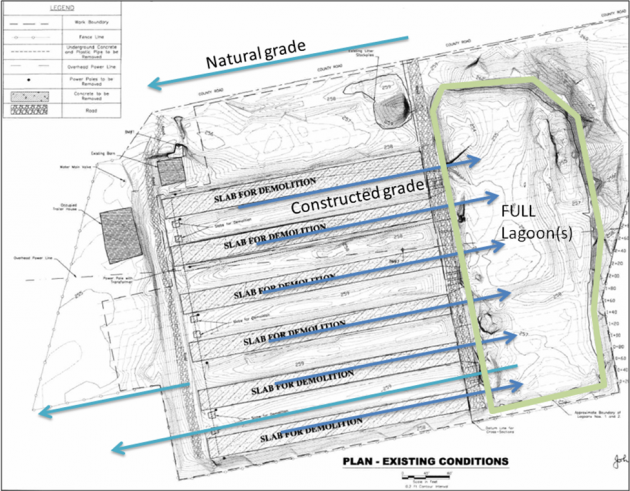
Construction drawings and specifications were developed to place the site into pre-existing conditions. The construction project was split into four phases: Phase 1 – Sludge and Wastewater Removal; Phase 2 – Removal of Sludge to Nearby Agricultural Operation; Phase 3 – Demolition of Concrete Slabs and Final Grading; and Phase 4 – Establishing Vegetation on Site
Site plan generated for construction plans depicting the natural grade compared to the constructed grade of the poultry houses. (USDA-NRCS, Poultry Lagoon Closure Construction Drawings, March 2008)
Irrigation pump for the removal of wastewater (TSSWCB, 22 June 2009)
Use of field conveyor belts to stack sludge on-site. (TSSWCB, 28 June 2009)
What Have We Learned?
Formal contracting potentially increases the cost of the project; however, observance of worker safety laws is more likely . Initially this project was sent for bid as a turn key project consisting of 18,500 CY of sludge to be removed and land applied, removal of concrete slabs, placement of 27,000 CY of compacted earthfill, final grading and establishment of vegetative cover. As part of the bid, the contractor was to secure a location for the sludge to be land applied or find another use for the sludge. The bids received ranged from $1.8M up to $3M. This level of funding was not available, so the project was split into different phases. By breaking into phases, the cost of the project was reduced by over 75%. Costs for application or hauling of sludge can be reduced by having an agreement in place prior to contracting.
The cost of the project was close to $250,000 for construction and sludge hauling without consideration of other costs, such as engineering design work, sample analysis, and staff time. The earthwork associated with the construction of this site for a new facility with the excavation and placement of 27,200 CY of compacted earthfill would have been completed for approximately $70,000.
With flexible scheduling, it was possible to find a landowner that was willing to pay for the hauling and land application of sludge, which reduced the out-of-pocket expenses for the closure by more than $90,000.
The amount of Phosphorus present in the sludge was compared to the cost of commercial fertilizer. As of February 2011, Rock Phosphate with 32% P2O5 was selling at $160/metric ton (Index Mundi, 11 June 2012), therefore P2O5 was $500 per metric ton. Using the hauled weight of 12,100 tons with a moisture content of 25.9% and 5.66% P and a conversion factor of 2.29 for P to P2O5, there was 1,160 tons (1,054 metric tons) of P2O5. At the rate of $500 /metric ton, the P2O5 in the sludge would have a value of $525,000. There is additional fertilizer value for the other constituents that are not included.
Future Plans
This case study provides much needed data for the closure of similar operations across the United States. The data collected will be used for future closures under the NRCS Environmental Quality Incentives Program (EQIP). The construction specifications that were developed for this project can be adapted into general specifications for future closure projects. Additional work is needed to compare the value of the sludge to a fertilizer value. The potential for a portable pelletizing and bagging system for recycling sludge from lagoons warrants further research.
Authors
Catherine Nash, Water Resources Engineer, USDA – Natural Resources Conservation Service Catherine.nash@tx.usda.gov
Additional Information
“Case Study: Closure of Earthen Lagoon”, An ASABE Meeting Presentation, Paper No. 1336921
Contributions from Texas Poultry Federation, Gonzales Soil and Water Conservation District, Texas State Soil and Water Conservation Board (TSSWCB), USDA – Natural Resources Conservation Service (NRCS), Texas Water Resources Institute, Farm Pilot Project Corporation, Inc. (FPPC) and others made this project possible. A special thanks to: John Foster, TSSWCB, and James Grimm, Texas Poultry Federation, for initiating the project and keeping it moving forward; Lee Munz, TSSWCB for assistance with surveying and taking the lead on his first construction project; John Mueller, NRCS for his support and guidance through the process; Ace Fairchild, NRCS, for his enthusiasm and support throughout the project; Wayne Gabriel, NRCS, for assistance with soils identification; Tom Beach, NRCS, for evaluating feasibility of other options for closure; Shawn Higgins for assistance, endurance and encouragement with the development of Engineering Drawings and Specifications. Thanks to Gonzales County Soil and Water District Employees who helped throughout the project, including: Jeremiah Ford, Abigail Lindsey, Shari Johnson, Jessi Goodson and Wain Fairchild. Thanks to TSSWCB staff including: Lawrence Brown, Jeff Cerny, Amy Devereaux, TJ Helton, Dawna Winkler, and Kenny Zajicek. Thanks to USDA-NRCS staff including: James Davis, Andria Heiges, Jeff Porter, Doug Sharer, James Smith, and Millie Stevens. Thanks to AgriLife Extension members: Saqib Mukhtar, Biological and Agricultural Engineering Department; and Sam Feagley, Department of Soil and Crop Sciences. Every person that was asked for assistance responded graciously and enthusiastically in a timely manner.
The authors are solely responsible for the content of these proceedings. The technical information does not necessarily reflect the official position of the sponsoring agencies or institutions represented by planning committee members, and inclusion and distribution herein does not constitute an endorsement of views expressed by the same. Printed materials included herein are not refereed publications. Citations should appear as follows. EXAMPLE: Authors. 2013. Title of presentation. Waste to Worth: Spreading Science and Solutions. Denver, CO. April 1-5, 2013. URL of this page. Accessed on: today’s date.
To provide the best experiences, we use technologies like cookies to store and/or access device information. Consenting to these technologies will allow us to process data such as browsing behavior or unique IDs on this site. Not consenting or withdrawing consent, may adversely affect certain features and functions.
Functional
Always active
The technical storage or access is strictly necessary for the legitimate purpose of enabling the use of a specific service explicitly requested by the subscriber or user, or for the sole purpose of carrying out the transmission of a communication over an electronic communications network.
Preferences
The technical storage or access is necessary for the legitimate purpose of storing preferences that are not requested by the subscriber or user.
Statistics
The technical storage or access that is used exclusively for statistical purposes.The technical storage or access that is used exclusively for anonymous statistical purposes. Without a subpoena, voluntary compliance on the part of your Internet Service Provider, or additional records from a third party, information stored or retrieved for this purpose alone cannot usually be used to identify you.
Marketing
The technical storage or access is required to create user profiles to send advertising, or to track the user on a website or across several websites for similar marketing purposes.

 Waste to Worth home | More proceedings….
 What Did We Do?