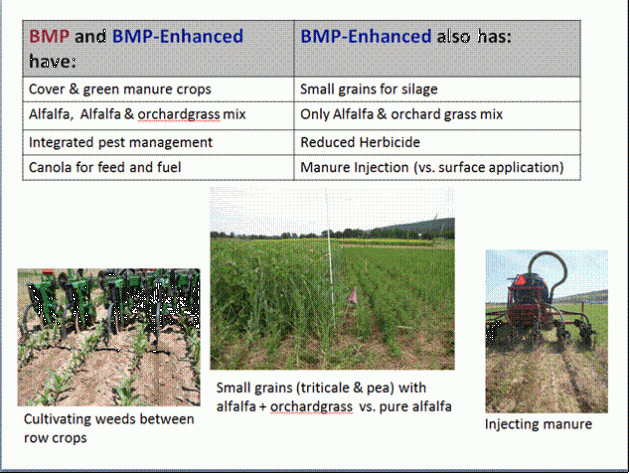
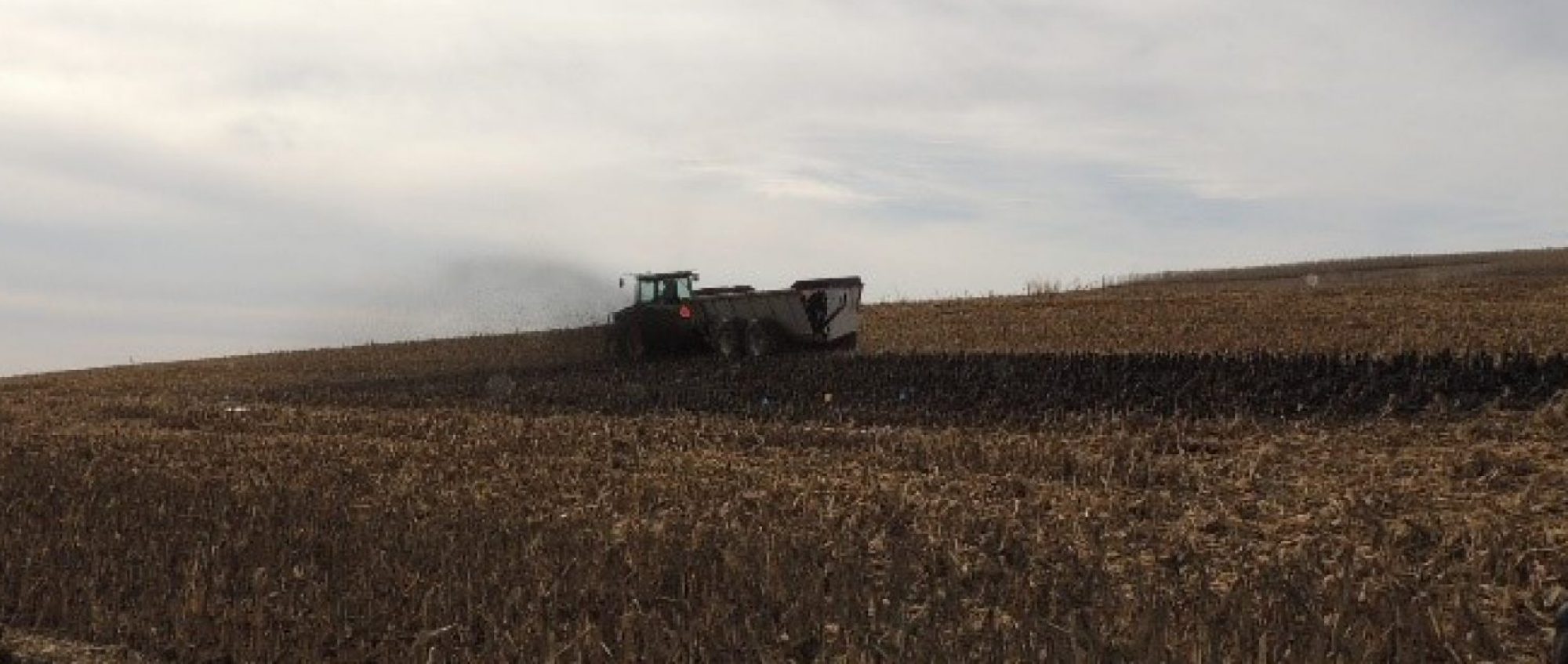
While manure can be beneficial, overapplication is not. Too much manure in one place can lead to problems with salt buildup and excess nutrients which can lead to problems with water quality. As with most other inputs, manure is most valuable when it is managed to be in balance with plant needs.
The continued capacity of soil to function as a vital living ecosystem that sustains plants, animals, and humans.
Resources On Land Application of Manure and Impacts on Soil Health
[Roundtable Series] Four roundtable webinars will focus on soil health testing, soil biology, soil erosion, and cover crops as they pertain to manure application. The weekly series runs from February 9-March 9, 2017. More…
Micro Manure Management (2015) – see first presentation on “Impact of swine slurry on soil health”
Each of the resources listed above includes links to research articles, extension publications, and more. The MaSH webinar also includes information in how to become involved in the learning network and to read or contribute to the project blog.
[Learning Network] The Soil Health Nexus is sponsored by the North Central Water Network but welcomes interested people from all regions
[Book] Sustainable Agriculture Research and Education (SARE) program “Building Soils for Better Crops 3rd Edition“. The sections most relevant to manure and soil health are linked below.
This project was started to work with regional CIG projects to calibrate and harmonize Phosphorus Indices across the U.S., demonstrate their accuracy in identifying the magnitude and extent of phosphorus loss risk, and provide suggestions to refine or improve existing Indices. This research is important to provide consistency among state Phosphorus Indices and their subsequent recommendations.
What did we do?
We will combine and compare results from each of the four regional and state Phosphorus Index CIG-funded projects, in order to synthesize, summarize, and describe the science-based information and lessons learned from the individual Phosphorus Index assessment projects (i.e., Chesapeake Bay Watershed, Heartland Region, Southern States and Ohio Lake Erie Basin) and build a harmonized framework that yields consistent Phosphorus-based risk assessment across the U.S. by doing this, we plan to ensure that the refinement of Phosphorus Indices is grounded in the best available science, reflects local environmental and agronomic conditions, anticipates impacts to water quality and farm management, and provides consistent recommendations within and across varied physiographic regions of the U.S.
What have we learned?
Despite the success of the Phosphorus Index concept in state-level nutrient management planning strategies as part of the NRCS 590 Standard, there remain concerns about the effectiveness of the Indexing approach for attaining water quality goals. Different versions of the Phosphorus Index have emerged to account for regional differences in soil types, land management, climate, physiographic and hydrologic controls, manure management strategies, and policy conditions. Along with this development, differences in Phosphorus Index manure management recommendations under relatively similar site conditions have also emerged. To date, we have learned that the individual projects with slightly differing objectives have shown there to be a paucity of field measured runoff, against which to reliably compare Index performance. Thus, several off-the shelf and pre-calibrated models (e.g., APEX) were tested to provide adequate phosphorus runoff information to validate Indices. Use of off-the-shelf models can provide unreliable estimates of phosphorus runoff, while calibrate models can provide more reliable estimates when given adequate site information.
Future Plans
It is planned to have extend the research for one more year to the end of 2016 to continue model assessment, compile field runoff databases, conduct statistical and uncertainty analyses, and compile cross project findings.
Authors
Andrew Sharpley, Distinguished Professor, Division of Agriculture University of Arkansas System sharpley@uark.edu
Deanna Osmond, Professor and Soil Science Department Extension Leader; David Radcliff, Professor; Peter Kleinman, Research Leader; Doug Beegle, Distinguished Professor of Agronomy; John Lory, Associate Professor of Extension; and Nathan Nelson, Professor.
Additional information
Sharpley, A.N., D. Beegle, C. Bolster, L. Good, B. Joern, Q. Ketterings, J. Lory, R. Mikkelsen, D. Osmond, and P. Vadas. 2011. Revision of the 590 Nutrient Management Standard: SERA-17 Recommendations. Southern Cooperative Series Bulletin No. 412. Published by SERA-IEG-17, Virginia Tech. University, Blacksburg, VA. Available at https://sera17dotorg.files.wordpress.com/2015/02/590-sera-17-recommendations.pdf 2011.
Sharpley, A.N., D. Beegle, C. Bolster, L. Good, B. Joern, Q. Ketterings, J. Lory, R. Mikkelsen, D. Osmond, and P. Vadas. 2011. Revision of the 590 Nutrient Management Standard: SERA-17 Supporting Documentation. Southern Cooperative Series Bulletin No. 412. Published by SERA-IEG-17, Virginia Tech. University, Blacksburg, VA. Available at https://sera17dotorg.files.wordpress.com/2015/02/590-sera-17-recommendations.pdf
Sharpley, A.N., D.G. Beegle, C. Bolster, L.W. Good, B. Joern, Q. Ketterings, J. Lory, R. Mikkelsen, D. Osmond, and P.A. Vadas. 2012. Phosphorus indices: Why we need to take stock of how we are doing. J. Environ. Qual. 41:1711-1718.
Osmond, D.L., A.N. Sharpley, C. Bolster, M. Cabrera, S. Feagley, B. Lee, C. Mitchell, R. Mylavarapu, L. Oldham, F. Walker, and H. Zhang. 2012. Comparing phosphorus indices from twelve southern USA states against monitored phosphorus loads from six prior southern studies. J. Environ. Qual. 41:1741-1750.
The authors are solely responsible for the content of these proceedings. The technical information does not necessarily reflect the official position of the sponsoring agencies or institutions represented by planning committee members, and inclusion and distribution herein does not constitute an endorsement of views expressed by the same. Printed materials included herein are not refereed publications. Citations should appear as follows. EXAMPLE: Authors. 2015. Title of presentation. Waste to Worth: Spreading Science and Solutions. Seattle, WA. March 31-April 3, 2015. URL of this page. Accessed on: today’s date.
Animal agriculture is a significant source of ammonia (NH3). Dairy cattle excrete most ingested nitrogen (N); most urinary N is converted to NH3, volatilized and lost to the atmosphere. This fugitive NH3 can contribute to negative environmental effects such as degraded air quality and excessive N in ecosystems. Open lot dairies on the southern High Plains are a growing industry and face challenges that include reporting requirements for NH3 emissions and potential regulation. However, producers and regulators lack a clear quantitative understanding of NH3 losses from the open lot production system.
What did we do?
We quantified NH3 emissions from the open lot and wastewater lagoons of a typical open lot New Mexico dairy during two weeks in summer, 2009. The 3500-cow dairy consisted of open lot, manure-surfaced corrals (22.5 ha). A flush system using recycled water removed manure from the feed alley to three lagoons (1.8 ha). Most manure was retained on the corral surface. Open path lasers measured atmospheric NH3 concentration downwind from the open lot and lagoon sources, sonic anemometers characterized turbulence, and inverse dispersion analysis (Windtrax) was used to quantify emissions every 15 minutes (Fig. 1). A dairy N balance was constructed using measured and calculated values to partition N to different stores in the dairy system. Milking cows comprised 73% of the herd, with the remainder dry or fresh cow. Dry matter intake averaged 22.5 kg/cow/d, with a mean crude protein content of 16.7% (Table 1).
What have we learned?
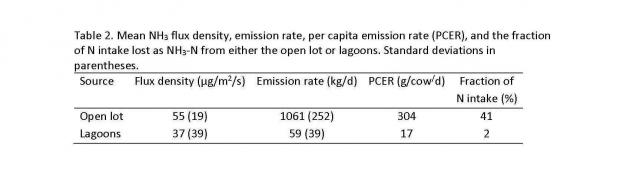
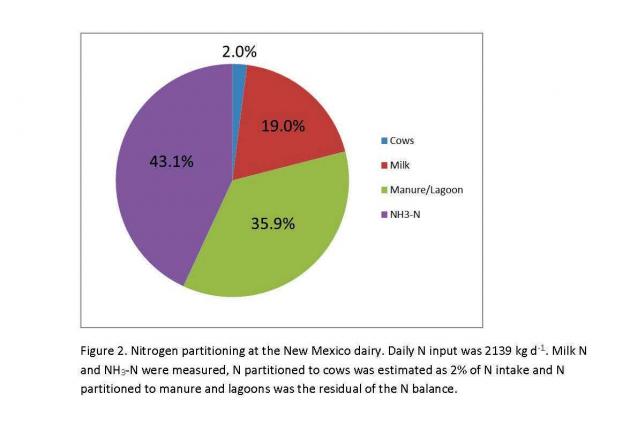
Most NH3 loss was from the open lot. Ammonia emission rate averaged 1061 kg/d from the open lot and 59 kg/d from the lagoons; 95% of NH3 was emitted from the open lot (Table 2). The per capita NH3 emission rate was 304 g/cow/d from the open lot (41% of N intake) and 17 g/cow/d from lagoons (2% of N intake). Mean N intake was 612 g/cow/d and N exported in milk averaged 145 g/cow/d. The dairy N balance showed that most N was lost as NH3. Daily N input at the dairy was 2139 kg/d, with 43, 36, 19 and 2% of the N partitioned to NH3 emission, manure/lagoons, milk, and cows, respectively (Fig. 2). The NH3 production intensity was 13.7 g NH3/kg milk. We estimated that on an annual basis, from 30 to 35% of fed N would be lost as NH3. Ammonia loss from open lot dairies is more similar to that from open lot beef feedyards than from dairies with closed housing where manure is more intensively managed.
Future Plans
Next steps include sampling during additional seasons to better characterize annual emissions.
Corresponding author, title, and affiliation
Richard W. Todd, Research Soil Scientist at USDA ARS Conservation and Production Research Laboratory, Bushland TX
N. Andy Cole, Res. Animal Scientist at USDA ARS CPRL, Bushland, TX; G. Robert Hagevoort, Ext. Diary Specialist at New Mexico State University; Kenneth D. Casey, Air Quality Engineer and Brent W. Auvermann, Agricultural Engineer at Texas A&M AgriLife.
Additional information
For more information, contact Richard Todd, 806-356-5728.
Acknowledgements
Research was partially funded with a USDA NIFA Special Research Grant through the Southern Great Plains Dairy Consortium.
Table 1.
Figure 1.
The authors are solely responsible for the content of these proceedings. The technical information does not necessarily reflect the official position of the sponsoring agencies or institutions represented by planning committee members, and inclusion and distribution herein does not constitute an endorsement of views expressed by the same. Printed materials included herein are not refereed publications. Citations should appear as follows. EXAMPLE: Authors. 2015. Title of presentation. Waste to Worth: Spreading Science and Solutions. Seattle, WA. March 31-April 3, 2015. URL of this page. Accessed on: today’s date.
Anaerobic digestion (AD) is an environmentally-friendly manure management process that can generate renewable energy and heat, mitigate odors, and create sustainable by-products such as bedding or fertilizer for dairies and farmers. However, due to economics, a majority of commercially available AD technologies have been implemented on large farming operations. Since the average herd size of dairies across the country is below 200 head of milking cows, there is a need for small-scale AD systems to serve this market.
What did we do?
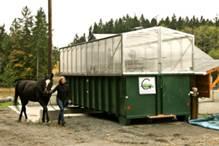
The University of Wisconsin-Oshkosh, in collaboration with BIOFerm™ Energy Systems, installed the EUCOlino—a small-scale, mixed, plug-flow digester—onto on a 136 milking head Wisconsin Dairy. The system is pre-manufactured, containerized and requires very limited on-site construction. This includes grading, pouring a concrete pad for the containers and electrical services installation.
Start-up and commissioning were performed after the delivery of the 64 kWe combined heat and power (CHP). The input materials consist of bedded-pack dairy manure (corn or bean stover and straw), parlor wash water, and minor additional substrates such as lactose or fats, oils, and grease.
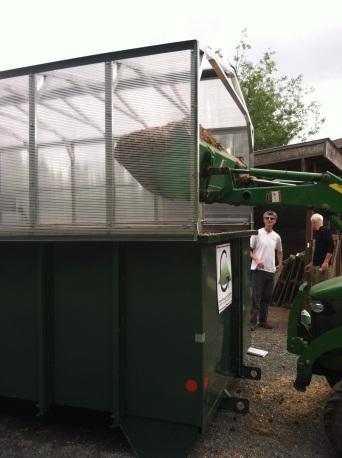
Solid materials are dumped via bucket tractor into a hopper feeder system that uses an auger to feed substrate into the anaerobic digestion tank. Additional parlor water is piped directly into the anaerobic digestion tank and mixed with the solids to make a feedstock of approximately 13% total solids. The solids are fed hourly, which is controlled by the PLC system.
The digester has a ~30-day retention time and the biogas produced is stored in a bag above the fermenters. Biogas produced is conditioned and combusted in a CHP mounted on a separate skid. Effluent from the system is pumped directly to an open pit lagoon for storage and subsequently land applied as fertilizer. The system produces approximately 25 – 33 m3/hour of biogas, with a raw biogas quality of 52-60% CH4 and less than 700 ppm H2S.
What have we learned?
This project has been an important step forward in developing future small-scale anaerobic digesters across the U.S. Notably, our installation has given us insight into balancing system economics with the size of small-scale models; the energy output of the system must exceed pre-processing energy requirements and the digester must still be large enough for the designed residence time. Our experience has shown that, while reducing the size of a digester, these requirements remain essential for an installation to economically make sense.
Additionally, challenges involved in AD at the small-scale are related to pre-processing or feedstock conveyance. Once suitable consistence or size for conveyance, anaerobically digesting the organic fraction can be relatively easy. Inconsistency of incoming feedstocks is very detrimental to the system’s stability. Additionally, exterior feedstock storage and above ground piping can limit processing potential when severe cold weather settles in. While all of these are challenges that are easily overcome with engineering, they come at a cost and that can make or break the economics at this scale.
Future Plans
For the small-scale EUCOlino to be effective in the United States, it is key to establishing a U.S.- based manufacturing location. Pre-processing needs to be well-suited to the incoming feedstock. Post-digestion products need established off-takers, for electricity generation, bedding, fertilizer, etc.
Readers interested in this topic can also visit our website for more information on the Allen Farms digester and other BIOFerm projects. We can also be found on Facebook, Twitter, and LinkedIn.
The authors are solely responsible for the content of these proceedings. The technical information does not necessarily reflect the official position of the sponsoring agencies or institutions represented by planning committee members, and inclusion and distribution herein does not constitute an endorsement of views expressed by the same. Printed materials included herein are not refereed publications. Citations should appear as follows. EXAMPLE: Authors. 2015. Title of presentation. Waste to Worth: Spreading Science and Solutions. Seattle, WA. March 31-April 3, 2015. URL of this page. Accessed on: today’s date.
How Does Management Impact Ammonia, Hydrogen Sulfide & Greenhouse Gases In Dairy Barns?
Emissions of pollutant gases from dairy barns are dependent on manure retention time in the barn and the quality of flushing water (for manure-flush systems). Strategies for mitigating air emissions from barns thus are a function of manure management either via optimal flushing or scraping, and pretreatment of flushing water.
What did we do?
Ammonia (NH3), hydrogen sulfide (H2S), and greenhouse gases (CO2, CH4, and N2O) emissions, under different manure collection strategies, from a naturally ventilated dairy barn housing about 850 lactating Holstein cows were measured using an on-site real-time monitoring system. The manure collection strategies evaluated included: (i) altering manure-flushing frequency, (ii) alternating flushing and scraping to remove manure, and (iii) manure solids separation system via centrifugation of the flush water.
What have we learned?
Doubling flushing frequency (every 3 h flushing) did not significantly affect NH3 emission (25.5 g cow-1 d-1) compared to the normal every 6 h flushing (24.5 g cow-1 d-1) but reduced CO2 emission by 7.3%. On the hand, H2S, CH4, and N2O emissions were 1.3, 176% and 18.5% higher at the 3-h flushing schedule than at the normal 6-h flushing schedule. Flushing at half the frequency (every 12 h) reduced H2S, CO2, and CH4 by 59.4, 19.8 and 28.5%, respectively. Alternating manure flushing and manure scraping (or vacuuming) every 6 h, decreased CO2, CH4, and N2O emissions by 13.0, 7.8 and 19.5% compared to normal 6-h manure flushing alone. Use of centrifuged water for manure flushing significantly improved emissions mitigations more than all other strategies. Emissions of all the five gases decreased by 43.0 % for NH3, 37.3 % for H2S, 1.2% for CO2, 3.7% for CH4, and 51.7 % for N2O under the latter practice.
Future Plans
Evaluation of other manure management practices which have not previously or adequately been tested at full-scale facilities or operations.
Authors
P.M. Ndegwa, Associate Professor, Biological Systems Engineering, Washington State University, PO Box 646120, Pullman, WA 99164, USA ndegwa@wsu.edu
H.S Joo, G.M. Neerackal, X. Wang; Department of Biological Systems Engineering, Washington State University, Pullman, WA.; and J.H. Harrison; Department of Animal Sciences, Washington State University, Puyallup, WA.
Additional information
• Joo H., P. Ndegwa, G. Neerackal, X. Wang, J. Harrison, J. Neibergs. 2013. Effects of manure management on ammonia, hydrogen sulfide, and greenhouse gases emissions from naturally ventilated dairy barns. ASABE Annual International Conference. Paper number 131593447; Kansas City, Missouri, July 21 – July 24. (doi: http://dx.doi.org/10.13031/aim.20131593447).
• Neerackal, G.M., H.S. Joo, P.M. Ndegwa, J.H. Harrison. 2014. Manure-pH management for mitigating ammonia emissions from manure-flush dairy barns. ASABE and CSBE/SCGAB Annual International Meeting. Paper number 1892636; Montreal, Quebec, Canada, July 13-17.
Acknowledgements
This study was partially supported by funds from USDA-NRCS-CIG program (Grant No. 69-3A75-11-210), and Washington State University Agricultural Research Center. The cooperation and assistance of the collaborating producer is also acknowledged.
The authors are solely responsible for the content of these proceedings. The technical information does not necessarily reflect the official position of the sponsoring agencies or institutions represented by planning committee members, and inclusion and distribution herein does not constitute an endorsement of views expressed by the same. Printed materials included herein are not refereed publications. Citations should appear as follows. EXAMPLE: Authors. 2015. Title of presentation. Waste to Worth: Spreading Science and Solutions. Seattle, WA. March 31-April 3, 2015. URL of this page. Accessed on: today’s date.
*Why Examine Solid – Liquid Manure Separation at Pig Farms?
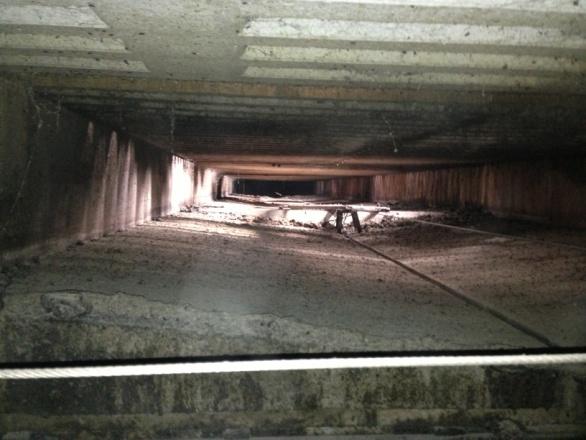
V-shape pit with automated manure scraper and trough
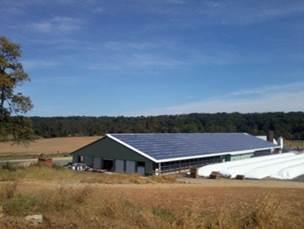
Many US pork production operations have become large in size and more geographically concentrated, and use very similar production facilities and manure management. With the potential extreme climates and diminishing water and land base, the industry needs to further improve the production systems and conservation effort. A Missouri swine finishing barn was designed to separate manure into solid and liquid portions, reduce odor and air emissions, and provide options for nutrient and water management. There is potential to reduce overall water use, and more importantly, to more efficiently export nutrients from the farm, or conserving nutrients in either the solid or liquid portions using additional practices.
What did we do?
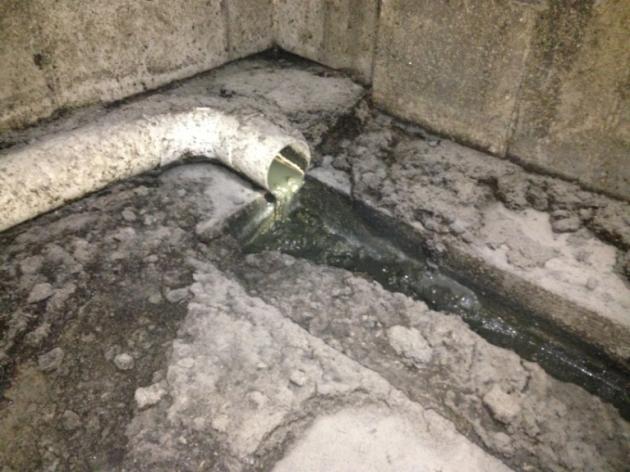
Gravity draining of liquid manure
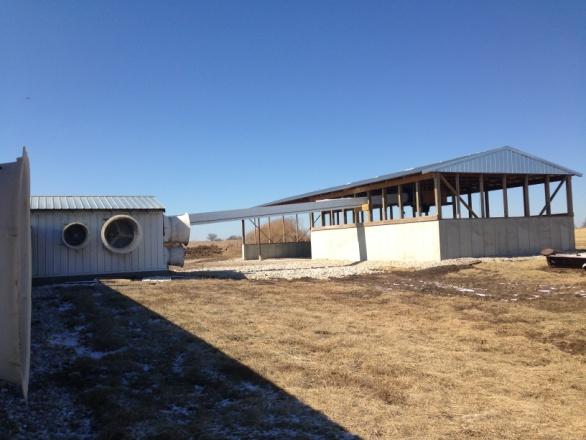
The solid/liquid separation barn has a capacity of 1200-hd. Manure management consists of a V-shaped gutter with mechanical scrapers installed beneath slatted floor, and a central pipe that collects the liquid manure fraction. The scraped manure is mechanically conveyed out to a nearby storage shed. Liquid manure portion is gravity drained into a temporary sump pit, and pumped into a nearby anaerobic lagoon automatically. Four monthly solid portion and liquid portion samples were collected and analyzed for moisture content, total nitrogen, phosphorous, potassium, pH, total carbon, and volatile solid content. The collected samples were kept on ice during transport and then frozen until analyzed by the University of Missouri Soil and Plant Testing Laboratory. Ammonia and hydrogen sulfide concentrations of the exhaust air streams were also measured using gas detection tubes during three of the four sampling events.
What have we learned?
Storage shed for solid manure
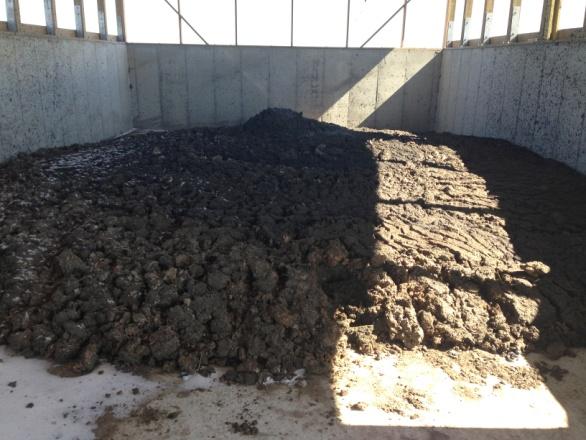
The solid manure portions have relatively low moisture content (MC, 57.9% to 63.4%, averaged 60.7%), and the liquid portion still have considerable amount of solids (MC = 93.3% to 98.3%, averaged 96.1%). The average nitrogen, phosphorus, potassium were 1.72%, 0.65%, 0.75% for the solid manure samples, and were 0.40%, 0.10%, and 0.29% for the liquid manure samples, respectively.
Ammonia concentration of the center exhaust fans averaged 7.7, 7.0, and 1.8 ppm for the February (n=3), March (n=2), and May (n=2) sampling visits respectively, and only one room fan was operating during the March visit, which measured 5.0 ppm (n=1). For all the sampling visits, hydrogen sulfide never reached the minimum detection limit of 0.5 ppm.
Stored solid manure
The new facility design and reported findings have the potential to be adapted by new and existing production facilities, to develop new business models and management that are more flexible in nutrient management, and to improve resource conservation and reduce pollutions. It has been noted that the liquid stream can have relatively low solids from the well maintained scraper systems. If the farm continues to use the lagoon, there will be significantly less solid to be agitated and pumped. Assuming the untreated manure has a solid content of 6%, and the solid contents of the separated liquid and solid portions average about 3% and 39% respectively, the estimated contents in the solid manure are 28% and 47% of the total nitrogen and phosphorus in untreated manure, respectively. This is promising for exporting nutrients from the farm, or conserving nutrients in either the solid or liquid portions using additional practices.
Future Plans
More research is needed to systematically analyze the costs and management of the facilities, implications of water/nutrient conservations, potential byproduct production, and long-term sustainability improvement. The immediate next steps are to characterize the liquid and solid manure portions (in terms of volume and nutrient values) and barn air quality and emissions during different seasons. Effort should also include identification of the minimal and different levels of pre-treatment and reverse osmosis onto the liquid manure, for potential fertilizer concentrate, improved manure management, and potential water recycling. The long-term goals are to improve such solid/liquid separation barn, to provide partial manure treatment and water recycling potential that can be tailored for different cases and production sites.
Authors
Teng Lim, Associate Professor, University of Missouri limt@missouri.edu
Joseph M. Zulovich, University of Missouri.
Additional information
The collaboration of the farm owner and managers are greatly appreciated.
The authors are solely responsible for the content of these proceedings. The technical information does not necessarily reflect the official position of the sponsoring agencies or institutions represented by planning committee members, and inclusion and distribution herein does not constitute an endorsement of views expressed by the same. Printed materials included herein are not refereed publications. Citations should appear as follows. EXAMPLE: Authors. 2015. Title of presentation. Waste to Worth: Spreading Science and Solutions. Seattle, WA. March 31-April 3, 2015. URL of this page. Accessed on: today’s date.
Bedded manure is a valuable fertilizer source because it contains essential macronutrients (nitrogen (N), phosphorus (P), and potassium (K)) for crop production. Previous research with beef cattle bedded manure packs demonstrated that water-soluble macronutrients accumulated toward the bottom of the packs with water movement. Thus, predicting water movement in bedded manure helps to estimate nutrient composition throughout the bedded pack. This work presents a development of a process-based model of vertical water movement that considers percolation and diffusion as the main processes of water and vapor movements in bedded manure packs. Evaporation from the top zone to the atmosphere was considered a process of convective mass transfer. The model predicts the change in moisture content of the different zones in the bedded manure and assists in estimating nutrient composition.
Why Study Moisture Movement In a Bedded Pack?
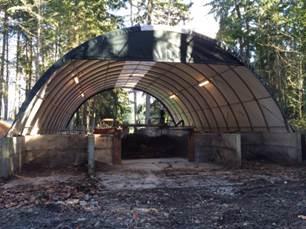
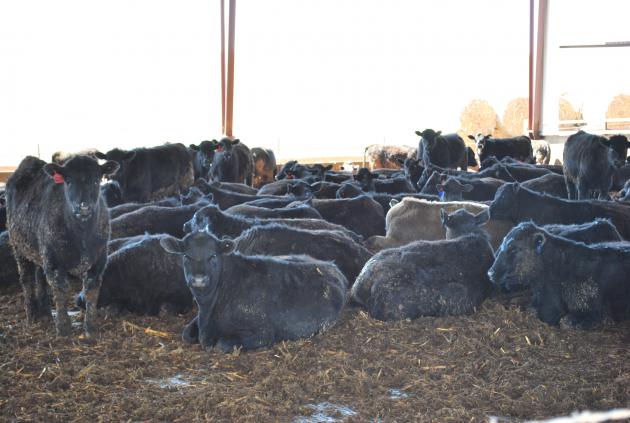
Beef cattle producers that raise cattle in complete confinement, such as mono-slope or hoop barns, may apply bedding material to manage moisture and improve the environment for the animals. Some producers let the manure and bedding accumulate to form a bedded manure pack, which is compacted by cattle activity. The bedded manure contains valuable nitrogen (N), phosphorus (P), and potassium (K) that are essential for crop production and soil sustainability. Depending on temperature, bedding material, and storage time of the bedded pack, the concentration of water-soluble N, P and K compounds may increase in the bottom of the bedded pack where water accumulates. Thus, understanding and predicting water movements within the bedded manure is important to estimate fertilizer N-P-K content and distribution in the bedded manure.
What did we do?
The processes considered in this process-based model include evaporation, percolation, diffusion of water vapor and diffusion of liquid water for vertical water movement. The model by Seng et al. (2012) for static compost piles and a modified version of the Integrated Farm System Model (not yet released) by Rotz et al. (2014) for bedded manure were reviewed and compared. Ultimately, the model needs to be adaptable to estimate the water content of the pack over time for different environmental conditions, bedding materials, and storage times at varying depths within the bedded pack. Data for model calibration and validation were gained through laboratory-scale experiments by Ayadi et al. (in review).
What have we learned?
Percolation and liquid water diffusion are considered the main processes for vertical water movement between layers in the bedded manure. Evaporation occurs from the surface of the top zone of the bedded pack. The rates of percolation and liquid water diffusion are depth-specific and their rates therefore vary. The modified version of the Integrated Farm System Model (IFSM) is more adaptable to data gained through laboratory-scale experiments. Overall, IFSM is more applicable to producer-available data and thus more applicable to predict water movement for bedded manure packs in real-life conditions.
Future Plans
After predicting water movements in the bedded manure, the model will be used to estimate N, P and K movement through the different zones of the bedded manure pack as well as gaseous emission (ammonia and nitrous oxide) from the bedded pack surface. The final overall model will be a calculator that estimates fertilizer N-P-K content and value and ammonia and nitrous oxide emissions of the bedded manure packs from confined beef cattle facilities with respect to temperature, bedding material, storage time and depth of the bedded pack.
Authors
Erin Cortus, Ph. D., Assistant Professor, South Dakota State University, Brookings, SD
Ferouz Ayadi, M.S., Graduate Student, South Dakota State University, Brookings, SD; Mindy Spiehs, Ph. D., Animal Scientist, USDA‐ARS Meat Animal Research Center, Clay Center, NE
Additional information
References
Ayadi, F. Y., M. J. Spiehs, E. L. Cortus, and D. N. Miller. In review. Physical, chemical and biological properties of different depths and ages of simulated beef bedded manure packs. Transactions of the ASABE.
Seng, B., H. Kaneko, K. Hirayama, and K. Katayama-Hirayama. 2012. Development of water movement model as a module of moisture content simulation in static pile composting. Environmental Technology 33(15):1685-1694.
Acknowledgements
The support and assistance of Henry F. Bonifacio with the simulation of water movements in the bedded pack manure is very much appreciated. This project and all associated reports and support materials were supported by the Sustainable Agriculture Research and Education (SARE) program, which is funded by the U.S. Department of Agriculture- National Institute of Food and Agriculture (USDA-NIFA). Any opinions, findings, conclusions or recommendations expressed within do not necessarily reflect the view of the SARE program or the U.S. Department of Agriculture. USDA is an equal opportunity provider and employer. The mention of trade names or commercial products in this publication is solely for the purpose of providing specific information and does not imply recommendation or endorsement by the USDA.
The authors are solely responsible for the content of these proceedings. The technical information does not necessarily reflect the official position of the sponsoring agencies or institutions represented by planning committee members, and inclusion and distribution herein does not constitute an endorsement of views expressed by the same. Printed materials included herein are not refereed publications. Citations should appear as follows. EXAMPLE: Authors. 2015. Title of presentation. Waste to Worth: Spreading Science and Solutions. Seattle, WA. March 31-April 3, 2015. URL of this page. Accessed on: today’s date.
Enforcement of nutrient management regulation has forced Maryland farms and agricultural facilities to adopt new waste management practices. Few options exist that are financially sustainable. Regulatory agencies witnessed the unexpected consequence of closing small and mid-sized farms who could not afford to institute new waste management technologies. To counter that consequence, Maryland Department of Agriculture offered grants to subsidize the development of innovative technology and business practices. These new systems and business models had to offer both financial and environmental sustainability.
What Did We Do?
The first step in this project (supported by the Maryland Department of Agriculture, 2014) was to identify the biological make up and characteristics of the stable waste both before and after processing. We measured nutrient content and form (N, P, K), porosity, moisture absorption and C: N ratio. By understanding what the material consisted of pre-processing, we were able to determine what effects different controls during processing would have on the end product. As an example, when using stable waste for bedding re-use the material is run through the composting system as quickly as possible. A shorter composting period with auger mixing technology allowed the biological activity to breakdown the manure balls, support the transformation of the waste nutrients and yet protect the integrity of the shavings for second use. Related: Managing Manure on Horse Farms
Next, the local markets were studied:
Soil types and needs: compost to add porosity, water retention, nutrients to soil
Weather patterns and created needs: compost added for water retention, binding material to diminish run off
Population centers for urban market: compost for landscape needs, potting medium
Rural character for on farm market: compost for nutrient replacement, bedding re-use
Cost of operations on local farms: cost of bedding, cost of disposal, cost of landscape material, cost of synthetic or imported fertilizer
Wholesale market needs: compost for distribution centers (Scotts products), soil specialty companies, land reclamation sites, Department of Transportation needs, green house growers
Identifiable, viable market channels to move the processed stable waste were necessary components of a business model. Uses for the processed waste were identified both on site and off site.
On site uses were identified as:
Land application: field enhancement
Bedding re-use
Landscape use
Improved footing arenas
Land reclamation
Pelletized for heat systems
Off site uses were identified as:
Soil amendment
Land reclamation
Potting Medium
Food Waste Bulking agent
Whole sale distribution centers
Soil Specialty companies
What Did We Learn?
Data was gathered and studied from equine facilities with existing composting operations to illustrate what the benefits and challenges can be. IOS Ranch on Bainbridge Island Washington is a sustainably designed 7.5 acre property that supports 20-25 stalled horses. The design concentrates the structures, indoor arena, stall, office and supporting buildings, so there could be surrounding pasture turn out and an outdoor arena. The facility was paying high waste disposal fees. Their decision to bring composting technology to the farm was an effort to eliminate disposal fees and diminish their bedding cost through bedding re-use. However, once the system was installed a local landscaper visited the site and saw value in the compost. The material is now sold for $30/yard wholesale and $45/yard retail to local landscapers and gardeners. With the price of shavings for bedding delivered at $7.50/yard the business decision to sell the compost was an obvious one. The property was formerly a gravel pit with large areas of exposed pit run. Once realizing the value of the compost for land application, the owner spread on the exposed areas greatly improving grass performance in the turnout fields. This farm was saving $100-$140/day producing compost because of the reduced disposal fees plus profits from marketing, allowing for a breakeven on investment in 3 years.
Joint Base Myer Henderson Hall hosted a pilot project for composting of food waste on remote contingency bases. On this base the Army’s Caisson horses are housed in a 50+ stall barn. After the pilot was completed the in vessel composting system will revert to the base for processing the stable waste. The base has the choice of bedding re-use or using the compost for landscape needs on base and/or in the adjacent Arlington National Cemetery. Outside contractors were supplying the base with compost at nearly $400,000 per year. The project could pay for itself in the first year. Thorough lab analysis showed the compost to be consistently of high quality, pathogen free, and weed seed free.
Currently two sites in Maryland are being studied; one an equine rescue facility housing 50-80 horses, and the other a dairy with 240 head. The use of composted stable waste as a peat moss replacement will bring value to the equine and dairy farms and to the large, local greenhouse industry. Currently 80% of the peat moss used in Maryland is imported from Canada. The farms selected are large enough that they can produce enough material for bedding re-use (savings of nearly 20% of operating budget) and/or sell the material to wholesale buyers. The composting material from both sites show the favorable attributes of peat moss, porosity and moisture retention. Blending can alter the nutrient levels to what the market needs by using the more nutrient rich dairy waste. The collection of compost and blending can be done on on site or at an off site location in cooperation with other local farms, this may help meet larger volume needs of wholesale buyers.
Future Plans
The Maryland projects are both two years in duration with continual data gathering and recording. The next step is the location and operation of a collection yard for multiple local farms to send their processed stable waste. Such a yard allows for mixing to meet differing market needs and the creation of large quantities of homogenous product for local greenhouse growers.
Dr. Pat Millner, USDA Beltsville, Research Microbiologist is lead researcher and mentor on these projects in Maryland.
The authors are solely responsible for the content of these proceedings. The technical information does not necessarily reflect the official position of the sponsoring agencies or institutions represented by planning committee members, and inclusion and distribution herein does not constitute an endorsement of views expressed by the same. Printed materials included herein are not refereed publications. Citations should appear as follows. EXAMPLE: Authors. 2015. Title of presentation. Waste to Worth: Spreading Science and Solutions. Seattle, WA. March 31-April 3, 2015. URL of this page. Accessed on: today’s date.
While large-scale farms have typically been the focus of anaerobic digestion systems in the U.S., an emerging need has been identified to serve smaller farms with between 50 and 500 head of cattle. Implementing such a small, standardized, all-in-one system for these small farm applications has been developed. Small-scale digesters open the playing field for on-farm sustainability and waste management.
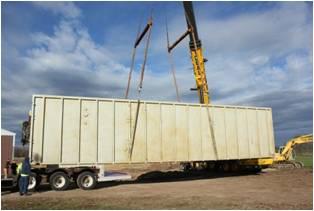
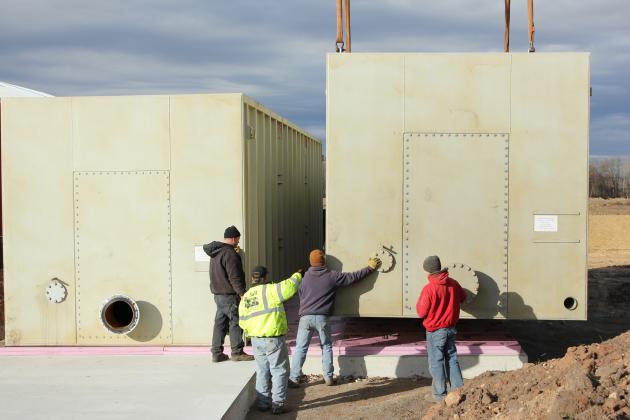
Unloading the first biodigester unit.
This presentation on small-scale digestion would discuss the inputs, processing, function, and outputs of BIOFerm™ Energy Systems’ small agitated plug flow digester (EUCOlino). This plug-and-play digester system has the ability to operate on dairy manure, bedding material, food waste, or other organic feedstocks with a combined total solids content of 15-20%. A case study would be presented that describes the site components needed, the feedstock amount and energy production, as well as biogas end use. Additional details would include farm logistics, potential sources of funding, installation, operation, and overall impact of the project.
This type of presentation would fill an information gap BIOFerm™ has discovered among dairy farmers who believe anaerobic digestion isn’t feasible on a smaller scale. It would provide farmers who attend with an understanding of the technology, how it could work on their specific farm and hopefully reveal to them what their “waste is worth”.
Why Study Small-Scale Anaerobic Digestion
To inform and educate attendees about small-scale anaerobic digestion surrounding the installation and feasibility of the containerized, paddle-mixed plug flow EUCOlino system on a small dairy farm <150 head.
Biodigester unit being installed at Allen Farms.
What Did We Do?
Steps taken to assist in financing the digestion system include receiving grants from the State Energy Office and Wisconsin Focus on Energy. Digester installation includes components such as feed hopper, two fermenter containers, motors, combined heat and power unit, electrical services, etc…
What Have We Learned?
Challenges associated with small project implementation regarding coordination, interconnection, and utility arrangements.
Future Plans
Finalize commissioning phases and optimize operation.
Steven Sell, Biologist/Application Engineer, BIOFerm™ Energy Systems
Gabriella Huerta, Marketing Specialist, BIOFerm™ Energy Systems
Additional Information
Readers interested in this topic can visit www.biofermenergy.com and for more information on our plants, services and project updates please visit us on our website at www.biofermenergy.com. You will also see frequent updates from us in industry magazines (BioCycle, REW Magazine, Waste Age). BIOFerm will also be present at every major industry conference or tradeshow including the Waste Expo, Waste-to-Worth and BioCycle– stop by our booth and speak with one of our highly trained engineers for further information.
The authors are solely responsible for the content of these proceedings. The technical information does not necessarily reflect the official position of the sponsoring agencies or institutions represented by planning committee members, and inclusion and distribution herein does not constitute an endorsement of views expressed by the same. Printed materials included herein are not refereed publications. Citations should appear as follows. EXAMPLE: Authors. 2013. Title of presentation. Waste to Worth: Spreading Science and Solutions. Denver, CO. April 1-5, 2013. URL of this page. Accessed on: today’s date.
An online decision support tool for determining feasibility of anaerobic digestion has been developed (http://www.erams.info/AD_feasibility/). This decision support tool is specifically targeted to cattle operations in the arid west and provides general information on anaerobic digestion (AD), recommendations on the technical and economic feasibility of AD based on producer provided information on management practices, recommendations on appropriate AD technology based on user defined criteria for the system, guidance on technology provider selection, and required maintenance for operation of an AD system. The goal of the tool is to enable and empower producers to make informed decisions about AD based on unbiased information rather than relying on the biased information often provided by technology providers. In this workshop, the drivers for technical and economic feasibility for on farm AD installation will be discussed and the online decision support tool will be demonstrated.
Why Look at Anaerobic Digestion for Cattle Operations?
Anaerobic digestion is a waste management tool with many advantages, including generation of energy for on-site use. However, careful consideration must be given regarding technical and economic feasibility for installation on cattle operations. A web-based decision tool has been developed to provide technical and economic guidance to producers on feasibility of on-farm anaerobic digestion (http://www.eramsinfo.com/erams_beta/AD_feasibility/).
Home Page of Web-based Decision Support Tool
What Did We Do?
Based on commonalities found from feasibility studies conducted throughout the state of Colorado, a web-based decision tool has been developed to provide technical and economic guidance to producers on feasibility of on-farm anaerobic digestion (http://www.eramsinfo.com/erams_beta/AD_feasibility/)
What Have We Learned?
For use of conventional anaerobic digestion technology at dairy facilities, manure should be collected on concrete by scraping or flushing. Anaerobic digestion of manure collected on dry lots is not feasible with conventional technology. Economics are favorable when on-site energy use is high and the energy produced by the digester is primarily used on-site.
Future Plans
We will continue to develop and improve the existing web-based tool. We are also working on developing an anaerobic digestion technology suitable for dry lot collected manure.
Authors
Sybil Sharvelle, Assitant Professor, Colorado State University, Department of Civil and Environmental Engineering, sybil.sharvelle@colostate.edu
Jeffrey Lasker, Research Assistant, Colorado State University
Lucas Loetscher, Research Assistant, Colorado Sate University
The authors are solely responsible for the content of these proceedings. The technical information does not necessarily reflect the official position of the sponsoring agencies or institutions represented by planning committee members, and inclusion and distribution herein does not constitute an endorsement of views expressed by the same. Printed materials included herein are not refereed publications. Citations should appear as follows. EXAMPLE: Authors. 2013. Title of presentation. Waste to Worth: Spreading Science and Solutions. Denver, CO. April 1-5, 2013. URL of this page. Accessed on: today’s date.
To provide the best experiences, we use technologies like cookies to store and/or access device information. Consenting to these technologies will allow us to process data such as browsing behavior or unique IDs on this site. Not consenting or withdrawing consent, may adversely affect certain features and functions.
Functional
Always active
The technical storage or access is strictly necessary for the legitimate purpose of enabling the use of a specific service explicitly requested by the subscriber or user, or for the sole purpose of carrying out the transmission of a communication over an electronic communications network.
Preferences
The technical storage or access is necessary for the legitimate purpose of storing preferences that are not requested by the subscriber or user.
Statistics
The technical storage or access that is used exclusively for statistical purposes.The technical storage or access that is used exclusively for anonymous statistical purposes. Without a subpoena, voluntary compliance on the part of your Internet Service Provider, or additional records from a third party, information stored or retrieved for this purpose alone cannot usually be used to identify you.
Marketing
The technical storage or access is required to create user profiles to send advertising, or to track the user on a website or across several websites for similar marketing purposes.


 What did we do?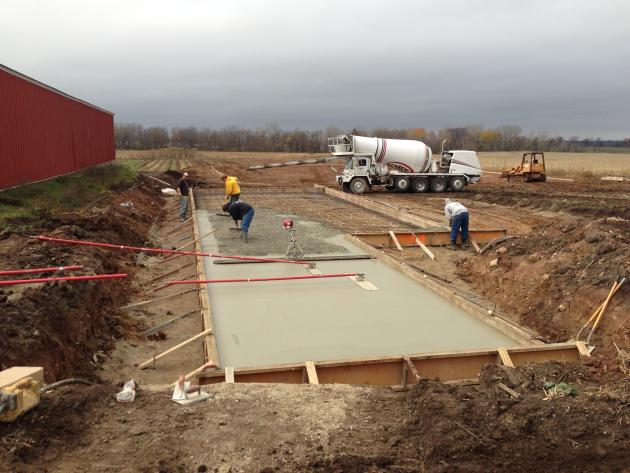

 Why Study Moisture Movement In a Bedded Pack?