Initial Evaluation of Vegetated Treatment Areas for Treating Runoff from Small Swine Operations in Central Texas

A vegetative treatment area (VTA), as defined by USDA-NRCS, is a “vegetative area composed of perennial grass or forages used for the treatment of runoff from an open lot production system or other process waters”. VTA’s are typically part of a vegetative treatment system (VTS) that includes additional components to remove solids, such as a settling or vegetative infiltration basin. There have been numerous studies, both modeling and field, related to the design and evaluation of VTS’s used to treat animal feeding operation (AFO) runoff; however, none of these have studies evaluated the effectiveness of VTA’s receiving direct runoff from small swine operations during natural rainfall events. Is it possible that a sufficiently sized VTA alone can effectively treat direct runoff from small swine AFO’s during daily operation? This project aims to answer that question and evaluate the effectiveness of VTA’s as a practical and cost-effective alternative wastewater management option to protect surface water quality on small swine facilities. Three locations were established in 2012 at small swine AFO’s in central Texas. In each location, sampling sites were installed to monitor runoff water quantity and quality at the inlet and outlet of the VTA and a nearby control area. Initial data show that the VTA’s provided substantial treatment of the swine facility runoff in terms of reduced nutrient concentrations, but VTA runoff was still higher in nutrients than the control site. The preliminary data highlighted the importance of solids management and year-round vegetation. Hopefully, as these VTA’s become better established, the increased capacity for infiltration and plant nutrient uptake will be reflected in the soil and runoff data.

Authors

Harmel, Daren   daren.harmel@ars.usda.gov      USDA-ARS

The authors are solely responsible for the content of these proceedings. The technical information does not necessarily reflect the official position of the sponsoring agencies or institutions represented by planning committee members, and inclusion and distribution herein does not constitute an endorsement of views expressed by the same. Printed materials included herein are not refereed publications. Citations should appear as follows. EXAMPLE: Authors. 2015. Title of presentation. Waste to Worth: Spreading Science and Solutions. Seattle, WA. March 31-April 3, 2015. URL of this page. Accessed on: today’s date.     

A Novel Treatment System to Remove Phosphorus from Liquid Wastes

Lowering the total phosphorus (P) content of animal manures is one means of addressing concerns over P runoff following land application of animal manure. We developed a treatment system for liquid manures that conserves the manure nitrogen (N) content while removing most of the manure P content. Initial evaluation of a treatment system involving manure solid separation and precipitation of dissolved P with an alkaline salt (calcium hydroxide) resulted in poor liquid/solid separation and poor dissolved P removal and created conditions promoting ammonia-N volatilization. As a result, we developed a three step system with iterative solid removal and acid salt (ferric sulfate) precipitation of dissolved P: (1) removal of bulk and intermediate sized solids (>25 μm); (2) chemical treatment to convert dissolved P; and (3) final removal of fine solids and chemically precipitated P. When tested on manure slurries from 150 and 2700 cow dairies, 96 and 99% total P was removed respectively, resulting in liquid manure filtrates with up to 400:1 N:P ratio. While costs of treatment were roughly $38 per kg P removed, equivalent to $750 per cow annually, we anticipate that refinement of the process and beneficial uses of the solid materials (bedding, compost, etc.) will improve cost-efficacy considerably.

Author

Church,  Clinton  Clinton.Church@ars.usda.gov     USDA-ARS 

The authors are solely responsible for the content of these proceedings. The technical information does not necessarily reflect the official position of the sponsoring agencies or institutions represented by planning committee members, and inclusion and distribution herein does not constitute an endorsement of views expressed by the same. Printed materials included herein are not refereed publications. Citations should appear as follows. EXAMPLE: Authors. 2015. Title of presentation. Waste to Worth: Spreading Science and Solutions. Seattle, WA. March 31-April 3, 2015. URL of this page. Accessed on: today’s date.
Measuring nitrous oxide emissions from a Wisconsin dairy forage cropping system

Nitrous oxide emitted from cropland constitutes a significant component of the agricultural sector’s overall greenhouse gas footprint. In order to accurately evaluate mitigation strategies, predict impacts, and model system behavior under future climate scenarios, it is essential to have access to flux measurements collected under regionally relevant conditions of soil, weather, and management strategies. As part of the Climate Change Mitigation and Adaptation in Dairy Production Systems of the Great Lakes Region USDA Coordinated Agricultural Project, we are measuring nitrous oxide flux from a typical dairy forage rotation in south-central Wisconsin. The rotation consists of one year of corn and three years of alfalfa, receiving liquid dairy manure fertilization in corn and alfalfa establishment years. Fluxes have been tracked over two growing seasons, and comparisons are possible between years as well as between phases of the rotation. Ultimately this data will be used to calibrate models for use in footprinting and benchmarking efforts and in predicting future productivity and resilience of dairy-based systems.

Author

Collier   Sarah     smcollier@wisc.edu        University of Wisconsin-Madison

The authors are solely responsible for the content of these proceedings. The technical information does not necessarily reflect the official position of the sponsoring agencies or institutions represented by planning committee members, and inclusion and distribution herein does not constitute an endorsement of views expressed by the same. Printed materials included herein are not refereed publications. Citations should appear as follows. EXAMPLE: Authors. 2015. Title of presentation. Waste to Worth: Spreading Science and Solutions. Seattle, WA. March 31-April 3, 2015. URL of this page. Accessed on: today’s date.

Livestock grazing in a changing climate: Implications for adaptive management


How Could Climate Change Impact Grazing Livestock?

Predictions that global population will reach nine billion persons by the mid-21st century, combined with the rising middle class in Asia, increases the demand for animal protein production.  Concurrent with the increasing human population is the continued directional rise in atmospheric carbon dioxide (CO2) which just passed the 400 parts per million volume level. Projections are that this concentration will increase to 550 parts per million volume by the end of the 21st century.  Increases in greenhouse gases (like CO2) can lead to 1) increasing temperatures, 2) influencing patterns and amounts of precipitation, 3) raising the sea level and 4) increasing the acidity of oceans.  For vegetation, increases in CO2 atmospheric concentrations result in greater water use efficiency, changes in species composition with “weedy” and “invasive” plants benefiting at the expense of native species, enhanced aboveground primary production, and lower forage quality.  The predicted warmer air temperatures and associated longer growing seasons (i.e., earlier start of spring and later falls) should lead to an increased frequency and intensity of wildfires, as well as greater pest abundance and spread of disease.  As the frequency and intensity/severity of extreme events (e.g., droughts) increases, animal heat stress is expected to become more problematic leading to reduced animal performance and as a result less livestock production.

Related: See the other presentations in this Western Region symposium (cattle selection, policy, climate hubs, ag outlook)

What Is Adaptive Management?

Although livestock managers have historically dealt with drought conditions (e.g., Dust Bowl year of the 1930s, the mid 1950s drought, and the 1988 drought), current efforts associated with the dry years of the early 21st century demonstrate that there is a need for adaptive management to increase resiliency of the rangeland vegetation and sustainability of rural communities and economies.  Adaptive management necessitates that 1) adjustments are made when temporally appropriate (both within and across years), 2) experiential and experimental knowledge is blended to provide sufficient capacity for flexibility with predicted long-term droughts that are more intense/severe, as well as “flash” droughts like the one experienced across a wide swath of the US in 2012, and 3) spatial and temporal variability are embraced rather than looked at as negatives. Key for livestock managers is how to increase flexibility in management to adapt to increasing weather variability associated with a changing climate.  For many managers, matching animal management with intrinsically high inter- and intra-annual variability in forage production is difficult due to inherent maintenance of herd genetics and the lack of a proactive national drought policy.  For example, although a majority (60%) of ranchers in Wyoming have a drought management plan, that still leaves 4 in ten ranchers without a pre-plan to shape management decisions when drought occurs (Kachergis et al. 2014). 

Proactive (i.e., preparation) and reactive (i.e., response) drought management strategies are showcased in Figure 1 (per Kachergis et al. 2014). 

Figure 1.  Proactive and reactive drought management strategies employed by Wyoming ranchers (from Kachergis et al. 2014).

Figure 1.  Proactive and reactive drought management strategies employed by Wyoming ranchers (from Kachergis et al. 2014).

Proactive strategies embrace 1) reserve forage supply and/or 2) varying stocking rate with forage supply, whereas reactive strategies address 1) reducing forage demand, 2) increasing forage supply and/or 3) increasing income, often from off-ranch sources or governmental drought declaration financial assistance.  For proactive strategies, grassbanking, incorporating yearling livestock into the enterprise, and using seasonal weather predictions to adjust stocking rate are all practices that are currently limited in use (< 30% of the managers), but have high potential to increase drought management flexibility.  This is important to managers as 40% of the ranchers surveyed in Wyoming thought that drought would be more influential in their management plans in the future compared to the past (Kachergis et al. 2014).  For dealing with the temporal variability of forage production for livestock grazing, managers can implement adaptive management to 1) manage for reserve forage through conservative stocking rates and grassbanking, 2) match cattle numbers to forage availability by proactively developing enterprise capacity to quickly remove/add grazing animals, or add forage quickly through leasing land, purchasing feed or implementing regional risk reduction strategies such as cooperative arrangements with managers in other regions of the US to move cattle, and 3) understand sources and scales of variability at the ranch/landscape/regional levels due to soils, topography and rainfall.

Related: Agricultural Environmental Management Systems

Author

Justin D. Derner

USDA-Agricultural Research Service, Rangeland Resources Research Unit, Cheyenne, WY USA 82009

Literature Cited

Kachergis, E., J. D. Derner, B. B. Cutts, L. M. Roche, V. T. Eviner, M. N. Lubell, and K. W. Tate. 2014. Increasing flexibility in rangeland management during drought. Ecosphere 5:1-14.

The authors are solely responsible for the content of these proceedings. The technical information does not necessarily reflect the official position of the sponsoring agencies or institutions represented by planning committee members, and inclusion and distribution herein does not constitute an endorsement of views expressed by the same. Printed materials included herein are not refereed publications. Citations should appear as follows. EXAMPLE: Authors. 2015. Title of presentation. Waste to Worth: Spreading Science and Solutions. Seattle, WA. March 31-April 3, 2015. URL of this page. Accessed on: today’s date.

The Dairy Manure Biorefinery


Why Consider Additional Technologies with Anaerobic Digestion?

Some dairy farms have experimented with “add-on” technologies to enhance the value of the products generated from anaerobic digesters to improve economics and address other environmental and management concerns. This effort has intensified in recent years, as prices paid for electricity continue to fall. This trend is making it more difficult to justify the installation of new digesters or maintain active anaerobic digestion (AD) projects based on electricity sales alone. 

What did we do?

Based on ten years of research and extension within the field of dairy digesters, we are proposing that the concept of a dairy manure biorefinery can be useful to focus ongoing research and commercialization efforts (Figure 1). A biorefinery integrates a core biomass conversion process (in this case, AD, converting manure and in many cases other organic substrates) with additional downstream technologies. These combined technologies generate multiple value-added products including fuels, electricity, chemicals, and other products (NREL, 2009). Most add-on technologies relevant to dairy facilities have been modified from technologies used in the wastewater treatment and oil and gas industries. 

What have we learned?

Ongoing research and commercialization efforts by our team and others aim to:

  • Adapt technologies to fit the economic and other constraints of dairy digesters.
  • Increase efficiency and reduce costs by maximizing the complimentary nature of technologies (e.g. waste heat from one process is used in another process).

Specific add-on technologies that are continuing to evolve within the biorefinery context include:

Biogas Upgrading to remove impurities from biogas (primarily carbon dioxide, hydrogen sulfide, and water vapor).

Output: Purified biogas that can be used as a transportation fuel (e.g. liquefied natural gas) or injected directly into natural gas piplelines.

Additional social and economic benefits: Renewable fuel can reduce demand for fossil fuels, and can often receive economic credits (e.g. renewable identification numbers, low carbon fuel standard)

Fiber Upgrading to process the fiber that is removed from AD effluent.

Output: Upgraded fiber can be sold as a higher-value soil amendment in the horticultural industry

Additional social and economic benefits: Fiber can replace use of non-renewable resource (peat moss) by horticultural industry

Nutrient Recovery to strip nitrogen (N) and phosphorus (P) from anaerobic digester effluent.

Outputs: Soil amendment products that can be sold offsite where nutrients are needed

Additional social and economic benefits: Reductions in N and P applied to nearby fields, and reduced effluent hauling distances/costs for land application due to lower nutrient concentration in effluent

Water Recovery to generate “recycled” water using advanced technologies

Output: Water that can be used for animal drinking, or as dilution water for the AD facility

Additional social and economic benefits: Reduces consumption of fresh water, a limited resource, and reduces costs for land-application of AD effluent

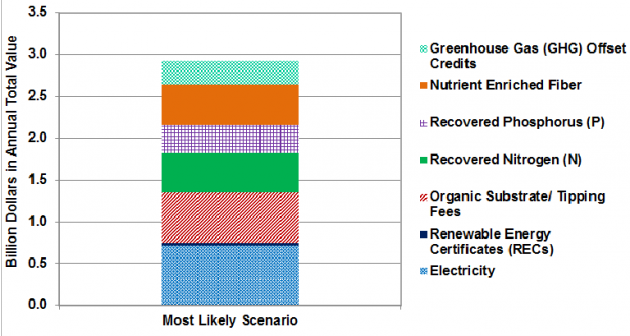
Overall Potential Impact. Improving economics and addressing other critical issues for dairy producers (e.g. nutrient issues) has the potential to advance farm-based AD adoption significantly beyond its current 244 farms. It has been estimated that a mature bio-refinery industry based on AD on large U.S. dairy farms could create an estimated bio-economy of nearly $3 billion that complements the production of milk and dairy products (ICUSD, 2013).

Figure 1. Stepwise depiction of the process

Figure 2. Total likely value added by most likely scenario

Authors

Georgine Yorgey (presenting author)a, Craig Frearb, Nick Kennedya, Chad Krugera, Jingwei Mab, and Tara Zimmermana

a Center for Sustaining Agriculture and Natural Resources, Washington State University

b Department of Biological Systems Engineering, Washington State University

Future Plans

An extension document describing this concept and the add-on technologies in additional detail is being prepared. This document is part of a series of extension documents on Dairy AD Systems, being prepared by the authors and other colleagues at Washington State University. In addition, ongoing work and collaborations by our team are seeking to investigate, evaluate, and improve individual technologies and the linkages amongst them.

Additional Information

ICUSD, 2013. National market value for anaerobic digestion products. Report to Innovation Center for US Dairy, August 2013.

Acknowledgements

This research was supported by USDA National Institute of Food and Agriculture, contract #2012-6800219814; and Biomass Research Funds from the Washington State University Agricultural Research Center.

The authors are solely responsible for the content of these proceedings. The technical information does not necessarily reflect the official position of the sponsoring agencies or institutions represented by planning committee members, and inclusion and distribution herein does not constitute an endorsement of views expressed by the same. Printed materials included herein are not refereed publications. Citations should appear as follows. EXAMPLE: Authors. 2015. Title of presentation. Waste to Worth: Spreading Science and Solutions. Seattle, WA. March 31-April 3, 2015. URL of this page. Accessed on: today’s date.
Composting and the Benefits: Achieving Practice Change through Education to Reduce Nutrient Loads and Increase Adoption of Best Management Practices

Purpose

Florida houses roughly 500,000 horses and is also home to 700 freshwater springs; Marion County is, “Horse Capital of the World” and houses two first magnitude springs and each is currently in a restoration plan with the Florida Department Environmental Protection Agency (FDEP). The Florida Department of Agriculture and Consumer Services (FDACS) equine Best Management Practices (BMP) Manual recommends composting as an excellent manure management option.

Composting is a controlled biological process that decomposes and heats up organic material to produce a biologically stable humus, which can then be used as a rich soil amendment. Composting provides protection to the ground and surface waters by preventing excess nutrients from being leached out and running-off into the waters. It destroys up to 90% of weed seeds contained in manure and kills parasite eggs and pathogens. Additionally, the organic matter/compost helps prevent and control soil erosion and can improve both soil quality and productivity.

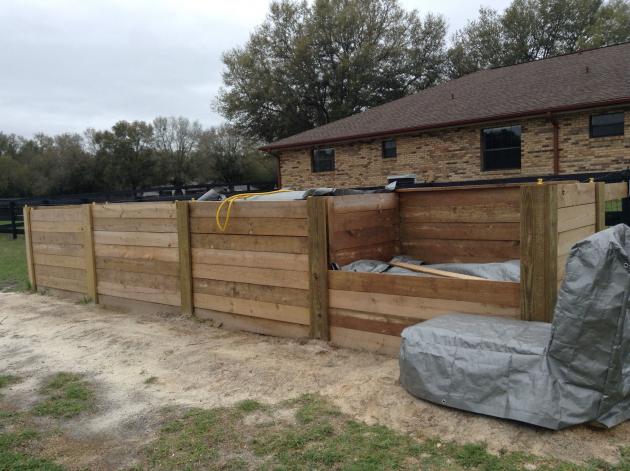
Compost Bin SetupWhat did we do?

Individual and group programming has been developed to educate farm owners and managers about the benefits derived from composting horse manure/spent bedding. Since 2007, Over 800 farms have been seen in the county. In 2013 alone, 132 participants were involved in individual farm consultations or farm revisits, group presentations and composting workshops. Education was provided and supplemental materials were developed for clientele about composting manure, compost bin construction and composting’s soil-improvement capabilities. Compost Countryside

What have we learned?

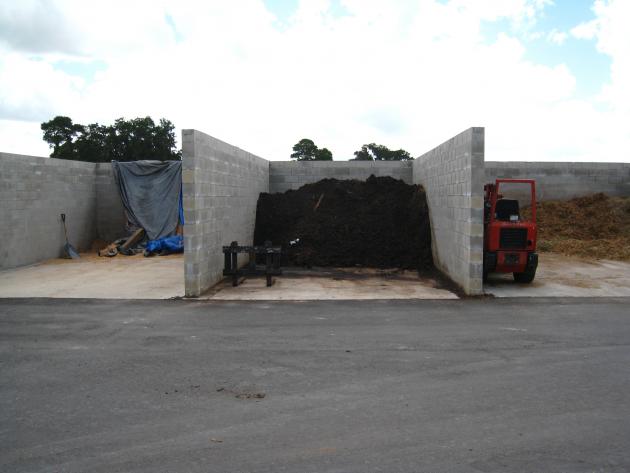
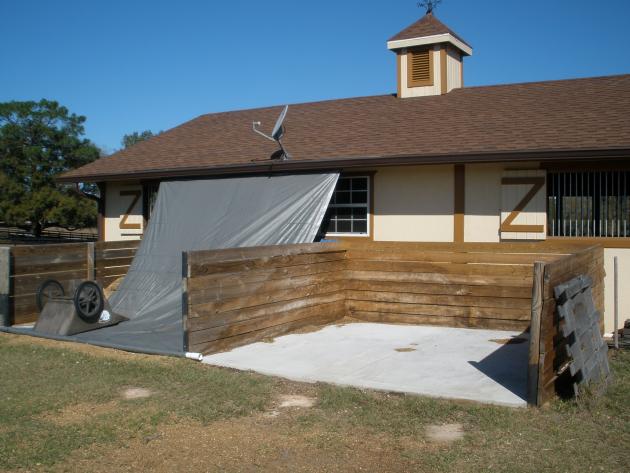
Pre and post-test results showed a 62% (82 of 132 total participants) knowledge gain from information taught. A total of 71% (n=12 of 17 farm revisit consultations) of farms revisited improved and adopted recommended manure handling practices after receiving education. Additionally, seven farms and facilities have begun cost-share planning with Southwest Florida Water Management District (SWFWMD) for compost bin construction. Results/impacts show improved management practices and a greater understanding of BMPs, allowing for a decrease in nutrient levels to the ground and surface waters. Pictures show sample bins which were constructed as a result of individual and group programming.

an example of a concrete manure storage areaFuture Plans

Continued group and individual programming needs to be continued, in partnership with trade journal articles being written about manure management, protection of the ground and surface waters and the benefits derived from composting manure/bedding. Cost-share dollars, coming from state organizations, will further incentivize farms to construct and use compost facilities as part of a regular manure management plan.

example of lattice compost storage areaAuthor

Jamie Cohen, Farm Outreach Coordinator, UF/IFAS Extension Marion County jamiecohen@ufl.edu

Additional information

My eXtension.org Manure Management Strategies Webcast:  https://connect.msu.edu/p8yko9zhhoq/?launcher=false&fcsContent=true&pbMode=normal

eXtension.org –Manure Management page:  https://lpelc.org/horse-manure-management/

A Guide to Composting Horse Manure:  www.whatcom.wsu.edu/ag/compost/horsecompost.htm

The authors are solely responsible for the content of these proceedings. The technical information does not necessarily reflect the official position of the sponsoring agencies or institutions represented by planning committee members, and inclusion and distribution herein does not constitute an endorsement of views expressed by the same. Printed materials included herein are not refereed publications. Citations should appear as follows. EXAMPLE: Authors. 2015. Title of presentation. Waste to Worth: Spreading Science and Solutions. Seattle, WA. March 31-April 3, 2015. URL of this page. Accessed on: today’s date.
Youth A. Greenhouse Gas Educational Lab Materials via Pork Production Scenarios


Why Examine Greenhouse Gases Relative to Pig Farm Decisions?

1. Educate students within the state of Arkansas about the various management systems intrinsic to swine production operations within their state.

2. Provide students insight into the management obstacles that Arkansas swine producers are challenged with through balancing Carbon footprints, economic resources, natural resources, and legal compliance with production profitability

What did we do?

This project presents a dynamic lab activity with emphasis on introductory level subject matter about Arkansas swine production systems and the related greenhouse gas emissions. The activity materials were crafted into two complementary products for practicality. The first product is a compilation of swine production reference materials, including; terminology, layman definitions of common Arkansas swine management strategies, and the basic dynamics of common greenhouse gasses (CO2, N2O, CH4) as they relate to this activities scope of swine production. The reference material serves as both an introduction to basic ideas and practices native to swine production and GHGs, as well as a guide which aids the students in completion of the second product (lab activity).

The second product is a scenario based critical thinking exercise, implemented from a manipulative decision-tree platform. Flashcards are used to represent three specific swine management systems using a three tier hierarchy. This hierarchy is distinguished by the allocation of Categories, Components, and Options. The “Categories” are the designated ranking class and will represent three major swine production management systems: Housing Management, Manure Management, and Feed Management. The “Components” are the first sub-order class, and are used to represent various functions/considerations that comprise each “Category” of production system. The “Options” class holds the lowest position within the hierarchy and represents the different configurations/settings for the individual “Components”. Throughout the context of this exercise the students will act as virtual consultants hired by a producer to design the three management systems (via the flashcards) to “best match” the producer’s expressed concerns and desired specifications, as defined by a supplied catalogue of unique scenarios.

What have we learned? 

(Classroom implementation of the materials is pending)

Future Plans

Implementation of the materials via:Arkansas Farm Bureau’s Ag-In-The-Classroom program. We are also exploring opportunities to blend the materials into 4-H curriculums, and possibly have the materials available for adoption by high school educators within Arkansas.

Authors

Szymanski “Rick” Fields II, Program Associate, Biological and Agricultural Engineering, University of Arkansas Division of Agriculture Extension rfields@uaex.edu

Karl VanDevender, Professor-Engineer, Biological and Agricultural Engineering, University of Arkansas Division of Agriculture Extension

Additional information

http://lpelc.org/reaching-the-next-generation-through-fun-and-interactive-activities/

Acknowledgements

Dr. Jennie Popp, University of Arkansas

Dr. Rick Ulrich, University of Arkansas

Donna VanDevender

The authors are solely responsible for the content of these proceedings. The technical information does not necessarily reflect the official position of the sponsoring agencies or institutions represented by planning committee members, and inclusion and distribution herein does not constitute an endorsement of views expressed by the same. Printed materials included herein are not refereed publications. Citations should appear as follows. EXAMPLE: Authors. 2015. Title of presentation. Waste to Worth: Spreading Science and Solutions. Seattle, WA. March 31-April 3, 2015. URL of this page. Accessed on: today’s date.

An NE-1441 Project: Proposed Methodologies for Administering a Multi-State Environmental Best Management Practices Survey of Equine Properties


*Purpose 

Several states have reported that equine are the fastest growing segment of the livestock industry. Nationwide, equine has increased by 77% since 1997; and it is reported there are approximately 9.5 million horses in the United States (AHC, 2005). Proper management of equine operations requires the adoption of Best Management Practices (BMPs) to balance nutrient production and prevent erosion. Government agencies are concerned about non-point sources of water pollution and have focused on agriculture, including equine operations, as a major contributor to water quality issues. Many states’ laws have regulated equine farms, requiring farm managers to incorporate BMPs. The objectives of this proposed national (multi-state) survey are to quantify and assess the use of the equine industry’s BMPs in pasture management, erosion control and to examine potential environmental impacts. Few state studies have investigated horse BMPs in the U.S, and more research is needed to assess the effect of horse farm management on U.S. water quality. Knowledge of the current scope and nature of equine industry management practices are important when developing regulations, laws, and educational programs to enhance the stewardship and govern land management on equine operations.

What did we do? 

The methodology to assess horse property manager/owner practices consists of gathering a minimum of 150-2,000 names and email addresses of horse owners/farm managers from the 15 states involved in the NE-1441 project. Some of the N. E. states have fewer equine operations. An email containing survey information and a link to the 40 question online survey will be sent to horse farm managers in 2016. Three follow-up reminders will be sent to non-responding addresses. It is hoped to have a 40% response rate. Data will analyzed using SPSS 16.0 (SPSS Inc., Chicago, IL) for descriptive statistics, determining response frequencies and percentages.

The Questionnaire Instrument will include the following areas:

Part I General: Involved in the horse industry? Are you the owner or manager of a horse operation? If No, then you are finished taking the survey. Business or Hobby?

Part II Demographics: Location, State, County, Survey participants gender, age, Size of farm total acreage, Confinement areas, Pasture areas, primary and 2nd use of operation, Highest average number of horses on property? On average, how many hours per day do your horses spend grazing pastures by seasons?

Part III Horse Pasture Management Rotational Grazing, unlimited access,Pasture Management Plan, Agricultural Erosion and Sedimentation Plan weed control and type, mowing, resting pastures,Sacrifice lots, pasture topography, surface water, Sheds and barns,divert runoff, roof gutters.

Part IV: Horse Pasture Applications and/or Evaluation: Line, Fertilizer, Herbicide use, Seeding practices, Lime, Soil testing.

Part V: Horse Manure Management: Nutrient Management Plan, primary manure management, collection, storage, uses, removal.

Part VI: Conclusion: What are your limitations in altering the management of your horse operation? What information resources do you use for your equine farm operations?

What have we learned? 

The questions for an equine related APHIS/USDA animal agriculture survey need to be more specific to the activities and needs of the horse industry. Whereas most animal agriculture operations do not deal directly with the general public as a necessary component of their business plan, the horse industry depends on active and engaged clientele. If we are able to gather national data through a single effort survey, the resulting information could be compared and sorted in a consistent and statistically reliable manner, allowing educational materials and opportunities to be tailored to area or regional needs.

Future Plans 

A survey will be conducted by the NE-1441 (a northeast regional Hatch research group focusing on environmental impacts of equine operations) participating states to determine the use of the following best management practices: managed storage area, composted manure storage, stream crossings, buffers and vegetative filter strips, heavy use pads and sacrifice areas, soil testing, and fertility management on fields receiving manure. Develop means of determining the impact of equine outreach programs, more specifically determination of BMP adoption rate.This will allow us to chart progress among producers who use extension services and/or implement BMPs with the assistance of extension or other service providers such as NRCS, state departments of agriculture, and etc. We will work with social scientists to determine adoption rates, what the reasons for resistance to adoption are, and how to develop programs to overcome this resistance.

Corresponding author, title, and affiliation 

Betsy Greene, Professor/Equine Extension Specialist, University of Vermont

Corresponding author email 

betsy.greene@uvm.edu

Other authors

Ann Swinker, Extension, Pennsylvania State University Amy Burk, Extension, University of Maryland Rebecca Bott, Extension, South Dakota State University Carey Williams, Extension, Rutgers, State University of New Jersey

Additional information 

Westendorf, M. L., T. Joshua, S. J. Komar, C. Williams, and R. Govindasamy. 2010. Manure Management Practices on New Jersey Equine Farms. Prof. Anim. Sci. 26:123-129.

Swinker, A., S. Worobey, H. McKernan, R. Meinen, D. Kniffen, D. Foulk, M. Hall, J. Weld, F. Schneider, A. Burk, M. Brubaker, 2013, Profile of the Equine Industry’s Environmental, Best Management Practices and Variations in Pennsylvania, J. of NACAA. 6:1, 2158-9429.

Fiorellino, N.M., K.M. Wilson, and A.O. Burk. 2013. Characterizing the use of environmentally friendly pasture management practices by horse farm operators in Maryland. J. Soil Water Conserv. 68:34-40.

Acknowledgements

The State University Extension Equine Specialists that make up the NE-1441: Environmental Impacts of Equine Operations, Multi-State Program. USDA.

The authors are solely responsible for the content of these proceedings. The technical information does not necessarily reflect the official position of the sponsoring agencies or institutions represented by planning committee members, and inclusion and distribution herein does not constitute an endorsement of views expressed by the same. Printed materials included herein are not refereed publications. Citations should appear as follows. EXAMPLE: Authors. 2015. Title of presentation. Waste to Worth: Spreading Science and Solutions. Seattle, WA. March 31-April 3, 2015. URL of this page. Accessed on: today’s date.

Case Study of Contaminated Compost: Collaborations Between Vermont Extension and the Agency of Agriculture to Mitigate Damage Due to Persistent Herbicide Residues

Why Study Herbicide Contamination of Compost?

Picloram, clopyralid, aminopyralid and aminocyclopyrochlor are broadleaf herbicides commonly used in pastures due to effectiveness in controlling undesirable plants and the very low toxicity for animals and fish. In fact, some of these herbicides do not require animal removal post application. The grazing animals can ingest treated leaves with no ill health effects, but may pass the herbicides through to the manure. Also see: Composting Livestock or Poultry Manure

When a complaint driven problem of damaged tomatoes and other garden crops in Vermont was traced back to a single compost provider in Chittenden County in Vermont, a series of actions and reactions commenced. Complaints were fielded and investigated by personnel from the Vermont Agency of Agriculture, Food and Markets (VT-AG) and the University of Vermont Extension (UVM-EXT). The compost provider sent samples of various components of the compost to a single laboratory and received positive results for persistent herbicides in sources of equine bedding/manure components. Subsequent interviews by the facility manager in both print and television media seemed to cast blame on Vermont equine operations for ruining Vermont gardens. Coincidentally, the composter had recently changed compost-processing methods. Initial samples sent to a separate laboratory did not support the composter’s laboratory results. Samples of feed, manure, shavings, and many other components which were shipped to several laboratories by VT-AG, resulted in extremely inconsistent and/or contradictory data between laboratories running the exact same samples.

Related: Small Farm Environmental Stewardship or Managing Manure on Horse Farms

What did we do? 

Several processes were underway by several agencies in a coordinated and collaborative effort to resolve and mitigate the herbicide issues:

• Vermont Agency of Agriculture, Food and Markets was receiving and investigating complaints.

• University of Vermont Extension plant biology personnel were identifying, documenting, and sampling affected plants, as well as counseling gardeners.

• University of Vermont equine extension worked with horse owners and media to mitigate unsubstantiated claims of “horses poisoning garden plants”.

• A more thorough investigation by VT-AG involved collection of raw samples (feed, hay, shavings, manure) from 15 horse farms who utilized the compost facility to dispose of manure and bedding.

• The VT Secretary of Agriculture and the VT-AG Agri-chemical Management Section Chief were brought together with equine and compost experts attending the NE-1041 Equine Environmental Extension Research group annual meeting hosted by UVM equine extension.

• VT-AG worked with herbicide manufacturers to use high quality testing equipment and procedures to gather consistent data from samples.

What have we learned? 

More extensive details of this particular case have been published in the Journal of NACAA (http://www.nacaa.com/journal/index.php?jid=201).

• The levels of persistent herbicides were low enough that they were below the acceptable limits for water, yet they still harmed sensitive garden plants.

• Nationally and locally manufactured grains tested positive for persistent herbicides; most likely due to the individual components being treated within legal limits during field production.

• Many of the laboratories were unable to provide accurate or consistent results when testing for the persistent herbicides.

• Discussions between the NE-1041 group and VT-AG resulted in a fruitful exchange of information, as well as development and delivery of pertinent information for the general public and County Agricultural Agents.

Future Plans 

Several proactive activities have already been initiated and/or completed. A peer reviewed case study on all aspects of the contaminated compost has been published in the Journal of NACAA; and two episodes of Vermont’s Agricultural television show (Across the Fence) were created to educate and update the general public on the situation. A Vermont compost working group has been assembled and set goals to create potential educational materials including a horse owner pamphlet (in final editing phase), a farmer/livestock pamphlet, and press releases for the public education on challenges with persistent herbicides. The VT-AG website has a Compost FAQs page addressing the most common questions associated with compost and herbicides.

Authors

Betsy Greene, Professor/Extension Equine Specialist, University of Vermont Betsy.Greene@uvm.edu

Carey Giguere, Agrichemical Management,Vermont Agency of Agriculture

Rebecca. Bott, Extension, South Dakota State University

Krishona. Martinson, Extension, University of Minnesota

Ann Swinker, Extension, Penn State University

Additional information

• Greene, E.A., R.C. Bott, C. Giguere, K.L. Martinson, and A.W. Swinker. 2013. “Vermont Horses vs. Twisted Tomatoes: A Compost Case Study. J of NACAA. 6:1 (http://www.nacaa.com/journal/index.php?jid=201)

• Vermont Agency of Agriculture, Food and Markets Compost FAQ’s: http://agriculture.vermont.gov/node/696

• Davis, J. Dept. of Horticultural Science, NC State University. 2010. Herbicides in Manure: How Does It Get there and why Should I Care?, Proceedings 8th Annual Mid-Atlantic Nutrition Conference, Timonium, MD. pp 155-160.

• Across the Fence Television Show: An Update on Green Mountain Compost Contamination and Testing-Greene/ Gigliuere (9/14/12)

• Across the Fence Television Show: Information from NE 1041 Meetings and National Equine Specialists-Greene (9/17/12)

• Article from Minnesota Extension explaining the problem in hay and how to avoid it. The article is devoted to “ditch hay”, but the information is relevant to all hay. https://extension.umn.edu/horse-nutrition/managing-herbicides-ditch-forages

• Washington State University Web site on clopyralid carryover includes pictures of affected vegetables, research results, and the bioassay protocol http://www.puyallup.wsu.edu/soilmgmt/Clopyralid.htm

• Dow Agrosciences United Kingdom website with information on aminopyralid: http://www.manurematters.co.uk/

• CDMS Agro-chemical database with access to all the herbicide labels: http://www.cdms.net/LabelsMsds/LMDefault.aspx?t

Acknowledgements

The State University Extension Equine Specialists that make up the NE-1441: Environmental Impacts of Equine Operations, Multi-State Program. USDA.

The authors are solely responsible for the content of these proceedings. The technical information does not necessarily reflect the official position of the sponsoring agencies or institutions represented by planning committee members, and inclusion and distribution herein does not constitute an endorsement of views expressed by the same. Printed materials included herein are not refereed publications. Citations should appear as follows. EXAMPLE: Authors. 2015. Title of presentation. Waste to Worth: Spreading Science and Solutions. Seattle, WA. March 31-April 3, 2015. URL of this page. Accessed on: today’s date.

Economical Anaerobic Digestion of CAFO Animal Waste


Purpose

The application of manure on croplands is increasingly under regulatory scrutiny, especially from impaired watersheds. The challenge facing many small farms is to find cost-effective and innovative solutions for manure reuse whilst responding to environmental, regulatory and public concerns. One option is to install an anaerobic digester (AD) in which microorganisms break down biodegradable material in the absence of oxygen. However, not all farmers are financially able to install an AD but do need the AD’s benefits to keep their livestock operation sustainable. This paper discusses a novel, cost effective and patented manure treatment system which can reduce the volume of manure for field application (see Figure 1).Earthmentor N2RTS Schematic

What did we do?

The EarthMentor® Natural Nutrient Reclamation and Treatment System (EMS), uses a combination of innovative sand separation technology (if necessary) and anaerobic treatment to concentrate manure nutrients into solid phases and treat approximately 70% of manure liquids into a product which can be applied to active cropland as low-nutrient liquid using irrigation methods. The primary economic advantage of using an EMS to treat livestock manure prior to land application is lower total manure disposal costs. The total manure handling costs are reduced because up to 75 % of the original manure volume can be handled as low-nutrient value irrigation quality liquid in bulk instead of hauling it by tanker for land application. This fact alone reduces total manure handling costs by over 50 %. Other tangible benefits of using an EMS include low odor, minimized environmental risks, and greater flexibility in proper land application of the treated manure. It can be installed at farms with as few as 250 cows. Depending on farm size, operators can realize a return on investment in as little as three years. Compared to a traditional AD installed to generate biogas the EMS is simple to operate, requires less energy, requires no chemicals or substrates to treat the waste, and reduces manure disposal costs.

The EMS involves six major steps: 1) collection of raw manure and transport to the processing center, 2) sand bedding is separated from the manure stream, 3) coarse manure components are removed from the liquid manure stream, 4) additional settling of the fine manure solids and sand particles occurs in a settling basin to a concentration of 8 to 10 percent solids, 5) AD treatment of the liquid manure and dissolved solids occurs in anaerobic treatment lagoon (ATL), and 6) The ATL effluent is stored in a Storage Pond for eventual discharge to active growing crops; additional natural treatment of the liquid manure occurs while in the Storage Pond.

All settling basins and ATL lagoon must meet state guidelines, such as Natural Resource Conservation Service technical guidelines or state requirements for waste storage facilities.

The ALT of the EMS system has a smaller footprint compared to traditional ALTs (primarily use in the south and western United States) because the majority of the nutrient-rich semi-solids are removed from the manure before discharge to the ATL. Due to this major operational change the EMS is economical to install and operate even in the northern climates of the United States where many of the top producing dairy states are located. While many facilities separate solids before land application, the EMS is different because is adds the AD step which converts the manure into a low-nutrient liquid capable of irrigation-style land disposal.  The method of solid separation can be as simple as a sloped screen followed by additional gravity separation as described in Step 4 above. The EMS ATL must be sized to account for reduced biodegradation during the colder weather. The EMS has successfully operated at multiple swine facilities and several Midwestern dairy farms.

If there is sufficient land near the farmstead, the EMS can be installed at existing dairies with minimum difficulty since the treatment system works equally well with multiple bedding materials and varying manure collection methods. Another benefit of the EMS is that is allows application on fields that may be high in phosphorus since much of the phosphorus will be stored in the accumulating ATL sludge. For dairies bedding with sand, a patented sand removal system can be provided that relies on a decanting method of sand separation. Once the sand is removed, it can be reused in the barn. 

What have we learned?

Typical Cost Savings for Manure Application Using EMS
Component
Disposal Method
Conventional Manure Handling
EarthMentor® Treatment System Handling
Liquid Manure


Land Application 100% $0.02/gallon 0% $0
Separated Solids Land Application 0% $0 10% $0.016/gallon
($4/ton equiv.)
Heavy Slurry Land Application 0% $0 20% $0.02/gallon
Treated Wastewater Center Pivot over Crop 0% $0 70% $0.002/gallon
Combined Cost   100% $0.02/gallon 100% $0.007/gallon
(weighted average of all components)

Using financial data from 2010 for a 2,000-cow Michigan dairy, it was estimated that the cost to handle manure using an EMS is reduced from $0.02/gallon to $0.007/gallon. The cost saving using the EMS is based on the assumption that the average dairy cow produces nearly 25 gallons/day of manure, including wastewater but excludes bedding since farms used different types and volumes of bedding for their dry and lactating cows. Based on the financial analysis, installation of an EMS benefits the farm’s economic sustainability while providing other benefits including reduced environment risk associated with manure land application.

Far beyond the obvious cost savings associated with the EMS installation, a livestock producer will realize many other benefits. A partial list is provided below:

  • This practical and manageable manure treatment system requires little or no additional farm labor commitments yet greatly reduces overhead expenditures to keep the farm sustainable and competitive,
  • All manure is treated prior to land application (environmentally sound),
  • The more consistent high solids slurry can be precisely applied to fields with the greatest need as opposed to the highly variable manure nutrient concentrations recovered from a traditional manure pond,
  • Minimizes the environmental risks (ecologically viable) and farm nuisance potential,
  • The window of opportunity for manure application is extended to over 200 days instead of being limited to spring and fall applications for typical liquid manure,
  • Can provide a safe unlimited recycled bedding source for cattle, if so desired, by the dairy owner,
  • Permits farmer to follow BMPs for soil conservation,
  • Permits farmer to follow timing, rate, source, and place for fertilizer/crop nutrient applications,
  • Benefits the non-farm neighbors and community through reduced nuisance odors, and
  • Continues using the farm’s manure as a soil amendment for crop production, the most efficient use known.

Future Plans

The immediate future plans for EMS is to target small livestock producers, especially those within impaired watersheds.  Since many ADs need a substrate material imported from outside the farm to be economically sustainable, the EMS is ideal for those farms that want to be good neighbors with reduced farm air emissions, need greater convenience in manure management, and desire to maximize the real cash value of their manure.

As the EMS adapts well to any bedding material, by investing time and dedicating property for the ATL any size operation can begin to treat their manure prior to land application and reduce their overall cost for manure management.

In addition to small farms we envision four possible adaptations of EMS; these examples are provided to show the transferability of this technology to farms desiring various outcomes from an EMS:

  1. Installation of an Energy-Generating AD – if a farm wishes to generate energy using a traditional AD, it would be installed prior to the EMS system whereby the AD digestate discharges into the settling ponds. Since the residence time of a traditional AD is measured in days, there is a great deal of additional treatment that can occur so that the cost savings for land application can still be realized.
  2. Use manure solids for other uses besides land application – if the livestock producer decides to bed their cattle on manure solids or to compost the manure solids for sale off-farm to landscapers or bag and sell direction from the farm then the solids from the SS can be further treated with a screw press or roller then composting by various means.
  3. Greenhouse gas capture and sale of carbon credits – a geosynthetic liner cover can be added to the ATL and all captured gases burned through a flare. However, it should be noted that by removing a significant amount of high organic solids during the initial fiber solids separation step, much less organic material is subject to organic degradation into methane gas.
  4. Greenhouse gas capture and burning of the gases – to generate electricity or heat water (typically for on-farm use or export to an adjoining business, such as a greenhouse).

One future issue to resolve includes educating state governments on the benefits of installing an EMS, especially for those farms that may be under a Consent Order or other regulatory actions or those farms that may need to implement a manure treatment system to mitigate odors from the livestock operation.  The duration to install an EMS and get it operational is much shorter than the lead time to design and install a traditional AD so the EMS can help when farms need to implement changes quickly.  A second issue to overcome is to properly educate producers on the benefits of EMS and differences between traditional ADs.  Swine, beef, and dairy producers who already have a farm irrigation system will have a lower capital investment to begin achieving the reduced manure management costs referenced above.

Author

Matthew J. Germane, P.E., President at Germane Environmental Consulting, LLC MGermane@GECEnvironmental.net

Additional information

https://www.gecenvironmental.com, Envirolytic Technologies, LLC

Acknowledgements

Acknowledgements to Envirolytic Technologies, LLC, Greenville, OH manufacturer of the Earthmentor® N2RTS system and RAM Technologies, LLC, manufacturer of the sand separation equipment used in the EMS for their assistance in providing the laboratory data used in this paper.

The authors are solely responsible for the content of these proceedings. The technical information does not necessarily reflect the official position of the sponsoring agencies or institutions represented by planning committee members, and inclusion and distribution herein does not constitute an endorsement of views expressed by the same. Printed materials included herein are not refereed publications. Citations should appear as follows. EXAMPLE: Authors. 2015. Title of presentation. Waste to Worth: Spreading Science and Solutions. Seattle, WA. March 31-April 3, 2015. URL of this page. Accessed on: today’s date.