
Field Scale Management of Separated Dairy Manure Fractions


Why Look at Separated Manure for Crops?

Research at Pacific Agriculture Research Centre (PARC) by Agriculture and Agri-Food Canada (AAFC) in Agassiz, B.C. has shown that targeted application of separated liquid and thicker sludge fractions from dairy manure slurry on grass and corn, respectively, can improve crop nutrient efficiencies, reduce the requirement for commercial fertilizer, and reduce nutrient losses to the environment. These benefits are in comparison to the traditional practice of surface broadcast application of agitated raw slurry manure. More specifically, the liquid fraction, applied via surface banding to grass fields, helps to improve infiltration, reduces ammonia emissions, and improves grass yield and nitrogen recovery. The thicker sludge fraction, which contains more phosphorus, is precision deep injected, then planted with corn near or over the injection furrows. This replaces the need for commercial phosphorus fertilizer normally applied as a starter during corn planting. The sludge fraction is obtained from sedimented slurry.

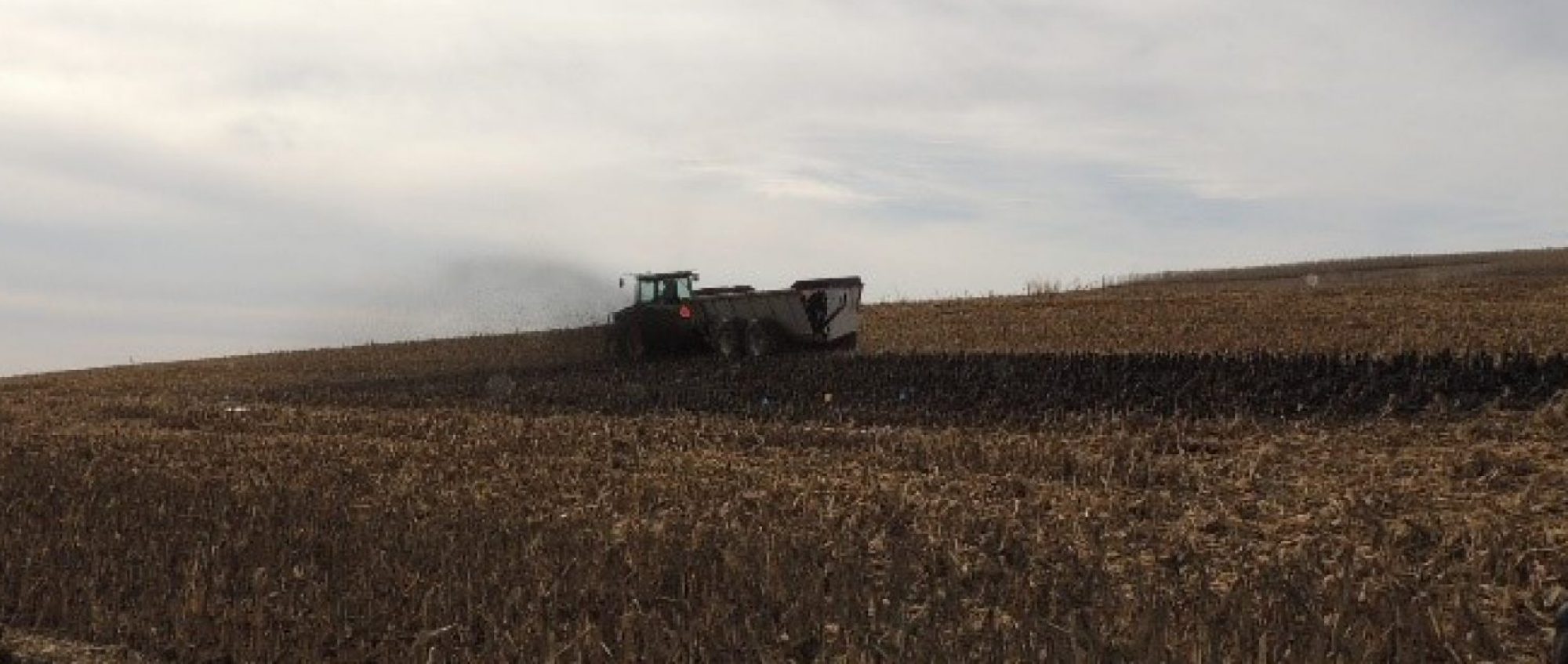
precision manure injector and tractorThe overall objective of our two year project is to assess these improved manure application practices at the farm scale through various sub-objectives. First, sedimentation efficiency is being evaluated on farms with contrasting manure management by sampling liquid storages at various depths prior to agitation. The goal is to assess natural stratification of nutrients under different bedding and water management, and to assess the practicality of sequentially pumping the thin supernatant (late Mar- early Apr) and thicker sludge (late Apr- early May). Second, improved equipment is being developed to precision deep inject slurry sludge (6 – 11% dry matter) prior to corn planting. Third, on-farm field scale trials using improved manure application equipment are assessing the agronomic and economic benefits of managing separated dairy manure fractions, compared to the traditional practice of surface broadcasted agitated raw manure.
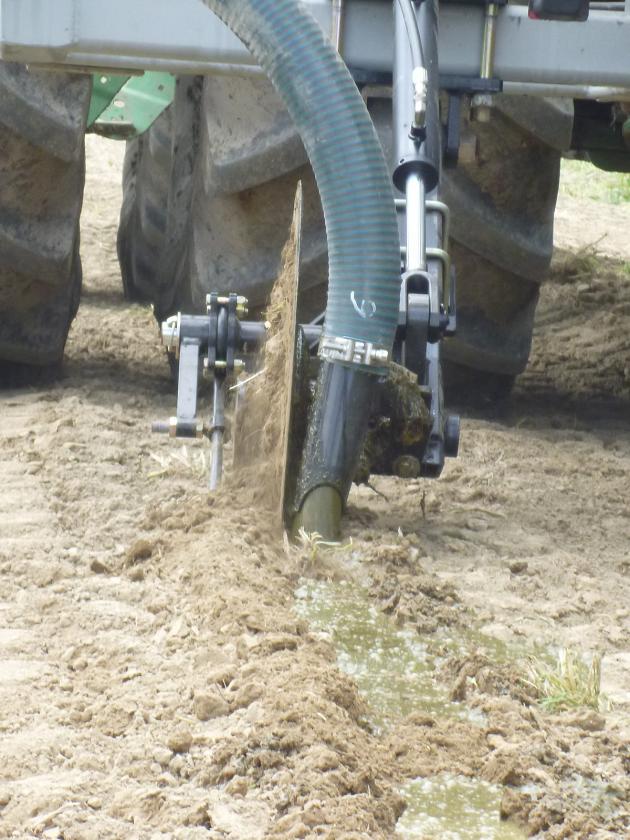
precision maure injector in useWhat did we do?

We have completed one year of this two year project. Progress has been made on all three sub-objectives, but most notably on the first. Under the first sub-objective we have sampled manure at various depths for 18 liquid manure storages, and collected management information on bedding management and water inputs into these storages.

We also utilized a custom manure operator to mount a farm scale 4 row deep manure injector onto a dragline system. This was used to precision deep inject thicker dairy sludge and compare with traditional surface broadcast application and incorporation, prior to corn planting on a farm field near Agassiz, B.C. On this same farm a different custom manure operator applied thinner dairy slurry on a grass field using first a shallow disc injector and then a trailing hose. These two treatments were compared with the farmer’s surface broadcast application.

These manure applications on grass occurred two times, once in March and once in May. While it would have been preferable to use agitated raw manure for the farmer’s surface broadcast application on both grass and corn, this is not feasible when managing a farm’s manure supply from a single storage system. Rather the same manure sources, ie. thin slurry on grass and thicker sludge on corn, were used for all application treatments, including the farmer’s broadcast application.

the plots where the precision manure injector study was performedWhat have we learned?

Average nutrient content of liquid manure in storages varied greatly between farms, ranging from 0.58 to 2.80 kg/m3 for total nitrogen and 0.17 to 1.51 kg/m3 for total phosphorus (expressed as P2O5). These nutrient values were closely correlated with dry matter content, which ranged from 0.58 to 10.02%. Variation in dry matter content is determined primarily by the amount of water inputs into the manure storage, the amount of organic bedding imported onto the farm, and whether the raw manure undergoes a mechanical solid/liquid separation process prior to the liquid manure entering the storage.

Seven out of 18 storages had little or no sedimentation of solids or nutrients. Four storages showed slight stratification and the remaining seven storages had considerable settling of solids and nutrient concentration increasing with depth. For storages with considerable stratification average dry matter content ranged from 1.5% for the shallowest depths to 7.7% for the deepest depths. For these same depth positions average total nitrogen increased from 0.090% to 0.193%, and average total phosphorus from 0.015% to 0.041%. Preliminary assessment of manure sample analysis compared to manure management practices suggests that sedimentation of solids and nutrient stratification is minimal or reduced when coarse solids are mechanically separated from liquid manure prior to entering storage, and/or there is considerable disturbance of manure when transferring it from the barn into the manure storage. For example, manure pumping involves more disturbance than scraping.

Preliminary results from land applied manure suggest small but likely insignificant increases in dry matter yield for trailing hose and shallow injection on grass compared to surface broadcast manure. On corn land there was no difference in yield between deep injected and surface broadcast/incorporated dairy sludge. Part of the reason for little or no difference is due to using the same manure source and application rate for all treatments. Also, the corn land result may be due to the majority of nutrients for both treatments being supplied by another source, surface broadcast poultry manure.

Future Plans

In the winter of 2015 most liquid manure storages will be resampled. An additional 5 liquid manure storages have been chosen for sampling in 2015, to include some manure management systems not accounted for in 2014. Our 4 row deep manure injector is being modified to a 6 row unit. This will enable easier alignment of the manure furrow with subsequent 6 row corn planter. We plan to add two more farm sites to land apply separated manure fractions on grass and corn, for the 2015 growing season.

Authors    

Dennis Haak, Senior Soil Resource Specialist, Agriculture and Agri-Food Canada dennis.haak@agr.gc.ca

Shabtai Bittman, Research Scientist, Agriculture and Agri-Food Canada; Derek Hunt, Biologist, Agriculture and Agri-Food Canada

Additional information             

1. Precision Placement of Separated Dairy Sludge Improves Early Phosphorus Nutrition and Growth in Corn (Zea mays L.), https://dl.sciencesocieties.org/publications/jeq/abstracts/41/2/582

2. Removing Solids Improves Response of Grass to Surface-Banded Dairy Manure Slurry: A Multiyear Study, https://dl.sciencesocieties.org/publications/jeq/abstracts/40/2/393

The authors are solely responsible for the content of these proceedings. The technical information does not necessarily reflect the official position of the sponsoring agencies or institutions represented by planning committee members, and inclusion and distribution herein does not constitute an endorsement of views expressed by the same. Printed materials included herein are not refereed publications. Citations should appear as follows. EXAMPLE: Authors. 2015. Title of presentation. Waste to Worth: Spreading Science and Solutions. Seattle, WA. March 31-April 3, 2015. URL of this page. Accessed on: today’s date.
Lifecycle greenhouse gas (GHG) analysis of an Anaerobic Co-digestion Facility Processing Dairy Manure and Industrial Food Waste in NY State

While the theoretical benefits of anaerobic digestion have been documented, few studies have utilized data from commercial-scale digesters to quantify impacts.  Previous studies have analyzed a range of empirical studies to constuct emission factors for a generic European AD plant processing source separated municipal solid waste.  However, most U.S. studies have applied reporting protocols and have been based upon theoretical assumptions.  Furthermore, GHG analyses of U.S. co-digestion facilities are limited to one scenario in protocol based analysis of community digester options. 

Purpose          

We are not aware of any peer-reviewed studies of US anaerobic co-digestion. Several case studies have presented calculations of impacts using GHG reporting protocols, however significant portions of the lifecycle have been neglected such as the feedstock reference case emissions, digestate storage emissions and fertilizer displacement impacts. Furthermore, they have often been modeled using general theoretical assumptions such as number of cows rather than empirical data on feedstock volume and characteristics and digester operation.

What did we do? 

A lifecycle GHG analysis was performed based upon data reported on a farm-based anaerobic co-digestion system in New York State, resulting in an 71% reduction in GHG impact relative to conventional treatment of manure and food waste.

The objective of this study was to provide a comprehensive analysis of GHG emissions based upon a NYS digester that co-digests manure and industrial-sourced food waste. Empirical data on feedstock (t-km transport, avoided disposal, TS, VS, TKN), digester operation (m3CH4, KWh, exhaust emissions) and effluent properties (TS,VS,TKN) were combined with regional parameters (i.e., climate, soil type and management practices) to represent a state-of-the-art, anaerobic co-digestion facility in NYS. This data was combined with information collected through interviews in order to model a reference case, representing the business-as-usual food waste disposal and manure management practices en lieu of the anaerobic co-digestion system.

What have we learned? 

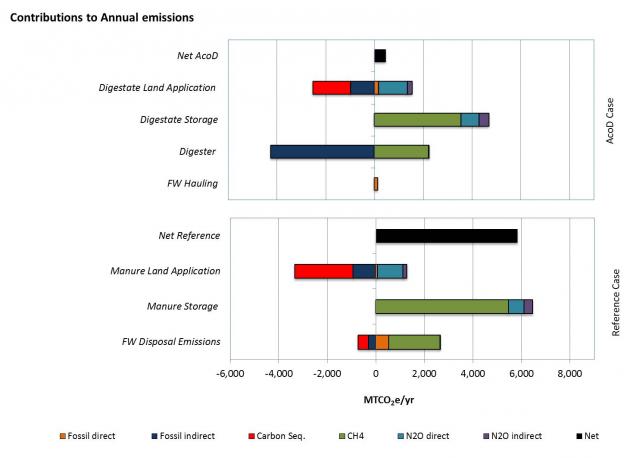
Displacement of grid electricity provided the largest benefit followed by avoidance of food waste landfill emissions and reduced impacts associated with storage of digestate vs. undigested manure. Nominal land application N2O emissions were offset by inorganic fertilizer displacement and carbon sequestration in both cases. The higher volume of digestate increased net land application emissions as did increased transportation distance to the fields and lower carbon sequestration. Digestate is a by-product of the co-digestion process and its treatment must be considered in an LCA. Modeling of land application impacts are highly uncertain and can be significant.

The largest source of direct emissions was CH4 emissions. N2O emissions were larger in the land application phase than during storage. Direct fossil fuel emissions had a minor impact. Emissions were offset by displacement of grid electricity and fossil based fertilizers along with carbon sequestration.

Future Plans    

More empirical research is needed to measure emissions and to provide emission factors that incorporate key variables and characteristics affecting emissions. A whole system, dynamic approach is necessary to incorporate complex interdependencies between stages of farm and manure management.

Authors

Jennifer L. Pronto, Research Assistant, Cornell University jlp67@cornell.edu

Ebner, Jackie      jhe5003@rit.edu              Rochester Institute of Technology

Rodrigo A. Labatut, Matthew J. Rankin, Curt A. Gooch, Anahita A. Williamson, Thomas A. Trabold

Additional information               

www.manuremanagement.cornell.edu

Figure 1: Contributional analysis of GHG impacts for the reference and anaerobic co-digestion cases.

Figure 1: Contributional analysis of GHG impacts for the reference and anaerobic co-digestion cases.


The authors are solely responsible for the content of these proceedings. The technical information does not necessarily reflect the official position of the sponsoring agencies or institutions represented by planning committee members, and inclusion and distribution herein does not constitute an endorsement of views expressed by the same. Printed materials included herein are not refereed publications. Citations should appear as follows. EXAMPLE: Authors. 2015. Title of presentation. Waste to Worth: Spreading Science and Solutions. Seattle, WA. March 31-April 3, 2015. URL of this page. Accessed on: today’s date.
Composting Swine Slurry to Reduce Indicators and Antibiotic Resistance Genes


Purpose 

Over the last twenty years there have been considerable increases in the incidence of human infections with bacteria that are resistant to commonly used antibiotics. This has precipitated concerns about the use of antibiotics in livestock production. Composting of swine manure has several advantages, liquid slurries are converted to solid, the total volume of material is reduced and the stabilized product is more easily transported off-site. The goal of this study was to determine if composting can also be used to reduce the concentration of indicators and bacteria containing genes for antibiotic resistance (AR) in swine manure.

What did we do? 

Sample Analysis:

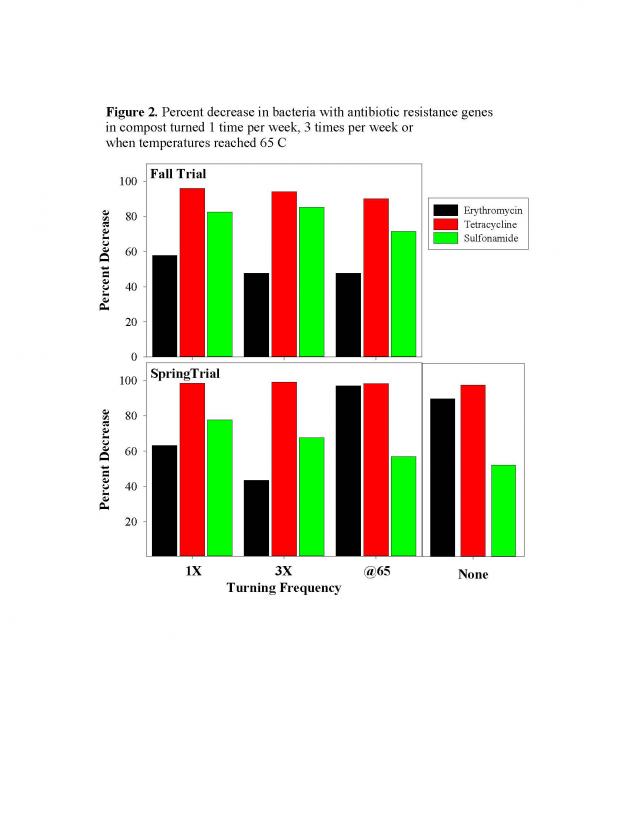
Compost trials were conducted in either fall (FT) or spring (ST) and piles were turned once, three times or upon reaching 65 ºC. Microbial indicators and populations with AR genes for tetracycline, erythromycin and sulfonamide resistance were quantified by culture and/or quantitative, real-time (qPCR) analysis.

Compost materials and conditions:

Decomposed materials (a mixture of swine slurry and woodchips) were obtained on two separate occasions from swine high-rise finishing facilities (HRFF) located in western Kentucky. The HRFF houses between 4,000 and 4,800 swine which are placed in the facility at 18 to 20 kg and are removed after three months (weighing about 105 kg). The high-rise floor raises the living area 3.7 m above the ground. Manure, excess feed, water and wastewater drop through slatted floors into 2.5 cm screened woodchips (average size 1.9 ± 0.9 cm). The slurry-woodchip material was turned up to three times per week while under the HRFF. When the material was visibly moist, reducing its ability to absorb additional waste materials, it was removed from the facility for finishing in windrows. In fall 2011 (FT) and Spring 2012 (ST), HRFF slurry-woodchip mix (approximately 60 m3 weighing 48.4 Mg) was brought by semi-trailer trucks to the Western Kentucky University Agricultural complex where ma terials were divided into three or four windrow piles. In the FT, swine slurry-woodchip mixes having a bulk density of 849.6 kg m-3 and consisting of around 19.6 m3 of material were formed into three piles of approximately 10.4 m x 2.1 m x 0.9 m (L x W x H). In the ST, swine slurry-woodchip mixes having a bulk density of 778.4 kg m-3 and consisting of around 18.8 m3 of material were formed into three piles of approximately 5.8 m x 2.7 m x 1.2 m (L x W x H) and a fourth batch (unturned) was left piled at the side (0X; 3.6 m3). In each study, piles were turned using a windrow compost turner either once per week (1X), three times per week (3X) or upon the internal compost temperature reaching 65 ºC (@65). Compost for the FT @65 treatment heated to 65 ºC by day 14 and was turned 11 times over the course of the trial. However, during the ST, the @65 pile did not heat for the first 63 days (mean temperature 27 ± 8 ºC) therefore weekly turning was initiated at that time. Samples were taken on days 0 and three and then weekly for the first 12 weeks and bi-weekly until composting was stopped at day 112 for the FT and day 142 for the ST.

What have we learned? 

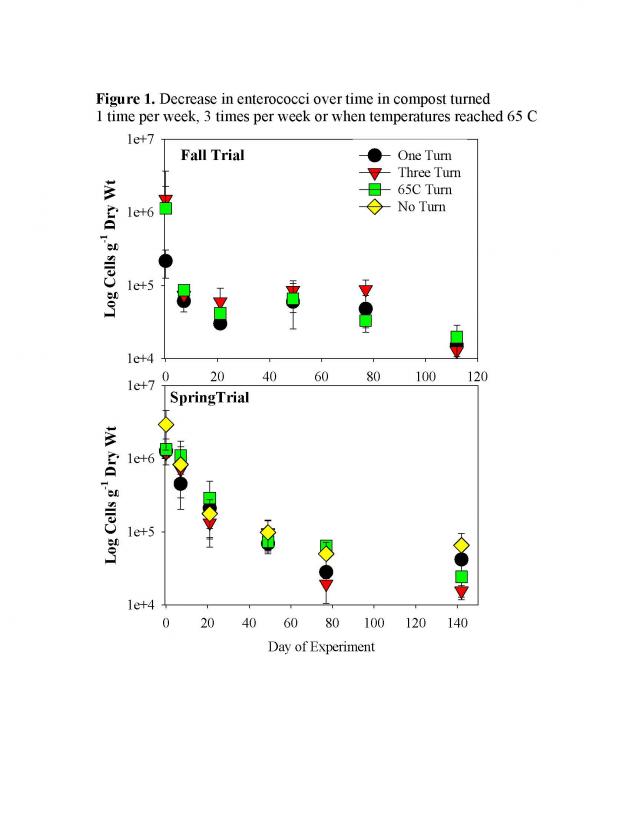
In the FT, concentrations of enterococci decreased below culturable detection within 21 days, corresponding with a 99% decrease in detection by qPCR (Fig. 1). Similar decreases in qPCR detection in the ST took longer (day 49 or day 77 of composting). Changes in the concentration of bacteria with AR genes varied by antibiotic type (erythromycin (36% – 97%), tetracycline (94% to 99%) and sulfonamide (53% to 84%) and compost season (greater decreases in ST). There were few differences based on turning regime. Even the unturned compost pile had 90%, 98% and 56% reduction in bacteria resistant to erythromycin, tetracycline and sulfonamide, respectively.

Results suggest that composting effectively decreases the concentration of indicators and AR genes in swine manure. As concerns over antibiotic resistance and pathogens increase, composting provides a valuable manure management tool for decreasing contaminants and improving the value of this material as a soil conditioner.

Future Plans    

Volume reduction, low moisture and low readily degradable organic matter suggest that the finished compost would have lower transportation costs and should provide value as a soil conditioner. Studies are warranted to evaluate its agronomic value as an alternative source of plant nutrients. Future studies will be conducted to evaluate the nutrient value this compost as an organic fertilizer for row crop production.

Authors       

Kimberly Cook, Research Microbiologist, USDA ARS kim.cook@ars.usda.gov

Carl Bolster, USDA ARS; Karamat Sistani, USDA ARS

Additional information                

http://www.ars.usda.gov/main/site_main.htm?modecode=50-40-05-00

Acknowledgements      

This research was conducted as part of USDA-ARS National Program 214: Agricultural and Industrial By-products: CRIS 6445-12630-004-00D. Mention of trade names or commercial products in this article is solely for the purpose of providing specific information and does not imply recommendation or endorsement by the USDA.

Proceedings cook figures 1

Proceedings cook figures 1
Proceedings cook figures 2

Proceedings cook figures 2


The authors are solely responsible for the content of these proceedings. The technical information does not necessarily reflect the official position of the sponsoring agencies or institutions represented by planning committee members, and inclusion and distribution herein does not constitute an endorsement of views expressed by the same. Printed materials included herein are not refereed publications. Citations should appear as follows. EXAMPLE: Authors. 2015. Title of presentation. Waste to Worth: Spreading Science and Solutions. Seattle, WA. March 31-April 3, 2015. URL of this page. Accessed on: today’s date.

Economic Recovery of Nitrogen and Phosphorus from Anaerobic Digestate as Concentrated Ammonium Hydroxide and Hydroxyapatite

The  paper describes the laboratory and pilot studies of an autotrophic fixed film reactor, the rotating photo-bioreactor (RPB), that reclaims concentrated ammonia and phosphorus from anaerobic digestate.

Why Recover Nutrients from Anaerobic Digestion?

All of the nitrogen and phosphorus present in an anaerobic digester’s influent can be found in the effluent digestate. However, during the digestion process the organic nitrogen is by and large converted to ammonia, and the organic phosphorus converted to soluble orthophosphate. The ammonia and phosphorus are normally discharged to holding ponds prior to field application. The pH increases in the holding ponds due to the loss of CO2 resulting in a shift of the ammonium (NH4+) to toxic  ammonia gas (NH3) that is subsequently lost to the atmosphere. Upon land application additional ammonia losses occur and dissolved orthophosphate leached.

Anaerobic digestion does not recover the nutrients as often claimed. Some of the nutrients accompanied by pathogens, hormones, and antibiotics are land applied to improve agricultural yields. The remaining nutrients are lost to the environment. Methods to reclaim ammonia are limited to high temperature ammonia stripping, or ion exchange with acid stripping of NH3 to form dilute solutions of ammonium sulfate or ammonium nitrate. Those methods require chemical reactants and produce products having little economic value. Other options include recovery of a portion (< 15%) of the nitrogen and a majority of the orthophosphate found in digestate, with the addition of magnesium, as crystalline struvite (MgNH4PO4.6H2O). However, that process is expensive, requires reactants, removes only a portion of the nitrogen and may be inhibited by the presence of calcium in the digestate requiring acidification.

Figure 1. laboratory scale rotating photo bioreactorWhat Did We Do?

This work was performed to verify a process for recovering ammonia as a highly concentrated and valued ammonium hydroxide and the orthophosphate as solid hydroxyapatite. Based on both previous pilot investigations, and the work of others, the RPB process was expected to remove and recover 80% to 90% of the ammonia and phosphate without the addition of chemicals, at normal digestate temperatures, and ambient pressures. Products that had a value greater than the cost of recovery were expected to be produced. The process uses a single reactor containing concentrated phototrophic organisms (cyanobacteria) that consume the bicarbonate alkalinity of the substrate for growth and thereby raise the pH, shifting the digestate ammonium to ammonia gas that can be stripped at low temperatures. The high pH and low bicarbonate concentration used in ammonia recovery are also required for the precipitation of orthophosphate as calcium carbonate or hydroxyapatite.  The removal and reclamation of both ammonia and phosphate require an elevated pH and low bicarbonate alkalinity produced by the cyanobacteria.

Three laboratory scale rotating photo bioreactors, shown in Figure 1, were constructed to verify the removal and recovery of ammonia as a highly concentrated ammonium hydroxide solution that could be sold as diesel exhaust fluid. The lab scale pilot used cyanobacteria to increase the solution pH and shift the ammonium to ammonia gas that was continuously removed by recycled air flowing over the plates. The bioreactors were operated at 3.5 RPM using different attached growth media, under different lighting (30 – 80 PAR) conditions, stripping gas flow rates, and Hydraulic Retention Times (HRT). Concentrated, turbid, anaerobic centrate, having an ammonia concentration between 1,000 and 2,400 mg/L, was utilized as the substrate.

What We Have Learned?

The laboratory scale pilot bioreactors were able to establish that carbon fiber was the best fixed film media from a variety of inorganic fabrics.  The operation further established that the stripping gas flowing over the cyanobacteria growth plates was sufficient to strip essentially all of the ammonia gas and thus eliminate ammonia toxicity to the cyanobacteria. Light intensity controlled the cyanobacteria growth rates, and thus the pH of the solution. The optimum HRT is yet to be determined. The system is currently operating at a 6 hour HRT but the final value may be significantly lower.  Concentrated (15%) ammonia is currently being recovered but the final values are expected to be greater.

Future Plans

This study investigated most of the variables associated with stripping and recovering ammonia from a turbid, highly concentrated, digestate using a fixed film autotrophic system.  The optimum rotation rate was one of the few variables not thoroughly investigated. The results obtained have established the basis for the design and construction of a pilot facility that will reclaim ammonia as a valued diesel exhaust fluid for Selective Catalytic Reduction (SCR) of combustion NOx thus eliminating, the two primary sources of reactive nitrogen discharged to the environment. Future work will focus on removing and reclaiming sufficient quantities of ammonia as diesel exhaust fluid and testing the fluid in diesel engines that use SCR to remove exhaust NOx.

Author

Dennis A. Burke PE, CEO, Environmental Energy & Engineering Company;  waeng@me.com

Nutrient Management aka, Nutrient Reclamation from all organic waste

The authors are solely responsible for the content of these proceedings. The technical information does not necessarily reflect the official position of the sponsoring agencies or institutions represented by planning committee members, and inclusion and distribution herein does not constitute an endorsement of views expressed by the same. Printed materials included herein are not refereed publications. Citations should appear as follows. EXAMPLE: Authors. 2015. Title of presentation. Waste to Worth: Spreading Science and Solutions. Seattle, WA. March 31-April 3, 2015. URL of this page. Accessed on: today’s date.

Converting Manure, Food Wastes and Agricultural Production Wastes into Bio-Secure Fertilizer, feed, and/or beeding


Purpose

To find a way to completely eliminate bio-hazards in manure, food wastes, municipal sludge, and agricultural production wastes.

What did we do? 

We adapted existing dry extrusion technology to bio-hazard agricultural wastes. To test the hypothesis we developed [ Dry Extrusion Technology can be adapted to convert bio-degradable hazardous wastes into Bio-Secure class “A” fertilizer, feed, and/or bedding more economically, with less environmental impact, greater sustainability, and in less time with a smaller foot print]

Once we proved our Hypothesis we further developed the process to allow the technology to be utilized in a large stationary plant suitable for a large waste generator and in a portable plant that can be used to assist smaller waste generators, such as, most agricultural producers and smaller municipalities.

What have we learned? 

Our tests showed that we could validate our hypothesis by:

1) utilizing finely ground dry agricultural production wastes, mixed with the wet food and manure to reduce the moisture content of the wet wastes to a level compatible to the requirements of the dry extruder,
2) The Dry extruder effectively sterilized the wastes by high temperature, high pressure inside the extruder, and sudden drop in atmospheric pressure inside the cell walls of all the materials when exiting the Dry Extruder, thereby destroying the cell walls of not only the bio-mass materials but also of all micro organisms ova, and pathogens inside the final product.

Future Plans 

Develop new niche markets for agricultural waste generators by adding additional value to their wastes.

Authors

Joe E. Busby joebusby@wfeca.net 

Moses Braxton, Bill Ansley, William Andrews, Duncan Nesbit, and Dr. Carm Parkhurst

Acknowledgements

Insta Pro International, North Carolina State University

The authors are solely responsible for the content of these proceedings. The technical information does not necessarily reflect the official position of the sponsoring agencies or institutions represented by planning committee members, and inclusion and distribution herein does not constitute an endorsement of views expressed by the same. Printed materials included herein are not refereed publications. Citations should appear as follows. EXAMPLE: Authors. 2015. Title of presentation. Waste to Worth: Spreading Science and Solutions. Seattle, WA. March 31-April 3, 2015. URL of this page. Accessed on: today’s date.

Antibiotic Losses during Thermophilic Composting

Purpose

Residual antibiotics in land-applied manure and biosolids present a potential threat to public and ecological health, so it is important to determine antibiotic removal efficiencies for manure and biosolids waste management practices and to identify conditions that enhance antibiotic degradation.

What we did

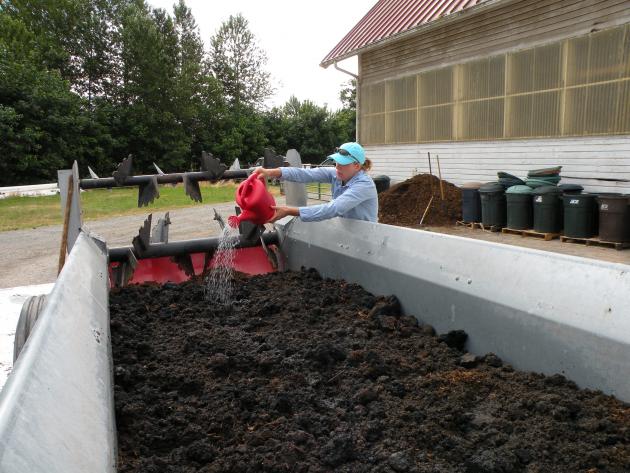
Loss of the antibiotics florfenicol, sulfadimethoxine, sulfamethazine, and tylosin was studied during pilot-scale static pile thermophilic composting and the effects of temperature and feedstock particles on antibiotic removal rates were tested. The antibiotics were spiked into dairy manure solids and wastewater biosolids, and treatments included aerated and non-aerated manure and biosolids/wood-product (1:3 v/v) composting.

Figure 1. Applying antibiotic solution to biosolids

Figure 1. Applying antibiotic solution to biosolids

What have we learned

Results showed no significant differences between aerated and non-aerated treatments; on average ≥85%, ≥93%, and ≥95% antibiotic reduction was observed after 7, 14, and 21 d of composting. Greater antibiotic reduction was observed in manure compost compared to biosolids compost for florfenicol (7, 14, 21, 28 d) and tylosin (7, 14, 28 d); however, there was no significant difference for sulfadimethoxine and sulfamethazine. Peak temperatures were 66-73°C, and ≥55°C was maintained for 6-7 d in the biosolids compost and 17-20 d in the manure compost.

Bench-scale experiments conducted at 25, 55, and 60°C showed that lower temperature decreased removal of the sulfonamides and tylosin in both feedstocks and florfenicol in the biosolids. The presence of compost particles increased antibiotic loss, with time to 50% dissipation ≤ 2 d in the presence of solids (60°C), compared to no degradation in their absence. These results indicate that thermophilic composting effectively reduces residual antibiotics in manure and biosolids.

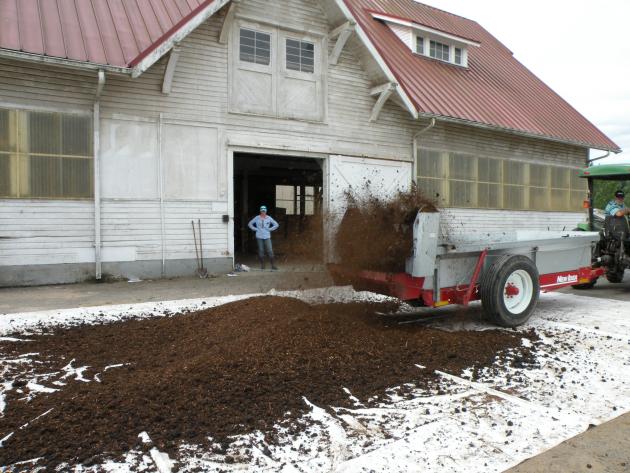
Figure 2. Mixing biosolids and wood shavings

Figure 2. Mixing biosolids and wood shavings

Figure 3. Mixing biosolids and wood shavings

Figure 3. Mixing biosolids and wood shavings.


Authors

A. Bary*, S.M. Mitchell*, J.L. Ullman**, C.G. Cogger*, A.L. Teel*, R.J. Watts*

Washington State University*, University of Florida**.

Andy Bary, bary@wsu.edu


The authors are solely responsible for the content of these proceedings. The technical information does not necessarily reflect the official position of the sponsoring agencies or institutions represented by planning committee members, and inclusion and distribution herein does not constitute an endorsement of views expressed by the same. Printed materials included herein are not refereed publications. Citations should appear as follows. EXAMPLE: Authors. 2015. Title of presentation. Waste to Worth: Spreading Science and Solutions. Seattle, WA. March 31-April 3, 2015. URL of this page. Accessed on: today’s date.

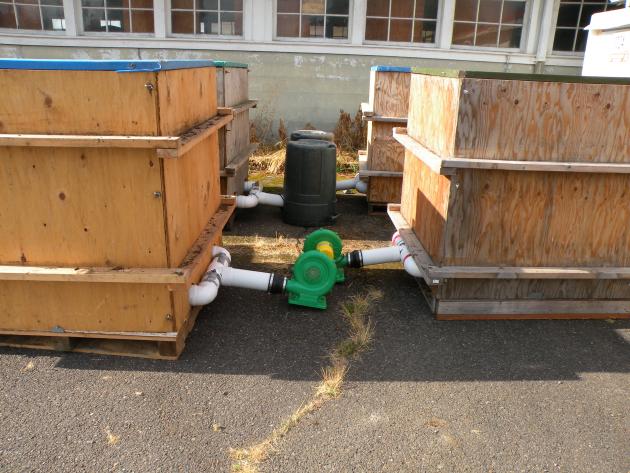
Figure 4. Compost bins

Figure 4. Compost bins

Wood Chip Pad Winter Feeding Area as a New Livestock Manure Management System

Purpose

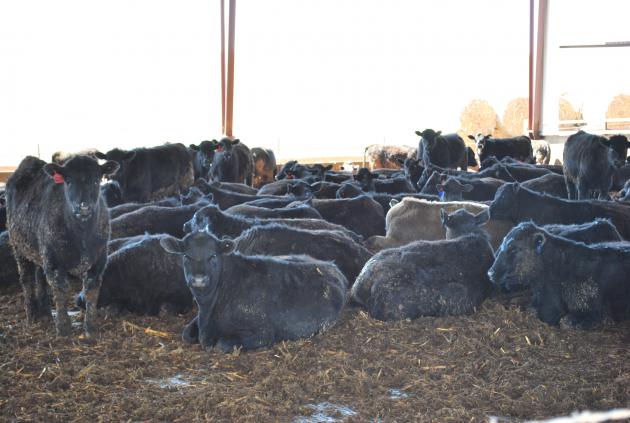
Over-wintering beef cattle on pastures in the Eastern half of the USA has been shown to increase runoff, sediment loss and nutrient transport. Traditional barn lot winter feeding areas, or ‘sacrifice’ areas, for beef cattle can be a significant source of nutrient and sediment pollution. Sustainable and affordable approaches are needed that effectively control manure nutrients during the winter feeding period, while ensuring a healthy and comfortable animal environment. The use of woodchips as a surface material for areas used to hold cattle during wet periods is practiced on a limited basis in Ireland, Scotland, and New Zealand. The application of this simple technology in the cool Eastern part of the US that has a humid climate, has potential to improve animal comfort and health, protect winter pastures, and reduce the environmental impact of winter feeding and loafing areas.

Figure 2. Woodchip Pad Profile

What did we do?

Beef cattle producers in United Kingdom, Ireland and New Zealand have shown a positive conservation effect using out wintering pads constructed with wood chips, allowing the pastures to be destocked. Out Wintering Pads (OWPs) are outside loafing areas for cattle. OWPs are typically constructed adjacent to a concrete feeding area and a watering facility. The OWP design allows for 150 square feet per cow. The chip size is critical for proper functioning of the manure storage system. Use of fist to palm sized chips are recommended to allow dung to filter into the pad. Smaller chips can be used but will need to be renewed sooner. Manure is worked down below the surface of the pad by the cattle’s hoof action. Initial depth of chips needs to be no less than 12 -15 inches deep. The site must be prepared with a drainage system using drain pipes every 10 feet to prevent moisture accumulation within the OWP (Figure 2). This effluent must be managed with a storm water retention pond and vegetated filter strip.

Figure 1. Initial woodchip pad developed in West VirginiaWhat have we learned?

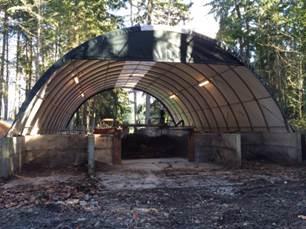
Two woodchip-surfaced heavy use areas have been installed and monitored in West Virginia. The first was installed on a private farm with a cow/calf enterprise in Northern WV during 2011 (Figure 1).

The design criteria were adopted from a guidance document developed by the Irish Department of Agriculture and Food. This wood chip pad was placed adjacent to a USDA NRCS roofed winterfeeding area and roofed manure storage. Woodchip quality was determined and temperature and precipitation monitoring occurred for a 23 month period including two winter stocking periods. Effluent water quality grab samples were taken during that monitoring period. A second chip pad was constructed in WV on the West Virginia University (WVU) Animal Science Experiment Station Farm during 2014. This area consists of two loafing paddocks, one constructed with single species white oak wood chips and the other with mixed hardwood chips made up primarily of mixed yellow-poplar and oak. Bench scale columns with various configurations of thermally treated wood chips were evaluated in 2014.

Column Study Setup

  • PVC pipe (8-inches in diameter) columns
  • Runoff water was collected from the waste water storage tank at WVU’s Animal Science Farm
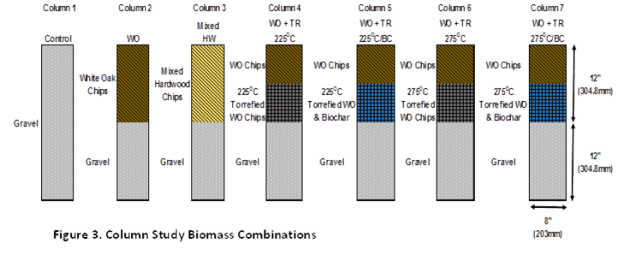
  • Gravel placed in each of the columns to a height of 12 inches (304.8mm) and then each column was packed with 12 inches (304.8mm)  of varying media (Figure 3)

Figure 3. Column study biomass combinations

  • Three rain events (1cm, 2cm, and 3cm) (with 96 hours between events) were passed through the columns
  • Each of the columns were then cleaned and re-packed and subjected to waste water to a depth of 18 inches (459 mm) for 48 hours
  • Pre- and post-water samples were collected to test for phosphorous (P), ammonia, and Total Kjeldahl nitrogen (TKN) 

Biomass Media Performance – Rain Events

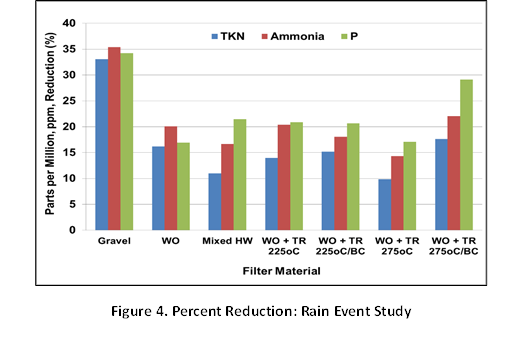
  • Mixed hardwood chips had superior P concentration reduction compared to white oak chips, but lower Total TKN reduction (Figure 4)
  • Gravel outperformed the biomass media filters (Figure 4)
  • Of the biomass media, the WO + TR 275OC/BC media showed the highest % reduction of P, TKN, and Ammonia (Figure 4)

Biomass Media Performance – 48 Hour Hold

  • White oak chips had better TKN reduction than mixed hardwood chips, but lower P reduction  (Figure 5)
  • Mixtures containing biochar resulted in greater pollutant reductions than torrified treatments without biochar (Figure 5)
  • The WO + TR 275C/BC media showed the highest % reduction of TKN and Ammonia, but not the highest P % reduction (Figure 5)

Figure 4. Percent Reduction: Rain Event Study

Figure 5. Percent Reduction: 48 Hour Hold Study.

The biomass mixes that have demonstrated the best performance are being added as treatments in small cell areas on the WVU woodchip heavy use area. The treatment cells are being monitored for runoff flow amounts and water quality.

Future Plans  

Further research is needed to determine optimum chip species and chip size for moisture retention and nutrient capture capabilities. Development of complimentary systems to treat the effluent produced from periods of runoff are needed as vegetated treatment areas may not function well during the winter when WV soils are typically saturated and runoff occurs instead of infiltration.

Authors     

Tom Basden, Extension Specialist, West Virginia University tom.basden@mail.wvu.edu

Joshua Faulkner, UVM and David DaVallance, WVU

Additional information             

Tom Basden 1060 Agricultural Sciences Building Morgantown WV 26506

The authors are solely responsible for the content of these proceedings. The technical information does not necessarily reflect the official position of the sponsoring agencies or institutions represented by planning committee members, and inclusion and distribution herein does not constitute an endorsement of views expressed by the same. Printed materials included herein are not refereed publications. Citations should appear as follows. EXAMPLE: Authors. 2015. Title of presentation. Waste to Worth: Spreading Science and Solutions. Seattle, WA. March 31-April 3, 2015. URL of this page. Accessed on: today’s date.

Modeling water movement in beef cattle bedded manure pack


Why Examine Moisture Content of a Manure Pack?

Bedded manure is a valuable fertilizer source because it contains essential macronutrients (nitrogen (N), phosphorus (P), and potassium (K)) for crop production. Previous research with beef cattle bedded manure packs demonstrated that water-soluble macronutrients accumulated toward the bottom of the packs with water movement. Thus, predicting water movement in bedded manure helps to estimate nutrient composition throughout the bedded pack. This work presents a development of a process-based model of vertical water movement that considers percolation and diffusion as the main processes of water and vapor movements in bedded manure packs. Evaporation from the top zone to the atmosphere was considered a process of convective mass transfer. The model predicts the change in moisture content of the different zones in the bedded manure and assists in estimating nutrient composition.

cattle loafing on a bed pack in their barnWhy Study Moisture Movement In a Bedded Pack?
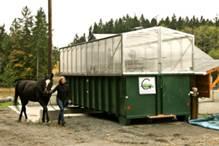
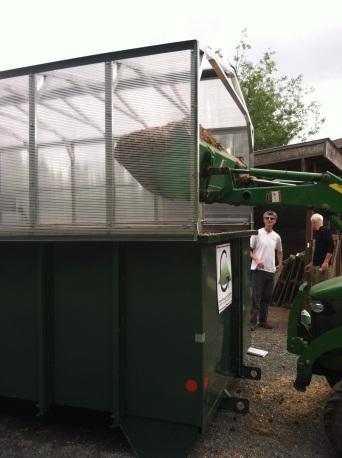
Beef cattle producers that raise cattle in complete confinement, such as mono-slope or hoop barns, may apply bedding material to manage moisture and improve the environment for the animals. Some producers let the manure and bedding accumulate to form a bedded manure pack, which is compacted by cattle activity. The bedded manure contains valuable nitrogen (N), phosphorus (P), and potassium (K) that are essential for crop production and soil sustainability. Depending on temperature, bedding material, and storage time of the bedded pack, the concentration of water-soluble N, P and K compounds may increase in the bottom of the bedded pack where water accumulates. Thus, understanding and predicting water movements within the bedded manure is important to estimate fertilizer N-P-K content and distribution in the bedded manure.

What did we do?

The processes considered in this process-based model include evaporation, percolation, diffusion of water vapor and diffusion of liquid water for vertical water movement. The model by Seng et al. (2012) for static compost piles and a modified version of the Integrated Farm System Model (not yet released) by Rotz et al. (2014) for bedded manure were reviewed and compared. Ultimately, the model needs to be adaptable to estimate the water content of the pack over time for different environmental conditions, bedding materials, and storage times at varying depths within the bedded pack. Data for model calibration and validation were gained through laboratory-scale experiments by Ayadi et al. (in review).

What have we learned?

Percolation and liquid water diffusion are considered the main processes for vertical water movement between layers in the bedded manure. Evaporation occurs from the surface of the top zone of the bedded pack. The rates of percolation and liquid water diffusion are depth-specific and their rates therefore vary. The modified version of the Integrated Farm System Model (IFSM) is more adaptable to data gained through laboratory-scale experiments. Overall, IFSM is more applicable to producer-available data and thus more applicable to predict water movement for bedded manure packs in real-life conditions.

Future Plans

After predicting water movements in the bedded manure, the model will be used to estimate N, P and K movement through the different zones of the bedded manure pack as well as gaseous emission (ammonia and nitrous oxide) from the bedded pack surface. The final overall model will be a calculator that estimates fertilizer N-P-K content and value and ammonia and nitrous oxide emissions of the bedded manure packs from confined beef cattle facilities with respect to temperature, bedding material, storage time and depth of the bedded pack.

Authors

Erin Cortus, Ph. D., Assistant Professor, South Dakota State University, Brookings, SD

Ferouz Ayadi, M.S., Graduate Student, South Dakota State University, Brookings, SD; Mindy Spiehs, Ph. D., Animal Scientist, USDA‐ARS Meat Animal Research Center, Clay Center, NE

Additional information

References

Ayadi, F. Y., M. J. Spiehs, E. L. Cortus, and D. N. Miller. In review. Physical, chemical and biological properties of different depths and ages of simulated beef bedded manure packs. Transactions of the ASABE.

Rotz, C.A., Corson, M.S., Chianese, D.S., Montes, F., Hafner, S.D., Bonifacio, H.F., Coiner, C.U., 2013a.

The Integrated Farm System Model Reference Manual, Version 4.1. USDA-Agricultural Research Service. Avaialble at: http://www.ars.usda.gov/sp2UserFiles/Place/80700500/Reference%20Manual.pdf

Seng, B., H. Kaneko, K. Hirayama, and K. Katayama-Hirayama. 2012. Development of water movement model as a module of moisture content simulation in static pile composting. Environmental Technology 33(15):1685-1694.

Acknowledgements

The support and assistance of Henry F. Bonifacio with the simulation of water movements in the bedded pack manure is very much appreciated. This project and all associated reports and support materials were supported by the Sustainable Agriculture Research and Education (SARE) program, which is funded by the U.S. Department of Agriculture- National Institute of Food and Agriculture (USDA-NIFA). Any opinions, findings, conclusions or recommendations expressed within do not necessarily reflect the view of the SARE program or the U.S. Department of Agriculture. USDA is an equal opportunity provider and employer. The mention of trade names or commercial products in this publication is solely for the purpose of providing specific information and does not imply recommendation or endorsement by the USDA.

The authors are solely responsible for the content of these proceedings. The technical information does not necessarily reflect the official position of the sponsoring agencies or institutions represented by planning committee members, and inclusion and distribution herein does not constitute an endorsement of views expressed by the same. Printed materials included herein are not refereed publications. Citations should appear as follows. EXAMPLE: Authors. 2015. Title of presentation. Waste to Worth: Spreading Science and Solutions. Seattle, WA. March 31-April 3, 2015. URL of this page. Accessed on: today’s date.

Markets for Composted Agricultural Waste

Why Consider Composting Manure?

Enforcement of nutrient management regulation has forced Maryland farms and agricultural facilities to adopt new waste management practices. Few options exist that are financially sustainable. Regulatory agencies witnessed the unexpected consequence of closing small and mid-sized farms who could not afford to institute new waste management technologies. To counter that consequence, Maryland Department of Agriculture offered grants to subsidize the development of innovative technology and business practices. These new systems and business models had to offer both financial and environmental sustainability.

What Did We Do?

The first step in this project (supported by the Maryland Department of Agriculture, 2014) was to identify the biological make up and characteristics of the stable waste both before and after processing. We measured nutrient content and form (N, P, K), porosity, moisture absorption and C: N ratio. By understanding what the material consisted of pre-processing, we were able to determine what effects different controls during processing would have on the end product. As an example, when using stable waste for bedding re-use the material is run through the composting system as quickly as possible. A shorter composting period with auger mixing technology allowed the biological activity to breakdown the manure balls, support the transformation of the waste nutrients and yet protect the integrity of the shavings for second use. Related: Managing Manure on Horse Farms

Next, the local markets were studied:

    • Soil types and needs: compost to add porosity, water retention, nutrients to soil
    • Weather patterns and created needs: compost added for water retention, binding material to diminish run off
    • Population centers for urban market: compost for landscape needs, potting medium
    • Rural character for on farm market: compost for nutrient replacement, bedding re-use
    • Cost of operations on local farms: cost of bedding, cost of disposal, cost of landscape material, cost of synthetic or imported fertilizer
    • Wholesale market needs: compost for distribution centers (Scotts products), soil specialty companies, land reclamation sites, Department of Transportation needs, green house growers

Identifiable, viable market channels to move the processed stable waste were necessary components of a business model.  Uses for the processed waste were identified both on site and off site.

On site uses were identified as:

    • Land application: field enhancement
    • Bedding re-use
    • Landscape use
    • Improved footing arenas
    • Land reclamation
    • Pelletized for heat systems
Off site uses were identified as:

    • Soil amendment
    • Land reclamation
    • Potting Medium
    • Food Waste Bulking agent
    • Whole sale distribution centers
    • Soil Specialty companies

What Did We Learn?

Data was gathered and studied from equine facilities with existing composting operations to illustrate what the benefits and challenges can be. IOS Ranch on Bainbridge Island Washington is a sustainably designed 7.5 acre property that supports 20-25 stalled horses. The design concentrates the structures, indoor arena, stall, office and supporting buildings, so there could be surrounding pasture turn out and an outdoor arena. The facility was paying high waste disposal fees. Their decision to bring composting technology to the farm was an effort to eliminate disposal fees and diminish their bedding cost through bedding re-use. However, once the system was installed a local landscaper visited the site and saw value in the compost. The material is now sold for $30/yard wholesale and $45/yard retail to local landscapers and gardeners. With the price of shavings for bedding delivered at $7.50/yard the business decision to sell the compost was an obvious one. The property was formerly a gravel pit with large areas of exposed pit run. Once realizing the value of the compost for land application, the owner spread on the exposed areas greatly improving grass performance in the turnout fields. This farm was saving $100-$140/day producing compost because of the reduced disposal fees plus profits from marketing, allowing for a breakeven on investment in 3 years.

manure composting operation on horse farm manure composting operation on horse farm manure composting operation on horse farm

Joint Base Myer Henderson Hall hosted a pilot project for composting of food waste on remote contingency bases. On this base the Army’s Caisson horses are housed in a 50+ stall barn. After the pilot was completed the in vessel composting system will revert to the base for processing the stable waste. The base has the choice of bedding re-use or using the compost for landscape needs on base and/or in the adjacent Arlington National Cemetery. Outside contractors were supplying the base with compost at nearly $400,000 per year. The project could pay for itself in the first year. Thorough lab analysis showed the compost to be consistently of high quality, pathogen free, and weed seed free.

army base horse manure composting photos

Currently two sites in Maryland are being studied; one an equine rescue facility housing 50-80 horses, and the other a dairy with 240 head. The use of composted stable waste as a peat moss replacement will bring value to the equine and dairy farms and to the large, local greenhouse industry. Currently 80% of the peat moss used in Maryland is imported from Canada. The farms selected are large enough that they can produce enough material for bedding re-use (savings of nearly 20% of operating budget) and/or sell the material to wholesale buyers. The composting material from both sites show the favorable attributes of peat moss, porosity and moisture retention. Blending can alter the nutrient levels to what the market needs by using the more nutrient rich dairy waste. The collection of compost and blending can be done on on site or at an off site location in cooperation with other local farms, this may help meet larger volume needs of wholesale buyers.

horse manure composting operation in Maryland horse manure composting operation in Maryland horse manure composting operation in Maryland

Future Plans

The Maryland projects are both two years in duration with continual data gathering and recording. The next step is the location and operation of a collection yard for multiple local farms to send their processed stable waste. Such a yard allows for mixing to meet differing market needs and the creation of large quantities of homogenous product for local greenhouse growers.

Authors

Mollie Bogardus, owner, Aveterra and representative of Green Mountain Technologies, Inc. mollie@compostingtechnology.com

Additional Information

http://news.maryland.gov/mda/press-release/2014/08/15/mda-awards-1-million-for-innovative-manure-management-technologies-demonstration-projects-in-howard-frederick-and-worcester-counties-recognized/

Acknowledgements

Dr. Pat Millner, USDA Beltsville, Research Microbiologist is lead researcher and mentor on these projects in Maryland.

The authors are solely responsible for the content of these proceedings. The technical information does not necessarily reflect the official position of the sponsoring agencies or institutions represented by planning committee members, and inclusion and distribution herein does not constitute an endorsement of views expressed by the same. Printed materials included herein are not refereed publications. Citations should appear as follows. EXAMPLE: Authors. 2015. Title of presentation. Waste to Worth: Spreading Science and Solutions. Seattle, WA. March 31-April 3, 2015. URL of this page. Accessed on: today’s date.

Effect of Temperature on Methane Production from Field-Scale Anaerobic Digesters Treating Dairy Manure

Why Study Temperature and Anaerobic Digestions?

Anaerobic digestion is a process that results in the production of biogas that can be used a renewable source of electricity on-farm or sold to the distribution grid. Temperature is a critical parameter for anaerobic digestion since it influences both system heat requirements and methane production. Although anaerobic digestion can take place under psychrophilic (15-25°C), mesophilic (35-40°C), and thermophilic (50-60°C) conditions, temperatures of 35-37°C are typically recommended for methane production from animal manure. However, digesters require significant amount of heat energy to maintain temperatures at these levels. There is limited information about methane production from dairy digesters at temperatures less than 35°C and results in the literature are presented from laboratory-scale rather than field-scale systems.

The objective of this study was to evaluate the effect of two relatively low digestion temperatures (22 and 28°C) on methane production using replicate continuously-fed, field-scale dairy manure digesters at two organic loading rates. The results were compared with those from identical digesters operated at 35°C.

field scale anaerobic digesters

Field scale (FS) anaerobic digesters

What did we do?

Anaerobic digestion experiments were carried out using six modified Taiwanese-model field-scale (FS) on-site digesters (Fig. 1) at the USDA Beltsville Agricultural Research Center (BARC). Each FS digester has a total capacity of 3 m3 and was operated at a liquid capacity of 67% (2 m3 working volume) with 33% headspace for biogas collection. The FS digesters are plug-flow reactors and operated without mixing. First, duplicate field-scale (FS) anaerobic digesters were maintained at one of three set temperatures (22 ± 2, 28 ± 2 and 35 ± 2°C) and fed with solids-separated manure for 80 days (period 1). The digesters were subsequently operated under the same temperature regime (22 ± 2, 28 ± 2 and 35 ± 2°C) but were fed at a higher organic loading rate (OLR) using solids-separated manure amended with manure solids for 56 days (period 2). The hydraulic retention time (HRT) was 17 days for all digesters throughout the study. Digesters were fed once daily five days a week with 160 L d-1 of separated manure for period 1, and 148 L d-1 of separated manure amended with 16 kg d-1 (wet weight) manure solids (roughly 12 L in volume) for the period 2.

What have we learned?

Our results suggest that anaerobic digesters treating dairy manure at lower temperatures can be nearly as effective as digesters operated at 35°C, even with a relatively short 17-day retention time. Methane production from digesters operated at 28°C was about 90% of that from digesters operated at 35°C but the differences were not statistically significant. Digesters operated at 22°C produced about 70% as much methane as digesters operated at 35°C without affecting digester stability. Small farm digester systems that may not have access to waste heat from electrical generation, could efficiently operate at these lower temperatures to produce methane and reduce greenhouse gas emissions and odors. Larger digester systems could also choose to operate at these lower temperatures if reducing digester heating would allow for more valuable uses of their heat energy such as drying solids or treating liquids to remove nutrients.

Future Plans 

We are currently investigating the fate and effect of antibiotics and feed additives during the anaerobic digestion of manure.

Authors     

Osman Arikan, Assoc. Prof., Istanbul Technical Univ., Dept. of Environmental Eng., Istanbul, Turkey. Visiting Scientist, USDA-ARS, BARC, Beltsville, MD, Visiting Assoc. Prof., University of Maryland, Dept. of Environmental Science&Tech., College Park, MD. arikan@itu.edu.tr

Walter Mulbry, Research Microbiologist, USDA-ARS, Beltsville Agricultural Research Center, Beltsville, MD. Stephanie Lansing, Assistant Professor, University of Maryland, Department of Environmental Science and Technology, College Park, MD.

Additional information

Data is to be published.

Acknowledgements

The authors gratefully acknowledge Jose Colina and Lorianny Rivera for assistance in operating the digesters and Anna Kulow for analyzing biogas and effluent samples.

The authors are solely responsible for the content of these proceedings. The technical information does not necessarily reflect the official position of the sponsoring agencies or institutions represented by planning committee members, and inclusion and distribution herein does not constitute an endorsement of views expressed by the same. Printed materials included herein are not refereed publications. Citations should appear as follows. EXAMPLE: Authors. 2015. Title of presentation. Waste to Worth: Spreading Science and Solutions. Seattle, WA. March 31-April 3, 2015. URL of this page. Accessed on: today’s date.