Composted Horse Manure and Stall Bedding Pilot Project

Why Study Compost as Bedding for Horses?

The purpose of this project was to study and promote the use of compost as an alternative horse stall bedding and encourage horse owners and managers to think more creatively about manure management. Our objective was to reduce bedding use, and improve manure management practices at equine facilities in Snohomish County, Washington State.

Recreational and professional horse owners contribute to maintaining agricultural open space and supporting the agricultural infrastructure and local economy. Horse owners have historically been overlooked as contributors to animal agriculture, and as a result many horse owners lack a basic knowledge about manure and nutrient management. They are not aware of their impact on water and soil quality. Disposal of used stall bedding is costly for horse owners in northwestern Washington State, and has a potentially large impact on water quality. Disposal practices often include filling in low spots and ravines, or building massive piles. Composting manure at high temperatures eliminates pathogens and parasites, stabilizes nutrients, and reduces odors and vector attraction.

What did we do?

The Snohomish Conservation District (SCD) worked with ten commercial and two private equine facilities to test the use of compost as an alternative horse stall bedding material. Facilities ranged in size from 5 to >20 stalls. The primary system used for composting and reusing bedding involved a micro-bin composter (O2 Compost, Snohomish, WA) and a Stall Sh*fter® (Brockwood Farm, Nashville, IN). Micro-bins were assembled on-site and filled with used stall bedding (Fig.1-2).
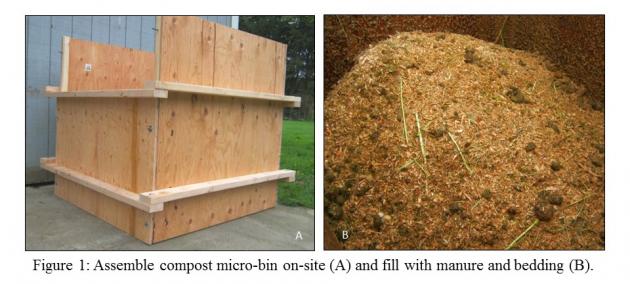
Figure 1. Assemble compost micro-bin on site and fill with manure and beddingFigure 2. Turn on blower to provide aeration and monitor temperature

After 30 days of composting, the bin was emptied and the manure was separated from the bedding (Fig. 3). The composted bedding was then used in a stall (Fig. 4). Equine facility managers provided feedback on the effectiveness, perception, and impacts of using the compost as stall bedding. Results varied between trial sites based on type and quantity of bedding used, season, and stall management practices.
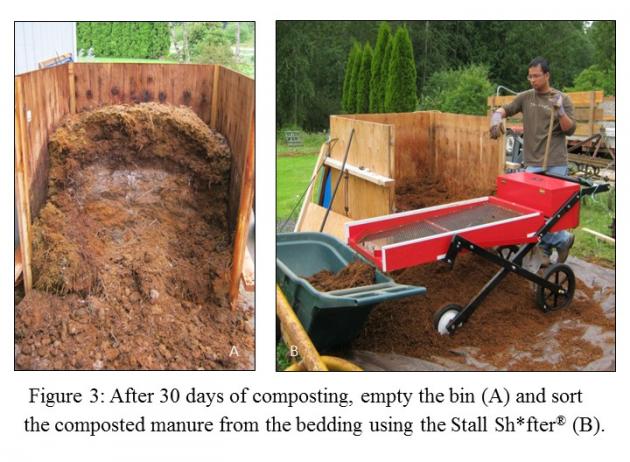
Figure 3. After 30 days of composting, empty the bin and sort the composted manure from the bedding using the Stall Sh*fter (registered trademark)

Figure 4. Use composted bedding in the stall and composted manure in the garden.

What have we learned?

Composted stall waste makes a soft absorbent bedding for horses or other livestock. Composted bedding is less dusty than shavings or wood pellets, darker in color, and has a pleasant earthy odor. There were no reports of composted bedding increasing stall odors or flies, or negatively impacting horse health. The best results were reported when mixing the composted bedding with un-composted bedding in equal proportions or two parts compost to one part bedding. There were some reports of horses with skin and respiratory conditions improving during the time they were on composted bedding, including thrush in the feet, hives and “rain rot” on the body, and “scratches” on the legs.

When separating the composted manure from the bedding, the amount and type of bedding determines the effectiveness of a bedding re-use system. Concern about appearances was more prevalent than concern about disease or parasite transfer. Even though barn managers were not entirely ready to make the switch to composted bedding, this project helped start many conversations (in person, through publications, and social media) about manure management and resource conservation. It was a great opportunity to help horse owners make the mental leap from “waste” to “resource”.

Future Plans

This project demonstrated that compost is a safe and effective horse stall bedding. Future work should be focused in three areas:

1. Developing systems for making composted bedding that are practical on a large scale and provide an economic incentive for large equine facilities to recycle their waste.

2. Outreach and education programs directed at horse owners who board their animals at commercial facilities. Would some horse owners be willing to pay a premium to board their horses at a facility that is managed in an environmentally sustainable manner?

3. Clinical trials to examine the effects of composted bedding on skin and respiratory conditions.

Author

Caitlin Price Youngquist, Agriculture Extension Educator, University of Wyoming Extension cyoungqu@uwyo.edu

Additional information

Visit http://BetterGround.org, a project of the Snohomish Conservation District.

The full report, including photographs of trial sites, is available on the Western SARE website: https://projects.sare.org/sare_project/ow11-315/

Acknowledgements

I would like to thank all of the farm owners and managers who very graciously participated in this project and were willing to try something new. The contribution of time and energy is very much appreciated.

Thanks also to the staff at O2 Compost for their efforts, ideas, and creativity. This would not have been possible without them.

And Mollie Bogardus for helping take this project to the next level, and explore all the possibilities.

The authors are solely responsible for the content of these proceedings. The technical information does not necessarily reflect the official position of the sponsoring agencies or institutions represented by planning committee members, and inclusion and distribution herein does not constitute an endorsement of views expressed by the same. Printed materials included herein are not refereed publications. Citations should appear as follows. EXAMPLE: Authors. 2015. Title of presentation. Waste to Worth: Spreading Science and Solutions. Seattle, WA. March 31-April 3, 2015. URL of this page. Accessed on: today’s date.

Discharge Quality Water from Dairy Manure: A Summary of the McLanahan Nutrient Separation System

Why Study Dairy Manure Treatment?

Dairy manure has historically been land applied consistent with the agronomic requirements of growing crops.  Due to consolidation of the dairy industry over the last 40 years, animal density has increased dramatically creating logistical, storage and environmental challenges.  Also, environmental constraints and water scarcity is more recognized.  Manure maintains tremendous nutrient value; however, water comprises approximately 90% of the manure stream.  Development of new and innovative methods for extracting nutrients for beneficial reuse while preparing water for beneficial on-site reuse is of paramount importance to the future of the US dairy industry.

What Did We Do?

Figure 1. The 4 steps that make up the McLanahan Nutrient Separation System

Figure 1. Diagram of the four steps that make up the McLanahan Nutrient Separation System

Research was initiated in 2004 to evaluate the potential of coupling a traditional complete mix digester with an ultrafiltration system to create what is commonly referred to as an anaerobic membrane bioreactor (AnMBR).

The AnMBR acts to separate hydraulic retention time from solid retention time while producing a high quality effluent. There are opposing views in the literature with respect to the impact of pump/membrane shear on biological activity and our objective was to add clarity.  An outcome of the research was that biogas production is negatively impacted by high shear forces but at practical flow rates, the impact is negligible. An additional finding, and the focus of this paper, is the recognition that the AnMBR is a logical starting point for a comprehensive nutrient recovery and water reuse process.

photo of pretreatment digester
Figure 2. Pretreatment Digester
photo of ultrafiltration
Figure 3. Ultrafiltration

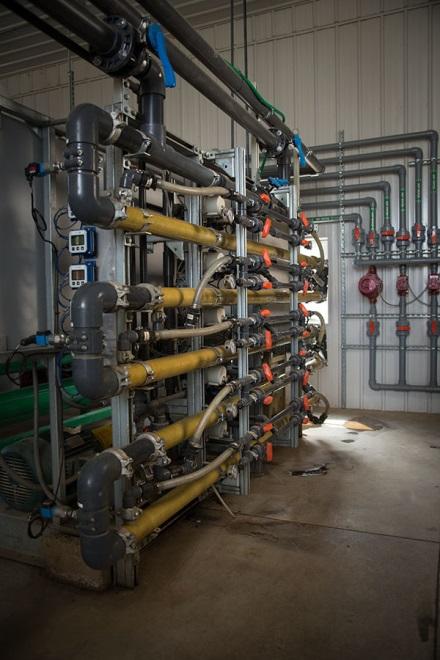
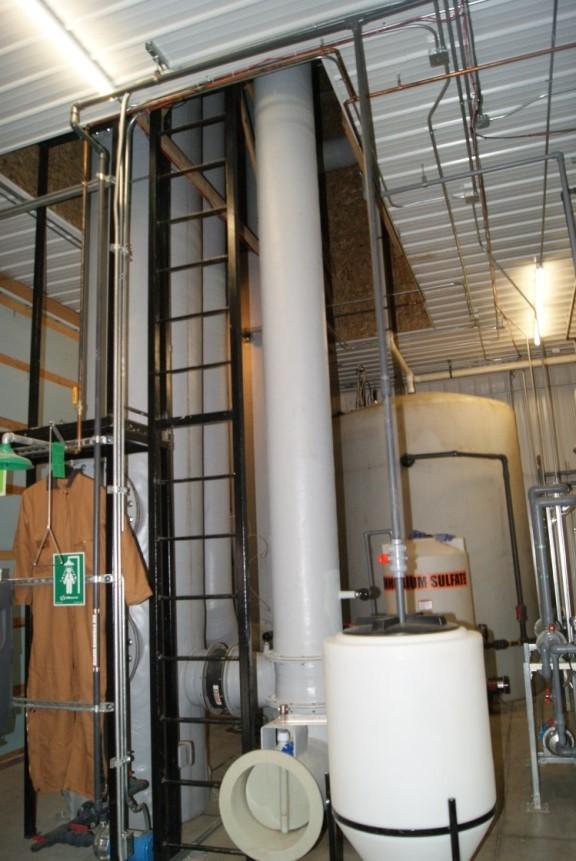
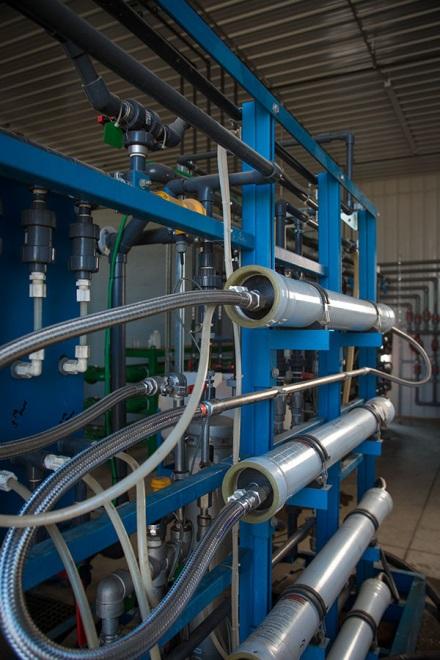
Based on this early research, a comprehensive Nutrient Management System has been developed that seeks to improve the social and environmental sustainability of the dairy industry, while reducing the cost and liability associated with manure management.  In general, nutrients are separated and concentrated, allowing for application where and when they are needed. The separated water can be land irrigated, re-used or even discharged. The system is comprised of four steps (as depicted in Figure 1):  pretreatment under anaerobic conditions (Figure 2), ultrafiltration (UF) (Figure 3), air stripping (Figure 4) and reverse osmosis (RO) (Figure 5).

photo of air stripping equipment
Figure 4. Air Stripping

The pretreatment system (anaerobic digester) and UF system are coupled together (AnMBR).  The manure fed to the AnMBR first undergoes sand separation (only for dairies bedding with sand) followed by solid separation to remove coarse solids to prevent plugging of the UF system.    The digester portion of the AnMBR produces a homogeneous feedstock while producing biogas useful for energy production, although its production is a secondary concern of the process.   There are two outputs from the UF process: permeate and concentrate.  The permeate stream, often referred to as “tea water”, is devoid of suspended solids and contains the dissolved constituents found in manure including ammonia and potassium.  The concentrate stream contains 95%+ of the phosphorus and 88%+ of organic nitrogen with a total solid content of 6-7%.  Due to the shearing action of the pump/membrane system coupled with anaerobic degradation, the resulting concentrate stream is readily pumped and the solid fraction tends to stay in suspension.

photo of reverse osmosis equipment
Figure 5. Reverse Osmosis

Permeate from the UF flows to an air stripping process for ammonia removal.  The equilibrium relationship between un-ionized and ionized NH3+/NH4 is controlled by pH and temperature.  As a general rule, the air stripper is used to remove as much ammonia as practical through the addition of waste heat (such as from an engine generator set or biogas boiler).  The stripped ammonia is combined with dilute sulfuric acid to produce liquid ammonium sulfate (approximately 6% nitrogen and 7% sulfur).

The air stripped water is fed to a RO process which produces clean water suitable for direct discharge and a concentrated liquid fertilizer containing the potassium.  The clean water represents approximately 55% of the starting volume of manure.  As an option, a plate and frame press can be used to dewater UF concentrate to produce a solid product containing phosphorus and organic nitrogen.  Inclusion of this technology offers the potential of increasing the percentage of clean water produced by the complete process to more than 60% of the starting volume of manure.

What have you learned?

  • UF membrane excludes 95%+ of phosphorus and 88%+ of organic nitrogen.
  • Stable flux rates at operating total solid concentrations of 6.0-7.0%.
  • Ammonium sulfate concentrations of 28-30% were readily achieved.
  • Overall, approximately 55% of water is recovered as discharge quality
  • Through the use of solid-liquid separation, the potential exists to increase volume of recovered water to 60%+.

Impact of Technology

The technology is flexible and can be applied to meet farm specific goals objectives.  Separated and concentrated nutrients can be land applied where and when they are needed and the production of clean water creates new and improved opportunities for water management.  Overall, the process vastly improves the farmer’s control of the manure management process.

Authors

James Wallace, P.E., PhD, Environmental Engineer, McLanahan Corporation JWallace@mclanahan.com

Steven Safferman, P.E., PhD, Associate Professor, Michigan State University

The authors are solely responsible for the content of these proceedings. The technical information does not necessarily reflect the official position of the sponsoring agencies or institutions represented by planning committee members, and inclusion and distribution herein does not constitute an endorsement of views expressed by the same. Printed materials included herein are not refereed publications. Citations should appear as follows. EXAMPLE: Authors. 2015. Title of presentation. Waste to Worth: Spreading Science and Solutions. Seattle, WA. March 31-April 3, 2015. URL of this page. Accessed on: today’s date.
Volatile Organic Compound (VOC) Emissions from Beef Feedlot Pen Surface as Affected by Within Pen Location, Moisture, and Temperature

Purpose

Determine the effects of moisture, temperature and within pen location on odorous emissions from pen surfaces generated from cattle fed a diet containing 30% wet distillers grain plus soluble (WDGS). This work is focused on developing precision practices for mitigating odor.

What did we do?

A laboratory study was conducted to determine effects of pen location, moisture, and temperature on emissions of volatile organic compounds (VOC). Feedlot surface material (FSM) was obtained from pens where cattle were fed a diet containing 30% wet distillers grain plus soluble (WDGS). The FSM were collected from the bunk, drainage, and mound areas within three feedlot pens. The FSM were mixed with water to represent dry, wet, or saturated conditions and then incubated at temperatures of 5, 15, 25 and 35ºC. A wind tunnel and TD GC/MS were used to quantify emissions of eight volatile fatty acids (VFA), five aromatics and two volatile sulfur compounds (VSC).

graph showing experiment results. Contribution to total odor activity value (OAV) for each feedlot pen location, moisture condition, and temperature. All within treatment odor activity values sum to 100%.What have we learned?

Evaluation of emissions as affected by the specified environmental conditions was performed on individual compounds which were normalized using an odor activity value (OAV). When the odor compounds were normalized with respect to their activity value, many of the measured compounds contributed minimally to the overall odor activity. Approximately 10% of the OAV was contributed by three VFAs and one aromatic (4-methylphenol) compound. The VSC contributed the most with 87.3% of the total OAV.

More than half of the OAV occurred at the base of the mound with the bunk and drainage contributing approximately equally to the remainder. The frequent wetting and drying cycles occurring near the base of the mound may contribute to a more diverse microbial population when compared with the chronically wet to saturated conditions existing behind the feed bunk.

The addition of water significantly increased the OAV. Approximately 92% of the OAV was accounted for by wet and saturated conditions. In general, the addition of water decreased emissions of VFA and aromatics, and increased the emission of sulfides. Two possible causes were offered. First, the greater solubility of the VFA and aromatics allowed them to be retained in the solution fraction of the FSM and not be emitted. Second, the addition of water results in an anaerobic environment and reducing conditions, which are conducive to production of VSC.

Temperature significantly affected OAV with over 60% of the total OAV occurring at 35ºC. The 35ºC temperature increased each odor compounds with the impact being the greatest for VSCs. It appears from this study, odor emissions are greatest during warm (i.e. > 25ºC) wet periods and from specific location within the pen.

Future Plans

Understanding the spatial variability of odor emission is important in the development of cost-effective management practices. Based on the results from this investigation, field-scale studies will be conducted to develop precision odor mitigation practices.

Authors

Bryan L. Woodbury, Agricultural Engineer, USDA-ARS, U.S. Meat Animal Research Center, Clay Center, NE bryan.woodbury@ars.usda.gov

John E. Gilley, Agr. Eng, USDA-ARS. David B. Parker, Prof., Life, Earth and Environ. Sci., West Texas A&M University. David B. Marx, Prof, Statistics, Univ. of NE. Roger A. Eigenberg, Agr. Eng., USDA-ARS, U.S.

Additional information

http://www.ars.usda.gov/Main/docs.htm?docid=14337

https://www.agupdate.com/todaysproducer/news/local/with-feedlot-manure-it-pays-to-be-precise/article_015b6db8-a234-582d-8c0e-04b99cf0f730.html

The authors are solely responsible for the content of these proceedings. The technical information does not necessarily reflect the official position of the sponsoring agencies or institutions represented by planning committee members, and inclusion and distribution herein does not constitute an endorsement of views expressed by the same. Printed materials included herein are not refereed publications. Citations should appear as follows. EXAMPLE: Authors. 2015. Title of presentation. Waste to Worth: Spreading Science and Solutions. Seattle, WA. March 31-April 3, 2015. URL of this page. Accessed on: today’s date.
Sustainable Dairy Production Housing / Manure System: Compost Bedded Loose Housing Dairy Barn


What Are Compost Bedded Dairy Barns?

In the U.S., the first compost bedded loose housing (CBP) dairy barns were developed by Virginia dairy producers in the 1980’s to increase cow comfort and longevity.  The key component of a CBP dairy barn is a large, open resting area generally bedded with sawdust or dry, fine wood shavings that is tilled to support aerobic composting. Studies in Minnesota in the early 2000’s built a knowledge base which researchers in Kentucky have utilized during the past 5 years  as the foundation for our research and extension activities on the CBP barns, herds housed within them, and assessing compost fertility. CBP barns fit within goals of sustainable agriculture for dairies with less than 500 lactating cows because of benefits to the cow (space, rest, exercise, and social interaction – Videos 1 & 2), the farmer (low investment, labor-extensive, reduced manure storage costs with composted manure under roof), milk production (milk quality, milk yield), and the environment (reduced ammonia and greenhouse gas emissions, odor and dust emissions, reduced energy consumption, improved manure fertility and flexibility to meet nutrient management plans).  Operator experiences and research results of completed and on-going CBP barn projects are presented. 

What we did

Our first activity was to assess the existing CBP barns in KY to establish the reasons for success. Fifty-five known existing CBP dairy barns in KY were visited from September 2010 to March 2011 to determine the management, barn construction details and management factors that lead to successful operation and herd improvements. Five areas of research were subsequently identified. Critics have expressed concerns about mastitis risks in barns.  Environmental mastitis has been the main concern due to the bacterial load in the CBP barn compost. A study was conducted of mastitis incidence and milk Somatic Cell Count (SCC) of CBP barns relative to “gold standard”, sand bedded free stall barns. Dairymen also wanted to have more certainty of the compost nutrient value for land application. A study was initiated to determine N and P in compost and their release for plant uptake during the first year. For one year, bed data for temperature, moisture, nutrient content by depth, and barn climate were collected to understand the seasonal climatic effects on the compost bed and how quickly these effects are seen. Finally, bed tillage, using cultivators or rototillers, was evaluated for effects on bed performance.

What we learned

Facility design, ventilation, timely addition of fresh, dry bedding, frequent and deep stirring, and avoidance of overcrowding are the keys to a good working CBP barn. Poor management may lead to very undesirable compost bed conditions, dirty cows, elevated SCC, and increased clinical mastitis incidence. Most Kentucky dairy producers listed increased cow comfort and welfare as the main benefit to the CBP barn system, while others cited increased cow cleanliness, low maintenance nature of the system, and the barn’s usefulness for special needs and problem cows. Evaluation of annual bed performance data led to development of new compost bed management strategies. Instead of using the hygiene score for cows or bed temperature, moisture content was viewed as the primary measure since it was a leading indicator of the bed before failure. The time between a good performing bed and a poor performing bed was a matter of days when the moisture content exceeds 60% – wb. The comparison of CBP barns to sand bedded freestall barns validated producers’ observations of comparable SCC and mastitis incidence prevalence in CBP barns. Finally, CBP compost added to soil differs in P dynamics depending on soil test P level. In Low Soil Test P (STP) soils the CBP tended to slowly mineralize, and like inorganic P fertilizers, was subject to adsorption. In High STP soil, P in compost was first adsorbed, but then slowly released with time.

Future plans

  1. Computational Fluid Dynamics (CFD) modeling of the compost bed management and barn design alternatives for demonstration to dairymen for planned and existing facilities.
  2. Effect of Rapid Eye Movement (REM) sleep on cow health, production and comfort.
  3. Mastitis incidence as affected by microbial ecology of the cow udder and compost bedded pack.
  4. Life Cycle Assessment (LCA) and economic analysis of system: milk production, barn, and compost disposal.

Authors

Joseph L Taraba, Extension Professor, Biosystems and Agricultural Engineering, University of Kentucky, Lexington KY – joseph.taraba@uky.edu. 859.218.4353.

Jeffery M Bewley, Associate Extension Professor, Animal Food Sciences, University of Kentucky, Lexington KY

George B Day, Adjunct Instructor, Biosystems and Agricultural Engineering, University of Kentucky, Lexington KY

Mark S Coyne, John H. Heick Professorship, Plant and Soil Sciences; University of Kentucky, Lexington KY

Michael Sama, Assistant Professor, Biosystems and Agricultural Engineering, University of Kentucky, Lexington KY

Randi A Black, PhD Graduate Student , Animal Sciences, University of Tennessee, Knoxville TN

Flavio A Damasceno, Professor (Associate), Departamento de Engenharia, Universidade Federal de Lavras, Lavras, MG – Brasil

Elizabeth A Eckelkamp, Graduate Research Assistant, Animal Food Sciences, University of Kentucky, Lexington KY

Leslie A Hammond, Graduate Research Assistant , Plant and Soil Sciences; University of Kentucky, Lexington KY

John Evans, Graduate Research Assistant, Biosystems and Agricultural Engineering, University of Kentucky, Lexington KY

The authors are solely responsible for the content of these proceedings. The technical information does not necessarily reflect the official position of the sponsoring agencies or institutions represented by planning committee members, and inclusion and distribution herein does not constitute an endorsement of views expressed by the same. Printed materials included herein are not refereed publications. Citations should appear as follows. EXAMPLE: Authors. 2015. Title of presentation. Waste to Worth: Spreading Science and Solutions. Seattle, WA. March 31-April 3, 2015. URL of this page. Accessed on: today’s date.
Extraction and Recovery of Phosphorus from Pig Manure Using the Quick Wash Process

*Why Look at Phosphorus Recovery from Pig Manure?

Land disposal of manure is a challenging environmental problem in areas with intense confined pig production. When manure is land applied at optimal nitrogen rates for crop growth, phosphorus can accumulate in excess of soil assimilative capacity because of the disproportion of nitrogen and phosphorus contents in animal manures relative to plant biomass. In turn, excess manure phosphorus lost through soil leaching or runoff has the potential to reach and pollute water resources. To reduce manure phosphorus losses into the environment, a substantial amount of phosphorus needs to be moved off the pig farm but transporting manure to phosphorus-deficit croplands becomes less cost effective with increasing distance from the pig farm. Yet, conservation and recovery of phosphorus is a concern in modern agriculture because of the high cost and possible insufficient supply of mined phosphates in the future. Thus, manure management in regions with intense animal production could benefit from new technologies that would recover manure phosphorus in a concentrated, usable form. This approach would make more economical the long distance transfers of manure phosphorus while reducing both agronomic phosphorus imbalances and adverse effects of soil P losses on water resources.

What did we do?

diagram of the quick wash processA patented treatment process, called “Quick Wash”, was developed for extraction and recovery of phosphorus from animal manure solids, but research has shown that the approach is equally effective with municipal biosolids. In the Quick Wash process, phosphorus is selectively extracted from pig manure solids by using mineral or organic acid solutions. Following, phosphorus is recovered by addition of liquid lime and an organic poly-electrolyte to the liquid extract to form a calcium-containing P precipitate. The quick wash process generates two products: 1) manure solids low in phosphorus; and 2) recovered phosphorus material.

What have we learned?

The Quick Wash process selectively extracts and recovers as much as 90 % of the phosphorus from pig manure solids while leaving most of the nitrogen in the washed manure solids. Consequently, the washed solid residue has a more balanced nitrogen and phosphorus composition for crop production and is environmentally safer for land application. The concentrated phosphorus product contains more than 90% of its phosphorus in plant available form for use as crop fertilizer. The inclusion of this process in a waste management system offers pig producers a new and welcomed opportunity to minimize phosphorus losses into the environment, while recovering and recycling phosphorus as a valuable product.

Future Plans

USDA granted an exclusive license of the invention to Renewable Nutrients, LLC (Pinehurst, NC). The Quick Wash is being commercialized by Renewable Nutrients, LLC for the municipal wastewater treatment sector and its partner TRIEA Technologies, LLC (Frederick, MD) for phosphorus recovery in the animal agriculture market.

Authors

Ariel A. Szogi, Research Soil Scientist, USDA-ARS Coastal Plains Soil, Water, and Plant Research Center, Florence, SC ariel.szogi@ars.usda.gov

Matias B. Vanotti, Patrick G. Hunt – USDA-ARS Coastal Plains Soil, Water, and Plant

Additional information

https://www.frontiersin.org/articles/10.3389/fsufs.2018.00037/full

http://www.rnutrients.com/

http://www.trieatechnologies.com/quickwash

Szogi, A.A., Vanotti, M.B., Hunt, P.G., 2014. Process for removing and recovering phosphorus from animal waste. U.S. Patent 8,673,046 B1. U.S. Patent and Trademark Office.

Acknowledgements

This work is part of USDA-ARS National Program 214: Agricultural and Industrial Byproducts; ARS Project 6657-13630-005-00D “Innovative Bioresource Management Technologies for Enhanced Environmental Quality and Value Optimization.”

The authors are solely responsible for the content of these proceedings. The technical information does not necessarily reflect the official position of the sponsoring agencies or institutions represented by planning committee members, and inclusion and distribution herein does not constitute an endorsement of views expressed by the same. Printed materials included herein are not refereed publications. Citations should appear as follows. EXAMPLE: Authors. 2015. Title of presentation. Waste to Worth: Spreading Science and Solutions. Seattle, WA. March 31-April 3, 2015. URL of this page. Accessed on: today’s date.

Cationic polymer and high-speed centrifugation effects on pathogen reduction during manure solid/liquid separation


Purpose

To investigate the effects on pathogen reduction using cationic polymer and high speed centrifuge during manure solid/liquid separation.

What did we do?

In this study, polymers effects on pathogen reduction were investigated. Low charge density cationic polyacrylamide (CPAM) was selected because CPAM has been commonly used in manure treatment and it is effective for manure coagulation and flocculation. The effect on pathogen reduction of CPAM was studied in this research. High charge density cationic polydicyandiamide (PDCD) was selected because of its application of water clarification and its the extreme high charge.

E. coli and total coliform counts were examined under three different conditions: buffer media only samples, dairy manure samples and polymer amended dairy manure samples. For each condition, the samples were centrifuged at a series of speed from 0×g to 10,000×g.

What have we learned?

The results demonstrated positive impacts of both polymer and high speed centrifugation on lowering the pathogen levels in the liquid portion of the manure. Low charge density CPAM is effective for manure coagulation and flocculation, however, it has a negligible effect on pathogen reduction in either nutrient rich or nutrient deficient conditions. In contrast, highly charged cationic PDCD does not facilitate coagulation in manure with high solids content, but can potentially inhibit bacterial pathogens and further lower the solids content in the liquid portion of manure after CPAM separation.

The results from this study also demonstrated that high speed centrifugation has a notable impact on solids reduction and pathogen reduction for 10 minutes centrifugation retention time. Centrifugation speed around 4,000×g was capable of reducing pathogen levels higher than 90% from a single separation process. However, high speeds above 6,000×g results in minor additional reduction.

Future Plans

This study investigated cationic polymer and centrifuge speed impact on pathogen reduction and solid/liquid separation in dairy manure. However, there is an increasing concern about reactivation issue in centrifugation of mesophilically digested biosolids. Therefore we have attempted to conducted more research in the future regarding parallels to manure digestion. Until recently, it is still not fully understood why some municipal wastewater facilities experienced reactivation of microorganisms in centrifuged solids while others did not. Thus, it is important to investigate the effect of centrifuge speed in combination with polymer type on indicator and pathogen content of manure digests.

Authors

Troy Runge, Professor, Biological Systems Engineering, University of Wisconsin-Madison trunge@wisc.edu

Additional information

Journal papers have been submitted to Journal of Environmental Quality

Troy Runge, trunge@wisc.edu

Zong Liu, zliu73@wisc.edu

Cationic polymer and high-speed centrifugation effects on pathogen reduction during manure solid/liquid separation

The authors are solely responsible for the content of these proceedings. The technical information does not necessarily reflect the official position of the sponsoring agencies or institutions represented by planning committee members, and inclusion and distribution herein does not constitute an endorsement of views expressed by the same. Printed materials included herein are not refereed publications. Citations should appear as follows. EXAMPLE: Authors. 2015. Title of presentation. Waste to Worth: Spreading Science and Solutions. Seattle, WA. March 31-April 3, 2015. URL of this page. Accessed on: today’s date.

University and Anaerobic Digestion Industry Partnerships – Laboratory Testing

The anaerobic digestion (AD) industry often is in need of laboratory testing to assist them with issues related to project development, digester performance and operation, and co-digestion incorporation. This presentation will highlight laboratory procedures that can be carried out through a University partnership, including biochemical methane productivity (BMP), specific methane activity assays (SMA), anaerobic toxicity assays (ATA), solids, nutrient and elemental proximate analysis for inputs, outputs and co-products, as well as a host of other activities. The presentation will illustrate the lessons that can be learned from the results of these tests, using real-life examples of testing already completed for industry partners.

Why Provide Guidance on Laboratory Testing for Anaerobic Digestion?

Laboratory testing allows characterization of anaerobic digestion (AD) inputs, outputs, and process stability. Testing can be carried out within AD industry laboratories, and they can also be carried out through partnerships with active AD research laboratories at academic institutions. The purpose of this project was to provide a document that summarizes common laboratory procedures that are used to evaluate AD influents, effluents, and process stability and to illustrate real-life examples of laboratory test results.

What did we do? 

The overview of common laboratory procedures was written based on the need to introduce third-party AD developers and government agencies to evaluating AD outputs and process stability. The authors are practiced at performing AD laboratory tests and have expertise and valuable information concerning these types of evaluations. Following a description of each test, we included the purpose of the test and an example of how the test results can be interpreted.

What have we learned? 

Laboratory testing of AD samples is performed to determine the concentration of certain constituents such as organic carbon, volatile fatty acids, ammonia-N, organic-N, phosphorus, and methane. Contaminants can be tested for such as fecal coliform indicator pathogens, pesticides, and pharmaceuticals. Understanding the concentration of specific constituents enables informed decisions to be made about appropriate effluent management.

Biochemical methane potential (BMP) and specific methanogenic activity (SMA) tests are used to estimate the biogas and methane that can be produced from an organic waste or wastewater during AD. These tests are often used by industry during the design phase to predict total biogas output, allowing for correct sizing of engines and estimation of potential revenue.

Anaerobic toxicity assays (ATAs) test the effect of different materials on biogas production. Unknown inhibitors may reside within new feedstock materials which can lead to an unanticipated reduction in digester performance, so it is important to use ATAs to test the effect of new feedstock material on the AD system before it is used. A common example is when energy-rich organic materials are added to a digester that practices co-digestion.

Future Plans 

Future plans are to prepare an extension fact sheet about the basics of anaerobic digestion effluents and processes, including the overview of common laboratory testing used to evaluate AD influents, effluents, and process stability.

Authors

Shannon Mitchell, Post-doctoral Research Associate at Washington State University shannon.mitchell@email.wsu.edu

Jingwei Ma, Post-doctoral Research Associate at Washington State University

Liang Yu, Post-doctoral Research Associate at Washington State University

Quanbao Zhao, Post-doctoral Research Associate at Washington State University

Craig Frear, Assistant Professor at Washington State University

Additional information 

Craig Frear, PhD

Assistant Professor

Center for Sustaining Agriculture and Natural Resources

Department of Biological Systems Engineering

Washington State University

PO Box 646120

Pullman WA 99164-6120

208-413-1180 (cell)

509-335-0194 (office)

cfrear@wsu.edu

www.csanr.wsu.edu

Acknowledgements

This research was supported by funding from USDA National Institute of Food and Agriculture, Contract #2012-6800219814; and by Biomass Research Funds from the WSU Agricultural Research Center.

The authors are solely responsible for the content of these proceedings. The technical information does not necessarily reflect the official position of the sponsoring agencies or institutions represented by planning committee members, and inclusion and distribution herein does not constitute an endorsement of views expressed by the same. Printed materials included herein are not refereed publications. Citations should appear as follows. EXAMPLE: Authors. 2015. Title of presentation. Waste to Worth: Spreading Science and Solutions. Seattle, WA. March 31-April 3, 2015. URL of this page. Accessed on: today’s date.

Antibiotic Degradation During Anaerobic Digestion and Effects of Antibiotics on Biogas Production


Purpose 

The purpose of this research was to investigate the degradation of four animal husbandry antibiotics during anaerobic digestion (AD) and study biogas inhibition from the antibiotics. This study was designed to fill information gaps related to AD inhibition by different antibiotic classes in diluted manures received by anaerobic digesters, particularly cattle manure, and the need to more thoroughly investigate antibiotic degradation products from the AD process.

What did we do? 

We conducted AD bench-scale experiments that investigated biogas inhibition and antibiotic degradation. First, cattle manure was added to glass bottles. A known amount of antibiotic standard was added to the manure. A small amount of dilution water was added and the manure-antibiotic slurry was mixed briefly. Then, anaerobic digestion inoculum was added to the bottle. The air in the bottle was purged with nitrogen gas. Finally, the bottles were sealed and placed in an incubator set at 37°C. Biogas measurements and small liquid samples for antibiotic analysis were taken daily. At the end of the 40 day AD study, the solids were extracted to determine the amount of antibiotic adsorbed to the solids.

What have we learned? 

Results from our research showed that three out of four antibiotics degraded within 5 days of AD. Several degradation products were detected, some of which could be biologically active. The antibiotic that did not degrade was mostly found in the liquid phase of the AD reactor slurry and a small portion was adsorbed to the solids. Our results suggest that when antibiotic contaminated feedstocks are added to AD reactors, persistent antibiotics and transformation products may contaminate the liquid and solid effluents.

Our results showed the one of the antibiotics tested was more toxic to the AD process. Approximately 6.4-36 mg/L florfenicol lowered biogas production by 5-40%. Greater than 91 mg/L of the other antibiotics was needed to lower biogas production. These higher concentrations can be found in urine and feces of treated animals but they are not typical for the AD reactor following the addition of multiple feedstocks, inoculum, and dilution water. Our results suggest that there is little concern for these antibiotics to lower biogas production when cattle manure is used as an AD feedstock because the antibiotic concentration should be below inhibitory concentrations.

Future Plans 

Future research plans are to investigate the microbial population change in anaerobic digesters due to antibiotic contaminated cattle manure.

Authors

Shannon Mitchell, Post-doctoral Research Associate at Washington State University shannon.mitchell@email.wsu.edu

Craig Frear, Assistant Professor at Washington State University

Additional information 

http://www.ncbi.nlm.nih.gov/pubmed/24113548

Acknowledgements

This research was supported by Biomass Research Funds from the WSU Agricultural Research Center; and by the BioAg (Biologically Intensive Agriculture and Organic Farming) Grant Program of the Washington State University Center for Sustaining Agriculture and Natural Resources.

The authors are solely responsible for the content of these proceedings. The technical information does not necessarily reflect the official position of the sponsoring agencies or institutions represented by planning committee members, and inclusion and distribution herein does not constitute an endorsement of views expressed by the same. Printed materials included herein are not refereed publications. Citations should appear as follows. EXAMPLE: Authors. 2015. Title of presentation. Waste to Worth: Spreading Science and Solutions. Seattle, WA. March 31-April 3, 2015. URL of this page. Accessed on: today’s date.

Low-Power Aerators Combined with Center Pivot Manure Application at a Northeast Nebraska Hog Finishing Facility Created an Easy to Manage, Turn-Key System

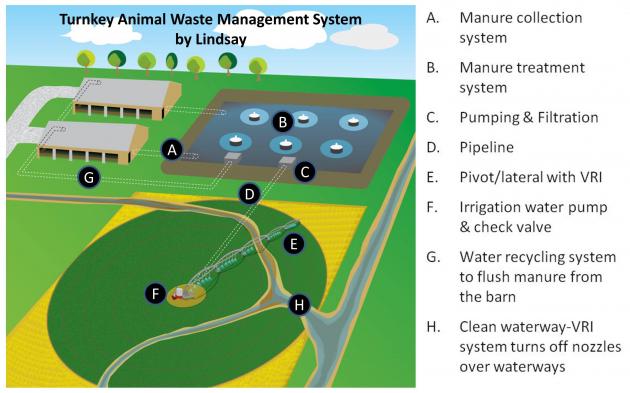
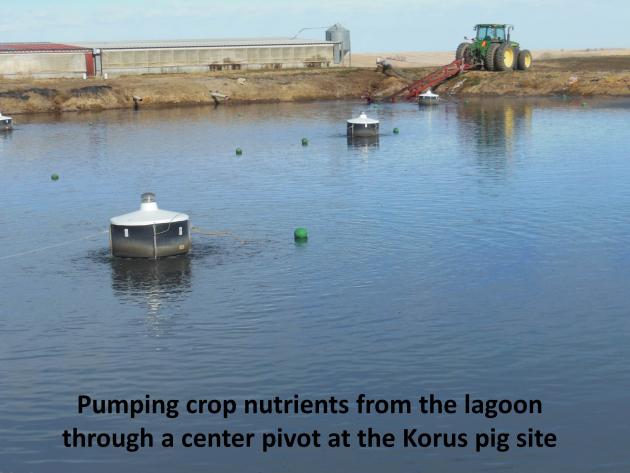
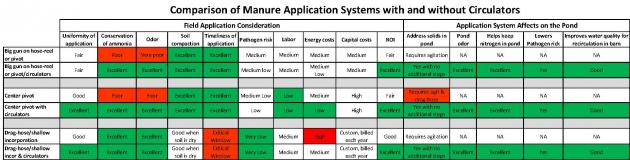
trnkey animal waste management systemApplying livestock manure from lagoon storage through center pivot irrigation has long been considered a low-labor, uniform method of application that can deliver nutrients in-season to a growing crop. Three challenges with this system have been odor, pivot nozzle clogging and loss of nitrogen. A new innovation in lagoon treatment addresses these challenges. Low-power circulators were installed at a Northeast Nebraska commercial hog finishing facility and used to aerate the lagoon by moving oxygen-rich water and beneficial microbes to the bottom of the lagoon, reducing odor and potent greenhouse gases while lowering disease pathogen risk. This process preserved nitrogen and made it 40-60% more available in the first year of application. Circulation also reduced lagoon solids and bottom sludge, resulting in reduced agitation and dredging expense. Having a continuously well-mixed lagoon facilitated accurate manure nutrient sampling and consistent nutrient concentration delivery to the irrigation system. Combined with the ease of calibration of the center pivots, precision uniform nutrient application was achieved. Center pivot application had several additional advantages over tractor-based systems: less soil compaction, optimal nutrient timing during plant growth, higher uniformity, lower labor and energy costs, and eliminating impact on public roads. The circulators combined with flush barns and center pivot irrigation creates a complete turn-key manure management system.
Do Circulators Make a Difference in Liquid Manure Storage?

pumping nutrients from lagoon on korus pig siteThe purpose of the project was to evaluate the effectiveness of low powered circulators to treat livestock waste in lagoons. The objective was to evaluate how the addition of circulators to a livestock pond would change: 1. Odor levels, 2. Pivot nozzle clogging problems, and 3. Nitrogen loss.
What did we do?

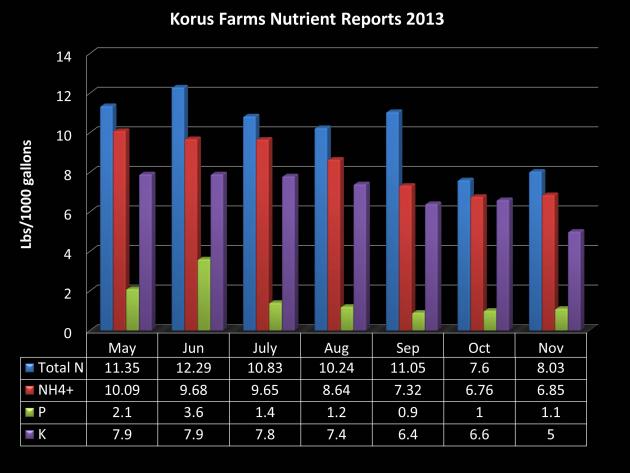
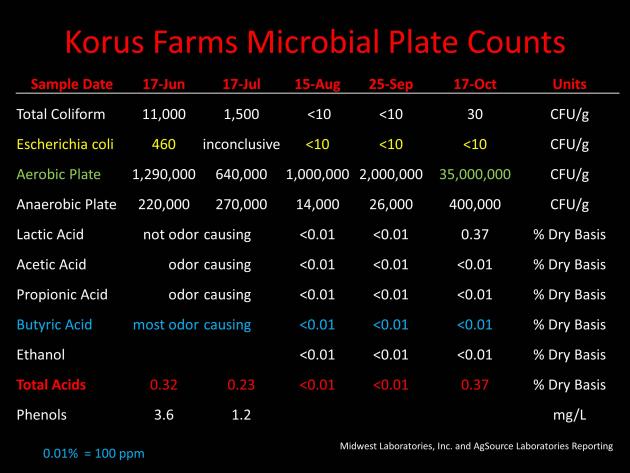
A demonstration was conducted by installing five circulators on a lagoon receiving manure from a 3000 pig finisher facility. The lagoon is owned by a Lindsay customer that was already pumping the top water from the pond through pivots, but was having difficulty with plugging nozzles and was hiring a commercial pumper to agitate and pump solids. The circulators were installed in May of 2013. Starting with the day of installation and each month after through November 2013, effluent lab samples were collected, photos of the pond and effluent were taken, and odor level estimated.

comparison of manure application systems

report from Korus farm
table of report from Korus farms

The effluent was pumped through pivots where odor and nozzle clogging problems were evaluated on August 15th and December 2nd of 2013. The pond was refilled with fresh water, circulated for a few days, and re-pumped right after the August 15th event so more of the nutrients could be utilized by the crops.

What have we learned?

The benefits of using aerobic lagoons with livestock waste have been known for many years. The challenge has been finding a cost effective and reliable method to facilitate the process. The cost to run all five circulators was about $3300 per year figuring $0.10 per kWh.

The circulators facilitated the following changes in the pond:

  • Reduced dry matter in effluent to <0.4%-starting at 0.57% and ending at 0.37%
  • Greatly reduced hog hair and soybean hulls caught in the filter resulting in virtually eliminating nozzle and pressure regulator clogging on the pivot
  • Reduced solids and bottom sludge-sonar indicated a 5+ ft reduction in bottom solids in 5 months
  • Doubled 1st year availability of nitrogen-%NH4 to total N was >80% compared to average book values of 40%
  • Greatly reduced offensive manure odor-downwind from pivot applying effluent, very little odor was observed
  • Reduced disease pathogens-Total Coliform went 11,000 to 30 CFU/g & Escherichia coli went from 460 to <10 CFU/g
  • Reduced flies-virtually eliminated floating solids and fly habitat on the pond
  • Reduced severe greenhouse gasses (GHGs)
  • Generated safer and lower odor water to recycled back through the barn for manure removal

Future Plans

We would like to continue evaluating the system for more precise odor reduction ratings, nitrogen preservation during pond storage, and affect on disease pathogens.

Author

Steve Melvin, Irrigation Applications Specialist, Lindsay steve.melvin@lindsay.com

Additional information

Call Steve Melvin at 402-829 6815 for additional information.

The authors are solely responsible for the content of these proceedings. The technical information does not necessarily reflect the official position of the sponsoring agencies or institutions represented by planning committee members, and inclusion and distribution herein does not constitute an endorsement of views expressed by the same. Printed materials included herein are not refereed publications. Citations should appear as follows. EXAMPLE: Authors. 2015. Title of presentation. Waste to Worth: Spreading Science and Solutions. Seattle, WA. March 31-April 3, 2015. URL of this page. Accessed on: today’s date.

Manure Management Practices for Mitigation of Gaseous Emissions from Naturally Ventilated Dairy Barns


How Does Management Impact Ammonia, Hydrogen Sulfide & Greenhouse Gases In Dairy Barns?

Emissions of pollutant gases from dairy barns are dependent on manure retention time in the barn and the quality of flushing water (for manure-flush systems). Strategies for mitigating air emissions from barns thus are a function of manure management either via optimal flushing or scraping, and pretreatment of flushing water.

What did we do?      

Ammonia (NH3), hydrogen sulfide (H2S), and greenhouse gases (CO2, CH4, and N2O) emissions, under different manure collection strategies, from a naturally ventilated dairy barn housing about 850 lactating Holstein cows were measured using an on-site real-time monitoring system. The manure collection strategies evaluated included: (i) altering manure-flushing frequency, (ii) alternating flushing and scraping to remove manure, and (iii) manure solids separation system via centrifugation of the flush water.

What have we learned?

Doubling flushing frequency (every 3 h flushing) did not significantly affect NH3 emission (25.5 g cow-1 d-1) compared to the normal every 6 h flushing (24.5 g cow-1 d-1) but reduced CO2 emission by 7.3%. On the hand, H2S, CH4, and N2O emissions were 1.3, 176% and 18.5% higher at the 3-h flushing schedule than at the normal 6-h flushing schedule. Flushing at half the frequency (every 12 h) reduced H2S, CO2, and CH4 by 59.4, 19.8 and 28.5%, respectively. Alternating manure flushing and manure scraping (or vacuuming) every 6 h, decreased CO2, CH4, and N2O emissions by 13.0, 7.8 and 19.5% compared to normal 6-h manure flushing alone. Use of centrifuged water for manure flushing significantly improved emissions mitigations more than all other strategies. Emissions of all the five gases decreased by 43.0 % for NH3, 37.3 % for H2S, 1.2% for CO2, 3.7% for CH4, and 51.7 % for N2O under the latter practice.

Future Plans  

Evaluation of other manure management practices which have not previously or adequately been tested at full-scale facilities or operations.

Authors

P.M. Ndegwa, Associate Professor, Biological Systems Engineering, Washington State University, PO Box 646120, Pullman, WA 99164, USA ndegwa@wsu.edu

H.S Joo, G.M. Neerackal, X. Wang; Department of Biological Systems Engineering, Washington State University, Pullman, WA.; and J.H. Harrison; Department of Animal Sciences, Washington State University, Puyallup, WA.

Additional information

• Joo H., P. Ndegwa, G. Neerackal, X. Wang, J. Harrison, J. Neibergs. 2013. Effects of manure management on ammonia, hydrogen sulfide, and greenhouse gases emissions from naturally ventilated dairy barns. ASABE Annual International Conference. Paper number 131593447; Kansas City, Missouri, July 21 – July 24. (doi: http://dx.doi.org/10.13031/aim.20131593447).

• Neerackal, G.M., H.S. Joo, P.M. Ndegwa, J.H. Harrison. 2014. Manure-pH management for mitigating ammonia emissions from manure-flush dairy barns. ASABE and CSBE/SCGAB Annual International Meeting. Paper number 1892636; Montreal, Quebec, Canada, July 13-17.

Acknowledgements      

This study was partially supported by funds from USDA-NRCS-CIG program (Grant No. 69-3A75-11-210), and Washington State University Agricultural Research Center. The cooperation and assistance of the collaborating producer is also acknowledged.

The authors are solely responsible for the content of these proceedings. The technical information does not necessarily reflect the official position of the sponsoring agencies or institutions represented by planning committee members, and inclusion and distribution herein does not constitute an endorsement of views expressed by the same. Printed materials included herein are not refereed publications. Citations should appear as follows. EXAMPLE: Authors. 2015. Title of presentation. Waste to Worth: Spreading Science and Solutions. Seattle, WA. March 31-April 3, 2015. URL of this page. Accessed on: today’s date.