Nutrient Recovery Technologies—A Primer on Available and Emerging Nitrogen, Phosphorus, and Salt Recovery Approaches, their Performance and Cost


Purpose

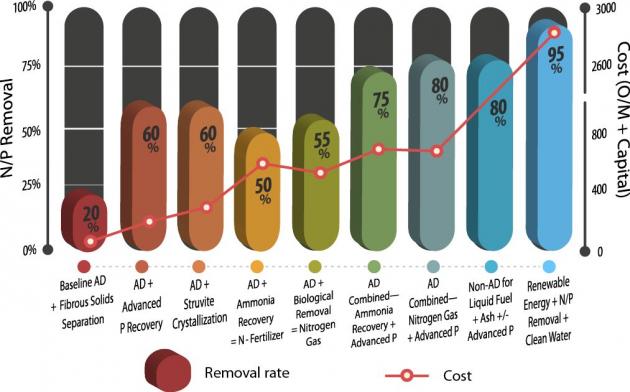
This presentation highlights existing and emerging recovery technologies that can be combined with energy recovery from dairy manure. A variety of technologies is in development, specifically tailored for solids, phosphorus, nitrogen, salt and combinations thereof. Data regarding estimated performance and cost as well as summary graphs are presented. Attention is focused on in-series treatment with anaerobic digesters, but mention is given to incorporation with other renewable energy/fuel technologies.

What did we do?

The presentation focused on information from pilot and commercial demonstration of nutrient recovery (NR) technologies, with sources including literature, pilot reports, company literature, project feasibility studies, and interviews. This presentation attempts to identify broad approaches, identify strengths and weaknesses of those approaches, as well as specific situations where each might be most appropriate. Individual case studies have been included so as to offer more detailed information about representative technologies.

What have we learned?

This presentation estimated a range of performance and cost achievements for each of these broad approaches to NR. Ranges are not necessarily indicative of individual technologies but rather represent an approximate average based on best available data in conjunction with some assumptions. Several factors made these performance and cost estimates challenging. In some cases, technologies are already operating in the dairy sector at commercial scale. In many cases, technologies are operating at a pre-commercial scale, or are used commercially in other sectors such as wastewater treatment facilities. This required assumptions to be made based on informed estimates. Also, because technologies are often applied within a single manure management system, it is clear that costs would vary significantly if applied in other situations. For example, an NR technology that operates well on dilute flush manure would likely require pretreatment at additional cost if applied to scraped manure. Finally, limited data were available, particularly in regard to costs. This is mostly due to proprietary concerns or unwillingness to cite specific costs due to rapidly changing technologies. These factors mean that performance and cost ranges should be viewed as “best estimates” based on the data currently available to researchers. It is meant to provide a broad view of the industry as a whole, and should not be used for individual technology purchase or investment decisions.
Report Conclusion

Future Plans

There are many other factors that will be important in developing the path forward for the dairy industry with respect to nutrient recovery, form and function of recovered nutrient products for example. Ongoing development of dairy NR technologies should therefore aim to develop products that fit seamlessly into existing fertilizer delivery systems while providing a form that meets transportation and market needs, at price points that are competitive with synthetic fertilizers. Development within such a competitive environment requires not only a sustained effort, but also national and capable partners, a lesson that has been identified during development of a market for high-value peat moss replacement from AD.

A look at the bigger picture, using analytical tools such as life cycle analysis, is also important. Comparison of the performance capabilities and costs of these two approaches are one point of comparison, but a more in-depth comparison may also include consideration of resource management and sustainability, including features such as energy balance, greenhouse gases, and eco-system benefits.

Authors

Jingwei Ma, Research associate at Washington State University mjw@wsu.edu

Craig Frear, Assistant Professor at Washington State University, Georgine Yorgey, Research associate at Washington State University, Chad Kruger, Director at Washington State University Center for Sustaining Agriculture & Natural Resources (CSANR)

Additional information

http://csanr.wsu.edu/wp-content/uploads/2014/07/ICUSD-Emerging-NR-Technology-Report-Final.121113B.pdf

Acknowledgements

This research was supported by funding from USDA National Institute of Food and Agriculture, Contract #2012-6800219814; National Resources Conservation Service, Conservation Innovation Grants #69-3A75-10-152; Biomass Research Funds from the WSU Agricultural Research Center; the Washington State Department of Ecology, Waste 2 Resources Program; US Environmental Protection Agency Grant # RD-83556701; and the Water Environment Research Foundation.

The authors are solely responsible for the content of these proceedings. The technical information does not necessarily reflect the official position of the sponsoring agencies or institutions represented by planning committee members, and inclusion and distribution herein does not constitute an endorsement of views expressed by the same. Printed materials included herein are not refereed publications. Citations should appear as follows. EXAMPLE: Authors. 2015. Title of presentation. Waste to Worth: Spreading Science and Solutions. Seattle, WA. March 31-April 3, 2015. URL of this page. Accessed on: today’s date.
Estimation of phosphorus loss from agricultural land in the Southern region of the USA using the APEX, TBET, and APLE models

Purpose

The purpose of our work was to determine, within the southern region (AL, AR, FL, GA, KY, LA, MS, NC, OK, SC, TN, and TX), the feasibility of using different models to determine potential phosphorus loss from agricultural fields in lieu of phosphorus indices.

What did we do? 

We have collected water quality and land use data from plot- and field-scale experiments throughout the South (AR, GA, MS, NC, OK, and TX). The water quality data provide information on runoff rates, phosphorus concentrations, and phosphorus loads. The land use data provide information on both management practices, including the amount of phosphorus applied as fertilizer and/or manure and tillage, as well as inherent properties such as rainfall, soil series, etc. Once we obtained this information, we used the data to run the Agricultural Policy / Environmental eXtender (APEX), Texas BMP Evaluation Tool (TBET), and Annual Phosphorus Loss (APLE) models, in both uncalibrated and calibrated modes.

What have we learned?            

Models predicted runoff accurately, but were unable to predict sediment or phosphorus losses accurately in many cases. Not surprisingly, models performed better when calibrated but even so predictions were problematic for particular locations and constituents (e.g. runoff in NC under no-tillage conditions and sediment at many sites).

Future Plans

We continue to determine factors affecting the poor predictions of certain constituents (e.g. sediment or phosphorus) in different data sets and models. Calibration will continue for APEX and TBET. In addition, state phosphorus indices are being run for each data set. The results from each state’s phosphorus index will be compared against the modeled data as well as other state indices in order to learn if models such as APEX, TBET, and/or APLE can better determine field phosphorus losses than the indices. Final recommendations will be provided to USDA-NRCS.

Authors

Deanna Osmond, Professor, NC State University, Soil Science Department deanna_osmond@ncsu.edu

David Radcliffe and Adam Forsberg (University of GA), John Ramirez-Avila (MSU), Carl Bolster (ARS); Dan Storm and Aaron Mittelstet (OSU)

Additional information              

This is part of a symposium.

Acknowledgements      

Thanks to our sponsor, USDA-NRCS grant 69-3A75-12-182.

The authors are solely responsible for the content of these proceedings. The technical information does not necessarily reflect the official position of the sponsoring agencies or institutions represented by planning committee members, and inclusion and distribution herein does not constitute an endorsement of views expressed by the same. Printed materials included herein are not refereed publications. Citations should appear as follows. EXAMPLE: Authors. 2015. Title of presentation. Waste to Worth: Spreading Science and Solutions. Seattle, WA. March 31-April 3, 2015. URL of this page. Accessed on: today’s date.

Phosphorus Indices: What is the water quality goal?

Phosphorus indices provide relative loss ratings that then have a corresponding management response.  Because most state Phosphorus Indices are qualitative it is not clear how the relative loss rating corresponds to actual phosphorus inputs into the receiving water and how the receiving water would react to these additions.  Even with qualitative Phosphorus Indices, unless the water resource has a specific Total Maximum Daily Load, it is not clear how losses correspond to water quality outcomes.  These issues will be discussed in the context of the 590 Natural Resources Conservation Standard for nutrient management.

Why Examine the Phosphorus Index?

The purpose of our work was to determine, within the southern region (AL, AR, FL, GA, KY, LA, MS, NC, OK, SC, TN, and TX), the relationship between state P-Index ratings to measured water quality P losses, and each other.

What did we do? 

We have collected water quality and land use data from plot- and field-scale studies throughout the South (AR, GA, MS, NC, OK, and TX). The water quality data provide information on runoff and P concentrations and loads. Land use data provide information on management practices, including the amount and timing of P applied as fertilizer and/or manure and tillage, as well as site characteristics such as rainfall, soil series, and crop or forage management. This information was used to run each southern P Index. Four of the indices are considered component, in that the rating is in lbs P/ac/year. The remaining eight P Indices are either additive or multiplicative and final ratings are qualitative. We then compared the state ratings against each other and against the total and soluble P loads that were measured from each study site. In order to compare load losses with qualitative P indices, measured total P loads were transformed based on USDA-NRCS tentative guidelines of Low (0-2 lb P/ac), Medium (2-5 lb P/ac), and High (>5 lb P/ac) P loss.

What have we learned?            

When we compared the data, there were expected differences between state-P Indices for the same set of data, but there was often considerable uniformity. However, what was less clear is what the P-Index ratings mean for water quality protection. The analysis left us with many difficult questions on how to relate edge-of-field P loss to more complex in-stream or lake P criteria and thresholds.

Future Plans 

To answer these questions, we are going to run state P Indices in different modes: against annual water quality and land treatment data; against averaged water quality and land treatment data; using erosion rates from sediment generated from the experiment, and; using erosion rates using RUSLE2. We will compare these P Index ratings against each other, the water quality data, USDA-NRCS ratings, and EPA ecosystem nutrient criteria, to help us better understand the relative value of P Indices in protecting water resources.

Authors

Deanna Osmond, Department Extension Leader, NC State University Soil Science Department deanna_osmond@ncsu.edu

C. Bolster, M. Cabrera, S. Feagley, B. Haggard, C. Mitchell, R. Mylavarapu, L. Oldham, A. Sharpley, F. Walker, and H. Zhang

Acknowledgements      

Thanks to our sponsor, USDA-NRCS grant 69-3A75-12-182.

The authors are solely responsible for the content of these proceedings. The technical information does not necessarily reflect the official position of the sponsoring agencies or institutions represented by planning committee members, and inclusion and distribution herein does not constitute an endorsement of views expressed by the same. Printed materials included herein are not refereed publications. Citations should appear as follows. EXAMPLE: Authors. 2015. Title of presentation. Waste to Worth: Spreading Science and Solutions. Seattle, WA. March 31-April 3, 2015. URL of this page. Accessed on: today’s date.

Ammonia and Nitrous Oxide Model for Open Lot Cattle Production Systems

Purpose 

Air emissions, such as ammonia (NH3) and nitrous oxide (N2O), vary considerably among beef and dairy open lot operations as influenced by the climate and manure pack conditions. Because of the challenges with direct measurements, process-based modeling is a recommended approach for estimating air emissions from animal feeding operations. The Integrated Farm Systems Model (IFSM; USDA-ARS, 2014), a whole-farm simulation model for crop, dairy and beef operations, was previously expanded (version 4.0) to simulate NH3 emissions from open lots. The model performed well in representing emissions for two beef cattle feedyards in Texas (Waldrip et al., 2014) but performed poorly in predicting NH3 emissions measured at an open lot dairy in Idaho.

What did we do? 

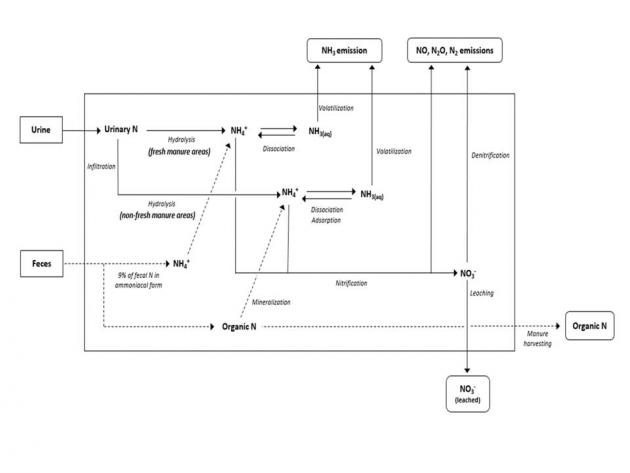
The open lot nitrogen routine of IFSM was revised to better represent the effects of climate on lot and manure pack conditions. Processes affecting the formation and emission of NH3 and N2O from open lots were revised and better integrated. These processes included urea hydrolysis, surface infiltration, ammonium-ammonia association/dissociation, ammonium sorption, NH3 volatilization, nitrification, denitrification, and nitrate leaching (Figure 1). The soil water model in IFSM was also modified and used to represent an open lot. The accuracy of the revised model (version 4.1) was evaluated using measurements from two beef cattle feedyards in Texas (Todd et al., 2011; Waldrip et al., 2014) and an open lot dairy in Idaho (Leytem et al., 2011). Comparing the two regions, Idaho typically has much drier conditions in summer and wetter conditions in winter.

Lot model

Figure 1. The revised Integrated Farm Systems Model (IFSM)

What have we learned? 

The revised model predicted NH3 emissions for the Texas beef cattle feedyards similar to the previous version with model predictions having 59 to 81% agreement with measured daily emissions. Simulated NH3 emissions for the Idaho open lot dairy improved substantially with 56% agreement between predicted and measured daily NH3 emissions. For the Idaho open lot dairy, IFSM also predicted daily N2O emissions with 80% agreement to those measured. These results support that IFSM can predict NH3 and N2O emissions from open lots as influenced by climate and lot conditions. Therefore, IFSM provides a useful tool for estimating open lot emissions of NH3 and N2O along with other aspects of performance, environmental impact and economics of cattle feeding operations in different climate regions, and for evaluating management strategies to mitigate emissions.

Future Plans    

The revised IFSM is being used to study nitrogen losses and whole farm nutrient balances of open lot feed yards and dairies. The environmental benefits and economic costs of mitigation strategies will be evaluated to determine best management practices for these production systems.

Authors      

C. Alan Rotz, Agricultural Engineer, USDA-ARS al.rotz@ars.usda.gov

Henry F. Bonifacio, April B. Leytem, Heidi M. Waldrip, Richard W. Todd

Additional information 

Leytem, A.B., R.S. Dungan, D.L. Bjorneberg, and A.C. Koehn. 2011. Emissions of ammonia, methane, carbon dioxide, and nitrous oxide from dairy cattle housing and manure management systems. J. Environ. Qual. 40:1383-1394.

Todd, R.W., N.A. Cole, M.B. Rhoades, D.B. Parker, and K.D. Casey. 2011. Daily, monthly, seasonal and annual ammonia emissions from Southern High Plains cattle feedyards. J. Environ. Qual. 40:1-6.

USDA-ARS. 2014. Integrated Farm System Model. Pasture Systems and Watershed Mgt. Res. Unit, University Park, PA. Available at: http://www.ars.usda.gov/Main/docs.htm?docid=8519. Accessed 5 January, 2015.

Waldrip, H.M., C.A. Rotz, S.D. Hafner, R.W. Todd, and N.A. Cole. 2014. Process-based modeling of ammonia emissions from beef cattle feedyards with the Integrated Farm System Model. J. Environ. Qual. 43:1159-1168.

Acknowledgements      

This research was funded in part by the United Dairymen of Idaho. Cooperation of the dairy and beef producers is also acknowledged and appreciated.

The authors are solely responsible for the content of these proceedings. The technical information does not necessarily reflect the official position of the sponsoring agencies or institutions represented by planning committee members, and inclusion and distribution herein does not constitute an endorsement of views expressed by the same. Printed materials included herein are not refereed publications. Citations should appear as follows. EXAMPLE: Authors. 2015. Title of presentation. Waste to Worth: Spreading Science and Solutions. Seattle, WA. March 31-April 3, 2015. URL of this page. Accessed on: today’s date.


Manure Irrigation: Airborne Pathogen Transport and Assessment of Technology Use in Wisconsin

This presentation will outline the completed research on manure irrigation pathogen transport including field data, transport models, and a quantitative microbial risk assessment.  Details will also be provided on the workgroup recommendations for use of this technology in Wisconsin.

Why Study Irrigation of Manure?  

Manure irrigation is of increasing interest to producers in Wisconsin as it allows for multiple application of manure throughout the growing season. This can reduce application costs while providing nutrients to a growing crop as opposed to a single manure application in the spring or fall. With increasing interest and potential for practice expansion many communities were concerned with the potential human health (pathogens), odor, and environmental issues associated with the practice.

What did we do?

The University of Wisconsin-Extension formed an 18 person workgroup representing many stakeholders and experts to review the practice of manure irrigation for impacts to odor, water quality, air quality, and human health among others. The workgroup developed recommendations for the practice which will be available in early May 2015 at http://fyi.uwex.edu/manureirrigation/. In addition, a research team evaluated manure pathogen drift in the field to assess concentrations at increasing distance away from the source. These results were used to develop an air dispersion model as well as develop a quantitative risk assessment. These models and assessment were used to evaluated practice recommendations and to determine if there are reasonable setback distances which reduce risk to a level deemed acceptable by the workgroup.

What have we learned?        

There are a number of concerns and benefits that may be realized when using manure irrigation. There may be scenarios in which manure irrigation is a beneficial practice, but there may be locations in which it is not suitable due to sensitive environmental factors or proximity to neighbors. Like many manure system components management of the system is key, and if improperly manged can lead to negative impacts. Detailed recommendations of the workgroup will be available in May 2015.

Future Plans

The workgroup intends to complete the report by May 2015 to be made available to interested parties on the webpage. The research team is currently evaluating expanding the measurement of pathogens to other areas of the farm and additional land application techniques for comparison.

Authors

Dr. Becky Larson, University of Wisconsin, ralarson2@wisc.edu

Susan Spencer, Tucker Burch, Yifan Liang, Chris Choi

Additional information            

http://fyi.uwex.edu/manureirrigation/

Acknowledgements      

Wisconsin Department of Natural Resources and the USDA ARS in Marshfield, Wisconsin.

The authors are solely responsible for the content of these proceedings. The technical information does not necessarily reflect the official position of the sponsoring agencies or institutions represented by planning committee members, and inclusion and distribution herein does not constitute an endorsement of views expressed by the same. Printed materials included herein are not refereed publications. Citations should appear as follows. EXAMPLE: Authors. 2015. Title of presentation. Waste to Worth: Spreading Science and Solutions. Seattle, WA. March 31-April 3, 2015. URL of this page. Accessed on: today’s date.

Evaluation of Feed Storage Runoff Water Quality and Recommendations on Collection System Design

Why Study Silage Leachate?

Silage storage is required for many livestock and poultry facilities to maintain their animals throughout the year.  While feed storage is an asset which allows for year round animal production systems, they can pose negative environmental impacts due to silage leachate and runoff.  Silage leachate and runoff have high levels of oxygen demand and nutrients (up to twice the strength of animal manure), as well as a low pH posing issues to surface waters when discharged.  Although some research exists which shows the potency of silage leachate and runoff, little information is available to guide the design of collection, handling, and treatment facilities to minimize the impact to water quality.  Detailed information to characterize the strength of the runoff through a storm is needed to develop collection systems which segregate runoff to the appropriate handling and treatment system based on the strength of the waste. 

What did we do?

In order to evaluate collection designs, we evaluated six bunker silage storage systems in Wisconsin.  Runoff from these systems was collected using automated samplers throughout one year to assess water quality for nutrients (nitrogen and phosphorus species), oxygen demand, total solids, and pH.  Flow rate for each system was also recorded along with weather data including precipitation information.  Feed quantity and quality was also recorded at each site to have a better understanding of the impact of silage management on water quality.  Data was analyzed to determine flow weighted average runoff concentrations for pollutants measured, seasonality and feed impacts to water quality, storage design impacts, the presence or absence of first flush conditions, total loading, and evaluated to make collection design recommendations.

What have we learned?

Flow rate, timing of ensiling of forage, site bunker design, and amount of litter present were determined to influence silage runoff concentrations.  Leachate collection played a significant role in water quality as the runoff from the site without leachate collection had a lower average pH (4.64) and higher COD values (5,789 mg L-1) than the sites with leachate collection (6.09 and 5.54 pH, and 1,296 and 3,318 mg L-1 COD).  Nutrients were also higher for the site without leachate collection TP (83 mg L-1), NH3 (68 mg L-1), and TKN (222 mg L-1) compared to TP (29 and 63 mg L-1), NH3 (25 and 48 mg L-1), and TKN (184 and 215 mg L-1) for the sites with leachate removal. Time of ensilage also played an important role in water quality with increased losses occurring within two weeks of ensilage.  The most important finding for the design of treatment systems was that the water quality parameters (including nutrients) were found to be negatively correlated with flow.   The resulting effect is that the storms hydrograph has a significant impact on the pollutant loading to the surrounding waterways.  It was also found that loading was relatively linear throughout each storm event indicating that there is no first flush phenomenon which is found to occur with urban runoff systems.  Therefore designing systems to collect the initial runoff from a system is not an efficient way to capture the greatest pollutant load.  It was found that low flows throughout a storm have high pollutant concentrations and collecting low flows throughout a storm would result in the greatest load collected per unit volume.

Future plans

The next phase of this research will be to develop loading recommendations to filter strips for sizing and minimizing impact to the environment.

Corresponding author

Rebecca Larson, Assistant Professor and Extension Specialist, Biological Systems Engineering, University of Wisconsin-Madison ralarson2@wisc.edu

Mike Holly, Eric Cooley, Aaron Wunderlin

Additional information

Published paper is currently in review and will be available within the next year.

Acknowledgements

Wisconsin Discovery Farms

Farming Systems – A look at an integrated livestock and crop farm


Why Re-Examine Diversified Farms?

Beef production is a major component of the U.S. agricultural economy. This sector provides a significant source of protein to the world population.

Much of the early livestock production in this country was based on self-sufficiency needs.  A farmer grew the feed for the livestock, fed it to the livestock raised on the farm, fed their family and marketed or bartered any excess production.  

The government farm program policies of the 1960’s were based on supply management and periods of large production of grains, followed by incentives to reduce production.  That all changed with the Russian grain sales of 1972, and the call went out for more grain production.  A clear and dedicated farm policy changed to a market oriented grain production policy and the race to expand farming operations to capture international grain markets was on.  During the 1970’s, farmers began to specialize in one enterprise, either livestock or crop production, but not always both.  Integrated livestock/crop farms didn’t necessarily disappear, but the farmers looking to expand began to focus on one or the other.  This led to custom-cattle feeding in the Middle Southwestern US, dairy feeding in California, and contract hog production in the Upper Midwest.  Large numbers of crop production acres were dedicated to crop production for four months of the year with the balance of the season land was idle and bare.

Fast forward to the decade of the 2000’s:   Livestock farms are larger than 1972.  Crop farms are larger than 1972.  We’ve experienced wide swing’s in livestock and crop production profitability.  We’ve experienced wide swings in the value of just about every input in agriculture that determines enterprise profitability.  Some question the sustainability of current practices relative to profitability, environmental soundness, and future food production for a growing world population.

What Did We Do?

This 9 part video series chronicles a real beef feedlot and corn crop farm in Iowa and how they gain efficiencies in both the crop and beef feeder cattle enterprises by incorporating cover crops over the winter, harvesting them for cattle feed, and returning the manure nutrients back to the system for grain production.  This leads to both an economically and sustainable integrated system in modern times. 

Farming Series 1 – A brief introduction to the 8 part video/audio series detailing a feedlot/crop farm

Farming Series 2 – A 3-minute session on harvesting corn silage, handling and storage

Farming Series 3 – Planting a rye crop

Farming System Series 4 – Irrigation on Newly planted rye

Farming Systems Series 5 – Measuring Soil Test

Farming Systems Series 6 – Feeding the cattle

Farming Systems Series 7 – Managing the feedlot

Farming Systems Series 8 – Spring Rye Crop growth and harvest

Farming Systems Series 9 – Planting the corn crop

Author

Joe Lally

Iowa State University

Farming Systems video/audio series

lally@iastate.edu

712.263.9729 – cell

515.294.1496 – office

The authors are solely responsible for the content of these proceedings. The technical information does not necessarily reflect the official position of the sponsoring agencies or institutions represented by planning committee members, and inclusion and distribution herein does not constitute an endorsement of views expressed by the same. Printed materials included herein are not refereed publications. Citations should appear as follows. EXAMPLE: Authors. 2015. Title of presentation. Waste to Worth: Spreading Science and Solutions. Seattle, WA. March 31-April 3, 2015. URL of this page. Accessed on: today’s date.


Multi-Specie Mortality Composting Demonstrations and Outreach in SW Nebraska

Research and demonstration projects continue to validate the practice of mortality composting in a variety of production scenarios, geographic regions, and climates.  Composting, when compared to many common methods of mortality management, can result in improved environmental, economic, and biosecurity outcomes.  In SW Nebraska, a partnership was developed between the USDA-Natural Resources Conservation Service (NRCS) and the Nebraska College of Technical Agriculture (NCTA) to demonstrate mortality composting as a biosecurity management practice for livestock producers, and an economically viable practice for management of equine mortalities.  Initially, the target audiences for the demonstration and outreach were agricultural students and faculty of NCTA, livestock producers, and horse owners; however, the project attracted the interest of veterinarians managing private practices and the teaching hospital at NCTA.  The expanded audience allowed for discussion on the social acceptance of composting for recreational horses and companion animals, particularly the fate of the finished compost.  Additionally, multiple carbon sources and co-composting materials were piloted, included waste cedar which is common to the area.  Additional demonstration sites and outreach events are planned for 2015, working with the expanded audiences, and in other regions of the state.  Management of mortality composting in the humid eastern end Nebraska will be different than in the semi-arid high plains location of NCTA.              

Authors

Bass, Thomas     tmbass@montana.edu                 Animal and Range Sciences        

Jim Hicks, NCTA

The authors are solely responsible for the content of these proceedings. The technical information does not necessarily reflect the official position of the sponsoring agencies or institutions represented by planning committee members, and inclusion and distribution herein does not constitute an endorsement of views expressed by the same. Printed materials included herein are not refereed publications. Citations should appear as follows. EXAMPLE: Authors. 2015. Title of presentation. Waste to Worth: Spreading Science and Solutions. Seattle, WA. March 31-April 3, 2015. URL of this page. Accessed on: today’s date.

Co-Digestion: A Primer on Substrate Utilization and Project Considerations

Why Study Co-Digestion?

An overwhelming percentage of farm-based, anaerobic digestion projects practice co-digestion for improved business models that result from revenues enhanced by tipping fees and extra biogas production. This presentation utilizes over a decade of research and practical experience available within the Pacific Northwest regarding co-digestion, highlighting its benefits, potential pitfalls, and project considerations. Throughout, specific industry examples, made available through a scientific survey of experts, are used to relay information.

What did we do?

To provide an insider’s look at design and management considerations, five individuals with extensive experience in co-digestion at dairy digesters were interviewed. Interviewees included a project developer who has successfully implemented co-digestion at a number of dairy digesters, a dairy farmer who owns and operates a co-digestion project, a scientist with in-depth knowledge of AD and co-digestion, and two system engineers who have designed numerous digesters. The sample size was relatively small, but few individuals have technical expertise in co-digestion in the US, and not all individuals with expertise were willing to be interviewed. Several of these individuals work primarily in the Pacific Northwest where authors are located; however, to the extent possible, individuals with broader experience throughout the US were included.

costs and revenue streams for codigestion compared to baseline manure only digestion

Figure 1. Costs and revenue streams for codigestion compared to baseline manure only digestion

What have we learned?

Co-digestion can provide a significant economic boost to AD operations at dairies. However, after talking with numerous experts in the field of co-digestion, it is clear that careful consideration and planning is required to successfully incorporate substrates. Substrates should be chosen to complement existing waste streams, and should be carefully screened to avoid inhibition. In most cases, the selection of a substrate will be limited by location and volume attainable, and project developers may need to invest considerable time and effort into developing and maintaining the necessary relationships for acquiring substrates. Regulatory restrictions and nutrient management implications are also important. A solid understanding of these issues can contribute to successful implementation of co-digestion.

Successful co-digestion depends on multiple factors including but not limited to type of substrate, hauling costs, location of digester compared to substrate, local substrate competition, tipping fees, and nutrients. Before beginning co-digestion, developers need to first determine whether co-digestion makes economic sense at a particular dairy operation. Otherwise, co-digestion may turn into an economic burden for project developers that are already economically strained by high AD capital costs and low received electrical rates. If a sound business plan is developed and implemented, co-digestion can provide additional profit to project owners.

Future Plans

In the US, most post-consumer food scrap recycling is currently achieved via composting. For example, in western Washington State, many residents of Seattle and King County have their food scraps recycled along with yard waste into saleable compost. While this effectively diverts food scraps from landfilling, AD could capture the energy within food scraps and use it to replace fossil-derived energy, providing additional benefits. When linked with nutrient recovery, the process could also produce saleable fertilizers. If dairy farmers are located near post-consumer food scrap sources, they may be able to position themselves well as an environmentally conscious (lower odor production) and less expensive (shorter hauling distances and lower tipping fees) recycling option.

Existing barriers to co-digestion of post-consumer food wastes include current regulations excluding these wastes from AD, and the extensive pretreatment required so that these wastes could be viably fed to digesters. However, if solutions to these issues could be found, it could be a win-win scenario for food waste diversion and AD projects looking to remain viable.

Authors

Jingwei Ma, Research Associate at Washington State University mjw@wsu.edu

Nick Kennedy, Associate in Research at Washington State University, Georgine Yorgey, Research Associate at Washington State University, Chad Kruger, Director of CSANR, Craig Frear, Assistant Professor at Washington State University

Additional information

https://pubs.extension.wsu.edu/considerations-for-incorporating-codigestion-on-dairy-farms

Acknowledgements

This research was supported by funding from USDA National Institute of Food and Agriculture, Contract #2012-6800219814; National Resources Conservation Service, Conservation Innovation Grants #69-3A75-10-152; Biomass Research Funds from the WSU Agricultural Research Center; and the Washington State Department of Ecology, Waste 2 Resources Program.

The authors are solely responsible for the content of these proceedings. The technical information does not necessarily reflect the official position of the sponsoring agencies or institutions represented by planning committee members, and inclusion and distribution herein does not constitute an endorsement of views expressed by the same. Printed materials included herein are not refereed publications. Citations should appear as follows. EXAMPLE: Authors. 2015. Title of presentation. Waste to Worth: Spreading Science and Solutions. Seattle, WA. March 31-April 3, 2015. URL of this page. Accessed on: today’s date.

Improving Estimation of Enteric Methane Emissions from Dairy and Beef Cattle: A Meta-Analysis


Purpose

The enteric methane emissions from dairy and beef cattle are considered as a major contributor of greenhouse gases emissions in U.S. Since enteric methane emission represents an unproductive loss of dietary energy, one of the predominant methane emission estimation procedures are driven by first estimating daily gross energy intake (GEI) by individual animals and then multiplying it by an estimate of “methane conversion factor (Ym)”, which is in the range of 4–10% of GEI. The IPCC Tier 2 enteric methane emission estimation procedures are driven by first estimating daily and annual gross energy consumption by individual animals within an inventory class which are then multiplied by an estimate of CH4 loss per unit of feed (Ym). The extent to which feed energy is converted to CH4 depends on several interacting feed and animal factors. It is important to examine the influences of feed properties and animal attributes on Ym. Such influences are important to better understand the microbiological mechanisms involved in methanogenesis with a view to designing emission abatement strategies, as well as to identify different values for Ym according to animal husbandry practices. The search for influences of feed properties and animal attributes on Ym is not sufficiently documented and sometimes equivocal. There is considerable room for improvement in the IPCC Tier 2 prediction in Ym. As more data are collected, a meta-analysis may better determine the influential variables. The objective of this study was to conduct a systematic literature review and meta-analysis in order to identify and quantify the sources of the variability and uncertainty in reported Ym values, and in particular the influence of feed and animal properties upon Y

What did we do?

Multiple strategies were undertaken to identify potentially eligible studies to be included in the meta-analysis. The inclusion criteria were: the study must have reported measured CH4 emission data which can be expressed in the form of Ym; and the study must be published in a peer reviewed journal in English. The selected studies were distributed to a group of trained analysts for data extraction. Standard data extraction sheets were developed for consistency. As a result of the data review and extraction processes, a meta-analysis dataset was created. The dataset for the meta-analysis included all control treatment means at various common feed and animal combinations. Some studies provided treatment means at different conditions; in these cases, more than one treatment means (data points) were extracted from one study. Treatment means for special feed additive treatments were not included. Data across studies were analyzed statistically using the MIXED procedures of SAS (SAS for Windows, Version 9.3, SAS Institute, Cary, NC). Model development was conducted in a meta-analytical manner by treating study effect as random. The numbers of animals contributing to each treatment mean were used as a weighting variable. Various processes were used to test for confounding terms. Significant effects were declared at P < 0.05.

What have we learned?

The literature search efforts yielded a total of 75 peer reviewed studies that provided measured enteric CH4 emissions from beef or dairy cattle operations, which were expressed as Ym. These studies included 184 treatment means at various animal and feed combinations.The CH4 emission rates expressed in g/animal/day were positively related with weight of animal (P<0.01), and they showed a bimodal distribution, which could be due to the weight difference between dairy and beef cattle. The CH4 emission rates expressed in Ym, or g/kg DMI were more close to have a normal distribution, and they have much less variation compared with CH4 emission rates expressed in g/animal/day. The Ym values were significantly affected by feeding style (grazing vs. housed, P<0.01) and cattle type (dairy vs. beef, P<0.01), and an interaction of feeding style and cattle type was observed (P<0.01). The Ym for beef had large variation than the Ym for dairy cattle. Grazing beef had the largest mean value of Ym. For housed cattle, no significant difference was observed between beef and dairy (P=0.54).Forage content in diet significantly affect the Ym values (P<0.01), while effect of geography region was not significant at 0.05 level (P=0.06). For grazing cattle, significant higher Ym was observed for beef cattle as compared to dairy cattle (7.9% vs. 6.1%, P=0.02). The effect of diet forage content on Ym could be explained by the feed digestibility. It was found Ym was negatively related with the general energy intake (GEI) of cattle per kg of body weight (P<0.01), or the OM digestibility of feed (P=0.01). The higher the OM digestibility of feed, the higher GEI per kg of body weight, and the lower the Ym value. The OM digestibility of feed and the GEI per kg of body weight were positively related with each other and may not be independent. When both of them were included in the model of Ym, only the OM digestibility of feed was significant. A model was obtained for estimating Ym from the OM digestibility of feed. The reported fat content in diet ranged from 18 to 64 g per kg of dry matter. The Ym value was negatively related with the fat content in diet. Although the effect was not statistically significant in this meta-analysis (P=0.31), it confirmed the hypothesis that increasing fat content in diet can potentially result in reduced CH4 emission. The effect of lactation status on Ym was examined for dairy cattle, including both grazing and housed animals. Lactating dairy cattle tend to have lower Ym than dry one (6.5% vs. 7.0%). However, the effect was not statistically significant (P=0.32). The days in milk for lactating dairy cattle showed no significant effect on Ym values (P=0.39).

Future Plans

  1. Identify research gaps in estimation of Ym values in literature. Quantify the uncertainties and highlight the main source of variation.
  2. Refine the Ym estimation model.
  3. Based on the results, develop suggestions or guidelines to improve feed efficiency and to reduce carbon footprint per unit of product

Authors

Zifei Liu, Assistant professor, Kansas State University zifeiliu@ksu.edu

Yang Liu, Xiuhuan Shi

Additional information

http://www.bae.ksu.edu/~zifeiliu/

The authors are solely responsible for the content of these proceedings. The technical information does not necessarily reflect the official position of the sponsoring agencies or institutions represented by planning committee members, and inclusion and distribution herein does not constitute an endorsement of views expressed by the same. Printed materials included herein are not refereed publications. Citations should appear as follows. EXAMPLE: Authors. 2015. Title of presentation. Waste to Worth: Spreading Science and Solutions. Seattle, WA. March 31-April 3, 2015. URL of this page. Accessed on: today’s date.