Comparison between Different Approaches to Estimating Nutrient Balances in Livestock Production Watersheds
Nutrient budgets have been historically developed on livestock farms to improve nutrient use efficiency and reduce field losses. There is growing interest in developing nutrient budgets, particularly for nitrogen and phosphorus, on larger spatial scales such as watersheds and river basins to guide water quality improvement efforts. A big obstacle to developing such budgets is the lack of access to management practices on individual farms. On the other hand, publicly-available data for larger spatial scales, such as survey and census data compiled by the U.S. Department of Agriculture, is typically aggregated to the county or state level. There is a need for a methodology that reliably estimates nutrient budgets in individual watersheds across different production conditions. This study investigates the potential of incorporating spatial data products to refine estimated nutrient budgets. Three different approaches for nutrient budget development will be evaluated across different watersheds, HUC-10 level. Sources of uncertainty in the developed nutrient budgets will be assessed and their respective contribution to the overall budgets will be quantified.
Corresponding Author
Sharara Mahmoud, North Carolina State University, m_sharara@ncsu.edu
Other authors
Horacio Aguirre-Villegas, University of Wisconsin-Madison
Rebecca Larson, University of Wisconsin-Madison
The authors are solely responsible for the content of these proceedings. The technical information does not necessarily reflect the official position of the sponsoring agencies or institutions represented by planning committee members, and inclusion and distribution herein does not constitute an endorsement of views expressed by the same. Printed materials included herein are not refereed publications. Citations should appear as follows. EXAMPLE: Authors. 2019. Title of presentation. Waste to Worth. Minneapolis, MN. April 22-26, 2019. URL of this page. Accessed on: today’s date.
One Health: Policies, Practices and Priorities to Address Antimicrobial Resistance
Antimicrobial resistance (AMR) is a critical human health issue worldwide. Although conversations about AMR causes and solutions often focus on the role of agriculture versus the role of human medicine, the reality is that there are many facets to consider when attempting to understand and address antimicrobial resistance. This session – curated by members of a nationwide team cooperating on a new outreach program titled iAMResponsible – will feature invited experts engaging in conversations about the shared responsibility among food producers and processors, consumers, policy makers and the medical community to understand and address antimicrobial resistance. Continue reading “One Health: Policies, Practices and Priorities to Address Antimicrobial Resistance”
Synergetic Process Parameters Interaction in Solid-state Anaerobic Co-digestion
In this mesophilic solid-state anaerobic co-digestion study, interaction among process parameters were investigated. To achieve this, four treatments were considered based on two carbon to nitrogen ratios (34 and 28). The treatments were DMCS34 – Dairy manure, inoculum, and untreated corn stover with C/N ratio of 34; DMCS28 – Dairy manure, inoculum, and untreated corn stover with C/N ratio of 28; DMPCS34 – Dairy manure, inoculum, and washed pretreated corn stover with C/N ratio of 34; and DMPCS28 – Dairy manure, inoculum, and washed pretreated corn stover with C/N ratio of 28. 1500g of each of this treatment was introduced into a 3.5L digester subjected to a temperature of 35oC. Samples from each treatment were analyzed for ADF, NDF, ADL, ORP, pH, volatile fatty acids concentration and composition, alkalinity, and ammonia-nitrogen at the start and end of the experiment. Also monitored and measured was the hydrogen sulphide, methane composition and biogas yield.
What Have We Learned?
In line with literatures, co-digestion of dairy manure with pretreated or untreated corn stover reduced inhibitory potential of dairy manure. For instance, propionic acid is one of such inhibitory substance to methanogens at 900 mg/L concentration. From Figure 1 propanoic concentration for all the treatments (DMPCS34, DMPCS28, DMCS34, and DMCS28) relative to the dairy manure was significantly reduced by at least 40 % (p < 0.05). Hence, these treatments all had propanoic concentration below 900 mg/L except for DMPCS34. The contrary trend with DMPCS34 treatment might suggest the role of high C/N in propanoic production rate. Furthermore, we also observe that pretreatment lessen this dilution effect, as propanoic concentration was higher with the pretreated treatments (DMPCS34 and DMPCS28).

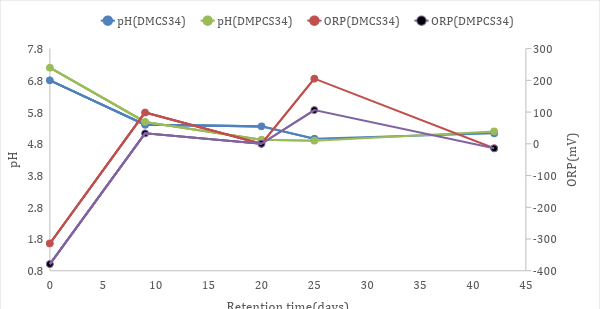
On interaction between ORP relationship with pH, our result shows that there was a strong negative correlation between pH and ORP. As the ORP increases, the pH decreases. This could be attributed to high VFA production beyond the buffering capacity of the alkalinity in the influent. The slight decrease observed in the ORP after 25 days (Figure 2) detention time could be attributed to 33 mL of NaHCO3 added to raise the pH. However, this seems to have no obvious impact on the pH, as the pH remains between 4.8 – 5.2. Similar trend was observed for DMCS28 and DMPCS28 influent with more pronounced ORP increase from between -390 mV at the start of the experiment to +131 mV at the end of the experiment.
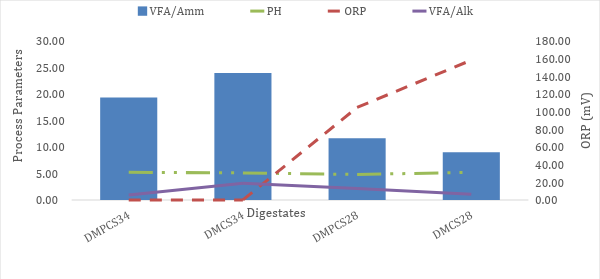
A more complex interaction among VFA/Ammonia, pH, ORP and VFA/Alkalinity investigated in Figure 3 shows low growth in VFA/Alkalinity relative to VFA/Ammonia, an indication that ammonia concentration was low relative to other alkaline in the digester. This might be due to low ammonia mineralization or the generation rate might be slower compared with VFA production rate. Furthermore, at the end of the experiments, the digestates all had VFA/Alkalinity values that exceeded 0.9 (Figure 3), a stable process condition threshold for anaerobic digestion.
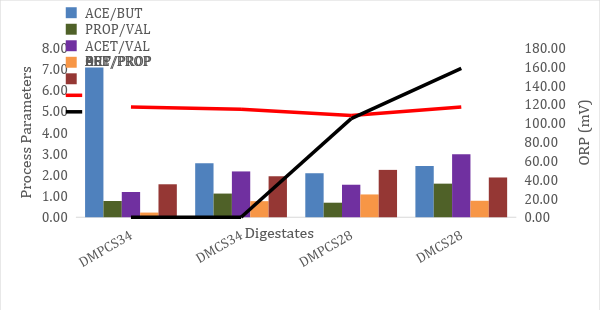
Unlike Figure 3, there was no clear interaction among ORP and VFA composition ratio after the experiment (Figure 4). However, we observed that acetic to propionate acid ratio in our study was above the threshold 0.7 recommended for effective anaerobic digestion. Interestingly, acetic to butyric ratio was inversely proportional to the butyric to propanoic ratio (Figure 4).
Future Plans
We intend to conduct more investigation on these process parameters in order to have a more defined values for a suitable solid-state anaerobic co-digestion process.
Authors
Shafiqur Rahman, Associate Professor, Agricultural & Biosystems Engineering Department, North Dakota State University
Ademola Ajayi-Banji, Graduate Student, Agricultural & Biosystems Engineering Department, North Dakota State University
Additional Information
Will be available at North Dakota State University library by 2020.
Acknowledgements
North Dakota State University Development Foundational Grant.
The authors are solely responsible for the content of these proceedings. The technical information does not necessarily reflect the official position of the sponsoring agencies or institutions represented by planning committee members, and inclusion and distribution herein does not constitute an endorsement of views expressed by the same. Printed materials included herein are not refereed publications. Citations should appear as follows. EXAMPLE: Authors. 2019. Title of presentation. Waste to Worth. Minneapolis, MN. April 22-26, 2019. URL of this page. Accessed on: today’s date.
Effect of Pretreatment and Agitation Frequency on Methane Yield in Solid-state Anaerobic Co-digestion of Dairy Manure and Corn Stover
Solid state anaerobic co-digestion (SSCoD) has attracted huge attention in the renewable energy industry due to the potential to solve nutrient imbalance challenge. However, SSCoD potential as biogas source is often limited except the process parameters are systematically optimized. Hence, in this study, we investigated the impact of 4%-NaOH-pretreatment and two agitation frequencies (two-day and seven-day periodic agitation), being part of the process parameters, on biogas composition and methane yield.
What Did We Do?
In our study, four solid-state treatments (DMPCSuw, DMPCSuw2, DMPCS, and DMCS) prepared from the co-digestion of dairy manure and corn stover under total solid of 16% were used to examine the effect of pretreatment with or without washing and agitation frequency on biogas production and composition. Treatment DMPCSuw2 represents dairy manure, inoculum, and unwashed pretreated corn stover agitated every two-days; Treatment DMPCSuw represents dairy manure, inoculum, and unwashed pretreated corn stover agitated every seven-days; Treatment DMPCS represents dairy manure, inoculum, and washed pretreated corn stover agitated every seven-days; and Treatment DMCS represents dairy manure and inoculum with untreated corn stover agitated every seven-days. 1000g of these treatments were loaded into four litres working volume PVC digesters installed in a thermostatically-controlled-water bath set at 37oC.The gas composition (methane, carbon dioxide and hydrogen sulphide) and yield from these treatments were monitored and quantified. Other process parameters investigated before and after the digestion process were ADF, NDF, ADL, ORP, pH, volatile fatty acids concentration and composition, alkalinity, and ammonia-nitrogen. Also investigated was the volatile solids.
What Have We Learned?
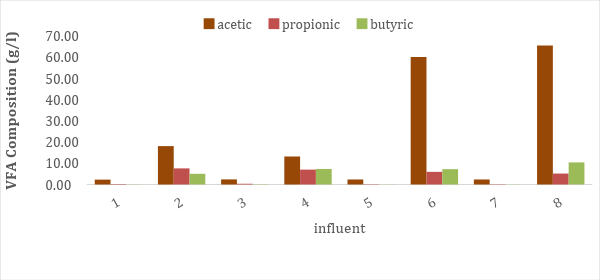
Considering treatments with either of the two processes (washing and unwashing) after pretreatment, we observed that treatments prepared with unwashed 4% NaOH pretreated corn stover (DMPCSuw and DMPCSuw2) showed significantly higher acetic acid production (p < 0.05), irrespective of agitation frequency (Figure 1). Acetic concentration at the end of the experiments was over 50 g/L (Figure 1). This suggests higher biogas yield and invariably more energy generation.
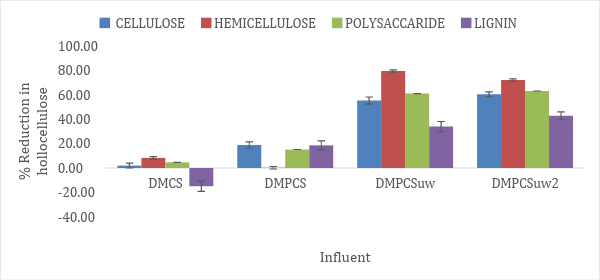
Furthermore, as shown in Figure 2, there was significantly higher holocellulose degradation in the treatments with unwashed 4% NaOH pretreated corn stover (DMPCSuw and DMPCSuw2) compared with DMCS and DMPCS (P < 0.05). Furthermore, cellulose and holocellulose was over 50% in the DMPCSuw and DMPCSuw2 treatments (Figure 2). These further substantiate the effectiveness of DMPCSuw and DMPCSuw2 treatments in energy generation from the co-digestion of dairy manure and corn stover under solid-state condition.
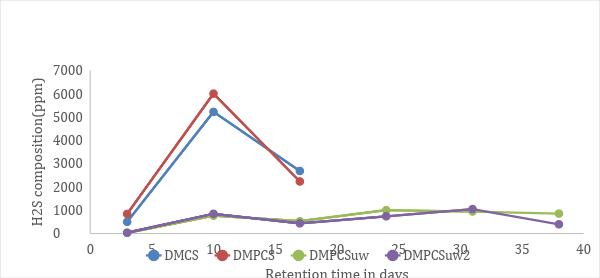
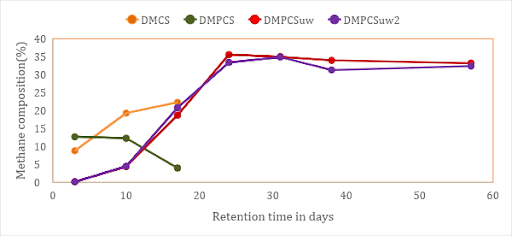
High sulphide production (> 5000 ppm) in the DMCS and DMPCS treatments on the 10th days might be the reason for the low methane composition (Figure 4). This was because aside from the potential competition of sulphur reducing bacteria with methanogens which obviously affected the anaerobic process in treatments DMCS and DMPCS, the digesters for DMCS and DMPCS treatments equally for failure after the third week.
Consistent methane composition after the third week of our experiment and the low sulphide production from DMPCSuw and DMPCSuw2 treatments (Figures 3 & 4) suggest that, pretreatment without washing could enhance biogas yield and methane composition.
However, there was no significant difference between 2 days and 7 days agitation frequency in our study, a trend which suggests that 7-days agitation frequency will likely minimize agitation energy input for the SSCoD study.
Future Plans
We intend to improve methane production from our unwashed treatments, this will add more economic value to the solid-state anaerobic co-digestion process.
Authors
Shafiqur Rahman, Associate Professor, Agricultural & Biosystems Engineering Department, North Dakota State University
Ademola Ajayi-Banji, Graduate Student, Agricultural & Biosystems Engineering Department, North Dakota State University
Additional Information
Will be available at North Dakota State University library by 2020.
Acknowledgements
North Dakota State University Development Foundational Grant.
The authors are solely responsible for the content of these proceedings. The technical information does not necessarily reflect the official position of the sponsoring agencies or institutions represented by planning committee members, and inclusion and distribution herein does not constitute an endorsement of views expressed by the same. Printed materials included herein are not refereed publications. Citations should appear as follows. EXAMPLE: Authors. 2019. Title of presentation. Waste to Worth. Minneapolis, MN. April 22-26, 2019. URL of this page. Accessed on: today’s date.
Adding Color to Your Program…People and Personalities
Asking a client to share their communication style and preference isn’t necessarily the first thing that’s done when contacted for help about manure management. However, it’s been shown time and again that communicating to a person in the way that matches the way they want to be communicated to, is the best way to ensure everyone is acknowledged and heard.
What Have I Learned
There are several methods for identifying personality preferences and subsequently, communication preferences. I choose to use the Real Colors® program with the manure haulers I work with. This is a group that has had very little attention given to them by Extension and are reluctant to trust agency folks. Using an organized program like Real Colors® is a non-invasive way to really understand how each of the 25 haulers I work with need to be communicated with. After going through the assessment and figuring out everyone’s individual preferences, we then gather as a group and talk about why some father/son, brother and cousin teams may find it difficult to work together. I follow the personality preference training with conflict management strategies which eventually leads into discussion on how to get along with fellow employees, customers and competitors.
Next Steps
I dare you to ask your most challenging program attendee to be vulnerable enough to discuss their personality and communication style…the ones that come to every event you host within your program. The grumpy guy with crossed arms; the stern lady with pursed lips; or the one who won’t stop talking. Why would you do that? Because the barriers that break and the forward momentum that is gained may be just what your program is lacking.
Author
Mary A. Keena, North Dakota State University Extension, mary.keena@ndsu.edu
Additional information
The authors are solely responsible for the content of these proceedings. The technical information does not necessarily reflect the official position of the sponsoring agencies or institutions represented by planning committee members, and inclusion and distribution herein does not constitute an endorsement of views expressed by the same. Printed materials included herein are not refereed publications. Citations should appear as follows. EXAMPLE: Authors. 2019. Title of presentation. Waste to Worth. Minneapolis, MN. April 22-26, 2019. URL of this page. Accessed on: today’s date.
Development of Short Educational Videos for CAFO Related Topics
Concentrated animal feeding operations (CAFOs) are encountering more resistance. There are cases where citizens file suit to stop application of a new or expansion of animal production facility; others petition the county commissioners to stop the facility via zoning or health ordinances. When extension personnel were asked about CAFOs, it became apparent that some user-friendly and brief information pieces are needed, especially those that are based in fact and able to capture the audience’s attention and address their emotions. Well-managed CAFOs tend to have less nutrient management and odor nuisance issues, and when needed, there are options to mitigate odor and improve nutrient management. Many CAFOs have been shown to benefit the local economy, which is critical to rural communities. The videos are intended to be short so that the user can stay interested and choose next topics of interests. The goal is to capture users’ attention and provide them with essential facts rather than trying to push information to them.
What did we do?
The University of Missouri Extension team have created a series of short whiteboard videos that target concerned local citizens and county commissioners seeking information about the impacts of CAFOs on environment, economy, antibiotics, and health. Scripts were developed by the faculty based on facts and peer-reviewed publications. Artists were hired to develop the whiteboard videos. A total of five videos were developed in the first production round and posted onto a website. A website and YouTube Channel were created to present the videos.
What we have learned?
The team created the videos and showed to classes and university staff, to collect feedback and ideas to improve the videos. Iteration of the scrips, communication with the artists, panel review for clarity and improvement, are critical to the video production.
Implications of the project or research
General public who want to learn more about CAFOs or concerned about the potential impacts of newer, intensive animal farms are able to access research based information to answer their questions. Between 7/10/2018 and 3/1/19 the videos have a total of 963 views, CAFO Environmental Impact is the most viewed at 336.
What should people remember as take-home messages from your presentation?
More scientific based information and application of social media might be needed to convey more information, and stimulate non-agricultural and younger audiences to learn more about animal production facts.
Future plans
Based on the feedback and discussion, create more videos to promote science-based information pieces, to reach a broad audience.
Authors
Lim, Teng (Associate Professor and Extension Agricultural Engineer, Agricultural Systems Management, University of Missouri, limt@missouri.edu)
Massey, Ray; Bromfield, Cory; and Shannon, Marcia; University of Missouri
Additional information
Please visit https://www.youtube.com/channel/UCX-Y1Fuyi_l7SIs3y6u9Yhw to view the videos and http://agebb.missouri.edu/commag/cafo/ to find more information.
Acknowledgements
Four of the videos were developed by small grants provided by the U.S. Pork Center of Excellence.
The authors are solely responsible for the content of these proceedings. The technical information does not necessarily reflect the official position of the sponsoring agencies or institutions represented by planning committee members, and inclusion and distribution herein does not constitute an endorsement of views expressed by the same. Printed materials included herein are not refereed publications. Citations should appear as follows. EXAMPLE: Authors. 2019. Title of presentation. Waste to Worth. Minneapolis, MN. April 22-26, 2019. URL of this page. Accessed on: today’s date.
Transforming Manure from ‘Waste’ to ‘Worth’ to Support Responsible Livestock Production in Nebraska
The University of Nebraska – Lincoln (UNL) Animal Manure Management (AMM) Team has supported the environmental stewardship goals of Nebraska’s livestock and crop producers for many years using multiple traditional delivery methods, but recently recognized the need to more actively engage with clientele through content marketing activities. A current programming effort by the AMM Team to increase efficient manure utilization on cropland in the vicinity of intensive livestock production is the foundation for an innovative social media campaign.
What did we do?

While traditional extension outputs remain valuable for supporting the needs of clientele who actively seek out information on a topic, “content marketing” is a strategic tactic by which information is shared to not only attract and retain an audience, but to drive impactful action. Social media platforms are popular tools for delivery of current, research-based information to clientele; a key barrier to effectively using social media for content marketing by the project directors has been time. For instance, using Twitter efficiently requires regular attention to deliver messages frequently enough to remain relevant and to do so at times when user activity characteristics demonstrate the greatest opportunity for posts to be viewed and disseminated. Because this proved to be a challenge, a content marketing plan (Figure 1) was initiated using “waste to worth” as the topic of focus.
Three major components were identified as being critical to the success of the project (Figure 2): design of high-quality graphics that are tied to online content and resources and are suitable for use on Twitter, Facebook, or other social media platforms; development of a content library containing packaged content (graphic + suggested text for social media posts) that is easy to navigate and available for partners to access and utilize; and development of a communication network capable of reaching a broad audience.
Graphics

An undergraduate Agricultural Leadership, Education and Communication (ALEC) student was recruited to support graphical content development using three basic guidelines: 1) Eye-catching but simple designs; 2) Associated with existing content hosted online; and 3) Accurate information illustrated Canva.com was utilized by team members to design, review and edit social media content (Figure 3).
Content Library
Completed graphics are downloaded from Canva as portable network graphics (*.png) and saved to Box folders, by topic, using a descriptive title. When posting to social media, hashtags, mentions and links to other content help (a) reach users who are following a specific topic (e.g. #manure), (b) recognize someone related to the post (e.g. @TheManureLady) and (c) direct users to more content related to the graphic (e.g. URL to online article). For our content library, each graphic is accompanied by a file containing recommended text (Figure 4) that can be copied and pasted into Twitter or Facebook.


Communication Network

Disseminating our messages through outlets outside the University was identified as a critical aspect of achieving the widespread message delivery that was desired. As such, agricultural partners throughout Nebraska were asked to help “spread the word about spreading manure” by utilizing our content in their social media outputs, electronic newsletters, printed publications, etc. Partners in this project include nearly 30 livestock and crop commodity organizations, media outlets, agricultural business organizations, and state agencies in Nebraska (Figure 5).
The effort to distribute content through the established communication network was launched in September 2018. Each month, three to four graphics with accompanying text are placed in a Box file to which all partners in the distribution network have access. Partners are notified via e-mail when new content is released. Folders containing prior months’ releases remain available to allow partners to re-distribute previous content if they wish.
What we have learned?
Since launching, 34 partnering organizations (Figure 6) have helped disseminate content to 50,000+ producers, advisors, allied industry members, and related professionals each month. Invited media appearances (radio and television) by team members have increased substantially in the past six months. For instance, the Nebraska Pork Producers Association hosts a weekly “Pork Industry Update” on a radio station that is part of the Rural Radio Network. Team members have recorded numerous interviews for broadcast during this weekly programming spot.

Page views within the AMM Team’s website (manure.unl.edu) increased by 139% from the fourth quarter of 2017 to the fourth quarter of 2018. Additional analytics are being collected to better define routes by which traffic is reaching the AMM Team’s website.
Future Plans
A survey is being prepared for distribution to audiences targeted through this project to assess impacts of this effort on changes in knowledge and behavior related to responsible use of manure in cropping systems, recognition of the AMM Team as a trusted source for manure and nutrient management information in Nebraska, and quality of AMM Team outputs.
Author
Amy Millmier Schmidt, Associate Professor, Biological Systems Engineering and Animal Science, University of Nebraska-Lincoln (UNL), aschmidt@unl.edu
Co-authors
Rick Koelsch, Professor, Biological Systems Engineering and Animal Science, UNL
Abby Steffen, UG Student, Ag Leadership, Education and Communication, UNL
Additional Information
Sign up for monthly notifications about new content from the UNL Animal Manure Management team at https://water.unl.edu/newsletter. Follow team members and the AMM Team.
Animal Manure Management Team Amy Schmidt
Twitter: @UNLamm Twitter: @TheManureLady
Facebook: https://www.facebook.com/UNLamm/ Facebook: https://www.facebook.com/TheManureLady/
Rick Koelsch
Twitter: @NebraskaRick
Acknowledgements
Funding sources supporting this effort include We Support Ag, the Nebraska Environmental Trust, and the North Central Sustainable Agricultural Research and Education (NC-SARE) program.
The authors are solely responsible for the content of these proceedings. The technical information does not necessarily reflect the official position of the sponsoring agencies or institutions represented by planning committee members, and inclusion and distribution herein does not constitute an endorsement of views expressed by the same. Printed materials included herein are not refereed publications. Citations should appear as follows. EXAMPLE: Authors. 2019. Title of presentation. Waste to Worth. Minneapolis, MN. April 22-26, 2019. URL of this page. Accessed on: today’s date.
Versatility of the MAnure PHosphorus EXtraction (MAPHEX) System in Removing Phosphorus, Odor, Microbes, and Alkalinity from Dairy Manures
Animal manures contain nutrients [primarily nitrogen (N) and phosphorus (P)] and organic material that are beneficial to crops. Unfortunately, for economic and logistics reasons, dairy manure tends to be applied to soils near where it is generated. Over time P concentrations in soils where dairy manure is applied builds up, and is often in excess of crop demands. We previously described, and have subsequently built, a full-scale version of a MAnure PHosphorus EXtraction (MAPHEX) System capable of removing greater than 90 percent of the P from manures. While originally designed to remove phosphorus, we postulated that the MAPHEX System was also capable of removing odor and microbes, and of concentrating alkalinity into a solid, economically transported form. In this study the MAPHEX System was shown to be highly versatile at removing greater than 90 % of the phosphorus from a wide range of dairy manures. In addition to that, the study showed that the System is also capable of concentrating and recovering alkalinity from manures, while also removing over 80 % of microbes and reducing the odor of the effluent applied to fields by half. We have also lowered daily operating costs by testing the effect of lower-cost chemicals as alternatives to ferric sulfate, and by showing that the diatomaceous earth (DE) filtering material can be recycled and reused.
Corresponding author
Clinton Church (USDA-ARS)
Other authors
Kleinman, Peter (USDA-ARS); Hristov, Alex (Pennsylvania State University); Bryant, Ray (USDA-ARS)
The authors are solely responsible for the content of these proceedings. The technical information does not necessarily reflect the official position of the sponsoring agencies or institutions represented by planning committee members, and inclusion and distribution herein does not constitute an endorsement of views expressed by the same. Printed materials included herein are not refereed publications. Citations should appear as follows. EXAMPLE: Authors. 2019. Title of presentation. Waste to Worth. Minneapolis, MN. April 22-26, 2019. URL of this page. Accessed on: today’s date.
Performance and Payback of a Solid-Liquid Separation Finishing Barn
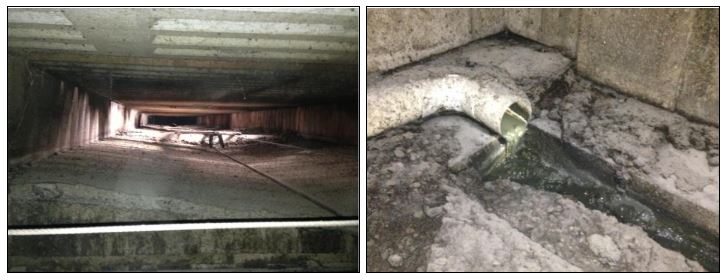
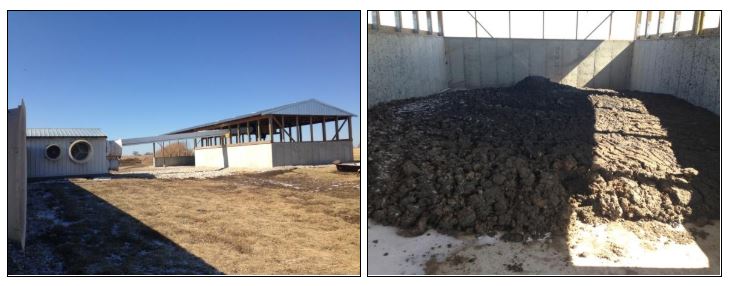
A 1200-hd solid-liquid separation finishing barn was built in Missouri for improved manure management and air quality. The facility has a wide V-shaped gutter below slatted flooring (Figure 1), which continuously drains away liquids. A scraper is used to collect the solids, which are then managed separately. Field sampling and research were conducted to evaluate the performance of the solid-liquid separation finishing barn in improving manure nutrient management, potential nutrient/water recycling based on filtration, and barn construction and operating costs.
What did we do?
The barn (built in 2010) was closely monitored for manure production and nutrient content, and operating costs. Laboratory-scale pretreatments and filtrations were conducted to evaluate the practicality of nutrient/water recycling from the separated liquid manure.
What we have learned?
The daily liquid manure production averaged 885 gallons and daily solid manure production averaged 299 gallons (about ¼ of the total manure volume). The separation system removed 61.7%, 41.7%, 74.8%, and 46.2% of the total manure nitrogen, ammonium, phosphorous, and potassium, respectively, with the collected solids. The filtration results indicate that the microfiltration and reverse osmosis were time and energy intensive, which was probably constrained by the relatively small-scale unit (inefficient compared with larger units), small filter surface area, and high concentration of dissolved nutrients.
The construction cost of the solid-liquid separation barn with solid manure storage was $323,000 ($269/pig-space, in 2010), 17% higher compared to the traditional deep-pit barn ($175 to $230/pig-space). It is likely that the solid-liquid separation barn will become less expensive when more barns of similar design are built, and the conveyor system can be improved and simplified for less maintenance and lower costs. Additional electricity cost was $331 per year for daily operation of the scraper and conveyor systems, and pumping the separated liquid manure fraction. The additional maintenance cost of the scraper system averaged $1,673/year. A net gain of $3,975/year was observed when considering the value of the separated manures, cost of land application, and annual maintenance cost.
A payback period of 15.1 years on the additional investment was estimated, when compared with the popular deep-pit operation. However, the payback period can be reduced by many factors, including improved conveyor system and growing popularity of the barn design in an area. When the distance to transport the slurry manure was increased from 5 miles to 7.5 and 10 miles, the payback periods became 12.7 and 11.3 years, respectively. The solid-liquid separation barn was shown to have better air quality when compared with deep-pit barns based on monthly measurements of ammonia and hydrogen sulfide concentrations.
Impacts/Implications of the Research.
This study monitored the manure production of a commercial finishing barn utilizing a solid-liquid separation system. Overall, we can conclude that the final results obtained from monitoring the total manure production rate, air quality exiting the barn fans, and the pig growth rates made sense relative to other comparative sources. The overall results indicate that the barn design can attain some valuable benefits from separating the solid and liquid streams. About a quarter of the manure volume was collected and managed as nutrient-dense solid manure (defined as ‘stackable’). The solid manure held 80% of the total solids and nearly 75% of the phosphorous.
Take Home Message
There are alternative barn designs and manure management systems (relative to lagoon and deep-pit operations) that should be considered when planning for a new operation or expansion. Considerations should include the need to better manage manure nutrients and improve air quality for human and animal occupants.
Future plans
Further consideration of the manure management, including work load and major- and micro-nutrients need to be furthered analyzed. Future research may look into application of a larger-scale crossflow system to see if nutrient removal and flow rates can be improved significantly. Future research may focus on improving manure filtrate flow, and determining the cost of installation and upkeep for a filtration unit that can operate at the level of a farm operation. Extrapolating the costs off of bench-scale model does not seem remotely indicative of the true cost, due to improved efficiency and power of larger unit.
Authors
Lim, Teng (Associate Professor and Extension Agricultural Engineer, Agricultural Systems Management, University of Missouri, limt@missouri.edu)
Brown, Joshua (University of Missouri); Zulovich, Joseph (University of Missouri); and Massey, Ray (University of Missouri).
Additional information
Please visit https://www.pork.org/research/sustainability-evaluation-solid-liquid-manure-separation-operation/ for the final report, and ASABE Paper No. 1801273 (St. Joseph, Mich.: ASABE. DOI: https://doi.org/10.13031/aim.201701558) for more information.
Acknowledgements
Funding for this research project was provided by the National Pork Checkoff and University of Missouri Extension.
The authors are solely responsible for the content of these proceedings. The technical information does not necessarily reflect the official position of the sponsoring agencies or institutions represented by planning committee members, and inclusion and distribution herein does not constitute an endorsement of views expressed by the same. Printed materials included herein are not refereed publications. Citations should appear as follows. EXAMPLE: Authors. 2019. Title of presentation. Waste to Worth. Minneapolis, MN. April 22-26, 2019. URL of this page. Accessed on: today’s date.