Livestock and Poultry Environmental Stewardship Curriculum Lessons

Livestock and Poultry Environmental Stewardship Curriculum contains a series of lessons, CAFO fact sheets, Small Farm fact sheets, and Ag EMS publications.
feature

CC 2.5 Jill Heemstra

The LPES Curriculum would not have been possible without the effort of many. Meet the LPES Team…

Module A. Introduction

1.Principles of Environmental Stewardship (individual sections) (entire lesson)
2.Whole Farm Nutrient Planning (individual sections) (entire lesson)

Module B. Animal Dietary Strategies

10. Reducing the Nutrient Excretion and Odor of Pigs Through Nutritional Means (individual sections) (entire lesson)
11.Using Dietary and Management Strategies to Reduce the Nutrient Excretion of Poultry (individual sections) (entire lesson)
12. Feeding Dairy Cows to Reduce Nutrient Excretion (individual sections) (entire lesson)
13. Using Dietary Strategies to Reduce the Nutrient Excretion of Feedlot Cattle (individual sections) (entire lesson)

Module C. Manure Storage and Treatment

20. Planning and Evaluation of Manure Storage (individual sections) (entire lesson)
21. Sizing Manure Storage, Typical Nutrient Characteristics (entire lesson)
22. Open Lot Runoff Management Options (individual sections) (entire lesson)
23. Manure Storage Construction and Safety, New Facility Considerations (individual sections) (entire lesson)
24. Operation and Maintenance of Manure Storage Facilities (individual sections) (entire lesson)
25. Manure Treatment Options (individual sections) (entire lesson)

Module D. Land Application and Nutrient Management

30. Soil Utilization of Manure (individual sections) (entire lesson)
31. Manure Utilization Plans (entire lesson)
32. Land Application Best Management Practices (individual sections) (entire lesson)
33. Selecting Land Application Sites (individual sections) (entire lesson)
34. Agricultural Phosphorus Management Protecting Production and Water Quality (individual sections) (entire lesson)
35. Land Application Records and Sampling (individual sections) (entire lesson)
36. Land Application Equipment (individual sections) (entire lesson)

Module E. Outdoor Air Quality

40. Emission from Animal Production Systems (individual sections) (entire lesson)
41. Emission Control Strategies for Building Sources (individual sections) (entire lesson)
42. Controlling Dust and Odor from Open Lot Livestock Facilities (entire lesson)
43. Emission Control Strategies for Manure Storage Facilities (individual sections) (entire lesson)
44. Emission Control Strategies for Land Application (individual sections) (entire lesson)

Module F. Related Issues

50. Emergency Action Plans (individual sections) (entire lesson)
51. Mortality Management (individual sections) (entire lesson)
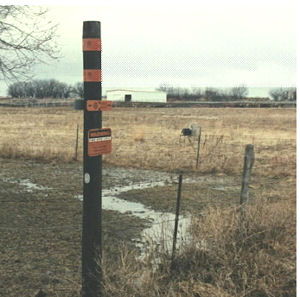
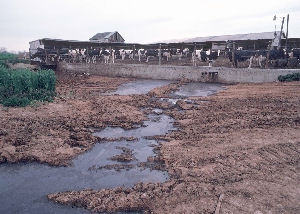
Identifying the Source of Pathogen Contamination of Water

Tracking the source of pathogens has been the focus of considerable scientific effort. The Environmental Pathogens Information Network (EPI-Net) provides information including fact sheets addressing “Tracking Microbial Pathogens” and “Role of Indicators in Pathogen Detection”.

Tracking Methods

Sheridan Haack, PhD, Research Hydrologist/Microbiologist, US Geological Survey, Michigan Water Science Center summarizes tracking methods as follows:

“There are three general ways to determine the sources of microbial contamination of water. The first, and most obvious, is to search the landscape for direct contributions and potential sources and to establish that microorganisms (or the source material) could move from the source area to water. There are several methods, ranging from dye-tracing studies to sophisticated hydrologic modeling, that can establish these connections…

The second method is to examine the affected water for changes in water quality that might arise from the potential source. Nutrients (nitrogen or phosphorous), certain chemicals such as chloride, or the ratios of chemicals such as bromide and chloride, have been used to indicate sources such as septic effluents or manure. More recently, sophisticated analyses have shown that chemicals such as human-use pharmaceuticals or personal care products may be useful in tracking fecal pollution from wastewater treatment plant effluents…

In rural environments, pathogens may originate from confined or pastured livestock, home septic systems, wildlife, or rural community waste treatment systems. Source identification can be challenging. CC2.5 LPELC

Finally, a logical (if not simple or inexpensive) approach is to evaluate whether the fecal indicator bacteria (or pathogens) themselves indicate the source, which is termed “microbial or bacterial source tracking” (MST or BST). In the last 5 years, several reviews of the state of this science have been produced (see references). In general, these reviews indicate that each method can produce some useful results for distinguishing between human, livestock and wildlife sources of fecal pollution, especially for small-scale studies with limited source inputs. However, all these methods have technical difficulties, and most are not ready to be broadly used in support of management decisions. The best approach to source determination is to acquire multiple lines of evidence using several techniques.”

Page Manager. Rick Koelsch, University of Nebraska, and Janice Ward, US Geological Survey.
Reviewed by: Dan Shelton, USDA ARS, Jeanette Thurston-Enriquez, USDA ARS

Ag Environmental Management Systems Publications Curriculum Materials

This series of agricultural environmental management system (EMS) publications are the result of a five year project, Partners for Livestock EMS that field tested EMS tools with over 200 beef, dairy, and poultry producers in nine states. The ag EMS processs process is aimed at helping farmers and ranchers integrate environmental decision making into the day to day management of their operation. The process emphasizes the following actions:

  • Assess current performance and regulatory compliance.
  • Establish effective communication.
  • Set priorities for environmental improvement.
  • Develop action plans focused on measurable objectives.
  • Maintain comprehensive, well-organized records.
  • Identify and control potential sources of error.
  • Monitor progress toward objectives.
  • Regularly improve plans and re-assess priorities.

Users are encouraged to create individualized approaches to achieving objectives. The result is an ag-friendly EMS that is consistent with international standards.

Who Should Download the Ag EMS Publications?

These publications are targeted for use by farmers, ranchers, and their advisers. Educators and agency staff will find them useful in program development. Download the entire package (.ZIP format – includes both Word and PDF versions of all six publications)

An Introduction to Ag EMS (PDF format) | (Word format) (Word cover)

Target audience: Farmers, educators, and coaches/advisers
Purpose: An introduction to Environmental Management Systems (EMS) concepts for farmers, educators, coaches, and others. It explains the basic requirements and the benefits of the EMS process. It can also be distributed to those potentially interested in an EMS educational program. Download PDF | Download Word & cover

EMS Fact Sheets (PDF format) | (Word format)

Target audience: Farmers
Purpose: A companion to My EMS Workbook. This publication contains a fact sheet for each step of the EMS process. It provides an explanation for each topic, examples, and a list of recommended tasks. Download PDF | Download Word

My EMS Workbook (PDF format) | (Word format)

Target audience: Ag producers
Purpose: Intended for use with the EMS Fact Sheets. This publication contains blank worksheets that producers can complete. When completed, the workbook will serve as a summary or manual of their EMS. Download PDF | Download Word

Example My EMS Workbook (PDF format) | (Word format)

Target audience: Ag producers, educators, and coaches
Purpose: This publication is an example of the My EMS Workbook already completed for a case study beef feedlot. The example is intended to provide producers with a sense of how the materials will look when completed and offer ideas for their own EMS. Educators and coaches may use the example as-is, or they can modify it to reflect a particular animal species or geographical location. Download PDF | Download Word

EMS Sample Record Keeping Forms (PDF format) | (Word format)

Target audience: Ag producers, educators, and coaches
Purpose: These forms are blank templates that can be used as-is or modified to accommodate a producer’s record-keeping systems. The publication covers a wide range of environmental record-keeping topics that are commonly required in regulatory programs, in cost share programs, and by producers wishing to demonstrate a high level of environmental stewardship. Note: The CAFO regulations have been modified since the publication of this material. It is recommended that you verify requirements in federal and your state regulations and modify the materials if necessary before distribution. Download PDF | Download Word

EMS Supplement (PDF format) | (New handout 4b) | (Word format)

Target audience: Educators and coaches
Purpose: This publication provides guidance on setting up an educational program and gives additional information related to each topic. A list of recommended tasks or activities is included. It also contains one or more handouts for each step that can be photocopied and given to producers. This publication compares the relationship between the ISO 14001 standard and the EMS model outlined in the publication. Note: You should replace the handout 4b in both versions with the file downloaded as “new handout 4b”.  (PDF format) | (New handout 4b) | (Word format)

Resources for More Information on Ag EMS

Best Management Practices (BMPs) to Prevent Manure Pathogen Movement to Water Resources

Multiple Barrier Approach

Management practices targeting pathogens focus on establishing multiple barriers between the pathogen source and water, with each barrier designed to lessen the risk of pathogens.

Keep Pathogens Off the Farm

Barrier 1 targets reducing the potential for pathogens to enter the farm through:

  • Identifying and quarantine of infected animals. The farm’s veterinarian is an important partner in implementing the first two barriers.
  • Preventing transport of infected manure onto the farm on clothing, boots, or equipment; Controlling pets, rodents, and other animals that can introduce pathogens to the farm.

Cross-Contamination Between Animals

Barrier 2 focuses on minimizing cross-contamination among animals including:

  • Keeping calf-raising areas clean;
  • Controlling pets, rodents, and other animals that can transport pathogens between groups of animals;
  • Ensuring that all feeds and feeding utensils are clean.

Barriers 1 and 2 will vary with species from this dairy targeted approach. A species specific bio-security program encouraged by industry or veterinarian organizations is the foundation for the first two barriers.

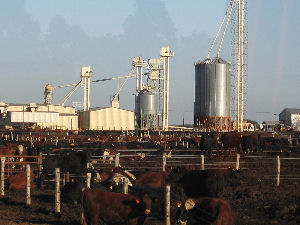
Uncontrolled runoff from open lot housing is a high risk source of pathogens.
Image courtesy USDA NRCS photo gallery.

Manure Collection, Storage, and Treatment

Barrier 3 addresses manure collection, storage, and treatment. Practices include:

  • Elimination of runoff from animal housing and manure storage (e.g. runoff collection ponds, vegetative filters).
  • Extended storage of manure. Liquid systems receiving manure daily typically produce a 10-fold reduction in pathogens. Two storage facilities (no fresh manure additions for two months prior to land application) further reduce risk.
  • Composting. Well managed composting systems can eliminate most pathogens.
  • Anaerobic digestion. Digesters operating at 100 degrees F can produce a 100-fold or greater reduction in pathogens.

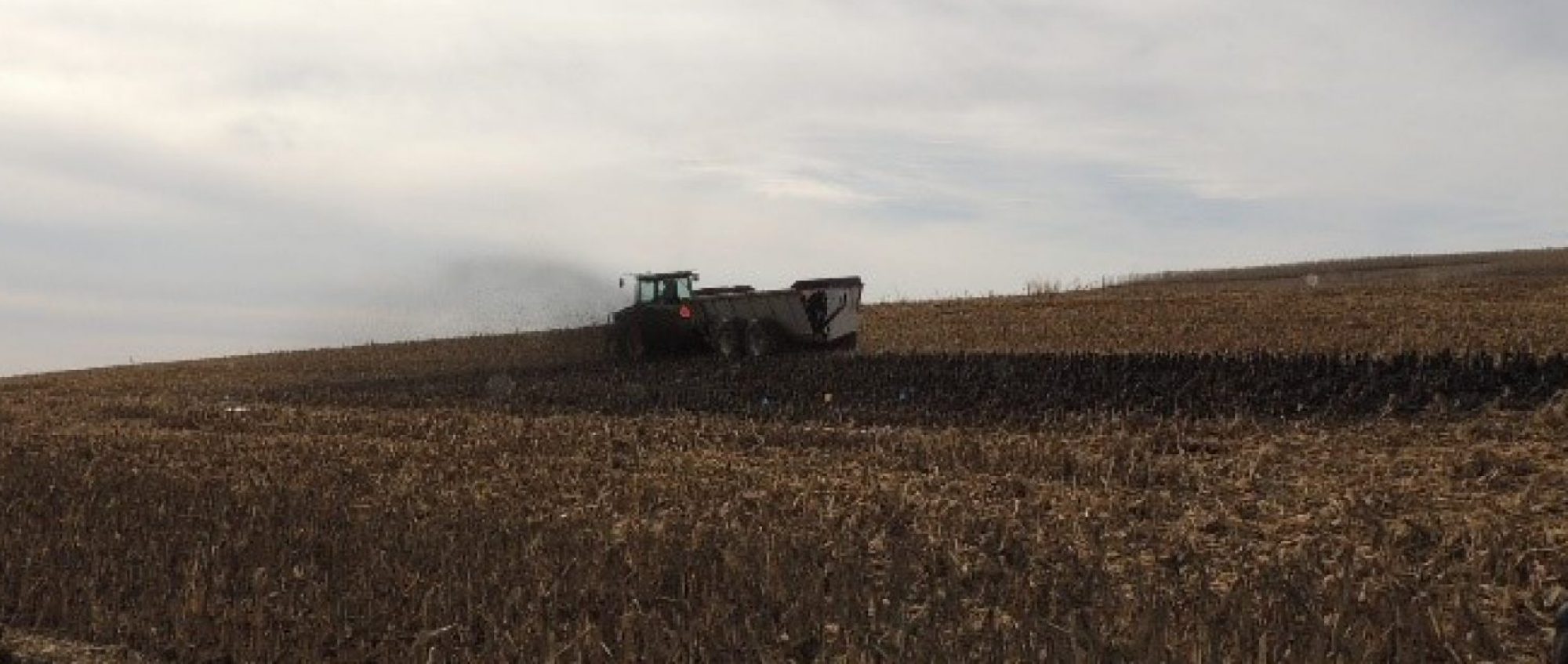
Avoiding application on tile-drained areas during periods of tile flow is an example of a Barrier 4 practice.
Source: Jane Frankenberger, Purdue University.

Land Application of Manure

Barrier 4 focuses on minimizing risk associated with land application of manure through such practices as:

  • Immediate incorporation of manure into soil. This practice must be balanced with residue loss and increased erosion potential.
  • Implementing sound soil conservation and runoff management practices in crop land (e.g. reduced tillage systems, grassed filters).
  • Applying manure from higher risk animals (e.g. calves) to crop land with lowest risks of runoff, erosion, or groundwater infiltration.
  • Applying manure to tiled fields only when the soil is relatively dry. Tile drained fields present a unique risk due to macropores caused by roots, earthworms, or cracks. Managing drainage water by raising drain outlets before manure application also reduces pathogen risk.

Recommended Resources About Manure-borne Pathogens

Page Managers: Rick Koelsch, University of Nebraska, and Janice Ward, US Geological Survey
Reviewed by: Dan Shelton, USDA ARS, and Jane Frankenberger, Purdue University

Question or concerns, contact John Brooks (john.brooks@ars.usda.gov)

About the Livestock and Poultry Environmental Learning Center

Mission | Contact Us | Topic Teams | Products | Core Values | Funding | Membership

What Is the Livestock and Poultry Environmental Learning Center (LPELC)?

The LPELC is a network made up of professionals from across the U.S. (and Canada) with an interest and expertise in some aspect of animal agriculture and environmental stewardship. (A nice way of saying we talk about manure….a lot.) Public sector funding for people and projects devoted to the outreach and extension of research information has dwindled at an alarming rate. This learning network offers faculty and staff with opportunities to network, collaborate, mentor, and share. What used to be done by walking down the hall, now can be done in “virtual” settings. It is our way of trying to do more with less. The network was officially established in 2005 with a USDA National Facilitation grant focused on water quality. It has continued to the present through the support of other grants related to air quality, beginning farmers, and climate change among others.

A learning network like the LPELC strives to bring together all types of expertise; all the way from research and technical knowledge to application of science on the farm. Ideally, a learning network creates a feedback loop where on-farm application informs the research and science. Better science should lead to positive applications on the farm which continues to refine the science, and so on.

Our Mission

Individuals involved in public policy issues, animal production, and delivery of technical services for animal agriculture will have on-demand access to the nation’s best science-based resources that is responsive to priority and emerging environmental issues associated with animal agriculture.

Contact Us

Webcast series, web content: Leslie Johnson, University of Nebraska leslie.johnson@unl.edu

Leadership committee:

Topic Teams

Most of the website content is created by the focused groups within the learning network–the topic teams. These teams host “virtual work days” (usually on an annual basis) for the review and development of  web content, identification of “hot” topics, professional development needs, or opportunities to collaborate for grant funding. The team leaders serve on a rotating basis and new members are welcomed at any time. (If you use the signup link, be sure to request membership in the LPELC during the process). The mutli-disciplinary nature of the LPELC is one of its greatest strengths.

Products

The major products of the learning center are:

  • This website. The LPELC chose to affiliate with the eXtension Initiative platform for production of web content. This system is one of the largest outreach networks ever assembled and allows us to access expertise on beef, dairy, poultry, and other topics to supplement that already on our team.
  • Webcast series. The LPELC was a pioneer in delivering scientific information through live broadcasts over the web. We produced our first webinar in September, 2006 and continue on a monthly basis to the present. Webcasts are archived for future use.
  • Waste to Worth conference. The first W2W was held in 2013 in Denver, Colorado with over 250 people in attendance. The conference aims to bring together science, on-farm application, and solutions for the questions surrounding animal agriculture and environmental stewardship. A winning recipe, for turning waste into worth!
  • Newsletter. A comprehensive, national newsletter highlighting science, programs, activities, resources, and hot topics related to animal ag and stewardship. Subscribe now….
  • Ask an expert. If a question cannot be answered by looking through the website, you have the option to ask an expert. We have knowledgeable people from 40+ states ready to assist.
  • Our outreach goes beyond a website. Look for us on Youtube, Slideshare, Twitter, Facebook, and Flickr.

Pillars of This Learning Network

A national team representing a broad spectrum of those creating, delivering and utilizing research-based knowledge will establish a national Livestock and Poultry Environmental Learning Center committed to:

  • Implementing a customer driven approach that will identify critical or emerging issues. We regularly ask stakeholders what they need and how this information impacts their daily work.
  • For priority issues identified by stakeholders, developing or curating the best science-based resources available. Reliable, credible information that is reviewed and recommended by a multi-disciplinary team of experts.
  • Developing and testing innovative outreach models for connecting those who are creating new research knowledge with the end users of that knowledge. We are finding new ways to learn and interact with experts, peers, learners, and influencers.
  • Identifying appropriate national learning center roles that best support existing organizations committed to an outreach mission. We are not trying to compete with existing resources–we are committed to finding ways to help increase the usage of good resources already published and then develop original content as appropriate.
  • Provide a repository for information that is accessible beyond a funded project. Grant-funded projects provide exceptional opportunities to develop new knowledge and explore outreach strategies. To prevent this accrued knowledge from falling out of common use as personnel move on to new projects or websites are decommissioned, it is important to provide an accessible “home” for that information. This also provides future projects with a base from which to build rather than have to start from scratch.

Our Audience

Our ultimate customer is the livestock or poultry producer. However, this network tends to emphasize delivery of information to ag professionals that influence producer environmental management decisions. This allows for the professional to appropriately contextualize information for different geographical locations or production systems. The LPELC places a high value on working with a wide range of groups such as: extension, research and teaching faculty/staff, commodity groups, ag organizations, agencies, environmental organizations, farmers, public and private sector advisers, and those involved in public policy implementation.

How Is the Livestock and Poultry Environmental Learning Center (LPELC) Funded?

The LPELC is funded through grant dollars. Our leadership and staff write grant grants for outreach in animal agriculture and stewardship efforts. They also work with projects that would like to partner with the LPELC to enhance their outreach efforts. A copy of the collaboration planner is available at: http://create.extension.org/node/99673 (need an eXtension ID to view it). A copy can also be obtained from Jill jheemstra@unl.edu.

How Do I Become a Member? Why?

Becoming a member is easy. Sign up through eXtension’s “people” application or request an invitation from Leslie Johnson at leslie.johnson@unl.edu.

Being a part of a collaborative network as active as the LPELC often raises questions for perspective members:

  • How much time will it take? Being involved is voluntary and many members go through periods of activity followed by phases where they have to focus on other priorities. This is a normal and expected part of learning networks. It is our goal to assist members in finding resources and connections that help increase their efficiency. We hope you get as much (or more) out of this network than what you put in and welcome involvement as your efforts and interest allow and align with other activity in the LPELC.
  • Will I lose credit for my work? The LPELC produces some original content and also curates (links to, embeds, or otherwise highlight in its original location and form) information. Even in original content that is branded for the LPELC (which is a choice made by the authors) the individual contributors and their respective institutions are highlighted. The transparency of authorship and reivew is an important aspect of establishing the credibility of information on this site. Articles or resources authored through the LPELC should be reported on an author or reviewer’s annual reporting for their supervisor as a national scope, peer-reviewed resource.

Agriculture Environmental Management Systems

What is an EMS?

Environmental Management Systems (EMS) are a method of improving environmental and economic performance of a firm. They are widely accepted across many industries and are increasingly common in agriculture. An EMS is a process for integrating environmental considerations and requirements into day-to-day management and long-term planning for a farm.

This management approach examines a production system from start to finish, from inputs to products. With an EMS, the owner/operator and employees develop a plan for action that fits specific needs and resources, builds upon their stewardship principles, helps comply with legal requirements, and works to continually improve the operation. Also see What is an Ag EMS?

An EMS does NOT replace regulations, but may help in attaining compliance or realizing other benefits related to reduced environmental liability and better management. The EPA encourages adoption of EMS’s as a method of improve regulatory compliance, encourage environmental performance, and perhaps reduce regulatory burden.

An emerging concept that is very similar to an EMS is known as ‘adaptive management’. Check out an archived webinar on Adaptive Nutrient Management and a recorded symposium presentation on opportunities for adaptive grazing management in drought-stricken areas.

The EMS process was developed for industry and is commonplace in manufacturing world wide. The most recognized system is ISO 14001 which involves third party certification and formal auditing. As farms become larger and more complex and rely on more employees and outsource more services, the farmer needs a systematic method of managing his or her operation. While formal certification may not be necessary, the EMS process and principles can help farmers improve their environmental and economic performance. There are Ag EMS Publications tailored for agriculture that make it practical to implement on the farm.

The EMS model is a Plan, Implement, Check and Correct, and Review sequence, a proven successful management process. The planning process begins with establishing an environmental policy for the farm/ranch that describes the farmer’s commitment to environmental stewardship, to meeting regulations, and to continual improvement.

An Environmental Management System (EMS) helps to integrate environmental decisions into the overall farm management. CC2.5 LPELC

Environmental Policy Statement

An EMS policy statement describes the environmental principles that are important to you, and establishes your goals for managing them. Everyone who works on your farm should know and share a commitment to the policy statement. You can showcase this statement to the public to demonstrate your environmental commitment. An EMS policy statement should at a minimum describe your commitment to:

    • pollution prevention,
    • continual improvement, and
    • compliance with environmental regulation.

Plan

Next, the farmer assesses the current operation to identify strengths and weaknesses and identifies which if any are causing significant environmental concerns. He or she has now identified a small list of priorities to address first. Then, an action plan with defined objectives, measurable outcomes, and specific steps, timelines, and assignments is developed for each priority. Some assessments can be found at:

Implement

“Implement” involves communicating the plan to the people that are responsible for making it happen. This includes preparing operating procedures, training, and resources as needed.

Record keeping is an essential component of an effective EMS. CC2.5 LPELC

Check

“Check” is a regular review of the plan’s progress and environmental performance. If problems arise “Correct” refers to corrective actions taken. Documenting regular monitoring actions taken helps the farmer measure progress and shows a proactive approach to environmental improvement.

Review

“Review” closes the loop on the continuous improvement process. Farmers annually review their operation and their plan to determine if they are headed in the right direction, using the best methods, and making progress.

Chances are good that components of the EMS process are already being utilized on a farm. These may include management plans for manure handling, pests, or nutrients, in addition to records on soil testing, chemical applications, feeding requirements, or worker training. An EMS helps organize and document these efforts and improve the environmental and economic performance of the farm.

Examples of Environmental Management Systems for Agriculture

Resources For More Information

Author: John Lawrence, Iowa State University Reviewers: Mark Risse, University of Georgia and Tommy Bass, Montana State University

Feed Management Planning as a Tool to Reduce Nutrient Excretion

Why is Feed Management Important to Nutrient Planning?

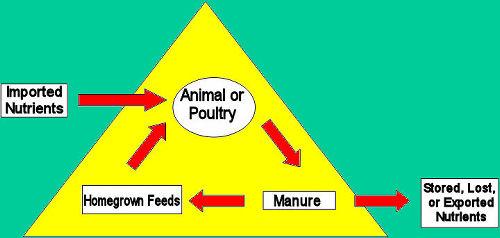
Feed represents the largest import of nutrients to the farm, followed by commercial fertilizer. Feed management practices impact the amount of nutrients that are imported to the farm and excreted in manure. The excreted nutrients are subsequently available for volatile loss (nitrogen) to the atmosphere and potentially lost via surface runoff (nitrogen and phosphorus) or leached to ground water (nitrogen and phosphorus).

Nutrient management planning addresses the proper distribution of manure nutrients, but typically only focuses on the nutrients after they have been excreted by the animal. It may seem obvious, but the amount of N and P consumed by an animal is directly related to the amount it excretes. Formulating an inexpensive ration with excess N or P, will increase the amount of these nutrients excreted in the manure. Depending on the requirements of the farm nutrient management plan, this may mean that the manure must be spread over a larger number of acres compared to manure that contains lower N or P levels.

Feed management opportunities currently exist to reduce imports of nutrients (particularly N and P) to most animal livestock and poultry operations. Since consulting nutritionists play such a key role with regard to importation of nutrients to the farm, a systematic approach to evaluate the role that Feed Management has on whole farm nutrient management is warranted.

Resources Available for Managing Feed Nutrients

The National Feed Management Education Project (NFMEP) has developed a systematic approach to feed management and whole farm nutrient management. The team has developed a series of fact sheets and resources for the four major species. In addition, the LPE Learning Center Small Farms team has developed resources for small acreage livestock and poultry owners.

graphic

CC2.5 LPELC

Authors: Joe Harrison, Washington State University and Jill Heemstra, University of Nebraska

National Feed Management Education Project

The National Feed Management Education Project was started in 2005 with the goal to increase the understanding of agricultural professionals about the area of Feed Management, with an emphasis on Environmental and Financial Sustainability of Livestock and Poultry Operations. The education project has been funded by the USDA- Natural Resources Conservation Service (NRCS) Conservation Innovation grant program.

A primary outcome of the project has been a process for the implementation of the Natural Resources Conservation Service’s Feed Management 592 Practice Standard for beef, dairy, poultry, and swine. The primary audiences for the education program are:

  1. Animal Nutritionists,
  2. NRCS staff
  3. Conservation District staff
  4. private nutrient management planners

Meet the National Feed Management Education Team
Access the Products From the National Feed Management Education Project

Source: Joe Harrison, Washington State University


This page maintained by: Joe Harrison, Washington State University

Webinar Troubleshooting


livestock and poultry environmental learning center logo with cow, pig, and chicken sillhouettes over a map of the U.S. with three circling arrows

Firewalls

As of Summer of 2016, we have begun using a different virtual meeting room and system. We hope that there are no firewall issues with it, but please let us know if you’re having problems. If one or more of the diagnostic tests in Step 1 on How Do I Participate in a Webinar? fails, contact your IT staff or Internet Service Provider and work with them to see if there are ways to allow the stream through the firewall. With the new system, the URL for each webinar will be different. Questions can be directed to the LPE Learning Center coordinator, Jill Heemstra, jheemstra@unl.edu or the webinar coordinator, Leslie Johnson, leslie.johnson@unl.edu.

Other Things to Check

Quick things to check if you have trouble connecting. Check the following simple items to help resolve meeting access issues.

  • Are you connected to the Internet?
  • Disable popup blocker software.
  • Clear the browser’s cache.
  • Try connecting from another computer.
  • Are you accessing the correct URL?

Cannot Hear the Presenters

If you cannot hear the presenters or the volume is very low, try the following:

  • adjust the volume on your computer and/or speakers
  • exit the virtual meeting room and return
  • send a note to the presenters through the “chat” pod in the virtual meeting room

Continuing Education Units Available Through the Livestock and Poultry Environmental Learning Center

The Livestock and Poultry Environmental Learning Community offers continuing education units (CEUs) through our monthly webinar series. You can receive credits through one of two ways.

Certified Crop Advisers (CCA), Certified Professional Agronomist (CPAg), Certified Professional Soil Scientists (CPSS)

The webinars are submitted for national credit for CCA, CPSS, and CPAg.

American Registry of Professional Animal Scientists (ARPAS)

The webinars are submitted for national credit.

Technical Service Providers (TSPs)

The TSP program operates continuing education programs on a state-by-state basis. Many webinars are appropriate for continuing education for these organizations. We can provide attendance lists and information about the topic and presenters for those attending live webinars to submit to their state organization.

    • NRCS Technical Service Providers

Professional Engineers (PE)

The PE program operations continuing education programs on a state-by-state basis. Many webinars are appropriate for continuing education for these organizations. We can provide attendance lists and information about the topic and presenters for those attending live webinars to submit to their state organization. Contact information…

Software Requirements

To view a live webinar, all you need is a live Internet connection.

Archived webinars, produced October, 2007 and later are playable through your web browser. Real Player is needed to view LPE Learning Community Webinars produced between September, 2006 and September, 2007. If you do not already have Real Player, you can download a free player Real.com.