Purpose
Dairy farming is at the heart of Southern Idaho’s economy and way of life. As pressures mount around environmental impact, consumer expectations, and long-term viability, sustainability has become essential to the future of dairy. While research in this area has made significant strides, many farmers struggle to access and apply this information in a way that makes sense for their operations. Scientific studies are often dense, packed with technical jargon, and filled with data that doesn’t always connect to the everyday realities of farming.
This project aims to close the information gap by using research from the Idaho Sustainable Agriculture Initiative for Dairy (ISAID) Grant to make sustainability science more accessible and actionable. Our goal is to translate research into tools and messages that help farmers adopt practical, sustainable practices that benefit their operations and the broader agricultural landscape.
What Did We Do?
To better understand the communication barriers farmers face, we conducted a literature review focusing on agricultural communication and knowledge transfer, particularly in dairy sustainability. Our review included studies on the communication preferences of dairy producers, social media engagement in agriculture, and the role of trusted advisors such as veterinarians and extension specialists in knowledge dissemination. Key findings from this review highlighted the importance of concise, visually engaging content and digital platforms like Facebook and YouTube for reaching dairy farmers. We also examined studies on farmers’ motivations and perceived barriers to adopting sustainable practices, which emphasized the need for messages that align with farmers’ economic and operational priorities.
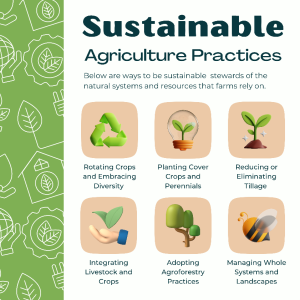
Additionally, research on sustainable practice adoption highlights that behavioral change plays a critical role in whether farmers choose to implement new sustainability measures. Concepts from the social science of behavior change, such as the Diffusion of Innovation (DOI) theory and the Reasoned Action Approach (RAA), help explain how farmers evaluate new practices. Key factors include perceived relative advantage, compatibility with existing practices, complexity, trialability, observability, and riskiness. These insights suggest that effective communication strategies should focus not just on providing information but also on addressing these concerns to increase adoption likelihood. Studies also show that demographics, land tenure, and financial constraints play significant roles in whether a farmer adopts new practices, reinforcing the need for tailored communication that takes these contextual factors into account.
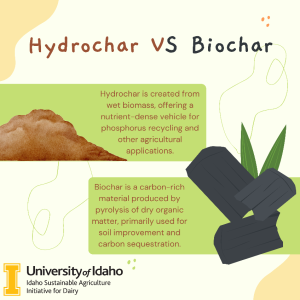
To implement these strategies, we built a website that serves as a hub for sustainability research, providing easy access to summaries, case studies, and media. Additionally, we launched The Clever Cow Podcast, where industry experts, researchers, and farmers discuss sustainability, innovation, and best practices. A structured social media strategy further expands our outreach, allowing us to engage farmers through Facebook, Instagram, and YouTube. Recognizing the role of selective exposure and confirmation bias in how farmers consume information, we have designed our content to align with existing beliefs while also introducing new sustainability concepts in an engaging and relatable manner. To ensure our approach remains farmer-focused, we will conduct focus groups and surveys this summer to gather direct feedback, refine our outreach efforts, and develop communication strategies that effectively bridge the gap between researchers and the dairy community.
What Have We Learned?
Initial research and discussions suggest that farmers value concise, visually engaging content over lengthy technical reports. Social media and digital platforms, especially Facebook and YouTube, have emerged as preferred tools for accessing sustainability information. Farmers have also emphasized the importance of seeing practical examples of sustainability in action, such as case studies of dairy producers who have successfully incorporated sustainable practices. Additionally, partnerships with trusted organizations like local extension offices strengthen credibility and ensure that information is regionally relevant.
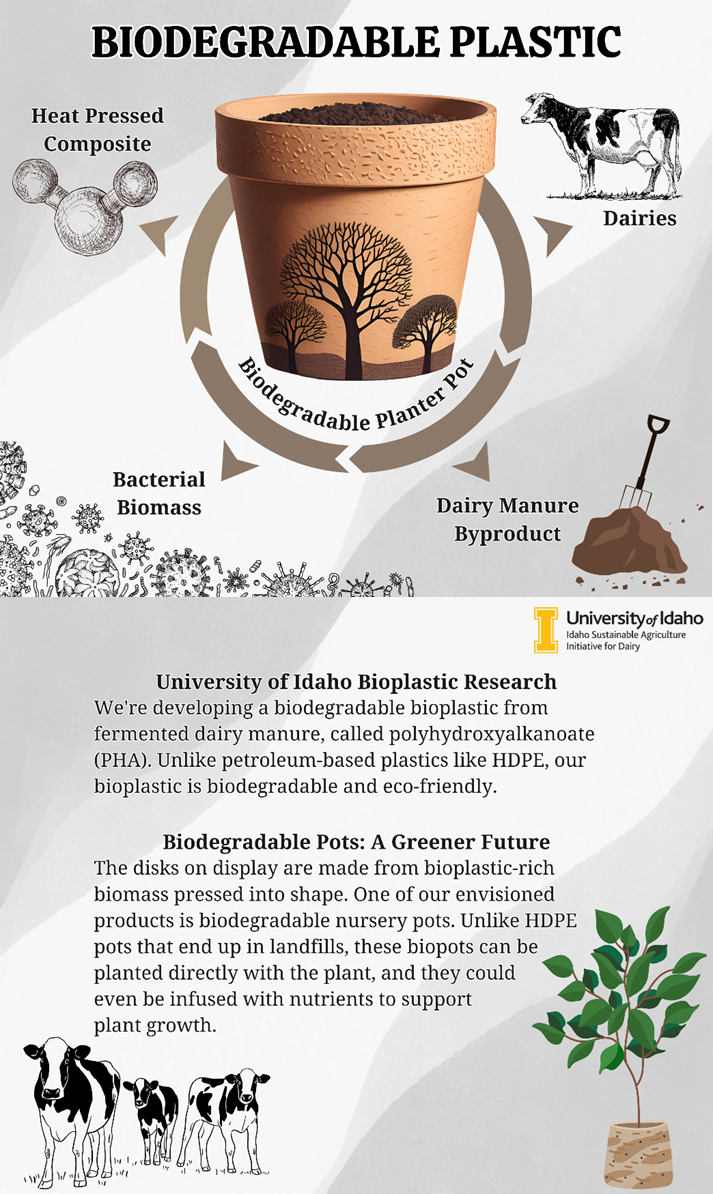
Our research also highlights the need to consider cognitive biases in message design. Confirmation bias and selective exposure influence the way farmers engage with agricultural information, meaning that they are more likely to interact with content that aligns with their existing beliefs. By strategically framing sustainability messages in ways that resonate with their values—such as economic benefits, operational efficiency, and long-term resilience—we can increase engagement and encourage the adoption of sustainable practices. These findings highlight the importance of tailoring communication strategies to respect farmers’ time while making complex sustainability research easier to understand and apply.
Future Plans
In summer 2025, we will conduct two focus groups (12 farmers each) and distribute a statewide survey targeting over 100 Southern Idaho dairy producers. These efforts will gather direct input on preferred communication channels, trusted sources of information, and barriers to engaging with sustainability research. Using this feedback, we will refine and test outreach tools such as short-form videos, podcast episodes, social media graphics, and research-backed infographics. The insights gained will inform the development of a flexible, scalable communication model that can be customized for other agricultural communities across the U.S.
Authors
Presenting author
Savanah Nunes Carpenter, M.S. Graduate Student, Media and Communications Director, ISAID Grant, University of Idaho
Corresponding author
Dr. Mireille Chahine, Acting Head and Professor, Department of Animal Veterinary and Food Sciences, University of Idaho, mchahine@uidaho.edu
Additional Information
To learn more, visit the ISAID Grant website: www.uidahoisaid.com
Follow us on social media:
-
- Facebook: U of I Idaho Sustainable Agriculture Initiative for Dairy Grant
- Instagram: @uidahoisaid
- X: @uidahoisaid
- Listen to our podcast: The Clever Cow Podcast on Spotify and Apple Podcasts
This video explains my research in four minutes: https://youtu.be/_3JWGDQgf0Y?si=Hpu233CQXFb1Dk8R
Acknowledgements
This research was funded by the USDA Sustainable Agricultural Systems Initiative through the Idaho Sustainable Agriculture Initiative for Dairy (ISAID) grant (Award No. 2020-69012-31871).
Special thanks to the ISAID Grant research team, the University of Idaho Extension, and the Southern Idaho dairy farmers who will participate in the upcoming focus groups and surveys.
The authors are solely responsible for the content of these proceedings. The technical information does not necessarily reflect the official position of the sponsoring agencies or institutions represented by planning committee members, and inclusion and distribution herein does not constitute an endorsement of views expressed by the same. Printed materials included herein are not refereed publications. Citations should appear as follows. EXAMPLE: Authors. 2025. Title of presentation. Waste to Worth. Boise, ID. April 7-11, 2025. URL of this page. Accessed on: today’s date.