How Farmers and Ranchers Are Adapting to Local Weather Extremes

Most farmers and ranchers are acutely aware of weather and how it factors into their risk management planing. Climatologists have indicated that the trend toward more extreme events and greater extremes is going to continue. This has many implications for animal agriculture producers. The farmers featured in this Waste to Worth panel all provided their perspectives on adapting to extreme events through diversity, building resilience, and keeping an eye toward long-term profitability.

Diversity, Resilience and Manure Management with Cover Crops

A former ag teacher, Keith Berns understands that you need to be open to multiple ways of achieving a goal. His desire to build resilience into his farm system led to a business selling cover crop seeds that emphasize diversity. He outlines several scenarios where he uses cover crops on his farm and also several ways his seed customers utilize diverse cover crop and annual forage mixes. High stocking densities naturally incorporate manure, and residue helps conserve and hold valuable moisture during/after extreme rainfall events. [Nebraska/Kansas]

Perspectives On a Changing Climate

Dr. Sandra Matheson, DVM (retired) raises grass-fed beef cattle on her northwestern ranch. Weather extremes have created more dust, mud, and she has seen an increase in disease and health issues with cattle. She utilizes the decision-making process, holistic management, and planned grazing to create a system with the greatest amount of adaptability and resilience for her environment and its potential extremes. Her goals converge around building the soil. [Washington]

Grazing Dairy Finds Plants that Work in Low Water Environments

Michael DeSmet watched his cows when they entered a new paddock and noticed something surprising – they liked weeds. Upon further investigation, he found out that the weeds they were selecting were high-protein, palatable, and could survive on very small amounts of precipitation. Michael was no stranger to making changes; he had already converted the family dairy operation into a grazing-based system selling milk into niche markets. He continues to examine forage options for his pastures that allow the farm to utilize limited water, extend the grazing season, and improve soil quality. [New Mexico]

The authors are solely responsible for the content of these proceedings. The technical information does not necessarily reflect the official position of the sponsoring agencies or institutions represented by planning committee members, and inclusion and distribution herein does not constitute an endorsement of views expressed by the same. Printed materials included herein are not refereed publications. Citations should appear as follows. EXAMPLE: Authors. 2015. Title of presentation. Waste to Worth: Spreading Science and Solutions. Seattle, WA. March 31-April 3, 2015. URL of this page. Accessed on: today’s date.

Integrated Resource Management Tool to Mitigate the Carbon Footprint of Swine Produced in the United States


green stylized pig logoOutputs of This Project: Model |  Research Summaries |  Extension/Outreach Content | Webcasts |  Professional Conference Presentations | Journal Articles | Acknowledgments

What Did We Do?

Modeling: The overall goal of the modeling effort was to enhance the National Pork Board swine carbon footprint calculator by integration of specific modules for: animal growth and feed ingredient impacts on manure characteristics. The process model output is to be used as input to life cycle assessment (LCA) to evaluate cradle-to-farm-gate environmental impacts of swine production. An economic analysis model incorporated both process based results (live animal weight, feed, fuel, etc.) and LCA results (greenhouse gas, GHG emissions) to model the cost and potential of different options for reducing GHG emissions in swine production. More…

The model development is supported through an experimental research program focused on feed efficiency and manure management. Feed efficiency is affected by the feed composition and animal physiology which is affected by the animal’s health status. Our research addressed both issues with laboratory and full scale feeding trials.

Health Status: In trials, Porcine Reproductive and Respiratory Syndrome Virus (PRRSV) infection caused significant reductions in feed intake which led to reductions in rates of gain and body weight. The infection also caused a reduction in diet digestibility leading to greater manure nutrient output per unit of feed intake and increased greenhouse gas (GHG) production from the stored manure. The impact on GHG production is particularly striking when the data are expressed as litters of gas per kilogram of body weight gain. The increased gas production combined with reduced rates of gain results in more than a tripling of gas production per unit of gain for all of the gases. Vaccination against PRRSV appeared to offer little benefit in terms of animal performance, manure nutrient output, or gas production from manure. More…

NIFA swine carbon footprint project partnersAmino Acid Supplementation: Studies confirmed that crude protein can be replaced with feed grade AA to meet the requirement of the first 5 limiting AA without negatively impacting growth performance or carcass composition when diets are formulated on a NE basis; however, further CP reductions resulted in more variable growth performance.

Manure Management: The gasification system has been successfully operated with an algae feed stock in a series of preliminary, proof-of-concept tests. The algal turf system has been fully constructed and is now operational with samples being taken for nitrogen and bacteria levels. Nutrient retention management technologies for manure will include algal growth for on-farm nitrogen retention using a pilot scale experimental system and thermal conversion to fuel gas and bio-char (a soil amendment).

Extension, Outreach, Undergraduate Research Experiences: A significant component of this project is devoted to non-research activities including developing materials for extension work – disseminating research information to non-technical audiences for integration into existing knowledge and application in farm decision-making. Undergraduate students from several universities were also provided with opportunities to participate in research projects, gaining valuable experience and to train potential future scientists.

Model

The Swine Environmental Footprint Calculator is available from the National Pork Board. It will continue to be updated when applicable research information and data sets are available. Go to the model home page….

Research Summaries

Also visit the conference presentations section to find out more about the research findings.

Extension-Outreach Web Content and Printed Materials

The extension materials (focused on transferring research information to a non-research audience) include:

  • short articles written in an FAQ style
  • case studies (pending) on using data from commercial farms
  • curriculum materials for use in high school classrooms that includes manipulatives and activities as well as printed information
  • fact sheets: What is a water footprint? | What is a land footprint? | What is a carbon footprint?

Several Extension Webcasts Were Produced By This Project

  • Thermal Conversion of Animal Manure to Biofuel – Go to archive… (February, 2014)
  • Life Cycle Assessment Modeling for the Pork Industry – Go to archive…. (July, 2012)
  • Producer Association Efforts to Address Carbon Footprint (Pork and Poultry) – Go to archive… (June, 2012)

Conference Presentations Made By Project PI’s

Overall project  – https://scisoc.confex.com/crops/2012am/webprogram/Paper72165.html (from 2012)

Waste to Worth: Advancing Sustainability in Animal Agriculture (March-April, 2015)

  • Environmental Footprint, Cost, and Nutrient Database of of U.S. Animal Feed Ingredients More…
  • Exploring Interactions Between Agricultural Decisions and Greenhouse gas Emissions Using Swine Production More…
  • Feeding Strategies to Mitigate Cost and Environmental Footprint of Pig Production in the US More…
  • Reducing the Costs and Environmental Footprint of Pig Diets with the Experimental Optimum Synthetic Amino Acid Inclusion  More…
  • Adapting Agriculture to Sustainably Feed the World (keynote) More…

Waste to Worth: Spreading Science and Solutions (April, 2013)

  • Refining a Pork Production Carbon Footprint Mitigation Tool: A Case Study of an Integrated Research/Extension/Education Project – More…

LCA Food 2014

  • Panel presentation: Burek J, Thoma G, Popp J, et al. Developing Environmental Footprint,Cost, and Nutrient Database of the US Animal Feed Ingredients.
  • Poster presentation: Burek J, Thoma G, Popp J, et al. Formulating low-cost and low-environmental footprint swine diets.

Midwest Section – American Society of Animal Science

  • 2015 – Comparison of the effects of antibiotic-free and conventional management on growth performance in swine. C. E. Vonderohe*, A. M. Jones, B. T. Richert, J. S. Radcliffe, Purdue University, West Lafayette, IN. Abstract 102, page 47.
  • 2014 – Effect of feeding reduced-CP, amino acid supplemented diets on dietary nitrogen and energy utilization and volatile fatty acid excretion in wean-to-finish swine. A. M. Jones1*, D. T. Kelly1, B. T. Richert1, C. V. Maxwell2, J. S. Radcliffe1,1 Purdue University, West Lafayette, IN, 2 University of Arkansas, Fayetteville. Abstract 037, page 16.
  • 2013 – Effects of amino acid supplementation of reduced crude protein (RCP) diets on performance and carcass composition of growing-finishing swine. J. K. Apple1*, B. E. Bass1, T. C. Tsai1, C.V. Maxwell1, J. W. S. Yancey1, A. N. Young1, M. D. Hanigan2, R.Ulrich3, J. S. Radcliffe4, B. T. Richert4, G. Thoma3, J. S. Popp5,1 Animal Science, University of Arkansas Division of Agriculture, Fayetteville, 2 Dairy Science, Virginia Polytechnic Institute and State University, Blacksburg, 3 Chemical Engineering, University of Arkansas, Fayetteville, 4 Animal Science, Purdue University, West Lafayette, 5 Agricultural Economics & Agribusiness, University of Arkansas Division of Agriculture, Fayetteville. Abstract 0224, page 73.
  • 2013 – Effects of amino acid supplementation of reduced crude protein (RCP) diets on LM quality of growing-finishing swine. A.N. Young1,*, J. K. Apple1, J. W. S. Yancey1, J. J. Hollenbeck1, T. M.Johnson1, B. E. Bass1, T. C. Tsai1, C. V. Maxwell1, M. D. Hanigan2,J. S. Radcliffe3, B. T. Richert3, J. S. Popp4, R. Ulrich5, G. Thoma5,1 Animal Science, University of Arkansas Division of Agriculture, Fayetteville, 2 Dairy Science, Virgina Polytechnic Institute and State University, Blacksburg,3 Animal Science, Purdue University, West Lafayette,4 Agricultural Economics & Agribusiness, University of Arkansas Division of Agriculture,5 Chemical Engineering, University of Arkansas, Fayetteville. Abstract P027, page 97.
  • 2013 – Maximum replacement of CP with synthetic amino acids in nursery pigs. B. E. Bass1, T. Tsai1*, M. D. Hanigan2, J. K.Apple1, R. Ulrich3, J. S. Radcliffe4, B. T. Richert4, G. Thoma3, J.S. Popp5, C. V. Maxwell1,1 Animal Science, University of Arkansas, Fayetteville, 2Dairy Science, Virginia Polytechnic Institute and State University, Blacksburg, 3 Chemical Engineering, University of Arkansas, Fayetteville, 4 Animal Science, Purdue University, West Lafayette, 5 Agriculture Economics & Agribusiness, University of Arkansas, Fayetteville. Abstract P042, page 102.

ASA/CSSA/SSSA amino acid work https://scisoc.confex.com/crops/2012am/webprogram/Paper75311.html  overall project (also linked at top of this list) https://scisoc.confex.com/crops/2012am/webprogram/Paper72165.html

Journal Articles

Manure Management & Algae Systems

  • Sadaka, S., M. Sharara and G. Ubhi. 2014.  Performance Assessment of an Allothermal Auger Gasification System for On-Farm Grain Drying. Journal for Sustainable Bioenergy Systems. Vol. 4: 19-32.
  • Sharara M, Holeman N, Sadaka S, Costello T. 2014. Pyrolysis kinetics of algal consortia grown using swine manure wastewater. Bioresource Technology. 169: 658-666.
  • Sharara, M. and S. Sadaka. 2014. Thermogravimetric Analysis of Swine Manure Solids Obtained From Farrowing, and Growing-Finishing Farms. Journal for Sustainable Bioenergy Systems. Vol. 4: 75-86.

Acknowledgements

Project Director: Greg Thoma gthoma@uark.edu, Co-Project Director: Marty Matlock mmatlock@uark.edu
Principle Investigators: Richard Ulrich, Jennie Popp, Charles Maxwell, Thomas Costello, Scott Radcliffe, Mark Hanigan, Brian Richert, Karl VanDevender, Sammy Sadaka, Chengsheng Li, William Salas

This information is part of the program “Integrated Resource Management Tool to Mitigate the Carbon Footprint of Swine Produced In the U.S.,” and is supported by Agriculture and Food Research Initiative Competitive Grant no. 2011-68002-30208 from the USDA National Institute of Food and Agriculture. Project website: https://lpelc.org/integrated-resource-management-tool-to-mitigate-the-carbon-footprint-of-swine-produced-in-the-united-states/.

Weather Trends: State, Regional, and National

`Weather happens and the climate is always changing. Farmers are very in tune with these changes because weather is critical to any farming operation. What are the current weather trends in your area? Is it hotter? dryer? cooler? warmer? Is the growing season longer? Has the first frost date changed?

There is a real possibility that the weather of 30 years ago is not what we are seeing today or will see 30 years from now. The video to the right gives an overview of some of the weather trends. Related: What is the difference between weather and climate?

Use the map below to find weather trend resources in your state. Below the map are regional and national resources on weather and climate trends.

Fact sheet: Is it weather or is it climate? (Slideshare – look below preview box and title for a download link)

Educator Materials

If you would like to use the video, slides, or factsheet for educational programs, please visit the curriculum page for download links for this and other climate change topics.

Recommended Resources

Global Trends

State of the Climate (NOAA)

National Weather Trends

US National Climate  Assessment (US Global Change Research Program)

Midwest Weather Data

Drought Monitor (University of Nebraska-Lincoln)
US EPA Climate Change Impacts on the Midwest
US EPA Climate Change Impacts on the Great Plains

Southeast Weather Data

State of the Climate (NOAA)
Southeast Regional Climate Center-Climate Change and Health in the Southeast

Northeast Weather Data

US EPA Climate Impacts on the Northeast

Southwest Weather Data

US EPA Climate Change Impacts in the Southwest
Managing Changing Landscapes in the Southwestern United States (PDF)

Northwestern Weather Data

US EPA Climate Change Impacts on the Northwestern US
Climate of the Pacific Northwest
US Drought Monitor (Western Region: Upper Colorado River Basin)
Western Regional Climate Center
PRISM Climate Group

About the Author

Pam Knox is a climatologist at the University of Georgia Athens. She has extensive experience in climate and agriculture topics. More about Pam….

Acknowledgements

This page was developed as part of a project “Animal Agriculture and Climate Change” an extension facilitation project to increase capacity for ag professionals. It was funded by USDA-NIFA under award # 2011-67003-30206.

Reducing or Mitigating Greenhouse Gas Emissions In Animal Agriculture

Animal agriculture has dramatically increased its production efficiency over time, as it continues to produce more products with fewer resources. Although its overall carbon footprint is relatively small compared to other sectors of the economy such as energy and transportation, it is often called upon to defend its impact on the environment. Recent commitments made by livestock and poultry industry groups to reduce greenhouse gas emissions shows that animal agriculture is willing to do its part as good stewards of shared natural resources and to protect the environment.

Factsheet: Mitigation of Greenhouse Gas Emissions in Animal Agriculture (look below the fact sheet and title for a “download” link)

Measures to mitigate or reduce greenhouse gas emissions must be weighed on a farm by farm basis, as types of animal production among species and geographic locations are extremely diverse. There is no magic bullet or one size fits all solution to reduce greenhouse gas emissions among animal agriculture.

There are four main approaches to mitigation greenhouse gas emissions in livestock and poultry systems.

(1) Production efficiency – producing more output of meat, milk and eggs per unit input (water, feed, fertilizer, etc.)

(2) Manure management – applying manure collection, storage, and disposal practices that not only reduce greenhouse gas emissions, but at the same time address water and air quality concerns.

(3) Energy efficiency – as we continue the trend toward more controlled environments within animal production, there is a growing need to be more energy efficient in our lighting, heating and cooling systems.

(4) Carbon capture (also called carbon sequestration) – capturing and storing carbon in the soil by maintaining cover crops, or by planting trees or other perennial vegetation increases organic matter content and also retains carbon that would have otherwise been released as carbon dioxide into the atmosphere.

All Species

  • Increase conception and pregnancy rate
  • Improve animal health
  • Reduce animal stress
  • Lower mortality (death) rates
  • Use feed analysis/precision feeding – match dietary requirements and nutritional needs
  • Practice genetic selection for increased production efficiency and/or reduced maintenance energy requirements

Beef Cattle

  • Increase weight gain through concentrates, improved pastures and dietary supplements
  • Increase digestibility of feed/forage
  • Encourage earlier weaning
  • Use proper stocking rates & rotational grazing
  • Move to low input production
  • Breed for better heat tolerance and pest resistance

Dairy Cattle

  • Increase milk production per head
  • Encourage earlier weaning
  • Improve energy efficiency of exhaust fans, lighting, generators, and incinerators
  • Improve cow comfort through improved cooling systems and bedding material

Swine

Also see a related project on pork production and environmental footprint.

  • Reduce crude protein content in diet and supplement with amino acids
  • Switch from dry feed to wet/dry feeders
  • Improve bedding materials
  • Improve energy efficiency of exhaust fans, lighting, and generators

Poultry

  • Use insulated curtains in houses without walls
  • Insulate walls in houses with walls
  • Install circulatory fans to prevent temperature stratification inside barns
  • Improve energy efficiency of exhaust fans, lighting, generators, and incinerators

Manure Management Strategies

  •  Anaerobic digestion captures methane (a greenhouse gas) and destroys it or utilizes it for energy generation.
  • Composting manure – can reduce greenhouse gases by avoiding methane production that would be seen if the feedstock was landfilled or stored in an open air anaerobic system (such as a lagoon)  [1]
  • Covered manure storage – can capture methane and either destroy it (flare) or utilize it for energy generation
  • Frequent removal of manure from confined facilities
  • Separating manure liquids from solid

Educator Materials

If you would like to use the video, slides, or factsheet for educational programs, please visit the curriculum page for download links for this and other climate change topics.

Recommended Reading on Reducing Emissions from Animal Production

All Livestock Species

Greenhouse Gas Mitigation Opportunities for Livestock Management in the United States (Duke University Nicholas Institute, 2012)
Mitigation of Greenhouse Gas Emissions in Livestock Production (FAO, 2013)
Livestock’s Long Shadow, FAO report

Beef Cattle

Dietary Mitigation of Enteric Methane from Cattle (Beauchemin, K. A. et al., 2009)

Dairy Cattle

DMI Sustainability Website
Sustainability in Practice-A Collection of Success Stories from the Dairy Industry
Greenhouse Gas Emissions from the Dairy Sector, FAO report

Swine

Swine Carbon Footprint Facts
Evaluating the Environmental Footprint of Pork Production

Poultry

Carbon Footprint of Poultry Production Farms (C. Dunkley Webcast)
Global Warming: How Does it Relate to Poultry (C. Dunkley 2011, Factsheet)

Acknowledgements

Author: David Schmidt, University of Minnesota schmi071@umn.edu

This page was developed as part of a project “Animal Agriculture and Climate Change” an extension facilitation project to increase capacity for ag professionals. It was funded by USDA-NIFA under award # 2011-67003-30206.

References

[1] http://faculty.washington.edu/slb/docs/slb_JEQ_08.pdf

Sources of Agricultural Greenhouse Gases

The conversation about climate change largely revolves around greenhouse gases. Agriculture is both a source and sink for greenhouse gases (GHG). A source is a net contribution to the atmosphere, while a sink is a net withdrawal of greenhouse gases.  In the United States, agriculture is a relatively small contributor, with approximately 8% of the total greenhouse gas emissions, as seen in Figure 1.

Most agricultural emissions originate from soil management, enteric fermentation (microbial action in the digestive system), energy use, and manure management (Figure 2).  The primary greenhouse gases related to agriculture are (in descending order of magnitude) methane, nitrous oxide, and carbon dioxide.

Fact sheet: Contribution of Greenhouse Gases: Animal Agriculture in Perspective (look below the preview box and title for a download link)

U.S. GHG Inventory Figure 1: U.S. greenhouse gas inventory with electricity distributed to economic sectors (EPA, 2013) 

Ag Sources of GHGs

Figure 2: U.S. agricultural greenhouse gas sources (Adapted from Archibeque, S. et al., 2012)

Animal Agriculture’s Contribution to Greenhouse Gas Emissions

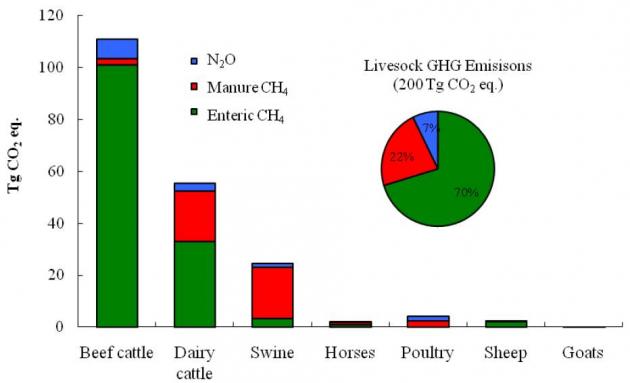
Within animal production, the largest emissions are from beef followed by dairy, and largely dominated by the methane produced in during cattle digestion (Figure 3).

Greenhouse gas emissions from livestock in 2008

Figure 3: Greenhouse gas emissions from livestock in 2008 (USDA, 2011)

Excess nitrogen in agriculture systems can be converted to nitrous oxide through the nitrification-denitrification process. Nitrous oxide is a very potent greenhouse gas, with 310 times greater global warming potential than carbon dioxide.  Nitrous oxide can be produced in soils following fertilizer application. This includes both commercial, inorganic fertilizer as well as organic fertilizers like manure or compost.

As crops grow, photosynthesis removes carbon dioxide from the atmosphere and stores it in the plants and soil life. Soil and plant respiration adds carbon dioxide back to the atmosphere when microbes or plants breakdown molecules to produce energy.  Respiration is an essential part of growth and maintenance for most life on earth. This repeats with each growth, harvest, and decay cycle, therefore, feedstuffs and foods are generally considered to be carbon “neutral.”

Some carbon dioxide is stored in soils for long periods of time.  The processes that result in carbon accumulation are called carbon sinks or carbon sequestration.  Crop production and grazing management practices influence the soil’s ability to be a net source or sink for greenhouse gases.  Managing soils in ways that increase organic matter levels can increase the accumulation (sink) of soil carbon for many years.

Enteric Fermentation

The next largest portion of livestock greenhouse gas emissions is from methane produced during enteric fermentation in ruminants – a natural part of ruminant digestion where microbes in the first chamber of the stomach, the rumen, breaks down feed and produces methane as a by-product. The methane is released  primarily through belching.

As with plants, animals respire carbon dioxide, but also store some in their bodies, so they too are considered a neutral source of atmospheric carbon dioxide.

Manure Management

A similar microbial process to enteric fermentation leads to methane production from stored manure.  Anytime the manure sits for more than a couple days in an anaerobic (without oxygen) environment, methane will likely be produced.  Methane can be generated in the animal housing, manure storage, and during manure application. Additionally, small amounts of methane is produced from manure deposited on grazing lands.

Nitrous oxide is also produced from manure storage surfaces, during land application, and from manure in bedded packs & lots. Related: Archived webinar on GHG Emissions Research in Animal Ag

Other sources

There are many smaller sources of greenhouse gases on farms. Combustion engines exhaust carbon dioxide from fossil fuel (previously stored carbon) powered vehicles and equipment.  Manufacturing of farm inputs, including fuel, electricity, machinery, fertilizer, pesticides, seeds, plastics, and building materials, also results in emissions.

To learn more about how farm emissions are determined and see species specific examples, see the Carbon Footprint resources.

To learn about how to reduce on-farm emissions through mitigation technology and management options, see the Reducing Emissions resources.

Carbon Footprint

Definition: carbon footprint is the total greenhouse gas emissions for a given person, place, event or product.

Carbon footprints are created using a process called life cycle assessment. Life cycle assessment or LCA is a method of resource accounting where quantitative measures of inputs, outputs and impacts of a product are determined.

Life cycle assessment is commonly used to:

  • find process or production improvements
  • compare different systems or products
  • find the ‘hot spots’ in a product’s life cycle where the most environmental impacts are made
  • help businesses or consumers make informed sourcing decisions

diagram

Key Assumptions

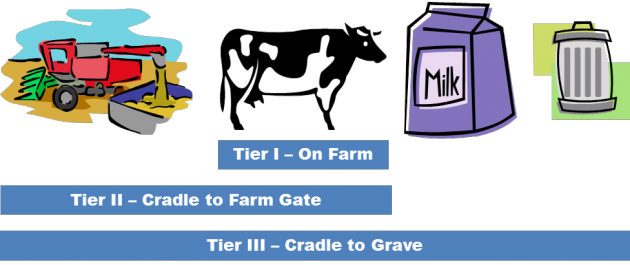
boundaries of the system: each higher tier provides a more complete picture of the product’s impacts, however requires more time and resources to complete.

  1. Gate to Gate (LCA Tier I) – inventories the direct emissions for a single product of process
  2. Cradle to Gate (Tier II) – inputs are taken back to the initial extraction as natural resources up to a certain point in the product’s life such as its sale from the farm, i.e. farm gate.  This will include both direct  and indirect emissions from the product.
  3. Cradle To Grave (Tier III) – the product is followed through the consumer to its eventual recycling or disposal.

Sources of variation

Different researchers may get different results when performing a LCA on the same product. This can happen for many reasons:

  • System boundary definition
  • Inclusion/exclusion of secondary/ indirect sources
  • Inclusion/exclusion of biogenic carbon (stored in organisms)
  • Inclusion/exclusion of carbon dioxide from fuel combustion
  • Functional relationships used
  • Global warming potential indexes
  • Inclusion/exclusion of carbon sequestration

Related: Six archived webinars on the sources of animal ag ghg’s (some are general and some are species-specific)

Educator Materials

If you would like to use the video, slides, or factsheet for educational programs, please visit the curriculum page for download links for this and other climate change topics.

Recommended Reading – How Many Greenhouse Gases Does Agriculture Emit?

U.S. Agriculture Emissions

International Agriculture Emissions

Carbon Footprints and Life Cycle Analysis

Greenhouse Gas Regulations for Animal Agriculture

Visit Climate Change Regulation, Policy, and Market Opportunities

Acknowledgements

Author: Crystal A. Powers – University of Nebraska-Lincoln cpowers2@unl.edu

This material was developed through support from the USDA National Institute for Food and Agriculture (NIFA) under award #2011-67003-30206.

Communicating Science during Controversy

Climate change as a topic of discussion in animal agriculture circles can be controversial. Often we believe “if they only understood the facts, they would agree with us.” However, this method only works with a small part of the population. Opinion formation is very complex and includes many other factors besides scientific facts, such as emotion, values, and trust.

Related: Recorded webinar on “Communicating Amidst Controversy“

Fear-based messaging has been frequently used as an attempt to provide a spark that will lead to further learning and behavioral changes. However, these messages must be coupled with both information and support in order to be effective. Without these two resources, people often suffer from feelings of helplessness, remoteness, and lack of control over the situation which all prevent behavior change from occurring.

The goal of our communications is open-minded, unbiased consideration of all the facts. How do we create such an environment? 

White paper: Communicating Controversy in Agricultural Extension on the Topic of Climate Change: A Summarized Review

Strategies:

  1. Understanding your audience – people look for information that is consistent with what they already think, want, or feel. Identify misconceptions understand the context within which they make decisions.
  2. Get their attention – People typically perceive immediate threats as more relevant and of greater urgency than future problem. So focus on how climate is impacted them today and how smaller costs now can prevent larger losses in the future. Use stories to frame the issue in ways that relate to their values.
  3. Translate science into concrete experience – Use vivid imagery to discuss potential solutions up front, particularly highlighting any benefits.
  4. Effectively communicate uncertainty – explain the difference between knowing the causes of climate change and uncertainty about what to do about it.  Use risk management as an effective way to discuss how to evaluate solutions.
  5. Tap Into Social Identities and Affiliations – create connections between your audience, the environment, and society using diverse advocates.
  6. Encourage Group Participation  – encourage small group discussion and facilitate groups that can continue to meet and discuss.
  7. Minimize bias In order to reduce bias, it is critical to recognize your own values and biases. Checks and balances within your team as well as allowing for public input early in development of products will help provide transparency about your agenda. Emphasizing the need for continued learning is important and acknowledges the fact that there is a lot of information out there that can’t be covered in short periods of time.

Educator Materials

To download the video, white paper, or other materials for use in educational programs, visit our curriculum page.

Recommended Resources

This project hosted a webinar on “Communicating Amidst Controversy” The archive page includes links to view individual segments, download them, and access handouts of the presentation slides.

Acknowledgements

This page was developed as part of a project “Animal Agriculture and Climate Change” an extension facilitation project to increase capacity for ag professionals. It was funded by USDA-NIFA under award # 2011-67003-30206.

Author: Crystal Powers, University of Nebraska – Lincoln cpowers2@unl.edu

Adaptation and Risk Management

Food production is dependent on weather and climate. Agriculture must always be planning and preparing for weather or responding to weather as it happens. Adaptation to weather and climate has occurred since farming started and will continue to occur as we move forward in the future. The rate of adaptation is the key to keep up with the rate that the climate changes.

Factsheet: Adapting to a changing climate: A planning guide (PDF; 44 pp)

Climate Change Adaptation is the most common terminology used to discuss how organisms and ecosystems adjust to changing extremes or patterns in weather over time. Most cities and states are drafting plans to help prepare for weather events such as flooding, extreme heat events, disease outbreaks, and others.

Risk Management is a term more commonly used in business and refers to the process of identifying, assisting, and prioritizing of risk followed by some application of resources (usually time or money) to prevent or minimize the negative consequences.

A report from Iowa Beef Center in 1995 discussed a survey of beef producers who lost cattle in a 13 county area over a 2 day period. For those farmers loosing animals, the impact was significant but a quote from the paper sums up the cost benefit decision that must be made when planning for a changing climate.

“How much can a feedlot operator spend to protect against a weather event that has occurred only six times in the last 101 years?”

This is a real and critical question that must be asked. What if this similar type of heat event started occurring every 10 years, or every 5 years? This changes the equation when looking at risk and reward or cost benefit to the implementation of practices or systems to deal with extreme heat.

Adaptation Strategies

Adaptation strategies lay on a continuum with the least drastic listed first (increasing resilience) and most drastic last (transformation).

  • Increasing resilience is a level of adaptation that is similar to what has occurred in the past. As climate changes, technologies or management improves or adjusts to those changes. Resilience has resulted in animal housing, irrigation, diet, genetics, management and other factors that allow farms to be profitable with standard weather variability.
  • Reducing vulnerability is adaptation at the next level with larger and longer term changes in an existing operation to reduce the risk of current or future climate trends. Things such as bringing in heat tolerant genetics, additional cooling capacity in the buildings, or farm diversification. These strategies require a higher investment and are focused on operational changes that allow for profitability into the future.
  • Adaptation through transformation are those changes where the current farming system is nearly abandoned due to climate changes. Complete changes are made in cropping or animals or a new business venture replaces the one on the current site. Transformation might also include the general migration of an industry to a new climate region.

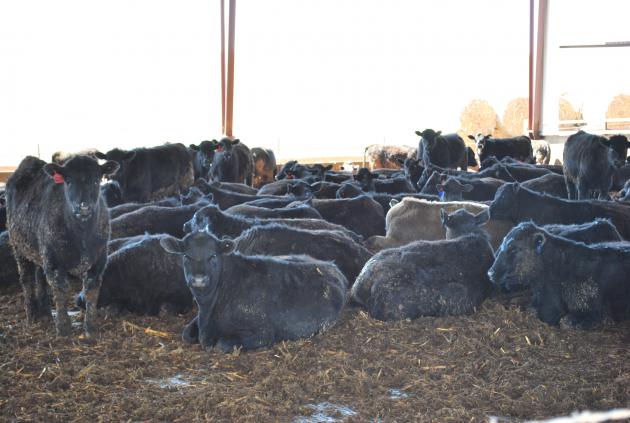
cattle loafing on a bed pack in their barn

Any adaption strategy must be chosen as a function of the site specific features of the farm. Geographic location, current management, current finances, long term and short term farm goals and other considerations need to be made when evaluating farm management and business changes. In addition, the strategy must be based on the current or predicted trends in weather and the impacts this might bring to the farm. A farm prone to flooding in a region where flooding trends are increasing may be interested in a transformational adaptation strategies like relocation than a farm that never experiences flooding.

Cost benefits of these adaptation strategies are not simple. If we were only comparing damage cost to the cost to prevent the damage, the calculation would be simple. Unfortunately, the damage cost is a function of the probability of the weather event and its intensity. For now we must rely on recent weather trends and future climate predictions. Therefore, it is important to be informed about climate change, the impacts of climate change on a local and global level and the economics of adaptation options. Site assessment and planning are key to making good long term adaptation decisions.

Educator Materials

If you would like a copy of the original slides or downloadable copy of the video, please fill out this form. If you use these materials for educational purposes, please send an email to e.whitefield@wsu.edu with how you used the video and how many people watched, to help us improve our resources and document our impact.

Recommended Reading/Viewing

Agricultural Adaptation to Climate Change: Economic and Environmental Implications Vary by Region More… (USDA Economic Research Service, 2012)

Dairy Cattle – Heat Stress

Beef Feedlot Cattle – Heat Stress

Rangeland/Pasture – Drought

Swine Heat Stress

Poultry Heat Stress

Drought: Water Quality and Quantity

Disaster Preparedness Resources

Acknowledgements

Author: David Schmidt, University of Minnesota schmi071@umn.edu

This material was developed through support from the USDA National Institute for Food and Agriculture (NIFA) under award #2011-67003-30206.

Western Region Animal Agriculture and a Changing Climate

Western Region Animal Agriculture and a Changing Climate Extension Project

Our overall goal is for Extension—working with partner organizations—to effectively inform and influence livestock and poultry producers and consumers of animal products in all regions of the U.S. to foster production practices that are environmentally sound, climatically compatible, and economically viable.

Western Region Website-AACC

Farm Management Decision Aid Tools

Webcast Presentations

Fact Sheets

Regional Information

Online Certification Course

Brochures/Conference Visuals

Western Region Website-AACC

Farm Management Decision Aid Tools

Integrated Farm System Model (IFSM) and Dairy Gas Emissions Model (DairyGEM) – training presentation by Al Rotz.

Education received through either of these comprehensive model evaluations will lead to the development of more sustainable dairy and beef production systems.

The IFSM (Integrated Farm System Model) is a tool for evaluating environmental and economic effects of different farm management scenarios. The user enters information on cropping practices, facilities, equipment, the herd and other farm parameters. Sample farms of various sizes and types are provided with the model software to provide a starting point. Information generated by the model includes crop yields, feed production and use, animal production, manure handled, production costs and net return to management. The model’s environmental outputs include average annual soil balances of N, P, K and C, erosion of sediment, P runoff, nitrate leaching, emissions of ammonia, hydrogen sulfide and greenhouse gases, and the carbon footprint of the feed, animal weight or milk produced.

The Dairy Gas Emission Model (DairyGEM) is an educational tool that predicts ammonia and hydrogen sulfide volatilization, GHG emissions, and the carbon footprint of the milk produced. DairyGEM is used to study the interacting effects of management changes on major emission sources from feed production to the return of manure back to the land.

To download software and for more information about IFSM, please visit: http://www.ars.usda.gov/Main/docs.htm?docid=8519

To download software and for more information about DairyGEM, please visit: http://www.ars.usda.gov/Main/docs.htm?docid=21345

About the Presenter:

Dr. Al Rotz is an agricultural engineer at the USDA-ARS Pasture Systems and Watershed Management Research Unit in University Park, PA. His work focuses on the development and use of models to evaluate the performance, environmental impact and economics of alternative technologies and management strategies applied to integrated farming systems for dairy or beef production.

IFSM and DairyGEM Tool Training Presentation

(If one of the video windows is blank, please refresh the page.)

If you are interested in specific segments of the entire video tool training above for either IFSM or DairyGEM, please refer to the separate video segments below.

SEGMENT 1:

Introduction to both the Integrated Farm System Model (IFSM) and Dairy Gas Emissions Model (DairyGEM)

SEGMENT 2:

IFSM tool training (using dairy as an example)

**IMPORTANT Note: this segment also supports the use of DairyGEM

SEGMENT 3:

IFSM beef example and dairy example

SEGMENT 4:

DairyGEM Tool Training

***Note: for further instruction related to DairyGEM use, please refer to Segment 2

DeNitrification-DeComposition (DNDC) Model

DNDC (i.e., DeNitrification-DeComposition) is a computer simulation model of carbon and nitrogen biogeochemistry in agro-ecosystems. The model can be used for predicting crop growth, soil temperature and moisture regimes, soil carbon dynamics, nitrogen leaching, and emissions of trace gases including nitrous oxide (N2O), nitric oxide (NO), dinitrogen (N2), ammonia (NH3), methane (CH4) and carbon dioxide (CO2). In order to download the DNDC model files you will need to register and provide a valid email, as well as your affiliation and intended use. After registration and confirming your email you will be able to download the files from the DNDC Model Download page.

On the Download page, you will find 3 simulation models of interest.

The DNDC model – A computer simulation model for predicting crop yield, soil carbon sequestration, nitrogen leaching, and trace gas emissions in agro-ecosystems.

The Manure -DNDC Model- Ac computer simulation for predicting GHG and NH3 emissions from manure systems.

US Cropland GHG Calculator- A decision support system for quantifying impacts of management alternatives on GHG emissions from Agro-ecosystems in the U.S.

Manure and Nutrient Reduction Estimator Tool (MANURE Tool)

The MANURE Tool  provides a system to quantify methane and and other GHG emission reductions and the environmental benefits of renewable energy produced by digesters at dairy and swine operations. The tool is based upon a full and accurate assessment of baseline conditions at the animal feed operation, which is a key element of the emission reduction calculation. This tool can be used to assess the quantity of emission reductions associated with implementation of specific technologies and/or practices. More information about the tool can be found on the Manure and Nutrient Reduction Estimator site.

COMET-FARM

The COMET-FARM tool is a whole farm and ranch carbon and GHG accounting and reporting system. It is intended to help users account for the carbon flux and GHG emissions related to their farm and ranch management activities, and help them explore the impacts to emissions of alternative management scenarios. The tool guides the user through describing the farm/ranch’s management practices including alternative future management scenarios. Once complete, a report is generated comparing the carbon changes and GHG emissions between current management practices and future scenarios. More information about COMET FARM can be found on the COMET-FARM site.

Farm Smart

Farm Smart is designed to give producers the ability to access and mitigate their environmental profile, track and measure their progress, plan for future improvements and report outcomes of practice changes to customers, community members, regulators and other stakeholders. The system features 3 tools: the Farm Smart Environmental Calculator, the Farm Smart Farm Energy Efficiency tool, and the Farm Smart Decision Support tool. Go to the Farm Smart site to download these tools and for more information.

Webcast Presentations

Fact Sheets

Regional Information

United States Global Change Research Program (USGCRP) Information:

  Northwest


  Northern Great Plains


  Southern Great Plains


  Southwest 


  Alaska 


  Islands 


(Hint:  These links may take a few minutes to load.  If you get a black screen and there is a note on the bottom task bar that says “done”, scroll down a little.)

Newsletters

Fill out the form below to sign up for the Western Region E-Newsletter

Archived Past E-Newsletters

July 29, 2014 E-newsletter

July 11, 2014 E-newsletter

June 27, 2014 E-newsletter

June 13, 2014 E-newsletter

January 17, 2014 E-newsletter

November 22, 2013 E-newsletter

November 8, 2013 E-newsletter

October 11, 2013 E-newsletter

September 20, 2013 E-newsletter

September 13, 2013 E-newlsetter

August 30, 2013 E-newsletter

August 16, 2013 E-newsletter

July 19, 2013 E-newsletter

June 1, 2013 E-newsletter

May 10, 2013 E-newsletter

April 24, 2013 E-newsletter

Animal Ag Climate Change Newsletter Vol. 1, March 2012 (this may take a minute or so to load)

Online Certification Course

This online course is free and was developed to answer questions that the livestock and animal agriculture industry is facing related to climate.  Nationwide, producers and stakeholders are asking questions about climate change: Is it happening? Are unusual weather patterns and events becoming more frequent? Should we be planning and managing for the future? Where can we get un-biased information that serves the livestock and ag community?

This online course will provide valuable information from which to feel confident in answering these frequent questions. Also, the online platform eliminates the extra travel expense for professional development.

Students that take this course will learn about the areas of climate and weather trends, impacts, adaptation, mitigation, policy, climate science and effective communication. Upon completion, they can receive CEUs from multiple professional societies.

Or please contact Liz Whitefield at e.whitefield@wsu.edu if you have any questions.

Brochures/Conference Visuals

 Brochure:   Animal Agriculture and Climate Change (this may take a minute or so to load)


Overview of Climate Change Science

Dr. Art DeGaetano, Cornell University
Also available to download: Climate Change Fact Sheet (PDF, 359 KB)

Earth’s climate system

The Earth’s climate system is composed of a number of interacting components. The main driver is the sun whose energy is by far the main source of heat for Earth. The sun does not heat the Earth’s atmosphere directly but rather its energy passes through the atmosphere and heats the surface of Earth. The surface then heats the atmosphere from below. If the Earth did not lose heat to space, it would continue to heat up as energy is supplied from the sun. To maintain a fairly constant temperature the Earth must lose as much heat to space as it gains. Clouds, along with naturally occurring carbon dioxide in the atmosphere, prevent some of this heat from escaping and thus warm the Earth. Without these components in the atmosphere the temperature of the globe would be about 60°F colder than it is today. Besides blocking the loss of heat from Earth to outer space, clouds can also reflecting sunlight back to space. This reflected energy is unavailable to heat the Earth.

All of the components of the climate system interact. For example, during ice ages, the growth of ice sheets is triggered by a reduction in the amount of energy reaching the Earth from the sun. As the ice sheets grow, forest and soil covered surfaces, which normally absorb (and therefore are warmed by) solar energy, are replaced by ice. Ice reflects most of the sun’s energy making it unavailable to warm the surface. Therefore the growth of the ice sheets contributes to further cooling of the planet. This is known as a positive feedback, since the cooling due to the reduction in solar energy is enhanced by the ice sheet. The same positive feedback results from global warming, as the extent of the ice sheets diminishes, more soil and potentially forest is exposed. These surfaces absorb more heat than the ice covered areas and hence the warming is enhanced.

Natural forces that effect the climate system

Ice ages are just one example of how the Earth’s climate varies through time. Other variations can be caused by:

Natural fluctuations in the sun’s intensity. The amount of energy emitted by the sun is not constant. Changes in its intensity are typically small (a few tenths of a percent), but can influence temperatures on Earth if they occur over an extended period of time.

Volcanic eruptions. Violent volcanic eruptions like Mt. Pinatubo in 1991 inject sulfur dioxide into the upper atmosphere. This compound is highly reflective to sunlight. Thus its presence in the upper atmosphere prevents a portion of the sun’s energy from reaching the Earth. Once in the upper atmosphere, these compounds can exist for several years following the eruption.

Shorter-term cycles like El Nino. The oceans and atmosphere work together to influence climate. Natural oscillations in ocean currents, the location of the warmest or coldest ocean temperatures, etc. can influence atmospheric circulation patterns. El Nino is an example. In this case the pool of warm water that usually resides in the western tropical Pacific Ocean migrates east. This changes the atmospheric circulation pattern in the tropics which influences global weather patterns.

Human factors affecting the climate system

Increase in greenhouse gases. Carbon dioxide and water vapor are both natural components of the Earth’s atmosphere. These gases, along with methane, nitrous oxide and ozone are termed greenhouse gases (GHGs) because of their ability of absorb some of the energy that the Earth emits to space and reradiate it back to the surface. Prior to industrialization, the Earth’s atmosphere contained about 280 parts per million of carbon dioxide (280 CO2 molecules for every 1,000,000 molecules in the atmosphere). This carbon dioxide was maintained in the atmosphere via volcanic and biological activity.

This graph shows long-term trends in carbon dioxide, the primary anthropogenic (humanmade) greenhouse gas (other greenhouse gases include methane and nitrous oxide). In all but the most recent part of the record the data were obtained from analyzing air samples trapped in
ice cores. Direct measurements have been made since the mid 1950s and fit nicely with the ice core record. Carbon dioxide concentration was very constant prior to 1860. After 1900 the concentrations all increase exponentially.

What causes these increases?

  • Fossil fuel burning releases about 6 billion tons of carbon each year into the atmosphere.
  • Methane from agriculture, livestock, landfills and industry has increased by 133%.
  • Nitrous oxide from agriculture and industry has increased by 15%.
  • Changes in land use and land cover release 1 billion tons of carbon annually plus other gases.

Land use changes include deforestation and urbanization. Deforestation influences the climate in two ways. 1) Trees are sinks for atmospheric carbon dioxide. They remove CO2 from the air and store it as vegetative matter. Fewer trees mean less CO2 is pulled from the atmosphere. If the trees are subsequently burned, the CO2 is added back to the atmosphere. 2) Removal of the trees changes the character of the land surface; this changes the amount of solar energy that is absorbed by the surface, evaporation, etc. Urbanization is similar to deforestation. Urban areas tend to absorb and hold more heat  than vegetated surfaces. Thus cities are typically warmer than rural environments.

Recent Climate Change

When the concentration of greenhouse gases is increased (and everything else in the climate system, like the amount of clouds, is held constant) less of the Earth’s energy escapes to space. As a result the temperature of the Earth must rise.

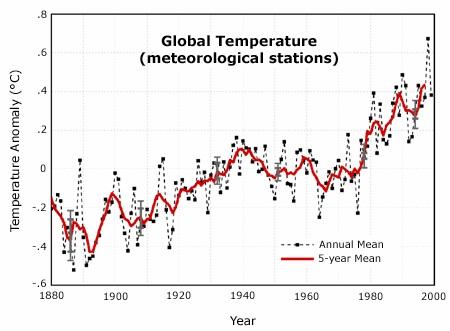
Temperature. Over the last 100 years, instrumental records indicate that the average temperature of the Earth has risen by nearly 1°F (0.5°C). The increases are most pronounced in polar regions of the Northern Hemisphere. In Alaska, temperatures have risen about 2.8°F (1.5°C) over the last century. Across the globe, the increase in temperature tends to be largest in winter, but still significant during the other seasons. Night time temperatures have risen faster than values observed during the day. U.S. temperatures have risen by 0.9°F over the past100 years. Within the past 25 years, U.S. temperatures increased 1.6°F.

Precipitation. Although average precipitation across the globe has not changed dramatically, a change in the character of precipitation has been observed in many parts of the world. The observed trends suggest a shift from more frequent moderate rainfall events to more infrequent heavy rainfall events. Since the period of time between rainfall events increases, drought may become more prevalent. But since the rain events that do occur can be quite heavy, the increased risk of flooding is also a concern. Clearly this change in the character of precipitation has implications for water resource and irrigation decisions.

Predictions

CO2 Levels. In order to project future climate conditions, scientists must predict what the world will look like politically, economically and environmentally in 100 years. Given the uncertainty in such predictions, scientists have developed a range of scenarios of future greenhouse gas emissions. These range from a fossil-fuel intense society that undergoes rapid economic growth and experiences a modest increase in population. In this case atmospheric CO2levels increase to four times their pre-industrial values by 2100. A business-as-usual scenario…continuing the present trend in greenhouse gas emissions … leads to a similar increase in CO2 levels by 2100 (A2 in the figure below).

More environmentally-friendly scenarios, with reductions in fossil fuel usage, also lead to increases in atmospheric CO2 concentration. This results from the lifetime of CO2 in the atmosphere (about 100 years). Thus today’s CO2 emissions are not removed from the atmosphere until 2106. Even the most environmentally friendly emission scenarios lead to an increase in atmospheric CO2 concentration over the next 100 years, to about double preindustrial levels (B1 in previous figure).

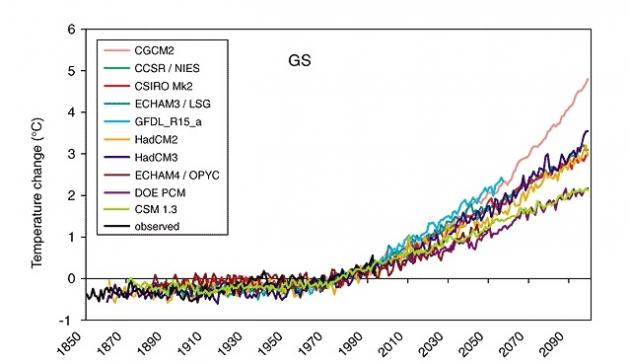
Temperature. Many climate models exist. They all rely on the same physics, but differ in the ways in which variables like clouds are parameterized. The “art” of climate modeling is how processes that can not be well represented by the physics of the models are accounted for. All models experience the same increase in greenhouse gas concentration. They all show a warming by 2100. The only difference is the magnitude of the warming. Here model warming estimates range from 1.5 to 5.0°C by 2100.

Significance. At first glance a degree or two or even five degrees of “global warming” does not seem like a big deal. However when averaged over the globe, this change is quite substantial. From the height of an ice age to the intervening interglacial period (like today) the globe’s temperature changes by about six degrees. The more modest climate model projections are that by 2100, increase global temperature will be about a third of that associated with the ice age cycle. Keep in mind that for ice ages, this six-degree change occurs over 100,000 years. We
expect to see a 2-3 degree change over 100 years!

Precipitation. The figure below shows how precipitation changes will vary geographically by 2100. Some locations (primarily in subtropics) show decreases in precipitation (orange and gold areas in the figure below). Large areas of the middle latitudes and tropics see increases in
precipitation.

Summary

Over the last century the concentration of greenhouse gases in the Earth’s atmosphere has increased markedly. CO2 levels in the atmosphere have not been this high for hundreds of thousands of years. In isolation this change must result in a warming of the Earth’s temperature. Over this same time period climate observations indicate that the global temperature has increased by about 1°F. Although changes in average precipitation have been small (on the order of 1-2%), rain gauge records show that the character of precipitation events has changed. Heavy rainfall events have become more frequent over the last half century.

It is unlikely that the emission of carbon dioxide into the Earth’s atmosphere will slow in the near future. In fact, most projections indicate increased carbon dioxide emissions into the middle to late part of the 21st century. This continued increase will likely lead to additional increases in temperature, with most models projecting rises of between 1.5 and 5°C. Although the exact magnitude of changes in precipitation are uncertain, there is reason to believe that precipitation events will become more variable, leading to increases in both the frequency of floods and droughts.

NRCS Online Air Quality, Energy and Climate Change Courses

The Natural Resources Conservation Service (NRCS) has begun developing online courses in three curriculum tracks: air quality, energy, and climate change. Air Quality, Climate Change, and Energy is the lead-in to the three tracks.

The courses are designed for all Natural Resource Conservation Service (NRCS) employees, but particularly for State Air Quality and Energy Contacts, conservation planners, partnership employees, and conservation technical assistance providers to assist them in integrating air quality, energy and climate change into conservation planning and programs. Although these courses were developed specifically for NRCS employees, the information contained in them may also be useful to NRCS partners and others associated with conservation in agriculture.

*A USDA eAuthentication account is needed to access the courses.*

Introductory Course

Air Quality Curriculum Track

Energy Curriculum Track

Climate Change Curriculum Track

Environmental Credit Trading

Other courses are either in development or are being planned to supplement the learning modules for each of these curriculum tracks

Air Quality, Climate Change, and Energy

Turkey production. Photo courtesy USDA NRCS.

Upon completion of the course, participants will be able to:

  • Define air quality, climate change, and energy as they relate to the NRCS mission and explain how they are interrelated
  • Explain the importance of these issues for land managers and NRCS itself
  • Recognize how soil, water, air, plants, animals and human activity all affect, and are affected by, energy and climate change
  • Identify examples of how air quality, climate change, and energy concepts apply to agricultural conservation
  • List and locate additional resources that can be used to expand knowledge of these topics

Course Link. Air quality is already a functional part of the NRCS conservation portfolio (the first ‘A’ in SWAPA+H). Climate change and energy are now becoming significant considerations in conservation planning. This course will provide a broad overview of these three topics, and how they are related to each other and SWAPA+H components. Students will learn how agricultural activities can contribute to air emissions, sequester carbon, manage greenhouse gas emissions, and better conserve energy. The course also will provide examples of addressing these issues via NRCS planning and programs. 90 minutes Go to Air Quality, Climate Change, and Energy….

Why Should We Care About Air Quality?

Upon completion of the course, participants will be able to:

  • State why air is an important natural resource
  • Explain why it is important to take a holistic approach to conservation planning
  • List the major reasons why NRCS addresses air quality and atmospheric change
  • Identify several agricultural activities that can release air emissions
  • Describe various reasons for land managers to address air quality and atmospheric change
  • Identify the role of NRCS employees in addressing air quality and atmospheric change

Course link. As the first “A” in SWAPA+H, air is an important natural resource that is vital to life. Although our agency has addressed issues related to air quality and atmospheric change since its formation, these issues have not been a traditional focus area for the NRCS in most locations. As our partners and the public have begun placing a larger emphasis on air quality and atmospheric change issues, NRCS has needed to develop the technical expertise for integrating conservation of the air resource into our assistance portfolio.

This course will provide a broad overview of air quality and atmospheric change and begin to equip NRCS conservationists and our partners with the knowledge and confidence to address air-related resource concerns. 30 minutes. Go to Why Should We Care About Air Quality?…

Manure management system for a swine farm. Photo courtesy USDA NRCS.

Air Quality Resource Concerns

Upon completion of the course, participants will be able to:

  • Identify the four primary air quality resource concerns and the emissions that contribute to these concerns
  • Identify the effects of particulate matter, ozone precursors, and odors on air quality
  • Discuss greenhouse gases as an atmospheric change issue
  • Derive potential solutions to reduce agricultural emissions of particulate matter, ozone precursors, odors, and greenhouse gases
  • List and locate additional resources that can be used to expand knowledge of these topics

Course link. The NRCS utilizes the concept of “resource concerns” in conservation planning. There are four broad categories of air-related resource concerns: particulate matter, ozone precursors, odors, and greenhouse gases and carbon sequestration. This course provides an overview of each of these four air quality resource concerns and how they can most effectively be addressed in the NRCS planning framework. Principal air emissions from agricultural operations are discussed, and how each of these is related to one or more of the air resource concerns. Finally, a variety of mitigation strategies are presented for managing emissions and improving these four air quality concerns. 50 minutes Go to Air Quality Resource Concerns…

Air Quality and Animal Agriculture

Upon completion of the course, participants will be able to:

  • Identify the primary reasons that animal production operations are currently the main focus when discussing air quality issues in agriculture
  • Identify the primary air emissions from animal production operations and describe how these emissions are generated, emitted, and transported
  • Identify NRCS options for mitigating air emissions from animal production operations

When discussing air quality issues in agriculture, animal production operations are typically the primary focus for mitigation and regulation.  This course will introduce the air emissions associated with animal operations and provide information on how NRCS can help producers mitigate these emissions. 60 minutes Go to Air Quality and Animal Agriculture…

Greenhouse Gases and Carbon Sequestration

Upon completion of the course, participants will be able to:

  • Explain the greenhouse effect
  • Discuss the characteristics of sunlight and earth’s radiation balance
  • Determine how changes in greenhouse gas emissions can influence global climate change
  • Identify methodologies in which agricultural and natural resource systems can mitigate greenhouse gas emissions and effects
  • Given a scenario, explain the importance of a holistic approach to the reduction of greenhouse gas emissions

Course Link Climate change and carbon offset trading have gained great interest in many parts of the agricultural community over the past few years. But why should we as NRCS conservationists be interested in these issues? Conservation systems that we design and help implement can often have a positive influence on the emission or storage of gases which, when in the atmosphere, can affect climate change. This course shows the importance of greenhouse gases to life on earth, the potential negative consequences of increasing greenhouse gas concentrations in the atmosphere, agricultural sources of greenhouse gases, and potential methods in which agriculture can reduce its net emissions of greenhouse gases to the atmosphere. 60 minutes Go to Greenhouse Gases and Carbon Sequestration…

Why Do We Care About Energy?

Upon completion of the course, participants will be able to:

  • Describe why energy costs and energy security are so important to land managers.
  • Describe environmental impacts of fossil fuel exploration, production and use.
  • Describe energy opportunities available to land managers and NRCS

Course Link While energy has not traditionally been addressed in the NRCS planning process, it is receiving unprecedented attention in the national and international news. This short course provides insight into why energy issues are important to agriculture and the nation. It gives participants the opportunity to explore how our energy choices can impact NRCS and the natural resources we work to conserve. 30 minutes Go to Why Do We Care About Energy?…

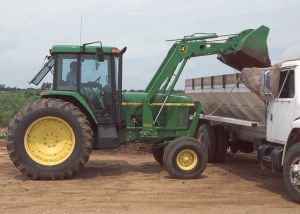
Tractor loading chicken litter into spreader truck. Photo courtesy USDA NRCS.

Energy Basics

Upon completion of the course, participants will be able to:

  • Describe basic terminology and energy concepts.
  • Identify non-renewable and renewable sources of energy and describe their origins, benefits and uses
  • Explain life cycle analysis and it relevance to comprehensive energy planning
  • Describe agriculture’s role in utilizing renewable energy alternatives

Course Link Understanding energy basics is fundamental to effective energy conservation planning. This course establishes a technical foundation to prepare NRCS planners to incorporate energy considerations into conservation plans. It provides general background on the fundamental principles behind energy issues in agricultural settings. 90 minutes Go to Energy Basics…

Why Do We Care about Climate Change?

At the completion of this course, students will be able to:

  • Understand climate change and its key drivers
  • Explain the impacts of climate change on agriculture and natural resources
  • Differentiate mitigation from adaptation
  • Discuss NRCS’ role in helping land managers and owners in mitigating and adapting to the impacts of climate change

Course link. Climate plays a key role in conservation planning, natural resource management and agricultural production. Changes in climate can have significant impacts on managing and protecting agricultural and natural resources.  NRCS is educating its employees and partners about climate change, and communicating climate change impacts to NRCS customers. Understanding climate change and its impacts will help NRCS assist private landowners, producers, and land managers cope and adapt to changing climate.

This course discusses climate change and related concepts, the impacts of climate change on agriculture and natural resources, and NRCS’ role in helping private land owners and land managers address climate change mitigation and adaptation through conservation planning. 30 minutes. Go to “Why Care About Climate Change?”

Technical Contact: Carolyn Olson at Carolyn.olson@wdc.usda.gov

Introduction to Environmental Credit Trading

Course link: This course provides an introductory discussion of environmental credits, environmental credit trading, and market-based approaches providing environmental and economic benefits.

At the completion of this course, students will be able to:

  • Understand environmental credit trading
  • Identify markets for environmental credits
  • Explore the benefits and costs of participating in markets
  • Understand how different environmental practices can produce various environmental credits
  • Outline various ways agricultural producers can benefit from environmental credit trading
  • Explain how producers can participate in environmental credit trading

Course length: 90 minutes. Go to “Introduction to Environmental Credit Trading”

Technical Contact: Carolyn Olson at carolyn.olson@wdc.usda.gov

Page Manager

Greg Zwicke, P.E.
Air Quality Engineer
Air Quality and Atmospheric Change Team
USDA-NRCS, WNTSC
2150 Centre Ave.
Building A, Suite 231
Ft. Collins CO  80526

greg.zwicke@ftc.usda.gov
Ph. 970.295.5621