Influence of Swine Manure Application Method on Concentrations of Methanogens and Denitrifiers in Agricultural Soils

Waste to Worth: Spreading science and solutions logoWaste to Worth home | More proceedings….

Abstract

Soil microbial communities have been proposed as indicators of soil quality due to their importance as drivers of global biogeochemical cycles and their sensitivity to management and climatic conditions. Despite the importance of the soil microbiota to nutrient transformation and chemical cycling, physio-chemical properties rather than biological properties of soils are traditionally used as measures of environmental status. In general, much is unknown regarding the effect of management fluctuations on important functional groups in soils systems (i.e., methanogens, nitrifiers and denitrifiers). It is only recently that it has been possible, through application of sophisticated molecular microbiological methods, to sensitively and specifically target important microbial populations that contribute to nutrient cycling and plant health present at the field-scale and in differentially managed soil systems.

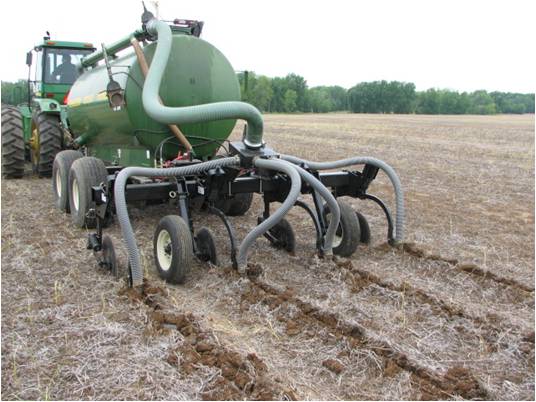
Fig. 1. Swine slurry surface application.

In this study, quantitative, real-time PCR (qPCR) was used to quantify changes in denitrifiers (narG) and methanogens (mcrA) in agricultural soils with three different swine effluent application methods including surface application, direct injection, and application in combination with soil aeration. Results show that concentrations of bacteria were high in all treatments (2.9 ± 1.4 X 10⁹ cells per gram of soil); about 25% higher than in controls with no slurry added. Concentrations of methanogens and denitrifiers were slightly higher (around 50%) when slurry was applied by injection or aeration (5.3 ± 2.4 X 10⁷ cells and 2.8 ± 1.8 X 10⁷ cells per gram of soil, respectively) as compared to no till  (2.4 ± 1.6 X 10⁷ cells and 1.6 ± 1.0 X 10⁷ cells per gram of soil, respectively).

These results suggest that application method has little influence on concentrations of functional groups of microorganisms. These results will be discussed in light of results of GHG sampling conducted during the same study.

Fig. 2. Swine slurry application by direct injection.

Why Study Greenhouse Gases and the Manure-Soil Interaction?

Although agricultural production has been identified as a significant source of green house gas (GHG) emissions, relatively little scientific research has been conducted to determine how manure management strategies effect GHG production upon land application. Even fewer studies have taken into consideration the microorganisms associated with applied manures. Microbial communities are responsible for nutrient transformation and chemical cycling in soil systems and many important functional groups (i.e., methanogens, nitrifiers and denitrifiers) are extremely sensitive to environmental management and climate conditions. The goal of this study was to evaluate how swine slurry land application methods effect microbial communities associated with nitrogen cycling and GHG production.

Fig. 3. Swine slurry application in combination with soil aeration.

What Did We Do?

We used molecular microbial methods to quantify changes in nitrifiers (amoA), denitrifiers (nirK, nosZ and narG) and methanogens (mcrA) in agricultural soils receiving swine slurry applied by (A) surface application (Fig. 1) (B) direct injection (Fig. 2) or (C) application in combination with soil aeration (Fig. 3). Soil samples were taken from triplicate plots 13 days after effluent application.

Above – Fig. 4. Concentration of methanogens (mcrA) and nitrate reducing bacteria (narG) as measured by quantitative, real-time PCR analysis of targeted genes (in parentheses). Swine slurry was applied by three methods surface, direct injection (Inj) or in combination with aeration (Aer). Chemical fertilizer (Fert) and plots with no fertilizer (Control) were also included. Initial slurry was removed before application. Cells in soils from plots with surface applied slurry were sampled at two depths (1.3 cm and 5.1 cm). Error bars represent the standard deviation of triplicate plot samples.
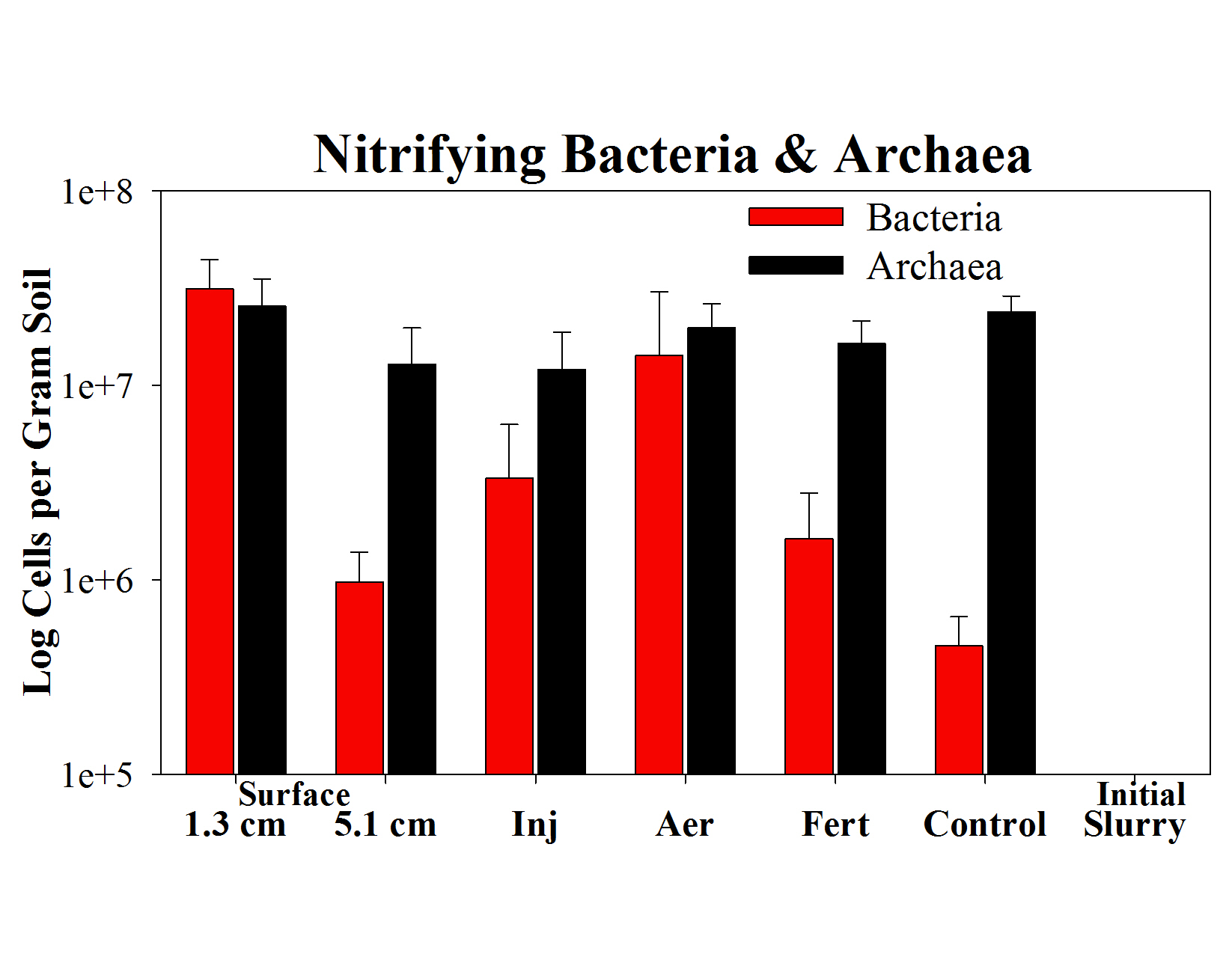
Below – Fig. 5. Concentration of nitrifying bacteria or archaea as measured by quantitative, real-time PCR analysis of the amoA specific for each group. Swine slurry was applied by three methods surface, direct injection (Inj) or in combination with aeration (Aer). Chemical fertilizer (Fert) and plots with no fertilizer (Control) were also included. Initial slurry was removed before application. Cells in soils from plots with surface applied slurry were sampled at two depths (1.3 cm and 5.1 cm). Error bars represent the standard deviation of triplicate plot samples.

What Have We Learned?

  1. Sampling cell concentrations at different soil depths (1.3 cm or 5 cm) from plots with surface applied slurry significantly influenced results (Fig. 4, Fig. 5 and Fig 6).
  2. Slurry applied by any method significantly increased (7 logs) concentrations of nitrate reducing bacteria and methanogens (Fig 4). Methanogens were present in the slurry while nitrate reducers were not measurable in slurry or control plots.
  3. Nitrifying bacteria significantly increased in concentration after slurry addition (i.e. 7, 31, 2 and 68 times higher than control plots for slurry applied by injection, aeration or surface application (1.3 cm and 5 cm), respectively); concentrations of nitrifying archaea did not change from initial levels after slurry addition (Fig. 5).
  4. Concentrations of bacteria, fungi and denitrifiers on plots with slurry applied were two to nine times higher than concentrations in controls with no slurry (Fig. 6).

Future Plans

Findings from this study underscore the importance of measuring both microbial populations and gas production when evaluating the impact of manure application on emissions. Emission data provided important information about the kind and rate of GHG emissions (see reference below for details; Sistani et al (2011) Soil Sci. America J. 74(2): 429-435). However, microbial analyses showed that select groups of nitrifiers and denitrifiers (but not all groups) were affected by manure application. Findings from microbial analyses will be the basis for development of future studies to target and manipulate specific microbial populations in ways that inhibit their ability to produce GHG.

Fig. 6. Change in concentration of targeted population in each treatment relative to that in the control with no slurry or fertilizer added. Concentrations of bacteria (16S RNA gene), fungi (18S RNA gene), nitrite reducing bacteria (nirK) or nitrous oxide reducing bacteria (nosZ) were measured by quantitative, real-time PCR analysis of targeted genes (in parentheses). Swine slurry was applied by three methods surface, direct injection (Inj) or in combination with aeration (Aer). Chemical fertilizer (Fert) and plots with no fertilizer (Control) were also included. Initial slurry was removed before application. Cells in soils from plots with surface applied slurry were sampled at two depths (1.3 cm and 5.1 cm). Error bars represent the standard deviation of triplicate plot samples.

Authors

Dr. Kimberly Cook, Research Microbiologist, USDA Agricultural Research Service, kim.cook@ars.usda.gov

Dr. Karamat Sistani, Research Soil Scientist, USDA Agricultural Research Service

Additional Information

USDA-ARS Bowling Green, KY Location Webpage: http://www.ars.usda.gov/main/site_main.htm?modecode=64-45-00-00


Relevant Publications:

Sistani, K.R., Warren, J.G., Lovanh, N.C., Higgins, S., Shearer, S. 2010. Green House Gas Emissions from Swine Effluent Applied to Soil by Different Methods. Soil Sci. America J. 74(2): 429-435.

Acknowledgements

We would like to thank Jason Simmons and Rohan Parekh for valuable technical assistance. This research is part of USDA-ARS National Program 214: Agricultural and Industrial By-products

The authors are solely responsible for the content of these proceedings. The technical information does not necessarily reflect the official position of the sponsoring agencies or institutions represented by planning committee members, and inclusion and distribution herein does not constitute an endorsement of views expressed by the same. Printed materials included herein are not refereed publications. Citations should appear as follows. EXAMPLE: Authors. 2013. Title of presentation. Waste to Worth: Spreading Science and Solutions. Denver, CO. April 1-5, 2013. URL of this page. Accessed on: today’s date.

Natural Resource Conservation Service (NRCS) Manure Related Conservation Innovation Grants (CIG)

Waste to Worth: Spreading science and solutions logoWaste to Worth home | More proceedings….

Abstract

A number of the manure related Conservation Innovation Grants (CIG) have been successful.  Several feed management related projects have been major successes under the CIG program.  Other successful projects have dealt with such technologies as anaerobic digesters; community digesters; environmental credit trading; lagoon management; manure to energy generation; alternative litter sources, storage, and handling; and pathogen, odor, and emissions mitigation, to name just a few. 

The presentation will provide specific numbers of projects and funding per year, and information about actual projects that NRCS considers to have been successful. 

What Is the Purpose of the CIG Grant Program?

Glenn Carpenter came to Natural Resources Conservation Service as a Senior Economist in December of 2001 with the Animal Husbandry and Clean Water Division.  In May, 2004 he became the agency’s National Leader for Animal Husbandry, with that Division.  In 2010 his position was moved to the Ecological Sciences Division.  Much of his work with NRCS has been related to the animal waste issue and the agency’s interaction with EPA over the CAFO Rule. 

Glenn has three degrees in Poultry Science from Michigan State University.  Prior to joining NRCS, Glenn served in Extension Poultry positions at two universities.

The 2002 Farm Bill created a mechanism under the Environmental Quality Incentives Program (EQIP) for a program of Conservation Innovation Grants (CIG).  These grants were “…intended to stimulate innovative approaches to leveraging Federal investment in environmental enhancement and protection, in conjunction with agricultural production…”  The grants were to provide a mechanism for funding projects to aid in technology development and transfer.    The granting program actually began in 2004, and has continued since that time.

What Did We Do?

By statute, the USDA Natural Resources Conservation Service cannot do research.  Because of this, and because the interest of NRCS lies in directly assisting farmers and ranchers in the adoption of technologies that will benefit conservation, projects funded under this program must be in the field demonstration or tool application stages.  Since the initial grant funding cycle in 2004, NRCS has provided funding through EQIP every year.  To date nearly 500 grants have been awarded, with total funding in excess of $180 million. 

A large share of these CIGs has been strongly animal, and/or manure related.  Almost 25 percent of the total number of grants has been animal related, and these grants have received slightly over 26 percent of the total dollars.  About 19 percent of the total grants have been manure related and these have received about 22 percent of the funding.  Those animal related grants that are not manure related largely deal with range and pasture systems.

What Have We Learned?

Several feed management related projects have been major successes under the CIG program.  Other successful projects have dealt with such technologies as anaerobic digesters; community digesters; environmental credit trading; lagoon management; manure-to-energy generation; alternative litter sources, litter storage, and handling; and pathogen, odor, and emissions mitigation from manure, to name just a few. 

The number and variety of funded projects has covered a wide range of geographic areas and technical  innovations.  A multistate feed management project resulted in training programs, a tech note for NRCS, and many fact sheets and other materials that are available on Livestock and Poultry Environmental Learning Center webpage.   Another major grant demonstrated the effectiveness of filter strips and other vegetated treatment areas on mitigating manure runoff from cattle feedlots.  Utilizing high pressure injection of manure, a Pennsylvania project demonstrated a decrease in odor and runoff while also preserving nitrogen.  Several projects have successfully demonstrated the effects of precision feeding of dairy cattle to show the change in manure nutrients.  Projects have demonstrated the effectiveness of different tillage systems and technologies on manure nutrient runoff.  Other projects have dealt with innovative waste-to-energy technologies, or waste to value-added-product creation.   These are just a few of the number and variety of projects funded  through the Conservation Innovation Grants program.

Future Plans

The success of the CIG program since 2004, both in numbers of projects and in innovative technologies and tools applied, demonstrates that the program is important to agriculture in the U.S.  NRCS has shown its support by continually funding the program, and by making additional moneys available for special targeted CIGinitiatives.

Authors

Glenn H. Carpenter, National Leader, Animal Husbandry, USDA Natural Resources Conservation Service glenn.carpenter@wdc.usda.gov

Gregorio Cruz, CIG Program Manager, NRCS, Rosslyn, VA;  William Reck, Environmental Engineer,  NRCS, Greensboro, NC;  Jeffrey Porter, Environmental Engineer, NRCS, Greensboro, NC; Cherie Lafleur, Environmental Engineer, NRCS, Ft Worth, TX; Sally Bredeweg, Environmental Engineer, NRCS, Portland, OR; Harbans Lal, Environmenal Engineer, NRCS, Portland, OR; Greg Zwicke, Environmenatl Engineer, NRCS, Ft Collins, CO

Additional Information

NRCS Conservation Innovation Grant webpage at:  http://www.nrcs.usda.gov/wps/portal/nrcs/main/national/programs/financial/cig/

Acknowledgements

United States Department of Agriculture, Natural Resources Conservation Service, Conservation Innovation Grants Program

The authors are solely responsible for the content of these proceedings. The technical information does not necessarily reflect the official position of the sponsoring agencies or institutions represented by planning committee members, and inclusion and distribution herein does not constitute an endorsement of views expressed by the same. Printed materials included herein are not refereed publications. Citations should appear as follows. EXAMPLE: Authors. 2013. Title of presentation. Waste to Worth: Spreading Science and Solutions. Denver, CO. April 1-5, 2013. URL of this page. Accessed on: today’s date.


Combustion of Poultry Litter: A Comparison of Using Litter for On-Farm Space Heating Versus Generation of Electricity

Waste to Worth: Spreading science and solutions logoWaste to Worth home | More proceedings….

Abstract

This presentation will compare using litter as a replacement for LP gas for on-farm space heating with using litter to generate electricity. The comparison includes heating system efficiency, amount of LP off-set possible, value of plant nutrients in the litter, quantity and value of plant nutrients in the litter ash, impact of brokerage, and costs of producing the energy. It was concluded that using litter on-farm as a source of space heat and using the litter ash as fertilizer could provide a potential value of $48 per ton of litter. However, on-farm combustion of litter to produce electricity resulted in a loss of about – $3/ton of litter. Therefore, if a heating and ash management system can be implemented in a cost-effective manner use of litter to off-set 90% or more of the heating energy requirements would be the better of these two alternatives.

Why Is Energy Use Important in Poultry Production?

Modern poultry production requires substantial amounts of energy for space heating (propane/LP gas), ventilation, feed handling, and lighting. It was determined that annual LP gas consumption in broiler houses can range from 150 to 300 gallons of LP per 1000 square feet of floor space with an average of about 240 gal LP/1000 ft2 observed in South Carolina. Similarly, broiler production in South Carolina requires about 2326 kWh/1000 ft2 of house area. As a result, a 6-house broiler farm in SC uses about 30,240 gallons of LP and 293.076 kWh of electricity annually. The cost for energy for a 6-house farm is on the order of $57,456 per year for LP ($1.90/gal LP) and $35,169 per year for electricity ($0.12/kWh). Energy costs have more than doubled over the last decade and as a result producers are very interested in ways to reduce on-farm energy costs by using the energy contained in the litter. The objective of this study was to compare using litter as a replacement for LP gas for on-farm space heating with using litter to generate electricity.

What Did We Do?

Our analysis included heating system efficiency, amount of LP off-set possible, value of plant nutrients in the litter, quantity and value of plant nutrients in the litter ash, impact of brokerage, and costs of producing the energy.

What Have We Learned?

It was concluded that using litter on-farm as a source of space heat and using the litter ash as fertilizer could provide a potential value of $46 to $55 per ton of litter. However, on-farm combustion of litter to produce electricity resulted in a loss of about $3/ton of litter. Therefore, if a heating and ash management system can be implemented in a cost-effective manner use of litter to off-set 90% or more of the heating energy requirements would be the better of these two alternatives.

Future Plans

This information is being used in extension programs that target poultry producers.

Authors

Dr. John P. Chastain, Professor and Extension Agricultural Engineer,  School of Agricultural, Forestry, and Environmental Sciences, Clemson University, jchstn@clemson.edu

Additional Information

Chastain, J.P., A. Coloma-del Valle, and K.P. Moore. 2012. Using Broiler Litter as an Energy Source: Energy Content and Ash Composition. Applied Engineering in Agriculture Vol 28(4):513-522.

Acknowledgements

Support was provided by the Confined Animal Manure Managers Program, Clemson Extension, Clemson University, Clemson, SC.


The authors are solely responsible for the content of these proceedings. The technical information does not necessarily reflect the official position of the sponsoring agencies or institutions represented by planning committee members, and inclusion and distribution herein does not constitute an endorsement of views expressed by the same. Printed materials included herein are not refereed publications. Citations should appear as follows. EXAMPLE: Authors. 2013. Title of presentation. Waste to Worth: Spreading Science and Solutions. Denver, CO. April 1-5, 2013. URL of this page. Accessed on: today’s date.

Improving Methane Yields from Manure Solids through Pretreatment

Waste to Worth: Spreading science and solutions logoWaste to Worth home | More proceedings….

Abstract

This paper presents a description of the ABFX (Ammonium Bicarbonate Fiber Explosion) pretreatment process. The ABFX process is an extremely simple and inexpensive process that possesses the attributes of the Ammonia Fiber Explosion Process (AFEX) and CO2 explosion process while eliminating the cost associated with high temperature, high pressure and ammonia recovery. The process uses ammonia bicarbonate (ABC) recovered from anaerobic digestate to pretreat the substrate. The ABC is simply added to the substrate, pumped to a reactor, heated to temperatures less than 100°C, for a short duration. The pressure created by ABC volatilization is then released and the gases (CO2, NH3, H2O) condensed at ambient temperature to produce ABC that is then reused in the process. The process can operate with low temperature waste heat.

This paper presents a description of the process and the results of a National Science Foundation Small Business Innovative Research investigation that compared the methane gas yields from both pretreated and untreated grass silage and pretreated and untreated screened (screw press) dairy manure solids. The ABFX pretreated manure solids produced 38% more methane gas than the untreated while the ABFX pretreated grass silage produced 14% more methane gas than the untreated. The economic benefits of the process will be discussed.

Is There Potential to Improve Methane Yields from Manure?

A large fraction of municipal solid waste (MSW), crop residues, animal manures, forest residues, or dedicated energy crops are composed of lignocellulouse. Lignocellulosic substrates consist of a tightly woven matrix of cellulose, hemicellulose, and lignin polymers. Biological degradation of these polymers are carried out by a variety of enzymes. Pretreatment can enhance the bioconversion of the wastes or cop residues for ethanol or biogas production by increasing the accessibility of the enzymes to the substrate. Thus, pretreatment can increase the energy yield (biogas or ethanol) while decreasing the residual waste to be disposed.

Anaerobic bacteria easily convert the hemicellulose and amorphous cellulose to gas. However, conversion of the crystalline cellulose and lignin is far more difficult. Lignin is not converted to gas by anaerobic organisms. Only a fraction of the crystalline cellulose is converted to gas within the detention times commonly used (20 days) in anaerobic digestion. Pretreatment is required to rupture the crystalline cellulose for enzymatic hydrolysis. A wide variety of pretreatment technologies have been developed. Dilute acid pretreatment solubilizes the hemicellulose. Alkali, lime or sodium hydroxide pretreatment solubilize the lignin thus exposing the hemicellulose and cellulose for enzymatic attack. A variety of explosion processes such as steam, carbon dioxide, and liquid ammonia (AFEX) have also been developed that disrupt the crystalline cellulose and hemicellulose. Ammonia soaking, over prolonged periods of time, has also been used to pretreat straw for animal feed and thereby improve rumen digestibility and animal weight gain. All of the processes use high pressure and temperature, or toxic chemicals. The commonly used, conventional processes are not suitable for on-farm use.

What Did We Do?

Figure 1: ABFX Process

We substantiated the feasibility of a breakthrough pretreatment technology under a National Science Foundation Small Business Innovative Research (SBIR) grant that used the non-toxic Ammonium Bicarbonate (ABC) recovered from the anaerobic digestate. The pretreatment was accomplished with a simple device, shown in Figure 4, composed of a pump, that pumps the solid biomass substrate, mixed with a small amount of ABC, into a reactor. The reactor is closed and heated to temperatures below the boiling point of water. Once heated the ABC breaks down to its water, ammonia, and carbon dioxide components putting the contents under significant pressure. The pressure is then rapidly released causing the explosion or disruption of the lignocellulosic substrate and the breakdown of the crystalline cellulose. The gases (H2O, NH3, and CO2), are then condensed in a separate chamber to produce ABC that is reused in the next cycle. Nothing is wasted. The ABC is recovered and reused. The applied heat and detention time provided is sufficient to pasteurize the biomass and meet the temperature requirements of the downstream anaerobic reactor. It is a simple process composed of a solids pump, heat pump, and two low detention time (10± minutes) reactors.

The SBIR research consisted of pretreating both grass silage and concentrated, screw press, manure solids and digesting both pretreated and untreated silage and manure solids. The pretreated and untreated solids were digested in 10 reactors at a 12.5 day HRT and 35°C.

What Have We Learned?

Pretreatment of the grass silage increased the methane yield 16% over several months of operation. Pretreatment increased the methane yield from the pretreated manure solids by 35% over the same period. The increased gas yield was approximately equal to the methane yield from the crystalline cellulose present in the substrate that is normally not converted to gas. The research demonstrated the feasibility of pretreating lignocellulosic substrates in a simple, short detention time, low temperature process that does not dilute the substrate stream or use toxic chemicals such as liquid or gaseous ammonia, acids, or caustic.

Future Plans

The current plan is to build a prototype facility to pretreat a variety of crop residuals (corn stover, rice straw, wheat straw), dry feedlot manure and poultry litter.

Author

Dennis A. Burke, CEO, Environmental Energy & Engineering Company engineer@makingenergy.com

Additional Information

www.makingenergy.com


The authors are solely responsible for the content of these proceedings. The technical information does not necessarily reflect the official position of the sponsoring agencies or institutions represented by planning committee members, and inclusion and distribution herein does not constitute an endorsement of views expressed by the same. Printed materials included herein are not refereed publications. Citations should appear as follows. EXAMPLE: Authors. 2013. Title of presentation. Waste to Worth: Spreading Science and Solutions. Denver, CO. April 1-5, 2013. URL of this page. Accessed on: today’s date.

Economical Recovery of Ammonia from Anaerobic Digestate

Waste to Worth home | More proceedings….

Abstract

An economical process to capture residual ammonia nitrogen and reduce the production of new ammonia via the Haber process is needed. The CO2, N2O and NOx emissions from nitrification and denitrification of industrially created ammonia will be reduced as a result. The ammonia product should be sold at a profit, but less than $1,700 / ton N.

This paper describes the ABC process and presents the ammonia recovery and biomethane production results of a pilot investigation of the ABC process for the recovery of ammonia nitrogen. The work was supported by the US Department of Agriculture (USDA) under a Small Business Innovative Research project. The ABC process uses no chemicals and very little energy. The process recovers the ammonia as crystalline ammonium bicarbonate (ABC). In the process of producing the ABC, carbon dioxide is removed from the biogas to produce “biomethane”, a transportation quality fuel at little or no cost.

Figure 1 Pilot RPB without Cover.

Is It Possible to Recover Ammonia Economically?

The discharge of ammonia nitrogen is a well recognized adverse consequence of anaerobic waste treatment. As a result, further treatment to remove ammonia is required. A wide variety of processes have been developed to address the “ammonia issue”. The commonly used processes are the many variations of nitrification / denitrification and Anammox processes. The Anammox (anaerobic ammonium oxidation) process is the least expensive and produces significantly less GHG (N2O). The nitrification / denitrification and Anammox processes directly convert ammonia to nitrogen gas (N2) resulting in the loss of the ammonia resource at a treatment cost of approximately $1,600 / ton N for a large facility. The ammonia that is destroyed must be replenished through the Haber-Bosch process that requires 32 GJ of energy per ton of ammonia to produce and similar energy consumption to transport. The production and transport have a cost of $1,200 / ton N while producing substantial GHG emissions. The minimum total cost of destroying and replacing ammonia is greater than $2,800 / ton N. An economical process to capture residual ammonia nitrogen for reuse, while reducing the production of new ammonia via the Haber process, is needed. The CO2, N2O, and NOx emissions from nitrification and denitrification of industrially created ammonia will be reduced as a result.

A number of processes have been developed over the past 50 years to remove and recover ammonia as an ammonium sulfate or nitrate fertilizer. Several facilities were constructed in the EU in the 1970’s. Those facilities were however uneconomical because of the high cost of chemicals (acid, lime, sodium hydroxide) and sludge disposal. Modification of those processes that use ion exchange, as opposed to ammonia stripping, remain uneconomical since they also require caustic, salt, and sulphuric acid to remove ammonia and recover ammonium sulphate. An economical process that can recover ammonia as a solid product without the use of hazardous chemicals is required.

Figure 2 Ammonium Bicarbonate (ABC)

What Did We Do?

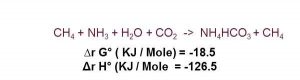
E3 developed the Ammonium Bicarbonate Recovery (ABCR) process that recovers the ammonia as a crystalline solid pathogen free, inorganic fertilizer without the use of any chemicals. In the process of producing the Ammonium Bicarbonate (ABC), carbon dioxide is removed from the biogas to produce “biomethane”, a transportation quality fuel at little or no cost. The products of the process are biomethane quality transportation fuel and solid ammonium bicarbonate fertilizer that can be used for the pretreatment of lignocellulosic substrates.

To overcome the ammonia reclamation process deficiencies, E3 developed the Rotating Photo Bioreactor (RPB) shown in Figure 1. The RPB is a horizontal ammonia stripping reactor that removes the ammonia without the use of any chemicals. An operating demonstration can be seen here

The stripped ammonia and water vapor are condensed to form a concentrated aqua ammonia solution. Turbid, ammonia laden, anaerobic digestate flows through a fixed film photo bioreactor, that uses natural and/or artificial light, to culture cyanobacteria that consume the bicarbonate in the digestate thus raising the pH to values exceeding 10. At the higher pH, the ionized ammonia (NH4+) is shifted to the gas form, NH3 that can be stripped by the low pressure gas flowing from the condensation unit over the upper portion of the rotating disks. Very little blower pressure is required. The impact of digestate turbidity is minimized by the thin liquid film flowing over the partially submerged rotating disks supporting the bicarbonate consuming cyanobacteria that require light. The ammonia laden gas is then returned to the condenser where the ammonia gas and water are condensed to recover concentrated aqua ammonia. The system operates at low liquid and gas pressures through the use of a heat pump and low pressure gas blower.

The aqua ammonia condensate is recovered when the effluent is being discharged from the digester. The condensate is stored in a tank for use throughout the day to clean the biogas by removing the carbon dioxide and hydrogen sulfide in the digester’s gas. The ammonia condensate is sprayed into the biogas stream where the ammonia and water react with the carbon dioxide to produce a solid ammonium bicarbonate precipitate that is removed, bagged, and stored as a renewable, low carbon footprint fertilizer to be applied to the fields when needed for crop growth or blended with the solid residuals to produce a balanced fertilizer.

What Have We Learned?

The pilot investigation substantiated that high BTU (990±) biomethane could be produced from biogas while recovering 85%± of the ammonia present in the digestate at less capital and O&M cost of producing electricity.

Future Plans

The current plan is to build a full scale operating facility treating high nitrogen content manure such as poultry manure.

Author

Dennis A. Burke, CEO, Environmental Energy & Engineering Company engineer@makingenergy.com

The authors are solely responsible for the content of these proceedings. The technical information does not necessarily reflect the official position of the sponsoring agencies or institutions represented by planning committee members, and inclusion and distribution herein does not constitute an endorsement of views expressed by the same. Printed materials included herein are not refereed publications. Citations should appear as follows. EXAMPLE: Authors. 2013. Title of presentation. Waste to Worth: Spreading Science and Solutions. Denver, CO. April 1-5, 2013. URL of this page. Accessed on: today’s date.

Litter Generated Ammonia Captured by Activated Carbon Derived ffrom Broiler Litter

Waste to Worth: Spreading science and solutions logoWaste to Worth home | More proceedings….

Abstract

In 2011, the production rate of broilers was 8.6 billion with a value of $23.2 billion (USDA 2012).  Both CERCLA and EPCRA have reporting requirements for ammonia (NH3) of 100 lb of NH3/d or 18.3 tons/yr, a level that may affect large animal production facilities (NRC 2003). Although USEPA (2009) has provided an exemption for animal waste producing farms under CERCLA for reporting hazardous air emissions, it is expected that this exemption will be revoked once valid methodologies are established for monitoring. Two of the 24 sites in the NAEMS monitoring study reported similar NH3 emissions of 3.6 – 5.3 tons of NH3 per house per year (Burns et al. 2009, Heber 2010). Emissions of this level indicate a need for developing technologies that can reduce the NH3 levels produced by broiler operations. This research is focused on the use of broiler litter as activated carbon (BAC) to reduce aerial NH3 generated by litter, an opportunity to not only reuse the manure, but also treat the emissions from or within broiler houses. The objective of this study was to evaluate the efficacy of BAC to remove NH3 volatilized from litter samples in a laboratory acid-trap system. Preliminary studies using NH3/air mixture indicated that the BAC capacity to adsorb NH3 was approximately double that of Vapure 612, a commercial carbon. In the litter emission study, the BAC and Vapure performance was comparable. Breakthrough for both carbons occurred within 14 hours of the test start. At the end of the 3 day test, the NH3 emission for BAC was 75% of the litter only control, whereas, the Vapure emission was 64% of the control. The results of the study demonstrate the potential for a cyclical waste utilization strategy in using broiler litter activated carbon to capture NH3 volatilized from litter.

Why Study Ammonia and Poultry Litter?

Overall purpose of this study is to develop innovative solutions for animal waste reuse and minimize emissions from poultry operations. The specific objective of this phase of the study was to evaluate the efficacy of activated carbon from broiler litter (BAC) to remove NH3 volatilized from litter samples in a laboratory acid-trap system.

What Did We Do?

The broiler litter for producing the BAC was obtained from a commercial farm in Mississippi, where the original bedding was pine shavings.  The broiler litter as collected had a moisture content of 25 to 30%.  The commercial carbon, Vapure 612 carbon (Norit Americas, Marshall, Texas), is a steam activated coal-based carbon manufactured for use in the removal of odors, toxic vapors, irritants, and corrosive gases.  After completing initial adsorption tests with the two carbons using the NH3 and air mixture, litter samples were collected from a commercial Mississippi farm where the bedding origin was also pine shavings to perform the litter emission test.  Eleven flocks had previously been grown on the litter.  The pH and moisture content were 8.32 and 17.9% respectively. The litter samples were placed in the acid trap system described below to determine the capture capacity of the carbons for NH3 volatilized from the litter. 

Litter emissions and carbon efficacy were evaluated using 50 g fresh litter samples in the laboratory using a chamber acid trap (CAT) system. The CAT system provides a straightforward method for determining differences in NH3 evolution by capturing off-gases in H3BO3. Twelve air-tight chambers, 1000 ml each, receive humidified air from a single manifold.  Weighed litter samples were placed in each air tight chamber.  To assess litter NH3 generation, exhaust air from each chamber flowed through a series of two H3BO3 flasks at approximately 115 ml/min.  The solution from the two flasks was combined into a single sample and titrated with HCl as above.  The NH3 trapped in solution was reported as mg N recovered.  For estimating carbon column efficiency, the columns described above were loaded with BAC and Vapure carbons and placed in the exhaust flow between the chambers and acid traps.  The litter only, BAC and Vapure columns were randomly assigned to the chambers in the CAT system and each replicated three times.  All treatments were titrated each morning and afternoon at consistent times for the three day test period. 


Chamber acid-trap system for capturing NH3 in the laboratory:  a) litter in chamber, b) activated carbon column, and c) boric acid traps. 

What Have We Learned?

Preliminary studies using NH3/air mixture indicated that the BAC capacity to adsorb NH3 was approximately double that of Vapure 612, a commercial carbon. In the litter emission study, the BAC and Vapure performance was comparable. Breakthrough for both carbons occurred within 14 hours of the test start. At the end of the 3 day test, the NH3 emission for BAC was 75% of the litter only control, whereas, the Vapure emission was 64% of the control. The results of the study demonstrate the potential for a cyclical waste utilization strategy in using broiler litter activated carbon to capture NH3 volatilized from litter. 

Future Plans

The development of these activated carbons and char from broiler litter will provide an effective means of reuse that will not only reduce waste volume, but in turn comprehensively treat the emissions from the waste during bird production, storage, and land application of litter. We will conduct greenhouse gas adsorption studies to determine the efficacy of activated carbon and char to adsorb CO2, CH4, and N2O.

Additionally, our plan is to develop an outreach program to be presented to poultry farmers in the Southeast U.S. along with other stakeholders addressing poultry farm emission regulations and technologies for remediation through workshops, a webinar and professional conferences.

Authors

Kari Fitzmorris Brisolara, ScD, Associate Professor of Environmental and Occupational Health, Louisiana State University, Health Sciences Center, School of Public Health, 2020 Gravier Street, New Orleans, Louisiana kbriso@lsuhsc.edu

Dana M. Miles, PhD, USDA-ARS-Mississippi State, Genetics & Precision Agriculture Research Unit, P. O. Box 5367, Mississippi State, Mississippi, 39762 dana.miles@ars.usda.gov

Isabel M. Lima, PhD, USDA-ARS-SRRC, P.O. Box 19687, New Orleans, Louisiana 70179 isabel.lima@ars.usda.gov


The authors are solely responsible for the content of these proceedings. The technical information does not necessarily reflect the official position of the sponsoring agencies or institutions represented by planning committee members, and inclusion and distribution herein does not constitute an endorsement of views expressed by the same. Printed materials included herein are not refereed publications. Citations should appear as follows. EXAMPLE: Authors. 2013. Title of presentation. Waste to Worth: Spreading Science and Solutions. Denver, CO. April 1-5, 2013. URL of this page. Accessed on: today’s date.

Anaerobic Digester Operator Discussion Group

Waste to Worth: Spreading science and solutions logoWaste to Worth home | More proceedings….

Why Is Peer-to-Peer Discussion Important?

The Anaerobic Digester Workforce Development Project is a project funded by the New York State Energy Research and Development Authority, aimed at developing and delivering high quality educational programs targeted to a range of workforces within the dairy farm-based anaerobic digestion (AD) sector of the clean energy field.

A goal of the project was to form a farmer driven discussion group among existing AD owners and operators.  Farmers value and learn from the insights of fellow producers because they trust the experience and knowledge of others who are in situations similar to their own.  This is especially true when adopting new technology. The purpose of this discussion group was to allow farmers an opportunity to learn from each other by sharing their real world experiences integrating and operating an anaerobic digester system into their farm business.    Realizing that frequent, long-distance travel of all involved was a barrier to continued, dedicated involvement, the group opted to pursue a virtually-based discussion group platform.  Farmers from across the state were linked via an online meeting site.  This is an efficient method to allow farmers to interact with each other in a meaningful way without leaving their farm.  The use of high definition video conferencing enhanced the interaction considerably.  There have been many lessons learned from this challenging venture, as well as many successful communication strategies to share.

What Did We Do?

Realizing that frequent, long-distance travel of all involved was a barrier to continued, dedicated involvement, the group opted to pursue a virtually-based discussion group platform.  Farmers from across the state were linked via an online meeting site.  This is an efficient method to allow farmers to interact with each other in a meaningful way without leaving their farm.

What Have We Learned?

The focus of this presentation is to introduce the topic of forming and facilitating farmer based discussion groups with an emphasis on distance learning.  By using online meeting and video conferencing farmers from across geographic areas can meet and engage in meaningful dialogue.  This is especially useful when producers are implementing new technology in which they have no or limited experience.  The opportunity to have an open dialogue with other farmers that have real world experience with the technology is invaluable.  The experience and exchange of knowledge between farmers assists in the implementation and operation of the technology.

Future Plans

The virtual discussion group will continue to meet and develop.  As we gain more experience and farmers become more comfortable with this method of interact we expect for the discussions to increase in value and effectiveness.

Authors

Kathryn Barrett, Sr. Extension Associate, Cornell University, ProDairy Program, Director of Dairy Profit Discussion Group Program. kfb3@cornell.edu

Acknowledgements

The Anaerobic Digester Workforce Development Project is a project funded by the New York State Energy Research and Development Authority, aimed at developing and delivering high quality educational programs targeted to a range of workforces within the dairy farm-based anaerobic digestion (AD) sector of the clean energy field.


The authors are solely responsible for the content of these proceedings. The technical information does not necessarily reflect the official position of the sponsoring agencies or institutions represented by planning committee members, and inclusion and distribution herein does not constitute an endorsement of views expressed by the same. Printed materials included herein are not refereed publications. Citations should appear as follows. EXAMPLE: Authors. 2013. Title of presentation. Waste to Worth: Spreading Science and Solutions. Denver, CO. April 1-5, 2013. URL of this page. Accessed on: today’s date.

The Financial Benefits of Composting Stable Waste for the Equine Industry

Waste to Worth: Spreading science and solutions logoWaste to Worth home | More proceedings….

Abstract

Composting is becoming widely accepted as a best management practice for equine facilities.  Stable waste is a readily compostable feedstock which generates heat and transforms into a finished compost product in as little as 2 weeks using in-vessel technologies. Composting the stable waste is financially beneficial, turning a liability into an asset, negating disposal fees, offering a decrease in bedding expenses and creating a saleable product.  In- vessel composting allows for compliance with increasing environmental regulations associated with manure management.

The primary topic will be the cost analysis of in-vessel vs. open pile composting of stable waste. The author will also compare the value of the product produced, specifically the value added with weed seed kill, reduction of pathogens, and the uniform quality and dryness of end product.  The presenter will provide lab data showing compost stability and pathogen reduction using both shavings and pellet bedding.  Value of the end product is seen in bedding re-use and/or soil amendment.

Discussion of cost savings will differ for different venues in the industry.  Case studies will be shown for the financial analysis of a private 20 horse stable and the 65 horse stable at the US Army base at Fort Myer/Henderson Hall in Washington DC.

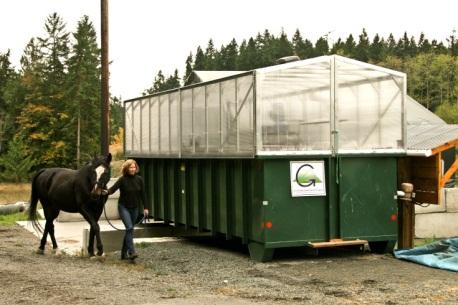
In-Vessel Earth Flow system used for manure waste at IOS Ranch, Bainbridge Island, WA

Why Study Composting Stable Waste?

To identify a financially beneficial way to dispose of stable waste for equine facilities.

What Did We Do?

Costs associated with the disposal of stable waste are increasing, taking a larger part of the operating budget for many barns.  The increasing costs are largely due to environmental awareness and new and expanded regulations for all segments of the waste stream.  Barns can no longer legally pile manure unprotected in the backyard. In many regions, haulers have to be registered and dump sites are forced to put in expensive regulation-specified collection pads.  .  Farms are less likely to take and store stable waste for land use and not all municipal dump sites have the infrastructure to handle the waste.  Barn owners are left searching for affordable solutions.

Composting came to the forefront as a proven method to dispose of stable waste by turning a cost into a revenue stream by eliminating haul off disposal fees and creating a saleable by product with stable soil amendment.  Urban locations have the added burden of odor control; also addressed with a composting system, especially with an in-vessel system.    With these systems, environmental regulations are met and even exceeded. The resulting composted material can be either sold or used on site as soil amendment or for bedding reuse. If the material is sold, the infrastructure for this sales effort will need to be established.

Existing technology for composting food waste was examined to treat stable waste.  The in-vessel composting systems with an automated auger and computer-controlled cycles adapted to stable waste easily.  In fact one of the test sites, Joint Base Meyers/Henderson, tested the use of stable waste from the Caisson Stable as the bulking agent for the food waste from their commissary and mess halls.  In a second test, the stable waste was used exclusively and proved to be a superior soil amendment that passed all laboratory testing and is currently being used at Arlington National Cemetery.

Private stables are putting in-vessel systems on site as they have small footprints, low energy consumption, low manpower hours, ease of use and comply with regulation. Medium sized barns (over 40 horses) use Site Built flow systems that have many of the same benefits as the in-vessel systems.  Larger stables, event centers and high-density equine areas are looking at large scale Aerated Static Pile (ASP) yards.  Cost models show these yards to be a lucrative financial investment when cost and difficulty of disposal is present as well as a market for the end product.  Even when conservative numbers are used for both number of horses serviced and value of end product, ASP facilities are a good business opportunity.  The investment cost for the in-vessel systems, site built systems and ASP sites vary by size and volume.  In cases where the expense of haul off of the stable waste exists, the ROI for an in-vessel system illustrates a solid investment.

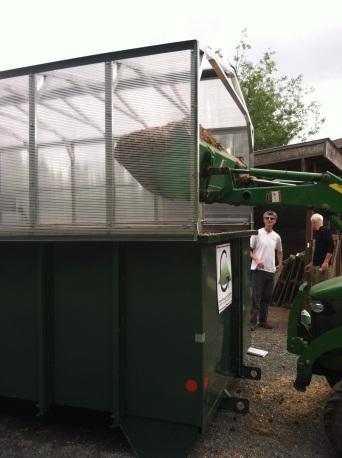
Easy loading with the front bucket of a tractor.

Horse manure and traditional wood shavings or pellets is an excellent feedstock for composting. As explained by Michael Bryon Brown of Green Mountain Technology, “Horses are not ruminants and therefore do not extract as much nutrient from the grasses they eat. This leaves more energy available for the compost process. Typically, horse manure is collected with bedding material which is saturated in urine which has available urea and ammonia. The wood shavings are also an excellent bulking agent and carbon source for the compost process. The bedded horse manure has a high C:N ratio of 30:1 or higher. However, much of the N is in the form of ammonia which is readily available. The net effect is that if the horse manure balls are blended with the shavings before the ammonia dissipates, it will create the ideal compost matrix.”      

In the auger-based systems, the horse manure is shredded and blended with the bedding, bringing the nitrogen in contact with the grass fibers.  This blended material generates heat, driving off moisture as vapor.  Temperatures rise to 135-155F sterilizing the compost, killing weed seed and drying the mixture.  In-vessel composted material is ready to exit the system in 10-14 days; in a site-built system, depending on length of the bay, 15-25 days.  The exiting material is void of any manure or ammonia smell and is homogenous in nature.  Laboratory testing has shown the compost to be stable and free of pathogens according to EPA regulations.  Composting stable waste reduces by up to 50% both water-soluble phosphorous and nitrogen that would be present in rain water runoff from an untreated pile.

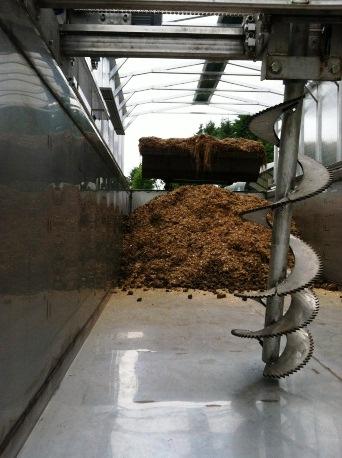
Interior auger used to mix and move the stable waste material.

The price for composted material will vary across the country in accordance with the demand for the product.  In urban areas outside of Seattle, Washington, compost is selling for as much as $32 a yard at retail and $20 a yard wholesale.  Untreated aged horse manure is being sold in Florida for $5 a yard.  Historically barns have advertised manure for sale with an ad in the local paper, offering to fill up a pick up for a nominal sum.  Initial effort will be spent to set up a network of buyers for the compost material. Once the network is set it should create a steady income stream.

Options other than soil amendment include re-use as bedding for both equine and dairy businesses, lowering another cost of operation if the compost material is priced below new shavings.  Regional prices for new shavings vary by up to $8 dollars per yard and availability ranges from scarce to plentiful.  Further financial gain can occur with the added health benefits to bedding re-use, long recognized in the dairy industry and recently explored in the equine industry.

What Have We Learned?

Spread sheets supporting above findings.

Future Plans

We plan to follow development and enforcement of regulations on manure waste, support networking of compost markets, continue research on the health benefits of bedding re-use and continue to develop composting systems that are affordable for the equine industry.

Authors

Mollie Bogardus, MBA in Sustainable Business, Bainbridge Graduate Institute, Equine Specialist, Green Mountain Technologies, Inc. mollie@compostingtechnology.com

Additional Information

Bogardus, Mollie. “Equine Applications – Case Studies.” Green Mountain Technologies, Inc.. N.p., 13 Sept. 2012. Web. 27 Feb. 2013. <http://compostingtechnology.com/equine>.

Brezovec, Paul. “Evaluating Composting for Contingency Bases «  « BioCycle BioCycle.” Composting, Renewable Energy & Sustainability | BioCycle.net BioCycle. Version Nov 2012, Vol.53, No. 11, p. 20. Biocycle Magazine, n.d. Web. 27 Feb. 2013. <http://www.biocycle.net/2012/11/evaluating-composting-for-contingency-ba….

“Equine Applications- Media- lab results.” Green Mountain Technologies. Green Mountain Technologies, Inc, n.d. Web. 27 Feb. 2013. <http://compostingtechnology.com/equine>.

Price Youngquist, Caitlin. “Composted Manure and Stall Bedding Pilot Project | Better Ground.” Better Ground, the outreach program of Snohomish Conservation District. SARE, 13 Feb. 2013. Web. 27 Feb. 2013. <http://www.betterground.org/composted-manure-and-stall-bedding-pilot-pro….

Price, Caitlin. “Composted Manure and Stall Bedding Pilot Project | Better Ground.” Better Ground, the outreach program of Snohomish Conservation District. SARE, 26 Feb. 2013. Web. 27 Feb. 2013. <http://betterground.org/composted-manure-and-stall-bedding-pilot-project/>.

Sikora, Lawrence. “Composting Effects on Phosphorous availability in Animal Manures.” SERA-17 Organization to Minimize Phosphorous Losses from Agriculture. SERA-17, n.d. Web. 15 Jan. 2013. <www.sera17.ext.vt.edu/Document/BMP_composting_effects.pdf>.

Wheeler, Eileen. “Cornell Cooperative Extension, Orange County Equine, Saratoga County Equine.” Cornell Cooperative Extension, Orange County Equine, Saratoga County Equine. Penn State, n.d. Web. 27 Feb. 2013. <http://www.cceequine.org>.Zaborski, Ed. “Composting to Reduce Weed Seeds and Plant Pathogens – eXtension.” eXtension – Objective. Research-based. Credible.. University of Illinois at Urbana-Champaign, 22 Oct. 2012. Web. 27 Feb. 2013. <http://www.extension.org/pages/28585/composting-to-reduce-weed-seeds-and….

Acknowledgements

Special thanks to Caitlin Price Youngquist , Farm Planner, Snohomish Conservation District, for her continuing collaboration and dedicated work on this subject.

The authors are solely responsible for the content of these proceedings. The technical information does not necessarily reflect the official position of the sponsoring agencies or institutions represented by planning committee members, and inclusion and distribution herein does not constitute an endorsement of views expressed by the same. Printed materials included herein are not refereed publications. Citations should appear as follows. EXAMPLE: Authors. 2013. Title of presentation. Waste to Worth: Spreading Science and Solutions. Denver, CO. April 1-5, 2013. URL of this page. Accessed on: today’s date.

From Waste to Energy: Life Cycle Assessment of Anaerobic Digestion Systems

Waste to Worth: Spreading science and solutions logoWaste to Worth home | More proceedings….

Abstract

In recent years, processing agricultural by-products to produce energy has become increasingly attractive due to several reasons: centralized availability of low cost by-products, avoiding the fuel vs. food debate, reduction of some associated environmental impacts, and added value that has the potential to generate additional income for producers. Anaerobic digestion systems are one waste-to-energy technology that has been proven to achieve these objectives.  However, investigation on the impacts of anaerobic digestion has focused on defined segments, leaving little known about the impacts that take place across the lifecycle. Current systems within the U.S. are dairy centric with dairy manure as the most widely used substrate and electricity production as the almost sole source for biogas end use.  Recently, there is more interest in exploring alternative feedstocks, co-digestion pathways, digestate processing, and biogas end uses.  Different operational and design practices raise additional questions about the wide reaching impacts of these decisions in terms of economics, environment, and operational aspects, which cannot be answered with the current state of knowledge.

Why Study the Life Cycle of Anaerobic Digestion?

Waste management is a critical component for the economic and environmental sustainability of the agricultural sector. Common disposal methods include land application, which consumes large amounts of land resources, fossil energy, and produces significant atmospheric GHG emissions. Proof of this is that agriculture accounts for approximately 50% of the methane (CH4) and 60% of the nitrous oxide (N2O) global anthropogenic emissions, being livestock manure one of the major sources of these emissions (Smith et al., 2007). In the last decades, the development of anaerobic digestion (AD) systems has contributed to achieve both climate change mitigation and energy independence by utilizing agricultural wastes, such as livestock manure, to produce biogas. In addition, it has been claimed that these systems contribute to nutrient management strategies by adding flexibility to the final use and disposal of the remaining digestate. Despite these advantages, the implementation of AD systems has been slow, due to the high investment and maintenance costs. In addition, little is still known about the lifecycle impacts and fate and form of nutrients of specific AD systems, which would be useful to validate their advantages and identify strategic and feasible areas for improvement.

The main goal of this study is to quantify the lifecycle GHG emissions, ammonia emissions, net energy, and fate and form of nutrients of alternative dairy manure management systems including land-spread, solid-liquid separation, and anaerobic digestion. As cow manure is gaining an important role within the biofuel research in the pursuit for new and less controversial feedstocks, such as corn grain, the results of this study will provide useful information to researchers, dairy operators, and policy makers.

What Did We Do?

Lifecycle sustainability assessment (LCSA) methods were used to conduct this research, which is focused in Wisconsin. The state has nearly 1.3 million dairy cows that produce approximately 4.7 million dry tons of manure annually and is the leading state for implemented agricultural based AD systems. Manure from a 1,000 milking cow farm (and related maintenance heifers and dry cows) was taken as the base-case scenario. Four main processes were analyzed using the software GaBi 5 (PE, 2012) for the base case: manure production and collection, bedding sand-separation, storage, and land application. Three different manure treatment pathways were compared to the base-case scenario: including a solid-liquid mechanical separator, including a plug-flow anaerobic digester, and including both the separator and the digester. The functional unit was defined as one kilogram of excreted manure since the function of the system is to dispose the waste generated by the herd. A cradle-to-farm-gate approach was defined, but since manure is considered waste, animal husbandry and cultivation processes were not included in the analysis (Fig. 1). Embedded and cumulative energy and GHG emissions associated with the production of material and energy inputs (i.e. sand bedding, diesel, electricity, etc.) were included in the system boundaries; however, the production of capital goods (i.e. machinery and buildings) were excluded.
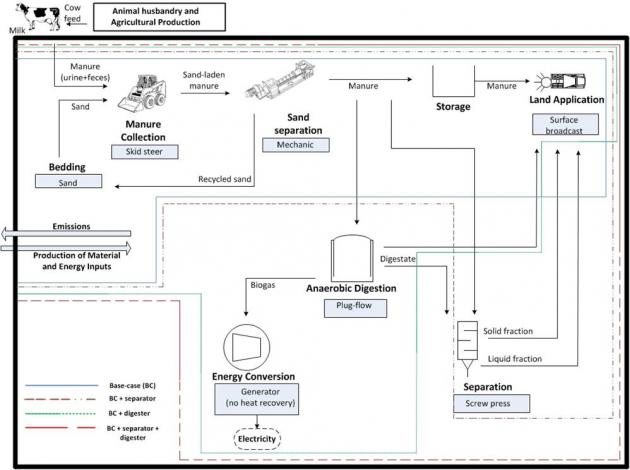
Figure 1. System boundaries of the base case scenario (land-spread manure) and the three manure treatment pathways: 1) solid-liquid separation, 2) anaerobic digestion, 3) anaerobic digestion and solid-liquid separation.

Global warming potential (GWP) was characterized for a 100-year time horizon and measured in kg of carbon dioxide equivalents (CO2-eq). Characterization factors used for gases other than CO2 were 298 kg CO2-eq for N2O, 25 kg CO2-eq for abiotic CH4 based on the CML 2001 method, and 24 kg CO2-eq for biotic CH4. CO2 emissions from biomass are considered to be different from fossil fuel CO2 emissions in this study; the former recycles existing carbon in the system, while the latter introduces new carbon into the atmosphere. In this context, it will be assumed that CO2 emissions from biomass sources were already captured by the plant and will not be characterized towards GWP[1]. This logic was applied when characterizing biogenic methane as one CO2 was already captured by the plant, therefore, reducing the characterization factor from 25 kg CO2-eq to 24 kg CO2-eq. Even though ammonia (NH3) does not contribute directly to global warming potential, it is considered to be an indirect contributor to this impact category (IPCC, 2006).

Data was collected from different sources to develop lifecycle inventory (LCI) as specific to Wisconsin as possible, in order to maximize the reliability, completeness, and representativeness of the model. The following points summarize some of the data sources and assumptions used to construct the LCI:

  • Related research (Reinemann et al., 2010): This model provided data about animal husbandry and crop production for dairy diet in Wisconsin.
  • Manure management survey: The survey, sent to dairy farms in Wisconsin, has the objective of providing information related to manure management practices and their associated energy consumption.
  • In house experiments: laboratory experiments, conducted at the University of Wisconsin-Madison, provided characterization data about manure flows before and after anaerobic digestion and solid-liquid separation and manure density in relation to total solids (Ozkaynak and Larson, 2012).
  • Material and energy databases: National Renewable Energy Laboratory U.S. LCI dataset (NREL, 2008), PE International Professional database (PE, 2012), and EcoInvent (EcoInvent Center, 2007), which are built into GaBi 5. The electricity matrix used in this LCA represents the mix of fuels that are part of the electric grid of Wisconsin.
  • Representative literature review.

Biotic emissions from manure have been cited to be very site specific (IPCC, 2006) and even though the Intergovernmental Panel on Climate Change (IPCC) provides regional emission factors, they are only for CH4 and N2O. Specific GHG emission factors were developed for Wisconsin based on the Integrated Farm System Model (IFSM) (Rotz et al., 2011), and by using key parameters that affect emissions (e.g. temperature, volatile solids, manure management practices) for each stage of the manure management lifecycle.

What Have We Learned?

Emissions are produced from consumed energy and from manure during each stage of the manure management lifecycle. In the base-case scenario, manure storage is the major contributor to GHG emissions. In this scenario, a crust tends to form on top of stored manure due to the higher total solids content when compared to digested manure and the liquid fraction of the separated manure. The formation of this crust affects overall GHG emissions (e.g. crust formation will increase N2O emissions but reduce CH4 emissions). The installation of a digester reduces CH4 emissions during storage due to the destruction of volatile solids that takes place during the digestion process. However, some of the organic nitrogen changes form to ammoniacal nitrogen, increasing ammonia and N2O emissions posterior to storage and land application. Energy consumption increases with both anaerobic digester and separation, but net energy is higher with anaerobic digestion due to the production of on-farm electricity. The nutrient balance is mostly affected by the solid-liquid separation process rather than the anaerobic digestion process.

Future Plans

A comprehensive and accurate evaluation of the lifecycle environmental impacts of AD systems requires assessing the multiple pathways that are possible for the production of biogas, which are defined based on local resources, technology, and final uses of the resulting products.  A second goal of this research is to quantify the net GHG and ammonia emissions, net energy gains, and fate of nutrients of multiple and potential biogas pathways that consider different: i) biomass feedstocks (e.g miscanthus and corn stover), ii) management practices and technology choices, and iii) uses of the produced biogas (e.g. compressed biogas for transportation and upgraded biogas for pipeline injection) and digestate (e.g. bedding). This comprehensive analysis is important to identify the most desirable pathways based on established priorities and to propose improvements to the currently available pathways.

Authors

Aguirre-Villegas Horacio Andres. Ph.D. candidate. Department of Biological Systems Engineering, University of Wisconsin-Madison.  aguirreville@wisc.edu

Larson Rebecca. Ph.D. Assistant Professor. Department of Biological Systems Engineering, University of Wisconsin-Madison.

Additional Information

    • Ozkaynak, A. and R.A. Larson.  2012.  Nutrient Fate and Pathogen Assessment of Solid Liquid Separators Following Digestion.  2012 ASABE International Meeting, Dallas, Texas, August 2012

References

De Klein C., R. S.A. Novoa, S. Ogle, K. A. Smith, P. Rochette, T. C. Wirth,  B. G. McConkey, A. Mosier, and K. Rypdal. 2006. Chapter 11: N2O emissions from managed soils, and CO2 emissions from lime and urea application. In Volume 4: Agriculture, Forestry and Other Land Use. IPCC 2006, 2006 IPCC Guidelines for National Greenhouse Gas Inventories, Prepared by the National Greenhouse Gas Inventories Programme, Eggleston H.S., Buendia L., Miwa K., Ngara T. and Tanabe K. (eds). Published: IGES, Japan.

Ecoinvent Centre.2007. Ecoinvent Eata. v2.0. Ecoinvent Reports No.1-25. Swiss Centre for Life Cycle Inventories. Dübendorf.

National Renewable Energy Laboratory (NREL). 2008. U.S. Life-Cycle Inventory (LCI) Database.

Ozkaynak, A. and R.A. Larson.  2012.  Nutrient Fate and Pathogen Assessment of Solid Liquid Separators Following Digestion.  2012 ASABE International Meeting, Dallas, Texas, August 2012

PE International. 2012. Software-systems and databases for lifecycle engineering.

Reinemann D. J., T.H. Passos-Fonseca, H.A. Aguirre-Villegas, S. Kraatz, F. Milani, L.E. Armentano, V. Cabrera, M. Watteau, and J. Norman. 2011. Energy intensity and environmental impact of integrated dairy and bio-energy systems in Wisconsin, The Greencheese Model.

Rotz, C. A., M. S. Corson, D. S. Chianese, F. Montes, S.D. Hafner, R. Jarvis, and C. U. Coiner. 2011. The Integrated Farm System Model (IFSM). Reference Manual Version 3.4. Accessed on Nov, 2012. Available at: http://www.ars.usda.gov/Main/docs.htm?docid=8519

Smith, P., D. Martino, Z. Cai, D. Gwary, H. Janzen, P. Kumar, B. McCarl, S. Ogle, F. O’Mara, C. Rice, B. Scholes, O. Sirotenko. 2007: Agriculture. In Climate Change 2007: Mitigation. Contribution of Working Group III to the Fourth Assessment Report of the Intergovernmental Panel on Climate Change [B. Metz, O.R. Davidson, P.R. Bosch, R. Dave, L.A. Meyer (eds)], Cambridge University Press, Cambridge, United Kingdom and New York, NY, USA.

Acknowledgements

This work was funded by the Wisconsin Institute for Sustainable Agriculture (WISA-Hatch)

The authors are solely responsible for the content of these proceedings. The technical information does not necessarily reflect the official position of the sponsoring agencies or institutions represented by planning committee members, and inclusion and distribution herein does not constitute an endorsement of views expressed by the same. Printed materials included herein are not refereed publications. Citations should appear as follows. EXAMPLE: Authors. 2013. Title of presentation. Waste to Worth: Spreading Science and Solutions. Denver, CO. April 1-5, 2013. URL of this page. Accessed on: today’s date.
Manure Management and Algal Nutrient Removal Impacts on Swine Greenhouse Gas Emissions

Algal Nutrient Removal

Dr. Marty Matlock and Dr. Thomas Costello – University of Arkansas

Sub-Project Overview

Algal biomass offers many advantages over traditional energy crops; algal biomass generates higher yields and requires smaller land area than other energy crops. In addition to biomass production for potential biofuel feedstock generation, algal growth systems can also act as tertiary treatment systems for wastewater. Algal growth can dramatically reduce nitrogen and phosphorus from wastewater. Unlike conventional open pond and photo-bioreactor systems, periphytic systems (e.g., algal turf scrubbers) generally involve the polyculture of micro-algae, which does not require specialized conditions. While algal turf scrubber systems are traditionally used for water treatment, they are also capable of generating high biomass yields.

The Algal Nutrient Removal Team has focused on installation of the test bed for the research. This has included construction of a precision graded base for the 20-ft wide by 200-ft long flow way. Our working hypothesis is that operation of an algal flow-way to treat swine manure will remove nutrients, produce a harvestable biomass residue, and add dissolved oxygen which will decrease potential for nitrous oxide emissions (and possibly methane emissions) during manure storage. Wastewater from the swine finisher unit at the University of Arkansas will provide nutrient input to the Algae Flow-way. The flow way will be tested with manure output from pigs fed conventional diets as well as the custom rations intended to reduce manure nitrogen. Impacts on nutrient removal and algal biomass productivity, as a function of diet formulation, will be measured. Nutrient removal will be documented and data collected will be used in the DNDC model to represent the waste treatment performance of the algal systems

Algal growth systems not only provide a method for nutrient removal from animal waste, but also provide biomass production as feedstock for biofuels which can improve the carbon footprint of swine production and other animal production systems in the U.S. This project will provide field scalable data on life cycle impacts of the technology. Design and construct algal turf scrubber concluded in late summer of 2012, and the system is currently undergoing callibrations in preperation for full-scale trials.

Sub-Project Objectives

  • Measure algal productivity.
  • Quantify impact of algal nitrogen uptake on swine system GHG emissions.

Contact Information

Dr. Marty Matlock
mmatlock@uark.edu
Phone: (479) 575-2849

Dr. Thomas Costello
tac@uark.edu
Phone: (479) 575-2847

Solids Separation

Dr. Karl VanDevender – University of Arkansas. Cooperative Extension Service

Sub-Project Overview

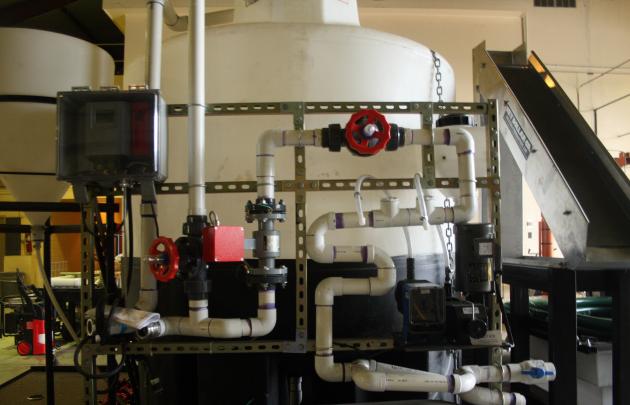
Many technologies being considered incorporate some type of manure separation to concentrate manure solids, nutrients, and energy content. An LCA study in Denmark showed that energy recovery (incineration, gasification, and anaerobic digestion) had lower GHG emissions than traditional land application of swine manure. Other studies point to the complexities of manure management system design options in relation to GHG emissions. This portion of the project will quantify the effect of various solid separation approaches on the chemical composition of the manure generated by the feed trials at the University of Arkansas facilities during this project ,and generate the necessary manure solids for the thermo-chemical conversion portion of this project. Design and construct a pilot scale mobile solids separation system (see image below) is currently approaching completion and anticipated to be ready to begin trial calibrations soon.
Sub-Project Objectives

  • Capture and separation of manure from the UA animal experiments.
    • This unit contains systems to allow for various combinations of mechanical screen and filter bag separation, with and without chemical treatment; and is designed to operate in a batch mode with a capacity of 1000 gallons per batch.
  • Determine overall characteristics for the feed trial manure samples to provide additional validation data for the animal physiology sub-model.

Contact Information

Dr. Karl VanDevender
kvan@uaex.edu
Phone: (501) 671-2244

Auger Reactor Gasification

Dr. Sammy Sadaka – University of Arkansas. Cooperative Extension Service

Sub-Project Overview

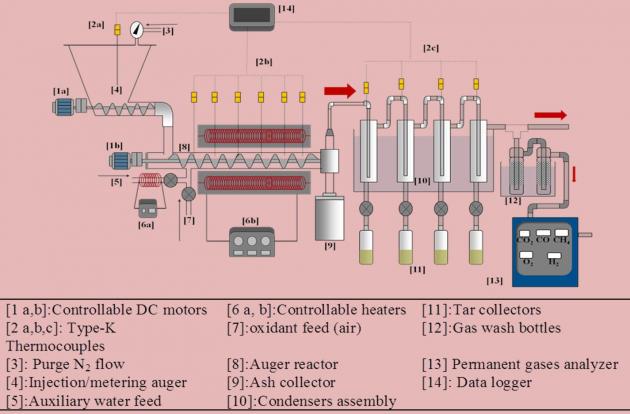
Due to the high moisture content, it is not economical to transport raw swine manure over long distances. As a result, manure is spread on land close to the source at high application rates. The energy content of dry manure is in the range of 12 to 18 GJ/ton, about half that of coal. In recent years, wet and dry gasification of algal biomass has been investigated by several researchers. Fluidized bed and downdraft gasification of algal biomass showed various challenges due to the nature of algae biomass. An auger gasification system (see image below) developed in the University of Arkansas, Bioenergy Laboratory, may help to simplify the air gasification process for this type of biomass. Algal biomass was gasified using the auger system during preliminary tests. Several improvements to the system took place during the first year to ensure smooth operation. Our long-term goal is to provide technology to convert swine manure and/or algal biomass to biofuel via a continuous gasification process. Energy conversion technology could provide a revenue stream of about $23 billion/year to the livestock industry.

Sub-Project Objectives

  • Modify the existing gasification unit to handle swine manure and/or algal biomass.
  • Test the performance of the gasifier
  • Optimize the operating parameters to maximize producer gas quality.
  • Study the effect of reactor temperature on the process yields (gas, char, and tar), as well as on the process efficiency.
  • Perform mass and energy balances on the gasifier.

Contact Information

Dr. Sammy Sadaka
ssadaka@uaex.edu
Phone: (501) 303-0522

Related Projects