
Impact of Fluctuating Fertilizer Prices on Poultry Manure Nutrient Value

Over the last 15 years it has become common to build new poultry production facilities on a piece of property that will provide the necessary land area for all of the barns and support facilities, and that comply with the setbacks (i.e. surface water, nearest neighbors) required by local, state, and federal regulations. The manure management plan in such cases depended on the transport of poultry manure to remote cropland that was often not owned and managed by the poultry producer. In some states, the law held the poultry producer legally responsible for any possible environmental consequences associated with irresponsible spreading or handling. Such laws tended to limit transport distances due to the lack of liability transfer.  In other states, like South Carolina, poultry manure brokers were required to have a state permit that allowed for the transfer of liability from the producer to the broker by means of a contract. The broker became liable for proper application rates, adherence to setback requirements, application at agronomic rates, and other state requirements. While transfer of liability did encourage the movement of manure from nearby fields with high soil-test phosphorous contents to remote fields that could benefit from all plant nutrients in manure it also gave rise to an increase in the number or farms that were permitted with manure brokerage as the only manure nutrient management alternative.

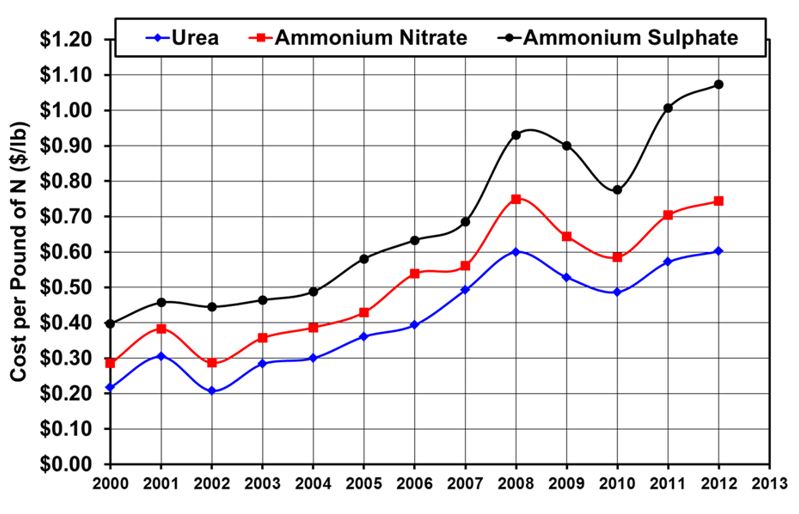
During the period from 2002 to 2008 when many new poultry farms were being built the average prices of N, P2O5, and K2O were increasing due to surges in fuel prices. Nitrogen prices increased in a linear manner from 29 to 75 cents per pound or a 2.6 fold increase in price (Table 1 and Figure 1). Prices of the other major nutrients, P2O5 and K2O, increased by over a factor of 3 for the same six year period (Figure 2). Such increases in the cost of fertilizers greatly increased demand for poultry manure, and further encouraged poultry producers to build barns that depended on brokerage as the only manure management option without any considerations of potential decreases in manure value. In recent years, fertilizer prices have decreased and brokerage of manure is not as attractive. The objective of this study was to determine the impact of fertilizer price fluctuations on the value of broiler litter, high-rise layer manure, turkey grow-out litter, and turkey brooder litter.

Table 1. Fertilizer composition information and equation used to convert price per ton to price per pound.
Fertilizer Description Nutrient Content Per Ton of Fertilizer
Urea – 46% N by weight 920 lb N/ton
Ammonium Nitrate – 34% N by weight 680 lb N/ton
Ammonium Sulfate – 21% N and 24% by weight 420 lb N/ton
Conc. Super-Phosphate – 46% P2O5 by weight 920 lb P2O5 /ton
Potassium Chloride – 60% K2O by weight 1200 K2O / ton
Equation Used to Convert Fertilizer Price to Price per Pound of Nutrient $ / lb Nutrient = $ / Ton of Fertilizer÷ lb Nutrient / Ton
Figure 1. Variation in nitrogen prices based on national averages from 2000 to 2012 (USDA-ERS, 2013).
Figure 2. Variation in P2O5 and K2O prices based on national averages from 2000 to 2012 (USDA-ERS, 2013).

What did we do?

Fertilizer Nutrient Content of Poultry Manure

The type of poultry raised in a building and the amount of bedding used causes a wide variation in the plant nutrient content of the manure removed from the building. The manure composition used in the study was taken from data obtained in South Carolina and is shown in Table 2. Broiler litter and turkey grow-out litter were the most similar since pine shavings were used as bedding and several flocks of birds were grown-out on the litter prior to building clean-out. Clean-out frequency varies greatly from every 1 to 1.5 years. The data shown in Table 2 corresponded to annual litter clean-out. The moisture contents (MC) of these two litters were also similar (24% for the broiler litter and 26% for the turkey grow-out litter).  Turkey production begins on a brooder farm where chicks are placed, brooded, and the poults are transported to a grow-out farm. These farms are unique in that the litter was completely changed after each flock. The result is that litter from a brooder farm is much drier (14% moisture content) and contains less manure than any other type of poultry manure. The lower manure content also resulted in lower plant nutrient content. Manure from a high-rise layer barn was at the other extreme. Since no bedding was added to the manure the moisture content was much higher (47%). The high moisture content resulted in lower plant available nitrogen (PAN) content as compared to broiler litter, as well as lower phosphorus content (expressed as P2O5) and potassium (expressed as K2O).

Table 2. Poultry manure composition (lb / ton) used in the analysis (Chastain et al, 2001).
Nutrient Broiler Litter(MC = 24%) Layer Manure(MC = 47%) Turkey Grow-out Litter (MC = 26%) Turkey Brooder Litter (MC = 14%)
Ammonium-N 10 12 12 2.6
Nitrate-N 3.6 None detected 0.4 0.6
Org-N 43.8 22 42 37.2
Total-N 57.4 34 54 40.4
PAN – inc * 38 23 35 25
P2O5 66 51 64 29
K2O 57 26 37 20
* PAN – inc. = Incorporated plant available N = 0.60 x Org-N + 0.80 x Ammonium-N + Nitrate-N

Data for all three forms of nitrogen are provided in Table 2. However, not all of the nitrogen in manure is available for use by a crop. For this study, it was assumed that poultry manure was incorporated on the same day that it was applied by disking. As a result, 80% of the ammonium-N was counted as plant available. The amount of organic-N (Org-N) mineralized was assumed to be 60% based on common recommendations in South Carolina, however mineralization rates vary based on soil temperature, pH, and moisture. All the small amounts of nitrate contained in the manure was counted as available. The equation used for PAN estimates is provided with the table. Additional information concerning the estimate of plant available-N is provided by Chastain et al (2001).

The three plant nutrients used in our analysis are shown in bold colors in Table 2 for each type of poultry manure. They were the PAN, which is the best estimate of the nitrogen in manure that can be substituted for fertilizer-N, P2O5, and K2O.

Fertilizer Component Prices Used

The price of a pound of fertilizer nitrogen depends of the source. The price data shown previously in Figure 1 shows clearly that the most expensive source of nitrogen was ammonium sulfate, followed by ammonium-nitrate and urea. Ammonium-sulfate, the most expensive source of N, has few advantages unless soil-test results indicate that addition of large amounts of sulfur is needed. Ammonium-nitrate is one of the most common types of nitrogen used to manufacture complete fertilizers. It has the advantage of being water soluble, and is not as readily lost to the air as ammonia as compared to urea. Urea has the advantages of being more water soluble than ammonium-nitrate, and contains 35% more N per ton than ammonium-nitrate. The primary disadvantage of urea is that a significant amount (20% to 40%) can be lost to the air by ammonia volatilization unless it is incorporated in the soil to a depth of at least one inch. So the basic question to decide is: which N-price should be used to define the value of the plant available-N in poultry manure? The price of urea was selected because urea and poultry manure behave similarly with regards to ammonia volatilization losses.

The prices of N, P2O5, and K2O were shown to fluctuate widely from 2000 to 2012 (see Figures 1 and 2). The largest cause of these price fluctuations was the price of energy (i.e. oil) needed to manufacture and transport fertilizers. As a result, the prices of these three major plant nutrients were not allowed to vary independently in the analysis. That is, prices of all three nutrients had to be selected by year because of the dependence of all three on energy prices.

It was not a study objective to try to predict future prices since that would be possible, nor was it to perform calculations for each year. To do so would provide many numbers, but would obscure the basic points to be learned. Instead, the approach used was to select nutrient prices by year and use the years that encompassed the linear increase that began in 2004 as well as major peaks and valleys seen in the price of nitrogen in 2008, 2010, and 2012. Prices were also obtained from market reports to obtain prices for the fourth quarter of 2016 (USDA-SC, 2016; DTN, 2016). The actual prices used by year for the analysis are given in Table 3.

Table 3. Component fertilizer prices used in the analysis (USDA-ERS, 2013). The prices shown for 2016 were average prices obtained from market publications from the fourth quarter (USDA-SC, 2016; DTN, 2016).
Year $/lb N (Urea) $/lb P2O5 $/lb K2O
2004 0.30 0.29 0.15
2008 0.60 0.87 0.47
2010 0.49 0.55 0.43
2012 0.60 0.72 0.54
2016 0.37 0.26 0.27

Value of Poultry Manure Used as a Complete Fertilizer – N,P, and K

The first step in the study was to calculate the value of a ton of poultry manure by multiplying the price of N, P2O5, and K2O for each year (Table 3) by the amount of these nutrients per ton of manure (Table 2). This assumes that all of the nutrients in the manure can be used to grow a marketable crop. This is only true if the soil is poor in fertility or the excess P can be used by other crops in the rotation without application of additional manure. Many brokerage contracts in South Carolina, are based on application of 2 tons of litter per acre prior to a primary crop, such as corn or cotton. Additional litter is not spread on the second crop which is often soybeans. The results for the first step are provided in Table 4.

Table 4. Variation in the value of various types of poultry manure ($/ton) based on variability in price of N, P2O5, and K2O. Prices assume that all of the nutrients in the manure can be used in a crop rotation.
Year Broiler (MC = 24%) Layer (MC = 47%) Turkey Grow-out (MC = 26%) Turkey Brooder (MC = 14%)
2004 39.09 25.59 34.61 18.91*
2008 107.01 70.39 94.07 49.63
2010 79.43 50.50 68.26 36.80
2012 101.10 64.56 87.06 46.68
2016 46.61 28.79 39.58 22.19*
* Denotes values too low to be part of a viable brokerage contract with typical brokerage prices being in the range of $20 to $25 per ton of manure.

The most important observations that can be made from the results given in Table 4 are given below.

  • The value of broiler and turkey grow-out litter followed similar fluctuations. The values ranged from about $35 to $39 per ton in 2004 to a maximums of $94 to $107 per ton in 2008. By the end of 2016 the value of turkey grow-out litter and broiler litter ranged from about $40 to $47 per ton. During the years with high fertilizer prices brokerage customers that were paying $40 to $50 to spread 2 tons of litter per acre were receiving much more fertilizer value than they were paying for.
  • Turkey brooder litter consistently had the lowest value per ton as compared to the others due to low nutrient content and the large amounts of bedding used. The value of a ton of this type of litter was too low in 2004 and 2016 to be viable for litter brokerage contracts. Even during years with high fertilizer prices (2008 and 2012) turkey brooder litter was rarely brokered since it was so dry. Such dry, low-density manure that was mostly pine shavings further reduced the amount of litter and fertilizer value that could be fit into a typical trailer.
  • Layer manure consistently had lower value per ton as compared to broiler and turkey grow-out litter. The lower value was due to the much higher moisture content which diluted the nutrient value of the manure. Layer litter was a viable brokerage option, but not for long haul distances.

Value of Poultry Manure Applied to Fields with Sufficient P2O5

A common situation is when soil-test results indicate that a field has sufficient P2O5 in the soil for not only the crop to be grown immediately, but also for the next crop in the rotation (soybeans for example). In such cases, the P2O5 in poultry manure has no value, and only the N and K2O in the manure can be used as a fertilizer substitute. The results for this situation are provided in Table 5.

Table 5. Variation in the value of various types of poultry manure ($/ton) based on N and K2O prices. It was assumed that soil-test indicate that no P2O5 was needed.
Year Broiler (MC = 24%) Layer (MC = 47%) Turkey Grow-out (MC = 26%) Turkey Brooder (MC = 14%)
2004 19.95* 10.80* 16.05* 10.50*
2008 49.59 26.02 38.39 24.40
2010 43.13 22.45* 33.06 20.85*
2012 53.58 27.84 40.98 25.80
2016 29.45 15.53* 22.94* 14.65*
* denotes values are two low to be part of a viable brokerage contract with typical brokerage prices being in the range of $20 to $25 per ton of manure.

The results indicated that when the N price was $0.30/lb and K2O averaged $0.15/lb in 2004 the value of poultry manure was too low to be moved at contact prices of $20 to $25 per ton. Also, at prices associated with 2008, 2010, and 2012 the value of broiler and turkey grow-out litter ranged from $33 to $54 per ton. Layer and turkey brooder litter were poor to marginal values for brokerage contacts when the P2O5 was not needed over the entire range of fertilizer prices.

Comparing the results for 2008 for broiler litter indicates that if P2O5 was not needed the value fell from $107.01/ton to $49.59/ton. That is, the value of the litter was reduced by 54%. The year with the next highest value, 2012, eliminating the need for P2O5 reduced the litter value by 47%. Large drops in litter value can also be observed for other types of poultry manure by comparing the values in Tables 4 and 5. These results indicate that the P2O5 contained in poultry manure is one of the largest sources of value.

Value of Poultry Manure as Only a Source of Nitrogen

The analysis was performed again to reflect the value of poultry manure if nitrogen is the only major nutrient needed based on soil-test results. The results given in Table 6 clearly show that nitrogen alone never provided enough value to support brokerage contracts.

Table 6. Variation in the value of various types of poultry manure ($/ton) when nitrogen is the only nutrient needed based on soil-test results.
Year Broiler (MC = 24%) Layer (MC = 47%) Turkey Grow-out (MC = 26%) Turkey Brooder (MC = 14%)
2004 11.40* 6.90* 10.50* 7.50*
2008 22.80* 13.80* 21.00* 15.00*
2010 18.62* 11.27* 17.15* 12.25*
2012 22.80* 13.80* 21.00* 15.00*
2016 14.06* 8.51* 12.95* 9.25*
* denotes values are two low to be part of a viable brokerage contract with typical brokerage prices being in the range of $20 to $25 per ton of manure.

Results for a Four-House Broiler Farm

The previous results demonstrated that high litter nutrient contents combined with strong fertilizer prices yielded litter values that were much greater than the amount paid to litter brokers. The results also demonstrated that P2O5 was one of the key contributors to litter value.  The results of the analysis were applied to a four-house broiler farm to more clearly demonstrate the practical implications. Fertilizer prices from January 2019 in central South Carolina were also added to the analysis. The key assumptions and results are provided in Table 7.

Table 7. Application of analysis results to a 4-house broiler farm. Building size = 50 ft x 500 ft, litter production was assumed to be 580 tons/year (145 tons/house/yr) with a price of $10/ton paid to the broiler producer ($5800/year).
Year N Price ($/lb) P2O5 Price ($/lb) K2O Price ($/lb) Litter Value ($/ton) Value of 580 tons of litter ($/Year) Value from N (%) Value from P2O5 (%) Value From K2O (%) Loss to Producer ($/Year)
2004 0.30 0.29 0.15 39.09 22,672 29 49 22 16,872*
2008 0.60 0.87 0.47 107.01 62,066 21 54 25 56,266
2010 0.49 0.55 0.43 79.43 46,069 23 46 31 40,269
2012 0.60 0.72 0.54 101.1 58,638 23 47 30 52,838
2016 0.37 0.26 0.27 46.61 27,034 30 37 33 21,234
2019** 0.38 0.54 0.31 67.75 39,295 21 53 26 33,495
* The price paid to a broiler producer in a brokerage contract ranges from 0 to $15/ton of litter. A value of $10 /ton of litter is common. The loss was calculated as:  (litter value ($/ton) – $5800).
** Prices from central South Carolina obtained in January 2019.

The results indicate that the total value of litter on a four house farms that produces 580 tons of litter per year varied from $22,672 per year in 2004 to a maximum of $62,066 per year in 2008. Currently, the value in January 2019 was estimated to be $39,295/year.  In every year, the P2O5 contained in the litter contributed the most to the litter value. This contrasts with the common assumption that the high P2O5 content in litter is a problem as compared to nitrogen. The results point out that the most value can be obtained from litter by giving phosphorous use the priority in manure management. Assuming that the broiler producer was consistently paid $10/ton of litter by the broker the annual litter income was only $5800 per year. If the producer had integrated broiler production with crop production using a rotation that would realize all the fertilizer value in the litter the total litter value would have served to improve profitability of the cropping enterprise. If the producer relied on brokerage as the sole manure management strategy then the annual loss to the producer ranged from $16,872 to $56,266 per year depending on fertilizer prices.

What these results also point to, but do not quantify, is the variation in risk. Producers who built farms using brokerage as the sole manure management plan during the years of high fertilizer prices gave away litter that was worth 3.9 to 10.7 times more than they were paid. They also have incurred a great risk since brokerage contracts typically last only one year, and crop producers who once were happy to purchase brokered litter are no longer consistent customers.  Such producers are forced to quickly find other litter use alternatives often in areas where agricultural and forest land may not be close to the farm. Building broiler barns relying on annual brokerage contracts as the sole manure management option has been shown to be short sighted, and has a low probability of being economically or environmentally sustainable. Co-locating poultry production with some sort of profitable plant production enterprise that can use all of the fertilizer value in the litter is preferred. The next most viable alternative may be to use litter to produce high-quality compost for high volume, consistent markets.

What have we learned?

It was found that the value of poultry manure as a complete fertilizer (N,P,K) varied from $18.91 to $107.01 per ton depending of component prices (N, P, K), moisture content, and the amount of bedding used. If the receiving fields did not require phosphorous, based on soil test, the realized value ranged from $10.50 to $49.59 per ton. Finally, if soil-test indicate that N was the only major nutrient needed the value decreased to $7.50 to $22.80 per ton. During the same time frame, brokerage prices ranged from $20 to $50 per ton depending on haul distance and spreading service. However, most brokerage contracts were based on $20 to $25 per ton of manure.  Several practical observations were made from the results:

  1. Brokerage of litter may only be a viable alternative when the receiving cropland needs a complete fertilizer and when the N, P, and K contents of the manure are not diluted by water or bedding.
  2. Manure brokerage is not economically sustainable if N is the only major nutrient needed by the receiving cropland.
  3. Integrated farms that can use the manure produced by the poultry barns to fertilize their own cropland have the potential to reduce the legal and economic risk to the execution of a manure nutrient management plan.
  4. Poultry farms that currently rely on litter brokerage as the only manure management plan are losing customers and need to look at other alternatives that provide a less risky and sustainable use for the mature produced.
  5. Analysis of the impact of fluctuations in fertilizer price on litter produced from four broiler houses indicated that the full value of the litter ranged from $22,672 to $62,066 per year. The P2O5 contained in the litter accounted for the majority of the fertilizer value (37% to 54%). As a result, complete utilization of litter phosphorous in a crop rotation is the key to realizing the maximum value from litter.

Author

John P. Chastain, Ph.D., Professor and Extension Agricultural Engineer
Department of Agricultural Sciences, Agricultural Mechanization & Business Program, Clemson University, 245 McAdams Hall, Clemson, SC 29634-0312
jchstn@clemson.edu 

Sources of Additional Information

Chastain, J.P., J.J. Camberato, and P. Skewes. (2001). Poultry Manure Production and Nutrient Content. Chapter 3B in Confined Animal Manure Managers Certification Program Manual: Poultry Version, Clemson University Extension, Clemson SC, pp 3b-1 to 3b-17. Available at: https://www.clemson.edu/extension/camm/manuals/poultry_toc.html

DTN (2016). Fertilizer Trends: Prices Remain Steady, Mostly Lower from Oct. Available at: http://agfax.com/2016/11/16/dtn-fertilizer-trends-prices-remain-steady-mostly-lower-from-oct/.

USDA-ERS (2103), Fertilizer Use and Price. Available at: https://www.ers.usda.gov/data-products/fertilizer-use-and-price/

USDA-SC (2016). Dept of Ag Market News, South Carolina Crop Production Report Dec. 8.

Zublena, J.P., J.V. Baird, and J.P. Lilly. (1997). SoilFacts: Nutrient Content of Fertilizer and Organic Materials (AG-439-18).

Acknowledgements

This study was supported by the Clemson Extension Confined Animal Manure Managers Program.


The authors are solely responsible for the content of these proceedings. The technical information does not necessarily reflect the official position of the sponsoring agencies or institutions represented by planning committee members, and inclusion and distribution herein does not constitute an endorsement of views expressed by the same. Printed materials included herein are not refereed publications. Citations should appear as follows. EXAMPLE: Authors. 2019. Title of presentation. Waste to Worth. Minneapolis, MN. April 22-26, 2019. URL of this page. Accessed on: today’s date.
Development of a Livestock Siting Assessment Matrix

Growth in the livestock and poultry industries in Nebraska faces hurdles is greatly influenced by county zoning and local decision-making. Variation in policies from one county to the next and in decisions made by county boards creates significant challenges for agricultural operations and for local communities looking to remain vibrant and grow.  Many were requesting that a common tool be developed for county officials to use that would bring greater consistency and objectivity to the evaluation of proposals to expand animal feeding operations.

What was done?

In 2015, the Nebraska Legislature passed legislation (LB106) that directed the Nebraska Department of Agriculture to convene a committee of experts to develop an assessment matrix for livestock development.  A 10-person advisory committee, including county officials, livestock industry representatives, and me [representing the University of Nebraska] was approved by Governor Ricketts later that year.  In keeping with directions outlined in Nebraska LB106, the committee:

  • Reviewed tools already developed by counties in Nebraska and by other states, mainly those used in Iowa and Wisconsin.
  • Developed a tool (Excel spreadsheet or pdf) that produces quantifiable results based upon scoring of objective criteria;
  • Made concerted efforts to assure that the tool is practical to use when applying for conditional-use permits or special exceptions and when county officials score these applications; and
  • Ensured that all criteria had definite point selections and provided a minimum threshold total score that is required to ‘pass’.

In 2016, the resulting Nebraska Livestock Siting Assessment Matrix (‘Livestock Matrix’) was posted for comments and approved for dissemination by the Nebraska Department of Agriculture.   The Livestock Matrix was recently reviewed and updated by the advisory committee, and the current version is available for public access at http://www.nda.nebraska.gov/promotion/livestock_matrix/index.html.

What we have learned?

Development of the Livestock Matrix was a highly formative process.  Overall, the factors that consumed the vast majority of discussion and effort involved the following:

  • Need for simplicity. Strong sentiments were expressed that the Livestock Matrix should be easy to complete, with little or no need for assembling additional information or consultation.
  • Desire for transparency. Clarity was paramount, with parties on both sides expecting to see numbers and requirements specified up front, which excluded process-based approaches.
  • Questions of merit. Many ‘generally good ideas’ and recommendations were removed when benefits were not well understood or defined, or a practice was considered an industry norm.
  • Will to retain control. Perceived loss of control or potential for new regulation ended discussion of some ideas that otherwise had merit.

Voluntary tool:

LB106 specified that the matrix be “Designed to promote the growth and viability of animal agriculture in this state”, and as a result, the advisory committee was comprised of supporters of [responsible growth of] the livestock and poultry industries.  Support for local control runs deep in Nebraska, though, and one of the most significant hurdles arose early on due to amended language in the final bill, “…develop an assessment matrix which may be used by county officials to determine whether to approve or disapprove” applications.  Voluntary consideration and adoption of the Livestock Matrix at local levels totally changed the nature of the discussions, and made it very challenging to develop a single tool that would have widespread appeal and rate of adoption, virtually guaranteeing that varied policies and practices would still exist.  Despite this challenge, the matrix committee pushed through to develop a ‘template tool’, which has been adopted – either as is or as a template – by some counties.

County setbacks:

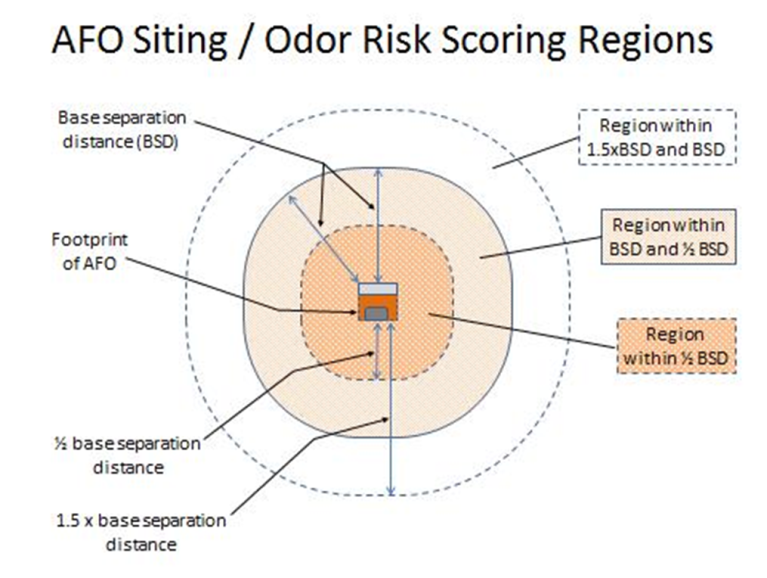
The next major hurdle faced was how to handle county setback distances.  With the Livestock Matrix being voluntary, it quickly became clear that county officials were not going to adopt a tool that limited their use of and control over setback distance requirements.  After mulling over options, the committee decided that satisfying the county’s setback requirement would be the primary criterion for obtaining 30 of the 75 points needed to receive a passing score.  To promote positive change, the committee developed sets of sliding-scale ‘base separation distances for odor’ using an approach that drew from the science-based Nebraska Odor Footprint Tool (NOFT).  The intent was that county officials would use these distances [preferably] in establishing county setbacks or as an alternative approach that could be accepted by a county.  Direct use of the NOFT and inherent NOFT concepts within the Livestock Matrix was greatly limited by concerns over the NOFT requiring additional work of applicants, not being sufficiently transparent, and not being applicable for all applicants (esp. open-lot cattle feeders).

The idea of using ‘transitional planning zones’ that add or deduct points based upon consideration of locations of all residents within 1.5 times the separation distance for odor is presented in the alternative approach (Figure 1).

Figure 1. Illustration of planning zones for assessing odor risk.

The intent was to bring more information into decisions than just what is the distance to the closest neighbor relative to the county setback.  The zones are mainly presented for information purposes, as there was considerable hesitance to adopt a scoring system that was not considered sufficiently simple and transparent to merit replacing a set separation distance being the criterion.

Water quality / permits:

Committee members shared the view that a proposed expansion that would secure required environmental permits (via Nebraska Department of Environmental Quality, NDEQ) and meet the county’s setback requirement, if any, should generally earn a passing score and not be exposed to local requirements that are often employed to delay and deter operations from expanding.  There was disagreement, however, on whether an applicant should need to complete the rest of the assessment if these two conditions were met.  This issue weighed the applicant’s time and effort completing the assessment against the potential that glaring concerns (point deductions) may arise in another area and that communities may not see the matrix as being comprehensive and credible.  The current matrix conveys an expectation that all main sections be scored, but has been streamlined to minimize required time and effort.

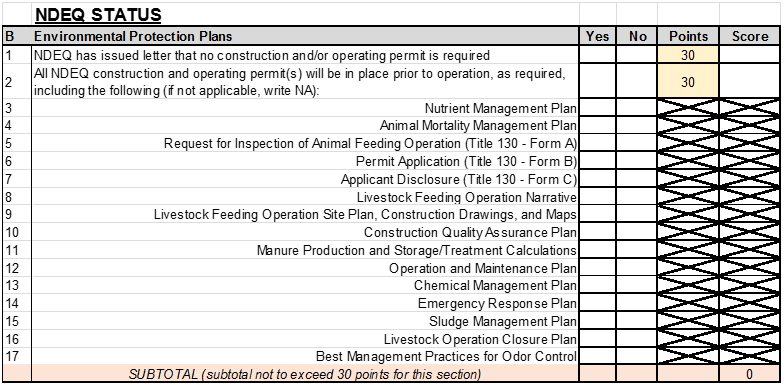
There were also differing views on whether the Livestock Matrix should highlight the various water quality protections that would be put in place or simply that NDEQ requirements would be satisfied.  While there was significant early interest by several committee members to promote and educate the public on stewardship practices required of permitted feeding operations, the desire to reinforce the value of determinations made by NDEQ and to keep the tool very practical to complete and assess carried in the end.  As a result, applicants must indicate that NDEQ approval has been or will be secured to obtain 30 of the 75 points needed to receive a passing score (Figure 2), while indication of the practices that will be implemented is encouraged, but does not affect the score received.

Figure 2. Section to be completed within the Livestock Matrix that addresses environmental protection plans and permits.

This section of the Livestock Matrix arose was discussed again as the committee considered those applicants who would receive a letter from NDEQ stating that a permit would not be required – primarily applicable to small animal feeding operations and operations that involved dry manure.  The challenge presented was, ‘Does having official approval to go forward without needing a permit offer the same protections and merit the same points as would exist if required plans were developed to secure permits?’  The issue became prominent when a broiler processing facility was approved for construction, which required constructing hundreds of new broiler (chicken) houses in the state, none of which would likely require an NDEQ permit.  The main concern was that such facilities could be approved without having nutrient management plans (and a few other desired plans) in place to limit potential nutrient loading of ground and surface waters from application of manure at rates exceeding crop needs.  The company associated with the current large poultry expansion took a proactive stance and internally requires all of its growers to have nutrient management plans in place and qualify for an NDEQ permit, resolving the immediate concerns, but not the longer-term issue with the Livestock Matrix.  The committee will continue to examine ways to better highlight and reinforce the importance of nutrient management within the Livestock Matrix without suggesting changes in NDEQ regulation.

Other environmental sections:

Six more sections address various environmental risks and protections, including:

  • Environmental and zoning compliance record
  • Water quality protection – livestock facilities
  • Odor and dust control for facilities
  • Manure application practices
  • Manure application separation
  • Additional assurance of environmental protection

Each of these sections was refined down to a list of items that the committee believed merited inclusion in determining the total score.

Non-environmental sections:

Additional sections address other topics such as:

  • Traffic
  • Locations of the authorized representative and the site manager relative to the facility
  • Communication with the community
  • Economic impact
  • Landscaping and aesthetics

Each of these areas was well-understood to influence acceptance by the community.  Probably the biggest challenge for the committee was assigning appropriate section scores and total passing scores to value the importance of these areas without suggesting that an environmentally risky application could achieve a passing score through strong scores in these other areas.

Impacts and Implications

In developing the Nebraska Livestock Siting Assessment Matrix, the committee made available a well-critiqued tool for voluntary consideration by county officials.  Overall, the Livestock Matrix strikes a sometimes uncomfortable balance between being comprehensive and scientifically correct and being transparent and easy to use.  Although the Livestock Matrix will likely fall short of the original goal of achieving consistency and uniformity in Nebraska’s county zoning policies and practices, county officials are considering the matrix as a template zoning tool or as a gauge for evaluating and adjusting current policy.

 Next Steps

The Nebraska Department of Agriculture is continuing to promote adoption of the Nebraska Livestock Siting Assessment Matrix, especially to counties looking to be officially designated as “Livestock Friendly”.  The matrix will be evaluated again in 1-2 years.

Authors

Richard R. (Rick) Stowell, Extension Specialist – Animal Environment, Rick.Stowell@unl.edu

Additional Information

For more information on the Nebraska Odor Footprint Tool, visit https://water.unl.edu/manure/odor-footprint-tool.

Acknowledgements

The other members serving  on the committee included: John Csukker; Elizabeth Doerr, Leon Kolbet, Dean Krueger, Mark McHargue, Jennifer Myers, Sarah Pillen, Andrew Scholting, Steve Sill.


The authors are solely responsible for the content of these proceedings. The technical information does not necessarily reflect the official position of the sponsoring agencies or institutions represented by planning committee members, and inclusion and distribution herein does not constitute an endorsement of views expressed by the same. Printed materials included herein are not refereed publications. Citations should appear as follows. EXAMPLE: Authors. 2019. Title of presentation. Waste to Worth. Minneapolis, MN. April 22-26, 2019. URL of this page. Accessed on: today’s date.

Aeration for Elimination of Manure Odor and Manure Runoff: What One Professional Engineer Has Learned in the Past 12 Years

Aerobic treatment has potential to be more practical for any size operation, reduce odors, reduce risk of runoff by facilitating application to growing crops, and reduce energy use when distributing manure nutrients.

Farm-based aeration, created through an upward/outward surface flow, was first introduced in the 1970’s and brought partial success.  With significant performance issues, challenges with struvite within manure recycling pipes/pumps, and the growing trend to store manure within pits under barns, further research with manure aeration was largely abandoned.  Very little research has been done on aerobic treatment within manure storage systems since traditional aeration using air blowers has been considered too expensive. Previous research sought to mimic traditional domestic wastewater treatment systems which also purposely perform denitrification.  Not always a goal for farm operations in years past, retaining Nitrogen within wastes used as fertilizer is now usually a goal.  Thus, past aerobic treatment systems were not designed to fully benefit today’s modern farms.

In 2006, hog producers were introduced to an updated version of equipment providing Widespreading Induced Surface Exchange (WISE) aeration, specifically for reducing hog manure odor while irrigating lagoon effluent.  The results became a “wonder” for the site’s CAFO permit engineer. Documentation showed that significant aeration was occurring at a rate much higher than could occur with the energy input used by traditional bubble blowers.  This indicated that aeration of manure ponds and lagoons may not be too expensive after all.  More questions led to a USDA NRCS-supported study, which revealed much more information and brought out more questions. The final report of that study is available at http://pondlift.com/more-info/, along with other information on the technologies described.

 The NRCS-funded study revealed the basis for previous performance failures, while it also showed the basis for getting positive aeration performance at liquid manure storage sites:  Ultimately, this information showed that large reductions of manure odor can be obtained while offering a new paradigm for eliminating most potential manure runoff through WISE aeration as the first step.

The paradigm change summary:

  1. Aeration provides aerobic bacteria based manure decomposition while in storage.
  2. Aerobic bacteria produce only carbon dioxide, which is considered carbon neutral when converting manure’s nutrients to fertilizer, reduced greenhouse gas (Aerobic gives off no other greenhouse gasses such as methane or oxides, and few odors)
  3. “No odor” allows direct distribution of decomposed manure nutrients onto crops during growing season. (Distribution is done during growing season, using automated irrigation equipment).
  4. Low-cost automated manure distribution reduces farm operation costs, but also allows the nutrients to be distributed to equal acres during a wider application time frame (not limited to when crop land is barren in spring or before fall freezeup.)
  5. A wider application time frame allows multiple applications at smaller doses onto growing crops. Depending on nutrient application goals and equipment, irrigation rates can be as little as 1/8th inch of water, multiple times through the year, instead of one large dose.
  6. Irrigation equipment is likely not operating when potential runoff conditions are pending, especially when the entire spring/summer/fall periods are available for distribution.
  7. When nutrients are applied onto growing crops at low dosage rates during periods when irrigation is desired, very little potential for runoff is present. Only a small portion of 1/8” of water onto a crop canopy rarely reaches the ground. The nutrient rich water quickly binds with the dry surface soil when it does get past the crop canopy during summer application.
  8. Current manure distribution distribution requires that most farmers fight to get raw manure distributed onto cropland before spring planting (which is often a wet time of year), OR after crops are harvested and bales removed. Although farmers and regulators wish that all manure handling is performed before freezeup, it is not the case: It happens more than anyone admits.  Manure application to frozen ground is an understated and unquantified manure runoff cause.  Such runoff can be eliminated by the new paradigm of application onto growing crops.

Further, the “side use” of treated effluent has significant benefit compared to raw manure.  Aerobic Bacteria-Laden Effluent (ABLE water) is extremely proficient in its use within flume systems and for automatic flushing of alleys. The aerobic bacteria within the treated water is “hungry” to go to work, to pick up fresh food as it passes over the floor/alley, on its way back to the storage pond.

The layman’s explanation is similar to urban water delivery pipes and wastewater pipes buried within city streets:

  1. Historically, dairy operators quickly learned that fresh well water will create a “slime” on surfaces, causing extremely slippery floors and alleys which injure cows. To eliminate much of the slipperiness, they stopped using fresh water and instead used raw manure from the pond.  In many cases, they would add water to the pond, when manure got too thick and again caused slippery areas.
  2. Unseen by most people are the 2 pipe systems under streets carrying our water and sewer. Factually, one pipe has slime, and the other pipe is amazingly clean: While acknowledging the newspaper notices that fire hydrants are going to be “flushed” several times/year, most don’t realize the purpose for doing so is to flush the slime from our drinking water pipes! The slime is not toxic to humans due to chlorination, but its buildup reduces pipe capacity, and its color is unpleasant to see in drinking water.  In the case of unaerated fresh water used at farms, it tends to grow the slime that dairymen simply can’t afford on their alleys/floors.
  3. Meanwhile, most people won’t look into a sewer manhole to note how “clean as a dinner plate” it looks! Sewerage pipes are designed for high capacity peak flow but normally runn at very low levels. This allows tremendous aeration activity within the system as water tumbles at manholes and as flows change direction.  Thus, the aeration, food, and bacteria within properly operating sewer systems have very little odor, with the bacteria laden effluent continuously cleaning the sewer pipe. Sewer Pipes indeed look “brand new” even after operating for decades!   Those who effectively aerate their manure pond water so they have high aerobic populations within the effluent, and use that effluent for flushing alleys and flumes are quite happy with the resultant cleaning of the alleys, floors, and flumes.

Lastly, ABLE water likely has traits of “compost tea”:  Compost Tea is made by steeping in water, a quantity of completed compost, rich with soluble nutrients, bacteria, fungi, protozoa, nematodes and microarthropods.  After removing the steeped compost solids, the remaining effluent is rich with those items recognized by many as necessary for building the soil and most effective for plant growth.   The tea is to be used quite soon after it is created, but aeration can lengthen the storage period.  Within aerobically treated manure ponds, because aeration is being performed continuously, compost tea-like benefits are anticipated to be included to crops having the WISE treated effluent application.

What did we do?

A basic hypothesis for WISE technology was developed in 2014 to explain why aeration levels are significantly higher compared to bubble blower technology.  This hypothesis explains how/why results are being obtained and allows purposeful thought on how to maximize performance.

Meanwhile, engineering solutions were developed for the two main issues of equipment available at the time: 1) Previous equipment was heavy and required boom trucks/cranes to install/remove it for servicing (250 to 900 lb.), and 2) The propeller orientation/shape would inherently draw in stringy material that wraps on the propeller shaft, which then requires removal (see problem 1).  New equipment was designed that weighs less than 120 lb. and is easily installed by hand (Figure 1).

Figure 1. One of two WISE technology models, this for open ponds (44” wide). The other model fits through a doorway to be installed in the manure storage pits of deep-pit hog barns.

What have we learned?

After years of testing the new design, the equipment proved to be able to operate without inviting stringy material to wrap on the propeller and to be easy to handle by hand.  The design was declared an engineering success and marketing began.

In addition, nitrogen retention rates for aerobic manure treatment are much higher than published, most likely due to the traditional domestic wastewater treatment process assumptions of the 1970’s and the use of partial aeration, due to high costs of bubble blowers, instead of continuous aeration used within WISE aeration activity.

Prior to the 2018 North American Manure Expo, data was collected at 3 different farms in the Brooking SD area, each farm having a different brand/style of providing aeration. Due to the uncontrolled variables, results varied within each farm and also varied from the other farms.  Although no clear specific results were determined, one specific trend was that installing equipment at a higher operational rate (1 device/50 animal units) than the study used (1 device/70animal units), offered higher nitrogen retention than can be expected from the NRCS funded study, which is higher than currently published aeration rates.   This leads me to believe that there may be some misunderstood biological process for retaining nitrogen within aerobically treated effluent using WISE aeration.  It appears there are some things unequivocally misunderstood about aerobic manure treatment and the nutrients retained, most likely also associated with the items commonly identified/targeted with Compost Tea discussions.   The potential for changing the current manure handling paradigm to one where odor is not an issue, and application of manure nutrients onto growing crops which might also reduce manure runoff   warrants further study.

The presentation will also touch on some basic misunderstandings about ammonia/ammonium, provide “do’s” and “don’ts” of installations and/or studies, and identify additional subjects for study.

What are the next steps?

  • Associated technology is being developed to perform foliar application. If farmers can’t handle manure differently, why would they do additional work, just to distribute it the same way they do now?  The presentation will include basic information for a Self-Propelled Extremely Wide Portable Linear Irrigator (SPEWPLI).  This equipment is projected to be able to irrigate/fertigate a full 160-acre field in 5 passes, and then be quickly moved to the next field.  It is anticipated that manure pumpers would use existing equipment to deliver liquid manure to fields and use the SPEWPLI equipment as an alternative to conventional drag-hose injection.  Foliar feeding has proven beneficial, applying nutrients directly onto growing crops (in canopy) when they best increase yields. By changing the distribution window to summertime, farmers don’t need to apply only in spring or in fall, or leave fields un-planted so manure can be applied in the summer.

While most farmers will not spend money to buy technology which only rids manure of odor while they continue to handle it as they have in the past, since there is very little economic return for only controlling odor, there are other aspects of WISE aeration technology to provide economic return, which then provides odor relief as a “free” benefit.

  • More information is needed on the benefits of distributing manure nutrients directly to growing crops and on the economics of low-cost, automated systems.
  • More information is needed in maximizing aeration for the energy used by way of this technology.
  • More information is needed in how nitrogen can possibly be tied up and reserved by the other bacteria, fungi, protozoa, nematodes and microarthropods within compost tea-like effluent.

A listing of such subject study items, likely to be doctorate dissertation level projects, will be included in the presentation.

Because our brand resolves issues that other equipment has, we will make it available for academic study at field sites and for others to use for additional research in the use of WISE aeration technology.

Author

John Ries, PE, Pond Lift, Elk Point, SD, johnries@pondlift.com

The authors are solely responsible for the content of these proceedings. The technical information does not necessarily reflect the official position of the sponsoring agencies or institutions represented by planning committee members, and inclusion and distribution herein does not constitute an endorsement of views expressed by the same. Printed materials included herein are not refereed publications. Citations should appear as follows. EXAMPLE: Authors. 2019. Title of presentation. Waste to Worth. Minneapolis, MN. April 22-26, 2019. URL of this page. Accessed on: today’s date.

Development of Short Educational Videos for CAFO Related Topics

Concentrated animal feeding operations (CAFOs) are encountering more resistance. There are cases where citizens file suit to stop application of a new or expansion of animal production facility; others petition the county commissioners to stop the facility via zoning or health ordinances. When extension personnel were asked about CAFOs, it became apparent that some user-friendly and brief information pieces are needed, especially those that are based in fact and able to capture the audience’s attention and address their emotions. Well-managed CAFOs tend to have less nutrient management and odor nuisance issues, and when needed, there are options to mitigate odor and improve nutrient management.  Many CAFOs have been shown to benefit the local economy, which is critical to rural communities. The videos are intended to be short so that the user can stay interested and choose next topics of interests. The goal is to capture users’ attention and provide them with essential facts rather than trying to push information to them.

What did we do?

The University of Missouri Extension team have created a series of short whiteboard videos that target concerned local citizens and county commissioners seeking information about the impacts of CAFOs on environment, economy, antibiotics, and health. Scripts were developed by the faculty based on facts and peer-reviewed publications. Artists were hired to develop the whiteboard videos. A total of five videos were developed in the first production round and posted onto a website. A website and YouTube Channel were created to present the videos.

What we have learned?

The team created the videos and showed to classes and university staff, to collect feedback and ideas to improve the videos. Iteration of the scrips, communication with the artists, panel review for clarity and improvement, are critical to the video production.

Implications of the project or research

General public who want to learn more about CAFOs or concerned about the potential impacts of newer, intensive animal farms are able to access research based information to answer their questions. Between 7/10/2018 and 3/1/19 the videos have a total of 963 views, CAFO Environmental Impact is the most viewed at 336.

What should people remember as take-home messages from your presentation?

More scientific based information and application of social media might be needed to convey more information, and stimulate non-agricultural and younger audiences to learn more about animal production facts.

Future plans

Based on the feedback and discussion, create more videos to promote science-based information pieces, to reach a broad audience.

Authors

Lim, Teng (Associate Professor and Extension Agricultural Engineer, Agricultural Systems Management, University of Missouri, limt@missouri.edu)

Massey, Ray; Bromfield, Cory; and Shannon, Marcia; University of Missouri

Additional information

Please visit https://www.youtube.com/channel/UCX-Y1Fuyi_l7SIs3y6u9Yhw to view the videos and http://agebb.missouri.edu/commag/cafo/ to find more information.

Acknowledgements

Four of the videos were developed by small grants provided by the U.S. Pork Center of Excellence.


The authors are solely responsible for the content of these proceedings. The technical information does not necessarily reflect the official position of the sponsoring agencies or institutions represented by planning committee members, and inclusion and distribution herein does not constitute an endorsement of views expressed by the same. Printed materials included herein are not refereed publications. Citations should appear as follows. EXAMPLE: Authors. 2019. Title of presentation. Waste to Worth. Minneapolis, MN. April 22-26, 2019. URL of this page. Accessed on: today’s date.

Transforming Manure from ‘Waste’ to ‘Worth’ to Support Responsible Livestock Production in Nebraska

The University of Nebraska – Lincoln (UNL) Animal Manure Management (AMM) Team has supported the environmental stewardship goals of Nebraska’s livestock and crop producers for many years using multiple traditional delivery methods, but recently recognized the need to more actively engage with clientele through content marketing activities. A current programming effort by the AMM Team to increase efficient manure utilization on cropland in the vicinity of intensive livestock production is the foundation for an innovative social media campaign.

What did we do?

content marketing plan
Figure 1. Content marketing plan to direct traffic to the AMM Team website.

While traditional extension outputs remain valuable for supporting the needs of clientele who actively seek out information on a topic, “content marketing” is a strategic tactic by which information is shared to not only attract and retain an audience, but to drive impactful action. Social media platforms are popular tools for delivery of current, research-based information to clientele; a key barrier to effectively using social media for content marketing by the project directors has been time. For instance, using Twitter efficiently requires regular attention to deliver messages frequently enough to remain relevant and to do so at times when user activity characteristics demonstrate the greatest opportunity for posts to be viewed and disseminated. Because this proved to be a challenge, a content marketing plan (Figure 1) was initiated using “waste to worth” as the topic of focus.

Three major components were identified as being critical to the success of the project (Figure 2): design of high-quality graphics that are tied to online content and resources and are suitable for use on Twitter, Facebook, or other social media platforms; development of a content library containing packaged content (graphic + suggested text for social media posts) that is easy to navigate and available for partners to access and utilize; and development  of a communication network capable of reaching a broad audience.

Graphics

circles containing graphics, content library and communication network
Figure 2. Components identified for successful content marketing effort.

An undergraduate Agricultural Leadership, Education and Communication (ALEC) student was recruited to support graphical content development using three basic guidelines: 1) Eye-catching but simple designs; 2) Associated with existing content hosted online; and 3) Accurate information illustrated Canva.com was utilized by team members  to design, review and edit social media content (Figure 3).

Content Library

Completed graphics are downloaded from Canva as portable network graphics (*.png) and saved to Box folders, by topic, using a descriptive title. When posting to social media, hashtags, mentions and links to other content help (a) reach users who are following a specific topic (e.g. #manure), (b) recognize someone related to the post (e.g. @TheManureLady) and (c) direct users to more content related to the graphic (e.g. URL to online article). For our content library, each graphic is accompanied by a file containing recommended text (Figure 4) that can be copied and pasted into Twitter or Facebook.

content example graphics
Figure 3. Graphical content examples for the “waste to worth” project
content example with sample text
Figure 4. Sample text to accompany a related image when posting on social media

Communication Network

content distribution network diagram
Figure 5. Content distribution network diagram.

Disseminating our messages through outlets outside the University was identified as a critical aspect of achieving the widespread message delivery that was desired. As such, agricultural partners throughout Nebraska were asked to help “spread the word about spreading manure” by utilizing our content in their social media outputs, electronic newsletters, printed publications, etc. Partners in this project include nearly 30 livestock and crop commodity organizations, media outlets, agricultural business organizations, and state agencies in Nebraska (Figure 5).

The effort to distribute content through the established communication network was launched in September 2018. Each month, three to four graphics with accompanying text are placed in a Box file to which all partners in the distribution network have access. Partners are notified via e-mail when new content is released. Folders containing prior months’ releases remain available to allow partners to re-distribute previous content if they wish.

What we have learned?

Since launching, 34 partnering organizations (Figure 6) have helped disseminate content to 50,000+ producers, advisors, allied industry members, and related professionals each month. Invited media appearances (radio and television) by team members have increased substantially in the past six months. For instance, the Nebraska Pork Producers Association hosts a weekly “Pork Industry Update” on a radio station that is part of the Rural Radio Network. Team members have recorded numerous interviews for broadcast during this weekly programming spot.

parter organizations
Figure 6. Partner organizations contributing to content distribution.

Page views within the AMM Team’s website (manure.unl.edu) increased by 139% from the fourth quarter of 2017 to the fourth quarter of 2018. Additional analytics are being collected to better define routes by which traffic is reaching the AMM Team’s website.

Future Plans

A survey is being prepared for distribution to audiences targeted through this project to assess impacts of this effort on changes in knowledge and behavior related to responsible use of manure in cropping systems, recognition of the AMM Team as a trusted source for manure and nutrient management information in Nebraska, and quality of AMM Team outputs.

Author

Amy Millmier Schmidt, Associate Professor, Biological Systems Engineering and Animal Science, University of Nebraska-Lincoln (UNL), aschmidt@unl.edu

Co-authors

Rick Koelsch, Professor, Biological Systems Engineering and Animal Science, UNL

Abby Steffen, UG Student, Ag Leadership, Education and Communication, UNL

Additional Information

Sign up for monthly notifications about new content from the UNL Animal Manure Management team at https://water.unl.edu/newsletter. Follow team members and the AMM Team.

Animal Manure Management Team    Amy Schmidt

Twitter: @UNLamm    Twitter: @TheManureLady

Facebook: https://www.facebook.com/UNLamm/    Facebook:  https://www.facebook.com/TheManureLady/


Rick Koelsch

Twitter: @NebraskaRick

Acknowledgements

Funding sources supporting this effort include We Support Ag, the Nebraska Environmental Trust, and the North Central Sustainable Agricultural Research and Education (NC-SARE) program.


The authors are solely responsible for the content of these proceedings. The technical information does not necessarily reflect the official position of the sponsoring agencies or institutions represented by planning committee members, and inclusion and distribution herein does not constitute an endorsement of views expressed by the same. Printed materials included herein are not refereed publications. Citations should appear as follows. EXAMPLE: Authors. 2019. Title of presentation. Waste to Worth. Minneapolis, MN. April 22-26, 2019. URL of this page. Accessed on: today’s date.

Spatial and Temporal Soil Nitrogen Distribution After Shallow Disk Manure Injection in Corn

The purpose of this field research was to explore nitrogen (N) distribution in the form of nitrate and ammonium in both a spatial and temporal manner over two seasons in manure injection plots in central Pennsylvania. The description of N movement from high concentration at the manure band through the season can aid in understanding of nutrient migration and utilization efficiencies. The work was complimentary to previous soil sampling protocol developed for mid-season nitrate testing in corn fields with injected manure.

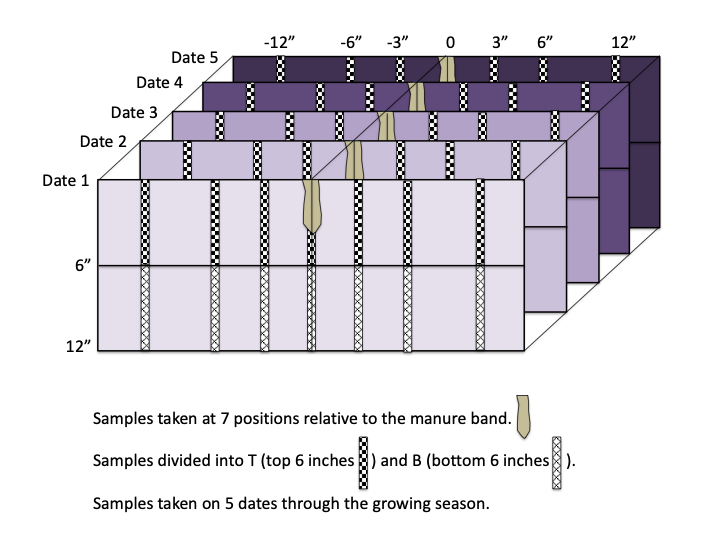
Mid-season soil testing for N protocols such as the Pre-Sidedress Nitrate Test in corn can be valuable tools to examine nutrient efficiencies. Economic benefit can result when producers use test information to determine if current soil N will allow maximum crop growth or if additional N sidedressing is needed to reach yield goals. Environmental benefits of the test include optimizing in-field N while minimizing excess application of the nutrient. However, conducting the test on soils where manure injection has occurred presents accuracy challenges due to uneven nutrient distribution. A soil sampling protocol for these scenarios was presented at the 2017 Waste to Worth Conference. The protocol calls for composite collection of four sets of soil samples, with each set containing five soil cores of 12-inch depth collected six inches apart from each other in a line perpendicular to the direction of manure injection (Figure 1).

Figure 1. Earlier work determined that collecting and compositing four sets of five soil samples that were 12-inches deep and 6-inches apart where manure injection banding was in place was an accurate substitution for Pre-sidedress Nitrate Testing compared to soils with surface broadcasted nitrogen.

What did we do?

In the current research, N measurements were taken at several distances from the manure band center and analyzed at depths of 0-6 inches and 6-12 inches. Measures in manure plots were collected at five different dates through each of two growing seasons (Figure 2).

Figure 2. Current research explored nitrogen distribution through 5 dates in the growing season to develop both a spatial and temporal appreciation of nitrate distribution and efficiencies.

What have we learned?

Results show that N concentrations ‘peak’ in the region immediately near the injection band early in the season and then flatten through the season. A comparison of the top 6-inch samples with average of the both sampling depths indicate that the top 6 inches may be predictive of the entire 12-inch depth. This presentation will provide results and trends observed in N movement from injection bands in these soil plots.

Authors

Robert Meinen, Senior Extension Associate, Department of Animal Science, The Pennsylvania State University, rjm134@psu.edu


The authors are solely responsible for the content of these proceedings. The technical information does not necessarily reflect the official position of the sponsoring agencies or institutions represented by planning committee members, and inclusion and distribution herein does not constitute an endorsement of views expressed by the same. Printed materials included herein are not refereed publications. Citations should appear as follows. EXAMPLE: Authors. 2019. Title of presentation. Waste to Worth. Minneapolis, MN. April 22-26, 2019. URL of this page. Accessed on: today’s date.

Can Manure Improve Soil Health?

Recently there have been significant effort put into promoting soil health, emphasizing management practices such as low or no tillage, cover crop, and increasing soil organic matter content. A state-wide effort in Missouri has been taken to encourage adoption of cover crops, to improve water quality and soil health. The program presents a unique opportunity for systematic evaluation of soil health indicators, crop rotation and yield, and manure application. Participants are required to submit soil samples to University of Missouri Soil Health Assessment Center (https://cafnr.missouri.edu/soil-health/), on an annual basis, along with critical crop, soil, and manure nutrient management information. The objective of this effort is to assemble and analyze soil health indicators and manure application data.

What did we do?

A team of agricultural engineers and soil scientists in Missouri correlated data of soil health variables and manure land application details, for state-wide and research plot data. For the first dataset (2016-17) collected, the team examined the overall effects of manure land application on soil characteristics, especially those that have more implication in soil health. In addition to the typical soil nutrient (nitrogen and phosphorus) variables, many key soil health indicators that were included in the program are total organic carbon, active carbon, exchangeable cations, bulk density, and water stable aggregates. Some of the important management information collected from the program included field location, crop rotation, tillage use, and if there was previous cover crop use, etc. Manure land application information included manure type, application rate, and method applied.

In order to better examine the effects of manure land application on soil characteristics, another set of data from research plots was examined. The controlled, experimental field plots had consistent tillage and repeated crop and fertilizer treatments. Some of the plot management considered included full fertilizer, no fertilizer, manure application (6 tons manure/acre), and green manure (red clover). A wide range of cropping systems were conducted, ranging from continuous corn, continuous soybean, continuous wheat, continuous Timothy, to three-year rotation of corn-wheat-red clover, and four-year rotation of corn-soybean-wheat-red clover.

What we have learned?

A significant difference was found only for phosphorus for the state-wide samples. The lack of correlation is mostly likely because of relatively few samples were associated with manure application, and the samples were highly variable in tillage, soil type, crop, and manure type, application rate and methods. However, when the effects of manure land application was compared within the counties, the manure applications increased the active carbon contents (p<0.01) for two of the top three counties where manure application data was collected. The manure application also significantly increased (p <0.05) organic carbon, phosphorus, potentially mineralizable nitrogen, and water stable aggregate values for Stoddard county.

For the central Missouri research plot data, the manure land application clearly affected several key variables. The manure application has resulted in higher soil organic carbon, active carbon, phosphorus, and water stable aggregates, and lower bulk density, Figures 1 and 2.

Include impacts/implications of the project or research.  

These findings confirm that the benefits of manure application in increasing soil organic materials and improving soil aggregate ability can be seen at least from fields that were consistently treated. While considering measurable economic and environmental impacts of nutrient and manure management, especially for increasing the carbon content in the crop fields, manure land application can be one of the recommended practices.

What should people remember as take-home messages from your presentation?

Manure application can be considered an effective management to increase soil organic carbon, active carbon, and water stable aggregates, and decrease soil bulk density, although the results have also shown to increase soil phosphorus content. The findings regarding manure use and important soil health indicators are important to management of the soil and can be contributing to many factors need to be considered for increasing food production on a limited land base.

Future plans

Continue analyzing the growing management and soil analysis dataset, and cross examining the correlation between the different variables. The team will promote the findings and encourage management that can result in better soil health and resource preservation.

Authors

Lim, Teng (Associate Professor and Extension Agricultural Engineer, Agricultural Systems Management, University of Missouri, limt@missouri.edu)

Wang, Allen Haipeng (Heilongjiang Bayi Agricultural University); Brandt, Donna, (University of Missouri); Norkaew, Saranya, (University of Missouri); Miles, Randy (University of Missouri); and Rick Koelsch, (University of Nebraska, Lincoln).

Additional information

Please visit https://soilhealthnexus.org/can-manure-improve-soil-health/ to find more information and download the data brief and final report.

Acknowledgements

Funding for this data analysis and report were provided by the North Central Region Water Network – a 12-state collaboration between Extension water resource professionals and university, federal, state, NGO and industry partners; and Soil Health Institute (http://soilhealthinstitute.org/).

Figure 1. Comparisons of organic carbon contents for the state-wide and research field plot soil samples, the plots depict median (solid line), mean (x), quartile box, and minimum/maximum values. The state-wide samples (Top figure) were state-wide average (overall), fields treated with manure (Soil+manure), and fields did not have manure application (Soil-manure). The field plot treatments (Bottom figure) were full fertility (FF), manure (M), and no fertility (NF).
Figure 2. Water stable aggregates of state-wide and researcy field soil samples, the plots depict median (solid line), mean (x), quartile box, and minimum/maximum values. The state-wide samples (Top figure) were state-wide average (overall), fields treated with manure (Soil+manure), and fields did not have manure application (Soil-manure). The field plot treatments (Bottom figure) were full fertility (FF), manure (M), and no fertility (NF).

The authors are solely responsible for the content of these proceedings. The technical information does not necessarily reflect the official position of the sponsoring agencies or institutions represented by planning committee members, and inclusion and distribution herein does not constitute an endorsement of views expressed by the same. Printed materials included herein are not refereed publications. Citations should appear as follows. EXAMPLE: Authors. 2019. Title of presentation. Waste to Worth. Minneapolis, MN. April 22-26, 2019. URL of this page. Accessed on: today’s date.

Macropore Characterization to Enable the Selection of Practices that Minimize Soluble Phosphorus Loss

Soluble nutrients are believed to be contributing to the recent high-profile impacts in the Great Lakes including excessive cyanobacteria growth (Ohio 2010; Baker et al. 2014).   Retaining nutrients, and especially phosphorus in the Great Lakes region, on crop land is also important to the producer as it is non-renewable, scarce, expensive, exhibits high price variability, and can cause adverse environmental impacts when discharged into fresh water systems.

This research program was designed to quantitatively investigate preferential flow pathways caused by macropores by conducting field analyses using the mobile macropore characterization unit. Such pathways enable soluble nutrients, such as phosphorous, to rapidly migrate through soil, into tile drains, and then to surface water (Geohring et al. 2001; Heathwaite and Dils 2000). Results, along with site characteristics such as farm-management practices, topography, soil texture, depth to water table, depth and spacing of subsurface drains, if applicable, topography, and proximity to surface water, enable the qualitative selection of the best management practice to retain nutrients. This approach recognizes that all farm fields are unique and best practices to maximize nutrient uptake and minimize its transport off site are not equally applicable

What did we do?

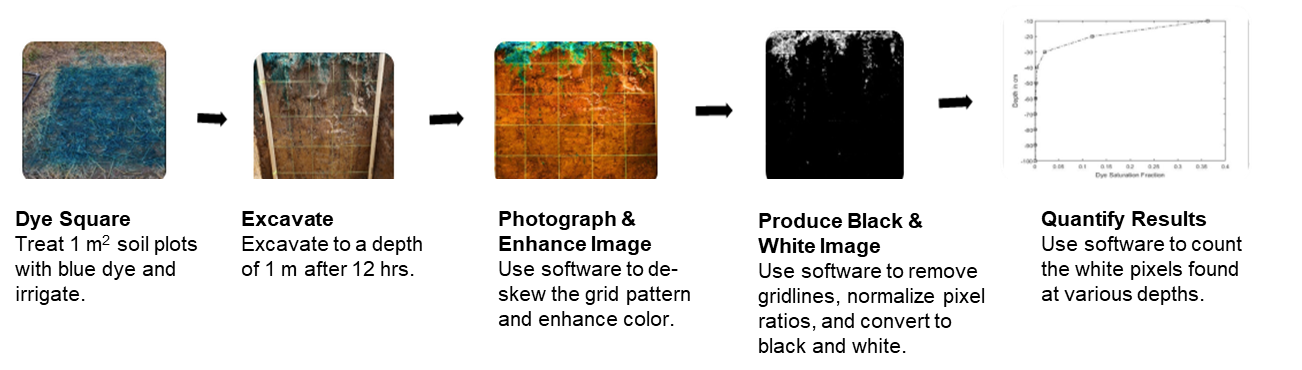
Forrer et al., 2000, developed a visual technique to assess liquid flow through microporous soil. The technique entails adding dye to small plots of saturated soil and excavating trenches in each area. This method was expanded by photographing the soil profiles, processing the image to convert pixels with dye to white and soil without dye to black, and quantifying each with depth using MATLAB (Figure 1). The result is an estimate of the amount and extent of the macropores.

Figure 1. Assessment of Soil Macropores


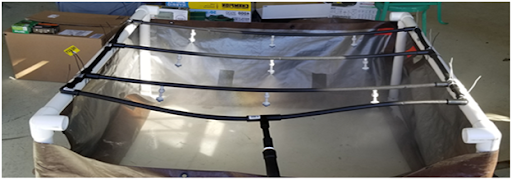
This technique was packaged into the mobile macropore characterization unit to allow for efficient measurements (Figures 2 and 3).

Figure 2. Mobile Macropore Characterization Unit


Figure 3. Dye and Water Distribution Unit using Sprinklers

What we have learned?

Five sites across Michigan with varied management practices and soil structure were tested using the newly developed protocol as shown in Figure 4.  

Figure 4. Representative Images from Five Sites using Dye Tracer Study

What are the next steps?

The mobile micropore characterization unit will be used extensively at an ongoing edge-of-field monitoring research site in Michigan to develop correlations between soluble pollutants in the tile drain water and quantitative macropore characterization. Thereafter, the unit will be used by extension educators for field-specific measurements to help producers decide on the most appropriate best management practices.     

Authors

Steven I. Safferman1, Jason S. Smith2, Thiramet Sothiyapai3, Ehsan Ghane4

1 Associate Professor; Michigan State University, Biosystems and Agricultural Engineering; Corresponding Author:  SteveS@msu.edu

2 Teaching Specialist, Michigan State University, Engineering CoRe

3 Undergraduate Research Assistant, Michigan State University, Biosystems and Agricultural Engineering

4 Assistant Professor and Extension Specialist, Michigan State University, Biosystems and Agricultural Engineering

Additional Information

Baker, D. B., R. Confesor, D. E. Ewing, L. T. Johnson, J. W. Kramer, and B. J. Merryfield. 2014. “Phosphorus Loading to Lake Erie from the Maumee, Sandusky and Cuyahoga Rivers: The Importance of Bioavailability.” Journal of Great Lakes Research 40 (3): 502–17. https://doi.org/10.1016/j.jglr.2014.05.001.

Forrer, I., A. Papritz, R. Kasteel, H. Flühler, and D. Luca. 2000. “Quantifying Dye Tracers in Soil Profiles by Image Processing.” European Journal of Soil Science 51 (2): 313–22. https://doi.org/10.1046/j.1365-2389.2000.00315.x.

Geohring, Larry D, Oloro V Mchugh, M Todd Walter, Tammo S Steenhuis, M Saleem Akhtar, and Michael F Walter. 2001. “Phosphorus Transport Into Subsurface Drains By Macropores After Manure Applications :” Soil Science 166 (12): 896–909.

Heathwaite, A. L., and R. M. Dils. 2000. “Characterising Phosphorus Loss in Surface and Subsurface Hydrological Pathways.” Science of the Total Environment 251–252: 523–38. https://doi.org/10.1016/S0048-9697(00)00393-4.

Ohio, E P A. 2010. “Ohio Lake Erie Phosphorus Task Force Final Report.” Ohio EPA OH Task Force.

Acknowledgements

This project was funded by the Michigan Soybean Promotion Committee, Corn Marketing Program of Michigan, and Michigan Wheat Program. The author wish to acknowledge contributions from Brendon Kelly, Lyndon Kelly, Steve Miller, and the MSU Soil and Plant Nutrient Laboratory.


The authors are solely responsible for the content of these proceedings. The technical information does not necessarily reflect the official position of the sponsoring agencies or institutions represented by planning committee members, and inclusion and distribution herein does not constitute an endorsement of views expressed by the same. Printed materials included herein are not refereed publications. Citations should appear as follows. EXAMPLE: Authors. 2019. Title of presentation. Waste to Worth. Minneapolis, MN. April 22-26, 2019. URL of this page. Accessed on: today’s date.

Quantitative Analysis of Words in Popular Press Articles about Livestock and Environment

Livestock farming practices and technologies, like many aspects of agriculture and industry, continue to evolve. As technology and attitudes change regarding livestock farming, public response changes as well; this is reflected in the way that people talk and write about the subject. This change and growth is a common topic  of both public and technical debate and scrutiny. Databases on the internet collect public articles and documents related to livestock farming dating back to the early 1980’s. The information in these articles can be evaluated using a number of computer science based approaches. These data can help to highlight how significant past events and their impacts were perceived, and possibly predict  how future trends within the industry will be described in popular press/media.

What Did We Do?

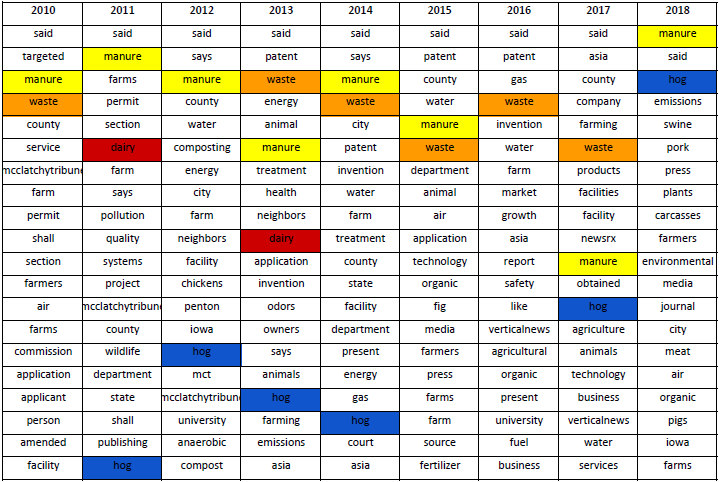
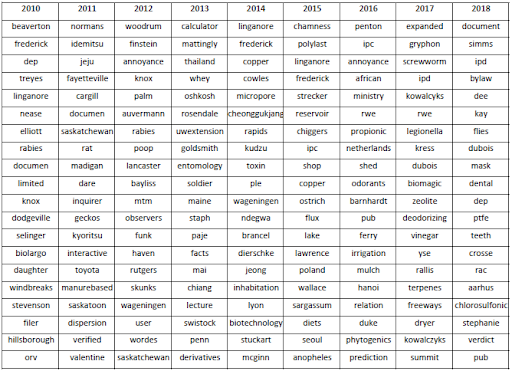
We gathered popular press articles from an online database, Factiva, with the search terms “livestock and odor,” from the year 2000 to the present. A computer program developed using machine learning processes: (1) cleans and structures the individual articles into text files; and (2) quantifies the importance and frequency of words in individual and groups of articles, by year. The program assigns two measures of importance to each word. Words that frequently occur in many articles per year provide broad overarching ideas and subjects. Words that are deemed important to each  individual article provide more nuanced data including companies, people, and equipment discussed in livestock farming. To demonstrate the results, this data is visualized in tables and graphs to show patterns in subjects as they develop and change over time.

What Have We Learned?

This analysis method gives us a quantitative basis for reviewing the change in importance of words over time. All analysis after choosing the subject and search terms is done by a computer program, protecting the outcomes from reader bias. Changes in word importance or frequency can be supported with numerical data and easily visualized from year to year. The different approaches also allow for inferences between long-term subjects and ideas (Table 1), and shorter term players in the industry (Table 2).

This analysis method does not pull out the context that any of the words are used. Manure and waste are two means of describing the same material, with different connotations. Manure and waste appeared at similar frequencies in many, but not all years. Dairy was more prominent in 2011 and 2013, but hogs (or synonyms) appeared in most years. Refinements to the article search protocol could limit the articles to those of opinion (i.e. editorials) or regional perspectives. There are opportunities for this method to inform historical reviews of livestock and the environment, and inform future communication efforts.

Future Plans

There are a number of opportunities to extend this project in the future. One would be to experiment with different search terms and databases to see how outcomes depend on the data source. Another opportunity would be to apply the quantitative method to other applications. The computer program could be applied to any database and so the method has utility to topics other than livestock farming.

Authors

Ryan Felton, Undergraduate Research Assistant, University of Minnesota

Erin Cortus, Assistant Professor and Extension Engineer, University of Minnesota

ecortus@umn.edu

Additional Information

Project support provided by the University of Minnesota UROP program.

Table 1. The top twenty words by year that most frequently appeared in a popular press article database search based on the keywords “livestock and odor”, by year. The relative frequency of some livestock types (cattle, hog, dairy) and manure-related words (manure, waste) are highlighted.


Table 2. The top twenty words by year that were the important focus of articles in a popular press article database search based on the keywords “livestock and odor”.


The authors are solely responsible for the content of these proceedings. The technical information does not necessarily reflect the official position of the sponsoring agencies or institutions represented by planning committee members, and inclusion and distribution herein does not constitute an endorsement of views expressed by the same. Printed materials included herein are not refereed publications. Citations should appear as follows. EXAMPLE: Authors. 2019. Title of presentation. Waste to Worth. Minneapolis, MN. April 22-26, 2019. URL of this page. Accessed on: today’s date.
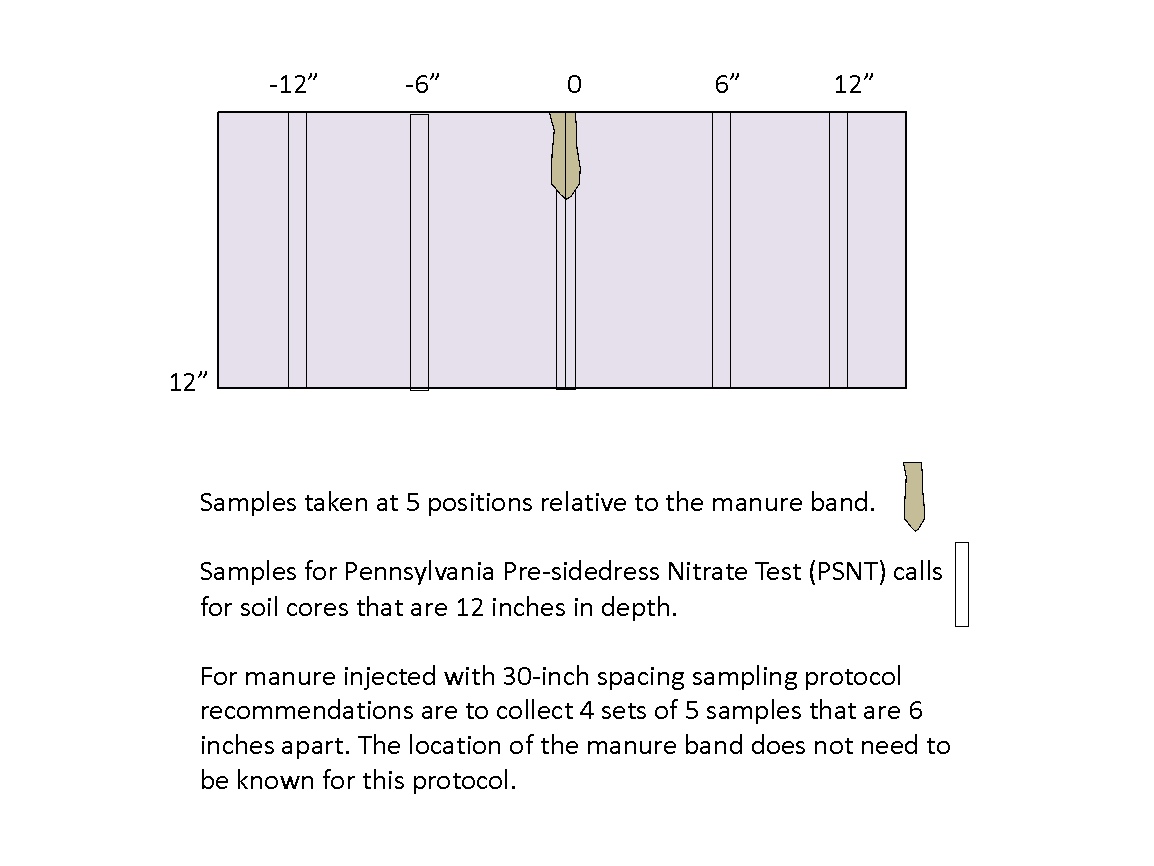
 

Impact of Anaerobic Digestion on Solids, Nitrogen, Phosphorous, Potassium, and Sulfur Concentrations of Swine Manure

Anaerobic digestion of swine manure is a treatment process that can be used to reduce odor emissions, generate bioenergy, and reduce methane emissions. Studies and models are available that can be used to quantify methane production, and volatile solids (VS) reduction rates. Few provide information on the plant nutrient contents of digested manure. Such information is needed to develop nutrient management plans to use digester effluent to produce crops, biomass, or as a nitrogen source for making compost in an environmentally responsible manner.  The objective of this study was to observe the reductions and transformations of solids (TS, VS), nitrogen, phosphorous, potassium, and sulfur resulting from anaerobic digestion.

What did we do?

Fresh swine manure was obtained from the gestation barn at the Starkey Swine Center at Clemson University (Figure 1), and large supernatant samples were obtained from the lagoon on-site. The solid manure from the gestation floor was diluted with supernatant from the lagoon to obtain three total solids (TS) concentrations. The target total solids concentrations were 1%, 1.2%, and 2%. Dilutions in this range were selected because they were representative of common ranges of liquid swine manure removed from modern production facilities. This also provided three levels of organic load (OL) that was defined by the VS concentration of the mixtures (g VS/L). The dilutions that were actually achieved were 0.9%, 1.2%, and 1.9% total solids with volatile solids (VS) concentrations of 6.10, 9.05, and 13.75 g VS/L.

Since lagoon water was used for dilution in a manner similar to the operation of a recycled flush system no additional seed material was needed. The microorganisms needed for anaerobic digestion already existed in the manure.

Figure 1. Naturally ventilated gestation barn at the Starkey Swine Center at Clemson University.

Batch Anaerobic Digestion

The three mixtures of swine manure and lagoon water were anaerobically digested using 1.8L batch reactors that were maintained at 35 C in a heated water tank as shown in Figure 2. Three 1.8L bottles were used for each of the three liquid swine manure mixtures to give a total of 9 reactor bottles. Complete details of the batch method used is provided by Chastain and Smith (2015).

Figure 2. Aquarium used to provide a heated water bath (35°C) that held the nine, 1.8-L batch reactors.

The reactor bottles were digested for 56 to 74 days. The pH of the bottles was measured daily and was used as the primary parameter to monitor digestion progress. Biogas production was also monitored by collecting it in 3-L Tedlar® bags, one per reactor bottle. The day on which the gas collection bags were emptied was recorded and provided a secondary parameter to determine when digestion was complete. Anaerobic digestion is a two phase process. During the first phase, called the acid forming phase, microorganisms create volatile fatty acids (VFA) and the pH falls rapidly to 6 or less. During the second phase the methanogens increase in population and consume the VFAs causing the pH to rise. Digestion was complete once the pH hovered around 7.5 for several days, and biogas was no longer produced. A graph of the variation in pH for the reactors is provided in Figure 3.

Figure 3. Variation of pH with respect to process time for three organic loading rates used. Each point is the mean of three 1.8-L batch reactor bottles.

Solids and Plant Nutrients Measured Before and After Anaerobic Digestion

Well-mixed samples of the three liquid swine manure mixtures were obtained before and after anaerobic digestion. Since nitrogen and phosphorous in swine manure exist in soluble and organic forms the reductions and transformations of soluble and organic forms of these nutrients were also observed. The samples were analyzed to determine the following using standard techniques:

  • The total solids (TS),
  • The fixed solids (FS) or ash content,
  • The volatile solids (VS = TS – FS)
  • Total Kjeldahl nitrogen (TKN = Org-N + TAN)
  • Total ammonical nitrogen (TAN = NH4+-N + NH3 – N),
  • Organic nitrogen (Org-N = TKN – TAN),
  • Nitrate nitrogen (NO3-N),
  • Mineral nitrogen (Min N = TAN + NO3-N),
  • Total nitrogen (TN = TKN + NO3-N),
  • Total phosphorus (TP),
  • Soluble phosphorous (Sol-P),
  • Total potassium (TK), and
  • Sulfur (S).

What did we learn?

The first important observation was related to the completeness of anaerobic digestion. The mean VS reduction ratio (g VS destroyed/g VS added) for all nine reactors was measured, and was 0.62 on the average. This  and was in excellent agreement with the literature value of 0.63 for swine manure (Hill, 1991), and indicated that anaerobic digestion was complete. The rate of TS destruction was 0.45 g TS destroyed / g TS added.

The second set of observations were related to the impact of anaerobic digestion on nitrogen. The mass of total N was not changed by anaerobic digestion, but the mass of organic nitrogen was decreased by 36% as it was mineralized to TAN. The TAN was increased by a factor of 1.84, and the mineral N (TAN + NO3-N) was increased by a factor of 1.8 on the average. The initial nitrate-N concentrations were small and evidence of denitrification was observed as indicated by a reduction in nitrate-N by 59%. The impact of N transformations was to increase the fraction of total-N that was in the total ammonical form from 33% before digestion to 59% after digestion which highlights the need to store and land apply anaerobically digested manure so as to reduce ammonia volatilization.

Anaerobic digestion was also observed to have mixed results on the mass of P, K, and S.  The mass of total-P was not significantly impacted by anaerobic digestion. On the average, 73% of the soluble-P was converted to organic P by microbial activity, and was believed to remain in the microbial biomass. There was no impact on TK by digestion as expected. The mass of S was reduced by 7% on the average presumably by the formation of small amounts of H2S.

Authors

  • John P. Chastain, Ph.D. Professor and Extension Agricultural Engineer, Clemson University, Department of Agricultural Sciences, Agricultural Mechanization and Business Program, McAdams Hall, Clemson, South Carolina 29634 USA. jchstn@clemson.edu 1-864-656-4089
  • Bryan Smith, BSAE, MSCE, Area Extension Agent – Agricultural Engineer, Clemson Extension Service, 219 West Laurens Street, Laurens, South Carolina 29360 USA.

References

Chastain, J.P. and W.B. Smith. (2015). Determination of the Anaerobic Volatile Solids Reduction Ratio of Animal Manure Using a Bench Scale Batch Reactor. Presented at the 2015 ASABE Annual International Meeting. Paper No. 152189216. ASABE, 2950 Niles Rd., St. Joseph, MI 49085-9659

Hill, D.T. (1991). Steady-State Mesophilic Design Equations for Methane Production from Livestock Wastes. TRANSACTIONS of the ASAE, 34(5):2157-2163.

Acknowledgements

This study was supported by the Clemson Extension Confined Animal Manure Managers Program and by a grant from the South Carolina Energy Office.


The authors are solely responsible for the content of these proceedings. The technical information does not necessarily reflect the official position of the sponsoring agencies or institutions represented by planning committee members, and inclusion and distribution herein does not constitute an endorsement of views expressed by the same. Printed materials included herein are not refereed publications. Citations should appear as follows. EXAMPLE: Authors. 2019. Title of presentation. Waste to Worth. Minneapolis, MN. April 22-26, 2019. URL of this page. Accessed on: today’s date.