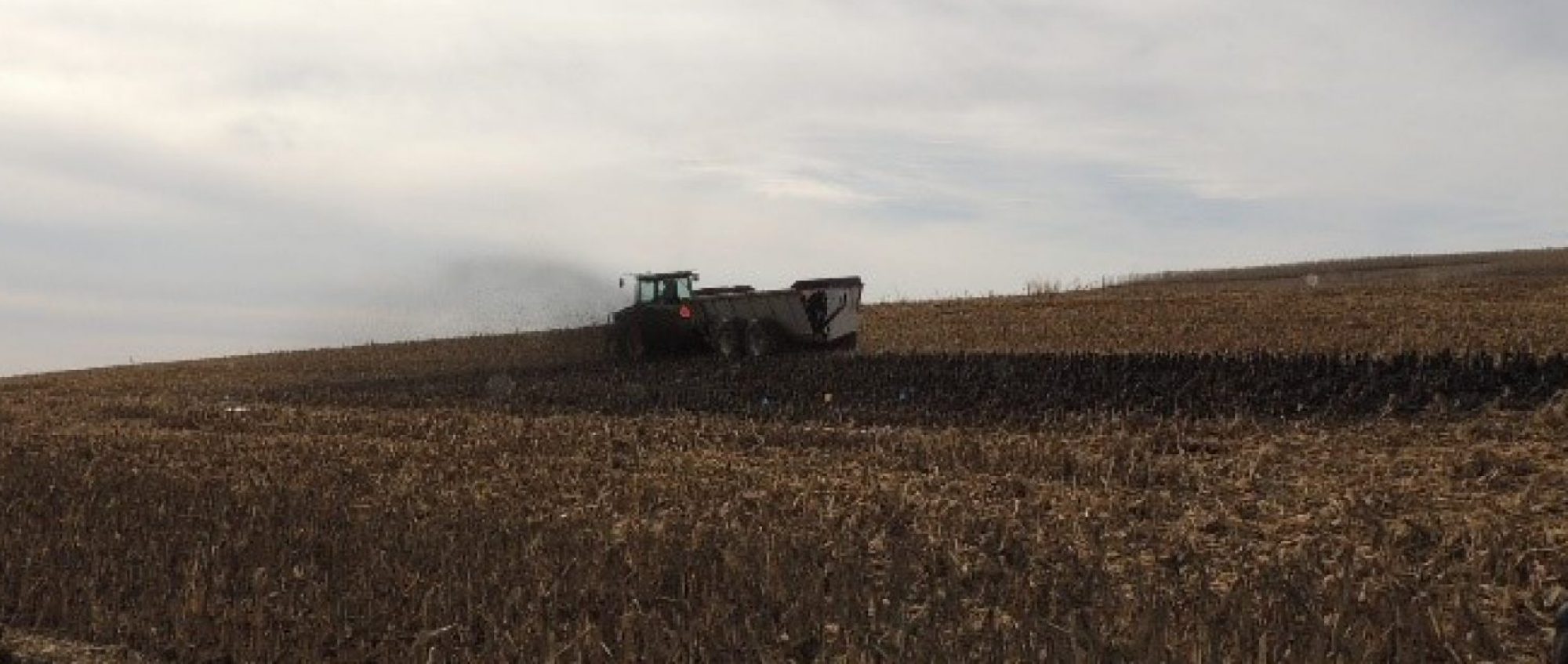

Responsible manure management uses multiple data types from a wide range of sources. This webinar highlights three new tools that aim to ease this burden while supporting effective decision-making. ManureDB aggregates U.S. manure analysis data and provides user-specified reports of manure characteristics. ManureTech synthesizes the environmental, economic and operational facets of manure treatment technologies. Manure Management Planner is a trusted tool but has also undergone recent updates for site-specific setback distances. Participants will be able to see these tools in action, and where further developments are headed. This presentation was originally broadcast on February 16, 2024. Continue reading “Upcoming Models and Tools to Improve Manure Management”
2024 Webinars Approved for ARPAS Continuing Education Units
These webinars have been approved for 1 continuing education unit (each) as part of the American Registry of Professional Animal Scientists (ARPAS) program. To receive CEUs, view a live or archived webinar, complete an evaluation (if available), and contact ARPAS, 217-356-5390 to have the credit applied to your CEU balance. Repeat this process for each webinar being utilized for CEUs.
2024 Webinars
-
- Responding to PFAS on Dairy Farms in Maine – December 13
- Engaging Farm Safety and Manure Management: Innovative Teaching Methods in Action – November 22
- Managing Dairy Manure for Increased Soil Health and Forage Production Sustainability – October 18
- The Role of Agriculture in Atmospheric Nitrogen Deposition: Sources, Impacts, and Management – September 20
- Fifty Years of Environmental Progress for US Dairy Farms – August 16
- Staying in the Loop: Circularity in Integrated Crop and Livestock Production – June 21
- Precision Ag In the Barn and In the Pasture – May 17
- Optimizing Agricultural Practices: Balancing Manure Use and Minimizing Compaction – April 19
- Implications of Managing Manure on a Nitrogen Basis – March 15
- Upcoming Models and Tools to Improve Manure Management – February 16
- Animal Feeding Operations Air Emission Estimation Methods – January 19
More Webinars…
- Topics include: Carbon Markets, Soil Health, Mortalities, Air Quality, Models & Tools, Vector Control, Antibiotic Stewardship, Manure Additives, Minimizing Risk, and Energy Conservation. More…
- Topics include: Carbon Markets, Worker Safety, CEAP I & II, Antimicrobial Resistant movement, Manure Nutrient Trends, Vermifiltration, Urban Manure Management, Manure Pipelines, and Lagoon and Digester Cleanouts. More…
- Topics include: Edge of Field Monitoring, PFAS, Food Safety, Digesters & Natural Gas, Manuresheds, Extreme Events, Antimicrobial Resistance, Sustainability, Weeds, and Soil Health. More…
- Topics include: Less typical species, designer manure, precision technologies, human health, poultry systems, communicating science, compost emissions, PFAS, and manure transfers. More…
- Topics include: Separation technologies, soil health, cleaning barn exhaust air, pathogens, antimicrobial resistance, greenhouse gas emissions, nutrient inventories, and phosphorus management. More…
- Topics include: Emergency response, treatment technologies, manure foaming, small farm equipment, manure’s impact on soil, manure irrigation, manure pit death, sampling, and biosecurity. More…
- Topics include: Climate resiliency, avian influenza, side-dressing nitrogen on emerged corn, runoff risk advisory tools, anaerobic digestion, manure handling safety, long-term manure application, and managing edge of field losses.. More…
- Topics include: Construction and maintenance of manure ponds, antibiotic resistance, manure entomology, NAQSAT, Drones, manure safety and transport, the nutrient recycling challenge, Vermont nutrient management training course, and pathogens. More…
- Topics include: Manure Apps, Gypsum Bedding, Livestock Housing, Tile Drained Lands, Micro Manure Management, Horse Manure Composting, Uses of Biochar, Thermal Manure-to-Energy Systems, Mortality Management during Avian Influenza, Communication Pathways, Communicating During Controversy. More…
- Topics include: Capturing Nutrients, Manure as a biofuel, Water Quality Index, Liquid manure nutrients, Carbon credits, Bioaerosols, WOTUS, Biosecurity, Mortality composting, Whole Farm Nutrient management, Winter manure application, Next generation activities. More…
2013 Webinars
- Topics include: Risk Management, Waste to Worth, Mono-slope beef barns and research results, Bioavailability of Phosphorus, Capturing Nutrients. More…
2012 Webinars
- Topics include: Biofilters, The 4Rs, Microbes, Life-Cycle Assessments, Carbon Footprints, Nitrates, Adaptive Nutrient Managment, Chesapeake Bay, Emergency Management. More…
2011 Webinars
- Topics include: Top-dressing manure, Chesapeake Bay, Soil Health, Reducing Odor Risk, Anaerobic Digestion, NMP implementation, NAEMS, Lagoon Closure, Manure Economics, 2011 NPDES CAFO rule. More…
2010 Webinars
- Topics include: Cover Crops, Vegetative Environmental Buffers, Mortality Composting, Manure Spills, NAQSAT, Manure on No-Till, SPCC, Ammonia Emissions. More…
2009 Webinars
- Topics include: Feeding Strategies, Carbon Footprint, Conserving Nitrogen, AFO Inspection, Mortalities, Air Emissions, Grazing Management. More…
2008 Webinars
- Topics include: Market Based Conservation, Antibiotics and Hormones, Dry Manure Housing Systems, Ammonia, Small Farms, Regulations, Manure Management Planner Software. More…
2007 Webinars
- Topics include: Integrated Nutrient Management, Manure Application to Legumes, Value of Manure in Land Application, Smithfield Project, Value Added Processing of Manure, Manure Treatment Technologies, Value of Manure in Energy Generation, Vegetative Treatment Systems, and Innovative Manure Treatment Technologies. More…
2006 Webinars
- Topics include: CNMP Core Curriculum, Pathogens, EPA CAFO Regulations. More…
Having Trouble?
If you experience difficulty in viewing webinars, please visit our webinar troubleshooting page:
Interactive Nutrient Management Decision-Making Exercise Curricula

An educational curricula was pilot tested in 2020 by Extension professionals in Nebraska and Minnesota. It utilizes a table-top sized map game board, six pre-planned scenarios, and interactive planning by small groups to select preferred manure application sites. The original curricula addresses:
-
- How far will I need to travel to manage manure nitrogen? Phosphorus?
- Which fields benefit the most agronomically from manure?
- How far can I afford to travel?
- Which fields benefit most from manure’s soil health benefits?
- What water quality risks are connected with individual fields?
- How can I use a weather forecast to minimize neighbor’s odor risks?
These activities often lead to lots of peer-to-peer teaching. For example, we have witnessed discussions about minimizing compaction and planning to minimize impacts on community infrastructure and neighbors. As participants work through these discussions, they add visual reminders (i.e. happy and sad face emojis) to the map to weigh the benefits and concerns connected to individual fields.
Over the course of the last several years, the curricula has been expanded. There are now additional activities on the following topics:
-
- Crediting nitrogen from all sources to choose a nitrogen rate
- Determining value of commercial fertilizer nutrients
- Determining manure availability
- Observing setbacks and stockpiling manure
- Reading soil and manure samples
- Soil health practices for early career farmers and educators (developed by the Soil Health Nexus)
Resources are Available for Adapting to Your State
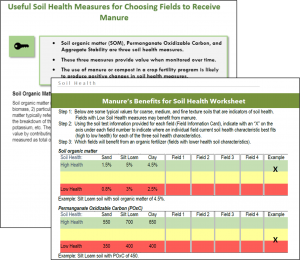
The curricula includes:
-
- Scenarios
- worksheets for each of the activities, and
- a facilitator guide to help set up the scenario.
You may download electronic copies of all resources, adapt to your state, and begin sharing a highly interactive and peer-to-peer educational experience.
Downloadable Resources
Thank you for your interest in the curricula. Please fill out the following form to access the files:
Contacts
Leslie Johnson, Amy Schmidt, Christina Curell and Rick Koelsch (retired)
Webinar Series
 The Livestock and Poultry Environmental Learning Community offers a free monthly webinar on a variety of issues related to animal manure management.
Next Live Webinar
The next webinar will be held on August 21, 2026, at 1:30 PM Central. In this webinar, we will discuss how the use of plastics in agriculture contributes to soil contamination, microplastic pollution, and reduced long-term soil health. Single-use plastics like mulch films, bale wrap, and silage bags and covers can degrade into contaminants that can alter soil pH, disrupt microbial communities, and hinder plant growth. Additionally, plastic residues can leach hazardous chemicals, which could end up in the food chain. The panel will address the concerns with plastic use in agricultural settings, alternatives to traditional plastics, recycling of agricultural plastics, and equipment design to manage agricultural plastics.
Webinar Scheduler
The upcoming webinars will continue to include air and water quality topics. As webcast topics and speakers are finalized, they are posted at Upcoming Webcasts and announced in the newsletter.
Attending a Live Webinar
The webinars are presented live on the third Friday of each month (some exceptions apply) at 2:30 pm (eastern), 1:30 pm (central), 12:30 pm (mountain) and 11:30 am (pacific). All webinars are recorded and archived for on-demand viewing.
-
- First-time viewers should follow the steps on the How Do I Participate in a Webinar? page to be sure you have the appropriate software and web connection.
- On the day of the webcast connect through the Live Webinar Information page.
Due to system changes in the summer of 2016, the URL for the webinar will change each time, so please plan to connect through the Live Webinar Information page.
Viewing an Archived Webinar
Each archive includes the video segments, presentation slides, written summaries of the question and answer session (when available), links to additional information, and access to individual segments within each webinar.
You have two options for finding and archived presentation:
-
- Browse by Topic
- Browse Chronological List
Continuing Education Units
The webcast series has been approved for Continuing Education Units (CEUs) through the Certified Crop Advisers (CCA) and to members of the American Registry of Professional Animal Scientists (ARPAS).
Article Submissions for the Newsletter!
We are always looking for articles to include in our monthly newsletter, so we created a form to make submission easier. Send an article related to some aspect of animal agriculture and environmental stewardship. All we need is the author, title, and link to the article so we can review it and put in the newsletter. Fill the form out below or go to https://forms.gle/rzQTRVfRzeE1baMh9.
Vector Control on Livestock Operations
This webinar will focus on the importance of controlling these pests and the safety of the livestock, the caretakers, and non-target animals and insects around the farm when doing so. This presentation was originally broadcast on June 16, 2023. Continue reading “Vector Control on Livestock Operations”
Models & Tools to Improve Manure Management
This webinar highlights one tool that provides resources to support livestock production and expansion, as well as two others that focus on manure application planning and making the best use of manure available. This presentation was originally broadcast on May 19, 2023. Continue reading “Models & Tools to Improve Manure Management”
Upcoming Webinars
How Do I Participate in a Webinar?
Past webinars are available at Webinar Archive
When Are Webinars Held?
The one-hour webinar seminars are typically held on the third Friday of each month at 2:30 pm (eastern), 1:30 pm (central), 12:30 pm (mountain) and 11:30 am (pacific). This schedule is subject to change. To view a webinar, connect through the Live Webinar Information page.
Webinar Schedule
| Date | Topic/Title | Add to Calendar | Marketing Materials | Registration | ||
|---|---|---|---|---|---|---|
| August 21, 2026 | From Barn to Field: Plastic Pathways | Outlook | Webinar Summary | Online Announcement | Registration Now Available! | |
| September 2026 | TBD | |||||
2023 Webinars Approved for ARPAS Continuing Education Units
These webinars have been approved for 1 continuing education unit (each) as part of the American Registry of Professional Animal Scientists (ARPAS) program. To receive CEUs, view a live or archived webinar, complete an evaluation (if available), and contact ARPAS, 217-356-5390 to have the credit applied to your CEU balance. Repeat this process for each webinar being utilized for CEUs.
2023 Webinars
-
- Energy Conservation in Livestock and Poultry Operations – December 15
- Minimizing Risk on Livestock & Poultry Operations November 17
- Models & Tools to Improve Manure Management: Part II October 20
- Implications of Manure Additives: Both Purposeful and Accidental September 22
- Improving disease identification, treatment, & antibiotic stewardship in livestock production August 18
- Vector Control on Livestock Operations June 16
- Models & Tools to Improve Manure Management May 19
- Improving Air Quality In and Around Livestock Facilities April 21
- Moving Manure and Mortalities after Highly Pathogenic Avian Influenza March 17
- Manure and Soil Health: Current Research and Future Directions February 17
- Carbon Markets for Livestock Operations: Producer Perspectives January 20
More Webinars…
- Topics include: Carbon Markets, Worker Safety, CEAP I & II, Antimicrobial Resistant movement, Manure Nutrient Trends, Vermifiltration, Urban Manure Management, Manure Pipelines, and Lagoon and Digester Cleanouts. More…
- Topics include: Edge of Field Monitoring, PFAS, Food Safety, Digesters & Natural Gas, Manuresheds, Extreme Events, Antimicrobial Resistance, Sustainability, Weeds, and Soil Health. More…
- Topics include: Less typical species, designer manure, precision technologies, human health, poultry systems, communicating science, compost emissions, PFAS, and manure transfers. More…
- Topics include: Separation technologies, soil health, cleaning barn exhaust air, pathogens, antimicrobial resistance, greenhouse gas emissions, nutrient inventories, and phosphorus management. More…
- Topics include: Emergency response, treatment technologies, manure foaming, small farm equipment, manure’s impact on soil, manure irrigation, manure pit death, sampling, and biosecurity. More…
- Topics include: Climate resiliency, avian influenza, side-dressing nitrogen on emerged corn, runoff risk advisory tools, anaerobic digestion, manure handling safety, long-term manure application, and managing edge of field losses.. More…
- Topics include: Construction and maintenance of manure ponds, antibiotic resistance, manure entomology, NAQSAT, Drones, manure safety and transport, the nutrient recycling challenge, Vermont nutrient management training course, and pathogens. More…
- Topics include: Manure Apps, Gypsum Bedding, Livestock Housing, Tile Drained Lands, Micro Manure Management, Horse Manure Composting, Uses of Biochar, Thermal Manure-to-Energy Systems, Mortality Management during Avian Influenza, Communication Pathways, Communicating During Controversy. More…
- Topics include: Capturing Nutrients, Manure as a biofuel, Water Quality Index, Liquid manure nutrients, Carbon credits, Bioaerosols, WOTUS, Biosecurity, Mortality composting, Whole Farm Nutrient management, Winter manure application, Next generation activities. More…
2013 Webinars
- Topics include: Risk Management, Waste to Worth, Mono-slope beef barns and research results, Bioavailability of Phosphorus, Capturing Nutrients. More…
2012 Webinars
- Topics include: Biofilters, The 4Rs, Microbes, Life-Cycle Assessments, Carbon Footprints, Nitrates, Adaptive Nutrient Managment, Chesapeake Bay, Emergency Management. More…
2011 Webinars
- Topics include: Top-dressing manure, Chesapeake Bay, Soil Health, Reducing Odor Risk, Anaerobic Digestion, NMP implementation, NAEMS, Lagoon Closure, Manure Economics, 2011 NPDES CAFO rule. More…
2010 Webinars
- Topics include: Cover Crops, Vegetative Environmental Buffers, Mortality Composting, Manure Spills, NAQSAT, Manure on No-Till, SPCC, Ammonia Emissions. More…
2009 Webinars
- Topics include: Feeding Strategies, Carbon Footpring, Conserving Nitrogen, AFO Inspection, Mortalities, Air Emissions, Grazing Management. More…
2008 Webinars
- Topics include: Market Based Conservation, Antibiotics and Hormones, Dry Manure Housing Systems, Ammonia, Small Farms, Regulations, Manure Management Planner Software. More…
2007 Webinars
- Topics include: Integrated Nutrient Management, Manure Application to Legumes, Value of Manure in Land Application, Smithfield Project, Value Added Processing of Manure, Manure Treatment Technologies, Value of Manure in Energy Generation, Vegetative Treatment Systems, and Innovative Manure Treatment Technologies. More…
2006 Webinars
- Topics include: CNMP Core Curriculum, Pathogens, EPA CAFO Regulations. More…
Having Trouble?
If you experience difficulty in viewing webinars, please visit our webinar troubleshooting page:
Collaborating on Integrated Projects
 Collaborating on integrated projects can seem difficult, but, when implemented well, the potential for beneficial outcomes from such projects can make facing the challenges very worthwhile. That’s part of the reason why there’s growing movement by funding agencies toward supporting integrated, collaborative projects. Here are a few tips to help make collaborating on integrated efforts more enjoyable.
-
- Involve all collaborators from start to finish.
-
- When developing an integrated project, include all prospective collaborators from the beginning. Involving project team members early helps develop a coherent shared vision and makes collaborators feel like they are truly a team that is working on one integrated project.
- Avoid making last-minute requests for an outreach plan from extension, stakeholder engagement, partners in on-farm demonstration efforts, or matching funds, etc. Some thoughtful planning can lead to more productive collaborations and outcomes.
- Extension personnel appreciate being included as an author in research publications related to the project. Research can be much more impactful when practical implications of results are communicated to lay audiences and through stakeholder networks.
- Stakeholder engagement is important as well. By keeping the communication with the stakeholders open, you avoid trying to explain or give directions to someone without prior engagement.
-
- Be specific and ready to answer questions.
-
- Here are just a few on the questions that might be asked, and collaborators should be ready to answer:
-
- What are you asking of a collaborator and what will be done by someone else?
- What is the goal of the project?
- Is there funding to do everything you’re proposing?
- Will you need to hire other help?
-
- Clearly define the roles of collaborators and their organizations. This can help prevent confusion between collaborators on how much they are responsible for in the project.
- Have a clear title and summary of the project to communicate the project and how things tie together. This can help collaborators that might have joined after the collaboration has started.
- Make sure your plan includes objectives that specifically relate to the collaborator and have programming funds built into on-farm demonstration efforts.
- Here are just a few on the questions that might be asked, and collaborators should be ready to answer:
-
- Be ready for collaborators and stakeholders who are promoting or wary of products/systems.
-
- Use the diverse backgrounds and past experiences of your collaborators to your advantage. Collaborators with different perspectives may see things in ways that you don’t. Because of previous experiences, collaborators may be wary of some aspects of the proposal. For example:
-
-
-
- Specific products:
- Some collaborators may have concerns about side effects of products, so they may be wary of its use, but they may have ideas how to test for those side effects.
- Equipment usage or practicality:
- Some collaborators may better understand how the end user needs the equipment to work for them, so have them help with prototype development so it’s easier to take the equipment from prototype to commercial production.
- Certain systems:
- If you’re trying to bring a certain system to a new area, stakeholders and collaborators may be able to provide insight about other systems that have been tried in their area, both successfully and not-so-much.
- Specific products:
-
- Just because collaborators and stakeholders may be wary of your proposal doesn’t mean they shouldn’t be included. In fact, the opposite may be true. They may be able to guide the proposal in a way that strengthens it but be prepared for a little push back.
-
-
- Involve all collaborators from start to finish.
It takes some effort to build a productive team and keep everyone on the same page, but good collaborations are hard to beat.