Mobile Struvite System for Nutrient Extraction from Dairy Manure


Proceedings Home W2W Home w2w17 logo

Purpose            

Use of dairy manure as the sole source of nitrogen can lead to increased amounts of P in soil. In addition, P reserves around the world are finite and technologies are needed to effectively capture excess P in manure for the purpose of recycling to areas and crops in need of P.

What did we do?          

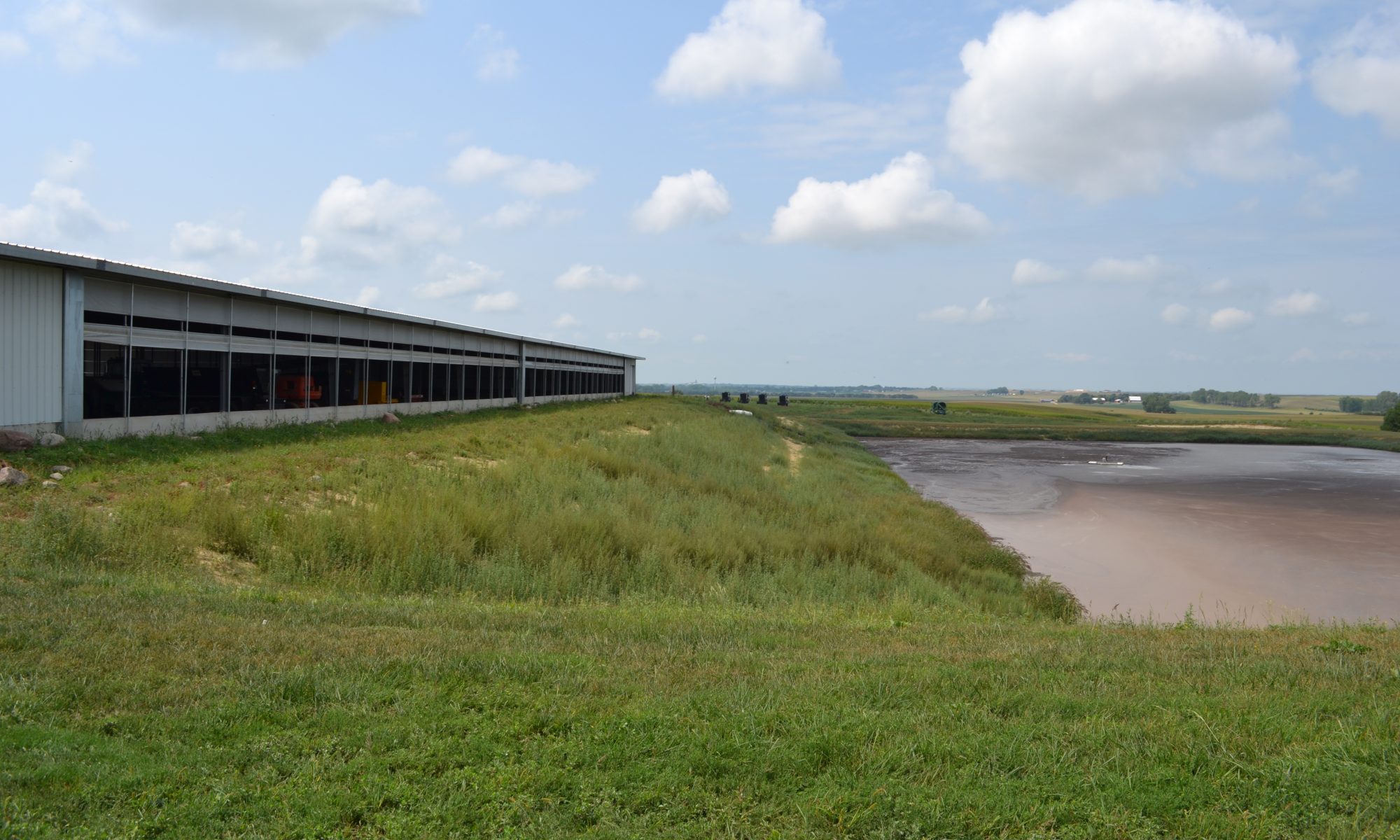
During the past decade we have adapted a fluidized bed technology to effectively recover P from liquid dairy manure in the form of struvite (magnesium mono-ammonium phosphate). A starter amount of struvite is placed at the bottom of an inverted cone that forms the fluidized bed for producing additional struvite. Manure that has been pre-treated is pumped up through the bottom of the cone to create the swirling action of the fluidized bed. To effectively form struvite, P in manure has to be dissociated from Ca, before subsequently binding with Mg and NH3. The fluidized bed technology was originally demonstrated with swine manure which is relatively lower in Ca compared to dairy manure. Due to the greater content of Ca in dairy manure we determined that it was necessary to lower the pH in dairy manure so that P could be free of Ca and available to form struvite. The pH has been most successfully lowered with use of sulfuric acid. As the low-pH manure is pumped up through the cone, ammonia is injected into the bottom of the cone to raise the pH and promote formation of struvite. The struvite we produced has been used as an effective fertilizer for growth of triticale, oats, corn silage and alfalfa. 

Picture of fluidized bed technology

What have we learned?            

Agriculture and human waste water industries have shown interest in this technology for the capture of P. The technology has been demonstrated as stationary units at three dairies, and has also been adopted by the human waste water plants. Phosphorus removal from dairy manure has been greater than 50%. Greenhouse and field plot studies compared struvite to mon-ammonium phosphate (MAP) and results indicated that struvite was comparable or superior compared to MAP in acidic soils and inferior to MAP in alkaline soils.

Future Plans    

Our current project will involve the demonstration of a mobile system that can be easily transported from dairy to dairy on a 24 foot trailer. Struvite that is captured from each dairy will be used in agronomic studies to promote a nutrient recycling relationship.

Corresponding author, title, and affiliation        

Joe Harrison, Professor, Washington State University

Corresponding author email    

jhharrison@wsu.edu

Other authors   

Keith Bowers and Elizabeth Whitefield

Additional information              

http://www.puyallup.wsu.edu/dairy/nutrient-management/default.asp

Acknowledgements       

This project is funded USDA NRCS CIG #69-3A75-17-51.

Characterization of litter produced in turkey production operations in Virginia

Proceedings Home W2W Home w2w17 logo

Purpose

Turkey production is a partnership between companies (integrators) and private farmers (contractors). The companies own the birds while the farmers raise birds and manage litter. Generally, a turkey farm makes two products, birds for meat and litter. Mature birds are harvested by the companies for processing at designated regional plants. The litter is rich in nitrogen (N), phosphorus (P) and potassium (K), and is usually removed from production houses and used as fertilizer for crops and forage production. If not used and/or managed properly, nutrients in turkey litter, like any other animal manure in general, may result in water quality degradation, especially in sensitive ecosystems such as the Chesapeake Bay (Bay).

This project was initiated to gather locally based turkey litter generation and nutrient content data to develop equations and coefficients to be used as input in Phase 6.0 Chesapeake Bay Program Watershed Model. Using equations derived from locally based data, simultaneously improves the accuracy and quality of annual nutrients (N, P) mass estimates inputs and provides better representation of turkey production operations in the Phase 6.0 Bay watershed modeling tools. The results reported here focused on the mass generation rate and nutrient content of litter from turkey production systems in Virginia.

What did we do?

The first step was to determine and describe the common turkey production systems and bird types in Virginia, and to a large extent, the Bay watershed. Two production systems (1- and 2-stage) and five (hen, heavy hen, heavy tom, breeders, brooder/poult) bird types were identified. Then, we used a combination of farmer and integrator surveys to identify bird and production type for the period 2012 to 2016. The information collected during the survey included bird and production type, number of birds placed, number of birds harvested, average bird harvest/market weights, mass of litter removed from houses at total clean out, number of flocks per cleanout, and number of flocks raised per year. The mass of litter generated was estimated by relating the estimated bird numbers, mass of litter removed from buildings, and average bird market weight. Historical nutrient data was obtained from the manure nutrient management program database maintained by the Virginia Department of Conservation and Recreation. Statistical analysis was conducted on the data collected to determine if there was any differences in mass of litter generated and litter nutrient concentrations. A one-way analysis of variance (ANOVA) was performed to test for significant differences group means and the Turkey’s HSD test to identify which groups were different. Differences were considered significant at p < 0.05.

What have we learned?

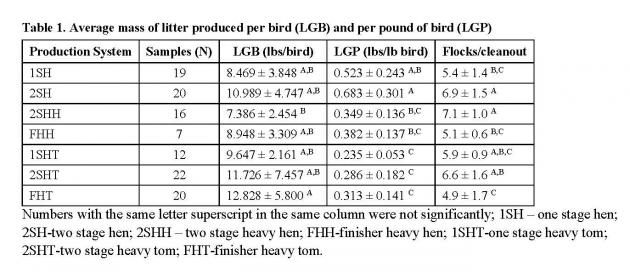
We found differences in the mass of litter generated among bird types. Consequently, bird types were grouped based on the statistical similarity of their means and averages of litter generation nutrients for the groups calculated and proposed as factors (Table 1) to use in calculated annual nutrient loads in the Phase 6.0 Chesapeake Bay Program Watershed Model. The overall mean for mass of litter in pounds (lbs) generated per bird and litter generated per pound of bird were 10.263 (±4.973) and 0.407 (±0.198), respectively.

table 1 average mass of litter produced per bird

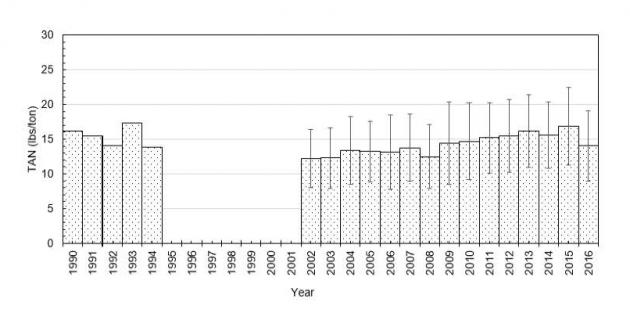
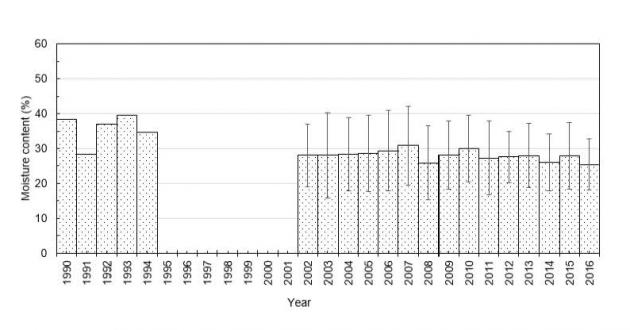
Litter generation rates per bird are about 48 to 77 % less than ASABE 2005 tabulated values. Nutrient content of litter has remained stable since 2000 (Figure 1). The ratio of ammonia nitrogen to total nitrogen and total nitrogen to total phosphorus has remained stable at 0.21 and 1.37, respectively. Conversely, the moisture content has been stable and seem to be dropping over time (Figure 1).

Figure 1. Turkey litter nitrogen (TKN), ammonium (TAN), phosphorus (TP), and moisture content from operations in Virginia between 1990 and 2016.

Figure 1. Turkey litter nitrogen (TKN), ammonium (TAN), phosphorus (TP), and moisture content from operations in Virginia between 1990 and 2016.

Figure 1. Turkey litter nitrogen (TKN), ammonium (TAN), phosphorus (TP), and moisture content from operations in Virginia between 1990 and 2016.

Figure 1. Turkey litter nitrogen (TKN), ammonium (TAN), phosphorus (TP), and moisture content from operations in Virginia between 1990 and 2016.

Figure 1. Turkey litter nitrogen (TKN), ammonium (TAN), phosphorus (TP), and moisture content from operations in Virginia between 1990 and 2016.

Future Plans

Continue data collection to characterize turkey litter generation and nutrient contents in Virginia and expanded to other regions of the Bay watershed. Establish an ongoing system beyond the present study to accept farm specific bird production data summarized to eliminate disclosure of confidential business information and used as the foundation for improving litter generation rate and nutrient concentration goals.

Corresponding author, title, and affiliation

Jactone A. Ogejo, Biological Systems Engineering Department, Virginia Tech

Corresponding author email

arogo@vt.edu

Acknowledgements

Timothy Sexton and Bobby Long, Virginia Department of Conservation and Recreation; Mark Dubin, Chesapeake Bay Program; Jordan Kristoff and Austin Shifflet, Virginia Tech

The authors are solely responsible for the content of these proceedings. The technical information does not necessarily reflect the official position of the sponsoring agencies or institutions represented by planning committee members, and inclusion and distribution herein does not constitute an endorsement of views expressed by the same. Printed materials included herein are not refereed publications. Citations should appear as follows. EXAMPLE: Authors. 2017. Title of presentation. Waste to Worth: Spreading Science and Solutions. Cary, NC. April 18-21, 2017. URL of this page. Accessed on: today’s date.

Fertilizer Value of Nitrogen Captured using Ammonia Scrubbers

Proceedings Home W2W Home w2w17 logo

Purpose

Over half of the nitrogen (N) excreted from broiler chickens is lost to the atmosphere as ammonia (NH3) before the manure is removed from the barns, resulting in air and water pollution and the loss of a valuable fertilizer resource. A two stage exhaust scrubber (ARS Air Scrubber) was developed by scientists with USDA/ARS to trap ammonia and dust emissions from poultry and swine facilities. One objective of this study was to determine the fertilizer efficiency of N, which is mainly present as ammonium (NH4), captured from the exhaust air from poultry houses using acid scrubbers, when applied to forages. The second objective was to determine if any of the scrubber solutions resulted in a decrease in phosphorus (P) runoff or soil test P.

What did we do?

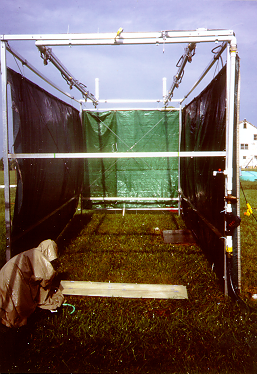
This study was conducted using 24 small plots (1.52 x 6.10 m) located on a Captina silt loam soil at the University of Arkansas Agricultural Experiment Station. There were six treatments in a randomized block design with four replications per treatment. The treatments were: (1) unfertilized control, (2) potassium bisulfate (KHSO4) scrubber solution, (3) alum (Al2(SO4)3.14H2O) scrubber solution, (4) sulfuric acid (H2SO4) scrubber solution, (5) sodium bisulfate (NaHSO4) scrubber solution and (6) ammonium nitrate (NH4NO3) fertilizer dissolved in water. The four scrubber solutions, which were obtained from scrubbers attached to exhaust fans on commercial poultry houses, and the ammonium nitrate solution were all applied at an application rate equivalent to 112 kg N ha-1. Forage yields were measured periodically throughout the growing season. A rainfall simulation study was conducted five months after the solutions were applied to determine potential effects on P runoff.

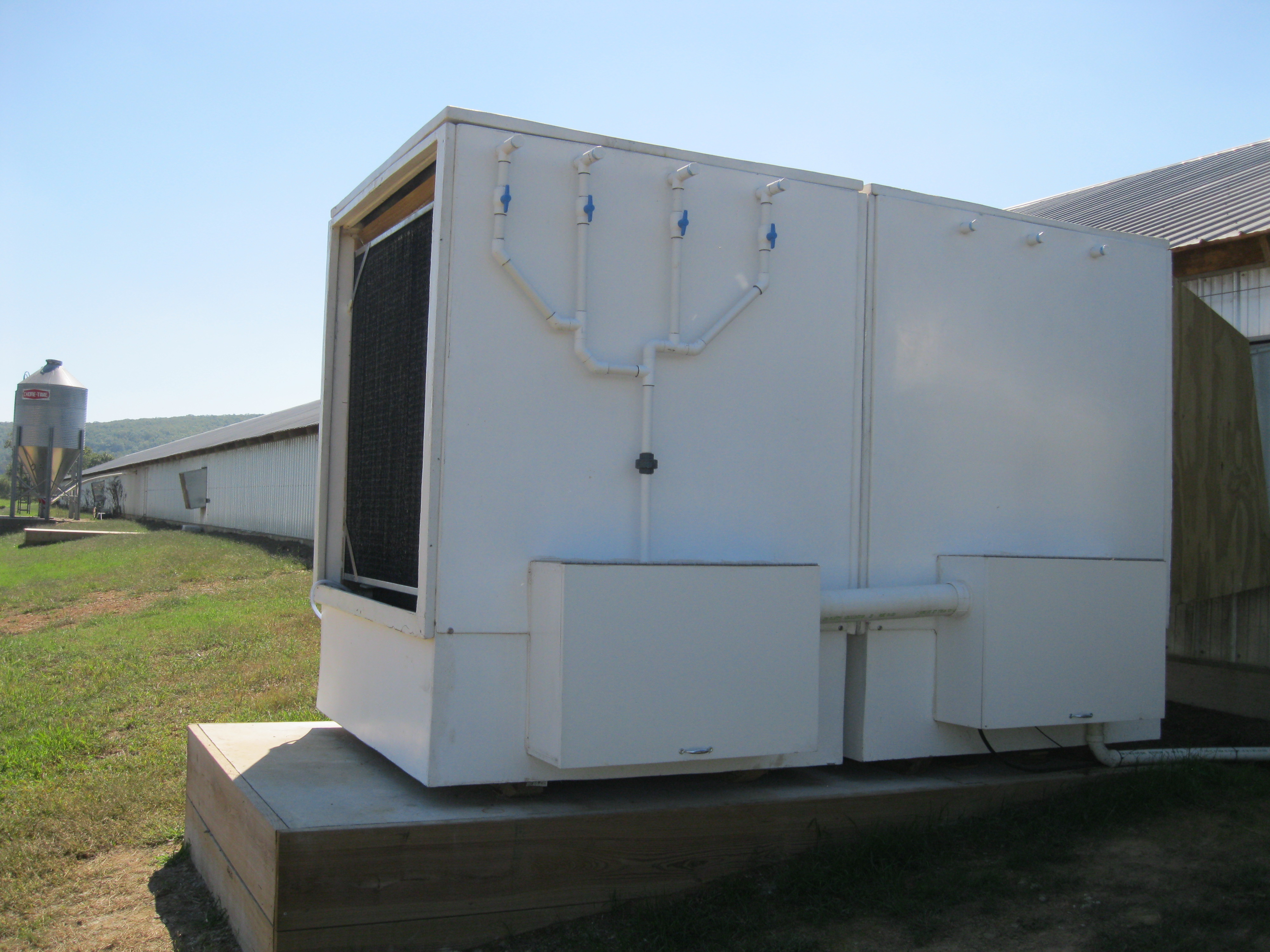
ARS air scrubber in Arkansas

Applying scrubber solutions

Rainfall simulation

What have we learned?

Forage yields (Mg ha-1) followed the order: potassium bisulfate (7.61), sodium bisulfate (7.46) > ammonium nitrate (6.87), alum (6.72), sulfuric acid (6.45) > unfertilized control (5.12). These data indicate that forage yields with scrubber solutions can be equal to or even greater than that obtained with equivalent amounts of N applied as commercial fertilizer. This is likely due to the presence of other nutrients, such as K in acid salts, like potassium bisulfate. Nitrogen uptake followed similar trends as yields, although there were no significant differences among N sources.


Total P loads in runoff were 37, 25, 20, 19, 17, and 14 g P ha-1, for sulfuric acid, potassium bisulfate, sodium bisulfate, unfertilized control, ammonium nitrate, and alum. The alum solution resulted in significantly lower P loads than H2SO4. This was likely due to a decrease in the water extractable P (WEP) in the soil, since alum was also shown to significantly reduce WEP compared to the unfertilized control. None of the treatments affected Mehlich III extractable P.


Future Plans

Currently research is underway on using acid-tolerant nitrifying bacteria to generate the acidity needed to capture ammonia in the exhaust air from animal rearing facilities.


Corresponding author, title, and affiliation

Philip Moore, Soil Scientist, USDA/ARS

Corresponding author email

philipm@uark.edu

Other authors

Jerry Martin, USDA/ARS, Fayetteville, AR; Hong Li, University of Delaware

Additional information

Philip Moore
Plant Sciences 115
University of Arkansas
Fayetteville, AR 72701

Moore, P.A., Jr., R. Maguire, M. Reiter, J. Ogejo, R. Burns, H. Li, D. Miles and M. Buser. 2013.  Development of an acid scrubber for reducing ammonia emissions from animal rearing facilities.  Proc. Waste to Worth Conference. http://lpelc.org/development-of-an-acid-scrubber-for-reducing-ammonia-emissions-from-animal-rearing-facilities.

The authors are solely responsible for the content of these proceedings. The technical information does not necessarily reflect the official position of the sponsoring agencies or institutions represented by planning committee members, and inclusion and distribution herein does not constitute an endorsement of views expressed by the same. Printed materials included herein are not refereed publications. Citations should appear as follows. EXAMPLE: Authors. 2017. Title of presentation. Waste to Worth: Spreading Science and Solutions. Cary, NC. April 18-21, 2017. URL of this page. Accessed on: today’s date.

Developing a Comprehensive Nutrient Management Plan (CNMP)

Proceedings Home W2W Home w2w17 logo

Purpose

Livestock producers are presented with a number of challenges and opportunities. Developing a quality Comprehensive Nutrient Management Plan (CNMP) can effectively help landowners address natural resource concerns related to soil erosion, water quality, and air quality from manure management. As livestock operations continue to expand and concentrate in certain parts of the country, utilizing a CNMP becomes even more important. Following the NRCS 9-step planning process is critical in developing a good plan. Effective communication is a key element between all parties involved in the planning process. A CNMP documents the decisions made by the landowner for the farmstead area, crop and pasture area, and nutrient management. Information will cover the elements essential for developing a quality CNMP.

What did we do?

Since the CNMP documents the records of decisions by the landowner, it has to be organized in such a fashion that it is understandable to and usable by the landowner. The CNMP is the landowner’s plan. Therefore, the role of the planner is to help landowners do the things that will most benefit them and the resources in the long run. This will take both time and effort. To provide consistency with other conservation planning efforts within NRCS, CNMPs following the same process outlined in the National Planning Procedures Handbook. There are several items that are essential for a quality CNMP to be developed:

• Have a good understanding of potential resource concerns especially soil erosion, water quality and air quality.

• Make the appropriate number of site visits. Trying to do this from the office will likely lead to a poor quality CNMP that may not be implemented.

• Address resource concerns for the Farmstead and Crop and Pasture areas.

• Ensure that all nutrient sources are addressed.

• Follow the 9 steps of planning.

• Decisions are agreed upon by the landowner. The CNMP reflects the landowner’s record of decisions.

• Follow-up to address any questions or concerns.

• Update as necessary. A CNMP is not a static document.

Field

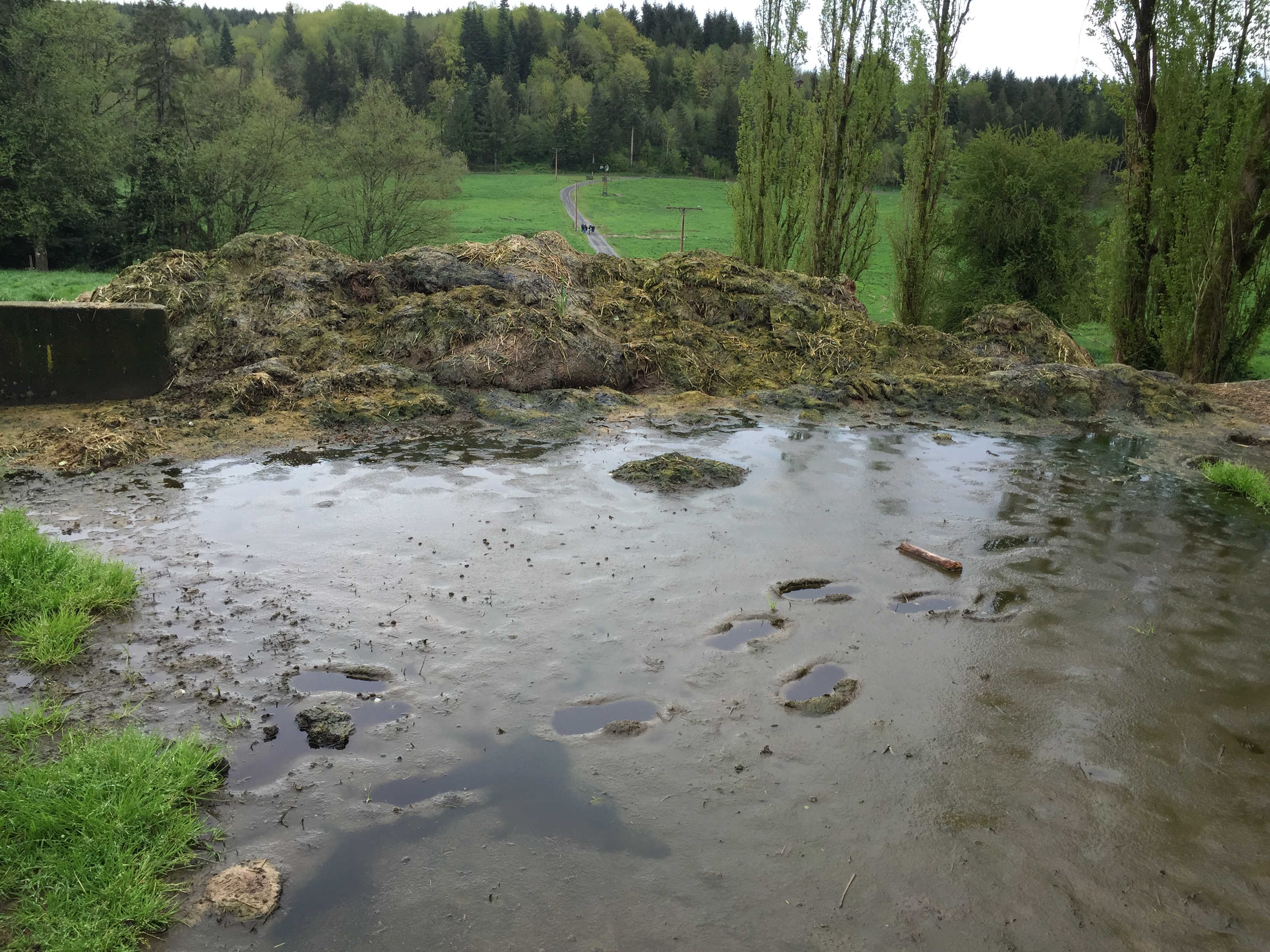
Land application of animal manure without proper land treatment practices

Muddy field with standing water

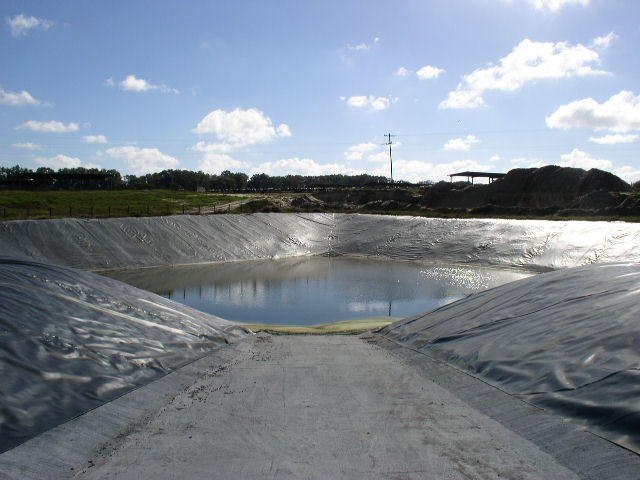
Proper animal manure storage required to address water quality issues

Picture of lined water bed

Evaluation of storage area to adequately address surface and subsurface
water quality issues

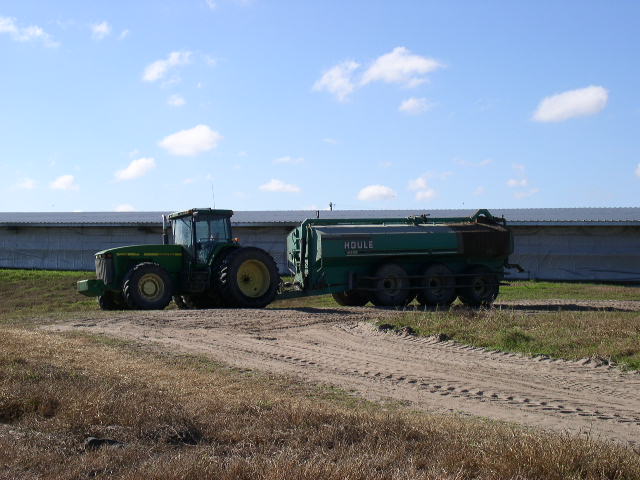
Picture of tractor and tanker spreader

Land application and nutrient management are critical elements for a
properly prepared CNMP

What have we learned?

The quality of CNMPs varies greatly across the country. Some were becoming so large that landowners were having difficulty finding the activities that needed to be completed. The revised CNMP format and process following the NRCS Conservation Planning approach should improve both the quality and usability of the plans developed. Due to statutes in the Farm Bill, all conservation practices recorded in the record of decision of the CNMP, whether receiving financial assistance or not, must be implemented by the end of the established contract period between the landowner and NRCS. Therefore it is important to only include the practices that are going to be implemented. CNMPs should be periodically updated to account for operational changes such as animal numbers, cropping systems, or land application methods.

Future Plans

The CNMP planning process will be evaluated to determine whether landowner objectives are being met and resource concerns properly addressed. Additional evaluations will look at the consistency of the plans generated across the country and the usability by landowners.

Corresponding author, title, and affiliation

Jeffrey P. Porter, P.E.; National Animal Manure and Nutrient Management Team Leader, USDA-Natural Resources Conservation Service

Corresponding author email

jeffrey.porter@gnb.usda.gov

Additional information

References

USDA-NRCS General Manual – Title 190, Part 405 – Comprehensive Nutrient Management Plans

USDA-NRCS Handbooks – Title 180, Part 600 – National Planning Procedures Handbook

Code of Federal Register (CFR) Title 7, Part 1466 – Environmental Quality Incentives Program (1466.7 EQIP Plan of Operations and 1466.21 Contract Requirements)

Webinar

Comprehensive Nutrient Management Plans and the Planning Process – http://www.conservationwebinars.net/webinars/comprehensive-nutrient-management-plans-and-the-planning-process/?searchterm=cnmp

The authors are solely responsible for the content of these proceedings. The technical information does not necessarily reflect the official position of the sponsoring agencies or institutions represented by planning committee members, and inclusion and distribution herein does not constitute an endorsement of views expressed by the same. Printed materials included herein are not refereed publications. Citations should appear as follows. EXAMPLE: Authors. 2017. Title of presentation. Waste to Worth: Spreading Science and Solutions. Cary, NC. April 18-21, 2017. URL of this page. Accessed on: today’s date.

Effectiveness of Different Dairy Manure Management Practices in Controlling the Spread of Antibiotics and Antibiotic Resistance


Proceedings Home W2W Home w2w17 logo

Purpose            

Even when antibiotics are used judiciously, antibiotic residues, antibiotic resistant bacteria (ARB) and antibiotic resistance genes (ARG) can accumulate in human waste and manure and contribute to the spread of antibiotic resistance. Modern U.S. dairy farms use antibiotics for disease treatment and prevention according to the guidance of veterinary physicians. While dairy manure handling and treatment systems may effectively mitigate antibiotic resistance, the fate of antibiotic residues, ARB and ARG through these systems has not been adequately investigated. 

What did we do? 

Working cooperatively with 11 dairies in 3 states (NY, PA, MD) our multi-institutional (U. Buffalo, Cornell, U. Maryland, U. Michigan), interdisciplinary team is investigating the effect different manure management practices (e.g. long-term storage, composting, anaerobic digestion, etc.) have on antibiotic residue levels, ARB and ARG. Every 6 weeks for 2 years manure is being collected pre- and post- each treatment step of the various manure handling systems used by each farm. All samples are being characterized and tested for select antibiotic residues (tetracyclines, macrolides, sulfonamides, penicillins and ceftiofurs), with select samples also analyzed for ARB and ARG. To guide these efforts, antibiotic usage and manure treatment system operational data are also being collected for each farm.

What have we learned? 

A year of samples has been collected with analysis of antibiotic residues, ARB and ARG on-going. Based on the preliminary data, antibiotic residues are detectable at low-concentrations (< 200 mg/L) in each farm’s manure. Antibiotic residue levels are generally lower in treated manure compared to levels in raw manure, though mitigation efficacy is variable. Early findings show some composting systems have the capacity to lower antibiotic residue levels. Antibiotic residue levels are also lower in separated manure solids, with evidence for partitioning of soluble antibiotic residues into separated manure liquids. At this time, the effects of anaerobic digestion and long-term anaerobic manure storage on antibiotic residue levels remain unclear. Select samples are currently being analyzed for ARB and ARG.

Future Plans 

We are entering our second year of field monitoring and ARB and ARG analysis is on-going. Laboratory efforts are also beginning to test the effectiveness of specific anaerobic digester operational parameters at mitigating antimicrobial resistance. Extension/outreach meetings with stakeholder groups are also being planned. The ultimately project goals are to discern the fate of antibiotic residues, ARB and ARG as they move through dairy manure handling systems, identify the efficacy of different manure treatment systems at mitigating antibiotic resistance and extending this knowledge to dairy operators.

Corresponding author, title, and affiliation      

Jason Oliver, Postdoctoral Associate at Dept. of Animal Science, Cornell University

Corresponding author email    

jpo53@cornell.edu

Other authors   

Curt Gooch, Senior Extension Associate at Cornell University, Dept. of Animal Science, PRO-DAIRY

Additional information               

Additional project information can be found on the dairy environmental system webpage: www.manuremanagement.cornell.edu

Acknowledgements

This material is based upon work that is supported by the National Institute of Food and Agriculture, U.S. Department of Agriculture, under award number 2016-68003-24601. Any opinions, findings, conclusions, or recommendations expressed in this publication are those of the author(s) and do not necessarily reflect the view of the U.S. Department of Agriculture.

Project collaborators include: (PD) Diana Aga, University of Buffalo, Dept. of Chemistry (Co-PI); her students Mitch Mayville and Jarod Hurst; (Co-PD) Lauren Sassoubre , University of Buffalo, Dept. of Civil, Structural & Environmental Engineering; (Co-PDs) Stephanie Lansing and Gary Felton, Associate Professors at University of Maryland, Dept. of Environmental Science & Technology; their student Jenna Schueler; (Co-PD) Krista Wigginton, Assistant Professor at University of Michigan, Dept. of Civil & Environmental Engineering; Lutgarde Raskin, Professor at University of Michigan, Dept. of Civil & Environmental Engineering; and their student Emily Crossette.


The authors are solely responsible for the content of these proceedings. The technical information does not necessarily reflect the official position of the sponsoring agencies or institutions represented by planning committee members, and inclusion and distribution herein does not constitute an endorsement of views expressed by the same. Printed materials included herein are not refereed publications. Citations should appear as follows. EXAMPLE: Authors. 2017. Title of presentation. Waste to Worth: Spreading Science and Solutions. Cary, NC. April 18-21, 2017. URL of this page. Accessed on: today’s date.

What’s New with Comprehensive Nutrient Management Plans (CNMPs)?

Proceedings Home W2W Home w2w17 logo

Purpose

A Comprehensive Nutrient Management Plan (CNMP) is a management plan to utilize nutrients and to manage the collection, handling, storage, application, & utilization of animal waste. The purpose of the plan is to address soil erosion, water quality, and air quality concerns. Even though a CNMP is not a regulatory document, portions can potentially be used in the permitting process. It is meant to be a dynamic plan to help the producer’s operation to be sustainable. Landowner of animal feeding operations (AFO’s) that receive technical and/or financial assistance from NRCS are required to have a CNMP. This includes dairies, beef feedlots, poultry, and swine operations. Land application of manure is not a requirement. There are no animal numbers thresholds for a CNMP.

What did we do?

In 1999 the Unified National Strategy for Animal Feeding Operations directed USDA and EPA to work together to address environmental issues with AFO’s. The CNMP was developed as a voluntary way for a landowner to take action. The original document had a ten part format and was truly comprehensive. Any planner or engineer associated with the plan had to sign it. Developing a CNMP in this format was difficult and time consuming and in some cases the document became so large in size that no one updated them.

What have we learned?

In October 2015 the format changed back to a plan that is more consistent with a conservation plan, recording the decisions of the landowner/cooperator with regard to managing waste and utilizing the nutrients.

The plan now has a four part format. The first part is the signature page where the NRCS representative and the landowner sign confirming the decisions. Section one follows the signature page and documents decisions with regard to the Production Area (Farmstead). It includes maps, animal inventory, and records of decisions for the production area only. Section two documents the decisions with regard to the Land Treatment Area (Crop and Pasture). It contains maps, resource assessments, implementation requirements and records of decision for the land treatment areas. The third section documents decisions with regard to Nutrient Management. This includes risk analyses, setbacks, nutrient applications, and field balances.

For livestock operations with greater than 300 animal units a printout of the National Air Quality Site Assessment tool (NAQSAT) is now required as supporting documentation in the CNMP. It is to increase awareness of air quality issues that may be addressed on farm.

Several parts of the original format are not included in the current format. This includes the Operation and Maintenance plan and the Emergency Response plan. Both would now be found in the case file and not in the CNMP itself.

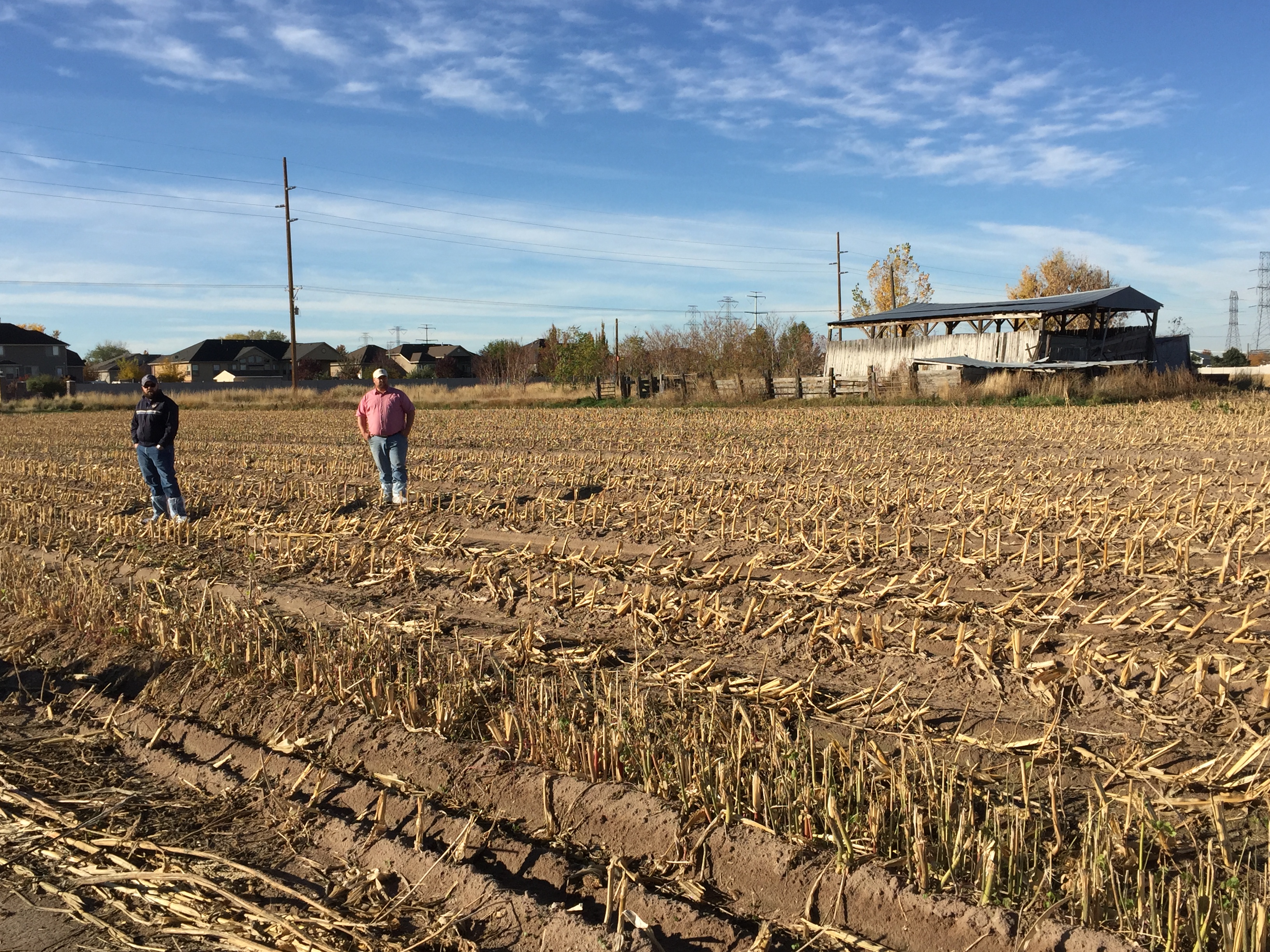
Picture of a field

Looking at crop residue.

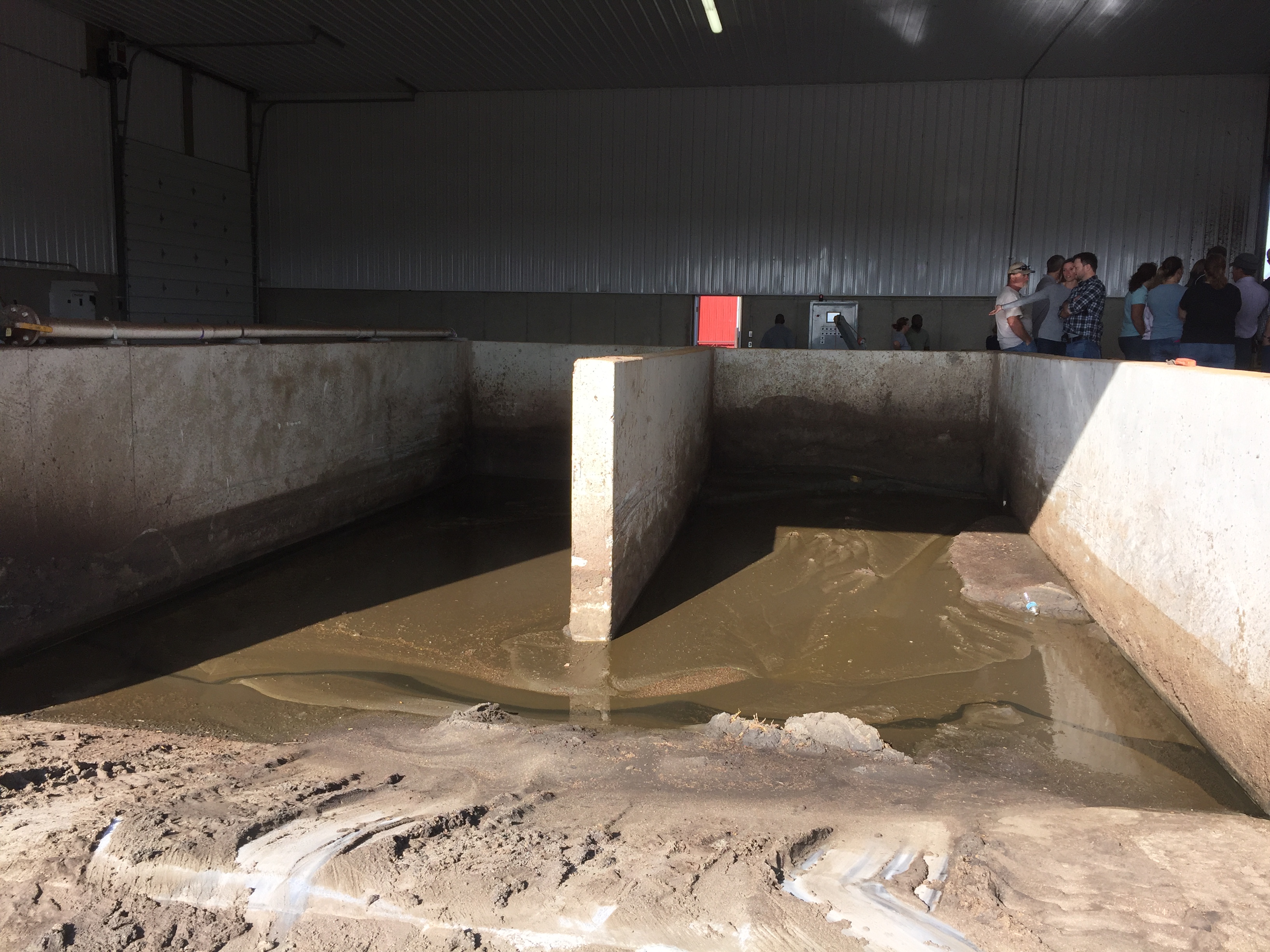
Slurry containment

Evaluating solid separation on the farmstead.

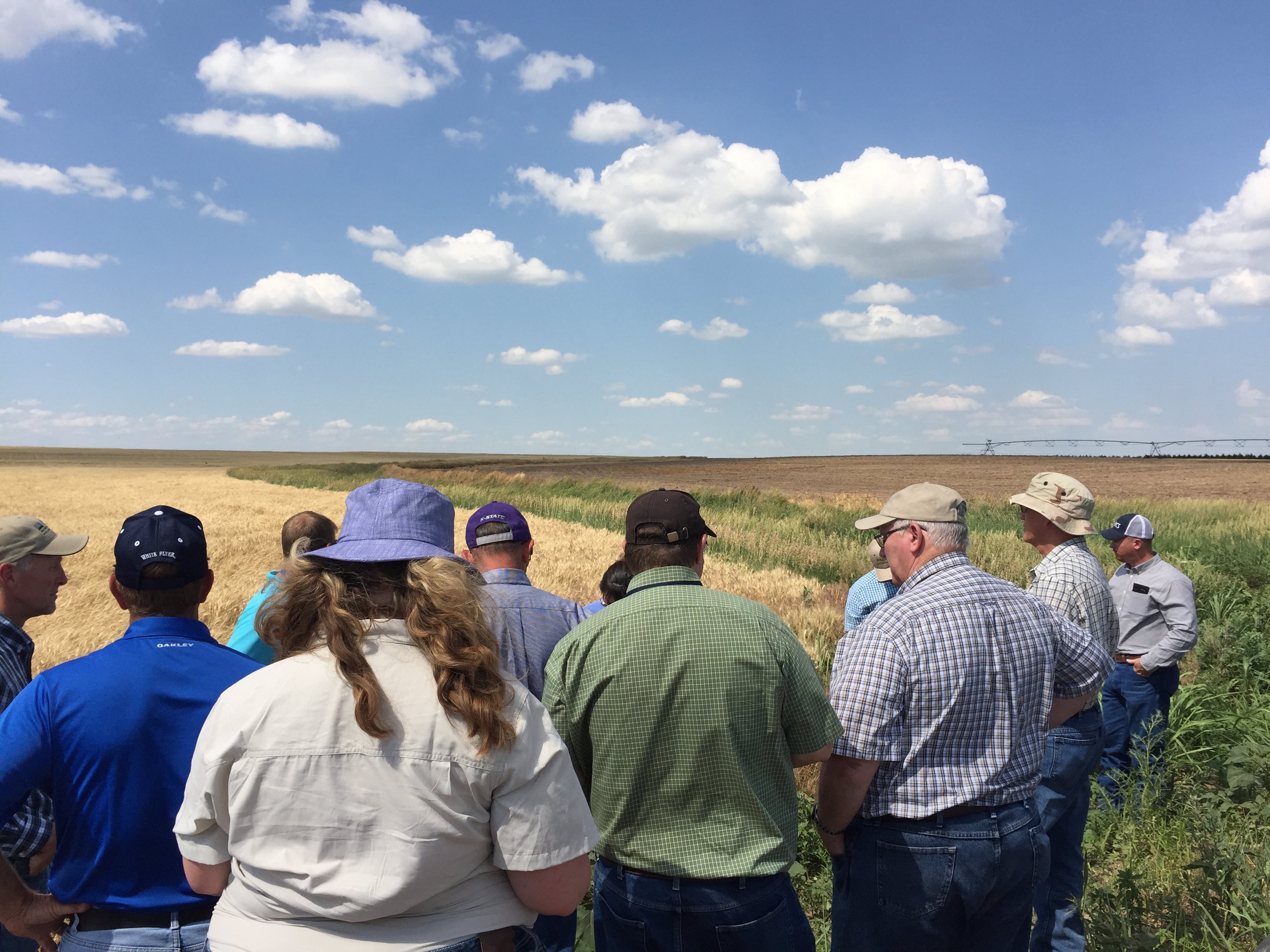
Picture of people in field at demo

Discussing crop rotation and setbacks.

Future Plans

States are currently integrating the new national format. The CNMP format will be reviewed periodically to make sure that the document stays on track as a usable management tool for the landowner.

Corresponding author, title, and affiliation

Sandy Means, Environmental Engineer, USDA Natural Resources Conservation Service, East National Technical Center, Greensboro, NC

Corresponding author email

Sandy.Means@gnb.usda.gov

Additional information

Resources:

NRCS General Manual, Title 190, Part 405 Comprehensive Nutrient Management Plans

The authors are solely responsible for the content of these proceedings. The technical information does not necessarily reflect the official position of the sponsoring agencies or institutions represented by planning committee members, and inclusion and distribution herein does not constitute an endorsement of views expressed by the same. Printed materials included herein are not refereed publications. Citations should appear as follows. EXAMPLE: Authors. 2017. Title of presentation. Waste to Worth: Spreading Science and Solutions. Cary, NC. April 18-21, 2017. URL of this page. Accessed on: today’s date.

Transferring Knowledge of Dairy Sustainability Issues Through a Multi-layered Interactive “Virtual Farm” Website

Proceedings Home W2W Home w2w17 logo

Purpose

The goal of the Sustainable Dairy “Virtual Farm” website is to disseminate research-based information to diverse audiences from one platform. This is done with layers of information starting with the mSustainable dairy logoost basic then drilling down to peer-reviewed publications, data from life-cycle assessment studies and models related to the topics. The Virtual Farm focuses on decision makers and stakeholders including consumers, producers, policymakers, scientists and students who are interested in milk production on modern dairy farms. The top entry level of the site navigates through agricultural topics of interest to the general public. Producers can navigate to a middle level to learn about practices and how they might help them continue to produce milk for consumers responsibly in a changing climate while maintaining profitability. Featured beneficial (best) management practices (BMPs) reflect options related to dairy sustainability, climate change, greenhouse gas emissions, and milk production. Researchers can navigate directly to deeper levels to publications, tools, models, and scientific data. The website is designed to encourage users to dig deeper and discover more detailed information as their interest develops related to sustainable dairies and the environment.
What did we do?

As part of a USDA Dairy Coordinated Agricultural Project addressing climate change issues in the Great Lakes region, this online platform was developed to house various products of the transdisciplinary project in an accessible learning site. The Virtual Farm provides information about issues surrounding milk production, sustainability, and farm-related greenhouse gases. The web interface features a user-friendly, visually-appealing interactive “virtual farm” that explains these issues starting at a less-technical level, while also leading to much deeper research into each area. The idea behind this was to engage a general audience, then encourage them to dig deeper into the website for more technical information via Extension offerings.

The main landing page shows two sizes of dairy farms: 150 and 1,500-cows. The primary concept was to replace an all-day tour of multiple real dairy farms by combining their features into one ‘virtual farm’. For example, the virtual farm can describe and demonstrate the impact of various manure processing technologies. Users can explore the layout image, hover over labeled features for a brief description, and click to learn more about five main categories: crops and soils, manure management, milk production, herd management, and feed management. Each category page contains a narrative overview with illustrations and links to more detailed information.

What have we learned?

The primary benefit is that participants can learn about different practices, at their level of interest, all in one place. The virtual farm incorporates a broad theme of sustainability targeted at farming operations in the northeastern Great Lakes region of the USA.

The project has included regional differences in dairy farming practices and some important reasons for this such as environmental concerns (focus on N and/or P management in different watersheds) and long-term climate projections. Dairy industry supporters find value in having a one-stop repository of information on overall sustainability topics rather than having to visit various organizations’ sites.

Future Plans

We plan to continue to develop the website by adding relevant information, keeping information up to date, developing the platform for related topic areas and adding curriculums for school students.

Corresponding author, title, and affiliation

Daniel Hofstetter, Extension-Research Assistant, Penn State University (PSU)

Corresponding author email

dwh5212@psu.edu

Other authors

Eileen Fabian-Wheeler, Professor, PSU; Rebecca Larson, Assistant Professor, University of Wisconsin (UW); Horacio Aguirre-Villegas, Assistant Scientist, UW; Carolyn Betz, Project Manager, UW; Matt Ruark, Associate Professor, UW

Additional information

Visit the following link for more information about the Sustainable Dairy CAP Project:

http://www.sustainabledairy.org

Acknowledgements

This material is based upon work that is supported by the National Institute of Food and Agriculture, U.S. Department of Agriculture, under award number 2013-68002-20525. Any opinions, findings, conclusions or recommendations expressed in this publication are those of the author(s) and do not necessarily reflect the view of the U.S. Department of Agriculture.

The authors are solely responsible for the content of these proceedings. The technical information does not necessarily reflect the official position of the sponsoring agencies or institutions represented by planning committee members, and inclusion and distribution herein does not constitute an endorsement of views expressed by the same. Printed materials included herein are not refereed publications. Citations should appear as follows. EXAMPLE: Authors. 2017. Title of presentation. Waste to Worth: Spreading Science and Solutions. Cary, NC. April 18-21, 2017. URL of this page. Accessed on: today’s date.

Performance of Mitigation Measures in the Dairy Sector under Future Climate Change


Proceedings Home W2W Home w2w17 logo

Purpose

Climate change is an economic, environmental and social threat, and worthy of scientific study. Immediate action must be taken to reduce greenhouse gas emissions and mitigate negative impacts of future climate change. Proposed action can start at the farm level and has the potential of making a contribution to mitigation of climate change. Dairy farmers are able to significantly reduce their emissions by implementing better management practices, primarily through feed production, enteric fermentation, and manure management. We model the corresponding changes in emissions from proposed mitigation efforts to understand their impact on global climate change.

What did we do?

Best Management Practices (BMPs) for dairy systems have been identified and simulated using the Integrated Farm System Model (IFSM). Simulations representative of a large New York farm (1500 cows) and a small Wisconsin farm (150 cows) estimated the emission of greenhouse gases for a whole farm system. Percent reductions were calculated by comparing a baseline scenario without any implemented mitigation, to scenarios that included the identified BMPs. Refer to Table 1 for emission and percent reduction estimates for the simulated BMPs.Table 1. Emissions and percent reductions from baseline for simulated mitigation strategies

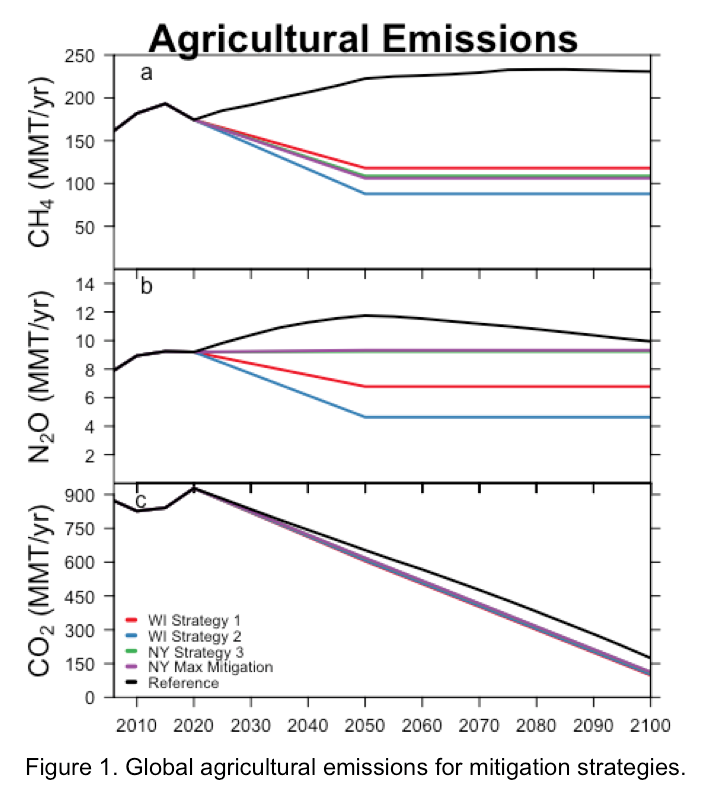
Percent reduction estimates were then applied to a projected “business as usual” emission scenario. This scenario prescribes anthropogenic emissions through 2100 and excludes any climate action or policy after 2015. Taking 2020 as a reference year and 2050 as a target year, we applied the estimated percent reductions to the projected global agricultural emissions. Emission reductions were decreased linearly from 2020 to 2050, and held constant between 2050 and 2100 (Figure 1). This assumes that all farms globally can reduce emissions despite increases in production. To compare the performance of the mitigation measures under future climate change, we employed a fully coupled earth system model of intermediate complexity – the Integrated Global System Model (IGSM). The model includes an interactive carbon-cycle capable of addressing important feedbacks between the climate and terrestrial biosphere.

Figure 1. Global agricultural emissions for mitigation strategiesWhat have we learned?

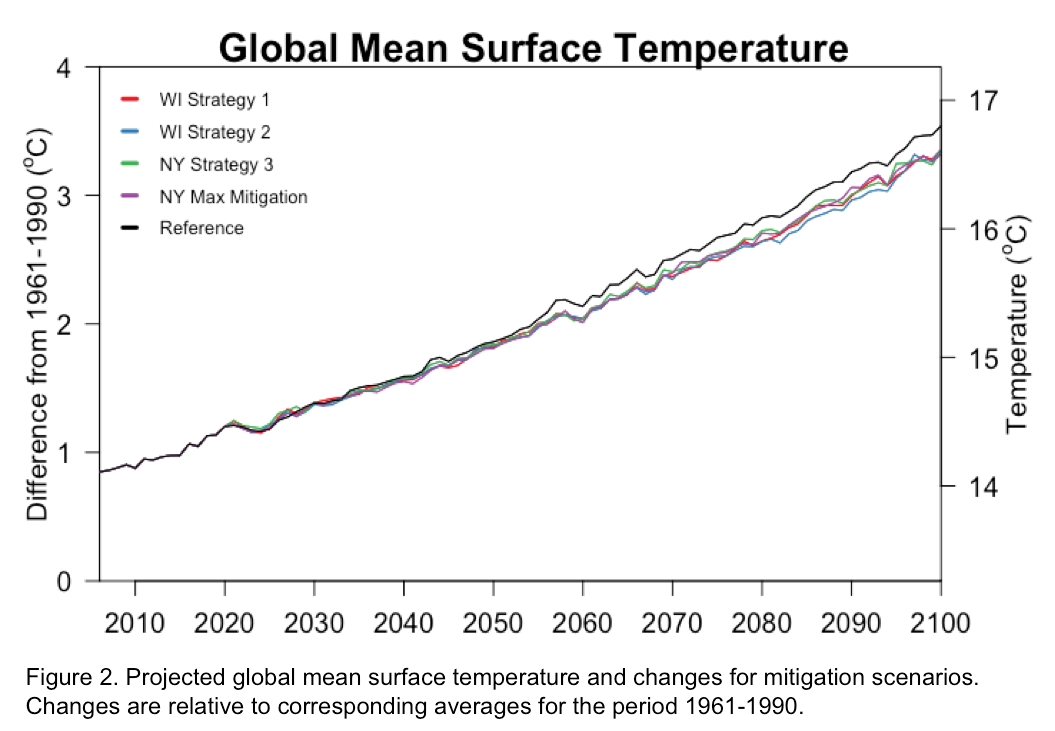
Action taken globally in the agricultural sector to reduce greenhouse gas emissions over the first half of the 21st century is likely to have an impact in mitigating global warming. Following a “business as usual” emission scenario without any climate policy or action beyond 2015, an increase in global mean surface temperature by the end of the 21st century (2081-2100) relative to pre-industrial (1961-1990) levels is projected to be 2.8 C to 3.5 C (Figure 2). This exceeds the 2 C temperature target described as the maximum warming allowed to avoid dangerous and irreversible climate change. An associated net radiative

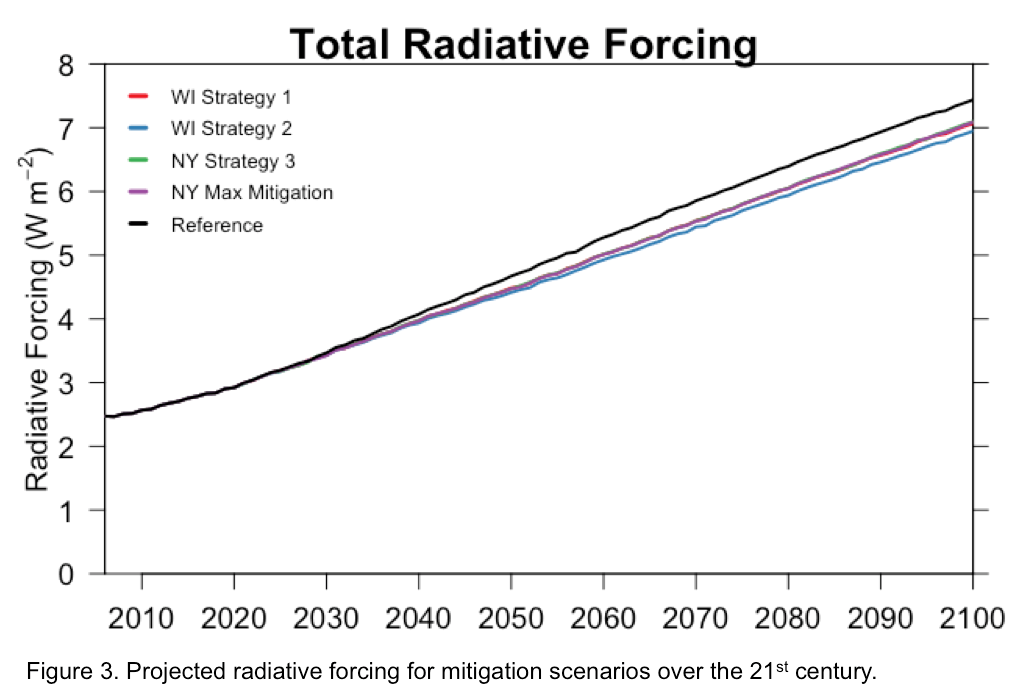
forcing for the “business as usual” scenario is projected to be 7.4 W/m^2 by 2100 (Figure 3). Adopting the identified BMPs in the dairy sector and decreasing global agricultural emissions by 2050 is projected to decrease global mean surface temperatures for 2100 by 0.2 C and net radiative forcing by 0.4 W/! m^2 on av erage. In summary, this modeled experiment demonstrates that ongoing efforts to decrease greenhouse gas emissions in the dairy and agricultural sector are effective at reducing the overall warming of climate change.

Figure 2. Projected global mean surface temperature and changes for mitigation scenarios

Figure 3. Projected radiative forcing for mitigation scenarios over the 21st century

Future Plans

Future work will look further into the evolution of regional temperature and rainfall profiles for the mitigation scenarios. Then, ecological risk assessment methodologies will be applied to determine the probable impacts of climate change by each scenario on agricultural production.

Corresponding author, title, and affiliation

Kristina Rolph – Graduate Student, The Pennsylvania State University.

Corresponding author email

kar5469@psu.edu

Other authors

Chris Forest – Associate Professor of Climate Dynamics, The Pennsylvania State University.

Rob Nicholas – Research Associate, Earth & Environmental Systems Institute.

Additional information

  1. The Sustainable Dairy Project, funded by the USDA, researches alternative management practices in the dairy industry. http://www.sustainabledairy.org
  2. The Integrated Farm System Model simulates all major farm components to represent the many biological and physical processes on a farm. https://www.ars.usda.gov/northeast-area/up-pa/pswmru/docs/integrated-farm-system-model/
  3. The MIT Integrated Global System Model is a fully coupled earth system model of intermediate complexity designed to analyze interactions between human activities and the Earth system. https://globalchange.mit.edu/research/research-tools/global-framework

Acknowledgements

This material is based upon work that is supported by the National Institute of Food and Agriculture, U.S. Department of Agriculture, under award number 2013-68002-20525. Any opinions, findings, conclusions, or recommendations expressed in this publication are those of the author(s) and do not necessarily reflect the view of the U.S. Department of Agriculture.

A Feasibility Study on Optical Sensing Based Rapid Dairy Manure Nutrients Quantification

Proceedings Home W2W Home w2w17 logo

Purpose

Precision application of manure in agricultural land requires information on its nutrients but the existing reliable nutrient estimation methods are unsuitable for real-time nutrient levels estimation. Near infrared spectroscopy (NIRS) is a rapid, non-destructive method of composition analyses and is commonly used in agricultural plant and produce quality evaluations.Previous studies have shown potential of NIRS for manure nutrients determination without identifying specific or narrow bands suitable to predict manure nutrients (nitrogen (N), phosphorus (P), etc.). In order to develop miniaturized sensing modules for variable rate manure nutrients applications, research is needed to determine specific wavelengths suitable for predicting the nutrients. The main goal of this study was thus to develop a robust method to determine specific key wavelengths in NIR region for manure nutrients determination.

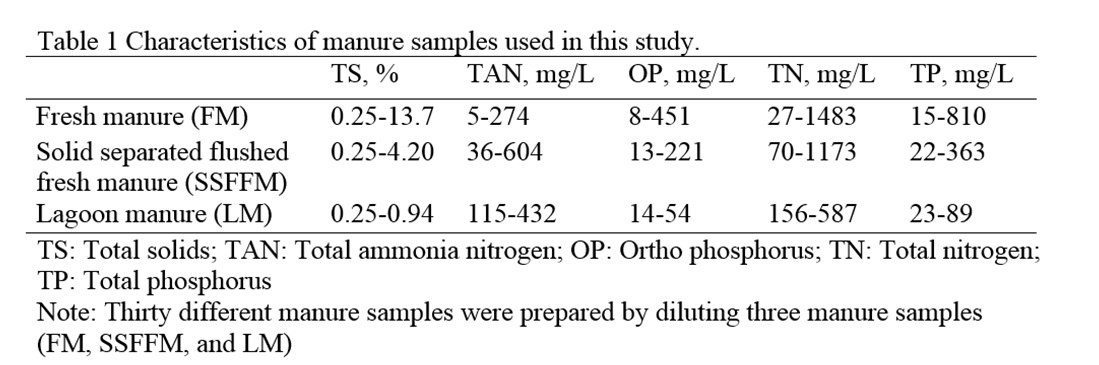
Table 1 Characteristics of manure samples used in this study

What did we do?

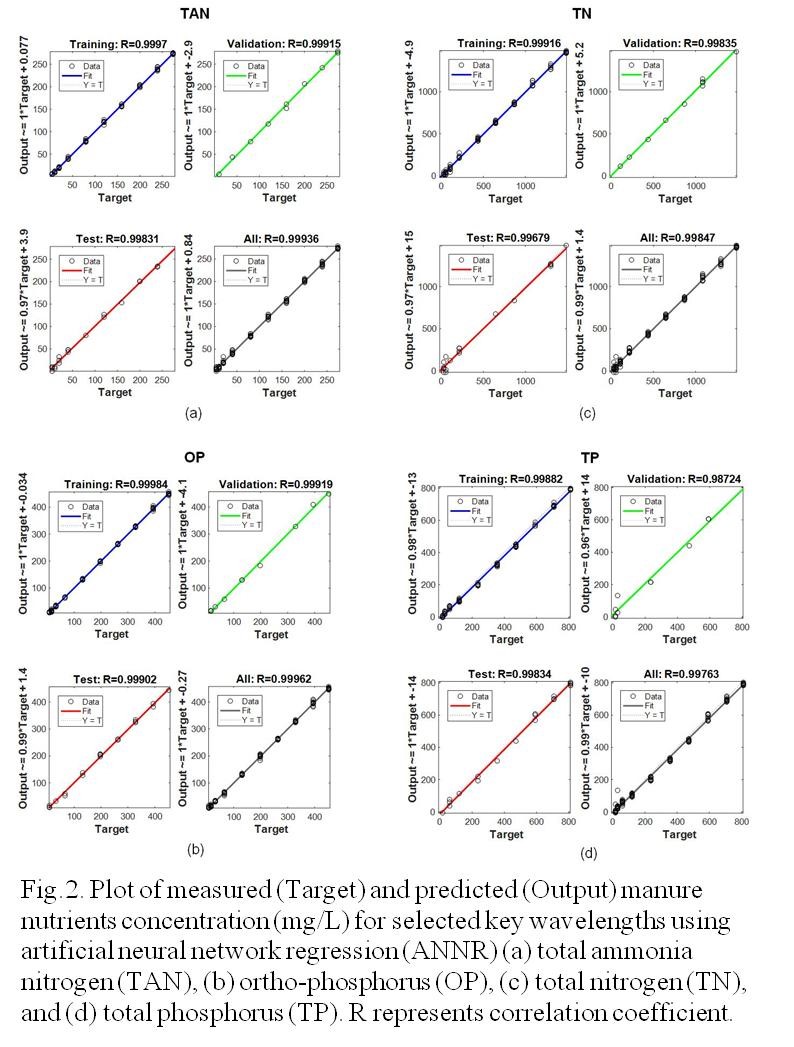
We investigated optical sensing integrated multivariate data analysis methods to identify key wavelengths for manure nutrients determination. Total of 150 spectra (700-2500 nm) were collected using 30 different dairy manure samples. Manure samples at various dry matter contents ranging between 0.25 to 14.0%, representing different nutrient concentrations, were prepared by diluting (1.2-56.0 times) stock manure with distilled water. During data preprocessing, the spectral data were normalized and binned (25 nm). Then, key wavelengths were selected using stepwise multiple linear regression (SMLR) followed by principal component analysis (PCA). The selected key wavelengths were evaluated using linear (partial least square regression (PLSR)) and non-linear regression models (support vector machine regression (SVMR), and artificial neural network regression (ANNR).

Table 2 Performance of different prediction models with selcted key wavelengths

What have we learned?

This study demonstrates the potential use of NIRS technology for rapid detection of dairy manure nutrients. Preprocessing the

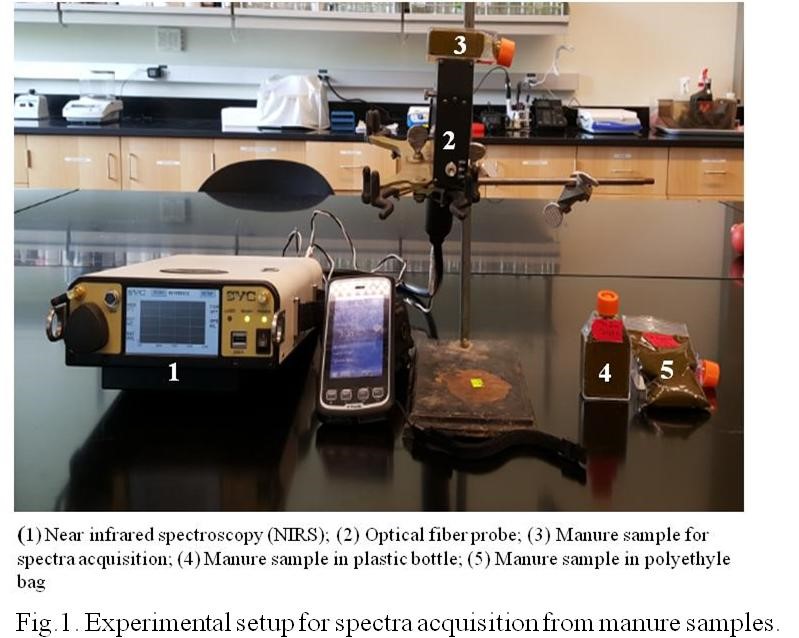
spectral data (normalizing and binning) and using the SMLR analysis followed by PCA can be an effective method for identifying key wavelengths related to manure nutrients. Ten key wavelengths identified for N and P determinations in dairy manure were 713.0, 740.6, 768.6, 964.7, 1022.9, 1144.7, 1175.1, 1295.5, 1532.7, and 1849.5 nm. The ANNR model had the highest R2 and lowest RMSE than the other two models. Similarly, the ANNR model maintained almost same performance with a set of selected key bands excluding > 1200 nm. Overall, results from this study indicated potential for development of a low-cost NIR-based sensing module for variable rate manure applications.Fig. 1 Experimental setup for spectra acquisition from manure samples

Future Plans

The next steps include evaluating the selected key wavelengths using a large number of manure samples from different dairy farms. This is necessary because the composition of manure is highly variable depending on the animal breed, the type of housing, the amount of water added, the type and the age of the animals, the feed rations, and the type and duration of slurry storage. We expect that this step will lead to the building of prototype modules and further field evaluation before commercialization.Fig. 2 Plot of measured (Target) and predicted (Output) manure nutrients concentration (mg/L) for selected key wavelengths

Corresponding author, title, and affiliation

Pius Ndegwa, Associate Professor, Department of Biological Systems Engineering, Washington State university, Pullman, WA

Corresponding author email

ndegwa@wsu.edu

Other authors

Gopi K. Kafle, Lav R. Khot, Iftikhar Zeb; Department of Biological Systems Engineering, Washington State University, Pullman, WA

Additional information

http://csanr.wsu.edu/grants/rapid-sensing-of-dairy-manure-nutrients-for-…

Acknowledgements

This research was funded by the BIOAg program via the Center for Sustainable Ag and Natural Resources and the Agricultural Research Center, Washington State University, WA.

The authors are solely responsible for the content of these proceedings. The technical information does not necessarily reflect the official position of the sponsoring agencies or institutions represented by planning committee members, and inclusion and distribution herein does not constitute an endorsement of views expressed by the same. Printed materials included herein are not refereed publications. Citations should appear as follows. EXAMPLE: Authors. 2017. Title of presentation. Waste to Worth: Spreading Science and Solutions. Cary, NC. April 18-21, 2017. URL of this page. Accessed on: today’s date.

Sensitivity of Soil Microbial Processes to Livestock Antimicrobials

Proceedings Home W2W Home w2w17 logo

Purpose

Many of the antimicrobials administered to livestock are excreted in manure where they may undergo natural breakdown, become more tightly associated with the manure and soil, or become mobilized in wastewater/runoff. Both liquid and solid manure is usually applied to nearby crop fields as a manure fertilizer, recycling the nutrients in the manure. Public concerns about the overuse of antimicrobials leading to greater antibiotic resistance and potentially greater risk for human health have led to new regulations limiting the use of antimicrobials in animal production. However, there are several significant research questions that need to be explored in order to determine how important the links are between antimicrobial use in livestock production and increased antibiotic resistance in humans.

One important issue involves how important soil processes (decomposition, nutrient transformation, and gas emissions) could be altered by antimicrobial compounds in manures and wastewater. In a previous study at a cattle feedlot in central Nebraska, we found typical antimicrobial concentrations in feedlot runoff at low part per billion (ppb) levels and were detected infrequently (<20% of the time). One exception, monensin, was usually detected with an average concentration of 87 ppb and peak concentrations above 200 ppb. Adding complexity to this issue is that soils may experience a variety of conditions ranging from fully aerobic, to denitrifying (using nitrate as a terminal electron acceptor), to anaerobic, and a diverse variety of microbes may predominate in these various conditions. How might soil functions be affected under a range of conditions experiencing differing concentrations of antibiotic? Are there clear very high concentration thresholds that completel! y inhibit specific soil functions? The purpose of this study was to determine the effects of three common livestock antibiotics at multiple concentrations on decomposition, nutrient transformation, and gas production in pasture soil under aerobic, denitrifying, and anaerobic conditions.

What did we do?

A soil slurry incubation study was conducted with pasture soil where runoff from a nearby cattle feedlot was occasionally applied. Monensin, sulfamethazine, and lincomycin were amended (0, 5, 500, and 5000 ppb) to mason jars and serum bottles containing soil and simulated cattle feedlot runoff. The mason jars were flushed with air (aerobic) while serum bottles were flushed with nitrogen gas (anaerobic). Denitrifying conditions were established initially in a subset of anaerobic serum bottles which were supplemented with nitrate (100 mg NO3-N L-1). All antimicrobial amendments and conditions were replicated in triplicate and incubated at 20°C. Headspace gas composition and decomposition products were both measured using gas chromatography and monitored over several weeks.Table 1. Summary of the effects of various livestock antibiotics on decomposition under aerobic, anaerobic, and denitrifying conditions

What have we learned?

Soil processes were generally affected only at the highest antibiotic concentrations, which are 10x greater than observed levels in feedlot runoff. Furthermore, the effects on soil processes depended upon the antibiotic tested (Table 1). Monensin, a broad-range antimicrobial, had the greatest effect on a number of processes. At highest monensin concentrations tested (5000 ppb), both aerobic and anaerobic decomposition (including denitrification) were affected as shown by greater VFA concentrations and low to no gas production (CO2, N2O, and CH4). Even at 500 ppb, monensin had some effect—CO2, N2O, and CH4 gas production were reduced. Sulfamethazine at 5000 ppb inhibited full denitrification (no N2O produced), but there was no effect on other gases or VFA. At 500 ppb sulfamethazine, N2O production was reduced by half. Lincomycin’s only observable effect was lower (0.5x) N2O production at the 5000 ppb level under denitrification conditions.

These results show important soil processes can be blocked by high levels of antibiotics found in animal manures, but inhibition depends upon the antibiotic.  A general antimicrobial like monensin affected microbial processes far more than antimicrobials with a specific mode of action.  The highest antibiotic levels evaluated were 5 to 10 times higher than levels found in animal manures, so soils are likely not impacted under normal conditions where manures mixed and distributed into soils.  Antibiotic breakdown in the soil further helps reduce the potential for antibiotics to build up in the soils.

Future Plans

These incubations only assessed the effect of a one-time dose of antimicrobials. Future studies will examine how longer soil exposures affect soil processes. Additional studies will also compare how soils that have different manure exposure histories (cattle feedlot soil with heavy exposure versus protected prairie soils with very low manure exposure) would react to higher levels of antimicrobials.

Corresponding author, title, and affiliation

Dan Miller, Microbiologist, USDA-ARS

Corresponding author email

dan.miller@ars.usda.gov

Other authors

Matteo D’Alessio, Postdoctoral Researcher, Nebraska Water Center; Dan Snow, Director of Services, Water Sciences Laboratory

Additional information

151 Filley Hall, UNL East Campus, Lincoln, NE 68583

Ph: 402-472-0741

https://dl.sciencesocieties.org/publications/csa/pdfs/61/8/4?search-result=1

The authors are solely responsible for the content of these proceedings. The technical information does not necessarily reflect the official position of the sponsoring agencies or institutions represented by planning committee members, and inclusion and distribution herein does not constitute an endorsement of views expressed by the same. Printed materials included herein are not refereed publications. Citations should appear as follows. EXAMPLE: Authors. 2017. Title of presentation. Waste to Worth: Spreading Science and Solutions. Cary, NC. April 18-21, 2017. URL of this page. Accessed on: today’s date.