
Sources of Agricultural Greenhouse Gases

The conversation about climate change largely revolves around greenhouse gases. Agriculture is both a source and sink for greenhouse gases (GHG). A source is a net contribution to the atmosphere, while a sink is a net withdrawal of greenhouse gases.  In the United States, agriculture is a relatively small contributor, with approximately 8% of the total greenhouse gas emissions, as seen in Figure 1.

Most agricultural emissions originate from soil management, enteric fermentation (microbial action in the digestive system), energy use, and manure management (Figure 2).  The primary greenhouse gases related to agriculture are (in descending order of magnitude) methane, nitrous oxide, and carbon dioxide.

Fact sheet: Contribution of Greenhouse Gases: Animal Agriculture in Perspective (look below the preview box and title for a download link)

U.S. GHG Inventory Figure 1: U.S. greenhouse gas inventory with electricity distributed to economic sectors (EPA, 2013) 

Ag Sources of GHGs

Figure 2: U.S. agricultural greenhouse gas sources (Adapted from Archibeque, S. et al., 2012)

Animal Agriculture’s Contribution to Greenhouse Gas Emissions

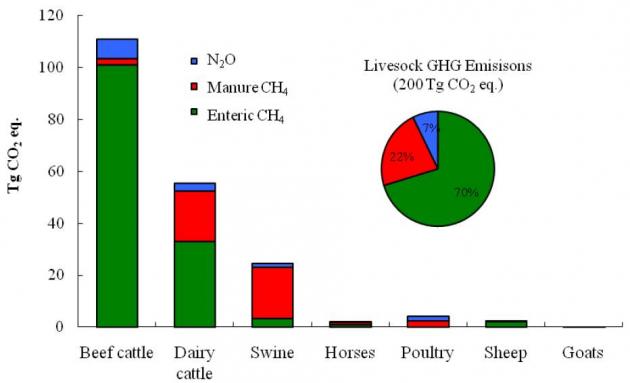
Within animal production, the largest emissions are from beef followed by dairy, and largely dominated by the methane produced in during cattle digestion (Figure 3).

Greenhouse gas emissions from livestock in 2008

Figure 3: Greenhouse gas emissions from livestock in 2008 (USDA, 2011)

Excess nitrogen in agriculture systems can be converted to nitrous oxide through the nitrification-denitrification process. Nitrous oxide is a very potent greenhouse gas, with 310 times greater global warming potential than carbon dioxide.  Nitrous oxide can be produced in soils following fertilizer application. This includes both commercial, inorganic fertilizer as well as organic fertilizers like manure or compost.

As crops grow, photosynthesis removes carbon dioxide from the atmosphere and stores it in the plants and soil life. Soil and plant respiration adds carbon dioxide back to the atmosphere when microbes or plants breakdown molecules to produce energy.  Respiration is an essential part of growth and maintenance for most life on earth. This repeats with each growth, harvest, and decay cycle, therefore, feedstuffs and foods are generally considered to be carbon “neutral.”

Some carbon dioxide is stored in soils for long periods of time.  The processes that result in carbon accumulation are called carbon sinks or carbon sequestration.  Crop production and grazing management practices influence the soil’s ability to be a net source or sink for greenhouse gases.  Managing soils in ways that increase organic matter levels can increase the accumulation (sink) of soil carbon for many years.

Enteric Fermentation

The next largest portion of livestock greenhouse gas emissions is from methane produced during enteric fermentation in ruminants – a natural part of ruminant digestion where microbes in the first chamber of the stomach, the rumen, breaks down feed and produces methane as a by-product. The methane is released  primarily through belching.

As with plants, animals respire carbon dioxide, but also store some in their bodies, so they too are considered a neutral source of atmospheric carbon dioxide.

Manure Management

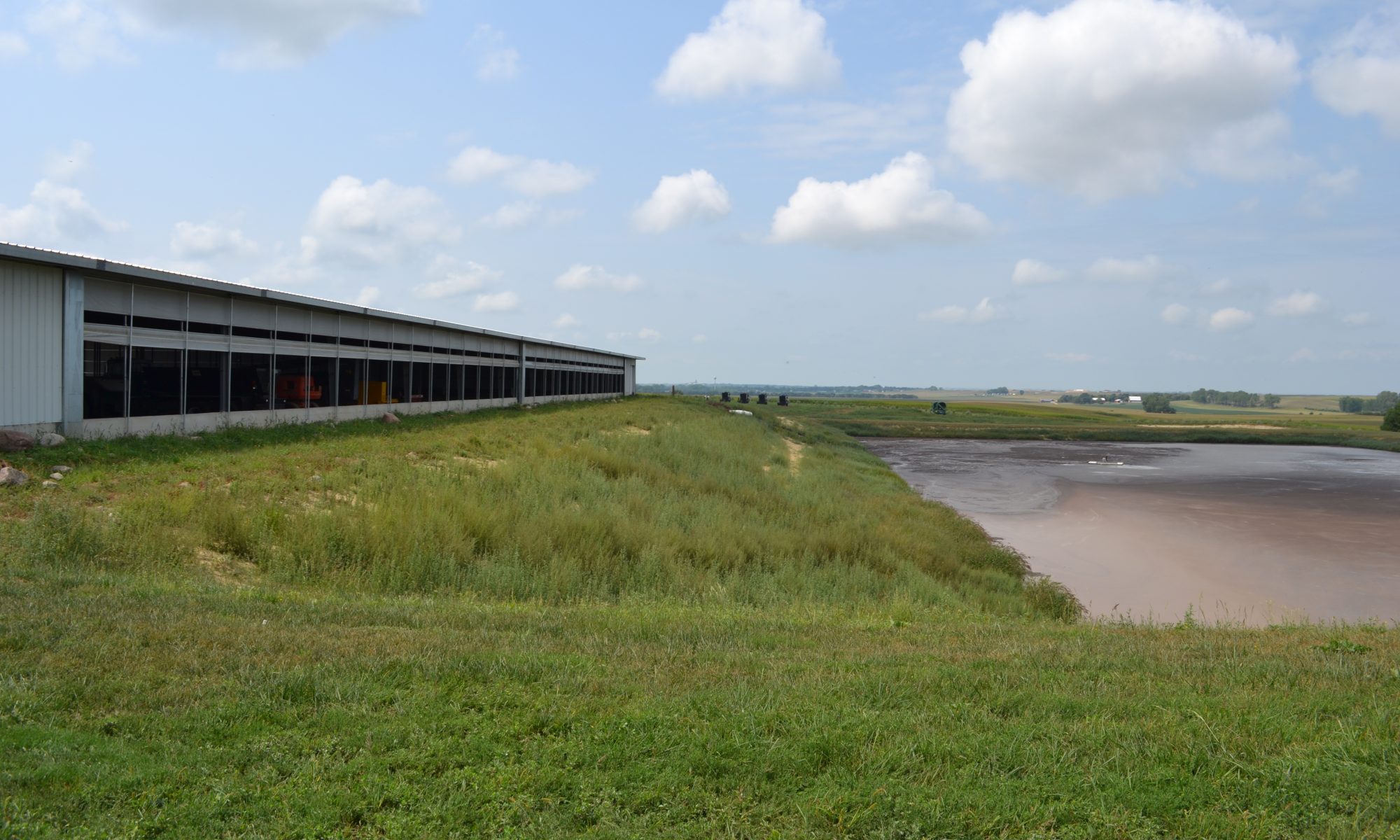
A similar microbial process to enteric fermentation leads to methane production from stored manure.  Anytime the manure sits for more than a couple days in an anaerobic (without oxygen) environment, methane will likely be produced.  Methane can be generated in the animal housing, manure storage, and during manure application. Additionally, small amounts of methane is produced from manure deposited on grazing lands.

Nitrous oxide is also produced from manure storage surfaces, during land application, and from manure in bedded packs & lots. Related: Archived webinar on GHG Emissions Research in Animal Ag

Other sources

There are many smaller sources of greenhouse gases on farms. Combustion engines exhaust carbon dioxide from fossil fuel (previously stored carbon) powered vehicles and equipment.  Manufacturing of farm inputs, including fuel, electricity, machinery, fertilizer, pesticides, seeds, plastics, and building materials, also results in emissions.

To learn more about how farm emissions are determined and see species specific examples, see the Carbon Footprint resources.

To learn about how to reduce on-farm emissions through mitigation technology and management options, see the Reducing Emissions resources.

Carbon Footprint

Definition: carbon footprint is the total greenhouse gas emissions for a given person, place, event or product.

Carbon footprints are created using a process called life cycle assessment. Life cycle assessment or LCA is a method of resource accounting where quantitative measures of inputs, outputs and impacts of a product are determined.

Life cycle assessment is commonly used to:

  • find process or production improvements
  • compare different systems or products
  • find the ‘hot spots’ in a product’s life cycle where the most environmental impacts are made
  • help businesses or consumers make informed sourcing decisions
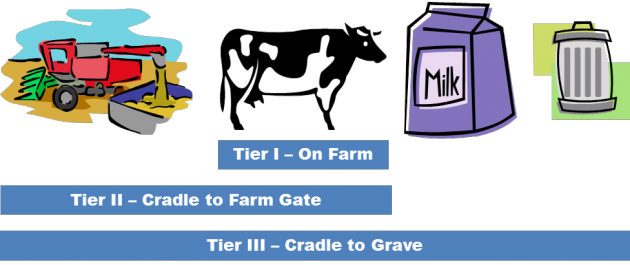
diagram

Key Assumptions

boundaries of the system: each higher tier provides a more complete picture of the product’s impacts, however requires more time and resources to complete.

  1. Gate to Gate (LCA Tier I) – inventories the direct emissions for a single product of process
  2. Cradle to Gate (Tier II) – inputs are taken back to the initial extraction as natural resources up to a certain point in the product’s life such as its sale from the farm, i.e. farm gate.  This will include both direct  and indirect emissions from the product.
  3. Cradle To Grave (Tier III) – the product is followed through the consumer to its eventual recycling or disposal.

Sources of variation

Different researchers may get different results when performing a LCA on the same product. This can happen for many reasons:

  • System boundary definition
  • Inclusion/exclusion of secondary/ indirect sources
  • Inclusion/exclusion of biogenic carbon (stored in organisms)
  • Inclusion/exclusion of carbon dioxide from fuel combustion
  • Functional relationships used
  • Global warming potential indexes
  • Inclusion/exclusion of carbon sequestration

Related: Six archived webinars on the sources of animal ag ghg’s (some are general and some are species-specific)

Educator Materials

If you would like to use the video, slides, or factsheet for educational programs, please visit the curriculum page for download links for this and other climate change topics.

Recommended Reading – How Many Greenhouse Gases Does Agriculture Emit?

U.S. Agriculture Emissions

International Agriculture Emissions

Carbon Footprints and Life Cycle Analysis

Greenhouse Gas Regulations for Animal Agriculture

Visit Climate Change Regulation, Policy, and Market Opportunities

Acknowledgements

Author: Crystal A. Powers – University of Nebraska-Lincoln cpowers2@unl.edu

This material was developed through support from the USDA National Institute for Food and Agriculture (NIFA) under award #2011-67003-30206.

Communicating Science during Controversy

Climate change as a topic of discussion in animal agriculture circles can be controversial. Often we believe “if they only understood the facts, they would agree with us.” However, this method only works with a small part of the population. Opinion formation is very complex and includes many other factors besides scientific facts, such as emotion, values, and trust.

Related: Recorded webinar on “Communicating Amidst Controversy

Fear-based messaging has been frequently used as an attempt to provide a spark that will lead to further learning and behavioral changes. However, these messages must be coupled with both information and support in order to be effective. Without these two resources, people often suffer from feelings of helplessness, remoteness, and lack of control over the situation which all prevent behavior change from occurring.

The goal of our communications is open-minded, unbiased consideration of all the facts. How do we create such an environment? 

White paper: Communicating Controversy in Agricultural Extension on the Topic of Climate Change: A Summarized Review

Strategies:

  1. Understanding your audience – people look for information that is consistent with what they already think, want, or feel. Identify misconceptions understand the context within which they make decisions.
  2. Get their attention – People typically perceive immediate threats as more relevant and of greater urgency than future problem. So focus on how climate is impacted them today and how smaller costs now can prevent larger losses in the future. Use stories to frame the issue in ways that relate to their values.
  3. Translate science into concrete experienceUse vivid imagery to discuss potential solutions up front, particularly highlighting any benefits.
  4. Effectively communicate uncertainty – explain the difference between knowing the causes of climate change and uncertainty about what to do about it.  Use risk management as an effective way to discuss how to evaluate solutions.
  5. Tap Into Social Identities and Affiliations – create connections between your audience, the environment, and society using diverse advocates.
  6. Encourage Group Participation  – encourage small group discussion and facilitate groups that can continue to meet and discuss.
  7. Minimize bias In order to reduce bias, it is critical to recognize your own values and biases. Checks and balances within your team as well as allowing for public input early in development of products will help provide transparency about your agenda. Emphasizing the need for continued learning is important and acknowledges the fact that there is a lot of information out there that can’t be covered in short periods of time.

Educator Materials

To download the video, white paper, or other materials for use in educational programs, visit our curriculum page.

Recommended Resources

This project hosted a webinar on “Communicating Amidst Controversy” The archive page includes links to view individual segments, download them, and access handouts of the presentation slides.

Acknowledgements

This page was developed as part of a project “Animal Agriculture and Climate Change” an extension facilitation project to increase capacity for ag professionals. It was funded by USDA-NIFA under award # 2011-67003-30206.

Author: Crystal Powers, University of Nebraska – Lincoln cpowers2@unl.edu

Climate Change Regulations, Policy, and Market Opportunities

logo for animal agriculture climate change which includes a weather vane with cow and topThere are several strategies of reducing, or mitigating carbon and other GHG emissions.

The first and most basic of which is conservation – if we don’t use the energy in the first place, we don’t need to be concerned with what emissions it was responsible for.  Agricultural energy audits are helpful to see the areas capable of the biggest improvements.

Second are emission offsets; an offset is a greenhouse gas reduction made by a non-regulated entity, which is purchased by a regulated entity.

The third strategy of reducing GHG emissions is a regulation imposed to restrict the quantity of emissions on certain parties; this regulation can be in the form of a tax or cap and trade program.  Markets exist to trade both voluntary- and mandatory-based compliance credits.

Related: [online article] Large Livestock & Poultry Operations Required to Report GHG’s and [archived webinar] Mandatory Greenhouse Gas Reporting Rule

Aside from voluntary and compliance-based markets, other market opportunities exist to give value to reduced emissions, including utility purchase of green energy (both electricity and gas).  The Cow Power Program in Vermont is a good example of this process in the U.S.  However, with all market options available to trade emission credits, there are costs and potential risks involved that are important to be educated about.

An opportunity exists for animal agriculture to benefit from GHG cap and trade programs, since regulated entities will be looking for carbon offset credits to purchase, and this will drive up the value of the offsets.  Credits could be more valuable in the future with legislation to regulate certain sectors – they will look to agriculture as one of the voluntary sources from which to be able to offset those emissions.

Educator Materials

If you would like to use the video, slides, or factsheet for educational programs, please visit the curriculum page for download links for this and other climate change topics.

Examples of Voluntary and Compliance Markets

No endorsement is intended by listing here. These are listed purely to provide examples of different types of markets.

Voluntary Markets –The Climate Trust | Native Energy | TerraPass

Compliance Markets – Regional Greenhouse Gas Emissions | California Cap and Trade Program (California AB32)

Acknowledgements

Author: Jennifer Pronto, Cornell University

This page was developed as part of a project “Animal Agriculture and Climate Change” an extension facilitation project to increase capacity for ag professionals. It was funded by USDA-NIFA under award # 2011-67003-30206.

Climate Impacts on Animal Production

logo for animal agriculture climate change which includes a weather vane with cow and topThe 1941 USDA Yearbook in Agriculture was titled “Climate and Man”. All 1,214 pages in the book focus on the interdependency of agriculture and humanity with weather and climate.  Even prior to the rise in global temperature seen in the latter half of the 20th century, it was understood that extreme weather events needed to be planned for and managed.

Related: Animal agriculture and climate change

Not only are these extreme events predicted to become more common and more extreme, but a high human population is increasing demand for finite resources such as land and water.

Changes in precipitation and temperature vary by region. In general the US is seeing more precipitation and the timing and intensity of precipitation is also changing. While global temperatures are increasing, it is the variability and intensity of temperatures that are of greatest consequence to animal agriculture.

Extreme weather events are expected to affect many areas of animal production.

  • Farm Inputs: Drought and heat can devastate pastures or create hay and grain shortages which drive up prices. The same is true for wet and cool conditions. High temperature also also increases animal water consumption.  This may occur at the same time there is limited water availability  – either recharge to aquifers or runoff to streams and rivers used to water livestock.
  • Animal Production: The impact of heat and humidity on animal physiology is well documented. Extreme heat generally results in higher animal mortality, but, possibly of greater concern is the important are the economic impacts to production  such as daily weight gain and feed conversion efficiency.Heat and humidity can also impact an animal’s immune system making it more susceptible to disease and stress. In addition to direct effects on animal production, heat, humidity, and moisture drive pest and disease cycles. These changes can be spatial, temporal or change the intensity of the outbreak.
  • Logistics: Many farm activities, such as moving feed to the farm, moving young stock to the farm or product off the farm, feeding and watering animals, keeping animals comfortable, moving manure to the fields, etc. depend upon weather conditions Flooding creates problems for manure management (both overtopping of manure storages and land application). Flooding can also take out roads and bridges which may impact labor supply or moving feed or animals into or out of the farm. High temperatures may impact when animals can be fed or moved. Power outages often accompany these extreme events – adding additional management challenges.
  • Farm Exports: Market pricing of produce (meat, milk, eggs) is always a challenge but is even more of a challenge with unpredictable weather. Drought or flooding will result in increased feed prices and possibly a decrease in selling price of the farm products. The economic impact will depend on the geographic range and severity of the weather event.

It is clear that there are economic impacts of heat and humidity on animal agriculture (St. Pierre, 2003) using historic weather data. Current trends in weather offer an opportunity to reassess the impacts of weather on the many aspects of the farming enterprise. Site specific farm assessments are needed to evaluate the susceptibility of the farm from changing weather trends but must include a comprehensive picture of all the impacts weather and climate at the local, regional, national and global scale.

Educator Materials

If you would like to use the video, slides, or factsheet for educational programs, please visit the curriculum page for download links for this and other climate change topics.

Recommended Resources

Manure Management

Beef

Swine/Pigs

Dairy

Poultry

General – Animals and Farming

Acknowledgements

Author: David Schmidt, University of Minnesota schmi071@umn.edu

This page was developed as part of a project “Animal Agriculture and Climate Change” an extension facilitation project to increase capacity for ag professionals. It was funded by USDA-NIFA under award # 2011-67003-30206.

Adaptation and Risk Management

Food production is dependent on weather and climate. Agriculture must always be planning and preparing for weather or responding to weather as it happens. Adaptation to weather and climate has occurred since farming started and will continue to occur as we move forward in the future. The rate of adaptation is the key to keep up with the rate that the climate changes.

Factsheet: Adapting to a changing climate: A planning guide (PDF; 44 pp)

Climate Change Adaptation is the most common terminology used to discuss how organisms and ecosystems adjust to changing extremes or patterns in weather over time. Most cities and states are drafting plans to help prepare for weather events such as flooding, extreme heat events, disease outbreaks, and others.

Risk Management is a term more commonly used in business and refers to the process of identifying, assisting, and prioritizing of risk followed by some application of resources (usually time or money) to prevent or minimize the negative consequences.

A report from Iowa Beef Center in 1995 discussed a survey of beef producers who lost cattle in a 13 county area over a 2 day period. For those farmers loosing animals, the impact was significant but a quote from the paper sums up the cost benefit decision that must be made when planning for a changing climate.

“How much can a feedlot operator spend to protect against a weather event that has occurred only six times in the last 101 years?”

This is a real and critical question that must be asked. What if this similar type of heat event started occurring every 10 years, or every 5 years? This changes the equation when looking at risk and reward or cost benefit to the implementation of practices or systems to deal with extreme heat.

Adaptation Strategies

Adaptation strategies lay on a continuum with the least drastic listed first (increasing resilience) and most drastic last (transformation).

  • Increasing resilience is a level of adaptation that is similar to what has occurred in the past. As climate changes, technologies or management improves or adjusts to those changes. Resilience has resulted in animal housing, irrigation, diet, genetics, management and other factors that allow farms to be profitable with standard weather variability.
  • Reducing vulnerability is adaptation at the next level with larger and longer term changes in an existing operation to reduce the risk of current or future climate trends. Things such as bringing in heat tolerant genetics, additional cooling capacity in the buildings, or farm diversification. These strategies require a higher investment and are focused on operational changes that allow for profitability into the future.
  • Adaptation through transformation are those changes where the current farming system is nearly abandoned due to climate changes. Complete changes are made in cropping or animals or a new business venture replaces the one on the current site. Transformation might also include the general migration of an industry to a new climate region.

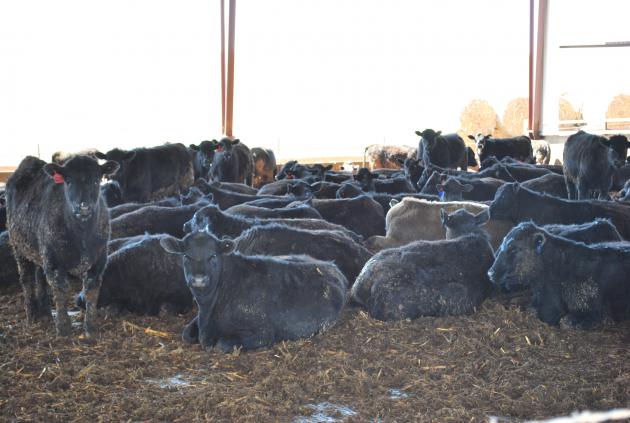
cattle loafing on a bed pack in their barn

Any adaption strategy must be chosen as a function of the site specific features of the farm. Geographic location, current management, current finances, long term and short term farm goals and other considerations need to be made when evaluating farm management and business changes. In addition, the strategy must be based on the current or predicted trends in weather and the impacts this might bring to the farm. A farm prone to flooding in a region where flooding trends are increasing may be interested in a transformational adaptation strategies like relocation than a farm that never experiences flooding.

Cost benefits of these adaptation strategies are not simple. If we were only comparing damage cost to the cost to prevent the damage, the calculation would be simple. Unfortunately, the damage cost is a function of the probability of the weather event and its intensity. For now we must rely on recent weather trends and future climate predictions. Therefore, it is important to be informed about climate change, the impacts of climate change on a local and global level and the economics of adaptation options. Site assessment and planning are key to making good long term adaptation decisions.

Educator Materials

If you would like a copy of the original slides or downloadable copy of the video, please fill out this form. If you use these materials for educational purposes, please send an email to e.whitefield@wsu.edu with how you used the video and how many people watched, to help us improve our resources and document our impact.

Recommended Reading/Viewing

Agricultural Adaptation to Climate Change: Economic and Environmental Implications Vary by Region More… (USDA Economic Research Service, 2012)

Dairy Cattle – Heat Stress

Beef Feedlot Cattle – Heat Stress

Rangeland/Pasture – Drought

Swine Heat Stress

Poultry Heat Stress

Drought: Water Quality and Quantity

Disaster Preparedness Resources

Acknowledgements

Author: David Schmidt, University of Minnesota schmi071@umn.edu

This material was developed through support from the USDA National Institute for Food and Agriculture (NIFA) under award #2011-67003-30206.

GHG Mitigation Opportunities for Livestock Management in the U.S.

Waste to Worth: Spreading science and solutions logoWaste to Worth home | More proceedings….

Purpose

The purpose of this project is to review the current understanding of methodologies available for the mitigation of Greenhouse gas emissions from livestock production. Greenhouse gas emissions from livestock production are largely associated with naturally occurring biological processes in the animal and particularly within the symbiotic microorganisms associated with these animals and their excreted waste products.  Enteric emissions are primarily a result of CH4 producing microorganisms, called methanogens that exist in the gastrointestinal tract of most animals.  However the quantity produced by these methanogens is dependent on the development of the gastrointestinal tract of the animal that they are associated with.  For example, ruminants produce a much greater quantity of methane because of the presence and fermentative capacity of the rumen that monogastrics, such as swine, do not have.  Although non-ruminant species can also produce methane via hindgut fermentation, the quantities of methane associated with hindgut fermentation are much less than that of foregut fermenters, such as ruminants.  To clarify, in 2009, enteric fermentation contributed 71% of CH4 from agriculture (6,655 Gg of 9,372 Gg CH4), and ruminants were responsible for 96% (6,385 Gg), horses 2.5% (171 Gg) and swine 1.5% (99Gg) of the enteric emissions in the US(EPA, 2009).  Additionally, livestock manure can emit CH4 and N2O during storage and with field application.  Storage conditions (aeration, temperature, pH) as well as manure composition have a major influence on the gases emitted and rates of emission.  Methane emissions from manure that is stored can be reduced by cooling, covering, separating solids from slurry, or by capturing the CH4 emitted.

What did we do

We conducted a thorough review of the existing literature regarding GHG emissions from livestock in the U.S.

What have we learned

We have learned that there are myriad opportunities to reduce GHG emissions from livestock.  Additionally, many of the practices that will reduce GHG emissions will also tend to concomitantly increase the efficiency of production of the livestock and their products.  Unfortunately, there are limited amounts of data on the potential unintended side effects also associated with the push for improved efficiencies from livestock production.  While some practices may target specific modes of GHG emissions, most are focused on improving the overall efficiency of production.

Future plans

We are currently working to expand our research capabilities to evaluate future mitigation techniques and continue to work with EPA and USDA on numerous public projects to enhance producer mitigation of GHG emissions.

Additional Information

A thorough review (Carbon Sequestration and Greenhouse Gas Fluxes in Agriculture: Challenges and Opportunities) of the issues discussed here and in agriculture in general is available at the Council for Agricultural Science and Technology website ( http://www.cast-science.org/publications/?carbon_sequestration_and_greenhouse_gas_fluxes_in_agriculture_challenges_and_opportunities&show=product&productID=27392 )

Authors

Shawn Archibeque, Colorado State University

The authors are solely responsible for the content of these proceedings. The technical information does not necessarily reflect the official position of the sponsoring agencies or institutions represented by planning committee members, and inclusion and distribution herein does not constitute an endorsement of views expressed by the same. Printed materials included herein are not refereed publications. Citations should appear as follows. EXAMPLE: Authors. 2013. Title of presentation. Waste to Worth: Spreading Science and Solutions. Denver, CO. April 1-5, 2013. URL of this page. Accessed on: today’s date.

Current and Future Economic Impact of Heat Stress in the U.S. Livestock and Poultry Sectors

Waste to Worth: Spreading science and solutions logoWaste to Worth home | More proceedings….

Why Study Heat Stress in Farm Animals?

Farm animals have well known zones of thermal comfort (ZTC).  The range of ZTC is primarily dependent on the species, the physiological status of the animals, the relative humidity and velocity of ambient air, and the degree of solar radiation.  Economic losses are incurred by the U.S. livestock industries because farm animals are raised in locations and/or seasons where temperature conditions venture outside the ZTC.  The objective of this presentation is to provide current estimates of the economic losses sustained by major U.S. livestock industries from thermal stress and to outline future challenges as animal productivity is improved.  Species (production) considered are: chicken (meat), chicken (eggs), turkey (meat), cattle (meat), cattle (milk), and pig (meat). 

What Did We Do?

Financial losses are the summation of:

  1. decreased performance (growth, lactation, egg production),
  2. change in feed intake,
  3. increased mortality, and
  4. decreased reproduction. 

USDA and industry data were used to estimate the population size of each species in each month of the year, for each of the 50 states.  Weather data from the National Weather Service from 270 stations over a minimum of 70 years were used to estimate mean daily maximum and minimum temperatures and relative humidity, and their variances. 

A model based on an abrupt threshold and linear decrease in performance and reproduction and a linear increase in mortality above and below the ZTC is used for each species.  Solar radiation and air velocity are assumed negligible.  Probabilities of exceeding minimum or maximum values of ZTC are calculated from means and variances of weather data in each of the 50 states.  Four scenarios of losses are estimated. 

Total potential losses are calculated as if no thermal stress abatement strategies were used by any of the animal industries.  This estimate is biased upwards, as most animal production systems uses some form of active cooling, but it is used to set a ceiling to the magnitude of the actual losses.  For each species, losses are also calculated under minimum cooling (fans), intermediate cooling (fans and sprinklers), and extensive cooling (evaporative cooling).  For each state and for each species the optimal strategy is the one that among the four results in the minimum financial losses under Monte Carlo simulations (1000 year replicates). 

What Did We Learn?

At current production levels, the optimum cooling system varies considerably across species and states.  Nationally, heat stress results in total economic losses ranging between $1.9 and $2.7 billions per year.  Although projected increases in ambient temperatures (+ 1.2 to 1.3 °F by 2050) will result in additional financial losses, the additional metabolic heat resulting from the projected increase in animal productivity will have far greater impact, between 2 and 4 times as much as global warming.  Considering that all moderate to intensive animal cooling system currently in use require substantial amounts of water and are approaching their maximum cooling capacity, technical innovations that will be both water and energy efficient will be badly needed before 2050.

Authors

Normand R. St-Pierre, The Ohio State University, Columbus, OH-43201


The authors are solely responsible for the content of these proceedings. The technical information does not necessarily reflect the official position of the sponsoring agencies or institutions represented by planning committee members, and inclusion and distribution herein does not constitute an endorsement of views expressed by the same. Printed materials included herein are not refereed publications. Citations should appear as follows. EXAMPLE: Authors. 2013. Title of presentation. Waste to Worth: Spreading Science and Solutions. Denver, CO. April 1-5, 2013. URL of this page. Accessed on: today’s date.

Staying Ahead of the Curve: How Farmers and Industry Are Responding to the Issue of Climate Change

Waste to Worth: Spreading science and solutions logoWaste to Worth home | More proceedings….

Why Is This Topic Important?

Several farmers, ranchers, and industry groups are leading the way on the issue of climate change. 

What Will Be Learned In This Presentation?

These panelists will share how their farm or industry is responding to climate change, what factors are driving their decision to make changes, and the impact of climate change on long-term planning. This moderated session will encourage audience questions and facilitate exchange of ideas on how the agriculture industry can meet this challenge.

Presenters

David Smith, Southwest Region Coordinator Animal Agriculture and Climate Change Project, Texas A&M University dwsmith@ag.tamu.edu and Liz Whitefield, Western Region Coordinator, Washington State University

  • Jamie Burr –  Tyson Foods, Chair National Pork Board Environment Committee
  • Abe Collins – cattle grazier, Cimarron Farm, Regenerative Farmscaping consultant, Board Member Soil Carbon Coalition
  • Paul Helgeson – Sustainability Director with Gold’n Plump Chicken
  • Bryan Weech, Director Livestock & MTI Commodity Lead, World Wildlife Fund
  • Andy Werkoven – dairyman and anaerobic digester co-owner, Werkhoven Dairy Inc., 2012 winner of US Dairy Sustainability Award


Animal Agriculture for a Changing Climate – Stakeholder Forum

Waste to Worth: Spreading science and solutions logoWaste to Worth home | More proceedings….

Why Is This Topic Important?

Climate change adaptation and mitigation is an emerging issue for animal agriculture research and extension.  A national team of Extension professionals is developing a web-based educational course, website, and related materials to provide comprehensive education for Extension agents and educators about the latest research, management methods, and tools.  The objectives of this project are: 1) to build a foundation of knowledge; 2) facilitate learning across U.S. regions, and; 3) provide a shorter time from research to extension to application.  The project has a P.I. and an Extension professional in each of five regions across the United States as well as a national P.I. and project coordinator to facilitate having a coordinated national educational effort that is regionally relevant and accessible.     

What Will Be Learned In This Presentation?

The goal of the forum will be to hear from stakeholders: farmers, industry, Extension, and others on how this project, and Extension generally, can best serve their needs related to climate change.

Presenters

Crystal Powers, Project Coordinator Animal Agriculture and Climate Change, University of Nebraska – Lincoln cpowers2@unl.edu

Each of these Extension Professionals is a Regional coordinator for the Animal Agriculture and Climate Change Project.

  • Pam Knox, Southeastern Region, University of Georgia
  • Jennifer Pronto, Northeastern Region, Cornell University
  • David Schmidt, Midwestern Region, University of Minnesota
  • David Smith, Southwestern Region, Texas A&M University
  • Elizabeth Whitefield, Western Region, Washington State University


The authors are solely responsible for the content of these proceedings. The technical information does not necessarily reflect the official position of the sponsoring agencies or institutions represented by planning committee members, and inclusion and distribution herein does not constitute an endorsement of views expressed by the same. Printed materials included herein are not refereed publications. Citations should appear as follows. EXAMPLE: Authors. 2013. Title of presentation. Waste to Worth: Spreading Science and Solutions. Denver, CO. April 1-5, 2013. URL of this page. Accessed on: today’s date.

Adaptation Methods and Bioclimate Scenarios

Waste to Worth: Spreading science and solutions logoWaste to Worth home | More proceedings….

Why Study Adaptation of Livestock to Climate Change?

The complex of our study was aimed at exploring the effects of warm climate in farm animals, at constructing bioclimate scenarios and at developing adaptation options that may permit to alleviate the impact of hot climate on the livestock industry.

What Did We Do?

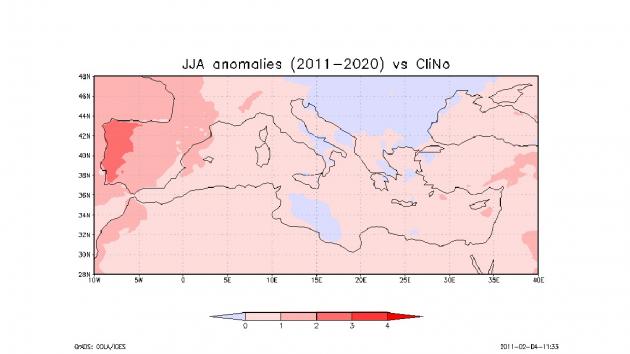
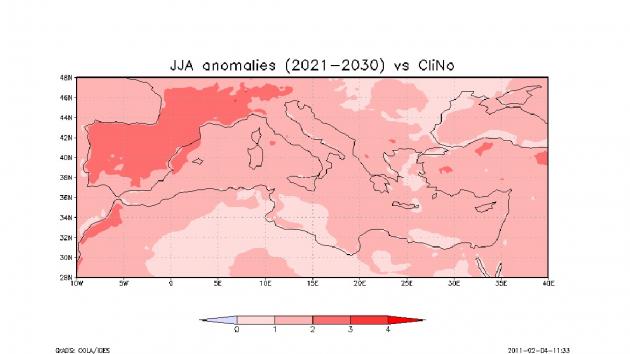
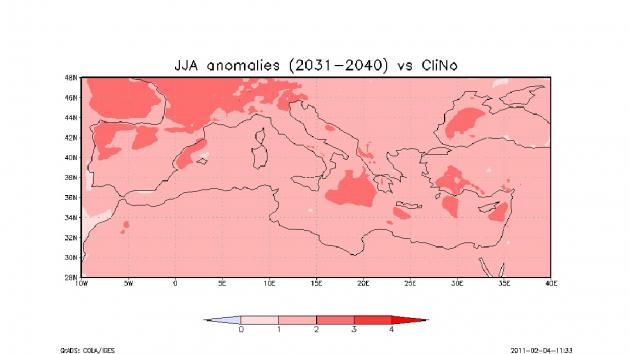
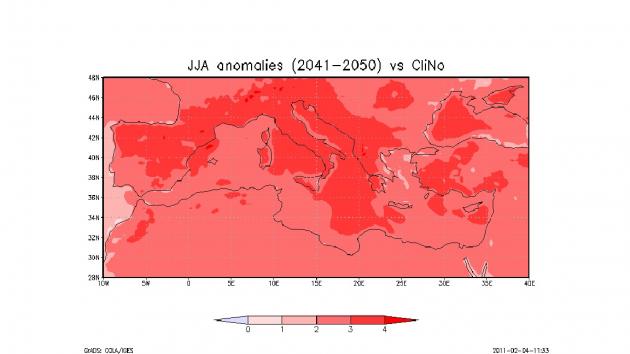
Most of our research work was relative to dairy cows. We realized several studies by different experimental approaches. First of all, we have been running numerous experiments under climate chamber conditions followed by a number of field studies. To reach more precise objectives, we also performed several in vitro studies on selected cell populations. In the last few years we have been also building and exploring multi-year datasets and measuring the impact of air temperature and relative humidity on performances and health in intensively managed dairy cows/pigs. Finally, we have been working on bioclimate, namely temperature humidity index (THI), characterization of selected geographic areas both retrospectively and in terms of scenario (Figure 1).

climate graph for lactera proceedings paper

JJA anomolies 2021-2030 vs CiNo

JJA anomolies 2031-2040 vs CliNo

Figure 1. Regional distribution of Mediterranean summer (JJA, June-July-August) temperature humidity index anomalies versus CliNo (Climate Normal, 1971-2000 period) for the four decades 2011-2020, 2021-2030, 2031-2040, and 2041-2050 (Segnalini et al., in press)

What Have We Learned?

We have learned that the ability of dairy cows to breed, grow, and lactate to their maximal genetic potential, and their capacity to survive and keep healthy is dramatically influenced by climate, meteorological events and biological environment and their interactions. Climate and meteorological features affect animals both indirectly and directly. Indirect effects include those exerted on quality and quantity of crops and pastures and on survival of pathogens and/or their vectors. The direct effects of air temperature on animals depend on their ability to maintain a normal body temperature under unfavourable thermal conditions. A series of studies carried out at Mediterranean level, one of the hot spot in the context of global warming, pointed out a constant increase for livestock of the risk to suffer from heat stress related conditions. Climate change is imposing a growing attention to adaptation measures, which may help farm animals to face with conditions of environmental warmth. These may include set up of meteorological warning systems, revision of health maintenance strategies, correction of feeding plans, shade, sprinkling, air movement, active cooling, genetic selection, and others.

Future Plans

To develop comprehensive frameworks to identify and target adaptation options that are appropriate for specific contexts.

Authors

Alessandro Nardone, Professor, Dipartimento per la Innovazione nei sistemi Biologici, Agroalimentari e Forestali (DIBAF), Università degli Studi della Tuscia, Viterbo, Italy   nardone@unitus.it

Nicola Lacetera, Professor, Dipartimento di scienze e tecnologie per l’Agricoltura, le Foreste, la Natura e l’Energia (DAFNE), Università degli Studi della Tuscia, Viterbo, Italy

Additional Information

1. Effects of climate changes on animal production and sustainability of livestock systems. http://www.livestockscience.com/article/S1871-1413%2810%2900074-0/abstract

2. Temperature humidity index scenarios in the Mediterranean basin. http://link.springer.com/article/10.1007/s00484-012-0571-5

Acknowledgements

We gratefully acknowledge National (CNR, MIUR, MIPAF) and International (UE) funding bodies, and Umberto Bernabucci, Bruno Ronchi, Andrea Vitali, Maria Segnalini, Alessio Valentini, Patrizia Morera, Loredana Basiricò, M. Stella Ranieri and others in quality of co-authors of the numerous peer-reviewed papers we published in this field during the last 20 years.

The authors are solely responsible for the content of these proceedings. The technical information does not necessarily reflect the official position of the sponsoring agencies or institutions represented by planning committee members, and inclusion and distribution herein does not constitute an endorsement of views expressed by the same. Printed materials included herein are not refereed publications. Citations should appear as follows. EXAMPLE: Authors. 2013. Title of presentation. Waste to Worth: Spreading Science and Solutions. Denver, CO. April 1-5, 2013. URL of this page. Accessed on: today’s date.