Greenhouse Gas Emissions from a Typical Cow-Calf Operation in Florida, USA

Waste to Worth: Spreading science and solutions logoWaste to Worth home | More proceedings….

Purpose

The purpose of this study was to investigate greenhouse gas (GHG) emission sources in a typical cow-calf operation in Florida and to calculate its total carbon footprint. The most important greenhouse gas source found was enteric fermentation, hence further investigation of this factor is being developed with field trials.

Why Study the Carbon Footprint of Cow-Calf Systems?

We estimated the carbon footprint of the cow-calf operation held in Buck Island Ranch, with data from 1998 to 2008. This production system has around 3000 cows and 250 bulls, has low fertilizer and lime inputs and feeding is pasture and hay based with some use of molasses and urea. Natural mating is used and calves are kept in the farm until 7 months old.  The Intergovernmental Panel on Climate Change (IPCC, 2006) methodology was used along with emission factors from USDA (EPA, 2009) to estimate emissions at different levels of complexity (Tier 1 being the least complex and Tier 3 the most), according to data availability, and transformed in carbon dioxide equivalent (CO2eq). A field trial to measure ruminal methane emissions was held at the North Florida Research and Education Center in Marianna, Florida, from June 26th to September 18th. The experiment treatments consisted of three stocking rates (1.2, 2.4 and 3.6 AU/ha, where one animal unit is 360) with four replicates each. The ruminal methane emissions were measured three times using the sulfur hexafluoride (SF6) tracer technique (Johnson et al., 1994). Experimental weight gain and average initial weight of each experimental unit were used to estimate emissions with the IPCC’s Tier 3 methodology.

Table 1. Sources of greenhouse gases in units of carbon dioxide equivalent (CO2eq). Data retrieved from Buck Island Ranch from 1998 to 2008.

Figure 2. Animal with SF6 sample collection apparatus. Marianna, Florida, August 2012.

What Have We Learned?

Results of the carbon footprint calculation are shown in Table 1. We can observe that enteric fermentation is responsible for almost 60% of total emissions in this production system, varying with feed quality, age of animal (since calves under 7 months age are not considered to produce any methane), and number of animals in the farm. It was also found that this model is most sensitive to variations in weight gain. The second most important source of GHG is manure with more than 23 of emissions. The yearly variation in emissions is a result of the use of nitrogen fertilization and lime or burning of the pasture. On average 477,936 kg of live weight are produced every year in the ranch, resulting in an average of 24.6 kg CO2eq/kg live weight that leaves the farm. Results from the field trials were compared with default values from IPCC’s Tier 1 methodology and USDA, and to IPCC’s Tier 3. We can see that on Period 2 the weight gain on the 2.4 AU/ha treatment was greater than on the 3.6 AU/ha (Figure 1). Since the model used is highly sensitive to weight gain, the prediction resulted in higher methane emissions from the 2.4 AU/ha treatment. The field measurements (Figure 2), however, showed more emissions in the 3.6 AU/ha treatment showing that other factors besides weight gain might play an important role on enteric fermentation methane emissions.

Future Plans

Our future plans include the use of field data to perform a prediction analysis with the model under study. Also, we plan to do in vitro gas production technique (IVGPT) to simulate ruminal fermentation and have a better understanding of emissions.

Authors

Marta Moura Kohmann, M.S. student, Agricultural and Biological Engineering Department, University of Florida. mkohmann@ufl.edu

Clyde W. Fraisse, PhD., Associate Professor, Agricultural and Biological Engineering Department, University of Florida.

Hilary Swain, PhD., Executive Director, Archbold Biological Station.

Martin Ruiz-Moreno, PhD, Post-doctoral, Animal Science Department, University of Florida

Lynn E. Sollenberger, PhD., Professor and Associate Chair, Agronomy Department, University of Florida

Nicolas DiLorenzo, PhD., Animal Science Department, University of Florida

Francine Messias Ciríaco, M.S. student, Animals Science Department, University of Florida

Darren D. Henry, M.S. student, Animals Science Department, University of Florida

Additional Information

The Carbon Footprint for Florida Beef Cattle Production Systems: A Case Study with Buck Island Ranch. Available in

<http://www.archbold-station.org/statiohttps://www.archbold-station.org/documents/agro/Kohmann,etal.-2011-FlaCattleman-carbonfootprint.pdfn/documents/publicationspdf/Kohmann,etal.-2011-FlaCattleman-carbonfootprint.pdf>

Acknowledgements

The author would like to thank Faculty and Staff at the North Florida Research and Education Center for the assistance during the field trial.

The authors are solely responsible for the content of these proceedings. The technical information does not necessarily reflect the official position of the sponsoring agencies or institutions represented by planning committee members, and inclusion and distribution herein does not constitute an endorsement of views expressed by the same. Printed materials included herein are not refereed publications. Citations should appear as follows. EXAMPLE: Authors. 2013. Title of presentation. Waste to Worth: Spreading Science and Solutions. Denver, CO. April 1-5, 2013. URL of this page. Accessed on: today’s date.

Effects of Climate Change on Pasture Production and Forage Quality

Waste to Worth: Spreading science and solutions logoWaste to Worth home | More proceedings….

Why Study Climate Change and Pastures?

Pastures cover more than 14 million hectares in the eastern half of the United States and support grazing animal and hay production while also contributing to the maintenance of overall environmental quality and ecosystem services. Climate change is likely to alter the function of these ecosystems. This manipulative field experiment evaluated the effect of warming and additional precipitation on forage production and quality.

What Did We Do?

We initiated a multi-factor climate change study, elevating air temperature (+3º C) and increasing growing season precipitation (+30% of long-term mean annual), in a central Kentucky pasture managed for hay production.  Treatments began in May 2009 and have run continuously since. We measured the effects of warming and increased precipitation on pasture production, forage quality metrics, and for endophyte-infected tall fescue, ergot alkaloid concentrations.

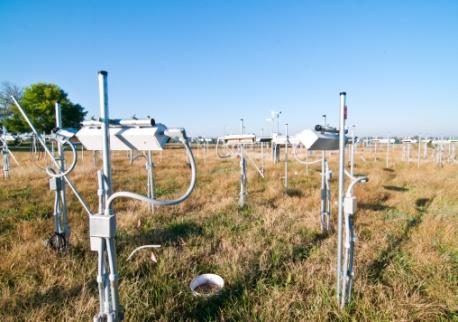
Photo of the UK Forage Climate Change Experiment in Lexington, KY.

What Have We Learned?

Effects of warming and increased precipitation on total yearly pasture production varied depending on the year of study; however, climate treatments never reduced production below that of the ambient control.  Effects on forage quality metrics were relatively subtle. For endophyte-infected tall fescue, warming increased both ergovaline and ergovalinine concentrations (+40% of that in control ambient plots) throughout the study.  These results indicate that central Kentucky pastures may be relatively resilient to future climate change; however, warming induced increases in ergot alkaloid concentrations in endophyte-infected tall fescue suggests that animal issues associated with fescue toxicosis are likely to be exacerbated under future climatic conditions.

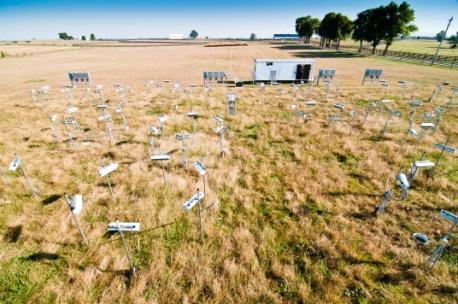
Aerial photo of the UK Forage Climate Change Experiment.

Future Plans

We will continue this study for one more growing season and then destructively harvest it (in Fall 2013).

Authors

Rebecca McCulley, Associate Professor, Dept of Plant and Soil Sciences, University of Kentucky,  rebecca.mcculley@uky.edu

Jim Nelson – Research Scientist, Dept. of Plant & Soil Sciences, University of Kentucky

A. Elizabeth Carlisle – Research Technician, Dept. of Plant & Soil Sciences, University of Kentucky

Additional Information

http://www.ca.uky.edu/pss/index.php?p=997

Acknowledgements

We acknowledge the support of DOE-NICCR grant DE-FC02-06ER64156, UK’s College of Agriculture Research Office, the USDA-ARS Forage Animal and Production Research Unit (specific cooperative agreement 58-6440-7-135), the Kentucky Agricultural Experiment Station (KY006045), and numerous undergraduates and graduate students who have helped collect the data presented herein.

The authors are solely responsible for the content of these proceedings. The technical information does not necessarily reflect the official position of the sponsoring agencies or institutions represented by planning committee members, and inclusion and distribution herein does not constitute an endorsement of views expressed by the same. Printed materials included herein are not refereed publications. Citations should appear as follows. EXAMPLE: Authors. 2013. Title of presentation. Waste to Worth: Spreading Science and Solutions. Denver, CO. April 1-5, 2013. URL of this page. Accessed on: today’s date.

Climate Change Extension: Presenting the Science is Necessary But Insufficient

Waste to Worth: Spreading science and solutions logoWaste to Worth home | More proceedings….

Why Should We Consider How to Present Scientific Information?

To engage a wide spectrum of agricultural producers in the discussion of human-induced climate change and its mitigation.

What Did We Do?

Our initial Extension efforts on climate change in Kentucky were based on an information-deficit model, which assumes that citizens fail to accept climate change because they don’t understand the science.  However, social science research indicates that this topic has cultural significance for many agricultural producers, suggesting that presentation of sound scientific information alone is likely to be unpersuasive. Based on social science research, we redesigned our outreach efforts to emphasize: (1) more selective presentation of geophysical data; (2) positive messages as frequently as possible; and (3) messages that speak to core identities of citizens with diverse worldviews.

What Have We Learned?

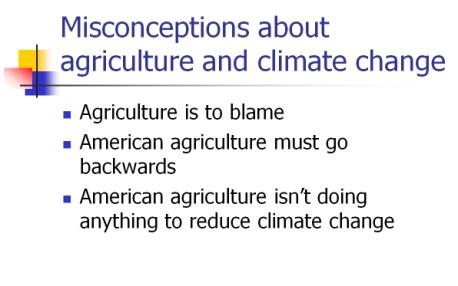
Starting discussions on this sensitive topic are more successful if we make it clear to producers how much we appreciate their role in producing our food and, yes, in helping to reduce climate change.  For example, U.S. producers deserve to be congratulated for the dramatic improvements made in agricultural productivity over the decades, since this has resulted in substantial reductions in carbon emissions when expressed per unit of production (per bushel, per gallon of milk, etc).  We also point out practices they already do that help to reduce climate change, including energy-conservation measures and capturing biogas.

Future Plans

We plan to continue providing and refining our outreach on climate change, based on feedback from audiences and research from the social sciences.  While we recognize that our current efforts may not quickly result in increased action on climate-change mitigation, our approach is designed to build acceptance of climate change as a topic deserving of the engagement of a wide range of citizens.  Our working assumption is that promoting discussion on this highly divisive topic requires sensitivity to, and respect for, the diversity of worldviews held by Americans

Authors

Paul Vincelli, Provost’s Distinguished Service Professor, University of Kentucky; pvincell@uky.edu

Rebecca McCulley, Associate Professor, University of Kentucky

Judith Humble, L.C.S.W., Lexington, KY

Additional Information

http://www.ca.uky.edu/agcollege/plantpathology/people/vincelli.htm

http://www2.ca.uky.edu/environment-files/ccflyervincelli.pdf

http://www.ca.uky.edu/agc/pubs/id/id191/id191.pdf

The authors are solely responsible for the content of these proceedings. The technical information does not necessarily reflect the official position of the sponsoring agencies or institutions represented by planning committee members, and inclusion and distribution herein does not constitute an endorsement of views expressed by the same. Printed materials included herein are not refereed publications. Citations should appear as follows. EXAMPLE: Authors. 2013. Title of presentation. Waste to Worth: Spreading Science and Solutions. Denver, CO. April 1-5, 2013. URL of this page. Accessed on: today’s date.

Impacts of Changing Climate in the Northeast on Manure Storage

Waste to Worth: Spreading science and solutions logoWaste to Worth home | More proceedings….

Abstract

Manure storage design and operation are influenced by climate and weather. The Northeast United States has been identified as likely to experience more frequent and larger precipitation events in climate change models. The Northeast Regional Climate Center (NRCC) predicts that particularly in New York and New England where the frequency of 2 inch rainfall events has increased since the 1950s and storms once considered a 1 in 100 year event have become more frequent. Such storms are now likely to occur almost twice as often. In consultation with Natural Resource Conservation Service (NRCS) the NRCC has put together a website www.precip.net that includes estimates of extreme rainfall for various durations (from 5 minutes to 10 days) and recurrence intervals (1 year to 500 years). Although the public website remains static, providing design criteria, updated data is continually collected. It is anticipated that this will show a continual shift in extreme rainfall amounts. Monthly and yearly rainfall also impact manure storage design. The impacts of both changing extreme rainfall and monthly rainfall amounts on manure storage design are explored. Higher freeboard amounts to protect from overtopping and more total storage to provide flexibility in abnormally wet weather are recommended to be incorporated in manure storage facility designs.


Observed precipitation change showing an increase in the northeast, from http://ncadac.globalchange.gov/download/NCAJan11-2013-publicreviewdraft-chap2-climate.pdf draft for public comment Chapter 2 Our  Changing Climate

Why Are We Concerned About Climate Change Impacts on Manure Storage?

The need to increase the storage capacity of manure storages due to climate change is evaluated. Although the weather is variable, climate change appears to increase  precipatation especially during the winter storage period. This increase in precipatation and the increased control of winter manure spreading puts farms with too little storage at greater risk.  Although in general the 25 year 24 hour storm has not increased in NY, farms have experienced less storage than anticipated.  The use of average precipitation amounts based on the full period of record doesn’t take into account above average precipitation during the storage period or recent increases in winter precipitation.

What Did We Do?

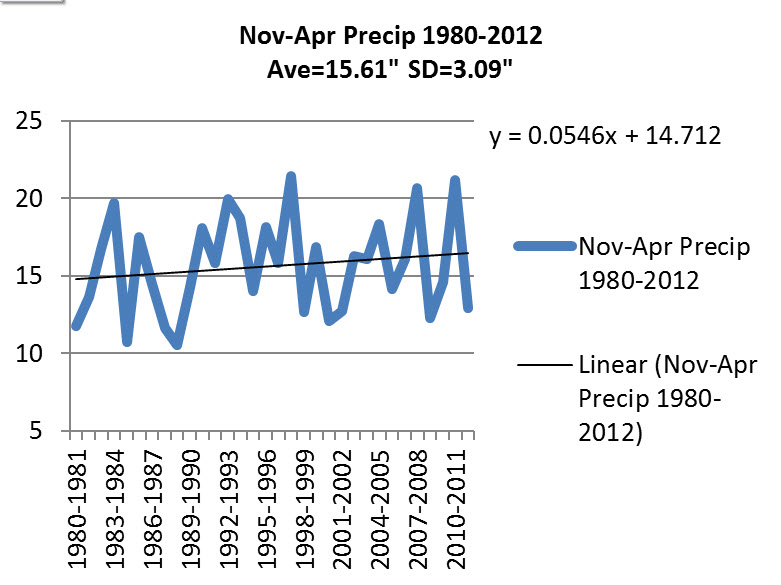
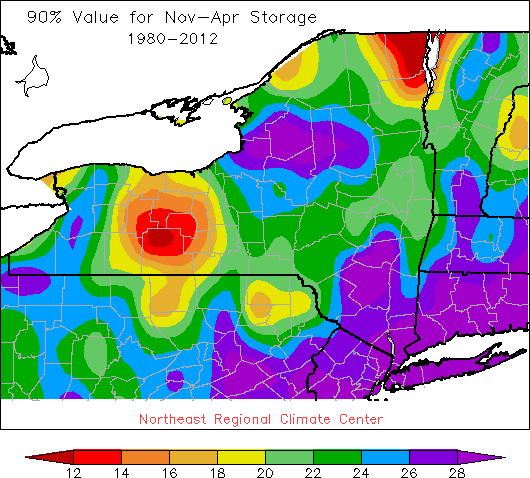
Increase in precipitation for the 8 month storage period at Ithaca NY from 1980 to 2011.

Average winter precipatiation was determined in 3 periods of record, prior to 1950, 1950 to 1980, and 1980 to 2012 at five locations in NYS. This showed that the more recent period had an increased precipitation.  This matches climate model predictions for increased winter precipitation in the northeast.  The amount of winter precipitation that would not be exceeded 90% of the time was determined.   Present design proceedures use the average precipitation for each month of winter storage.  This means that 50% of the time a storage may experience more precipitation than designed. Maps were prepared to show the precipitation amounts that would not be exceeded 90% of the time for both 6 months and 8 month storage periods.

Winter precipitation amounts for the 8 month storage period with a 90% chance of not being exceeded.

What Have We Learned?

There are many reasons for manure storages to fill faster than design including; increased animal numbers, increased manure production, increased bedding or wash water, additional drainage area, and failure to empty prior to the storage period. Wetter weather than average and wet weather in the spring puts farms with storage at risk. The winter precipitation amount is increasing..  NYS farms with storage are experiencing stress during some seasons that then cause them to try to reduce the stress by spreading manure at times that can potentially pollute.  Prudent manure storagedesign whould take this into account.  Using updated and conservative precipitation amounts would increase the designed storage. This would increase the cost of the storage structures but allow farms to follow their Nutrient management plans more closely.

Future Plans

NY NRCS will change the precipitation amount used in the design of manure storages.

Authors

Peter Wright PE, State Conservation Engineer Natural Resources Conservation Service , Syracuse NY, peter.wright@ny.usda.gov

Jessica L. Rennells, Climatologist, Northeast Regional Climate Center, Cornell University

Arthur T. DeGaetano, Director Northeast Regional Climate Center, Cornell University

Curt Gooch P.E. , Senior Extension Associate, PRO-Dairy, Cornell University

Additional Information

https://www.usda.gov/oce/energy-and-environment/climate

http://ncadac.globalchange.gov/download/NCAJan11-2013-publicreviewdraft-chap2-climate.pdf

The authors are solely responsible for the content of these proceedings. The technical information does not necessarily reflect the official position of the sponsoring agencies or institutions represented by planning committee members, and inclusion and distribution herein does not constitute an endorsement of views expressed by the same. Printed materials included herein are not refereed publications. Citations should appear as follows. EXAMPLE: Authors. 2013. Title of presentation. Waste to Worth: Spreading Science and Solutions. Denver, CO. April 1-5, 2013. URL of this page. Accessed on: today’s date.

Money from Something: Carbon Market Developments for Agriculture

Waste to Worth: Spreading science and solutions logoWaste to Worth home | More proceedings….

Abstract

* Presentation slides are available at the bottom of the page.

For more than a decade, the potential to earn revenue from climate-saving activities in agriculture has been touted throughout farm-related industries. This presentation will assume a basic knowledge of the concept of carbon markets as a kind of ecosystem service market. The focus will instead be put on current market opportunities and the importance of learning from past mistakes. Included in the discussion will be carbon offset opportunities for methane capture from manure digesters and composting and nitrous oxide reduction from controls on nitrogen fertilization. Participants will learn about voluntary and compliance market opportunities and the value of offsets versus transactions costs in today’s markets. Sources of market information will also be discussed.

Topics:

  • Ecosystem services markets: Carbon credits and more.
  • Types of offsets relevant to livestock and crop producers (e.g., methane and nitrous oxide).
  • Rules of the road: How to read the key parts of project protocols.
  • Once and future markets: Consider the differences between voluntary and compliance markets.
  • Show us the money: Have any producers really made money from carbon markets?

Purpose

During the past decade, the potential to earn revenue from greenhouse gas reductions in agriculture, especially from anaerobic digestion projects, generated some enthusiasm for this emerging ecosystem market. In 2005, dairies in Washington and Minnesota received the first carbon credit payments for their digesters through the Chicago Climate Exchange (CCX), a pilot cap-and-trade market established in 2003. With the failure of the 111th Congress to complete passage of a national cap-and-trade law in the summer of 2010, the CCX closed shop. What has happened since that time? What is the potential today for livestock producers to benefit from carbon markets or carbon pricing? We look at current markets and summarize the opportunities.

What Did We Do?

The Washington State University (WSU) Energy Program monitors technology, policy and market developments about anaerobic digestion as part of its land-grant mission to support industry and agriculture in Washington state. Because of the potential value of digesters to dairy producers, we follow developments in a wide range of existing and potential ecosystem markets, including renewable energy and fuels, carbon/GHGs, nutrients, and water. Preparation for this presentation included surveys of academic and popular literature, interviews with project developers and market insiders, and analysis of the participation in carbon trading by existing livestock digester projects in the U.S.

What Have We Learned?

The existing landscape of livestock anaerobic digestion projects illustrates three major types or models of carbon market finance: utility-based programs, voluntary carbon markets and compliance-based cap-and-trade markets.

Utility-Based Opportunities

Vermont is home to at least 15 operational dairy-based digesters. Only two digesters serve farms with more than 2,000 cows. Of the balance, about half are below and half above 1,000 cows. All of the Vermont digesters produce renewable electricity and participate in one or more utility-based incentive programs. One example is the Vermont’s Sustainably Priced Energy Enterprise Development (SPEED) program, which establishes standard offer contracts between utilities and renewable energy project developers. The goal of the SPEED program is to support in-state production of renewable power from hydro, solar PV, wind, biomass, landfill gas and farm methane with an overall portfolio target of 20 percent by 2017.

A key mechanism of the program is the long-term (20-year) Standard Offer contract and default pricing for the different types of renewable power. Default prices were calculated to allow developers to recover their costs with a positive return on investment. The default prices established for the first two rounds of farm methane projects were $0.16/kWh and $0.14/kWh, respectively. This compares to an average retail price of $0.146/kWh for electricity in the state. The default prices do not account for the environmental attributes of the green power for farm methane projects.

Many of the Vermont digesters participate in the Cow Power Program, established by  the former Central Vermont Public Service (CVPS), now a part of Green Mountain Power, in 2004. The Cow Power Program offers customers the opportunity to purchase the environmental attributes (renewable energy and GHG reduction) from participating dairy digester projects at a rate of $0.04/kWh. This value was passed along to the suppliers of the dairy-based green power.

These two Vermont programs continue to operate in tandem and provide maximum benefit to Vermont’s diary digester projects. By one estimate, customers participating through the Cow Power program have provided to dairy digester operators more than $3.5 million in value for the environmental attributes created in the past eight years.

Other examples of this type of type of utility-based standard offer or incentive pricing for farm power can be found in North Carolina and Wisconsin.

Voluntary Carbon Offsets Opportunities

Voluntary carbon markets are built on decisions by utilities, corporations, and other businesses to offset their carbon footprint impacts through the purchase of third-party verified carbon credits. While the voluntary carbon market has suffered ups and downs, especially during the recent economic downturn, corporations continue to respond to pressures such as corporate stewardship policies or carbon disclosure programs that require accounting for environmental and greenhouse gas impacts. 

The voluntary market is inhabited by both nonprofit and for-profit organizations that bring sellers and buyers together. The types and value of offsets are more varied, depending on the appetites and budgets of the buyers.

For example, the voluntary carbon market has been a preferred option for Washington-based Farm Power, which has agreements with The Carbon Trust (Portland, OR) and Native Energy (Burlington, VT) for carbon credits generated from the capture and destruction of methane from its farm digester projects in Washington state. Both The Carbon Trust and Native Energy use designated registries and protocols, such as the Carbon Action Registry (CAR) or Verified Carbon Standard (VCS), as the vehicle through which credits are registered, verified, and eventually retired on behalf of their customers.

The Climate Trust – Retires registered carbon offsets on behalf of at least five Oregon-based utilities that are required by state law to offset the GHG impacts that occur from installing new power plants in the state. The Trust also sources offsets for the Smart Energy program created by NW Natural as an opportunity for customers to support production of “carbon-neutral” natural gas through farm-based biodigesters.

Native Energy – Has a diverse base of individual and business customers. They source carbon offsets for a wide range of large, environmentally conscious businesses, such as eBay, Stonyfield Farm, Brita, and Effect Partners, who provided some funding up front for offsets from Farm Power’s Rainier Biogas project. Offset values vary widely depending on demand, supply, and the “value” of the project’s story. In a few cases, offset values may loosely track the prices for compliance-grade carbon offsets with a discount for funding provided in advance of project implementation.

Compliance Cap-and-Trade Offsets Opportunities

Finally, the compliance market opportunity refers to cap-and-trade programs established by state governments to reduce GHG pollution. These are formal regulatory systems. The government establishes caps on GHGs for targeted sources and issues permits or allowances that are distributed, sold, or auctioned to regulated entities for each ton of emissions they generate. Allowances are typically tradable instruments, so entities can easily manage their allowance needs and accounts. The goal of cap-and-trade systems is to use market-based mechanisms to achieve pollution reductions at the lowest possible cost and with the least disruption to the economy.

Systems might also allow covered entities to use offsets generated voluntarily by non-covered entities to meet some portion of their emission reduction target. Allowed offsets are generated using approved protocols, verified by approved third-party verifiers, and registered/sold through approved registries. 

Two domestic cap-and-trade programs survived the past decade and are in operation today—the Regional Greenhouse Gas Initiative (RGGI), which involves nine Northeastern states, and the California market, established by Assembly Bill 32 (AB 32) and administered by the California Air Resources Board (CARB). Each of these systems operates under its own sets of rules.

The table below highlights features of these two market approaches.

Regional Greenhouse Gas Initiative (RGGI)

AB 32 – California Market

Nine states: Connecticut, Delaware, Maine, Maryland, Massachusetts, New Hampshire, New York, Rhode Island, and Vermont

California only (may establish a market connection with Ontario, Canada)

Covers the electricity sector: 200 power plants

Covers power and industrial entities that generate more than 25,000 metric tons of CO2e annually; will expand to include the transportation fuel sector in 2015

Allowances based on U.S. short tons of CO2

Allowances based on metric  tons of CO2

Allowances are auctioned

Allowances are auctioned, with a minimum floor price of $10/MtCO2e

Offsets are very limited – few types, very strict rules, only 3% of compliance allowed

Offsets are allowed in four categories: livestock methane, forestry, urban forestry, and ozone-depleting substances; entities may use offsets for up to 8% of their compliance obligation

Current auction prices: ~ $2.00

Current auction prices: ~$13.50; offset values are estimated to lag allowance prices by about 25%


Among farm digester project developers, interest in the California market is guarded. Agricultural methane capture and destruction is one of just four approved offset categories. The demand for these offsets could become strong, and the rules allow projects from any state to participate. On the other hand, the costs for monitoring equipment can be significant, $15,000 or more for start up, with similar sums every year for verification and registration.  These monitoring and transaction costs will tend to favor projects with larger livestock numbers (1,500+ dairy animal units, or AUs). To date, 60 existing digester projects have listed with the Climate Action Registry—a first step to participation in the California market. Of these projects, 36 have registered more than 800,000 verified carbon credits.

Conclusions:

Values for carbon (i.e., GHG reductions) can be observed in the marketplace and measured in terms of market goodwill or as prices for environmental attributes or carbon credits from voluntary and compliance markets.

Developers of smaller farm digester projects (<1,500 AUs) may find their best value through utility-based incentive programs or through participation in voluntary carbon markets.

Developers of larger farm digester projects (>1,500 AUs) should explore the potential costs and benefits of registering to participate as an offset project in the California carbon market.

Future Plans

The WSU Energy Program will continue to monitor market developments related to this topic and encourage livestock producers to consider methane capture and anaerobic digestion as means to control odors, manage nutrients, and produce valuable biogas resources.

Authors

Jim Jensen, Sr. Bioenergy and Alternative Fuel Specialist, Washington State University Energy Program jensenj@energy.wsu.edu

Additional Information


The authors are solely responsible for the content of these proceedings. The technical information does not necessarily reflect the official position of the sponsoring agencies or institutions represented by planning committee members, and inclusion and distribution herein does not constitute an endorsement of views expressed by the same. Printed materials included herein are not refereed publications. Citations should appear as follows. EXAMPLE: Authors. 2013. Title of presentation. Waste to Worth: Spreading Science and Solutions. Denver, CO. April 1-5, 2013. URL of this page. Accessed on: today’s date.

Estimation of On-Farm Greenhouse Gas Emissions from Poultry Houses

Waste to Worth: Spreading science and solutions logoWaste to Worth home | More proceedings….

*Abstract

Much of the greenhouse gases (GHG) generated from the poultry industry is primarily from feed production. The poultry producer does not have control over the production and distribution of the feed used on the farm. However, they can control other emissions that occur on the farm such as emissions from the utilization of fossil fuels and from manure management. A series of studies were conducted to evaluate on-farm greenhouse gas emissions from broiler, breeder and pullets houses in addition to an in-line commercial layer complex. Data was collected from distributed questionnaires and included; the activity data from the facility operations (in the form of fuel bills and electricity bills), house size and age, flock size, number of flocks per year, and manure management system. Emissions were calculated using GHG calculation tools and emission factors from IPCC. The carbon dioxide, nitrous oxide and methane emissions were computed and a carbon footprint was determined and expressed in tonnes carbon dioxide equivalents (CO2e).

The results from the study showed that about 90% of the emissions from the broiler and pullet farms were from propane and diesel gas use, while only 6% of the total emissions from breeder farms were from propane and diesel gas use. On breeder farms, about 29% of GHG emissions were the result of electricity use while the pullet and broiler farms had only 3% emissions from electricity use. Emissions from manure management in the layer facility were responsible for 53% of the total emission from the facility, while electricity use represented 28% of the total emissions. The results from these studies identified the major sources of on-farm of GHG emissions. This will allow us to target these areas for abatement and mitigation strategies.

Why Study Greenhouse Gases on Poultry Farms?

Human activities, including modern agriculture, contribute to greenhouse gas (GHG) emissions (IPCC, 1996). Agriculture has been reported to be responsible for 6.3% of the GHG emissions in the U.S., of this 53.5% were a result of animal agriculture. Of the emissions from animal agriculture, poultry was responsible for only 0.6%. Much of the CO2e that is generated from the poultry industry is primarily from feed production, the utilization of fossil fuels and manure management (Pelletier, 2008; EWG, 2011). While the poultry producer does not have control over the production of the feed that is used on the farm, there are other GHG emissions that occur on the farm that are under their control. These emissions may be in the form of purchased electricity, propane used for heating houses and incineration of dead birds, diesel used in farm equipment which includes generators and emissions from manure management.

What Did We Do?

A series of studies were conducted to examine the GHG emissions from poultry production houses and involved the estimation of emissions from; broiler grow-out farms, pullet farms, breeder farms from one commercial egg complex. Data collection included the fuel and electricity bills from each farm, house size and age, flock size and number of flocks per year and manure management. The GHG emissions were evaluated using the IPCC spreadsheets with emission factors based on region and animal type. We separated the emissions based on their sources and determined that there were two main sources, 1. Mechanical and 2. Non-mechanical. After we determined the sources, we looked at what contributed to each source.

What Have We Learned?

When all GHG emissions from each type of operation was evaluated, the total for an average broiler house was approximately 847 tonnes CO2e/year, the average breeder house emission was 102.56 tonnes CO2e/year, pullet houses had a total emission of 487.67 tonnes CO2e/year, and 4585.52 CO2e/year from a 12 house laying facility. The results from this study showed that approximately 96% of the mechanical emissions from broiler and pullet houses were from propane (stationary combustion) use while less than 5% of these emissions from breeder houses were from propane use. The high emission from propane use in broiler and pullet houses is due to heating the houses during brooding and cold weather. Annual emissions from manure management showed that layer houses had higher emissions (139 tonnes CO2e/year) when compared to breeder houses (65.3 tonnes CO2e/year), broiler houses (59 tonnes CO2e/year) and pullet houses (61.7tonnesCO2e/year). Poultry reared in management systems with litter and using solid storage has relatively high N2O emissions but low CH4 emissions.We have learned that there is variability in the amount of emissions within each type of poultry production facility regardless of the age or structure of houses and as such reduction strategies will have to be tailored to suit each situation. We have also learned that the amount of emissions from each source (mechanical or non-mechanical) depends on the type of operation (broiler, pullet, breeder, or layer).

Future Plans

Abatement and Mitigation strategies will be assessed and a Poultry Carbon Footprint Calculation Tool is currently being developed by the team and will be made available to poultry producers to calculate their on-farm emissions. This tool will populate a report and make mitigation recommendations for each scenario presented. Best management practices (BMP) can result in improvements in energy use and will help to reduce the use of fossil fuel, specifically propane on the poultry farms thereby reducing GHG emissions, we will develop a set of BMP for the poultry producer.

Authors

Claudia. S.  Dunkley, Department of Poultry Science, University of Georgia; cdunkley@uga.edu

Brian. D. Fairchild, Casey. W. Ritz, Brian. H. Kiepper, and Michael. P. Lacy, Department of Poultry Science, University of Georgia


The authors are solely responsible for the content of these proceedings. The technical information does not necessarily reflect the official position of the sponsoring agencies or institutions represented by planning committee members, and inclusion and distribution herein does not constitute an endorsement of views expressed by the same. Printed materials included herein are not refereed publications. Citations should appear as follows. EXAMPLE: Authors. 2013. Title of presentation. Waste to Worth: Spreading Science and Solutions. Denver, CO. April 1-5, 2013. URL of this page. Accessed on: today’s date.

From Waste to Energy: Life Cycle Assessment of Anaerobic Digestion Systems

Waste to Worth: Spreading science and solutions logoWaste to Worth home | More proceedings….

Abstract

In recent years, processing agricultural by-products to produce energy has become increasingly attractive due to several reasons: centralized availability of low cost by-products, avoiding the fuel vs. food debate, reduction of some associated environmental impacts, and added value that has the potential to generate additional income for producers. Anaerobic digestion systems are one waste-to-energy technology that has been proven to achieve these objectives.  However, investigation on the impacts of anaerobic digestion has focused on defined segments, leaving little known about the impacts that take place across the lifecycle. Current systems within the U.S. are dairy centric with dairy manure as the most widely used substrate and electricity production as the almost sole source for biogas end use.  Recently, there is more interest in exploring alternative feedstocks, co-digestion pathways, digestate processing, and biogas end uses.  Different operational and design practices raise additional questions about the wide reaching impacts of these decisions in terms of economics, environment, and operational aspects, which cannot be answered with the current state of knowledge.

Why Study the Life Cycle of Anaerobic Digestion?

Waste management is a critical component for the economic and environmental sustainability of the agricultural sector. Common disposal methods include land application, which consumes large amounts of land resources, fossil energy, and produces significant atmospheric GHG emissions. Proof of this is that agriculture accounts for approximately 50% of the methane (CH4) and 60% of the nitrous oxide (N2O) global anthropogenic emissions, being livestock manure one of the major sources of these emissions (Smith et al., 2007). In the last decades, the development of anaerobic digestion (AD) systems has contributed to achieve both climate change mitigation and energy independence by utilizing agricultural wastes, such as livestock manure, to produce biogas. In addition, it has been claimed that these systems contribute to nutrient management strategies by adding flexibility to the final use and disposal of the remaining digestate. Despite these advantages, the implementation of AD systems has been slow, due to the high investment and maintenance costs. In addition, little is still known about the lifecycle impacts and fate and form of nutrients of specific AD systems, which would be useful to validate their advantages and identify strategic and feasible areas for improvement.

The main goal of this study is to quantify the lifecycle GHG emissions, ammonia emissions, net energy, and fate and form of nutrients of alternative dairy manure management systems including land-spread, solid-liquid separation, and anaerobic digestion. As cow manure is gaining an important role within the biofuel research in the pursuit for new and less controversial feedstocks, such as corn grain, the results of this study will provide useful information to researchers, dairy operators, and policy makers.

What Did We Do?

Lifecycle sustainability assessment (LCSA) methods were used to conduct this research, which is focused in Wisconsin. The state has nearly 1.3 million dairy cows that produce approximately 4.7 million dry tons of manure annually and is the leading state for implemented agricultural based AD systems. Manure from a 1,000 milking cow farm (and related maintenance heifers and dry cows) was taken as the base-case scenario. Four main processes were analyzed using the software GaBi 5 (PE, 2012) for the base case: manure production and collection, bedding sand-separation, storage, and land application. Three different manure treatment pathways were compared to the base-case scenario: including a solid-liquid mechanical separator, including a plug-flow anaerobic digester, and including both the separator and the digester. The functional unit was defined as one kilogram of excreted manure since the function of the system is to dispose the waste generated by the herd. A cradle-to-farm-gate approach was defined, but since manure is considered waste, animal husbandry and cultivation processes were not included in the analysis (Fig. 1). Embedded and cumulative energy and GHG emissions associated with the production of material and energy inputs (i.e. sand bedding, diesel, electricity, etc.) were included in the system boundaries; however, the production of capital goods (i.e. machinery and buildings) were excluded.
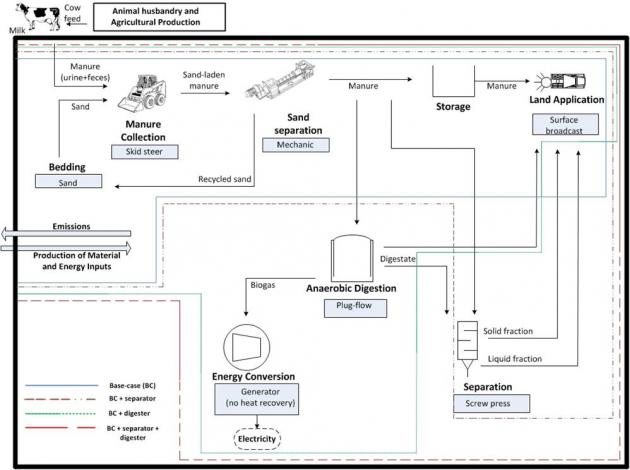
Figure 1. System boundaries of the base case scenario (land-spread manure) and the three manure treatment pathways: 1) solid-liquid separation, 2) anaerobic digestion, 3) anaerobic digestion and solid-liquid separation.

Global warming potential (GWP) was characterized for a 100-year time horizon and measured in kg of carbon dioxide equivalents (CO2-eq). Characterization factors used for gases other than CO2 were 298 kg CO2-eq for N2O, 25 kg CO2-eq for abiotic CH4 based on the CML 2001 method, and 24 kg CO2-eq for biotic CH4. CO2 emissions from biomass are considered to be different from fossil fuel CO2 emissions in this study; the former recycles existing carbon in the system, while the latter introduces new carbon into the atmosphere. In this context, it will be assumed that CO2 emissions from biomass sources were already captured by the plant and will not be characterized towards GWP[1]. This logic was applied when characterizing biogenic methane as one CO2 was already captured by the plant, therefore, reducing the characterization factor from 25 kg CO2-eq to 24 kg CO2-eq. Even though ammonia (NH3) does not contribute directly to global warming potential, it is considered to be an indirect contributor to this impact category (IPCC, 2006).

Data was collected from different sources to develop lifecycle inventory (LCI) as specific to Wisconsin as possible, in order to maximize the reliability, completeness, and representativeness of the model. The following points summarize some of the data sources and assumptions used to construct the LCI:

  • Related research (Reinemann et al., 2010): This model provided data about animal husbandry and crop production for dairy diet in Wisconsin.
  • Manure management survey: The survey, sent to dairy farms in Wisconsin, has the objective of providing information related to manure management practices and their associated energy consumption.
  • In house experiments: laboratory experiments, conducted at the University of Wisconsin-Madison, provided characterization data about manure flows before and after anaerobic digestion and solid-liquid separation and manure density in relation to total solids (Ozkaynak and Larson, 2012).
  • Material and energy databases: National Renewable Energy Laboratory U.S. LCI dataset (NREL, 2008), PE International Professional database (PE, 2012), and EcoInvent (EcoInvent Center, 2007), which are built into GaBi 5. The electricity matrix used in this LCA represents the mix of fuels that are part of the electric grid of Wisconsin.
  • Representative literature review.

Biotic emissions from manure have been cited to be very site specific (IPCC, 2006) and even though the Intergovernmental Panel on Climate Change (IPCC) provides regional emission factors, they are only for CH4 and N2O. Specific GHG emission factors were developed for Wisconsin based on the Integrated Farm System Model (IFSM) (Rotz et al., 2011), and by using key parameters that affect emissions (e.g. temperature, volatile solids, manure management practices) for each stage of the manure management lifecycle.

What Have We Learned?

Emissions are produced from consumed energy and from manure during each stage of the manure management lifecycle. In the base-case scenario, manure storage is the major contributor to GHG emissions. In this scenario, a crust tends to form on top of stored manure due to the higher total solids content when compared to digested manure and the liquid fraction of the separated manure. The formation of this crust affects overall GHG emissions (e.g. crust formation will increase N2O emissions but reduce CH4 emissions). The installation of a digester reduces CH4 emissions during storage due to the destruction of volatile solids that takes place during the digestion process. However, some of the organic nitrogen changes form to ammoniacal nitrogen, increasing ammonia and N2O emissions posterior to storage and land application. Energy consumption increases with both anaerobic digester and separation, but net energy is higher with anaerobic digestion due to the production of on-farm electricity. The nutrient balance is mostly affected by the solid-liquid separation process rather than the anaerobic digestion process.

Future Plans

A comprehensive and accurate evaluation of the lifecycle environmental impacts of AD systems requires assessing the multiple pathways that are possible for the production of biogas, which are defined based on local resources, technology, and final uses of the resulting products.  A second goal of this research is to quantify the net GHG and ammonia emissions, net energy gains, and fate of nutrients of multiple and potential biogas pathways that consider different: i) biomass feedstocks (e.g miscanthus and corn stover), ii) management practices and technology choices, and iii) uses of the produced biogas (e.g. compressed biogas for transportation and upgraded biogas for pipeline injection) and digestate (e.g. bedding). This comprehensive analysis is important to identify the most desirable pathways based on established priorities and to propose improvements to the currently available pathways.

Authors

Aguirre-Villegas Horacio Andres. Ph.D. candidate. Department of Biological Systems Engineering, University of Wisconsin-Madison.  aguirreville@wisc.edu

Larson Rebecca. Ph.D. Assistant Professor. Department of Biological Systems Engineering, University of Wisconsin-Madison.

Additional Information

    • Ozkaynak, A. and R.A. Larson.  2012.  Nutrient Fate and Pathogen Assessment of Solid Liquid Separators Following Digestion.  2012 ASABE International Meeting, Dallas, Texas, August 2012

References

De Klein C., R. S.A. Novoa, S. Ogle, K. A. Smith, P. Rochette, T. C. Wirth,  B. G. McConkey, A. Mosier, and K. Rypdal. 2006. Chapter 11: N2O emissions from managed soils, and CO2 emissions from lime and urea application. In Volume 4: Agriculture, Forestry and Other Land Use. IPCC 2006, 2006 IPCC Guidelines for National Greenhouse Gas Inventories, Prepared by the National Greenhouse Gas Inventories Programme, Eggleston H.S., Buendia L., Miwa K., Ngara T. and Tanabe K. (eds). Published: IGES, Japan.

Ecoinvent Centre.2007. Ecoinvent Eata. v2.0. Ecoinvent Reports No.1-25. Swiss Centre for Life Cycle Inventories. Dübendorf.

National Renewable Energy Laboratory (NREL). 2008. U.S. Life-Cycle Inventory (LCI) Database.

Ozkaynak, A. and R.A. Larson.  2012.  Nutrient Fate and Pathogen Assessment of Solid Liquid Separators Following Digestion.  2012 ASABE International Meeting, Dallas, Texas, August 2012

PE International. 2012. Software-systems and databases for lifecycle engineering.

Reinemann D. J., T.H. Passos-Fonseca, H.A. Aguirre-Villegas, S. Kraatz, F. Milani, L.E. Armentano, V. Cabrera, M. Watteau, and J. Norman. 2011. Energy intensity and environmental impact of integrated dairy and bio-energy systems in Wisconsin, The Greencheese Model.

Rotz, C. A., M. S. Corson, D. S. Chianese, F. Montes, S.D. Hafner, R. Jarvis, and C. U. Coiner. 2011. The Integrated Farm System Model (IFSM). Reference Manual Version 3.4. Accessed on Nov, 2012. Available at: http://www.ars.usda.gov/Main/docs.htm?docid=8519

Smith, P., D. Martino, Z. Cai, D. Gwary, H. Janzen, P. Kumar, B. McCarl, S. Ogle, F. O’Mara, C. Rice, B. Scholes, O. Sirotenko. 2007: Agriculture. In Climate Change 2007: Mitigation. Contribution of Working Group III to the Fourth Assessment Report of the Intergovernmental Panel on Climate Change [B. Metz, O.R. Davidson, P.R. Bosch, R. Dave, L.A. Meyer (eds)], Cambridge University Press, Cambridge, United Kingdom and New York, NY, USA.

Acknowledgements

This work was funded by the Wisconsin Institute for Sustainable Agriculture (WISA-Hatch)

The authors are solely responsible for the content of these proceedings. The technical information does not necessarily reflect the official position of the sponsoring agencies or institutions represented by planning committee members, and inclusion and distribution herein does not constitute an endorsement of views expressed by the same. Printed materials included herein are not refereed publications. Citations should appear as follows. EXAMPLE: Authors. 2013. Title of presentation. Waste to Worth: Spreading Science and Solutions. Denver, CO. April 1-5, 2013. URL of this page. Accessed on: today’s date.
Greenhouse Gas Emissions from Livestock & Poultry

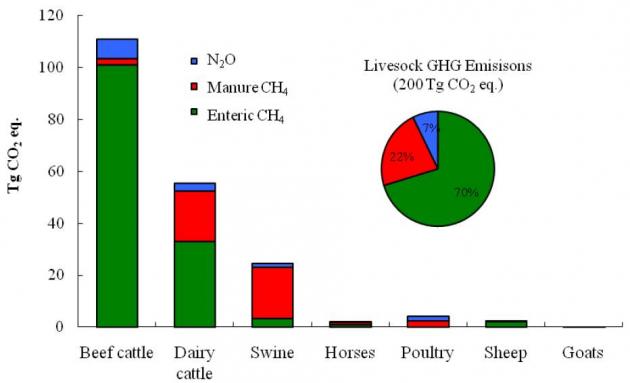
Agriculture is both a source and sink for greenhouse gases (GHG). A source is a net contribution to the atmosphere, while a sink is a net withdrawal of greenhouse gases.  In the United States, agriculture is a relatively small contributor, with approximately 8% of the total greenhouse gas emissions, as seen below.  Most agricultural emissions originate from soil management, enteric fermentation (the ruminant digestion process that produces methane), energy use, and manure management.  The primary greenhouse gases related to agriculture are carbon dioxide, methane, and nitrous oxide. Within animal production, the largest emissions are from beef followed by dairy, and largely dominated by the methane produced in during cattle digestion.

U.S. GHG Inventory

U.S. greenhouse gas inventory with electricity distributed to economic sectors (EPA, 2013) 

Ag Sources of GHGs

U.S. agricultural greenhouse gas sources (Adapted from Archibeque, S. et al., 2012)

Greenhouse gas emissions from livestock in 2008 (USDA, 2011)

Soil Management

Excess nitrogen in agriculture systems can be converted to nitrous oxide through the nitrification-denitrification process. Nitrous oxide is a very potent greenhouse gas, with 310 times greater global warming potential than carbon dioxide.  Nitrous oxide can be produced in soils following fertilizer application (both synthetic and organic).

As crops grow, photosynthesis removes carbon dioxide from the atmosphere and stores it in the plants and soil life. Soil and plant respiration adds carbon dioxide back to the atmosphere when microbes or plants breakdown molecules to produce energy.  Respiration is an essential part of growth and maintenance for most life on earth. This repeats with each growth, harvest, and decay cycle, therefore, feedstuffs and foods are generally considered to be carbon “neutral.”

Some carbon dioxide is stored in soils for long periods of time.  The processes that result in carbon accumulation are called carbon sinks or carbon sequestration.  Crop production and grazing management practices influence the soil’s ability to be a net source or sink for greenhouse gases.  Managing soils in ways that increase organic matter levels can increase the accumulation (sink) of soil carbon for many years.

Animals

The next largest portion of livestock greenhouse gas emissions is from methane produced during enteric fermentation in ruminants – a natural part of ruminant digestion where microbes in the first of four stomachs, the rumen, break down feed and produce methane as a by-product. The methane is released  primarily through belching.

As with plants, animals respire carbon dioxide, but also store some in their bodies, so they too are considered a neutral source of atmospheric carbon dioxide.

Manure Management

A similar microbial process to enteric fermentation leads to methane production from stored manure.  Anytime the manure sits for more than a couple days in an anaerobic (without oxygen) environment, methane will likely be produced.  Methane can be generated in the animal housing, manure storage, and during manure application. Additionally, small amounts of methane is produced from manure deposited on grazing lands.

Nitrous oxide is also produced from manure storage surfaces, during land application, and from manure in bedded packs & lots.

Other sources

There are many smaller sources of greenhouse gases on farms. Combustion engines exaust carbon dioxide from fossil fuel (previously stored carbon) powered vehicles and equipment.  Manufacturing of farm inputs, including fuel, electricity, machinery, fertilizer, pesticides, seeds, plastics, and building materials, also results in emissions.

To learn more about how farm emissions are determined and see species specific examples, see the Carbon Footprint resources.

To learn about how to reduce on-farm emissions through mitigation technology and management options, see the Reducing Emissions resources.

 Additional Resources

Additional Animal Agriculture and Climate Change Resources


Author: Crystal A. Powers, UNL
Reviewers:

Mandatory Greenhouse Gas Emissions Reporting for Animal Agriculture

logo for animal agriculture climate change which includes a weather vane with cow and topImportant note: Congress has prohibited EPA from expending any funds to implement subpart JJ (manure management) of the rule. Industry efforts to overturn subpart JJ are underway, but the outcome is unknown at this time. Though EPA cannot technically enforce the rule, livestock and poultry operations should remain aware of the requirements in the event the Congressional
prohibition is allowed to expire.

[Archived webinar] Mandatory GHG Reporting Rule & Carbon Footprint of Dairy Systems

Which Livestock or Poultry Facilities Meet the Reporting Threshhold?

Several industries are impacted by this rule, including animal agriculture. The rule estimates that around 100 animal facilities will meet the threshhold of 25,000 metric tons of annual carbon dioxide (equivalent) emissions. The following table was excerpted from page 558 of the rule after it was first published (2009). For updates, please visit the EPA Greenhouse Gas Reporting Program.

Animal Population (Annual) Below Which Facilities Are Not Required to Report Emissions
Animal Group Average Annual Animal Population (Head)
Beef 29,300
Dairy 3,200
Swine 34,100
Poultry: Layers 723,000
Poultry: Broilers 38,160,000
Poultry: Turkeys 7,710,000

Facilities below these populations will not be required to report emissions. Facilities that meet or exceed these populations will need to conduct an analysis to determine if they emit more than 25,000 tons of CO2 equivalent.

An important point in the reporting requirements for animal agriculture are that emissions need to be calculated and reported only for the manure management system. Enteric fermentation (fermentation occurring naturally in the rumen or gut) is not included. Emissions from land application of manure are also not included.

Large facilities with more than one type of animal (even if the species present do not individually meet the population listed above) will need to calculate a combined animal group factor.

Reducing GHG Emissions Can Change Reporting Requirements

Facilities that implement technologies or management that reduce their GHG emissions will be able to cease reporting:

  • after 5 consecutive years of emissions below 25,000 metric tons CO2e/year
  • after 3 consecutive years of emissions below 15,000 metric tons CO2e/year
  • if the GHG-emitting processes or operations are shut down

Learning More About Greenhouse Gas Emissions from Animal Agriculture