Photometric measurement of ground-level fugitive dust emissions from open-lot animal feeding operations.

Waste to Worth: Spreading science and solutions logoWaste to Worth home | More proceedings….

Abstract

Fugitive dust from confined livestock operations is a primary air quality issue associated with impaired visibility, nuisance odor, and other quality-of-life factors.  Particulate matter has conventionally been measured using costly scientific instruments such as transmissometers, nephelometers, or tapered-element, oscillating microbalances (TEOMs).  The use of digital imaging and automated data-acquisition systems has become a standard practice in some locations to track visibility conditions on roadways; however, the concept of using photometry to measure fugitive dust concentrations near confined livestock operations is relatively new.  We have developed a photometric method to estimate path-averaged particulate matter (PM10) concentrations using digital SLR cameras and high-contrast visibility targets.  Digital imaging, followed by automated image processing and interpretation, would be a plausible, cost-effective alternative for operators of confined livestock facilities to monitor on-site dust concentrations.  We report on the development and ongoing evaluation of such a method for use by cattle feeders and open-lot dairy producers.

Purpose

To develop a low-cost practical alternative for measurement of path-averaged particulate matter (PM10) concentrations downwind of open-lot animal feeding operations.

What Did We Do?

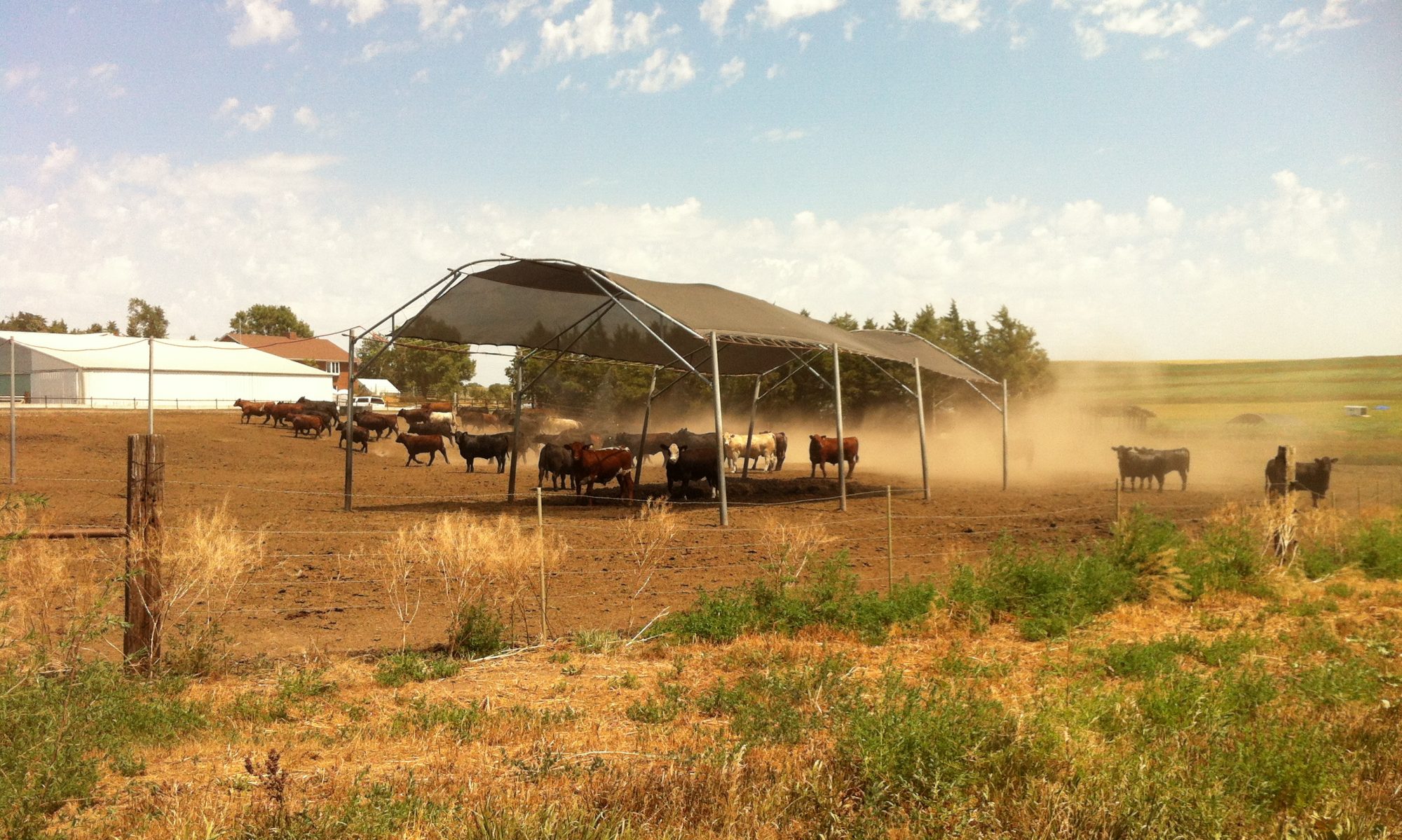
Working downwind of a cattle feedyard under a variety of dust conditions, we photographed an array of high contrast visibility targets with dSLR cameras and compared contrast data extracted from the photographs with path-averaged particulate matter (PM10) concentration data collected from several TEOMs codeployed alonside the visibility targets.

What Have We Learned?

We have developed a photometric method to estimate path-averaged particulate matter (PM10) concentrations using digital SLR cameras and high-contrast visibility targets.  Using contrast data from digital images we expect to predict PM10 concentrations within 20% of TEOM values under the dustiest conditions.  Digital imaging, followed by automated image processing and interpretation, may be a plausible, cost-effective alternative for operators of open-lot livestock facilities to monitor on-site dust concentrations and evaluate the abatement measures and management practices they put in place.

Future Plans

We intend to improve the prediction accuracy of the photometric method and automate it such that it can be easily adapted for use as a cost-effective alternative for measuring path-averaged particulate matter (PM10) concentrations at cattle feedyards and open-lot dairies.

Authors

Brent Auvermann, Professor of Biological and Agricultural Engineering, Texas A&M AgriLife Research.  b-auvermann@tamu.edu

Sharon Preece, Senior Research Associate, Texas A&M AgriLife Research; Brent W. Auvermann, Professor of Biological and Agricultural Engineering, Texas A&M AgriLife Research; Taek M. Kwon, Professor of Electrical and Computer Engineering, University of Minnesota-Duluth; Gary W. Marek, Postdoctoral Research Associate, Texas A&M AgriLife Research; Kevin Heflin, Extension Associate, Texas A&M AgriLife Research; K. Jack Bush, Research Associate, Texas A&M AgriLife Research.

Additional Information

Please contact Brent W. Auvermann, Professor of Biological and Agricultural Engineering, Texas A&M AgriLife Research, 6500 Amarillo Boulevard West, Amarillo TX, 79106, Phone: 806-677-5600, Email: b-auvermann@tamu.edu.

Acknowledgements

This research was underwritten by grants from the USDA National Institute on Food and Agriculture (contract nos. 2010-34466-20739 and 2009-55112-05235).

The authors are solely responsible for the content of these proceedings. The technical information does not necessarily reflect the official position of the sponsoring agencies or institutions represented by planning committee members, and inclusion and distribution herein does not constitute an endorsement of views expressed by the same. Printed materials included herein are not refereed publications. Citations should appear as follows. EXAMPLE: Authors. 2013. Title of presentation. Waste to Worth: Spreading Science and Solutions. Denver, CO. April 1-5, 2013. URL of this page. Accessed on: today’s date.

The National Air Quality Site-Assessment Tool (NAQSAT)

Waste to Worth: Spreading science and solutions logoWaste to Worth home | More proceedings….

Abstract

The National Air Quality Site Assessment Tool (NAQSAT) has been developed for the voluntary use of livestock producers and their advisors or consultants. It is intended to provide assistance to livestock and poultry producers in determining the areas in their operations where there are opportunities to make changes that result in reduced air emissions. Air emissions research from livestock production systems is increasing every year. NAQSAT is based on the most accurate, credible data currently available regarding mitigation strategies for air emissions of ammonia, methane, volatile organic compounds, hydrogen sulfide, particulates, and odor.

From the NAQSAT home page users may watch a video explaining the tool, read an overview, study the user manual or select a species to start using the program.

Purpose

The National Air Quality Site Assessment Tool (NAQSAT) was developed for livestock producers who are interested in investigating opportunities to reduce air emissions from their livestock operation. The online tool is designed to provide farmers and their advisors air emissions information explicitly for their farm in a confidential setting. The tool may be run from any computer with internet access. All information entered into NAQSAT and the corresponding results remain confidential.

What Did We Do?

NAQSAT considers the air emissions from eight management categories; animal housing, feed and water, manure collection and transfer, manure storage, land application, mortality management, public perception and on-farm roads.

On the NAQSAT Effectiveness Results page the green area indicates the effectiveness of current management practices, the white area indicates the opportunity for improvement. At the end of each session users are encouraged to select “Print My Report” to receive a paper copy of all inputs that had been entered and a copy of the Effectiveness Results page for their records. 

Users of the tool are asked a series of questions under each of the eight management categories. Based on the responses to previously answered questions the program determines what additional questions need to be answered such that only questions pertaining to the operation currently being evaluated are asked. Pop-up pictures assist the user in determining the relative rating to select when questions require a visual evaluation of the existing practices.

NAQSAT addresses seven emissions of concern; odor, particulate matter (dust), ammonia (NH3), hydrogen sulfide (H2S), methane (CH4), volatile organic compounds (VOCs) and nitrous oxide (N2O) under each of the eight management categories. Within the results page the green area in each rectangle indicates the effectiveness of current management practices, the white area indicates the opportunity for improvement.

NAQSAT allows users to save and run different scenarios providing the opportunity to compare the results of implementing new management practices.

It is easy to save NAQSAT sessions and return at a later date to make adjustments or consider additional alternatives. Each “saved” user session of NAQSAT is stored under its own URL available only to the person or persons with access to that URL. Individual URLs remain available for a minimum of 30 days before they are removed from the host computer.

The tool’s results page does not provide emissions data and/or regulatory guidance. It does identify opportunities for reducing air emissions and the ability to evaluate which practices might have the most impact. NAQSAT was developed for voluntary and educational use. The tool is designed to be used by livestock and poultry producers, however, the results may be more valuable when NAQSAT is used in cooperation with agency personnel or private consultants that can provide follow-up with suggestions for mitigation practices.

What Have We Learned?

NAQSAT has been used by members of the tool’s development committee to address odor conflicts in Colorado and in Michigan. In each case the tool confirmed the farm management teams were using acceptable management practices to limit odors from the livestock operation. In both states the local and state agencies involved in the conflict resolution were appreciative of the information provided by the tool.

Authors

Gerald May, Educator, Michigan State University Extension, mayg@msu.edu

Additional Information

The NAQSAT on-line tool is currently available at: http://naqsat.tamu.edu/.  It is available at no cost from its host website (it does not download onto your computer). To assist first time users an overview of the tool, an informative video and a user’s manual are available on the NAQSAT home page.

Archived webinars:

Acknowledgements

Are there any organizations or individuals (besides the authors) that should be acknowledged?

Development of NAQSAT was partially funded by the USDA – NRCS Conservation Innovation Grant program. Over twenty partner organizations and universities contributed to the development of NAQSAT.

Partner universities:  Partner organizations:
Colorado State University C.E. Meadows Endowment
Iowa State University Colorado Livestock Association
Michigan State University Iowa Turkey Federation
Oregon State University Iowa Pork Producers
Penn State University Iowa Pork Industry Center
Purdue University Iowa State Univ. Experiment Station
Texas A&M University Michigan Milk Producers Association
University of California, Davis Michigan Pork Producers Association
University of Georgia Michigan State Univ. Extension
University of Maryland National Pork Board
University of Minnesota Nebraska Environmental Trust
University of Nebraska Western United Dairymen

The authors are solely responsible for the content of these proceedings. The technical information does not necessarily reflect the official position of the sponsoring agencies or institutions represented by planning committee members, and inclusion and distribution herein does not constitute an endorsement of views expressed by the same. Printed materials included herein are not refereed publications. Citations should appear as follows. EXAMPLE: Authors. 2013. Title of presentation. Waste to Worth: Spreading Science and Solutions. Denver, CO. April 1-5, 2013. URL of this page. Accessed on: today’s date.
Livestock GRACEnet

Waste to Worth: Spreading science and solutions logoWaste to Worth home | More proceedings….

Abstract

Livestock GRACEnet is a United States Department of Agriculture, Agricultural Research Service working group focused on atmospheric emissions from livestock production in the USA. The working group presently has 24 scientists from 13 locations covering the major animal production systems in the USA (dairy, beef, swine, and poultry). The mission of Livestock GRACEnet is to lead the development of management practices that reduce greenhouse gas, ammonia, and other emissions and provide a sound scientific basis for accurate measurement and modeling of emissions from livestock agriculture. The working group fosters collaboration among fellow scientists and stakeholders to identify and develop appropriate management practices; supports the needs of policy makers and regulators for consistent, accurate data and information; fosters scientific transparency and rigor and transfers new knowledge efficiently to stakeholders and the scientific community.  Success in the group’s mission will help ensure the economic viability of the livestock industry, improve vitality and quality of life in rural areas, and provide beneficial environmental services. Some of the research highlights of the group are provided as examples of current work within Livestock GRACEnet. These include efforts aimed at improving emissions inventories, developing mitigation strategies, improving process-based models for estimating emissions, and producing fact sheets to inform producers about successful management practices that can be put to use now.

Why Was GRACEnet Created?

The mission of Livestock GRACEnet is to lead the development of livestock management practices to reduce greenhouse gas, ammonia, and other emissions and to provide a sound scientific basis for accurate measurement and modeling of emissions.

What Did We Do?

The Livestock GRACEnet group is comprised of 24 scientists from 13 USDA-ARS locations researching the effects of livestock production on emissions and air quality.

Our goals are to:

  • Collaborate with fellow scientists and stakeholders to identify and develop appropriate management practices
  • Support the needs of policy makers and regulators for consistent, accurate data and information
  • Foster scientific transparency and rigor
  • Transfer new knowledge efficiently to stakeholders and the scientific community

Success in our mission will help to ensure the economic viability of the livestock industry, vitality and quality of life in rural areas, and provide environmental services benefits.

Authors

April Leytem, Research Soil Scientist, USDA-ARS april.leytem@ars.usda.gov

Additional Information

https://www.ars.usda.gov/anrds/gracenet/livestock-gracenet/


The authors are solely responsible for the content of these proceedings. The technical information does not necessarily reflect the official position of the sponsoring agencies or institutions represented by planning committee members, and inclusion and distribution herein does not constitute an endorsement of views expressed by the same. Printed materials included herein are not refereed publications. Citations should appear as follows. EXAMPLE: Authors. 2013. Title of presentation. Waste to Worth: Spreading Science and Solutions. Denver, CO. April 1-5, 2013. URL of this page. Accessed on: today’s date.

Feed Management Planners Certification Program to Reduce Nutrient Loads in Impaired Watersheds

Waste to Worth: Spreading science and solutions logoWaste to Worth home | More proceedings….

Why Develop a Feed Management Certification Program?

To develop a program to train ARPAS-certified (American Registry of Professional Animal Scientists) dairy and beef nutritionists on how to prepare and evaluate Feed Management plans as it relates to the NRCS Feed Management (592) practice in Pennsylvania. The objective is to compare how formulated diets match to the consumed diets. Phosphorus is monitored through manure testing and nitrogen by milk urea nitrogen and calculating milk nitrogen efficiency. Dry matter intake efficiency is also monitored as this can affect the total manure volume excreted.

What Did We Do?

In 2007, Mid-Atlantic Water Program (MAWP) scientists applied the national feed management program to meet the needs of dairy consultants to implement feed management in the Chesapeake Basin. This program certifies consultants in precision feed management, a practice that reduces nutrient loads in animal wastes by minimizing the phosphorus and nitrogen content in the feed. 

With the recent release of the US Environmental Protection Agency’s Total Maximum Daily Load for the Chesapeake Bay, the agricultural community is looking for the best practices to control nutrient pollution while minimizing impacts to profit. Over the years, the work of this project team has established precision feed management as both an economically and environmentally viable best management practice.  As such, state watershed implementation plans include precision feed management as a method to meet load allocations.

Pennsylvania currently has twenty-four NRCS qualified nutritionists to write feed management plans. In 2011, fifty-one operations received EQIP or CBWI funding through USDA-NRCS for feed management, with the majority consisting of dairy farms.  An additional 10 farms entered into contracts with NRCS in 2012.  Farms are currently in the process of being assessed on how well they implemented recommendations from the first year of quarterly reports and are working through their second year of implementation.

Additional efforts have been implemented to educate consultants about the regulations and issues affecting dairy producers. Currently, the Pennsylvania team is working with producers to monitor income over feed costs and to develop cash flow plans, which provides the opportunity to implement precision feeding practices while monitoring the economic benefits to the herd.  A study of six component fed dairy herds in Pennsylvania is also being completed to evaluate the effects of the feed, forage, and manure sampling protocols along with feeding order on fecal phosphorus levels and to update current sampling recommendations.

Funding from the MAWP was critical to providing these trainings and projects and establishing precision feed management as a best management practice that farmers can realistically utilize.  The infrastructure is in place to address the demand for more feed management plans and the MAWP will continue to meet the educational needs of this audience.

What Have We Learned?

There are a lot of opportunities on farms to improve feed management and nutrient balance. Challenges have been observed pertaining to nutrient reduction strategies that could impact overall nutrient balances in dairy and beef rations. Many of these challenges are greatly influenced by the volatility in today’s commodity pricing. Producers need to become more engaged in what they are feeding and how it affects their profitability.  It has been observed that inorganic phosphorus is still being used in grain mixtures when rations contain high phosphorus forages or inclusion of byproduct feeds. We have also observed some challenges in obtaining test analyses for complete grain and mineral mixes on a regular basis.  More education is needed for both industry professionals as well as producers.

Future Plans

As the feed management program in Pennsylvania progresses, pounds of phosphorus excreted can be tracked to monitor the effects of reducing phosphorus in dairy and beef rations. This can be used to evaluate its effect on water quality and potential phosphorus accumulations in the soil when manure is applied to crops at nitrogen-based rates. Crop rotations, inclusion of alternative forages and whole farm nutrient balance will be included in future trainings and feed management plans. The Penn State Extension Dairy team is also working on the development of a Feed Management mobile app for producers and nutritionist to be able to track and monitor their progress on nutrient reductions in their rations.

Authors

Daniel Ludwig, Natural Resources Specialist, USDA – NRCS, dan.ludwig@pa.usda.gov

Virginia Ishler, Dairy Complex Manager/Nutrient Specialist, Penn State University

Rebecca White, Program Manager-Penn State Extension Dairy Team

Additional Information

Feed Management for Producers

Pennsylvania NRCS on Feed Management


The authors are solely responsible for the content of these proceedings. The technical information does not necessarily reflect the official position of the sponsoring agencies or institutions represented by planning committee members, and inclusion and distribution herein does not constitute an endorsement of views expressed by the same. Printed materials included herein are not refereed publications. Citations should appear as follows. EXAMPLE: Authors. 2013. Title of presentation. Waste to Worth: Spreading Science and Solutions. Denver, CO. April 1-5, 2013. URL of this page. Accessed on: today’s date.
Model of a Successful Regulatory-Industry Partnership to Address Air Emissions from Dairy Operations in Yakima, WA

Waste to Worth: Spreading science and solutions logoWaste to Worth home | More proceedings….

Why Is It Important for Industry and Regulators to Work Together?

The community in the Yakima Region of Washington State has raised concerns over the potential adverse effects of air emissions from dairy operations. To address these concerns, the Yakima Regional Clean Air Agency (YRCAA) proposed a policy process in October 2010 to control and mitigate emissions through implementation of site-specific best management practices (BMPs) on dairy operations. Absent a lack of reliable methodologies for estimating emissions from dairies, the YRCAA enrolled experts and scientists to help create tools that could be used for estimation of emissions from dairy operations. The assessment of BMPs aimed at mitigating air emissions from dairies was also included to determine their effect on the character, amount, and dispersion of specific air pollutants. This project assessed the effect of voluntary verses policy driven action on the dairy industry, community, and environmental impacts of air emissions from dairy operations.

What Did We Do?

The Yakima Regional Clean Air Agency (YRCAA) proposed a draft policy in October 2010 to control and mitigate emissions through implementation of site-specific best management practices (BMPs) on dairy operations. To validate the policy, a “Pilot Research Project” was launched in February 2011 to gather information for one year to test the feasibility of implementing and determining policy effectiveness. Twelve operations, representing ~40% of the estimated regional cow numbers, volunteered to participate.

A description of proven BMPs and a BMP selection-guide were created to help producers develop site-specific Air Quality Management Plans (AQMP). Each AQMP identified, systematically, specific BMPs to mitigate emissions from each area of the dairy system (nutrition, feed management, milk parlor, housing-drylot, housing-freestall, grazing, manure management, land application, other) based on effectiveness, practicality and economics. The pollutants addressed in each AQMP included ammonia, nitrous oxide, hydrogen sulfide, volatile organic compounds, odor, particulate matter, oxides of nitrogen, and methane. A universal score-sheet was created to assess implementation of BMPs at each dairy. The YRCAA inspectors were trained to evaluate, score, and record BMP implementation. A whole-farm score was generated during each visit, which identified areas of improvement to be addressed.

The process was very unique in that the dairy industry took a proactive role and actively participated. Using science and air quality experts to create and validate the evaluation tools and process also brought authority to the process. The policy was revised based on information collected from the pilot project and was adopted in February 2012. To date, 22 operations, representing 57% of total cow numbers in the Yakima Region, are enrolled.

What Have We Learned?

The voluntary approach used during the pilot project phase of the policy was very effective in enrolling the dairy community. Producers stepped up to volunteer and cooperatively participate in an unknown process. Even though they were very robust and integrated a large amount of scientific information, the emission assessment tools created as an outcome of the pilot project were very user friendly and easy to interpret by planners and producers. The air quality BMP assessment tool is currently being evaluated for use by other agencies and institutions.

Future Plans

The YRCAA has entered into phase two of the policy process and are now mandating that dairies participate in the air quality assessment. Starting in March 2013, all dairy operations in the Yakima basin will be either voluntarily or mandatorily inspected and assessed for air quality improvements. This provides an opportunity to compare voluntary and mandatory policy processes. The long-term impact of the process is yet unknown.

Authors

Nichole M. Embertson, Ph.D., Nutrient Management Specialist, Whatcom Conservation District, Lynden, WA, nembertson@whatcomcd.org

Gary Pruitt, Executive Director, Yakima Regional Clean Air Agency Air, Yakima, WA

Hasan Tahat, Engineering and Planning Supervisor, Yakima Regional Clean Air Agency Air, Yakima, WA

Pius Ndegwa, Biological and Systems Engineering, Washington State University, Pullman, WA

Additional Information

https://www.yakimacleanair.org/site/files/file_manager/page/shared/Resource%20Guide%20for%20BMP%20for%20Dairy%20Oparation%20Aug18.pdf


The authors are solely responsible for the content of these proceedings. The technical information does not necessarily reflect the official position of the sponsoring agencies or institutions represented by planning committee members, and inclusion and distribution herein does not constitute an endorsement of views expressed by the same. Printed materials included herein are not refereed publications. Citations should appear as follows. EXAMPLE: Authors. 2013. Title of presentation. Waste to Worth: Spreading Science and Solutions. Denver, CO. April 1-5, 2013. URL of this page. Accessed on: today’s date.
Balancing Earth, Air and Fire In The Kansas Flint Hills

Waste to Worth: Spreading science and solutions logoWaste to Worth home | More proceedings….

Abstract

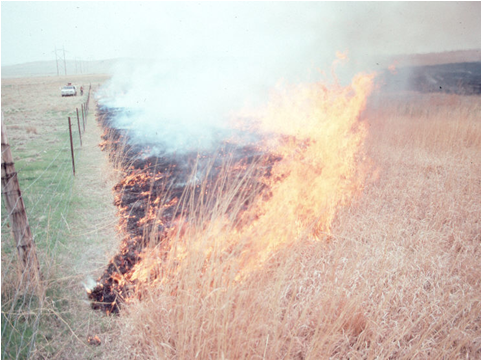
Native Americans placed great value on the four elements of life,  earth, water, air and fire. They recognized, as we do today, that fire is the most powerful land management tool. The 4.8 million acre Flint Hills region of Kansas is the largest remaining expanse of tallgrass prairie in North America.   Prescribed fire is routinely practiced in the region to enhance livestock forage quality, control invasive species, provide grassland wildlife habitat and improve plant vigor.  But where there is fire, there is smoke, and there are public health concerns when excessive smoke is in the atmosphere.   Ground level ozone can have serious public health consequences and major cities adjacent to the Flint Hills, have recorded excessive ozone levels resulting from Flint Hills prescribed fire.   A collaborative effort including the Kansas Dept of Health & Environment, EPA,  K-State Research & Extension, Kansas Livestock Association and other groups completed the Flint Hills smoke management plan in December, 2010, with the objective of reducing health concerns from prescribed fire, while retaining it as a land management tool.  The plan established a  website of “best smoke management practices” and a comprehensive education and outreach effort for land managers was implemented, involving prescribed fire schools, news articles and radio airplay.   Results of the plan are positive, indicating  that Kansas has responded to the smoke issue appropriately and will retain prescribed fire as a management practice that maintains both the tallgrass prairie of the hills, and the air quality of adjacent metro areas.  The inter-relationships of earth, water, air and fire are continual, each impacting the other.   The Kansas Flint Hills now has a plan to ensure harmony of these essential elements of life.

A prescribed fire in the Kansas Flint Hills

Prescribed Fire in Tallgrass Prairie

The Flint Hills Smoke Management Plan is a collaborative effort designed to maintain the benefit of prescribed fire on the private grasslands of the Flint Hills, while also protecting the air quality of ajor metropolitan areas such as Kansas City and Wichita.   The Flint Hills have particular environmental implications, as they are the largest expanse of tallgrass prairie remaining in North America.

What Did We Do?

Kansas Department of Health and Environment wrote the plan, but embraced those involved with the issue, including K-State Research and Extension, the KS Livestock Association, Farm Bureau, Tallgrass Legacy Alliance, KS Prescribed Fire Council, Cities of Wichita and Kansas City, Natural Resource Conservation Service, KS Dept. of Wildlife Parks & Tourism to develop a plan that would address the goals of all those involved.   A website was developed to give ranchers day by day information regarding smoke emission and direction from a prescribed fire that day or the following day.

What Have We Learned?

Those that practice prescribed fire in the Kansas Flint Hills respect the health and environment of their city neighbors.   Conversely, those living in neighboring metropolitan areas understand the economic importance of prescribed fire as related to beef cattle production, and the role fire plays in preserving the integrity of the tallgrass prairie.   By engaging all entities involved, agreements can be reached, solutions can be found and advancements can be made.

Prescribed fire controls woody species, maintaining the integrity of the tallgrass prairie.

Future Plans

In the years ahead,  KS Dept of Health and Environment will continue monitoring smoke emissions due to prescribed fire in the Flint Hills.  Those practicing prescribed fire will be encouraged to use the best smoke management methods of prescribed fire.   This will be done through K-State Research & Extension prescribed fire schools, the KS Prescribed Fire Council workshops and the KDHE website.

Authors

Jeff Davidson  K-State Research & Extension Watershed Specialist      Kansas State University     jdavidso@ksu.edu

Additional Information

http://ksfire.org

Acknowledgements

K-State Research & Extension, Kansas Precribed Fire Council, Kansas Livestock Association, KS Dept. of Health & Environment,  Tallgrass Legacy Alliance, KS Dept. of Wildlife, Parks & Tourism, Natural Resource Conservation Service, Farm Bureau, Cities of Wichita and Kansas City.


The authors are solely responsible for the content of these proceedings. The technical information does not necessarily reflect the official position of the sponsoring agencies or institutions represented by planning committee members, and inclusion and distribution herein does not constitute an endorsement of views expressed by the same. Printed materials included herein are not refereed publications. Citations should appear as follows. EXAMPLE: Authors. 2013. Title of presentation. Waste to Worth: Spreading Science and Solutions. Denver, CO. April 1-5, 2013. URL of this page. Accessed on: today’s date.
Manure management and temperature impacts on gas concentrations in mono-slope cattle facilities

Waste to Worth: Spreading science and solutions logoWaste to Worth home | More proceedings….

Why Study Air Emissions from Mono-slope Beef Barns?

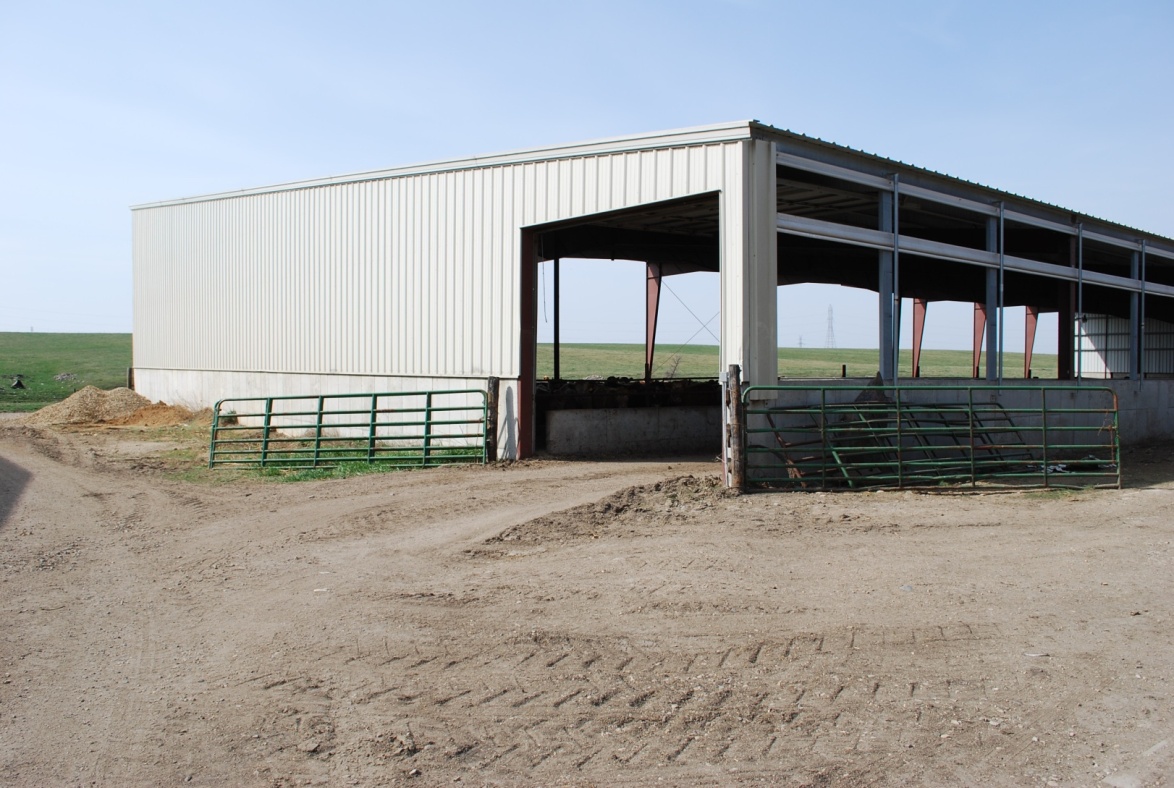
Mono-slope buildings (Figure 1) are one type of roofed and confined cattle feeding facility that is becoming increasingly popular in the Northern Great Plains. However, little is known about the impact of these housing systems and associated manure management methods on the air quality inside and outside the barn.  The objective of this study was to determine gas concentrations in mono-slope beef cattle facilities and relate these concentrations to environmental and manure management factors.

Figure 1. View of a monoslope cattle facility from the northeast. Adjustable curtains in the rear (north) wall are used to limit airspeed through the barn during colder weather.

What Did We Do?

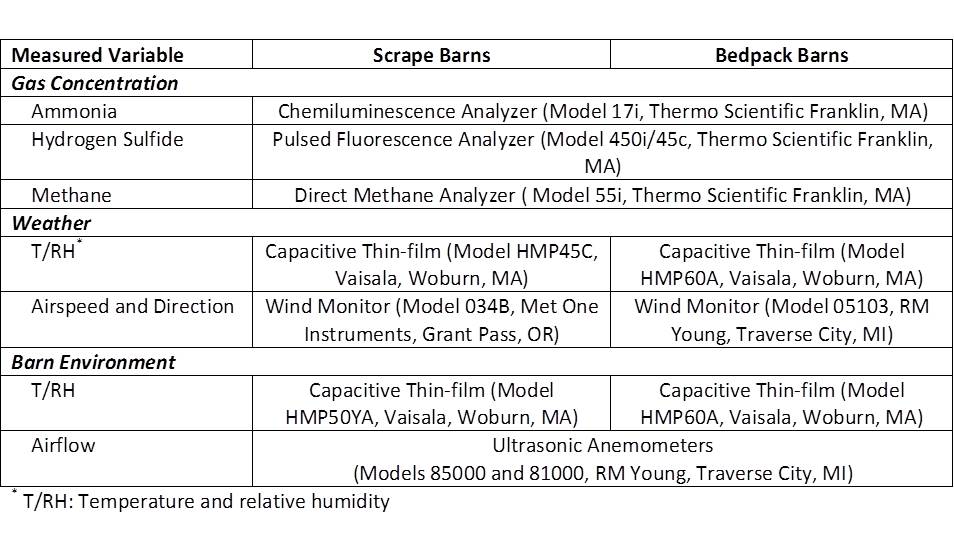
Four producer-owned and operated beef deep-bedded mono-slope facilities were selected for monitoring. Two barns maintained deep-bedded manure packs (Bedpack), whereas two barns scraped manure and bedding from the pens weekly (Scrape). Each site was monitored continuously for one month each quarter for two years to capture both daily and seasonal variations. At each facility, the environment-controlled instrument trailer and associated equipment were located adjacent to the barn. The trailer contained:  a gas sampling system (GSS) that consisted of Teflon tube sample lines connected to a computer-controlled sampling manifold, gas analyzers, computer, data acquisition system, calibration gas cylinders, and other supplies. In addition to the sampling lines, there were environmental instruments to measure the airflow and weather conditions for two pens in each barn. The analyzers and sensors used are summarized in Table 1.

Table 1. Analyzers and sensors used for air quality and environmental monitoring

Ammonia, hydrogen sulfide and methane concentrations were sequentially sampled from two south wall locations and three north wall locations per pen. The maximum hourly mean concentrations measured at the north or south wall of either pen in the barn were used in this analysis. The seasonal average hourly means of maximum concentrations and corresponding environmental variables were calculated.

What Have We Learned?

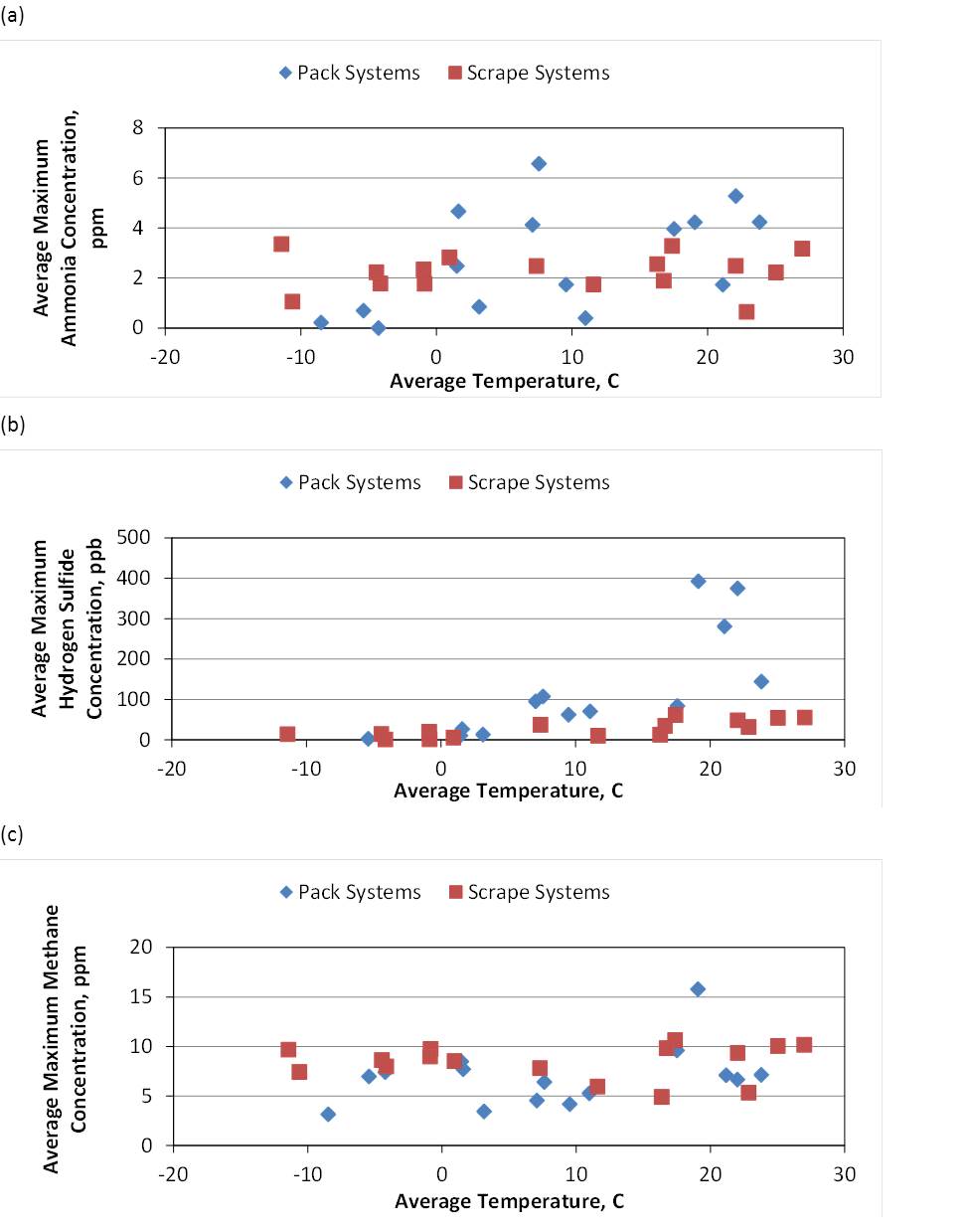
Figure 2. Seasonal averages of maximum hourly mean ammonia (a), hydrogen sulfide (b) and methane (c) concentrations for the bedpack and scrape manure management systems monitored in four monoslope cattle facilities, as influenced by ambient temperature.

The seasonal average hourly maximum ammonia concentration ranged from 0.6 to 3.3 ppm with the Scrape barns and from 0.2 to 7.1 ppm with the Bedpack barns (Fig 2a). The range of maximum hydrogen sulfide concentrations was 0 to 61 ppb in the Scrape barns and 0 to 392 ppb in the Bedpack barns (Fig 2b). The maximum methane concentration ranges were 4.9 to 10.6 and 3.1 to 15.8 ppm in the Scrape and Bedpack barns, respectively (Fig 2c). There are indications of differences between gas release rates for bedpack and scrape manure management systems and increased release rates with temperature for ammonia and hydrogen sulfide. Methane concentrations were more consistent between systems and for different temperature conditions.

This project expands the knowledge base of gaseous concentrations from deep-bedded beef barns. This integrated project also provides management techniques that producers can implement to minimize emissions, and improve air quality.

Future Plans

Emission values will be calculated using these concentration data, in conjunction with airflow data, which also varies with site and temperature conditions.

Authors

Erin L. Cortus, Assistant Professor, South Dakota State University, erin.cortus@sdstate.edu

Md Rajibul Al Mamun, Graduate Research Assistant, South Dakota State University

Ferouz Y. Ayadi, Graduate Research Assistant, South Dakota State University

Mindy J. Spiehs, Research Animal Scientist, USDA ARS Meat Animal Research Center

Stephen Pohl, Professor, South Dakota State University

Beth E. Doran, Extension Beef Program Specialist, Iowa State University Extension and Outreach

Kris Kohl, Extension Ag Engineer Program Specialist, Iowa State University Extension and Outreach

Scott Cortus, Engineering Research Technician, South Dakota State University

Richard Nicolai, Associate Professor (Retired), South Dakota State University

Additional Information

Acknowledgements

Project funded by Agriculture and Food Research Initiative Competitive Grant no. 2010-85112-20510 from the USDA National Institute of Food and Agriculture. Technical assistance provided by Alan Kruger, John Holman, Todd Boman, and Bryan Woodbury.

The authors are solely responsible for the content of these proceedings. The technical information does not necessarily reflect the official position of the sponsoring agencies or institutions represented by planning committee members, and inclusion and distribution herein does not constitute an endorsement of views expressed by the same. Printed materials included herein are not refereed publications. Citations should appear as follows. EXAMPLE: Authors. 2013. Title of presentation. Waste to Worth: Spreading Science and Solutions. Denver, CO. April 1-5, 2013. URL of this page. Accessed on: today’s date.

Mono-Slope Beef Barn Air Quality Research Project

monoslope beef barnResearchers and university specialists from USDA’s Meat Animal Research Center (USMARC), South Dakota State University, and Iowa State University recently finished a four-year study looking at mono-slope beef barns and how to improve cattle and environmental performance.
How Do Mono-slope Barns Stack Up For Air Quality?

A research team worked for three years to gather baseline data for the levels of gas emissions from mono-slope beef barns. The study involved a total of four mono-slope beef barns in South Dakota and Iowa. Researchers also evaluated two different manure-handling systems to determine if there are any differences in gas emissions.

The results of that study are summarized in a eight-page publication “Air Quality in Mono-Slope Bedded Beef Barns“. They measured ammonia, hydrogen sulfide, methane, carbon dioxide, and nitrous oxide. The first three are the primary focus of the publication, since those are most commonly associated with beef feedlots. Also discussed are impacts of building orientation, manure-handling system, pen density, bedding type, and curtain opening (ventilation).

Beef Facilities Conference

Over 300 people attended the November, 2013 conference on beef confinement buildings held in Sioux Falls, South Dakota. The recordings and written papers are linked below.

Environmental and Regulatory Aspects of Beef Barns

The page numbers next to each are the location of companion written papers in the Beef Facilities Conference proceedings.

  • Results of Air Quality Research on Mono-slope Bedded Beef Barns – pages 5-9.
  • Air Quality Regulations and implications of the air quality research project – pages 10-17

The third presentation focuses on manure and nutrient production, and nutrient management for manure produced in these systems.

  • Capturing, managing, and using nutrients from the barn – pages 18-21

Producer Panel – Virtual Tours

Four producers shared aspects of their different building designs including ventilation, manure management, what works well, and things they would change. Their summaries are on pages 22-26 of the Beef Facilities Conference Proceedings.

  • Hoop buildings – one farm tour and a short synopsis of different building designs in use in Iowa
  • Mono-slope buildings – narrow and wide designs
  • Slatted floor barn (with rubber mats) – originally built without mats

Cattle Performance and Comfort In Beef Barns

University specialists compared feed intake, animal performance, carcass characteristics, and management considerations with barns compared to other systems. The page numbers next to each are the location of a companion written paper in the Beef Facilities Conference Proceedings.

The third presentation looks at international and domestic research into the use of rubber mats in deep pit barns with concrete slats.

Webcasts

Two live webinars were recorded and archived. The presenters included researchers, extension specialists, and farmers.

Open Houses Provide Opportunities to Learn More

Photo of a bedded beef barn in South Dakota.
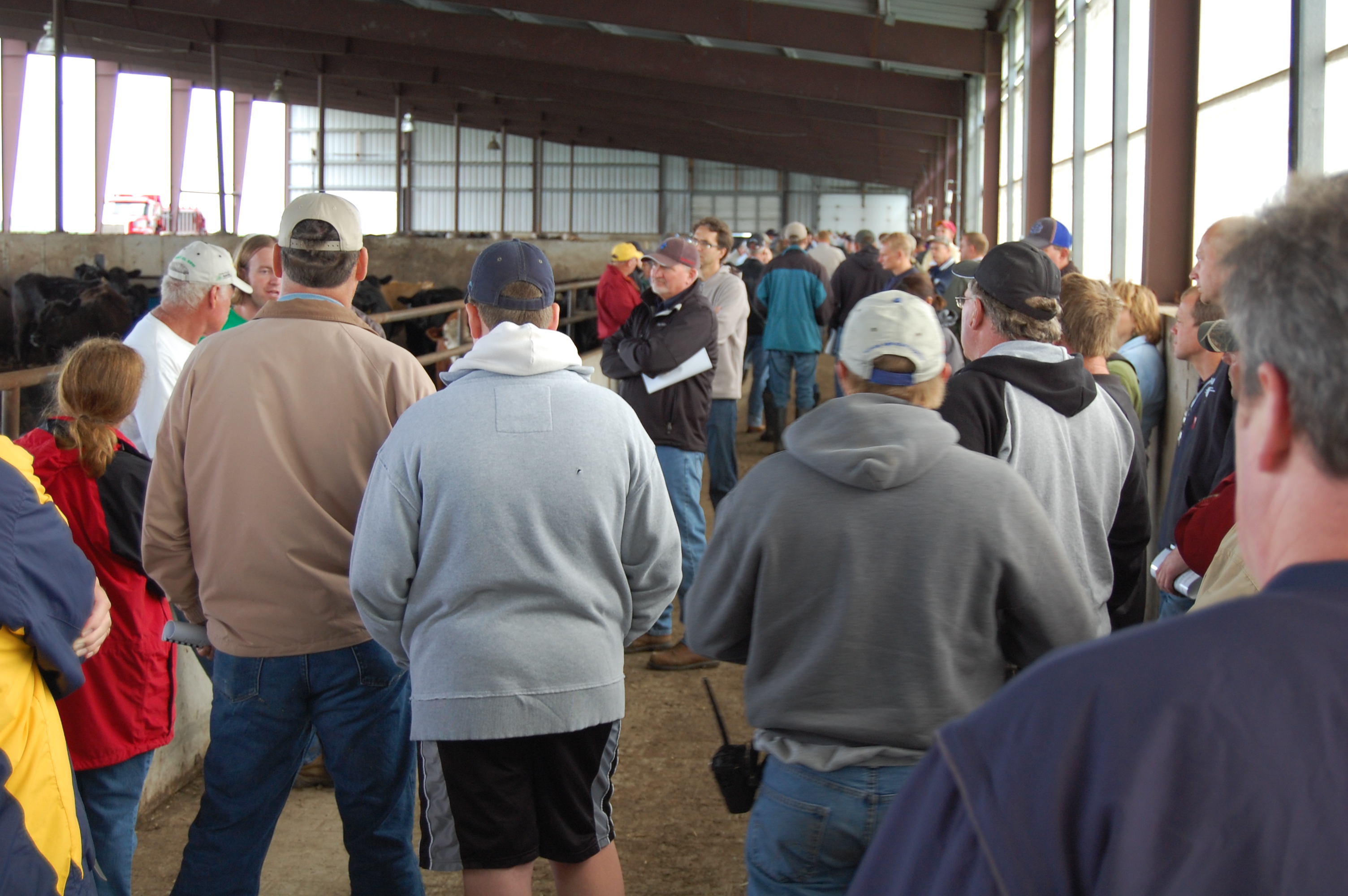
It was standing room only as participants listened to station presentations in the alleyway of the mono-slope barn.

As part of the outreach plan for this project, a series of open houses were scheduled to inform cattle producers, regulatory and technical agency staff, Extension employees, service providers and legislative and local policy-makers about air quality management and manure and environmental issues with these facilities.

Over 200 people from Iowa, Minnesota, South Dakota and Nebraska attended the Mono-Slope Beef Barn Open House in June of 2011. The open house was hosted by Ron and Clayton Christensen of Royal, Iowa and featured barn and manure management, cost-sharing opportunities, the tri-state air quality project and environmental regulations.

The open house was organized by ISU Extension and Outreach, SDSU Ag and Biosystems Engineering, and the USDA Meat Animal Research Center at Clay Center, NE.  Sponsors included Animal Medical Centers of Spencer, Clay County Cattlemen’s Association, Clay County Farm Bureau, Coalition to Support Iowa’s Farmers, Farm Credit Services of America -Emmetsburg, Spencer Ag Center and Spencer Chamber of Commerce Ag Committee.

second open house was hosted in South Dakota in August of 2011. The open house was hosted by Goodwin Heritage Cattle Company, with approximately 125 people in attendance from South Dakota and neighboring states. Sponsors included Coteau Hills Cattlemen’s Association, Watertown Chamber of Commerce Ag Committee, SPN & Associates, Glacial Lakes Energy LLC., Landmark Builders Inc., South Dakota Farm Bureau, Ag United for South Dakota, Banner Associates and Form-A-Feed, Inc.

As a result of the two open houses:

  • 95% had a better understanding of the air quality regulations and why this research is needed*
  • 88% learned where they could find financial resources to construct a mono-slope barn*
  • 89% had improved knowledge about how gases and dust are measured*

*Based on 19.7% participation in a short survey after each open house

Learn more about the successes of these open houses.

A facility tour, Science Behind Environmental Policy, was held June 22, 2012 in NW Iowa.  This tour was attended by state and federal legislators, state policy makers and stakeholders representing Extension and university specialists. Enthusiasm for research efforts was proclaimed by the legislators. See what they learned.

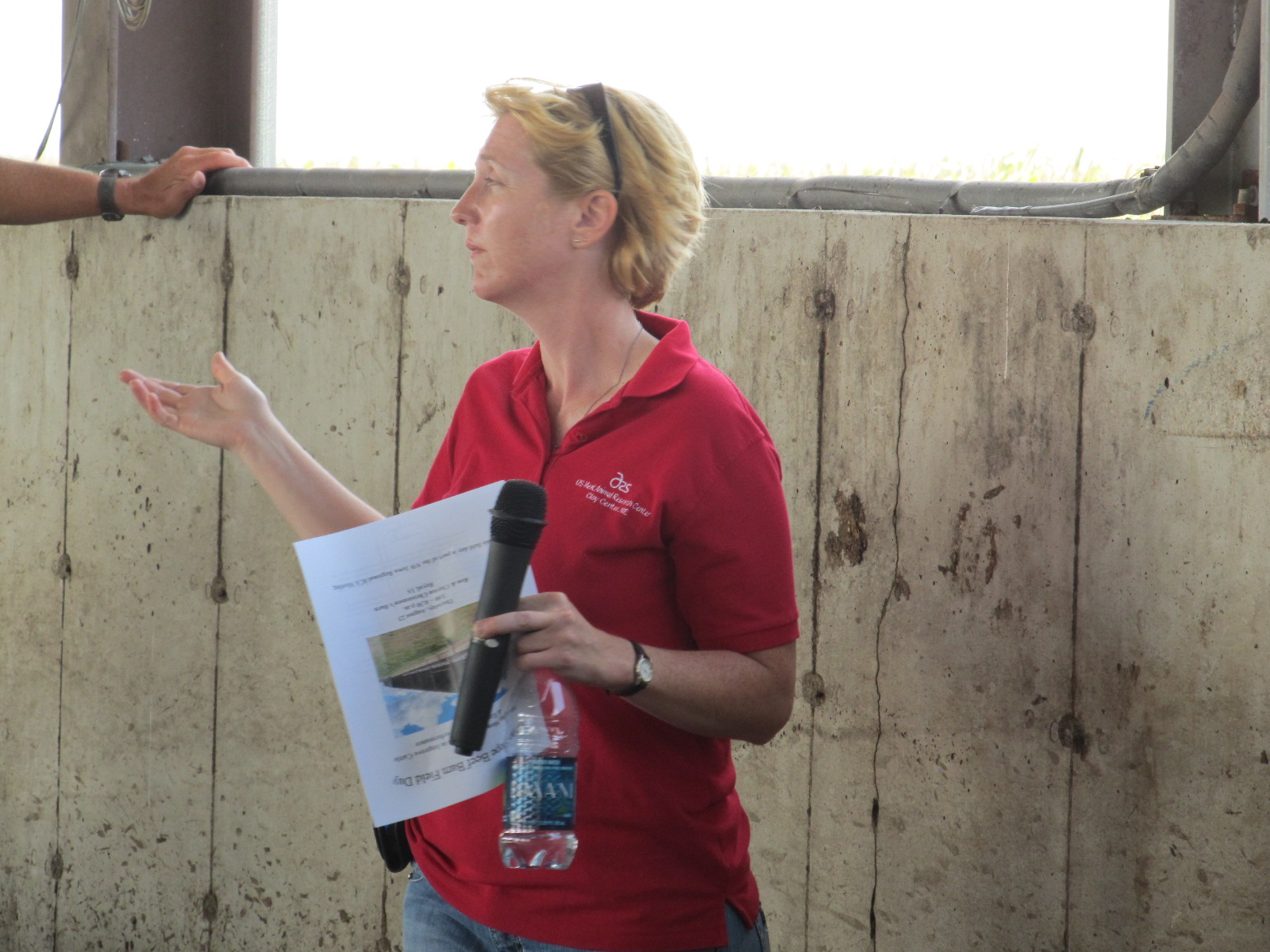
NW Iowa cattlemen listened to Mindy Spiehs, researcher with USDA ARS Meat Animal Research Center at Clay Center, share progress about the Tri-State Air Quality Project.  The update and tour at the Christensen barn were part of a NW regional meeting sponsored by the Iowa Cattlemen’s Association on August 23, 2012.

Mindy Spiehs
Mindy Spiehs talks about the Tri-State Air Quality Project.

Waste to Worth Conference Presentations

In April, 2013 researchers presented air emissions results from this project at the Waste to Worth: Spreading Science and Solutions conference in Denver, CO. These proceedings include a short written paper, recording and links to additional information. The different aspects presented were:

The above proceedings compliment the Beef Facilities Conference recordings and webcasts on the research project (both further up on this page).

Acknowledgements

This page was developed as a part of the Monoslope Beef Barn Air Quality Research project that was funded by Agriculture and Food Research Initiative Competitive Grant no. 2010-85112-20510 awarded to South Dakota State University, USDA ARS U.S. Meat Animal Research Center, Iowa State University, and University of Nebraska – Lincoln from the USDA National Institute of Food and Agriculture. For more information about the research study, contact Erin Cortus erin.cortus@sdstate.edu or Mindy Spiehs mindy.spiehs@ars.usda.gov. For more about the outreach and extension, contact Beth Doran doranb@iastate.edu.

project partner logos - South Dakota State University, USDA-ARS, Iowa State University, and University of Nebraska - Lincoln

Playing By the Rules: Regulations and Animal Agriculture

This is a self-guided learning lesson about air and water regulations related to livestock and poultry production. Anticipated time for completion: 60 minutes. At the end is a quiz that can be submitted for a certificate of completion. Teachers/educators should check out the accompanying instructional materials.

This lesson includes 3 sections:

  1. Water quality regulations, including the Clean Water Act (CWA)
  2. Air quality regulations
  3. Record keeping and its importance to regulatory compliance

Sections 1 and 2 include resources on the relationship between federal, state, and local authorities.

1. Water Quality Regulations, Including the Clean Water Act

Watch this 20 minute video presented by Thomas Bass, Montana State University.

Recommended Reading

Federal Water Quality Regulations

2. Air Quality Regulations

Read the following publication “Air Quality Regulations in Animal Agriculture: An Introduction” (4 pages; PDF)

3. Record Keeping and Regulatory Compliance

Records protect producers and document that they are doing the right thing. Watch these four short videos that include viewpoints of regulators and farmers about the importance of records.

Why Are Animal Operations Inspected?

Why Should We Keep Records?

What Happens During an Inspection?

What Happens After an Inspection?

Recommended Reading

Record Keeping and Inspections for Animal Feeding Operations (web page)

Quiz

When you have completed the above activities, take this quiz. If you score at least 7 of 10 correct, you will receive a certificate of completion via email. If you are a member of an organization that requires continuing education units (CEUs), we recommend that you submit your certificate to them for consideration as a self-study credit. American Registry of Professional Animal Scientist (ARPAS) members can self-report their completion of this module at the ARPAS website.

Acknowledgements

Author: Thomas Bass, Montana State University tmbass@montana.edu

Building Environmental Leaders in Animal Agriculture (BELAA) is a collaborative effort of the National Young Farmers Educational Association, University of Nebraska-Lincoln, and Montana State University. It was funded by the USDA National Institute for Food and Agriculture (NIFA) under award #2009-49400-05871. This project would not be possible without the Livestock and Poultry Environmental Learning Center and the National eXtension Initiative.