Extensive evidence has shown that Rocky Mountain National Park (RMNP) has undergone ecosystem changes due to excessive nitrogen (N) deposition. Previously, the Rocky Mountain Atmospheric Nitrogen and Sulfur (RoMANS) study was conducted to identify the species of N that deposit in RMNP. Results from the RoMANS study showed that reduced N contributions from within Colorado were 45% and 36% for the spring and summer, respectively. There is still much uncertainty as to how much each source within Colorado contributes to ammonia deposition in RMNP. The major goal of this study is to determine whether the isotopic signature of nitrogen can be used as a tracer for ammonia released from sources within Colorado into RMNP. Ammonium samplers were deployed in May of 2011. All samples were collected using passive samplers, Radiellos, deployed for two week and monthly integrations periods. Samples were collected from confined animal feeding operations (beef production), dairies, wastewater reclamation, urban, cropland and RMNP. Sample locations were chosen based its proximity in comparison to RMNP and the availability of meteorological data. The collected ammonia was analyzed using Ion Chromatography, and then diffused onto filters or oxidized for isotopic analysis. Additionally, soil emission studies (grasslands and forests) and weekly wet deposition were collected at two sites varying in elevation in RMNP. Results thus far have shown that wet deposition in the park was similar to previous years based on the amount of precipitation and N deposition. Ammonia isotopic data showed that some sources are significantly different than others, such as wastewater reclamation, dairies, and beef production. However, cropland sources did not significantly differ from dairies and beef production.
Why Study Nitrogen Isotopes?
To assess the potential of isotopes to indicate sources affecting ammonia deposition in Rocky Mountain National Park
What Did We Do?
Gas phase ammonia was measured at sources and in RMNP, as well as, weekly wet deposition was collected in RMNP. Isotopes were measured on these samplers to compare differences and establish trends.
What Have We Learned?
Some source emissions isotope values can be distinguished, however, mixing and reaction chemistry in the atmosphere diminishes these differences. The was seen in the measurements in wet deposition. However, this type of study may be a useful tool to understanding modes of transoport.
Future Plans
Investigations into atmospheric reaction chemistry that can change isotopic values. Furthermore, single deposition eveny measurements would provide more valuable information on
Jay M Ham, Colorado State University, Christina Williams, Colorado State University, Damaris Roosendaal, Colorado State University, Thomas Borch, Colorado State University
The authors are solely responsible for the content of these proceedings. The technical information does not necessarily reflect the official position of the sponsoring agencies or institutions represented by planning committee members, and inclusion and distribution herein does not constitute an endorsement of views expressed by the same. Printed materials included herein are not refereed publications. Citations should appear as follows. EXAMPLE: Authors. 2013. Title of presentation. Waste to Worth: Spreading Science and Solutions. Denver, CO. April 1-5, 2013. URL of this page. Accessed on: today’s date.
Recent regulations on ammonia (NH3) and other gaseous emissions by the EPA requires managers of animal feeding operations (AFOs) to report their annual emissions of greenhouse gases (GHGs), with the possibility of federal funding in the near future to be allocated for enforcement of GHG reporting as well as to levy large fines against AFOs that exceed the regulation limitations for GHG emissions. The current method of estimating NH3 emissions for AFOs is a “back of the envelope” type calculation based upon population and type of animal within an individual AFO.
Emissions of NH3 can vary drastically depending on climate, soil type, location, and other factors. This causes a need for accurate, nearly continuous, on-site measurements of NH3, which can be difficult to disseminate to and implement in an economically beneficial way by individual AFO facilities required to report NH3. Here we outline a robotic system developed for the measurement of NH3 that is cost-efficient to employ and easy to maintain while providing accurate year-round data on NH3 emissions. The system utilizes diffusive/passive samplers (e.g., Radiello, Sigma-Aldrich distributor) that are exposed to the environment under user-defined weather conditions which will yield observations of NH3 concentrations for a period representing several weeks. Measurement data from the robotic systems can be easily converted to accurate emissions estimates by using an inverse model (e.g., using a simple software package).
Data from the passive samplers will be shown for multiple sites and years of data acquired during extensive field testing of the robotic samplers at dairy and cattle feedlot operations in northeastern Colorado from 2011-2012. Emissions obtained using a simple inverse model on the data will be shown as well.
Dr. Jay Ham, Colorado State University, Dept of Soil and Crop Sciences, Christina Williams, Colorado State University, Dept of Soil and Crop Sciences
The authors are solely responsible for the content of these proceedings. The technical information does not necessarily reflect the official position of the sponsoring agencies or institutions represented by planning committee members, and inclusion and distribution herein does not constitute an endorsement of views expressed by the same. Printed materials included herein are not refereed publications. Citations should appear as follows. EXAMPLE: Authors. 2013. Title of presentation. Waste to Worth: Spreading Science and Solutions. Denver, CO. April 1-5, 2013. URL of this page. Accessed on: today’s date.
Why Be Concerned with Feed Rations and Their Environmental Implications?
During the last part of the 20th century, animal manure management became an environmental concern. In response to these concerns, legislation was enacted to control manure management and the emission of undesirable gasses (e.g., methane, ammonia, nitrous oxide) from animal production systems. The purpose of this paper is to illustrate how mineral phosphorus (P) supplements, forage types and amounts, and the crude protein (CP) fed to lactating cows impact manure chemistry and the fate of manure nutrients in the environment.
What Did We Do?
Source-sink relationships have been used to illustrate relationships between feed nutrient sources (e.g., forms and concentrations of P and CP in lactating cows rations) and nutrient sinks (milk and manure), and relationships between manure nutrient sources (e.g., soluble P, urea N) and sinks [soil test P, runoff P, atmospheric ammonia, soil inorganic nitrogen (N), crop N] and the impact of these relationships on the environment.
What Have We Learned?
As mineral P concentrations in dairy rations increase, the excretion of total P and soluble P in manure also increases. The amount of cropland needed to recycle manure P and runoff of soluble P from cropland after manure application can be related back to the P excreted in manure, which in turn can be linked to the amount of mineral P in cow rations. Likewise, the type and amount of CP and forage fed to dairy cows impact manure chemistry and manure N losses as ammonia, N cycling in soil, including plant N uptake. Ammonia emissions from dairy barns and soil after manure application can be related back to the urea N excreted by dairy cows in urine, which is linked to the types and concentrations of CP and forages in cow rations, and the concentrations of urea in milk (milk urea N, or MUN). Our results demonstrate that profitable rations can be fed to satisfy the nutritional demands of healthy, high producing dairy cows, reduce manure excretion and therefore the environmental impacts of milk production.
Future Plans
We continue investigations on how the feeding of tannins to lactating dairy cows, and the use of MUN as a management tool may enhance feed CP use efficiency (more feed CP transformed into milk, less excreted in manure) and reduce losses of ammonia, nitrates and nitrous oxide from dairy farms.
Authors
J. Mark Powell, Soil Scientist. USDA-ARS U.S. Dairy Forage Research Center, Madison, Wisconsin, mark.powell@ars.usda.gov
Glen A. Broderick, Dairy Scientist, USDA-ARS U.S. Dairy Forage Research Center, Madison, Wisconsin
Additional Information
Powell, J.M. and Broderick, G.A. Transdisciplinary soil science research: Impacts of dairy nutrition on manure chemistry and the environment. Soil. Sci. Soc. Am. J. 75:2071–2078.
Powell, J.M. Alteration of Dairy Cattle Diets for Beneficial On-Farm Recycling of Manure Nutrients. pp 21-42 In: Applied Research in Animal Manure Management. Zhongqi H. (Ed.) Nova Science Publ. Inc.
Powell, J.M., Wattiaux, M.A., and Broderick, G.A. Evaluation of milk urea nitrogen as a management tool to reduce ammonia emissions from dairy farms. J. Dairy Sci. 94:4690–4694.
The authors are solely responsible for the content of these proceedings. The technical information does not necessarily reflect the official position of the sponsoring agencies or institutions represented by planning committee members, and inclusion and distribution herein does not constitute an endorsement of views expressed by the same. Printed materials included herein are not refereed publications. Citations should appear as follows. EXAMPLE: Authors. 2013. Title of presentation. Waste to Worth: Spreading Science and Solutions. Denver, CO. April 1-5, 2013. URL of this page. Accessed on: today’s date.
Recent research has shown that over half of nitrogen excreted by chickens is lost into the atmosphere via ammonia volatilization before the litter is removed from poultry houses. Large quantities of particulate matter and volatile organic compounds (VOCs) are also emitted from animal rearing facilities. During the past decade we have developed and patented an acid scrubber for capturing ammonia, VOCs and dust from air exhausted from poultry and swine barns. The objectives of this project were; (1) to re-design the scrubber to improve the ammonia removal efficacy, (2) conduct full-scale testing of the scrubber under controlled conditions at various ventilation rates, (3) evaluate the cost, practicality and efficacy of various acids for scrubbing ammonia, and (4) install scrubbers on exhaust fans of poultry houses located in Virginia and Arkansas and measure the efficiency of ammonia removal from the exhaust air. The efficiency of ammonia removal by the scrubber varied from 55-95%, depending on the type of acid used, air flow rate, and the internal scrubber configuration. This technology could potentially result in the capture of a large fraction of the N lost from AFOs, while simultaneously reducing emissions of bacteria, dust, and odors, which would improve the social, economic, and environmental sustainability of poultry and swine production.
Purpose
The objectives of this project were; (1) to re-design our ammonia scrubber to improve the ammonia removal efficacy, (2) conduct full-scale testing of the scrubber under controlled conditions at various ventilation rates, and (3) evaluate the cost, practicality and efficacy of various acids for scrubbing ammonia.
Acid scrubber developed by USDA/ARS in Fayetteville, AR, for reducing ammonia, dust and odor emissions from animal rearing facilities.
What Did We Do?
During the first year of this project the main task of our team was to re-design the ammonia scrubber developed and patented by Moore (2007). A full scale prototype was constructed of wood and a series of tests were conducted to evaluate various configurations on air flow and static pressure drop in tests conducted in a machine shop. The scrubber was connected to a 48” variable speed poultry fan. Air flow was measured using a fan assessment numeration system (FANS unit). Static pressure difference was measured using a Setra 2601MS1 differential pressure sensor. The effects of slat angle, number and arrangement of slats, and thickness of cool cell material were evaluated.
Following the initial testing a fiberglass mold was made and six scrubbers were constructed. One of these was used to evaluate the effectiveness of water, strong acids, acid salts, and a neutral salt on scrubbing ammonia. Anhydrous ammonia was metered out into a distribution system located within the fan at a sufficient rate to result in 25 ppm NH3 in the plenum between the fan and the dust scrubber. Evaluations of each acid were made with the variable speed fan set at 60 and 40 Hz, which corresponded to air flows of approximately 8,000 and 5,000 cfm, respectively. A stainless steel star sampler was used to take air samples from the plenum and from the air exhausted from the scrubber. Ammonia concentrations were measured using a photoaccustic multigas analyzer (Innova 1412). All personal involved in this testing wore respirators equipped with NH3 cartridges. Three 2-hour trials were conducted with solutions of the following acids at both 40 and 60 Hz: alum, aluminum chloride, ferric sulfate, ferric chloride, sodium bisulfate, sulfuric acid, hydrochloric acid, phosphoric acid, and nitric acid. The effects of water and calcium chloride were also evaluated. For these trials the amount of each acid added was equivalent to 2 liters of concentrated sulfuric acid.
In addition to measuring inflow and outflow ammonia levels, the mass accumulation of ammonia in both the dust and acid scrubber reservoirs was determined by analyzing the contents for ammonium using an auto-analyzer. Twenty ml aliquots of the scrubber solution were taken at times 0, 1 and 2 hours for ammonia and pH measurements. These data were used to validate that the difference in inlet and outlet ammonia were, in fact, due to accumulation of NH3 in the scrubber. Notes were also taken on each chemical’s ease of use and potential for problems. For example, some dry acids did not readily dissolve and some strong acids, like sulfuric acid, had very strong exothermic reactions. Salts of aluminum and iron become aluminum and iron hydroxides at high pH which have the potential to clog cool cell material.
Another performance issue that was monitored was the loss of fine droplets (mist) from the scrubber. When dealing with high air volumes and small droplet sizes, there is a potential for mist to exit the system, resulting in not only the loss of N, but of the acid used to scrub NH3. In order to measure mist loss, five 12.5 cm Whatman 42 filters were attached on a wire cage on the exhaust of the scrubber. These filters were placed in a 50 ml centrifuge tub at the end of each trial and shaken with 25 ml of DDI water, which was analyzed for ammonium, along with sulfate, chloride, nitrate, or phosphate, depending on the acid used.
What Have We Learned?
Early on in this research we learned that two scrubbers (a dust scrubber and an acid scrubber) were needed rather than one. If the dust isn’t removed from the exhaust air of poultry houses, then a large amount of the acid will be wasted neutralizing the dust.
We found that the relationship between slat angle and pressure drop was exponential and the angle that would maximize particle collisions on a wet surface while minimizing pressure drop was 45o. We also found that as the number of rows of slats increased the effect on pressure drop was linear. The final configuration chosen was eight rows of slats in the dust scrubber and three rows of slats in the chemical scrubber, followed by one or two 6” thick layers of cool cell material. The pressure drop using this configuration was about 0.1” of water at 5,000 cfm and 0.3” of water at 8,000 cfm.
All of the acids scrubbed ammonium from air, whereas water and calcium chloride only worked for a very short period of time. The iron (Fe) and aluminum (Al) compounds tended to work a little better than the other acid salts or the strong acids. We believe this is due to Fe and Al compounds coating the cool cell material. Although no difference was observed in the static pressure during these short tests, we believe Al and Fe hydroxides would eventually form and may clog the cool cells. Due to the inherit danger in dealing with strong acids, we concluded that an acid salt that did not contain Al and Fe, such as sodium bisulfate, would be used for our research in the future. This product is sold under the tradename PLT for a poultry litter treatment and is readily available to poultry growers.
Future Plans
Four NH3 scrubbers will be attached to sidewall fans of a commercial broiler house located in Madison County, Arkansas. The efficacy of these scrubbers for reducing ammonia, volatile organic compounds (VOCs), and particulate matter will be evaluated. We will also measure the amount of sodium bisulfate, water and electricity used by the scrubbers, as well as the mass of nitrogen captured. A cost-benefit analysis will be performed based on this data. Data on the efficacy to scrub ammonia will also be conducted on farms in DE, VA, and PA.
This research was funding by USDA/ARS and by grants from USDA/NRCS and the National Wildlife Foundation. The authors would like to thank the hard work and great ideas supplied by Scott Becton and Jerry Martin, without which this scrubber could not have been built.
The authors are solely responsible for the content of these proceedings. The technical information does not necessarily reflect the official position of the sponsoring agencies or institutions represented by planning committee members, and inclusion and distribution herein does not constitute an endorsement of views expressed by the same. Printed materials included herein are not refereed publications. Citations should appear as follows. EXAMPLE: Authors. 2013. Title of presentation. Waste to Worth: Spreading Science and Solutions. Denver, CO. April 1-5, 2013. URL of this page. Accessed on: today’s date.
The objective of this research was to evaluate electrolyzed water as a solution for a lab-scale spray scrubber for removing NH3 from air. A one-stage spray scrubber was fabricated to treat 50 cfm (1.42 m3/min) of introduced mixed NH3-air with an approximate NH3 concentration of 20 ppm. The mixed air was blown, countercurrent, to the 5-ft vertical scrubber body using a fan. Eight scrubber design variables were studied including contact times, nozzle types and scrubber solutions. Three contact times were 0.3, 0.6 and 0.9 s. The two narrow and standard nozzles sprinkled in a full-cone spray pattern but at different angles of 26ᴼ and 52ᴼ, respectively. The scrubber solutions variables tested were reverse osmosis (RO) water and two types of electrolyzed water (50 ppm of total chlorine) with pH = 9.0 and pH = 6.5. The 18 combinations of treatments were tested in three replications and statistically analyzed to investigate the objective. The result showed that all of the experiments were able to mitigate the NH3, but at different efficiencies. The maximum efficiency of 53% was acquired with the narrow nozzle, 0.9s contact time and electrolyzed water with pH = 6.5. Therefore, it was concluded that increasing the contact time, decreasing the pH of electrolyzed water and using the narrow angle, higher flow rate nozzle increased the scrubber efficiency.
Ammonia scrubbing experiments conducted in three replications
Why Study Ammonia Mitigation at Poultry Houses?
Ammonia (NH3) emissions from poultry houses are an environmental challenge because of the large volume of polluted ventilation air from the house’s exhaust fans. One idea for mitigation of NH3 was to developed and evaluate a lab-scale spray scrubber that used an electrolyzed water scrubber solution.
Lab-scale spray scrubber
What Did We Do?
A one-stage spray scrubber was fabricated to treat 50 cfm of mixed NH3-air with approximate NH3 concentration of 20 ppm. The mixed air was blown, countercurrent, to the 5-ft vertical scrubber body using a regular fan and implemented 8 variables including contact times, spray types and scrubber solutions. Three contact times for about 0.3, 0.6 and 0.9 second were applied by changing the elevation of the spray stage. Also, two types of spray nozzles were studied to determine the effect of droplet size and the spray flow rate. The nozzles sprinkled in the pattern of a full-cone spray but in different spray angles; narrow and standard with 26ᴼ and 52ᴼ spray angle, respectively. The applied scrubber solution variables were reverse osmosis (RO) water and two types of electrolyzed water (50 ppm of total chlorine) with pH = 9.0 and pH = 6.5. Thus, 18 scenarios conducted in three replications and statistically analyzed to investigate the objective.
What Have We Learned?
The results showed that the scrubber in all experiments was able to mitigate the NH3 with different efficiencies. The efficiencies were averaged among the replications. The maximum efficiency of 56% was acquired by the narrow nozzle, 0.9s contact time and electrolyzed water with pH = 6.5 scenario. Therefore, it was concluded that increasing the contact time, decreasing the pH of electrolyzed water and the type of nozzle had increased the efficiency of the scrubber.
Ammonia scrubbing experiments conducted in three replications
Future Plans
After the electrolyzed water scrubber design and operating ranges are better understood from these laboratory studies, this technology will then need to be demonstrated under field operating conditions. Wet scrubbers designed based on knowledge gained from the laboratory studies can be placed in a trailer along with all necessary analysis equipment and moved to the site of an operating poultry building. Findings from this research could also be applied to many other types of animal production facilities.
Authors
Gerald Riskowski, Professor, Biological & Agricultural Engineering Department, Texas A & M University, riskowski@tamu.edu
Amir M. Samani Majd, PhD candidate, Biological & Agricultural Engineering Department, Texas A & M University
Ahmad Kalbasi, Researcher, Biological & Agricultural Engineering Department, Texas A & M University
Saqib Mukhtar, Professor, Biological & Agricultural Engineering Department, Texas A & M University
The authors are solely responsible for the content of these proceedings. The technical information does not necessarily reflect the official position of the sponsoring agencies or institutions represented by planning committee members, and inclusion and distribution herein does not constitute an endorsement of views expressed by the same. Printed materials included herein are not refereed publications. Citations should appear as follows. EXAMPLE: Authors. 2013. Title of presentation. Waste to Worth: Spreading Science and Solutions. Denver, CO. April 1-5, 2013. URL of this page. Accessed on: today’s date.
Excessive emissions of ammonia (NH3 ) from animal manure negatively impact the environment with potential to pollute air, soil and water, and produce malodors. The objective of this study was to assess NH3 mitigation from liquid dairy manure (LM) using tubular acid-filled gas-permeable membranes (GPM) in laboratory experiments; and, to evaluate the possibility of scaling up the NH3 mitigation system for use on AFOs.
Fig 1. Schematic diagram of NH3 capture and recovery set-up in laboratory experiments
What Did We Do?
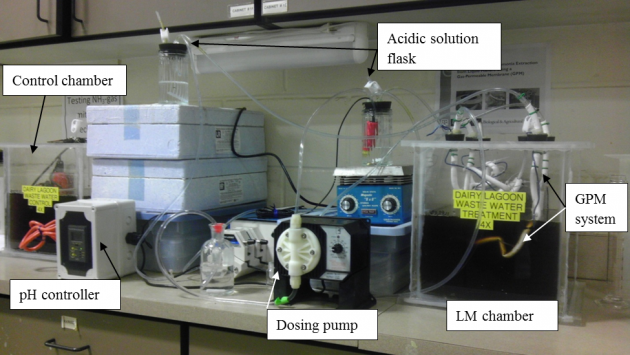
Initially, a bench-scale study of NH3 capture and recovery system from LM using a sulfuric acid-filled (pH=0.36) tubular GPM system was conducted (Fig .1). Four LM chambers with different surface areas were used with a constant depth of LM in each chamber to investigate the effects of surface areas on NH3 diffusion through membrane. Then the acid was diluted to pH of 2 and higher and the experiments were repeated by using one chamber to assess how diluted acid may extract NH3 from LM. For improving the mitigation process, a pH controller and acid dosing system (Fig. 2) was used to keep the pH of diluted acid at a desired level. To test the performance of the scaled-up system under field condition (Fig. 3) a prototype of the optimized laboratory NH3 mitiagation system was constructed and run in a dairy lagoon. In all experiments, real time NH3 and pH measurements were made from acid solution and LM to compare extraction and recovery of NH3 under laboratory and field conditions.
Fig 2. Acid pH controller and acid dosing pump for improving NH3 mitigation system
What Have We Learned?
Laboratory studies showed that two GPM systems, one submerged below the LM surface and the other suspended above the LM surface, resulted in nearly 50% removal (diffusion) of NH3 from the LM in less than 20 days. Ammonia was captured in concentrated sulfuric acid (pH=0.36) as ammonium sulfate solution (by-product). The GPM system was capable of removing NH3 from the air above (headspace) the LM. Moreover, diluted sulfuric acid with pH 2 or higher could also extract NH3 from LM. Application of diluted acid was essential to decrease the risk of handling strong acids. Also, the automatic pH controlling and acid dosing system increased the efficiency of concentrating NH3 in the acid by about 50%. Doubling the flow rate of acid circulation in the GPM system increased the concentration of by-product by 10%. A pilot scale of the GPM mitigation system in a dairy lagoon showed its feasible to harvest NH3 from LM under field condition (Fig. 3).
Fig 3. Field-scale NH3 mitigation in progress
Future Plans
New experiments in laboratory and field are needed to further improve NH3 mitigation and capturing efficiencies of the GPM system by modifying concentrations of acidic solution, changing GPM tube dimensions and morphology, and increasing the acid solution circulation flow rate in the GPM tube.
Authors
Saqib Mukhtar, Professor, Biological & Agricultural Engineering Department, Texas A & M University System, mukhtar@tamu.edu
Amir M. Samani Majd, PhD Candidate, Biological & Agricultural Engineering Department, Texas A & M University
Funding for this study was provided through a grant by the United States Department of Agriculture: National Institute for Food and Agriculture (UDSA- NIFA).
The authors are solely responsible for the content of these proceedings. The technical information does not necessarily reflect the official position of the sponsoring agencies or institutions represented by planning committee members, and inclusion and distribution herein does not constitute an endorsement of views expressed by the same. Printed materials included herein are not refereed publications. Citations should appear as follows. EXAMPLE: Authors. 2013. Title of presentation. Waste to Worth: Spreading Science and Solutions. Denver, CO. April 1-5, 2013. URL of this page. Accessed on: today’s date.
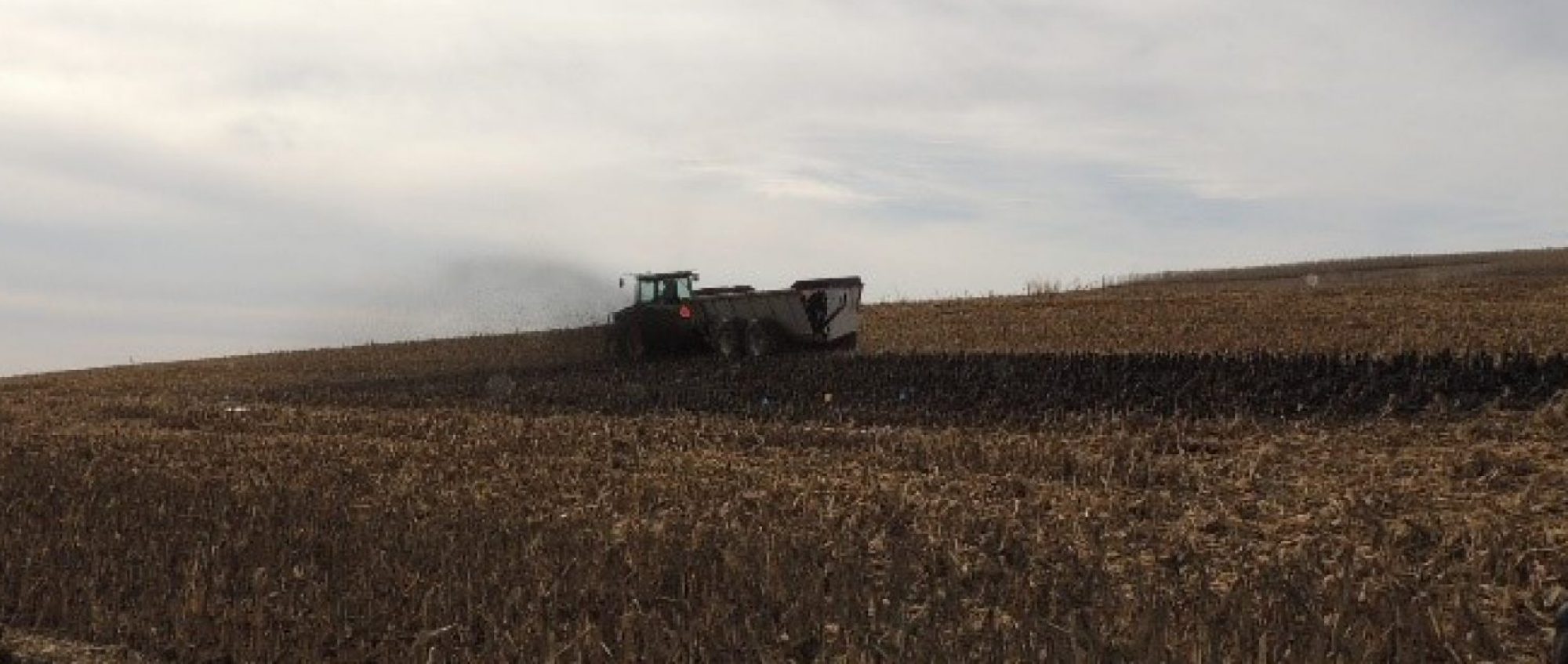
The efforts related to Colorado’s Rocky Mountain National Park are voluntary, yet there are nitrogen reduction targets, or milestones, established over five year increments out to the year 2032. If a milestone is not met, mandatory controls could follow. How can the proactive emissions reduction efforts being taken by livestock and crop producers today be recognized or credited should mandatory controls be required at some future date? For example, could an agriculture certainty framework (used more for water quality protection/nutrient runoff) be used to validate actions being taken today for air quality purposes? How might an ag certainty program work and what partners should be at the table? Are there other approaches that states are using or researching that Colorado should consider?
During the session, presenters will speak to:
a meteorological Early Warning System that is being developed in Colorado to alert livestock producers in advance of an upslope weather event. What methods of messaging the alerts would be most successful, and what other applications (or sectors) might a meteorological Early Warning System be used for?
why it is important for producers (crop and livestock) to adopt BMPs and voluntary controls to address the problem of Nitrogen Deposition in Rocky Mountain National Park and what has been done so far in this regard.
agriculture, and specifically livestock agriculture’s, engagement in doing our part to sustain and improve the environment in which we operate.
Even though it is too early to make any conclusions as to the success of the proactive approach (i.e., voluntary measures versus regulatory controls) or to the extent that current state air quality plans or best management practices are having on nitrogen deposition in the park, the presentation is intended to share some of the challenges and achievements, to date, of this particular stakeholder-driven approach.
Presenters
Phyllis Woodford is the program manager of the Environmental Agriculture Program at the Colorado Department of Public Health & Environment. Phyllis has worked for the department 18 years and during this time has worked to educate the department on agriculture’s unique issues related to environmental concerns and the need for science-based solutions. She has a master’s degree in Environmental Policy & Management from the University of Denver and a BS in Criminal Justice from Kent State University. Prior to working for the State of Colorado, Phyllis served as a legislative assistant to an Ohio congressman in Washington, D.C.
Phyllis I. Woodford
Division of Environmental Health and Sustainability
Colorado Department of Public Health and Environment
4300 Cherry Creek Drive South
Denver, CO 80246-1530
Bill Hammerich has served as the Chief Executive Officer of the Colorado Livestock Association (CLA) for the past ten years. He grew up on a cattle and farming operation in Western Colorado and after graduating from high school he attended Colorado State University where he graduated with a degree in Agricultural Economics. Following graduation he began his working career with Monfort of Colorado, then Farr Feeders and was with the Sparks Companies before joining CLA in 2002.
His time spent in the cattle feeding industry provided him not only with an understanding of how to feed cattle but also the importance of protecting and sustaining the environment in which one operates. Such a background has served Bill and the CLA staff well as they represent a diversified CLA membership in addressing those environmental issues with which the livestock industry has to deal. Bill and his wife Sabrina live in Fort Morgan, Colorado and have two grown children, Justin and Jessica.
Jon Slutsky and his wife, Susan Moore, are first generation dairy farmers and have owned and operated La Luna Dairy in Northern Colorado since 1981. Currently they milk 1300-1400 cows at their farm near Wellington. They have one adult daughter. Jon is a native of New York; however he grew up and attended school in Southern California. He graduated from the University of California-Riverside with a bachelor’s degree in biology in 1972. As general manager of the dairy, Jon oversees the management of the farm including 2600 cows and calves and 26 employees.
In order to add to the dairy data base and body of knowledge and assist in making good BMPs available to the industry, the farm has a policy of giving access as frequently as possible to animal and environmental researchers in the university community. The dairy tries to be a strong member of the local business and agricultural communities. Jon represents the dairy and the industry locally as a board member of the Wellington Area Chamber of Commerce, the Larimer County Agricultural Advisory Board, and the Colorado Livestock Association. He also serves on several other committees as time permits.
Jon was a member of the Colorado Air Quality Control Commission from 2007 to 2012 and is currently a member of the Colorado Water Quality Control Commission.
The authors are solely responsible for the content of these proceedings. The technical information does not necessarily reflect the official position of the sponsoring agencies or institutions represented by planning committee members, and inclusion and distribution herein does not constitute an endorsement of views expressed by the same. Printed materials included herein are not refereed publications. Citations should appear as follows. EXAMPLE: Authors. 2013. Title of presentation. Waste to Worth: Spreading Science and Solutions. Denver, CO. April 1-5, 2013. URL of this page. Accessed on: today’s date.
Livestock producers are acutely aware for the need to reduce gaseous emissions from stored livestock waste and have been trying to identify new technologies to address the chronic problem. Besides the malodor issue, toxic gases emitted from stored livestock manure, especially hydrogen sulfide (H2S) and ammonia (NH3) are environmental and health hazards for humans and animals and under scrutiny by the Environmental Protection Agency for regulatory control of concentrated animal farm operations (CAFOs).
These odorous and toxic gases are produced by bacteria during the fermentation of the stored manure. Sulfate reducing bacteria convert sulfate (SO4) to sulfide (H2S) during the fermentation. During storage of swine manure, about 60% of NH3 nitrogen is also loss. If NH3 loss can be prevented, the fertilizer value of swine manure would improve and reduce the need for additional commercial nitrogen fertilizer.
There are very few technologies available to reduce H2S, NH3 and greenhouse gas emissions from stored livestock manure, which meet the criteria of being: inexpensive, safe for farmers and animals, and environmentally sustainable. Previous research has shown that borax and quebracho condensed tannin are effective in inhibiting H2S production in stored swine manure. The present research demonstrates that a combination of borax and quebracho condensed tannin is highly effective in reducing all gaseous emissions (H2S, NH3, CO2, CO, N2O and CH4) and in retaining more nitrogen in swine manure. Lesser amounts of borax and quebracho condensed tannin are needed when combined to achieve a similar reduction in H2S production to using much larger amounts of either product alone.
Phytotoxicity studies show that the level of tolerance of crops to borax-tannin combination treated swine manure is: alfalfa > corn > wheat > soybean >> dry beans. Quebracho condensed tannin does not appear to be toxic to crops.
Why Study Tannins?
Develop methods for reducing emissions from stored swine manure.
What Did We Do?
Tested the effects of addition of combinantions of borax and quebracho condensed tannins to swine manure slurries on production of gaseous emissions and more retaining nitrogen in the manure.
What Have We Learned?
Addition of various combinations of borax and quebracho condensed tannins to swine manure slurries was highly effective in reducing all gaseous emissions (H2S, NH3, CO2, CO, N2O, and CH4) and in retaining more nitrogen in swine manure. Lesser amounts of borax and tannin are needed when combined to achieve a similar reduction in H2S production to using much larger amounts of either product alone. Phytotoxicity studies show that the level of tolerance of crops to borax-tannin combination treated swine manure is: alfalfa > corn > wheat > soybean >> dry beans.
Future Plans
We are interested in transferring this research to on-farm sites.
Authors
Melvin Yokoyama, Professor, Dept. of Animal Science, Michigan State University, E. Lansing, MI 48824, yokoyama@msu.edu
Terence R. Whitehead, Research Microbiologist, USDA-ARS-National Center for Agricultural Utilization Research, Peoria, IL 61604
Cheryl Spence, USDA-ARS-National Center for Agricultural Utilization Research, Peoria, IL 61604
Michael A. Cotta, USDA-ARS-National Center for Agricultural Utilization Research, Peoria, IL 61604
Donald Penner, Dept. of Crops and Soil Sciences, Michigan State University, E. Lansing, MI 48824
Susan Hengemuehle, Dept. of Animal Science, Michigan State University, E. Lansing, MI 48824
Janis Michael, Dept. of Crops and Soil Sciences, Michigan State University, E. Lansing, MI 48824
Additional Information
Whitehead, T.R., Spence, C., and Cotta, M.A. Inhibition of Hydrogen Sulfide, Methane and Total Gas Production and Sulfate-Reducing Bacteria in In Vitro Swine Manure Slurries by Tannins, with Focus on Condensed Quebracho Tannins. (2012) Appl. Microbiol. Biotech. http://link.springer.com/article/10.1007/s00253-012-4562-6/fulltext.html
The authors are solely responsible for the content of these proceedings. The technical information does not necessarily reflect the official position of the sponsoring agencies or institutions represented by planning committee members, and inclusion and distribution herein does not constitute an endorsement of views expressed by the same. Printed materials included herein are not refereed publications. Citations should appear as follows. EXAMPLE: Authors. 2013. Title of presentation. Waste to Worth: Spreading Science and Solutions. Denver, CO. April 1-5, 2013. URL of this page. Accessed on: today’s date.
Beef cattle are responsible for around 15% of the total anthropogenic ammonia (NH3) emitted in the U.S., and the cattle feeding industry is highly concentrated spatially, with the majority of commercial feedyards located in Texas, Iowa, Kansas,Colorado, and Nebraska (USEPA, 2005; USDA-NASS, 2009). Valid estimates of ammonia (NH3) emissions from beef cattle feedyards are needed to assess the impact of beef production on the environment, to comply with reporting requirements, and to develop reasonable regulatory policies. The processes involved in production and volatilization of NH3 from livestock housing are strongly influenced by environmental conditions and management practices (Fig. 1), which may not be captured by constant emission factors or mathematically-derived empirical models. Among different modeling approaches, process-based models, which track components of interest through biochemical and geochemical reactions as functions of specific conditions (e.g. temperature, wind speed, pH, precipitation, surface heating, animal diet), offer a better approach for predicting NH3 emissions from open-lot animal production systems than emission factors or empirical models. However, while process-based models have been developed to estimate NH3 emissions from dairy barns and other livestock facilities, little work has been conducted to assess their accuracy for large, commercial feedyards in the semi-arid Texas High Plains: the top beef producing region in the United States.
Figure 1. Processes and factors affecting feedyard ammonia emissions and modeled with IFSM and Manure-DNDC.
What Did We Do?
We evaluated two process-based models, the Integrated Farm Systems Model (IFSM) (Rotz et al., 2012) and the newly developed Manure-DNDC (DeNitrification DeComposition) model (Li et al., 2012), for predicting feedyard NH3 emissions in the Texas High Plains. To meet this objective, we compared model-simulated emissions to measured NH3 flux data collected from two commercial feedyards, Feedyard A and Feedyard E, in Deaf Smith County, Texas. Feedyard NH3 fluxes were measured from February 2007 to January 2009 using open-path lasers and an inverse dispersion model (Todd et al., 2011). The input data for the two models differed slightly; however, both required daily climate data (temperature, precipitation, wind speed, solar radiation), animal population (Feedyard A, 12,684 head; Feedyard E, 19,620 head), and concentration of crude protein (%CP) in cattle diets. Model performance was evaluated by the difference between predicted and observed emissions using both linear regression analysis and summary, univariate, and difference measures (Wilmott et al., 1982).
Figure 2 (above). Comparison of observed and IFSM predicted per capita NH3 emission rates (g head-1 d-1) at (a) Feedyard A, and (b) Feedyard E. Daily predictions were in good agreement (p < 0.001) with observations at both feedyards and responded appropriately to changes in ambient temperature and % CP in feedyard diets.
Figure 3 (below). Comparison of observed and Manure-DNDC predicted NH3 emission rates (kg ha-1 d-1) at (a) Feedyard A, and (b) Feedyard E. The units for Manure-DNDC (kg hectare-1 d-1) differ from IFSM (g head-1 d-1); however, daily Manure-DNDC predictions for 2008 agreed with observations (p < 0.001) in a manner similar to IFSM predictions.
What Have We Learned?
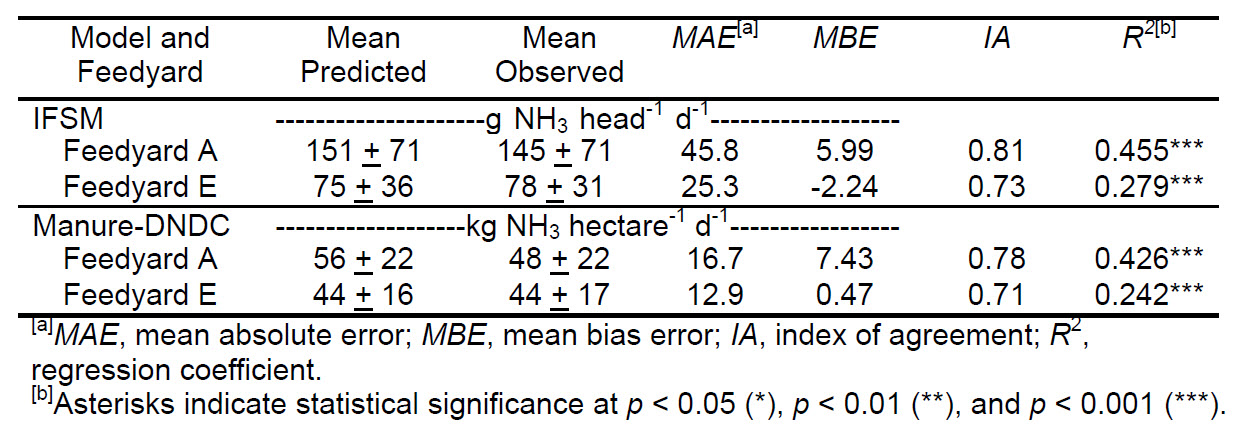
Predictions of daily NH3 emissions made by IFSM and Manure-DNDC were in good agreement (p < 0.001) with observations at both feedyards (Figs. 2 and 3, Table 1). IFSM predicted average NH3 fluxes of 151 and 75 g head-1 d-1 for Feedyards A and E, respectively (Table 1). Manure-DNDC output is on an area basis, and average modeled NH3 fluxes were 56 (Feedyard A) and 44 kg hectare-1 d-1 (Feedyard E). In addition, both models responded appropriately to changes in ambient temperature and %CP in feedyard diets, as shown by higher emissions in summer than winter, and the period of February to October 2008 at Feedyard A, when diets contained as much as 19% CP due to the inclusion of distillers grains (Figs. 2 and 3). The index of agreement (IA) indicates 71% to 81% agreement between model predictions and observed emissions (Table 1). Overall, both IFSM and Manure-DNDC predictions for Feedyard E had lower values for error and bias (MAE and MBE), while there was better agreement between observations and model predictions for NH3 emissions for Feedyard A.
Figure 4. Comparison of mean predicted and observed per capita NH3 emission rates from (a) Feedyard A and (b) Feedyard E in 2008. For most months, model predictions did not differ from observations, indicating that both models were useful for predicting average feedyard NH3 emissions.
Comparisons of modeled and observed mean daily per capita NH3 emissions for each month in 2008 are shown in Figure 4. For most months, model predictions did not differ significantly from observations, indicating that both models were useful for predicting average emissions. We also wanted to compare model predictions for annual per capita NH3 emissions to the emission factor of 13 kg head-1 y-1 that is currently used by the USEPA (USEPA, 2005). For 2008, IFSM and Manure-DNDC estimates of annual per capita emissions were 61 and 55 kg head-1 y-1 (Feedyard A) and 33 and 25 kg head-1 y-1 (Feedyard E), and model estimates for total feedyard emissions were within 3% to 24% of measured values (Table 2). In contrast, the current EPA emission factor underestimated total feedyard emissions by 61% to 79%: indicating that predictions by IFSM and Manure-DNDC can more accurately predict feedyard NH3 emissions than current constant emission factors.
Table 1. Regression and mean difference comparisons for observed and predicted daily feedyard NH3 emissions from Feb. 2007 to Jan. 2009, where there were 386 and 272 paired comparisons for Feedyard A and Feedyard E, respectively. Regression analysis indicated a highly significant (p < 0.001) relationship between observations and predictions made by both models. The index of agreement (IA) indicates 71% to 81% agreement between model predictions and observed emissions. Overall, both IFSM and Manure-DNDC model predictions for Feedyard E had lower values for error and bias (MAE and MBE), while there was better agreement between observations and model predictions for NH3 emissions for Feedyard A.
Table 2. Comparison of observed annual emissions at Feedyards A and E in 2008 with predictions by Manure-DNDC, IFSM, and the USEPA emission factor (EF) for beef cattle. For 2008, IFSM and Manure-DNDC estimates were within 3% to 24% accuracy. In contrast, the current EPA emission factor underestimated emissions by as much as 79%.
Future Plans
Future plans include using process-based models to predict nitrous oxide (N2O) emissions from feedyard pen surfaces. In addition, we will conduct laboratory and field-scale studies to better characterize the chemical and physical properties of feedyard manure in order to refine input parameters and improve model predictions of feedyard NH3 and N2O emissions.
Authors
Heidi M. Waldrip, Research Soil Scientist, USDA-ARS Conservation and Production Laboratory, Bushland, TX, heidi.waldrip@ars.usda.gov
C. Alan Rotz, Agricultural Engineer, USDA-ARS Pasture Systems and Watershed Management Research Unit, University Park, PA.
Changsheng Li, Research Professor, Institute for the Study of Earth, Oceans, and Space, University of New Hampshire, Durham, NH.
Richard W. Todd, Soil Scientist, USDA-ARS Conservation and Production Laboratory, Bushland, TX.
William Salas, President and Chief Scientist, Applied Geosolutions, LLC, Durham, NH.
N. Andy Cole, Research Leader and Animal Scientist, USDA-ARS Conservation and Production Laboratory, Bushland, TX.
Additional Information
Li, C., W. Salas, R. Zhang, C. Krauter, A. Rotz, and F. Mitloehner. 2012. Manure-DNDC: a biogeochemical process model for quantifying greenhouse gas and ammonia emissions from livestock manure systems. Nutr. Cycl. Agroecosyst. 93:163-200.
Rotz, C.A., M.S. Corson, D.S. Chianese, F. Montes, S.D. Hafner, R. Jarvis, and C.U. Coiner. 2012. Integrated Farm System Model: Reference Manual. University Park, PA: USDA Agricultural Research Service. Available at: http://www.ars.usda.gov/Main/docs.htm?docid=21345. Accessed 5 January 2013.
Todd, R. W., N. A. Cole, M. B. Rhoades, D. B. Parker, and K. D. Casey. 2011. Daily, monthly, seasonal, and annual ammonia emissions from Southern High Plains cattle feedyards. J. Environ. Qual. 40:1090-1095.
USEPA. 2005. National Emission Inventory – Ammonia Emissions from Animal Agricultural Operations: Revised Draft Report. 2005 Apr. 22. United States Environmental Protection Agency, Washington DC. Available at: http://www.epa.gov/ttnchie1/net/2002inventory.html. Accessed 02/27/2013.
Wilmott, C. J. 1982. Comments on the evaluation of model performance. Bull. Am. Meterol. Soc. 63:1309-1313.
This project was partially supported by USDA-NIFA funding to Texas A&M AgriLife Research for the federal special grant project TS2006-06009, “Air Quality: Reducing Emissions from Cattle Feedlots and Dairies (TX & KS)”.
The authors are solely responsible for the content of these proceedings. The technical information does not necessarily reflect the official position of the sponsoring agencies or institutions represented by planning committee members, and inclusion and distribution herein does not constitute an endorsement of views expressed by the same. Printed materials included herein are not refereed publications. Citations should appear as follows. EXAMPLE: Authors. 2013. Title of presentation. Waste to Worth: Spreading Science and Solutions. Denver, CO. April 1-5, 2013. URL of this page. Accessed on: today’s date.
Livestock GRACEnet is a United States Department of Agriculture, Agricultural Research Service working group focused on atmospheric emissions from livestock production in the USA. The working group presently has 24 scientists from 13 locations covering the major animal production systems in the USA (dairy, beef, swine, and poultry). The mission of Livestock GRACEnet is to lead the development of management practices that reduce greenhouse gas, ammonia, and other emissions and provide a sound scientific basis for accurate measurement and modeling of emissions from livestock agriculture. The working group fosters collaboration among fellow scientists and stakeholders to identify and develop appropriate management practices; supports the needs of policy makers and regulators for consistent, accurate data and information; fosters scientific transparency and rigor and transfers new knowledge efficiently to stakeholders and the scientific community. Success in the group’s mission will help ensure the economic viability of the livestock industry, improve vitality and quality of life in rural areas, and provide beneficial environmental services. Some of the research highlights of the group are provided as examples of current work within Livestock GRACEnet. These include efforts aimed at improving emissions inventories, developing mitigation strategies, improving process-based models for estimating emissions, and producing fact sheets to inform producers about successful management practices that can be put to use now.
Why Was GRACEnet Created?
The mission of Livestock GRACEnet is to lead the development of livestock management practices to reduce greenhouse gas, ammonia, and other emissions and to provide a sound scientific basis for accurate measurement and modeling of emissions.
What Did We Do?
The Livestock GRACEnet group is comprised of 24 scientists from 13 USDA-ARS locations researching the effects of livestock production on emissions and air quality.
Our goals are to:
Collaborate with fellow scientists and stakeholders to identify and develop appropriate management practices
Support the needs of policy makers and regulators for consistent, accurate data and information
Foster scientific transparency and rigor
Transfer new knowledge efficiently to stakeholders and the scientific community
Success in our mission will help to ensure the economic viability of the livestock industry, vitality and quality of life in rural areas, and provide environmental services benefits.
The authors are solely responsible for the content of these proceedings. The technical information does not necessarily reflect the official position of the sponsoring agencies or institutions represented by planning committee members, and inclusion and distribution herein does not constitute an endorsement of views expressed by the same. Printed materials included herein are not refereed publications. Citations should appear as follows. EXAMPLE: Authors. 2013. Title of presentation. Waste to Worth: Spreading Science and Solutions. Denver, CO. April 1-5, 2013. URL of this page. Accessed on: today’s date.
To provide the best experiences, we use technologies like cookies to store and/or access device information. Consenting to these technologies will allow us to process data such as browsing behavior or unique IDs on this site. Not consenting or withdrawing consent, may adversely affect certain features and functions.
Functional
Always active
The technical storage or access is strictly necessary for the legitimate purpose of enabling the use of a specific service explicitly requested by the subscriber or user, or for the sole purpose of carrying out the transmission of a communication over an electronic communications network.
Preferences
The technical storage or access is necessary for the legitimate purpose of storing preferences that are not requested by the subscriber or user.
Statistics
The technical storage or access that is used exclusively for statistical purposes.The technical storage or access that is used exclusively for anonymous statistical purposes. Without a subpoena, voluntary compliance on the part of your Internet Service Provider, or additional records from a third party, information stored or retrieved for this purpose alone cannot usually be used to identify you.
Marketing
The technical storage or access is required to create user profiles to send advertising, or to track the user on a website or across several websites for similar marketing purposes.

 Waste to Worth home | More proceedings….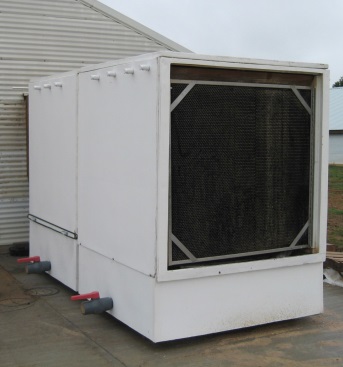
 Ammonia scrubbing experiments conducted in three replications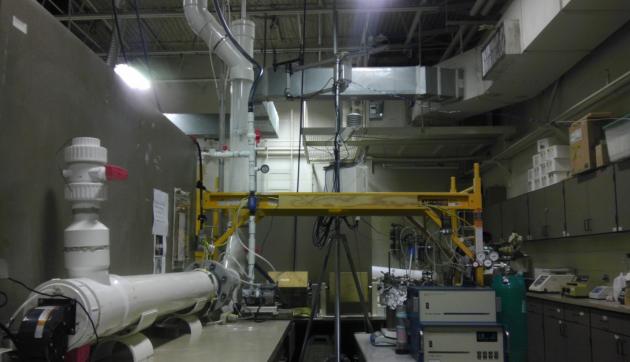
 Ammonia scrubbing experiments conducted in three replications

 The efforts related to Colorado’s Rocky Mountain National Park are voluntary, yet there are nitrogen reduction targets, or milestones, established over five year increments out to the year 2032. If a milestone is not met, mandatory controls could follow. How can the proactive emissions reduction efforts being taken by livestock and crop producers today be recognized or credited should mandatory controls be required at some future date? For example, could an agriculture certainty framework (used more for water quality protection/nutrient runoff) be used to validate actions being taken today for air quality purposes? How might an ag certainty program work and what partners should be at the table? Are there other approaches that states are using or researching that Colorado should consider?

 Jon Slutsky and his wife, Susan Moore, are first generation dairy farmers and have owned and operated La Luna Dairy in Northern Colorado since 1981. Currently they milk 1300-1400 cows at their farm near Wellington. They have one adult daughter. Jon is a native of New York; however he grew up and attended school in Southern California. He graduated from the University of California-Riverside with a bachelor’s degree in biology in 1972. As general manager of the dairy, Jon oversees the management of the farm including 2600 cows and calves and 26 employees.


 /a>
/a>