
Manure Amendments for Mitigating Air Emissions

Reprinted, with permission, from the proceedings of: Mitigating Air Emissions From Animal Feeding Operations Conference.

Manure Amendments for Air Emission Mitigation

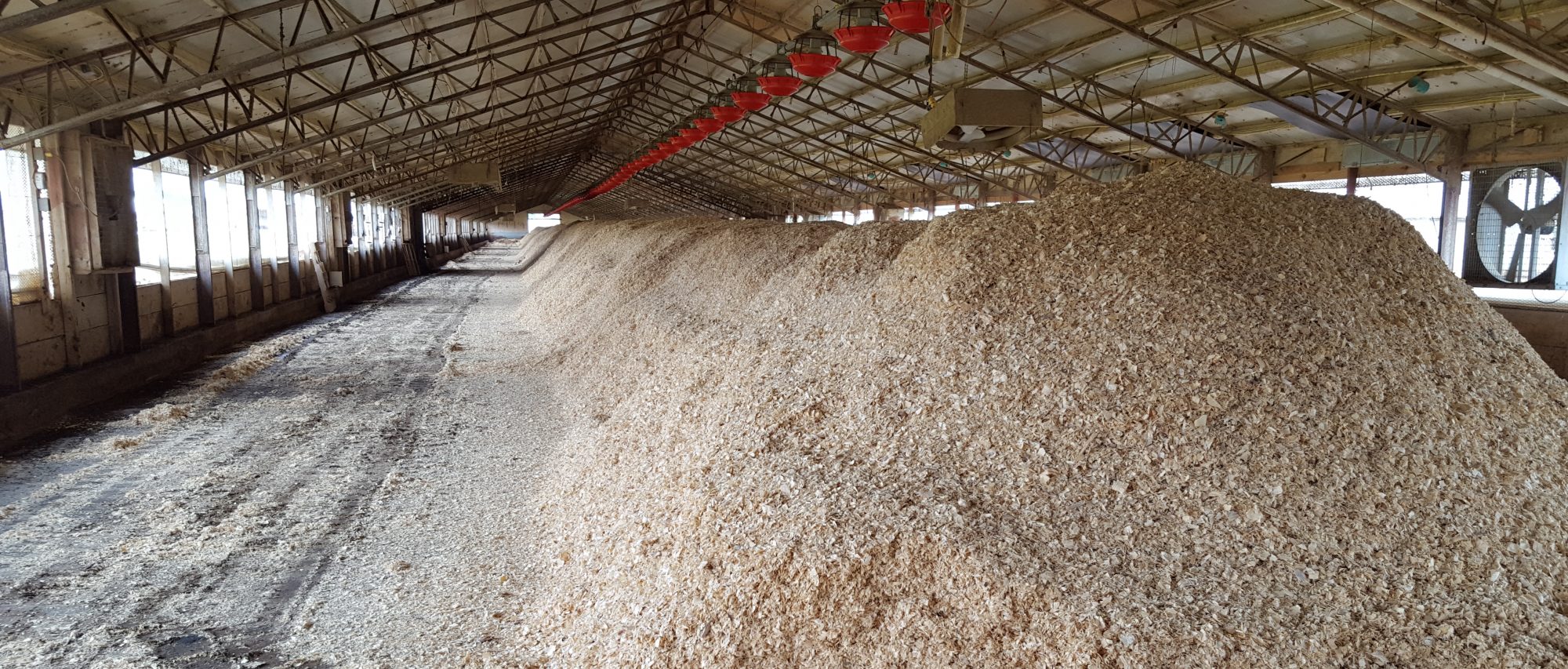
Effects of Aluminum Sulfate and Aluminum Chloride Applications to Manure on Ammonia Emission from a High-Rise Layer Barn

Reprinted, with permission, from the proceedings of: Mitigating Air Emissions From Animal Feeding Operations Conference.

The proceedings, “Mitigating Air Emissions from Animal Feeding Operations”, with expanded versions of these summaries can be purchased through the Midwest Plan Service.

This Technology is Applicable To:

Species: Poultry (Layer)
Use Area: Animal Housing
Technology Category: Chemical Amendment
Air Mitigated Pollutants: Ammonia

System Summary

The effectiveness of aluminum sulfate (alum, Al2(SO4)3) as a litter amendment in poultry houses has been recognized in several studies. Emission rates of ammonia (NH3) were measured at two 169,000-hen high-rise layer barns in Ohio, for six months. The tests were conducted to evaluate baseline and mitigated emission rates. An alum and aluminum chloride (AlCl3) spraying system was installed in the treated Barn 2. Concentrations of NH3 were measured at the barn exhaust fans and in incoming air, using real-time NH3 analyzers. Temperatures, relative humidity, barn static pressure, and fan operation were also measured.

The average daily mean untreated net NH3 emission rate was 480 g/d-AU (1.35 g/d-hen), where AU is an animal unit or 500 kg (1100 lb) of bird weight. The alum and AlCl3 applications reduced NH3 emission by 23% based on the overall cross-barn comparison of paired emission differences between barns. The NH3 mitigation efficiency of the Al2(SO4)3 application was compromised by clogged nozzles, manure turning, and introduction of a new flock of hens. Higher reductions of 33, 23 and 40% were achieved during later test periods. The application of AlCl3 in the last test was expected to further reduce NH3 emission, but the reduction was only 27%. The lower NH3 emission reduction efficiency of AlCl3 was probably due to higher moisture content of manure in Barn 2.


Applicability and Mitigating Mechanism

  • Aluminum sulfate and aluminum chloride can lower manure pH and reduce ammonia emission
  • A 3000-gal tank stored the chemicals, and spray tubes and sprinkling nozzles were installed along the barn length
  • Solutions were automatically sprayed every hour, for a total of 24 times per day


Limitations

  • The nozzles were easily clogged when spraying aluminum sulfate
  • The additional chemical solution increased manure moisture content, especially in cold weather, thus reducing its effectiveness
  • The spraying system requires training to operate and maintain
  • The chemicals were acidic and corrosive
  • Manure on second floor was untreated.

Cost

The costs of the alum and AlCl3 were $0.13/L and $0.14/L, respectively, without delivery charges. At each delivery, 5678 L (1500 gal) of alum or AlCl3 was first added into the holding tank, and an equal volume of water was added to produce a 50% solution. The field records showed that five deliveries worth $3700 of alum were used in 85 days, or $44 per barn per day. The automatic spray controller cost about $3000, and the doubled-wall holding tank was $6500. A single wall tank would be less expensive. The labor to maintain the controller, air and water pumps is estimated at 3 hours per week per barn. The air pump provided the pressure for spraying, and the water pump filled the spray pipe with the solution.

Authors

Teng Teeh Lim1, Chaoyuan Wang2, Ji-Qin Ni1, Albert J. Heber1, and Lingying Zhao31Purdue University, 2 China Agricultural University, 3
Ohio State University Point of Contact:
Teng Teeh Lim, limt@purdue.edu

The information provided here was developed for the conference Mitigating Air Emissions From Animal Feeding Operations Conference held in May 2008. To obtain updates, readers are encouraged to contact the author.

Technologies for Mitigating Hydrogen Sulfide Emissions from Animal Agriculture

Livestock and Poultry Environmental Learning Center:

Home Page

Reprinted, with permission, from the proceedings of:
Mitigating Air Emissions From Animal Feeding Operations Conference.

The proceedings, “Mitigating Air Emissions from Animal Feeding Operations”, with expanded versions of these summaries can be purchased through the Midwest Plan Service.

Technologies for Hydrogen Sulfide Mitigation in Animal Agriculture

Microbial Additives to Reduce Ammonia Emission from Poultry Houses

Reprinted, with permission, from the proceedings of: Mitigating Air Emissions From Animal Feeding Operations Conference.

The proceedings, “Mitigating Air Emissions from Animal Feeding Operations”, with expanded versions of these summaries can be purchased through the Midwest Plan Service.

This Technology is Applicable To:

Species: Poultry
Use Area: Animal Housing
Technology Category: Ration Manipulation
Air Mitigated Pollutants: Ammonia

System Summary

Use of Bacterial products (Bacillus based) such as Micro Treat P and Provalen has demonstrated to effectively reduce litter ammonia emissions in broiler, layer and turkey production systems. It has been known that gram negative bacteria in the litter and fecal matter break down the nitrogen and convert to ammonia as result of their growth and multiplication. It is also been known that certain bacteria have the property to help in reduce gram negative bacteria in the litter and droppings there by retaining nitrogen in the litter and fecal matter. Micro Treat P is a proprietary product designed and produced by Agtech Products, Inc. This is added to the poultry litter. Provalen is a bacillus based feed additive designed for layers.

Applicability and Mitigating Mechanism

  • Gram negative bacteria are highly prevalent in poultry litter and waste.
  • These Gram negative bacteria convert uric acid in the poultry waste to make harmful ammonia.
  • Application of Micro Treat P and Provalen lowers the gram negative counts in the litter and poultry waste.
  • The reduction in Gram Negative bacterial population helps in nitrogen retention and reduced ammonia production.

Limitations

  • It is a long term ammonia reduction tool.
  • The mode of action of microbial litter amendments are cumulative in nature and do not accomplish a quick ammonia reduction like chemicals.

Cost

MicroTreat P comes foil packs and is concentrated for convenient use. The application rate is based on type of poultry and fecal material produced. Typically the treatment costs are as follows: Broilers $0.005 per bird, Turkeys $0.055 (40 pound tom) and $0.028 (16 pound hen). The cost to treat layers feeds with Provalen is approximately $2.00/ ton.

Authors

Daniel Karunakaran
Agtech Products, INC. Waukesha, WI
Point of Contact:
Dr. Daniel Karunakaran, dkarunakaran@agtechproducts.com

The information provided here was developed for the conference Mitigating Air Emissions From Animal Feeding Operations Conference held in May 2008. To obtain updates, readers are encouraged to contact the author.

Technologies for Mitigating Greenhouse Gases from Animal Agriculture

Livestock and Poultry Environmental Learning Center:

Home Page

Reprinted, with permission, from the proceedings of:
Mitigating Air Emissions From Animal Feeding Operations Conference.

The proceedings, “Mitigating Air Emissions from Animal Feeding Operations”, with expanded versions of these summaries can be purchased through the Midwest Plan Service.

Technologies for Greenhouse Gas (GHG) Mitigation in Animal Agriculture

Using Klasp™ to Reduce Poultry Housing Ammonia Emissions

Reprinted, with permission, from the proceedings of: Mitigating Air Emissions From Animal Feeding Operations Conference.

The proceedings, “Mitigating Air Emissions from Animal Feeding Operations”, with expanded versions of these summaries can be purchased through the Midwest Plan Service.

This Technology is Applicable To:

Species: Poultry (Broiler and Turkey)
Use Area: Animal Housing
Technology Category: Chemical Amendment
Air Mitigated Pollutants: Ammonia

System Summary

Klasp™ has been shown to be an effective litter amendment for minimizing ammonia concentrations, decreasing litter moisture, and sequestering nitrogen and phosphorous. Klasp™ efficiently lowers litter pH while providing a drier house environment. Klasp™ is effective in reducing and holding in-house ammonia levels below 25ppm during the first 14 days of grow-out leading to providing an improved bird environment and improved bird performance.

Application rates of Klasp™ are dependent on management practices and needs. Typical rates will range from 34 to 56 kilograms per 93 m2 (75-125 lb/1000 ft2). The length of ammonia emission control increases with increasing application rate (Ritz et. al, 2007). Heat is not required to activate Klasp™ prior to bird placement. This mode of activation provides producers application flexibility and improved time management by allowing the product to be applied up to 4 days prior to bird placement.

Applicability and Mitigating Mechanism

  • NH3 volatilization from litter is dependent on pH, moisture content, air velocity, NH4 concentration, and temperature.
  • Klasp™ applications reduce litter pH and lowers NH3 emission
  • Litter pH affects NH3 volatilization
  • Klasp™ may be applied to the litter before bird placement

Limitations

  • Moisture is needed to activate Klasp™, as a result, extremely dry houses may influence performance
  • Applications rates will depend on current management practices and needs, along with seasonal temperatures
  • Application costs are subject to the proximity of the producer to the chemical distributor

Cost

Cost is dependent on several factors. The producer’s proximity to the chemical distributor, application rate, and use cycle of KlaspTM will contribute to the final per house cost.

Authors

Lance Reeder and Victor Johnson
Kemira
Point of Contact:
Lance Reeder, lance.reeder@kemira.com

The information provided here was developed for the conference Mitigating Air Emissions From Animal Feeding Operations Conference held in May 2008. To obtain updates, readers are encouraged to contact the author.

Technologies for Mitigating Ethanol and Methanol Emissions from Animal Agriculture

Livestock and Poultry Environmental Learning Center:

Home Page

Reprinted, with permission, from the proceedings of:
Mitigating Air Emissions From Animal Feeding Operations Conference.

The proceedings, “Mitigating Air Emissions from Animal Feeding Operations”, with expanded versions of these summaries can be purchased through the Midwest Plan Service.

Technologies for Ethanol and Methanol Mitigation in Animal Agriculture

Use of Sodium Bisulfate to Reduce Ammonia Emissions from Poultry and Livestock Housing

Reprinted, with permission, from the proceedings of: Mitigating Air Emissions From Animal Feeding Operations Conference.

The proceedings, “Mitigating Air Emissions from Animal Feeding Operations”, with expanded versions of these summaries can be purchased through the Midwest Plan Service.

This Technology is Applicable To:

Species: Poultry (Broiler, Layer, and Turkey), Beef, horses
Use Area: Animal Housing
Technology Category: Chemical Amendment
Air Mitigated Pollutants: Ammonia, Volatile Organic Compounds (VOCs)

System Summary

The application of Sodium bisulfate (SBS) has been shown to effectively reduce ammonia emissions from poultry housing, horse stalls, and dairy facilities. In addition, VOC emissions from fresh cattle manure are also greatly reduced (Marsh Johnson, et al. 2006, Ullman, et al., 2004; Blake and Hess, 2001; Sweeney, et al., 1996; Harper, 2002, Sun et al, 2008). Currently, 40-50% of all broilers produced in the United States are raised on SBS treated litter (PLT® litter acidifier, Jones-Hamilton Co., Walbridge, OH) for the purpose of controlling interior ammonia levels below 20 PPM and reducing litter bacterial levels for bird welfare and performance reasons. In addition to reducing ammonia emissions by 60% from fresh dairy manure, ethanol and methanol emissions were also reduced 61% and 58%, respectively (Sun, et al. 2008). Sodium bisulfate is broadcast over the surface of the bedding material and can be applied in the presence of poultry and livestock.

Sodium bisulfate is a dry, granular acid salt. Current application rates are dependent on litter age, animal density, and other factors and range from 0.32-1.95 kg/m2 (50-300 lbs/1000 sqft) of animal housing space. Decreasing interior ammonia concentrations in poultry housing allow for a reduced ventilation rate leading to substantial fuel savings of up to 43% with sodium bisulfate application (Terzich, 1997). In addition, sodium bisulfate usage improves bird performance, reduces pathogens on poultry carcasses, and decreases poultry respiratory lesions and ascites (Pope and Cherry, 2000; Terzich et al, 1998 a & b).

Applicability and Mitigating Mechanism

  • SBS reduces litter and bedding pH reducing ammonia flux
  • SBS reacts with ammonia to form ammonium sulfate preventing release of ammonia as pH increases over time
  • The combination of sodium and hydrogen reduce manure bacterial populations thereby reducing VOC emissions and pathogens
  • SBS can be safely applied in the presence of animals or prior to animal placement

Limitations

  • SBS application rates need to be increased as ammonia demand in the litter increases

Cost

Sodium bisulfate costs $0.50/kg ($0.23/lb) and the use of a commercial applicator is approximately $40-45 per house. SBS is safe enough to be applied by the farmer or poultry grower. No additional house preparation is necessary for application. Fuel savings in the first 2-3 days recoup the cost of SBS and its application. Improvements in feed conversion, weight, livability, and paw quality all provide substantial additional return on investment.

Authors

Trisha Marsh Johnson1, Bernard Murphy21Veterinary & Environmental Technical Solutions, PC, 2 Jones-Hamilton Co.
Point of Contact:
Dr. Bernard Murphy, bmurphy@jones-hamilton.com

The information provided here was developed for the conference Mitigating Air Emissions From Animal Feeding Operations Conference held in May 2008. To obtain updates, readers are encouraged to contact the author.

Technologies for Mitigating Ammonia Emissions from Animal Agriculture

Reprinted, with permission, from the proceedings of: Mitigating Air Emissions From Animal Feeding Operations Conference.

Land Application

Treatment of Air

Treatment of Manure or Litter

Diet Modification

Siting and General Management Strategies

Technologies for Mitigating Air Emissions in Poultry Production

Reprinted, with permission, from the proceedings of: Mitigating Air Emissions From Animal Feeding Operations Conference.

The proceedings, “Mitigating Air Emissions from Animal Feeding Operations”, with expanded versions of these summaries can be purchased through the Midwest Plan Service.

Air Mitigation Technologies for Poultry Production