Manure and Litter Additives for Odor Control on Farms

Air emissions from animal agriculture operations and their associated manure storage are being examined more closely as a way to mitigate potentially harmful gases and odors. Manure additives and litter amendments go right to the source and are used to change one or more characteristics of manure to try and reduce emissions emissions of odorous gases. The materials on this page were developed to assist educators and professors who include manure additives or litter amendments as a topic in their classrooms or educational programs.

Fact Sheets

Sanjay Shah, Garry Grabow, Philip Westerman, North Carolina State University

Sanjay Shah, Philip Westerman, James Parsons, North Carolina State University

Technology Summaries

These are from a 2008 conference hosted by Iowa State University

Acknowledgements

These materials were developed by the Air Quality Education in Animal Agriculture (AQEAA) project with with financial support from the National Research Initiative Competitive Grant 2007-55112-17856 from the USDA National Institute of Food and Agriculture.

For questions about the materials on this page contact Dr. Kevin Janni, University of Minnesota (kjanni@umn.edu). For questions about the AQEAA project, contact Dr. Rick Stowell, Unviersity of Nebraska (rstowell2@unl.edu).

If you have presentations, photos, video, publications, or other instructional materials that could be added to the curricula on this page, please contact Dr. Janni or Jill Heemstra (jheemstra@unl.edu).
Wet Scrubbers for Cleaning Air Emissions from Animal Housing Curriculum Materials

Air emissions from animal housing systems are being examined more closely for ways to mitigate potentially harmful gases. Wet scrubbers are one way to remove pollutants from air being exhausted from mechanically ventilated buildings.  The materials on this page were developed to assist educators and professors who include wet scrubbers as a topic in their classrooms or educational programs.

Fact Sheets

Roderick B. Manuzun and Lingying Zhao, The Ohio State University; Allison Jonjak, Nebraska

LPES Curriculum Lessons

Technology Summaries

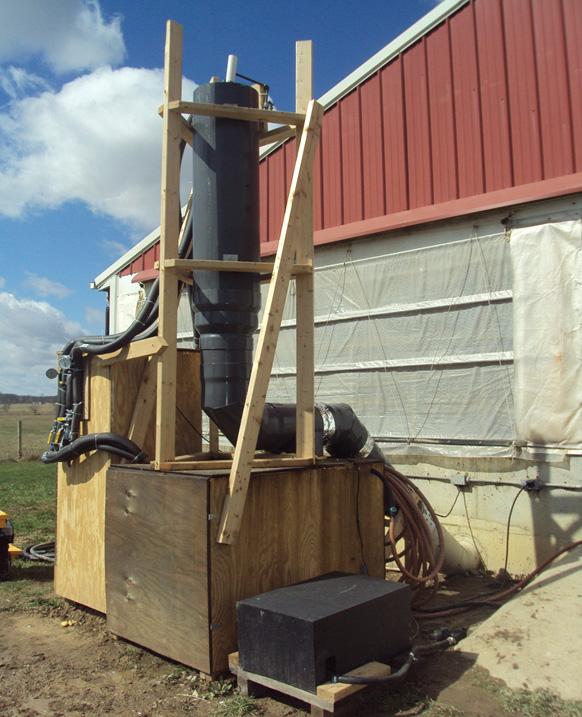
Figure 1. A prototype wet scrubber developed by the Ohio State University for a deep-pit swine facility. Photo courtesy of Lingying Zhao, Ohio State.

This is from a 2008 conference hosted by Iowa State University

Acknowledgements

These materials were developed by the Air Quality Education in Animal Agriculture (AQEAA) project with with financial support from the National Research Initiative Competitive Grant 2007-55112-17856 from the USDA National Institute of Food and Agriculture.

For questions about the materials on this page contact Dr. Linying Zhao, Ohio State University (zhao.119@osu.edu). For questions about the AQEAA project, contact Dr. Rick Stowell, Unviersity of Nebraska (rstowell2@unl.edu).

If you have presentations, photos, video, publications, or other instructional materials that could be added to the curricula on this page, please contact Dr. Zhao or Jill Heemstra (jheemstra@unl.edu).

Manure Storage Covers Curriculum Materials

Air emissions from animal agriculture operations and their associated manure storage are being examined more closely as a way to mitigate potentially harmful gases. Covers are becoming popular as a way to collect methane (a potent greenhouse gas) for beneficial reuse as a renewable energy source.  The materials on this page were developed to assist educators and professors who include manure storage covers as a topic in their classrooms or educational programs.

Fact Sheets

Rose Stenglein, Charles J. Clanton, David R. Schmidt, Larry D. Jacobson, and Kevin A. Janni, University of Minnesota

Video: Manure Storage Covers for Reducing Odor Emissions

Photo Galleries

Positive Air Pressure Covers

Negative Air Pressure Covers

Technology Summaries

These are from a 2008 conference hosted by Iowa State University

Acknowledgements

These materials were developed by the Air Quality Education in Animal Agriculture (AQEAA) project with with financial support from the National Research Initiative Competitive Grant 2007-55112-17856 from the USDA National Institute of Food and Agriculture. For questions about the materials on this page contact Dr. Kevin Janni, University of Minnesota (kjanni@umn.edu). For questions about the AQEAA project, contact Dr. Rick Stowell, Unviersity of Nebraska (rstowell2@unl.edu). If you have presentations, photos, video, publications, or other instructional materials that could be added to the curricula on this page, please contact Dr. Janni or Jill Heemstra (jheemstra@unl.edu).

Odors from Livestock Farms Curriculum Materials

One of the easiest air emissions to recognize from livestock and poultry farms is odor. It is also the most complex to characterize and study. Odors are a combination of hundreds of different emissions. Each person who smells odor interprets it differently than another person as well. With all of these variables, how can we communicate the issue of odor to students and ag professionals? These materials were developed for instructors to use in classrooms or extension programs.

Laboratory Exercise on Odor and Smell

From Dr. Doug Hamilton, Oklahoma State University

Slides and recording of author presenting the workshop. A 2 hour laboratory/workshop exercise has been presented to over 250 college freshmen.

Odor Laboratory–step by step instructions on setting up a laboratory exercise on odor

Observations and Data from Oklahoma State experience with the laboratory exercises

Video: Odors on Livestock and Poultry Farms

What role does odor play today for livestock and poultry producers? Are there ways to effectively manage odors from livestock and poultry operations and still keep the industry viable? This video examines some of the odor issues that exist in rural communities and shows examples from Nebraska of how research information is being put to use on farms.

Download a Copy of This Video

To download this video, right click on the link and select “save link as”.
Odors from Livestock Farms: A Case Study in Nebraska
File size: 34MB
Format: MP4

For More Information

Some additional resources for learning about odors and animal feeding operations:

Acknowledgements

If you have any questions or comments about the lecture or laboratory exercises, contact Dr. Doug Hamilton, Oklahoma State University dhamilt@okstate.edu. For questions on this video, contact Dr. Rick Stowell, University of Nebraska, rstowell2@unl.edu.

These materials were developed by the Air Quality Education in Animal Agriculture (AQEAA) project with with financial support from the National Research Initiative Competitive Grant 2007-55112-17856 from the USDA National Institute of Food and Agriculture.

Ammonia Deposition in Rocky Mountain National Park: What Is the Role of Animal Agriculture?

Air quality concerns related to animal agriculture include ammonia. One area that this has become apparent is Rocky Mountain National Park in Colorado. The park appears majestic and pristine. But is everything really in harmony?

Ammonia Deposition Alpine Ecosystems


Ammonia, which is a basic atmospheric gas emitted from livestock and other farms, combines with nitrogen oxides from cars and other combustion sources to create nitrogen particles which deposit in the park. As a result, this fragile ecosystem is being changed. What part do livestock operations play and how can they help preserve this national treasure?

If you need to download a copy of a segment, submit a request.

For additional information on this topic, visit “Ammonia Emissions from Animal Agriculture: An Introduction

Acknowledgements

This video was authored by the late Dr. Ron Sheffield, Louisiana State University AgCenter. If you have questions or suggestions regarding this video, please contact Dr. Rick Stowell, rstowell2@unl.edu.

These materials were developed by the Air Quality Education in Animal Agriculture (AQEAA) project with with financial support from the National Research Initiative Competitive Grant 2007-55112-17856 from the USDA National Institute of Food and Agriculture.

Air Quality Regulations and Animal Agriculture: An Introduction

Air emissions from animal agriculture  The materials on this page were developed to assist educators and professors who include an introduction to include ammonia emissions as a topic in their classrooms or programs.

 Fact Sheets

Video

Mandatory Reporting of Greenhouse Gas Emissions

Richard Stowell, University of Nebraska – Lincoln (31 minutes)

Presentation Slides

Acknowledgements

These materials were developed by the Air Quality Education in Animal Agriculture (AQEAA) project with with financial support from the National Research Initiative Competitive Grant 2007-55112-17856 from the USDA National Institute of Food and Agriculture.

For questions about the materials on this page contact Dr. Ron Sheffield, Louisiana State University Ag Center. For questions about the AQEAA project, contact Dr. Rick Stowell, Unviersity of Nebraska (rstowell2@unl.edu).

If you need to download a copy of a segment, submit a request.

Odor Measurement in Animal Agriculture

Odors are the most common nuisance complaint associated with animal feeding operations (AFOs), but is one of the most challenging to measure. Unlike other air emissions from AFOs odor is not one easily identifiable gas or molecular compound. Instead, odor is made up of many (hundreds!) of individual odorous compounds. Complicating this scenario is the fact that each person on the receiving end of odor has a different perspective, different tolerance, and different interpretation of what they are smelling. The following materials were developed for college instructors to utilize in their classrooms when presenting about odors.

Fact Sheet

Archived Webinar

Monitoring Manure Odors Following Land Application

Robin Brandt, Pennsylvania State University (15 minutes)

Presentation Slides

Acknowledgements

These materials were developed by the Air Quality Education in Animal Agriculture (AQEAA) project with with financial support from the National Research Initiative Competitive Grant 2007-55112-17856 from the USDA National Institute of Food and Agriculture.

For questions about the materials on this page contact Dr. Eileen Wheeler, Pennsylvania State University. For questions about the AQEAA project, contact Dr. Rick Stowell, Unviersity of Nebraska (rstowell2@unl.edu).

If you need to download a copy of a segment, submit a request.

Dust (Particulate Matter) Emissions From Animal Agriculture: An Introduction

Air emissions from animal animal feedlots are sources of many different emissions including particulate matter (dust).

The materials on this page were developed to assist educators and professors who wish to include dust and particulate emissions and their control as a topic in their classrooms or educational programs.

Fact Sheet

Sharon L. P. Sakirkin, Texas AgriLife Research; Ronaldo Maghirang, Kansas State University; Steve Amosson, Texas AgriLife Extension Service; Brent W. Auvermann, Texas AgriLife Extension Service and Texas AgriLife Research

Alternate download: Includes Dust Emissions Part 1 (Introduction) and Part 2 (Abatement) in a single document (12 pages; PDF format)

Video

Quantifying Particulate Matter (PM) Emissions

Russell McGee, Texas AgriLife Research (7 minutes)

Presentation Slides (Combined with a presentation on dust control)

If you need to download a copy of a segment, submit a request.

Acknowledgements

These materials were developed by the Air Quality Education in Animal Agriculture (AQEAA) project with with financial support from the National Research Initiative Competitive Grant 2007-55112-17856 from the USDA National Institute of Food and Agriculture.

For questions about the materials on this page contact Dr. Kevin Janni, University of Minnesota (kjanni@umn.edu). For questions about the AQEAA project, contact Dr. Rick Stowell, Unviersity of Nebraska (rstowell2@unl.edu).

If you have presentations, photos, video, publications, or other instructional materials that could be added to the curricula on this page, please contact Dr. Janni or Jill Heemstra (jheemstra@unl.edu).