
Effects of Corn Processing Method and Dietary Inclusion of Wet Distillers Grains with Solubles (WDGS) On Enteric Methane Emissions of Finishing Cattle

Waste to Worth: Spreading science and solutions logoWaste to Worth home | More proceedings….

Abstract

The use of wet distiller’s grains with solubles (WDGS) in feedlot diets has increased as a result of the growing U.S. ethanol industry.  However, few studies have evaluated the use of WDGS in finishing diets based on steam-flaked corn (SFC), the processing method used extensively in the Southern Great Plains.  The effects of corn processing method and WDGS on enteric methane (CH4) production, carbon dioxide (CO2) production and energy metabolism were evaluated in two respiration calorimetry studies.  In Exp. 1, the effects of corn processing method (SFC or dry rolled corn – DRC) and WDGS inclusion (0 or 30% of diet dry matter- DM) were studied using a 2 x 2 factorial arrangement of treatments and four Jersey steers in a 4 x 4 Latin square design.  In Exp. 2, the effects of WDGS inclusion rate (0, 15, 30, or 45% of diet DM) on CH4 and CO2 production were measured in a 4 x 4 Latin square design. Results indicate that cattle consuming SFC-based diets produce less enteric CH4 and retain more energy than cattle fed  DRC-based diets.  When dietary fat levels were held constant, dietary inclusion of WDGS at 15% of diet DM did not affect enteric CH4 production, WDGS inclusion at 45% of diet DM significantly increased enteric CH4 production and WDGS inclusion at 30% of diet DM had variable effects on enteric CH4 production.

Purpose

Our objectives were to determine the effects of corn processing method and WDGS inclusion rate on enteric methane losses from finishing cattle using respiration calorimetry.

What Did We Do?

Steer in open circuit respiration calorimetry chamber.

Eight steers were used in two studies.  In each study steers were fed one of four diets at 2 x maintenance energy requirements in a 4 x 4 Latin square design.  Each period of the Latin squares included a 16 d adaptation period followed by 5 days of total fecal and urine collection and measurement of gas exchange in respiration chambers.  In Experiment 1 dietary treatments consisted of corn processing method (steam flaked -SFC or dry rolled -DRC) and WDGS inclusion rate (0 or 30% of DM).  All diets were balanced for ether extract.   In Exp. 2, cattle were fed SFC-based diets containing 0, 15, 30 or 45% WDGS (DM basis).  The calorimetry system consisted of 4 chambers with an internal volume of 6500 L.   Outside air was pulled through chambers using a mass flow system.  Gas concentrations were determined using a paramagnetic oxygen analyzer and infrared methane and carbon dioxide analyzers (Sable Systems, Las Vegas, NV)  Data were statistically analyzed using the Mixed procedure of SAS.

What Have We Learned?

In Exp. 1. no iteractions between grain processing method and WDGS inclusion were detected (P > 0.47).  Cattle fed DRC-based diets had greater (P < 0.05) CH4 production (L/steer, L/kg of DMI, % of gross energy intake, and % of digestible energy intake) than cattle fed SFC-based diets probably the result of differences in ruminal fermentation and ruminal pH.  Methane losses as a proportion of GE intake (2.47 and 3.04 for SFC and DRC-based diets, respectively) were similar to previous reports and to IPCC (2006) values but were somewhat lower than EPA (2012) values.  Grain processing method did not affect CO2 production (13 to 14 Kg/d).  WDGS  inclusion rate did not affect CH4 or CO2 production.  In Exp. 2, CH4 production (L/d) increased quadratically (P = 0.03) and CH4 production as L/kg of DMI and as a proportion of energy intake increased linearly (P < 0.01) with increasing concentrations of WDGS in the diet.  Feeding WDGS did not affect (P > 0.23) total CO2 production.  Conclucions: Our results indicate that cattle consuming DRC-based finishing diets produce approximately 20% more enteric CH4 than cattle fed SFC-based diets.  When WDGS comprised 30% or less of the diet and diets were similar in total fat content, feeding WDGS had little effect on enteric CH4 but when fed at higher inclusion rates enteric CH4 production was increased by approximately 40%.

Future Plans

Over 80% of the enteric methane emissions of the U.S. beef cattle herd are produced by cows, calves, and yearling on pasture.  Therefore, additional research will study the effects of supplementation strategies and forage quality on enteric methane production by cattle.

Authors

N. Andy Cole; Research Animal Scientist/Research Leader; USDA-ARS-CPRL, Bushland, TX andy.cole@ars.usda.gov

Kristin E. Hales, Research Animal Scientist, USDA-ARS-MARC, Clay Center, NE

Richard W. Todd, Research Soil Scientist, USDA-ARS-CPRL, Bushland, TX

Ken Casey, Associate Professor, Texas AgriLife Research, Amarillo, TX

Jim C. MacDonald, Associate Professor, Dept. of Animal Science, Univ. of NE, Lincoln

Additional Information

Hales, K. E. , N. A. Cole, and J. C. MacDonald.  2013. Effects of increasing concentrations of wet distillers grains with solubles in steam-flaked corn-based diets on energy metabolism, carbon-nitrogen balance, and methane emissions of cattle. J. Anim. Sci. (in press)

Hales, K. E. , N. A. Cole, and J. C. MacDonald.  2012. Effects of corn processing method and dietary inclusion of wet distillers grains with solubles on energy metabolism, carbon-nitrogen balance, and methane emissions of cattle. J. Anim. Sci. 90:3174-3185.

Acknowledgements

Mention of trade names or commercial products in this article is solely for the purpose of providing specific information and does not imply recommendation or endorsement by the USDA.  USDA is an equal opportunity provider and employer.

We wish to thank USDA-NIFA for partial funding through Project # TS-2006-06009 entitled “Air Quality: Odor, Dust and Gaseous Emissions from Concentrated Animal Feeding Operations in the Southern Great Plains”

The authors are solely responsible for the content of these proceedings. The technical information does not necessarily reflect the official position of the sponsoring agencies or institutions represented by planning committee members, and inclusion and distribution herein does not constitute an endorsement of views expressed by the same. Printed materials included herein are not refereed publications. Citations should appear as follows. EXAMPLE: Authors. 2013. Title of presentation. Waste to Worth: Spreading Science and Solutions. Denver, CO. April 1-5, 2013. URL of this page. Accessed on: today’s date.

Mono-Slope Beef Barn Air Quality Research Project

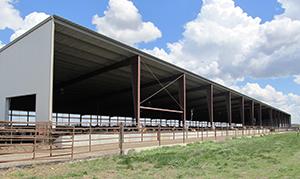
monoslope beef barnResearchers and university specialists from USDA’s Meat Animal Research Center (USMARC), South Dakota State University, and Iowa State University recently finished a four-year study looking at mono-slope beef barns and how to improve cattle and environmental performance.
How Do Mono-slope Barns Stack Up For Air Quality?

A research team worked for three years to gather baseline data for the levels of gas emissions from mono-slope beef barns. The study involved a total of four mono-slope beef barns in South Dakota and Iowa. Researchers also evaluated two different manure-handling systems to determine if there are any differences in gas emissions.

The results of that study are summarized in a eight-page publication “Air Quality in Mono-Slope Bedded Beef Barns“. They measured ammonia, hydrogen sulfide, methane, carbon dioxide, and nitrous oxide. The first three are the primary focus of the publication, since those are most commonly associated with beef feedlots. Also discussed are impacts of building orientation, manure-handling system, pen density, bedding type, and curtain opening (ventilation).

Beef Facilities Conference

Over 300 people attended the November, 2013 conference on beef confinement buildings held in Sioux Falls, South Dakota. The recordings and written papers are linked below.

Environmental and Regulatory Aspects of Beef Barns

The page numbers next to each are the location of companion written papers in the Beef Facilities Conference proceedings.

  • Results of Air Quality Research on Mono-slope Bedded Beef Barns – pages 5-9.
  • Air Quality Regulations and implications of the air quality research project – pages 10-17

The third presentation focuses on manure and nutrient production, and nutrient management for manure produced in these systems.

  • Capturing, managing, and using nutrients from the barn – pages 18-21

Producer Panel – Virtual Tours

Four producers shared aspects of their different building designs including ventilation, manure management, what works well, and things they would change. Their summaries are on pages 22-26 of the Beef Facilities Conference Proceedings.

  • Hoop buildings – one farm tour and a short synopsis of different building designs in use in Iowa
  • Mono-slope buildings – narrow and wide designs
  • Slatted floor barn (with rubber mats) – originally built without mats

Cattle Performance and Comfort In Beef Barns

University specialists compared feed intake, animal performance, carcass characteristics, and management considerations with barns compared to other systems. The page numbers next to each are the location of a companion written paper in the Beef Facilities Conference Proceedings.

The third presentation looks at international and domestic research into the use of rubber mats in deep pit barns with concrete slats.

Webcasts

Two live webinars were recorded and archived. The presenters included researchers, extension specialists, and farmers.

Open Houses Provide Opportunities to Learn More

Photo of a bedded beef barn in South Dakota.
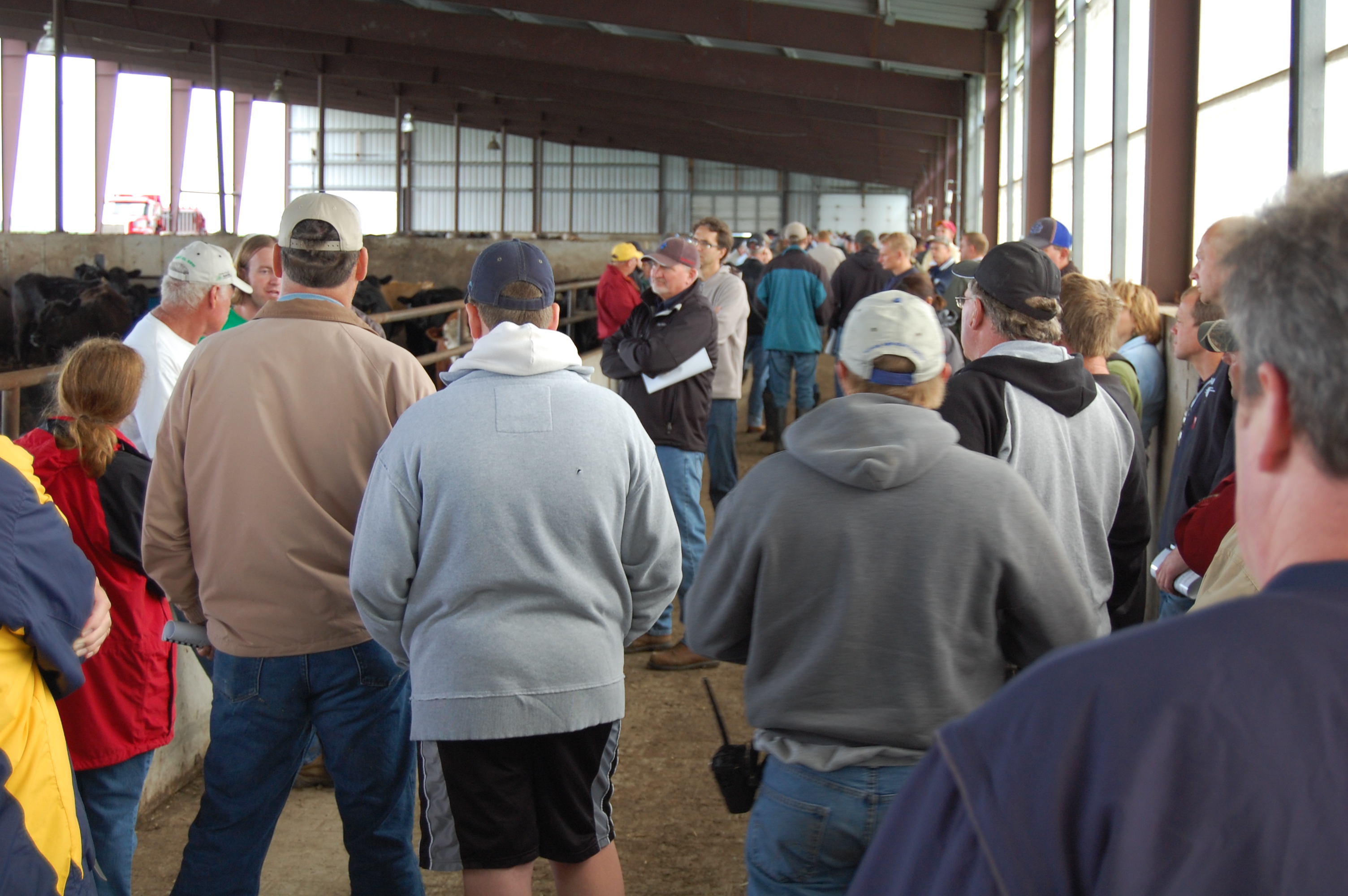
It was standing room only as participants listened to station presentations in the alleyway of the mono-slope barn.

As part of the outreach plan for this project, a series of open houses were scheduled to inform cattle producers, regulatory and technical agency staff, Extension employees, service providers and legislative and local policy-makers about air quality management and manure and environmental issues with these facilities.

Over 200 people from Iowa, Minnesota, South Dakota and Nebraska attended the Mono-Slope Beef Barn Open House in June of 2011. The open house was hosted by Ron and Clayton Christensen of Royal, Iowa and featured barn and manure management, cost-sharing opportunities, the tri-state air quality project and environmental regulations.

The open house was organized by ISU Extension and Outreach, SDSU Ag and Biosystems Engineering, and the USDA Meat Animal Research Center at Clay Center, NE.  Sponsors included Animal Medical Centers of Spencer, Clay County Cattlemen’s Association, Clay County Farm Bureau, Coalition to Support Iowa’s Farmers, Farm Credit Services of America -Emmetsburg, Spencer Ag Center and Spencer Chamber of Commerce Ag Committee.

second open house was hosted in South Dakota in August of 2011. The open house was hosted by Goodwin Heritage Cattle Company, with approximately 125 people in attendance from South Dakota and neighboring states. Sponsors included Coteau Hills Cattlemen’s Association, Watertown Chamber of Commerce Ag Committee, SPN & Associates, Glacial Lakes Energy LLC., Landmark Builders Inc., South Dakota Farm Bureau, Ag United for South Dakota, Banner Associates and Form-A-Feed, Inc.

As a result of the two open houses:

  • 95% had a better understanding of the air quality regulations and why this research is needed*
  • 88% learned where they could find financial resources to construct a mono-slope barn*
  • 89% had improved knowledge about how gases and dust are measured*

*Based on 19.7% participation in a short survey after each open house

Learn more about the successes of these open houses.

A facility tour, Science Behind Environmental Policy, was held June 22, 2012 in NW Iowa.  This tour was attended by state and federal legislators, state policy makers and stakeholders representing Extension and university specialists. Enthusiasm for research efforts was proclaimed by the legislators. See what they learned.

NW Iowa cattlemen listened to Mindy Spiehs, researcher with USDA ARS Meat Animal Research Center at Clay Center, share progress about the Tri-State Air Quality Project.  The update and tour at the Christensen barn were part of a NW regional meeting sponsored by the Iowa Cattlemen’s Association on August 23, 2012.

Mindy Spiehs
Mindy Spiehs talks about the Tri-State Air Quality Project.

Waste to Worth Conference Presentations

In April, 2013 researchers presented air emissions results from this project at the Waste to Worth: Spreading Science and Solutions conference in Denver, CO. These proceedings include a short written paper, recording and links to additional information. The different aspects presented were:

The above proceedings compliment the Beef Facilities Conference recordings and webcasts on the research project (both further up on this page).

Acknowledgements

This page was developed as a part of the Monoslope Beef Barn Air Quality Research project that was funded by Agriculture and Food Research Initiative Competitive Grant no. 2010-85112-20510 awarded to South Dakota State University, USDA ARS U.S. Meat Animal Research Center, Iowa State University, and University of Nebraska – Lincoln from the USDA National Institute of Food and Agriculture. For more information about the research study, contact Erin Cortus erin.cortus@sdstate.edu or Mindy Spiehs mindy.spiehs@ars.usda.gov. For more about the outreach and extension, contact Beth Doran doranb@iastate.edu.

project partner logos - South Dakota State University, USDA-ARS, Iowa State University, and University of Nebraska - Lincoln

Mono-Slope Beef Barns

There is growing interest in feeding cattle in bedded confinement buildings for a multitude of reasons including (but not limited to): performance advantages, limited space for open lots, and keeping manure dry as well as preventing feedlot run-off and reducing environmental concerns. Oftentimes these confined cattle are housed in mono-slope barns.

What Is a Monoslope Beef Barn?

This video is excerpted from a webcast presentation by Shawn Shouse, Iowa State University


Mono-slope barns, by definition have only one slope to their roof and are usually naturally ventilated. They are typically positioned to take advantage of seasonal climatic conditions. This means in the northern hemisphere the higher side would be south-facing with the lower side to the north. This allows for shade in the summer and sun exposure in the winter.  In bedded units, the bedding absorbs moisture and provides a softer surface for cattle to walk and lay on.

Comparing Confinement Farms with Conventional Feedlots


Shawn Shouse of Iowa State University compares
confinement systems to open lots for beef cattle.


While there are many advantages to mono-slope beef barns, the question that has been raised is: “What is the quality of air in these barns?”. A recent, on-going research project takes on this question.

Recommended Reading

Webcasts

Inquiries about the mono-slope barns may be directed to:

Beth Doran, Iowa State University (phone: 712-737-4230)

Kris Kohl, Iowa State University (phone: 712-732-5056)

Erin Cortus, South Dakota State University (phone: 605-688-5141)

Mindy Spiehs, U.S. Meat Animal Research Center (phone: 402-762-4271)

This page was developed as a part of the Monoslope Research project that was funded by Agriculture and Food Research Initiative Competitive Grant no. 2010-85112-20510 awarded to South Dakota State University, USDA ARS U.S. Meat Animal Research Center, Iowa State University, and University of Nebraska – Lincoln from the USDA National Institute of Food and Agriculture.

project partner logos - South Dakota State University, USDA-ARS, Iowa State University, and University of Nebraska - Lincoln

What’s the P Index?

The P Index is the Phosphorus Index, a risk assessment tool to quantify the potential for phosphorus runoff from a field. The P Index helps to target critical source areas of potential P loss for greater management attention. It includes source and transport factors. Source factors address how much P is available (for example, soil test P level and P fertilizer and manure application amounts). Transport factors evaluate the potential for runoff to occur (for example, soil erosion, distance and connectivity to water, soil slope, and soil texture). The P Index allows for relative comparisons of P runoff risk. When the P Index is high, recommendations are made either to apply manure on a P basis or not to apply manure at all. When the P Index is low, manure can be applied on a N basis. Also, if the P Index is high, the factors that are responsible for the higher risk of P loss are identified, and this information provides guidance for management practices to reduce the risk. For example, if the P Index is high because of high soil erosion, a recommendation to implement soil conservation best management practices (BMPs) may lower the risk and allow safe manure application.

For additional information:

To find your state’s P Index, do a web search for “phosphorus index” plus your state name.

Author: Jessica Davis, Colorado State University

What is the difference between the “higher heating value” (HHV) and “lower heating value” (LHV) of a biomass fuel, and why is the difference important?

We need these two ways of expressing the heating value of fuels because the combustion of some hydrogen-rich fuels releases water that is subsequently evaporated in the combustion chamber. In other words, the process of evaporating water “soaks up” some of the heat released by fuel combustion. That heat, known as the “latent heat of vaporization,” is temporarily lost and therefore does not contribute to the work done by the combustion process. As a result, the formation and vaporization of water in the combustion chamber reduce the amount of thermal energy available to do work, whether it be driving a piston, spinning a turbine, or superheating steam.

If the water vapor released by fuel combustion simply passes out of the chamber into the environment via the exhaust stream, the latent heat of vaporization is irreversibly and irretrievably lost. That is the case, for example, with most internal-combustion engines, such as diesel and gasoline engines. On the other hand, some advanced boilers have a secondary condensation process, downstream of the combustion step, which condenses the water vapor in the exhaust stream and recovers most of the latent heat being carried with it. The recovered heat can then be used productively.

So, in summary:

1. The numerical difference between the LHV and HHV of a fuel is roughly equivalent to the amount of latent heat of vaporization that can be practically recovered in a secondary condenser per unit of fuel burned.

2. When internal-combustion engines or boilers with no secondary condenser are designed, the appropriate fuel value to use in the design process is the LHV, which assumes that the water vapor generated when the fuel is burned goes out in the exhaust stream.

3. When advanced combustion units having secondary or tertiary condensers are designed, the appropriate fuel value to use in the design process is the HHV.

4. The numerical value of HHV is always greater than or equal to the LHV.

What are typical values for the higher heating value of manure scraped from cattle feedyard surfaces?

The higher heating value of manure scraped from cattle feedyard surfaces depends primarily on its ash and moisture content. If the manure’s ash and water were completely removed with only the combustible fraction remaining as a residue, that (primarily organic) residue would have a higher heating value (HHV) of about 8,500 BTU per pound, as determined experimentally by Annamalai et al. (1987) and Rodriguez et al. (1998). That figure of 8,500 BTU/lb is known as a “dry, ash-free” (DAF) fuel value. To estimate the HHV of actual feedyard manure (i.e., in its “as-received” or “as-is” state), which always has some ash and some moisture in it, you can multiply the 8,500 BTU/lb figure by (1 – ash) and (1 – moisture). In this case, “ash” is the manure’s ash content expressed as a fraction (dry basis), and “moisture” is the manure’s moisture content as a fraction (wet basis). For example, a manure sample having 40% ash (dry basis) and 20% moisture (wet basis) would have an HHV of approximately: HHV(ash = 40%, moisture = 20%) = 8,500 BTU/lb x (1 – 0.40) x (1 – 0.20) = 8,500 x 0.6 x 0.8 = 4,080 BTU/lb Cattle manure (as excreted) has about 75% moisture and 15% ash, which translates to an HHV around 1,750 BTU/lb. On the feedyard surface, it generally dries out and may reach moisture contents as low as 15 to 20%. Depending on whether the corral surfaces are paved or native soil, the ash content may increase dramatically. HHV values between 2,000 and 5,000 BTU/lb are common, but they are highly variable because of moisture and ash dynamics of these outdoor facilities. Fuel value of manure generated in full confinement?under roof, on concrete?can be more tightly controlled.

Other cited literature:

Annamalai, K., J. M. Sweeten and S.C. Ramalingam. 1987. Estimation of gross heating values of biomass fuels. Transactions of the ASAE 30(4):1205-1208. Rodriguez, P.G., K. Annamalai, and J.M. Sweeten. 1988. The effect of drying on the heating value of biomass fuels. Transactions of the ASAE 41(4):1083-1087


How can I prevent leaching of nitrate into groundwater from manure applications?

Nitrate contamination of groundwater occurs when excess nitrate in the soil profile moves along with water that is moving down past the root zone of the crop. In most cases, it is not possible to keep water from moving past the roots, so the only other option for preventing nitrate leaching is to avoid having excess nitrate present in the root zone during times when leaching events are likely to occur. Determine the available nitrogen content of manure prior to application, and don’t apply more available nitrogen than the crop can use. Make the applications as close to the time the crop will use the nitrogen as possible.

Although only available nitrogen is subject to leaching, organic form nitrogen will become available as it mineralizes, at which time it too can leach if not utilized by the crop. The amount of nitrogen that will mineralize prior to and during the crop season should be taken into account when calculating manure application rates. If significant mineralization from previous applications is expected, plan to have a crop present to utilize it prior to leaching events.

How do you calibrate a manure spreader?

Calibrating a manure spreader is critical to ensure that the appropriate rate of manure nutrients is being applied to a field. For some livestock operations, this practice may be a required practice as part of their permit. Calibration will differ depending on the equipment and type of manure being applied.

If you know the capacity of the spreader, you need to determine the width of each pass and the distance it takes to empty the spreader to determine the rate of application. A measuring wheel is a useful tool and can often be borrowed from a local Cooperative Extension or Natural Resources Conservation Service (NRCS) office. After you have determined both of those measurements, use the charts in the publication linked below to determine application rate.

If the capacity of the manure spreader is unknown and solid manure is being spread, you can use a process that involves setting out plastic sheets or tarps of known size and driving the manure spreader over them and weighing the amount of manure that is collected on the sheets. A 22-square-foot tarp is a convenient size because the net weight of the manure on the sheet will be equal to the application rate in tons per acre. A step-by-step guide on making these calculations for other size tarps is available in the publication linked below.

For more, including specifics on calibrating solid, liquid, and irrigation manure equipment, visit Calibrating Manure Application Equipment.

Author: Jill Heemstra, University of Nebraska Extension Educator

Results of Mono-Slope Beef Barn Air Quality Research – Archived Webcast

Researchers and university specialists from South Dakota State University, USDA’s Meat Animal Research Center (USMARC), and Iowa State University Extension are wrapping up a four-year study looking at concentration and emission measurements in comparison with management techniques for mono-slope beef barns and will share the results of their study. This presentation was originally broadcast on July 19, 2013. More… Continue reading “Results of Mono-Slope Beef Barn Air Quality Research – Archived Webcast”

Mono-Slope Beef Barn Design and Management

monoslope beef barnWhat is a mono-slope beef barn? It’s a newer style barn for cattle that is becoming increasingly popular in the upper Midwest.

This webinar allows you to discover what exactly is a mono-slope barn and why beef producers are building them. This presentation is part of a four-year mono-slope air quality research project and was originally broadcast on May 17, 2013. More… Continue reading “Mono-Slope Beef Barn Design and Management”