

Each of these free, self-paced modules tackles a specific topic about climate change and animal agriculture. It is best to go through the materials/topics in order as they are designed to progressively take you through the material.
Climate and Weather Trends
How has climate changed? What are the recent trends in rainfall, temperature, etc.? How do I learn more about my region?
Climate Impacts on Animal Production
How does/will climate change impact animal production? Are there opportunities as well? The materials are categorized by species (beef, dairy, pigs, poultry).
Adaptation & Risk Management
Will farmers need to look at investing in ways to manage the risks of extreme weather events? Includes information specific to different species and disaster management resources.
Sources of Greenhouse Gases and Introduction to Life Cycle Assessment
Which greenhouse gases (GHGs) are produced by animal agriculture? How much and how does the industry compare to other GHG sources?
- Sources of GHGs – looks at agriculture in the U.S. and includes resources on researching worldwide agricultural emissions
- [pigs] How many GHGs do pig farms produce?
Mitigating (Reducing or Eliminating) GHGs
How does animal production, in general, reduce the amount of greenhouse gases it emits? What items or practices are unique to each species?
- Mitigating GHG emissions from animal agriculture
- See also pork production and environmental footprint for swine-specific information
Regulations, Opportunities and Market Options
What are the main ways policy makers could approach greenhouse gas reductions? Are there opportunities for agriculture?
Communicating Science Amidst Controversy
How do I provide science-based information when people do not even agree about the topic?
Acknowledgements
This page was developed as part of a project “Animal Agriculture and Climate Change” an extension facilitation project to increase capacity for ag professionals. It was funded by USDA-NIFA under award # 2011-67003-30206. If you have questions about any of the topics or have problems with links, contact Crystal Powers cpowers2@unl.edu or Jill Heemstra jheemstra@unl.edu.
For questions about the AACC project, contact Rick Stowell rstowell2@unl.edu or Crystal Powers.
 What did we do?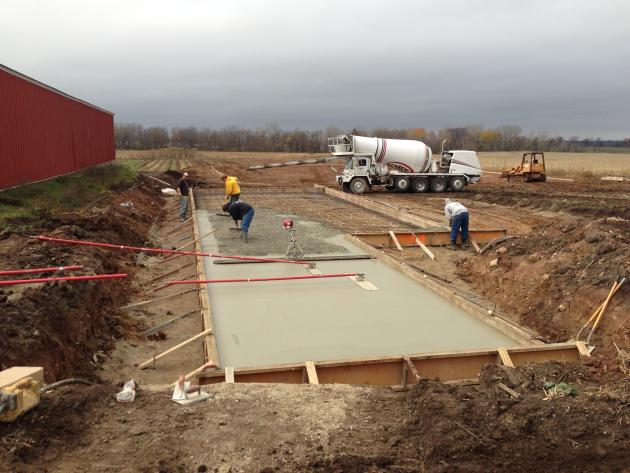

 What did we do?
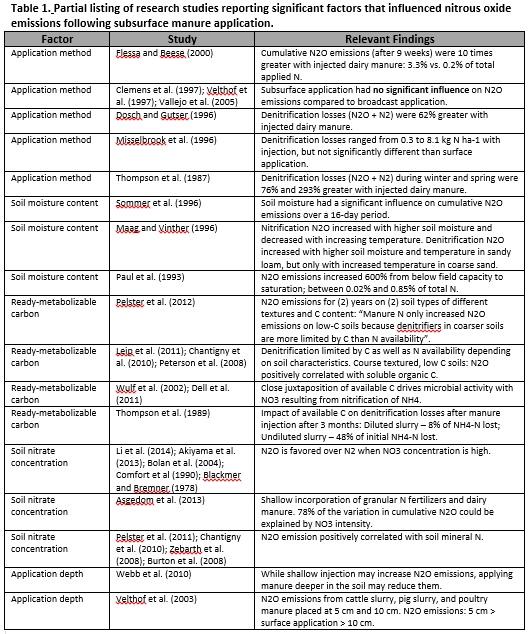
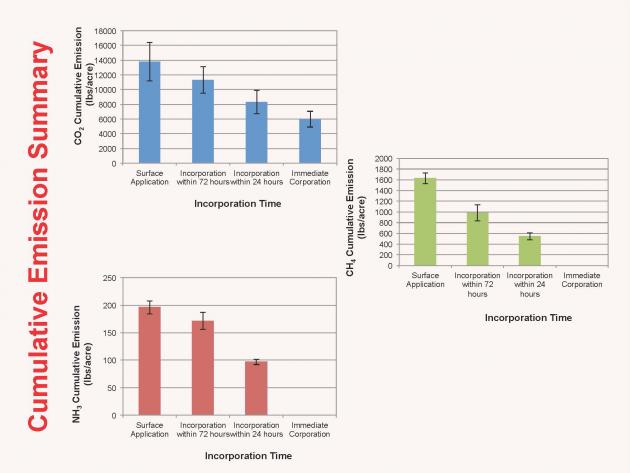
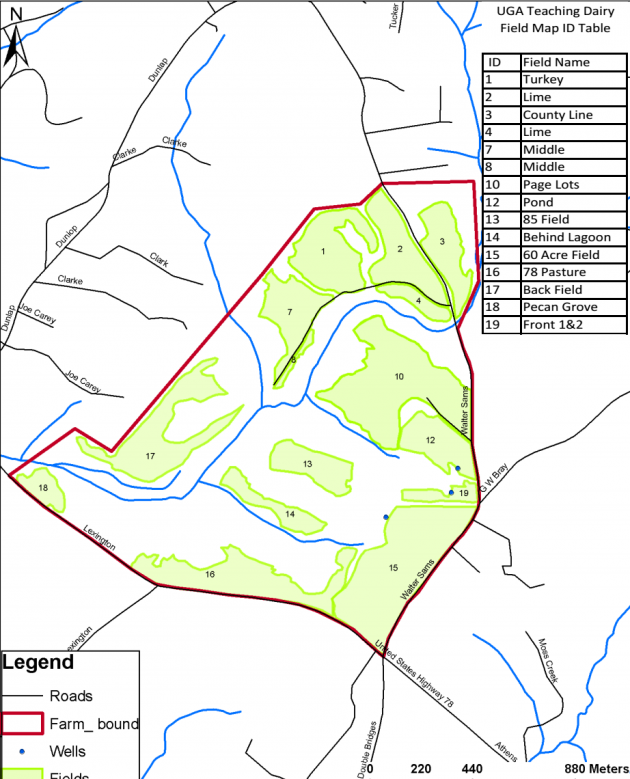 Agriculture releases significant amounts of CO2, CH4 and N2O to the atmosphere. It is estimated that the agriculture sector contributes around 10-12% (~ 5-6 Gt CO2-equivelents yr-1 in 2005) of total global anthropogenic GHG emissions, which is about 50 and 60% of methane and nitrous oxide emissions, respectively. UGA made a commitment to reduce the GHG emissions. These emissions are currently calculated using a model called campus-carbon-calculator. However this model is limited in agricultural applications because it does not account for many management changes that might reduce GHG emissions. The purpos e of our project was to select or develop a model for estimating the GHG emissions from UGA farms. It was necessary for this model to account for crop production, dairy production and swine production and desirable for the model to have limited data requirements, be easy to use and allow for a variety of management options to reduce GHG emissions.
 What have we learned?
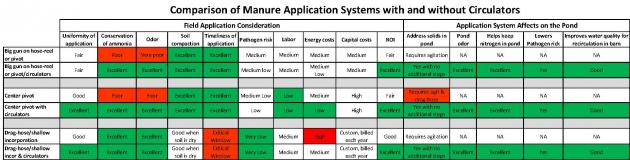
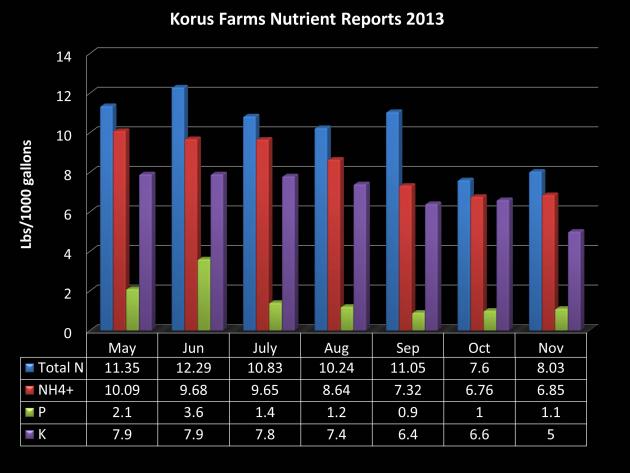
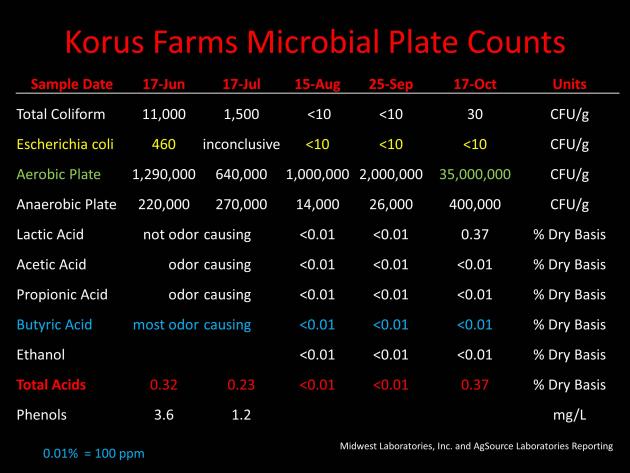
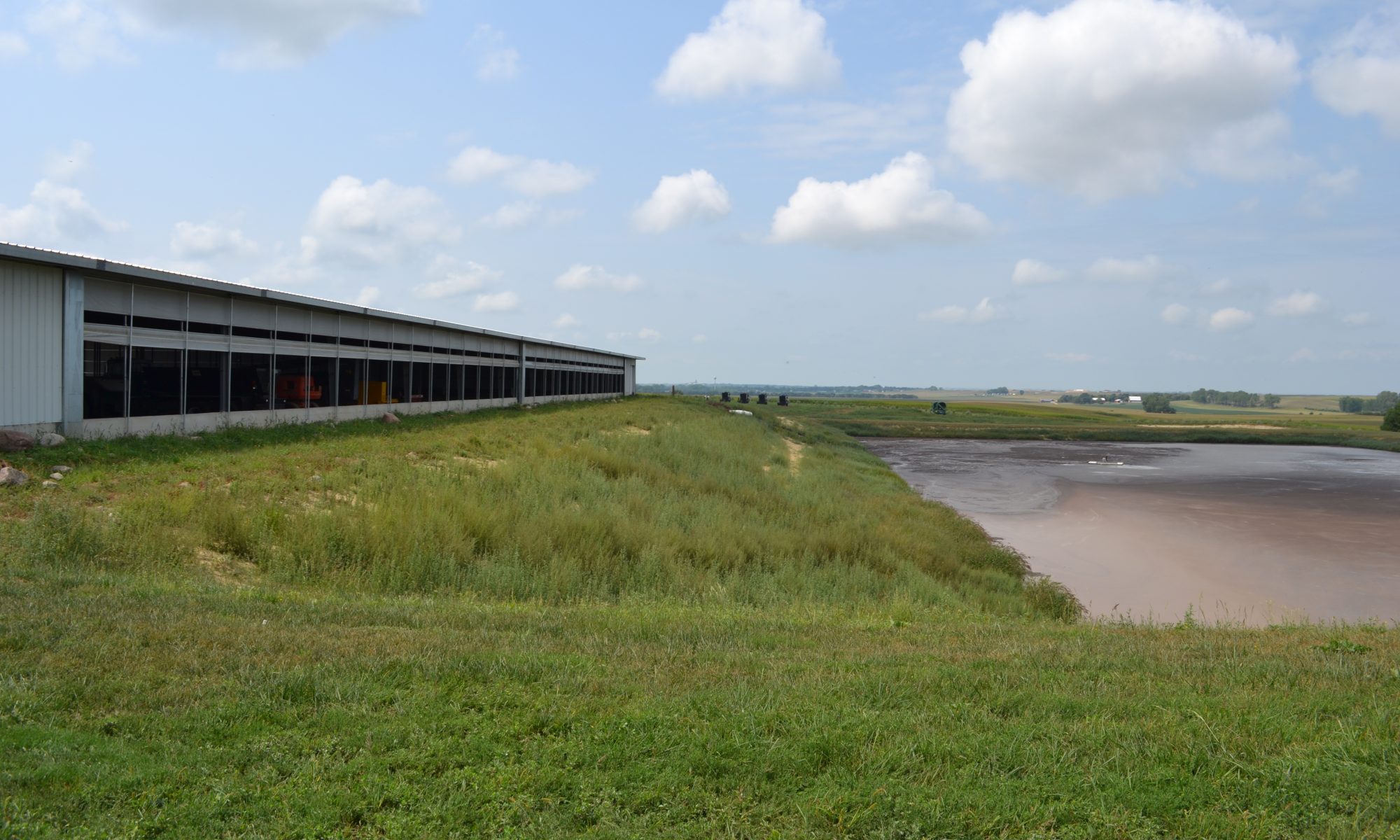
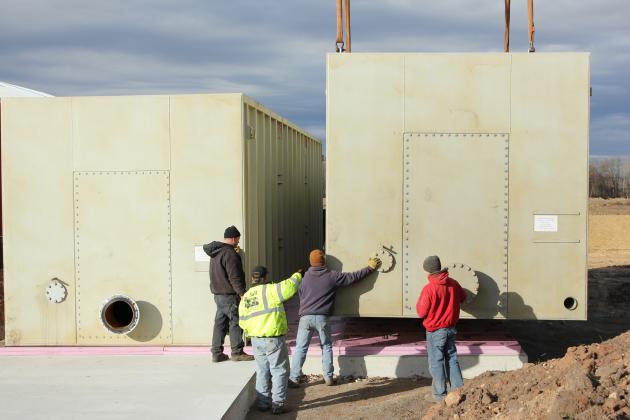
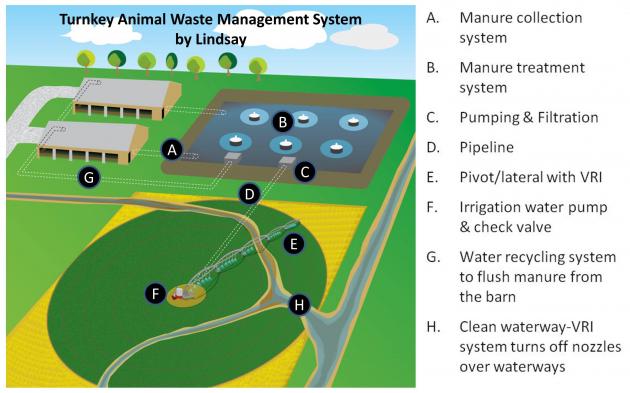 Applying livestock manure from lagoon storage through center pivot irrigation has long been considered a low-labor, uniform method of application that can deliver nutrients in-season to a growing crop. Three challenges with this system have been odor, pivot nozzle clogging and loss of nitrogen. A new innovation in lagoon treatment addresses these challenges. Low-power circulators were installed at a Northeast Nebraska commercial hog finishing facility and used to aerate the lagoon by moving oxygen-rich water and beneficial microbes to the bottom of the lagoon, reducing odor and potent greenhouse gases while lowering disease pathogen risk. This process preserved nitrogen and made it 40-60% more available in the first year of application. Circulation also reduced lagoon solids and bottom sludge, resulting in reduced agitation and dredging expense. Having a continuously well-mixed lagoon facilitated accurate manure nutrient sampling and consistent nutrient concentration delivery to the irrigation system. Combined with the ease of calibration of the center pivots, precision uniform nutrient application was achieved. Center pivot application had several additional advantages over tractor-based systems: less soil compaction, optimal nutrient timing during plant growth, higher uniformity, lower labor and energy costs, and eliminating impact on public roads. The circulators combined with flush barns and center pivot irrigation creates a complete turn-key manure management system.
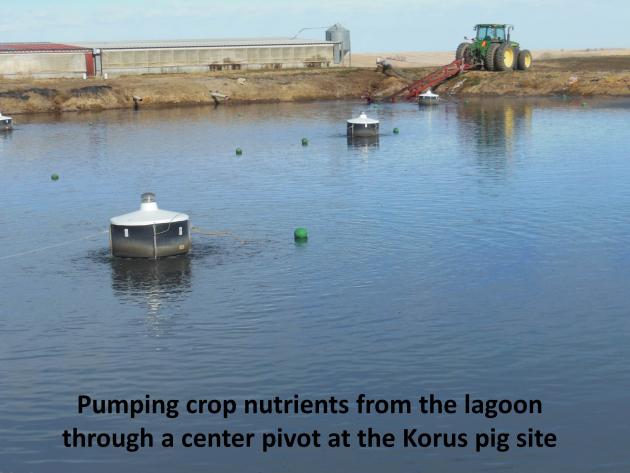 The purpose of the project was to evaluate the effectiveness of low powered circulators to treat livestock waste in lagoons. The objective was to evaluate how the addition of circulators to a livestock pond would change: 1. Odor levels, 2. Pivot nozzle clogging problems, and 3. Nitrogen loss.