AgSTAR is a collaborative voluntary program of the Environmental Protection Agency (EPA) and United States Department of Agriculture (USDA). AgSTAR promotes the use of anaerobic digestion (AD) systems to advance economically and environmentally sound livestock manure management. AgSTAR has strong ties to industry, government, non-profit and university stakeholders and assists those who enable, purchase or implement anaerobic digesters by identifying project benefits, risks, options and opportunities.
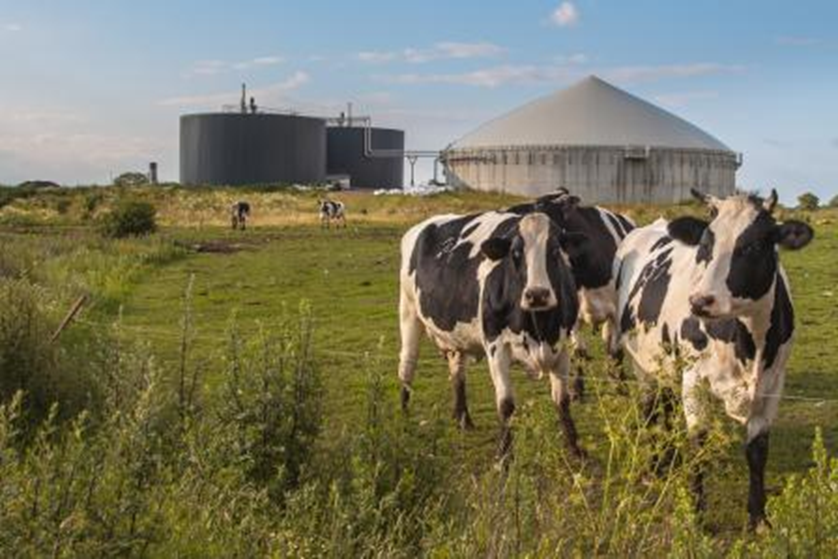
Anaerobic digestion (AD) continues to be a sustainable manure management opportunity with growing interest in innovative business models for project development. AD systems provide a number of benefits, including improved nutrient management, locally sourced renewable energy, and diversified revenue streams for farmers. As energy prices remain low across the country, and interest grows in managing food waste and organics outside of landfills, new business models have been implemented to make these on-farm AD projects viable. This presentation will provide a national overview of the livestock AD sector, explore new AD projects across the U.S., and highlight successful projects with innovative business models.
The presentation will cover several case studies of AD projects on topics including:
Third-party ownership and development of projects;
Food waste collection and boosting project profitability through tip fees and increased biogas production;
Eco-market products from dairy manure fibers; manure-based alternatives to peat moss for the horticulture industry; and
Biogas to vehicle fuel; opportunities and financial considerations.
With only 244 operating on-farm AD projects across the U.S., there exists a great opportunity for market share growth at the approximately 8,000 farms that could support a project. This, coupled with the desire for alternative management of organic waste streams, provides a unique opportunity for this sector to grow in the near future.
To better understand how dairy agriculture can reduce its impact on climate change, the USDA has supported a large, transdisciplinary research project to examine dairy production systems across the Great Lakes region of the United States. The goals of the Sustainable Dairy Coordinated Agricultural Project are to identify where in the life cycle of a dairy system can beneficial management practices (BMP) be applied to reduce greenhouse gases (GHG) without sacrificing productivity or profit to the farmer. Since 2013, a team of 70 researchers has been collaborating across institutions and disciplines to conduct the investigations.
What did we do?
Experimental data were collected at the cow, barn, manure, crop and soil levels from 2013-2016 by agricultural and life scientists. Modelers continue to conduct comparative analyses of process models at the animal, field and farm scales. Atmospheric scientists have down-scaled global climate models to the Great Lakes region and are integrating climate projections with process modeling results. The Life Cycle Assessment team is evaluating select beneficial management practices to identify where the greatest reduction of greenhouse gases (GHG) may occur. Results of focus groups and farmer surveys in Wisconsin and New York will help us understand how producers currently farm and what types of changes they may be willing to implement, not just to reduce emissions but to adapt to long-term changes in climate.
What have we learned?
Through the Dairy CAP grant, researchers have developed and refined the best ways to measure GHG emissions at the cow, barn, manure, crop and soil levels, and these data are archived through the USDA National Agricultural Library. Results show that the greatest levels of methane produced on a farm come from enteric emissions of the cow and changes in the diet, digestion and genetics of the cow can reduce those emissions. Another significant source of methane—manure production, storage and management—can be substantially reduced through manure management practices, particularly when it is processed through an anaerobic digester. Changes in timing of nitrogen application and use of cover crops practices are found to improve nitrogen efficiency and reduce losses from the field.
A comparative analysis of process models showed multiple differences in their ability to predict GHG emissions and nutrient flow (particularly nitrogen dynamics) at the animal, farm, and field scales. Field data collected were used to calibrate and refine several models. The Life Cycle Assessment approach shows that a combination of BMPs can reduce GHG emissions without sacrificing milk production. The application of down-scaled climate data for the Great Lakes region is being used in conjunction with the suite of BMPs to develop mitigation and adaptation scenarios for dairy farming in the Upper Midwest.
Research findings are shared through a series of fact sheets available on the project website, and a web-based, virtual farm that presents educational materials for 150- and 1500-cow operations to a variety of audiences, ranging from high school students to academics.
Future Plans
The Dairy CAP grant sunsets in 2018, but research questions remain relative to the efficacy of beneficial management practices at different stages in the life cycle of a farm. Challenges revolve around the complexity of farming practices, the individuality of each farm and how it is managed, and uncertainty associated with the predictive capabilities of models. Mitigation and adaptation strategies will be shared with the dairy industry, educators and extension partners who will be responsible for working with farmers at the field level. Implementation of these strategies will make dairy farming in the Great Lakes region more resilient.
Corresponding author, title, and affiliation
Carolyn Betz, Research Project Manager, University of Wisconsin-Madison. Department of Soil Science
This material is based upon work that is supported by the National Institute of Food and Agriculture, U.S. Department of Agriculture, under award number 2013-68002-20525.
Livestock producers can more fully utilize the nutrients in livestock manure to reduce purchased fertilizer costs if they can apply manure when crops need the nutrients. Better capturing manure nutrients can reduce phosphorus and nitrogen losses into surface water bodies. To help decrease the incidences of harmful algae blooms in the Western Basin of Lake Erie, Ohio State University (OSU) Extension research has sought to develop an in-season window to apply manure to emerged corn. By incorporating livestock manure as a sidedress nitrogen fertilizer for corn, nutrients are less exposed to movement by water and a greater percent of the nitrogen is utilized by the growing corn crop.
Surveys of livestock farmers, who attended OSU Extension field days in western Ohio reveal approximately 49% of livestock manure is applied in the months of October, November, and December following crop harvest. Typically, there is no growing crop at that time of year to capture the available nitrogen in the manure. The surveys also reveal only 19% of manure is applied in the months of April, May and June. Ohio has about 2.5 billion gallons of liquid dairy manure and almost one billion gallons of liquid swine manure needing applied to farm fields each year.
What did we do?
Ohio State University conducted replicated small-plot research from 2012 to 2016 using swine and dairy manure as sidedress nitrogen sources compared to incorporated 28% Urea Ammonium Nitrate (UAN) on pre-emergent and post-emergent corn. The nitrogen in manure is primarily in two forms; ammonium and organic. Ammonium nitrogen is readily available to a growing crop. Organic nitrogen has to undergo a mineralization process for a percentage of the nitrogen to eventually be released in the ammonium form each crop season.
More than 45 on-farm plots with livestock producers were also completed over five seasons using field sized replicated plots. Liquid swine, dairy, and beef manure were applied to corn in the V2 to V4 stage of growth using a 5,250 gallon Balzer tanker and six-row Dietrich manure injection toolbar. The flotation tires on the tanker were replaced with rims and narrow tires allowing the tanker to follow the tractor down the rows of corn. In replicated plots, the liquid manures produced similar yields to commercial fertilizer when applied at similar nitrogen fertilizer amounts.
OSU Extension also conducted swine finishing manure drag hose plots with a pork producer where manure was incorporated into emerged corn at the V2 to V3 stage of growth and compared to incorporated 28%UAN. The manure application rate was approximately 6,500 gallons per acre using a seven-shank rotary injector toolbar. The drag hose was six inches in diameter and the pumping rate was 1,300 gallons per minute. The farmer planted the fields on a 45 degree angle to accommodate the drag hose manure application.
What have we learned?
Below are five years of liquid manure side-dress research on corn plots at the Northwest Station of the Ohio Agricultural Research and Development Center. In these research plots liquid swine and liquid dairy manure were used in pre-emergent and post-emergent plots and compared with incorporated 28%UAN. Manure was applied to the pre-emergent plots each season within three days of planting. Manure was applied to the post-emergent plots at the V3 stage of corn growth. The manure was applied to a depth of approximately five inches using a 1,250 gallon manure tanker with Dietrich manure injection sweeps and covering wheels.
For these plots, the swine finishing manure application rate was 5,000 gallons per acre to provide 200 pounds of available nitrogen. The dairy pond manure application rate was 13,500 gallons per acre (140 pounds of available nitrogen) plus 20 gallons of 28% UAN nitrogen applied just ahead of the manure for a total of 200 pounds of nitrogen. The 28%UAN treatments also received 200 pounds of nitrogen per acre each year.
Chart 1. OARDC manure side-dress plot results
The long-range goal of Ohio State University Extension’s manure application research is to utilize a drag hose to incorporate liquid manure of any species into corn from the date of planting up to the V4 stage of growth. Three years of drag hose manure side-dress plots in Darke County indicate this manure application method has great potential. Applying manure to a growing crop can capture more of the manure nutrients than applying manure without a crop in the field.
Chart 2. Drag hose research yields on corn in Darke County, Ohio
Year
Swine manure
(bu/acre)
28%UAN (bu/acre)
2016
222
216
2015
154
121
2014
204
204
In addition to the three crop seasons of drag hose sidedress of corn in Darke County, we also have three years of drag hose damage research from the Ohio Agricultural Research and Development Center’s Northwest Station near Hoytville. Based on this research, we believe we can use a drag hose across emerged corn through the V3 stage without a loss of yield and probably through the V4 stage if early season conditions are drier than normal.
Funds are being solicited to purchase 12-row drag hose manure incorporation toolbars to have available to livestock producers and commercial manure applicators to use in Ohio for the 2017 crop season and beyond. Thanks to donations from the Columbus Foundation, Ohio Farm Bureau, Dietrich Inc., Cooper Farms, Hord Livestock, Conservation Action Project, and Bazooka Inc. we have almost secured the funds to build two toolbars.
Corresponding author, title, and affiliation
Glen Arnold, Associate Professor & Field Specialist Manure Nutrient Management Application, The Ohio State University
Thanks to the Ohio Environmental Education Fund, Ohio Pork Producers Council, Ohio Dairy Research Fund, Ohio Corn Marketing Board, Ag Credit, Farm Credit Services, Ohio Soybean Council, the Ohio Farm Bureau, and the Conservation Tillage Conference for funding support.
The authors are solely responsible for the content of these proceedings. The technical information does not necessarily reflect the official position of the sponsoring agencies or institutions represented by planning committee members, and inclusion and distribution herein does not constitute an endorsement of views expressed by the same. Printed materials included herein are not refereed publications. Citations should appear as follows. EXAMPLE: Authors. 2017. Title of presentation. Waste to Worth: Spreading Science and Solutions. Cary, NC. April 18-21, 2017. URL of this page. Accessed on: today’s date.
While manure can be beneficial, overapplication is not. Too much manure in one place can lead to problems with salt buildup and excess nutrients which can lead to problems with water quality. As with most other inputs, manure is most valuable when it is managed to be in balance with plant needs.
The continued capacity of soil to function as a vital living ecosystem that sustains plants, animals, and humans.
Resources On Land Application of Manure and Impacts on Soil Health
[Roundtable Series] Four roundtable webinars will focus on soil health testing, soil biology, soil erosion, and cover crops as they pertain to manure application. The weekly series runs from February 9-March 9, 2017. More…
Micro Manure Management (2015) – see first presentation on “Impact of swine slurry on soil health”
Each of the resources listed above includes links to research articles, extension publications, and more. The MaSH webinar also includes information in how to become involved in the learning network and to read or contribute to the project blog.
[Learning Network] The Soil Health Nexus is sponsored by the North Central Water Network but welcomes interested people from all regions
[Book] Sustainable Agriculture Research and Education (SARE) program “Building Soils for Better Crops 3rd Edition“. The sections most relevant to manure and soil health are linked below.
Usually when people see the words “algae” and “manure” in the same paragraph, it is usually a negative take on the effects of manure nutrients on water. When excess nutrients are transported to water bodies (from lawn fertilizer, municipal waste treatment plants, manure and/or commercial crop fertilizer) algae use those nutrients and grow rapidly. When the nutrients are no longer sufficient for growth, the algae begins to die and decompose. This depletes oxygen in the water, which can lead to fish kills and other problems for aquatic life.
The same characteristics of algae that can make it a nuisance also make it an innovative way to treat wastewater when grown in an engineered system. The fact that the algae are able to utilize the nutrients within the water to multiply and grow rapidly can be exploited within a managed system to create a potential source of biomass, and serve as a biological mechanism to remove nutrients. The sustained biological activity of algae can also add dissolved oxygen to the water, potentially reducing the direct emissions of methane and nitrous oxide (greenhouse gases) from volatilization of stored manure. Current research is exploring the use of harvested algae as an animal feed, source of biofuel (algal oil production), or biomass in thermal energy production.
A current research project on pig manure and algae as a nutrient removal technology
Author: Rick Field, University of Arkansas and Jill Heemstra, University of Nebraska
Acknowledgements
This information is part of the program “Integrated Resource Management Tool to Mitigate the Carbon Footprint of Swine Produced In the U.S.,” and is supported by Agriculture and Food Research Initiative Competitive Grant no. 2011-68002-30208 from the USDA National Institute of Food and Agriculture. Project website.
Why Look at Barriers in Nutrient Management Information Flow?
The issue of manure nutrient management has been the subject of controversy and new policies in recent years as the non-point source discharge of nutrients and bacteria is substantial if manure is not managed properly. Unfortunately, there are barriers between organizations and individuals that prevent the flow of important, timely information between audience types and limits the impact and usefulness of research results. These barriers may be in the form of institutional language differences, job descriptions, or a mismatch between information outputs and inputs.
What did we do?
A national team of researchers, Extension specialists, consultants and government staff developed a survey to quantify the role, programming, and barriers to information flow between organizations and individuals regarding manure nutrient management. The electronic survey was disseminated via cooperating agencies, organizations and personal contacts to technical service providers, producers, university personnel, regulatory personnel, private sales or service enterprises and other professionals who contribute to manure nutrient management in South Dakota. Respondents were asked to indicate the relevance of information sources (inputs), information products (outputs) and collaborators (links), as well as barriers to their use. The relevance selections were transformed into scalar data and an analysis of variance was performed on the average relevance scores to test for differences based on input/output/link type and organization type.
What have we learned?
There were 139 surveys started, and 80 surveys completed. Data from partially completed surveys were, however, included in the analysis. The main categories of self-identified respondents were NRCS (n=36), Producers (n=29), University personnel (n=15) and Regulatory personnel (n=9). The remaining categories respondents were grouped into an Other category (n=22). The average relevance score for each of the information sources, information products and collaborations listed in the survey were consistent (no significant difference between organization types). As sources of information, consultation, eXtension and field days were ranked most relevant, with classroom and social media being least relevant. Similarly, consultation, field days and eXtension were ranked the most relevant means of sharing information; social media was ranked least relevant. Barriers to information sources and products were specific to the activity or product. The select ion “No barriers to use” was not an indicator of relevance. All organization types deemed producers the most relevant collaborator, followed by state, university and federal agencies.
Future Plans
The South Dakota-based survey was a pilot test for a nationwide survey being conducted in 2015. From feedback and data review, the survey has been refined and shortened to elicit the key input, output and collaborator data. With the national data in hand later in 2015, the project team looks forward to linking information producers and users in effective pathways for manure nutrient management information transmission, and ultimately, adoption.
Authors
Erin Cortus, Assistant Professor and Environmental Quality Engineer at South Dakota State University erin.cortus@sdstate.edu
Nichole Embertson, Nutrient Management Specialist, Sustainable Livestock Production Program, Whatcom Conservation District; Jeffrey Jacquet, Assistant Professor, Sociology and Rural Studies, South Dakota State University
The nationwide team who contribute to and guide the Pathways project are gratefully acknowledged. Funding provided through the South Dakota SARE Mini-Grant Program supported data collection and analysis for the survey pilot test.
The authors are solely responsible for the content of these proceedings. The technical information does not necessarily reflect the official position of the sponsoring agencies or institutions represented by planning committee members, and inclusion and distribution herein does not constitute an endorsement of views expressed by the same. Printed materials included herein are not refereed publications. Citations should appear as follows. EXAMPLE: Authors. 2015. Title of presentation. Waste to Worth: Spreading Science and Solutions. Seattle, WA. March 31-April 3, 2015. URL of this page. Accessed on: today’s date.
Why Examine Learning Pathways in Nutrient Management?
During the 2013 Waste to Worth Conference, a session on “Nutrient Management Standards: Making Them Work Where We Work” sparked discussion on the need to match manure nutrient management (and other related topic) tools and content with the end user. This discussion also highlighted organization and institutional language barriers that also challenge information transfer among users.
Technology has opened up new communication lines between various groups, but unless we can speak the same language and recognize the goals and needs between groups, establishing effective partnerships is difficult. Furthermore, the potential and realized reach through outreach methods available to different groups is not well understood.
A map of the pathway between information producers (i.e., researchers) and users is vital, along with the identification of end user format and language necessary for comprehension and usefulness. By providing a pathway to audience types and needs, research groups can realistically identify the target groups for their specific project outcomes and produce targeted products, information sources, and formats for those end users. In addition, this hierarchal pathway allows researchers to select project partners from specific agencies and industries in their Region to communicate directly with in order to produce a tailored and more impactful product.
What did we do?
A national team of Researchers, Extension specialists, Consultants and Government Staff came together with the overall objectives to: (1) document effective information transmission methods, pathways, and formats for different audience types; and (2) demonstrate a hierarchal approach of information dissemination through various audience types. Based on input and guidance from the national team, an electronic survey was developed to quantify and qualify information source (inputs), information products or sharing mechanisms (outputs), and collaborations (existing links) between organization types. The survey also qualifies the barriers to information flow between organizations and individuals regarding manure nutrient management.
A pilot test of the survey was conducted in 2014 in South Dakota. Based on the results of that project, minor refinements were made to the survey, which is being distributed nationally in the Spring of 2015. The electronic survey is being disseminated via cooperating agencies, organizations and personal contacts to technical service providers, producers, university personnel, regulatory personnel, private sales or service enterprises and other professionals who contribute to manure nutrient management.
What have we learned?
The South Dakota pilot project gave us a peak into the viability and potential impact this national survey can have. We were able to infer important connections and barriers that will lead to very important modifications to information transfer in the future. The collaboration and input from the national team members has been critical to the development and vetting of the survey tool. Through this team, organizational language differences have emerged. Over time, we look to document these terms for future reference to a broader audience.
Future plans
The results of the national survey will be analyzed in the Summer of 2015. In the Fall of 2015, the exercise of documenting pathways based on the survey data will be conducted with a focus on data collected for the North Central Region. A similar process will be followed for other regions of the country. An intended outcome of this project is the creation of a reference document/tool and process that enables integrated research projects to identify a vetted method for successful dissemination of research results to the correct target audiences in the most impactful formats.
Authors
Erin Cortus, Assistant Professor and Environmental Quality Engineer, Agricultural and Biosystems Engineering, South Dakota State University, erin.cortus@sdstate.edu
Key contributors for the North Central Region are Teng Lim (University of Missouri), Amy Schmidt (University of Nebraska-Lincoln), and Jill Heemstra (University of Nebraska-Lincoln).
Acknowledgements
The nationwide team who contribute to and guide the Pathways project are gratefully acknowledged. Funding provided through the South Dakota SARE Mini-Grant Program supported data collection and analysis for the survey pilot test. The North Central Region Water Network provided funding for analysis and dissemination of data collected for the North Central Region.
The authors are solely responsible for the content of these proceedings. The technical information does not necessarily reflect the official position of the sponsoring agencies or institutions represented by planning committee members, and inclusion and distribution herein does not constitute an endorsement of views expressed by the same. Printed materials included herein are not refereed publications. Citations should appear as follows. EXAMPLE: Authors. 2015. Title of presentation. Waste to Worth: Spreading Science and Solutions. Seattle, WA. March 31-April 3, 2015. URL of this page. Accessed on: today’s date.
While EPA AGSTAR has long supported the adoption of anaerobic digestion on dairies and swine farms, they have not historically focused on the use of anaerobic digestion on egg laying and other poultry facilities. This has been because the high solids and ammonia concentrations within the manure make anaerobic digestion in a slurry-based system problematic. Development of enhanced downstream ammonia and solids recovery systems is now allowing for effective digestion without ammonia toxicity. The process also generates dilution water, avoiding the need for fresh water consumption, and eliminating unwanted effluent that needs to be stored or disposed of to fields. The system produces high-value bio-based fertilizers. In this presentation, a commercial system located in Fort Recovery Ohio will be used to detail the process flow, its technologies, and the co-products sold.
Why Examine Anaerobic Digestion on Poultry Farms?
The purpose of this presentation is to supply a case study on a commercial poultry digestion project for production of combined heat and power as well as value-added organic nutrients on a 1M egg-layer facility in Ohio.
What did we do?
In this study we used commercial farm information to demonstrate that poultry digestion is feasible in regard to overcoming ammonia inhibition while fitting well into an existing egg-layer manure management system. Importantly, during the treatment process a significant portion of nutrients within the manure are concentrated for value-added sales, ammonia losses to the environment are reduced, and wastewater production is minimized due to recycle of effluent as dilution water.
What have we learned?
In this study, commercial data shows that ammonia and solids/salts levels that are potentially inhibitory to the biology of the digestion process can be controlled. The control is through a post-digestion treatment that includes ammonia stripping and recovery as ammonium sulfate as well as fine solids separation using a dissolved air flotation process with the addition of apolymer. The resulting treated effluent is sent back to the front of the digester as dilution water for the high solids poultry manure. The separated fine solids and the ammonium sulfate solution are dried using waste engine heat to produce a nutrient-rich fertilizer for off-farm sales. The stable anaerobic digestion process resulting from the control of potential inhibitors that might accumulate in the return water, if no post-treatment occurred, leads to production of a significant supply of electrical power for sales to the grid.
Demonstration at commercial scale shows the promise anaerobic digestion with post-digestion treatment and effluent recycle can play in a more sustainable poultry manure treatment system includingmanaging nutrients for export out of impacted watersheds.
Future Plans
Future plans include continued work with industry in developing and/or providing extension capabilities around novel digestion and post-treatment processes for a variety of manures and on-farm situations. Expansion of such processes to poultry and other on-farm business plans will allow for improved reductions in wastewater production, concentrate nutrients for export out of impacted watersheds and do so within a positive economic business plan.
Authors
Craig Frear, Assistant Professor at Washington State University cfrear@wsu.edu
Quanbao Zhao, Project Engineer DVO Incorporated, Steve Dvorak, President DVO Incorporated
Additional information
Additional information about the corresponding author can be found at http://www.csanr.wsu.edu while information about the poultry project and the industry developer can be found at http://www.dvoinc.net. Numerous articles related to anaerobic digestion, nutrient recovery and separation technologies for climate, air, water and human health improvements can be found at the WSU website using their searchable articles function.
Acknowledgements
This research was supported by funding from USDA National Institute of Food and Agriculture, Contract #2012-6800219814; National Resources Conservation Service, Conservation Innovation Grants #69-3A75-10-152; and Biomass Research Funds from the WSU Agricultural Research Center.
The authors are solely responsible for the content of these proceedings. The technical information does not necessarily reflect the official position of the sponsoring agencies or institutions represented by planning committee members, and inclusion and distribution herein does not constitute an endorsement of views expressed by the same. Printed materials included herein are not refereed publications. Citations should appear as follows. EXAMPLE: Authors. 2015. Title of presentation. Waste to Worth: Spreading Science and Solutions. Seattle, WA. March 31-April 3, 2015. URL of this page. Accessed on: today’s date.
Why Are Co-Products Important in Manure Treatment Technologies? Do These Technologies Work for Large and Small Farms?
Livestock and poultry operations face considerable logistical and financial challenges to manage over a billion tons of nutrient-laden manure generated in the U.S. each year. This manure has the potential to impact the environment adversely if it is not managed responsibly, but both producers and the environment can benefit from innovative technologies that alleviate manure management challenges. Technologies that yield new revenues or offer flexibility in managing manure are of particular interest. This panel will discuss two factors vital to the long-term success of waste-to-worth technologies:
The importance of markets for co-products from innovative technologies
The importance of developing waste-to-worth innovations for farms of all sizes
The Importance of Markets
Innovative technologies can make it possible for producers to export manure nutrients off-site more readily, which can benefit both their bottom line and the environment. This is particularly true for larger livestock farms, many of which lack sufficient land to be able to apply all their manure at agronomic rates. Some manure-to-energy and nutrient recovery technologies are already in place at animal agriculture operations. However, anecdotal evidence suggests that producers can have difficulty finding markets for the outputs of these systems. This panel will address the viewpoint that, in addition to approaching innovation with the question, “Technically speaking, what commodities can be derived from manure?” it is also important to ask, “For what types of co-products and services does a market exist, and how can optimized manure treatment systems meet this demand?”
The Importance of Innovations for Farms of All Sizes
More than half of all U.S. livestock (including poultry) animals are held by farms smaller than 1,000 beef cattle or equivalent in size. Although these farms may have adequate land for applying manure nutrients at agronomic rates, storage constraints and labor shortages may impact the operation’s ability to apply manure at agronomically optimal times. These constraints can sometimes result in harmful losses of manure nutrients into the environment.
Smaller farms can benefit from innovative technologies that are less capital intensive and improve the logistics of manure storage, transport, and application. For smaller operations, one way to approach innovation is by asking the question “What innovations add value for producers at smaller operations by providing a greater degree of manure management flexibility?”
What will the audience take away from this presentation?
In this panel, the moderators will provide a brief overview of the need for innovative manure management systems. Moderators will then pose a series of questions to panelists. First, we will hear “real world” experiences with innovative manure management technologies from technology developers and users. Second, we will hear about the specific operational and financial challenges livestock producers face and what types of technologies could respond to these challenges. Finally, we hope to identify scenarios in which innovative manure management technologies could have the greatest likelihood of success.
Panelists
Josh Frye, Frye Poultry, Wardensville, WV. Josh Frye runs a 700,000 plus broiler operation. His company owns a fixed bed gasifier that can convert poultry litter into energy at the rate of 5 million btu per hour, per 1,000 lbs of litter.
Matt Freund, Cowpots, East Canaan, CT. Matt Freund of Freund’s Family Farm in Connecticut runs a 275 cow dairy. Mr. Freund’s dairy produces biogas with an anaerobic digester and uses a process that Mr. Freund developed to manufacture biodegradable planting pots, CowPotsTM, out of separated manure fibers.
Dr. Mark Johnson, EPA Corvallis Lab, Corvallis, OR. Mark Johnson is a Research Soil Scientist with EPA’s Office of Research and Development (ORD) Corvallis Lab. Dr. Johnson is researching custom biochars generated from a variety of biomasses.
Dr. Craig Frear, Washington State University, Puyallup, WA. Craig Frear is an Associate Professor at Washington State University. Dr. Frear has extensive experience with anaerobic digestion and advanced nutrient recovery systems. Dr. Frear has developed and implemented these systems on dairies and other animal operations with a focus on optimizing total system performance and long-term financial sustainability.
Dr. Ariel Szogi, USDA/ARS Coastal Plain Soil, Water and Plant Conservation Research Center, Florence, SC. Ariel Szogi is a Research Scientist with USDA’s Agriculture Research Service (ARS). Dr. Szogi has developed a process called Quick Wash for extraction and recovery of phosphorus from poultry litter and animal manure solids.
Kraig Westerbeek, Vice President of Environment, Engineering, and Support Services, Murphy-Brown LLC (livestock subsidiary of Smithfield Foods). In this capacity he is heavily involved in the evaluation of current and new technologies for manure management. He is from Warsaw, NC, and has been employed by Murphy-Brown for 22 years, primarily in the environmental area.
Moderators
Joseph Ziobro, Office of Wastewater Management, U.S. EPA (ORISE fellow). Joseph Ziobro is an O.R.I.S.E. Research Participant at U.S. EPA, Office of Wastewater Management, Rural Branch. Mr. Ziobro supports the National Permit Discharge Elimination System (NPDES) permit program for concentrated animal feeding operations.
Nina Bonnelycke, Office of Wastewater Management, U.S. EPA. Nina Bonnelycke is a Policy Analyst at the U.S. Environmental Protection Agency, Office of Wastewater Management, Rural Branch. Ms. Bonnelycke has extensive experience in cost/benefit analysis of environmental programs.
Joseph Ziobro
U.S. Environmental Protection Agency
Joseph is a Research Participant at the Oak Ridge Institute for Science and Education (ORISE) research program at the US Environmental Protection Agency (EPA) in the Office of Wastewater Management. He supports the implementation of the National Pollutant Discharge Elimination System (NPDES) permitting program for concentrated animal feeding operations. Joseph also supports collaborative initiatives with the animal agriculture industry that protect and restore water quality. In 2013, Joseph earned a Master’s degree in Environmental Science from the State University of New York (SUNY) College of Environmental Science and Forestry (ESF), with a focus on coupled human and natural systems.
Nina Bonnelycke
U.S. Environmental Protection Agency
Ms. Bonnelycke is a Policy Analyst at the U.S. Environmental Protection Agency, Office of Wastewater Management, Rural Branch. She has served EPA for close to 25 years and has extensive experience in cost/benefit analysis of environmental programs. Ms. Bonnelycke has supported EPA’s efforts on water quality issues connected to animal agriculture since 2001. She has worked in a variety of other program areas including solid and hazardous waste, stratospheric ozone protection, and climate change. Ms. Bonnelycke has a Master’s in Public Policy from the University of California, Berkeley.
The authors are solely responsible for the content of these proceedings. The technical information does not necessarily reflect the official position of the sponsoring agencies or institutions represented by planning committee members, and inclusion and distribution herein does not constitute an endorsement of views expressed by the same. Printed materials included herein are not refereed publications. Citations should appear as follows. EXAMPLE: Authors. 2015. Title of presentation. Waste to Worth: Spreading Science and Solutions. Seattle, WA. March 31-April 3, 2015. URL of this page. Accessed on: today’s date.
Manage Cookie Consent
To provide the best experiences, we use technologies like cookies to store and/or access device information. Consenting to these technologies will allow us to process data such as browsing behavior or unique IDs on this site. Not consenting or withdrawing consent, may adversely affect certain features and functions.
Functional
Always active
The technical storage or access is strictly necessary for the legitimate purpose of enabling the use of a specific service explicitly requested by the subscriber or user, or for the sole purpose of carrying out the transmission of a communication over an electronic communications network.
Preferences
The technical storage or access is necessary for the legitimate purpose of storing preferences that are not requested by the subscriber or user.
Statistics
The technical storage or access that is used exclusively for statistical purposes.The technical storage or access that is used exclusively for anonymous statistical purposes. Without a subpoena, voluntary compliance on the part of your Internet Service Provider, or additional records from a third party, information stored or retrieved for this purpose alone cannot usually be used to identify you.
Marketing
The technical storage or access is required to create user profiles to send advertising, or to track the user on a website or across several websites for similar marketing purposes.


 Agricultural Library. Results show that the greatest levels of methane produced on a farm come from enteric emissions of the cow and changes in the diet, digestion and genetics of the cow can reduce those emissions. Another significant source of methane—manure production, storage and management—can be substantially reduced through manure management practices, particularly when it is processed through an anaerobic digester. Changes in timing of nitrogen application and use of cover crops practices are found to improve nitrogen efficiency and reduce losses from the field.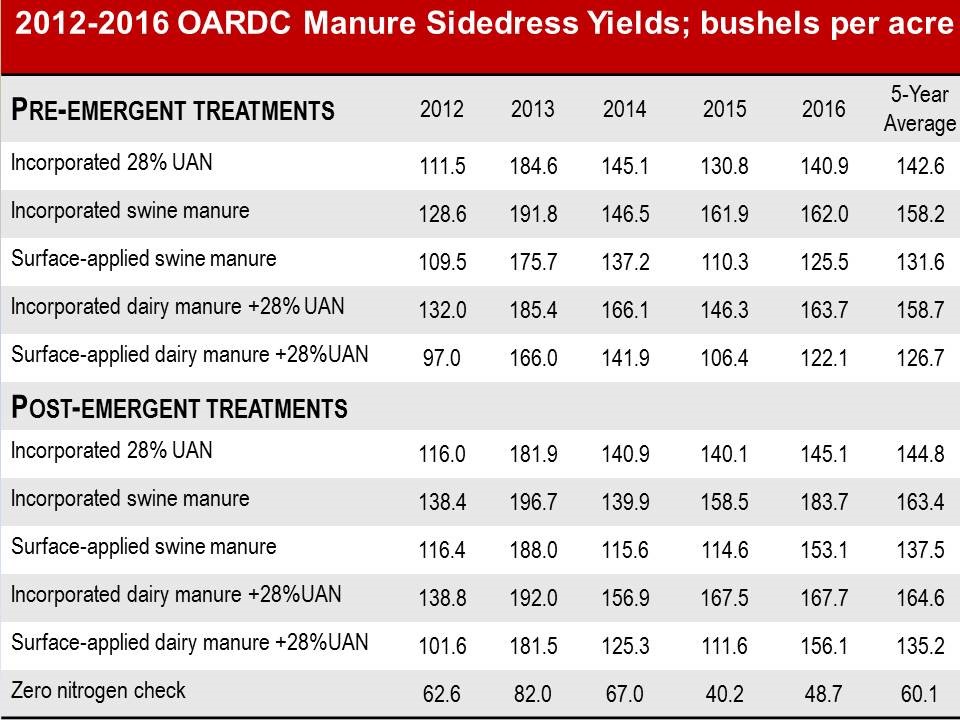
 Usually when people see the words “algae” and “manure” in the same paragraph, it is usually a negative take on the effects of manure nutrients on water. When excess nutrients are transported to water bodies (from lawn fertilizer, municipal waste treatment plants, manure and/or commercial crop fertilizer) algae use those nutrients and grow rapidly. When the nutrients are no longer sufficient for growth, the algae begins to die and decompose. This depletes oxygen in the water, which can lead to fish kills and other problems for aquatic life.
 Joseph Ziobro
 Nina Bonnelycke