Adaptation Methods and Bioclimate Scenarios

Waste to Worth: Spreading science and solutions logoWaste to Worth home | More proceedings….

Why Study Adaptation of Livestock to Climate Change?

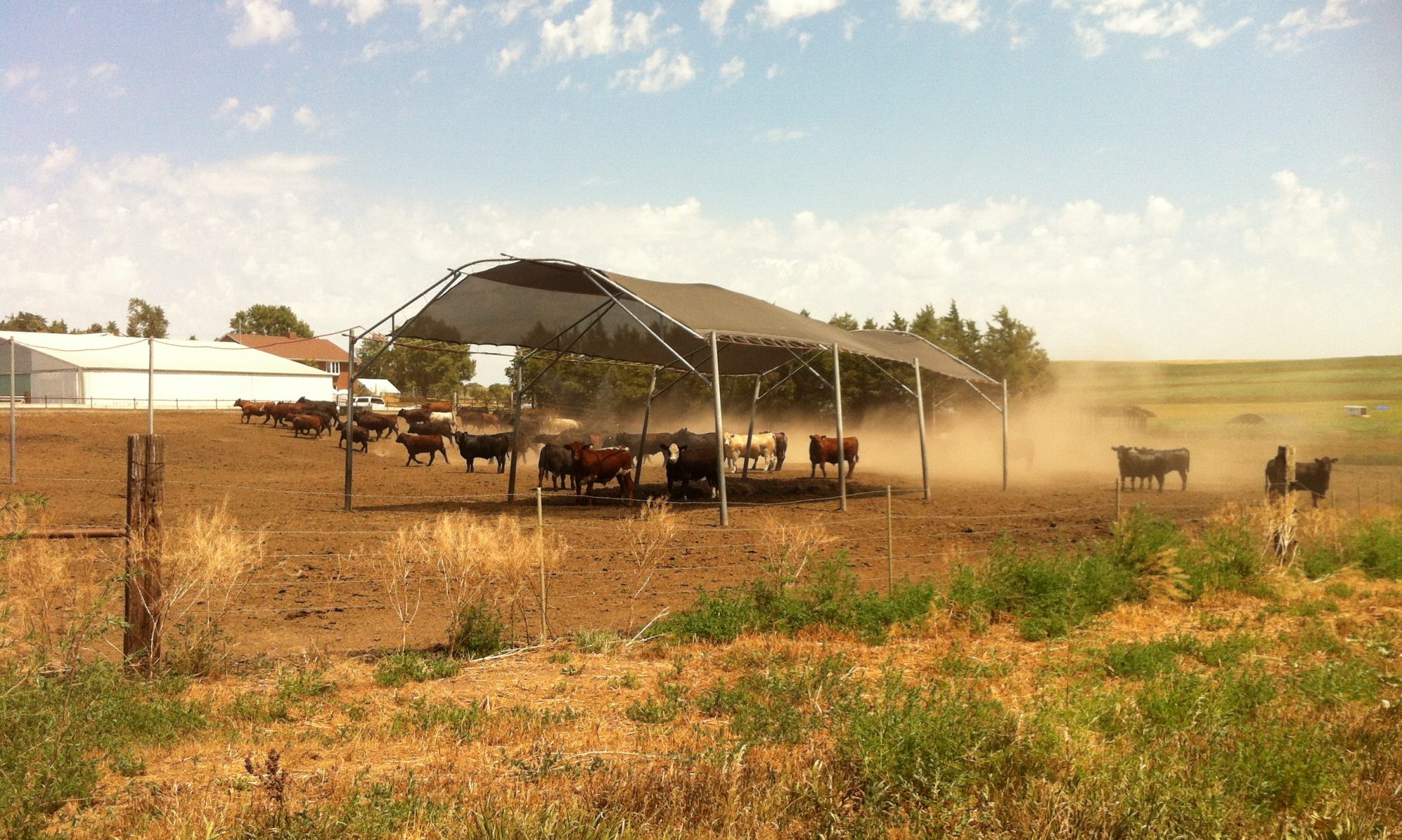
The complex of our study was aimed at exploring the effects of warm climate in farm animals, at constructing bioclimate scenarios and at developing adaptation options that may permit to alleviate the impact of hot climate on the livestock industry.

What Did We Do?

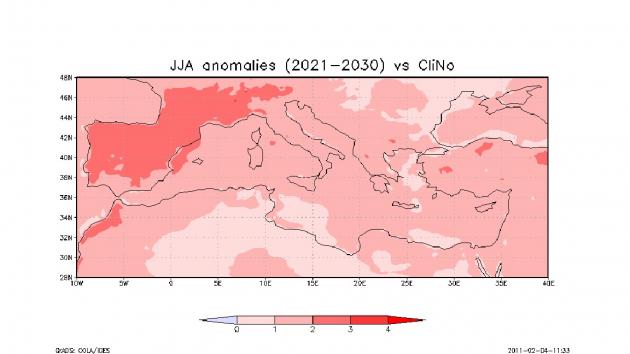
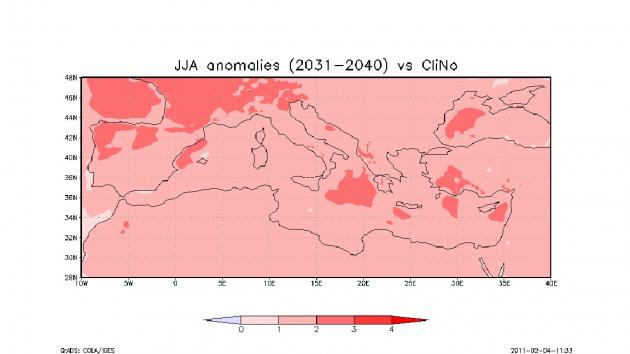
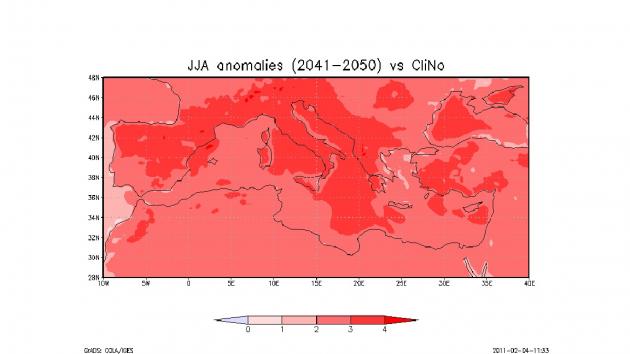
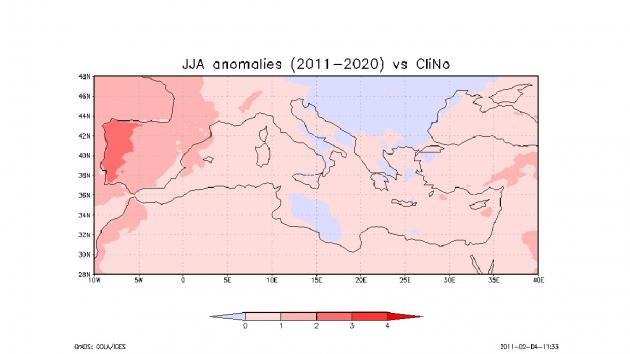
Most of our research work was relative to dairy cows. We realized several studies by different experimental approaches. First of all, we have been running numerous experiments under climate chamber conditions followed by a number of field studies. To reach more precise objectives, we also performed several in vitro studies on selected cell populations. In the last few years we have been also building and exploring multi-year datasets and measuring the impact of air temperature and relative humidity on performances and health in intensively managed dairy cows/pigs. Finally, we have been working on bioclimate, namely temperature humidity index (THI), characterization of selected geographic areas both retrospectively and in terms of scenario (Figure 1).
climate graph for lactera proceedings paper

JJA anomolies 2021-2030 vs CiNo

JJA anomolies 2031-2040 vs CliNo

Figure 1. Regional distribution of Mediterranean summer (JJA, June-July-August) temperature humidity index anomalies versus CliNo (Climate Normal, 1971-2000 period) for the four decades 2011-2020, 2021-2030, 2031-2040, and 2041-2050 (Segnalini et al., in press)

What Have We Learned?

We have learned that the ability of dairy cows to breed, grow, and lactate to their maximal genetic potential, and their capacity to survive and keep healthy is dramatically influenced by climate, meteorological events and biological environment and their interactions. Climate and meteorological features affect animals both indirectly and directly. Indirect effects include those exerted on quality and quantity of crops and pastures and on survival of pathogens and/or their vectors. The direct effects of air temperature on animals depend on their ability to maintain a normal body temperature under unfavourable thermal conditions. A series of studies carried out at Mediterranean level, one of the hot spot in the context of global warming, pointed out a constant increase for livestock of the risk to suffer from heat stress related conditions. Climate change is imposing a growing attention to adaptation measures, which may help farm animals to face with conditions of environmental warmth. These may include set up of meteorological warning systems, revision of health maintenance strategies, correction of feeding plans, shade, sprinkling, air movement, active cooling, genetic selection, and others.

Future Plans

To develop comprehensive frameworks to identify and target adaptation options that are appropriate for specific contexts.

Authors

Alessandro Nardone, Professor, Dipartimento per la Innovazione nei sistemi Biologici, Agroalimentari e Forestali (DIBAF), Università degli Studi della Tuscia, Viterbo, Italy   nardone@unitus.it

Nicola Lacetera, Professor, Dipartimento di scienze e tecnologie per l’Agricoltura, le Foreste, la Natura e l’Energia (DAFNE), Università degli Studi della Tuscia, Viterbo, Italy

Additional Information

1. Effects of climate changes on animal production and sustainability of livestock systems. http://www.livestockscience.com/article/S1871-1413%2810%2900074-0/abstract

2. Temperature humidity index scenarios in the Mediterranean basin. http://link.springer.com/article/10.1007/s00484-012-0571-5

Acknowledgements

We gratefully acknowledge National (CNR, MIUR, MIPAF) and International (UE) funding bodies, and Umberto Bernabucci, Bruno Ronchi, Andrea Vitali, Maria Segnalini, Alessio Valentini, Patrizia Morera, Loredana Basiricò, M. Stella Ranieri and others in quality of co-authors of the numerous peer-reviewed papers we published in this field during the last 20 years.

The authors are solely responsible for the content of these proceedings. The technical information does not necessarily reflect the official position of the sponsoring agencies or institutions represented by planning committee members, and inclusion and distribution herein does not constitute an endorsement of views expressed by the same. Printed materials included herein are not refereed publications. Citations should appear as follows. EXAMPLE: Authors. 2013. Title of presentation. Waste to Worth: Spreading Science and Solutions. Denver, CO. April 1-5, 2013. URL of this page. Accessed on: today’s date.
Case Study: Poultry Lagoon Closure in Texas

Waste to Worth: Spreading science and solutions logoWaste to Worth home | More proceedings….

Abstract

The closure of earthen lagoons associated with a caged egg-laying operation was used as a case study.  This case study presents information on the steps taken to close the lagoons, including topographic survey needs, analysis of sludge and wastewater at different times during the closure process, methods for excavating and removing the sludge, and the costs associated with the closure of earthen lagoons.  The sludge has a high fertilizer value for P2O5 and other micro- and macro-nutrients.  The cost of the closure for this case exceeded the expected cost for the earthwork for the construction of a new facility

Why Present a Case Study on Propoer Lagoon Closure?

Provide the steps taken to close the lagoons, including topographic survey needs, analysis of sludge and wastewater at different times during the closure process, methods for excavating and removing the sludge, and the costs associated with the closure of earthen lagoons.  These steps will hopefully assist others in the future closure of lagoons.

What Did We Do?

Performed closure of earthen lagoons for a caged egg-laying operation that existed for over 35 years in Gonzales County, Texas.  The 100 ft by 400 ft football field sized lagoon area with 5 – 12 ft deep sludge had accumulated approximately 20,000 cubic yards of sludge.  The photo below depicts the three lagoon areas (Infrared photograph of site depicting two lagoons and smaller wastewater storage area (USDA-NAPP, 1983).

Multiple different options for closure of the lagoon were evaluated.  Sampling in-situ materials to determine if the existing system had a realistic potential for seepage.  Detailed analysis of the sludge and wastewater were performed throughout the project.  A detailed survey of the site determined the existing volumes of sludge and wastewater.  Civil 3D and Eagle Point software programs assisted in development of a final grading plan for the site.

Construction drawings and specifications were developed to place the site into pre-existing conditions. The construction project was split into four phases:  Phase 1 – Sludge and Wastewater Removal; Phase 2 – Removal of Sludge to Nearby Agricultural Operation; Phase 3 – Demolition of Concrete Slabs and Final Grading; and Phase 4 – Establishing Vegetation on Site

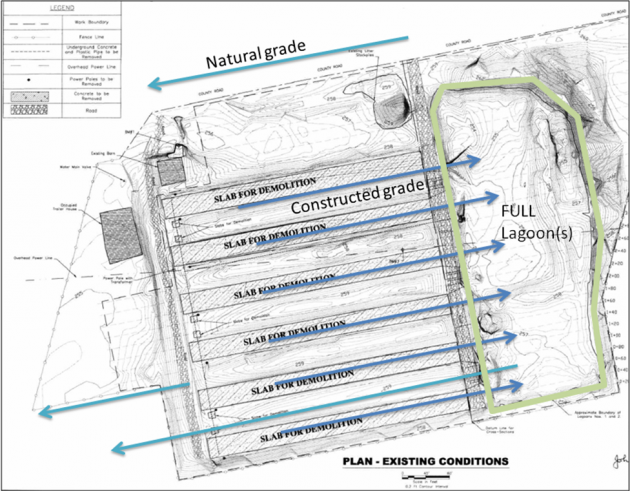
Site plan generated for construction plans depicting the natural grade compared to the constructed grade of the poultry houses. (USDA-NRCS, Poultry Lagoon Closure Construction Drawings, March 2008)

Irrigation pump for the removal of wastewater (TSSWCB, 22 June 2009)

Use of field conveyor belts to stack sludge on-site.  (TSSWCB, 28 June 2009)

What Have We Learned?

Formal contracting potentially increases the cost of the project; however, observance of worker safety laws is more likely .  Initially this project was sent for bid as a turn key project consisting of 18,500 CY of sludge to be removed and land applied, removal of concrete slabs, placement of 27,000 CY of compacted earthfill, final grading and establishment of vegetative cover.  As part of the bid, the contractor was to secure a location for the sludge to be land applied or find another use for the sludge.  The bids received ranged from $1.8M up to $3M.  This level of funding was not available, so the project was split into different phases.  By breaking into phases, the cost of the project was reduced by over 75%.  Costs for application or hauling of sludge can be reduced by having an agreement in place prior to contracting.

The cost of the project was close to $250,000 for construction and sludge hauling without consideration of other costs, such as engineering design work, sample analysis, and staff time.  The earthwork associated with the construction of this site for a new facility with the excavation and placement of 27,200 CY of compacted earthfill would have been completed for approximately $70,000.

With flexible scheduling, it was possible to find a landowner that was willing to pay for the hauling and land application of sludge, which reduced the out-of-pocket expenses for the closure by more than $90,000.

The amount of Phosphorus present in the sludge was compared to the cost of commercial fertilizer.  As of February 2011, Rock Phosphate with 32% P2O5 was selling at $160/metric ton (Index Mundi, 11 June 2012), therefore P2O5  was $500 per metric ton.  Using the hauled weight of 12,100 tons with a moisture content of 25.9% and 5.66% P and a conversion factor of 2.29 for P to P2O5, there was 1,160 tons (1,054 metric tons) of P2O5.  At the rate of $500 /metric ton, the P2O5 in the sludge would have a value of $525,000.  There is additional fertilizer value for the other constituents that are not included.

Future Plans

This case study provides much needed data for the closure of similar operations across the United States.  The data collected will be used for future closures under the NRCS Environmental Quality Incentives Program (EQIP).  The construction specifications that were developed for this project can be adapted into general specifications for future closure projects.  Additional work is needed to compare the value of the sludge to a fertilizer value.  The potential for a portable pelletizing and bagging system for recycling sludge from lagoons warrants further research.

Authors

Catherine Nash, Water Resources Engineer, USDA – Natural Resources Conservation Service Catherine.nash@tx.usda.gov

Additional Information

“Case Study:  Closure of Earthen Lagoon”, An ASABE Meeting Presentation, Paper No. 1336921

Archived webinar  – Poultry Lagoon Closure – Case in Progress

Acknowledgements

Contributions from Texas Poultry Federation, Gonzales Soil and Water Conservation District, Texas State Soil and Water Conservation Board (TSSWCB), USDA – Natural Resources Conservation Service (NRCS), Texas Water Resources Institute, Farm Pilot Project Corporation, Inc. (FPPC) and others made this project possible. A special thanks to:  John Foster, TSSWCB, and James Grimm, Texas Poultry Federation, for initiating the project and keeping it moving forward;  Lee Munz, TSSWCB for assistance with surveying and taking the lead on his first construction project; John Mueller, NRCS for his support and guidance through the process; Ace Fairchild, NRCS, for his enthusiasm and support throughout the project; Wayne Gabriel, NRCS, for assistance with soils identification; Tom Beach, NRCS, for evaluating feasibility of other options for closure; Shawn Higgins for assistance, endurance and encouragement with the development of Engineering Drawings and Specifications.  Thanks to Gonzales County Soil and Water District Employees who helped throughout the project, including:  Jeremiah Ford, Abigail Lindsey, Shari Johnson, Jessi Goodson and Wain Fairchild.  Thanks to TSSWCB staff including: Lawrence Brown, Jeff Cerny, Amy Devereaux, TJ Helton, Dawna Winkler, and Kenny Zajicek.  Thanks to USDA-NRCS staff including:  James Davis, Andria Heiges, Jeff Porter, Doug Sharer, James Smith, and Millie Stevens.  Thanks to AgriLife Extension members:  Saqib Mukhtar, Biological and Agricultural Engineering Department; and Sam Feagley, Department of Soil and Crop Sciences.  Every person that was asked for assistance responded graciously and enthusiastically in a timely manner.

The authors are solely responsible for the content of these proceedings. The technical information does not necessarily reflect the official position of the sponsoring agencies or institutions represented by planning committee members, and inclusion and distribution herein does not constitute an endorsement of views expressed by the same. Printed materials included herein are not refereed publications. Citations should appear as follows. EXAMPLE: Authors. 2013. Title of presentation. Waste to Worth: Spreading Science and Solutions. Denver, CO. April 1-5, 2013. URL of this page. Accessed on: today’s date.

Development of an Acid Scrubber for Reducing Ammonia Emissions from Animal Rearing Facilities

Waste to Worth: Spreading science and solutions logoWaste to Worth home | More proceedings….

Abstract

Recent research has shown that over half of nitrogen excreted by chickens is lost into the atmosphere via ammonia volatilization before the litter is removed from poultry houses.  Large quantities of particulate matter and volatile organic compounds (VOCs) are also emitted from animal rearing facilities. During the past decade we have developed and patented an acid scrubber for capturing ammonia, VOCs and dust from air exhausted from poultry and swine barns.  The objectives of this project were; (1) to re-design the scrubber to improve the ammonia removal efficacy, (2) conduct full-scale testing of the scrubber under controlled conditions at various ventilation rates, (3) evaluate the cost, practicality and efficacy of various acids for scrubbing ammonia, and (4) install scrubbers on exhaust fans of poultry houses located in Virginia and Arkansas and measure the efficiency of ammonia removal from the exhaust air.  The efficiency of ammonia removal by the scrubber varied from 55-95%, depending on the type of acid used, air flow rate, and the internal scrubber configuration.  This technology could potentially result in the capture of a large fraction of the N lost from AFOs, while simultaneously reducing emissions of bacteria, dust, and odors, which would improve the social, economic, and environmental sustainability of poultry and swine production.

Purpose

The objectives of this project were; (1) to re-design our ammonia scrubber to improve the ammonia removal efficacy, (2) conduct full-scale testing of the scrubber under controlled conditions at various ventilation rates, and (3) evaluate the cost, practicality and efficacy of various acids for scrubbing ammonia.

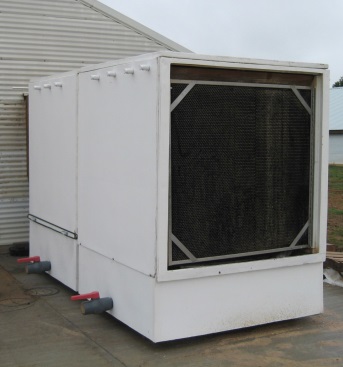
Acid scrubber developed by USDA/ARS in Fayetteville, AR, for reducing ammonia, dust and odor emissions from animal rearing facilities.

What Did We Do?

During the first year of this project the main task of our team was to re-design the ammonia scrubber developed and patented by Moore (2007).  A full scale prototype was constructed of wood and a series of tests were conducted to evaluate various configurations on air flow and static pressure drop in tests conducted in a machine shop.  The scrubber was connected to a 48” variable speed poultry fan.  Air flow was measured using a fan assessment numeration system (FANS unit).  Static pressure difference was measured using a Setra 2601MS1 differential pressure sensor.   The effects of slat angle, number and arrangement of slats, and thickness of cool cell material were evaluated. 

Following the initial testing a fiberglass mold was made and six scrubbers were constructed.  One of these was used to evaluate the effectiveness of water, strong acids, acid salts, and a neutral salt on scrubbing ammonia.  Anhydrous ammonia was metered out into a distribution system located within the fan at a sufficient rate to result in 25 ppm NH3 in the plenum between the fan and the dust scrubber.  Evaluations of each acid were made with the variable speed fan set at 60 and 40 Hz, which corresponded to air flows of approximately 8,000 and 5,000 cfm, respectively.  A stainless steel star sampler was used to take air samples from the plenum and from the air exhausted from the scrubber.  Ammonia concentrations were measured using a photoaccustic multigas analyzer (Innova 1412).  All personal involved in this testing wore respirators equipped with NH3 cartridges.  Three 2-hour trials were conducted with solutions of the following acids at both 40 and 60 Hz: alum, aluminum chloride, ferric sulfate, ferric chloride, sodium bisulfate, sulfuric acid, hydrochloric acid, phosphoric acid, and nitric acid. The effects of water and calcium chloride were also evaluated.   For these trials the amount of each acid added was equivalent to 2 liters of concentrated sulfuric acid.

In addition to measuring inflow and outflow ammonia levels, the mass accumulation of ammonia in both the dust and acid scrubber reservoirs was determined by analyzing the contents for ammonium using an auto-analyzer.  Twenty ml aliquots of the scrubber solution were taken at times 0, 1 and 2 hours for ammonia and pH measurements.  These data were used to validate that the difference in inlet and outlet ammonia were, in fact, due to accumulation of NH3 in the scrubber.  Notes were also taken on each chemical’s ease of use and potential for problems.  For example, some dry acids did not readily dissolve and some strong acids, like sulfuric acid, had very strong exothermic reactions.  Salts of aluminum and iron become aluminum and iron hydroxides at high pH which have the potential to clog cool cell material. 

Another performance issue that was monitored was the loss of fine droplets (mist) from the scrubber.  When dealing with high air volumes and small droplet sizes, there is a potential for mist to exit the system, resulting in not only the loss of N, but of the acid used to scrub NH3.  In order to measure mist loss, five 12.5 cm Whatman 42 filters were attached on a wire cage on the exhaust of the scrubber.  These filters were placed in a 50 ml centrifuge tub at the end of each trial and shaken with 25 ml of DDI water, which was analyzed for ammonium, along with sulfate, chloride, nitrate, or phosphate, depending on the acid used.

What Have We Learned?

Early on in this research we learned that two scrubbers (a dust scrubber and an acid scrubber) were needed rather than one.  If the dust isn’t removed from the exhaust air of poultry houses, then a large amount of the acid will be wasted neutralizing the dust.

We found that the relationship between slat angle and pressure drop was exponential and the angle that would maximize particle collisions on a wet surface while minimizing pressure drop was 45o.  We also found that as the number of rows of slats increased the effect on pressure drop was linear.   The final configuration chosen was eight rows of slats in the dust scrubber and three rows of slats in the chemical scrubber, followed by one or two 6” thick layers of cool cell material.    The pressure drop using this configuration was about 0.1” of water at 5,000 cfm and 0.3” of water at 8,000 cfm.

All of the acids scrubbed ammonium from air, whereas water and calcium chloride only worked for a very short period of time.  The iron (Fe) and aluminum (Al) compounds tended to work a little better than the other acid salts or the strong acids.  We believe this is due to Fe and Al compounds coating the cool cell material.  Although no difference was observed in the static pressure during these short tests, we believe Al and Fe hydroxides would eventually form and may clog the cool cells.  Due to the inherit danger in dealing with strong acids, we concluded that an acid salt that did not contain Al and Fe, such as sodium bisulfate, would be used for our research in the future.  This product is sold under the tradename PLT for a poultry litter treatment and is readily available to poultry growers. 

Future Plans

Four NH3 scrubbers will be attached to sidewall fans of a commercial broiler house located in Madison County, Arkansas.  The efficacy of these scrubbers for reducing ammonia, volatile organic compounds (VOCs), and particulate matter will be evaluated.  We will also measure the amount of sodium bisulfate, water and electricity used by the scrubbers, as well as the mass of nitrogen captured.  A cost-benefit analysis will be performed based on this data.  Data on the efficacy to scrub ammonia will also be conducted on farms in DE, VA, and PA.

Authors

Philip A. Moore, Jr., USDA/ARS, philipm@uark.edu

Rory Maguire, Virginia Tech

Mark Reiter, Virginia Tech

Jactone Ogejo, Virginia Tech

Robert Burns, University of Tennessee

Hong Li, University of Delaware

Dana Miles, USDA/ARS

Michael Buser, Oklahoma State University

Acknowledgements

This research was funding by USDA/ARS and by grants from USDA/NRCS and the National Wildlife Foundation.   The authors would like to thank the hard work and great ideas supplied by Scott Becton and Jerry Martin, without which this scrubber could not have been built.


The authors are solely responsible for the content of these proceedings. The technical information does not necessarily reflect the official position of the sponsoring agencies or institutions represented by planning committee members, and inclusion and distribution herein does not constitute an endorsement of views expressed by the same. Printed materials included herein are not refereed publications. Citations should appear as follows. EXAMPLE: Authors. 2013. Title of presentation. Waste to Worth: Spreading Science and Solutions. Denver, CO. April 1-5, 2013. URL of this page. Accessed on: today’s date.
Gypsum Bedding – Risks and Recommendations for Manure Handling

Waste to Worth: Spreading science and solutions logoWaste to Worth home | More proceedings….

Note: This topic was included in a poster at the 2015 Waste to Worth conference and was part of a pre-conference webinar on gypsum bedding & practical considerations for manure handlers.

Abstract

Gypsum products created from construction industry waste streams provide low-input cost bedding. Some dairies report decreased somatic cell counts in milk with its use.

Recently, several incidents involving human and livestock death or injury have highlighted the possible creation of dangerous gases at farms using gypsum bedding. Human lives were lost at two separate events. In a third incident, a 2-year old and 4-year old were found unconscious adjacent to a manure storage where gypsum was present. In the European Union (EU) several agencies have forbade the use of gypsum as bedding based on losses of livestock as well as previous policies that restricted gypsum from landfill disposal.

Gypsum is a common term for hydrated calcium sulfate (CaSO4¬-2H2O). It is suspected that under the right manure storage conditions anaerobic bacteria convert the sulfur (S) in gypsum to hydrogen sulfide (H2S), a gas that can be deadly. Movement such as agitation of manure can lead to large H2S fluxes and localized dangerous levels of the gas.

While this is concerning, there remain many farms that utilize gypsum without incident. Data on this subject are lacking.

The goal of this symposium presentation is to update attendees on this ‘current event’ in manure management. Some laboratory studies are expected to complete between the time of this abstract composition (October 2012) and the symposium date. A general outline of the presentation includes:

  • Recap of cases leading to concern with this product
  • Policies of the EU and US
  • Industrial standards for dangerous H2S levels (OSHA and other)
  • Biological and chemical avenues of H2S production
  • Research review of gypsum use in manure
  • Recommendations for safety, management and education.

Why Are We Concerned About Gypsum Bedding on Dairies?

The goal of this ‘current event’ presentation is to increase national awareness of several deaths and severe injuries that have occurred recently in the Mid-Atlantic area involving manure gases. Several dairies where incidents occurred use gypsum from recycled drywall as low cost bedding material. There is great concern that gypsum increases dangerous hydrogen sulfide emissions from manure storages at these farms.

What Did We Do?

Recent deaths and severe injuries near manure storages highlight the importance of understanding and outreach needs. An overview of incidents involving manure gases at dairies that bed with gypsum will be given. Concerns and risks will be discussed, followed by recommendations on how to prevent incidents.

What Have We Learned?

In a true first step to determine gas productions associated with gypsum in manure preliminary bench-top scaled comparisons of manures with and without gypsum are ongoing in Pennsylvania and Wisconsin. A status update on progress on this early work will be discussed.

Future Plans

Literature and base knowledge on this subject are lacking. More work is needed to assess the actual risk to workers around manure storages where gypsum is present. There are countless factors that can contribute to gas production from manure storages. Identification of key factors that may lead to production of hydrogen sulfide when gypsum is present is needed. Further outreach to manure handling industries is warranted.

Authors

Robert Meinen – Senior Extension Associate, Penn State University Dept. of Animal Science rjm134@psu.edu

Davis Hill – Senior Extension Associate, Agricultural Safety and Health, Penn State University Dept. of Agricultural and Biological Engineering.

Rebecca Larson – Assistant Professor: Bio-waste, University of Wisconsin Dept. of Biological Systems Engineering.

Asli Ozkaynak – Post Doc Researcher, University of Wisconsin Dept. of Biological Systems Engineering.

Dennis Murphy – Distinguished Professor, Agricultural Safety and Health, Penn State University Dept. of Agricultural and Biological Engineering.

Eileen Fabian Wheeler – Professor, Animal Welfare and Agricultural Emissions, Penn State University Dept. of Agricultural and Biological Engineering.

Robin Brandt – Lecturer, Land-based treatment/recycling systems, Penn State University Dept. of Agricultural and Biological Engineering.

Herschel Elliot – Professor, Fate and Control of Pollutants in Soils and Water, Penn State University Dept. of Agricultural and Biological Engineering


The authors are solely responsible for the content of these proceedings. The technical information does not necessarily reflect the official position of the sponsoring agencies or institutions represented by planning committee members, and inclusion and distribution herein does not constitute an endorsement of views expressed by the same. Printed materials included herein are not refereed publications. Citations should appear as follows. EXAMPLE: Authors. 2013. Title of presentation. Waste to Worth: Spreading Science and Solutions. Denver, CO. April 1-5, 2013. URL of this page. Accessed on: today’s date.
Best Management Practices for Reducing Gas Emissions from Manure Application in Semi-Arid Regions

Waste to Worth: Spreading science and solutions logoWaste to Worth home | More proceedings….

*Abstract

Gas emissions from animal feeding operations (AFOs) create adverse impacts ranging from short-term local effects on air quality, particularly odor, to the long-term effects from greenhouse gas generation. Best management practices (BMPs) have been designed and implemented to mitigate gas emissions from farm operations. Our study investigates emission control strategies widely used in AFOs including manure management and land application. The primary objectives were to evaluate the efficiency and identify improvement of the currently available BMPs. We simulated and monitored gaseous emissions from a range of manure application and incorporation methods. The gaseous emissions were monitored using the closed dynamic chamber (CDC) method with a Fourier Transformed Infrared (FTIR) spectroscopy gas analyzer, which is capable of monitoring 15 pre-programmed gases simultaneously including typical gaseous compounds and greenhouse gases emitted from manure sources; namely, ammonia, carbon dioxide, methane, nitrous oxide, oxides of nitrogen, and volatile organic compounds. In this presentation, we will discuss the efficiency of the current manure management BMPs to reduce air emissions from dairy operations, based on the gaseous emission monitoring during the course of our experiment. Results from our study should enhance development and implementation of more flexible and more efficient air quality management approaches for dairy operations.

Why Study Gas Emissions from Manure Application Sites?

Evaluate gaseous emissions from manure application.  Identify ways to improve manure management and land application BMPs.

What Did We Do?

Manure application and incorporation methods were simulated and evaluated in a greenhouse setting.  Scraped dairy manure was applied at a rate of 50 tons/acre to a Millville silt loam soil.  Incorporation versus no incorporation was compared.  Gaseous emissions were monitored using a closed dynamic chamber with a Fourier Transformed Infrared (FTIR) spectroscopy gas analyzer, which is capable of monitoring 15-pre-programmed gases simultaneously including typical gaseous compounds and greenhouse gases emitted from manure sources; namely, ammonia, carbon dioxide, methane, nitrous oxide, oxides of nitrogen, and volatile organic compounds.  On Day 3, after emissions had subsided, the soil surface was rewetted.  Emissions were monitored for 7 days.

What Have We Learned?

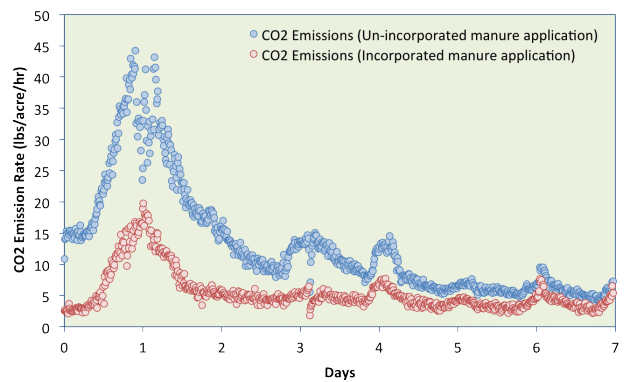
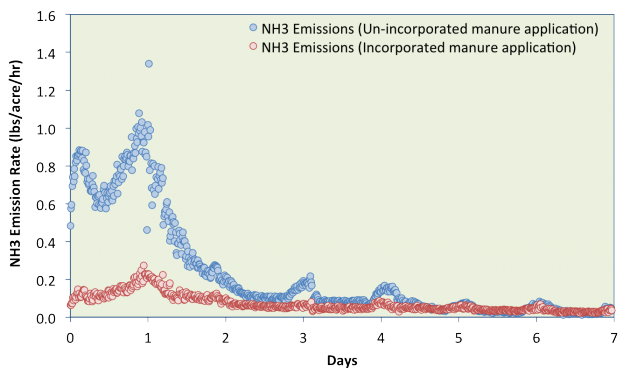
Emission rates for CO2 and NH3 peaked after 24 hours, with the majority of emissions occurring within the first 2 days.  Rewetting had limited impact.  Based on this data, it appears that rapid incorporation is needed to have a meaningful impact on reducing gaseous emissions.

Carbon Dioxide Emissions

Ammonia Emissions

Future Plans

Examine gaseous emissions from a range of manure application and incorporation methods in a field setting.  The gaseous emissions will be monitored using the closed dynamic chamber method with a Fourier Transformed Infrared (FTiR) spectroscopy gas analyzer.

Authors

Rhonda Miller, Ph.D.; Agricultural Systems Technology and Education Dept.; Utah State University rhonda.miller@usu.edu

Pakorn Sutitarnnontr; Environmental Soil Physics Group; Utah State University

Enzhu Hu; Environmental Soil Physics Group; Utah State University

Markus Tuller, Ph.D.; Soil, Water, and Environmental Science Dept.; University of Arizona

Jim Walworth, Ph.D.; Soil, Water, and Environmental Science Dept.; University of Arizona

Scott B. Jones, Ph.D.; Plants, Soils, and Climate Dept.; Utah State University

Additional Information

Sutitarnnonntr, P., R. Miller, S. Bialkowski, M. Tuller, and S. B. Jones.  2012.  A Multiplexing System for Monitoring Greenhouse and Regulated Gas Emissions from Manure Sources Using a Portable FTIR Gas Analyzer.  ASABE 2012 Paper and Presentation No. 121337982.  St. Joseph, MI:  American Society of Agricultural and Biological Engineers.

Website:  http://agwastemanagement.usu.edu

Acknowledgements

The authors gratefully acknowledge support from a USDA-CSREES AFRI Air Quality Program Grant #2010-85112-50524.

The authors are solely responsible for the content of these proceedings. The technical information does not necessarily reflect the official position of the sponsoring agencies or institutions represented by planning committee members, and inclusion and distribution herein does not constitute an endorsement of views expressed by the same. Printed materials included herein are not refereed publications. Citations should appear as follows. EXAMPLE: Authors. 2013. Title of presentation. Waste to Worth: Spreading Science and Solutions. Denver, CO. April 1-5, 2013. URL of this page. Accessed on: today’s date.
White Meat-Green Farm: Case Study of Brinson Farms

Waste to Worth: Spreading science and solutions logoWaste to Worth home | More proceedings….

Abstract

Comprehensive on-farm resource utilization and renewable energy generation at the farm scale are not new concepts.  However, truly encompassing implementation of these ideals is lacking.  Brinson Farms operates 10 commercial broiler houses.  The farm generates heat for its houses using biomass boilers and litter anaerobic digestion to produce methane.  Solar panels assist in heating process water for the boilers and digester.  Biomass feedstock includes litter as well as municipal yard wastes.  Liquid fertilizer is a product of the digester while residual solids are included in the farm’s composting operation.  The operator has used a futuristic approach to not only attain energy independence for the farm, but also to comprehensively utilize byproducts of production and other local “wastes”, diverting them from local landfills.  Considering the propane cost for a single winter flock has reached $66,000 and the annual electric bill may be $120,000, energy costs very much affect grower profitability.  This approach decreases the uncertainty in energy costs.  Brinson Farms provides a unique look into ensuring long-term farm sustainability in an environmentally friendly way and with a wide-ranging systems approach to management.

Purpose

The purpose of the renewable energy project was to implement an innovative, sustainable solution to manage poultry manure and other organic waste products using anaerobic digestion as well as to demonstrate the ability to effectively and economically reduce dependence on outside utilities.

What Did We Do?

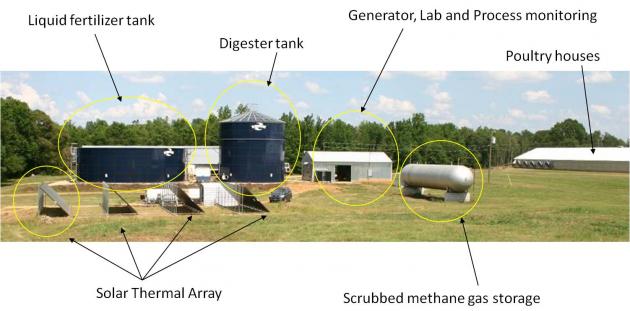
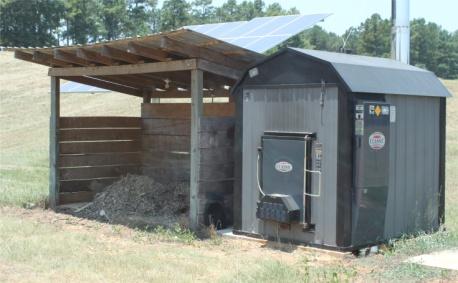
Brinson Farms demonstrates comprehensive utilization of local resources that have historically been viewed as wastes.  These organic materials (broiler litter, yard trimmings, storm damaged trees and waste vegetables) come from both the farm and the community.  Broiler litter and waste vegetables are anaerobically digested to produce methane.  The methane is then used in three ways: 1) to generate electricity for the farm; 2) in boilers to heat water used in the digestion process; and 3) in dual-fuel biomass boilers to heat water for heat exchange in the broiler houses when biomass sources are low. Two other significant products from the digester include liquid fertilizer (approximately 5-2-3) that is sold and residual solids that are incorporated into the farm’s composting facility.  Solar panels assist in heating water for the biomass boilers and the digester. The simple payback period for the on-farm poultry litter digester system is approximately 5 years.

Brinson Farms anaerobic digester complex.

What Have We Learned?

Brinson Farms provides a unique system to ensure long-term farm sustainability in an environmentally beneficial manner. Attributes of the integrated system include: 1) bio-based energy production; 2) reduced utility costs; 3) comprehensive litter utilization; 4) no need to land apply poultry litter; 5) production of high quality, organic liquid fertilizer; 6) production of a marketable soil amendment (compost);  and 7) diverting wastes from landfills.  The farm/community interface is mutually advantageous. The farm uses yard trimmings and trees for energy and as a compost substrate; the community has a free repository to dispose of the biomass, where otherwise it would have to pay landfill fees.

Biomass storage and boiler to heat broiler houses

Future Plans

Future plans include developing economic evaluations for each of the system components so that farmers can choose the renewable energy/value added process(es) that will best fit their local resources as well as short and long term financial plans.

Authors

Dana M. Miles, Chemical Engineer, USDA-ARS Genetics & Precision Agriculture Research Unit, Mississippi State, MS, dana.miles@ars.usda.gov

Additional Information

John Logan: johnlogan1@windstream.net;

Jeff Breeden: jbreeden@egesystems.com;

Eagle Green Energy: http://eaglegreenenergyinc.com/;

Arora, S. 2011. Poultry Manure: The New Frontier for Anaerobic Digestion. http://www.nrcs.usda.gov/Internet/FSE_DOCUMENTS/stelprdb1046769.pdf

Acknowledgements

The assistance of John Logan and Jeff Breeden to effectively describe the Brinson system is greatly appreciated.

The authors are solely responsible for the content of these proceedings. The technical information does not necessarily reflect the official position of the sponsoring agencies or institutions represented by planning committee members, and inclusion and distribution herein does not constitute an endorsement of views expressed by the same. Printed materials included herein are not refereed publications. Citations should appear as follows. EXAMPLE: Authors. 2013. Title of presentation. Waste to Worth: Spreading Science and Solutions. Denver, CO. April 1-5, 2013. URL of this page. Accessed on: today’s date.
Greenhouse Gas Emissions from a Typical Cow-Calf Operation in Florida, USA

Waste to Worth: Spreading science and solutions logoWaste to Worth home | More proceedings….

Purpose

The purpose of this study was to investigate greenhouse gas (GHG) emission sources in a typical cow-calf operation in Florida and to calculate its total carbon footprint. The most important greenhouse gas source found was enteric fermentation, hence further investigation of this factor is being developed with field trials.

Why Study the Carbon Footprint of Cow-Calf Systems?

We estimated the carbon footprint of the cow-calf operation held in Buck Island Ranch, with data from 1998 to 2008. This production system has around 3000 cows and 250 bulls, has low fertilizer and lime inputs and feeding is pasture and hay based with some use of molasses and urea. Natural mating is used and calves are kept in the farm until 7 months old.  The Intergovernmental Panel on Climate Change (IPCC, 2006) methodology was used along with emission factors from USDA (EPA, 2009) to estimate emissions at different levels of complexity (Tier 1 being the least complex and Tier 3 the most), according to data availability, and transformed in carbon dioxide equivalent (CO2eq). A field trial to measure ruminal methane emissions was held at the North Florida Research and Education Center in Marianna, Florida, from June 26th to September 18th. The experiment treatments consisted of three stocking rates (1.2, 2.4 and 3.6 AU/ha, where one animal unit is 360) with four replicates each. The ruminal methane emissions were measured three times using the sulfur hexafluoride (SF6) tracer technique (Johnson et al., 1994). Experimental weight gain and average initial weight of each experimental unit were used to estimate emissions with the IPCC’s Tier 3 methodology.

Table 1. Sources of greenhouse gases in units of carbon dioxide equivalent (CO2eq). Data retrieved from Buck Island Ranch from 1998 to 2008.

Figure 2. Animal with SF6 sample collection apparatus. Marianna, Florida, August 2012.

What Have We Learned?

Results of the carbon footprint calculation are shown in Table 1. We can observe that enteric fermentation is responsible for almost 60% of total emissions in this production system, varying with feed quality, age of animal (since calves under 7 months age are not considered to produce any methane), and number of animals in the farm. It was also found that this model is most sensitive to variations in weight gain. The second most important source of GHG is manure with more than 23 of emissions. The yearly variation in emissions is a result of the use of nitrogen fertilization and lime or burning of the pasture. On average 477,936 kg of live weight are produced every year in the ranch, resulting in an average of 24.6 kg CO2eq/kg live weight that leaves the farm. Results from the field trials were compared with default values from IPCC’s Tier 1 methodology and USDA, and to IPCC’s Tier 3. We can see that on Period 2 the weight gain on the 2.4 AU/ha treatment was greater than on the 3.6 AU/ha (Figure 1). Since the model used is highly sensitive to weight gain, the prediction resulted in higher methane emissions from the 2.4 AU/ha treatment. The field measurements (Figure 2), however, showed more emissions in the 3.6 AU/ha treatment showing that other factors besides weight gain might play an important role on enteric fermentation methane emissions.

Future Plans

Our future plans include the use of field data to perform a prediction analysis with the model under study. Also, we plan to do in vitro gas production technique (IVGPT) to simulate ruminal fermentation and have a better understanding of emissions.

Authors

Marta Moura Kohmann, M.S. student, Agricultural and Biological Engineering Department, University of Florida. mkohmann@ufl.edu

Clyde W. Fraisse, PhD., Associate Professor, Agricultural and Biological Engineering Department, University of Florida.

Hilary Swain, PhD., Executive Director, Archbold Biological Station.

Martin Ruiz-Moreno, PhD, Post-doctoral, Animal Science Department, University of Florida

Lynn E. Sollenberger, PhD., Professor and Associate Chair, Agronomy Department, University of Florida

Nicolas DiLorenzo, PhD., Animal Science Department, University of Florida

Francine Messias Ciríaco, M.S. student, Animals Science Department, University of Florida

Darren D. Henry, M.S. student, Animals Science Department, University of Florida

Additional Information

The Carbon Footprint for Florida Beef Cattle Production Systems: A Case Study with Buck Island Ranch. Available in

<http://www.archbold-station.org/statiohttps://www.archbold-station.org/documents/agro/Kohmann,etal.-2011-FlaCattleman-carbonfootprint.pdfn/documents/publicationspdf/Kohmann,etal.-2011-FlaCattleman-carbonfootprint.pdf>

Acknowledgements

The author would like to thank Faculty and Staff at the North Florida Research and Education Center for the assistance during the field trial.

The authors are solely responsible for the content of these proceedings. The technical information does not necessarily reflect the official position of the sponsoring agencies or institutions represented by planning committee members, and inclusion and distribution herein does not constitute an endorsement of views expressed by the same. Printed materials included herein are not refereed publications. Citations should appear as follows. EXAMPLE: Authors. 2013. Title of presentation. Waste to Worth: Spreading Science and Solutions. Denver, CO. April 1-5, 2013. URL of this page. Accessed on: today’s date.
Effect of Feeding Distiller’s Grains on Reduced Sulfur Emissions

Waste to Worth: Spreading science and solutions logoWaste to Worth home | More proceedings….

Why Study Sulfur Emissions and Manure from Animals Fed Distillers Byproducts?

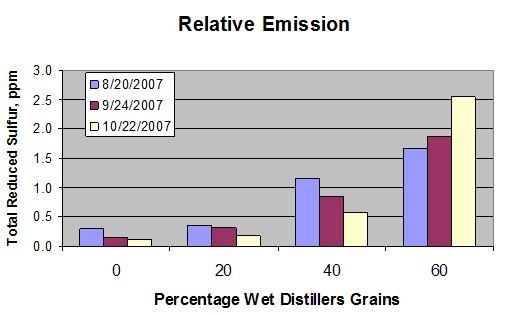
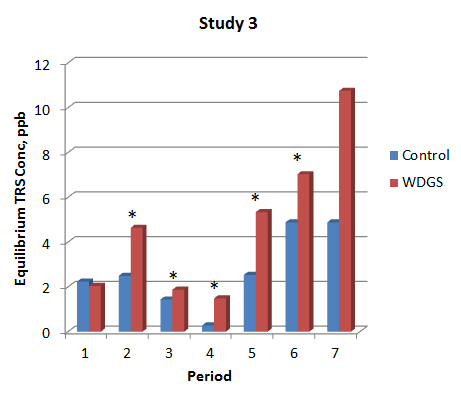
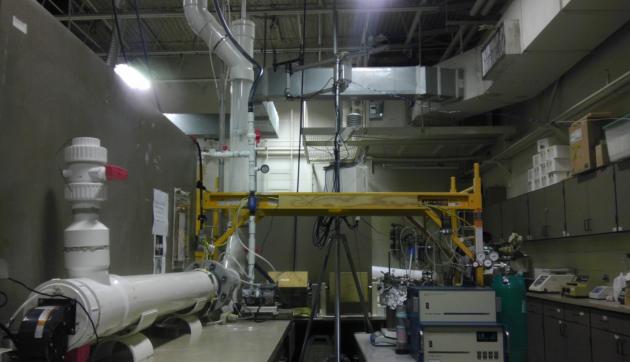
Odorous reduced sulfur compounds are produced during manure decomposition and emitted from confined animal feeding operations.  Feeding high-sulfur distiller’s byproducts may increase the emission of these compounds.  The objectives of a series of feedlot pen studies was to (i) determine if emissions of reduced sulfur compounds from fresh manure and from the feedlot surface where affected if cattle were fed varying levels of distillers byproducts, and (ii) determine the areas within a pen that emit greater amounts of reduced sulfur compounds.

Study #1–Relative emission of redued sulfur compounds from fresh feces. Cattle fed diets containing 0%, 20%, 40%, and 60% WEGS.

What Did We Do?

Three studies were conducted to evaluate the relative impact of feeding high-sulfur wet distiller’s grain plus solubles (WDGS) to beef cattle.  In the first study, beef cattle in sixteen small-scale pens were fed varying amounts (0%, 20%, 40%, and 60%) of WDGS, and the relative emissions of reduced sulfur from fresh feces were measured using a laboratory wind tunnel chamber.  A follow up study in eight production-scale feedlot pens also examined the effect of feeding 0% or 40% WDGS on fresh manure emissions.  A third study in ten production-scale pens examined emissions from the pen surface when cattle were fed 0% and 40% WDGS diets over two production cycles.

Study #2–Relative emission of reduced sulfur compounds from feces of cattle fed 0% or 40% WDGS. P values above bars indicate the significance of the difference between emissions on the four dates.

What Have We Learned?

The relative emission of reduced sulfur from fresh feces was significantly greater (4 to 22-fold) when 40% (or greater) WDGS was fed in the initial study.  The follow up study confirmed this finding, but found the relative emission to be lower (2 to 4 fold higher for WDGS) in the production-scale feedlot.  In the final study examining the relative emission from the whole feedlot pen surface (mixed soil and aged feces) over many months, emissions principally came from the wetter edges of the pen when animal were fed higher levels of WDGS in their diet.  For the six study periods, the relative emissions from WDGS pens ranged from 0.3 to 4-fold higher than a standard ration.  Consistent results from these three studies indicate that reduced sulfur emissions increase when animals are fed higher levels of WDGS.

Study #3–Relative concentration of total reduced sulfur (TRS) in the chamber for each of the seven study periods. An asterisk above the bars indicates a significant difference (P < 0.05) between diets.

Future Plans

The level of sulfur in WDGS varies depending upon source and production method.  Feeding lower sulfur WDGS should reduce the relative emission of odorous reduced sulfur compounds.  Production of the reduced sulfur compounds may also be related to water quality—some water sources high in sulfur may enhance the emission of reduced sulfur from animal production sites.  Further research into the mechanism of reduced sulfur production may provide new insights into controlling the emissions of these odorous compounds.

Authors

Daniel N. Miller, Research Microbiologist, USDA-ARS, Lincoln, NE, dan.miller@ars.usda.gov

Mindy J. Spiehs, Research Animal Scientist, USDA-ARS, Clay Center, NE

Bryan L. Woodbury, Agricultureal Engineer, USDA-ARS, Clay Center, NE

Additional Information

Miller, D. N., V. H. Varel, B. L. Woodbury, and M. J. Spiehs.  2010.  Enhanced reduced sulfur emission from manures of beef cattle fed distiller’s byproducts.  International Symposium on Air Quality and Manure Management for Agriculture Conference Proceedings, 13-16 September, Dallas, Texas.  711P0510cd.

Acknowledgements

The authors would like to acknowledge the technical expertise of Todd Bowman, Alan Kruger, and Ryan McGhee.  Mention of trade names or commercial products in this publication is solely for the purpose of providing specific information and does not imply recommendation or endorsement by the U.S. Department of Agriculture.  USDA is an equal opportunity provider and employer.

The authors are solely responsible for the content of these proceedings. The technical information does not necessarily reflect the official position of the sponsoring agencies or institutions represented by planning committee members, and inclusion and distribution herein does not constitute an endorsement of views expressed by the same. Printed materials included herein are not refereed publications. Citations should appear as follows. EXAMPLE: Authors. 2013. Title of presentation. Waste to Worth: Spreading Science and Solutions. Denver, CO. April 1-5, 2013. URL of this page. Accessed on: today’s date.

Ammonia (NH3) Mitigation Using Electrolyzed Water Spray Scrubber

Waste to Worth: Spreading science and solutions logoWaste to Worth home | More proceedings….

Abstract

The objective of this research was to evaluate electrolyzed water as a solution for a lab-scale spray scrubber for removing NH3 from air. A one-stage spray scrubber was fabricated to treat 50 cfm (1.42 m3/min) of introduced mixed NH3-air with an approximate NH3 concentration of 20 ppm. The mixed air was blown, countercurrent, to the 5-ft vertical scrubber body using a fan. Eight scrubber design variables were studied including contact times, nozzle types and scrubber solutions. Three contact times were 0.3, 0.6 and 0.9 s.  The two narrow and standard nozzles sprinkled in a full-cone spray pattern but at different angles of 26ᴼ and 52ᴼ, respectively. The scrubber solutions variables tested were reverse osmosis (RO) water and two types of electrolyzed water (50 ppm of total chlorine) with pH = 9.0 and pH = 6.5. The 18 combinations of treatments were tested in three replications and statistically analyzed to investigate the objective. The result showed that all of the experiments were able to mitigate the NH3, but at different efficiencies. The maximum efficiency of 53% was acquired with the narrow nozzle, 0.9s contact time and electrolyzed water with pH = 6.5. Therefore, it was concluded that increasing the contact time, decreasing the pH of electrolyzed water and using the narrow angle, higher flow rate nozzle increased the scrubber efficiency.

Ammonia scrubbing experiments conducted in three replications

Why Study Ammonia Mitigation at Poultry Houses?

Ammonia (NH3) emissions from poultry houses are an environmental challenge because of the large volume of polluted ventilation air from the house’s exhaust fans. One idea for mitigation of NH3 was to developed and evaluate a lab-scale spray scrubber that used an electrolyzed water scrubber solution.

Lab-scale spray scrubber

What Did We Do?

A one-stage spray scrubber was fabricated to treat 50 cfm of mixed NH3-air with approximate NH3 concentration of 20 ppm. The mixed air was blown, countercurrent, to the 5-ft vertical scrubber body using a regular fan and implemented 8 variables including contact times, spray types and scrubber solutions. Three contact times for about 0.3, 0.6 and 0.9 second were applied by changing the elevation of the spray stage. Also, two types of spray nozzles were studied to determine the effect of droplet size and the spray flow rate. The nozzles sprinkled in the pattern of a full-cone spray but in different spray angles; narrow and standard with 26ᴼ and 52ᴼ spray angle, respectively. The applied scrubber solution variables were reverse osmosis (RO) water and two types of electrolyzed water (50 ppm of total chlorine) with pH = 9.0 and pH = 6.5. Thus, 18 scenarios conducted in three replications and statistically analyzed to investigate the objective.

What Have We Learned?

The results showed that the scrubber in all experiments was able to mitigate the NH3 with different efficiencies. The efficiencies were averaged among the replications. The maximum efficiency of 56% was acquired by the narrow nozzle, 0.9s contact time and electrolyzed water with pH = 6.5 scenario. Therefore, it was concluded that increasing the contact time, decreasing the pH of electrolyzed water and the type of nozzle had increased the efficiency of the scrubber.

Ammonia scrubbing experiments conducted in three replications

Future Plans

After the electrolyzed water scrubber design and operating ranges are better understood from these laboratory studies, this technology will then need to be demonstrated under field operating conditions.  Wet scrubbers designed based on knowledge gained from the laboratory studies can be placed in a trailer along with all necessary analysis equipment and moved to the site of an operating poultry building.  Findings from this research could also be applied to many other types of animal production facilities.

Authors

Gerald Riskowski, Professor, Biological & Agricultural Engineering Department, Texas A & M University, riskowski@tamu.edu

Amir M. Samani Majd, PhD candidate, Biological & Agricultural Engineering Department, Texas A & M University

Ahmad Kalbasi, Researcher, Biological & Agricultural Engineering Department, Texas A & M University

Saqib Mukhtar, Professor, Biological & Agricultural Engineering Department, Texas A & M University

The authors are solely responsible for the content of these proceedings. The technical information does not necessarily reflect the official position of the sponsoring agencies or institutions represented by planning committee members, and inclusion and distribution herein does not constitute an endorsement of views expressed by the same. Printed materials included herein are not refereed publications. Citations should appear as follows. EXAMPLE: Authors. 2013. Title of presentation. Waste to Worth: Spreading Science and Solutions. Denver, CO. April 1-5, 2013. URL of this page. Accessed on: today’s date.

Ammonia Mitigation and Capture as a Liquid Fertilizer from Manure Using Gas-Permeable Membrane

Waste to Worth: Spreading science and solutions logoWaste to Worth home | More proceedings….

Why Capture Ammonia Released from Animal Manure?

Excessive emissions of ammonia (NH3 ) from animal manure negatively impact the environment with potential to pollute air, soil and water, and produce malodors. The objective of this study was to assess NH3 mitigation from liquid dairy manure (LM) using tubular acid-filled gas-permeable membranes (GPM) in laboratory experiments; and, to evaluate the possibility of scaling up the NH3 mitigation system for use on AFOs.

Fig 1. Schematic diagram of NH3 capture and recovery set-up in laboratory experiments

What Did We Do?

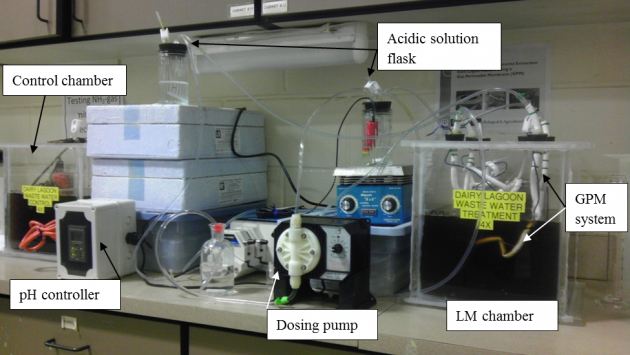
Initially, a bench-scale study of NH3 capture and recovery system from LM using a sulfuric acid-filled (pH=0.36) tubular GPM system was conducted (Fig .1). Four LM chambers with different surface areas were used with a constant depth of LM in each chamber to investigate the effects of surface areas on NH3 diffusion through membrane. Then the acid was diluted to pH of 2 and higher and the experiments were repeated by using one chamber to assess how diluted acid may extract NH3 from LM. For improving the mitigation process, a pH controller and acid dosing system (Fig. 2) was used to keep the pH of diluted acid at a desired level. To test the performance of the scaled-up system under field condition (Fig. 3) a prototype of the optimized laboratory NH3 mitiagation system was constructed and run in a dairy lagoon. In all experiments, real time NH3 and pH measurements were made from acid solution and LM to compare extraction and recovery of NH3 under laboratory and field conditions.

Fig 2. Acid pH controller and acid dosing pump for improving NH3 mitigation system

What Have We Learned?

Laboratory studies showed that two GPM systems, one submerged below the LM surface and the other suspended above the LM surface, resulted in nearly 50% removal (diffusion) of NH3 from the LM in less than 20 days. Ammonia was captured in concentrated sulfuric acid (pH=0.36) as ammonium sulfate solution (by-product). The GPM system was capable of removing NH3 from the air above (headspace) the LM. Moreover, diluted sulfuric acid with pH 2 or higher could also extract NH3 from LM. Application of diluted acid was essential to decrease the risk of handling strong acids. Also, the automatic pH controlling and acid dosing system increased the efficiency of concentrating NH3 in the acid by about 50%. Doubling the flow rate of acid circulation in the GPM system increased the concentration of by-product by 10%. A pilot scale of the GPM mitigation system in a dairy lagoon showed its feasible to harvest NH3 from LM under field condition (Fig. 3).

Fig 3. Field-scale NH3 mitigation in progress

Future Plans

New experiments in laboratory and field are needed to further improve NH3 mitigation and capturing efficiencies of the GPM system by modifying concentrations of acidic solution, changing GPM tube dimensions and morphology, and increasing the acid solution circulation flow rate in the GPM tube.

Authors

Saqib Mukhtar, Professor,  Biological & Agricultural Engineering Department, Texas A & M University System, mukhtar@tamu.edu

Amir M. Samani Majd, PhD Candidate, Biological & Agricultural Engineering Department, Texas A & M University

Additional Information

1- An Investigation of Ammonia Extraction from Liquid Manure Using a Gas-Permeable Membrane. Available at: http://elibrary.asabe.org/azdez.asp?JID=5&AID=37764&CID=loui2011&T=2

2- Application of Diluted Sulfuric Acid for Manure Ammonia Extraction Using a Gas-Permeable Membrane. Available at: http://elibrary.asabe.org/azdez.asp?JID=5&AID=42102&CID=dall2012&T=2

3- AFO Ammonia Mitigation Technology for Sustainable Environmental Stewardship

http://bt.e-ditionsbyfry.com/article/Ammonia+Mitigation+Technology+for+Sustainable+Environmental+Stewardship/1118439/118823/article.html

Acknowledgements

Funding for this study was provided through a grant by the United States Department of Agriculture: National Institute for Food and Agriculture (UDSA- NIFA).

The authors are solely responsible for the content of these proceedings. The technical information does not necessarily reflect the official position of the sponsoring agencies or institutions represented by planning committee members, and inclusion and distribution herein does not constitute an endorsement of views expressed by the same. Printed materials included herein are not refereed publications. Citations should appear as follows. EXAMPLE: Authors. 2013. Title of presentation. Waste to Worth: Spreading Science and Solutions. Denver, CO. April 1-5, 2013. URL of this page. Accessed on: today’s date.