Pesticide Application Air Quality Emissions Inventory Project

Waste to Worth: Spreading science and solutions logoWaste to Worth home | More proceedings….

Abstract

The Federal Environmental Protection Agency (EPA) requires states to submit to them air quality emission inventories for all types of sources every three years. In 2012, the Central States Air Resource Agencies Association (CenSARA) and its contractor, TranSystems Corporation (TranSystems), developed a 2011 agricultural pesticide emissions inventory for the association’s member states of Arkansas, Iowa, Kansas, Louisiana, Minnesota, Missouri, Nebraska, Oklahoma, and Texas. 

Crops grown in this region total more than 140 million acres and are routinely treated with pesticide products, such as herbicides, insecticides, and fungicides.  Row crops, such as corn, soybeans, and sorghum and non-row crops, such as fruit orchards, were included in the work.  Hazardous air pollutants (HAPs) and/or volatile organic compounds (VOCs) are in pesticide ingredients; VOCs being a main contributor to ground-level ozone, commonly known as smog.  In this work, 458 active ingredient-specific VOC emission factors were developed, based primarily on empirically derived pesticide chemical data maintained by the California Department of Pesticide Regulations; county level active ingredient throughputs were derived from the best available information.

An emissions calculation tool was developed to produce emissions, following a linear crop to acreage relationship as the default. Participating states can use the tool to input local practices such as the selection of crops and/or the choice of pesticide products, as well as the extent and amount of applications. The work also included a survey to try to understand the timeframes pesticides are applied to various crops. These parameters can significantly alter the default linear relationship.  The final product provided the individual states with 2011 emission estimates and a methodology to account for better data when obtained, which can result in a more accurate emission inventory for this source category.

Authors

Theresa Pella, Central States Air Resource Agencies Association tpella@censara.org

Juan A. Maldonado, TranSystems Corporation, jamaldonado@transystems.com, Dr. Chun Yi Wu, Minnesota Pollution Control Agency chun.yi.wu@state.mn.us


The authors are solely responsible for the content of these proceedings. The technical information does not necessarily reflect the official position of the sponsoring agencies or institutions represented by planning committee members, and inclusion and distribution herein does not constitute an endorsement of views expressed by the same. Printed materials included herein are not refereed publications. Citations should appear as follows. EXAMPLE: Authors. 2013. Title of presentation. Waste to Worth: Spreading Science and Solutions. Denver, CO. April 1-5, 2013. URL of this page. Accessed on: today’s date.

Anaerobic Digester Workforce Training Curriculum Development

Waste to Worth: Spreading science and solutions logoWaste to Worth home | More proceedings….

Purpose

The Cornell University PRO-DAIRY Anaerobic Digester Workforce Development Project is a project funded by the New York State Energy Research and Development Authority, aimed at developing and delivering high quality educational programs targeted to a range of workforces within the dairy farm-based anaerobic digestion (AD) sector of the clean energy field.  One of the barriers to growth of the AD industry in New York State, as identified by current AD operators, is the lack of a trained, skilled workforce to service and maintain different aspects related to the AD and biogas systems.  These courses are aimed at developing a workforce to support this need, and to eliminate this barrier to growth.

What Did We Do?

Six technical short-courses were developed, intending to provide educational training to persons who are involved in the planning and implementation of dairy farm-based anaerobic digestion systems and to those currently or who would soon be managing an operating system.  The short-courses developed are:


· Introduction to Farm-based Anaerobic Digestion

· Technical Feasibility of On-farm Anaerobic Digestion

· Economic Feasibility of On-farm Anaerobic Digestion and Economic Assessment Model Instruction Guide

· Practical Considerations and Implementation of Anaerobic Digestion System from Planning and Design to Construction

· Technician’s Start-Up and Operation

· Biogas Clean-up and Utilization Systems Selection, Operation and Maintenance


What Have We Learned?

We have learned that it is difficult to deliver technical training for jobs and a workforce that do not yet exist.  Training was mostly targeted at dairy farms currently or expecting to operate an AD and biogas system, and those that advise these farms.  The authors feel that although participant numbers were usually lower than expected, continuing to offer these courses will eventually eliminate a technical expertise barrier, helping aid growth in the field.

Future Plans

Although funding for this project has ceased, efforts will continue to serve technical schools that have interested parties that may be suitable candidates to enter the field and participate in the training programs.  As demand exists, courses will be offered to farms and their advisers across the State.

Authors

Jennifer Pronto, Research Assistant, Cornell University, jlp67@cornell.edu

Additional Information

http://www.manuremanagement.cornell.edu/Pages/Funded%20Projects/AD_Workforce_Development_Project.html

Acknowledgements

The New York State Energy Research and Development Authority was the funding organization for this project.


The authors are solely responsible for the content of these proceedings. The technical information does not necessarily reflect the official position of the sponsoring agencies or institutions represented by planning committee members, and inclusion and distribution herein does not constitute an endorsement of views expressed by the same. Printed materials included herein are not refereed publications. Citations should appear as follows. EXAMPLE: Authors. 2013. Title of presentation. Waste to Worth: Spreading Science and Solutions. Denver, CO. April 1-5, 2013. URL of this page. Accessed on: today’s date.

What We Feed Dairy Cows Impacts Manure Chemistry and the Environment

Waste to Worth: Spreading science and solutions logoWaste to Worth home | More proceedings….

Why Be Concerned with Feed Rations and Their Environmental Implications?

During the last part of the 20th century, animal manure management became an environmental concern. In response to these concerns, legislation was enacted to control manure management and the emission of undesirable gasses (e.g., methane, ammonia, nitrous oxide) from animal production systems. The purpose of this paper is to illustrate how mineral phosphorus (P) supplements, forage types and amounts, and the crude protein (CP) fed to lactating cows impact manure chemistry and the fate of manure nutrients in the environment.

What Did We Do?

Source-sink relationships have been used to illustrate relationships between feed nutrient sources (e.g., forms and concentrations of P and CP in lactating cows rations) and nutrient sinks (milk and manure), and relationships between manure nutrient sources (e.g., soluble P, urea N) and sinks [soil test P, runoff P, atmospheric ammonia, soil inorganic nitrogen (N), crop N] and the impact of these relationships on the environment.

What Have We Learned?

As mineral P concentrations in dairy rations increase, the excretion of total P and soluble P in manure also increases. The amount of cropland needed to recycle manure P and runoff of soluble P from cropland after manure application can be related back to the P excreted in manure, which in turn can be linked to the amount of mineral P in cow rations.  Likewise, the type and amount of CP and forage fed to dairy cows impact manure chemistry and manure N losses as ammonia, N cycling in soil, including plant N uptake. Ammonia emissions from dairy barns and soil after manure application can be related back to the urea N excreted by dairy cows in urine, which is linked to the types and concentrations of CP and forages in cow rations, and the concentrations of urea in milk (milk urea N, or MUN).  Our results demonstrate that profitable rations can be fed to satisfy the nutritional demands of healthy, high producing dairy cows, reduce manure excretion and therefore the environmental impacts of milk production.

Future Plans

We continue investigations on how the feeding of tannins to lactating dairy cows, and the use of MUN as a management tool  may enhance feed CP use efficiency (more feed CP transformed into milk, less excreted in manure) and reduce losses of ammonia, nitrates and nitrous oxide from dairy farms.

Authors

J. Mark Powell, Soil Scientist. USDA-ARS U.S. Dairy Forage Research Center, Madison, Wisconsin,  mark.powell@ars.usda.gov

Glen A. Broderick,  Dairy Scientist,  USDA-ARS U.S. Dairy Forage Research Center, Madison, Wisconsin

Additional Information

Powell, J.M. and Broderick, G.A. Transdisciplinary soil science research: Impacts of dairy nutrition on manure chemistry and the environment. Soil. Sci. Soc. Am. J. 75:2071–2078.

Powell, J.M. Alteration of Dairy Cattle Diets for Beneficial On-Farm Recycling of Manure Nutrients. pp 21-42  In: Applied Research in Animal Manure Management. Zhongqi H. (Ed.) Nova Science Publ. Inc.

Powell, J.M., Wattiaux, M.A., and Broderick, G.A. Evaluation of milk urea nitrogen as a management tool to reduce ammonia emissions from dairy farms. J. Dairy Sci. 94:4690–4694.


The authors are solely responsible for the content of these proceedings. The technical information does not necessarily reflect the official position of the sponsoring agencies or institutions represented by planning committee members, and inclusion and distribution herein does not constitute an endorsement of views expressed by the same. Printed materials included herein are not refereed publications. Citations should appear as follows. EXAMPLE: Authors. 2013. Title of presentation. Waste to Worth: Spreading Science and Solutions. Denver, CO. April 1-5, 2013. URL of this page. Accessed on: today’s date.

Photometric measurement of ground-level fugitive dust emissions from open-lot animal feeding operations.

Waste to Worth: Spreading science and solutions logoWaste to Worth home | More proceedings….

Abstract

Fugitive dust from confined livestock operations is a primary air quality issue associated with impaired visibility, nuisance odor, and other quality-of-life factors.  Particulate matter has conventionally been measured using costly scientific instruments such as transmissometers, nephelometers, or tapered-element, oscillating microbalances (TEOMs).  The use of digital imaging and automated data-acquisition systems has become a standard practice in some locations to track visibility conditions on roadways; however, the concept of using photometry to measure fugitive dust concentrations near confined livestock operations is relatively new.  We have developed a photometric method to estimate path-averaged particulate matter (PM10) concentrations using digital SLR cameras and high-contrast visibility targets.  Digital imaging, followed by automated image processing and interpretation, would be a plausible, cost-effective alternative for operators of confined livestock facilities to monitor on-site dust concentrations.  We report on the development and ongoing evaluation of such a method for use by cattle feeders and open-lot dairy producers.

Purpose

To develop a low-cost practical alternative for measurement of path-averaged particulate matter (PM10) concentrations downwind of open-lot animal feeding operations.

What Did We Do?

Working downwind of a cattle feedyard under a variety of dust conditions, we photographed an array of high contrast visibility targets with dSLR cameras and compared contrast data extracted from the photographs with path-averaged particulate matter (PM10) concentration data collected from several TEOMs codeployed alonside the visibility targets.

What Have We Learned?

We have developed a photometric method to estimate path-averaged particulate matter (PM10) concentrations using digital SLR cameras and high-contrast visibility targets.  Using contrast data from digital images we expect to predict PM10 concentrations within 20% of TEOM values under the dustiest conditions.  Digital imaging, followed by automated image processing and interpretation, may be a plausible, cost-effective alternative for operators of open-lot livestock facilities to monitor on-site dust concentrations and evaluate the abatement measures and management practices they put in place.

Future Plans

We intend to improve the prediction accuracy of the photometric method and automate it such that it can be easily adapted for use as a cost-effective alternative for measuring path-averaged particulate matter (PM10) concentrations at cattle feedyards and open-lot dairies.

Authors

Brent Auvermann, Professor of Biological and Agricultural Engineering, Texas A&M AgriLife Research.  b-auvermann@tamu.edu

Sharon Preece, Senior Research Associate, Texas A&M AgriLife Research; Brent W. Auvermann, Professor of Biological and Agricultural Engineering, Texas A&M AgriLife Research; Taek M. Kwon, Professor of Electrical and Computer Engineering, University of Minnesota-Duluth; Gary W. Marek, Postdoctoral Research Associate, Texas A&M AgriLife Research; Kevin Heflin, Extension Associate, Texas A&M AgriLife Research; K. Jack Bush, Research Associate, Texas A&M AgriLife Research.

Additional Information

Please contact Brent W. Auvermann, Professor of Biological and Agricultural Engineering, Texas A&M AgriLife Research, 6500 Amarillo Boulevard West, Amarillo TX, 79106, Phone: 806-677-5600, Email: b-auvermann@tamu.edu.

Acknowledgements

This research was underwritten by grants from the USDA National Institute on Food and Agriculture (contract nos. 2010-34466-20739 and 2009-55112-05235).

The authors are solely responsible for the content of these proceedings. The technical information does not necessarily reflect the official position of the sponsoring agencies or institutions represented by planning committee members, and inclusion and distribution herein does not constitute an endorsement of views expressed by the same. Printed materials included herein are not refereed publications. Citations should appear as follows. EXAMPLE: Authors. 2013. Title of presentation. Waste to Worth: Spreading Science and Solutions. Denver, CO. April 1-5, 2013. URL of this page. Accessed on: today’s date.

Overview of Solid-Liquid Separation Alternatives for Manure Handling and Treatment Document

Waste to Worth: Spreading science and solutions logoWaste to Worth home | More proceedings….

Is Solid-Liquid Manure Separation Worthwhile?

* Presentation slides are available at the bottom of the page.

Solid-liquid separation of animal manures and other agricultural products can be an integral part of a livestock operation ranging from improved facility performance to enhanced nutrient management.  A document entitled “Solid-Liquid Separation Alternatives for Manure Handling and Treatment” is being created through work by Clemson University and funding from USDA-Natural Resources Conservation Service.  The purpose of this document is to assist in solid-liquid separation technology selection, evaluation of separation performance, and quantifying the impact of solid-liquid separation on manure management.  This presentation will provide an outline of this document including methods of solid-liquid separation, influence of manure characteristics and handling methods, fundamentals of solid-liquid separation, performance of various solid-liquid separation technologies, separation enhancement methods, and design considerations.  An overview of various farm scale separation technologies is also presented in the solid-liquid separation document.

What Did We Do?

Geobag used with metal salt and polymer to separate solids and nutrient partitioning of swine manure

In this document we have provided a detailed compilation of empirical, theoretical, and practical information related to the performance and design of solid-liquid separation systems for animal manure treatment. The information is divided into the following chapters: Methods of Solid-Liquid Separation, Fundamentals of Solid-Liquid Separation, Measures of Solid-Liquid Separation Performance, High-Rate Solid-Liquid Separation, Unique Applications of Solid-Liquid Separation Technology, and Design Considerations. Within these chapters detailed information is provided on: the influence of entrainment on the performance of mechanical separators, design of gravity settling using discrete particle settling and hindered settling theory, efficacy of combining separator methods in a single machine, benefits of using coagulants and flocculants, benefits of solid-liquid separation, and a summary of the solid-liquid separation methods that have been used with sand-laden dairy manure. The publication also provides twenty-one detailed examples such as: design of settling basins based on hindered settling velocities, calculation of the performance of a variety separator options using field data, calculation of dimensions for sand lanes, determination of chemical need to enhance mechanical solid-liquid separation, and sizing of storages for separated solids. Numerous system design diagrams are also provided to demonstrate the wide variety of ways that solid-liquid separation can be implemented into an animal manure treatment system.

What Have We Learned?

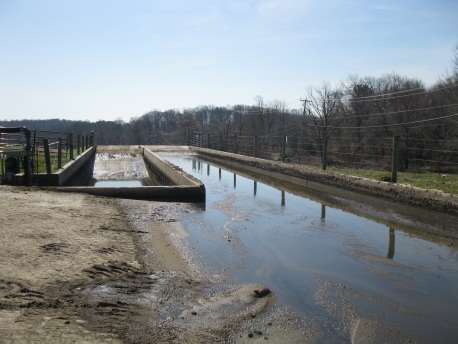
Sand settling lane for flush dairy operation

This work brings together fundamental information about solid-liquid separation, benefits and limitations of many separation technologies, performance measurement techniques along with design considerations into one document.

Future Plans

This document will be published as a USDA-NRCS technical note or as part of the National Engineering Handbook, Part 651 Agricultural Waste Management Field Handbook.

Authors

Jeffrey P. Porter, P.E. Environmental Engineer     Manure Management Team USDA-Natural Resources Conservation Service; e-mail – Jeffrey.Porter@gnb.usda.gov

Dr. John P. Chastain, Professor and Extension Agricultural Engineer School of Agricultural, Forestry, and Environmental Sciences Clemson University; email – jchstn@clemson.edu

Additional Information

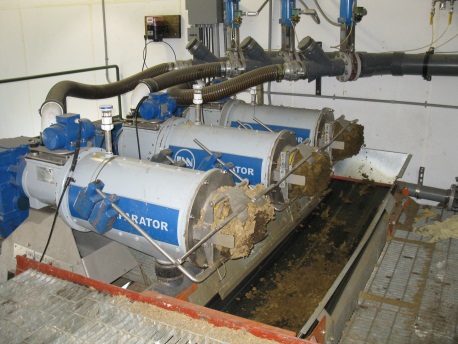
Screw presses used on a dairy farm following anaerobic digestion

John Perkins Chastain, PhD Homepage

East National Technology Support Center Directory

NRCS on Livestock

Solid Separation Technologies for Animal Manure Webinar

Acknowledgements

A special thank you goes out to the Piedmont-South Atlantic Coast Cooperative Ecosystems Studies Unit (CESU).  This Cooperative and Joint Venture Agreement allowed for this work to take place.

Additional support was provided by the Confined Animal Manure Managers Program, Clemson Extension, Clemson University, Clemson, SC.


The authors are solely responsible for the content of these proceedings. The technical information does not necessarily reflect the official position of the sponsoring agencies or institutions represented by planning committee members, and inclusion and distribution herein does not constitute an endorsement of views expressed by the same. Printed materials included herein are not refereed publications. Citations should appear as follows. EXAMPLE: Authors. 2013. Title of presentation. Waste to Worth: Spreading Science and Solutions. Denver, CO. April 1-5, 2013. URL of this page. Accessed on: today’s date.

Alternative Poultry Litter Storage for Improved Transportation and Use As a Soil Amendment

Waste to Worth: Spreading science and solutions logoWaste to Worth home | More proceedings….

Abstract

Transportation of poultry litter out of nutrient limited watersheds such as the Illinois River basin (eastern Oklahoma) is a logical solution for minimizing phosphorus (P) losses from soils to surface waters. Transportation costs are based on mass of load and distance transported. This study investigated an alternative litter storage technique designed to promote carbon (C) degradation, thereby concentrating nutrients for the purpose of decreasing transportation costs through decreased mass. Poultry litter was stored in 0.90-Mg conical piles under semipermeable tarps and adjusted to 40% moisture content, tested with and without addition of alum (aluminum sulfate).

An additional study was conducted using 3.6-Mg piles under the same conditions, except tested with and without use of aeration pipes. Samples were analyzed before and after (8 wk) storage. Litter mass degradation (i.e., loss in mass due to organic matter decomposition) was estimated on the basis of changes in litter total P contents. Additional characterization included pH, total nutrients, moisture content, total C, and degree of humification. Litter storage significantly decreased litter mass (16 to 27%), concentrated nutrients such as P and potassium (K) and increased proportion of fulvic and humic acids. The addition of aeration pipes increased mass degradation relative to piles without aeration pipes. Nitrogen volatilization losses were minimized with alum additions. Increases in P and K concentrations resulted in greater monetary value per unit mass compared with fresh litter. Such increases translate to increased litter shipping distance and cost savings of $17.2 million over 25 yr for litter movement out of eastern Oklahoma.

Why Study Alternative Poultry Storage

Due to the specialization and integration of the modern poultry industry, poultry farms have the potential to import more nutrients than what is exported from the farm in the form of animal and plant products.  In the past, phosphorus (P) imported in poultry feed often remained on-farm in the form of poultry litter, a mixture of bedding material and manure. This litter was often land applied at rates to meet crop nitrogen (N) needs which resulted in soil (P) buildup on some farms.

Because the nutrient ratio in litter is different from that of plant nu­trient requirements, careful consideration must be taken when land applying to avoid over-application of certain nutrients, pri­marily P. If poultry litter land application is not properly managed, excess P application could degrade water quality through runoff into surrounding surface water resources. These concerns have led to environmental regulations, litigation, and successful efforts to move poultry litter outside of critical watersheds.  However, since poultry litter nutrients are not as concentrated as commercial fertilizer, transportation cost is the most limiting factor for exporting poultry litter away from nutrient sensitive watersheds.

The alternative litter storage technique described below promotes degradation of litter carbon, which appreciably reduces the total mass of the litter and also increases the phosphorus and potassium concentrations compared to fresh or normally stored litter.  The advantage of this process is that the final product (degraded litter) can be transported at a lower cost per lb of nutrients, or put another way, it can be transported greater distances before the transport cost exceeds manure value.

What Did We Do?

We developed a process for degrading litter, particularly organic C, with little monetary and labor inputs.  Decreasing litter mass and retaining nutrients means more efficient transport and application of litter.  In order for the process to be effective only two requirements are necessary: adjustment of litter dry matter to 0.60 (weight solids/total weight) and covering with a suitable tarp.  The process was designed to use little time, money, and effort compared to a traditional composting system that involves addition of bulking agents that would increase litter mass and dilute phosphorus concentration.

Step 1. Uniformly add enough water to decrease dry matter content to 0.60.  The amount of water (gallons) to be added per ton of litter is calculated as:

For example, poultry litter with a dry matter of 0.70 (30% moisture content) would require 57 gallons of water per ton of litter.  The water can be applied with a hose after the flow rate of the hose (in gallons per minute) is determined.  Knowing the total weight of litter to be treated and the necessary volume of water from the previous equation, the necessary “spray time” (in minutes) can be determined by:

For example, a 25 ton litter pile with 0.70 dry matter (from the previous example) would require 1,225 gallons of water that can be provided by spraying a hose with a flow rate of 20 gpm for 71 minutes.

Water can be applied as the litter pile is being mixed with a front end loader or while being dumped at a new location.  You could estimate the litter weight in a bucket load and apply the amount of water necessary for that amount of litter while it is slowly being dumped in forming the new pile.  Typical poultry litter at cleanout has a density of 35 lbs/ft3.  You could also apply water while litter is being directly poured out of a dump-bed.

Step 2. Cover the pile with a semi-permeable tarp.  We used a typical polyethylene tarp (6 mil thickness and 10 mesh) considered low to medium weight purchased from a local hardware store.  The purpose of the tarp is to prevent the pile from drying too quickly, allow some oxygen to diffuse into the pile (preventing anaerobic conditions), prevent rainfall contact, and reduce the amount of ammonia volatilization.  According to Oklahoma regulations all litter piles must be covered or bermed.

Step 3: Choose one of the following options:

Option 1:  Never turn or mix the litter and simply allow the pile to remain covered for two months.  Although this method is effective at degrading litter and reducing mass, research shows that the piles turned after one month will degrade more than piles not turned (Table 1).

Option 2: Mix the litter after one month using a front end loader or some type of heavy equipment.  This introduces more oxygen into the system and mixes the inner portion of the pile with the outer portion.  Re-cover the pile with the tarp and allow further degradation for an additional month.

Option 3: Construct a framework of perforated pipe within the pile (no pile turning).  For our 6 ton piles, we used 4 inch diameter perforated PVC pipe laid on the ground in the shape of a cross with a single vertical pipe extending from the center.  Litter was dumped directly on top of this pipe framework with the vertical pipe extending out from the top of the pile.  The tarp is still necessary for this process.  The perforated pipe system allows for greater aeration of the pile without the need for turning or mixing.  We found that this system resulted in greater litter degradation (i.e. mass reduction) compared to the static piles with no pipes (option 1; Table 1).

What Have We Learned?

Table 1.  Impact of the litter degradation storage process on percent mass reduction, nutrient content, and litter value after a two-month period.  Nutrient content is shown on a dry mass basis.  Litter value is expressed on both a dry and wet mass basis.

Litter Treatment Dry matter (w/w) % mass reduction N P2O5 K2O

Value

Dry

Value

Wet

Lb/lb —Lbs/ton— –$/ton–

Initial

0.66

–

88

82

82

144

111

 No turnover (option 1)

0.67

14.9

80

94

94

152

119

One month turnover (option 2)

0.65

19.6

80

103

100

160

123

Aeration pipes (option 3)

0.77

23.0

74

104

101

157

134

Economic Savings

As a result of the litter carbon degrading to carbon dioxide, the storage techniques are able to reduce litter mass from 15 to 23% and concentrate the nutrients (Table 1).  This concentration of nutrients increases litter value per ton.  Also notice that although the process involves adding water to reduce dry matter to 0.6, the litter does dry out to levels similar to the original litter.  The aeration pipes allowed the litter to dry more than the original litter.  This drying effect also increases the litter value on a wet weight basis.  Litter value was based on the concentration of N, P2O5, and K2O and current fertilizer prices.  Based on the value of the wet litter shown in Table 1, a standard tractor-trailer load (24 tons) of normal (non-degraded) litter is worth $2,664 while degraded litter from our research piles varied from $2,856-$3,216.  The higher economic value of the degraded litter means that it can be transported greater distances than normal litter before the transport cost exceeds the litter value (i.e. break even distance).  For example, assuming a purchase cost of $15/ton litter, $24/ton for loading, unloading, and application, and transport cost of $0.16/ton/mile, the normal litter can be transported 398 miles while degraded litter can move 444 to 525 miles.  If all poultry litter from Eastern Oklahoma was stored using these degradation techniques, the increased economic benefit would be about 10 million dollars after 5 years and about 32 million dollars after 25 years, compared to transporting normal litter (Figure 3).

The higher nutrient density (P2O5 and K2O) of the degraded litter will also reduce application costs since less litter will be required to bring soil test phosphorus concentrations to agronomic optimum levels.  In addition, degraded litter was more uniform in particle size, darker in color, and had less offensive odors compared to normal poultry litter.

Figure 2. Oklahoma economic benefit of transportation of degraded poultry litter resulting from an alternative storage technique, relative to fresh litter.

Poultry litter haulers and those receiving poultry litter will gain the most benefit from this process since haulers can transport more nutrients per load and the receivers need not purchase as much degraded litter as normal litter due to greater nutrient density.

Future Plans

Study the impact of land application of the degraded litter on crop growth and soil quality.

Authors

Chad J. Penn, associate professor of soil & environmental chemistry, Oklahoma State University; chad.penn@okstate.edu

Jeff Vitale, associate professor of agricultural economics, Oklahoma State University

Josh Payne, area animal waste management specialist, adjunct associate professor, Oklahoma State University

Additional Information

Penn, C.J., J. Vitale, S. Fine, J. Payne, J.G. Warren, H. Zhang, M. Eastman, and S.L. Herron.  2011.  Alternative poultry litter storage for improved transportation and use as a soil amendment.  J. Environ. Qual. 40:233-241.

http://pods.dasnr.okstate.edu/docushare/dsweb/Get/Document-8111/PSS-2268…

The authors are solely responsible for the content of these proceedings. The technical information does not necessarily reflect the official position of the sponsoring agencies or institutions represented by planning committee members, and inclusion and distribution herein does not constitute an endorsement of views expressed by the same. Printed materials included herein are not refereed publications. Citations should appear as follows. EXAMPLE: Authors. 2013. Title of presentation. Waste to Worth: Spreading Science and Solutions. Denver, CO. April 1-5, 2013. URL of this page. Accessed on: today’s date.
Quantification of Sodium Pentobarbital Residues from Equine Mortality Compost Piles

Waste to Worth: Spreading science and solutions logoWaste to Worth home | More proceedings….

*Abstract

Preliminary research has shown that sodium pentobarbital, a euthanasia drug, can persist up to 180 days in equine mortality compost piles. This experiment attempts to expand upon past research by quantifying pentobarbital residues in equine mortality compost piles over a longer duration using innovative sampling schemes. Six, 3.7 m2 plots were used to construct separate compost bins with 3 bins serving as control. Each bin was constructed with 1.2 m high horse panels. Soil samples were collected in each bin area. The carbonaceous material consisted of wood chips that were added at a depth of 0.46 m creating the base. Twenty-four whiffle balls, pre-filled with wood chips were placed on the center of each pad.  Nylon twine was tied to each ball for retrieval.

A licensed veterinarian provided six horse carcasses for use in the experiment.  These horses had required euthanasia for health reasons. All horses were weighed and then sedated with an intravenous injection of 8 ml of xylazine.  After sedation the three horses in the treatment group were euthanized by intravenous injection of 60 ml of sodium pentobarbital. The three control group horses were anesthetized by intravenous injection of 15 ml of ketamine hydrochloride and then humanely euthanized by precise gunshot to the temporal lobe. Following euthanasia, each carcass was placed on the center of the woodchip pad and surrounded with 0.6 m of additional wood chips. Serum and liver samples were immediately obtained while whiffle ball, soil and compost samples were obtained over time. Each sample was analyzed for pentobarbital residues. Compost pile and ambient temperatures were also recorded. Data illustrates pentobarbital persistence up to 367 days in compost piles with no clear trend of concentration reduction.

Why Be Concerned with Equine Mortality Management?

Equine mortality is an issue encountered by every horse owner. Mortality may be associated with disease, injury, age or a catastrophic event. For horses suffering from an incurable illness or injury, euthanasia is often the most humane option. The American Veterinary Medical Association (AVMA) approved methods for horse euthanasia include barbiturate overdose and captive bolt or gunshot to the temporal lobe (AVMA, 2007). Following mortality, the carcass must be properly disposed of according to local regulations. For many horse owners, carcass disposal options are limited and can be costly.  Improper disposal of animal carcasses can present potential environmental, animal and public health risks.

Recent interest has focused on the common euthanasia barbiturate, sodium pentobarbital, and its persistence in the animal carcass following euthanasia. In 2003 the FDA added environmental warning labels to euthanasia products containing pentobarbital in regards to proper carcass disposal (FDA, 2003). Barbiturates accumulate within the carcass and can cause sedation or death of animals that may consume the body (AVMA, 2007).

Questions exist regarding the potential environmental risk of improperly disposed animal carcasses following euthanasia with pentobarbital. It has been suggested that proper composting of animal carcasses euthanized with pentobarbital may degrade drug residues to negligible concentrations. However, preliminary research has shown that pentobarbital can persist up to 180 days in equine mortality compost piles (Cottle et.al, 2010). The researchers identified a need for controlled experiments investigating the persistence of sodium pentobarbital in animal carcasses during composting. The objectives of this experiment were to expand upon previous research by quantifying pentobarbital residues in equine mortality compost piles over a longer duration using innovative sampling schemes and to determine the efficacy of wood chips as a carbonaceous material for degrading equine carcasses.

Compost bin with pad.

What Did We Do?

Six, 3.7 m2 plots were used to construct separate compost bins. Each compost bin was constructed with 6.1 m x 1.2 m metal horse panels supported by 3 steel t-posts. The bulking agent for construction of compost piles consisted of hardwood chips that were wetted to approximately 50% moisture content. Bulking agent was added at a depth of 0.46 m creating the pad. Twenty-four whiffle balls pre-filled with wood chips were centrally placed on each pad.  Nylon hay twine was tied to each whiffle ball for retrieval during required sampling times.

A licensed veterinarian provided six horse carcasses for use in the experiment.  These horses had required euthanasia for health reasons. All horses were weighed and then sedated with an intravenous injection of 8 ml of xylazine.  After sedation the three horses in the treatment group were euthanized by intravenous injection of 60 ml of sodium pentobarbital (Beuthanasia-D, Schering-Plough Animal Health).  The three control group horses were anesthetized by intravenous injection of 15 ml of ketamine hydrochloride and then humanely euthanized by precise gunshot to the temporal lobe.

Compost bin after carcass placement.

Following euthanasia, each carcass was placed on the center of the woodchip pad and surrounded with 0.6 m of additional wood chips. Serum and liver samples were immediately obtained while whiffle ball, soil and compost samples were obtained over time. Each sample was analyzed for sodium pentobarbital residues. Compost pile and ambient temperatures were also recorded throughout the duration of the study.

What Have We Learned?

The findings from this experiment indicate that wood chips were effective at decomposing equine mortalities within 129 days of composting. Nearly all of the soft tissue was completely degraded with only large bones present. Compost temperatures met EPA class B biosolid standards for pathogen reduction. At day 367, sodium pentobarbital still persisted in the treatment group with no clear trend of concentration reduction from day 7 to day 367. Enveloping the carcass with carbonaceous material and constructing a barrier reduces the risk of secondary toxicosis from scavenging animals. Moreover, carcass degradation by composting followed by homogenous compost mixing allows for dilution of any remaining sodium pentobarbital residues.

Future Plans

Future research could focus on alternative livestock mortality management options and their impact on sodium pentobarbital residues.

Authors

Josh Payne. Ph.D. Area Animal Waste Management Specialist. Oklahoma State University.   joshua.payne@okstate.edu

Rodney Farris. Ph.D. Senior Research Station Superintendent. Oklahoma State University.

Gene Parker. D.V.M. Area Food/Animal Quality and Health Specialist. Oklahoma State University.

Jean Bonhotal. Director. Cornell Waste Management Institute.

Mary Schwarz. Extension Support Specialist. Cornell Waste Management Institute.

Additional Information

Managing Livestock Mortalities Link

Horse Mortality: Carcass Disposal Alternatives Link

Acknowledgements

Appreciation is extended to Ted Newell, Tommy Tucker, Robert Havener and Bobby Adams for their assistance with field work as well as Cheryl Ford for her assistance with data entry.

The authors are solely responsible for the content of these proceedings. The technical information does not necessarily reflect the official position of the sponsoring agencies or institutions represented by planning committee members, and inclusion and distribution herein does not constitute an endorsement of views expressed by the same. Printed materials included herein are not refereed publications. Citations should appear as follows. EXAMPLE: Authors. 2013. Title of presentation. Waste to Worth: Spreading Science and Solutions. Denver, CO. April 1-5, 2013. URL of this page. Accessed on: today’s date.

Drying and Rewetting Effects on Gas Emissions from Dairy Manure in Semi-arid Regions

Waste to Worth: Spreading science and solutions logoWaste to Worth home | More proceedings….

Abstract

The major source of emissions in animal production sites is from animal waste (manure), which can be in solid, slurry, or liquid states, exhibiting varying physical properties. Once manure is excreted from an animal, processes of biological decomposition and formation of gaseous compounds continue, but diminish as the manure cools and dries. However, increases in gas emissions following rewetting, particularly from precipitation, have been observed in various agricultural lands. Our study investigates changes of gaseous emissions through manure drying and rewetting processes to identify the effects of climatic conditions and manure management on gaseous emissions. We carried out drying and rewetting processes of dairy manure in a greenhouse to maintain moderate wintertime temperatures (20 – 40 C) while monitoring gaseous emissions through these processes. Closed dynamic chambers (CDC) coupled with a multiplexed Fourier Transformed Infrared (FTIR) spectroscopy gas analyzer provided gas flux estimates. The analyzer was capable of monitoring 15 pre-programmed gases simultaneously including typical gaseous compounds and greenhouse gases emitted from manure sources; namely, ammonia, carbon dioxide, methane, nitrous oxide, oxides of nitrogen, and volatile organic compounds. Magnitude of dairy manure gas emissions resulting from variations in moisture and temperature provide insight toward enhancing manure management decisions. Results from our study should further understanding of manure gas emission temporal dynamics that are largely dictated by heat and by drying and rewetting processes that impact the generation and delivery of gasses to the atmosphere. Our overall goal is to advance development of appropriate best management practices to reduce gas emissions for dairy operations in semi-arid regions.

Purpose

The objective of this project is to identify the effects of climatic conditions and manure management on gaseous emissions. The results from our study will be used to advance development of appropriate best management practices to reduce gas emissions for dairy operations in semi-arid regions.

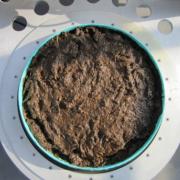
Fig 1. Gas emissions from two dairy manure samples were monitored in a greenhouse to compare the magnitude of gas fluxes through manure drying and rewetting processes.

What Did We Do?

We investigated changes in gaseous emissions by carrying out  drying and rewetting processes of dairy manure in a greenhouse to maintain moderate summertime temperatures (20 – 40 oC) while monitoring gaseous emissions. Closed dynamic chambers (CDC) coupled with a multiplexed Fourier Transformed Infrared (FTIR) spectroscopy gas analyzer provided gas flux estimates. The analyzer was capable of monitoring 15 pre-programmed gases simultaneously including typical gaseous compounds and greenhouse gases emitted from manure sources; namely, ammonia, carbon dioxide, methane, nitrous oxide, oxides of nitrogen, and volatile organic compounds. Gas emissions from two dairy manure samples were monitored to compare the magnitude of gas fluxes during 14 days of manure drying and rewetting processes.

Fig 2. Gas emissions were determined using the closed dynamic chambers integrated with a multiplexed Fourier Transformed Infrared (FTIR) spectroscopy gas analyzer.

What Have We Learned?

An increase in surface water content occurring after a rewetting event (e.g., simulated 5 mm of rain) represents an abrupt increase in manure moisture content, which can promote microbial activity and a commensurate increase in gas emissions from manure. In our study, we found gas fluxes were actually suppressed during and shortly after the rewetting process, mainly due to reduction in air-filled pore space causing reduced gas diffusivity in the manure crust layer. As the wet layer dried, gas emissions eventually increased to levels prior to wetting.

Future Plans

Future experiments include: (1) simulation of manure drying-rewetting with various amount of water and rewetting times,  (2) considering the immediate response time and effective period of the pulse response of the gas fluxes after rewetting which might have been missed in our study, (3) Further

Fig 3. Manure sample after the rewetting process.

investigation of the effect of the crust layer on water and gas transport from and into manure.

Authors

Pakorn Sutitarnnontr, Graduate Student, Dept. of Plants, Soils, and Climate, Utah State University, pakorn@aggiemail.usu.edu

Enzhu Hu, Dept. of Plants, Soils, and Climate, Utah State University

Rhonda Miller, School of Applied Sciences, Technology, and Education, Utah State University

Markus Tuller, Dept. of Soil, Water, and Environmental Science, University of Arizona

Scott B. Jones, Dept. of Plants, Soils, and Climate, Utah State University

Additional Information

Contact Information: Pakorn Sutitarnnontr, Environmental Soil Physics Laboratory, Dept. of Plants, Soils, and Climate, Utah State University. Email: pakorn@aggiemail.usu.edu

Acknowledgements

The authors gratefully acknowledge support from the USDA-NIFA under the AFRI Air Quality Program (Grant # 2010-85112-50524) and the Western Sustainable Agriculture Research and Education Program (Grant # GW13-006).

The authors are solely responsible for the content of these proceedings. The technical information does not necessarily reflect the official position of the sponsoring agencies or institutions represented by planning committee members, and inclusion and distribution herein does not constitute an endorsement of views expressed by the same. Printed materials included herein are not refereed publications. Citations should appear as follows. EXAMPLE: Authors. 2013. Title of presentation. Waste to Worth: Spreading Science and Solutions. Denver, CO. April 1-5, 2013. URL of this page. Accessed on: today’s date.

Operation of Internal Combustion Engines on Digas for Electricity Production

Waste to Worth: Spreading science and solutions logoWaste to Worth home | More proceedings….

Presentation Summary

The purpose of this research is to review engine performance and technology issues relating to generating electricity from digester gas in reciprocating internal combustion engines. Research performed at the Colorado State University (CSU) Engines & Energy Conversion Laboratory (EECL) and published material from other organizations is utilized.

Digester gas (digas) can be used effectively in internal combustion engines for electricity production to offset operating costs and/or sell to the electric utility. Stationary industrial engines are generally employed for this purpose. Four application areas where systems have been successfully demonstrated are sewage processing plants, animal waste facilities, landfills, and agricultural waste processing systems. Digas is generated through anaerobic digestion, or biomethanization, for all these cases. There are many common engine technical issues within these areas, although the digas generation systems employed in each case are different. In this presentation issues pertinent to running engines on digas are explored. The focus is on animal waste facilities, but the presentation draws upon the other application areas for technical insight related to engine technology. Specific stationary engine types are discussed. High engine efficiency and power density are important to the economic viability of anaerobic digestion systems. Engine operational and design changes to maintain high efficiency and power density for digas fueling are analyzed. Management of engine maintenance problems is also key to economic viability. Corrosive gases contained in digas, such as hydrogen sulfide (H2S), are evaluated.

Figure 1 Methane number measurement of various gaseous fuels.

The term biogas is a broad term encompassing both digas and producer, or wood, gas. These gases are very different in their combustion properties. Producer gas is generated in a gasifier by oxidizing biomass in an oxygen-starved environment. Producer gas contains high concentrations of hydrogen (H2) and carbon monoxide (CO), a small concentration of methane (CH4), and high diluent concentrations (CO2 and N2). In contrast digas is primarily CH4 (50-80%) and CO2 (20-50%). One of the main property differences between digas and producer gas is the methane number, which is indicative of the tendency of the fuel to knock. Figure 1 shows methane number measurements of various gaseous fuels made at the CSU EECL[1]. Note that producer gas (wood gas on plot) has a methane number from 60-70, while digas gas has a methane number of almost 140. Consequently, digas is much less likely to knock than producer gas and can be operated with higher compression ratios and higher power densities. Digas is also more knock resistant than natural gas.

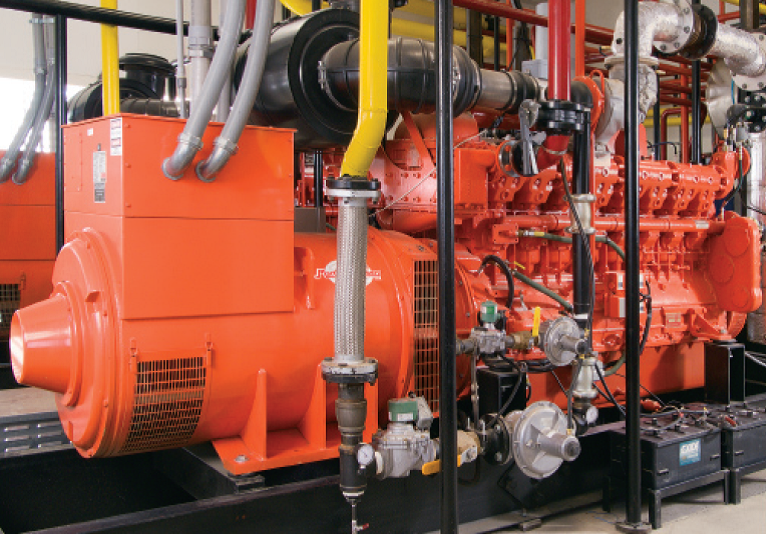
Figure 2 Guascor SFGLD-240, rated at 330 kWe at 1200 rpm on 500-600 Btu/SCF digas.

There are three different types of stationary engines that can be used to generate electricity from digas, which are (1) compression ignition (diesel) engines, (2) spark ignition stoichiometric engines, and (3) spark ignited lean-burn engines. Diesel engines (1) are employed by fumigating the intake air with digas. The amount of diesel used is reduced as more digas is added, resulting in dual fuel operation. Limitations on diesel displacement and the necessity of storing two different fuels are drawbacks of this approach. Spark ignition stoichiometric engines have similar operating characteristics to most automotive engines in the United States. They utilize NSCR, or 3-way, catalysts for emissions reduction that required precise air/fuel ratio control. Lean-burn natural gas engines are more efficient than stoichiometric engines and can achieve low emissions without exhaust aftertreatment. Thus, option (3) is the most desirable; it is the approach typically implemented for digas utilization in most large installations. Figure 2 shows a Guascor SFGLD-240 installation by Martin Machinery.

Lean-burn natural gas engines can be used without modification for digas installations. However, in this case the engines typically are de-rated, require additional maintenance, and suffer from reduced engine life. Some engine manufacturers offer engines specifically designed for digas, which has several advantages. Digas has unique properties that necessitate design changes to natural gas engines to achieve rated power and minimize maintenance costs. To maintain rated power the flow capacity of the fuel system must be increased, since the energy content of digas is approximately 60% that of natural gas. This is due to the high concentration of CO2 diluent[2]. Other operational changes often made are advanced timing due to slower combustion and richer equivalence ratio[3]. To maintain the same NOx level the equivalence ratio is richer because the diluent in the fuel reduces combustion temperatures. Though not typically done, higher compression ratio pistons can be added to take advantage of the higher methane number of digas, which results in improved efficiency. Corrosion resistant materials and improved crankcase ventilation are design changes often made to combat the effects of corrosive contaminants in the fuel.

Digas can contain trace levels of gases other than CH4 and CO2 such as hydrogen, carbon monoxide, nitrogen, oxygen, ammonia (NH3) and H2S. Digas H2S levels from hog and cattle digesters of ~2000-5000 ppm are typical. These levels are above engine manufacturer H2S limits (250-1000 ppm)[4]. H2S must be reduced below the respective engine manufacturer limit if the engine warrantee is to be valid. When sulfur compounds are combined with water, acids are produced in the engine oil. These acids attack the metals in the engine, causing corrosive wear. Scrubbers can be used to reduce H2S in the fuel below manufacturer limits. Two commercially available H2S scrubber technologies are iron oxides and bio-trickling. H2S reacts with the iron oxide to form insoluble iron sulfides. The material can be regenerated with air to produce pure sulfur. Iron sulfides and/or pure sulfur must be disposed of[5]. Bio-trickling involves a filter media that provides an environment for establishment of a bacteria biofilm. The H2S comes in contact with the biofilm, is solubilized, and subsequently oxidized by the microbes. Sulfur and sulfate compounds are formed as by-products and purged with recirculating water. The by-products are collected and disposed of. Bio-trickling requires more expertise to set up, but requires less maintenance long term[6]. 


[1] Malenshek M., Olsen D.B., “Methane number testing of alternative gaseous fuels”, Fuel, Volume 88, pp. 650-656, 2009.

[2] John C.Y. Lee, Peter Lau, and Thomas Teo,, “Sustainable Application of Reciprocating Gas Engines Operating on Alternative Fuels”,

Caterpillar Inc. publication, October 2008.

[3] Reinbold, E. and von der Ehe, James, “Development of the Dresser Waukesha 16V150LTD Engine for Bio-Gas Fuels”, ASME Internal Combustion Engine Division 2009 Spring Technical Conference, ICES2009-76079, May 3-6, 2009.

[4] Guascor Power, “Anaerobic Digestion Gas Fuel Specifications – Landfill and Digester Gas”, Product Information IC-G-D-30-003e, Sept 2011.

[5] Steven McKinsey Zicari, “Removal of Hydrogen Sulfide from Biogas Using Cow-Manure Compost”, MS Thesis, Cornell University, 2003.

[6] Personal Communications, 1-10-2013, Marcus Martin, Martin Machinery LLC.

Authors

Daniel Olsen, Colorado State University daniel.olsen@colostate.edu


The authors are solely responsible for the content of these proceedings. The technical information does not necessarily reflect the official position of the sponsoring agencies or institutions represented by planning committee members, and inclusion and distribution herein does not constitute an endorsement of views expressed by the same. Printed materials included herein are not refereed publications. Citations should appear as follows. EXAMPLE: Authors. 2013. Title of presentation. Waste to Worth: Spreading Science and Solutions. Denver, CO. April 1-5, 2013. URL of this page. Accessed on: today’s date.

Potential Air Quality Impacts of Anaerobic Digestion Of Dairy Manure

Waste to Worth: Spreading science and solutions logoWaste to Worth home | More proceedings….

Abstract

Anaerobic digestion (AD) of livestock manure is better known for the economic return derived from biogas for energy rather than for its, inherent, environmental benefits. The effect of AD of dairy manure on the emissions of odor, ammonia (NH3), and greenhouse gases (GHG) including: carbon dioxide (CO2), nitrous oxide (N2O), and methane (CH4), during manure storage and also in subsequent land applications will be presented.  Air samples were collected in 10-L Tedlar bags, at pertinent locations within the AD system, and shipped immediately to the lab for odor analyses by a trained odor panel using the “Dynamic Dilution Forced-choice Olfactometer.” Measurements of GHG emissions from both AD and non-AD manure storages were made using a floating chamber and a photoacoustic gas analyzer (INNOVA model 1412).  Emissions of GHG were determined using the standard closed chamber method from field plots applied with AD and non-AD manure. Although odor analyses of collected air samples indicated increased detection threshold (D/T), odor strength (intensity) and unpleasantness (hedonic tone) decreased after AD of manure. Data indicated significantly higher fluxes of GHG from land applied with non-AD manure than from land applied with AD manure. Injection of non-AD manure further increased CH4 flux from applied manure. More than 50% emissions of CO2 and CH4 were observed during the first 3 days after manure was land applied. Emissions of GHG from the anaerobic lagoon holding AD manure, during all four seasons, were significantly lower than from the anaerobic lagoon with non-AD manure. In contrast, the reverse was observed with NH3 emissions suggesting potential increased emissions of NH3 during storage of post AD manure.

Authors

Pius Ndegwa, Washington State University          ndegwa@wsu.edu

H.S. Joo, Biological Systems Engineering, Washington State University, PO Box 646120, Pullman, WA 99164; J.H. Harrison, E. Whitefield, Animal Sciences, Washington State University, 2606 West Pioneer, Puyallup, WA 98371; A.J. Heber, J.Q. Ni, Agricultural & Biological Engineering, Purdue University, 225 South University Street, West Lafayette, IN 47907


The authors are solely responsible for the content of these proceedings. The technical information does not necessarily reflect the official position of the sponsoring agencies or institutions represented by planning committee members, and inclusion and distribution herein does not constitute an endorsement of views expressed by the same. Printed materials included herein are not refereed publications. Citations should appear as follows. EXAMPLE: Authors. 2013. Title of presentation. Waste to Worth: Spreading Science and Solutions. Denver, CO. April 1-5, 2013. URL of this page. Accessed on: today’s date.