Pull-Plug Sedimentation Basin for Dairy Manure Management

Purpose

Many small and mid-sized dairy farms use flush systems for manure removal due to reduced chore time and increased barn cleanliness. Often, flush systems require greater attention to onsite water management and frequent lagoon maintenance. While anaerobic lagoons provide some digestion of manure solids and sludge storage, solids removal may help increase lagoon capacity and reduce costly lagoon sludge removal. A pull-plug sedimentation basin (PPSB) is a passive solids removal system that can reduce the operational time and cost of the overall manure management system by acting as both a sedimentation basin and pre-lagoon solids filter system.

Larger, denser particles accumulate on the basin floor, while buoyant particles (e.g., undigested fiber, waste forage, bedding, etc.) form a floating mat on the surface. The mat acts as a natural filter and retains some of the solids from the waste stream. The PPSB was developed as part of a collaborative effort between USDA NRCS and small dairy producers in Missouri. This abstract provides background and basic information on the PPSB, while more performance evaluation of the system based on nutrient retention, costs, and maintenance and operational considerations can be found in a University of Missouri Extension publication Eq302 (Canter et al., 2021).

What Did We Do?

Design details of a working PPSB were documented, and performance evaluation was conducted based on grab samples of the flush and PPSB locations. Critical design considerations for the PPSB including design, hydraulic loading, location of the pull-plug location, and construction details were reported in the Extension publication (Canter et al., 2021). The concrete entry ramp into the PPSB should have a maximum slope of 12:1 (or 5 degrees) (Figure 1) to minimize wheel slippage and potential for equipment overturns. The example provided in Figure 1 is of a typical PPSB design that serves a herd of ~150 milking cows with a single-flush volume of ~7,000 gallons but also represents the smallest recommended size of the system. A minimum depth of 6 feet is needed to keep settling solids out of the discharge stream.
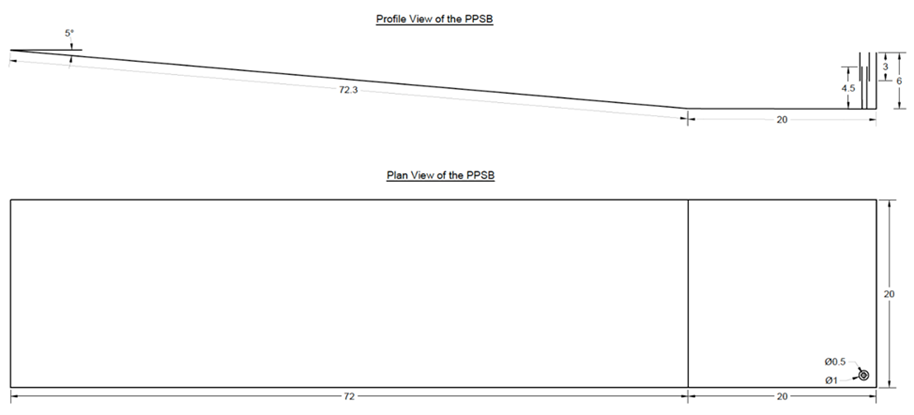
Figure 1. Profile and plan views of typical PPSB (dimensions in feet).

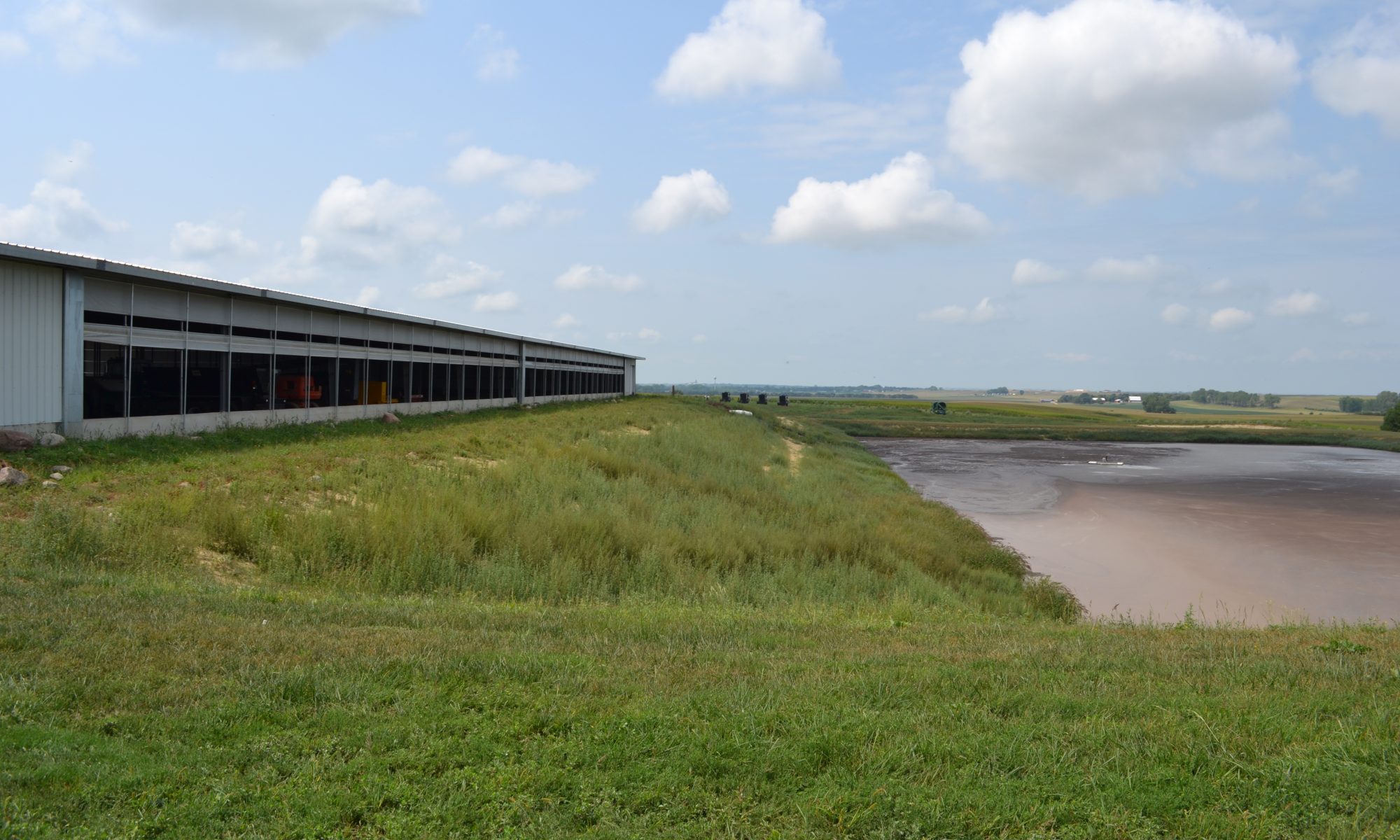
Detailed discussion of the advantages and disadvantages of the PPSB system was reported in the Extension publication. Relatively little maintenance has been reported, while the pull-plug is the only moving part and may need to be replaced if damaged during cleaning or degradation, Figures 2 and 3. Details such as the management and sampling and analysis were discussed, and a case study was conducted to document the information of a PPSB system of a 120-hd dairy farm in Missouri, with a flush system and sand lane, as well as a performance evaluation.

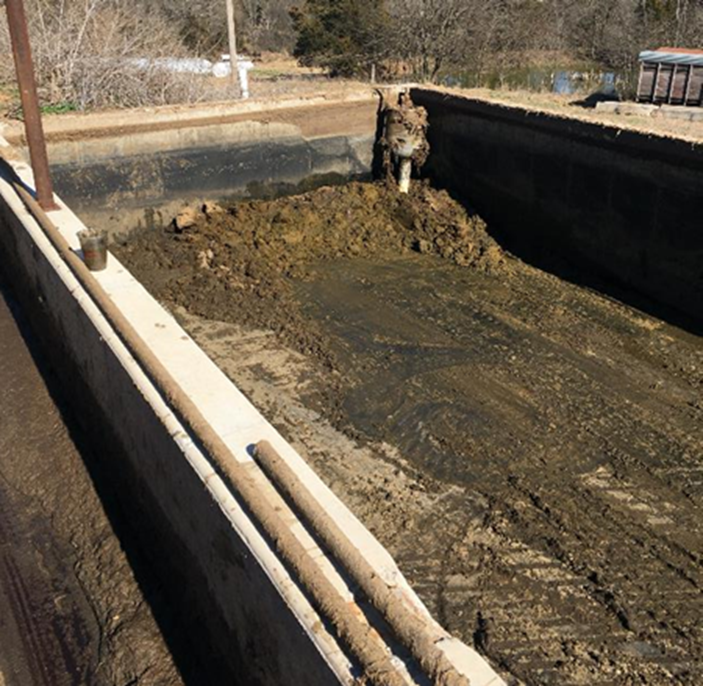
Figure 2. A PPSB system in operation at a dairy farm.
Figure 3. PPSB with liquid discharge pipe, after manure solid was removed.

What Have We Learned?

The owners are satisfied with the performance of the PPSB, which is considered a low-maintenance, low-technology option to efficiently manage manure solids within a flush system. The primary benefit of the PPSB is a reduction in time spent agitating and removing solids/sludge in the lagoon. When less capacity in the lagoon is used for solids treatment and storage, there is more room to store water and longer intervals between repairing or unclogging pumps and the water system. There are typically three to four clean-out periods per year, depending on PPSB and herd sizes and other factors.

The primary benefit of the PPSB is the removal of manure solids using a low maintenance system, resulting in longer intervals between lagoon agitation and land applications. Approximately 23,450 cubic feet of manure solids were prevented from entering the lagoon each year, along with 6,454 pounds of nitrogen (438 pounds as ammonia-nitrogen) and 2,415 pounds of phosphorous. These represent 13 percent and 28 percent of manure-based nitrogen and phosphorous, respectively, being retained in the PPSB.

Future Plans

Additional sampling just before or during clean-out is necessary for a more accurate performance determination. PPSB installed at larger dairy farms, and those using different bedding should be evaluated for performance and documented the cost savings as compared with other popular solid separation systems.

Authors

Teng Lim, Extension Professor, Agricultural Systems Technology, University of Missouri

Corresponding author email address

Limt@missouri.edu

Additional authors

Timothy Canter, Extension Specialist, Agricultural Systems Technology, University of Missouri

Troy Chockley, Environmental Engineer, Natural Resource Conservation Service, United States Department of Agriculture

Additional Information

Canter, T., T.-T. Lim, and T. Chockley. 2021. Considerations of pull-plug sedimentation basin for dairy manure management. University of Missouri Extension. https://extension.missouri.edu/eq302

Acknowledgements

USDA NIFA, Water for Food Production Systems Program A9101, for supporting the project. It is titled “Management of Nutrients for Reuse”, a multi-faceted project that involves professionals from the University of Arkansas, University of Nebraska, Colorado School of Mines and Metallurgy, Case Western University, and University of Missouri.

Joseph Zulovich, Agricultural Systems Technology, University of Missouri

Richard Stowell, Biological Systems Engineering, University of Nebraska
Potential soil health improvement through the integration of cover crops and manure in the upper Midwest

Purpose

Oftentimes fall manure application is associated with significant offsite transport of nitrogen and phosphorus into nearby bodies of water and the atmosphere. Mechanisms of losses include leaching, runoff, sediment transport, and volatilization processes. This is becoming more common as there has been a trend of increased wet springs that create difficult planting conditions. This prolonged period without an active root system leaves more time for nutrient loss from fall-applied manure to occur.

A strategy to offset nutrient losses in the fall and early spring is to plant a cover crop. The uptake of nutrients during this time in the field, which would otherwise be left fallow, allows for nutrients to be stored in the tissue of the cover crops, minimizing nutrient loss risk. Upon terminating the cover crops, the decomposing residues can supply nutrients to the succeeding row-crop. However, cover crop adoption is low in the upper Midwest US stemming from a short cover crop growing season due to the cold climate. This is especially the case for crops utilizing manure. A strategy to expand the cover crop growing season may be to interseed a cover crop into a maturing row-crop prior to harvest. Previous studies investigating the integration of manure and cover crops have seeded the cover crop after manure application. We wanted to measure the impacts of first planting a cover crop then applying manure once the cover crop has had ample time to get established. This may help expand the cover crop growing season and potentially limit the offsite transfer of pollutants to our water and air.

What Did We Do?

A small plot study was started in fall 2019 at the University of Minnesota West Central Research and Outreach Center near Morris, MN. We tested the effect of nitrogen source and cover crops on soil health, nutrient cycling, and agronomic responses using a randomized complete block design with split plots.

Cover crop mixtures of cereal rye and annual ryegrass were interseeded near corn’s fifth leaf collar (V5) growth stage, physiological maturity (R5 to R6 growth stage), or drilled after corn harvest. Dairy manure was sweep-injected to minimize soil disturbance in early and late fall, when soil temperatures were above and below 10°C (50°F), respectively. Non-manured plots received urea in the spring prior to corn planting. Urea applied plots (no manure) with no cover crops served as the control. Soil samples were taken throughout the cover crop and row-crop growing season from the 0-15, 15-30, and 30-60 cm (0-6, 6-12, and 12-24 in) soil layers. Cover crop biomass samples were taken in the late fall prior to the first frost event and prior to cover crop termination in the spring.

What Have We Learned?

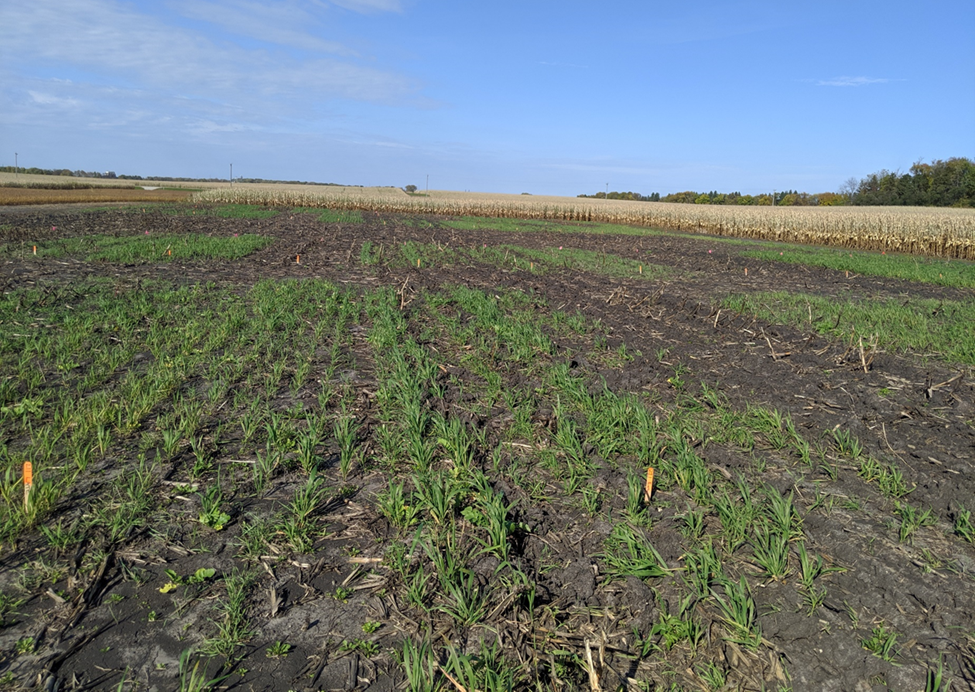
Sweep injection is a reliable method to apply liquid manure to a field with an established stand of cover crops with minimal noticeable damage to the cover crops in the spring (Figure 1). Planting cover crops as soon as possible ensures more biomass is produced; planting after harvest consistently had lower cover crop yield than interseeding. Spring cover crop yield, right before termination, was highest when planted near physiological maturity [110 kg ha-1 (98 lb ac-1)] compared to drilling after harvest [87 kg ha-1 (78 lb ac-1)]. Nutrient source had a significant effect on silage yield. Manure, either applied in the early or late fall, had greater silage yield [58.5 and 58.7 Mg ha-1 (26.1 and 26.2 ton ac-1), respectively] than spring applied urea [53.6 Mg ha-1 (23.9 ton ac-1)]. Plots with cover crops interseeded at V5 had greater silage yield [59.5 Mg ha-1 (26.5 ton ac-1)] than all other treatments [54-56 Mg ha-1 (24-25 ton ac-1)] except no cover crops [57.8 Mg ha-1 (25.8 ton ac-1)].

Figure 1. Cover crops planted prior to late manure application. Photo was taken in the spring at cover crop termination.

Future Plans

Soil samples collected throughout the study are currently being analyzed for nutrient content and other soil health parameters. Results from this study will be used to develop best management practices for integrating cover crops and liquid injected manure in the upper Midwest.

Authors

Manuel J. Sabbagh, Graduate Research Fellow, University of Minnesota

Corresponding author email address

sabba018@umn.edu

Additional authors

Melissa L. Wilson, Assistant Professor, University of Minnesota; Paulo H. Pagliari, Associate Professor, University of Minnesota

Additional Information

Twitter: @mannyandmanure @manureprof

Lab website: https://wilsonlab.cfans.umn.edu/

Acknowledgements

This work is supported by the Conservation Innovation Grants program at the Natural Resources Conservation Service of the USDA, the Minnesota Corn Research and Promotion Council, and the Foundation for Food and Agriculture Research.

How are Filth Flies Involved in Wasting Nitrogen?

Purpose

Filth flies are species from the Diptera order associated with animal feces and decomposing waste. Beef cattle raised on open pastures are especially susceptible to two species of filth flies: Face flies (Musca autumnalis De Geer) and Horn flies (Haematobia irritans (L.))  because these flies develop exclusively in fresh cattle manure. Filth fly impact on cattle health is related not only to the loss of body weight but also to the transmission of diseases like pink eye and mastitis (Basiel, 2020; Campbell, 1976; Hall, 1984; Nickerson et al., 1995).

Nitrogen losses from cattle’s manure has been reported for domestic flies (Musca domestica) and bottle flies (Neomyia cornicina) (Iwasa et al., 2015; Macqueen & Beirne, 1975). Despite the regular presence of face fly and horn fly in pastures, their effect on the nutrient cycles is little known. The purpose of this study is to understand the relationship between filth fly’s presence in cattle manure with the nitrogen losses caused by an increase in ammonia and nitrous oxide emissions.

What Did We Do?

The study was conducted in four pastures in the Georgia Piedmont: two near Watkinsville and two near Eatonton during June, July, and August of 2021. Ammonia volatilization and nitrous oxide emissions were measured on days 1, 4, 8, and 15 following dung deposition. Manure samples were collected on days 1 and 15. A static chamber was sealed for 24 h on each sampling date to capture manure’s ammonia and nitrous oxide emissions. In each chamber, a glass jar with boric acid was used to trap ammonia, and gas samples were collected. The gas samples were analyzed for nitrous oxide with a Varian Star 3600 CX Gas Chromatograph using an electron capture detector.

The number of filth flies was determined using a net trap covered by a black cloth that was set after 1 min of manure deposition, allowing the flies to oviposit for 10 min. On the days in which ammonia was not measured, a net trap was set to avoid additional oviposits, and record the emergence of filth flies. On the 15th day, we collected the filth flies that emerged from the eggs deposited in the manure during the first day.

What Have We Learned?

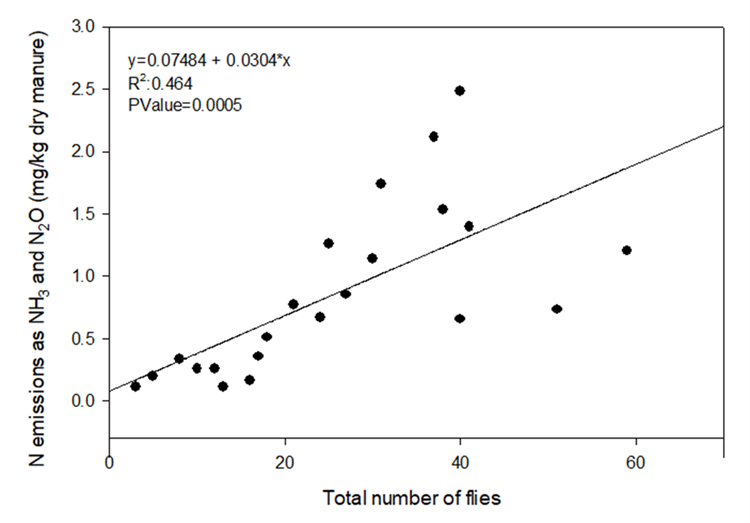
We found that cattle’s manure nitrogen loss as nitrous oxide (N2O) and ammonia (NH3) emissions have a direct relationship with the number of horn flies and face flies in the dung, Figure 1. Eighty percent of the flies trapped were horn flies. Dung with less than 5 flies can emit as little as 0.11 mg of N/kg of manure per day, while cattle manure with more than 30 flies can increase this emission by more than 10 times.

Figure 1 Nitrogen emissions such as nitrous oxide and ammonia (mg/kg of manure) and number of filth flies.

Every extra filth fly in manure can increase N emissions by 0.03 mg per kg of manure per day. According to NRCS, 59.1 lbs. of fresh manure is produced by a cow (approx. 1 000 pounds animal) every day (NRCS, 1995). Considering an average of 85 % relative humidity, 4.03 kg of dry manure can be produced per cow day. The actual economic threshold for horn fly is 200 flies per animal (Hogsette et al., 1991; Schreiber et al., 1987), considering a 1 to 1 sex ratio during emergence (Macqueen & Doube, 1988) we are assuming 100 female flies. Since the capacity of horn flies is 8-13 eggs per day (Lysyk, 1999), 100 female horn flies can generate approximately 1,000 new flies every day.  Calculating the nitrogen emissions (4.03 kg of dry manure X 0.03 mg N kg manure x 1,000 flies per day) results in 121 mg of N loss per cow per day when assuming the number of flies is just at the economic threshold. In January of 2022, USDA released the Southern Region Cattle Inventory with a total of 91.9 million head, from which 30.1 million were beef cows (USDA, 2022). Considering the earlier numbers, the horn fly presence in the beef cattle of the Southern Region could be emitting 3,639 kg of Nitrogen to the atmosphere every day.

Future Plans

We will continue the study on ammonia and nitrous oxide emissions under the same conditions during another year to confirm the trends and accuracy of the results. Also, we will implement a study to analyze the effect of the introduction of a parasitic wasp Spalangia endius as a biological control on horn fly and face fly populations and therefore on the manure’s nitrogen losses.

Authors

Presenting author

Natalia B. Espinoza, Research Assistant, Department of Crop and Soil Science, University of Georgia

Corresponding author

Dr. Dorcas H. Franklin, Professor, Department of Crop and Soil Sciences, University of Georgia

Corresponding author email address

dfrankln@uga.edu or dory.franklin@uga.edu

Additional authors

Anish Subedi, Research Assistant, Department of Crop and Soil Science, University of Georgia

Dr. Miguel Cabrera, Professor, Department of Crop and Soil Sciences, University of Georgia

Dr. Nancy Hinkle, Professor, Department of Entomology, University of Georgia

Dr. S. Lawton Stewart, Professor, Department of Animal and Dairy Science, University of Georgia

Additional Information

Basiel, B. (2020). Genomic Evaluation of Horn Fly Resistance and Phenotypes of Cholesterol Deficiency Carriers in Holstein Cattle [PennState University]. Electronic Theses and Dissertations for Graduate Students.

Campbell, J. B. (1976). Effect of Horn Fly Control on Cows as Expressed by Increased Weaning Weights of Calves. Journal of Economic Entomology, 69(6), 711-712. https://doi.org/DOI 10.1093/jee/69.6.711

Hall, R. D. (1984). Relationship of the Face Fly (Diptera, Muscidae) to Pinkeye in Cattle – a Review and Synthesis of the Relevant Literature. Journal of Medical Entomology, 21(4), 361-365. https://doi.org/DOI 10.1093/jmedent/21.4.361

Hogsette, J. A., Prichard, D. L., & Ruff, J. P. (1991). Economic-Effects of Horn Fly (Diptera, Muscidae) Populations on Beef-Cattle Exposed to 3 Pesticide Treatment Regimes. Journal of Economic Entomology, 84(4), 1270-1274. https://doi.org/DOI 10.1093/jee/84.4.1270

Iwasa, M., Moki, Y., & Takahashi, J. (2015). Effects of the Activity of Coprophagous Insects on Greenhouse Gas Emissions from Cattle Dung Pats and Changes in Amounts of Nitrogen, Carbon, and Energy. Environmental Entomology, 44(1), 106-113. https://doi.org/10.1093/ee/nvu023

Lysyk, T. J. (1999). Effect of temperature on time to eclosion and spring emergence of postdiapausing horn flies (Diptera : Muscidae). Environmental Entomology, 28(3), 387-397. https://doi.org/DOI 10.1093/ee/28.3.387

Macqueen, A., & Beirne, B. P. (1975). Influence of Some Dipterous Larvae on Nitrogen Loss from Cattle Dung. Environmental Entomology, 4(6), 868-870. https://doi.org/DOI 10.1093/ee/4.6.868

Macqueen, A., & Doube, B. M. (1988). Emergence, Host-Finding and Longevity of Adult Haematobia-Irritans-Exigua Demeijere (Diptera, Muscidae). Journal of the Australian Entomological Society, 27, 167-174. <Go to ISI>://WOS:A1988P906100002

Nickerson, S. C., Owens, W. E., & Boddie, R. L. (1995). Symposium – Mastitis in Dairy Heifers – Mastitis in Dairy Heifers – Initial Studies on Prevalence and Control. Journal of Dairy Science, 78(7), 1607-1618. https://doi.org/DOI 10.3168/jds.S0022-0302(95)76785-6

NRCS, N. R. C. S. (1995). Animal Manure Management. RCA Publication Archive(7). https://www.nrcs.usda.gov/wps/portal/nrcs/detail/null/?cid=nrcs143_014211

Schreiber, E. T., Campbell, J. B., Kunz, S. E., Clanton, D. C., & Hudson, D. B. (1987). Effects of Horn Fly (Diptera, Muscidae) Control on Cows and Gastrointestinal Worm (Nematode, Trichostrongylidae) Treatment for Calves on Cow and Calf Weight Gains. Journal of Economic Entomology, 80(2), 451-454. https://doi.org/DOI 10.1093/jee/80.2.451

USDA. (2022). Southern Region News Release Cattle Inventory. https://www.nass.usda.gov/Statistics_by_State/Regional_Office/Southern/includes/Publications/Livestock_Releases/Cattle_Inventory/Cattle2022.pdf

The use of cover crops and manure to retain soil moisture in Aridisols in Southern Idaho

Purpose

It is important to measure soil moisture in semi-arid regions because future models predict severe droughts and a decrease in rainfall events by up to 40%. The effects of management practices, such as reduced tillage, cover cropping, and manure application, have not been evaluated in the semi-arid and irrigated crop production area of Southern Idaho. In this study, we investigated the effects of cover crops, dairy manure, and tillage on soil physical characteristics (soil water storage, infiltration, runoff, saturated hydraulic conductivity, bulk density) and silage corn yield in silty loam soils. The objectives of this research were to: (a) determine if cover crops and dairy manure increased soil water storage, or if the cover crops were depriving the cash crop of water, (b) determine if infiltration, runoff, saturated hydraulic conductivity, and bulk density were influenced by cover crops and dairy manure, (c) determine if silage corn yield is affected by cover crops and dairy manure, and (d) determine if there are differences between tillage types.

What Did We Do?

This study was conducted at the USDA-ARS Northwest Irrigation and Soils Research Laboratory in Kimberly, Idaho. The experimental design was a split plot with four replicates and repeated measures, and the two main experiment treatments were tillage (strip till vs disk/chisel plow). The four sub-treatments were: (a) control (no cover crop or dairy manure), (b) cover crop only (CC only), (c) manure only (M only), and (d) cover crop with manure (CC + M). Treatments that did not receive manure received inorganic fertilizer to meet recommended crop needs based on spring soil tests. Inorganic fertilizer was only applied to manure treatments if spring soil tests indicated that additional nutrients were required. Stockpiled dairy manure was applied with a manure spreader at a rate of 30 ton per acre (dry weight) in the fall after corn silage harvest and incorporated by disking or left on the surface. Both the corn silage and the triticale were irrigated using handlines, as needed, during the water season, which was generally from mid-April through mid-October. Soil moisture was measured using a neutron probe throughout each growing season. Neutron probe measurements were collected every 6 inches to a maximum depth of 60 inches one to two times per month. Soil water storage (SWS) was calculated from 0 to 12 inches, 0 to 24 inches, and 0 to 60 inches using weighted depth increments. A Cornell Sprinkle Infiltrometer was used to measure infiltration and runoff rates, field saturated infiltrability, and rainfall before runoff in the middle of the growing season in 2020 prior to an irrigation event.

What Have We Learned?

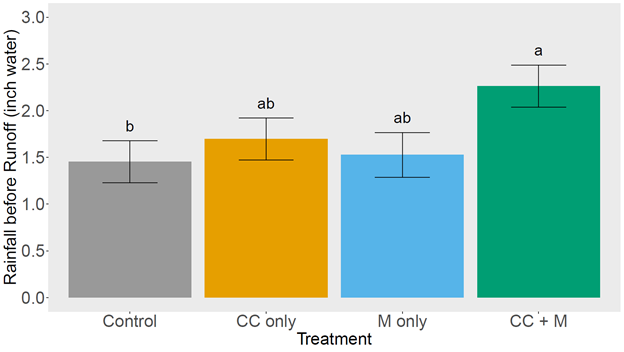
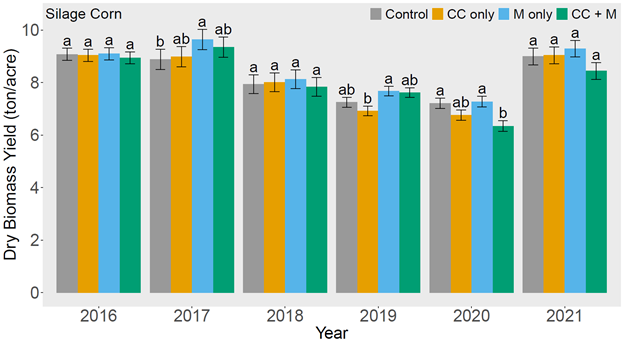
From this research, we found that the use of winter cover crops and fall applied solid dairy manure did not improve soil water storage in the semi-arid and calcareous soils in Southern Idaho. Soil water storage tended to be lower in the CC + M plots (Figure 1). The CC + M plots were able to infiltrate more water prior to runoff than the control plots, suggesting that the CC + M plots are drier (Figure 2). Infiltration, runoff, and saturated hydraulic conductivity did not improve with the treatments and remained similar to the control plots. Although some research has shown improvements in soil moisture, soil physical properties, and dry biomass yield when using reduced tillage practices, there were no differences between reduced tillage and conventional tillage. Silage corn yields tended to be highest in the M only plots and lowest in the CC + M plots, however there were no treatment differences in three of the six years of the study (Figure 3). Using triticale as a winter cover crop would be beneficial to increase total dry biomass yields in dairy systems that would like to increase their forage production, however it is not advised if a producer is only looking to increase silage production.


Figure 1. Average soil moisture storage (SWS; inch of water) by treatment from 2016 to 2021 in the top 15, top 30, and top 60 inches. Soil moisture storage was calculated from 0 to 12 inches, 0 to 24 inches, and 0 to 60 inches using weighted depth increments. Bars represent mean plus standard error. Columns within years not connected by the same number are significantly different (p<0.05).


Figure 2. Average rainfall before runoff by treatment in 2020. Bars represent mean plus standard error. Columns not connected by the same number are significantly different (p<0.05).


Figure 3. Average dry biomass yield for silage corn by treatment from 2016 to 2021. Bars represent mean plus standard error. Columns within years not connected by the same number are significantly different (p<0.05).

Future Plans

This spring, inversion tillage will be performed prior to planting silage corn to incorporate the dairy manure into the topsoil. Dairy manure has not been applied to the field since fall of 2020. Inorganic fertilizer will be applied if needed.

Authors

Presenting author

Kevin Kruger, Research Support Scientist, University of Idaho

Corresponding author

Jenifer L. Yost, Research Soil Scientist, USDA-ARS

Corresponding author email address

jenifer.yost@usda.gov

Additional authors

April B. Leytem, Research Soil Scientist, USDA-ARS; Robert S. Dungan, Research Microbiologist, USDA-ARS; Linda R. Schott, Nutrient and Waste Management Extension Specialist, University of Idaho

Additional Information

This research was presented at the virtual ASA, CSSA, SSSA International Annual Meeting in November of 2020. The link to the recorded presentation is found in the citation below. Although this research is not published in a scientific journal yet, we will be submitting a paper to Agricultural Water Management in early to mid 2022.

Yost, J.L., Leytem, A.B., Dungan, R.S., & Schott, L.R. (2020). The Use of Cover Crops and Manure to Retain Soil Moisture in Aridisols in Southern Idaho [Abstract]. ASA, CSSA and SSSA International Annual Meetings (2020) | Virtual, Phoenix, AZ.

https://scisoc.confex.com/scisoc/2020am/meetingapp.cgi/Paper/126244

Acknowledgements

The authors would like to thank Joy Lynn Barsotti for collecting the neutron probe measurements.

University of Idaho Sustainable Agriculture project seeks to create a bioeconomy from dairy byproducts to increase nutrient recycling

Purpose

This Sustainable Agriculture Systems project is called “Idaho Sustainable Agriculture Initiative for Dairy (ISAID).” Its main purpose is to create a bioeconomy around dairy manure and its byproducts, generating a circular use and economy of nutrients (Figure 1). Idaho is currently the third largest milk-producing state in the USA (USDA-NASS, 2021). Idaho dairy farms typically operate as confined operations that concentrate a significant amount of manure and nutrients in relatively small areas. Over the years, this situation has increased the concentration of nutrients in farms surrounding dairies. Meanwhile, distant farms may not benefit from using those nutrients (Leytem, et al. 2021). Except for its exceptional fertilizer and soil amendment value (USEPA, 2015), dairy manure is seen as a nuisance that needs to be managed well. Manure handling and use generate expenses for the producers and may be a nuisance for the neighboring communities and a potential environmental risk for the areas surrounding dairy production (Berg, et al. 2017; Moore and Ippolito, 2009; Sheffield, et al. 2008). This multidisciplinary project aims to create bioproducts from manure to significantly change the nutrient balance and the economic impact for producers in the region. Implementing the various strategies included in the project will help export nutrients to in-need areas within the region or outside the watershed altogether. In addition, increased income from manure processing would allow for better management and reduction of overall costs associated with nutrient management in the region.  The ISAID project includes three main areas that are integrated to generate the highest impact possible. Research, Extension, and Education are the distinctive areas of work. Still, these areas don’t work as silos, having a lot of integration to get the most of everybody’s work in the project.

What Did We Do?

Figure 1. Dairy bioeconomy

A group of 25 researchers in diverse areas of expertise obtained a USDA-NIFA Sustainable Agricultural Systems grant to conduct long-term (five years or more) projects. On the research side, the multifaceted studies that are under development include: use of amendments in manure composting to increase compost quality and value, reducing air emissions; nutrients’ extraction from various fractions of manure treatment to concentrate specific nutrients for individual commercialization (including nitrogen, phosphorous, and carbon); generation of hydrochar and biochar from dairy manure; bio-plastics production; cover crops use to increase nutrient extraction and soil health; fine-tuning fertilizer guides for crops using manure, compost, and other bioproducts. Analysis of each product’s economic and social impact separately and as a multi-prong approach. The extension component includes outreach to livestock and crop producers, local authorities, and communities to communicate the applicability of researched technologies and techniques, their impacts, benefits and challenges. The development of programs to train producers, allied industry, their workforce government employees on the diverse applications resulting from the project. The education component includes the participation of graduate and undergraduate students in all facets of the project and the development of educational programs for undergraduate and graduate students on topics associated with manure and nutrient management, bioeconomy, and on-farm application and management of these technologies and techniques.

What Have We Learned?

This project just finished the first of its five years; most of the projects are in the inception phase. We are generating baseline data and linking together diverse processes to determine possible interactions and needed extension and instructional needs. The corresponding poster includes a detailed list of projects associated with the grant, their corresponding principal investigators, and any recent advances. Some examples of project outcomes include the Water Machine that extracts phosphorous from waters with high nutrient content. Ammonia extraction from dairy wastewater. Enhanced composting using zeolites, pumice, biochar, and balanced carbon. Cover crops and corn silage as dual and double cropping. Hydrochar production from dairy manure and bioplastics. We are working on obtaining stakeholders’ input through diverse methods to help assess the needs of the industry and communities and guide the evolution of the research, extension, and education processes.

Future Plans

The project will continue to gather data and evolve. Collaborations and graduate student inquiries about inclusion in some projects are welcomed. We will offer updates at various conferences, including the next Waste to Worth.

Authors

Mario E. de Haro Martí, Extension Educator, University of Idaho Extension, Central District

Corresponding author email address

mdeharo@uidaho.edu

Additional authors

Mireille Chahine, Extension Dairy Specialist, Department of Animal, Veterinary and Food Science, University of Idaho

Linda Schott, Extension Nutrient and Waste Management Specialist,  Department of Soil and Water Systems, University of Idaho

Additional Information

ISAID Website: https://www.uidaho.edu/extension/nutrient-management/isaid

Facebook: https://www.facebook.com/uofiisaid

Instagram: https://www.instagram.com/uofiisaid/

Acknowledgements

This ISAID project is supported by USDA-NIFA SAS award #2020-69012-31

References

Berg, M., Meehan, M., and Scherer T. 2017. Environmental Implications of Excess Fertilizer and Manure on Water Quality. NM1281. https://www.ag.ndsu.edu/publications/environment-natural-resources/environmental-implications-of-excess-fertilizer-and-manure-on-water-quality

Leytem, A. B., Williams, P., Zuidema, S., Martinez, A., Chong, Y. L., Vincent, A., Vincent, A., et al. 2021. Cycling Phosphorus and Nitrogen through Cropping Systems in an Intensive Dairy Production Region. Agronomy, 11(5), 1005. MDPI AG. http://dx.doi.org/10.3390/agronomy11051005

Moore, A. and Ippolito, J. 2009. Dairy Manure Field Applications—How Much is Too Much? CIS1156. http://www.extension.uidaho.edu/publishing/pdf/CIS/CIS1156.pdf

Sheffield, R. E., Ndegwa, P., Gamroth, M., and de Haro Martí, M. E. 2008. Odor Control Practices for Northwest Dairies. CIS1148. http://www.extension.uidaho.edu/publishing/pdf/CIS/CIS1148.pdf

USDA-NASS. 2021. Quick Stats. Retrieved 02 27, 2022, from National Agricultural Statistics Service: https://quickstats.nass.usda.gov

USEPA. 2015. Beneficial Uses of Manure and Environmental Protection. Fact Sheet. https://www.epa.gov/sites/default/files/2015-08/documents/beneficial_uses_of_manure_final_aug2015_1.pdf

A mass balance approach to estimate methane and ammonia emissions from non-ruminant livestock barns

Purpose

Producers are under pressure to demonstrate and document environmental sustainability. Responding to these pressures requires measurements to demonstrate greenhouse gas (GHG) emissions and/or changes over time. Stored manure emissions are a critical piece of livestock agriculture’s contribution to GHG production. Manure sample‐based estimates show promise for estimating methane (CH4) production rates from stored manure but deserve more extensive testing and comparison to farm‐level measurements. Understanding the causes for variability offer opportunity for more realistic and farm‐specific GHG emissions. Improved GHG measurements or estimates will more accurately predict current GHG emission levels, identify mitigation techniques, and focus resources where they are needed. This project offers an innovative approach to improvement of air quality and strengthens engagement by the livestock sector in sustainability discussions.

Although CH4 and ammonia (NH3) emissions from non-ruminant livestock production systems are primarily released from stored manure, current emission inventories (models) do not account for all production and management systems. The purpose of this project was to track flows of nitrogen, volatile solids (VS), and ash into and out of several commercial livestock barns to estimate CH4 and NH3 emissions. Using a mass balance approach, volatile components like nitrogen and volatile solids are supported through simultaneous balances with ash (fixed solids). These mass-balance based estimates can be compared to national inventory emission estimates and serve as sustainability metrics, regulatory reporting, and management decisions.

What Did We Do?

In the initial step of this project, experimental data for VS, the precursor to methane, are compared to fixed estimates in methane emission estimation tools, like the EPA State Greenhouse Gas Inventory Tool (US EPA, 2017).

The litter from a commercial turkey finishing barn housing between 13,000 and 18,000 birds was sampled weekly for one month, with one additional sampling day one month later. VS concentrations were analyzed for each sample and used to estimate total VS production per year assuming six 15,000 bird flocks (Soriano et al., 2022). A range of VS percentage values for deep-pit cattle facilities were taken from Cortus et al. (2021) and converted to total VS production per year. A range of VS concentrations for deep-pit swine manure storage were taken from Andersen et al. (2015) and used to find total VS production per year of that system as well. Next, total VS productions per year were estimated for the same three systems using the State Greenhouse Gas Inventory Tool.

What Have We Learned?

Table 1 summarizes all calculated total VS values and CH4 estimates per year for both the estimation tool and the experimental data. For each of the three systems, the state inventory estimated total VS value falls within the ranges calculated with experimental data, however, the estimates cannot account for the variabilities found within each system. As seen in the experimental total VS values, there can be a large range of VS production due to differences within specific operations of each system. Total VS relates directly to CH4 emissions, so accurate estimates are important for determining greenhouse gas emission potential of a specific operation.

Table 1. All calculated total VS values and CH4 emissions estimates for each of the three systems.
Total VS production (kg/yr) Emissions*
State Inventory Experimental Values m3CH4
Feedlot Steer (500 head) 334,990 260,758 – 1,002,675 1,262**
Grower-Finisher Swine (1,200 head 160,408 107,514  – 216,669 19,050
Turkey (15,000 head) 314,594 206,838 – 359,245 1,699
*Emissions estimates found through the State Greenhouse Gas Inventory Tool
**Feedlot steer emission estimate assumes an open feedlot manure management system

Future Plans

Next steps for this study will include manure sampling at additional commercial turkey barns, deep-pit grower-finisher swine barns, and dairy cattle systems. Similar mass balances will be performed to determine total VS and nitrogen content to calculate CH4 and NH3 emissions from each system. These calculated values will again be compared to outputs of emission estimating tools.

Authors

Anna Warmka, Undergraduate Student, University of Minnesota – Twin Cities, Department of Bioproducts and Biosystems Engineering

Corresponding author email address

warmk011@umn.edu

Additional authors

Erin Cortus, Associate Professor, University of Minnesota – Twin Cities, Department of Bioproducts and Biosystems Engineering

Noelle Soriano, MS Student, University of Minnesota – Twin Cities, Department of Bioproducts and Biosystems Engineering

Melissa Wilson, Assistant Professor, University of Minnesota – Twin Cities, Department of Soil, Water, and Climate

Bo Hu, Professor, University of Minnesota – Twin Cities, Department of Bioproducts and Biosystems Engineering

Additional Information

Andersen, D.S., M.B. Van Weelden, S.L. Trabue, and L.M. Pepple. “Lab-Assay for Estimating Methane Emissions from Deep-Pit Swine Manure Storages.” Journal of Environmental Management 159 (August 2015): 18–26. https://doi.org/10.1016/j.jenvman.2015.05.003.

Cortus, E.L., B.P. Hetchler, M.J. Spiehs, and W.C. Rusche. “Environmental Conditions and Gas Concentrations in Deep-Pit Finishing Cattle Facilities: A Descriptive Study.” Transactions of the ASABE 64, no. 1 (2021): 31–48. https://doi.org/10.13031/trans.14040.

US EPA, OAR. “State Inventory and Projection Tool.” Data and Tools, June 30, 2017. https://www.epa.gov/statelocalenergy/state-inventory-and-projection-tool.

Soriano, N.C., A.M. Warmka, E.L. Cortus, M.L. Wilson, B. Hu, K.A. Janni. “A mass balance approach to estimate ammonia and methane emissions from a commercial turkey barn.” unpublished (2022).

Acknowledgements

This research was supported by the Rapid Agricultural Response Fund. We also express appreciation to farmer cooperators who allowed us to collect data on their farms and shared their observations with us.

Nutrient and Water Quality Outcomes from In-Crop Manure Application to Corn

Purpose

Sidedressing corn with liquid manure is a better application timing to utilize manure nitrogen efficiently. A percentage of fall-applied nitrogen is converted to nitrate-N. The amount converted depends upon soil temperatures and days to incorporation after land application. This nitrate is environmentally lost through leaching or denitrification before corn planting and nutrient uptake. While the total corn nitrogen application rate is reduced by an N credit or measure of soil nitrate through a pre-sidedress nitrogen test, commercial fertilizer will often be applied at corn sidedress time. The combined fall manure and fertilizer N applied results in increased total nitrogen, increasing environmental N loss potential. In-crop manure application has the advantage that any ammonium N applied can offset the total N requirement of the corn crop.

The experimental objectives were to determine the economic, agronomic, and environmental outcomes of in-crop manure application versus a traditional fall manure application.

What Did We Do?

A trial comparing fall to in-crop liquid manure application to corn was established in the fall of 2019 at a USDA-ARS paired Edge-of-Field monitoring site in the Western Lake Erie Watershed. The trial used a before/after impact experimental design. Field one had fall-applied manure, then used UAN at corn sidedress time. The second field had only swine manure applied at corn sidedress timing. Data collected included corn yield, soil test, tissue test, imagery, and nutrient loss through tile and surface runoff. Aerial imagery utilized Normalized Differential Red Edge (NDRE) imagery measure on a 0-1 scale to quantify plant heath.

What Have We Learned?

The total applied nitrogen with fall manure/UAN application was 516 pounds per acre compared to 341 pounds per acre for in-crop manure application. Corn yield was improved by 17 bushels per acre with the in-crop manure application despite a dryer than normal production year where the treatment total yield was 136 bushels per acre. Tissue tests taken at R1 were similar between the two treatments with %N and %P lower than desired ranges. In-crop manure application resulted in a 0.63 NDRE index compared to a 0.60 NDRE index for fall manure/UAN application, indicating better plant health. The in-crop manure application had higher equipment and labor costs that were offset by reduced nutrient cost, plus higher yields improving net return by $95 per acre.

The applied nitrogen not recovered in the grain was 437 and 250 pounds per acre for the fall manure/UAN and in-crop manure application, respectively. Soil samples using a 0-12 core depth were taken after application (June), after harvest (November), and spring of the following year (March and May). Nitrate and phosphorous levels were higher for the in-crop application for all sampling periods prior to the May sampling. By May soil test levels were equal for both nutrients. Both nitrate and phosphorous levels in the 0-12 zone were within expected ranges. The estimated in-crop manure application effects had mixed results for tile and surface water quality outcomes measured in pounds per acre. For tile water DRP (-5%), Nitrates (-35%) were reduced while Total P (7%) increased. The surface water had lower nitrate (73%) but higher DRP (148%) and Total P (43%). Tile water is a greater pathway for offsite water movement.

Future Plans

Wheat was planted after soybean in fall 2021. The anticipated comparison is in-crop manure application compared to fall-applied manure/topdress fertilizer to supply needed N. A second corn in-crop to fall-applied manure/commercial fertilizer comparison is planned for the 2023 crop year. These projects are cooperation with USDA-ARS Soil Drainage Unit and Blanchard Valley Demo Farms.

An Ohio State University Extension initiative is looking at fall applied versus in-crop manure application at 10 paired field sites in 2022 and 2023. A second set of field trials are N rate trials 0-250 pounds of N in manured fields with 5 sites in 2022 and 2023.

Authors

Greg LaBarge, Field Specialist, Agronomic Systems, Professor, Ohio State University Extension

Corresponding author email address

labarge.1@osu.edu

Additional authors

Kevin King, Research Leader and Agricultural Engineer, USDA-ARS Soil Drainage Unit, and Jed Stinner, Hydrologic Technician, USDA-ARS Soil Drainage Unit

Acknowledgements

Blanchard Valley Demonstration Farms

Spatial and temporal variabilities of manure composition in a commercial turkey barn

Purpose

A mass balance approach to estimate gas emissions is based on tracking inflows and outflows from the barn boundary with losses assumed to be aerial emissions from the barn. This method is reliant on high-quality data to obtain representative emission values. Some considerations for this include spatial and temporal variability of manure composition in a turkey barn. Farm management styles and bird behavior may influence the location of manure accumulation and distribution. Thus, our objective for this work was to identify spatial and temporal differences of manure composition in the barn. The results from this work may have implications for sampling procedures for emission estimation using a mass balance approach.

What Did We Do?

The system in this study was a commercial turkey finishing barn that housed between 13,000 to 18,000 birds and used wood shavings as bedding. Birds were moved into the barn at 5-weeks old and were 13 weeks old by the end of the sampling period. There were no birds in the barn during the first week of sampling. Bird growth was constantly changing as birds matured, which would affect manure production and possibly manure composition. For this reason, weekly samples were taken over a one-month period, with one additional sampling day one month after to capture these changes.

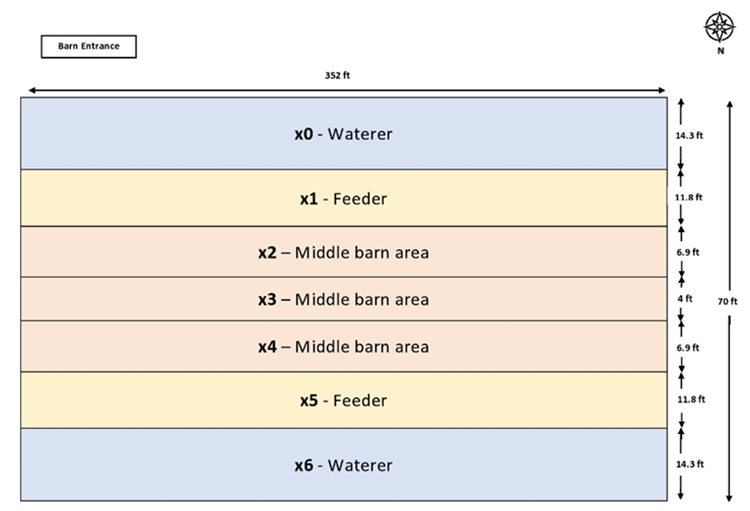
For sampling purposes, the barn area was divided into seven different lanes based on locations of feeder and waterer lines, as well as existing “lanes” implemented by the farm staff in their distribution of litter. Litter samples were aggregated from cores at seven different locations along an individual lane. Manure samples were analyzed for moisture, volatile solids (VS), ash, and nitrogen (N) content. Manure density and depth measurements were also recorded during sampling to track manure accumulation over time.

Figure 1: Barn layout depicting the seven lanes from which aggregated litter samples were collected.

What Have We Learned?

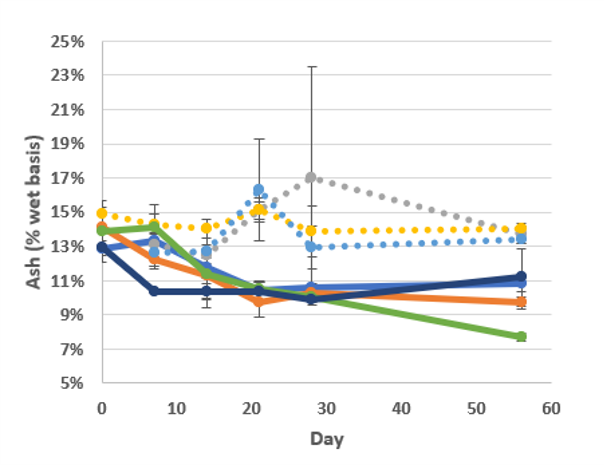
Moisture, volatile solids (wet basis), and ash content (wet basis) differed by position in the barn. Higher moisture content was observed at the waterer and feeder lines (shown in solid lines) compared to the middle barn area (shown in dashed lines). Water spillage and defecation occurred most frequently at these lanes, which aligns with results shown in Figure 1.

Figure 2. Measured litter moisture content in the middle barn areas compared to the waterer and feeder lanes.
Figure 3. Measured ash content in the middle barn areas compared to the waterer and feeder lanes. A similar trend was observed for volatile solids content.

Ash (Figure 3) and volatile solids (not pictured) concentrations shared the same trend, where litter in the middle barn area had higher ash and VS concentrations compared to the waterer and feeder lanes. Areas with higher moisture content should have lower ash and volatile solids concentrations, and so this result was expected. These results are shown in Figure 2.

The N content in the middle barn area was generally higher than N at the waterer and feeder lanes, except for x2. This was unexpected as birds were observed to defecate most frequently around the waterer and feeder lanes, and so a higher N content was expected at these lanes, compared to the middle of the barn. The range of results, however, was comparable to literature and standard values, as well as results from a commercial lab test, as shown in Figure 4. This value was determined using the Dumas method at a commercial lab and describes the N content of a manure sample taken shortly after barn cleanout.

Figure 4. N content at different locations in the barn.

Temporal changes in manure composition were observed in the first two weeks of sampling for ash and volatile solids which were around the time the birds were first moved into the barn. Shortly after, ash and volatile solids concentrations stayed the same. For nitrogen, a general decrease was observed over time for all lanes during the weekly sampling period. Litter was also added between days 28 and 56 which may explain the general increase in N content between days 28 and 56. Overall, these results suggest that weekly sampling over a one-month period may be too frequent to discern any changes in manure composition.  The one-month sampling period may also be too short. Manure management decisions such as barn clean-out schedules, litter additions, and removals may reveal more discernable changes in manure composition.

Future Plans

This data will be used to calculate N, volatile solids and ash mass from the manure, and applied to a mass balance for N and CH4 emission calculation from the turkey barn. Knowledge of spatial differences in manure composition would be useful for emission estimation from specific areas in the barn. It can also be used for overall barn emission estimation, with possibility of calculation of emission contributions from different areas in the barn.

Authors

Presenting author

Noelle Soriano, MS Student, University of Minnesota – Twin Cities

Corresponding author

Erin Cortus, Associate Professor, University of Minnesota-Twin Cities

Corresponding author email address

ecortus@umn.edu

Additional Authors

Anna Warmka, Undergraduate student, University of Minnesota- Twin Cities

Melissa Wilson, Assistant Professor, University of Minnesota- Twin Cities

Bo Hu, Professor, University of Minnesota- Twin Cities

Kevin Janni, Professor, University of Minnesota -Twin Cities

Acknowledgements

This research was supported by the Rapid Agricultural Response Fund. We also want to express appreciation to farmer cooperators who allowed us to collect data and shared their observations with us.

Can Grazing Systems Affect Plant Available N and P?

Purpose

A large percentage of the carbon (C), nitrogen (N), and phosphorus (P) cattle consume is released or deposited as cattle dung and urine. If we can develop grazing systems that retain these nutrients within the grazing system that is a first step in turning cattle manure into a resource rather than a waste. The second step is distributing the nutrients to the whole of the pasture. The third step is making the complex molecules of N and P plant available. The final step is keeping cattle manure in the grazing system to rebuild soil health.  We explored the impact of two grazing systems we named 1) conventional with hay distribution (CHD) and 2) strategic grazing (STR) on  soil C, N, P, bulk density (soil compaction, BD), and cattle density (CD) with the hypothesis that grazing systems can improve soil health and thereby retain and recycle C, N and P. Said more plainly rather than sacrificing areas of the pasture we hoped to regenerate areas that were less productive (cattle camping areas) and make them more productive.

What Did We Do?

We compared a conventional grazing system, baseline (year 2015) factors: C, N, P, BD, and CD to the same factors after two years of CHD and STR. We took soil samples every 50 m at three soil depths (0-5, 5-10 and 10-20 cm) in 2015 (Baseline) and in 2018 (post treatment). Project design follows:

    • Year 1 – Continuous Grazing in eight ~40 ac (16 ha) pastures
      • Waterers, shade, hay and mineral provided in same location
    • Year 2 and 3 – Improved Grazing systems applied:
      • CHD – 4 of eight in continuous with hay distribution and
      • STR – 4 of eight in strategic grazing
        Mixture of better grazing practices

        1. Manure distribution through Lure management of cattle
          Portable shades, Portable waterers, Portable hay rings
        2. Exclusion of compacted areas vulnerable to nutrient loss
        3. Over seeding of exclusions with forage mix
        4. Flash/Mob grazing of excluded areas for short time
        5. Moderate rotational grazing in the sub-paddocks

What Have We Learned?

We found that both the CHD and the STR significantly increased the amount of N and P in the top 5 cm of soil Figure 1. The increase in plant available N in 2018 (sum of ammonium and nitrate) in the top five cm of soil was 5.6 times more in CHD and 5.8 times more in STR when compared to Baseline (2015) (Dahal et al., 2020). The 2018 increase in plant available P was 6.1 times more in CHD and 4.9 times more in STR compared to 2015. We attribute the greater increase in P in CHD to the greater number of hay bales needed during an extensive drought in 2016 (Subedi et al., 2021).

Figure 1. Plant available P (Mehlich-1, left), plant available N (inorganic N, middle), and carbon (loss-on-ignition, right) during Baseline in black and two years after treatments in red.

The impact of cattle management on bulk density varied greatly depending on where you were in the pasture which depended on improved management system. While there was a slight increase in bulk density in 0-5 cm soil layer from 2015 to 2018 for both CHD and STR the increases were not significant and would not cause any restrictions on forage growth (Figure 2). In the 5-10 cm soil layer, BDs in both the CHD and STR were significantly reduced. The STR did reduce BD slightly more than in the CHD pastures. Percent change in 2018 BD for STR was -10.5 and for CHD was -8.6.

Figure 2 Bulk density (BD) for the 0-5 cm soil layer (left) and the 5-10 cm soil layer (right).

The reduced compaction in the improved pasture management systems is important for several reasons but here we will discuss only the importance on root growth and nitrogen availability. Bulk density or compaction can restrict forage root growth.  During Baseline pastures had median BD values of greater than 1.6 g cm-3 (Hendricks et al., 2019) which can restrict forage growth. After two years of the improved grazing systems BD was reduced to below 1.45 g cm-3 a value which is usually not restrictive to plant growth. We believe that the decrease in compaction allowed rainfall to move manures into the soil and allow for greater microbial activity.  Above we noted the increase in nitrogen and phosphorus but we did not as yet mention the decrease in the Loss-on-ignition (LOI) carbon. The LOI carbon is composed of larger molecules and requires a great amount of microbial activity to break down and release the plant available nutrients within the molecule. We speculate with the reduced bulk density and associated greater ability of rainfall to move nutrients into the soil, the N and P associated with the cattle manure was able to be decomposed into plant available forms of nitrogen and phosphorus. These assumptions are supported with two indicators of soil microbial activity: greater CO2 emissions and an increase in a labile form of carbon (permanganate oxidizable carbon, in 2018 compared to 2015 (Dahal et al., 2020). The labile form of carbon was also found to increase with depth to 20 cm of soil which suggests that the carbon may not be lost to the atmosphere but maybe moving down in the soil profile.

Take-home messages

    • Cattle grazing can increase nitrogen and phosphorus soil content with improved grazing managements practices: hay distribution and strategic grazing practices designed to distribute cattle dung throughout the pasture and away from areas that are vulnerable to erosion.
    • Improved grazing practices can reduce soil compaction when cattle grazing is well distributed throughout the whole pasture.

Future Plans

We were greatly concerned with the decrease in carbon in both improved grazing systems. However, upon greater analysis of our data (in press) we have found additional information to indicate that carbon (LOI and the labile) is moving down the soil profile. We are in process of studying the C, N, P movement to greater depths and the impact this could also have on the grazing system to also capture and retain rainfall.

Authors

Corresponding and first Author

Dr. Dorcas H. Franklin; Professor; Department of Crop and Soil Sciences; University of Georgia; dfrankln@uga.edu or dory.franklin@uga.edu

Presenting Author

Anish Subedi; Department of Crop and Soil Sciences; University of Georgia; as07817@uga.edu

Additional Authors

Dr. Miguel Cabrera; Professor; Department of Crop and Soil Sciences; University of Georgia; mcabrera@uga.edu

Dr. Subash Dahal; Department of Crop and Soil Sciences; University of Georgia; dahal.green@gmail.com

Amanda McPherson; Department of Crop and Soil Sciences; University of Georgia; Amanda.McPherson@uga.edu

Additional Information

Dahal, S., Franklin, D., Subedi, A., Cabrera, M., Hancock, D., Mahmud, K., Ney, L., Park, C., & Mishra, D. (2020). Strategic grazing in beef-pastures for improved soil health and reduced runoff-nitrate-a step towards sustainability. Sustainability, 12(2), 558.

Subedi, A., Franklin, D., Cabrera, M., McPherson, A., & Dahal, S. (2020). Grazing Systems to Retain and redistribute soil phosphorus and to reduce phosphorus losses in runoff. Soil Systems, 4(4), 66.

Hendricks, T., Franklin, D., Dahal, S., Hancock, D., Stewart, L., Cabrera, M., & Hawkins, G. (2019). Soil carbon and bulk density distribution within 10 Southern Piedmont grazing systems. Journal of Soil and Water Conservation, 74(4), 323-333.

Acknowledgements

Funding: This research was funded by NRCS-USDA, Conservation Innovation Grant. Grant number 69-3A75-14-251.

Acknowledgments: The authors are grateful to USDA-NRCS for their assistance with the first-order soil survey, and to the Sustainable Agriculture Laboratory team, John Rema, and Charles T. Trumbo at the University of Georgia for their endless help in the laboratory and the field.

Merits of Manure Content Library

Purpose

The right amount of animal manure in the right location can benefit crops, soil, and water resources.  However, too much manure or manure in the wrong place is an environmental concern.  A recent survey of attitudes from farmers and their advisors on the benefits and barriers for manure use indicates that there is widespread knowledge of manure value for cropping systems, but logistical and community barriers remain. The survey also found that all respondents rated peer-to-peer interactions as the most influential on their decision-making for these topics. Thus, more extension efforts should be focused in assisting AFO managers and advisors to communicate messages on the value of manure and strategies for overcoming barriers, among their specific networks. For example, knowledge of the relationship of manure and soil health benefits is low among some segments. Farmers and their advisors all have very low opinions and understanding of manure’s benefits to environmental quality. Helping farmers, educators, and advisors articulate among themselves and to their rural communities the water quality benefits of organic fertilizers when applied to only meet agronomic needs of the crop may need expanded investments. With these needs in mind a team from the Universities of Nebraska, Minnesota, and Iowa State, and the assistance of the North Central Region Sustainable Agricultural Research and Education program developed a library to provide educators and advisors with access to recommended resources that will assist in the discussion of manure’s benefits and challenges.

What Did We Do?

Consultation among the team identified the following categories of interest for readily accessible educational or outreach materials for manure impacts on:

    1. Soil health and soil quality
    2. Economics of production and yield
    3. Crop fertility
    4. Water quality
    5. On-farm research

And guidance to navigating barriers such as:

    1. Direct costs associated with manure use
    2. Odor and other community issues
    3. Agronomic challenges (such as imbalance nutrients)
    4. Regulations
    5. Logistical issues of application
    6. Using manure in specialty systems (such as organic production)

With the categories for materials established, the team conducted an initial survey of extant educational and outreach materials via general internet searches and review of content available through the Livestock and Poultry Environmental Learning Community. The types of content thus assembled were varied: social media content, video, summaries of research, published extension and scientific journal articles, websites, and other content such as podcasts and decision support tools. All were included since it was intended that these resources be helpful for educators, producers, or others to converse with their own networks easily and confidently on the manure topics identified. The team anticipated that users could use the library to expand their social media activity, and thus their communication networks, or to prepare more confidently to discuss manure via a local radio presentation or discussion with a county board. Or even to add an article to local print media or a blog or personal website. All items included in the library were free to repurpose (with attribution) in local outlets or personal sites.

After consultation, the library was built using Airtable ™, a platform to create low-code databases, tools, or other apps. This platform allows the team to internally build a flexible database of content which can be sorted easily into pre-set categories (for example, topics of specific seasonal relevant), and arrange content into easily perused views to improve the user experience on a platform that could be easily embedded into existing team sites, such as lpelc.org (Figure 1).

Figure 1. The user interface for the merits of manure library, several such sorted views are embedded on the LPELC website for audience exploration by topic, media type, or seasonal relevance. Within each view individual entries can be further searched or sorted to further narrow exploration.

Each entry (Figure 2) in the library has an individual entry card, which includes keywords and text descriptions to improve searchability as well as a downloadable file, or links to the resource where appropriate, and a short example of how this material could be shared in the user’s social media network (recommended twitter text). The team intended to provide library users with not only the educational content, but also the means to improve their own in-network communication on manure topics. Accordingly, when posting to social media, hashtags, mentions and links to other content help (a) reach users who are following a specific topic (e.g., #manure), (b) recognize someone related to the post (e.g., @TheManureLady) and (c) direct users to more content related to the graphic (e.g., URL to online article). For our content library, each item is accompanied by recommended text that can be copied and pasted into the post of a social media engine if desired.

Figure 2. A single-entry page for the library.

What Have We Learned?

Since its launch in 2021 the library has had 343 unique users, average time that each user spends interacting with the library is 129 seconds, a solid interaction time for a website – industry standard is 120-180 seconds. However, we do not have any measure for how time spent on the library page is transformed into use of the library content. It is evident that more work is needed to improve awareness of the tool among audiences of interest. To this end, the team decided to develop a recognizable brand for library materials which might help other potential users to find their way to the site (Figure 3).

Figure 3. Library logo.

Future Plans

Library administrators continue to look for ways to improve the library content, user experience, and awareness of the tool among potential users. An overview of content, accessibility, re-purposing, and submission of relevant material will be shared to publicize the resource, encourage utilization of available materials, and invite submissions of new content relevant to the manure management community.

Authors

Amy Schmidt, Associate Professor, University of Nebraska

Corresponding author email address

aschmidt@unl.edu

Additional authors

Leslie Johnson, Associate Extension Educator, Mara Zelt, Schmidt Lab Project Director, Amber Patterson, Schmidt Lab Media Communications Specialist, and Rick Koelsch, Professor Emeritus, University of Nebraska-Lincoln; Erin Cortus, Associate Professor, and Melissa Wilson, Assistant Professor, University of Minnesota; and Dan Andersen, Associate Professor, Iowa State University

Additional Information

The full library is accessible at https://lpelc.org/value-of-manure-library/.

Acknowledgements

This product was assembled with financial assistance from the North Central Region Sustainable Agricultural Research and Education program.  NCR-SARE is one of four regional offices that run the USDA Sustainable Agriculture Research and Education (SARE) program, a nationwide grants and education program to advance sustainable innovation to American agriculture.