Plant Nutrient and Carbon Content of Equine Manure as Influenced by Stall Management and Implications for Nutrient Management


Purpose 

South Carolina’s equine industry is small compared to states like Texas (395,816 horses), Oklahoma (158,918 horses), and Kentucky (141,842 horses, USDA, 2013). However, the South Carolina equine industry has increased over the last twelve years.

The increase in interest and participation in horse ownership centers around several activities including trail riding, polo, fox hunting, Western and English competitions, shows, and training facilities of all kinds. These activities are facilitated by the hundreds of miles of riding trails available on public lands, the presence of a steeplechase track near Camden, SC, numerous polo fields near Aiken, SC, and large arenas for shows at Clemson University, and near Landrum, SC.

The increase in horse population also increased the amount of horse manure to be managed in a responsible manner. It has been estimated that about 30 kg (66 lb) of manure and soiled bedding is removed from a typical horse stall each day (Wheeler, 2006). Every 1000 kg of bedded horse manure contains about 6 kg of total-N, 2.5 kg of P2O5, and 4.5 kg of K2O (Wheeler and Zajaczkowski, 2001). Horse manure also contains large amounts of carbon, organic matter, and many valuable minor plant nutrients, such as Ca, Mg, S, Zn, Cu, Mn, and Fe. However, little data is available in the literature concerning concentrations of minor plant nutrients in stall manure (Lawrence et al., 2003).

The large amount of carbon contained in horse manure has been shown to greatly reduce the availability of nitrogen following land application of horse manure. Several sources and studies have indicated that the large amounts of carbon can induce nitrogen deficiency due to immobilization of soluble nitrogen (e.g. James, 2003, Doesken and Davis, 2007). As a result, horse manure is typically not a good source of nitrogen as compared to poultry litter.

The goal of this project was to obtain equine manure composition data that can be used for the development of manure management plans. Given the wide variability in the daily use of stalls, the amount of bedding used in stalls, and other stall management factors it was hypothesized that stall management would have a significant impact on the composition of equine manure, and may have an impact on recommended manure utilization practices. The objectives to meet this goal were to: (1) collect as-removed bedded stall samples on six horse farms during routine stall cleaning, (2) obtain bedding-free manure samples from at least three farms, (3) classify each barn by stall management, and stall use, (4) determine if stall management had a significant impact on the solids and plant nutrient content of equine manure, (5) develop manure management recommendations and a table of characteristics to be used for manure management planning for equine facilities.

What did we do? 

Six horse farms were selected that included facilities that ranged from small, pleasure horse barns to farms with multiple barns that provided intensively managed housing for race, and show horses. Each horse farm was visited once to obtain samples of bedded stall manure. Samples were collected as manure and fouled bedding was removed from the stalls according to normal daily stall management practices. During the site visit, the owner of the facility was asked questions about bedding practices, manure removal frequency, and stall use frequency. Based on these interviews and observations during the site visit, the farms were classified by stall use and bedding management categories as shown in Table 1.

Table 1. Description of the six horse farms and manure samples collected

Table 1.

On Farm 3 (see Table 1), bedded manure that was removed daily from stalls was stored in large, uncovered, windrows for extended periods of time prior to application to pastures. The owner called the piles compost piles. However, it was evident that very little heating was taking place. Samples were taken from several locations and depths in an old windrow of unknown age. These samples were well-mixed to provide a representative sample for analysis. The composition of these samples was to be compared with bedded manure as-removed from the stalls. While visiting Farms 2, 3, and 6 samples of horse manure without bedding were obtained from stalls to provide a comparison to heavily bedded horse manure.

Manure samples were collected from the stalls, or the uncovered windrow, using shovels and a wheel barrow. The manure was mixed well in the wheel barrow using a shovel and a pitch fork. Three, 2 to 3 L samples of the manure from each barn were placed in sealed, plastic containers, and were transported on ice to Clemson University for analysis at the Agricultural Service Laboratory. Three replicate analyses were performed for each of the 6 horse barns (Farms 1-6), bedding-free manure (one sample each from Farm 2, 3, and 6), and the uncovered pile (Farm 3). The plant nutrients concentrations measured were: total nitrogen (Total-N), total ammoniacal nitrogen (TAN = NH4+-N + NH3-N), nitrate-N, total P (expressed as P2O5), total K (expressed as K2O), calcium, magnesium, sulfur, zinc, copper, manganese, iron, and sodium. The organic-N content was calculated as: Organic-N = Total-N – TAN – nitrate-N. Other characteristics measured included: moisture content, total carbon content, organic matter content (O.M.), pH, and electrical conductivity (EC). Standard laboratory procedures were used for all analyses and details are provided by Moore (2014).

What have we learned? 

Statistical analysis of the organic matter, Total-N, P2O5, K2O, and several minor plant nutrient concentrations (dry basis) indicated that the composition of manure collected from each of the barns, and the covered pile were significantly different in one or more characteristics. These results point out that data collected from individual facilities are needed to account for farm-to-farm differences in feed composition, use of mineral supplements, stall management, and stall use. A summary of the data is provided in Table 2.
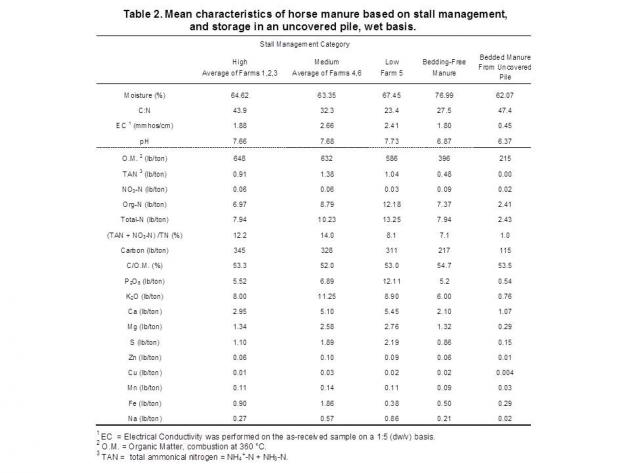
Table 2. Mean characteristics of horse manure based on stall management, and storage in an uncovered pile, wet basis

Table 2.

Storage of manure in an uncovered pile resulted in very little active composting as indicated by an insignificant reduction in organic-N, and only a small reduction in carbon (3%). Uncovered storage also resulted in reductions in major and minor plant nutrient concentrations ranging from 33% (Mn) to 74% (K2O). Therefore, nutrient content data obtained from bedded manure as-removed from a stall was shown to be inadequate to determine agronomic applications rates for manure removed from storage. In practice, separate data sets would be needed for management of as-removed horse manure, and manure removed from storage for development and implementation of a manure management plan.

In general, as the quality of stall management increased the amount of bedding provided per stall per day increased resulting in an increase in C:N. The C:N ranged from 23 to 48 for the barns sampled on the six farms. A correlation analysis was conducted to determine if the dry matter concentrations of organic matter, and plant nutrients were significantly correlated with C:N. The only measured characteristic that had a significant positive correlation with respect to C:N was the organic matter content. This was not surprising since bedding was the source of additional organic matter. The plant nutrients that had significant negative correlations with respect to C:N were: organic-N, total-N, P2O5, Ca, Mg, Zn, and Cu. It was apparent that one of the effects of additional bedding use was to dilute major and minor plant nutrient concentrations.

Electrical conductivity is often used as a general measure of the salt content in manure, compost, and other soil amendments. The eight different treatments included in this study had EC values ranging from 0.45 to 3.46 mmhos/cm. A correlation analysis was used to determine which of the conductive elements included in the analysis (Cu, Ca, Mg, Na, Zn, K2O, Fe, Mn) were significantly related to EC. It was determined that the only plant nutrient that was a significant predictor of elevated EC values was K2O content (dry-basis) with a correlation coefficient of 0.9727 and a coefficient of determination of 0.9462. Consequently, the high EC values observed were directly correlated to high levels of potassium and not harmful salts. These results demonstrate that EC alone cannot be used to determine if plant toxicity is likely, but sufficient analyses should be performed to determine if the elevated EC is from valuable nutrients or salts as suggested previously by others (e.g. Compost for Soils, 2011).

All of the horse manure samples collected on the six farms studied contained large amounts of carbon as indicated by C:N ratios ranging from 23 to 48. As a result, horse manure was not accessed to be a good source of nitrogen as compared to poultry litter. It may be best to compost horse manure to stabilize bioavailable carbon and nitrogen prior to use. After composting, the material should be applied based on agronomic rates for P2O5, or K2O while accounting for the organic nitrogen that will be slowly released.

Another alternative may be to apply horse manure based on agronomic rates for P2O5 or K2O while adding additional nitrogen to offset induced nitrogen deficiency. If un-composted manure is spread on cropland or pasture a portion of the mineralized-N will be converted to organic-N and would be expected to release slowly later in the year, and a portion may be carried over into subsequent growing seasons. Estimation of available carry-over nitrogen is difficult due to uncertainties related to soil pH, moisture, temperature, rainfall, and microbial activity. However, the best method of estimation appears to be a series of organic-N availability factors provided by Wheeler (2006).

A complete report on this study is provided by Chastain and Moore (2014).

Future Plans    

The results from this study will be used to develop extension classes and literature for owners of equine facilities. These data will also provide valuable information for nutrient management planning.

Authors       

John P. Chastain, Ph.D., Professor and Extension Agricultural Engineer, Clemson University jchstn@clemson.edu

Kathy P. Moore, Ph.D., Director, Agricultural Service Laboratory, Clemson University

Additional information 

References Cited

Chastain, J.P. & K.P. Moore. 2014. Plant Nutrient and Carbon Content of Equine Manure as Influenced by Stall Management in South Carolina. ASABE. Paper No. 1908331. ASABE, 2950 Niles Rd., St. Joseph, MI 49085-9659.

Compost for Soils. (2011). Compost Characteristics. Factsheet published by Compost for Soils, A Division of the Austrailian Organics Recycling Association. Retrieved from: http://compostforsoils.com.au/images/pdf/practical%20compost%20use/compo….

Doesken, K. C., & Davis, J. G. (2007). Determining plant available nitrogen from manure and compost topdressed on an irrigated pasture. In Proc. International Symposium on Air Quality and Waste Management for Agriculture. ASABE Publication Number 701P0907cd. St. Joseph, Mich.: ASABE.

James, R.E. (2003). Horse Manure Management: The Nitrogen Enhancement System. AGF-212-03. Ohio State University Extension, The Ohio State University, Columbus, OH.  Retrieved from: http://ohioline.osu.edu/agf-fact/0212.html.

Moore, K.P. (2014). Compost Analysis Procedures. Clemson, SC: Agricultural Service Laboratory, Clemson University. Available  at: Available at: http://www.clemson.edu/agsrvlb/procedures2/compost.htm.

Wheeler, E.F, and J.S. Zajaczkowski. (2001). Horse Stable Manure Management (G-97). Penn State University Extension. Available at: http://panutrientmgmt.cas.psu.edu/pdf/G97.pdf.

Wheeler, E. F. (2006). Manure Management, In Horse Stable and Riding Arena Design, (pp 91-93). Ames, Iowa: Blackwell Publishing.

Acknowledgements      

Support for this work was provided by the Confined Animal Manure Management Program of Clemson Extension, Clemson University, Clemson, SC.

The authors are solely responsible for the content of these proceedings. The technical information does not necessarily reflect the official position of the sponsoring agencies or institutions represented by planning committee members, and inclusion and distribution herein does not constitute an endorsement of views expressed by the same. Printed materials included herein are not refereed publications. Citations should appear as follows. EXAMPLE: Authors. 2015. Title of presentation. Waste to Worth: Spreading Science and Solutions. Seattle, WA. March 31-April 3, 2015. URL of this page. Accessed on: today’s date.
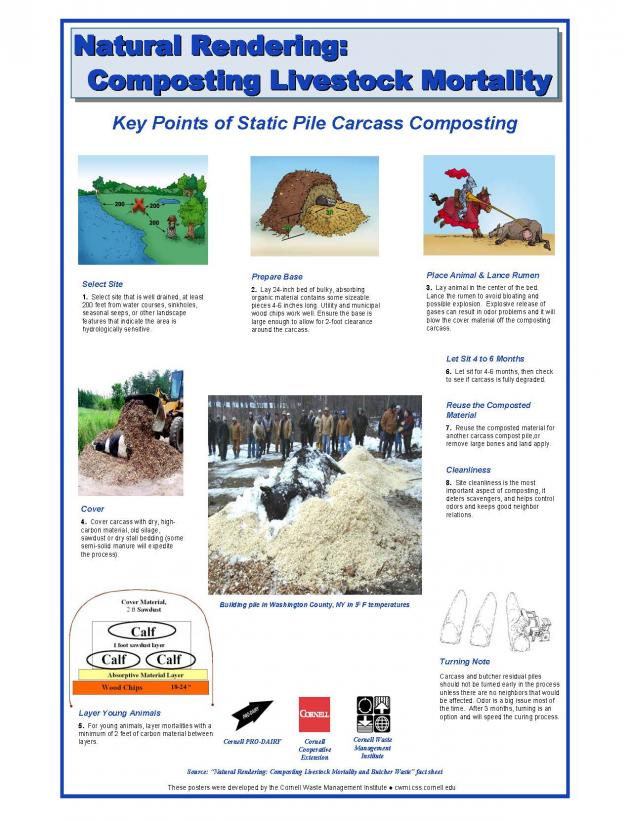


Natural Rendering: Composting Horse Mortality


poster of the mortality composting processPurpose          

Understanding Livestock Composting as there are few methods to safely dispose of livestock mortality

What did we do?         

CWMI has been working on mortality disposal since 1990. Research was completed methodically as new questions arose. We started with large livestock(deadstock) migrated to research on managing animals hit by cars, generally wild animals. Moved to managing disease outbreak and drugs residual that might end up in compost if it does not degrade.

What have we learned?           

See attached paper

Future Plans  

Responding to Routine Mortality and Disasters

Authors

Jean Bonhotal, Director CWMI, Cornell University jb29@cornell.edu

Mary Schwarz, Cornell Waste Management Institute Craig Williams, Penn State University, Ann Swinker, Penn State University

Additional information      

http://cwmi.css.cornell.edu/mortality.htm

Acknowledgements      

Mary Schwarz, Cornell Waste Management Institute

Craig Williams, Penn State University

Josh Payne, Oklahoma State University

Ann Swinker, Penn State University

The authors are solely responsible for the content of these proceedings. The technical information does not necessarily reflect the official position of the sponsoring agencies or institutions represented by planning committee members, and inclusion and distribution herein does not constitute an endorsement of views expressed by the same. Printed materials included herein are not refereed publications. Citations should appear as follows. EXAMPLE: Authors. 2015. Title of presentation. Waste to Worth: Spreading Science and Solutions. Seattle, WA. March 31-April 3, 2015. URL of this page. Accessed on: today’s date.

Air Regulations and How the Bedded Beef Barn Research Study Relates to Reporting

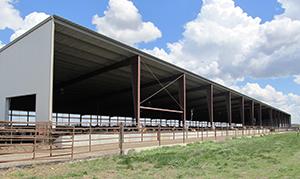
monoslope beef barnThis presentation from the Beef Facilities Conference focused on air quality regulations and what it might mean regarding the research project. You can find a paper in pages 10-17 of the written proceedings published by Iowa State University.

What Are the Relevant Air Regulations?

The federal air quality regulations that may apply to animal feeding operations include:

  • EPCRA – Environmental Planning and Community Right to Know Act
  • CERCLA – Comprehensive Environmental Response Compensation and Liability Act or “Superfund” (not discussed in detail because EPA has determined animal operations are exempt)
  • Mandatory Greenhouse Gas Reporting Rule More…
  • Clean Air Act More…
  • State and local regulations
  • Occupational Health and Safety Administration (OSHA)

What Does the Research Project On Bedded Beef Barns Show?

It is difficult to draw broad conclusions on the air emissions from a single study and in the absence of guidance from the U.S. Environmental Protection Agency (EPA). The emissions of hydrogen sulfide, carbon dioxide, and particulates are likely to be below most regulatory threshholds for worker health or reporting. Ammonia is the one area where daily emissions from a system could reach amounts requiring reporting under EPCRA for large operations.

Acknowledgements

Presenter: Rick Stowell, University of Nebraska rstowell2@unl.edu

This page was developed as a part of the Mono-Slope Air Quality Research project funded by Agriculture and Food Research Initiative Competitive Grant no. 2010-85112-20510 awarded to South Dakota State University, USDA ARS U.S. Meat Animal Research Center, Iowa State University, and University of Nebraska – Lincoln from the USDA National Institute of Food and Agriculture. For more information about the research study, contact Erin Cortus erin.cortus@sdstate.edu or Mindy Spiehs mindy.spiehs@ars.usda.gov. For more about the outreach and extension, contact Beth Doran doranb@iastate.edu. project partner logos - South Dakota State University, USDA-ARS, Iowa State University, and University of Nebraska - Lincoln

Climate Change Regulations, Policy, and Market Opportunities

logo for animal agriculture climate change which includes a weather vane with cow and topThere are several strategies of reducing, or mitigating carbon and other GHG emissions.

The first and most basic of which is conservation – if we don’t use the energy in the first place, we don’t need to be concerned with what emissions it was responsible for.  Agricultural energy audits are helpful to see the areas capable of the biggest improvements.

Second are emission offsets; an offset is a greenhouse gas reduction made by a non-regulated entity, which is purchased by a regulated entity.

The third strategy of reducing GHG emissions is a regulation imposed to restrict the quantity of emissions on certain parties; this regulation can be in the form of a tax or cap and trade program.  Markets exist to trade both voluntary- and mandatory-based compliance credits.

Related: [online article] Large Livestock & Poultry Operations Required to Report GHG’s and [archived webinar] Mandatory Greenhouse Gas Reporting Rule

Aside from voluntary and compliance-based markets, other market opportunities exist to give value to reduced emissions, including utility purchase of green energy (both electricity and gas).  The Cow Power Program in Vermont is a good example of this process in the U.S.  However, with all market options available to trade emission credits, there are costs and potential risks involved that are important to be educated about.

An opportunity exists for animal agriculture to benefit from GHG cap and trade programs, since regulated entities will be looking for carbon offset credits to purchase, and this will drive up the value of the offsets.  Credits could be more valuable in the future with legislation to regulate certain sectors – they will look to agriculture as one of the voluntary sources from which to be able to offset those emissions.

Educator Materials

If you would like to use the video, slides, or factsheet for educational programs, please visit the curriculum page for download links for this and other climate change topics.

Examples of Voluntary and Compliance Markets

No endorsement is intended by listing here. These are listed purely to provide examples of different types of markets.

Voluntary Markets –The Climate Trust | Native Energy | TerraPass

Compliance Markets – Regional Greenhouse Gas Emissions | California Cap and Trade Program (California AB32)

Acknowledgements

Author: Jennifer Pronto, Cornell University

This page was developed as part of a project “Animal Agriculture and Climate Change” an extension facilitation project to increase capacity for ag professionals. It was funded by USDA-NIFA under award # 2011-67003-30206.

Environmental Protection Agency (EPA) Perspective on Nutrient Pollution

Waste to Worth: Spreading science and solutions logoWaste to Worth home | More proceedings….

Why Discuss Regulations and Nutrient Pollution?

Provide EPA’s perspective on nutrient pollution and encourage an open dialogue to help address this problem which is rapidly becoming one of the most challenging environmental problems that we face.

What Did We Do?

Although nutrients, nitrogen and phosphorus in particular, are essential for aquatic life, too many nutrients can create significant problems for our nation’s lakes, streams, and coastal waters.  Nutrient pollution can degrade habitat for fish and wildlife, render water bodies unsafe for swimming and other forms of contact recreation, create a public health concern for drinking water supplies, decrease property values, and negatively impact local economies.  According to national statistics, more than 45% of streams have medium to high levels of nutrients, approximately four million lake acres have been identified as threatened or impaired, and approximately 78% of assessed coastal areas exhibit signs of eutrophication.

Nutrients can be transported great distances and impact areas far downstream.  One of the more prominent examples in the United States is the Gulf of Mexico “dead zone,” which can be larger than the state of Connecticut in some years.  The term “dead zone” refers to waters that have been so heavily impacted by nutrient pollution that oxygen levels are depleted to the point where most aquatic life cannot survive.  Nutrients are transported to the Gulf of Mexico via tributaries of the Mississippi River from as far away as Montana in the west and Pennsylvania in the eastern portion of this large watershed.

Nutrient pollution is not restricted to the Mississippi River Basin or any one region of the country.  Nutrient pollution is widespread, impacting waters across the nation.  As we learn more about the impacts of nutrient pollution, especially the potential for some species of algae to produce toxins that can be harmful to both people and animals, states are becoming more aggressive in reducing sources and even posting health advisories when necessary.

So, what has EPA been doing to address nutrient pollution?

  1. Providing states with technical assistance and other resources to help develop water quality criteria for nitrogen and phosphorus;
  2. Working with states to identify waters impaired by nutrients and developing restoration plans;
  3. Awarding grants to states to address pollution from nonpoint sources, such as agriculture and storm water runoff;
  4. Administering a permit program designed to reduce the amount of nitrogen and phosphorus discharged to the environment from point sources;
  5. Providing funding for the construction and upgrade of municipal wastewater treatment plants;
  6. Working with states to reduce nitrogen oxide emissions from air sources;
  7. Conducting and supporting extensive research on the causes, impacts, and best approaches to  reduce nutrient pollution; and
  8. Increasing collaboration with other federal partners (e.g., USDA) to leverage financial and technical resources.

And although progress has been made over the past decade, much more is needed.  Realizing a need for greater action, In March 2011, EPA issued a memorandum titled “Working in Partnership with States to Address Phosphorus and Nitrogen Pollution through Use of a Framework for State Nutrient Reductions.”  This memo emphasized that nutrient pollution continues to have the potential to become one of the costliest and most challenging environmental problems that we face and reaffirmed the agencies commitment to partner with states and stakeholders to make greater progress in reducing nutrient loading to our nation’s waters.  If you have not already done so, please join us in protecting and restoring our nation’s waters.  For more information visit EPA’s nutrient pollution website at http://www.epa.gov/nutrientpollution/.

Author

Alfred Basile, Biologist, US Environmental Protection Agency Region 8, basile.alfred@epa.gov

Additional Information

www.epa.gov/nutrientpollution

The authors are solely responsible for the content of these proceedings. The technical information does not necessarily reflect the official position of the sponsoring agencies or institutions represented by planning committee members, and inclusion and distribution herein does not constitute an endorsement of views expressed by the same. Printed materials included herein are not refereed publications. Citations should appear as follows. EXAMPLE: Authors. 2013. Title of presentation. Waste to Worth: Spreading Science and Solutions. Denver, CO. April 1-5, 2013. URL of this page. Accessed on: today’s date.


Phosphorus Indices: Taking Stock of Where We Are and Where We Need to Be

Waste to Worth: Spreading science and solutions logoWaste to Worth home | More proceedings….

Abstract

The inconsistency among P Indices in terms of level of detail and scientific underpinnings among states, as well as in recommendations and interpretations based on site risk, prompted a review and possible revision of the 590 Standard and P-Indexing approach.  The need for revision has been heightened by a slower than expected decrease in P-related water quality impairment and, in some cases, an increase in soil P to levels several fold greater than agronomic optimum due to the inability of the P Index to prevent the continued over-application of P to soils.  While the basic scientific foundations of the P-Indexing approach are sound, these concerns are real.  In this presentation, we propose the use of lower and upper boundaries of P Index use and describe an approach to evaluate individual State P Indices.

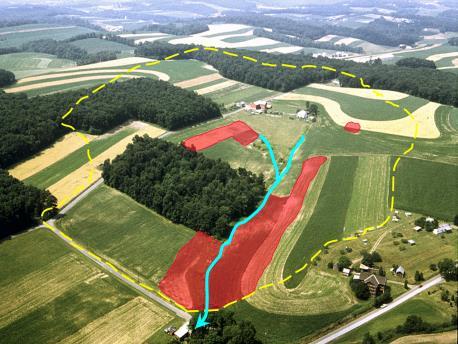
An aerial shot of the FD-36 watershed in south-central Pennsylvania (defined by the dashed white line), where soil chemistry, hydrologic, and agronomic research by USDA–ARS at University Park and Klingerstown locations identified areas of the watershed (in red) at great risk of contributing phosphorus to the stream (the blue line). This research was key to framing the application of the Phosphorus Index in Nutrient Management Planning.   See N.O. Nelson and A.L. Shober, “Evaluation of Phosphorus Indices after Twenty Years of Science and Development,” p. 1703. Photo: Andrew Sharpley.

Why Is It Important to Review the Phosphorus Index?

Since its inception nearly 20 years ago, the phosphorus (P) Index has morphed from an educational tool to a Best Management Practice targeting and implementation tool, a manure-scheduling tool, and in many cases, a regulatory tool.  A great deal of research has been conducted across the U.S. to derive, validate, and support components of the P Indexing concept, particularly those related to source factors.  As different versions of the P Index have emerged, ostensibly to account for local topography, hydrology, soils, land use, and individual state policies and agendas, so too have differences in the P management recommendations that are made using the P Index.  As a result, there are many variations in P Indices now in use as part of the NRCS 590 Nutrient Management Conservation Standard.  This variation is both a strength and weakness of the P Indexing concept.

Author

Andrew Sharpley, Professor, Division of Agriculture, University of Arkansas System.  Sharpley was one of a core group of scientists that back in the early 1990’s developed the scientific foundation of the Phosphorus Indexing approach.  Since then he has conducted extensive field research to justify source and transport factors included in Indices, which have been adopted in 49 of 51 States to guide nutrient management planning as part of the 590 Standard.  He was instrumental in changing USDA and US EPA nutrient management planning strategies away from single numeric soil phosphorus environmental thresholds to the Indexing approach for risk assessment of phosphorus management and land application.  In the last year, he coordinated a group of researchers and extension folks from diverse backgrounds to review and propose revisions to Phosphorus Indices in compliance with the 2011 590 Standard.

The author can be contacted at: sharpley@uark.edu

The authors are solely responsible for the content of these proceedings. The technical information does not necessarily reflect the official position of the sponsoring agencies or institutions represented by planning committee members, and inclusion and distribution herein does not constitute an endorsement of views expressed by the same. Printed materials included herein are not refereed publications. Citations should appear as follows. EXAMPLE: Authors. 2013. Title of presentation. Waste to Worth: Spreading Science and Solutions. Denver, CO. April 1-5, 2013. URL of this page. Accessed on: today’s date.

Federal Regulations and Pending Legislation Affecting Nutrient Management

Waste to Worth: Spreading science and solutions logoWaste to Worth home | More proceedings….

Why Should We Follow Regulatory Discussions About Nutrient Management?

The presenters will discuss the Clean Water Act as it pertains to nutrient management.  The presentation will describe current and ongoing federal action in several watersheds in the form of a Total Maximum Daily Load or Numeric Nutrient Criteria.  Areas discussed will include the Chesapeake Bay, the Oregon Coast, the Illinois River in Arkansas and Oklahoma, marine and freshwater systems in Florida, and the Mississippi River watershed.  The presentation will conclude with a discussion on the agriculture community’s role in nutrient management issues.

Decisions are being made everyday in Washington, D.C. by federal agencies, Congress, and the courts on how farmers and ranchers must manage their manure and their operations. It is important that producers and experts in the field educate their elected representatives and regulators on the important use  of nutrients and our efforts to protect the environment at the same time we attempt to feed an ever-growing world.

Presenters

Jeff Blackwood, The Fertilizer InstituteAt the time of this presentation, Jeff Blackwood was the director of government relations at The Fertilizer Institute in Washington, DC where he monitored and lobbied legislative and regulatory matters regarding nutrient use issues, agriculture policy, chemical security and water quality. Prior to joining TFI, Jeff worked as Legislative Assistant to United States Senator Byron Dorgan (D-N.D.), advising the Senator on legislation related to agriculture policy. In this position he managed bills and amendments including several considered during the 2008 Farm Bill and the annual agriculture appropriations process. Prior to his work with Sen. Dorgan, Blackwood was the Senior Grassroots Advocacy Advisor with the National Rural Electric Cooperative Association and previously served as a Legislative Assistant to Congressman Brad Carson (D-Okla.). Since that time Jeff has taken a new position as Manager of Government Affairs for agriculture policy at BASF.  jeff.blackwood@basf.com


Ashley McDonald, National Cattlemen's Beef AssociationAshley Lyon McDonald, Esq., Deputy Environmental Counsel, National Cattlemen’s Beef Association. Ashley grew up on a diversified agricultural operation with row crops and a small commercial beef backgrounding and feeding operation in the town of Norborne, Missouri.  She received her Agriculture Economics degree from the University of Missouri-Columbia and her J.D. from George Mason University School of Law in Arlington, VA. As NCBA’s Deputy Environmental Counsel Ashley represents cattle producers before Congress, the U.S. Environmental Protection Agency, the U.S. Department of Agriculture, and the Office of Management and Budget on many environmental issues that increasingly affect the cattle industry. Ashley can be contacted at: amcdonald@beef.org


The authors are solely responsible for the content of these proceedings. The technical information does not necessarily reflect the official position of the sponsoring agencies or institutions represented by planning committee members, and inclusion and distribution herein does not constitute an endorsement of views expressed by the same. Printed materials included herein are not refereed publications. Citations should appear as follows. EXAMPLE: Authors. 2013. Title of presentation. Waste to Worth: Spreading Science and Solutions. Denver, CO. April 1-5, 2013. URL of this page. Accessed on: today’s date.
Supporting Small-Scale Poultry and Livestock Businesses

Waste to Worth: Spreading science and solutions logoWaste to Worth home | More proceedings….

Why Work With Small Poultry and Livestock Operations?

Understand the business planning and development issues confronting small-scale livestock and poultry producers.

What Did We Do?

Colorado State University has been building educational programming to benefit small-scale crop and livestock producers across the state since 2007.  The Colorado Building Farmers and Ranchers program uses a classroom, experiential learning and community-building approach to help smaller-scale and new agricultural producers build their businesses in a profitable, safe and sustainable manner. To date, we have graduated more than 300 producers, 65% of whom have completed business plans to expand or develop their agricultural business. These producers are primarily characterized by their focus on direct marketing, and many are located relatively close to urban areas; locations that provide both marketing opportunities as well as production constraints. The classroom education takes place over 8 weeks and helps producers build sustainable business plans, and develop a network of producers and technical assistance providers (e.g. NRCS, FSA, county planning staff).  Topics covered include developing a production plan, recordkeeping, pricing, risk management, and on-farm food safety.  In addition, since small-scale livestock production is a more complex business model, we have built a curriculum that guides producers through all the business planning considerations necessary to start and operate a profitable livestock operation: from acquiring poultry, sheep or goats, to health and environmental issues, to processing and creating a unique market niche.

What Have We Learned?

Given that smaller or more diversified poultry and small ruminant operations may be trying to maintain a greater number of enterprises on one farm or operation, it may be more difficult for those producers to stay on top of good management practices, as well as any requirements necessary to remain in good standing with local government and marketing partners. For example, these small-scale operations may be maintained on a limited number of acres, thus requiring very careful land and animal management.  Additionally, many smaller-scale operations are located in areas where agriculture is not the primary land use.  Such operations may be in the urban-rural interface, the suburbs or even in towns or cities.  The research for this curriculum provided a basic overview of production, management and marketing considerations and opportunities for smaller-scale poultry and small ruminant production, and a means to discuss the relationship between resource stewardship and long-term business viability. We examined, in particular, emerging niche market opportunities and some of the costs and benefits inherent to pursuing those newer markets, finding that the costs and management skills required make it extremely difficult to operate a commercially viable small-scale livestock business in an urban area.

Future Plans

Next steps involve developing enterprise budgets with different numbers of poultry and small ruminants to understand the point at which these businesses become financially viable. This is important for helping prospective new livestock enterprises to truth their business plans, based on realistic assumptions.

Raising Poultry for Profit Video

Raising Sheep and Goats for Profit Video

Authors

Martha Sullins, Extension Regional Specialist, Colorado State University Extension, Martha.sullins@colostate.edu

Additional Information

Acknowledgements

David Weiss and Dawn Thilmany (Department of Agricultural and Resource Economics, CSU), Blake Angelo (Urban Ag Educator, Denver/Jefferson Counties, CSU Extension),  Marisa Bunning (Department of Food Science and Human Nutrition, CSU); Thomas Bass (Montana State University).

The authors are solely responsible for the content of these proceedings. The technical information does not necessarily reflect the official position of the sponsoring agencies or institutions represented by planning committee members, and inclusion and distribution herein does not constitute an endorsement of views expressed by the same. Printed materials included herein are not refereed publications. Citations should appear as follows. EXAMPLE: Authors. 2013. Title of presentation. Waste to Worth: Spreading Science and Solutions. Denver, CO. April 1-5, 2013. URL of this page. Accessed on: today’s date.

Ammonia Emissions and Emission Factors: A Summary of Investigations at Beef Cattle Feedyards on the Southern High Plains

Waste to Worth: Spreading science and solutions logoWaste to Worth home | More proceedings….

Why Study Ammonia Emitted from Feedlots?

Ammonia volatilization is a major component of the nitrogen balance of a feedyard, and the effects of ammonia loss range from the economic (loss of manure fertilizer value) to the environmental (air quality degradation, overfertilization of ecosystems). Although not yet regulated, ammonia emissions from cattle are required to be reported under the Emergency Planning and Community Right to Know Act. Emission factors are used to estimate ammonia emissions for purposes of reporting and national inventories, but current emission factors are based on limited data. Our objective was to definitively quantify ammonia emissions and emission factors from commercial feedyards on the southern High Plains of Texas.

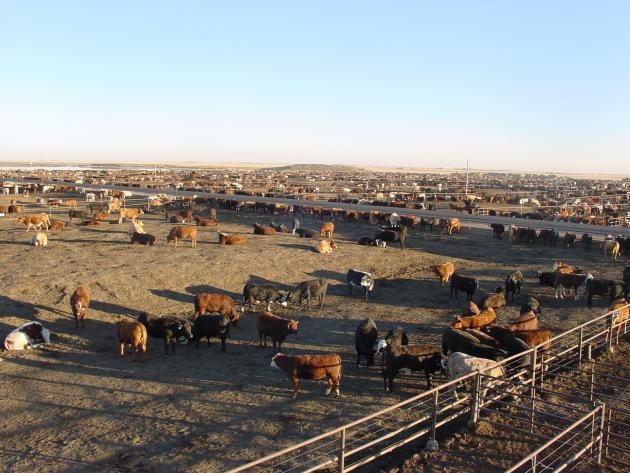
A typical feedyard on the High Plains of Texas. In the foreground, cattle in corrals with a stocking density of about 150 sq. ft./animal. In the background on the left, the runoff water retention pond, and center, a mound of stockpiled manure.

What Did We Do?

Ammonia emissions were quantified at three commercial feedyards in the Texas Panhandle from 2002 to 2008 using micrometeorological methods. Seasonal, intensive measurement campaigns were conducted from 2002 to 2005 at one feedyard, and ammonia emissions were near-continously monitored from 2007-2008 at two more feedyards. Meteorological and cattle management data were also collected.

What Have We Learned?

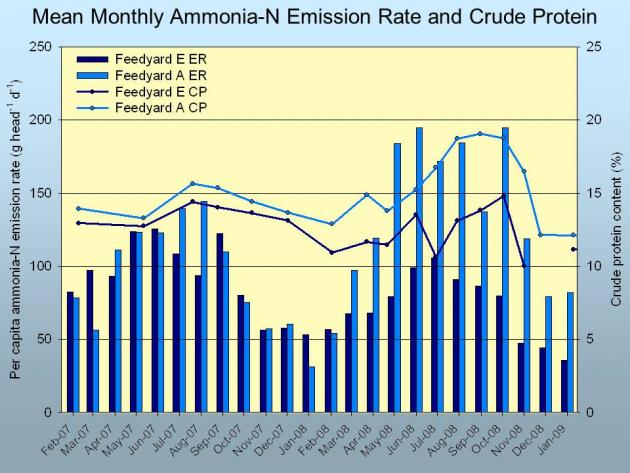
Ammonia emissions followed a distinct annual pattern. Emissions during summer were about twice those during winter, while spring and autumn emissions were intermediate. Annualized ammonia emissions ranged from 0.20 to 0.37 lb NH3/animal/day, and averaged 0.26 lb NH3/animal/day over all studies. Ammonia loss as a fraction of nitrogen fed to cattle averaged 41% during winter and 69% during summer; on an annual basis, 54% of fed nitrogen was lost as ammonia. Greatest emissions were observed when crude protein in cattle rations exceeded the nutrient requirements of beef cattle. Mean monthly ammonia emissions were strongly correlated with mean monthly temperature, and the relationship can be used to predict ammonia emissions from southern High Plains feedyards. Cattle feeders that meet recommended crude protein in rations can expect to lose half of fed N as ammonia. We recommend an annual emission factor of 88 lb/head for beef cattle feedyards based on one-time capacity, or 39 lb/head fed, based on a 150-d feeding period.

The annual pattern of ammonia emission rates (ER) followed seasonal temperatures, but also was sensitive to dietary crude protein (CP). Adding distillers grains to rations from March, 2008 to October, 2008 increased crude protein at Feedyard A to as high as 19%. Ammonia emissions greatly increased compared with the previous year and compared with Feedyard E.

Future Plans

Next steps involve using the extensive database from this research to adapt and refine process-based models of ammonia emissions. These models, based on the actual physical and chemical processes that control ammonia loss, will be more generally applicable than emission factors to a wider range of feedyards.

On an annual basis, ammonia emission averaged 0.26 lb per animal per day across the three feedyards and six years of study. Increased ammonia emission at Feedyard A in 2008 was due to high dietary crude protein when distillers grains were added to rations. Using these data and other estimates of ammonia loss from retention ponds and stockpiles, we recommend, for beef cattle fed a diet that meets protein requirements, an annual emission factor of 88 lb/head based on one-time capacity, or 39 lb/head fed, based on a 150-d feeding period.

Authors

Richard W. Todd, Research Soil Scientist, USDA-ARS Conservation and Production Research Laboratory, Bushland, Texas, richard.todd@ars.usda.gov

Richard W. Todd, Research Soil Scientist; N. Andy Cole, Research Leader and Research Animal Scientist (Nutrition); and Heidi M. Waldrip, Research Soil Scientist: USDA-ARS Conservation and Production Research Laboratory, Bushland, Texas.

Additional Information

Cole, N.A., R.N. Clark, R.W. Todd, C.R. Richardson, A. Gueye, L.W. Greene, and K. McBride. 2005. Influence of dietary crude protein concentration and source on potential ammonia emissions from beef cattle manure.  J. Anim. Sci. 83:722 731.

Cole, N.A., A.M. Mason, R.W. Todd, M. Rhoades, and D.B. Parker. 2009. Chemical composition of pen surface layers of beef cattle feedayrds. Prof. Anim. Sci. 25:541-552.

Flesch, T.K., J.D. Wilson, L.A. Harper, R.W. Todd, and N.A. Cole. 2007. Determining ammonia emissions from a cattle feedlot with an inverse dispersion technique. Agric. For. Meteorol. 144:139-155.

Hristov, A. N., M. Hanigan, A. Cole, R. Todd, T. A. McAllister, P. M. Ndegwa, A. Rotz. 2011. Ammonia emissions from dairy farms and beef feedlots: A review. Can. J. Anim. Sci. 91:1-35.

Preece, S.L., N.A. Cole, R.W. Todd, and B.W. Auvermann. 2012. Ammonia emissions from cattle-feeding operation. Texas A&M AgriLife Extension Bulletin E-632 12/12.

Rhoades, M.B., D.B. Parker, N.A. Cole, R.W. Todd, E.A. Caraway, B.W. Auvermann, D.R. Topliff, and G.L. Schuster. 2010. Continuous ammonia emission measurements from a commercial beef feedyard in Texas. Trans. ASABE 53:1823-1831.

Sakirkin, S.L., N.A. Cole, R.W. Todd, and B.W. Auvermann. 2011. Ammonia emissions from cattle-feeding operations. Part 1: issues and emissions. Texas Agricultural Experiment Station Bulletin, Air Quality Education in Animal Agriculture, Issues: Ammonia, December, 2011. p. 1-11.

Sakirkin, S., R.W. Todd, N.A. Cole, and B.W. Avermann. 2011. Ammonia emissions from cattle-feeding operations. Part 2: abatement. Texas Agricultural Experiment Station Bulletin, Air Quality Education in Animal Agriculture, Issues: Abatement, December, 2011. p. 1-11.

Todd, R.W., N.A. Cole, and R.N. Clark. 2006. Reducing crude protein in beef cattle diet reduces ammonia emissions from artificial feedyard surfaces. J. Environ. Qual. 35:404-411.

Todd, R.W., N.A. Cole, M.B. Rhoades, D.B. Parker, and K.D. Casey. 2011. Daily, monthly, seasonal and annual ammonia emissions from southern High Plains cattle feedyards. J. Environ. Qual. 40:1-6.

Todd, R.W., N.A. Cole, H.M. Waldrip, and R.M. Aiken. 2013. Arrhenius equation for modeling feedyard ammonia emissions using temperature and diet crude protein. J. Environ. Qual. 2013. (accepted for publication).

Acknowledgements

Research was supported by CSREES Grant #TS2006-06009 under the direction of Dr. John Sweeten, Resident Director, Texas A&M University AgriLife Research and Extension Center, Amarillo, TX. Larry Fulton, Research Technician, USDA-ARS-CPRL, provided invaluable technical and logistical support and expertise.

The authors are solely responsible for the content of these proceedings. The technical information does not necessarily reflect the official position of the sponsoring agencies or institutions represented by planning committee members, and inclusion and distribution herein does not constitute an endorsement of views expressed by the same. Printed materials included herein are not refereed publications. Citations should appear as follows. EXAMPLE: Authors. 2013. Title of presentation. Waste to Worth: Spreading Science and Solutions. Denver, CO. April 1-5, 2013. URL of this page. Accessed on: today’s date.

South Carolina’s Confined Animal Manure Manager Program

Waste to Worth: Spreading science and solutions logoWaste to Worth home | More proceedings….

Abstract

In 1998 the South Carolina Legislature enacted regulation R.61-43, titled “Standards for the Permitting of Agricultural Animal Facilities.”  This regulation provides requirements on Confined Animal Facility location and permitting, facility management, vector control, mortality disposal, manure application and storage, and a number of other topics.  A portion of this regulation stipulates that Clemson University shall provide training in the management of confined animal facilities and the proper application and utilization of manure produced from these facilities.  The poster will detail the major points of the regulation and the development and presentation of the Confined Animal Manure Manager program in South Carolina to over 1,500 growers to date.

Authors

Bryan Smith, Clemson University Cooperative Extension Service               wsmth@clemson.edu

Jesse Adams III, M.S., Area Extension Agent – Livestock, Clemson Extension Service (ret.), Brian L. Beer, M.S., Area Extension Agent – Livestock, Clemson Extension Service, John P. Chastain, Ph.D., Professor and Extension Agricultural Engineer, Clemson University, Julie D. Helm, DVM, Livestock-Poultry Health Division, Clemson University, Stephen T. Henry, M.S., Environmental Engineer, USDA-NRCS, Tonya O’Cain, Agricultural Compliance Manager, SCDHEC, Lee van Vlake, M.S., Area Extension Agent – Livestock, Clemson Extension Service


The authors are solely responsible for the content of these proceedings. The technical information does not necessarily reflect the official position of the sponsoring agencies or institutions represented by planning committee members, and inclusion and distribution herein does not constitute an endorsement of views expressed by the same. Printed materials included herein are not refereed publications. Citations should appear as follows. EXAMPLE: Authors. 2013. Title of presentation. Waste to Worth: Spreading Science and Solutions. Denver, CO. April 1-5, 2013. URL of this page. Accessed on: today’s date.