Benefits and Challenges of Manure-Based Energy

Manure-to-energy systems on farms can deliver a number of economic benefits for farmers. They can also increase the amount of renewable energy in the United States and, if handled correctly, protect streams and rivers from the polluting effects of surplus nutrients. (Related: Explore other manure treatment technologies).

Financial Benefits

A farmer with an on-site, manure-based energy system can generate heat for the farm’s buildings and equipment, generating significant annual savings in energy costs. This new source of heat could replace traditional propane heat in poultry houses, for use in:

BTU Values of Manure and
Other Feedstocks

Feedstock

(Btus/lb)*

Chicken Litter 6,500
Swine feces 8,000
Dairy manure 8,000
Feedlot manure 4,500
Wood 8,000
Municipal sewage 4,000-8,000
Coal, bituminous 12,000

Manure has enough energy to be valuable, providing moisture is at acceptable level.

* Values reported are based on dry matter basis

Source: Farm Manure-to-Energy Initiative

  • Air-to-air systems
  • Ceiling-mounted hot water hydronic heat exchangers
  • Hot water hydronic floor systems

A farmer can also sell ash and bio-char — two nutrient-rich co-products of the thermochemical process that can be used as fertilizer or soil amendments. Although markets are still emerging for these products, field research indicates that ash and biochar can be used as a substitute for commercial fertilizer to support row crop production. Over the long term, such phosphorus co-products could become increasingly valuable. World consumption of phosphate fertilizer is expected to increase, supplies are expected to decline over the next few decades. The United States is already dependent on phosphorus imports. In fact, our nation is the world’s leading importer of phosphate rock and our domestic production is expected to continue its recent decline. Globally, phosphorus from mined sources is predicted to peak around 2034. Although exploration and expansion of phosphate rock production continues, especially in Africa and Australia, phosphorus from other sources may have a growing value in the marketplace.

In the future, farmers may also be able to sell surplus electricity from energy production to utility companies that manage the local grid, or sell their entire supply on the wholesale market. Projects coupling thermal manure-to-energy technologies with electric generation are still in the research and development phase.

Other benefits that may be realized in the future include the sale of credits, such as those for renewable energy, carbon offsets, or nutrient reduction. Although the markets for these credits are still emerging, the potential for future growth is drawing the attention of entrepreneurs.

Water Quality Benefits

In some locations, animal production creates more manure nutrients (especially phosphorus) than can be effectively used as fertilizer. Rainwater carries surplus nutrients from fertilizer into streams, rivers, and bays, where high levels of nitrogen and phosphorus trigger harmful algae blooms. Manure-based energy provides another use for manure and converts the nutrients into ash and bio-char. These co-products are much easier and more cost-effective to transport for use in other locations where nutrients are needed in the soil.

Reliable, Renewable Energy

Energy produced from manure, a form of biomass, is one of the most dependable forms of energy in the United States. Wind, water, and solar sources of energy all produce an inconsistent flow that makes it more difficult to stabilize the regional energy grid.  The percentage of time in which these types of facilities operate at or near their designed capacity ranges from approximately 17 to 30 percent. In contrast, the capacity factor for biomass is 85.5 percent—second only to nuclear on a nationwide scale. As long as the American consumer relies on a steady diet of milk, meat and eggs, there will be a steady supply of animal manure as feedstock for energy projects. 

Challenges

On-farm manure-to-energy technologies are expensive and require initial investments in infrastructure as well as on-going maintenance and operation costs. Additionally, few vendors have a track record for long-term, successful on-farm performance with multiple farm clients. Most of these technologies are still in the early phases of commercialization, or in the research and development phase. Also, matching technologies to the needs of each unique farm, and customizing systems when necessary, takes time. Systems installed to produce heat will require more labor than traditional propane-fueled heating systems.

Manure-to-energy systems will not be right for every farm, or in every setting. For example, a farmer with more poultry litter than needed to fertilize his own fields typically sells it for use on surrounding farms. If the litter is used to produce energy, it loses its immediate value as a source of nitrogen fertilizer. Therefore, such systems may be most appropriate in regions with concentrated animal production and widespread surplus manure. In such a setting, poultry litter has less value as a fertilizer on nearby farms because high soil phosphorus levels limit how much manure most farms can use. Farmers may find that converting surplus litter to energy, and producing an ash or biochar co-product that can be transported long distances and sold, is a better choice.

Farm Manure-to-Energy Case Studies

Case studies on thermal manure-based energy are an important way for farmers and service providers to learn from each other’s experience. You may also be interested in a summary of interviews with ten farmers who are using manure-to-energy technologies.

To add a case study to this list, please contact Kristen Hughes Evans kristen@susches.org or Jill Heemstra jheemstra@unl.edu.

field

Ecoremedy Gasifier

Flintrock Farm

Lancaster Co., PA

Read More…

Riverhill Farms Port Republic, Rockingham Co.

Bio-Burner 500

Riverhill Farm

Rockingham Co., VA

Read More…

poultry barns with feed bins

Global Re-Fuel Furnace

PA & VA

Read More…

thumbnail of wind view farm

Blue Flame Boiler

Windview Farm

Snyder Co, PA

Read More…


Farm Manure Energy Initiative logoDevelopment of this information were funded by the National Fish and Wildlife Foundation (NFWF), the USDA, U.S. EPA, and Chesapeake Bay Funders Network. The views and conclusions contained in materials related to the Farm Manure-to-Energy Initiative are those of the authors and should not be interpreted as representing the opinions or policies of NFWF, the USDA, U.S. EPA, or Chesapeake Bay Funders Network. Mention of trade names or commercial products does not constitute endorsement by project funders.

Thermal Manure-to-Energy Systems for Farms

Using manure to generate energy is growing in popularity. Explore the topics below to learn more.

  1. Introduction to Thermal Technologies for Generating Energy from Manure (Combustion, Pyrolysis, Gasification)
  2. Benefits & Challenges of Manure-Based Energy
  3. Farm Manure-to-Energy Case Studies
  4. Start-Up Questions and Considerations (What should I know or ask before pursuing manure-to-energy technologies for my farm?)
  5. Additional Resources on Manure-to-Energy Technologies
Manure-to-Energy in the Chesapeake Region 2016 REPORT

Farm Manure Energy Initiative logoPortions of this information were funded by the National Fish and Wildlife Foundation (NFWF), the USDA, U.S. EPA, and Chesapeake Bay Funders Network. The views and conclusions contained in materials related to the Farm Manure-to-Energy Initiative are those of the authors and should not be interpreted as representing the opinions or policies of NFWF, the USDA, U.S. EPA, or Chesapeake Bay Funders Network. Mention of trade names or commercial products does not constitute endorsement by project funders.

Introduction to Thermal Technologies for Generating Energy from Manure

Manure-to-Energy home | Case Studies | Start-Up | More…

There are two general methods for producing energy from manure: the use of heat and the use of bacteria. This page is focused on the use of heat – specifically, on relatively small thermal systems that can be used on a farm to produce energy from excess poultry litter or manure.

temperature and oxygen levels for thermal technologiesThe use of bacteria to produce energy from manure is called anaerobic digestion. For more information about anaerobic digestion, explore Anaerobic Digestion and Biogas. Related: Treatment Technologies for Manure

Types of Thermal Energy Production for Farm-Scale Systems

In scientific terms, the use of heat to produce energy from manure is a thermochemical process. Thermal systems are well-suited for manure that is relatively dry, such as poultry litter, because there is less need to dry out the manure prior to processing.

Thermal processes that can convert animal manure into fuel include pyrolysis, gasification, and combustion. These processes differ with respect to temperature and oxygen concentrations, but each converts solid material into combustible, gaseous components, which then creates a hot flue gas. The flue gas is directed through a heat exchanger where heat is captured and moved through a distribution system for use in the poultry houses.

Thermal processes also produce a range of potentially valuable co-products including liquid bio-oils, diesel fuel, and combustible gases. They also produce nutrient-dense products like ash and bio-charcoal (commonly referred to as “biochar”). The concentration of nutrients varies depending on the process, operating parameters, and system design.

Fate of Manure Nutrients in Thermal Energy Systems

In thermal systems, almost all of the phosphorus and potash are conserved in the ash or biochar. While biochar retains some nitrogen associated with organic carbon, much of the nitrogen from these systems is lost in atmospheric emissions. Most is released to the atmosphere in the form of non-reactive nitrogen gas, or N2. Reactive forms of nitrogen may also be released, including oxides of nitrogen (NOx) and ammonia (NH3).

The concentration of phosphorus in the ash or biochar provides a way to transport excess nutrients to phosphorus-deficient regions where the ash or biochar can be used as a fertilizer to replace inorganic, mined phosphorus. Reactive nitrogen, on the other hand, is largely lost from agricultural production. Biochar retains some nitrogen, while systems that produce ash (like gasification and combustion) generally convert almost all of the nitrogen to atmospheric emissions. Given that land application of poultry litter and manure can result in atmospheric emissions of far greater amounts of reactive nitrogen (from 50 to 90 percent of ammonia-nitrogen for surface-applied manure), well-designed thermal manure-to-energy systems can reduce overall atmospheric emissions of reactive nitrogen.

Environmental Impacts

Thermal manure-to-energy systems can help address nutrient imbalances in high-density animal production areas, but it is important to use clean technologies with low emissions in order to avoid transferring a surface and groundwater problem to the atmosphere.

Technologies evaluated by the Farm Manure-to-Energy Initiative resulted in atmospheric reactive nitrogen emissions that were generally better than or, at the very least, similar to land application of poultry litter that is immediately incorporated, a strategy recommended to reduce ammonia emissions.

equipmentequipment

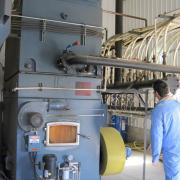
Thermal manure-to-energy systems, like the examples shown here, use heat to produce energy from manure.

However, the Farm Manure-to-Energy Initiative project identified particulate matter as a pollutant of concern for some thermal manure-to-energy technologies. At high temperatures typical of gasification and combustion, potash (which is abundant in poultry litter) volatilizes and can produce fine particulate matter in the form of potassium chloride or potassium sulfates. While some technologies have achieved low particulate matter emissions, others need additional work before they will be eligible for installation in states that set strict limits for particulate matter emissions.

Depending on the location and the size of the installation, emissions of particulate matter and NOx are often a consideration for air permitting. Data on other criteria and hazardous air pollutants associated with the proposed technology may also be required. To learn more about air permitting associated with thermal energy production, see Start-Up Questions and Considerations.

Components of a Farm-Scale System

Thermal systems are adaptable to different scales, but the technologies vary widely in their design, effectiveness, and cost. Most are still in the early phases of commercial development, and many are still in the research and development phase.

Thermal, farm-scale systems typically include some combination of the following components. Each configuration differs depending on the vendor’s technology and the specific goals and needs of the farm where the system is installed:

    • Covered manure storage area
    • Feed hopper and conveyor belt
    • Thermal manure-to-energy unit (combustion, gasification, or pyrolysis)
    • Heat exchanger or boiler
    • Heat distribution unit (ductwork or piping)
    • Emissions control unit
    • Ash or bio-char collection unit

The Farm Manure-to-Energy Initiative conducted several case studies between 2012-2015 to document the performance of farm-scale systems in the Chesapeake region.

More Resources on Thermal Technologies


Farm Manure Energy Initiative logoDevelopment of this information were funded by the National Fish and Wildlife Foundation (NFWF), the USDA, U.S. EPA, and Chesapeake Bay Funders Network. The views and conclusions contained in materials related to the Farm Manure-to-Energy Initiative are those of the authors and should not be interpreted as representing the opinions or policies of NFWF, the USDA, U.S. EPA, or Chesapeake Bay Funders Network. Mention of trade names or commercial products does not constitute endorsement by project funders.

About the Farm Manure-to-Energy Initiative

Farm Manure Energy Initiative logoThe Farm Manure-to-Energy Initiative in the Chesapeake Bay region is helping farmers demonstrate and evaluate the performance thermal technologies that convert surplus poultry litter to electricity or heat.

Case studies conducted from 2012-2015 evaluated four technologies on five working farms in areas of the Chesapeake watershed where manure management is especially important for protecting water quality.

sunrise over flintrock farm

Flintrock Farm in Lancaster County, PA, will heat at least four poultry houses by feeding poultry litter into an on-farm energy system.

The systems were evaluated for technical, environmental, and financial performance. Detailed information on the results of the evaluations can be found in the 2016 Final Report. Project leaders include National Fish and Wildlife Foundation, Chesapeake Bay Funders Network, Farm Pilot Project Coordination, Inc., Sustainable Chesapeake, University of Maryland Center for Environmental Science, University of Maryland Environmental Finance Center, Virginia Cooperative Extension, Lancaster County Conservation District (of Pennsylvania), Virginia Tech Eastern Shore Agricultural Research and Extension Center, and the Eastern Shore Resource Conservation & Development Council.

For more information, please contact Kristen Hughes Evans of Sustainable Chesapeake at Kristen@susches.org.

What Happens When You Mix Chitosan and Poultry Litter?

Waste to Worth: Spreading science and solutions logoWaste to Worth home | More proceedings….

Abstract

The solubility of phosphorus (P) and low nitrogen(N):P ratio of poultry litter present environmental challenges when using this resource to supply nutrients to crops and forages.  Here, we explore the use of chitosan to reduce water extractable P (WEP) in poultry litter and potentially increase the N:P ratio.  Chitosan is derived from chitin, which is a waste product from the commercial shellfish industry; chitin is processed into chitosan through deacetylation, removing acetyl groups from this long-chained molecule.  Chitin has been successfully used in manure separation and flocculation in wastewater treatment processes, as well as immobilizing algae in wastewater streams to uptake nutrients. 

We performed a series a lab studies to evaluate how chitosan might reduce WEP, influence ammonia volatilization and potentially increase the N:P ratio of poultry litter.  Our experiments showed that chitosan was effective at reducing WEP content of poultry litter and increasing the N:P ratio, but ammonia volatilization might be increased under moist conditions.  We would like to take this from the lab to small plot and then field trials in the near future.

Authors

Brian Haggard, Arkansas Water Resources Center, haggard@uark.edu

I.M. Bailey, Formerly Biological Engineering Program, University of Arkansas, D.A. Zaharoff, Biomedical Engineering Department, University of Arkansas


The authors are solely responsible for the content of these proceedings. The technical information does not necessarily reflect the official position of the sponsoring agencies or institutions represented by planning committee members, and inclusion and distribution herein does not constitute an endorsement of views expressed by the same. Printed materials included herein are not refereed publications. Citations should appear as follows. EXAMPLE: Authors. 2013. Title of presentation. Waste to Worth: Spreading Science and Solutions. Denver, CO. April 1-5, 2013. URL of this page. Accessed on: today’s date.


Supporting Small-Scale Poultry and Livestock Businesses

Waste to Worth: Spreading science and solutions logoWaste to Worth home | More proceedings….

Why Work With Small Poultry and Livestock Operations?

Understand the business planning and development issues confronting small-scale livestock and poultry producers.

What Did We Do?

Colorado State University has been building educational programming to benefit small-scale crop and livestock producers across the state since 2007.  The Colorado Building Farmers and Ranchers program uses a classroom, experiential learning and community-building approach to help smaller-scale and new agricultural producers build their businesses in a profitable, safe and sustainable manner. To date, we have graduated more than 300 producers, 65% of whom have completed business plans to expand or develop their agricultural business. These producers are primarily characterized by their focus on direct marketing, and many are located relatively close to urban areas; locations that provide both marketing opportunities as well as production constraints. The classroom education takes place over 8 weeks and helps producers build sustainable business plans, and develop a network of producers and technical assistance providers (e.g. NRCS, FSA, county planning staff).  Topics covered include developing a production plan, recordkeeping, pricing, risk management, and on-farm food safety.  In addition, since small-scale livestock production is a more complex business model, we have built a curriculum that guides producers through all the business planning considerations necessary to start and operate a profitable livestock operation: from acquiring poultry, sheep or goats, to health and environmental issues, to processing and creating a unique market niche.

What Have We Learned?

Given that smaller or more diversified poultry and small ruminant operations may be trying to maintain a greater number of enterprises on one farm or operation, it may be more difficult for those producers to stay on top of good management practices, as well as any requirements necessary to remain in good standing with local government and marketing partners. For example, these small-scale operations may be maintained on a limited number of acres, thus requiring very careful land and animal management.  Additionally, many smaller-scale operations are located in areas where agriculture is not the primary land use.  Such operations may be in the urban-rural interface, the suburbs or even in towns or cities.  The research for this curriculum provided a basic overview of production, management and marketing considerations and opportunities for smaller-scale poultry and small ruminant production, and a means to discuss the relationship between resource stewardship and long-term business viability. We examined, in particular, emerging niche market opportunities and some of the costs and benefits inherent to pursuing those newer markets, finding that the costs and management skills required make it extremely difficult to operate a commercially viable small-scale livestock business in an urban area.

Future Plans

Next steps involve developing enterprise budgets with different numbers of poultry and small ruminants to understand the point at which these businesses become financially viable. This is important for helping prospective new livestock enterprises to truth their business plans, based on realistic assumptions.

Raising Poultry for Profit Video

Raising Sheep and Goats for Profit Video

Authors

Martha Sullins, Extension Regional Specialist, Colorado State University Extension, Martha.sullins@colostate.edu

Additional Information

Acknowledgements

David Weiss and Dawn Thilmany (Department of Agricultural and Resource Economics, CSU), Blake Angelo (Urban Ag Educator, Denver/Jefferson Counties, CSU Extension),  Marisa Bunning (Department of Food Science and Human Nutrition, CSU); Thomas Bass (Montana State University).

The authors are solely responsible for the content of these proceedings. The technical information does not necessarily reflect the official position of the sponsoring agencies or institutions represented by planning committee members, and inclusion and distribution herein does not constitute an endorsement of views expressed by the same. Printed materials included herein are not refereed publications. Citations should appear as follows. EXAMPLE: Authors. 2013. Title of presentation. Waste to Worth: Spreading Science and Solutions. Denver, CO. April 1-5, 2013. URL of this page. Accessed on: today’s date.

Feasible Small-Scale Anaerobic Digestion – Case Study of EUCOlino Digestion System.


* Presentation slides are available at the bottom of the page.

Waste to Worth: Spreading science and solutions logoWaste to Worth home | More proceedings….

Abstract

While large-scale farms have typically been the focus of anaerobic digestion systems in the U.S., an emerging need has been identified to serve smaller farms with between 50 and 500 head of cattle. Implementing such a small, standardized, all-in-one system for these small farm applications has been developed. Small-scale digesters open the playing field for on-farm sustainability and waste management.

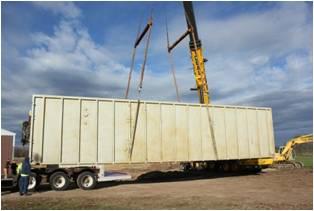
Unloading the first biodigester unit.

This presentation on small-scale digestion would discuss the inputs, processing, function, and outputs of BIOFerm™ Energy Systems’ small agitated plug flow digester (EUCOlino). This plug-and-play digester system has the ability to operate on dairy manure, bedding material, food waste, or other organic feedstocks with a combined total solids content of 15-20%. A case study would be presented that describes the site components needed, the feedstock amount and energy production, as well as biogas end use. Additional details would include farm logistics, potential sources of funding, installation, operation, and overall impact of the project.

This type of presentation would fill an information gap BIOFerm™ has discovered among dairy farmers who believe anaerobic digestion isn’t feasible on a smaller scale. It would provide farmers who attend with an understanding of the technology, how it could work on their specific farm and hopefully reveal to them what their “waste is worth”.

Why Study Small-Scale Anaerobic Digestion

To inform and educate attendees about small-scale anaerobic digestion surrounding the installation and feasibility of the containerized, paddle-mixed plug flow EUCOlino system on a small dairy farm <150 head.

Biodigester unit being installed at Allen Farms.

What Did We Do?

Steps taken to assist in financing the digestion system include receiving grants from the State Energy Office and Wisconsin Focus on Energy. Digester installation includes components such as feed hopper, two fermenter containers, motors, combined heat and power unit, electrical services, etc…

What Have We Learned?

Challenges associated with small project implementation regarding coordination, interconnection, and utility arrangements.

Future Plans

Finalize commissioning phases and optimize operation.

Authors

Amber Blythe, Application Engineer, BIOFerm™ Energy Systems blya@biofermenergy.com

Steven Sell, Biologist/Application Engineer, BIOFerm™ Energy Systems

Gabriella Huerta, Marketing Specialist, BIOFerm™ Energy Systems

Additional Information

Readers interested in this topic can visit www.biofermenergy.com and for more information on our plants, services and project updates please visit us on our website at www.biofermenergy.com. You will also see frequent updates from us in industry magazines (BioCycle, REW Magazine, Waste Age). BIOFerm will also be present at every major industry conference or tradeshow including the Waste Expo, Waste-to-Worth and BioCycle– stop by our booth and speak with one of our highly trained engineers for further information.

The authors are solely responsible for the content of these proceedings. The technical information does not necessarily reflect the official position of the sponsoring agencies or institutions represented by planning committee members, and inclusion and distribution herein does not constitute an endorsement of views expressed by the same. Printed materials included herein are not refereed publications. Citations should appear as follows. EXAMPLE: Authors. 2013. Title of presentation. Waste to Worth: Spreading Science and Solutions. Denver, CO. April 1-5, 2013. URL of this page. Accessed on: today’s date.

A Review of WV Poultry Litter Analysis from 1994 to 2010 That Demonstrates a Continual Fluctuation in Nutrient Concentrations Resulting from Changes In Poultry Feed Formulations and New Storage Methods

Waste to Worth: Spreading science and solutions logoWaste to Worth home | More proceedings….

Why Study Nutrient Concentrations in Poultry Manure?

The nutrient management planning process requires continual nutrient analysis of generated poultry litter to determine accurate agronomic land application rates.  To better understand the challenges that nutrient management planners have faced with these nutrient concentration changes in poultry litter, an analysis was conducted of sample results submitted to the West Virginia Department of Agriculture Nutrient Management Lab, from 1994 to 2010. The number of produced Broilers in WV for 2010 was 87,600,000; the number of turkeys grown in WV during 2010 was 3,100,000 and the number of Layers averaged 1,200,000.  NASS did not report pullet numbers.  Data was analyzed by bird type including, Broilers, Layers, Pullets and Turkeys.  

Lab analysis included TKN, Ammonia, P2O5, K2O, Cu, Ca, Mg, WEP (Water Extractable Phosphorus) and Moisture content.  Ammonia concentrations increased during the study period for all bird types, broilers and turkeys had ammonia concentrations averaging 15 lbs per ton in 1995 and had doubled to 30 lbs per ton of litter in 2010. This increase of ammonia may be attributed to the adoption by poultry growers of long term in-house litter storage.   P2O5 concentrations in broiler litter have consistently declined over the study period likely due to addition of phytase enzyme to feed allowing the reduction of P in the broiler diets.  Average P2O5   levels in 1995 were 60 lbs per ton and had dropped to 40 lbs per ton of litter by 2012.  This data can also provide estimates of watershed nutrient loading used in the Chesapeake Bay, TMDL process and improve the Bay watershed model.

Authors

Tom Basden, West Virginia University    tom.basden@mail.wvu.edu      

Ed Rayburn and Joe Moritz, West Virginia University, Morgantown WV


The authors are solely responsible for the content of these proceedings. The technical information does not necessarily reflect the official position of the sponsoring agencies or institutions represented by planning committee members, and inclusion and distribution herein does not constitute an endorsement of views expressed by the same. Printed materials included herein are not refereed publications. Citations should appear as follows. EXAMPLE: Authors. 2013. Title of presentation. Waste to Worth: Spreading Science and Solutions. Denver, CO. April 1-5, 2013. URL of this page. Accessed on: today’s date.


Exploring Chicken Manure to Increase Concentrations of Organic Sulfur Compounds in Onions

Waste to Worth: Spreading science and solutions logoWaste to Worth home | More proceedings….

Abstract

Onions are valued as food and medicine primarily for the flavor and medicinal properties of their sulfur compounds. A field study was conducted at KSU Research Farm. The soil in five plots was mixed with sewage sludge, five plots were mixed with yard waste compost, five plots were mixed with laying hen manure each at 15t acre-1, and five unamended plots that never received soil amendments were used for comparison purposes. Plots were planted with onion, Allium cepa L. var. Super Star-F1. The objectives of this investigation were to: i) determine the concentrations of organosulfur compounds (dipropyl disulfide and dipropyl trisulfide) in onion bulbs and ii) investigate the effect of mixing soil with three amendments (sewage sludge, yard waste, and chicken manure) on the concentration of sulfur compounds in onion bulbs. Gas chromatographic/mass spetrometric (GC/MS) analyses of onion oil in chloroform extracts revealed the presence of two major fragment ions that correspond to dipropyl disulfide and -trisulfide. Concentration of these two organic sulfur compounds was greatest (1.5 and 0.8 mg 100 g-1 fresh weight, respectively) in onion bulbs of plants grown in chicken manure and lowest (0.4 and 0.07 mg 100 g-1 fresh weight, respectively) in onion bulbs of plants grown in yard waste compost treatments. We concluded that chicken manure could be exploited in growing onions with health-promoting properties.

Why Study Chicken Manure and Onions?

The objectives of this investigation were to: i) determine the concentrations of organosulfur compounds (dipropyl disulfide and dipropyl trisulfide) in onion bulbs and ii) investigate the effect of mixing soil with three amendments (sewage sludge, yard waste, and chicken manure) on the concentration of sulfur compounds in onion bulbs.

What Did We Do?

A field study was conducted on a Lowell silty-loam soil (2.0% organic matter, pH 7) at Kentucky State University Research Farm, Franklin County, KY. Plots (n=20) of 2 ×10m each were separated using grass strips to prevent cross contamination between adjacent treatments. The soil in five plots was mixed with sewage sludge (SS) from Metropolitan Sewer District, Louisville, KY at 15 t acre-1 (on dry weight basis). Five plots were mixed yard waste (YW) compost made from yard and lawn trimmings, and vegetable remains (Con Robinson Co., Lexington, KY) at 15 t acre-1 (on dry weight basis), and five plots were mixed with chicken manure (CM) obtained from University of Kentucky Poultry Research Facility, Lexington, KY at 15 t acre-1. The native soil in five plots was used as a no-mulch (NM) control treatment (roto-tilled bare soil) for comparison purposes. Amendments were incorporated into the topsoil with a plowing depth of 15 cm. Seedlings of onion, Allium cepa var. Super Star F1 were planted under the four soil management practices. At harvest, onion bulbs were blended with chloroform. After cleaning-up the extract, one μL (n=3) of the filtrate was injected into a gas chromatograph (GC) model 5890A equipped with a mass spectrometric detector (GC/MSD) model 5971A operated in total ion monitoring with electron impact ionization (EI) mode and 70 eV electron energy for identification and confirmation of individual peak. Concentrations of the two sulfur compounds (dipropyl disulfide and dipropyl trisulfide) in onion bulbs grown under four soil management practices were statistically analyzed using ANOVA. Means were compared using Duncan’s multiple range test.

What Have We Learned?

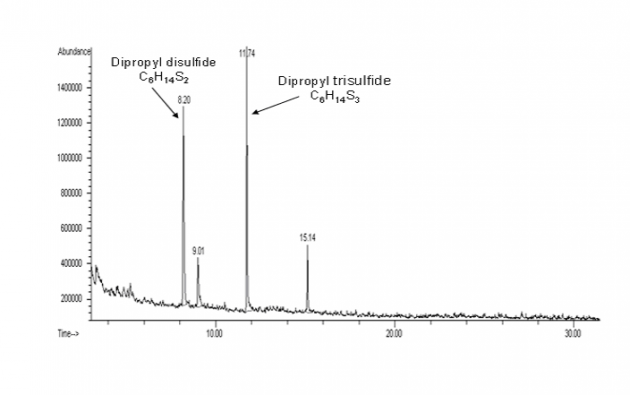
Mass spectrometric analysis of purified chloroform extracts prepared from onion bulbs revealed the presence of two organosulfur compounds, dipropyl disulfide and dipropyl trisulfide (Figure 1). Analyses of onion bulbs of plants grown under three soil management practices and plants grown in no-mulch treatments showed fragments with identical molecular ions at m/z 150 (Figure 2) and at m/z 182 (Figure 3), along with other characteristic fragment ions which are consistent with the assignment of the molecular formula of dipropyl disulfide (C6H14 S2) and dipropyl trisulfide (C6H14 S3), respectively, known as major constituents of onion bulbs. Dipropyl disulfide spectral data, which showed a molecular ion peak (M+) at m/z 150, were in agreement with those previously reported in onion bulbs. [1] Dipropyl trisulfide was also assigned on the basis of its mass fragmentation pattern, which gave a molecular ion peak (M+) at m/z 182, along with other characteristic fragment ion peaks as determined by GC/MSD in total ion mode. Figures 2 and 3 also indicated that the two sulfur compounds have a common fragment ion at m/z 48 that can be used for monitoring dipropyl disulfide and –trisulfide in onion extracts. Concentrations of dipropyl disulfide and dipropyl trisulfide were significantly higher (P< 0.05) in onion bulbs of plants grown in soil amended with chicken manure compared to other soil treatments (Figure 4). This response may be due to improved soil porosity, soil water holding capacity and nutrient retention in chicken manure treated soil. There were about 1.5 mg of the disulfide and 0.8 mg of the trisulfide per 100 g onion bulb. These results are in agreement with the results reported by the onion oil manufacturer and wholesaler in India (Shiva Exports India-2007), [2] who reported that out of all the compounds present in onion, dipropyl disulfide comprises the largest amount of the sulfur compounds present in onion oil.

Chicken manure used in this study was obtained from laying hens fed diets containing 19% crude protein and approximately 0.8% sulfur amino acids, which provided approximately 0.2% sulfur to the diet. Other minor sources of sulfur in the diet were sulfate salts of several trace minerals. The diets were formulated to meet or exceed the requirements published by the National Research Council [3] and commercial feeding recommendations. To the best of our knowledge, no reports in the literature have documented the importance and value of chicken manure in increasing organic sulfur compounds, having health-promoting activity. >

Figure 1. Gas chromatographic-mass spectrometric (GC/MS) chromatogram of onion, Allium cepa L. var. Super Star-F1 extract prepared in chloroform.

Figure 2. Electron impact mass spectrum of dipropyl disulfide (C6H14S2) extracted from onion, Allium cepa L. var. Super Star F1 bulbs indicating the molecular ion m/z 150.

Figure 3. Electron impact mass spectrum of dipropyl trisulfide (C6H14S3) extracted from onion, Allium cepa L. var. Super Star F1 bulbs indicating the molecular ion m/z 182, along with other characteristic fragments ions.

Figure 4.Concentrations of dipropyl disulfide (upper graph) and dipropyl trisulfide (lower graph) in onion bulbs of plants grown in soil amended with chicken manure (CM), sewage sludge (SS), yard waste (YW), and no-mulch (NM) soil. Statistical comparisons were carried out between soil treatments. Bars accompanied by different letter are significantly different (P< 0.05) from each other, using Duncan’s multiple range test.

Future Plans

Future objectives will include the impact of soil amendments on the nutritional composition of field-grown vegetables and monitoring bioaccumulation of trace-elements in edible plants.

Authors

Eric T. Turley, Co-Investigator, Kentucky State University-College of Agriculture, Food Science, and Sustainable Systems- Division of Environmental Studies and Sustainable Systems, Frankfort, KY 40601, USA, eric.turley@kysu.edu

Regina R. Hill, Research Assistant, Kentucky State University-College of Agriculture, Food Science, and Sustainable Systems- Division of Environmental Studies and Sustainable Systems, Frankfort, KY 40601, USA

George F. Antonious, Professor, Kentucky State University –College of Agriculture, Food Science, and Sustainable Systems- Division of Environmental Studies and Sustainable Systems, Frankfort, KY 40601, USA

Acknowledgements

We thank Jami Rogers for her assistance in preparing onion extracts. This investigation was supported by a grant from USDA/CSREES to Kentucky State University under agreement No KYX-10-08-43P.

The authors are solely responsible for the content of these proceedings. The technical information does not necessarily reflect the official position of the sponsoring agencies or institutions represented by planning committee members, and inclusion and distribution herein does not constitute an endorsement of views expressed by the same. Printed materials included herein are not refereed publications. Citations should appear as follows. EXAMPLE: Authors. 2013. Title of presentation. Waste to Worth: Spreading Science and Solutions. Denver, CO. April 1-5, 2013. URL of this page. Accessed on: today’s date.