Calculating Carbon Footprints for the UGA Dairy And Swine Farms Using Selected Models


Why Examine Carbon Footprints of Farms?

World Agriculture is currently faced with the challenge of feeding a rapidly increasing global population, predicted to peak at 9.2 billion by 2075, while meeting an obligation to reduce greenhouse gas (GHG) emissions. The emission of GHG can cause many serious problems, such as global temperature rise, sea level rise and ocean acidification.

Satellite map of university of georgia dairy farmAgriculture releases significant amounts of CO2, CH4 and N2O to the atmosphere. It is estimated that the agriculture sector contributes around 10-12% (~ 5-6 Gt CO2-equivelents yr-1 in 2005) of total global anthropogenic GHG emissions, which is about 50 and 60% of methane and nitrous oxide emissions, respectively. UGA made a commitment to reduce the GHG emissions. These emissions are currently calculated using a model called campus-carbon-calculator. However this model is limited in agricultural applications because it does not account for many management changes that might reduce GHG emissions. The purpos e of our project was to select or develop a model for estimating the GHG emissions from UGA farms. It was necessary for this model to account for crop production, dairy production and swine production and desirable for the model to have limited data requirements, be easy to use and allow for a variety of management options to reduce GHG emissions.

What did we do?

We selected four models (Cool Farm Tool (Version 2.0), COMET-FARM Tool, Farm Smart (Version 1.5) and Pig Production Environmental Footprint Calculator (Version 3.X)) and also used the current-used model Clean Air-Cool Planet Campus Carbon Calculator (Version 6.9) to calculate GHG emissions on the UGA swine farm and dairy farm. We gathered inputs needed in both farms based on models with the help of farm managers, experts and references. Some inputs needed to be calculated and summarized and this was done using best available information. We entered information about swine farm into selected models and compared results on GHG emissions.

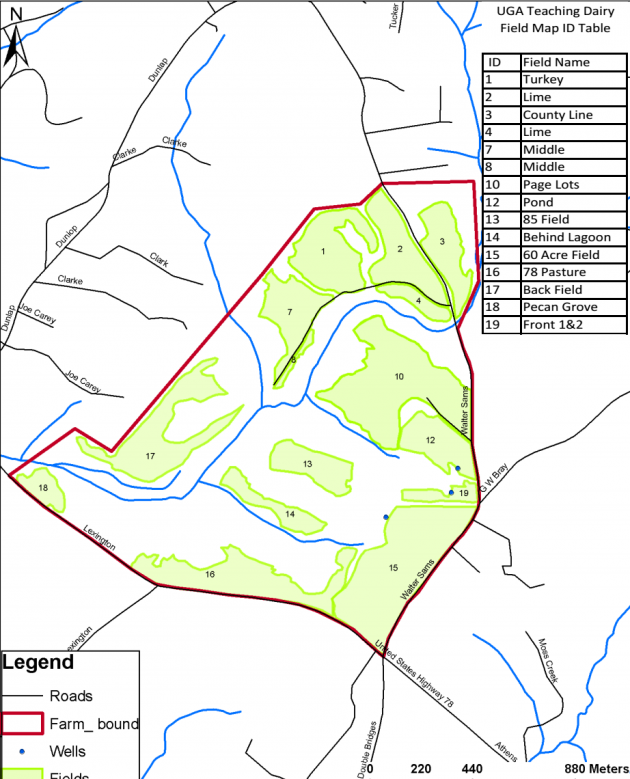
satellite map of University of Georgia swine farmWhat have we learned?

GHG emissions for the swine farm calculated using four different models are shown in Table 1. Estimates for GHG emissions in 2013 varied from 328228.06 kg CO2-equivalent (Pig Production Environmental Footprint Calculator (Version 3.X)) to 575000 kg CO2-equivalent using Clean Air-Cool Planet Campus Carbon Calculator (Version 6.9). While the Clean Air-Cool Planet Campus Carbon Calculator (Version 6.9) was the simplest one to use with only two inputs needed, it provided the highest estimates. Conversely, the Pig Production Environmental Footprint Calculator (Version 3.X) was the most complex and difficult to use but was the only tool that could adequately account for the anaerobic digester at this farm.

Table 1. Greenhouse gas emissions in swine farms 2013 using different models

We will finish calculating GHG emissions on the dairy farm and compare models based on carbon footprints and time and effort required. We will investigate a variety of proposed management changes on both farms to determine the resulting impacts on carbon footprints.

Authors

Lin Ma, master student in Department of Crop and Soil Science, University of Georgia malin12@uga.edu

Mark Risse, professor in Department of Crop and Soil Science, University of Georgia

Additional Information

Cool Farm Tool (Version 2.0) https://app.coolfarmtool.org/account/login/?next=/

COMET-FARM Tool http://cometfarm.nrel.colostate.edu/

Farm Smart (Version 1.5) http://sites.usdairy.com/farmsmart/Pages/Home.aspx

Acknowledgements

Thanks to Drs. Lane Ely and Robert Dove and the employees and managers at the UGA Swine and Dairy Centers for supplying information and time to us for this effort.

The authors are solely responsible for the content of these proceedings. The technical information does not necessarily reflect the official position of the sponsoring agencies or institutions represented by planning committee members, and inclusion and distribution herein does not constitute an endorsement of views expressed by the same. Printed materials included herein are not refereed publications. Citations should appear as follows. EXAMPLE: Authors. 2015. Title of presentation. Waste to Worth: Spreading Science and Solutions. Seattle, WA. March 31-April 3, 2015. URL of this page. Accessed on: today’s date.
Technologies for Anaerobic Digestion of Flushed Swine Manure

Hog farmers face a unique challenge to implement digestion — namely the low volumetric methane yield of wet swine manure.  The most common digester used on hog farms using flushing systems is the covered lagoon.  This presentation explores the technical feasibility of high rate reactors for low solids swine manure.  Systems compared are Contact Stabilization Reactors, Upflow Anaerobic Sludge Blanket Reactors (UASB), Fixed Filmed Reactors, and Anaerobic Sequencing Batch Reactors (ASBR).  Contact Stabilization and UASB technology have been available since the 1970s, but are mostly found in industrial settings. Their main drawback for swine manure treatment is the required operator skill level.  UASB digesters also have difficulty handling the uneven solids flow from flushed or pull-plug barns.  Fixed film reactors have been successfully used in agriculture, but require solids separation before digestion.  The separator creates two waste streams and removes organic matter that could potentially be available for digestion.  ASBR technology was developed in the 1990s.  An ASBR digester was successfully operated at the Oklahoma Swine Research and Education Center in the 2000s.  Hydraulic retention time for this farm scale ASBR ranged between 5 and 20 days.  Maximum methane yield was 0.55 m3 CH4 kg-1 VS day-1.  Organic matter reduction efficiency was 50 to 75 % measured as Chemical Oxygen Demand (COD).  Current work on solids settling and retention will allow ASBR digesters to reach their full potential in swine production systems. Related: Treatment Technologies for Livestock Manure

Why Consider Anaerobic Digestion on Pig Farms?

Anaerobic digestion can reduce the carbon footprint of swine production, while substantially lowering the fossil fuel energy required to feed and raise hogs. However, economic analyses show that anaerobic digestion on swine farms using complete mix digesters to produce electrical energy have a net negative present value unless carbon credits in the price range of $10 to $12 per metric ton of CO2eq are given for methane emissions reduced (Cowley, 2015). The two factors negatively affecting the economic viability of complete mix digesters are high capital cost and relatively low biogas output of reactors. Capital cost of digesters is directly related to the hydraulic retention time (HRT) of reactors. Farm-scale complete-mix digesters treating swine manure have retention times ranging from 18 to 30 days (Fisher, et al., 1979; Schulte, et al., 1985; Zhang, et al., 1990). Methane yields of these digesters was between 0.22 to 0.25 m3 CH4 kg-1 V S, and reactor volumetric efficiencies ranged between 0.35 to 0.40 m3 CH4 m-3 reactor day-1.

What did we do?

High rate digesters are reactors that separate solids retention time (SRT) from HRT. High rate reactors shorten HRT, which results in smaller, less costly digesters. High rate digesters also have higher methane yields than complete mix reactors. Several high rate systems have successfully treated swine manure at the laboratory and pilot scale. Systems tested include fixed film, suspended particle attached growth (SPAG), and upflow anaerobic sludge blanket (UASB) reactors treating the liquid portion of swine manure after solid-liquid separation; and contact stabilization, anaerobic sequencing batch (ASBR), and anaerobic baffled (ABR) reactors treating whole, diluted swine manure. ASBR systems have used both single reactor and multiple reactors in series. Despite the success of laboratory studies, few farm-scale high rate reactors exist on the farm scale.you

What have we learned?

A 400 m3, single vessel ASBR was operated for two years on a 128 sow farrow-to-finish hog farm at the Oklahoma State University Swine Research and Extension Center. (Hamilton and Steele, 2014) . Methane yield was 0.55 m3 CH4 kg-1 VS, and COD removal efficiency was 73% when operated at a 20 day HRT with operating temperature ranging between 22 and 32oC. Methane yield was 0.38 m3 CH4 kg-1 VS and COD removal efficiency was 57% when operated at a 5 day HRT with operating temperature between 22 and 24oC. The digester, as built, was 4 times larger than it needed to be. Using microbial kinetic modeling, the volumetric efficiency of a 100 m3 digester operating at 5 day HRT was estimated to be 0.73 m3 CH4 m3 reactor day-1.

Future Plans

Further work with ASBR digesters is underway. We are working to improve the mixing, settling, and solids trapping efficiency of the ASBR. ASBR reactors are also highly adaptable to receive high energy low solids digestion co-products. Pilot testing has shown volumetric efficiency of swine manure ASBR can be increased 4 to 6 fold with augmentation with waste glycerol from biodiesel production.

Author

Douglas W. Hamilton, Associate Professor at Oklahoma State University

dhamilt@okstate.edu

Additional information

Cowley, C. 2015. Economic Feasibility of Anaerobic Digesters with Swine Operations. Unpublished Thesis. Stillwater, OK: Oklahoma State University.

Fisher, J.R., N.F. Meador, D.M. Sievers, C.D. Fulhage, and E.L. Iannotti. 1979. Design and operation of a farm anaerobic digester for swine manure. Trans ASABE 22(5):1129.

Hamilton, D.W. and M.T. Steele. 2014. Operation and performance of a farm-scale anaerobic sequencing batch reactor treating dilute swine manure. Trans ASABE. 57(5):1473.

Schulte, D.D., Kottwitz, T.J. Siebenmorgen. 1985. Design and operation of a flexible cover, precast concrete anaerobic digester for swine manure. Pp 509-515, in Agricultural Waste Utilization and Management, Proceedings of the 5th International Symposium on Agricultural Wastes. St Joseph, MI: ASABE.

Zhang, R.H., J.R. North, and D.L. Day. 1990. Operation of a field-scale anaerobic digester on a swine farm. Applied Engineering in Agriculture. 6(6):771.

The authors are solely responsible for the content of these proceedings. The technical information does not necessarily reflect the official position of the sponsoring agencies or institutions represented by planning committee members, and inclusion and distribution herein does not constitute an endorsement of views expressed by the same. Printed materials included herein are not refereed publications. Citations should appear as follows. EXAMPLE: Authors. 2015. Title of presentation. Waste to Worth: Spreading Science and Solutions. Seattle, WA. March 31-April 3, 2015. URL of this page. Accessed on: today’s date.
The Natural Farming Concept: A New Economical Waste Management for Small Family Swine Farms


Why Look at Inoculated Deep Litter Systems?

The most critical issue facing livestock and other small family operations nationwide is the development and implementation of cost effective pollution prevention technology. Our livestock producers, especially swine, continue to seek a best management practice (BMP) that is effective, economical, and practical, and in compliance with new US EPA laws. The Department of Health, Natural Resource Conservation Service, Hawaii Soil and Water Conservation Districts and the Cooperative Extension Service have been working diligently to address both federal and state waste management compliance needs of the local pork producer. As a result, the industry currently implements effluent irrigation, composting, deep litter technology, lagoon storage and solid separation as possible solutions for on-farm nutrient management. Unfortunately, due to new and revised EPA regulations, which now include nuisance odor and vector components, many of these strategies no longer meet federal criteria for BMPs.

In 2006, a system of waste management, with the potential to be implemented as a BMP under federal regulations, was discovered in Korea during a visit to the Janong Natural Farming Institution. The concepts of naturally collected micro-organisms, green waste deep litter, and a piggery design with strategic solar and wind positioning was being practiced in several countries in Asia and the Pacific Basin. Over the past six years, these concepts have been tested in Hawaiʻi to provide small swine farms with another BMP that is in compliance with current EPA regulations.

What did we do? 

For the past six years, the Extension Service has been touring many hog farms and conducting numerous educational seminars on the Inoculated Deep Litter System (IDLS). The number of IDLS piggery operators has increased dramatically due to farmers coming out of retirement, producers retrofitting and replacing their wash-down swine operations as well as new farmers trying their hand at raising hogs. A major factor of the great interest toward the IDLS piggery is the minimal labor and time to operate the system compared to the traditional style of raising hogs with daily wash downs of the pig pens. Other important factors include the concept of collected micro-organisms, a layering of the deep litter green waste system, and designing piggery housing with strategic solar and wind positioning to keep the facility cool and dry. The success of the IDLS system is exemplified by the following: 1) Low maintenance since litter pens never have to be cleaned, 2)has no odor or ve ctor problems if managed correctly and 3) development of cost effective housing.

What have we learned? 

IDLS incorporates four components: 1) self-collected, site-specific (or indigenous) micro-organisms (IMOs), 2) green waste, 3) natural ventilation, and 4) facility positioning relative to sunlight. The livestock facility is kept dry with natural ventilation and sunlight, which promotes proper fermentation of the pen litter (combination of green waste and livestock waste) thus preventing nuisance fly breeding and odors generated by proliferation of undesirable organisms.

Solar positioning. The building’s foundation is positioned from north to south, with the south end serving as the entrance to the facility. This takes advantage of maximizing sunlight traveling east to west, which provides adequate ultraviolet light, heating, and drying. Sunlight and ventilation help to promote drying, thus preventing liquid accumulation (from livestock waste, watering nipples or troughs, rain) in the litter, which deters the fermentation process from turning anaerobic, and eliminates conditions ideal for odor and fly breeding. (Note: orientation applies to the Northern Hemisphere and positioning should be reversed for application in the Southern Hemisphere.)

Natural ventilation. The building is designed with a high (14 ft H), vented roof, and walls (10 ft H) which have openings to the outside. Cool trade winds are allowed to blow through the building, forcing warm air to rise and be eliminated through the vented roof. This helps to dissipate heat generated from microbial fermentation in the litter, keeps the litter dry through constant air movement, and cools the facility during the hot season. During the rainy season, simple roll-down siding can be installed to keep rain out.

Deep Litter. In order to fulfill EPA regulations that require an impervious bottom to all waste handling facilities, there must be either a concrete slab or a thick (30 mil) plastic liner as the base of the building. Green waste, with a minimum depth of 4 feet, is then strategically layered to start the IDLS. The first layer consists of roughly a half foot of cinders mixed with bio-char (not charcoal briquettes). The second layer consists of 2 feet of cut logs. Logs should be at least 3 to 4 feet long and can range in diameter from 2” or more (larger, longer logs deter pigs from rooting them to the surface). The third layer is comprised of either leaves or fronds covered with assorted green waste. The next step is too lightly spread about one pound of IMO-4 and soil to every 50 square feet of surface area in the IDLS pen. For example, a 100 sq ft pen will require 2 pounds of IMO-4 applied in the third layer. The final step is to add about a half foot of sawd ust. Two weeks before introducing animals into the pens, activate the microbes once with a mist spray of lactic acid bacteria (LAB) and fermented plant Juice (FPJ). You can add animals to the pen once you smell a yeasty odor in the litter, a sign that the microbes have been activated and are at work in the pen.

Micro-organisms: The only micro-organisms used are self-collected by the producer from the specific site of the facility. The profile of indigenous micro-organisms may vary greatly from place to place, from windward to leeward coasts, and even between neighboring properties. The initial, one-time misting with lactic acid bacteria (LAB) and fermented plant juice (FPJ) activates the microbes to increase in numbers. To learn how to make these activators, please attend a Natural Farming Input-Making class, or contact the Hawaiʻi Cooperative Extension Service (mduponte@hawaii.edu).

LAB and FPJ: These are self-made inputs. Go to CTAHR website for free publication

Future Plans 

Adaptation of concept overcome a major hurdle when the IDLS piggery became cost sharable with the federal government on November 15, 2012 and deemed a best management practice. Hog farmers who practice the IDLS are eligible in entering into a cost-share agreement with the U.S. Department of Agriculture (USDA) for Environmental Quality Incentive Program (EQIP) assistance and may file an application at any time and will further enhance the participation in the IDLSTo date nearly 50 retrofitted or new operations have been established in Hawaii. The IDLS has been introduced and being practiced in 11 states, Micronesia and various countries of the world. Future plans include implementing the technology to large scale operations, making of feed utilizing other natural farming techniques and evaluating the compost for organic plant propagation. The system is currently being tested with Poultry Production

Author   

Michael DuPonte, Extension Agent University of Hawaii at Manoa, College of Tropical Agriculture and Human Resources (CTAHR). mduponte@hawaii.edu

Additional information 

Publications

H. Park and M.W. DuPonte., 2010., How to Cultivate Indigenous Microorganisms, Biotechnology, CTAHR., June, BIO-9.

M. DuPonte and D. Fischer., Most Frequently Asked Questions on the IDLS Piggery, The Natural Farming Concept A New Economical Waste Management Stem for the Small Family Swine Farms in Hawaii., 2012., Livestock Management., Sept. , LM-23

D. M. Ikeda, Weinert Jr., E., Chang K.C.S., Mc Ginn, J.M., Miller S., Keliihoomalu, and DuPonte, M.W., 2013., Natural Farming: Fermented Plant Juice, Sustainable Agriculture, CTAHR., July, SA-7.

S. Miller, Ikeda, D.M., Weinert Jr., E., Chang K.C.S., Mc Ginn, J.M., Keliihoomalu, and DuPonte, M.W., Natural Farming: Lactic Acid Bacteria, Sustainable Agriculture, CTAHR., August, SA-8.

Acknowledgements      

Kang Farms of Kurtistown, Hawaii, David Fischer (NRCS), Justin Perry III (NRCS) and Lehua Wall (CTAHR)

The authors are solely responsible for the content of these proceedings. The technical information does not necessarily reflect the official position of the sponsoring agencies or institutions represented by planning committee members, and inclusion and distribution herein does not constitute an endorsement of views expressed by the same. Printed materials included herein are not refereed publications. Citations should appear as follows. EXAMPLE: Authors. 2015. Title of presentation. Waste to Worth: Spreading Science and Solutions. Seattle, WA. March 31-April 3, 2015. URL of this page. Accessed on: today’s date.

Composting Swine Slurry to Reduce Indicators and Antibiotic Resistance Genes


Purpose 

Over the last twenty years there have been considerable increases in the incidence of human infections with bacteria that are resistant to commonly used antibiotics. This has precipitated concerns about the use of antibiotics in livestock production. Composting of swine manure has several advantages, liquid slurries are converted to solid, the total volume of material is reduced and the stabilized product is more easily transported off-site. The goal of this study was to determine if composting can also be used to reduce the concentration of indicators and bacteria containing genes for antibiotic resistance (AR) in swine manure.

What did we do? 

Sample Analysis:

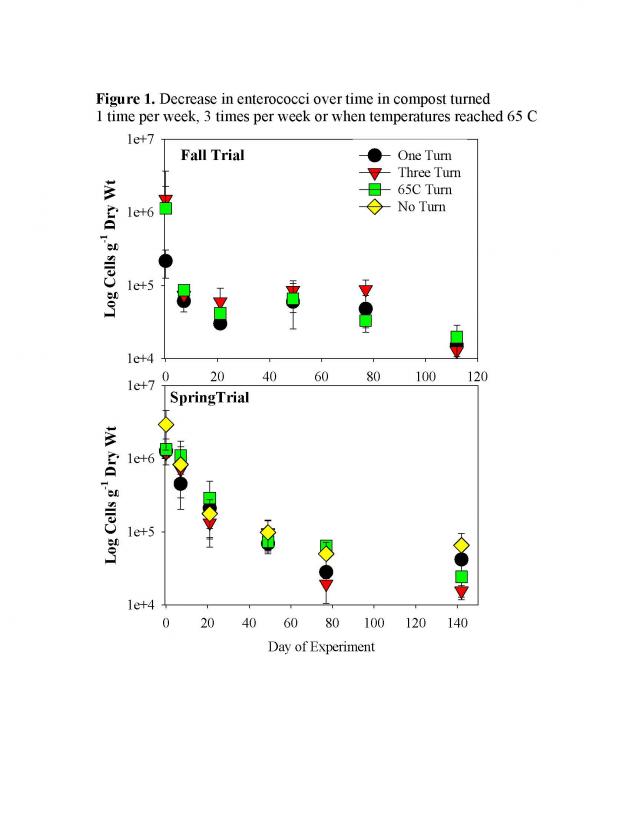
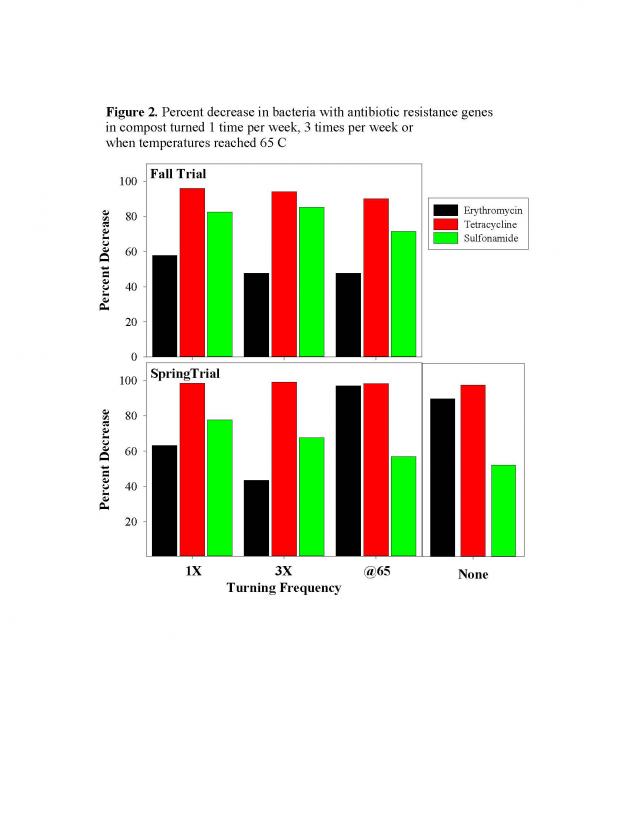
Compost trials were conducted in either fall (FT) or spring (ST) and piles were turned once, three times or upon reaching 65 ºC. Microbial indicators and populations with AR genes for tetracycline, erythromycin and sulfonamide resistance were quantified by culture and/or quantitative, real-time (qPCR) analysis.

Compost materials and conditions:

Decomposed materials (a mixture of swine slurry and woodchips) were obtained on two separate occasions from swine high-rise finishing facilities (HRFF) located in western Kentucky. The HRFF houses between 4,000 and 4,800 swine which are placed in the facility at 18 to 20 kg and are removed after three months (weighing about 105 kg). The high-rise floor raises the living area 3.7 m above the ground. Manure, excess feed, water and wastewater drop through slatted floors into 2.5 cm screened woodchips (average size 1.9 ± 0.9 cm). The slurry-woodchip material was turned up to three times per week while under the HRFF. When the material was visibly moist, reducing its ability to absorb additional waste materials, it was removed from the facility for finishing in windrows. In fall 2011 (FT) and Spring 2012 (ST), HRFF slurry-woodchip mix (approximately 60 m3 weighing 48.4 Mg) was brought by semi-trailer trucks to the Western Kentucky University Agricultural complex where ma terials were divided into three or four windrow piles. In the FT, swine slurry-woodchip mixes having a bulk density of 849.6 kg m-3 and consisting of around 19.6 m3 of material were formed into three piles of approximately 10.4 m x 2.1 m x 0.9 m (L x W x H). In the ST, swine slurry-woodchip mixes having a bulk density of 778.4 kg m-3 and consisting of around 18.8 m3 of material were formed into three piles of approximately 5.8 m x 2.7 m x 1.2 m (L x W x H) and a fourth batch (unturned) was left piled at the side (0X; 3.6 m3). In each study, piles were turned using a windrow compost turner either once per week (1X), three times per week (3X) or upon the internal compost temperature reaching 65 ºC (@65). Compost for the FT @65 treatment heated to 65 ºC by day 14 and was turned 11 times over the course of the trial. However, during the ST, the @65 pile did not heat for the first 63 days (mean temperature 27 ± 8 ºC) therefore weekly turning was initiated at that time. Samples were taken on days 0 and three and then weekly for the first 12 weeks and bi-weekly until composting was stopped at day 112 for the FT and day 142 for the ST.

What have we learned? 

In the FT, concentrations of enterococci decreased below culturable detection within 21 days, corresponding with a 99% decrease in detection by qPCR (Fig. 1). Similar decreases in qPCR detection in the ST took longer (day 49 or day 77 of composting). Changes in the concentration of bacteria with AR genes varied by antibiotic type (erythromycin (36% – 97%), tetracycline (94% to 99%) and sulfonamide (53% to 84%) and compost season (greater decreases in ST). There were few differences based on turning regime. Even the unturned compost pile had 90%, 98% and 56% reduction in bacteria resistant to erythromycin, tetracycline and sulfonamide, respectively.

Results suggest that composting effectively decreases the concentration of indicators and AR genes in swine manure. As concerns over antibiotic resistance and pathogens increase, composting provides a valuable manure management tool for decreasing contaminants and improving the value of this material as a soil conditioner.

Future Plans    

Volume reduction, low moisture and low readily degradable organic matter suggest that the finished compost would have lower transportation costs and should provide value as a soil conditioner. Studies are warranted to evaluate its agronomic value as an alternative source of plant nutrients. Future studies will be conducted to evaluate the nutrient value this compost as an organic fertilizer for row crop production.

Authors       

Kimberly Cook, Research Microbiologist, USDA ARS kim.cook@ars.usda.gov

Carl Bolster, USDA ARS; Karamat Sistani, USDA ARS

Additional information                

http://www.ars.usda.gov/main/site_main.htm?modecode=50-40-05-00

Acknowledgements      

This research was conducted as part of USDA-ARS National Program 214: Agricultural and Industrial By-products: CRIS 6445-12630-004-00D. Mention of trade names or commercial products in this article is solely for the purpose of providing specific information and does not imply recommendation or endorsement by the USDA.

Proceedings cook figures 1

Proceedings cook figures 1
Proceedings cook figures 2

Proceedings cook figures 2


The authors are solely responsible for the content of these proceedings. The technical information does not necessarily reflect the official position of the sponsoring agencies or institutions represented by planning committee members, and inclusion and distribution herein does not constitute an endorsement of views expressed by the same. Printed materials included herein are not refereed publications. Citations should appear as follows. EXAMPLE: Authors. 2015. Title of presentation. Waste to Worth: Spreading Science and Solutions. Seattle, WA. March 31-April 3, 2015. URL of this page. Accessed on: today’s date.

Adaptation and Risk Management

Food production is dependent on weather and climate. Agriculture must always be planning and preparing for weather or responding to weather as it happens. Adaptation to weather and climate has occurred since farming started and will continue to occur as we move forward in the future. The rate of adaptation is the key to keep up with the rate that the climate changes.

Factsheet: Adapting to a changing climate: A planning guide (PDF; 44 pp)

Climate Change Adaptation is the most common terminology used to discuss how organisms and ecosystems adjust to changing extremes or patterns in weather over time. Most cities and states are drafting plans to help prepare for weather events such as flooding, extreme heat events, disease outbreaks, and others.

Risk Management is a term more commonly used in business and refers to the process of identifying, assisting, and prioritizing of risk followed by some application of resources (usually time or money) to prevent or minimize the negative consequences.

A report from Iowa Beef Center in 1995 discussed a survey of beef producers who lost cattle in a 13 county area over a 2 day period. For those farmers loosing animals, the impact was significant but a quote from the paper sums up the cost benefit decision that must be made when planning for a changing climate.

“How much can a feedlot operator spend to protect against a weather event that has occurred only six times in the last 101 years?”

This is a real and critical question that must be asked. What if this similar type of heat event started occurring every 10 years, or every 5 years? This changes the equation when looking at risk and reward or cost benefit to the implementation of practices or systems to deal with extreme heat.

Adaptation Strategies

Adaptation strategies lay on a continuum with the least drastic listed first (increasing resilience) and most drastic last (transformation).

  • Increasing resilience is a level of adaptation that is similar to what has occurred in the past. As climate changes, technologies or management improves or adjusts to those changes. Resilience has resulted in animal housing, irrigation, diet, genetics, management and other factors that allow farms to be profitable with standard weather variability.
  • Reducing vulnerability is adaptation at the next level with larger and longer term changes in an existing operation to reduce the risk of current or future climate trends. Things such as bringing in heat tolerant genetics, additional cooling capacity in the buildings, or farm diversification. These strategies require a higher investment and are focused on operational changes that allow for profitability into the future.
  • Adaptation through transformation are those changes where the current farming system is nearly abandoned due to climate changes. Complete changes are made in cropping or animals or a new business venture replaces the one on the current site. Transformation might also include the general migration of an industry to a new climate region.

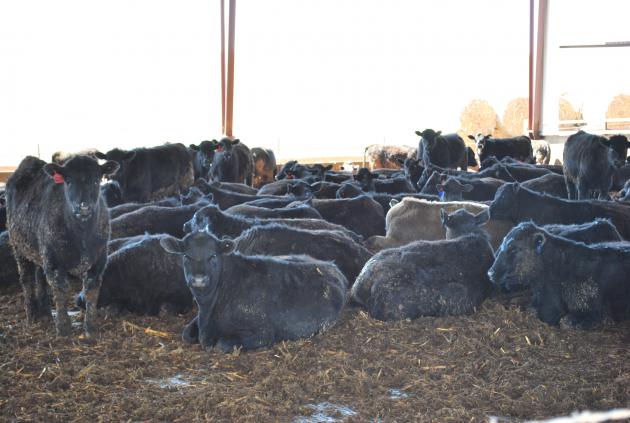
cattle loafing on a bed pack in their barn

Any adaption strategy must be chosen as a function of the site specific features of the farm. Geographic location, current management, current finances, long term and short term farm goals and other considerations need to be made when evaluating farm management and business changes. In addition, the strategy must be based on the current or predicted trends in weather and the impacts this might bring to the farm. A farm prone to flooding in a region where flooding trends are increasing may be interested in a transformational adaptation strategies like relocation than a farm that never experiences flooding.

Cost benefits of these adaptation strategies are not simple. If we were only comparing damage cost to the cost to prevent the damage, the calculation would be simple. Unfortunately, the damage cost is a function of the probability of the weather event and its intensity. For now we must rely on recent weather trends and future climate predictions. Therefore, it is important to be informed about climate change, the impacts of climate change on a local and global level and the economics of adaptation options. Site assessment and planning are key to making good long term adaptation decisions.

Educator Materials

If you would like a copy of the original slides or downloadable copy of the video, please fill out this form. If you use these materials for educational purposes, please send an email to e.whitefield@wsu.edu with how you used the video and how many people watched, to help us improve our resources and document our impact.

Recommended Reading/Viewing

Agricultural Adaptation to Climate Change: Economic and Environmental Implications Vary by Region More… (USDA Economic Research Service, 2012)

Dairy Cattle – Heat Stress

Beef Feedlot Cattle – Heat Stress

Rangeland/Pasture – Drought

Swine Heat Stress

Poultry Heat Stress

Drought: Water Quality and Quantity

Disaster Preparedness Resources

Acknowledgements

Author: David Schmidt, University of Minnesota schmi071@umn.edu

This material was developed through support from the USDA National Institute for Food and Agriculture (NIFA) under award #2011-67003-30206.

Economic Analysis of Swine Diet Cost Versus Manure Value

Waste to Worth: Spreading science and solutions logoWaste to Worth home | More proceedings….

Abstract

In high yielding row crop intensive regions the role of swine manure as a crop nutrient source has increased in value, replacing the purchase of increasingly expensive commercial fertilizer by providing the nutrient needs of crops.  Nutrients from manure are recycled to fertilize high yielding crops in an environmentally friendly, synergistic system. 

Access to the value of the nutrients in manure has been a primary motivation for constructing swine facilities.   However, as the energy cost of swine diets has increased, feeding programs have been dramatically changed.  Changes in ingredients composition has changed from manipulations of dietary formulations.  These changes can alter the nutrient composition of the resulting manure and thus the nutrient value of the manure as fertilizer.  What does not occur is the consideration that owners/users of the manure composition and if changes need to be made in application rates for optimizing fertilizer rates for crops.

The swine nutritionist can reduce the nitrogen (N) level in manure by 40 or 50% or they can increase the N level by 76%.   If the nitrogen produced by a pig is, for example worth $4 as a manure nutrient.   The range in value will be from $2/head to $7/head depending on diet formulation.    The broader analyses that producers should think about is comparing feed savings from diet manipulation to loss or gain of manure value from that manipulation.    Case studies that will be discussed include low protein synthetic amino acid addition, phytase addition, and feeding DDGS.  

Information will be presented that will compare feed cost savings from common diet manipulation strategies to the change in the nutrient value of the manure because of the diet manipulation.  We are developing a simple spreadsheet to help understand the economics on a holistic operation basis, that we plan to make available to workshop participants.

Why Look At the Value of Manure Nutrients When Formulating Pig Rations?

Producers in Iowa entering the pig business by constructing a contract barn are often influenced by the potential value of manure from that facility.  There is interest in saving the expense of commercial fertilizer.  Most of these producers, especially those that are row crop oriented with limited swine experience, don’t realize that swine diet formulation will change the manure value. 

In Iowa at the farm level nutrients in manure are highly valued for commercial fertilizer replacement, crop and swine production systems are symbiotic.  Crops feed the livestock and manure from the livestock is used as fertilizer for crops.   Therefore, in Iowa manure has typically been highly regarded for its fertilizer value.

However, the manure can be dramatically changed by diet formulation and thereby the nutrient content of the principle fertilizer components, Nitrogen (N) and Phosphorus (P).  Thus the value of the manure used for fertilizer changes as well.   

Contract growers should realize that the value of the manure can be dramatically changed by diet formulation, and that usually the lower cost diet results in less value in the manure nutrients.   Also, that it is possible that the value of the nutrients for the crop is actually less than the cost to haul.   Therefore, the purpose of this talk is to discuss the whole farm financial and environmental impact of formulating a change in the swine diet compared to the change in the level of nutrients in swine manure.  

We want producers to be aware of the value of swine manure for various reasons.  A common problem in the field is that manure is spread on the field adjacent to the facility, therefore soil P levels typically are increased to the upper levels of very high soil test leading to potential pollution problems.  If the concentration of nutrients is increased through diet formulation the extra value would make it more likely to economically haul the manure to a low testing, more environmentally friendly field.  The reason swine producers have not understood that diet formulation changes nutrient density is because large differences in water management/wastage have hidden the diet formulation changes.  Therefore, measuring manure yield per pig using a manure test is an important management tool not yet utilized by producers. 

What Did We Do?

We built a spreadsheet to compare the feed savings from diet formulation to the value of nutrients in the manure.   Additionally, Dr Matt Swantek developed a feeding model to predict the feed cost  and manure nutrient changes on a per pig basis so swine producers will be able to see and understand the concept. 

What Have We Learned?

With diet formulation, the value of the swine manure will vary greatly.  In the model we used, given the price assumptions the value of manure ranged from $41.52 to $84.77 per 1000 gallons.  The range is more than $5.00 per head.  This is 2.5 times more than the standard labor cost of about $2.00 per head.   It is desirable environmentally to transport to low P soil test fields rather than over application of nutrients in the field next to the facility, higher nutrient value per gallon is more economically feasible to transport.  Water wastage causes wide variation in manure test results and masks the diet formulation differences that are important to the producer.  With diet formulation and water wastage it is possible to decrease to value of the manure below the cost of application.  Measuring nutrient yield per pig is important to know.  It can be determined calculating the gallon of manure produced per pig, the number of pigs per 1000 gallon and then calculating each pig’s nutrient (NPK) contribution based on the manure test pound of nutrient per 1000 gallon. 

Future Plans

We plan to hold educational workshops regarding this topic and make the spreadsheet tool available on line to help producers understand these concepts

Authors

David Stender, Iowa State University Extension Swine Field Specialist dstender@iastate.edu

Dr Matt Swantek, Iowa State University Extension Swine Field Specialist

Additional Information

Call or email Dave Stender at dstender@iastate.edu or 712 261 0225 or Matt Swantek at mswantek@iastate.edu  or visit the Iowa Pork Industry Center web page (the decision aid tool will be posted there when it is completed:  http://www.ipic.iastate.edu/


The authors are solely responsible for the content of these proceedings. The technical information does not necessarily reflect the official position of the sponsoring agencies or institutions represented by planning committee members, and inclusion and distribution herein does not constitute an endorsement of views expressed by the same. Printed materials included herein are not refereed publications. Citations should appear as follows. EXAMPLE: Authors. 2013. Title of presentation. Waste to Worth: Spreading Science and Solutions. Denver, CO. April 1-5, 2013. URL of this page. Accessed on: today’s date.

Staying Ahead of the Curve: How Farmers and Industry Are Responding to the Issue of Climate Change

Waste to Worth: Spreading science and solutions logoWaste to Worth home | More proceedings….

Why Is This Topic Important?

Several farmers, ranchers, and industry groups are leading the way on the issue of climate change. 

What Will Be Learned In This Presentation?

These panelists will share how their farm or industry is responding to climate change, what factors are driving their decision to make changes, and the impact of climate change on long-term planning. This moderated session will encourage audience questions and facilitate exchange of ideas on how the agriculture industry can meet this challenge.

Presenters

David Smith, Southwest Region Coordinator Animal Agriculture and Climate Change Project, Texas A&M University dwsmith@ag.tamu.edu and Liz Whitefield, Western Region Coordinator, Washington State University

  • Jamie Burr –  Tyson Foods, Chair National Pork Board Environment Committee
  • Abe Collins – cattle grazier, Cimarron Farm, Regenerative Farmscaping consultant, Board Member Soil Carbon Coalition
  • Paul Helgeson – Sustainability Director with Gold’n Plump Chicken
  • Bryan Weech, Director Livestock & MTI Commodity Lead, World Wildlife Fund
  • Andy Werkoven – dairyman and anaerobic digester co-owner, Werkhoven Dairy Inc., 2012 winner of US Dairy Sustainability Award


Inhibition Of Total Gas Production, Methane, Hydrogen Sulfide, And Sulfate-Reducing Bacteria From In Vitro Stored Swine Manure Using Condensed Tannins

Waste to Worth: Spreading science and solutions logoWaste to Worth home | More proceedings….

Abstract

Management practices from large-scale swine production facilities have resulted in the increased collection and storage of manure for off-season fertilization use.  Odor produced during storage has increased the tension among rural neighbors and among urban and rural residents, and greenhouse gas emissions may contribute to climate change.  Production of these compounds from stored manure is the result of microbial activity of the anaerobic bacterial populations present during storage.  We have been studying the bacterial populations of stored manure to develop methods to reduce bacterial metabolic activity and production of gaseous emissions, including the toxic odorant hydrogen sulfide produced by sulfate-reducing bacteria.  Quebracho and other condensed tannins were tested for effects on total gas, hydrogen sulfide, and methane production and levels of sulfate-reducing bacteria in in vitro swine manure slurries.  Quebracho condensed tannins were found to be most effective of tannins tested, and total gas, hydrogen sulfide, and methane production were all inhibited by greater than 90% from in vitro manure slurries.  The inhibition was maintained for at least 28 days.  Total bacterial numbers in the manure were reduced significantly following addition of quebracho tannins, as were sulfate-reducing bacteria.  These results indicate that the condensed tannins are eliciting a collective effect on the bacterial population, and the addition of quebracho tannins to stored swine manure may reduce odorous and greenhouse gas emissions.

Why Would We Want to Inhibit Gas Production of Stored Manure?

Develop methods for reducing odor and emissions from stored swine manure.

What Did We Do?

Tested the effects of addition of condensed tannins to in vitro swine manure slurries on  production of total gas, hydrogen sulfide, methane, and on the levels of hydrogen sulfide-producing sulfate reducing bacteria.

What Have We Learned?

Addition of condensed tannins to in vitro swine manure slurries reduces production of total gas, with quebracho condensed tannins being the most effective.  0.5% w/v Quebracho condensed tannins reduced total gas, hydrogen sulfide, and methane by at least 90% over a minimum of 28 days.  Levels of sulfate reducing bacterial were also significantly reduced by addition of the tannns.  This technique should assist swine producers in lowering emission and odors from stored manure.

Future Plans

We are interested in scaling up the testing to on-farm sites and also testing the tannins for reducing foaming from manure storage pits.

Authors

Terence R. Whitehead, Research Microbiologist, USDA-ARS-National Center for Agricultural Utilization Research, Peoria, IL 61604, terry.whitehead@ars.usda.gov

Cheryl Spence, USDA-ARS-National Center for Agricultural Utilization Research, Peoria, IL 61604

Michael A. Cotta, USDA-ARS-National Center for Agricultural Utilization Research, Peoria, IL 61604

Additional Information

Whitehead, T.R., Spence, C., and Cotta, M.A.  Inhibition of Hydrogen Sulfide, Methane and Total Gas Production and Sulfate-Reducing Bacteria in In Vitro Swine Manure Slurries by Tannins, with Focus on Condensed Quebracho Tannins. (2012) Appl. Microbiol. Biotech. http://link.springer.com/article/10.1007/s00253-012-4562-6/fulltext.html

Development and Comparison of SYBR Green Quantitative Real-Time PCR Assays for Detection and Enumeration of Sulfate-Reducing Bacteria in Stored Swine Manure.  (2008) J. Appl. Microbiol. 105: 2143-2152.  http://onlinelibrary.wiley.com/doi/10.1111/j.1365-2672.2008.03900.x/pdf

USDA-ARS-NCAUR Bioenergy Research Unit Home Page: http://ars.usda.gov/main/site_main.htm?modecode=36-20-61-00


The authors are solely responsible for the content of these proceedings. The technical information does not necessarily reflect the official position of the sponsoring agencies or institutions represented by planning committee members, and inclusion and distribution herein does not constitute an endorsement of views expressed by the same. Printed materials included herein are not refereed publications. Citations should appear as follows. EXAMPLE: Authors. 2013. Title of presentation. Waste to Worth: Spreading Science and Solutions. Denver, CO. April 1-5, 2013. URL of this page. Accessed on: today’s date.

Combination of Borax and Quebracho Condensed Tannins Treatment to Reduce Hydrogen Sulfide, Ammonia and Greenhouse Gas Emissions from Stored Swine Manure

Waste to Worth: Spreading science and solutions logoWaste to Worth home | More proceedings….

Abstract

Livestock producers are acutely aware for the need to reduce gaseous emissions from stored livestock waste and have been trying to identify new technologies to address the chronic problem.  Besides the malodor issue, toxic gases emitted from stored livestock manure, especially hydrogen sulfide (H2S) and ammonia (NH3) are environmental and health hazards for humans and animals and under scrutiny by the Environmental Protection Agency for regulatory control of concentrated animal farm operations (CAFOs). 

These odorous and toxic gases are produced by bacteria during the fermentation of the stored manure.  Sulfate reducing bacteria convert sulfate (SO4) to sulfide (H2S) during the fermentation.  During storage of swine manure, about 60% of NH3 nitrogen is also loss.  If NH3 loss can be prevented, the fertilizer value of swine manure would improve and reduce the need for additional commercial nitrogen fertilizer.

There are very few technologies available to reduce H2S, NH3 and greenhouse gas emissions from stored livestock manure, which meet the criteria of being: inexpensive, safe for farmers and animals, and environmentally sustainable. Previous research has shown that borax and quebracho condensed tannin are effective in inhibiting H2S production in stored swine manure. The present research demonstrates that a combination of borax and quebracho condensed tannin is highly effective in reducing all gaseous emissions (H2S, NH3, CO2, CO, N2O and CH4) and in retaining more nitrogen in swine manure. Lesser amounts of borax and quebracho condensed tannin are needed when combined to achieve a similar reduction in H2S production to using much larger amounts of either product alone. 

Phytotoxicity studies show that the level of tolerance of crops to borax-tannin combination treated swine manure is:  alfalfa > corn > wheat > soybean >> dry beans.  Quebracho condensed tannin does not appear to be toxic to crops.

Why Study Tannins?

Develop methods for reducing emissions from stored swine manure.

What Did We Do?

Tested the effects of addition of combinantions of borax and quebracho condensed tannins to swine manure slurries on  production of gaseous emissions and more retaining nitrogen in the manure.

What Have We Learned?

Addition of various combinations of borax and quebracho condensed tannins to swine manure slurries was highly effective in reducing all gaseous emissions (H2S, NH3, CO2, CO, N2O, and CH4) and in retaining more nitrogen in swine manure.  Lesser amounts of borax and tannin are needed when combined to achieve  a similar reduction in H2S production to using much larger amounts of either product alone.   Phytotoxicity studies show that the level of tolerance of crops to borax-tannin combination treated swine manure is:  alfalfa > corn > wheat > soybean >> dry beans. 

Future Plans

We are interested in transferring this research to on-farm sites.

Authors

Melvin Yokoyama, Professor, Dept. of Animal Science, Michigan State University, E. Lansing, MI 48824, yokoyama@msu.edu

Terence R. Whitehead, Research Microbiologist, USDA-ARS-National Center for Agricultural Utilization Research, Peoria, IL 61604

Cheryl Spence, USDA-ARS-National Center for Agricultural Utilization Research, Peoria, IL 61604

Michael A. Cotta, USDA-ARS-National Center for Agricultural Utilization Research, Peoria, IL 61604

Donald Penner, Dept. of Crops and Soil Sciences, Michigan State University, E. Lansing, MI 48824

Susan Hengemuehle, Dept. of Animal Science, Michigan State University, E. Lansing, MI 48824

Janis  Michael, Dept. of Crops and Soil Sciences, Michigan State University, E. Lansing, MI 48824

Additional Information

Whitehead, T.R., Spence, C., and Cotta, M.A.  Inhibition of Hydrogen Sulfide, Methane and Total Gas Production and Sulfate-Reducing Bacteria in In Vitro Swine Manure Slurries by Tannins, with Focus on Condensed Quebracho Tannins. (2012) Appl. Microbiol. Biotech. http://link.springer.com/article/10.1007/s00253-012-4562-6/fulltext.html

Development and Comparison of SYBR Green Quantitative Real-Time PCR Assays for Detection and Enumeration of Sulfate-Reducing Bacteria in Stored Swine Manure.  (2008) J. Appl. Microbiol. 105: 2143-2152.  http://onlinelibrary.wiley.com/doi/10.1111/j.1365-2672.2008.03900.x/pdf

USDA-ARS-NCAUR Bioenergy Research Unit Home Page: http://ars.usda.gov/main/site_main.htm?modecode=36-20-61-00


The authors are solely responsible for the content of these proceedings. The technical information does not necessarily reflect the official position of the sponsoring agencies or institutions represented by planning committee members, and inclusion and distribution herein does not constitute an endorsement of views expressed by the same. Printed materials included herein are not refereed publications. Citations should appear as follows. EXAMPLE: Authors. 2013. Title of presentation. Waste to Worth: Spreading Science and Solutions. Denver, CO. April 1-5, 2013. URL of this page. Accessed on: today’s date.

Youth Ag Greenhouse Gas Educational Lab Materials Via Pork Production Scenarios

Waste to Worth: Spreading science and solutions logoWaste to Worth home | More proceedings….

Abstract

Many of today’s high school students have little insight into the basic day-to-day operational decisions and challenges faced by Agricultural producers. Therefore, there is a need for the development of ag-centric and dynamic educational material. Furthermore; there is an even greater need to provide high-school instructors with innovative classroom materials and instructional tools that are conducive to the structured conveyance of ag principles. Targeting the need for these innovative ag educational materials within Arkansas classrooms, this project presents an dynamic lab activity with emphasis on introductory level subject matter about Arkansas swine production systems and the related greenhouse gas emissions. Due to the particular nature of the subject matter, the activity materials were crafted into two complementary products for practicality. The first product is a compilation of swine production reference materials including: terminology and layman definitions of Arkansas swine management strategies and the basic dynamics of greenhouse gasses (CO2, N2O, CH4) as they relate to swine production. The second product is a scenario based critical thinking exercise, implemented from a manipulative decision-tree platform.

Purpose

  1. Educate students within the state of Arkansas about the various management systems intrinsic to swine production operations within their state.
  2. Provide students insight into the management obstacles that Arkansas swine producers are challenged with through balancing Carbon footprints, economic resources, natural resources, and legal compliance with production profitability and productivity

What Did We Do?

This project presents an dynamic lab activity with emphasis on introductory level subject matter about Arkansas swine production systems and the related greenhouse gas emissions. The activity materials were crafted into two complementary products for practicality. The first product is a compilation of swine production reference materials including: terminology and layman definitions of Arkansas swine management strategies and the basic dynamics of common greenhouse gasses (CO2, N2O, CH4) as they relate to this activities scope of swine production. The reference material serves as both an introduction to basic ideas and practices native to swine production and GHGs, and as a guide which aids the students in completion of the second product (lab activity).

The second product is a scenario based critical thinking exercise, implemented from a manipulative decision-tree platform. Flashcards are used to represent three specific swine management systems using a three tier hierarchy. This hierarchy is distinguished by the allocation of Categories, Components, and Options. The “Categories” are the designated ranking class and will represent three major swine production management systems: Housing Management, Waste Management, and Feed Management. The “Components’ are the first sub-order class, and are used to represent various functions/considerations that comprise each “Category” of production system. The “Options” class holds the lowest position within the hierarchy and represents the different configurations/settings for the individual “Components”. For the context of this exercise the students will act as consultants hired by a producer to design the three management systems (via the flashcards) to “best match” the producer’s desired specifications, as defined within by a supplied catalog of unique scenarios.

Graphical reference to the hierarchical structure of the manipulatives used within this project’s lab activity.

Future Plans

Implementation of this project’s developed lab-activity within Arkansas’ high school classrooms via the Arkansas Farm Bureau supported (Ag-In-the-Classroom) program.

Authors

Szymanski “Rick” Fields II, Program Associate, Biological and Agricultural Engineering, University of Arkansas Division of Agriculture Extension rfields@uaex.edu

Karl VanDevender, Professor-Engineer, Biological and Agricultural Engineering, University of Arkansas Division of Agriculture Extension

Additional Information

http://www.extension.org/pages/65635/integrated-resource-management-tool-to-mitigate-the-carbon-footprint-of-swine-produced-in-the-united

Acknowledgements

This is a NIFA funded project (Proposal # 2010-04269; Title of Proposal “Integrated Resource Management Tool to Mitigate the Carbon Footprint of Swine Produced in the U.S”)

Special thanks to Donna VanDevender (High School Science Teacher-Bauxite Arkansas) for her insight into the development of the materials and for providing the opportunity to conduct trial runs of the lab-activity.

The authors are solely responsible for the content of these proceedings. The technical information does not necessarily reflect the official position of the sponsoring agencies or institutions represented by planning committee members, and inclusion and distribution herein does not constitute an endorsement of views expressed by the same. Printed materials included herein are not refereed publications. Citations should appear as follows. EXAMPLE: Authors. 2013. Title of presentation. Waste to Worth: Spreading Science and Solutions. Denver, CO. April 1-5, 2013. URL of this page. Accessed on: today’s date.