
Purpose
Regular monitoring of lagoon depths is crucial for effective manure management and environmental compliance. Traditional methods, using a disc on a rope or a marked stick from a boat can be time-consuming and pose safety risks, especially in larger or deeper lagoons. This study aimed to determine the feasibility of using low-cost sonar depth finders for lagoon sludge measurement.
What Did We Do?
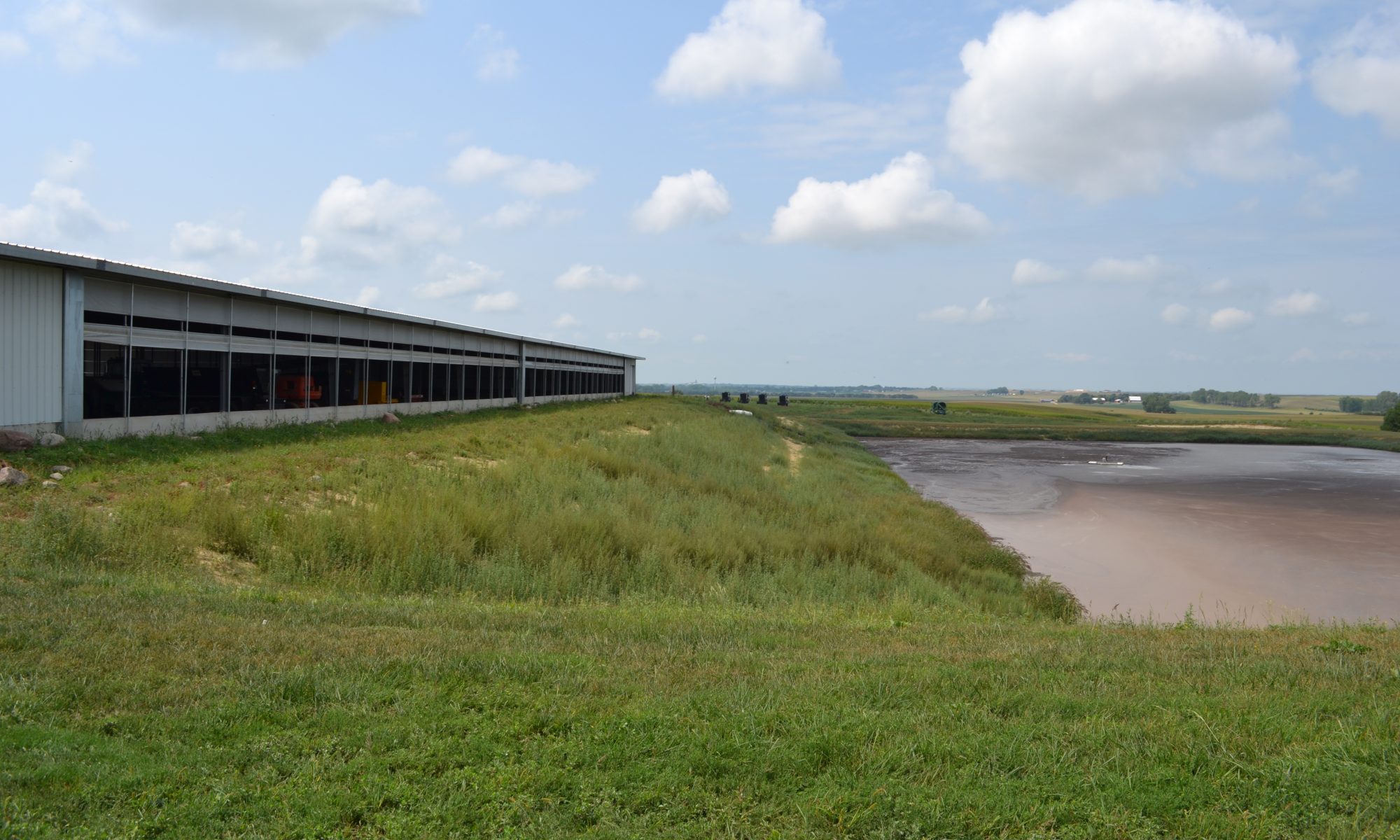
Depth measurements were conducted by using sonar devices and compared with traditional methods at a 2.5-acre dairy lagoon that received effluent from a pull-plug sediment basin. The sonar devices, along with a cell phone (data logger) were mounted on an air-filled float and dragged across lagoon surface, enabling measurements without the need for a boat.


What Have We Learned?
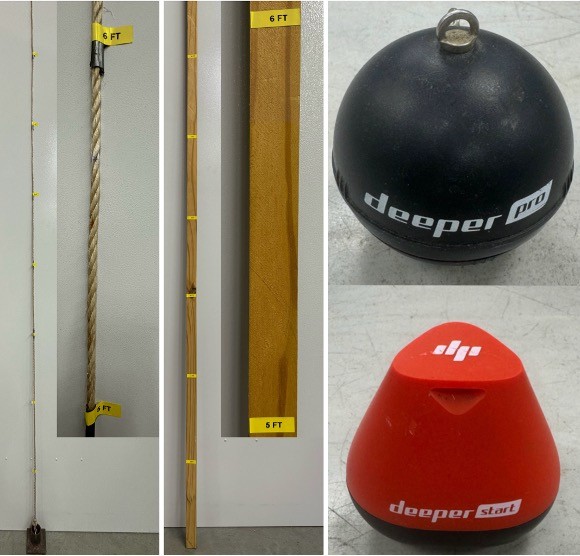
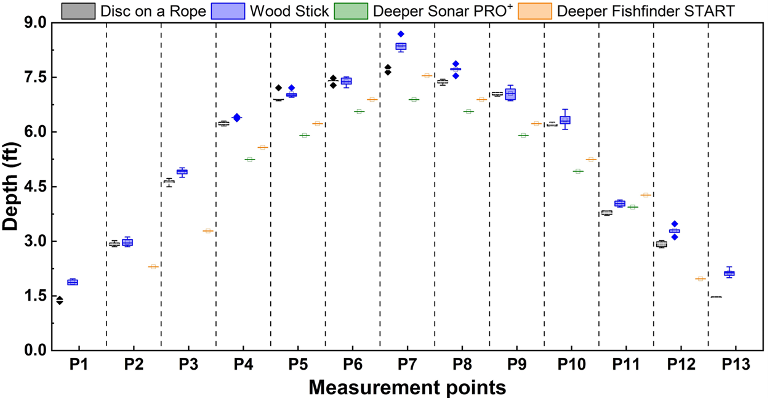
The disc on a rope (standard) and wood stick method resulted in similar values. Meanwhile, the sonar balls tend to slightly underestimate depth, with a margin of error below 15%, while the errors were higher for very shallow areas.

Linear regression models revealed strong correlations between sonar readings and the disc-on-a-rope method, with R² values of 0.899 for the PRO+ model, and 0.9377 for the START model. Applying a correction model to the sonar data could further enhance the measurement accuracy. This study demonstrated that integrating sonar measurements with periodic sludge sampling provides a practical, safe, and reliable approach to improving lagoon management.
Authors
Presenting author
Moh Moh Thant Zin, Post-doctoral researcher, University of Missouri-Columbia
Corresponding author
Teng-Teeh Lim, Extension Professor, University of Missouri-Columbia, limt@missouri.edu
Additional author(s)
Zonggang Li, Gilbert Mitto, Manobendro Sarker, Rana Das, Cuong Duong, University of Missouri-Columbia.
Acknowledgements
This research was supported by USDA-NIFA, grant award (# 2018-68011-28691), and University of Missouri Extension.
The authors are solely responsible for the content of these proceedings. The technical information does not necessarily reflect the official position of the sponsoring agencies or institutions represented by planning committee members, and inclusion and distribution herein does not constitute an endorsement of views expressed by the same. Printed materials included herein are not refereed publications. Citations should appear as follows. EXAMPLE: Authors. 2025. Title of presentation. Waste to Worth. Boise, ID. April 7–11, 2025. URL of this page. Accessed on: today’s date.