A Brief Overview of the Clean Water Act National Pollutant Discharge Elimination System (NPDES) Requirements for Concentrated Animal Feeding Operations
Farms classified as concentrated animal feeding operations (CAFOs) are subject to National Pollutant Discharge Elimination System (NPDES) permitting under the Clean Water Act (CWA) because they are, by definition, “point sources” of pollution. This has been the case since the mid-1970s. Under the CWA, point sources are prohibited from discharging pollutants to the waters of the U.S. except as authorized by an NPDES permit.
To be considered a CAFO, a farm must first meet the definition of an animal feeding operation or AFO. AFOs that meet certain criteria for size and pollution potential are considered to be CAFOs. CAFOs that discharge pollutants into waters of the U.S. must be covered by an NPDES permit. The CAFO regulations are available on the U.S. Environmental Protection Agency (EPA) website in the document “Compiled CAFO Rule“.
The regulations include requirements for CAFO operators to develop a nutrient management plan that includes management measures for both the production area and the land application areas of the operation, as well as record-keeping and reporting requirements.
What Is a Point Source and a Non-Point Source of Pollution?
A point source of pollution, as defined in the Clean Water Act is:
Any discernible, confined and discrete conveyance, including but not limited to any pipe, ditch, channel, tunnel, conduit, well, discrete fissure, container, rolling stock, concentrated animal feeding operation, or vessel or other floating craft, from which pollutants are or may be discharged. This term does not include agricultural stormwater discharges and return flows from irrigated agriculture.
The EPA is responsible for administering most elements of the CWA, including the NPDES program. Most states are authorized to issue NPDES permits, including those issued to CAFOs (State NPDES CAFO contacts).
State-specific water quality requirements may also apply to livestock operations. In some cases those measures may be implemented in a “dual purpose” (NPDES + state) permit, or may be implemented solely in state permits. State permits most commonly apply to CAFOs that do not discharge to waters of the U.S. Additional information: The EPA Agriculture Center has compiled information about laws and regulations that apply to animal agriculture and other agricultural activities including cropping, chemical handling, buildings and construction, and fuel as well as requirements for air emissions.
The U.S. Department of Agriculture (USDA) has no regulatory authority for CWA programs but provides technical or financial assistance through the Natural Resources Conservation Service (NRCS) for farms implementing recommended manure management or nutrient planning processes.
In addition to regulations enforced by federal and state agencies, livestock and poultry farms are occasionally subject to rules at the local level such as county zoning. These often address groundwater or wellhead protection as well as odor and nuisance concerns. New farms or those making substantial changes are especially likely to need to check into local zoning requirements before constructing new facilities.
These materials were developed by the Livestock and Poultry Environmental Learning Center (LPELC) with funding from the U.S. Environmental Protection Agency and with input from the Natural Resources Conservation Service, National Cattlemen’s Beef Association, National Milk Producers Federation, National Pork Board, United Egg Producers, and U.S. Poultry and Egg Association.
For questions on these materials, contact Jill Heemstra, jheemstra@unl.edu. All images in this module, unless indicated otherwise, were provided by Jill.
Reviewers: Tetra Tech, Inc.; Paul Goeringer, University of Marlyland; Kent Woodmansey, South Dakota Department of Environment and Natural Resources; Joe Harrison, Washington State University; and Tom Hebert, Bayard Ridge Group
Building on the previous sections in this module, this section focuses on tools and resources for managing manure-related risks and highlights strategies for good stewardship. It highlights assessing risk, siting, planning for emergencies, getting along with neighbors, and keeping records.
“It’s all about sustainability. The more we know, the more we can plan, and the better job we can do. There’s always new information, new knowledge and new technology.”
This module focuses on water quality, but stewardship also includes attention to air quality, odor and nuisance concerns, and aesthetics (appearance).
Location! Location! Location!
Selecting an appropriate site for manure storage, feed storage, open lots, barns, stockpiles, and land application is a critical first step when looking at building new structures or expanding existing ones. Assessments of existing farm sites should identify risk areas to be avoided or where improvements are needed to protect water resources.
Below are potential pollution sources and some of the factors that should be considered when assessing the risks to environmentally sensitive features when siting and designing operations. These lists are not comprehensive but provide some common areas for consideration.
Potential Pollution Sources
Manure storage
Animal lots and barns
Feed storage
Dead animal burial, composting, or pickup site
Open lots or corrals
Land application
Field stockpiles of manure
Pesticide, chemical, fuel storage
Factors Influencing Pollution Potential
Distance
Soil type
Slope
Presence of tiles and other drains, pipes, ditches, culverts or other conveyances
Cross-connections in water supply and/or waste systems
Vegetative cover
Environmental Features of Special Concern
Wells and wellhead protection areas (groundwater)
Rivers, streams, ponds, lakes, wetlands and other water
Sinkholes, karst topography
Neighbors, public spaces
Threatened or endangered species or habitats
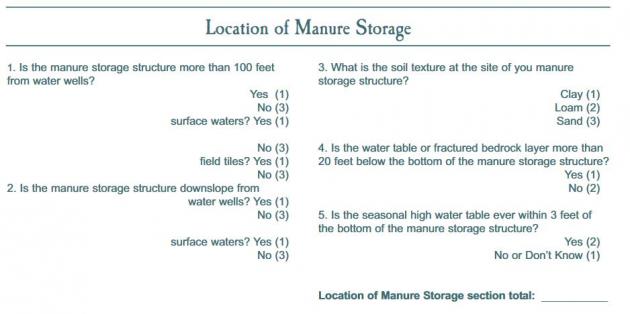
Assessing risk is a very site-specific exercise. In one situation, 100 feet between a potential pollutant and a stream may be perfectly acceptable, such as when the buffer has extensive vegetation and little slope. In other situations, even a 100-foot buffer might be inadequate, such as when the buffer is subject to channelized flow due to erosion. There are a variety of tools to help producers assess the risk of particular siting decisions, such as Farm*A*Syst. Figure 1 provides an example of the type of questions asked in such tools to guide producers the best siting choice.
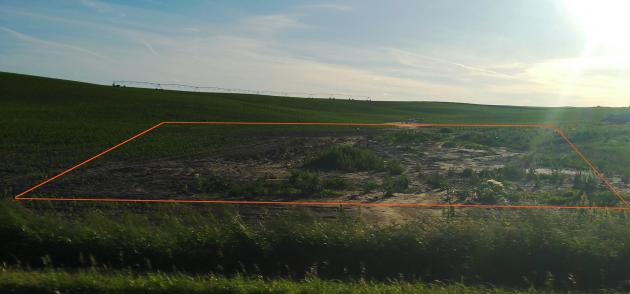
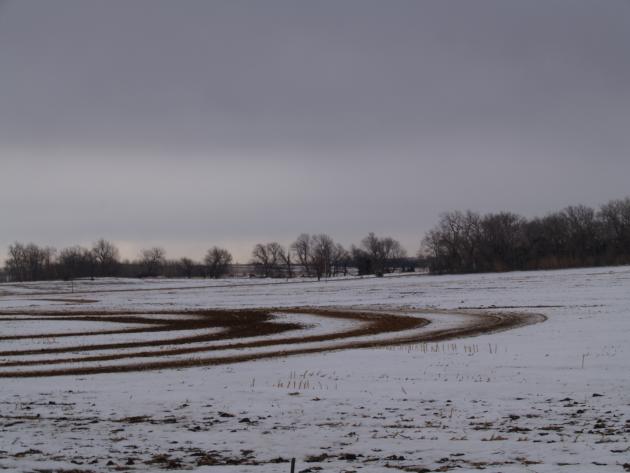
Photo 1. (Above) An example of poor siting that was later corrected. The area roughly outlined in orange was originally an animal pen at this feedlot. The run-on of stormwater from the crop field was not diverted around the pen nor was the subsequent runoff from the pen contained. A combination of water quality concerns and poor cattle performance resulted in the farm owner evaluating different options. They chose to relocate the pen to the other side of the feedlot (not shown; right side of photo). The new pen has no run-on and the manure and runoff are completely contained.
In many cases, specific regulatory requirements prescribe how to assess and address site-specific risk. As a general rule, regulatory standards should be thought of as a starting point for good nutrient management while recognizing that site-specific conditions may require additional controls to adequately protect sensitive features.
Recommended Resources for Site Selection or Assessing Risks Related to Animal Feeding and Manure Management
Do a search for “Farm A Syst” + your state name to find worksheets created to assess water quality risks around farms utilizing state-specific recommendations and considerations. If you cannot locate Farm*A*Syst materials this way, contact your local or state extension service to find out if that or a similar resource exists in your state. These worksheets cover a broad range of topics, including animal lots and manure but also chemicals, fuel, septic systems and more.
Regular monitoring and timely maintenance of manure storage and handling equipment is one of the best ways to prevent accidental spills and releases. Most releases or discharges causing water quality problems are preventable with appropriate management. However, occasionally accidents or emergencies due to unforeseen conditions or events do occur. Having a plan for when things go wrong is essential. A crisis is no time to wonder who to call, look up phone numbers, or figure out the location of needed supplies. Planning for events like catastrophic animal mortalities, an unresponsive person in or around a manure pit, or a manure spill saves time, possibly lives, and can lessen the environmental impact.
Manure spills can occur around the farm site (collection or storage), during transport to fields for land application, or during land application. Emergency plans should consider what to do in each of these scenarios.
An emergency response plan for a manure spill should include several steps:
Stop the leak. Eliminate further spillage. Does everyone know how to shut off the pumps and close valves (or where these items are located)? Notify emergency responders as needed for human safety, traffic control, or other safety matters. Always prioritize matters of human safety first!
Contain the spill. Do you have equipment to build a temporary earthen berm? If not, who does? Are hay bales, stakes, sheets of plastic and plywood or similar items readily available for blocking culverts, tile drains, or ditches?
Assess the spill. How much spilled? How far did the spill flow or spread?
Notify the appropriate agency. There is no national database on the number of manure spills that occur each year. Most spills are reported to state authorities.
Clean up the spill. The equipment needed will depend on whether the spill is solid or liquid/slurry manure. Procedures will also vary depending on if or how much manure reached waterways. See the “Responding to a Manure Spill” section below for case studies.
Make repairs and restore the site. Fix any faulty equipment, hoses, valves, pumps, etc. Ensure roadways are clean, and spilled manure is either land applied appropriately or transferred to a different storage structure. Remove temporary berms and blockages. Reseed the site if necessary.
Train employees and family. Practice the plan. The plan should be reviewed, updated as necessary, and everyone on the farm trained on an annual basis.
Responding To a Manure Spill: Case Studies, Templates and Other Resources
Always check with your state extension service to see if they have templates and resources for spill response and other emergency situations. Templates may be pre-populated with important phone numbers or requirements for notification, and some Extension systems even maintain a list of contractors to assist with cleanup.
Animal Waste Management Field Handbook Chapter 13 “Operation, Maintenance, and Safety” covers preventative management and safety considerations. (USDA Natural Resources Conservation Service)
LPES Lesson 50 “Emergency Action Plans” is a comprehensive resource (48 pages). It includes six case studies (pages 10-13) and recommendations for cleanup procedures and templates (starting on page 33).
The video below presents two case studies of excellent manure spill response efforts. It is excerpted from Kevin Erb’s (University of Wisconsin) presentation in the webinar “Manure Spills and Emergency Planning“. That link will also take you to videos and links for the steps for a spill response, solid manure considerations, and steps/technologies to prevent manure spills.
Photos 2-4 below include critiques of a manure spill response from 2005. These are intended as a learning exercise and should not discourage efforts to clean up manure spills. A less-than-perfect spill response is much better than no response at all. All three photos are courtesy of Kevin Erb, University of Wisconsin.
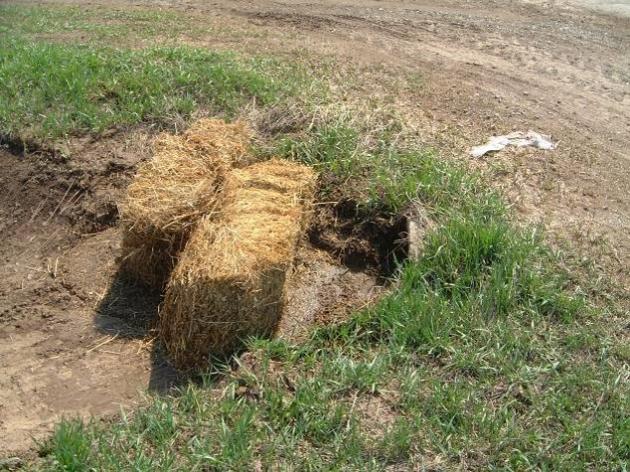
Photo 2. (Above) Using bales to stop future erosion from the site is a good temporary measure for low grade slopes and unchannelized flow. However, these bales should be staked into the ground to be effective. If sod is disturbed, the area should be reseeded and covered with straw or mulch to suppress weeds.
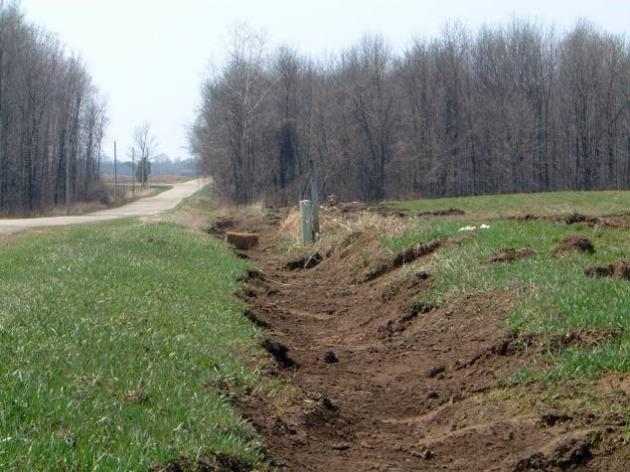
Photo 3. (Above) Spilled manure was removed from the ditch; however, sod was removed along with the manure. This increases the potential for erosion. It also removes the plants that could use the manure nutrients. The sod removal was done above buried utility lines. This is discouraged, and probably illegal in most locations.
Photo 4. (Above) The areas above and below the culvert were cleaned up post-spill. However, the culvert was not flushed out. Not only did this create a “stinky mess” but could potentially flow downslope with the next rain.
Record Keeping
One common problem encountered when a complaint is made about a farm or an emergency situation is examined, is missing or incomplete records. The most important thing to remember about records is “If you don’t document it, you did not do it!” If there are no records of manure spreader calibration or manure nutrient analysis, the entire nutrient plan can be undermined. While a farmer knows to inspect and maintain equipment, he or she needs to be able to prove that inspection or maintenance in the event of a spill, an inspection or a complaint.
A common way to organize records is by how often they need to be accessed. Some records are permanent, such as farm maps and design schematics of the manure storage. These are not accessed every day and can be filed securely. Records that need to be filled out daily, such as rainfall records, should be in a handy location like a clipboard or a smartphone. One Nebraska farmer bought mailboxes and installed them in several locations where inspections and observations needed to be made often including the manure storage and weather station. Electronic technologies, apps, GPS, and computer software can be used and new features are being introduced regularly in public and privately-developed programs.
Records need to be backed up regularly and protected in case of situations like fire, flood, or electrical surges. Have a plan for backing up important records.
In the following video Christine Blanton with North Carolina Department of Environment and Natural Resources discusses why records are important and how they can be useful in making management decisions. While the emphasis is on records for permitted operations, the information is relevant to all animal feeding operations.
Recommended Resources for Record Keeping
Do an Internet search for “animal feeding operation record keeping templates” + your state name to see if there are checklists and forms already developed for your area. These can always be modified.
Critical Records of Ag Production (C.R.A.P.) is a record keeping app developed at Utah State University for manure transfers, application, equipment inspections and other important operations
Getting Along With Neighbors
“I provide a business card with my number to all of the neighbors and ask them to call me anytime with questions or concerns, allowing them to also give me advance notice if they have a get together or event that our crews should be aware of. I say to call anytime they have a question or concern. I stop by once per year, even to the neighbors who don’t like me.”
Animal feeding operations can be the source of odors, flies, traffic and other nuisance issues for neighbors. Doing as much as possible to minimize nuisances, listen to neighbor concerns, and maintain positive relationships within the community is important not only for animal agriculture, but any business.
A very helpful exercise to define a farm’s stewardship ethic, and be able to communicate it to those outside the farm, is to create an environmental policy statement (EPS). An EPS is a short paragraph that describes the farm and commits to stewardship, regulatory compliance and continual improvement. The policy statement can be used on a farm website, on brochures, posted on the office wall, and should be among the first things given to new employees. It provides a framework for talking about what is important to a farm when talking with neighbors and others in the community.
Coexisting with Neighbors (University of Georgia) Developed for poultry farmers, but relevant to all animal feeding operations
Review, Reassess, and Improve
One common characteristic shared by farms that plan for stewardship is a desire to continually improve upon current efforts. This mindset is very comparable to an environmental management system (EMS) process in which a plan is developed, implemented, monitored, and then reviewed for improvements. The new plan is implemented, and so on. Taking an honest look at mistakes and learning from them is part of continual improvement.
“We cannot stand idle. If we do, the industry will pass us by, and we’ll be out of business. This philosophy of continuous improvement has led the family toward updates that contribute to the operation’s sustainability.”
See part three of this module for recommended resources on nutrient management.
[Recorded webinar] Management of Confined Livestock Systems from a Producer’s Perspective (USDA Natural Resources Conservation Service). This recording features several farmers that made significant changes to their operation. They share experiences with using technical or financial assistance programs, learning from other producers, and challenges.
These materials were developed by the Livestock and Poultry Environmental Learning Center (LPELC) with funding from the U.S. Environmental Protection Agency and with input from the Natural Resources Conservation Service, National Cattlemen’s Beef Association, National Milk Producers Federation, National Pork Board, United Egg Producers, and U.S. Poultry and Egg Association.
For questions on these materials, contact Jill Heemstra, jheemstra@unl.edu. All images in this module, unless indicated otherwise, were provided by Jill.
Reviewers: Tetra Tech, Inc.; Joe Harrison, Washington State University; and Tom Hebert, Bayard Ridge Group
Many of the images and scenarios on this page may be permit violations or may contribute to exceedances of water quality standards; however, additional information beyond what is provided on this educational page is required to make determinations of that nature. The next topic in this module provides additional information on Clean Water Act requirements.
Challenges In Managing Manure Nutrients
Nitrogen (N) and phosphorus (P) are essential for plant growth. When nutrients are applied in excess of what crops need or when they are applied at a risky time, more nutrients can end up in water than might otherwise have been the case. This holds true regardless of the source of nutrients. This module focuses on manure and some of the challenges in managing manure nutrients.
Economics. Manure contains more than nutrients. Organic matter contributes to soil health and crop growth. Manure also contains water. “Dry” solid manure can be 20-40% water and manure pumped from a liquid or slurry storage is about 90% water. Nutrients in manure are less concentrated than in commercial fertilizers. Relatively speaking, that makes manure expensive to haul long distances. As animal agriculture sectors have consolidated, resulting in larger farms, more manure is produced in smaller areas. Because of the transport expense, manure tends to be applied close to where it is produced.
In areas with many livestock or poultry farms exporting manure, it can be challenging to find fields within a reasonable distance for application. Farmers are beginning to do more manure marketing and some are looking at technologies that can add value to manure. These can offset the costs of transporting manure or can transform manure nutrients into a form that is economical to transport. Related: USDA Economic Research Service “Effects of structural change: manure and excess nutrients” (dairy). The referenced chapter is part of a larger report.
Nitrogen:Phosphorus Ratio. Another important point regarding manure is that it contains more P than N relative to what crops need. If manure is applied at rates to meet the crop N needs, more P than the crop can use in a single year is applied. Over time, P in the soil can build up to levels that present a significant risk for transport to water. Managing this, at least in part, includes a process known as nutrient management planning.
Another way to manage this risk is through the use of the phosphorus index (P-index). The P-index is a risk assessment that factors in several inputs to determine if N-based rates of manure can be used or if application needs to be reduced to a P-based rate. In some cases, the index may show a high enough risk to discontinue P application (manure or otherwise) altogether. To learn more about the P-index, do an Internet search with your state name + phosphorus index. Recommended Resource: SERA-17 publications.(a multistate information exchange group focused on P.)
Variable Nutrient Content. Manure is not a standard product. It varies greatly among animal species and even within species due to varying farm management practices. The most accurate estimate of a farm’s manure nutrient content comes from sampling and manure testing. Recommended Viewing: Iowa Learning Farms videos on liquid manure and solid manure sampling procedures.
Nitrogen Availability. Much of the nitrogen in manure is in organic form. This type of nitrogen is not plant-available (more below) and is slowly mineralized by soil microbes into plant-available forms over several years. The rate at which this mineralization happens is dependent on temperature, moisture, and soil microbial activity, all of which cannot be predicted exactly. Extensive research has led to state-specific recommendations for estimating the amount of nitrogen that will be available to plants each year from manure and other organic sources. Most state Extension services have publications available on this topic.
Recommended Reading: Nitrogen Management on U.S. Corn Acres 2001-10 (USDA Economic Research Service). See Table 3 “Share of treated corn acres that did not meet rate, timing, and method criteria by N source” for data illustrating the challenges of nutrient management and manure.
What Happens When Manure Nutrients Reach Surface Water?
Nutrients, including N and P, are necessary for plant and animal life in streams, lakes, and other surface water bodies; however, a large influx of N, P, or both moves the system out of balance. This enrichment is known as eutrophication.
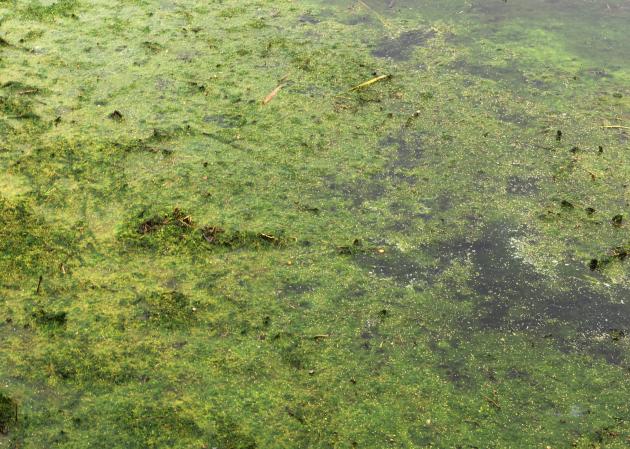
Photo 1. (Above) Algae is beginning to grow in earnest as the water warms up in late spring.
Aquatic plants and algae grow rapidly under eutrophic conditions (Photo 1). When the algae or plants die, the decomposition process depletes oxygen dissolved in the water, a condition known as hypoxia. Without adequate oxygen, fish, shellfish, and other aquatic life die or move to non-hypoxic areas. Another concern is that certain types of algae release toxins that can be harmful to people, pets, or livestock. Excessive algae growth, toxic or not, is referred to as a harmful algal bloom.
Hypoxic zones are an environmental problem, as well as an economic one, as large areas may become unsuitable for commercial fishing, shrimping, and similar activities. The sources responsible for nutrient releases into water vary for each watershed, but usually include agriculture as well as municipal wastewater treatment, urban stormwater, residential areas, and others.
Manure Nutrients in Groundwater
Groundwater is the primary source of drinking water in many parts of the country. The U.S. Environmental Protection Agency (EPA) has set 10 parts per million (ppm) of nitrate (NO3–) as the maximum level considered safe for drinking water.
High nitrates occur in surface water as well as groundwater, but are most often discussed as a risk for groundwater because of the large number of private, rural groundwater wells used for drinking water. Municipalities that use surface or ground water for drinking are required to test for nitrates and take corrective action if levels are above allowable limits.
How Do Nutrients Reach Water?
Nutrients are mobile. They cycle and transform in the environment. Even perfectly managed manure handling systems cannot expect to contain 100% of the N and P. Losses can be held to acceptable levels through management and conservation practices. Nutrients from crop fields reach water sources in one of two ways, runoff or leaching. Nutrient runoff occurs when nutrients dissolve in water that flows over the soil surface or when water carries particles of soil containing nutrients to a stream, river, lake, ocean or other surface water. Nutrient leaching occurs when nutrients dissolve in water that is flowing downward through the soil profile.
Nitrogen
Manure N is mostly in organic form with a lesser amount of inorganic ammonia. The amount of each varies greatly depending on the animal species and manure collection and storage practices. Once applied to a crop field, a complex network of chemical and biological processes, referred to as the nitrogen cycle, takes over. Organic N from sources like manure or crop residue is mineralized to ammonium (NH4+) and eventually nitrate (NO3–).
Organic N and NH4+ are more likely to be associated with soil particles or soil aggregates and may be carried with eroded soil in runoff to surface water bodies. High ammonia levels in surface water are detrimental to aquatic organisms.
Nitrate is soluble and can be carried with runoff or leach downward through the soil profile. When NO3– is carried down below the root zone, it can no longer be captured by plants and used for crop or grass growth. This puts groundwater resources at risk for contamination. Ammonium (NH4+) or organic N are not generally viewed as a risk for leaching.
Phosphorus
Phosphorus also cycles through organic and inorganic forms and all, or nearly all, P applied through manure is considered available to plants. Unlike NO3–, P binds tightly to soil particles. Rain events capable of eroding soil particles are likely to carry P along with the runoff. To a much lesser extent, P can be soluble (dissolved in water) and carried in runoff, especially when soil P builds up to very high levels. Most P is carried to surface water bodies along with soil.
Phosphorus is not generally a significant leaching risk because of its tight bond to soil particles. There are a few situations, such as soils that are saturated with P or where subsurface (tile) drainage is used, where the risk of P leaching may be substantial.
What Are the Risks Associated with Manure and Water Quality?
When it comes to manure nutrients and land application, proper management is critical.
Farm Site Risks
Around the farm site, manure collection and storage as well as uncontained runoff from open lots are the primary risk areas for manure releases or discharges to water (Photos 2 and 4, below). Many states have rules that require minimum distances between manure storage structures and water, wells, sinkholes, or other environmentally sensitive areas. These distances are called setbacks. The closer that manure is stored near these features, the greater the risk of contamination.
Photo 2. (Above) Uncontrolled feedlot runoff is a risk to water quality. Photo courtesy of U.S. Department of Agriculture Natural Resources Conservation Service (USDA NRCS). Containment systems like those shown in Photos 3 and 5 (below) should be used.
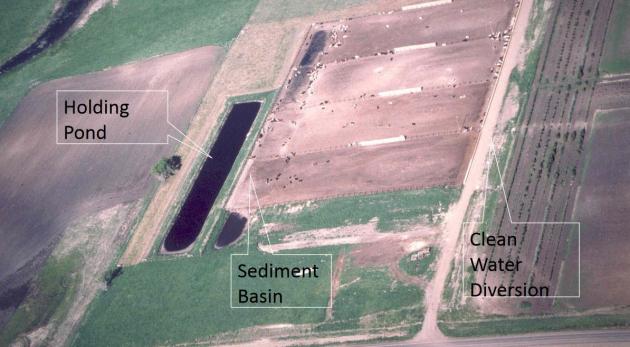
Photo 3. (Above) An example of an open lot feeding operation that not only contains runoff in sediment basins and holding ponds, but also installed a diversion to prevent clean water from entering the feedlot. Photo courtesy of USDA NRCS.
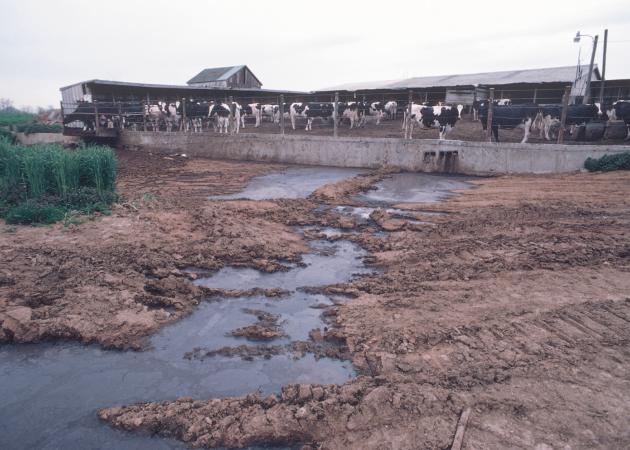
Photo 4. (Above) Water is draining uncontrolled from this lot into the adjacent natural drainage area. Runoff should be managed with appropriate best management practices such as clean water diversions, settling basins, or holding ponds like those shown in Photo 3 (above) or Photo 5 (below).
Photo 5. (Above) This open lot includes a settling basin (or sediment basin) in the foreground. The animal pens are behind the photographer. When solids have settled out, the liquid is allowed to flow through the pipe into the liquid manure storage in the background. The settling basin is designed for easy access for regular removal of the solids. This two-part system increases the storage life of the manure storage structure in the background by preventing a large portion of solids from entering the structure.
Manure storage structures require careful attention to engineering, construction, operation, and maintenance. If any of these aspects are deficient (Photo 6, below), the structure is at risk for failure. Most problems can be prevented by regular inspection and maintenance. Iowa State University analyzed 58 manure incidents in 2007 and “human error” was identified as the most common cause (13 incidents). They cited things like “leaving pumps unattended” and “failure to close valves” as the type of human errors that occur.
Photo 6. (Above) An overflowing manure storage. Photo courtesy of USDA NRCS. Regular inspections and timely removal of manure for land application could have prevented this situation. In some areas, covered manure storage structure structures are recommended to prevent rainfall and snowmelt from contacting the manure.
Photo 7. (Above) A poultry litter storage facility that is covered. The roof keeps the litter dry and helps prevent the problem seen in Photo 6. The structure is nearing full capacity and the photo was taken on the day it was emptied and the litter hauled to fields for land application. Photo courtesy of Josh Payne, Oklahoma State University.
In addition to manure storage structure failures, manure discharges or spills can be caused by the failure of pumps, hoses or pipes, valves and other handling equipment. The area where manure is loaded into spreaders or tankers is a common area for spills to occur. These spills should be cleaned up quickly to avoid the potential for runoff and to keep the farm site neat.
Transportation Risks for Manure Spills
Moving manure from the farm to the field on public roadways includes the inherent risks that come with traffic. Collisions and overturned tankers or spreaders can result in manure being released onto roads and into ditches.
Photo 8. (Above) An overturned manure tanker on a public roadway. Photo courtesy Kevin Erb, University of Wisconsin.
Land Application Manure Loss Risks
During manure application, the risks for manure/nutrient losses include:
Overapplication
Not observing setbacks
Poor timing (weather)
Overapplication. Applying too much manure can be the result of incorrect calculations, incorrect settings on the application equipment, or improperly calibrated equipment. Equipment failures can also lead to too much manure being applied to a field or small area of a field. Overapplication also occurs when there is too little available land for the manure that must be applied.
Setbacks. Many states have setbacks that require minimum distances between land application and water, wells, sinkholes, or other environmentally sensitive areas. The closer that manure is applied near these features, the greater the risk of contamination. This is especially true in locations with karst topography. Sinkholes or fractured bedrock provide a direct path for manure to reach groundwater.
Timing. Weather is an especially important factor in application risk. Applying manure to saturated soils or when drainage tile is flowing increases the risk for both surface-applied and injected manure. Field operations under those conditions also leads to soil compaction which is bad for crop yields and can increase the future risk of runoff.
Frozen or snow covered soils prevent manure from contacting the soil or infiltrating into the soil and also limit or prevent incorporation which is necessary to help stabilize applied manure as part of the soil structure thereby reducing runoff potential. As plants are generally not growing in frozen or snow-covered soils, no agronomic uptake of manure nutrients is occurring either. Applying on frozen or snow covered ground is not advisable and, in many cases, not allowed according to state requirements.
Manure application should be avoided if significant rain is predicted, especially for surface-applied manure that will not be incorporated, and should not begin until soil conditions are favorable.
Photo 9. (Above) Manure application immediately preceding a significant rain event is a high pollution risk and should be avoided. Spreading on this field occurred on the same day as a rainfall and manure was carried by runoff to the base of this field. This photo was taken after another rain event approximately two weeks later, showing more runoff with the potential to further carry manure and nutrients offsite. Making a high-risk application was the first mistake. The second mistake was in not cleaning up the solids as soon as field conditions allowed and re-spreading them when rainfall was not expected.
Photo 10. (Above) This was taken the same day as Photo 9 on a field three miles away. The biggest difference is that the manure application (also solid beef feedlot manure) to this field occurred under dry conditions and the manure was lightly incorporated. In the photo, runoff from the rainfall that occurred two weeks after manure application does not appear to be carrying manure from the field; this shows how well the manure was integrated into the soil structure. The manure nutrient runoff risks from this field are much lower than the field in Photo 9.
Photo 11. (Above) Manure application to frozen or snow-covered soil should be avoided. Some states prohibit manure application during winter months. Managing manure storage levels so that adequate capacity is available to retain manure during extended periods of high-risk conditions (such as winter) is an important management practice.
Other Potential Water Quality Concerns
This page focuses on nutrients and water quality but there are additional manure-related topics of which you should be aware. The following sections very briefly introduce three of these: pathogens, pharmaceuticals, and organic matter.
An example of a watershed impacted by waterborne pathogens, including those associated with manure, is Samish Bay in Washington. The presence of fecal coliforms at high levels in the bay have made the water unsuitable for shellfish production and recreation. Research is being done on the effects of manure treatment, especially composting and anaerobic digestion, on pathogens in manure. Recommended Viewing: Two webcast presentations “Pathogens 101” and “Microbes: From Farm to Public Risk“.
Biochemical Oxygen Demand (BOD)
We previously discussed the ability of manure nutrients to stimulate plant growth in aquatic systems. Once the “bloom” is over and the plant material begins to decay, oxygen is rapidly removed from water and can lead to fish kills or can lead to long-term hypoxic zones. In addition to nutrients, the large amount of organic matter in manure also depletes water of dissolved oxygen if a significant amount of manure reaches the water body. Runoff from silage or feed piles on livestock farms is another waste stream that has a high BOD and should be contained or controlled just like runoff from manure storage or open lots. Recommended reading: Oklahoma State University developed a comprehensive explanation on organic matter in manure and other wastewater and how it interacts with the environment.
Recommended Resources
The video below was produced by the U.S. Poultry and Egg Association in cooperation with the Livestock and Poultry Environmental Learning Center and U.S. EPA. It covers several water quality topics as well as some air quality concerns. Even though the video references poultry production, it is applicable to other species.
[Archived webinar] “Manure Spills and Emergency Planning” includes sections on spill causes and case studies, solid manure considerations, and technology to prevent spills.
[Archived webinar] Nitrates In Groundwater includes research from several states and a presentation on N losses from tile drainage
These materials were developed by the Livestock and Poultry Environmental Learning Center (LPELC) with funding from the U.S. Environmental Protection Agency and with input from the Natural Resources Conservation Service, National Cattlemen’s Beef Association, National Milk Producers Federation, National Pork Board, United Egg Producers, and U.S. Poultry and Egg Association.
For questions on these materials, contact Jill Heemstra, jheemstra@unl.edu. All images in this module, unless indicated otherwise, were provided by Jill.
Reviewers: Tetra Tech, Inc.; Joe Harrison, Washington State University; Tom Hebert, Bayard Ridge Group; and Mark Risse, University of Georgia
Farms collect and store manure in different ways. For the most part, manure is handled and stored as either solid, slurry, or liquid. The biggest differences are between systems designed for solid manure and those designed for liquid or slurry manure.
Solid Manure
Solid manure is approximately 80% (or less) moisture and 20% (or more) solids. It can be stacked into piles and handled with equipment like front-end loaders and box scrapers. Semi-solid manure (around 15% solids) is handled and stored the same as solid manure.
Common examples where farms handle manure as a solid:
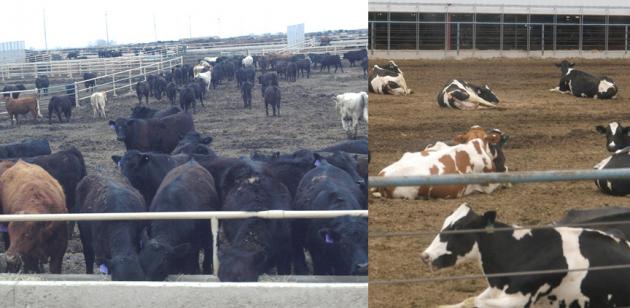
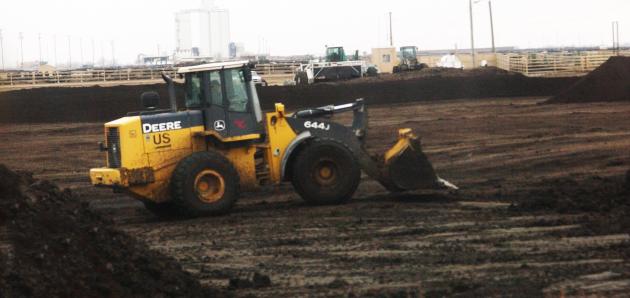
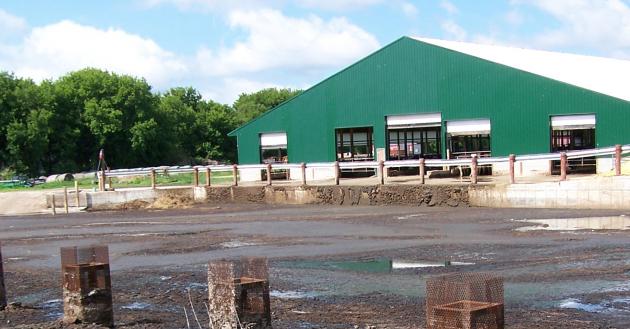
Beef feedlots and dairy farms scrape manure from open earthen lots (Photo 1)
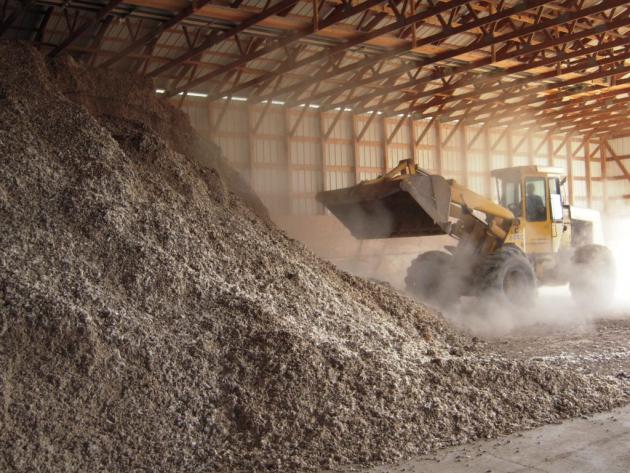
Broiler (meat chicken) litter is a mix of manure, feathers, and bedding (Photo 2)
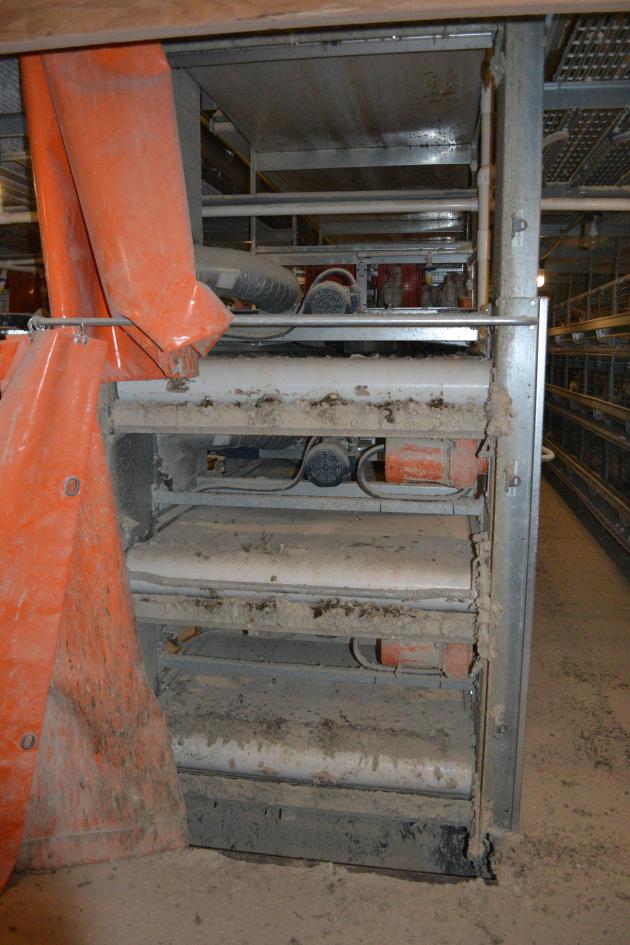
Layer (egg-producing chicken) manure contains feathers but no bedding (Photo 3)
Less common examples where farms handle manure as a solid:
Bedded pack barns or hoop buildings for beef cattle or pigs
Photo 1. (Above) Two examples of open earthen lots with beef cattle on the left and dairy cattle on the right.
Photo 2: (Above) Broiler litter being cleaned out of a house (left) and what a similar house looks like when populated with chickens (right). Photos courtesy of Josh Payne, Oklahoma State University.
Photo 3: (Above) Most layer hen houses built recently use belt systems to remove manure. Several cages are stacked on top of each other and a belt in between each tier catches the manure. The belts convey manure to a collection point; manure is taken from the collection point to a separate storage area. Photo courtesy of Robb Meinen, Pennsylvania State University.
Solid Manure Storage
Solid manure is typically stacked or piled in storage areas that may be covered (Photos 4 and 6, below) or uncovered (Photo 5, below) depending on the amount of rainfall or snowmelt an area receives. Farms in arid areas are more likely to manage solid manure storage areas without a roof or cover.
Roofs or covers prevent rain or snowmelt from entering the storage area, but are more expensive to build. If precipitation causes runoff from uncovered solid manure storage areas, the runoff needs to be captured and contained to prevent it from reaching streams, lakes, or other surface water.
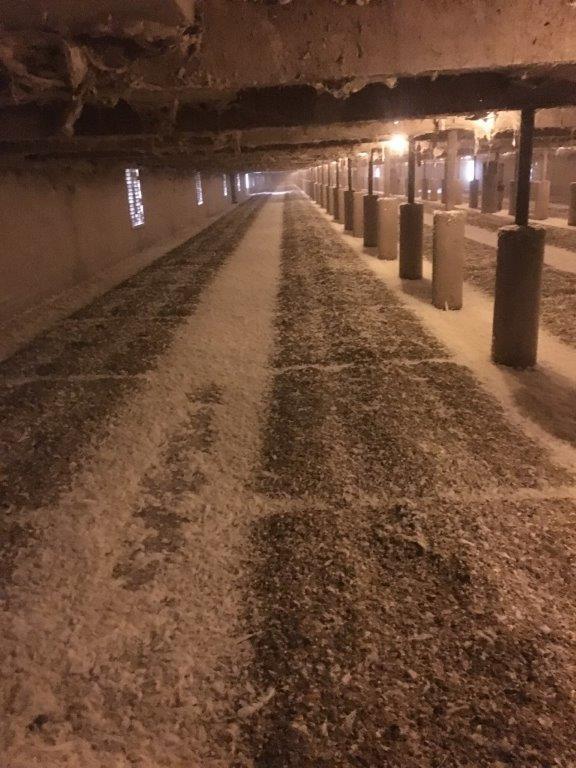
Photo 4. (Above) Solid layer hen manure is stored on the ground level of this high-rise layer house. The hens are housed in the upper level and manure falls through slats in the floor. High-rise houses used to be the most common system for layer hens but are gradually being replaced by manure belt systems. Image courtesy of the United Egg Producers.
Photo 5. (Above) The solid manure storage area and handling equipment for a beef feedlot.
Photo 6. (Above) A covered manure storage structure on a poultry farm. Photo courtesy of David Schmidt, University of Minnesota.
Slurry Manure
Slurry manure is approximately 10-15% solids. It is a very thick liquid that requires pumps for collection and handling. Equipment and structures for handling slurry manure need to be engineered for materials of this consistency.
Common examples where farm collect and handle manure as a slurry:
Pig manure in deep pit barns
Dairy manure in scrape (Photo 8, below) or vacuum systems in free stall barns
Less common examples where farms collect and handle manure as a slurry:
Layer hen farms with scrape systems
Slatted floor beef buildings with a manure pit
Photo 7. (Above) A slatted floor in a small-scale swine research barn. Slatted floors are part of both slurry and liquid manure collection systems, especially on pig farms. If a deep pit for long-term storage is beneath this floor, the farm handles manure as a slurry. If manure is flushed from beneath the slats to an external storage structure, the farm likely handles manure as a liquid. Photo courtesy of Rick Ulrich, University of Arkansas.
Photo 8: (Above) An automated scraper collecting slurry manure in a freestall dairy barn. Slurry manure can also be collected from barns or feed pads using vacuum tankers. Photo courtesy of Karl Vandevender, University of Arkansas.
Liquid Manure
Liquid manure has only a small amount of solids (less than 5%). It is very dilute in terms of nutrient content and cannot be hauled long distances because of the cost of hauling large amounts of water. Liquid manure is collected and handled with gravity flow or pumps and is stored in structures called ponds or lagoons.
Common examples where farms handle manure as a liquid:
Runoff holding ponds for open earthen lots (beef or dairy)
Pull-plug or flush systems in pig barns
Flush systems in dairy barns
Less common examples where farms handle manure as a liquid:
Layer hen farms with flush systems
Slurry and Liquid Manure Storage
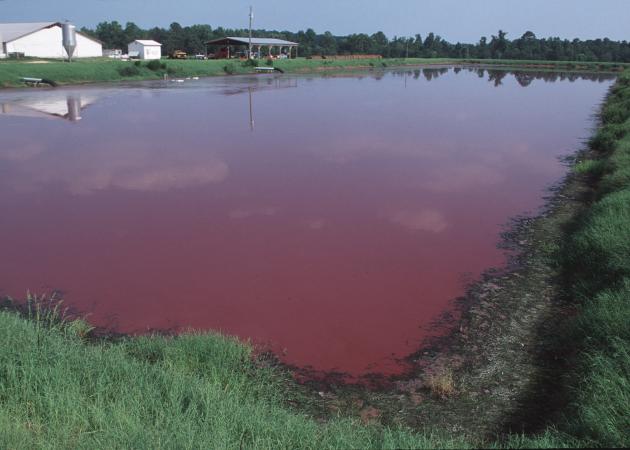
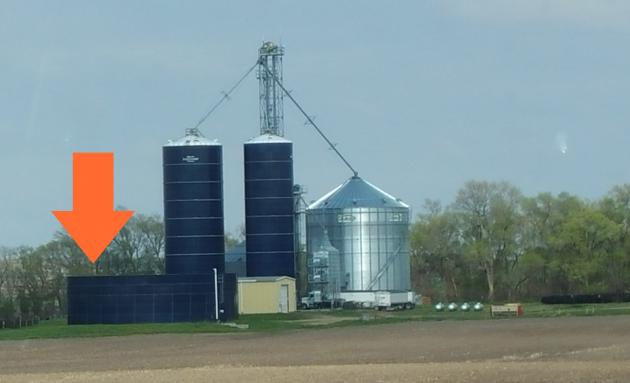
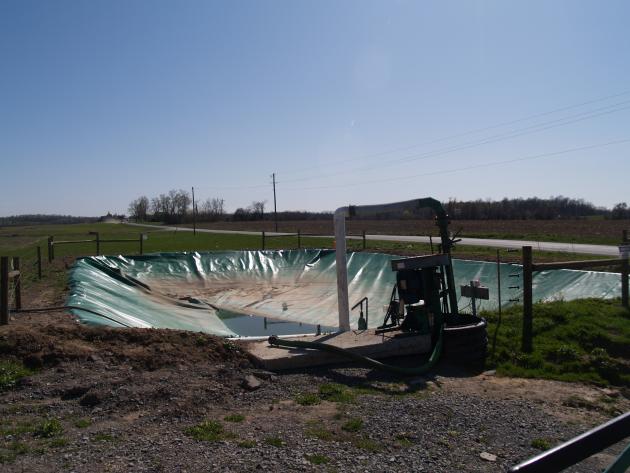
Slurry and liquid manure can be stored in earthen pits (Photo 9, below), holding ponds, or treatment lagoons. They can also be stored in above-ground tanks (Photo 10, below) or in concrete structures (Photo 11, below).
Photo 9. (Above) An earthen liquid manure storage structure on a pig farm. Photo courtesy of USDA NRCS.
Photo 10. (Above) The orange arrow points to an above-ground steel manure storage tank.
Photo 11. (Above) The manure storage structure on this dairy farm includes a concrete wall near the barn and ramp for access when removing manure. Photo courtesy of David Schmidt, University of Minnesota.
The video below, produced by the University of Wisconsin, introduces systems for handling and storing liquid and slurry manure. It also discusses safety precautions for these systems and structure. The final section covers the importance of agitation, or mixing, when preparing manure for land application.
Process Wastewater
Process wastewater is water used by farms, often for cleaning, which comes in contact with animals, manure, or feed. It may also contain chemicals for sanitizing or cleaning a product or surface. This is not considered to be manure, but must be captured and contained and can be stored in the liquid manure storage structure or a separate structure.
Common types of process wastewater generated on animal farms:
Egg wash water
Milking center wash water
Covered Manure Storage
In recent years, the use of covers on manure storage structures has increased. This is especially true for pig farms. Covers are primarily used to address odor concerns, but can also be part of an anaerobic digestion system. Photo 12, below, shows a covered manure storage structure.
Photo 12: (Above) A very small earthen manure storage structure with a cover installed. Most covered manure storage structures are larger than this but look very similar.
Is There Enough Manure Storage Capacity?
The main purpose of manure storage is to contain manure, process wastewater, and contaminated runoff until it can be safely and appropriately applied to crop fields or be used in an alternative manner. Good stewardship of manure storage involves two important steps:
Designing the facility so it has enough capacity to store manure and process wastewater generated by the farm plus precipitation plus freeboard (margin of safety) during time periods when land application is not possible or appropriate.
Operating and maintaining the manure storage or treatment facility so that problems can be identified and prevented or corrected before they cause overflows or failures.
There are several considerations when calculating the amount of capacity needed in the manure storage or treatment structure and planning for its operation and maintenance.
Regulatory requirements. For some farms, the minimum amount of storage capacity and freeboard as well as frequency of inspections is prescribed by regulation. Keeping records on design and construction, inspections and findings, maintenance activities, corrections made, and amount of manure or process wastewater in the storage structure is essential to prove the requirements are met.
Cropping system. Manure is not usually applied to fields between planting and harvest for cultivated crops. The amount of time fields are unavailable during the growing season should be factored into the planning for manure storage structures. Hay or pasture fields add some flexibility because manure can be applied more often. But, as with cultivated crops, hay or pasture fields should not have more manure nutrients applied than is agronomically indicated in the nutrient management plan. Farmers who rely on off-site manure transfers to neighboring farms or for other uses should also consider the cropping system or other timing needs of manure recipients and plan their storage period appropriately.
Climate. The design capacity of manure storage will be influenced by the amount of time that manure must be stored during extended time periods that are undesirable for land application. Those include times when soils are frozen, snow-covered, or saturated. Design capacity for uncovered manure storage structures also needs to consider how much rain or snow melt may add to manure levels.
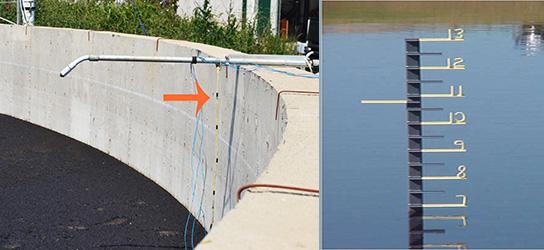
Photo 13. (Above) This collage shows two depth markers in manure storage structures. The concrete structure on the left includes a simple rope (see orange arrow) marked at regular intervals as a way to monitor manure levels. The marker on the right is more elaborate and includes (recommended) a “start pumping” mark (yellow bar extending to the left). The especially important levels a farm manager should know are “start pumping” when the level reaches design capacity and, for some structures, “stop pumping” when it reaches a lower limit. It is also important to know the level to which manure should be pumped/emptied before entering a season where land application is not possible. If a state bans manure application from December 15 until April 1 for example, a farm should know which mark manure levels should be below to ensure enough storage capacity going into that season. Concrete structure image courtesy of Robb Meinen, Pennsylvania State University and metal depth marker image courtesy of Leslie Johnson, University of Nebraska.
Future plans. What are the chances a farm will add more animals in the future? Expanding to 1,500 animals when the manure storage is designed for 1,000 means the structure will fill up faster than originally intended, making unlawful spills or inappropriate land application practices more likely.
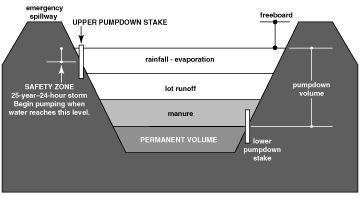
Figure 1. A schematic of the different categories of waste and the related volumes that the storage design must accommodate. More than just manure, process wastewater, or open lot runoff needs to be factored into the designed capacity. Anaerobic lagoons require a minimum volume at all times so that the bacteria treating the manure remain present and active. Some minimum storage level also helps keep the bottom sealed by preventing drying and cracking. Storage or treatment structures that do not have a roof or cover also need to hold typical rainfall or snowmelt for the area. Every storage structure storage should be designed and managed to maintain a margin of safety, or freeboard, so that it is never filled to the top. Figure courtesy of University of Missouri Extension via Dr. Charles Fulhage.
Photo 14. (Above) A manure storage structure about to overflow due to recent rainfall. This problem is most common when long winters or extended wet periods in the fall or spring make manure land application difficult or impossible. Managing this risk requires planning ahead as much as possible to prevent it. In this photo, the farm is agitating the manure and getting ready to apply it to a field to lower the manure level in the storage structure. Favorable weather conditions allowed application when field soil conditions were acceptable, or no longer saturated.
Consistency of Manure/Water Mixtures factsheet by Doug Hamilton (Oklahoma State University) explains the differences between solid, slurry, and liquid manure.
These materials were developed by the Livestock and Poultry Environmental Learning Center (LPELC) with funding from the U.S. Environmental Protection Agency and with input from the Natural Resources Conservation Service, National Cattlemen’s Beef Association, National Milk Producers Federation, National Pork Board, United Egg Producers, and U.S. Poultry and Egg Association.
For questions on these materials, contact Jill Heemstra, jheemstra@unl.edu. All images in this module, unless indicated otherwise, were provided by Jill.
Reviewers: Tetra Tech, Inc.; Joe Harrison, Washington State University; Rick Koelsch, University of Nebraska; and Tom Hebert, Bayard Ridge Group
When it comes to the land application of livestock manure, a major environmental concern is the loss of manure-borne nutrients to surface runoff. Management practices and regulations focus on how nutrients travel in runoff as functions of the timing and method of land application as well as proximity to water sources. When manure is applied to soil, manure constituents other than nutrients are also introduced to soil, such as heavy metals, antibiotics, and antibiotic resistance genes. Knowledge about the behaviors of these manure constituents in the environment as a function of manure application strategies is limited.
In this article we will discuss the effects of various land application strategies on the fate and transport of manure borne antibiotics and antibiotic resistance genes in soil and runoff. This will be broken down into three sections: manure storage; land application methods; and vegetative barrier. Although our studies were conducted using swine manure slurry, it is expected that that the general conclusion would also apply to other types of manure. Prior to a detailed description of our findings, we will first present some background information about manure-borne antibiotics and antibiotic resistance genes.
Why Care About Antibiotics?
Antibiotics are often used in concentrated animal feeding operations (CAFOs) to prevent and treat diseases in livestock animals, increasing the density at which livestock can be kept. A substantial portion of these antibiotics can move thorough the digestive system of livestock, and end up in livestock urine and feces. These antibiotics can persist in the livestock manure and go on to alter the microbiome of soil and water. Bacteria exposed to these antibiotics may gain resistance to the antibiotics. This can be a major public health concern, because even the antibiotic resistant bacteria are harmless they may spread the resistance genes to pathogens. This, in turn, could impact human and animal health, as the antibiotics which we rely upon to treat infection will no longer be effective on treating resistant pathogens.
Manure Storage
Prior to land application, manure is usually stored in livestock waste management structures. In one study, the effects of anaerobic storage of manure on the fate of antibiotics and antibiotic resistance genes in manure were investigated. In this study, the levels of chlortetracycline and tylosin in manure slurry were monitored. The two antibiotics in swine manure degraded substantially over time under the anaerobic condition. The antibiotic resistance genes corresponding to chlortetracycline was also reduced substantially during manure storage. In contrast, the resistance genes corresponding to tylosin did not decrease significantly.
Application Method
Manure and manure slurry may be applied to fields using application methods such as broadcast, injection, and incorporation. These land application methods have varying effects on the spread of antibiotics and antibiotic resistance genes in croplands. A study was conducted to investigate how these land application methods may affect the concentrations of antibiotics and antibiotic resistance genes in runoff and soil following the land application of swine slurry. Results show that land application methods had no statistically significant effect on the aqueous concentrations of antibiotics in the runoff. However, among the three land application methods tested, broadcast resulted in the highest total mass load of antibiotics in runoff from the three simulated rainfall events. Similarly, broadcast resulted in higher concentrations of antibiotic resistance genes in runoff than did injection and incorporation. In manure amended soils, the effects of land application on the concentration of antibiotics were compound specific. No clear trend was observed in the antibiotic resistance gene levels in soil.
Vegetative Barrier
Vegetative barriers are strips of densely growing perennial plants seeded downslope on cropland adjacent to surface water. Vegetative barriers can stabilize the soil in local areas and reduce dissolved and sediment bound compounds in runoff, such as nutrients and particulates. The barriers are often used as an erosion control measure and some states regulate the use of vegetative barriers next to bodies of water and in areas with high slopes. One study tested whether vegetative barriers are effective in reducing antibiotics and antibiotic resistance genes. Results show that stripes of switchgrass (panicum virgatum L.) can effectively reduce antibiotic tylosin and its corresponding resistance gene erm(B) in runoff. Hence, vegetative barriers can be used as a low-cost option to reduce the spread of antibiotic and antibiotic resistance gene through runoff.
Conclusions
The control of manure-borne antibiotics and antibiotic resistance genes in the environment is complicated. Different antibiotic compounds have different properties, such as vulnerability to photo degradation and tendency to adsorb to soil particles. Hence, it is hard to use one land application strategy to effectively manage multiple antibiotics in both runoff and soil. Hence, knowing the dominant antibiotic compounds in the manure can be important. Similarly, different antibiotic resistance genes may be hosted in different bacterial species. These bacteria differ in their metabolisms and consequently respond differently to various land application strategies. Like the case for antibiotics, it is difficult to develop one land application strategy that would be effective to all classes of antibiotic resistance genes in manure. So, in addition to land application strategies, attention should also be given to develop manure storage strategies to reduce antibiotics and antibiotic resistance genes prior to land application.
For more information about this article, contact Xu Li.
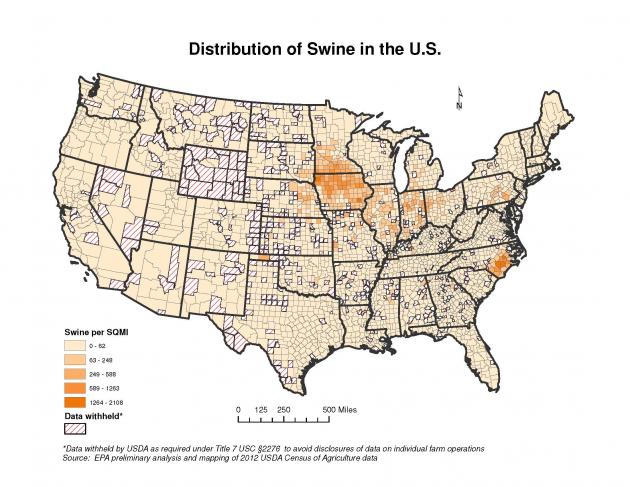
The animal agriculture industry is widespread across the U.S. with some areas having more of certain types of farms than others. The sectors highlighted in this module include dairy, beef cattle, layer chickens (eggs), meat chickens (broilers), and pigs.
The images below shows where each of the five highlighted sectors are located in the U.S. The darker colors on each map indicate more animals in that area. These maps are based on the most recent (2012) Census of Agriculture, which is conducted every five years by the USDA National Agriculture Statistics Service.
Trends In Animal Agriculture
The graphs below show data from the USDA Census of Agriculture from 1987 until the most recent one (2012).
For dairy and beef cattle, you can see clear trends showing that the number of animals is declining slightly but the number of farms is declining drastically. This means that the average farm with cattle in 2012 had many more animals than the average cattle farm in 1987. In each graph, the orange line represents the number of animals and the blue line represents the number of farms.
For pigs, the number of animals has increased slightly and the number of farms has decreased a lot. Like with cattle, this means that the average pig farm in 2012 had many more animals than the average farm in 1987. Chickens show a different trend in that the number of birds in the U.S. has increased but the number of farms has also increased.
How Much Manure Do Animals Produce?
The amount of manure animals produce varies greatly based on species; a dairy cow will produce much more manure than a chicken, for example. Two cows can excrete very different amounts of manure based on the feed they eat, their size, and age. The same is true of chickens and pigs.
The U.S. Department of Agriculture Natural Resources Conservation Service (NRCS) estimates that for every 1000 pounds of body weight, most common farm animals will excrete between 60 and 80 pounds of manure per day (source). Based on those numbers a 1400 pound dairy cow will excrete 112 pounds of manure and a layer hen will excrete around 1/3 of a pound of manure per day.
The American Society of Agricultural and Biological Engineers (ASABE) released standard D384.2 “Manure Production and Characteristics” in 2005. Table 1 and Table 2 of that standard provide numbers that are similar to the NRCS manure production estimates. The ASABE standard estimates that a layer hen will excrete 0.19 pounds of manure per day and a dairy cow (weight not specified) will excrete 150 pounds per day.
The amount of manure an animal excretes is not necessarily the same amount that farms collect or store. For animals housed in open lots, manure dries considerably as it lays on the surface of the pen. For example, a feedlot steer may excrete 80 or 90 pounds of manure per day, but after that manure has dried on the pen surface, the farm may only end up with 8 or 9 pounds of manure to collect. The same goes for layer hen manure on manure belts or in storage structures.
For animals housed in barns with flush systems, the total volume will include animal manure, wasted feed and water, and water used for the flush system.
How Has Manure Management Changed?
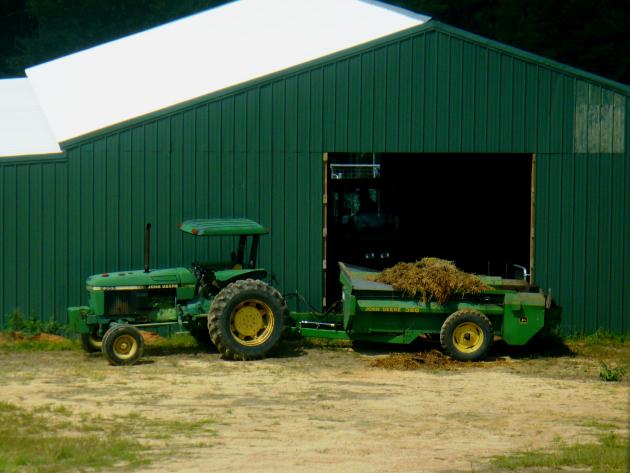
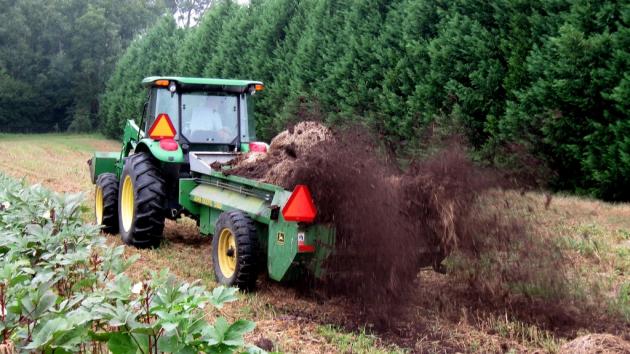
In decades past, most farms handled manure as a solid* material, often mixed with bedding, and hauled the manure and bedding out to a field regularly, referred to as “daily haul”. Photos 1 and 2 (below) show what a daily haul system looks like.
Photo 1. (Above) A spreader being loaded with manure directly from the barn.
Photo 2. (Above) Spreading manure in a recently harvested field. Photos 1 and 2 are courtesy of Anne Cumbie Randle.
As farms have grown larger, and technologies improve, more manure is being handled as a slurry or liquid* — especially on dairy and pig farms. Beef cattle feedlots, and layer chicken and broiler farms mostly handle manure as a solid.
The volume of manure generated on many modern animal feeding operations necessitates storing manure in engineered structures. Manure storage has become a more visible feature on farms compared to past decades.
The primary purpose of storage systems is to provide a place to contain manure so that farmers can apply manure to fields at times when nutrients can best be utilized by crops and thereby avoid applying it to fields at inappropriate times such as when soils are frozen, snow-covered or saturated. Avoiding these times reduces the risk of runoff to water and soil compaction. Also, while not yet common, manure treatment systems that generate renewable energy or process manure for other value-added products start with storage.
* Solid manure is generally at least 20% solids and 80% or less moisture but can be stacked and piled. Liquid manure is usually 5% solids and 95% or more moisture. Slurry manure is in between. Both slurry and liquid manure are moved via pumps. (See Figure 1 on page 11 of LPES Lesson 20).
The Basics of Manure Management
The components of a manure management system include:
Collection. How much manure is produced by the animals on the farm? How will the farm gather manure for storage?
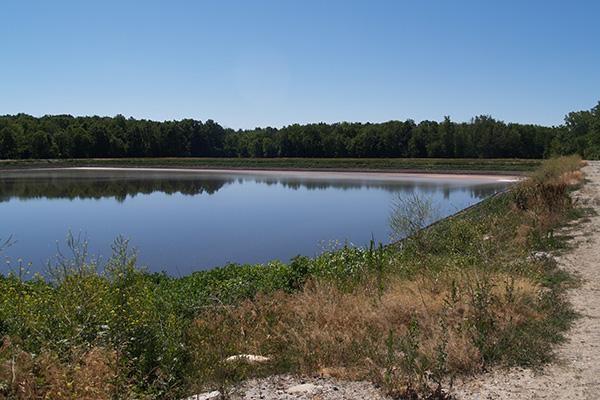
Storage. How will the manure be contained until it can be used or treated? Photos 1-3 below show some examples of manure storage.
Treatment. Not all systems are designed to include manure treatment. Treatment systems tend to be very expensive, but they can lead to new uses for manure or new revenue streams for the farm. Anaerobic or aerobic lagoons, composting, anaerobic digestion, vermicomposting, and thermal technologies are examples of manure treatment.
Transport. How will the manure be moved from the storage structure to the field or to its intended use?
Utilization. Manure has many beneficial uses. The most common use (by far) is land application as a plant fertilizer.
Photo 1. (Above) An earthen liquid manure storage structure. Ideally, this type of manure storage would have a marker installed that indicates when the liquid level reaches the maximum design limit (a depth that provides enough capacity to store the expected volume of wastewater plus a margin of safety in case of a large rainfall or prolonged period of bad weather that prevents pumping out to a field). Photo courtesy of Tetra Tech.
Photo 2. (Above) A storage area for solid manure. It is important that any runoff from this area is captured and contained. Photo courtesy of Saqib Mukhtar, University of Florida.
Photo 3. (Above) A concrete storage structure for slurry manure on a dairy farm. The ramp in the foreground allows access to remove accumulated solids.
A Look at Five Different Types of Animal Agriculture
Click on a photo to start a short virtual tour showing the outside, inside, and basic manure handling and storage practices on layer, beef, pig, dairy, and broiler farms. These tours discuss typical manure collection intervals and practices along with typical storage facilities and management. Links to additional resources are provided throughout the text and at the end of each tour.
For the fun activity below, use the scroll bar at the right of the frame to move down and show the “continue” or “submit” buttons if they do not appear.
These materials were developed by the Livestock and Poultry Environmental Learning Center (LPELC) with funding from the U.S. Environmental Protection Agency and with input from the Natural Resources Conservation Service, National Cattlemen’s Beef Association, National Milk Producers Federation, National Pork Board, United Egg Producers, and U.S. Poultry and Egg Association.
For questions on these materials, contact Jill Heemstra, jheemstra@unl.edu. All images in this module, unless indicated otherwise, were provided by Jill.
Reviewers: Tetra Tech, Inc.; Mark Risse, University of Georgia; Leslie Johnson, University of Nebraska; Bill Couser, Couser Cattle; Tom Hebert, Bayard Ridge Group; Glenn Carpenter, USDA NRCS; Joe Harrison, Washington State University; and Jace Thornton, National Cattlemen’s Beef Association
Presentations are an important part of our outreach. Have you ever created a powerpoint that just didn’t land with your audience? Looking to revamp your process but don’t have time to squeeze it into your busy schedule? This presentation will provide practical ways you can create more powerful powerpoints when time is of the essence. It will highlight color choice, questions to ask yourself as you develop your deck, and the assertion-evidence based approach to slide development. You’ll also hear about where you can go to find more information on creating impactful presentations. Have a slide or two you’re really struggling with? Send it to callie.herron@ces.uwex.edu and you could be selected to collaborate on a before and after example for this session.
The authors are solely responsible for the content of these proceedings. The technical information does not necessarily reflect the official position of the sponsoring agencies or institutions represented by planning committee members, and inclusion and distribution herein does not constitute an endorsement of views expressed by the same. Printed materials included herein are not refereed publications. Citations should appear as follows. EXAMPLE: Authors. 2017. Title of presentation. Waste to Worth: Spreading Science and Solutions. Cary, NC. April 18-21, 2017. URL of this page. Accessed on: today’s date.
To provide a forum for the introduction and evaluation of technologies that can treat dairy manure to the dairy farming community and the vendors that provide these technologies.
What Did We Do?
Newtrient has developed an on-line catalog of technologies that includes information on over 150 technologies and the companies that produce them as well as the Newtrient 9-Point scoring system and specific comments on each technology by the Newtrient Technology Advancement Team.
What Have We Learned?
Our interaction with both dairy farmers and technology vendors has taught us that there is a need for accurate information on the technologies that exist, where they are used, where are they effective and how they can help the modern dairy farm address serious issues in an economical and environmentally sustainable way.
Future Plans
Future plans include expansion of the catalog to include the impact of the technology types on key environmental areas and expansion to make the application of the technologies on-farm easier to conceptualize.
Corresponding author name, title, affiliation
Mark Stoermann & Newtrient Technology Advancement Team
All of the vendors and technology providers that have worked with us to make this effort a success need to be recognized for their sincere effort to help this to be a useful and informational resource.
The authors are solely responsible for the content of these proceedings. The technical information does not necessarily reflect the official position of the sponsoring agencies or institutions represented by planning committee members, and inclusion and distribution herein does not constitute an endorsement of views expressed by the same. Printed materials included herein are not refereed publications. Citations should appear as follows. EXAMPLE: Authors. 2017. Title of presentation. Waste to Worth: Spreading Science and Solutions. Cary, NC. April 18-21, 2017. URL of this page. Accessed on: today’s date.
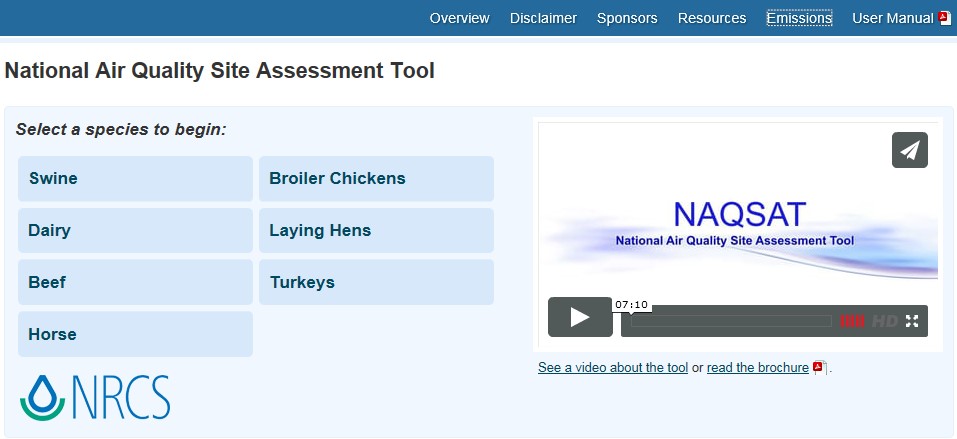
The National Air Quality Site Assessment Tool (NAQSAT) was developed as a first-of-its-kind tool to help producers and their advisors assess the impact of management on air emissions from livestock and poultry operations and identify areas for potential improvement related to those air emissions.
What did we do?
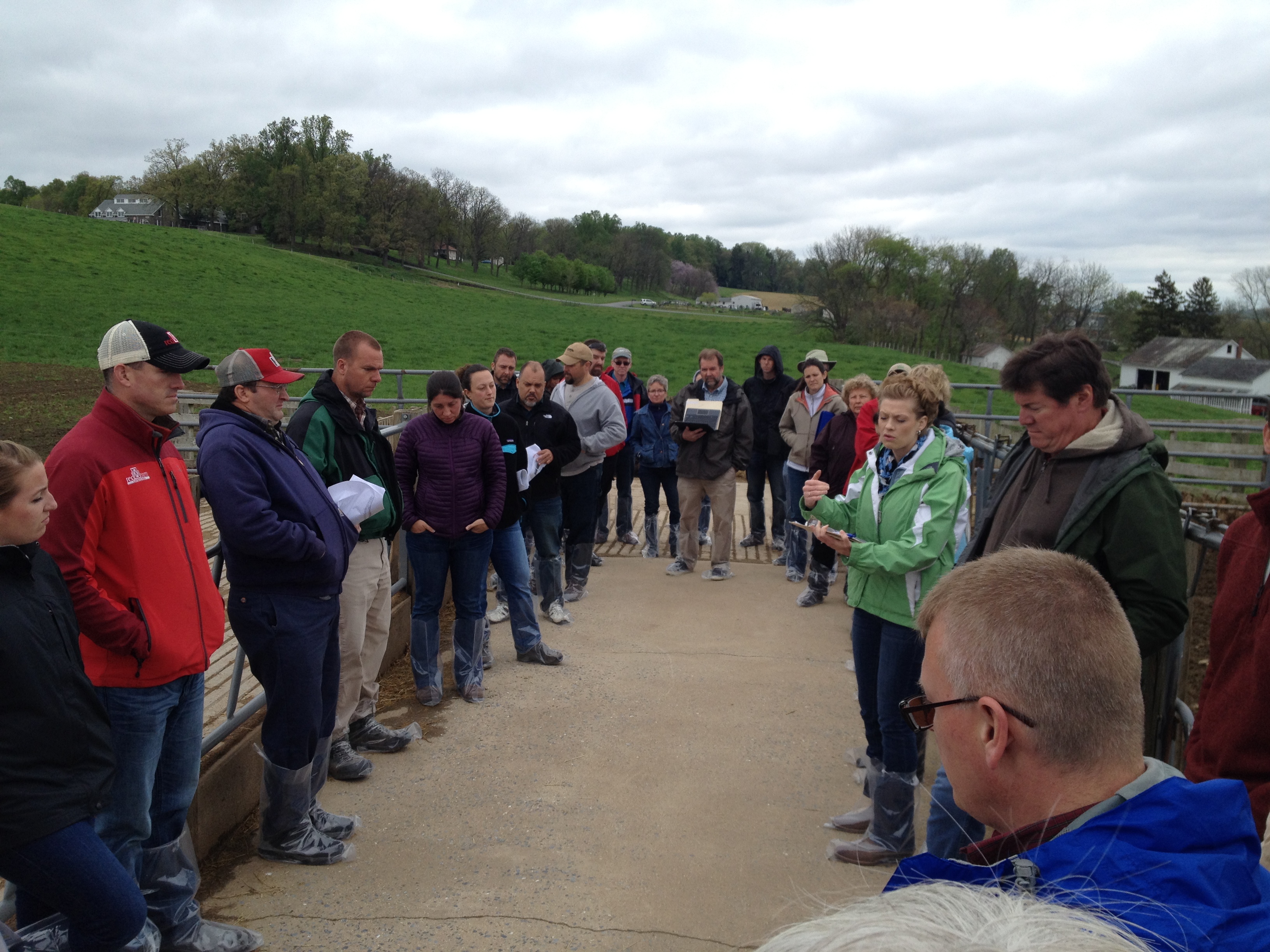
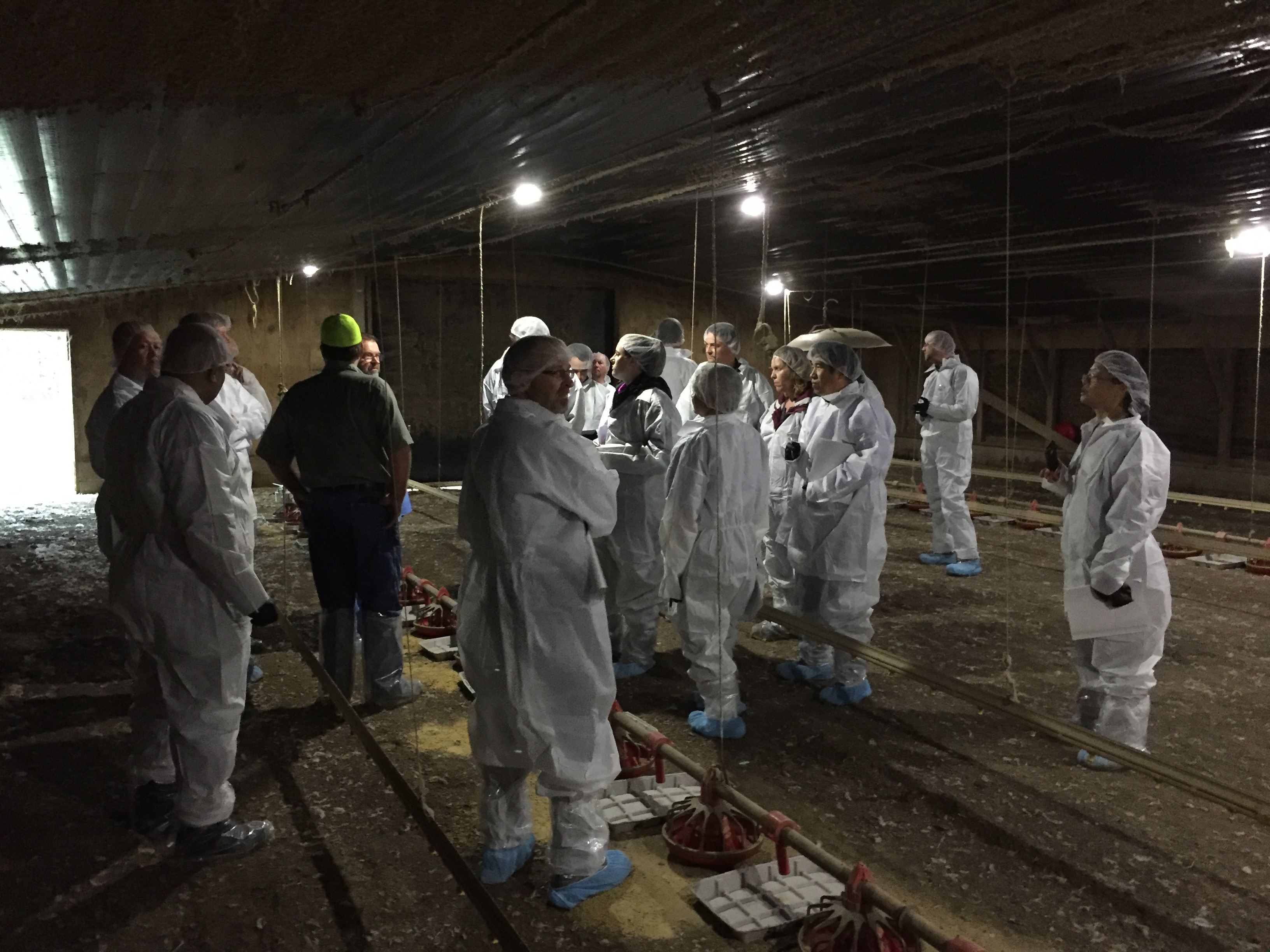
In 2007, several land-grant universities, with leadership from Michigan State University, began developing NAQSAT under a USDA-NRCS Conservation Innovation Grant (CIG). The initial tool included beef, dairy, swine, and poultry operations. A subsequent CIG project, with leadership from Colorado State University, made several enhancements to the tool, including adding horses to the species list. In 2015, USDA-NRCS officially adopted NAQSAT as an approved tool for evaluating air quality resource concerns at livestock and poultry operations. USDA-NRCS also contracted with Florida A&M University in 2015 to provide several regional training workshops on NAQSAT to NRCS employees. Six training workshops have been completed to date (Raleigh, NC; Modesto, CA; Elizabethtown, PA; Lincoln, NE; Richmond, VA; and Yakima, WA) with assistance from multiple NAQSAT development partners. Additionally, USDA-NRCS revised its comprehensive nutrient management plan (CNMP) policy in October 2015 to make the evaluation of air quality resource concerns mandatory as part of CNMP development.
What have we learned?
NAQSAT has proven to be a useful tool for bench-marking the air emissions impacts of current management on confinement-based livestock and poultry operations. In the training sessions, students have been able to complete NAQSAT runs on-site with the producer or producer representative via tablet or smartphone technologies. Further classroom discussion has helped to better understand the questions and answers and how the NAQSAT results can feed into the USDA-NRCS conservation planning process. Several needed enhancements and upgrades to the tool have been identified in order to more closely align the output of the tool to USDA-NRCS conservation planning needs. NAQSAT has also proven to be useful for evaluating the air quality resource concern status of an operation in relation to the CNMP development process.
Future Plans
It is anticipated that the identified needed enhancements and upgrades will be completed as funding for further NAQSAT development becomes available. Additionally, as use of NAQSAT by USDA-NRCS and our conservation planning and CNMP development partners expands, additional training and experience-building opportunities will be needed. The NAQSAT development team has great geographic coverage to assist in these additional opportunities.
Corresponding author, title, and affiliation
Greg Zwicke, Air Quality Engineer – Air Quality and Atmospheric Change Team, USDA-NRCS
Greg Johnson, Air Quality and Atmospheric Change Team Leader, USDA-NRCS; Jeff Porter, Animal Nutrient and Manure Management Team Leader, USDA-NRCS; Sandy Means, Agricultural Engineer – Animal Nutrient and Manure Management Team, USDA-NRCS
University of Georgia Department of Poultry Science
University of Idaho
University of Maryland
University of Maryland Department of Animal and Avian Sciences
University of Minnesota
University of Missouri
University of Nebraska
USDA-ARS
Virginia Tech University
Washington State University
Western United Dairymen
Whatcom County (WA) Conservation District
The authors are solely responsible for the content of these proceedings. The technical information does not necessarily reflect the official position of the sponsoring agencies or institutions represented by planning committee members, and inclusion and distribution herein does not constitute an endorsement of views expressed by the same. Printed materials included herein are not refereed publications. Citations should appear as follows. EXAMPLE: Authors. 2017. Title of presentation. Waste to Worth: Spreading Science and Solutions. Cary, NC. April 18-21, 2017. URL of this page. Accessed on: today’s date.
Manage Cookie Consent
To provide the best experiences, we use technologies like cookies to store and/or access device information. Consenting to these technologies will allow us to process data such as browsing behavior or unique IDs on this site. Not consenting or withdrawing consent, may adversely affect certain features and functions.
Functional
Always active
The technical storage or access is strictly necessary for the legitimate purpose of enabling the use of a specific service explicitly requested by the subscriber or user, or for the sole purpose of carrying out the transmission of a communication over an electronic communications network.
Preferences
The technical storage or access is necessary for the legitimate purpose of storing preferences that are not requested by the subscriber or user.
Statistics
The technical storage or access that is used exclusively for statistical purposes.The technical storage or access that is used exclusively for anonymous statistical purposes. Without a subpoena, voluntary compliance on the part of your Internet Service Provider, or additional records from a third party, information stored or retrieved for this purpose alone cannot usually be used to identify you.
Marketing
The technical storage or access is required to create user profiles to send advertising, or to track the user on a website or across several websites for similar marketing purposes.
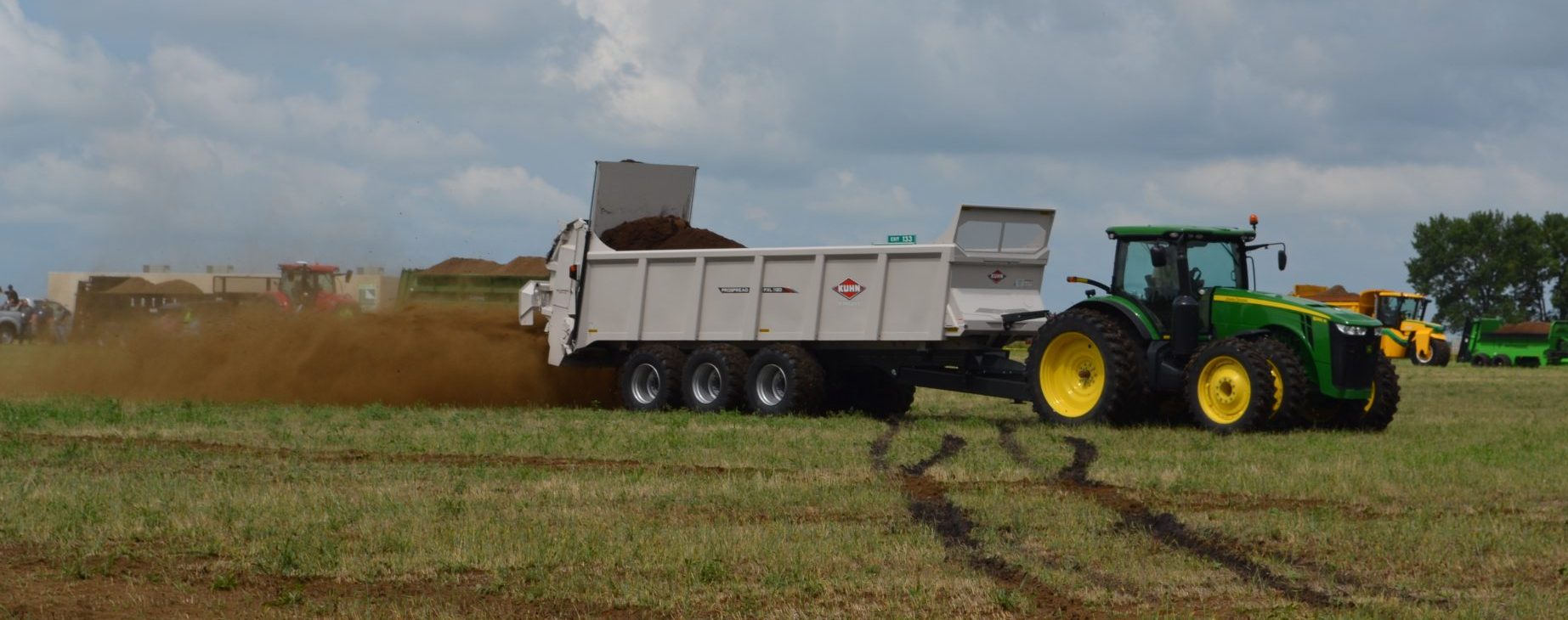





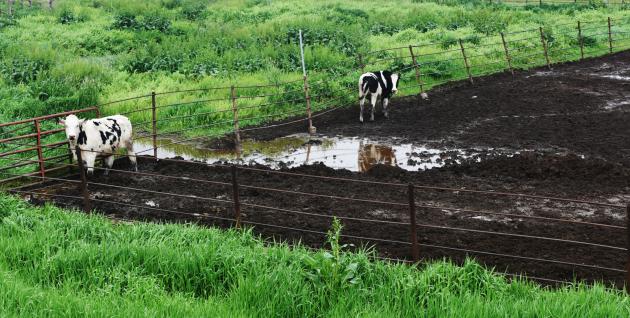


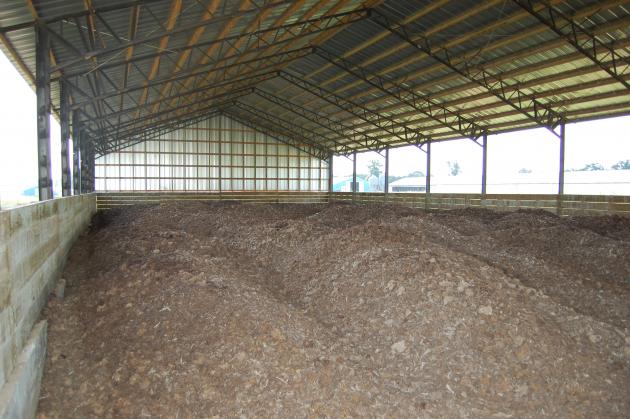

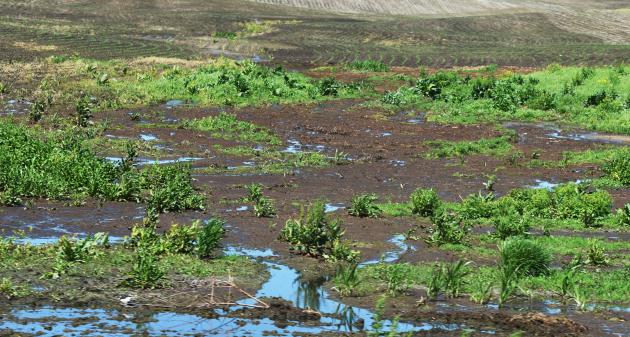
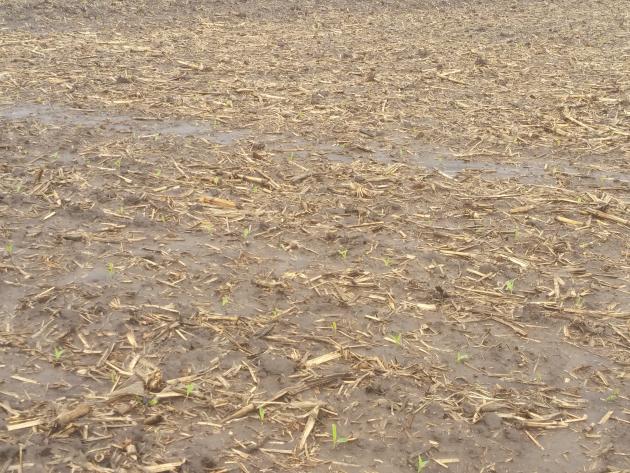



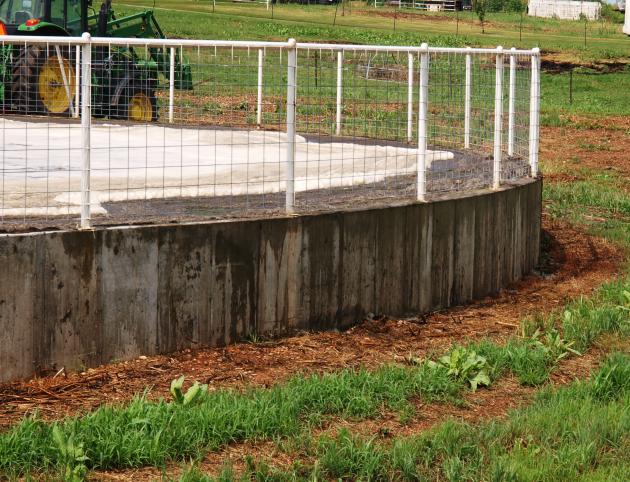
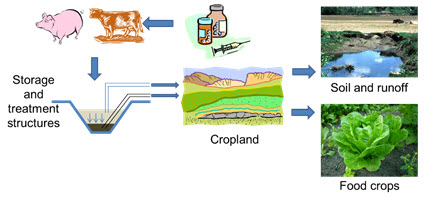
 Manure and manure slurry may be applied to fields using application methods such as broadcast, injection, and incorporation. These land application methods have varying effects on the spread of antibiotics and antibiotic resistance genes in croplands. A study was conducted to investigate how these land application methods may affect the concentrations of antibiotics and antibiotic resistance genes in runoff and soil following the
  Vegetative barriers are strips of densely growing perennial plants seeded downslope on cropland adjacent to surface water.