Costs of Liquid Manure Application and Transport

Livestock and Poultry Environmental Learning Center:

Home Page

All articles about:

Manure Value and Economics

What Systems Produce Liquid Manure?

Liquid manures are most common with pork production where the manure is flushed from the building and stored outside in lagoons. Liquid manures are mostly water with some organic matter and nutrients suspended in the water. Most of the organic matter decomposes in the lagoons and is not removed.

Options to Haul and Apply Liquid Manure

While some livestock producers haul liquid manure in tankers, it is usually considered cost prohibitive. The amount of water is so great that the hours spent distributing it and the resulting dollar cost exceeds the value of the manure supplied nutrients when using tankers.

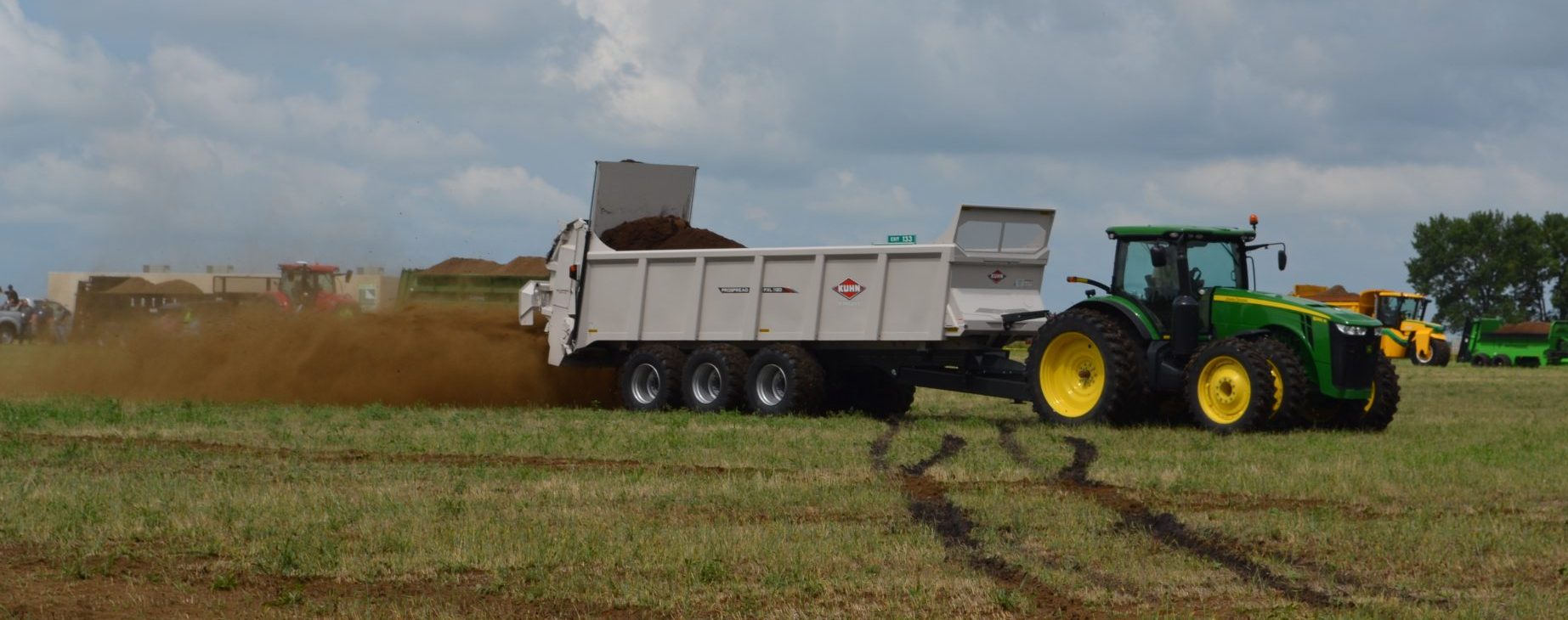
Liquid manure is usually pumped through pipes and hoses to the land that will be accepting the manure. This means that loading costs and transportation costs are relatively low. Once the manure is at the field, it can be applied with a tractor that pulls the dragline hose through the field or via an irrigation system. The irrigation system can be a stationary sprinkler or a single big gun sprinkler that must be moved periodically by the operator.

Liquid manure can be land applied with a dragline hose.

Other options include, a big gun sprinkler or a center pivot irrigation system that move automatically through the field. The center pivot irrigation system is usually too expensive to own just for liquid manure distribution; it is usually part of an irrigation system that also pumps clean water. The stationary and big gun sprinklers are inexpensive and easy to use.

Authors: Ray Massey, University of Missouri and Josh Payne, Oklahoma State University

Pasture Management on Small Farms

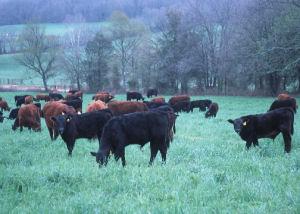
Proper pasture management is important to holistic farm management. Grazing animals deposit manure on pastures and exercise areas. This manure ultimately will either be incorporated into the pasture soil or if the pasture is poorly vegetated it may be a runoff risk. So, the first principle of managing manure with grazing animals is to ensure productive pastures. Productive pastures will reduce the risks of manure runoff by providing ground cover that will prevent soil erosion. These pastures will also take up nutrients from manure and use them for crop growth. Less productive pastures will not do this. ( ABC’s of Pasture Grazing) ( Spanish Language Version)

What Makes a Pasture Productive?

What are some elements of productive pasture management? Proper soil health and fertility will ensure a good growth environment for pasture species, both forage and legume. Manure can help to improve and maintain soil fertility by providing needed nutrients, (N, P, and K) and organic matter. These nutrients will help promote growth of grasses and legumes while organic matter from manure will help to provide soil structure, protection against erosion and improve natural soil fertility. Choosing the appropriate grass and legume species will help optimize forage management and pasture growth.

Pasture rotation is also practiced in order to optimize plant growth and utilization by grazing vegetation at the proper heights and allowing for proper rest and regrowth. Activities such as brush hogging or clipping, dragging to break up manure clumps, fertilizing and over seeding are also necessary components of pasture forage management.

cows

CC2.5 LPELC


Sacrifice Areas

Exercise or sacrifice areas are designated locations for feeding, watering, exercise and relaxation for times when pastures are not accessible due to lack of growth (winter or drought), flooding, etc. Generally, these areas have little or no vegetation. It is important that manure not be spread in these areas. They are meant to be sacrificed for animal activities in order to protect the remaining pastures. Runoff from sacrifice areas should also be managed to reduce the risk of water pollution caused by sediment and nutrients from these areas.

Erosion

Erosion problems on small farms are often different than large farms. On large farms, most erosion may be sheet or rill erosion running off large fields. On smaller farms, erosion may more often be a gully where animals cross a stream. Or it could be poorly vegetated pastures that provide poor ground cover during precipitation. Fencing, watering and feeding sites, presence or absence of field buffers, and stream crossings can all influence erosion on a small livestock farm.

Water

Water is of concern whenever it is in short supply or contamination is suspected. Water serves to cool the animal and works as a solvent or buffer for chemical reactions in the body. When the weather is hot in the summer, an animals’ requirement for water will increase. Requirements vary with stress, weather conditions, heat, cold, disease, productive state, work, exercise, etc., as well as the water and salt content of the feed. Often the first sign that water consumption is inadequate is when animals stop eating. Water is essential to maintain adequate feed consumption.

Grazing animals on pasture need to be supplied with adequate water for drinking. Livestock on pasture will tend to congregate near or in riparian areas that have greater access to shade and water. These areas may also provide greater water quality risks from manure runoff, trampling and compaction, overgrazing, and mud accumulation than areas more distant to water. The management and design of these riparian areas is critical for maintaining a proper pasture grazing environment with adequate feed and water availability and promoting optimal environmental quality. A Guide to Managing Pasture Water provides some excellent guidelines for maintaining water quality in riparian settings.

pasture

CC2.5 LPELC

This pasture management section provides information about proper pasture management in order to improve water quality by reducing manure runoff and soil erosion risks that may be associated with poor pastures. The following links provide more specific information.

    1. Basic Soil fertility
    2. Selecting Forage Species
    3. How Forages Grow

Pasture Management

    1. Horse Pasture Management
    2. Sacrifice or Exercise Lots
    3. Rotational Grazing( Spanish Language Version)
    4. Weeds and Toxic Plants
    5. Controlling Farm Erosion
    6. Pasture Based Watering Systems
    7. Fencing, paddock design, etc.
    8. Equipment

Recommended Reading

Authored by Michael Westendorf, Rutgers the State University of New Jersey; Updated November 25, 2008

Nutrient Planning on Small Farms

livestock and poultry environmental learning center logo with cow, pig, and chicken sillhouettes over a map of the U.S. with three circling arrowsThe LPE Learning Center hosted a webcast on Nutrient Planning on Small Farms in June, 2008.

Positive Impacts of Manure

When managed properly, manure can be a valuable resource on a farm. Manure can be a source of nutrients for crop production and improve soil quality. The organic matter present in manure can improve both tilth and water holding capacity of the soil. Livestock and poultry manure is a valuable fertilizer for crop and pasture production. Most farm owners do not realize the value of the manure that is produced on their farms.

Negative Impacts of Manure

When not managed properly, manure can pollute the environment; mainly as ground or surface water pollution due to the nutrients nitrogen (N), phosphorus (P), and carbon (organic matter). In addition manure can lead to air quality concerns, pathogens in water supplies, odors, dust, and the presence of vermin.

Manure Nutrients

Manure nutrients can be beneficial for the soil and plant growth; however, manure application rates should be based on plant growth needs. Excessive manure application to the soil can result in nutrient leaching and increased losses through runoff. In addition, manure contains soluble salts and minerals such as arsenic, copper, and zinc which in excessive amounts may negatively impact the soil quality.

Manure nutrients, (N, P, and organic matter) can be major pollutants in lakes and estuaries as well as rivers. Nitrogen and phosphorus attached to soil particles may reach waterways through surface runoff or wind deposition. Dissolved N and P may leach through the soil, ultimately reaching water bodies. Organic matter can enter water bodies in the form of manure, vegetative matter, or animal carcasses. Waters rich in minerals, organic matter, and nutrients promote a proliferation of plant life, especially algae. This process is called eutrophication. Algae growth and the decomposition of organic matter in water bodies reduces the dissolved oxygen content of the water, which may lead to the death of aquatic life.

Pathogens and Vermin

In addition to the concerns regarding nutrients, pathogens may be present in manure. Some examples of the pathogens are E. coli, Salmonella, and Cryptosporidium parvum. These pathogens can impair water bodies and potentially pose human health risks when manure or contaminated water comes in contact with food sources. Flies and rodents are other manure related concerns on livestock farms. These problems can be minimized by proper design of animal housing and manure storage, and proper handling procedures when turning or moving manure piles.

Air Quality

Air quality concerns arise from odors, particulate matter, and aerial pathogens. Ammonia released from manure can result in odor and may react with other compounds in the atmosphere producing particulate matter (PM 2.5) which can affect the environment and public health. There are a variety of other compounds released from manure such as hydrogen sulfide, green house gases (methane and nitrous oxide), and some volatile organic compounds that can also cause air quality concerns. Particulate matter that arises from dust and reaction of ammonia with other compounds in the atmosphere are also a concern.

Why Implement Nutrient Management Planning?

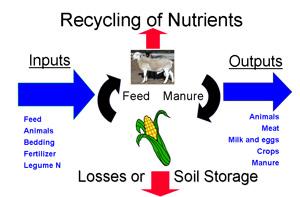
The purpose of nutrient management is to implement practices that permit the efficient use of manure for crop production while protecting potential environmental damage that may be caused by nutrients. Nutrient management planning is a site specific exercise; and, if the recommendations are followed, nutrient losses should be minimal. In general, nutrient management considers the nutrients available on a farm, how best to use them, and the potential impacts of the nutrients on the environment. Factors typically considered in nutrient management planning are: goals of the farming operation as well as any constraints; available farm resources (land, equipment, financial resources); potential critical areas on the farm (sensitive water bodies, neighbor concerns, erosion, manure storage); and nutrient balance analysis (shown in the figure below).


Recycling

CC2.5 Mike Westendorf

Farm nutrient inputs consist of animals, feed, fertilizer, legume nitrogen, and bedding. Outputs are animals, milk, meat, eggs, manure, and crops. Recycling also occurs on the farm with nutrients moving from feed through livestock, applied to soil, utilized by plants, and back to feed again. The optimal goal (Whole Farm Nutrient Balance) is for the farm to remain in balance between inputs and outputs without losses as runoff or leachate from either the soil or manure. Soil can store some nutrients assuming that the amount of manure applied to the soil is not excessive.


Small Farms are Different than Large Farms

The challenges of managing manure nutrients are different on a small farm than on many larger farms although the principles are similar. Small farms have fewer animals and sometimes several animal species on the same farm. They also may have limited acreage and/or lack equipment for spreading manure. The nutrient management planning section provides information on feeding animals and managing their diets; manure production; basic soil science and soil fertility; and nutrient (manure) management. The section details on- and off-farm use within the context of a nutrient management plan.

The following articles are coming soon!

  • Basic soil science and fertility
  • Nutrient management on the farm
  • Crop utilization
  • Nutrient management plans
  • Off-farm utilization
  • Soil and manure testing
  • Record keeping

Additional Resources

Nutrient Management–SIMPLIFIED! by Randall James, Ohio State University Extension

Authors: Jactone Arogo Ogejo, Virginia Polytechnic Institute and State University (Virginia Tech) and Michael Westendorf, Rutgers, The State University of New Jersey

LPES Curriculum Small Farm Fact Sheets

The LPES Small Farms Fact Sheet series was prepared to inform the large, diverse population of small-scale animal producers about environmental stewardship and to provide the latest environmental information to educators and advisors. In this information, producers are encouraged to practice environmentally sound management with the goal of increasing the success of their animal operations. The series was developed by 20 national experts from 12 land-grant universities, the EPA National Ag Assistance Centre, MWPS and the USDA.

  1. Small-Scale Farmers and the Environment: How to be a Good Steward by Mark Rice, North Carolina State University
    1. Spanish version:Cómo proteger el medio ambiente en los ranchos y granjas pequeños por Mark Rice, North Carolina State University
  2. The ABCs of Pasture Grazingby Ben Bartlett, Michigan State University
    1. Spanish version:El abecé del pastoreo por Ben Bartlett, Michigan State University
  3. Manure on Your Farm: Asset or Liability? by Craig Cogger, Washington State University
  4. Protecting the Water on Your Small Farm by Joe Harrison, Washington State University
  5. Managing Animal Deaths: Your Options by Frank Humenik, North Carolina State University
  6. Got Barnyard Runoff? by Chris Henry, University of Nebraska-Lincoln, and Joe Harner, Kansas State University
  7. A Horse Owner’s Guide to Good Stewardship by Randall James, Ohio State University Extension
  8. Need a Vegetative Treatment System for Your Barnyard or Lot? by Chris Henry, Rick Koelsch, and Jason Gross, University of Nebraska- Lincoln, and Joe Harner,, Kansas State University
  9. The ABCs of Livestock Watering Systems by Ben Bartlett, Michigan State University
  10. The ABCs of Electric Livestock Fencing by Ben Bartlett, Michigan State University
  11. Nutrient Management–SIMPLIFIED! by Randall James, Ohio State University Extension

Small Farms Team Members

A national team of subject matter experts from land-grant universities, the EPA National Ag Assistance Center, MWPS, and the USDA collaborated in the development of the Small Farms Fact Sheet series.

  • Mark Rice, North Carolina State University
  • Ben Bartlett, Michigan State University
  • Diane Huntrods, MWPS, Iowa State University
  • Charlie Abdalla, Pennsylvania State University
  • Jill Auburn, USDA
  • Tommy Bass, University of Georgia
  • Roy Bullock, Tennessee State University
  • Craig Cogger, Washington State Universityv
  • Denis Ebodaghe, USDA
  • Carl Evensen, University of Hawaii
  • Carol Galloway, EPA National Ag Assistance Center
  • Doug Hamilton, Oklahoma State University
  • Joe Harner, Kansas State University
  • Joe Harrison, Washington State University
  • Chris Henry, University of Nebraska-Lincoln
  • Frank Humenik, North Carolina State University
  • Jimo Ibrahim, North Carolina A&T
  • Randy James, Ohio State University
  • Rick Koelsch, University of Nebraska
  • Ginah Mortensen, EPA National Ag Assistance Center
  • Mark Risse, University of Georgia
  • Marion Simon, Kentucky State University

The LPES Small Farms series was developed with support from USDA,U.S. EPA’s National Ag Assistance Center,and University of Nebraska Cooperative Extension at Lincoln, under Cooperative Agreement Number 2003-39490-14107.

Managing Dietary Phosphorus for Livestock and Poultry

Phytate Phosphorus

Phosphorus is required in the diet of animals, but if overfed or wasted, can contaminate the environment and water supplies. Cereal grains fed to livestock contain phytate-bound phosphorus. Phytate-bound phosphorous is digestible by ruminant animals such as cows, sheep, and goats, but it cannot be digested by single-stomached animals, such as pigs and chickens. Phytate consists of a carbon ring structure with balanced phosphate groups surrounding the ring. Since horses are a hind gut fermenter, they are able to process the phosphorus much like ruminant animals.

Since phytate-bound phosphorous is unavailable to pigs, chickens, and other single stomached animals, phosphorous from other sources is supplemented to meet the needs of the animal. The extra phytate-bound phosphorus will be unavailable and excreted in the manure.

Reducing the proportion of cereal grains in the diet will usually reduce the amount of phosphorus fed. However, for pigs and chickens, and there are few economic alternatives to cereal grains. Plant breeders are working to develop feed grains lower in phytate content and higher in available phosphorus.

Phytase in the Feed

An enzyme called phytase can be included with the diet. Phytase will break down phytate and release digestible phosphorus. Mixing phytase (commercially available) in the diet will reduce the phosphorus required in supplements.

Interactions Between Nutrients

Another factor affecting phosphorus availability is the presence of other nutrients in the diet. Overfeeding calcium can limit the availability of phosphorus. Calcium and other nutrients should be fed in balance so as not to disrupt the availability of phosphorus.

Calcium:Phosphorus Ratio for Horses

Horses are a bit unique; they require calcium and phosphorus to be in a specific ratio in the diet. Young growing horses, as well as lactating mares, should receive a Ca:P ratio of 2:1, while mature horses not reproducing can get by with a 1:1 ratio. Calcium should never be fed at a level lower than phosphorus because phosphorus will tend to interfere with calcium absorption into bone. Horses at maintenance require .17% phosphorus in the diet and .24% Ca. The highest levels of phosphorus are needed in reproducing mares (.34%). Typical horse diets approach 2 to 3 times the required level of phosphorus, which can be detrimental to the environment. This high phosphorus level is partially due to the estimated Ca:P ratio in alfalfa hay being 6:1. Many horse owners try to counteract this by adding more phosphorus to the diets. Many equine supplements already contain more phosphorus than is necessary. There are also phosphorus concerns for ruminant animals such as cows, sheep, goats, and etc.

Ruminants and Phosphorus

Ruminant animals have a phytate enzyme produced naturally within the rumen that breaks down phytate-bound phosphorus and makes it available to the animal. According to the National Research Council, a lactating dairy cow requires between .35 and .40% phosphorus in the diet. Previous dairy feeding practices included as high as .55% or .60% phosphorus in the diet. This would mean an excess of 25 to 30 pounds fed to a cow in a normal lactation. If you multiply this over a dairy herd with 100 cows, then nearly 3,000 pounds extra phosphorous would be fed over the course of a year. Some dairy farmers think that phosphorus is a mineral required for proper reproductive function. While phosphorous is indeed important for normal bodily functions and is important for reproduction just as all nutrients are important for reproduction, there is no special link between phosphorus and reproduction in a cow. Most dairy farmers have already reduced phosphorus in their diets to levels given by the National Research Council.

Feed Management Tips for Small Livestock Farms

How can small farms make the most efficient use of their feed resources and reduce potential environmental impacts? They do it by managing their feed supplies and animals carefully using some of the tips mentioned below. Farmers also need to pay special attention to nitrogen and phosphorus.

Appropriate Use of Feed Additives

Additives, supplements, hormones, antibiotics, and etc. are generally very effective ways to improve animal performance and efficiency. If used, these should be fed as prescribed on the label, or under the care of a veterinarian.

Examples of additives are:

  • Ionophores like monensin or bovatec affect fermentation in the bovine (cattle) rumen and improve performance and feed efficiency. (Monensin and bovatec should never be feed to horses!)
  • Hormones such as anabolic implants and steroids or rBST (recombinant bovine somatotropin) improve production efficiency, growth rate or milk production in cattle. Hormones are not used in pig or poultry production.
  • Antibiotics, which, when used properly in the diet, can result in improved feed efficiencies and health. Using antibiotics for the purpose of growth promotion and not disease control (called sub-therapeutic use) is under a great deal of scrutiny and is becoming more controversial as scientists look for ways to combat antibiotic-resistance in microbes and pathogens.

Products that improve nutrient efficiency will also reduce excretion relative to production.

How to Incorporate By-Product Feeds in Diets

By-product (often also called co-product) feeds are often used in animal diets. These are by-products of other industries, such as the production of distilled spirits, ethanol, or beer, wheat processing, milling, and soy oil among others. These co-products, such as brewer’s grains, distiller’s grains, soy hulls, and others can make excellent animal feedstuffs.

There are also byproducts from the wheat milling industry, such as wheat bran, middlings, reddog, shorts, etc. By-products from wet corn milling give us high fructose corn syrup and a variety of other corn products including corn gluten feeds and meals. In addition, there are products such as citrus pulp, beet pulp, and whole cottonseed. Some farms even feed expired foods that have been returned to distributors from grocery stores.

One disadvantage of by-products is that their nutrient content is often variable; these feeds should be sampled regularly so estimates of nutrient content can be used in formulating diets. Sometimes, the by-product supplier will provide a nutrient analysis when requested. Advantages of by-products are that they can often be purchased more cheaply than traditional feeds and utilize a material that might otherwise become a part of the waste stream.

Managing Feed Variability

Every load of feed that comes out of the field during harvest or is delivered by the feed company is different from the previous load. Every bale of hay in the summer is different from the previous bale. Every scoop full of grain that is given to a horse or livestock animal is different from the previous container of grain. It is essential that producers get a handle on the variability of their feed and ensure that to the best of their knowledge and ability they are able to balance diets for the nutrients that are in the feeds they are using.

There are feed and forage labs available and feed samples can be sent to these labs to determine nutrient content. In this way diets can be formulated based on the nutrient content of each individual component. It is possible to use published values when nothing else is available. However, these are only averages of many samples and may not reflect actual conditions.

Monitoring Feed and Forage Quality

Every effort should be made to use feeds of a high quality. For ruminants to reach optimum levels of production, it is essential that forages be of the best quality possible. Those too high in fiber, or rained on during production, or that spoil in the silo, will result in lower levels of production, will be more costly to the producer, and may result in greater levels of nutrient loss.

Every extra day beyond the optimum harvest date for hay in the summer will result in a reduction in forage quality and greater costs to the producer. This is an important point to remember; harvesting forage at the optimum time will improve quality, result in greater profitability for the producer, and less waste of feed and nutrients. Feed samples and laboratory analysis

Related: Forage Testing and Interpreting the Analysis…. (dairy) | Hay analysis: Its importance…. (horses)

Monitor Health and Disease

Sick animals are not productive animals, but will continue to consume feed since they have a requirement for body maintenance. They will continue to excrete nutrients in their manure. All animals should be on a regular health and herd management program. They should be vaccinated for disease regularly and monitored for special diseases. To reduce waste, temporarily reduce feed delivery to sick animals and gradually bring it back up to full levels as they recover.

All domestic livestock animals can be affected by parasites. Parasites will infest the intestines and can result in substantial decreases in performance. Whenever this happens, the efficiency of nutrient utilization is going to decline and influence nutrient excretion. All animals should be on a regular de-worming and parasite control schedule.

Toxins in the feed or water may also influence animal production. For example, during a drought year forage quality will often decline, and toxins, such as excess nitrates, may be taken up from the soil by plants and influence animal production. Plant growth stress can also result in the formation of mycotoxins in the feed; this can occur in both feed grains and forages. These toxins can result in decreased production, as well as sickness and death. Whenever toxins are believed to be a problem, it is important to test feed and water supplies to ensure the adequate consumption of uncontaminated feeds and water.

Feed Processing

Processing feed is helpful if animals are to digest and absorb nutrients. In recent years, the use of corn silage kernel processors has increased on dairy farms. Kernel processors typically use physical force to break down each kernel of grain and make the nutrients in the kernel more available to digestive processes. This has been shown to result in a significant increase in production in animals fed these diets.

Feed processing includes grinding, flaking, steam rolling, and other processes that improve the availability of nutrients. For example, sorghum grain or milo is unavailable to ruminant animals and horses without some level of processing, such as grinding or steam flaking. It can be utilized by chickens that have the advantage of the crop and gizzard in their digestive system. If there is any down side to feed processing, it would be over-processing or over-mixing. Over-processing usually means that the feed reached too high a temperature. This causes chemical changes that can offset the benefits and actually tie-up or bind nutrients.

Mixing feeds, particularly forage, for too long of a period of time can break particles down into smaller pieces. These pieces tend to move more quickly through the gastrointestinal tract and not be digested at a level required for optimum utilization and health of the animal. Processed feeds are also more expensive than unprocessed, and might not always be necessary (e.g. oats for horses).

Reducing Feed Waste
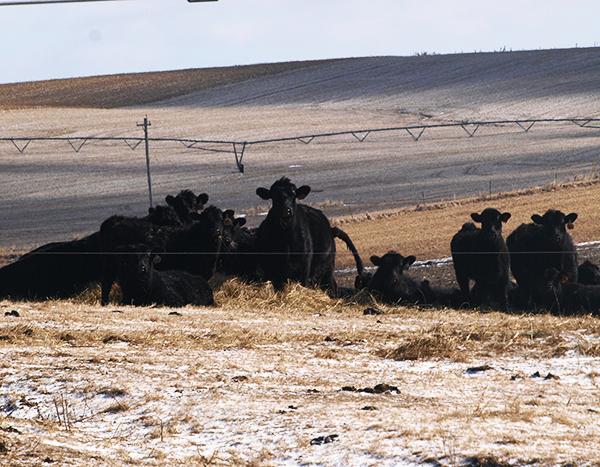
cows fed a bale of hay on pasture and wasting most of it

A hay bale fed on the ground like this one will result in as much as 40-50% waste. Hay feeders can greatly reduce the loss.

It is common for animals to spill or waste feed. For example, pigs will waste as much as 20% of their diet while eating. This wasted feed is often wet, covered with saliva, and it will spoil and rot. If this feed is left in place, animals will not consume it. Silage left in the feed bunk and not consumed quickly is especially susceptible to spoilage and will not be eaten. Wasted, spilled, and rotten feed is a breeding ground for flies and attracts vermin like mice and rats.

  • Bunks and feeders should be designed to reduce wasted feed.
  • Bunks and feeders should be cleaned on a regular basis so spoiled or rotten feed can be removed.
  • Do not feed animals on the ground. It is a common practice, but there is no greater source of waste than feeding an animal on the ground. Although this might be acceptable with beef cows or sheep on the open range, or even horses, it is not acceptable to feed animals on the ground near a stream. This sort of waste also contributes to the creation of mud in pastures and paddocks.

Use Feed Ingredients High in Nutrient Availability

The availability of individual nutrients can vary from feedstuff to feedstuff; for example phytate-bound phosphorus in cereal grains. Ruminants can utilize phytate-phosphorus but horses and pigs cannot. Pig farmers often add an enzyme, phytase, to swine diets to make the phosphorus more availalable. This reduces the amount of phosphorus supplement needed and also reduced the phosphorus excreted in manure. It is important for producers to choose feedstuffs that have nutrients high in bioavailability. This means that nutrients present in feedstuffs are readily available and utilized by the animal. Related: Managing dietary phosphorus…

Authors

Michael L. Westendorf and Carey A. Williams, Extension Specialists in Animal Sciences, Rutgers, The State University of New Jersey. This article was originally published as Rutgers Cooperative Extension Fact Sheet FS 1064. Updated November 25, 2008.
Managing Dietary Nitrogen for Livestock and Poultry

Diets should be managed to reduce nitrogen (N) losses. Protein is the chief N source in the diet, and N is the nutrient we are most concerned with. If a growing pig requires 22% protein in the diet and is fed 25% protein, then the excess (containing N) is going to be lost. Some N is going to be lost in the feces, and some that is absorbed is going to be lost as urea in the urine. Conversely, if a pig requires 22% protein, and is only fed 18% protein, then that animal’s production will be limited to the 18% level. In this case other nutrients in the diet will be in excess and cannot be utilized efficiently. Nitrogen feeding strategies are different for all livestock species.

Dietary Nitrogen Management for Ruminants

Ruminants (cow, sheep, goat, etc.) have a requirement for proteins that are quickly degraded in the rumen, called degradable intake protein (DIP). They also require proteins less quickly degraded or undegradable in the rumen, undegradble intake protein (UIP). If too much UIP protein is fed, then some of that excess will probably be excreted in the feces. On the other hand, if too much degradable protein is fed, there will be too much absorption of nitrogen into the blood supply and it will be lost in the urine as urea. Most research has shown that lactating dairy cows require about 32% to 38% undegradable protein in the diet, with the remainder being made up as degradable protein.

To learn more about protein for cattle see the following Livestock and Poultry Environmental Stewardship (LPES) Curriculum lesson sections:

Dietary Nitrogen Management for Non-ruminants

With non-ruminant animals, like chickens, horses, and pigs, individual amino acids are the basis of diet protein formulation. (Protein is composed of individual nitrogen-containing amino acids). A ruminant has a microbial population that produces essential amino acids in the rumen, so there is less focus on amino acids for them. In the case of pigs, horses, and chickens each individual amino acid is important. Lysine is usually the first limiting amino acid when feeding pigs and horses, and methionine is usually first limiting with chickens. Commonly used feeds are limiting in these amino acids and must be supplemented through balancing with other ingredients or by adding commercially-available crystalline amino acids to the diet.

To learn more about protein for non-ruminants, see the following Livestock and Poultry Environmental Stewardship (LPES) Curriculum lesson sections:

Vegetative Treatment Systems Articles

Manure Management on Small Farms

What Does “Small Farm” Mean?

Small farms are typically smaller in size, with fewer animal numbers, less acreage and have a lighter regulatory burden than larger farms, which may often be designated as Concentrated Animal Feeding Operations or CAFO’s. Small farms are often able to implement lower cost solutions to animal waste concerns than are larger farms.

The USDA and EPA give broad definitions of what constitutes a small farm. A small farm could have 150 dairy cows in the midwestern or western dairy belt or it could be a 30–head flock of sheep raised for an organic market. It could be a 100 head sow herd or 10 head of beef cows and their calves on a retirement farm. Small farms may include both commercial and hobby farms.

Small farms are often quite diverse (University of Rhode Island Small Acreage Livestock Program). A horse-boarding farm in the northeast that exports all manure off-site is very different from a 150-head dairy farm that spreads all manure on owned acreage. Both could be called small farms but the management challenges would be very different for each. A majority of residential/lifestyle farms may also experience high stocking rates (or animal units per acre). Farms with limited land resources must rely on exporting manure to manage the animal waste.

What is an Animal Feeding Operation (AFO)?

Animal feeding operations (AFOs) are agricultural enterprises where animals are kept and raised in confined situations. As defined by the Environmental Protection Agency (EPA), and your state regulatory agency, an AFO is a lot or facility where animals have been, are, or will be stabled or confined and fed, or maintained for a total of 45 days or more in any 12-month period. Feed is brought to the animals rather than the animals grazing or otherwise seeking feed in pastures or fields or on rangeland. Animals are not considered to be stabled or confined when they are in areas such as pastures or rangeland that sustain crops or forage growth during the entire time that animals are present.

Small Farm Livestock Collage

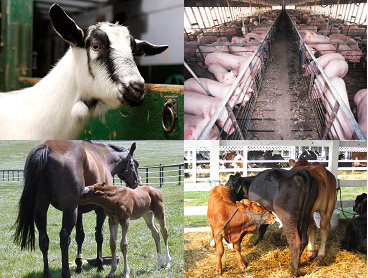
Small farms must first determine if they meet the definition of an AFO. If not, they are considered a “pasture based operation.” If the operation meets the definition of an AFO, then they must determine if they meet the definition of a CAFO (small or medium). This determination is a function of size and connection to surface water resources. There are times when a pasture based operation may be subject to regulation. Any Animal Feeding Operation (AFO) that discharges manure or wastewater into a natural or man-made ditch, stream or other waterway can also be defined as a CAFO, regardless of size. See What if My Operation is an AFO but not a CAFO?.

USDA Definition of Small Farm

The United States Department of Agriculture defines a small farm as having less than $250,000 in annual gross sales (USDA Small Farm Definitions). According to the National Commission on Small Farms these farms constitute 90 percent of U.S. farms, contain 67 percent of farm land, and hold 77 percent of farm sector net worth. In 2004, small farms accounted for 26 percent of all agricultural receipts from crops and livestock. The Small Business Administration (SBA) generally classifies farms as small if they have sales less than $500,000. By SBA standards, about 97 percent of U.S. family farms are small (USDA-Economic Research Service).

All farms with livestock, regardless of size, can be environmental risks. It doesn’t matter if there is one animal or many, if animal housing, pastures and manure is not properly managed, there is a potential to harm the environment or cause problems for neighbors.

cows

Environmental Stewardship for Small Farms

All small farms should strive to achieve good land and animal stewardship: Small-Scale Farmers and the Environment: How to be a Good Steward ( Spanish Language Version). Well managed farms will:

  1. Minimize barnyard and manure runoff into streams or wetlands
  2. Properly account for manure spread on crop or pastureland
  3. Properly store manure to utilize this resource during the growing season
  4. Manage animals and manure on pastures to maintain pasture quality, control field erosion, and control animal traffic near streams
  5. Keep records about their operation.

Small farm manure management poses different kinds of challenges than does manure management on larger farms. This section will connect you with some of the best resources about managing manure on small farms. Follow the links below for helpful information:

Authors: Michael Westendorf, Rutgers, The State University of New Jersey and Mark Rice, North Carolina State University; Updated November 25, 2008

Solid-Liquid Manure Separation

Many, if not most, systems designed for manure treatment depend on reliable solid-liquid separation. What is solid-liquid separation for manure and when is it something to consider doing for your farm?

Defining Manure from a Solid-Liquid Separation Perspective

Manure can be thought of as a mixture of water, minerals, and organic components. Some of the minerals will be soluble and dissolve in the water, while the rest will tend to settle to the bottom or float to the top of the manure storage. The density of the organic components will determine whether they settle to the bottom of the storage unit, remain in suspension, or form a floating crust. The amount of water, source of manure, and manure handling system will determine the extent of these trends. More on solid-liquid separation’s role in manure storage….

The single most important factor affecting the tendency to separate is the amount of water in the manure. With low moisture (solid) manure, very little apparent separation takes place. As the moisture content increases the tendency for separation also increases. When characterizing manure’s physical characteristics it is often thought of as being a solid, semisolid, slurry, or liquid. From a practical perspective separation is limited to liquid, slurry, and sometimes semisolid manure.

When is it Desirable to Separate Solids and Liquids?

Whether the tendency for manure to separate into liquid and solid fractions is desirable depends on the objectives of the manure handing systems. In concrete pits and holding ponds it is usually undesirable because the manure often needs to be remixed to remove settled solids and obtain uniform material for land application.

In other situations this tendency for separation is desirable. If some of the land application sites are significant distances from the manure source, being able to concentrate manure solids reduces the volume and expense of transportation. In some areas of the nation phosphorus application rates are an environmental concern. Separating the phosphorus with the solids while leaving most of the nitrogen with the liquids may be an option. After separation, the liquids could be land applied near the manure source as a nitrogen fertilizer. The solids could be transported and applied to fields in need of phosphorus fertilizer.

Source: CC 2.5 karl vandevender; Livestock and Poultry Environmental Stewardship Curriculum Lesson 20.

Benefits of Separation and Uses for the Components

Even if transportation distance and phosphorus application rates are not a concern using solids separation prior to storage reduces the solids accumulation in holding ponds and lagoons. This increases the time between sludge removal operations and maximizes the liquid storage capacity of the holding pond or lagoon.

Another potential benefit is the reduction in odors. Under the anaerobic conditions found in holding ponds and lagoons microorganisms produce odorous compounds. Reducing the amount of available manure with solids separation tends to reduce the production of objectionable odors.

In animal confinement systems where water from holding ponds and lagoons are used to flush manure from the barns, solids separation can result in a better quality recycle flush water.

The separated manure solids have a reduced moisture content and increased nutrient concentration both of which increase its value as a fertilizer source. In addition, depending on the resulting moisture content it becomes a potential compost ingredient. Where the resulting compost may be used as bedding or potentially marketed off farm.

Manure separation is also likely to play a critical role in preparing manure for conversion in into energy. Different energy conversion technologies will require the manure to have different physical and chemical properties.

Solid-Liquid Separation Options

There are a lot of different options for solids separation. Some, like settling basins, use gravity and time to allow manure solids to settle out of solution. These systems are a non mechanical low tech approach with the resulting solids typically being a wet slurry. In contrast the mechanical approaches such as inclined or vibrating screens, belt or screw presses, centrifuges, and many others result in separated solids that while still having significant moisture can be handled and stored as a solid material.

Often the separation process can be enhanced through the use of chemicals. Some chemicals work by converting soluble mineral compounds into insoluble compounds. Other chemicals work by causing smaller particles to clump together into larger particles. Depending on the situation these chemicals may be used by themselves or combined.

Recommended Reading About Solid-Liquid Separation

Author: Karl VanDevender, University of Arkansas