Different dairy associations and cooperatives have been establishing aggressive environmental goals, including reaching carbon neutrality. Carbon sequestration has been largely absent from environmental dairy studies as it is challenging to estimate. The daily feed intake of dairy cows under organic management is composed mainly of pasture and forages, which have a significantly more developed root system than many other grain cropping systems usually included in conventionally managed feed rations. Moreover, manure is also an important source of carbon, that could be sequestered in the long-term depending on the farm’s management practices. This paper quantifies GHG emissions from organic dairy farms in the U.S., including the benefits of carbon sequestration from above and below ground residues.
What Did We Do?
The U.S. was divided into eight regions based on U.S. climate categories and management practices of the organic dairy farms that participated in the study. This paper presents the results for the Midwest-Great Lakes, New England, California, and the Northwest, where representative organic farms and management practices for each region are modeled with life cycle assessment (LCA) techniques to estimate GHG emissions (kg CO2-eq). The model keeps track of key constituents in milk, meat, and manure based on the defined feed ration and animal characteristics. All inputs and outputs at the farm level during feed production, herd management, milking, and manure management are included in the analysis. Results are expressed per 1 kg of fat and protein corrected milk (FPCM), adjusted to 4% fat and 3.3% protein.
A novel approach has been developed to estimate carbon sequestration from carbon staying in the field that considers environmental factors such as temperature and farm management practices that affect the carbon content of manure reaching the soil and posterior sequestration. Three major steps are used to estimate C sequestration from the pasture and crops portion of dairy feed in the modeled organic systems: i) estimate the C added to the soil from biomass in above ground residues, below ground residues, and manure; ii) estimate the change in C above and below ground as a result of crop and grassland management practices, iii) determine the amount of C from the first steps that will be sequestered long-term.
What Have We Learned?
Average GHG emissions for the modeled farms and regions range from 0.76 – 1.08 kg CO2-eq/kg FPCM after accounting for C sequestration. Enteric methane (CH4) represents more than half of total GHGs and is closely related to the efficiency of conversion of feed to milk by the cow. Carbon sequestration benefits reduce overall emissions by 7 – 20% in the modeled farms and regions. Farms in the Midwest and New England rely heavily on pasture during the grazing season and on grass forages produced on-farm during the non-grazing season, meaning that most of the C is sequestered through residue that stays in the soil system (42 – 49% from below ground residue vs. 35 – 42% from manure). The addition of carbon in manure is also significant, contributing more carbon to the soil than below ground residue in some farms, especially in those relying on imported feeds (43 – 47% from manure in California and the Northwest).
Future Plans
GHG emissions, ammonia emissions, resource depletion (energy, land, and water) and eutrophication potential of organic dairy farms will be estimated for the remaining regions in the U.S. The effect of alternative management practices, key to organic practices, will also be modeled to identify mitigation strategies. Finally, different LCA modeling decisions, such as allocation and use of enteric CH4 predictive equations, will be evaluated to determine their effect on final results.
Authors
Horacio Andres Aguirre-Villegas, Associate Scientist, Department of Biological Systems Engineering, University of Wisconsin-Madison
Corresponding author email address
Aguirreville@wisc.edu
Additional authors
Rebecca A. Larson, Associate Professor. Department of Biological Systems Engineering, University of Wisconsin-Madison
Nicole Rakobitsch, CROPP, Organic Valley.
Michel A. Wattiaux, Professor, Animal and Dairy Sciences, University of Wisconsin-Madison
Erin, Silva, Associate Professor, Plant Pathology, University of Wisconsin-Madison
Acknowledgements
This work was funded by the Cooperative Regions of Organic Producers Pools (CROPP) Cooperative – Organic Valley
The authors are solely responsible for the content of these proceedings. The technical information does not necessarily reflect the official position of the sponsoring agencies or institutions represented by planning committee members, and inclusion and distribution herein does not constitute an endorsement of views expressed by the same. Printed materials included herein are not refereed publications. Citations should appear as follows. EXAMPLE: Authors. 2022. Title of presentation. Waste to Worth. Oregon, OH. April 18-22, 2022. URL of this page. Accessed on: today’s date.
Climate change presents real threats to U.S. agricultural production, forest resources and rural economies. Producers and land managers across the country are experiencing climate impacts on their operations through shifting weather patterns and increasingly frequent and severe storms, floods, drought and wildfire. However, producers and land managers also have an opportunity to help address climate change by mitigating greenhouse gas emissions and sequestering soil carbon.
NRCS Conservation Practice Standards have been used for decades by farmers and ranchers to enhance agricultural lands by reducing soil erosion, improving water quality, creating habitat for wildlife and a number of other benefits. In addition to these benefits, many of these practices may reduce greenhouse gas emissions and sequester carbon in woody biomass and soils. As farms look to the future, USDA’s CarbOn Management Evaluation Tools (COMET) can help estimate climate benefits of adopting certain conservation practices for cropland, pasture, rangeland, livestock operations and energy.
What Did We Do?
COMET-Farm provides a complete analysis for site-specific assessment of greenhouse gas emissions and carbon sequestration. COMET-Farm utilizes peer-reviewed greenhouse gas inventory methods sanctioned by the U.S. Department of Agriculture. Results are provided for carbon dioxide, nitrous oxide, methane and soil carbon. COMET-Planner is a web-based tool designed to provide approximate greenhouse gas mitigation potentials of implementing NRCS conservation practice standards.
The COMET tools were developed through a partnership between USDA NRCS and Colorado State University. There is more than a decade of model development experience reflected in COMET. COMET-Farm uses information on management practices on an operation together with spatially-explicit information on climate and soil conditions from USDA databases (which are provided automatically in the tool) to run a series of models that evaluate sources of greenhouse gas emissions and carbon sequestration. By integrating NRCS SSURGO database and site-specific climate data, locality-specific results are presented to COMET-Farm users. There are several modules nested within the model (i.e., Croplands, Livestock, Agroforestry, Energy), and the model relies on biogeochemical process models, IPCC methodologies, and a number of peer reviewed research results.
What Have We Learned?
Put generally, farmers, ranchers, and others can use COMET to easily estimate farm-scale GHG emissions and to explore the impacts of alternative management strategies on their net emissions. The COMET tools have a variety of additional stakeholders and users, including USDA, state governments, companies, carbon finance groups, non-governmental organization and educational institutions. There are many ways the tools can advance climate smart farming for individual farms, such as: use as part of traditional NRCS conservation planning assistance, evaluation of opportunities for farms to participate in carbon markets, as part of development of a carbon farm plan, or to quantify climate benefits for use in direct consumer marketing of farm products. Additionally, other organizations have advanced climate smart farming principles through the use of COMET, both via private industry and state government programs to incentivize conservation practices based on GHG emission reductions quantified with the tool. For examples of success stories using the COMET tools, see the links under Additional Information.
Future Plans
We look forward to continued use of the COMET tools to advance implementation of climate smart agriculture and forestry practices across the U.S.
Authors
Allison Costa, Air Quality Engineer, United States Department of Agriculture
Corresponding author email address
allison.costa@usda.gov
Additional Information
The COMET tools are available online at: https://comet-farm.com/ and http://comet-planner.com/.
The COMET help desk, YouTube training videos, a calendar of upcoming training events and other resources can be accessed at http://comet-farm.com/HelpPage.
Example of COMET-Planner use by Ben & Jerry’s: https://www.usda.gov/media/blog/2016/12/21/climate-smart-conservation-partnership-serves-two-scoops-farm-solutions
The authors are solely responsible for the content of these proceedings. The technical information does not necessarily reflect the official position of the sponsoring agencies or institutions represented by planning committee members, and inclusion and distribution herein does not constitute an endorsement of views expressed by the same. Printed materials included herein are not refereed publications. Citations should appear as follows. EXAMPLE: Authors. 2022. Title of presentation. Waste to Worth. Oregon, OH. April 18-22, 2022. URL of this page. Accessed on: today’s date.
This presentation offers information about a low-energy high-performance manure and/or wastewater aeration technology. Referred to as “Widespreading Induced Surface Exchange” (WISE) aeration, its performance is from 4 to 10 times more efficient per watt of energy used compared to traditional bubble blower technology for aeration. Even though Aeration is well known to provide extensive odor reduction or elimination, its use has not been implemented because of the high energy costs associated with running blowers. This explains why very little is published about other value offered by aeration. The presentation discusses WISE aeration, many unexpected benefits, and unstudied results.
This presentation will quickly review the 2019 Waste to Worth presentation previously offered and will then offer additional information learned in the past 3 years, including approximately 20 key points. For those wanting to visit an actual working site before or after the conference, equipment is installed at a regional composting facility approximately 1 hr away from the Waste to Worth facility, near Wauseon OH.
What Did We Do?
Different manufacturers have created “floating aerators” over the past decades. Some have different issues than others, but all are installed in one of the most hostile environments at any enterprise. PondLift brand equipment has been installed at various farms, domestic wastewater treatment sites, and composting facilities to bring their ponds into full aerobic treatment, with most sites desiring odor elimination, while also allowing their effluent to be sent to growing crops through irrigation equipment, lowering their effluent handling costs while increasing the value of their effluent since it is often foliar fed, offering as much as 70% yield increase per unit of fertilizer. The author has been at each site to maintain equipment and learn more of its performance and learn more about results, expected and unexpected. Among the PondLift equipment installations, there are 3 pond installation sites in Ohio, and another at a dairy farm near Paw Paw MI, easily visited for those who would want to personally visit such sites. Other sites are further distance from Ohio.
What Have We Learned?
The installations have confirmed that odor elimination is very much possible through low-energy-use WISE aeration, while also preparing the effluent to be used by irrigation equipment for foliar feeding. Although Odor elimination is valuable, probably the most environmentally valuable result of aeration was the dramatic change in texture of the effluent (in both liquids and solids) so that when applied by traditional means, being “knifed in”, the treated manure was absorbed into the soil much faster than raw manure is absorbed into that soil. The timeframe is hours instead of days, reducing the potential runoff timeframe significantly, potentially eliminating significant runoff events. Given this observation at almost every site having WISE aeration, it became obvious that a method for quantifying the phenomena is needed, and this equipment needs to be defined so as to compare aerobically treated effluent to raw manure, preferably in a “side by side” process, while also being able to quantify manure runoff on different soil types, and different slopes of soils. While the presentation will also offer other phenomena data, the final portion of the presentation defines this equipment and procedures that might be adopted so as to study and quantify runoff, and compare runoff quantities to traditional distribution methods.
And for those who are interested in performing foliar feeding through automated manure nutrient distribution through irrigation equipment, the presentation will expand on several items recently identified, including the stratification that results from WISE Aeration, allowing irrigation without plugging pivot/circle nozzles. In addition, the presentation includes information about Struvite formation and its harvesting opportunity as well as control methods.
Future Plans
PondLift intends to offer equipment for use in studies focused on any phenomena of interest in manure or liquid waste treatment, as well as commercial use at farms. The political climate in future years will insist that potential runoff issues be addressed, updating Best Management Practices. In addition, it is now possible that manure odor be eliminated with a process which is financially feasible for farms.
A short discussion: Automation is valuable at farms. Bringing WISE Aeration to dairies and other farms which store liquid manure can help automate the manure storage/handling/disposal process. It is the opinion of the author that the small family dairy farm will continue to survive and thrive, given the advances in feeding/health/genetics at today’s farms, even though such farms offer a small percentage of milk products.
The fact that so many farms have limited potentially useable farm acres at small hilly locations, leads us to focus on improving their automation and reducing equipment and time spent on manure related work. To this end, work is progressing through PondLift, on a low cost “drop-in-place” sand separator which can easily be placed between the barn and the manure storage pit, allowing operators to remove sand before it gets to storage, which then allows the storage pit to be converted to aerobic treatment, which then allows automated manure nutrient distribution methods to be considered. Lastly, work continues through an associated enterprise on the SPEWPLI (self-propelled extremely-wide portable linear irrigator) which will be able to attach to a manure pumpers hose at a distant field, and distribute manure nutrients to the crop at the 1,500gpm rate often used by manure pumpers. This is important for farms which are more suited to pumping at high rates to distant fields.
Authors
John Ries, Managing Member PondLift LLC, retired professional engineer
Corresponding author email address
ries@iw.net
Additional Information
PondLift.com
The authors are solely responsible for the content of these proceedings. The technical information does not necessarily reflect the official position of the sponsoring agencies or institutions represented by planning committee members, and inclusion and distribution herein does not constitute an endorsement of views expressed by the same. Printed materials included herein are not refereed publications. Citations should appear as follows. EXAMPLE: Authors. 2022. Title of presentation. Waste to Worth. Oregon, OH. April 18-22, 2022. URL of this page. Accessed on: today’s date.
The US Dairy industry established a voluntary environmental stewardship goal to achieve greenhouse gas (GHG) neutrality by 2050 among farmers and processors collectively. Manure management and enteric emissions combined account for approximately 70% of the GHG footprint of the US dairy industry, with nearly equal contributions from each (Thoma, 2013). There are multiple manure management systems used by dairy farmers in the Northeast and Upper Midwest that substantially impact GHG emissions. Quantification of GHG emissions for different manure management systems is necessary to compare options and strategies that can be applied to reduce GHG, especially methane, to move toward sustainability and reach the targets set by industry and governments.
Methane is the primary GHG emitted from the long-term storage of dairy manure, a water quality best management practice employed by many dairy farms today. Landfills are also a significant source of methane emission primarily due to degradation of organic waste, notably pre- and post-consumer food wastes (community substrates). Methane is a highly potent GHG that impacts warming by 25 – 28 times as much as carbon dioxide (CO2) on a 100-year global warming potential (GWP) time scale (US EPA). However, because methane has a lifespan in the atmosphere of around 12 years, it has been accounted for on a 20-year GWP scale (84 times the impact of CO2) by the State of New York (Climate Leadership and Community Protection Act). Manure management systems that substantially reduce methane, such as the co-digestion of manure with food waste, can achieve significant reductions of the GHG emissions associated with milk production.
What Did We Do?
The GHG emissions resulting from the anaerobic co-digestion of raw dairy manure and community substrate (i.e., food processing waste mixture diverted from landfilling) in an equal mass of each (total mass basis) were calculated as part of a larger study comparing eight different manure management systems. The community substrate was modeled as 50% ice cream and 50% dog food by mass. Methane and nitrous oxide emissions were calculated with equations that use the mass flow of volatile solids (VS) and nitrogen through the co-digestion manure management system that included digestate solid-liquid separation using a screw press and the long-term storage of separated liquid. Carbon dioxide and methane associated with system energy use and energy production as pipeline-quality renewable natural gas (RNG), as well as landfill organics diversion were also calculated. The parasitic energy use (heat and electricity) of the digester and related manure management and biogas upgrading equipment was supplied on an average annual load basis by a portion of the biogas produced. The total net GHGs were summed using a CO2-equivalent (CO2e) methodology (both GWP100 and GWP20 were computed) and normalized on a per lactating cow per year basis. A sensitivity analysis of eleven variables was conducted to quantify the impact of each on the net GHG result.
What Have We Learned?
The co-digestion system net annual GHG impact was calculated to be −16 metric tons (MT) CO2e cow-1 (GWP100) and −43 MT CO2e cow-1 (GWP20). For the co-digestion mixture analyzed (50% liquid dairy manure, 25% ice cream, and 25% dog food), the anaerobic digester biogas production was 4 times greater than the biogas production for manure alone (on a per lactating cow basis). This significant energy production potential contributed an offset of 3.9 MT CO2 cow-1 year-1, assuming the net RNG after supplying the system’s parasitic energy usage displaced the CO2 emissions from combusting approximately 380 gallons of diesel. In comparison, a methane leakage (or loss) of 2% from the digester to RNG system was equivalent to 18% of the energy offset at GWP100 (0.7 MT CO2e cow-1 year-1) and 62% at GWP20 (2.4 MT CO2e cow-1 year-1). Despite the greater contribution of methane leakage at GWP20 on a CO2e basis, the methane offset from landfilling the community substrate also substantially increased, resulting in just a 5 – 6% increase in the net annual GHG (remaining net negative) when methane leakage was varied from 1 to 3% under both GWP time scales. The methane leakage amount was also the most sensitive variable studied for the co-digestion system and the relatively low impact on total net GHG indicates the effectiveness of this type of manure management system as a tool to reach net GHG neutrality.
Future Plans
A next step in the assessment of co-digestion of dairy manure and food waste diverted from landfills is to continue improvement of our Cornell Dairy Digester Simulation Tool that predicts biogas production from a variety of food wastes combined in different quantities with dairy manure. This tool will also allow for the economic feasibility analysis of different co-digestion system sizes and substrate mixtures, inclusive of tipping fee variation and energy generation options (electricity and RNG) and associated values. This work will help farmers assess the feasibility of implementing or participating in a co-digestion system for manure management.
In future work contingent on funding, we plan to conduct comprehensive field measurements of methane emissions from the long-term storage of raw manure, separated manure liquid, and digested effluent. The equations that calculate methane are gross and depend on volatile solid content and degradability of the stored material, as well as temperature and retention time. Verification of these equations and inputs will give more confidence in utilizing bottom-up calculations of GHGs from manure management practices.
Authors
Lauren Ray, Extension Support Specialist III, Cornell PRO-DAIRY Dairy Environmental Systems Program
Corresponding author email address
LER25@cornell.edu
Additional authors
Curt A. Gooch, Sustainable Dairy Product Owner, Land O’Lakes – Truterra; Peter E. Wright, Extension Associate, Cornell PRO-DAIRY Dairy Environmental Systems Program
Thoma, G., J. Popp, D. Shonnard, D. Nutter, M. Matlock, R. Ulrich, W. Kellogg, D. S. Kim, Z. Neiderman, N. Kemper, F. Adom, and C. East. (2013). Regional analysis of greenhouse gas emissions from USA dairy farms: A cradle to farm-gate assessment of the American dairy industry circa 2008. Int. Dairy J. 31:S29–S40. https://doi.org/10.1016/j.idairyj.2012.09.010.
Climate Leadership and Community Protection Act. 2020. New York State Senate Bill S6599.
Acknowledgements
The Coalition for Renewable Natural Gas and the New York State Department of Agriculture and Markets provided a portion of the financial resources to support the development of this work.
The authors are solely responsible for the content of these proceedings. The technical information does not necessarily reflect the official position of the sponsoring agencies or institutions represented by planning committee members, and inclusion and distribution herein does not constitute an endorsement of views expressed by the same. Printed materials included herein are not refereed publications. Citations should appear as follows. EXAMPLE: Authors. 2022. Title of presentation. Waste to Worth. Oregon, OH. April 18-22, 2022. URL of this page. Accessed on: today’s date.
Alum has been successfully used in the poultry industry to lower ammonia (NH3) emission from the barns. However, it has not been evaluated to reduce NH3 on beef feedlot surfaces. Additionally, it is not known how it would affect other common emissions from beef feedlot surfaces. The purpose of this study was to determine the effect of adding aluminum sulfate to beef feedlot surfaces on NH3, hydrogen sulfide (H2S), carbon dioxide (CO2), methane (CH4), and nitrous oxide (N2O) emissions.
What Did We Do?
Eight feedlot pens (30 animals per pen) at the U.S. Meat Animal Research Center feedlot were utilized. The pens had a central mound constructed on manure and soil and 3 m concrete apron by the feed bunk and cattle were fed a corn-silage based diet. Four pens (30 cattle/pen) had 10% (g g-1) alum applied to the 6 meters immediately behind the concrete bunk apron and four did not receive alum. The amount of alum added to the area was determined on a mass basis for a depth of 5 cm of feedlot surface material (FSM) using the estimated density of feedlot surface material for Nebraska feedlots (1.5 g cm−3). On sampling days, six representative grab samples were collected from the feedlot surface from the six-meter area behind the bunk apron in each pen; samples were combined within pen to make three representative replicates per pen (N=24). Each of the three pooled samples per pen were measured for pH, NH3, H2S, CH4, CO2, and N2O using petri dishes and wind tunnels in an environmental chamber at an ambient temperature of 25°C (77°F) and 50% relative humidity. Flux measurements for NH3, H2S, CH4, CO2, and N2O flux were measured for 15 minutes using Thermo Fisher Scientific 17i, 450i, 55i, 410iQ, and 46i gas analysis instruments, respectively. Samples were analyzed at day -1, 0, 5, 7, 12, 14, 19, 21, and 26.
What Have We Learned?
Addition of alum lowered pH of FSM from 8.3 to 4.8 (p < 0.01) and the pH remained lower in alum-treated pens for 26 days (p < 0.01). Although the pH remained low, NH3 flux was only lower (p < 0.01) at day 0 and day 5 for alum-treated pens compared to the pens with no alum treatment. Nitrous oxide emission was not affected by alum treatment (6.2 vs 5.7 mg m-2 min-1, respectively for 0 and 10% alum treated pens). Carbon dioxide emission was lower for alum-treated pens than non-treated pens from day 5 until the end of the study (p < 0.05), perhaps due to suppressed microbial activity from the lower pH. Hydrogen sulfide emission was higher (p < 0.05) from alum-treated feedlot surface material (0.8 mg m-2 min-1) compared to non-treated feedlot surface material (0.3 mg m-2 min-1), likely due to addition of sulfate with alum. Methane emission was also higher in alum-treated pens (173.6 mg m-2 min-1) than non-treated pens (81.4 mg m-2 min-1). The limited reduction in NH3, along with increased H2S and CH4 emission from the FSM indicates that alum is not a suitable amendment to reduce emissions from beef feedlot surfaces.
Table 1. pH, ammonia (NH3), hydrogen sulfide (H2S), methane (CH4), carbon dioxide (CO2) and nitrous oxide (N2O) emission from feedlot surface material treated with 0 or 10% alum (g g-1 mass basis).
pH
NH3
(mg m-2 min-1)
H2S
(mg m-2 min-1)
CH4
(mg m-2 min-1)
CO2
(mg m-2 min-1)
N2O
(mg m-2 min-1)
Day
0% Alum
10% Alum
0% Alum
10% Alum
0% Alum
10% Alum
0% Alum
10% Alum
0% Alum
10% Alum
0% Alum
10% Alum
-1
8.1
8.3
229.6d
515.9c
0.3
0.4
136.3 x
73.4w
4,542
3,234
3.1
4.2
0
8.3a
4.8b
163.0c
32.4d
0.2 f
1.8 e
43.1 x
193.8w
4,372
5,294
2.9
1.8
5
8.5a
6.3b
279.5c
83.6d
0.4
0.5
84.1 x
309.5w
404y
1,347z
6.0
6.8
7
8.6a
6.7b
120.2
130.0
0.6 f
1.2e
53.4
61.7
468 y
1,903z
15.3
10.9
12
8.6a
7.2b
418.0
320.3
0.3
0.3
104.5
145.7
3,742y
1,939z
3.3
8.0
14
8.9a
7.6b
229.0
145.5
0.2
0.4
25.4x
180.7w
4,203y
2,018z
11.5
9.3
19
8.6a
7.5b
228.0
225.1
0.1 f
1.1e
132.3x
254.7w
5,999y
3,116z
6.9
5.8
21
8.4a
7.2b
232.0
257.0
0.5
0.8
81.9x
250.0w
4,324y
2,477z
2.2
1.9
26
8.6a
8.0b
584.5c
319.9d
0.1f
0.7e
72.2
92.9
5,534y
3,540z
4.7
2.9
Within a parameter and day, different superscripts indicate a significant difference (p < 0.05) between the emissions from the feedlot surface material treated with 0% and 10% alum.
Future Plans
Future research will evaluate the use of aluminum chloride instead of aluminum sulfate to lower pH of FSM and retain nitrogen. Additionally, microbial amendments are being evaluated to determine if they can reduce gaseous emissions from the feedlot surface.
Authors
Presenting author
Mindy J. Spiehs, Research Animal Scientists, USDA ARS Meat Animal Research Center
Corresponding author
Bryan L. Woodbury, Agricultural Engineer, USDA ARS Meat Animal Research Center
Corresponding author email address
bryan.woodbury@usda.gov
Additional Information
For additional information about the use of alum as a feedlot surface amendment, readers are direct to the following: Effects of using aluminum sulfate (alum) as a surface amendment in beef cattle feedlots on ammonia and sulfide emissions. 2022. Sustainability 14(4): 1984 – 2004. https://doi.org/10.3390/su14041984
Acknowledgements
The authors wish to acknowledge USMARC technicians Alan Kruger and Jessie Clark for their assistance with data collection and analysis.
The authors are solely responsible for the content of these proceedings. The technical information does not necessarily reflect the official position of the sponsoring agencies or institutions represented by planning committee members, and inclusion and distribution herein does not constitute an endorsement of views expressed by the same. Printed materials included herein are not refereed publications. Citations should appear as follows. EXAMPLE: Authors. 2022. Title of presentation. Waste to Worth. Oregon, OH. April 18-22, 2022. URL of this page. Accessed on: today’s date.
The objectives of the litter amendment research were to determine why alum applications to poultry litter occasionally fail to reduce soluble phosphorus (P) and to determine if aluminum-, calcium- or iron- based nanoparticles would reduce soluble P in litter when applied alone or in combination with conventional litter treatments used for ammonia control, such as alum and/or sodium bisulfate.
The objective of the scrubber research was to design a scrubber that reduces ammonia, dust, and pathogens in the air inside of animal rearing facilities, like broiler houses, rather than the air being exhausted from the facilities. Currently scrubbers are “end of pipe” technology, which purify the exhaust air, so the only economic benefit is the capture of nitrogen, which is relatively inexpensive. Reducing the ammonia, dust, and pathogens in the air inside poultry houses should result in production benefits, such as those found with litter amendments (improved weight gains, better feed conversion, lower susceptibility to disease, and reduced propane use).
What Did We Do?
A series of laboratory studies were conducted with various litter amendments. The first study was conducted using litter from a commercial broiler house that had been treated with sodium bisulfate ten times over a two year period. Poultry litter (20 grams) was weighed out into 6 centrifuge tubes and half of the litter samples were treated with alum at a rate of 5% by weight. The tubes were incubated in the dark for one week, then extracted with 200 ml deionized water for one hour, centrifuged for 15 minutes at 8,000 rpm, filtered through 0.45 um filter paper and analyzed for soluble reactive phosphorus (SRP) using the Murphy-Riley method on an autoanalyzer.
The next four lab studies used the same basic incubation studies, although the litter that was used came from a pen trial we had conducted where we knew the litter had never been treated with sodium bisulfate. Eighty six different treatment combinations involving conventional ammonia control treatments, such as alum and sodium bisulfate with or without the addition of different types of nanoparticles were used. The nanoparticles used in this study were: (1) Al-nano – an aluminum based nanoparticle, (2) Fe-nano – an iron based nanoparticle, (3) MNP – a nanoparticle made of both aluminum and iron, and (4) TPX – a calcium silicate based nanoparticle made by N-Clear, Inc. The sodium bisulfate that was utilized is sold under the tradename PLT (Poultry Litter Treatment) by Jones-Hamilton, Inc.
We also redesigned the ARS Air Scrubber so that it is scrubbing the air inside poultry houses rather than the exhaust air. The critical design feature to allow this was the use of fast sand filters to remove all particulates from the water and acid used to scrub dust and ammonia, respectively.
What Have We Learned?
We found that alum failed to lower soluble P in poultry litter when the litter had been treated with sodium bisulfate, probably due to the formation of sodium alunite [NaAl3(OH)6(SO4)2], a mineral often found in acid soils where sulfate applications have occurred. The formation of this mineral likely inactivates the Al with respect to P adsorption or precipitation reactions.
We also found that a Ca-based nanoparticle (TPX) was very effective in reducing soluble P in litter, either when applied in combination with alum or sodium bisulfate. Surprisingly, when TPX was applied with sodium bisulfate at very low levels, the soluble P levels of sodium bisulfate-treated litter decreased from 3,410 mg P/kg (when added alone) to 1,220, 541, and 233 mg P/kg litter, respectively, when 0.25, 0.5, and 1% TPX was added with sodium bisulfate.
Future Plans
We are currently conducting a large pen trial to determine the effect of TPX nanoparticles applied with alum or sodium bisulfate on ammonia emissions, soluble P, and P runoff from small plots using rainfall simulators.
We are also building a full-scale prototype of the indoor ammonia scrubber so that we can begin to test the efficacy of this scrubber.
Author
Philip A. Moore, Jr., Soil Scientist, USDA/ARS, Fayetteville, AR
Philip.Moore@USDA.Gov
Additional Information
Moore, P.A., Jr. 2021. Composition and method for reducing ammonia and soluble phosphorus in runoff and leaching from animal manure. U.S. Patent Application No. 17/171,204. Patent pending.
Moore, P.A., Jr. 2022. A system for removing ammonia, dust and pathogens from air within an animal rearing/sheltering facility. U.S. Patent Application No. 17/715,666. Patent pending.
The authors are solely responsible for the content of these proceedings. The technical information does not necessarily reflect the official position of the sponsoring agencies or institutions represented by planning committee members, and inclusion and distribution herein does not constitute an endorsement of views expressed by the same. Printed materials included herein are not refereed publications. Citations should appear as follows. EXAMPLE: Authors. 2022. Title of presentation. Waste to Worth. Oregon, OH. April 18-22, 2022. URL of this page. Accessed on: today’s date.
Building Environment and Air Quality – Presented by Al Heber
Development of Draft Emission Estimating Methodologies for AFOs: Process Overview – Presented by Ian Rumsy
National Air Emissions Monitoring Study Status Update – Presented by Bebhinn Do
Purpose
The National Air Emissions Monitoring Study, or NAEMS, was conducted from 2007 – 2010 to gather data to develop scientifically credible methodologies for estimating emissions from animal feeding operations (AFOs). It followed from a 2002 report by the National Academy of Sciences that recommended the development of the emission models. NAEMS was funded by the AFO industry as part of a 2005 voluntary air compliance agreement with the U.S. Environmental Protection Agency (EPA). The goals of the air compliance agreement were to reduce air pollution, monitor AFO emissions, promote a national consensus on emissions estimating methodologies, and ensure compliance with requirements of the Clean Air Act and notification provisions of the Comprehensive Environmental Response, Compensation, and Liability Act (CERCLA), and the Emergency Planning and Community Right-to-Know Act (EPCRA). Thus, the design of the study was based both on principles set forth by the National Academy of Sciences and on the needs of EPA and the AFO industry to satisfy the compliance agreement.
What Did We Do
NAEMS monitored barns and lagoons at 25 AFOs in 10 states for approximately 2 years each to measure emissions of ammonia, hydrogen sulfide, particulate matter, and volatile organic compounds. University researchers conducted this monitoring with EPA oversight. The types of AFOs monitored included swine, broiler chickens, egg-laying operations, and dairies. Participating AFOs made their operations available for monitoring for two years and cooperated with the researchers, industry experts, and EPA during the study.
In 2012, EPA used information gathered in NAEMS, along with information provided as part of a 2011 Call for Information, to develop draft emission models for some of the AFO sectors that were monitored. The EPA Science Advisory Board (SAB) conducted a peer review of these original draft emission models and made suggestions for improving the models. Since 2017, EPA began applying the SAB suggestions and developing new draft emission models for each AFO sector. The models estimate farm-scale emissions using information that producers already record or is easy to get (like weather data). The models are not “process-based.” However, the approach aims to estimate emissions from sources based on statistical relationships between air emissions and the meteorological and housing parameters collected that are known to affect processes that generate emissions. The development of process-based models remains a long-term goal of the agency, as we acknowledge process-based models improve the accuracy of emission estimates for the livestock and poultry sectors.
What Have We Learned
During the workshop, panelists will discuss in more detail the lessons learned at various stages of the NAEMS project and how those lessons could inform future work.
Future Plans
The EPA team continues to develop draft emission models using the NAEMS data. It is anticipated that the AFO emission models will be finalized after incorporating input from a stakeholder review period.
Authors
Presenting Authors
Albert J. Heber, Professor Emeritus, Agricultural and Biological Engineering
Ian C. Rumsey, Physical Scientist, Office of Research & Development, U.S. Environmental Protection Agency
Bebhinn Do, Physical Scientist, U.S. Environmental Protection Agency
Corresponding Author
Bebhinn Do, Physical Scientist, U.S. Environmental Protection Agency do.bebhinn@epa.gov
U.S. Environmental Protection Agency – Office of Research & Development Emission Estimating Methodology development team: Maliha Nash, John Walker, Yijia Dietrich, Carry Croghan
The authors are solely responsible for the content of these proceedings. The technical information does not necessarily reflect the official position of the sponsoring agencies or institutions represented by planning committee members, and inclusion and distribution herein does not constitute an endorsement of views expressed by the same. Printed materials included herein are not refereed publications. Citations should appear as follows. EXAMPLE: Authors. 2022. Title of presentation. Waste to Worth. Oregon, OH. April 18-22, 2022. URL of this page. Accessed on: today’s date.
Nutrient recycling is fundamental to agricultural systems (Spiegal et al., 2020). Integration of animal and crop production represents an example of the application of a circular economy to manage nitrogen (N), phosphorus (P), and other nutrients (Figure 1) important to crop and livestock production. An integrated system recycles these critical nutrients from animal feed to manure to soils and back to animal feed. Nutrient additions to the farm, like animals, feed, and fertilizer (input arrow), are necessary to offset the nutrients leaving the farm in animal protein products (output arrow), as well as other nutrient losses in the system (Cela et al., 2014). The efficiency of this nutrient recycling process has both environmental and economic sustainability implications.
Figure 1. Recycling of nutrients is critical to an environmentally sound agricultural “circular economy”.
For many regions of the United States, such as the Corn Belt, animal agriculture remains in relatively close proximity to sufficient crop production to allow agronomic recycling of nitrogen and phosphorus (Gollehon et al., 2001, 2016). However, the sources of manure nutrients (livestock and poultry operations) and the consumers of nutrients (cropland) are often managed as independent businesses. In other regions, separation of feed and animal production by distance and business boundaries creates significant challenges for agronomic nutrient recycling (Spiegal et al., 2020).
The willingness of crop farmers to accept manure as part of their fertility program is dependent upon their perceptions of the benefits and challenges associated with using manure. Likewise, behaviors among farmers and agricultural advisors of information-seeking – “purposive acquisition of information from selected information carriers” (Johnson 1996) – must be considered as a precursor to content delivery. Thus, in early 2020, a faculty team from University of Nebraska, University of Minnesota, and Iowa State University collaborated to implement a survey of farmers and their advisors to guide multi-state outreach programming by identifying:
-Challenges that regularly prevent manure’s use in crop production and
-Perceptions of manure’s benefits that may encourage manure transfers from livestock farmers to crop producers.
What Did We Do
A draft survey was tested with three groups (a stakeholder advisory group, the national Livestock and Poultry Environmental Learning Community, and the Nebraska Animal Manure Management team) leading to the final product. The survey was delivered electronically through QualtricsXM survey application tool using a University of Nebraska-Lincoln licensed product. The survey included questions for the participants on the following subjects of interest:
1. Participant’s role in manure decision making.
2. Perceptions and knowledge of manure’s benefits. Participants were asked to rate the degree to which they considered manure to be harmful or beneficial for crop fertility, soil physical characteristics, soil biological characteristics, crop yields, and environmental quality.
3. Perceptions and knowledge of manure’s challenges. Participants were presented with a list of potential barriers which might prevent manure use in crop fertility programs and asked to identify which factors were barriers for their operations, or for their advisees.
4. The types of supporting resources which would be of most value for the participants’ decision making or advising on manure benefits and barriers.
Surveyed Participants
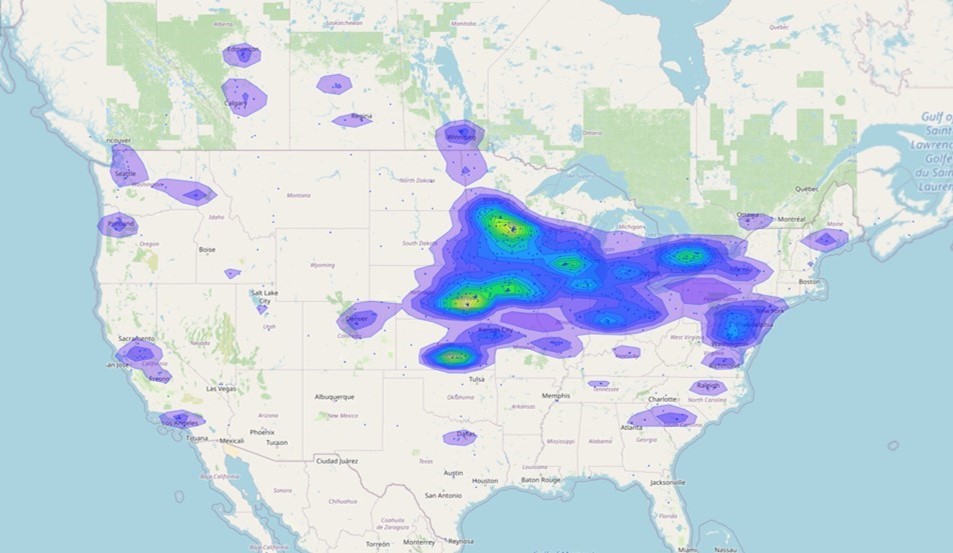
Responses were received from 793 individuals across the U.S. and Canada. The results are heavily weighted towards participants from the Corn Belt and the High Plains regions of the U.S. (44% and 23% of respondents, respectively). Survey participants were 87% male and 13% female. Participants’ experience were reported as 29% with less than 10 years, 22% with 11 to 20 years, and 49% with 21 years or more. Participants self-identified as a crop farmer (13%), animal feeding operation (AFO) (7%), professional advisor for crop fertility or manure management decisions (60%), or some combination of these three roles (20%). Crop farmers indicated that they were an annual user of manure (73%), user of manure within the past 3 years (9%), or user of manure within past 4 to 6 years (9%). Only 10% were not users of manure. Those identifying as advisors suggested that manure management is a primary focus of crop fertility advising (20%), frequent part of crop fertility advising (39%), or an occasional part of a crop fertility advising (36%). Only 4% of advisor responses indicated they did not include manure in their advising.
Figure 1. Region of US and Canada represented by survey participants (N= 793).
A series of five questions were presented to identify real or perceived challenges among respondents that represent potential barriers to using manure in crop fertility programs. Lists of agronomic, economic, neighbor or rural community, regulatory, and logistical challenges were presented based on outcomes of the project team’s advisory group discussions and reviews of previous surveys (Battel and Krueger, 2005; Case et al., 2017; Herrero et al., 2018; Poe et al., 2001). Lastly, respondents were asked to identify the types of supporting resources preferred for information-seeking on manure use in cropping systems.
What Have We Learned
Perceptions and Knowledge of Manure Benefits. Both private sector advisors and crop farmers shared similar positive impressions of manure’s benefits for crop fertility, yield, and soil characteristics while being less positive regarding their impressions of how manure impacts environmental quality. Crop farmers and private sector advisors recognize the complementary role of manure and fertilizer in a fertility program at 74% and 76% frequency, and at slightly higher rates than all survey responses (71%). The complementary role of manure and fertilizer was also similar across regions (Corn Belt – 70%; High Plains-69%; all other regions – 74%).
Figure 2. Perspectives of manure’s beneficial versus harmful impacts on five crop production and natural resource topics as identified by primary decision makers in crop fertility programs.
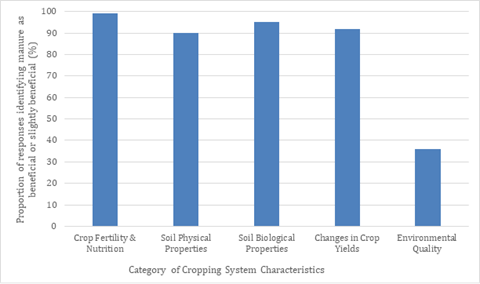
The only audience factors that significantly (p<0.05) influenced participant attitudes toward manure benefits were that participants living in the corn belt were less likely to describe manure as beneficial or slightly beneficial for environmental quality (30%, compared to 46% for high plains, and 35% for all other regions). Similarly, we found that private sector advisors were significantly (p<0.05) less likely to describe manure as beneficial to environmental quality (27%, compared with 58%, 53%, and 30% for livestock producers, crop producers, or public sector advisors respectively). No statistical differences were observed for an influence of audience factors on attitudes towards manure benefits to any of the other characteristics of cropping system benefits (crop yield, soil physical properties, soil biological properties, and crop fertility). However, across all audience sectors participants were unlikely to indicate that they thought manure could be beneficial or slightly beneficial for environmental quality (Figure 2). This data suggests that respondents do not associate improved soil physical and biological characteristics with reduced risk for nutrient transport via runoff, erosion, and leaching. Manure and inorganic fertilizer were perceived as complementary to each other by 71% of respondents, while only 17% believed these two products compete.
Figure 2. Proportion of total respondents who described manure as beneficial or slightly beneficial for different categories of cropping system characteristics. (n=793)
Barriers to Manure Use. As with perceptions of benefits of manure use, audience factors had little effect on the perceived barriers to manure use. There was an observed tendency for more advisors to include most factors as barriers to manure use; however, this tendency was only significant (p<0.05) for six potential barriers: compaction, cost of manure transportation, odors, risks posed by manure application to food crops, accessibility of custom applicators, and use of public roads (Table 1). The overall ranking of barriers to manure use can be found in Table 2. Cost of transportation (68%), odor (58%), timeliness of nutrient availability (55%), concerns related to the field conditions for manure application (50%), and access to labor for manure application (48%) were most frequently indicated as barriers for manure use. Interestingly, several of these factors correspond to those where a difference in the level of concern was observed between advisors and producers (Table 1). However, when considering barrier ranking by agronomic role, 4 of the top 5 barriers are similar between farmers and advisors (cost of transportation, odor, timeliness, and labor availability). Farmers rate concerns with weed seeds as a top 5 barrier, while advisors do not, leaving concerns with field conditions for application as the 6th most selected by crop farmers. This similarity of ranking, even where statistical differences exist, indicates that there is agreement on what are the most significant barriers, but some difference in the perceived seriousness or scale of the barrier. In general, crop farmers less frequently indicated factors as barriers to manure use than did advisors.
Table 1: The frequency survey responses identified selected barriers for manure use. Letters indicated statistical differences in how participants with different roles in agronomic decisions perceived barriers of interest at the alpha = 0.05 level.
Comparison by Role in Agronomic Decisions
Animal Feeding Operator (n=66)
Crop Farmer (n=120)
Private Sector Advisor (n=311)
Public Sector Advisors (n=196)
Compaction from application
36%a
41%a
59%b
40%a
Cost of manure application
55%a
67%ab
84%bc
85%c
Odors an air quality impairment
44%a
56%ab
75%bc
79%c
Manure application to food crop
15%ab
13%a
20%bc
22%c
Accessibility of custom applicators
20%a
19%ab
40%b
3%ab
Use of or crossing of public roads
15%a
11%a
21%b
13%a
Table 2: The frequency all survey responses identified specific factors as barriers for manure use (n=793)
Potential Barrier
% Who perceived as a barrier
Potential Barrier
% Who perceived as a barrier
Potential barrier
% Who perceived as a barrier
Transport
68%
Water Quality
35%
$ of Manure
25%
Odor
58%
Interference with Reduced Tillage
34%
Accessibility
25%
Timeliness
55%
Neighbor Concerns
34%
Legal Issues
25%
Field Conditions
50%
Equipment $
34%
Flies
20%
Labor
48%
Regulation $
32%
Interference with Specialty Crops
19%
Low or Inaccessible Nutrients
47%
Traffic
31%
Risks to Food Crop
15%
Low or Inaccessible Nutrients
47%
Traffic
31%
Risks to Food Crop
15%
Compaction
44%
Planning & Zoning
31%
Road Access
14%
Imbalanced Nutrients
44%
Harm to Local Infrastructure
28%
Foreign Materials
9%
Uniformity
38%
Stockpiles
28%
Reduced Yield
5%
Setbacks
37%
Presence of Applicators
27%
Harmful to Soil
3%
Weed Seeds
37%
Pollution
27%
Preferred Sources of Educational Materials. Among three broad groups of respondents (farmers, advisors, and educators), all identified their peers as an important source of information. Brief factsheets or news articles are identified by educators as their top resource they would use (81% of educator responses and 65% of advisor responses). Recommended research articles also ranked high among all three groups. At this point in time, social media (short videos, podcasts, and Twitter and Facebook) is a preferred resource for a smaller portion of these audiences (26% or farmers, 15% of advisors, and 47% by educators).
Table 3. Most valued resources for agronomic decision making
Resource Type
Farmer (n=197)
Advisor (n=438)
Educator (n=95)
Recommended research articles
49%
53%
55%
Brief fact sheet or news articles summarizing current science
52%
65%
81%
Decision support tool
34%
39%
43%
Short videos or podcasts summarizing current science
20%
12%
36%
Scripted visuals and text for your use on Twitter, Facebook, other
6%
3%
11%
Network of farmers (or advisors or educators) with whom you interact and share experiences
62%
61%
62%
Scripted PowerPoint presentation for use in educational programs
—
—
38%
Future Plans
The intent of this survey was to help our project team and others better understand the characteristics of animal manures that are considered beneficial and barriers to future manure use. Recognition of these benefits and hurdles will be critical as the need to transfer manure nutrients from existing animal feeding operations to crop farms, many with limited previous history of using manure, expands. Matching educational and technical services to the perceptions that impede manure transfer will be necessary.
Future outreach programming should be designed to:
Continue to build general awareness of the agronomic and yield benefits of manure.
Focus on assisting AFO managers and advisors with communication of specific messages such as 1) desirable rates/plans to best meet crop N and P needs, 2) field-by-field estimation of manure’s fertilizer replacement value and nutrients contributing the greatest value, and 3) complementary manure and fertilizer recommendations for optimum yields.
Focus on connecting improved soil health with improved water quality.
Help farmers articulate among themselves and to their rural communities the water quality benefits of organic fertilizers when applied to meet agronomic needs of the crop.
Challenges associated with manure that frequently become barriers to manure use should be addressed through research and outreach. Specifically, the authors wish to suggest that four challenges are commonly regarded as significant barriers to manure use and require focus to overcome:
Transportation Costs: Businesses providing manure hauling and land application services will be important when transferring manure to fields more distant from manure sources, and educational experiences addressing the current costs of transporting manure and the comparative economic benefit achieved by individual fields will be important.
Odor: A farmers’ desire to be a good neighbor is counter to their willingness to create odors for their neighbors. Farmer and advisor education and planning for reducing odor risks is critical. Technology options to forecast, assess, and address potential nuisance odors may help alleviate odor concerns resulting from manure application.
Logistical Barriers: Three logistical issues ranking highest include 1) timeliness of manure application; 2) time/labor availability; and 3) field conditions restricting manure application. Business services for transporting and land applying manure as well as manure brokering services can address many logistical challenges. Alternative application time windows, such as side dressing a crop with manure, will also be valuable.
Agronomic Issues: Manure application comes with a history of agronomic concerns such as compaction, poor uniformity, and potential for weed seed and herbicide resistance concerns. Many issues are likely to be regionally and manure source specific, thus the need to adapt agronomic education to local needs. Education and business services that encourage technologies such as precision manure application and related technologies, designer manures, and manure treatment may have value based upon regional needs. A 4Rs strategy (right rate, source, time, and place) for manure, similar to what is being promoted in the fertilizer industry, may be beneficial.
Authors
Amy Millmier Schmidt, Associate Professor, University of Nebraska-Lincoln
aschmidt@unl.edu
Additional Authors
-Mara Zelt, Schmidt Lab Project Director, University of Nebraska-Lincoln;
-Daniel Andersen, Associate Professor, Iowa State University;
-Erin Cortus, Associate Professor, University of Minnesota;
-Richard Koelsch, Emeritus Professor, University of Nebraska-Lincoln;
-Leslie Johnson, University of Nebraska-Lincoln;
-Siok A. Siek, Undergraduate Student, University of Nebraska-Lincoln; and
-Melissa Wilson, Assistant Professor, University of Minnesota
Acknowledgements
Funding for this project was provided by the North Central Region Sustainable Agriculture Research and Education program. Key partners in survey deployment were the American Agronomy Society Certified Crop Advisor Program, the Fertilizer Institute and Manure Manager magazine.
The authors are solely responsible for the content of these proceedings. The technical information does not necessarily reflect the official position of the sponsoring agencies or institutions represented by planning committee members, and inclusion and distribution herein does not constitute an endorsement of views expressed by the same. Printed materials included herein are not refereed publications. Citations should appear as follows. EXAMPLE: Authors. 2022. Title of presentation. Waste to Worth. Oregon, OH. April 18-22, 2022. URL of this page. Accessed on: today’s date.
Stream Restoration at Mercer County Elks Golf Course, 2019
Grand Lake St. Marys (GLSM), located in Ohio, has experienced harmful algal blooms for decades. In 2010, a massive algal bloom shut down the Lake for the entire summer season. In 2011, the GLSM watershed was declared “distressed,” requiring a new set of rules imposed upon livestock producers in the watershed. These rules required each farm that produced over 350 tons of solid manure or 100,000 gallons of liquid manure per year to create and maintain a nutrient management plan. There was also a winter manure application ban enacted, which prohibits manure application from December 15 to March 1 of each year. These rules still apply to the watershed today.
What Did We Do?
Coldwater Creek Treatment Wetlands, established 2016 (Photo Summer 2021)
An influx of federal and state funds was poured into the watershed to assist the approximately 135 farms with constructing additional manure storage and other best management practices to improve manure management. Over 130 manure storage structures, 80 feedlot covers, 15 waste treatment systems, 20 leachate collection systems and 5 mortality compost structures were built from 2011 through 2019.
KDS Separator Pilot (Swine Manure Solids), March 2018
Other local efforts to improve water quality in GLSM include the restoration and creation of new wetlands to treat stream flow prior to entering GLSM. Since 2010, we have more than doubled the acreage of wetlands along the south side of the lake and have seen an incredible diversification of wildlife in the area. Additional best management practices have also been installed, such as stream restoration projects, saturated buffers, tile phosphorus filters, double cropping, cover crops and much more. Mercer County has also expended a considerable amount of effort to research manure nutrient recovery technologies throughout the last six years. Manure nutrient recovery is challenging due to cost; however, many technologies can achieve a 90+% recovery of phosphorus from manure.
What Have We Learned?
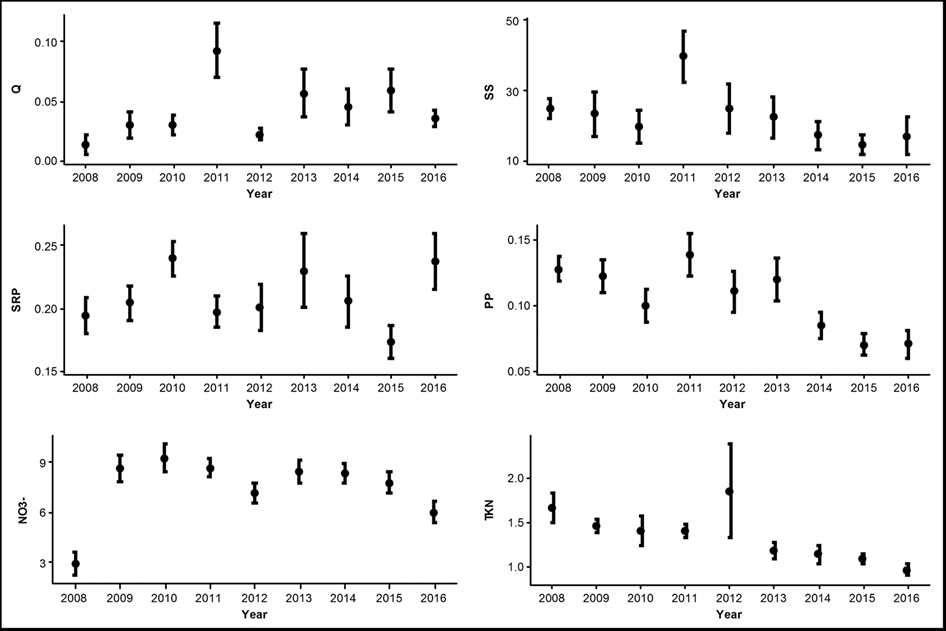
Long-term monitoring data is collected on two streams feeding GLSM, Chickasaw Creek (installed in 2008) and Coldwater Creek (installed in 2010). The data from Chickasaw Creek was used to determine the effects of the best management practices installed along with the effects of the winter manure application ban. The data showed a reduction of 10-40% of nitrogen and phosphorus because of these improved practices (Figure 1).
Figure 1. Nutrient Reduction Trends Pre and Post Distressed Watershed (Pre-Condition 2008-2011; Post-Condition 2012-2016) Jacquemin, etal (2016).
Future Plans
Nutrient management planning is an ongoing effort in the Grand Lake St. Marys watershed and will continue as long as the watershed remains distressed. Research and collaboration continue on manure nutrient recovery and development and adoption of technologies. Monitoring of stream and effectiveness of treatment wetland will also continue to ensure that maintenance and management is conducted appropriately. Additional conservation projects, including wetlands, stream restoration and more are planned in the coming years.
Author
Theresa A. Dirksen, PE, Mercer County, Ohio Agriculture & Natural Resources Director
Additional Information
Jacquemin, Stephen J., Johnson, Laura T., Dirksen, Theresa A., McGlinch, Greg. “Changes in Water Quality of Grand Lake St. Marys Watershed Following Implementation of a Distressed Watershed Rules Package.” Journal of Environmental Quality, January 12, 2018.
Jacquemin, Stephen J., McGlinch, Greg, Dirksen, Theresa, Clayton, Angela. “On the Potential for Saturated Buffers in Northwest Ohio to Remediate Nutrients from Agricultural Runoff.” PeerJ, April 12, 2020.
Dr. Stephen Jacquemin, Wright State University Lake Campus
Mercer Soil and Water Conservation District
Grand Lake St. Marys Restoration Commission
The authors are solely responsible for the content of these proceedings. The technical information does not necessarily reflect the official position of the sponsoring agencies or institutions represented by planning committee members, and inclusion and distribution herein does not constitute an endorsement of views expressed by the same. Printed materials included herein are not refereed publications. Citations should appear as follows. EXAMPLE: Authors. 2022. Title of presentation. Waste to Worth. Oregon, OH. April 18-22, 2022. URL of this page. Accessed on: today’s date.
The objective of this study was to evaluate nutrient dynamics and operational costs within an existing manure Compost Aeration and Heat Recovery system (CAHR) by Agrilab Technologies, Inc. at the Vermont Natural Ag Products (VNAP) compost facility in Middlebury, Vermont in comparison to conventional windrow manure composting where aeration only occurs via turning. Constructed in 2016 and 2017, the CAHR has been fully operational since 2018 and has proven effective at reducing VNAP’s expenditures on #2 heating oil, propane, diesel fuel, and labor (Foster et al., 2018).
The basic design of the CAHR system includes compost windrows placed on a paved pad containing a shallow trench oriented longitudinally with the windrow. The trench contains perforated High Density Poly Ethelene (HDPE) piping bedded in wood chips. These pipes are connected to solid, insulated HDPE piping which runs to a shipping container outfitted with circulation fans and a heat exchanger. While the circulation fans are negatively aerating (i.e., pulling vapor from) the compost, warm vapor entering the system transfers heat energy to water piped through the heat exchanger. Heat recovered from compost windrows has been used to heat the site’s bagging building via radiant floor heating and to dry finished compost prior to the screening and bagging process. Furthermore, due to elevated oxygen levels provided by positive and negative aeration, CAHR-treated compost has been reported to mature more quickly and require less turning, reducing diesel, labor, and equipment maintenance costs (Foster et al., 2018).
What Did We Do?
Two compost windrows of equivalent feedstock contents and ratios were monitored. Our control, denoted as “TRAD”, was a conventionally treated windrow that did not receive aeration aside from periodic windrow turning with a Komptech Topturn x53 compost turner. Our experimental windrow, denoted as “CAHR”, received periodic positive and negative aeration via the CAHR system, as well as aeration through periodic turning. The initial volumes of the TRAD and CAHR windrows were 480.2 CY and 548.8 CY, respectively.
Compost samples were collected between August 24th, 2021 and December 15th, 2021. For the first thirteen weeks of the sampling period, samples were taken thrice weekly from both treatments. At the end of the thirteenth week, on November 19th, VNAP staff deemed the CAHR treatment compost suitable for market and it was pulled for processing. Sampling continued once weekly for the TRAD treatment for another four weeks, terminating on December 15th, when the TRAD windrow was pulled for processing. This resulted in a total of 43 samples of TRAD and 39 samples of CAHR composts.
What Have We Learned?
This study evaluated nutrient status, financial cost, and energy cost for a pair of commercial compost windrows in a normal production setting. From a time and space management standpoint, compost treated with a forced-aeration system was deemed suitable for market in approximately 75% of the time as a conventionally turned windrow; 13 and 17 weeks, respectively. Analysis of nitrogen species status throughout the study suggests that greater nitrogen losses occurred during conventional treatment than during CAHR treatment, presumably due to higher rates of denitrification and ammonia volatilization. Data also suggest a lower risk for phosphorus loss through leaching from CAHR-treated compost, as water extractable phosphorus (WEP) concentrations were consistently higher in the conventional treatment. During the active composting process, it was found that operational costs for CAHR compost were 2.1 times more expensive financially and 5.5 times more energy-intensive than a conventional compost on a per CY basis. However, the energy and infrastructure cost offsets provided by the CAHR system (as operated at VNAP) could provide a net savings of $4.06/CY finished compost. In this study, with paired windrows of approximately 12 feet in width, it was shown that a CAHR system produced a comparable compost product, with higher operational input, in less time.
Furthermore, the data suggest that land application of either compost treatment evaluated in this study may reduce phosphorus loss due to leaching versus direct manure application. For example, WEP concentrations in the finished composts in this study ranged between 0.256 and 0.304 g/kg on a dry weight basis, while WEP concentrations in dairy manures have been found to range between 1.98 and 4.0 g/kg (P. Kleinman et al., 2007; P. J. A. Kleinman et al., 2005). It is probable that either compost treatment, when applied to agricultural land, would release less phosphorus as WEP during rainfall events than direct manure application, providing water quality benefits.
Future Plans
The Newtrient CIG will continue to evaluate 13 more technologies over the next 2 years to determine their effect on water quality.
Authors
Mark Stoermann, Chief Operating Officer, Newtrient LLC
Corresponding author email address
Mstoerm@newtrient.com
Additional authors
Finn Bondeson, Graduate Student, University of Vermont; Joshua Faulkner, Research Assistant Professor and Farming and Climate Change Program Coordinator, University of Vermont; and Eric Roy, Assistant Professor, Interim Director of Environmental Sciences Program, University of Vermont
Additional Information
Newtrient.com
The authors are solely responsible for the content of these proceedings. The technical information does not necessarily reflect the official position of the sponsoring agencies or institutions represented by planning committee members, and inclusion and distribution herein does not constitute an endorsement of views expressed by the same. Printed materials included herein are not refereed publications. Citations should appear as follows. EXAMPLE: Authors. 2022. Title of presentation. Waste to Worth. Oregon, OH. April 18-22, 2022. URL of this page. Accessed on: today’s date.
Manage Cookie Consent
To provide the best experiences, we use technologies like cookies to store and/or access device information. Consenting to these technologies will allow us to process data such as browsing behavior or unique IDs on this site. Not consenting or withdrawing consent, may adversely affect certain features and functions.
Functional
Always active
The technical storage or access is strictly necessary for the legitimate purpose of enabling the use of a specific service explicitly requested by the subscriber or user, or for the sole purpose of carrying out the transmission of a communication over an electronic communications network.
Preferences
The technical storage or access is necessary for the legitimate purpose of storing preferences that are not requested by the subscriber or user.
Statistics
The technical storage or access that is used exclusively for statistical purposes.The technical storage or access that is used exclusively for anonymous statistical purposes. Without a subpoena, voluntary compliance on the part of your Internet Service Provider, or additional records from a third party, information stored or retrieved for this purpose alone cannot usually be used to identify you.
Marketing
The technical storage or access is required to create user profiles to send advertising, or to track the user on a website or across several websites for similar marketing purposes.