Fugitive dust from confined livestock operations is a primary air quality issue associated with impaired visibility, nuisance odor, and other quality-of-life factors. Particulate matter has conventionally been measured using costly scientific instruments such as transmissometers, nephelometers, or tapered-element, oscillating microbalances (TEOMs). The use of digital imaging and automated data-acquisition systems has become a standard practice in some locations to track visibility conditions on roadways; however, the concept of using photometry to measure fugitive dust concentrations near confined livestock operations is relatively new. We have developed a photometric method to estimate path-averaged particulate matter (PM10) concentrations using digital SLR cameras and high-contrast visibility targets. Digital imaging, followed by automated image processing and interpretation, would be a plausible, cost-effective alternative for operators of confined livestock facilities to monitor on-site dust concentrations. We report on the development and ongoing evaluation of such a method for use by cattle feeders and open-lot dairy producers.
Purpose
To develop a low-cost practical alternative for measurement of path-averaged particulate matter (PM10) concentrations downwind of open-lot animal feeding operations.
What Did We Do?
Working downwind of a cattle feedyard under a variety of dust conditions, we photographed an array of high contrast visibility targets with dSLR cameras and compared contrast data extracted from the photographs with path-averaged particulate matter (PM10) concentration data collected from several TEOMs codeployed alonside the visibility targets.
What Have We Learned?
We have developed a photometric method to estimate path-averaged particulate matter (PM10) concentrations using digital SLR cameras and high-contrast visibility targets. Using contrast data from digital images we expect to predict PM10 concentrations within 20% of TEOM values under the dustiest conditions. Digital imaging, followed by automated image processing and interpretation, may be a plausible, cost-effective alternative for operators of open-lot livestock facilities to monitor on-site dust concentrations and evaluate the abatement measures and management practices they put in place.
Future Plans
We intend to improve the prediction accuracy of the photometric method and automate it such that it can be easily adapted for use as a cost-effective alternative for measuring path-averaged particulate matter (PM10) concentrations at cattle feedyards and open-lot dairies.
Authors
Brent Auvermann, Professor of Biological and Agricultural Engineering, Texas A&M AgriLife Research. b-auvermann@tamu.edu
Sharon Preece, Senior Research Associate, Texas A&M AgriLife Research; Brent W. Auvermann, Professor of Biological and Agricultural Engineering, Texas A&M AgriLife Research; Taek M. Kwon, Professor of Electrical and Computer Engineering, University of Minnesota-Duluth; Gary W. Marek, Postdoctoral Research Associate, Texas A&M AgriLife Research; Kevin Heflin, Extension Associate, Texas A&M AgriLife Research; K. Jack Bush, Research Associate, Texas A&M AgriLife Research.
Additional Information
Please contact Brent W. Auvermann, Professor of Biological and Agricultural Engineering, Texas A&M AgriLife Research, 6500 Amarillo Boulevard West, Amarillo TX, 79106, Phone: 806-677-5600, Email: b-auvermann@tamu.edu.
Acknowledgements
This research was underwritten by grants from the USDA National Institute on Food and Agriculture (contract nos. 2010-34466-20739 and 2009-55112-05235).
The authors are solely responsible for the content of these proceedings. The technical information does not necessarily reflect the official position of the sponsoring agencies or institutions represented by planning committee members, and inclusion and distribution herein does not constitute an endorsement of views expressed by the same. Printed materials included herein are not refereed publications. Citations should appear as follows. EXAMPLE: Authors. 2013. Title of presentation. Waste to Worth: Spreading Science and Solutions. Denver, CO. April 1-5, 2013. URL of this page. Accessed on: today’s date.
The major source of emissions in animal production sites is from animal waste (manure), which can be in solid, slurry, or liquid states, exhibiting varying physical properties. Once manure is excreted from an animal, processes of biological decomposition and formation of gaseous compounds continue, but diminish as the manure cools and dries. However, increases in gas emissions following rewetting, particularly from precipitation, have been observed in various agricultural lands. Our study investigates changes of gaseous emissions through manure drying and rewetting processes to identify the effects of climatic conditions and manure management on gaseous emissions. We carried out drying and rewetting processes of dairy manure in a greenhouse to maintain moderate wintertime temperatures (20 – 40 C) while monitoring gaseous emissions through these processes. Closed dynamic chambers (CDC) coupled with a multiplexed Fourier Transformed Infrared (FTIR) spectroscopy gas analyzer provided gas flux estimates. The analyzer was capable of monitoring 15 pre-programmed gases simultaneously including typical gaseous compounds and greenhouse gases emitted from manure sources; namely, ammonia, carbon dioxide, methane, nitrous oxide, oxides of nitrogen, and volatile organic compounds. Magnitude of dairy manure gas emissions resulting from variations in moisture and temperature provide insight toward enhancing manure management decisions. Results from our study should further understanding of manure gas emission temporal dynamics that are largely dictated by heat and by drying and rewetting processes that impact the generation and delivery of gasses to the atmosphere. Our overall goal is to advance development of appropriate best management practices to reduce gas emissions for dairy operations in semi-arid regions.
Purpose
The objective of this project is to identify the effects of climatic conditions and manure management on gaseous emissions. The results from our study will be used to advance development of appropriate best management practices to reduce gas emissions for dairy operations in semi-arid regions.
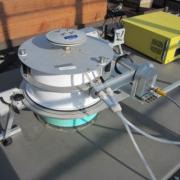
Fig 1. Gas emissions from two dairy manure samples were monitored in a greenhouse to compare the magnitude of gas fluxes through manure drying and rewetting processes.
What Did We Do?
We investigated changes in gaseous emissions by carrying out drying and rewetting processes of dairy manure in a greenhouse to maintain moderate summertime temperatures (20 – 40 oC) while monitoring gaseous emissions. Closed dynamic chambers (CDC) coupled with a multiplexed Fourier Transformed Infrared (FTIR) spectroscopy gas analyzer provided gas flux estimates. The analyzer was capable of monitoring 15 pre-programmed gases simultaneously including typical gaseous compounds and greenhouse gases emitted from manure sources; namely, ammonia, carbon dioxide, methane, nitrous oxide, oxides of nitrogen, and volatile organic compounds. Gas emissions from two dairy manure samples were monitored to compare the magnitude of gas fluxes during 14 days of manure drying and rewetting processes.
Fig 2. Gas emissions were determined using the closed dynamic chambers integrated with a multiplexed Fourier Transformed Infrared (FTIR) spectroscopy gas analyzer.
What Have We Learned?
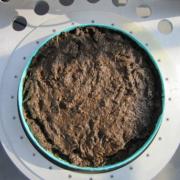
An increase in surface water content occurring after a rewetting event (e.g., simulated 5 mm of rain) represents an abrupt increase in manure moisture content, which can promote microbial activity and a commensurate increase in gas emissions from manure. In our study, we found gas fluxes were actually suppressed during and shortly after the rewetting process, mainly due to reduction in air-filled pore space causing reduced gas diffusivity in the manure crust layer. As the wet layer dried, gas emissions eventually increased to levels prior to wetting.
Future Plans
Future experiments include: (1) simulation of manure drying-rewetting with various amount of water and rewetting times, (2) considering the immediate response time and effective period of the pulse response of the gas fluxes after rewetting which might have been missed in our study, (3) Further
Fig 3. Manure sample after the rewetting process.
investigation of the effect of the crust layer on water and gas transport from and into manure.
Authors
Pakorn Sutitarnnontr, Graduate Student, Dept. of Plants, Soils, and Climate, Utah State University, pakorn@aggiemail.usu.edu
Enzhu Hu, Dept. of Plants, Soils, and Climate, Utah State University
Rhonda Miller, School of Applied Sciences, Technology, and Education, Utah State University
Markus Tuller, Dept. of Soil, Water, and Environmental Science, University of Arizona
Scott B. Jones, Dept. of Plants, Soils, and Climate, Utah State University
Additional Information
Contact Information: Pakorn Sutitarnnontr, Environmental Soil Physics Laboratory, Dept. of Plants, Soils, and Climate, Utah State University. Email: pakorn@aggiemail.usu.edu
Acknowledgements
The authors gratefully acknowledge support from the USDA-NIFA under the AFRI Air Quality Program (Grant # 2010-85112-50524) and the Western Sustainable Agriculture Research and Education Program (Grant # GW13-006).
The authors are solely responsible for the content of these proceedings. The technical information does not necessarily reflect the official position of the sponsoring agencies or institutions represented by planning committee members, and inclusion and distribution herein does not constitute an endorsement of views expressed by the same. Printed materials included herein are not refereed publications. Citations should appear as follows. EXAMPLE: Authors. 2013. Title of presentation. Waste to Worth: Spreading Science and Solutions. Denver, CO. April 1-5, 2013. URL of this page. Accessed on: today’s date.
Anaerobic digestion (AD) of livestock manure is better known for the economic return derived from biogas for energy rather than for its, inherent, environmental benefits. The effect of AD of dairy manure on the emissions of odor, ammonia (NH3), and greenhouse gases (GHG) including: carbon dioxide (CO2), nitrous oxide (N2O), and methane (CH4), during manure storage and also in subsequent land applications will be presented. Air samples were collected in 10-L Tedlar bags, at pertinent locations within the AD system, and shipped immediately to the lab for odor analyses by a trained odor panel using the “Dynamic Dilution Forced-choice Olfactometer.” Measurements of GHG emissions from both AD and non-AD manure storages were made using a floating chamber and a photoacoustic gas analyzer (INNOVA model 1412). Emissions of GHG were determined using the standard closed chamber method from field plots applied with AD and non-AD manure. Although odor analyses of collected air samples indicated increased detection threshold (D/T), odor strength (intensity) and unpleasantness (hedonic tone) decreased after AD of manure. Data indicated significantly higher fluxes of GHG from land applied with non-AD manure than from land applied with AD manure. Injection of non-AD manure further increased CH4 flux from applied manure. More than 50% emissions of CO2 and CH4 were observed during the first 3 days after manure was land applied. Emissions of GHG from the anaerobic lagoon holding AD manure, during all four seasons, were significantly lower than from the anaerobic lagoon with non-AD manure. In contrast, the reverse was observed with NH3 emissions suggesting potential increased emissions of NH3 during storage of post AD manure.
H.S. Joo, Biological Systems Engineering, Washington State University, PO Box 646120, Pullman, WA 99164; J.H. Harrison, E. Whitefield, Animal Sciences, Washington State University, 2606 West Pioneer, Puyallup, WA 98371; A.J. Heber, J.Q. Ni, Agricultural & Biological Engineering, Purdue University, 225 South University Street, West Lafayette, IN 47907
The authors are solely responsible for the content of these proceedings. The technical information does not necessarily reflect the official position of the sponsoring agencies or institutions represented by planning committee members, and inclusion and distribution herein does not constitute an endorsement of views expressed by the same. Printed materials included herein are not refereed publications. Citations should appear as follows. EXAMPLE: Authors. 2013. Title of presentation. Waste to Worth: Spreading Science and Solutions. Denver, CO. April 1-5, 2013. URL of this page. Accessed on: today’s date.
Recent research has shown that over half of nitrogen excreted by chickens is lost into the atmosphere via ammonia volatilization before the litter is removed from poultry houses. Large quantities of particulate matter and volatile organic compounds (VOCs) are also emitted from animal rearing facilities. During the past decade we have developed and patented an acid scrubber for capturing ammonia, VOCs and dust from air exhausted from poultry and swine barns. The objectives of this project were; (1) to re-design the scrubber to improve the ammonia removal efficacy, (2) conduct full-scale testing of the scrubber under controlled conditions at various ventilation rates, (3) evaluate the cost, practicality and efficacy of various acids for scrubbing ammonia, and (4) install scrubbers on exhaust fans of poultry houses located in Virginia and Arkansas and measure the efficiency of ammonia removal from the exhaust air. The efficiency of ammonia removal by the scrubber varied from 55-95%, depending on the type of acid used, air flow rate, and the internal scrubber configuration. This technology could potentially result in the capture of a large fraction of the N lost from AFOs, while simultaneously reducing emissions of bacteria, dust, and odors, which would improve the social, economic, and environmental sustainability of poultry and swine production.
Purpose
The objectives of this project were; (1) to re-design our ammonia scrubber to improve the ammonia removal efficacy, (2) conduct full-scale testing of the scrubber under controlled conditions at various ventilation rates, and (3) evaluate the cost, practicality and efficacy of various acids for scrubbing ammonia.
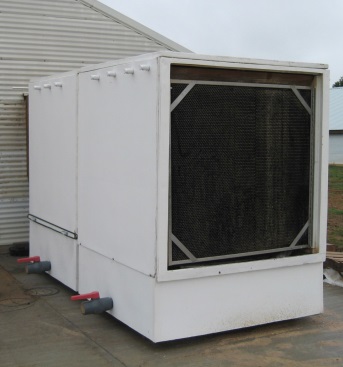
Acid scrubber developed by USDA/ARS in Fayetteville, AR, for reducing ammonia, dust and odor emissions from animal rearing facilities.
What Did We Do?
During the first year of this project the main task of our team was to re-design the ammonia scrubber developed and patented by Moore (2007). A full scale prototype was constructed of wood and a series of tests were conducted to evaluate various configurations on air flow and static pressure drop in tests conducted in a machine shop. The scrubber was connected to a 48” variable speed poultry fan. Air flow was measured using a fan assessment numeration system (FANS unit). Static pressure difference was measured using a Setra 2601MS1 differential pressure sensor. The effects of slat angle, number and arrangement of slats, and thickness of cool cell material were evaluated.
Following the initial testing a fiberglass mold was made and six scrubbers were constructed. One of these was used to evaluate the effectiveness of water, strong acids, acid salts, and a neutral salt on scrubbing ammonia. Anhydrous ammonia was metered out into a distribution system located within the fan at a sufficient rate to result in 25 ppm NH3 in the plenum between the fan and the dust scrubber. Evaluations of each acid were made with the variable speed fan set at 60 and 40 Hz, which corresponded to air flows of approximately 8,000 and 5,000 cfm, respectively. A stainless steel star sampler was used to take air samples from the plenum and from the air exhausted from the scrubber. Ammonia concentrations were measured using a photoaccustic multigas analyzer (Innova 1412). All personal involved in this testing wore respirators equipped with NH3 cartridges. Three 2-hour trials were conducted with solutions of the following acids at both 40 and 60 Hz: alum, aluminum chloride, ferric sulfate, ferric chloride, sodium bisulfate, sulfuric acid, hydrochloric acid, phosphoric acid, and nitric acid. The effects of water and calcium chloride were also evaluated. For these trials the amount of each acid added was equivalent to 2 liters of concentrated sulfuric acid.
In addition to measuring inflow and outflow ammonia levels, the mass accumulation of ammonia in both the dust and acid scrubber reservoirs was determined by analyzing the contents for ammonium using an auto-analyzer. Twenty ml aliquots of the scrubber solution were taken at times 0, 1 and 2 hours for ammonia and pH measurements. These data were used to validate that the difference in inlet and outlet ammonia were, in fact, due to accumulation of NH3 in the scrubber. Notes were also taken on each chemical’s ease of use and potential for problems. For example, some dry acids did not readily dissolve and some strong acids, like sulfuric acid, had very strong exothermic reactions. Salts of aluminum and iron become aluminum and iron hydroxides at high pH which have the potential to clog cool cell material.
Another performance issue that was monitored was the loss of fine droplets (mist) from the scrubber. When dealing with high air volumes and small droplet sizes, there is a potential for mist to exit the system, resulting in not only the loss of N, but of the acid used to scrub NH3. In order to measure mist loss, five 12.5 cm Whatman 42 filters were attached on a wire cage on the exhaust of the scrubber. These filters were placed in a 50 ml centrifuge tub at the end of each trial and shaken with 25 ml of DDI water, which was analyzed for ammonium, along with sulfate, chloride, nitrate, or phosphate, depending on the acid used.
What Have We Learned?
Early on in this research we learned that two scrubbers (a dust scrubber and an acid scrubber) were needed rather than one. If the dust isn’t removed from the exhaust air of poultry houses, then a large amount of the acid will be wasted neutralizing the dust.
We found that the relationship between slat angle and pressure drop was exponential and the angle that would maximize particle collisions on a wet surface while minimizing pressure drop was 45o. We also found that as the number of rows of slats increased the effect on pressure drop was linear. The final configuration chosen was eight rows of slats in the dust scrubber and three rows of slats in the chemical scrubber, followed by one or two 6” thick layers of cool cell material. The pressure drop using this configuration was about 0.1” of water at 5,000 cfm and 0.3” of water at 8,000 cfm.
All of the acids scrubbed ammonium from air, whereas water and calcium chloride only worked for a very short period of time. The iron (Fe) and aluminum (Al) compounds tended to work a little better than the other acid salts or the strong acids. We believe this is due to Fe and Al compounds coating the cool cell material. Although no difference was observed in the static pressure during these short tests, we believe Al and Fe hydroxides would eventually form and may clog the cool cells. Due to the inherit danger in dealing with strong acids, we concluded that an acid salt that did not contain Al and Fe, such as sodium bisulfate, would be used for our research in the future. This product is sold under the tradename PLT for a poultry litter treatment and is readily available to poultry growers.
Future Plans
Four NH3 scrubbers will be attached to sidewall fans of a commercial broiler house located in Madison County, Arkansas. The efficacy of these scrubbers for reducing ammonia, volatile organic compounds (VOCs), and particulate matter will be evaluated. We will also measure the amount of sodium bisulfate, water and electricity used by the scrubbers, as well as the mass of nitrogen captured. A cost-benefit analysis will be performed based on this data. Data on the efficacy to scrub ammonia will also be conducted on farms in DE, VA, and PA.
This research was funding by USDA/ARS and by grants from USDA/NRCS and the National Wildlife Foundation. The authors would like to thank the hard work and great ideas supplied by Scott Becton and Jerry Martin, without which this scrubber could not have been built.
The authors are solely responsible for the content of these proceedings. The technical information does not necessarily reflect the official position of the sponsoring agencies or institutions represented by planning committee members, and inclusion and distribution herein does not constitute an endorsement of views expressed by the same. Printed materials included herein are not refereed publications. Citations should appear as follows. EXAMPLE: Authors. 2013. Title of presentation. Waste to Worth: Spreading Science and Solutions. Denver, CO. April 1-5, 2013. URL of this page. Accessed on: today’s date.
Gypsum products created from construction industry waste streams provide low-input cost bedding. Some dairies report decreased somatic cell counts in milk with its use.
Recently, several incidents involving human and livestock death or injury have highlighted the possible creation of dangerous gases at farms using gypsum bedding. Human lives were lost at two separate events. In a third incident, a 2-year old and 4-year old were found unconscious adjacent to a manure storage where gypsum was present. In the European Union (EU) several agencies have forbade the use of gypsum as bedding based on losses of livestock as well as previous policies that restricted gypsum from landfill disposal.
Gypsum is a common term for hydrated calcium sulfate (CaSO4¬-2H2O). It is suspected that under the right manure storage conditions anaerobic bacteria convert the sulfur (S) in gypsum to hydrogen sulfide (H2S), a gas that can be deadly. Movement such as agitation of manure can lead to large H2S fluxes and localized dangerous levels of the gas.
While this is concerning, there remain many farms that utilize gypsum without incident. Data on this subject are lacking.
The goal of this symposium presentation is to update attendees on this ‘current event’ in manure management. Some laboratory studies are expected to complete between the time of this abstract composition (October 2012) and the symposium date. A general outline of the presentation includes:
Recap of cases leading to concern with this product
Policies of the EU and US
Industrial standards for dangerous H2S levels (OSHA and other)
Biological and chemical avenues of H2S production
Research review of gypsum use in manure
Recommendations for safety, management and education.
Why Are We Concerned About Gypsum Bedding on Dairies?
The goal of this ‘current event’ presentation is to increase national awareness of several deaths and severe injuries that have occurred recently in the Mid-Atlantic area involving manure gases. Several dairies where incidents occurred use gypsum from recycled drywall as low cost bedding material. There is great concern that gypsum increases dangerous hydrogen sulfide emissions from manure storages at these farms.
What Did We Do?
Recent deaths and severe injuries near manure storages highlight the importance of understanding and outreach needs. An overview of incidents involving manure gases at dairies that bed with gypsum will be given. Concerns and risks will be discussed, followed by recommendations on how to prevent incidents.
What Have We Learned?
In a true first step to determine gas productions associated with gypsum in manure preliminary bench-top scaled comparisons of manures with and without gypsum are ongoing in Pennsylvania and Wisconsin. A status update on progress on this early work will be discussed.
Future Plans
Literature and base knowledge on this subject are lacking. More work is needed to assess the actual risk to workers around manure storages where gypsum is present. There are countless factors that can contribute to gas production from manure storages. Identification of key factors that may lead to production of hydrogen sulfide when gypsum is present is needed. Further outreach to manure handling industries is warranted.
Authors
Robert Meinen – Senior Extension Associate, Penn State University Dept. of Animal Science rjm134@psu.edu
Davis Hill – Senior Extension Associate, Agricultural Safety and Health, Penn State University Dept. of Agricultural and Biological Engineering.
Rebecca Larson – Assistant Professor: Bio-waste, University of Wisconsin Dept. of Biological Systems Engineering.
Asli Ozkaynak – Post Doc Researcher, University of Wisconsin Dept. of Biological Systems Engineering.
Dennis Murphy – Distinguished Professor, Agricultural Safety and Health, Penn State University Dept. of Agricultural and Biological Engineering.
Eileen Fabian Wheeler – Professor, Animal Welfare and Agricultural Emissions, Penn State University Dept. of Agricultural and Biological Engineering.
Robin Brandt – Lecturer, Land-based treatment/recycling systems, Penn State University Dept. of Agricultural and Biological Engineering.
Herschel Elliot – Professor, Fate and Control of Pollutants in Soils and Water, Penn State University Dept. of Agricultural and Biological Engineering
The authors are solely responsible for the content of these proceedings. The technical information does not necessarily reflect the official position of the sponsoring agencies or institutions represented by planning committee members, and inclusion and distribution herein does not constitute an endorsement of views expressed by the same. Printed materials included herein are not refereed publications. Citations should appear as follows. EXAMPLE: Authors. 2013. Title of presentation. Waste to Worth: Spreading Science and Solutions. Denver, CO. April 1-5, 2013. URL of this page. Accessed on: today’s date.
Gas emissions from animal feeding operations (AFOs) create adverse impacts ranging from short-term local effects on air quality, particularly odor, to the long-term effects from greenhouse gas generation. Best management practices (BMPs) have been designed and implemented to mitigate gas emissions from farm operations. Our study investigates emission control strategies widely used in AFOs including manure management and land application. The primary objectives were to evaluate the efficiency and identify improvement of the currently available BMPs. We simulated and monitored gaseous emissions from a range of manure application and incorporation methods. The gaseous emissions were monitored using the closed dynamic chamber (CDC) method with a Fourier Transformed Infrared (FTIR) spectroscopy gas analyzer, which is capable of monitoring 15 pre-programmed gases simultaneously including typical gaseous compounds and greenhouse gases emitted from manure sources; namely, ammonia, carbon dioxide, methane, nitrous oxide, oxides of nitrogen, and volatile organic compounds. In this presentation, we will discuss the efficiency of the current manure management BMPs to reduce air emissions from dairy operations, based on the gaseous emission monitoring during the course of our experiment. Results from our study should enhance development and implementation of more flexible and more efficient air quality management approaches for dairy operations.
Why Study Gas Emissions from Manure Application Sites?
Evaluate gaseous emissions from manure application. Identify ways to improve manure management and land application BMPs.
What Did We Do?
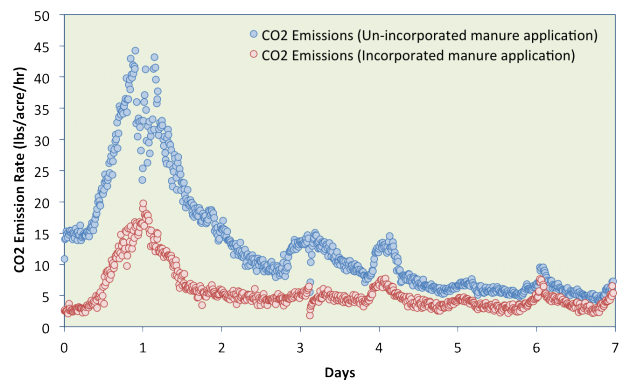
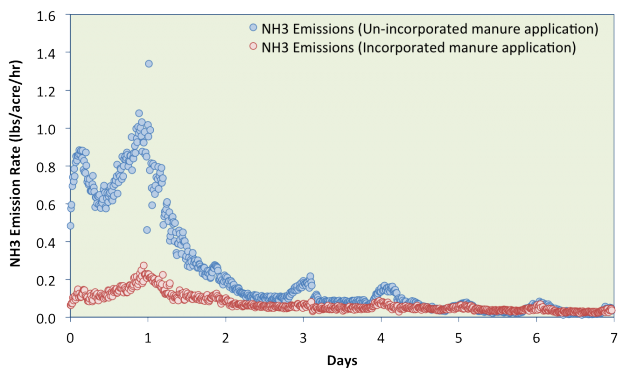
Manure application and incorporation methods were simulated and evaluated in a greenhouse setting. Scraped dairy manure was applied at a rate of 50 tons/acre to a Millville silt loam soil. Incorporation versus no incorporation was compared. Gaseous emissions were monitored using a closed dynamic chamber with a Fourier Transformed Infrared (FTIR) spectroscopy gas analyzer, which is capable of monitoring 15-pre-programmed gases simultaneously including typical gaseous compounds and greenhouse gases emitted from manure sources; namely, ammonia, carbon dioxide, methane, nitrous oxide, oxides of nitrogen, and volatile organic compounds. On Day 3, after emissions had subsided, the soil surface was rewetted. Emissions were monitored for 7 days.
What Have We Learned?
Emission rates for CO2 and NH3 peaked after 24 hours, with the majority of emissions occurring within the first 2 days. Rewetting had limited impact. Based on this data, it appears that rapid incorporation is needed to have a meaningful impact on reducing gaseous emissions.
Carbon Dioxide Emissions
Ammonia Emissions
Future Plans
Examine gaseous emissions from a range of manure application and incorporation methods in a field setting. The gaseous emissions will be monitored using the closed dynamic chamber method with a Fourier Transformed Infrared (FTiR) spectroscopy gas analyzer.
Authors
Rhonda Miller, Ph.D.; Agricultural Systems Technology and Education Dept.; Utah State University rhonda.miller@usu.edu
Pakorn Sutitarnnontr; Environmental Soil Physics Group; Utah State University
Enzhu Hu; Environmental Soil Physics Group; Utah State University
Markus Tuller, Ph.D.; Soil, Water, and Environmental Science Dept.; University of Arizona
Jim Walworth, Ph.D.; Soil, Water, and Environmental Science Dept.; University of Arizona
Scott B. Jones, Ph.D.; Plants, Soils, and Climate Dept.; Utah State University
Additional Information
Sutitarnnonntr, P., R. Miller, S. Bialkowski, M. Tuller, and S. B. Jones. 2012. A Multiplexing System for Monitoring Greenhouse and Regulated Gas Emissions from Manure Sources Using a Portable FTIR Gas Analyzer. ASABE 2012 Paper and Presentation No. 121337982. St. Joseph, MI: American Society of Agricultural and Biological Engineers.
The authors gratefully acknowledge support from a USDA-CSREES AFRI Air Quality Program Grant #2010-85112-50524.
The authors are solely responsible for the content of these proceedings. The technical information does not necessarily reflect the official position of the sponsoring agencies or institutions represented by planning committee members, and inclusion and distribution herein does not constitute an endorsement of views expressed by the same. Printed materials included herein are not refereed publications. Citations should appear as follows. EXAMPLE: Authors. 2013. Title of presentation. Waste to Worth: Spreading Science and Solutions. Denver, CO. April 1-5, 2013. URL of this page. Accessed on: today’s date.
Why Study Sulfur Emissions and Manure from Animals Fed Distillers Byproducts?
Odorous reduced sulfur compounds are produced during manure decomposition and emitted from confined animal feeding operations. Feeding high-sulfur distiller’s byproducts may increase the emission of these compounds. The objectives of a series of feedlot pen studies was to (i) determine if emissions of reduced sulfur compounds from fresh manure and from the feedlot surface where affected if cattle were fed varying levels of distillers byproducts, and (ii) determine the areas within a pen that emit greater amounts of reduced sulfur compounds.
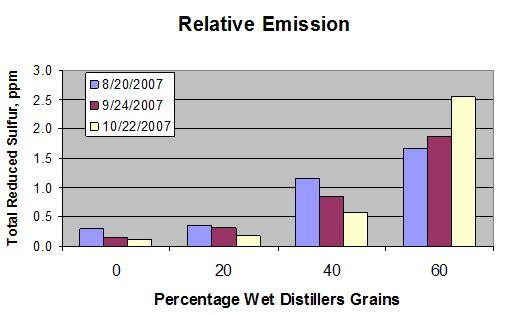
Study #1–Relative emission of redued sulfur compounds from fresh feces. Cattle fed diets containing 0%, 20%, 40%, and 60% WEGS.
What Did We Do?
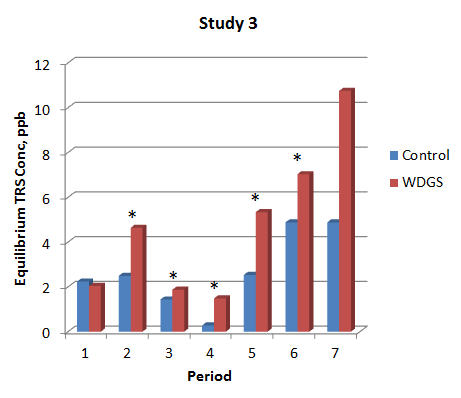
Three studies were conducted to evaluate the relative impact of feeding high-sulfur wet distiller’s grain plus solubles (WDGS) to beef cattle. In the first study, beef cattle in sixteen small-scale pens were fed varying amounts (0%, 20%, 40%, and 60%) of WDGS, and the relative emissions of reduced sulfur from fresh feces were measured using a laboratory wind tunnel chamber. A follow up study in eight production-scale feedlot pens also examined the effect of feeding 0% or 40% WDGS on fresh manure emissions. A third study in ten production-scale pens examined emissions from the pen surface when cattle were fed 0% and 40% WDGS diets over two production cycles.
Study #2–Relative emission of reduced sulfur compounds from feces of cattle fed 0% or 40% WDGS. P values above bars indicate the significance of the difference between emissions on the four dates.
What Have We Learned?
The relative emission of reduced sulfur from fresh feces was significantly greater (4 to 22-fold) when 40% (or greater) WDGS was fed in the initial study. The follow up study confirmed this finding, but found the relative emission to be lower (2 to 4 fold higher for WDGS) in the production-scale feedlot. In the final study examining the relative emission from the whole feedlot pen surface (mixed soil and aged feces) over many months, emissions principally came from the wetter edges of the pen when animal were fed higher levels of WDGS in their diet. For the six study periods, the relative emissions from WDGS pens ranged from 0.3 to 4-fold higher than a standard ration. Consistent results from these three studies indicate that reduced sulfur emissions increase when animals are fed higher levels of WDGS.
Study #3–Relative concentration of total reduced sulfur (TRS) in the chamber for each of the seven study periods. An asterisk above the bars indicates a significant difference (P < 0.05) between diets.
Future Plans
The level of sulfur in WDGS varies depending upon source and production method. Feeding lower sulfur WDGS should reduce the relative emission of odorous reduced sulfur compounds. Production of the reduced sulfur compounds may also be related to water quality—some water sources high in sulfur may enhance the emission of reduced sulfur from animal production sites. Further research into the mechanism of reduced sulfur production may provide new insights into controlling the emissions of these odorous compounds.
Mindy J. Spiehs, Research Animal Scientist, USDA-ARS, Clay Center, NE
Bryan L. Woodbury, Agricultureal Engineer, USDA-ARS, Clay Center, NE
Additional Information
Miller, D. N., V. H. Varel, B. L. Woodbury, and M. J. Spiehs. 2010. Enhanced reduced sulfur emission from manures of beef cattle fed distiller’s byproducts. International Symposium on Air Quality and Manure Management for Agriculture Conference Proceedings, 13-16 September, Dallas, Texas. 711P0510cd.
Acknowledgements
The authors would like to acknowledge the technical expertise of Todd Bowman, Alan Kruger, and Ryan McGhee. Mention of trade names or commercial products in this publication is solely for the purpose of providing specific information and does not imply recommendation or endorsement by the U.S. Department of Agriculture. USDA is an equal opportunity provider and employer.
The authors are solely responsible for the content of these proceedings. The technical information does not necessarily reflect the official position of the sponsoring agencies or institutions represented by planning committee members, and inclusion and distribution herein does not constitute an endorsement of views expressed by the same. Printed materials included herein are not refereed publications. Citations should appear as follows. EXAMPLE: Authors. 2013. Title of presentation. Waste to Worth: Spreading Science and Solutions. Denver, CO. April 1-5, 2013. URL of this page. Accessed on: today’s date.
The objective of this research was to evaluate electrolyzed water as a solution for a lab-scale spray scrubber for removing NH3 from air. A one-stage spray scrubber was fabricated to treat 50 cfm (1.42 m3/min) of introduced mixed NH3-air with an approximate NH3 concentration of 20 ppm. The mixed air was blown, countercurrent, to the 5-ft vertical scrubber body using a fan. Eight scrubber design variables were studied including contact times, nozzle types and scrubber solutions. Three contact times were 0.3, 0.6 and 0.9 s. The two narrow and standard nozzles sprinkled in a full-cone spray pattern but at different angles of 26ᴼ and 52ᴼ, respectively. The scrubber solutions variables tested were reverse osmosis (RO) water and two types of electrolyzed water (50 ppm of total chlorine) with pH = 9.0 and pH = 6.5. The 18 combinations of treatments were tested in three replications and statistically analyzed to investigate the objective. The result showed that all of the experiments were able to mitigate the NH3, but at different efficiencies. The maximum efficiency of 53% was acquired with the narrow nozzle, 0.9s contact time and electrolyzed water with pH = 6.5. Therefore, it was concluded that increasing the contact time, decreasing the pH of electrolyzed water and using the narrow angle, higher flow rate nozzle increased the scrubber efficiency.
Ammonia scrubbing experiments conducted in three replications
Why Study Ammonia Mitigation at Poultry Houses?
Ammonia (NH3) emissions from poultry houses are an environmental challenge because of the large volume of polluted ventilation air from the house’s exhaust fans. One idea for mitigation of NH3 was to developed and evaluate a lab-scale spray scrubber that used an electrolyzed water scrubber solution.
Lab-scale spray scrubber
What Did We Do?
A one-stage spray scrubber was fabricated to treat 50 cfm of mixed NH3-air with approximate NH3 concentration of 20 ppm. The mixed air was blown, countercurrent, to the 5-ft vertical scrubber body using a regular fan and implemented 8 variables including contact times, spray types and scrubber solutions. Three contact times for about 0.3, 0.6 and 0.9 second were applied by changing the elevation of the spray stage. Also, two types of spray nozzles were studied to determine the effect of droplet size and the spray flow rate. The nozzles sprinkled in the pattern of a full-cone spray but in different spray angles; narrow and standard with 26ᴼ and 52ᴼ spray angle, respectively. The applied scrubber solution variables were reverse osmosis (RO) water and two types of electrolyzed water (50 ppm of total chlorine) with pH = 9.0 and pH = 6.5. Thus, 18 scenarios conducted in three replications and statistically analyzed to investigate the objective.
What Have We Learned?
The results showed that the scrubber in all experiments was able to mitigate the NH3 with different efficiencies. The efficiencies were averaged among the replications. The maximum efficiency of 56% was acquired by the narrow nozzle, 0.9s contact time and electrolyzed water with pH = 6.5 scenario. Therefore, it was concluded that increasing the contact time, decreasing the pH of electrolyzed water and the type of nozzle had increased the efficiency of the scrubber.
Ammonia scrubbing experiments conducted in three replications
Future Plans
After the electrolyzed water scrubber design and operating ranges are better understood from these laboratory studies, this technology will then need to be demonstrated under field operating conditions. Wet scrubbers designed based on knowledge gained from the laboratory studies can be placed in a trailer along with all necessary analysis equipment and moved to the site of an operating poultry building. Findings from this research could also be applied to many other types of animal production facilities.
Authors
Gerald Riskowski, Professor, Biological & Agricultural Engineering Department, Texas A & M University, riskowski@tamu.edu
Amir M. Samani Majd, PhD candidate, Biological & Agricultural Engineering Department, Texas A & M University
Ahmad Kalbasi, Researcher, Biological & Agricultural Engineering Department, Texas A & M University
Saqib Mukhtar, Professor, Biological & Agricultural Engineering Department, Texas A & M University
The authors are solely responsible for the content of these proceedings. The technical information does not necessarily reflect the official position of the sponsoring agencies or institutions represented by planning committee members, and inclusion and distribution herein does not constitute an endorsement of views expressed by the same. Printed materials included herein are not refereed publications. Citations should appear as follows. EXAMPLE: Authors. 2013. Title of presentation. Waste to Worth: Spreading Science and Solutions. Denver, CO. April 1-5, 2013. URL of this page. Accessed on: today’s date.
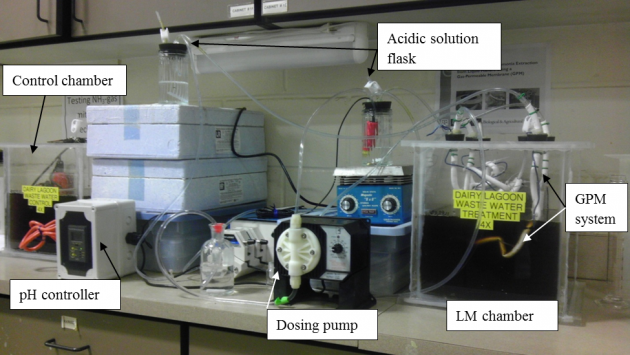
Excessive emissions of ammonia (NH3 ) from animal manure negatively impact the environment with potential to pollute air, soil and water, and produce malodors. The objective of this study was to assess NH3 mitigation from liquid dairy manure (LM) using tubular acid-filled gas-permeable membranes (GPM) in laboratory experiments; and, to evaluate the possibility of scaling up the NH3 mitigation system for use on AFOs.
Fig 1. Schematic diagram of NH3 capture and recovery set-up in laboratory experiments
What Did We Do?
Initially, a bench-scale study of NH3 capture and recovery system from LM using a sulfuric acid-filled (pH=0.36) tubular GPM system was conducted (Fig .1). Four LM chambers with different surface areas were used with a constant depth of LM in each chamber to investigate the effects of surface areas on NH3 diffusion through membrane. Then the acid was diluted to pH of 2 and higher and the experiments were repeated by using one chamber to assess how diluted acid may extract NH3 from LM. For improving the mitigation process, a pH controller and acid dosing system (Fig. 2) was used to keep the pH of diluted acid at a desired level. To test the performance of the scaled-up system under field condition (Fig. 3) a prototype of the optimized laboratory NH3 mitiagation system was constructed and run in a dairy lagoon. In all experiments, real time NH3 and pH measurements were made from acid solution and LM to compare extraction and recovery of NH3 under laboratory and field conditions.
Fig 2. Acid pH controller and acid dosing pump for improving NH3 mitigation system
What Have We Learned?
Laboratory studies showed that two GPM systems, one submerged below the LM surface and the other suspended above the LM surface, resulted in nearly 50% removal (diffusion) of NH3 from the LM in less than 20 days. Ammonia was captured in concentrated sulfuric acid (pH=0.36) as ammonium sulfate solution (by-product). The GPM system was capable of removing NH3 from the air above (headspace) the LM. Moreover, diluted sulfuric acid with pH 2 or higher could also extract NH3 from LM. Application of diluted acid was essential to decrease the risk of handling strong acids. Also, the automatic pH controlling and acid dosing system increased the efficiency of concentrating NH3 in the acid by about 50%. Doubling the flow rate of acid circulation in the GPM system increased the concentration of by-product by 10%. A pilot scale of the GPM mitigation system in a dairy lagoon showed its feasible to harvest NH3 from LM under field condition (Fig. 3).
Fig 3. Field-scale NH3 mitigation in progress
Future Plans
New experiments in laboratory and field are needed to further improve NH3 mitigation and capturing efficiencies of the GPM system by modifying concentrations of acidic solution, changing GPM tube dimensions and morphology, and increasing the acid solution circulation flow rate in the GPM tube.
Authors
Saqib Mukhtar, Professor, Biological & Agricultural Engineering Department, Texas A & M University System, mukhtar@tamu.edu
Amir M. Samani Majd, PhD Candidate, Biological & Agricultural Engineering Department, Texas A & M University
Funding for this study was provided through a grant by the United States Department of Agriculture: National Institute for Food and Agriculture (UDSA- NIFA).
The authors are solely responsible for the content of these proceedings. The technical information does not necessarily reflect the official position of the sponsoring agencies or institutions represented by planning committee members, and inclusion and distribution herein does not constitute an endorsement of views expressed by the same. Printed materials included herein are not refereed publications. Citations should appear as follows. EXAMPLE: Authors. 2013. Title of presentation. Waste to Worth: Spreading Science and Solutions. Denver, CO. April 1-5, 2013. URL of this page. Accessed on: today’s date.
The National Air Quality Site Assessment Tool (NAQSAT) has been developed for the voluntary use of livestock producers and their advisors or consultants. It is intended to provide assistance to livestock and poultry producers in determining the areas in their operations where there are opportunities to make changes that result in reduced air emissions. Air emissions research from livestock production systems is increasing every year. NAQSAT is based on the most accurate, credible data currently available regarding mitigation strategies for air emissions of ammonia, methane, volatile organic compounds, hydrogen sulfide, particulates, and odor.
From the NAQSAT home page users may watch a video explaining the tool, read an overview, study the user manual or select a species to start using the program.
Purpose
The National Air Quality Site Assessment Tool (NAQSAT) was developed for livestock producers who are interested in investigating opportunities to reduce air emissions from their livestock operation. The online tool is designed to provide farmers and their advisors air emissions information explicitly for their farm in a confidential setting. The tool may be run from any computer with internet access. All information entered into NAQSAT and the corresponding results remain confidential.
What Did We Do?
NAQSAT considers the air emissions from eight management categories; animal housing, feed and water, manure collection and transfer, manure storage, land application, mortality management, public perception and on-farm roads.
On the NAQSAT Effectiveness Results page the green area indicates the effectiveness of current management practices, the white area indicates the opportunity for improvement. At the end of each session users are encouraged to select “Print My Report” to receive a paper copy of all inputs that had been entered and a copy of the Effectiveness Results page for their records.
Users of the tool are asked a series of questions under each of the eight management categories. Based on the responses to previously answered questions the program determines what additional questions need to be answered such that only questions pertaining to the operation currently being evaluated are asked. Pop-up pictures assist the user in determining the relative rating to select when questions require a visual evaluation of the existing practices.
NAQSAT addresses seven emissions of concern; odor, particulate matter (dust), ammonia (NH3), hydrogen sulfide (H2S), methane (CH4), volatile organic compounds (VOCs) and nitrous oxide (N2O) under each of the eight management categories. Within the results page the green area in each rectangle indicates the effectiveness of current management practices, the white area indicates the opportunity for improvement.
NAQSAT allows users to save and run different scenarios providing the opportunity to compare the results of implementing new management practices.
It is easy to save NAQSAT sessions and return at a later date to make adjustments or consider additional alternatives. Each “saved” user session of NAQSAT is stored under its own URL available only to the person or persons with access to that URL. Individual URLs remain available for a minimum of 30 days before they are removed from the host computer.
The tool’s results page does not provide emissions data and/or regulatory guidance. It does identify opportunities for reducing air emissions and the ability to evaluate which practices might have the most impact. NAQSAT was developed for voluntary and educational use. The tool is designed to be used by livestock and poultry producers, however, the results may be more valuable when NAQSAT is used in cooperation with agency personnel or private consultants that can provide follow-up with suggestions for mitigation practices.
What Have We Learned?
NAQSAT has been used by members of the tool’s development committee to address odor conflicts in Colorado and in Michigan. In each case the tool confirmed the farm management teams were using acceptable management practices to limit odors from the livestock operation. In both states the local and state agencies involved in the conflict resolution were appreciative of the information provided by the tool.
Authors
Gerald May, Educator, Michigan State University Extension, mayg@msu.edu
Additional Information
The NAQSAT on-line tool is currently available at: http://naqsat.tamu.edu/. It is available at no cost from its host website (it does not download onto your computer). To assist first time users an overview of the tool, an informative video and a user’s manual are available on the NAQSAT home page.
Are there any organizations or individuals (besides the authors) that should be acknowledged?
Development of NAQSAT was partially funded by the USDA – NRCS Conservation Innovation Grant program. Over twenty partner organizations and universities contributed to the development of NAQSAT.
Partner universities:
Partner organizations:
Colorado State University
C.E. Meadows Endowment
Iowa State University
Colorado Livestock Association
Michigan State University
Iowa Turkey Federation
Oregon State University
Iowa Pork Producers
Penn State University
Iowa Pork Industry Center
Purdue University
Iowa State Univ. Experiment Station
Texas A&M University
Michigan Milk Producers Association
University of California, Davis
Michigan Pork Producers Association
University of Georgia
Michigan State Univ. Extension
University of Maryland
National Pork Board
University of Minnesota
Nebraska Environmental Trust
University of Nebraska
Western United Dairymen
The authors are solely responsible for the content of these proceedings. The technical information does not necessarily reflect the official position of the sponsoring agencies or institutions represented by planning committee members, and inclusion and distribution herein does not constitute an endorsement of views expressed by the same. Printed materials included herein are not refereed publications. Citations should appear as follows. EXAMPLE: Authors. 2013. Title of presentation. Waste to Worth: Spreading Science and Solutions. Denver, CO. April 1-5, 2013. URL of this page. Accessed on: today’s date.
Manage Cookie Consent
To provide the best experiences, we use technologies like cookies to store and/or access device information. Consenting to these technologies will allow us to process data such as browsing behavior or unique IDs on this site. Not consenting or withdrawing consent, may adversely affect certain features and functions.
Functional
Always active
The technical storage or access is strictly necessary for the legitimate purpose of enabling the use of a specific service explicitly requested by the subscriber or user, or for the sole purpose of carrying out the transmission of a communication over an electronic communications network.
Preferences
The technical storage or access is necessary for the legitimate purpose of storing preferences that are not requested by the subscriber or user.
Statistics
The technical storage or access that is used exclusively for statistical purposes.The technical storage or access that is used exclusively for anonymous statistical purposes. Without a subpoena, voluntary compliance on the part of your Internet Service Provider, or additional records from a third party, information stored or retrieved for this purpose alone cannot usually be used to identify you.
Marketing
The technical storage or access is required to create user profiles to send advertising, or to track the user on a website or across several websites for similar marketing purposes.
 Waste to Worth home | More proceedings….


 Ammonia scrubbing experiments conducted in three replications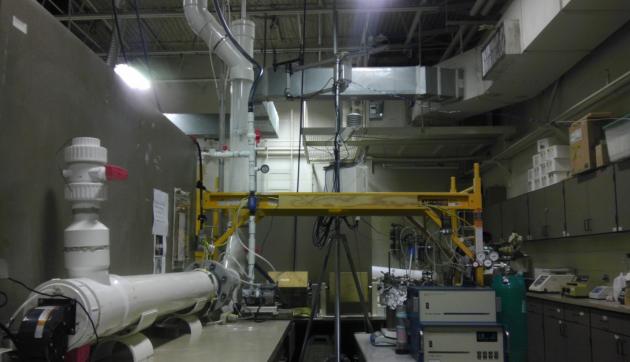
 Ammonia scrubbing experiments conducted in three replications