Air emissions from animal feeding operations have become a growing concern for producers and their neighbors. Much work has been done to quantify emission rates; however, little information has been provided about air quality downwind from these facilities. This study investigates PM2.5 (particulate matter ≤ 2.5 µm in diameter) levels as they dissipate from the exhaust fans of selected commercial, tunnel-ventilated, broiler houses in Northeast Georgia. PM2.5 was measured in real time using aerosol monitors and from a time-integrated basis using cyclone samplers. Data were taken over the last 4-weeks of a summer flock (considered a worst-case-scenario) and filtered to insure enough data was present at each distance and time. Results indicate a rapid reduction in fine particulate concentration as the distance from the source increases. When compared to nearby monitoring data, particulate levels appear to be near background levels at distances greater than 30 m (100 ft) from the exhaust fans.
Why Study PM 2.5 in Poultry Production?
Considerable work has been done on evaluation of particulate and ammonia concentrations inside poultry houses and emissions from those houses. Less is known about how concentrations dissipate as they leave the houses. This is a concern for neighbors of production facilities as well as farm owners. The objective of this study was to investigate PM2.5 concentrations in the air up to 152.5 m (500ft) away from tunnel-ventilated broiler houses and compare those levels to ambient conditions.
What Did We Do?
The study was conducted on a four-house commercial broiler farm in Northeast Georgia, from July 18 through August 12, 2007. The houses were orientated east to west with open pasture located on the east end (downwind) of the four houses. The investigation incorporated a study design to include conditions which favored maximum emission rates, including high temperatures (July, August) and sampling during the final four weeks of the 8-week broiler grow-out cycle.
Real time (DustTrak 8520) and daily cumulative gravimetric (Triplex cyclone; BGI, model SCC 1.062) PM2.5 measurements were measured at locations as shown on Figure 1. Publicly available data taken by Georgia EPD [9] using a TEOM 1400ab sampler at a site in Athens, GA (approx.. 32 km east of the site) was also used as an additional “control site.”
What Have We Learned?
Particulate levels near poultry houses are elevated by emissions from the houses, however if we compare the readings on Figures 2a and 2b, we see that the largest single influence on the results was ambient conditions. The downwind levels (2b) closely followed the ambient levels (2a). Similar results were seen for the daily gravimetric readings. If we look at the average readings for the entire experiment at each distance from the house and compare those to in-house and ambient readings (Figure 3) we see a rapidly dropping influence on atmospheric particulate readings with no significant difference beyond 30 m from the houses. While some of the measurements were above EPA’s ambient air standards, ambient conditions were also above the standards during those days.
Figure 2 PM 2.5 levels vs. distance from houses
Authors
John W Worley, Associate Professor, Poultry Science Department, University of Georgia jworley@uga.edu
Casey W Ritz1 Professor, Michael Czarick1,Sr. Public Service Associate, Brian D Fairchild1,Associate Professor, Luke P Naeher2 Associate Professor
1 Poultry Science Department, University of Georgia
2 Environmental Health Science, University of Georgia
Acknowledgements
The authors would like to acknowledge the contributions of Mr. Benjamin Hale and Mr. Adam Gray who did much of the field work including instrument calibration and lab analysis for this project and to Mr. Olorunfemi Adetona for his help in pulling together information for the document. We would also like to thank the US Poultry and Egg Association for their financial support that enabled this research to be accomplished.
The authors are solely responsible for the content of these proceedings. The technical information does not necessarily reflect the official position of the sponsoring agencies or institutions represented by planning committee members, and inclusion and distribution herein does not constitute an endorsement of views expressed by the same. Printed materials included herein are not refereed publications. Citations should appear as follows. EXAMPLE: Authors. 2013. Title of presentation. Waste to Worth: Spreading Science and Solutions. Denver, CO. April 1-5, 2013. URL of this page. Accessed on: today’s date.
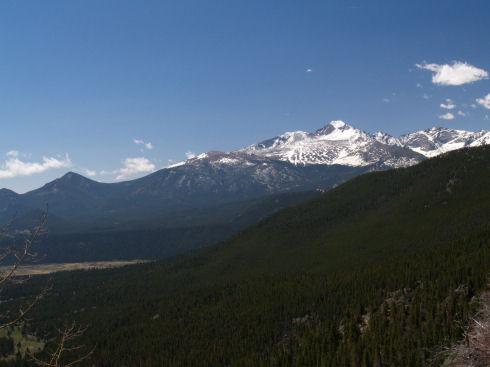
The efforts related to Colorado’s Rocky Mountain National Park are voluntary, yet there are nitrogen reduction targets, or milestones, established over five year increments out to the year 2032. If a milestone is not met, mandatory controls could follow. How can the proactive emissions reduction efforts being taken by livestock and crop producers today be recognized or credited should mandatory controls be required at some future date? For example, could an agriculture certainty framework (used more for water quality protection/nutrient runoff) be used to validate actions being taken today for air quality purposes? How might an ag certainty program work and what partners should be at the table? Are there other approaches that states are using or researching that Colorado should consider?
During the session, presenters will speak to:
a meteorological Early Warning System that is being developed in Colorado to alert livestock producers in advance of an upslope weather event. What methods of messaging the alerts would be most successful, and what other applications (or sectors) might a meteorological Early Warning System be used for?
why it is important for producers (crop and livestock) to adopt BMPs and voluntary controls to address the problem of Nitrogen Deposition in Rocky Mountain National Park and what has been done so far in this regard.
agriculture, and specifically livestock agriculture’s, engagement in doing our part to sustain and improve the environment in which we operate.
Even though it is too early to make any conclusions as to the success of the proactive approach (i.e., voluntary measures versus regulatory controls) or to the extent that current state air quality plans or best management practices are having on nitrogen deposition in the park, the presentation is intended to share some of the challenges and achievements, to date, of this particular stakeholder-driven approach.
Presenters
Phyllis Woodford is the program manager of the Environmental Agriculture Program at the Colorado Department of Public Health & Environment. Phyllis has worked for the department 18 years and during this time has worked to educate the department on agriculture’s unique issues related to environmental concerns and the need for science-based solutions. She has a master’s degree in Environmental Policy & Management from the University of Denver and a BS in Criminal Justice from Kent State University. Prior to working for the State of Colorado, Phyllis served as a legislative assistant to an Ohio congressman in Washington, D.C.
Phyllis I. Woodford
Division of Environmental Health and Sustainability
Colorado Department of Public Health and Environment
4300 Cherry Creek Drive South
Denver, CO 80246-1530
Bill Hammerich has served as the Chief Executive Officer of the Colorado Livestock Association (CLA) for the past ten years. He grew up on a cattle and farming operation in Western Colorado and after graduating from high school he attended Colorado State University where he graduated with a degree in Agricultural Economics. Following graduation he began his working career with Monfort of Colorado, then Farr Feeders and was with the Sparks Companies before joining CLA in 2002.
His time spent in the cattle feeding industry provided him not only with an understanding of how to feed cattle but also the importance of protecting and sustaining the environment in which one operates. Such a background has served Bill and the CLA staff well as they represent a diversified CLA membership in addressing those environmental issues with which the livestock industry has to deal. Bill and his wife Sabrina live in Fort Morgan, Colorado and have two grown children, Justin and Jessica.
Jon Slutsky and his wife, Susan Moore, are first generation dairy farmers and have owned and operated La Luna Dairy in Northern Colorado since 1981. Currently they milk 1300-1400 cows at their farm near Wellington. They have one adult daughter. Jon is a native of New York; however he grew up and attended school in Southern California. He graduated from the University of California-Riverside with a bachelor’s degree in biology in 1972. As general manager of the dairy, Jon oversees the management of the farm including 2600 cows and calves and 26 employees.
In order to add to the dairy data base and body of knowledge and assist in making good BMPs available to the industry, the farm has a policy of giving access as frequently as possible to animal and environmental researchers in the university community. The dairy tries to be a strong member of the local business and agricultural communities. Jon represents the dairy and the industry locally as a board member of the Wellington Area Chamber of Commerce, the Larimer County Agricultural Advisory Board, and the Colorado Livestock Association. He also serves on several other committees as time permits.
Jon was a member of the Colorado Air Quality Control Commission from 2007 to 2012 and is currently a member of the Colorado Water Quality Control Commission.
The authors are solely responsible for the content of these proceedings. The technical information does not necessarily reflect the official position of the sponsoring agencies or institutions represented by planning committee members, and inclusion and distribution herein does not constitute an endorsement of views expressed by the same. Printed materials included herein are not refereed publications. Citations should appear as follows. EXAMPLE: Authors. 2013. Title of presentation. Waste to Worth: Spreading Science and Solutions. Denver, CO. April 1-5, 2013. URL of this page. Accessed on: today’s date.
Little information is currently available concerning odor emissions following land application of beef cattle manure. This study was conducted to measure the effects of diet, tillage, and time following land application of beef cattle manure on the emission of volatile organic compounds (VOC).
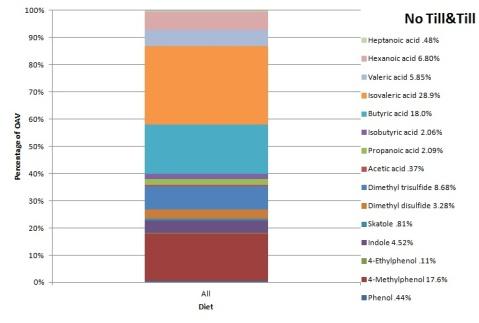
Each of the experimental treatments which included tillage (broadcast or disked) and diet (0, 10, or 30% wet distillers grain (WDGS)) were replicated twice. A 5-m tandem finishing disc was used to incorporate the manure to a depth of approximately 8 cm. Small plots (0.75 m x 2.0 m) were constructed using 20 cm-wide sheet metal frames. A flux chamber was used to obtain air samples within the small plots at 0, 1, 2, 6, and 23 hours following manure application. The flux of fifteen VOC including fatty acids, aromatic compounds, and sulfur containing compounds were measured. Based on odor threshold, isolavleric acid, butyric acid, and 4-methylphenol provided 28.9%, 18.0%, and 17.7%, respectively, of the total measured odor activity. Heptanic acid, acetic acid, skatole, 4-methyphenol, and phenol each contributed less than 1% of the total odor activity. Dimethy disulfide (DMDS) and dimethyl trisulfide were the only measured constituents that were significantly influenced by diet.
DMDS values were significantly greater for the manure derived from the 30% WDGS diet than the other manure sources. No significant differences in DMDS values were found for manure derived from diets containing 0% and 10% WDGS. Tillage did not significantly affect any of the measured VOC compounds. Each of the VOC was significantly influenced by the length of time that had expired following land application. In general, the smallest VOC measurements were obtained at the 23 hour sampling interval. Diet, tillage, and time following application should each be considered when estimating VOC emissions following land application of beef cattle manure.
Why Study Factors Affecting Manure Application Odors?
Measure the effects of diet, tillage and soil moisture on odor emissions follow land applied beef manure.
Figure 2. Relative contribution of odorant to the total odor activity.
What Did We Do?
Twelve plots were established across a hill slope. Treatments were tillage (broadcast or disked) and diet (0%, 10%, or 30% WDGS). Beef manure was applied at 151 kg N ha-1 yr-1. Gas samples were collected using small wind tunnels and analyzed using a TD-GC-MS. (Fig. 1). VOC samples were collected at 0, 1, 2, 6, and 23 hours following manure application. A single application of water was applied and the gas measurement procedure was repeated. The effects of tillage, diet, test interval, and the sample collection time on VOC measurements were determined using ANOVA (SAS Institute, 2011).
What Have We Learned?
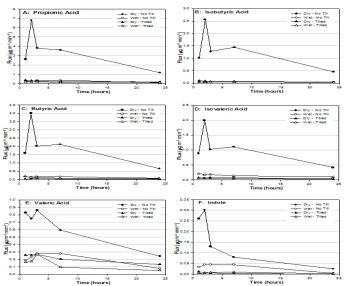
Isovaleric acid, butyric acid, and 4-methylphenol accounted for 28.9%, 18.0%, and 17.7%, respectively of the total odor activity (Fig. 2). Dimethyl disulfide (DMDS) and dimethyl trisulfide (DMTS) emissions were significantly increased by the 30 % WDGS diet. The flux increase for DMDS was over 4 times greater for the 30% WDGS diets. Tillage did not significantly affect any of the measured VOC compounds. The largest propionic, isobutric, butyric, isovaleric, and valeric acid measurements occurred with no-tillage under dry condition (Fig. 3A-E). Generally, measured values for these constituents were significantly greater at the 0, 1, 2, and 6 hour sampling intervals than at the 23 hour interval (Fig. 3A-E). The larger emissions for no-till, dry conditions may be due to the drying effect resulting when the manure was broadcast on the surface. As the manure begins to dry, the water soluble VOCs are released from solution. The tilled and wet conditions would reduce its release of VOC due to the increased moisture conditions.
Figure 3. Flux values for propionic, isobutyric, butyric, isovaleric , valeric acid and indole as affected by tillage, soil moisture, and time.
Future Plans
Additional studies are planned to quantify the moisture and temperature effect on odorous emissions.
We would like to thank Todd Boman, Sue Wise, Charlie Hinds and Zach Wacker for their invaluable help on making this project a success.
The authors are solely responsible for the content of these proceedings. The technical information does not necessarily reflect the official position of the sponsoring agencies or institutions represented by planning committee members, and inclusion and distribution herein does not constitute an endorsement of views expressed by the same. Printed materials included herein are not refereed publications. Citations should appear as follows. EXAMPLE: Authors. 2013. Title of presentation. Waste to Worth: Spreading Science and Solutions. Denver, CO. April 1-5, 2013. URL of this page. Accessed on: today’s date.
The Michigan Agriculture Environmental Assurance Program (MAEAP) is a holistic approach to environmental protection. It helps farmers evaluate their entire operation, regardless of size or commodity, and make sustainable management decisions balancing society’s needs, the environment, and economics. MAEAP is a partnership effort that aims to protect natural resources and build positive communities by working with farmers on environmentally responsible agricultural production practices.
To become MAEAP verified, farmers must complete three comprehensive steps: educational seminars, an on-farm risk assessment, and development and implementation of an action plan addressing potential environmental risks. The Michigan Department of Agriculture and Rural Development (MDARD) conducts an on-farm inspection to verify program requirements related to applicable state and federal environmental regulations, including the Generally Accepted Agricultural and Management Practices (GAAMPs). MAEAP benefits Michigan by helping to protect the Great Lakes by using proven scientific standards to improve air, water, and soil quality. Annual phosphorus reduction through MAEAP is over 340,451 pounds per year which is enough to grow almost 85,104 tons of algae in lakes and streams. Farming is an environmentally intense practice and the MAEAP-verification process ensures farmers are making choices that balance production and environmental demands. The measures aimed at protecting air, soil, water, and other environmental factors mean that MAEAP-verified farmers are committed to utilizing farming practices that protect Michigan’s natural resources.
Purpose
The Michigan Agriculture Environmental Assurance Program (MAEAP) is an innovative, proactive program that assists farms of all sizes and all commodities voluntarily prevent or minimize agricultural pollution risks. MAEAP is a collaborative effort of farmers, Michigan Department of Agriculture and Rural Development, Michigan Farm Bureau, commodity organizations, universities, conservation districts, conservation groups and state and federal agencies. MAEAP teaches farmers how to identify and prevent environmental risks and work to comply with state and federal environmental regulations. Farmers who successfully complete the three phases of a MAEAP system (Farmstead, Cropping or Livestock) are rewarded by becoming verified in that system.
What Did We Do?
To become MAEAP-verified, farmers must complete three comprehensive steps: educational seminars, a thorough on-farm risk assessment, and development and implementation of an action plan addressing potential environmental risks. The Michigan Department of Agriculture and Rural Development (MDARD) conducts an on-farm inspection to verify program requirements related to applicable state and federal environmental regulations, including the Generally Accepted Agricultural Management Practices. To retain MAEAP verification, a farm must repeat all three steps including MDARD inspection every three years.
Local MAEAP farm verified in the Cropping System
What Have We Learned?
The MAEAP program is positively influencing Michigan producers and the agriculture industry. Annually, an average of 5,000 Michigan farmers attend an educational session geared toward environmental stewardship and MAEAP verification. To date, over 10,000 farms are participating with over 1,500 MAEAP verifications. On a yearly basis, over $1.2 million is spent for practice implementation by producers working towards MAEAP verification. In 2012; the sediment reduced on MAEAP-verified farms could have filled 28,642 dump trucks (10 yards each), the phosphorus reduced on MAEAP farms could have grown 138,056 tons of algae in surface waters, and the nitrogen reduced on MAEAP farms could have grown 45,515 tons of algae in surface waters.
An example of the partnership between MAEAP and Michigan Farm Bureau
Future Plans
Michigan Governor Rick Snyder has taken a vested interest in the value of the MAEAP program. In March of 2011, Governor Snyder signed Public Acts 1 and 2 which codify MAEAP into law. This provides incentives and structure for the MAEAP program. It is a goal of Governor Snyder’s to have 5,000 farms MAEAP-verified by 2015. Most importantly, through forward thinking MAEAP strives to connect farms and communities, ensure emergency preparedness and protect natural resources.
Authors
Jan Wilford, Program Manager, Michigan Department of Agriculture & Rural Development – Environmental Stewardship Division, wilfordj9@michigan.gov
Shelby Bollwahn, MAEAP Technician – Hillsdale Conservation District
The authors are solely responsible for the content of these proceedings. The technical information does not necessarily reflect the official position of the sponsoring agencies or institutions represented by planning committee members, and inclusion and distribution herein does not constitute an endorsement of views expressed by the same. Printed materials included herein are not refereed publications. Citations should appear as follows. EXAMPLE: Authors. 2013. Title of presentation. Waste to Worth: Spreading Science and Solutions. Denver, CO. April 1-5, 2013. URL of this page. Accessed on: today’s date.
Beef cattle are responsible for around 15% of the total anthropogenic ammonia (NH3) emitted in the U.S., and the cattle feeding industry is highly concentrated spatially, with the majority of commercial feedyards located in Texas, Iowa, Kansas,Colorado, and Nebraska (USEPA, 2005; USDA-NASS, 2009). Valid estimates of ammonia (NH3) emissions from beef cattle feedyards are needed to assess the impact of beef production on the environment, to comply with reporting requirements, and to develop reasonable regulatory policies. The processes involved in production and volatilization of NH3 from livestock housing are strongly influenced by environmental conditions and management practices (Fig. 1), which may not be captured by constant emission factors or mathematically-derived empirical models. Among different modeling approaches, process-based models, which track components of interest through biochemical and geochemical reactions as functions of specific conditions (e.g. temperature, wind speed, pH, precipitation, surface heating, animal diet), offer a better approach for predicting NH3 emissions from open-lot animal production systems than emission factors or empirical models. However, while process-based models have been developed to estimate NH3 emissions from dairy barns and other livestock facilities, little work has been conducted to assess their accuracy for large, commercial feedyards in the semi-arid Texas High Plains: the top beef producing region in the United States.
Figure 1. Processes and factors affecting feedyard ammonia emissions and modeled with IFSM and Manure-DNDC.
What Did We Do?
We evaluated two process-based models, the Integrated Farm Systems Model (IFSM) (Rotz et al., 2012) and the newly developed Manure-DNDC (DeNitrification DeComposition) model (Li et al., 2012), for predicting feedyard NH3 emissions in the Texas High Plains. To meet this objective, we compared model-simulated emissions to measured NH3 flux data collected from two commercial feedyards, Feedyard A and Feedyard E, in Deaf Smith County, Texas. Feedyard NH3 fluxes were measured from February 2007 to January 2009 using open-path lasers and an inverse dispersion model (Todd et al., 2011). The input data for the two models differed slightly; however, both required daily climate data (temperature, precipitation, wind speed, solar radiation), animal population (Feedyard A, 12,684 head; Feedyard E, 19,620 head), and concentration of crude protein (%CP) in cattle diets. Model performance was evaluated by the difference between predicted and observed emissions using both linear regression analysis and summary, univariate, and difference measures (Wilmott et al., 1982).
Figure 2 (above). Comparison of observed and IFSM predicted per capita NH3 emission rates (g head-1 d-1) at (a) Feedyard A, and (b) Feedyard E. Daily predictions were in good agreement (p < 0.001) with observations at both feedyards and responded appropriately to changes in ambient temperature and % CP in feedyard diets.
Figure 3 (below). Comparison of observed and Manure-DNDC predicted NH3 emission rates (kg ha-1 d-1) at (a) Feedyard A, and (b) Feedyard E. The units for Manure-DNDC (kg hectare-1 d-1) differ from IFSM (g head-1 d-1); however, daily Manure-DNDC predictions for 2008 agreed with observations (p < 0.001) in a manner similar to IFSM predictions.
What Have We Learned?
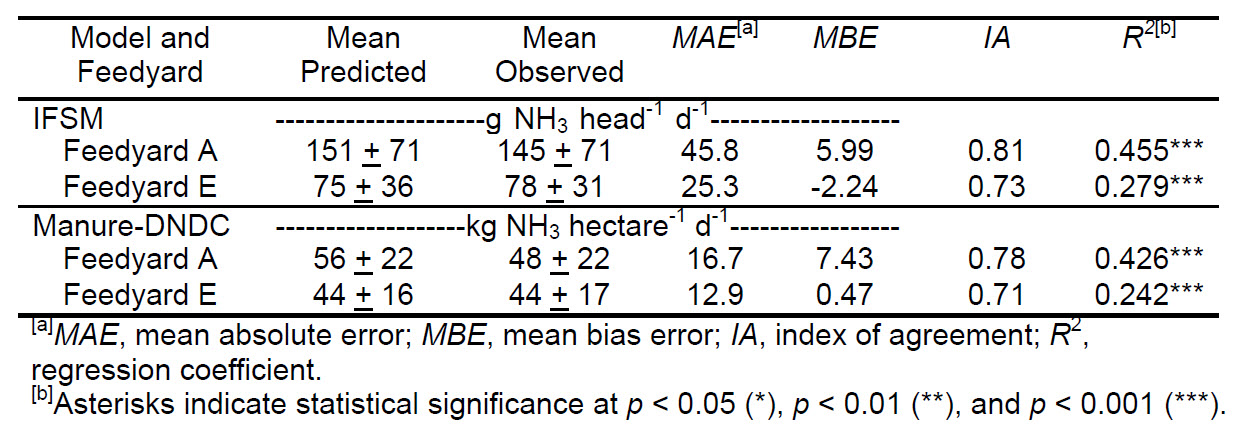
Predictions of daily NH3 emissions made by IFSM and Manure-DNDC were in good agreement (p < 0.001) with observations at both feedyards (Figs. 2 and 3, Table 1). IFSM predicted average NH3 fluxes of 151 and 75 g head-1 d-1 for Feedyards A and E, respectively (Table 1). Manure-DNDC output is on an area basis, and average modeled NH3 fluxes were 56 (Feedyard A) and 44 kg hectare-1 d-1 (Feedyard E). In addition, both models responded appropriately to changes in ambient temperature and %CP in feedyard diets, as shown by higher emissions in summer than winter, and the period of February to October 2008 at Feedyard A, when diets contained as much as 19% CP due to the inclusion of distillers grains (Figs. 2 and 3). The index of agreement (IA) indicates 71% to 81% agreement between model predictions and observed emissions (Table 1). Overall, both IFSM and Manure-DNDC predictions for Feedyard E had lower values for error and bias (MAE and MBE), while there was better agreement between observations and model predictions for NH3 emissions for Feedyard A.
Figure 4. Comparison of mean predicted and observed per capita NH3 emission rates from (a) Feedyard A and (b) Feedyard E in 2008. For most months, model predictions did not differ from observations, indicating that both models were useful for predicting average feedyard NH3 emissions.
Comparisons of modeled and observed mean daily per capita NH3 emissions for each month in 2008 are shown in Figure 4. For most months, model predictions did not differ significantly from observations, indicating that both models were useful for predicting average emissions. We also wanted to compare model predictions for annual per capita NH3 emissions to the emission factor of 13 kg head-1 y-1 that is currently used by the USEPA (USEPA, 2005). For 2008, IFSM and Manure-DNDC estimates of annual per capita emissions were 61 and 55 kg head-1 y-1 (Feedyard A) and 33 and 25 kg head-1 y-1 (Feedyard E), and model estimates for total feedyard emissions were within 3% to 24% of measured values (Table 2). In contrast, the current EPA emission factor underestimated total feedyard emissions by 61% to 79%: indicating that predictions by IFSM and Manure-DNDC can more accurately predict feedyard NH3 emissions than current constant emission factors.
Table 1. Regression and mean difference comparisons for observed and predicted daily feedyard NH3 emissions from Feb. 2007 to Jan. 2009, where there were 386 and 272 paired comparisons for Feedyard A and Feedyard E, respectively. Regression analysis indicated a highly significant (p < 0.001) relationship between observations and predictions made by both models. The index of agreement (IA) indicates 71% to 81% agreement between model predictions and observed emissions. Overall, both IFSM and Manure-DNDC model predictions for Feedyard E had lower values for error and bias (MAE and MBE), while there was better agreement between observations and model predictions for NH3 emissions for Feedyard A.
Table 2. Comparison of observed annual emissions at Feedyards A and E in 2008 with predictions by Manure-DNDC, IFSM, and the USEPA emission factor (EF) for beef cattle. For 2008, IFSM and Manure-DNDC estimates were within 3% to 24% accuracy. In contrast, the current EPA emission factor underestimated emissions by as much as 79%.
Future Plans
Future plans include using process-based models to predict nitrous oxide (N2O) emissions from feedyard pen surfaces. In addition, we will conduct laboratory and field-scale studies to better characterize the chemical and physical properties of feedyard manure in order to refine input parameters and improve model predictions of feedyard NH3 and N2O emissions.
Authors
Heidi M. Waldrip, Research Soil Scientist, USDA-ARS Conservation and Production Laboratory, Bushland, TX, heidi.waldrip@ars.usda.gov
C. Alan Rotz, Agricultural Engineer, USDA-ARS Pasture Systems and Watershed Management Research Unit, University Park, PA.
Changsheng Li, Research Professor, Institute for the Study of Earth, Oceans, and Space, University of New Hampshire, Durham, NH.
Richard W. Todd, Soil Scientist, USDA-ARS Conservation and Production Laboratory, Bushland, TX.
William Salas, President and Chief Scientist, Applied Geosolutions, LLC, Durham, NH.
N. Andy Cole, Research Leader and Animal Scientist, USDA-ARS Conservation and Production Laboratory, Bushland, TX.
Additional Information
Li, C., W. Salas, R. Zhang, C. Krauter, A. Rotz, and F. Mitloehner. 2012. Manure-DNDC: a biogeochemical process model for quantifying greenhouse gas and ammonia emissions from livestock manure systems. Nutr. Cycl. Agroecosyst. 93:163-200.
Rotz, C.A., M.S. Corson, D.S. Chianese, F. Montes, S.D. Hafner, R. Jarvis, and C.U. Coiner. 2012. Integrated Farm System Model: Reference Manual. University Park, PA: USDA Agricultural Research Service. Available at: http://www.ars.usda.gov/Main/docs.htm?docid=21345. Accessed 5 January 2013.
Todd, R. W., N. A. Cole, M. B. Rhoades, D. B. Parker, and K. D. Casey. 2011. Daily, monthly, seasonal, and annual ammonia emissions from Southern High Plains cattle feedyards. J. Environ. Qual. 40:1090-1095.
USEPA. 2005. National Emission Inventory – Ammonia Emissions from Animal Agricultural Operations: Revised Draft Report. 2005 Apr. 22. United States Environmental Protection Agency, Washington DC. Available at: http://www.epa.gov/ttnchie1/net/2002inventory.html. Accessed 02/27/2013.
Wilmott, C. J. 1982. Comments on the evaluation of model performance. Bull. Am. Meterol. Soc. 63:1309-1313.
This project was partially supported by USDA-NIFA funding to Texas A&M AgriLife Research for the federal special grant project TS2006-06009, “Air Quality: Reducing Emissions from Cattle Feedlots and Dairies (TX & KS)”.
The authors are solely responsible for the content of these proceedings. The technical information does not necessarily reflect the official position of the sponsoring agencies or institutions represented by planning committee members, and inclusion and distribution herein does not constitute an endorsement of views expressed by the same. Printed materials included herein are not refereed publications. Citations should appear as follows. EXAMPLE: Authors. 2013. Title of presentation. Waste to Worth: Spreading Science and Solutions. Denver, CO. April 1-5, 2013. URL of this page. Accessed on: today’s date.
Why Study Ammonia Recovery from Livestock Wastewater?
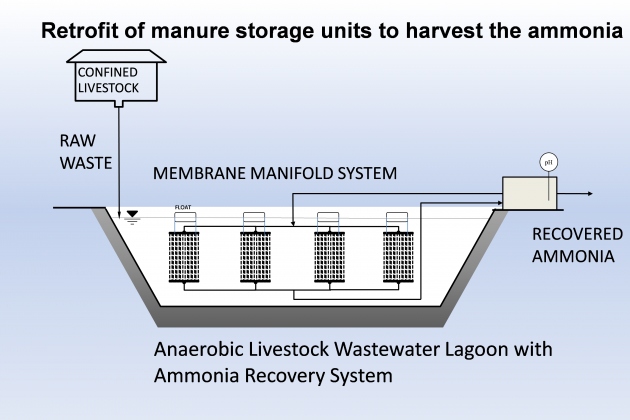
This presentation shows a novel system that uses gas-permeable membranes to capture and recover ammonia from liquid manure, reducing ammonia emissions from livestock operations, and recovering concentrated liquid nitrogen that could be sold as fertilizer.
What Did We Do?
These systems use gas-permeable membranes as components of new processes to capture and recover the ammonia in liquid manures. The new process includes the passage of gaseous ammonia contained in the liquid manure through a microporous hydrophobic membrane and capture and concentration with circulating diluted acid on the other side of the membrane. The membranes can be assembled in modules or manifolds. For liquid manure applications, the membrane manifolds are submerged in the liquid and the ammonia is removed from the liquid manure in barn pits or storage tanks and lagoons before it goes into the air.
Cross-sectional diagram of ammonia capture using hydrophobic gas-permeable membrane. Ammonia gas (NH3) in the liquid manure permeates through hydrophobic membrane walls with micron-sized pores, where it combines with the free protons (H+) in the acid solution to form non-volatile ammonium ions (NH4+).
What Have We Learned?
The concept was successfully tested using concentrated swine manure effluents containing 140 to 1,400 mg/L NH4-N. The use of gas-permeable membranes to remove ammonia from liquid manure was effective, and the rate of N recovery by the gas-permeable membrane system was higher with higher ammonia concentration in the manure. While ammonia gas passed readily through the membrane pores, the soluble COD compounds did not pass. An average removal rate from 45 to 153 milligrams of ammonia per liter per day was obtained when ammonia concentrations in swine lagoon liquid ranged from 138 to 302 milligrams ammonia per liter. The rate of ammonia recovery was also increased with increased pH of the wastewater. With a natural pH of 8.3, the rate of N recovery was about 1.2% per hour. This rate was increased 10 times (to 13% per hour) at pH of 10 after alkali addition. In another study, we immersed the membrane module into raw liquid manure that had 1,400 milligrams of ammonia per liter, and after 9 days, the total ammonia concentration decreased about 50 percent to 663 mg per liter. The gaseous ammonia in the liquid (or free ammonia) linked to ammonia emissions decreased 95 percent from 114.2 to 5.4 milligrams per liter. The same process was used in 10 consecutive batches of raw swine manure and ended up recovering concentrated nitrogen in a clear solution that contained 53,000 milligrams of ammonia per liter. The new technology could help change on-farm nitrogen management: Livestock producers could use the technology to help meet air-quality regulations, save fuel, protect the health of livestock and their human caretakers, improve livestock productivity, and recover concentrated liquid nitrogen that can be re-used in agriculture as a valued fertilizer.
Diagram of ammonia recovery system using with gas permeable membranes
Recovery and concentration of ammonia from liquid manure using gas-permeable membrane system. Diagram and pictures show prototype testing, using the same stripping solution with repeated batches of liquid manure.
Future Plans
On-farm demonstration studies will be conducted in 2013-2014 in cooperation with Dr. John Classen, North Carolina State University, through an NRCS Conservation Innovation Grant (CIG) awarded in FY2012 “Ammonia recovery from swine wastewater with selective membrane technology”. The project will demonstrate recovery of ammonia from liquid manure effluents using the gas-permeable technology in three different manure collection systems: under floor belt system, scraper system, and anaerobic digester.
Vanotti,M.B., Szogi,A.A. “Systems and Methods for Reducing Ammonia Emissions form Liquid Effluents and for Recovering Ammonia”. US Patent Appl. SN 13/164,363, filed June 20, 2011. US Patent and Trademark Office, Washington, DC.
Vanotti, M.B., Szogi, A.A. 2010. “Removal and recovery of ammonia from liquid manure using gas-permeable membranes”. In: Proceedings of the 2010 American Society of Agricultural and Biological Engineers Annual International Meeting, June 20-23, 2010, Pittsburgh, Pennsylvania. 5 p. Paper No. 1008376.
The authors are solely responsible for the content of these proceedings. The technical information does not necessarily reflect the official position of the sponsoring agencies or institutions represented by planning committee members, and inclusion and distribution herein does not constitute an endorsement of views expressed by the same. Printed materials included herein are not refereed publications. Citations should appear as follows. EXAMPLE: Authors. 2013. Title of presentation. Waste to Worth: Spreading Science and Solutions. Denver, CO. April 1-5, 2013. URL of this page. Accessed on: today’s date.
Why Study Ammonia Removal from Livestock Wastewater?
Biological nitrogen removal is regarded as the most efficient and economically feasible method available for removal of ammonia from wastewater. Its implementation in concentrated livestock farms can help reduce surplus nitrogen and ammonia emissions.
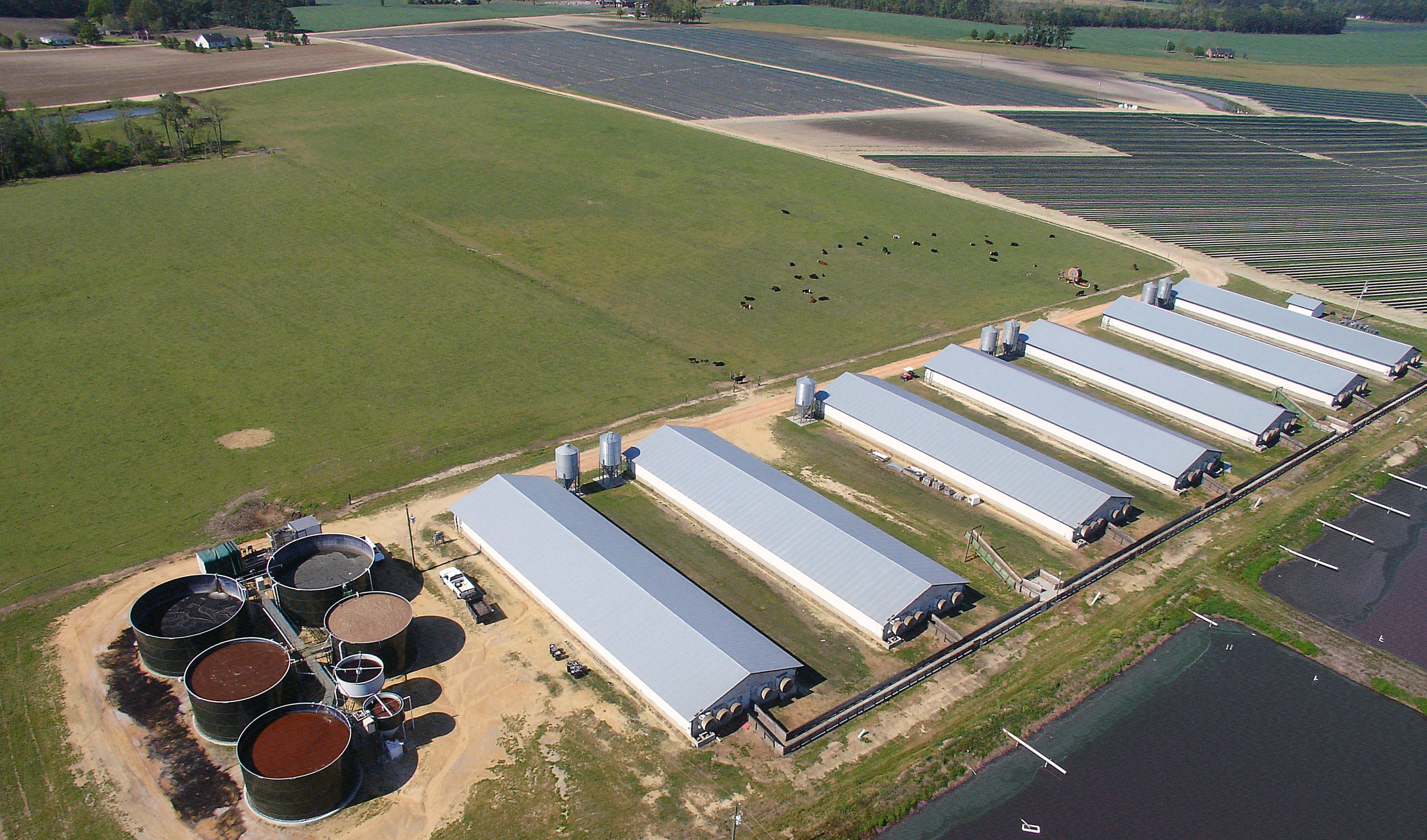
High performance nitrifying sludge (HPNS) is used to start-up biological ammonia removal treatment in swine manure treatment plants. Picture shows second generation project treating manure from 5,200-head finishing operation in Sampson County, NC. The system used solids separation, N removal and P removal processes.
What Did We Do?
The effective use of biological nitrogen removal treatment in animal wastewater required development of new technologies and systems adapted to the higher-strength characteristics of liquid manure. These include: 1) development of a high performance nitrification bacterial mix; 2) systems that combine nitrification/denitrification with efficient liquid-solids separation; and 3) a new deammonification process using anammox bacteria for the removal of nitrogen in anaerobic digestion effluents.
What Have We Learned?
The discovery of a high-performing nitrifying bacterial sludge (HPNS) adapted to high ammonia concentrations (> 3,000 mg N/L) and low water temperatures (5 oC) significantly reduced biological nitrogen removal (BNR) plant footprint and costs. Nitrification/denitrification of fresh flushed manure was most effective after solid-liquid separation treatment, using a pre-denitrification configuration (Modified Ludzack-Ettinger or MLE process). The system is currently at its third generation. The third generation was demonstrated full-scale in 2012 in a farrow to finish swine operation that produced 30,500 hogs per year. It eliminated 99% of the ammonia contained in the manure effluent.
After nitrification/denitrification treatment, the manure effluent contains low ammonia concentration (< 10 mg/L). It is stored in a clean water tank and reused in the barns for recharging the pits or filling flush-tanks. Picture shows clean water tank in third generation project in Wayne county, NC, treating manure from both a 1,200-sow farrow to feeder operation and 12,960 feeder to finish farm.
However, the implementation of nitrification/denitrification process in anaerobic digestion systems is a problem, since both the biogas production and denitrification require carbon. It would require about 30% less biogas production so that there is sufficient carbon for N removal through nitrification/denitrification. The discovery of a novel anammox bacteria in manure, Brocadia caroliniensis, is helping us address this problem effectively, especially after recent advances with a single-tank configuration. The new deammonification process we present here (partial nitritation and anammox) is a completely autotrophic nitrogen removal approach that eliminates the carbon needs for denitrification. Thus, it can be a promising approach for the biological removal of ammonia from anaerobic digester effluents that are low in carbon and high in ammonia concentration. We obtained rapid deammonification reaction by mixing nitrifying and anammox sludges in a single, aerated tank. The single-tank approach was tested with digested swine wastewater. Compared with traditional N removal, the deammonification process reduced 57% of the aeration and 100% of the carbon requirement. Therefore, deammonification is a key technology for development of more economical and energy efficient biological ammonia removal systems in the near future.
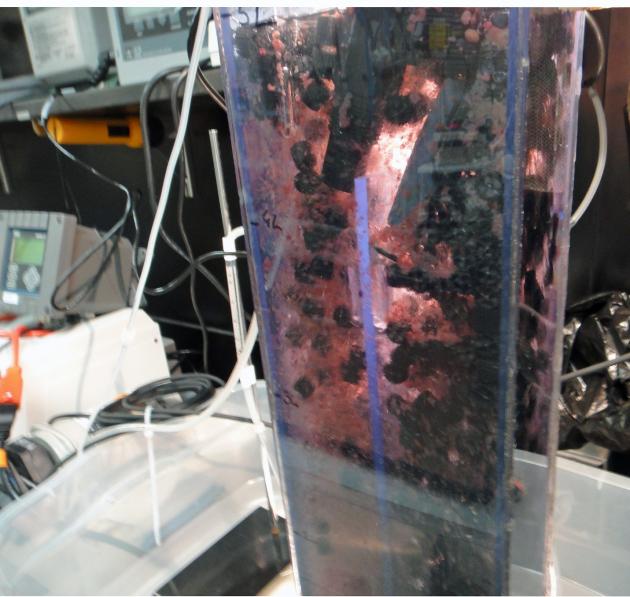
Deammonification treatment using single-tank approach. It performs partial nitritation and anammox reaction in fluidized continuous flow reactor. Picture shows detail of single tank at USDA-ARS, Florence, SC. It used a mixture of HPNS and anammox bacteria Brocadia caroliniensis and biofilms plastic carriers to remove the ammonia from anaerobic digester effluents.
Future Plans
The nitrification/denitrification technology has been demonstrated full-scale and is at the commercialization phase. The single-tank deammonification has been pilot tested.
USDA has filed US patents for “high performance nitrifying sludge ” and “novel anammox bacterium isolate” (see reference list), and seeks commercial partners to bring deammonification technology to market. http://www.ars.usda.gov/business/docs.htm?docid=763&page=5
Vanotti, M.B., Szogi, A.A., Millner, P.D. and Loughrin, J.H. 2009b. Development of a second-generation environmentally superior technology for treatment of swine manure in the USA. Biores. Technol. 100(22):5406-5416.
Vanotti, M.B., A.A. Szogi, and T.F. Ducey. 2011. High performance nitrifying sludge for high ammonium concentration and low temperature wastewater treatment. US Patent Publication No. US2011/0000851 A1. US Patent and Trademark Office, Washington, DC.
Matias Vanotti, José Martinez, Takao Fujii, Ariel Szögi, Daisuke Hira. 2012. Ammonia Removal Using Nitrification and Anammox in a Single Reactor. In Proceedings 2012 ASABE Annual International Meeting, Dallas, Texas. July 29 – August 1, 2012. Paper No. 121337837.
Vanotti, M.B., A.A. Szogi, and M.J. Rothrock. 2011. Novel anammox bacterium isolate. US Patent Application No. 13/013,874. US Patent and Trademark Office, Washington, DC.
Acknowledgements
This research was part of USDA-ARS National Program 214 Agricultural and Industrial Byproducts, Research Project 6657-13630-005-00D “Innovative Bioresource Management Technologies for Enhanced Environmental Quality and Value optimization”.
The authors are solely responsible for the content of these proceedings. The technical information does not necessarily reflect the official position of the sponsoring agencies or institutions represented by planning committee members, and inclusion and distribution herein does not constitute an endorsement of views expressed by the same. Printed materials included herein are not refereed publications. Citations should appear as follows. EXAMPLE: Authors. 2013. Title of presentation. Waste to Worth: Spreading Science and Solutions. Denver, CO. April 1-5, 2013. URL of this page. Accessed on: today’s date.
Livestock GRACEnet is a United States Department of Agriculture, Agricultural Research Service working group focused on atmospheric emissions from livestock production in the USA. The working group presently has 24 scientists from 13 locations covering the major animal production systems in the USA (dairy, beef, swine, and poultry). The mission of Livestock GRACEnet is to lead the development of management practices that reduce greenhouse gas, ammonia, and other emissions and provide a sound scientific basis for accurate measurement and modeling of emissions from livestock agriculture. The working group fosters collaboration among fellow scientists and stakeholders to identify and develop appropriate management practices; supports the needs of policy makers and regulators for consistent, accurate data and information; fosters scientific transparency and rigor and transfers new knowledge efficiently to stakeholders and the scientific community. Success in the group’s mission will help ensure the economic viability of the livestock industry, improve vitality and quality of life in rural areas, and provide beneficial environmental services. Some of the research highlights of the group are provided as examples of current work within Livestock GRACEnet. These include efforts aimed at improving emissions inventories, developing mitigation strategies, improving process-based models for estimating emissions, and producing fact sheets to inform producers about successful management practices that can be put to use now.
Why Was GRACEnet Created?
The mission of Livestock GRACEnet is to lead the development of livestock management practices to reduce greenhouse gas, ammonia, and other emissions and to provide a sound scientific basis for accurate measurement and modeling of emissions.
What Did We Do?
The Livestock GRACEnet group is comprised of 24 scientists from 13 USDA-ARS locations researching the effects of livestock production on emissions and air quality.
Our goals are to:
Collaborate with fellow scientists and stakeholders to identify and develop appropriate management practices
Support the needs of policy makers and regulators for consistent, accurate data and information
Foster scientific transparency and rigor
Transfer new knowledge efficiently to stakeholders and the scientific community
Success in our mission will help to ensure the economic viability of the livestock industry, vitality and quality of life in rural areas, and provide environmental services benefits.
The authors are solely responsible for the content of these proceedings. The technical information does not necessarily reflect the official position of the sponsoring agencies or institutions represented by planning committee members, and inclusion and distribution herein does not constitute an endorsement of views expressed by the same. Printed materials included herein are not refereed publications. Citations should appear as follows. EXAMPLE: Authors. 2013. Title of presentation. Waste to Worth: Spreading Science and Solutions. Denver, CO. April 1-5, 2013. URL of this page. Accessed on: today’s date.
Air emissions from livestock facilities are receiving increasing attention because of concerns related to nuisance, health and upcoming air quality regulations. Vegetative buffers have been proposed as a potential cost effective mitigation strategy to reduce dust, odor and other air pollutants from farm and can be an important part of air quality management plan. However, the effectiveness of vegetative buffers in mitigating air emissions seems to be site specific and can be affected by many factors. This study aims to provide a thorough literature review on the performance of vegetative buffers in mitigating air emissions, to investigate critical factors, and to identify research gaps. The results will be used as basis for planning future wind tunnel and field studies. The ultimate objective is to develop general guidance for vegetative buffer design and to demonstrate the variety and effectiveness of vegetative buffers for mitigating air emissions from livestock facilities.
Why Study Trees As a Potential Odor Management Strategy?
Vegetative environmental buffers (VEBs) have been proposed as a mitigation strategy for air emissions from livestock facilities. Survey indicated producers are interested in using VEBs for odor management. But lack of information on performance, cost and technical guidelines are barriers to adoption of VEBs.
What Did We Do?
Review published research on effectiveness of VEBs for mitigating air emissions from livestock facilities.
What Have We Learned?
VEBs have been examined primarily in swine and poultry farms. Iowa, Pennsylvania and Delaware are actively involved in research and implementation of VEBs for livestock farms. VEBs are potential cost effective strategy for reducing dust (by up to 56%), odor (by up to 68%), NH3 (by up to 54%) and H2S (by up to 85%) from farms, although effectiveness and costs are highly variable and depend on site specific design. Most effective reduction occurs just beyond the VEBs. Wind tunnel simulation on barriers at roadside showed that percentage reduction of pollutants decreasing with downwind distance, and they are generally below 50% beyond 15 barrier height.
Mitigation Mechanisms of VEBs
Future Plans
Measure the concentrations of multiple air emission constituents at various distance from a swine facility with and without the presence of a VEB under various weather conditions; determine the effectiveness of the VEB under various design parameters (height and depth) and evaluate how height and depth of the VEB will affect the mitigation effectiveness; develop design suggestions and best management procedures to utilize a VEB in order to maximize effectiveness with limited costs.
Authors
Zifei Liu, Assistant Professor, Kansas State University. Zifeiliu@ksu.edu
Ronaldo Maghirang, Pat Murphy, Kansas State University
The authors are solely responsible for the content of these proceedings. The technical information does not necessarily reflect the official position of the sponsoring agencies or institutions represented by planning committee members, and inclusion and distribution herein does not constitute an endorsement of views expressed by the same. Printed materials included herein are not refereed publications. Citations should appear as follows. EXAMPLE: Authors. 2013. Title of presentation. Waste to Worth: Spreading Science and Solutions. Denver, CO. April 1-5, 2013. URL of this page. Accessed on: today’s date.
Why Develop a Feed Management Certification Program?
To develop a program to train ARPAS-certified (American Registry of Professional Animal Scientists) dairy and beef nutritionists on how to prepare and evaluate Feed Management plans as it relates to the NRCS Feed Management (592) practice in Pennsylvania. The objective is to compare how formulated diets match to the consumed diets. Phosphorus is monitored through manure testing and nitrogen by milk urea nitrogen and calculating milk nitrogen efficiency. Dry matter intake efficiency is also monitored as this can affect the total manure volume excreted.
What Did We Do?
In 2007, Mid-Atlantic Water Program (MAWP) scientists applied the national feed management program to meet the needs of dairy consultants to implement feed management in the Chesapeake Basin. This program certifies consultants in precision feed management, a practice that reduces nutrient loads in animal wastes by minimizing the phosphorus and nitrogen content in the feed.
With the recent release of the US Environmental Protection Agency’s Total Maximum Daily Load for the Chesapeake Bay, the agricultural community is looking for the best practices to control nutrient pollution while minimizing impacts to profit. Over the years, the work of this project team has established precision feed management as both an economically and environmentally viable best management practice. As such, state watershed implementation plans include precision feed management as a method to meet load allocations.
Pennsylvania currently has twenty-four NRCS qualified nutritionists to write feed management plans. In 2011, fifty-one operations received EQIP or CBWI funding through USDA-NRCS for feed management, with the majority consisting of dairy farms. An additional 10 farms entered into contracts with NRCS in 2012. Farms are currently in the process of being assessed on how well they implemented recommendations from the first year of quarterly reports and are working through their second year of implementation.
Additional efforts have been implemented to educate consultants about the regulations and issues affecting dairy producers. Currently, the Pennsylvania team is working with producers to monitor income over feed costs and to develop cash flow plans, which provides the opportunity to implement precision feeding practices while monitoring the economic benefits to the herd. A study of six component fed dairy herds in Pennsylvania is also being completed to evaluate the effects of the feed, forage, and manure sampling protocols along with feeding order on fecal phosphorus levels and to update current sampling recommendations.
Funding from the MAWP was critical to providing these trainings and projects and establishing precision feed management as a best management practice that farmers can realistically utilize. The infrastructure is in place to address the demand for more feed management plans and the MAWP will continue to meet the educational needs of this audience.
What Have We Learned?
There are a lot of opportunities on farms to improve feed management and nutrient balance. Challenges have been observed pertaining to nutrient reduction strategies that could impact overall nutrient balances in dairy and beef rations. Many of these challenges are greatly influenced by the volatility in today’s commodity pricing. Producers need to become more engaged in what they are feeding and how it affects their profitability. It has been observed that inorganic phosphorus is still being used in grain mixtures when rations contain high phosphorus forages or inclusion of byproduct feeds. We have also observed some challenges in obtaining test analyses for complete grain and mineral mixes on a regular basis. More education is needed for both industry professionals as well as producers.
Future Plans
As the feed management program in Pennsylvania progresses, pounds of phosphorus excreted can be tracked to monitor the effects of reducing phosphorus in dairy and beef rations. This can be used to evaluate its effect on water quality and potential phosphorus accumulations in the soil when manure is applied to crops at nitrogen-based rates. Crop rotations, inclusion of alternative forages and whole farm nutrient balance will be included in future trainings and feed management plans. The Penn State Extension Dairy team is also working on the development of a Feed Management mobile app for producers and nutritionist to be able to track and monitor their progress on nutrient reductions in their rations.
The authors are solely responsible for the content of these proceedings. The technical information does not necessarily reflect the official position of the sponsoring agencies or institutions represented by planning committee members, and inclusion and distribution herein does not constitute an endorsement of views expressed by the same. Printed materials included herein are not refereed publications. Citations should appear as follows. EXAMPLE: Authors. 2013. Title of presentation. Waste to Worth: Spreading Science and Solutions. Denver, CO. April 1-5, 2013. URL of this page. Accessed on: today’s date.
To provide the best experiences, we use technologies like cookies to store and/or access device information. Consenting to these technologies will allow us to process data such as browsing behavior or unique IDs on this site. Not consenting or withdrawing consent, may adversely affect certain features and functions.
Functional
Always active
The technical storage or access is strictly necessary for the legitimate purpose of enabling the use of a specific service explicitly requested by the subscriber or user, or for the sole purpose of carrying out the transmission of a communication over an electronic communications network.
Preferences
The technical storage or access is necessary for the legitimate purpose of storing preferences that are not requested by the subscriber or user.
Statistics
The technical storage or access that is used exclusively for statistical purposes.The technical storage or access that is used exclusively for anonymous statistical purposes. Without a subpoena, voluntary compliance on the part of your Internet Service Provider, or additional records from a third party, information stored or retrieved for this purpose alone cannot usually be used to identify you.
Marketing
The technical storage or access is required to create user profiles to send advertising, or to track the user on a website or across several websites for similar marketing purposes.
 Waste to Worth home | More proceedings….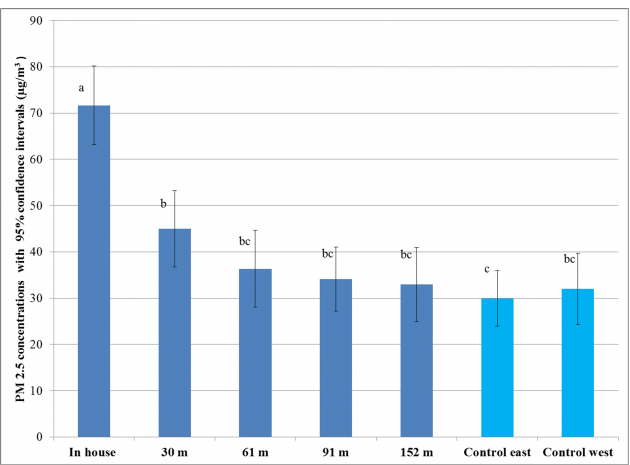
 The efforts related to Colorado’s Rocky Mountain National Park are voluntary, yet there are nitrogen reduction targets, or milestones, established over five year increments out to the year 2032. If a milestone is not met, mandatory controls could follow. How can the proactive emissions reduction efforts being taken by livestock and crop producers today be recognized or credited should mandatory controls be required at some future date? For example, could an agriculture certainty framework (used more for water quality protection/nutrient runoff) be used to validate actions being taken today for air quality purposes? How might an ag certainty program work and what partners should be at the table? Are there other approaches that states are using or researching that Colorado should consider?

 Jon Slutsky and his wife, Susan Moore, are first generation dairy farmers and have owned and operated La Luna Dairy in Northern Colorado since 1981. Currently they milk 1300-1400 cows at their farm near Wellington. They have one adult daughter. Jon is a native of New York; however he grew up and attended school in Southern California. He graduated from the University of California-Riverside with a bachelor’s degree in biology in 1972. As general manager of the dairy, Jon oversees the management of the farm including 2600 cows and calves and 26 employees.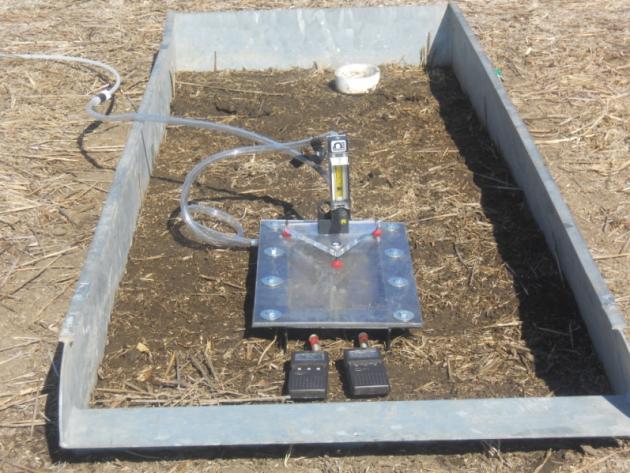




 /a>
/a>