Ionophores are a type of antibiotics that are used in cattle production to shift ruminal fermentation patterns. They do not kill bacteria, but inhibit their ability to function and reproduce. In the cattle rumen, acetate, propionate, and butyrate are the primary volatile fatty acids produced. It is more energetically efficient for the rumen bacteria to produce acetate and use methane as a hydrogen sink rather than propionate. Ionophores inhibit archaea forcing bacteria to produce propionate and butyrate as hydrogen sinks rather than working symbiotically with methanogens to produce methane as a hydrogen sink. Numerous research studies have demonstrated performance advantages when ionophores are fed to beef cattle, but few have considered potential environmental benefits of feeding ionophores. This study was conducted to determine if concentrations of greenhouse gases, odorous volatile organic compounds (VOC), ammonia, and hydrogen sulfide from beef cattle manure could be reduced when an ionophore was fed to finishing cattle.
What Did We Do?
Four pens of feedlot cattle were fed an ionophore (monensin) and four pens received no ionophore (n=30 animals/pen). Samples were collected six times over a two-month period. A minimum of 20 fresh fecal pads were collected from each feedlot pen at each collection. Samples were mixed within pen and a sub-sample was placed in a small wind-tunnel. Duplicate samples for each pen were analyzed. Ammonia, carbon dioxide (CO2), and nitrous oxide (N2O) concentrations were measured using an Innova 1412 Photoacoustic Gas Analyzer. Hydrogen sulfide (H2S) and methane (CH4) were measured using a Thermo Fisher Scientific 450i and 55i, respectively.
What Have We Learned?
Table 1. Overall average concentration of compounds from feces of beef feedlot cattle fed diets with and without monensin.
Total CH4 concentration decreased when monensin was fed. Of the VOCs measured, only total sulfide concentration was lower for the manure from cattle fed monensin compared to those not fed monensin. Ammonia, N2O, CO2, H2S, and all other odorous VOC were similar between the cattle fed monensin and those not fed monensin. The results only account for concentration of gases emitted from the manure and do not take into account any urinary contributions, but indicate little reduction in odors and greenhouse gases when monensin was fed to beef finishing cattle.
Future Plans
A study is planned for April – July 2019 to measure odor and gas emissions from manure (urine and feces mixture) from cattle fed with and without monensin. Measurements will also be collected from the feedlot surface of pens with cattle fed with and without monensin.
Authors
Mindy J. Spiehs, Research Animal Scientist, USDA ARS Meat Animal Research Center, Clay Center, NE
Bryan L. Woodbury, Agricultural Engineer, USDA ARS Meat Animal Research Center, Clay Center, NE
Kristin E. Hales, Research Animal Scientist, USDA ARS Meat Animal Research Center, Clay Center, NE
Additional Information
Dr. Hales also looked at growth performance and E. coli shedding when ionophores were fed to finishing beef cattle. This work is published in Journal of Animal Science.
Hales, K.E., Wells, J., Berry, E.D., Kalchayanand, N., Bono, J.L., Kim, M.S. 2017. The effects of monensin in diets fed to finishing beef steers and heifers on growth performance and fecal shedding of Escherichia coli O157:H7. Journal of Animal Science. 95(8):3738-3744. https://pubmed.ncbi.nlm.nih.gov/28805884/.
USDA is an equal opportunity provider and employer.
Acknowledgements
The authors wish to thank Alan Kruger, Todd Boman, and the USMARC Cattle Operations Crew for assistance with data collection.
The authors are solely responsible for the content of these proceedings. The technical information does not necessarily reflect the official position of the sponsoring agencies or institutions represented by planning committee members, and inclusion and distribution herein does not constitute an endorsement of views expressed by the same. Printed materials included herein are not refereed publications. Citations should appear as follows. EXAMPLE: Authors. 2019. Title of presentation. Waste to Worth. Minneapolis, MN. April 22-26, 2019. URL of this page. Accessed on: today’s date.
Growth in the livestock and poultry industries in Nebraska faces hurdles is greatly influenced by county zoning and local decision-making. Variation in policies from one county to the next and in decisions made by county boards creates significant challenges for agricultural operations and for local communities looking to remain vibrant and grow. Many were requesting that a common tool be developed for county officials to use that would bring greater consistency and objectivity to the evaluation of proposals to expand animal feeding operations.
What was done?
In 2015, the Nebraska Legislature passed legislation (LB106) that directed the Nebraska Department of Agriculture to convene a committee of experts to develop an assessment matrix for livestock development. A 10-person advisory committee, including county officials, livestock industry representatives, and me [representing the University of Nebraska] was approved by Governor Ricketts later that year. In keeping with directions outlined in Nebraska LB106, the committee:
Reviewed tools already developed by counties in Nebraska and by other states, mainly those used in Iowa and Wisconsin.
Developed a tool (Excel spreadsheet or pdf) that produces quantifiable results based upon scoring of objective criteria;
Made concerted efforts to assure that the tool is practical to use when applying for conditional-use permits or special exceptions and when county officials score these applications; and
Ensured that all criteria had definite point selections and provided a minimum threshold total score that is required to ‘pass’.
In 2016, the resulting Nebraska Livestock Siting Assessment Matrix (‘Livestock Matrix’) was posted for comments and approved for dissemination by the Nebraska Department of Agriculture. The Livestock Matrix was recently reviewed and updated by the advisory committee, and the current version is available for public access at http://www.nda.nebraska.gov/promotion/livestock_matrix/index.html.
What we have learned?
Development of the Livestock Matrix was a highly formative process. Overall, the factors that consumed the vast majority of discussion and effort involved the following:
Need for simplicity. Strong sentiments were expressed that the Livestock Matrix should be easy to complete, with little or no need for assembling additional information or consultation.
Desire for transparency. Clarity was paramount, with parties on both sides expecting to see numbers and requirements specified up front, which excluded process-based approaches.
Questions of merit. Many ‘generally good ideas’ and recommendations were removed when benefits were not well understood or defined, or a practice was considered an industry norm.
Will to retain control. Perceived loss of control or potential for new regulation ended discussion of some ideas that otherwise had merit.
Voluntary tool:
LB106 specified that the matrix be “Designed to promote the growth and viability of animal agriculture in this state”, and as a result, the advisory committee was comprised of supporters of [responsible growth of] the livestock and poultry industries. Support for local control runs deep in Nebraska, though, and one of the most significant hurdles arose early on due to amended language in the final bill, “…develop an assessment matrix which may be used by county officials to determine whether to approve or disapprove” applications. Voluntary consideration and adoption of the Livestock Matrix at local levels totally changed the nature of the discussions, and made it very challenging to develop a single tool that would have widespread appeal and rate of adoption, virtually guaranteeing that varied policies and practices would still exist. Despite this challenge, the matrix committee pushed through to develop a ‘template tool’, which has been adopted – either as is or as a template – by some counties.
County setbacks:
The next major hurdle faced was how to handle county setback distances. With the Livestock Matrix being voluntary, it quickly became clear that county officials were not going to adopt a tool that limited their use of and control over setback distance requirements. After mulling over options, the committee decided that satisfying the county’s setback requirement would be the primary criterion for obtaining 30 of the 75 points needed to receive a passing score. To promote positive change, the committee developed sets of sliding-scale ‘base separation distances for odor’ using an approach that drew from the science-based Nebraska Odor Footprint Tool (NOFT). The intent was that county officials would use these distances [preferably] in establishing county setbacks or as an alternative approach that could be accepted by a county. Direct use of the NOFT and inherent NOFT concepts within the Livestock Matrix was greatly limited by concerns over the NOFT requiring additional work of applicants, not being sufficiently transparent, and not being applicable for all applicants (esp. open-lot cattle feeders).
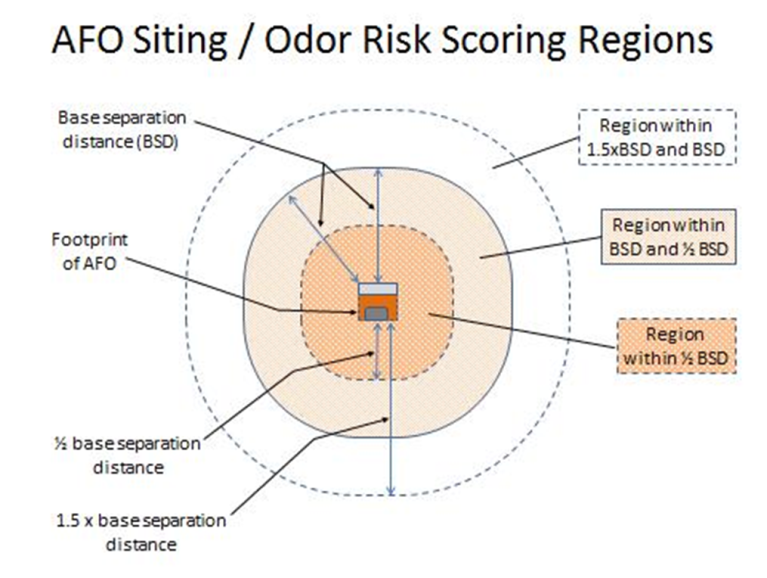
The idea of using ‘transitional planning zones’ that add or deduct points based upon consideration of locations of all residents within 1.5 times the separation distance for odor is presented in the alternative approach (Figure 1).
Figure 1. Illustration of planning zones for assessing odor risk.
The intent was to bring more information into decisions than just what is the distance to the closest neighbor relative to the county setback. The zones are mainly presented for information purposes, as there was considerable hesitance to adopt a scoring system that was not considered sufficiently simple and transparent to merit replacing a set separation distance being the criterion.
Water quality / permits:
Committee members shared the view that a proposed expansion that would secure required environmental permits (via Nebraska Department of Environmental Quality, NDEQ) and meet the county’s setback requirement, if any, should generally earn a passing score and not be exposed to local requirements that are often employed to delay and deter operations from expanding. There was disagreement, however, on whether an applicant should need to complete the rest of the assessment if these two conditions were met. This issue weighed the applicant’s time and effort completing the assessment against the potential that glaring concerns (point deductions) may arise in another area and that communities may not see the matrix as being comprehensive and credible. The current matrix conveys an expectation that all main sections be scored, but has been streamlined to minimize required time and effort.
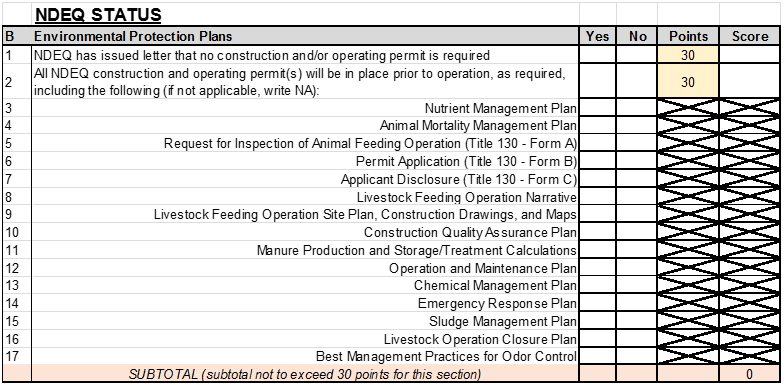
There were also differing views on whether the Livestock Matrix should highlight the various water quality protections that would be put in place or simply that NDEQ requirements would be satisfied. While there was significant early interest by several committee members to promote and educate the public on stewardship practices required of permitted feeding operations, the desire to reinforce the value of determinations made by NDEQ and to keep the tool very practical to complete and assess carried in the end. As a result, applicants must indicate that NDEQ approval has been or will be secured to obtain 30 of the 75 points needed to receive a passing score (Figure 2), while indication of the practices that will be implemented is encouraged, but does not affect the score received.
Figure 2. Section to be completed within the Livestock Matrix that addresses environmental protection plans and permits.
This section of the Livestock Matrix arose was discussed again as the committee considered those applicants who would receive a letter from NDEQ stating that a permit would not be required – primarily applicable to small animal feeding operations and operations that involved dry manure. The challenge presented was, ‘Does having official approval to go forward without needing a permit offer the same protections and merit the same points as would exist if required plans were developed to secure permits?’ The issue became prominent when a broiler processing facility was approved for construction, which required constructing hundreds of new broiler (chicken) houses in the state, none of which would likely require an NDEQ permit. The main concern was that such facilities could be approved without having nutrient management plans (and a few other desired plans) in place to limit potential nutrient loading of ground and surface waters from application of manure at rates exceeding crop needs. The company associated with the current large poultry expansion took a proactive stance and internally requires all of its growers to have nutrient management plans in place and qualify for an NDEQ permit, resolving the immediate concerns, but not the longer-term issue with the Livestock Matrix. The committee will continue to examine ways to better highlight and reinforce the importance of nutrient management within the Livestock Matrix without suggesting changes in NDEQ regulation.
Other environmental sections:
Six more sections address various environmental risks and protections, including:
Environmental and zoning compliance record
Water quality protection – livestock facilities
Odor and dust control for facilities
Manure application practices
Manure application separation
Additional assurance of environmental protection
Each of these sections was refined down to a list of items that the committee believed merited inclusion in determining the total score.
Non-environmental sections:
Additional sections address other topics such as:
Traffic
Locations of the authorized representative and the site manager relative to the facility
Communication with the community
Economic impact
Landscaping and aesthetics
Each of these areas was well-understood to influence acceptance by the community. Probably the biggest challenge for the committee was assigning appropriate section scores and total passing scores to value the importance of these areas without suggesting that an environmentally risky application could achieve a passing score through strong scores in these other areas.
Impacts and Implications
In developing the Nebraska Livestock Siting Assessment Matrix, the committee made available a well-critiqued tool for voluntary consideration by county officials. Overall, the Livestock Matrix strikes a sometimes uncomfortable balance between being comprehensive and scientifically correct and being transparent and easy to use. Although the Livestock Matrix will likely fall short of the original goal of achieving consistency and uniformity in Nebraska’s county zoning policies and practices, county officials are considering the matrix as a template zoning tool or as a gauge for evaluating and adjusting current policy.
Next Steps
The Nebraska Department of Agriculture is continuing to promote adoption of the Nebraska Livestock Siting Assessment Matrix, especially to counties looking to be officially designated as “Livestock Friendly”. The matrix will be evaluated again in 1-2 years.
Authors
Richard R. (Rick) Stowell, Extension Specialist – Animal Environment, Rick.Stowell@unl.edu
The other members serving on the committee included: John Csukker; Elizabeth Doerr, Leon Kolbet, Dean Krueger, Mark McHargue, Jennifer Myers, Sarah Pillen, Andrew Scholting, Steve Sill.
The authors are solely responsible for the content of these proceedings. The technical information does not necessarily reflect the official position of the sponsoring agencies or institutions represented by planning committee members, and inclusion and distribution herein does not constitute an endorsement of views expressed by the same. Printed materials included herein are not refereed publications. Citations should appear as follows. EXAMPLE: Authors. 2019. Title of presentation. Waste to Worth. Minneapolis, MN. April 22-26, 2019. URL of this page. Accessed on: today’s date.
Aerobic treatment has potential to be more practical for any size operation, reduce odors, reduce risk of runoff by facilitating application to growing crops, and reduce energy use when distributing manure nutrients.
Farm-based aeration, created through an upward/outward surface flow, was first introduced in the 1970’s and brought partial success. With significant performance issues, challenges with struvite within manure recycling pipes/pumps, and the growing trend to store manure within pits under barns, further research with manure aeration was largely abandoned. Very little research has been done on aerobic treatment within manure storage systems since traditional aeration using air blowers has been considered too expensive. Previous research sought to mimic traditional domestic wastewater treatment systems which also purposely perform denitrification. Not always a goal for farm operations in years past, retaining Nitrogen within wastes used as fertilizer is now usually a goal. Thus, past aerobic treatment systems were not designed to fully benefit today’s modern farms.
In 2006, hog producers were introduced to an updated version of equipment providing Widespreading Induced Surface Exchange (WISE) aeration, specifically for reducing hog manure odor while irrigating lagoon effluent. The results became a “wonder” for the site’s CAFO permit engineer. Documentation showed that significant aeration was occurring at a rate much higher than could occur with the energy input used by traditional bubble blowers. This indicated that aeration of manure ponds and lagoons may not be too expensive after all. More questions led to a USDA NRCS-supported study, which revealed much more information and brought out more questions. The final report of that study is available at http://pondlift.com/more-info/, along with other information on the technologies described.
The NRCS-funded study revealed the basis for previous performance failures, while it also showed the basis for getting positive aeration performance at liquid manure storage sites: Ultimately, this information showed that large reductions of manure odor can be obtained while offering a new paradigm for eliminating most potential manure runoff through WISE aeration as the first step.
The paradigm change summary:
Aeration provides aerobic bacteria based manure decomposition while in storage.
Aerobic bacteria produce only carbon dioxide, which is considered carbon neutral when converting manure’s nutrients to fertilizer, reduced greenhouse gas (Aerobic gives off no other greenhouse gasses such as methane or oxides, and few odors)
“No odor” allows direct distribution of decomposed manure nutrients onto crops during growing season. (Distribution is done during growing season, using automated irrigation equipment).
Low-cost automated manure distribution reduces farm operation costs, but also allows the nutrients to be distributed to equal acres during a wider application time frame (not limited to when crop land is barren in spring or before fall freezeup.)
A wider application time frame allows multiple applications at smaller doses onto growing crops. Depending on nutrient application goals and equipment, irrigation rates can be as little as 1/8th inch of water, multiple times through the year, instead of one large dose.
Irrigation equipment is likely not operating when potential runoff conditions are pending, especially when the entire spring/summer/fall periods are available for distribution.
When nutrients are applied onto growing crops at low dosage rates during periods when irrigation is desired, very little potential for runoff is present. Only a small portion of 1/8” of water onto a crop canopy rarely reaches the ground. The nutrient rich water quickly binds with the dry surface soil when it does get past the crop canopy during summer application.
Current manure distribution distribution requires that most farmers fight to get raw manure distributed onto cropland before spring planting (which is often a wet time of year), OR after crops are harvested and bales removed. Although farmers and regulators wish that all manure handling is performed before freezeup, it is not the case: It happens more than anyone admits. Manure application to frozen ground is an understated and unquantified manure runoff cause. Such runoff can be eliminated by the new paradigm of application onto growing crops.
Further, the “side use” of treated effluent has significant benefit compared to raw manure. Aerobic Bacteria-Laden Effluent (ABLE water) is extremely proficient in its use within flume systems and for automatic flushing of alleys. The aerobic bacteria within the treated water is “hungry” to go to work, to pick up fresh food as it passes over the floor/alley, on its way back to the storage pond.
The layman’s explanation is similar to urban water delivery pipes and wastewater pipes buried within city streets:
Historically, dairy operators quickly learned that fresh well water will create a “slime” on surfaces, causing extremely slippery floors and alleys which injure cows. To eliminate much of the slipperiness, they stopped using fresh water and instead used raw manure from the pond. In many cases, they would add water to the pond, when manure got too thick and again caused slippery areas.
Unseen by most people are the 2 pipe systems under streets carrying our water and sewer. Factually, one pipe has slime, and the other pipe is amazingly clean: While acknowledging the newspaper notices that fire hydrants are going to be “flushed” several times/year, most don’t realize the purpose for doing so is to flush the slime from our drinking water pipes! The slime is not toxic to humans due to chlorination, but its buildup reduces pipe capacity, and its color is unpleasant to see in drinking water. In the case of unaerated fresh water used at farms, it tends to grow the slime that dairymen simply can’t afford on their alleys/floors.
Meanwhile, most people won’t look into a sewer manhole to note how “clean as a dinner plate” it looks! Sewerage pipes are designed for high capacity peak flow but normally runn at very low levels. This allows tremendous aeration activity within the system as water tumbles at manholes and as flows change direction. Thus, the aeration, food, and bacteria within properly operating sewer systems have very little odor, with the bacteria laden effluent continuously cleaning the sewer pipe. Sewer Pipes indeed look “brand new” even after operating for decades! Those who effectively aerate their manure pond water so they have high aerobic populations within the effluent, and use that effluent for flushing alleys and flumes are quite happy with the resultant cleaning of the alleys, floors, and flumes.
Lastly, ABLE water likely has traits of “compost tea”: Compost Tea is made by steeping in water, a quantity of completed compost, rich with soluble nutrients, bacteria, fungi, protozoa, nematodes and microarthropods. After removing the steeped compost solids, the remaining effluent is rich with those items recognized by many as necessary for building the soil and most effective for plant growth. The tea is to be used quite soon after it is created, but aeration can lengthen the storage period. Within aerobically treated manure ponds, because aeration is being performed continuously, compost tea-like benefits are anticipated to be included to crops having the WISE treated effluent application.
What did we do?
A basic hypothesis for WISE technology was developed in 2014 to explain why aeration levels are significantly higher compared to bubble blower technology. This hypothesis explains how/why results are being obtained and allows purposeful thought on how to maximize performance.
Meanwhile, engineering solutions were developed for the two main issues of equipment available at the time: 1) Previous equipment was heavy and required boom trucks/cranes to install/remove it for servicing (250 to 900 lb.), and 2) The propeller orientation/shape would inherently draw in stringy material that wraps on the propeller shaft, which then requires removal (see problem 1). New equipment was designed that weighs less than 120 lb. and is easily installed by hand (Figure 1).
Figure 1. One of two WISE technology models, this for open ponds (44” wide). The other model fits through a doorway to be installed in the manure storage pits of deep-pit hog barns.
What have we learned?
After years of testing the new design, the equipment proved to be able to operate without inviting stringy material to wrap on the propeller and to be easy to handle by hand. The design was declared an engineering success and marketing began.
In addition, nitrogen retention rates for aerobic manure treatment are much higher than published, most likely due to the traditional domestic wastewater treatment process assumptions of the 1970’s and the use of partial aeration, due to high costs of bubble blowers, instead of continuous aeration used within WISE aeration activity.
Prior to the 2018 North American Manure Expo, data was collected at 3 different farms in the Brooking SD area, each farm having a different brand/style of providing aeration. Due to the uncontrolled variables, results varied within each farm and also varied from the other farms. Although no clear specific results were determined, one specific trend was that installing equipment at a higher operational rate (1 device/50 animal units) than the study used (1 device/70animal units), offered higher nitrogen retention than can be expected from the NRCS funded study, which is higher than currently published aeration rates. This leads me to believe that there may be some misunderstood biological process for retaining nitrogen within aerobically treated effluent using WISE aeration. It appears there are some things unequivocally misunderstood about aerobic manure treatment and the nutrients retained, most likely also associated with the items commonly identified/targeted with Compost Tea discussions. The potential for changing the current manure handling paradigm to one where odor is not an issue, and application of manure nutrients onto growing crops which might also reduce manure runoff warrants further study.
The presentation will also touch on some basic misunderstandings about ammonia/ammonium, provide “do’s” and “don’ts” of installations and/or studies, and identify additional subjects for study.
What are the next steps?
Associated technology is being developed to perform foliar application. If farmers can’t handle manure differently, why would they do additional work, just to distribute it the same way they do now? The presentation will include basic information for a Self-Propelled Extremely Wide Portable Linear Irrigator (SPEWPLI). This equipment is projected to be able to irrigate/fertigate a full 160-acre field in 5 passes, and then be quickly moved to the next field. It is anticipated that manure pumpers would use existing equipment to deliver liquid manure to fields and use the SPEWPLI equipment as an alternative to conventional drag-hose injection. Foliar feeding has proven beneficial, applying nutrients directly onto growing crops (in canopy) when they best increase yields. By changing the distribution window to summertime, farmers don’t need to apply only in spring or in fall, or leave fields un-planted so manure can be applied in the summer.
While most farmers will not spend money to buy technology which only rids manure of odor while they continue to handle it as they have in the past, since there is very little economic return for only controlling odor, there are other aspects of WISE aeration technology to provide economic return, which then provides odor relief as a “free” benefit.
More information is needed on the benefits of distributing manure nutrients directly to growing crops and on the economics of low-cost, automated systems.
More information is needed in maximizing aeration for the energy used by way of this technology.
More information is needed in how nitrogen can possibly be tied up and reserved by the other bacteria, fungi, protozoa, nematodes and microarthropods within compost tea-like effluent.
A listing of such subject study items, likely to be doctorate dissertation level projects, will be included in the presentation.
Because our brand resolves issues that other equipment has, we will make it available for academic study at field sites and for others to use for additional research in the use of WISE aeration technology.
The authors are solely responsible for the content of these proceedings. The technical information does not necessarily reflect the official position of the sponsoring agencies or institutions represented by planning committee members, and inclusion and distribution herein does not constitute an endorsement of views expressed by the same. Printed materials included herein are not refereed publications. Citations should appear as follows. EXAMPLE: Authors. 2019. Title of presentation. Waste to Worth. Minneapolis, MN. April 22-26, 2019. URL of this page. Accessed on: today’s date.
The main purpose of this research project is an evaluation of the current products available in the open marketplace for using in deep pit swine manure structure as to their effectiveness in mitigation of odors and reduction of hydrogen sulfide (H2S), ammonia (NH3), 11 odorous volatile organic compounds (VOCs) and greenhouse gas (CO2, methane and nitrous oxide) emissions from stored swine manure. At the end of each trial, hydrogen sulfide and ammonia concentrations are measured during and immediately after the manure agitation process to simulate pump-out conditions. In addition, pit manure additives are tested for their impact on manure properties including solids content and microbial community.
What Did We Do?
Figure 1. Reactor simulates swine manure storage with controlled air flow rates.
We are using 15 reactors simulating swine manure storage (Figure 1) filled with fresh swine manure (outsourced from 3 different farms) to test simultaneously four manure additive products using manufacturer recommended dose for each product. Each product is tested in 3 identical dosages and storage conditions. The testing period starts on Day 0 (application of product following the recommended dosage by manufacturer) with weekly additions of manure from the same type of farm. The headspace ventilation of manure storage is identical and controlled to match pit manure storage conditions. Gas and odor samples from manure headspace are collected weekly. Hydrogen sulfide and ammonia concentrations are measured in real time with portable meters (both are calibrated with high precision standard gases). Headspace samples for greenhouse gases are collected with a syringe and vials, and analyzed with a gas chromatograph calibrated for CO2, methane and nitrous oxide. Volatile organic compounds are collected with solid-phase microextraction probes and analyzed with a gas chromatography-mass spectrometry (Atmospheric Environment 150 (2017) 313-321). Odor samples are collected in 10 L Tedlar bags and analyzed using the olfactometer with triangular forced-choice method (Chemosphere, 221 (2019) 787-783). To agitate the manure for pump-out simulation, top and bottom ‘Manure Sampling Ports’ (Figure 1) are connected to a liquid pump and cycling for 5 min. Manure samples are collected at the start and end of the trial and are analyzed for nitrogen content and bacterial populations.
The effectiveness of the product efficacy to mitigate emissions is estimated by comparing gas and odor emissions from the treated and untreated manure (control). The mixed linear model is used to analyze the data for statistical significance.
What we have learned?
Figure 2. Hydrogen sulfide and ammonia concentration increased greatly during agitation process conducted at the end of trial to simulate manure pump-out conditions and assess the instantaneous release of gases. The shade area is the initial 5 minutes of continuous manure agitation.
U.S. pork industry will have science-based, objectively tested information on odor and gas mitigation products. The industry does not need to waste precious resources on products with unproven or questionable performance record. This work addresses the question of odor emissions holistically by focusing on what changes that are occurring over time in the odor/odorants being emitted and how does the tested additive alter manure properties including the microbial community. Additionally, we tested the hydrogen sulfide and ammonia emissions during the agitation process simulating pump-out conditions. For both gases, the emissions increased significantly as shown in Figure 2. The Midwest is an ideal location for swine production facilities as the large expanse of crop production requires large fertilizer inputs, which allows manure to be valued as a fertilizer and recycled and used to support crop production.
Future Plans
We develop and test sustainable technologies for mitigation of odor and gaseous emissions from livestock operations. This involves lab-, pilot-, and farm-scale testing. We are pursuing advanced oxidation (UV light, ozone, plant-based peroxidase) and biochar-based technologies.
Daniel S. Andersen, Assoc. Prof., Iowa State University
David B. Parker, Ph.D., P.E., USDA-ARS-Bushland
Additional Information
Heber et al., Laboratory Testing of Commercial Manure Additives for Swine Odor Control. 2001.
Lemay, S., Stinson, R., Chenard, L., and Barber, M. Comparative Effectiveness of Five Manure Pit Additives. Prairie Swine Centre and the University of Saskatchewan.
Maurer, D., J.A. Koziel. 2019. On-farm pilot-scale testing of black ultraviolet light and photocatalytic coating for mitigation of odor, odorous VOCs, and greenhouse gases. Chemosphere, 221, 778-784; doi: 10.1016/j.chemosphere.2019.01.086.
Maurer, D.L, A. Bragdon, B. Short, H.K. Ahn, J.A. Koziel. 2018. Improving environmental odor measurements: comparison of lab-based standard method and portable odour measurement technology. Archives of Environmental Protection, 44(2), 100-107. doi: 10.24425/119699.
Maurer, D., J.A. Koziel, K. Bruning, D.B. Parker. 2017. Farm-scale testing of soybean peroxidase and calcium peroxide for surficial swine manure treatment and mitigation of odorous VOCs, ammonia, hydrogen sulfide emissions. Atmospheric Environment, 166, 467-478. doi: 10.1016/j.atmosenv.2017.07.048.
Maurer, D., J.A. Koziel, J.D. Harmon, S.J. Hoff, A.M. Rieck-Hinz, D.S Andersen. 2016. Summary of performance data for technologies to control gaseous, odor, and particulate emissions from livestock operations: Air Management Practices Assessment Tool (AMPAT). Data in Brief, 7, 1413-1429. doi: 10.1016/j.dib.2016.03.070.
Acknowledgments
We are thankful to (1) National Pork Board and Indiana Pork for funding this project (NBP-17-158), (2) cooperating farms for donating swine manure and (3) manufacturers for providing products for testing. We are also thankful to coworkers in Dr. Koziel’s Olfactometry Laboratory and Air Quality Laboratory, especially Dr. Chumki Banik, Hantian Ma, Zhanibek Meiirkhanuly, Lizbeth Plaza-Torres, Jisoo Wi, Myeongseong Lee, Lance Bormann, and Prof. Andrzej Bialowiec.
The authors are solely responsible for the content of these proceedings. The technical information does not necessarily reflect the official position of the sponsoring agencies or institutions represented by planning committee members, and inclusion and distribution herein does not constitute an endorsement of views expressed by the same. Printed materials included herein are not refereed publications. Citations should appear as follows. EXAMPLE: Authors. 2019. Title of presentation. Waste to Worth. Minneapolis, MN. April 22-26, 2019. URL of this page. Accessed on: today’s date.
Concentrated animal feeding operations (CAFOs) are encountering more resistance. There are cases where citizens file suit to stop application of a new or expansion of animal production facility; others petition the county commissioners to stop the facility via zoning or health ordinances. When extension personnel were asked about CAFOs, it became apparent that some user-friendly and brief information pieces are needed, especially those that are based in fact and able to capture the audience’s attention and address their emotions. Well-managed CAFOs tend to have less nutrient management and odor nuisance issues, and when needed, there are options to mitigate odor and improve nutrient management. Many CAFOs have been shown to benefit the local economy, which is critical to rural communities. The videos are intended to be short so that the user can stay interested and choose next topics of interests. The goal is to capture users’ attention and provide them with essential facts rather than trying to push information to them.
What did we do?
The University of Missouri Extension team have created a series of short whiteboard videos that target concerned local citizens and county commissioners seeking information about the impacts of CAFOs on environment, economy, antibiotics, and health. Scripts were developed by the faculty based on facts and peer-reviewed publications. Artists were hired to develop the whiteboard videos. A total of five videos were developed in the first production round and posted onto a website. A website and YouTube Channel were created to present the videos.
What we have learned?
The team created the videos and showed to classes and university staff, to collect feedback and ideas to improve the videos. Iteration of the scrips, communication with the artists, panel review for clarity and improvement, are critical to the video production.
Implications of the project or research
General public who want to learn more about CAFOs or concerned about the potential impacts of newer, intensive animal farms are able to access research based information to answer their questions. Between 7/10/2018 and 3/1/19 the videos have a total of 963 views, CAFO Environmental Impact is the most viewed at 336.
What should people remember as take-home messages from your presentation?
More scientific based information and application of social media might be needed to convey more information, and stimulate non-agricultural and younger audiences to learn more about animal production facts.
Future plans
Based on the feedback and discussion, create more videos to promote science-based information pieces, to reach a broad audience.
Authors
Lim, Teng (Associate Professor and Extension Agricultural Engineer, Agricultural Systems Management, University of Missouri, limt@missouri.edu)
Massey, Ray; Bromfield, Cory; and Shannon, Marcia; University of Missouri
Four of the videos were developed by small grants provided by the U.S. Pork Center of Excellence.
The authors are solely responsible for the content of these proceedings. The technical information does not necessarily reflect the official position of the sponsoring agencies or institutions represented by planning committee members, and inclusion and distribution herein does not constitute an endorsement of views expressed by the same. Printed materials included herein are not refereed publications. Citations should appear as follows. EXAMPLE: Authors. 2019. Title of presentation. Waste to Worth. Minneapolis, MN. April 22-26, 2019. URL of this page. Accessed on: today’s date.
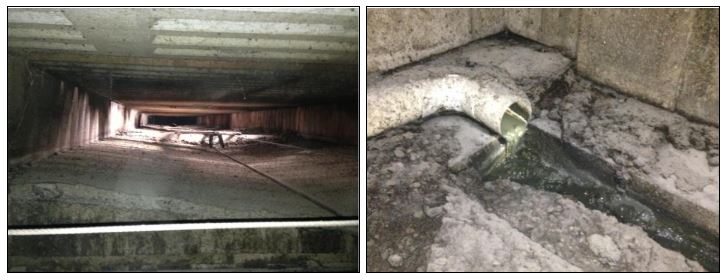
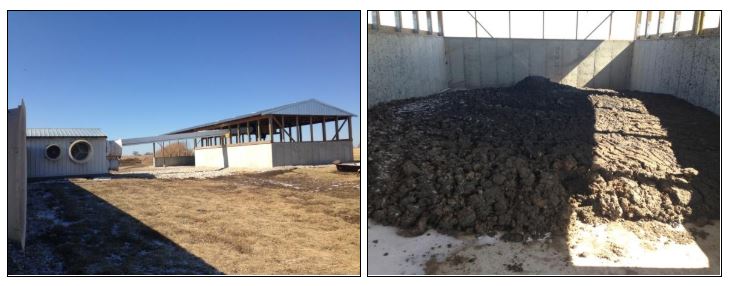
A 1200-hd solid-liquid separation finishing barn was built in Missouri for improved manure management and air quality. The facility has a wide V-shaped gutter below slatted flooring (Figure 1), which continuously drains away liquids. A scraper is used to collect the solids, which are then managed separately. Field sampling and research were conducted to evaluate the performance of the solid-liquid separation finishing barn in improving manure nutrient management, potential nutrient/water recycling based on filtration, and barn construction and operating costs.
What did we do?
The barn (built in 2010) was closely monitored for manure production and nutrient content, and operating costs. Laboratory-scale pretreatments and filtrations were conducted to evaluate the practicality of nutrient/water recycling from the separated liquid manure.
What we have learned?
The daily liquid manure production averaged 885 gallons and daily solid manure production averaged 299 gallons (about ¼ of the total manure volume). The separation system removed 61.7%, 41.7%, 74.8%, and 46.2% of the total manure nitrogen, ammonium, phosphorous, and potassium, respectively, with the collected solids. The filtration results indicate that the microfiltration and reverse osmosis were time and energy intensive, which was probably constrained by the relatively small-scale unit (inefficient compared with larger units), small filter surface area, and high concentration of dissolved nutrients.
The construction cost of the solid-liquid separation barn with solid manure storage was $323,000 ($269/pig-space, in 2010), 17% higher compared to the traditional deep-pit barn ($175 to $230/pig-space). It is likely that the solid-liquid separation barn will become less expensive when more barns of similar design are built, and the conveyor system can be improved and simplified for less maintenance and lower costs. Additional electricity cost was $331 per year for daily operation of the scraper and conveyor systems, and pumping the separated liquid manure fraction. The additional maintenance cost of the scraper system averaged $1,673/year. A net gain of $3,975/year was observed when considering the value of the separated manures, cost of land application, and annual maintenance cost.
A payback period of 15.1 years on the additional investment was estimated, when compared with the popular deep-pit operation. However, the payback period can be reduced by many factors, including improved conveyor system and growing popularity of the barn design in an area. When the distance to transport the slurry manure was increased from 5 miles to 7.5 and 10 miles, the payback periods became 12.7 and 11.3 years, respectively. The solid-liquid separation barn was shown to have better air quality when compared with deep-pit barns based on monthly measurements of ammonia and hydrogen sulfide concentrations.
Impacts/Implications of the Research.
This study monitored the manure production of a commercial finishing barn utilizing a solid-liquid separation system. Overall, we can conclude that the final results obtained from monitoring the total manure production rate, air quality exiting the barn fans, and the pig growth rates made sense relative to other comparative sources. The overall results indicate that the barn design can attain some valuable benefits from separating the solid and liquid streams. About a quarter of the manure volume was collected and managed as nutrient-dense solid manure (defined as ‘stackable’). The solid manure held 80% of the total solids and nearly 75% of the phosphorous.
Take Home Message
There are alternative barn designs and manure management systems (relative to lagoon and deep-pit operations) that should be considered when planning for a new operation or expansion. Considerations should include the need to better manage manure nutrients and improve air quality for human and animal occupants.
Future plans
Further consideration of the manure management, including work load and major- and micro-nutrients need to be furthered analyzed. Future research may look into application of a larger-scale crossflow system to see if nutrient removal and flow rates can be improved significantly. Future research may focus on improving manure filtrate flow, and determining the cost of installation and upkeep for a filtration unit that can operate at the level of a farm operation. Extrapolating the costs off of bench-scale model does not seem remotely indicative of the true cost, due to improved efficiency and power of larger unit.
Authors
Lim, Teng (Associate Professor and Extension Agricultural Engineer, Agricultural Systems Management, University of Missouri, limt@missouri.edu)
Brown, Joshua (University of Missouri); Zulovich, Joseph (University of Missouri); and Massey, Ray (University of Missouri).
Funding for this research project was provided by the National Pork Checkoff and University of Missouri Extension.
Figure 1. The V-shape pit with automated manure scraper and trough at center (Left), and gravity draining of liquid manure from the trough to the sump pit (Right).Figure 2. The storage shed for solid manure to the north of the modified scraper barn (Left), and stored solid manure (Right).
The authors are solely responsible for the content of these proceedings. The technical information does not necessarily reflect the official position of the sponsoring agencies or institutions represented by planning committee members, and inclusion and distribution herein does not constitute an endorsement of views expressed by the same. Printed materials included herein are not refereed publications. Citations should appear as follows. EXAMPLE: Authors. 2019. Title of presentation. Waste to Worth. Minneapolis, MN. April 22-26, 2019. URL of this page. Accessed on: today’s date.
There are known benefits and challenges to finishing beef cattle under roof. The accumulated manure is typically stored in either a bedded pack (mixture of bedding and manure) or in a deep pit below a slatted floor. Previous research measured particulate matter, ammonia and other gases in bedded pack barn systems. Deep pit manure storages are expected to have different aerial nutrient losses and manure value compared to solid manure storage and handling. Few studies have looked at concentrations at animal level or aerial/temperature distributions in the animal zone. There is little to no documentation of the air quality impacts of long-term deep pit manure storage in naturally ventilated finishing cattle barns. The objective of this work is to describe the seasonal and spatial variations in aerial ammonia concentrations in deep pit beef cattle barns.
What Did We Do?
We measured ammonia concentrations among four pens in three beef cattle barns oriented east and west with deep pit manure storage during summer and fall conditions in Minnesota. We measured the concentration below the slatted floor (above the manure surface), 4-6 inches above the floor (floor level) and 4 ft above the floor (nose level). While collecting samples from within a pen, we also collected samples from the north and south wall openings surrounding the pen. We collected air and surface temperatures, air speed at cow level, and surface manure samples to supplement the concentration data. We collected measurements three times between 09:00 and 17:00 on sampling days. The cattle (if present) remained in the pen during measurement collection.
All farms had 12 ft deep pits below slatted floors, and pen stocking densities of 22 ft2 per head at capacity. Barn F finished beef cattle breeds under a monoslope roof, in four pens, with feed alleys on north and south side of pens. Two pens shared a common deep pit, and the farm pumped manure from the deep pits 1 week prior to the fall sampling period. Two pens were empty and the other two pens partially filled with cattle during the fall sampling period. Barn H finished dairy steers under a gable roof in a double-wide barn, in twelve pens over a deep pit and two pens with bedded packs, with a feed alley down the center of the barn. Four (east end) and eight (west end) pens shared common deep pits; the bedded pack pens were in the middle of the barn. The farm moved approximately 1 foot of manure from the east end pit to the west end pit one week prior to fall sampling period. Barn R finished dairy steers under a gable roof with four pens and a feed alley on the north side of the pens. All pens shared a common deep pit. Two pens were empty of cattle during the summer and fall sampling periods.
What Have We Learned?
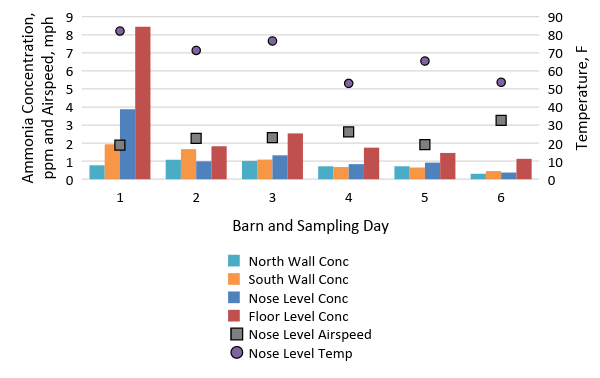
The ammonia concentration levels differed based on the location in the pen area (Figures 1 and 2). As expected, the ammonia concentrations in the pit headspace above the manure surface was the greatest, and at times more than 10x the concentration at floor and nose level. The higher concentration levels measured at Barn F coincided with higher manure nitrogen levels (Total N and Ammonium-N) (Figure 2). Based on July and September measurements, higher ammonia concentration levels also coincided with higher ambient temperatures (Figure 1). The presence and size of cattle in the pens we measured did not strongly influence ammonia concentrations at any measurement height within a barn on sampling days.
Ammonia concentration is variable between barns, and within barns. However, at animal and worker level, average concentrations for the sampling periods were less than 10 ppm during the summer and fall periods. Higher gas levels can develop in the confined space below the slatted floor.
Future Plans
The air exchange between the deep pit headspace and room volume relates these two areas, but is challenging to measure. We are looking at indirect air exchange estimations using ammonia and other gas concentration measurements collected to quantify the amount of air movement through the slatted floor related to environmental conditions. Additional gas and environmental data collected will enhance our understanding of deep pit beef cattle barn environments.
Authors
Erin Cortus, Assistant Professor and Extension Engineer, University of Minnesota
Brian Hetchler, Research Technician, University of Minnesota; Mindy Spiehs, Research Scientist, USDA-ARS; Warren Rusche, Extension Associate, South Dakota State University
Additional Information
USDA is an equal opportunity provider and employer
Acknowledgements
The research was supported through USDA NIFA Award No. 2015-67020-23453. We appreciate the producers’ cooperation for on-farm data collection. Thank you to S. Niraula and C. Modderman for assisting with measurements.
Figure 1. Average ammonia concentration levels in the animal and worker zone for three deep pit beef cattle barns during spring and fall sampling days, and the corresponding airspeed and temperature at cow nose level.Figure 2. Average ammonia concentration levels at nose and manure surface levels for three deep pit beef cattle barns during spring and fall sampling days, and the corresponding surface* manure characteristics. (* Barn F 14-Sep-18 manure sample was an agitated sample collected during manure removal).
The authors are solely responsible for the content of these proceedings. The technical information does not necessarily reflect the official position of the sponsoring agencies or institutions represented by planning committee members, and inclusion and distribution herein does not constitute an endorsement of views expressed by the same. Printed materials included herein are not refereed publications. Citations should appear as follows. EXAMPLE: Authors. 2019. Title of presentation. Waste to Worth. Minneapolis, MN. April 22-26, 2019. URL of this page. Accessed on: today’s date.
When manure is used as fertilizer on crop land, it has been shown to improve soil health and increase crop yields compared to commercial fertilizer. However, the nutrients in manure can be quite variable. Little is known about the potential emissions of ammonia and greenhouse gases (carbon dioxide, methane, and nitrous oxide) when manure is used as a nitrogen fertilizer. These emissions can lead to nutrient losses and environmental degradation. There is limited information on the influence of land application of solid beef manure on overall gaseous emissions. The ongoing integration of beef cattle manure and crop production, together with the impacts of management decisions needs to be understood to be sustainable at multiple levels. Furthermore, gaseous emissions and the mitigation from land-applied manure needs to be comparatively assessed with commercial fertilizer to fully understand management modifications on crop production. The purposes of this study were (i) to estimate daily and seasonal emission/uptake rates of CO2, CH4, N2O, and NH3 and soil inorganic N levels under different N sources in corn cropping system; (ii) to identify important soil and weather control variables for gaseous emissions; and (iii) to assess the effects of different N management strategies (manure vs. urea) on corn yield and grain quality.
What did we do?
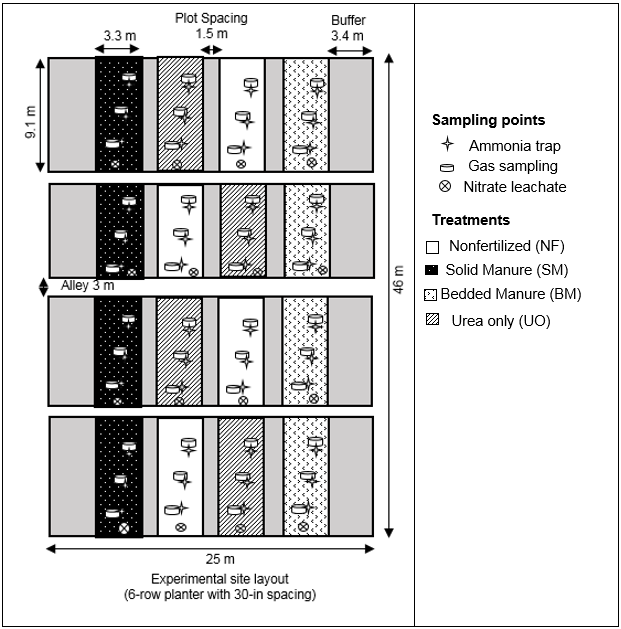
A 2-yr field experiment was conducted during the 2016 and 2017 growing seasons at the North Dakota State University (NDSU) research farm in Fargo, ND. The soil was poorly drained Fargo-Ryan silty clay. The experimental design was randomized with four replications. The treatments used were: (i) no fertilizer (NF) control (ii) solid beef cattle manure (SM) applied at 34 and 20.2 Mg ha−1 in the preceding fall of Year 1 (15 Oct. 2015) and Year 2 (19 Oct. 2016), respectively; (iii) solid beef cattle manure with wheat straw bedding (BM) applied at 67.3 and 43 Mg ha−1 in the preceding fall of Year 1 and Year 2, respectively; and (iv) urea only (UO) (46–0-0) applied at 220 kg ha−1 in May of Year 1 (4 May 2016) and Year 2 (9 May 2017). In addition, 117 kg P ha−1 (Year 1) and 88 kg P ha−1 (Year 2) were applied to UO plots to meet the corn P demand. Phosphorus was supplied with triple superphosphate (0–45–0). For measuring N2O, CO2, and CH4 fluxes from the soil surface, headspace gas samples were collected using PVC static chambers. Ammonia volatilization losses from each plot were measured using a semi-static open chamber (trap). Emissions of GHGs and NH3 were calculated for (i) daily mean soil to atmosphere fluxes for Year 1 and Year 2 and (ii) cumulative growing season emission for Year 1 (May 2016–September 2016) and Year 2 (May 2017–September 2017).
Figure: Experimental plots set up for measuring greenhouse gas fluxes using PVC static chambers from the soil surface in Fargo, North Dakota. (Photo credit: Suresh Niraula)
What have we learned?
Manure applied to soil reduced cumulative nitrous oxide by 23% in SM and 31% in BM compared with the UO soil. Cumulative CO2 emission was 42% lower in UO than in SM or BM. Cumulative methane emission ranged from −0.04 (NF) to 0.21 (BM) kg CH4–C ha−1, with the highest emission from BM. Cumulative NH3 emission was 11% lower from manure treatments than UO. The results highlight the challenges that come with variability in manure, soil, and weather as well as the potential for meeting crop N demand while reducing greenhouse gas emissions when using manure as an N source. With contrasting weather patterns during the Year 1 and Year 2 growing seasons, this study emphasized the importance of long-term study to fully understand the emission trend because an individual year may not fully account for variabilities in soil N indices. In addition, further research on biogeochemical processes in soil of fall-applied manure compared with spring-applied urea is needed to overcome the limitation of this study.
Future plans
We recommend the use of an automated chamber from gaseous emissions to continuously build on existing guidelines for the use of static chambers. More research is needed in several other types of agricultural management systems to investigate the loss of soil and manure N.
Authors
Dr. Suresh Niraula, Postdoctoral Associate, Department of Soil, Water, and Climate – University of Minnesota (Corresponding author email: sniraula@umn.edu)
Dr. Shafiqur Rahman, Associate Professor Agricultural and Biosystems Engineering (North Dakota State University)
Dr. Amitava Chatterjee, Associate Professor Soil Science (North Dakota State University)
Acknowledgements
This material is based on work that is supported by the National Institute of Food and Agriculture, USDA (grant 2015-67020-23453). Any opinions, findings, conclusions, or recommendations expressed in this publication are those of the author(s) and do not necessarily reflect the view of the USDA.
Additional information
Jantalia, C., A. Halvorson, R. Follett, B. Alves, J. Polidoro, and S. Urquiaga. 2012. Nitrogen source effects on ammonia volatilization as measured with semi-static chambers. Agron. J. 104(6): 1595–1603. doi:10.2134/agronj2012.0210.
Parkin, T.B., and R.T. Venterea. 2010. Chapter 3. Chamber-Based Trace Gas Flux Measurements. In Follett, R.F. (ed.), Sampling Protocols. p. 3–39.
The authors are solely responsible for the content of these proceedings. The technical information does not necessarily reflect the official position of the sponsoring agencies or institutions represented by planning committee members, and inclusion and distribution herein does not constitute an endorsement of views expressed by the same. Printed materials included herein are not refereed publications. Citations should appear as follows. EXAMPLE: Authors. 2019. Title of presentation. Waste to Worth. Minneapolis, MN. April 22-26, 2019. URL of this page. Accessed on: today’s date.
For the equine industry, concerns about ammonia (NH3) levels in the barn environment are multifaceted and include issues of animal welfare, animal and human health, and environmental impacts. In Florida, many performance horses are housed in stalls at least part of the day as are horses with allergic skin conditions and/or pasture associated asthma. The warm and humid climate produces favorable conditions for ammonia generation and fly emergence. Previous research has demonstrated the effectiveness of sodium bisulfate in lowering floor substrate and bedding pH, reducing ammonia concentrations, and fly populations in livestock facilities (poultry houses and dairies)1,2. However, research on application of sodium bisulfate in equine facilities is limited to two studies conducted in the northeastern United States3.
What did we do?
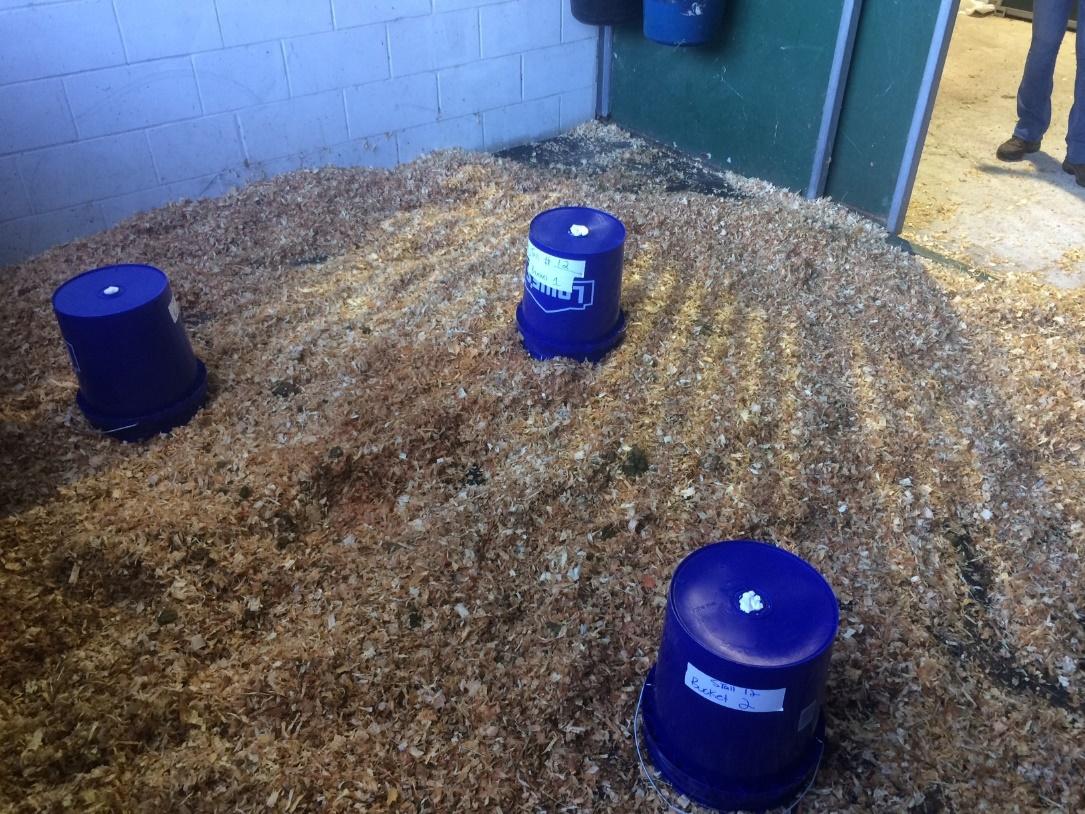
The objective of this pilot study was to determine the effects of sodium bisulfate (PLT®) application in a north central Florida equine facility on bedding pH, NH3 concentration, and fly counts. Four 12 x 12 ft stalls in a 20-stall barn were used, 2 control (CON) and 2 treated with sodium bisulfate (SB), individually housing mature geldings. Data were collected during the third week of August, 2018. Stalls were initially bedded with 67 lbs of wood shavings. Amount of product initially added to SB stalls was 14 lbs (manufacturer recommended application rate of 100 lbs/1,000 sqft) followed by 7 lbs daily for 4 days. Horses were housed in stalls overnight (12 hours/day) and stalls cleaned (manure and wet bedding removed) once/day. An aspirating pump and gas detection tubes (Kitagawa, Japan) were used to determine NH3 concentration before stall cleaning (AM measurement), to allow for manure and urine accumulation, and 10 hours post stall cleaning (PM measurement). Three 5-gallon buckets were placed over the stall surface in a triangular pattern to standardize airflow and the location of each bucket was marked to allow replication across AM and PM readings. OnSet HOBO loggers were used to monitor temperature and relative humidity. Fly traps containing no fly attractant, were suspended 8 feet above the floor in the center of each stall to determine fly counts.
What Have We Learned?
Background (cleaned stalls without bedding material; rubber mats only) and baseline (bedded stalls) NH3 concentrations were < 5 ppm and not different between SB and CON stalls. NH3 concentrations had a cumulative effect and were greater on day 3 (69.8 ppm) compared to day 1 (< 5 ppm) and day 2 (16.7 ppm). NH3concentrations were greater in CON stalls (28.6 ppm) compared to SB stalls (< 5 ppm). Bedding pH was lower in SB stalls (1.82) compared to CON stalls (6.16) demonstrating an overall treatment effect, but pH of the bedding increased over the duration of the study. The number of flies caught in traps did not differ between treatments, although fly counts did increase over time. Reductions in pH and NH3 observed in the present study were comparable to previous studies. We expected reductions in flies in stalls treated with SB, however, fly counts were extremely low overall and a different approach for quantifying fly numbers may be necessary.
Future Plans
Future research directions include testing different application rates for equine stalls and determining efficacy of SB with different bedding types. Additional studies to investigate the effectiveness of SB in mitigating NH3emissions in equine facilities4 and reducing fly populations and bacteria in stalls should be pursued. There is also potential to assess the benefits of SB application near manure storage areas on equine operations.
Corresponding author, title, affiliation and email
Carissa Wickens, Extension Equine Specialist, University of Florida. cwickens@ufl.edu
Other authors: Jill Bobel, Biological Scientist, University of Florida; Danielle Collins, Graduate Student, University of Florida; Alex Basso, Graduate Student, University of Florida
Additional information:
1Johnson, T. M. and B. Murphy. 2008. Use of sodium bisulfate to reduce ammonia emissions from poultry and livestock housing. Proceedings of the Mitigating Air Emissions from Animal Feeding Operations Conference, Des Moines, IA. Iowa State University, pp. 74-78.
2Sun, H., Y. Pan, Y. Zhao, W. A. Jackson, L. M. Nuckles, I. L. Malkina, V. E. Arteaga and F. M. Mitloehner. 2008. Effects of sodium bisulfate on alcohol, amine, and ammonia emissions from dairy slurry. J. Environmental Quality 37:608-614.
3Sweeney, C.R., S.M. McDonnell, G.E. Russell, and M. Terzich. 1997. Effect of sodium bisulfate on ammonia concentration, fly population, and manure pH in a horse barn. Am. J. Vet. Res. 57(12):1795-1798.
Additional information regarding this project is available by contacting Carissa Wickens (cwickens@ufl.edu), or Jill Bobel (jbrides2@ufl.edu).
Acknowledgements:
The authors wish to thank Dr. Josh Payne, Technical Services Manager, Jones-Hamilton Company, Agricultural Division, and Dr. Hong Li, Associate Professor, Department of Animal and Food Sciences, University of Delaware for providing technical expertise and support for this project. We would also like to thank Carol Vasco, Tayler Hansen, Agustin Francisco, and Claudia Lopez for their assistance with data collection.
Figure 1: Placement of buckets over the stall floor for measurement of NH3 concentrations. The ammonia pump with attached gas detection tube was placed through a small hole drilled into the top of each bucket.Figure 2: Average daytime and nighttime temperatures and percent relative humidity during the study period.
The authors are solely responsible for the content of these proceedings. The technical information does not necessarily reflect the official position of the sponsoring agencies or institutions represented by planning committee members, and inclusion and distribution herein does not constitute an endorsement of views expressed by the same. Printed materials included herein are not refereed publications. Citations should appear as follows. EXAMPLE: Authors. 2019. Title of presentation. Waste to Worth. Minneapolis, MN. April 22-26, 2019. URL of this page. Accessed on: today’s date.
USDA-NRCS has nearly fifteen years of Conservation Innovation Grant project experience, and several of these projects have provided a means to learn more about various techniques for addressing air emissions from animal agriculture. The overall goal of the Conservation Innovation Grant program is to provide an avenue for the on-farm demonstration of tools and technologies that have shown promise in a research setting and to further determine the parameters that may enable these promising tools and technologies to be implemented on-farm through USDA-NRCS conservation programs.
What Did We Do?
Several queries for both National Competition and State Competition projects in the USDA-NRCS Conservation Innovation Grant Project Search Tool (https://www.nrcs.usda.gov/wps/portal/nrcs/ciglanding/national/programs/financial/cig/cigsearch/) were conducted using the General Text Search feature for keywords such as “air”, “ammonia”, “animal”, “beef”, “carbon”, “dairy”, “digester”, “digestion”, “livestock”, “manure”, “poultry”, and “swine” in order to try and capture all of the animal air quality-related Conservation Innovation Grant projects. This approach obviously identified many projects that might be related to one or more of the search words, but were not directly related to animal air quality. Further manual review of the identified projects was conducted to identify those that specifically had some association with animal air quality.
What Have We Learned?
Out of nearly 1,300 total Conservation Innovation Grant projects, just under 50 were identified as having a direct relevance to animal air quality in some way. These projects represent a USDA-NRCS investment of just under $20 million. Because each project required at least a 50% match by the grantee, the USDA-NRCS Conservation Innovation Grant program has represented a total investment of approximately $40 million over the past 15 years in demonstrating tools and technologies for addressing air emissions from animal agriculture.
The technologies that have been attempted to be demonstrated in the animal air quality-related Conservation Innovation Grant projects have included various feed management strategies, approaches for reducing emissions from animal pens and housing, and an approach to mortality management. However, the vast majority of animal air quality-related Conservation Innovation Grant projects have focused on air emissions from manure management – primarily looking at anaerobic digestion technologies – and land application of manure. Two projects also developed and enhanced an online tool for assessing livestock and poultry operations for opportunities to address various air emissions.
Future Plans
The 2018 Farm Bill re-authorized the Conservation Innovation Grant Program through 2023 at $25 million per year and allows for on-farm conservation innovation trials. It is anticipated that additional air quality projects will be funded under the current Farm Bill authorization.
Authors
Greg Zwicke, Air Quality Engineer, USDA-NRCS National Air Quality and Atmospheric Change Technology Development Team
greg.zwicke@ftc.usda.gov
Additional Information
More information about the USDA-NRCS Conservation Innovation Grants program is available on the Conservation Innovation Grants website (https://www.nrcs.usda.gov/wps/portal/nrcs/main/national/programs/financial/cig/), including application information and materials, resources for grantees, success stories, and a project search tool.
The authors are solely responsible for the content of these proceedings. The technical information does not necessarily reflect the official position of the sponsoring agencies or institutions represented by planning committee members, and inclusion and distribution herein does not constitute an endorsement of views expressed by the same. Printed materials included herein are not refereed publications. Citations should appear as follows. EXAMPLE: Authors. 2019. Title of presentation. Waste to Worth. Minneapolis, MN. April 22-26, 2019. URL of this page. Accessed on: today’s date.
Manage Cookie Consent
To provide the best experiences, we use technologies like cookies to store and/or access device information. Consenting to these technologies will allow us to process data such as browsing behavior or unique IDs on this site. Not consenting or withdrawing consent, may adversely affect certain features and functions.
Functional
Always active
The technical storage or access is strictly necessary for the legitimate purpose of enabling the use of a specific service explicitly requested by the subscriber or user, or for the sole purpose of carrying out the transmission of a communication over an electronic communications network.
Preferences
The technical storage or access is necessary for the legitimate purpose of storing preferences that are not requested by the subscriber or user.
Statistics
The technical storage or access that is used exclusively for statistical purposes.The technical storage or access that is used exclusively for anonymous statistical purposes. Without a subpoena, voluntary compliance on the part of your Internet Service Provider, or additional records from a third party, information stored or retrieved for this purpose alone cannot usually be used to identify you.
Marketing
The technical storage or access is required to create user profiles to send advertising, or to track the user on a website or across several websites for similar marketing purposes.