Research Summary: Black Soldier Fly Prepupae – A Compelling Alternative to Fish Meal and Fish Oil

Research summaries are a brief description of current research being conducted throughout the country. If you would like to contribute information from your research, please post a comment with your contact information and we will get the form to you.

Printer friendly version of this summary.

Research Purpose

Dried black soldier fly (Hermetia illucens) prepupae contain 42% protein and 35% fat (Newton et al. 1977). Live prepupae are 44% dm and are easily dried for long term storage. As a component of a complete diet they have been found to support good growth of chicks (Hale 1973), swine (Newton 1977), rainbow trout (St-Hilaire et al. 2007)) and catfish (Newton et al. 2004). Peer reviewed studies show that prepupae meal can replace at least 25% of the fish meal in a diet with no reduction in gain or feed conversion ratio (FCR) in rainbow trout (St-Hilaire et al. 2007a) or channel catfish (Newton et al. 2004).

Separation of the prepupae fat and protein would allow for formulation of more balanced diets and produce a meal with over 60% protein. Removal of the chitin would further enhance the protein content and enhance digestibility as well as produce another valuable product. Blind taste tests with tilapia and channel catfish fed diets containing Hermetia larvae indicated no significant difference between those diets and commercial diets (Bondari & Sheppard. 1981).

Most experimental Hermetia prepupae production has been done with manure as a feedstock, but they have also been produced on grain based diets and other organic products such as waste food including meats and dairy products unacceptable for vermiculture. The addition of fish offal to manure has been shown to increase the omega-3 fatty acid content of prepupae to approximately 3% (St-Hilaire et al. 2007b).

Manure digestion has been extensively studied for its potential to reduce nutrient overloads near high density animal production. Hermetia larval digestion assimilates nearly 3/4 of the manure nutrients into Hermetia prepupal biomass, a high quality feedstuff. After larval digestion, the residual material can be used as a soil amendment or vermiculture media. The mature larvae form a prepupae which self-harvests. In addition, larval digestion of manure eliminates or reduces house fly production and noxious odors (Lorimor et al. 2001).

Food Safety and Bacteriological Considerations

Food safety and bacteriological considerations in using manure fed Hermetia prepupae are favorable. Hermetia larval activity significantly reduced E. coli 0157:H7 and Salmonella enterica in hen manure (Erickson et al. 2004). There is a substantial body of scientific literature on using various fly larvae (face fly, house fly, blow flies and the black soldier fly), reared in animal manure as animal feed.

Researchers in China, the USSR, the USA, Mexico, and Eastern Europe have fed these to poultry, swine, shrimp, several species of fish, turtles and frogs; with no reported health problems. Researchers in Chile have studied value recovery from swine manure producing house flies as a feedstuff. They reported finding anti-microbial factors in the house fly larvae. These natural antibiotics may reduce the chance of the feedstuff transmitting pathogens, and actually improve animal health, while reducing pathogen content in the digested manure that may be used to fertilize food crops.

Bacterial interactions of maggots in manure and in wound cleaning appear to be similar. The beneficial effect of maggots is very well studied and understood in medicine in the discipline of “maggot debridement therapy” (MDT). This life saving therapy is seeing more use with the increasing prevalence of drug resistant bacterial infections (Sherman and Wyle. 1996).

The sterile maggots used in this therapy are believed to enhance the healing of otherwise intractible wounds in several ways, the chief one being elimination of pyogenic bacteria. Kosta et al. (2001) reported progressively greater destruction of green fluorescent protein-producing E. coli as they progressed through the gut of sterile grown Lucilia sericata, a maggot commonly used in MDT. A similar antagonism seems to occur between Hermetia larvae (and other maggots) in manure.

Production Possibilities and Improvements to the System

In unrefined pilot-scale production systems with swine manure, 12-15% dry matter feed conversion rates (FCRdm) have been seen. In small laboratory bioassays, swine manure has been converted to prepupae at up to 24% FCRdm. Refining production systems may result in FCRdm of over 24%.

If Hermetia larvae digested all of the manure from the 40,000 feeder pigs (avg. wt = 155 lb) on a large swine farm and converted it into prepupae at a FCR of 16%, they would produce about 6,000 lb of dried prepupae each day. Extending this system to the approximately 67 million swine in the United States, about 5,000 tons of dried prepupae meal would be produced per day (1.8 million tons per year). At the same time manure nutrients that could cause environmental problems would be assimilated into a valuable feedstuff.

Hermetia culture as practiced to this point is admittedly crude and many improvements in efficiency can be made. The same is true for the raw insect product, the prepupae. The self-harvested prepupae can be separated into oil, protein meal and chitin to make much better use of these components. Prepupae meal production would probably cost less than fish meal production since Hermetia prepupae are 44% dry matter and fish are about 25% dry matter, predicting lower drying costs for Hermetia prepupae meal. Collection costs for Hermetia commercial scale operations are expected to be less than fish harvest by purse seining. It takes over one vessel-ton-week to harvest a metric ton of (25% dm) menhaden in the Gulf of Mexico (Gulf States Marine Fisheries Commission 2002 Menhaden Management Plan).

Environmental Problems Solved

Many environmental problems associated with manure storage and management will be solved by Hermetia prepupae production. In a typical field trial conducted in Georgia, Hermetia larval digestion of swine manure reduced nutrients as follows: N-71%, P-52%, K-52%, Al, B, Ca, Cd, Cr, Cu, Fe, Mg, Mn, Mo, Na, Ni, Pb, S., and Zn were reduced 38 to 93%.

In lab trials, noxious odors produced by decomposing manure were reduced or eliminated by Hermetia larval digestion. The gases in question were analyzed with chromatography associated with mass spectroscopy from headspace air in vials holding manure with and without larvae. The chemicals which were affected include the methylester of heptanoic acid, acetic acid, 2-furnaocarboxaldehyde, propanoic acid, butanoic acid, isovaleric acid, valeric acid, caproic acid and p-cresol. These were greatly reduced or eliminated by larval activity within 24 hours. Mature Hermetia prepupae self-harvest at 44% dm for the live product.

Producing prepupae meal will require much less energy (diesel) than capturing and drying 25% dm fish from the ocean. The enterprise of prepupae production from manure will give problematic manure a value, foster its better management and reduce the negative impact on the environment.

Aesthetic Considerations

There are some who will object to using manure fed insects as an aquaculture feedstuff even though all scientific evidence is positive. Those objecting on aesthetic principle should consider that organic vegetables (highly valued by many) are one trophic level removed from manure while fish fed on Hermetia prepupae are two tropic levels removed. Also consider that Hermetia larvae are known to reduce pathogens in manure and vegetables do not.

Summary

In relatively small scale trials, Hermetia illucens has been extensively studied for over 30 years as a potential feedstuff for fish and other food animals, showing success in almost all cases. For the sake of brevity, many very positive studies were omitted here. As outlined above, large quantities of this high quality feed could be produced and simultaneously solve other agricultural and environmental problems. A broadly supported research program into the production and utilization of Hermetia illucens prepupae as a fish meal substitute would have significant positive economic and environmental impact.

For More Information

Authors: G.L. Newton, D.C. Sheppard, and G.J. Burtle, University of Georgia

  • Bondari, K., and D. C. Sheppard. 1981. Soldier fly larvae as feed in commercial fish production. Aquaculture. 24:103-109.
  • Erickson, M. C., M. Islam, C. Sheppard, J. Liao, and M. P. Doyle. 2004. Reduction of Escherichia coli 0157:H7 and Salmonella enterica serovar Enteritidis in chicken manure by larvae of the black soldier fly. J. Food Protection. 67:685-690.
  • Hale, O. M. 1973. Dried Hermetia illucens larvae (Stratiomyidae) as a feed additive for poultry. J. Ga. Entomol. Soc. 8:16-20.
  • Lorimor, J., C. Fulhage, R. Zhang, T. Funk, R. Sheffield, D. C. Sheppard, G. L. Newton. 2006. Manure Management Strategies and Technologies. In: J. M. Rice, D. F. Caldwell, F. J. Humenik, eds. Animal and the Environment: National Center for Manure and Animal Waste Mangement White Ppaers. ASABE, St. Joseph, MI. P. 409-434.
  • Kosta, Y. M., J. Miller, M. Mumcuoglu, M. Friger, and M. Tarshis. 2001. Destruction of bacteria in the digestive tract of the maggot of Lurilia sericata (Diptera: Calliphoridae). J. Med. Entomol. 38:161-166.
  • Newton, G. L., C. V. Booram, R. W. Barker, and O. M. Hale. 1977. Dried Hermetia illucens larvae meal as a supplement for swine. J. Anim. Sci. 44:395-399.
  • Newton, L., C. Sheppard, W. Watson, G. Burtle, and R. Dove. 2004. Using the black soldier fly, Hermetia illucens, as a value-added tool for the management of swine manure. Univ. Of Georgia, College of Agric. & Environ. Sci., Dept. Of Anim. & Dairy Sci. Annual Report.
  • Sherman, R. A. And F. A. Wyle. 1996. Low-cost, low maintenance rearing of maggots in hospitals, clinics, and schools. Am. J. Trop. Med. Hyg. 54:38-41.
  • St-Hilaire, S., C. Sheppard, J. K. Tomberlin, S. Irving, L. Newton, M. A. McGuire, E. E. Mosley, R. W. Hardy and W. Sealey. 2007a. Fly prepupae as a feedstuff for rainbow trout, Oncorhynchus mykiss. J. World Aquaculture Soc. 38:59-67.
  • St-Hilaire, S., K. Cranfill, M. A. McGuire, E. E. Mosley, J. K. Tomberlin, L. Newton, W. Sealey, C. Sheppard, and S. Irvin. 2007b. Fish ofal recycling by the black soldier fly produces a foodstuff high in Omega-3 fatty acids. J. World Aquaculture Soc. 38:309-313.

This report was prepared for the 2008 annual meeting of the regional research committee, S-1032 “Animal Manure and Waste Utilization, Treatment and Nuisance Avoidance for a Sustainable Agriculture”. This report is not peer-reviewed and the author has sole responsibility for the content.

Solid-Liquid Manure Separation

Many, if not most, systems designed for manure treatment depend on reliable solid-liquid separation. What is solid-liquid separation for manure and when is it something to consider doing for your farm?

Defining Manure from a Solid-Liquid Separation Perspective

Manure can be thought of as a mixture of water, minerals, and organic components. Some of the minerals will be soluble and dissolve in the water, while the rest will tend to settle to the bottom or float to the top of the manure storage. The density of the organic components will determine whether they settle to the bottom of the storage unit, remain in suspension, or form a floating crust. The amount of water, source of manure, and manure handling system will determine the extent of these trends. More on solid-liquid separation’s role in manure storage….

The single most important factor affecting the tendency to separate is the amount of water in the manure. With low moisture (solid) manure, very little apparent separation takes place. As the moisture content increases the tendency for separation also increases. When characterizing manure’s physical characteristics it is often thought of as being a solid, semisolid, slurry, or liquid. From a practical perspective separation is limited to liquid, slurry, and sometimes semisolid manure.

When is it Desirable to Separate Solids and Liquids?

Whether the tendency for manure to separate into liquid and solid fractions is desirable depends on the objectives of the manure handing systems. In concrete pits and holding ponds it is usually undesirable because the manure often needs to be remixed to remove settled solids and obtain uniform material for land application.

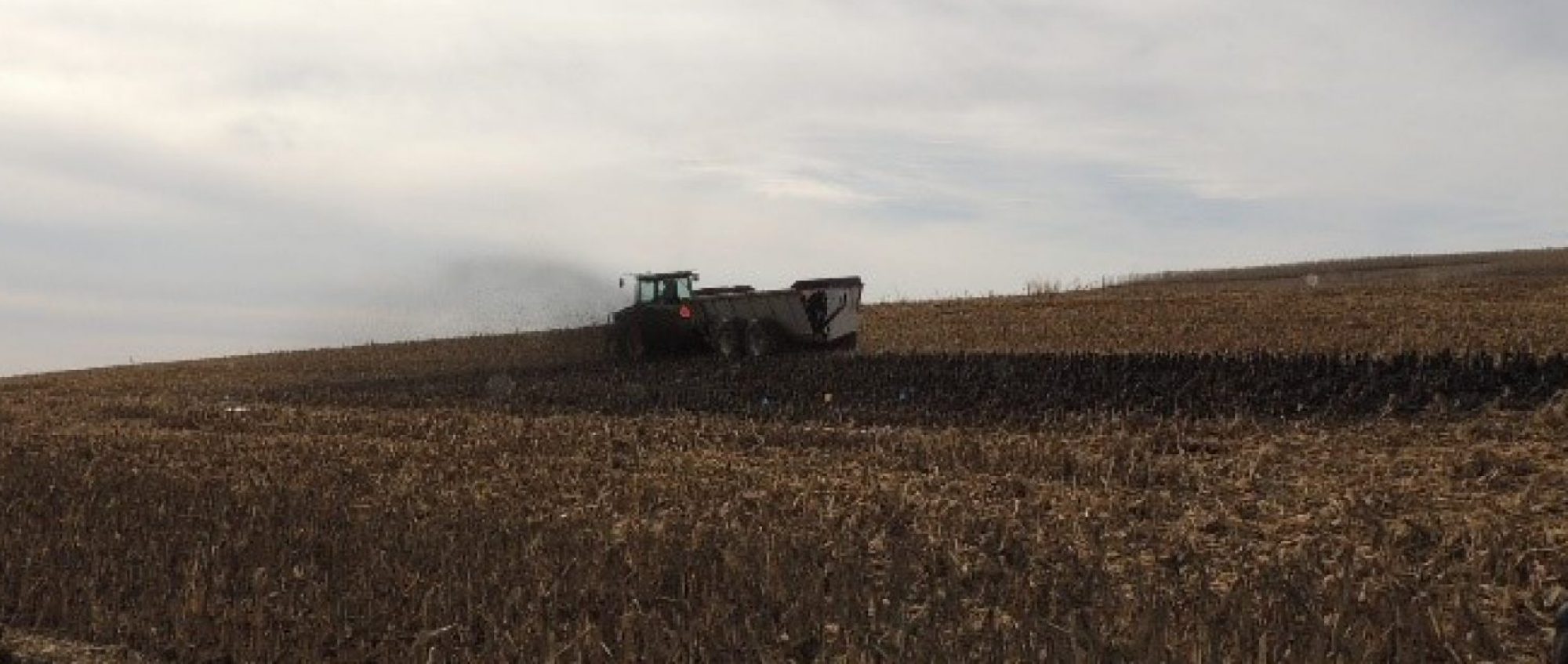
In other situations this tendency for separation is desirable. If some of the land application sites are significant distances from the manure source, being able to concentrate manure solids reduces the volume and expense of transportation. In some areas of the nation phosphorus application rates are an environmental concern. Separating the phosphorus with the solids while leaving most of the nitrogen with the liquids may be an option. After separation, the liquids could be land applied near the manure source as a nitrogen fertilizer. The solids could be transported and applied to fields in need of phosphorus fertilizer.

Source: CC 2.5 karl vandevender; Livestock and Poultry Environmental Stewardship Curriculum Lesson 20.

Benefits of Separation and Uses for the Components

Even if transportation distance and phosphorus application rates are not a concern using solids separation prior to storage reduces the solids accumulation in holding ponds and lagoons. This increases the time between sludge removal operations and maximizes the liquid storage capacity of the holding pond or lagoon.

Another potential benefit is the reduction in odors. Under the anaerobic conditions found in holding ponds and lagoons microorganisms produce odorous compounds. Reducing the amount of available manure with solids separation tends to reduce the production of objectionable odors.

In animal confinement systems where water from holding ponds and lagoons are used to flush manure from the barns, solids separation can result in a better quality recycle flush water.

The separated manure solids have a reduced moisture content and increased nutrient concentration both of which increase its value as a fertilizer source. In addition, depending on the resulting moisture content it becomes a potential compost ingredient. Where the resulting compost may be used as bedding or potentially marketed off farm.

Manure separation is also likely to play a critical role in preparing manure for conversion in into energy. Different energy conversion technologies will require the manure to have different physical and chemical properties.

Solid-Liquid Separation Options

There are a lot of different options for solids separation. Some, like settling basins, use gravity and time to allow manure solids to settle out of solution. These systems are a non mechanical low tech approach with the resulting solids typically being a wet slurry. In contrast the mechanical approaches such as inclined or vibrating screens, belt or screw presses, centrifuges, and many others result in separated solids that while still having significant moisture can be handled and stored as a solid material.

Often the separation process can be enhanced through the use of chemicals. Some chemicals work by converting soluble mineral compounds into insoluble compounds. Other chemicals work by causing smaller particles to clump together into larger particles. Depending on the situation these chemicals may be used by themselves or combined.

Recommended Reading About Solid-Liquid Separation

Author: Karl VanDevender, University of Arkansas

Manure Treatment Technologies

Options for Manure Treatment

Treatment Technologies

Webcast Presentations On Manure Treatment Technology

Research Summaries About Manure Treatment

Educational, Technical, and Financial Assistance Resources

Introduction to Vegetative Treatment Systems

Vegetative treatment systems (VTS) have been explored as a manure treatment option for small farms as well as large Confined Animal Feeding Operations (CAFOs).

What Is a Vegetative Treatment System?

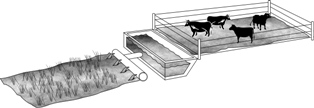
Runoff from livestock barnyards and feedlots can kill fish and cause algae blooms in lakes and streams. A Vegetative Treatment System (VTS) can be an economical alternative to retention (holding) ponds for controlling runoff from a livestock waste facility.

A Vegetative Treatment System (VTS) refers to a combination of treatment steps for managing runoff. It treats runoff by settling, infiltration, and nutrient use. Individual components of a VTS include, a settling structure, an outlet structure, a distribution system, and a Vegetative Treatment Area, when put together we consider it a Vegetative Treatment System.

slope

Vegetative Treatment Area

A Vegetative Treatment Area (VTA) is an area of perennial vegetation, such as a grass or a forage. The VTA is used to treat runoff from a feedlot or barnyard. It treats runoff by settling, infiltration, and nutrient use. A VTA is commonly confused with vegetative buffer (or filter) strips. A buffer strip is a narrow strip of vegetation (usually 30-60 feet wide), between cropland and a stream or other surface water. Runoff passes through buffers with some “filtering” of pollutants, but no attempt is made to control solids or flow. A VTS, however, collects runoff from a barnyard or feedlot, separates the solids from the liquids, and uniformly distributes the liquid over the vegetated area. Little or no runoff should leave a VTA.

The first step in a VTS is to collect runoff from a open lot or barnyard area in a sediment settling structure, usually a basin. Such basins are very effective for removing most solids. The runoff then flows into a VTA (Vegetative Treatment Area) whose soil treats and stores the runoff. Once the runoff is in the soil, natural processes allow plants to use the nutrients.

The general idea behind this technology is that the plants will take up the nutrients contained in the runoff and that natural factors will eliminate undesirable components such as pathogens. There are many different types of VTA’s, level, infiltration basins, sloped, sprinkler, dual and multiple systems, etc. To learn more about the different combinations, and when they are appropriate, see VTS System Types and Configurations.

How is a Vegetative Treatment Area Different From a Buffer Strip?

The critical aspect of the VTA is that is has been designed and sized to treat the runoff nutrients generated by the lot–letting runoff flow uncontrolled across the nearest pasture or crop field is not likely to achieve the desired treatment. The runoff needs to be released in a controlled manner. This control is what differentiates a VTA from grass filter/buffer strips. Controls also need to be put in place to eliminate any discharge from the VTA.

Designing a Vegetated Treatment Area

VTA’s must be graded to achieve uniform distribution. To achieve this, the existing landscape will need to be altered (leveled, graded, terraced, etc). If the site requires a great deal of work to create a functional VTA, the costs will obviously be higher than a site that requires only minimal alteration. Essentially, the VTA replaces the holding pond for storing (and utilizing) the nutrients and the liquid volume. In a holding pond this is impounded in a pond, in the VTA, the storage is a fraction of the available water holding capacity in the root zone.

Nitrogen Removal

The percent of the nitrogen removed from the runoff is directly related to the size of the VTA in relation to the size of the feedlot or barnyard as well as the distance that the runoff flows across the VTA. Increases in size of the VTA and flow distance remove more nitrogen. Up to 80% removal can be expected, depending on the design used. Maintaining the system so that the flow is uniform across the VTA, rather than becoming channelized, is also important to the performance of the system. Regular harvesting of the vegetation from the VTA preserves its ability to remove nutrients. Grazing a VTA is not acceptable, as this does not remove nutrients from the system. For more information on technical and design information on VTS, see some outside links to VTS Resources and some frequently asked questions about large CAFO VTS’s.

Phosphorus Removal

Phosphorus removal is directly related to solids removal. One literature review that summarized a large number of research projects, found an average of 70% phosphorus removal. Use of a solids settling basin before the runoff enters the VTA will result in a much lower amount of phosphorus that needs to be treated by the VTA. The settling basin does need to be cleaned out on a regular basis and the material land applied appropriately or utilized in another manner. If solids are not settled out prior to entering the VTA, the maintenance of the VTA itself is increased and the solids have potential to damage the vegetation.

The most common application for VTAs, in the past, have been for smaller, unregulated feedlots. Interest in their use for larger, permitted operations is growing and there is a body of evidence to suggest that a properly engineered and maintained VTS can perform as well as conventional treatments. Their use, as with any other technology is likely to be an individual decision dependent on site specific factors, interests and skills of the operator, and acceptance by regulators.

Need more information?

Read these factsheets, “Got Barnyard Runoff?” and “Need a Vegetative Treatement System for your Lot?”.

In depth planning and design information is available at “Vegetative Treatment Systems Guidance Document”

There are also several Webcasts and Virtual Tours of VTS systems available if you would like to see more in-depth discussions or take a tour of some actual systems.

Page developed and maintained by Chris Henry and Rick Koelsch, University of Nebraska Extension
Page reviewed by: Mark Rice, North Carolina State University

Composting Livestock or Poultry Manure

Compost not only describes the completed degradation of a mixture of materials; it also denotes the process that materials undergo before becoming compost. A workable definition for compost is that it is an organic soil conditioner that has been stabilized to a humus like product, is free of viable human and plant pathogens and plant seeds, does not attract insects or vectors, can be handled and stored without nuisance, and is beneficial to the growth of plants. A more useful explanation of the process of composting is the controlled biological process of the decomposition of organic materials into a humus rich product that can be used beneficially as a soil amendment or in erosion control techniques.

Compost is produced through the activity of aerobic microorganisms that require oxygen, moisture and food. These microorganisms generate heat, water vapor and carbon dioxide as they transform raw materials into a compost product. Effective composting begins with a basic knowledge of the material or feedstock properties, the general principles of decomposition and a method for controlling the process.

What Factors Influence Composting?

There are a few feedstock characteristics that are most influential in the composting process. These include carbon to nitrogen ratio (C:N ratio), moisture content, and the size and distribution of the feedstock particles. Raw materials blended to provide a C:N ratio between 25:1 and 30:1 is ideal for active composting, although initial C:N ratios from 20:1 to 40:1 consistently give good composting results.

High quality mature compost

When ratios fall outside this range, odor problems and longer composting times can be the result. Too little moisture, as well as too much moisture, can lead to poor composting conditions and decreased microbial activity. A moisture content ranging between 40-60% usually provides the water levels needed by microbes without saturating the required air pore space within the compost matrix . With regard to particle size distribution, a size of 90 percent cumulative passing through 2 to 3 inch openings usually is sufficient to provide a composting substrate with adequate surface area for microbial degradation and with adequate porosity for the storage of oxygen.

Methods of Manure Composting

Harnessing the natural process of decomposition to best serve a purpose within a set of specific parameters is the basis for composting systems. There are four general composting groups or methods commonly used by the composting industry:

Additional Information About Manure Composting

Author: Jason Governo, University of Georgia

Aerobic Manure Treatment

The term “aerobic treatment” refers to biological manure treatment processes that occur in the presence of oxygen. In these processes, aerobic microorganisms oxidize bio-available organic and nitrogenous compounds. Removal of these oxygen demanding compounds provides a means to reduce odor emission and to reduce ammonia emissions. Aerobic treatment has not been used much in treatment of liquid or slurry manure primarily due to the costs associated with operating the motors, compressors or fans required to supply enough oxygen to support aerobic bacteria.

The amount of aeration needed (in increasing order) depends on whether it is desired to just reduce odor, or completely remove the oxygen demand of the organic matter, or to supply enough oxygen for oxidation of ammonium to nitrate (nitrification).

Advantages of Aerobic Manure Treatment

Advantages of aeration include the potential reduction of emissions of odor, methane (a greenhouse gas), and ammonia. Nitrification of ammonia to nitrate also has the advantage of conversion to a nitrogen form that is readily crop available, although it is also more prone to leaching. The nitrate can also be biologically converted to nitrogen gas in the presence of organic compounds, resulting in nitrogen removal from the liquid or slurry.

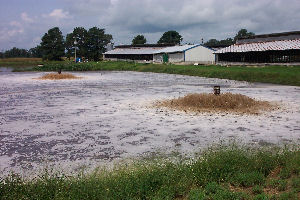
Surface aerators and mixers used in Sequencing Batch Reactor treatment of flushed pig manure.

Disadvantages of Aerobic Manure Treatment

Disadvantages of aerobic treatment include higher capital cost for aeration equipment, higher operating cost (particularly energy for pumps or aerators), higher maintenance requirements, and possibly monitoring requirements for checking the dissolved oxygen level in the liquid.

There are various methods and types of equipment for aeration, whether in a tank reactor or in an aeration pond, and selecting the most efficient equipment and methods may be difficult. There are also various designs to maintain the aerobic bacteria in sufficient quantity, such as attached to suspended solids or on fixed media. Consultation with knowledgeable professionals is advisable.

Recommended Reading on Aeration

Surface aerators at a pig farm to treat flushed pig manure. CC 2.5 Sarah Liehr or Phil Westerman

Manure Aeration Frequently Asked Questions

Authors: Phil Westerman and Sarah Liehr, North Carolina State University

Aerated Manure Composting

Aerated Composting

Aerated static pile composting modifies the passive composting technique by using blowers to supply air to the composting feedstocks. This process does not involve turning and/or agitation of the piles after the initial mixture of feedstocks. Bulking agents are often used to help maintain the porosity structure of the piles, which aids in pile aeration. Electronic feedback controls are often used to monitor the pile temperature and control the operation of aerating blowers.

For more information, see Low-Cost Aerated Static Composting for Small Horse Farms

Aerated static pile composting. CC 2.5 Jason Governo.

Separation Technologies for Capturing Nutrients from Manure

Exporting phosphorus and possibly nitrogen from larger livestock operations as well as regions of large livestock populations is often essential for protecting water quality. Solids (and nutrient) separation technologies are an option for concentrating nutrients for export. This webinar introduces three approaches to solids separation that are being applied in commercial settings. This presentation was originally broadcast on January 18, 2019. More… Continue reading “Separation Technologies for Capturing Nutrients from Manure”

Making Sense of Treatment Technology Options for Livestock Farms

Have you ever wondered whether manure should be treated on your livestock operation? What technology will work best in your situation? This webinar discusses strategies for selecting the right technology to meet your farm’s needs and reviews some proven and emerging technologies that are showing promise for the dairy industry. This presentation was originally broadcast on February 16, 2018. More… Continue reading “Making Sense of Treatment Technology Options for Livestock Farms”