Mitigation of Odor and Pathogens from CAFOs with UV/TIO2: Exploring Cost Effectiveness

Reprinted, with permission, from the proceedings of: Mitigating Air Emissions From Animal Feeding Operations Conference.

This Technology is Applicable To:

Species: Swine, Poultry
Use Area: Animal Housing
Technology Category: Air Treatment (UV Photocatalysis)
Air Mitigated Pollutants: Volatile Organic Compounds, Odor, Pathogens

System Summary

Odor and target VOCs responsible for livestock odor are mitigated by UV-185 nm (‘deep’ UV) in presence of TiO2 as a catalyst into less odorous or odorless products such as CO2 and H2O. Percent removals from 80 to 99% were measured in lab-scale experiments involving simulated livestock VOCs/odorants and 1 sec irradiation with a low wattage 5.5 W lamp. Selected VOCs simulating livestock odor included p-cresol, sulfur-containing VOCs, and volatile fatty acids. Treatment cost of $0.25 per pig and continuous operation during growing cycle was estimated when the lab-scale results were extrapolated to typical ventilation rates and electricity cost at a swine finish operation in rural Iowa. The long-term goal is to develop cost-effective technology for the simultaneous treatment of odor and pathogens in livestock housing through logical progression of testing from lab-scale, through pilot-scale and finally at commercial scale. Such treatment would be applicable to both the inflow (for airborne pathogen control) and outflow air (for odor and pathogen control) at typical existing and new mechanically-ventilated barns.

Applicability and Mitigating Mechanism

  • Removal of VOCs and responsible for livestock odor in simulated barn air exhaust with UV light and advanced oxidation.
  • Research continues to move this technology from lab to commercial applications.
  • Potentially applicable to both the inflow (for airborne pathogen control) and outflow air (for odor and pathogen control) at typical existing and new mechanically-ventilated barns
  • On-demand, intermittent operation.

Limitations

  • This technology is still under development
  • Cost estimates are extrapolated from lab-scale experiments
  • Effects of particulate matter on UV treatment needs to be investigated
  • Effectiveness and costs associated long-term full-scale operation are not known at this time.

Cost

Treatment cost of $0.25 per pig and continuous operation during growing cycle was estimated when the lab-scale results were extrapolated to typical ventilation rates and electricity cost at a swine finish operation in rural Iowa. This cost could be further reduced for intermittent, on-demand operation. The capital costs would be mainly cost of ‘on-the-shelf’ deep’ UV lamps (currently at $90 for 10W lamp) and the cost of retrofitting of barn exhaust.

Authors

Jacek A. Koziel1,Xiuyan Yang1, Tim Cutler1, Shicheng Zhang1, Jeffrey Zimmerman1, Steven J. Hoff1, William Jenks1, Hans Van Leeuwen1, Yael Laor2, Uzi Ravid3, Robert Armon31Iowa State University, 2’Ya’ar Research Center, Agricultural Research Organization, Israel, 3Faculty of Civil and Environmental Engineering Technion, Haifa, Israel
Point of Contact:
Jacek Koziel, koziel@iastate.edu

The information provided here was developed for the conference Mitigating Air Emissions From Animal Feeding Operations Conference held in May 2008. To obtain updates, readers are encouraged to contact the author.

Atomization Treatment to Improve Air Quality in a Swine Concentrated Animal Feeding Operation (CAFO)

Reprinted, with permission, from the proceedings of: Mitigating Air Emissions From Animal Feeding Operations Conference.

The proceedings, “Mitigating Air Emissions from Animal Feeding Operations”, with expanded versions of these summaries can be purchased through the Midwest Plan Service.

This Technology is Applicable To:

Species: Swine
Use Area: Animal Housing
Technology Category: Other Treatment
Air Mitigated Pollutants: Particulate Matter (PM), Viable Bacteria, Ammonia

System Summary

Juergens Environmental Control Systems are designed to reduce particulate matter (PM), viable bacteria and ammonia and utilizes a high pressure atomization solution. Treatment consists of a formulation comprising proprietary proportions of corn oil, citric acid, ethyl alcohol, eucalyptus, vanilla and water. The formulation was developed to reduce airborne PM and ammonia through short- and long-term mechanisms. The short-term mechanisms include oil encapsulation through electrostatic attraction and coagulation. Long-term reductions occur through the suppression of dust re-suspension. Citric acid is added to neutralize gaseous ammonia. Alcohol helps dry the atomized aerosol and serves as an adjuvant so that formulation components are in complete suspension. Vanilla is added providing a deception for the olfactory senses, and eucalyptus for its respiratory medicinal property. Final formulation is atomized for 5 seconds, six times a day at a pressure of 235 psi (1620 kPa) and a rate of 45 mL/m2. The nozzles are located on the ceiling at 5 or 10 foot centers for complete coverage of the treated area and were designed to produce an aerosol 1-10 ímin diameter under conditions of this formulation and pressure.

Applicability and Mitigating Mechanism

  • Atomization treatment is effective at swine housing systems, such as in finishing, breeding and gestation production systems.
  • The oil is in a water formulation that includes alcohol, citric acid, vanilla and eucalyptus to dry and help mix the atomization solution, neutralize gaseous ammonia, and provide a pleasant odor, respectively.
  • The oil formulation is applied under high pressure, yielding micron-sized charged particles that efficiently remove PM through electrostatic attraction and coagulation.

Limitations

  • Atomization treatment is effective at swine housing systems, such as in finishing, breeding and gestation production systems.
  • The oil is in a water formulation that includes alcohol, citric acid, vanilla and eucalyptus to dry and help mix the atomization solution, neutralize gaseous ammonia, and provide a pleasant odor, respectively.
  • The oil formulation is applied under high pressure, yielding micron-sized charged particles that efficiently remove PM through electrostatic attraction and coagulation.

Cost

Field application of the atomization system and solutions are subject to change. The fixed cost of the system for 1000 – 8000-pig finishing operation averages $1.96 – $7.79 per pig per 3 year term (shipping and installation labor not included). The cost of atomization operating averages $ 0.01 per pig per day over one year. The fixed cost of the system for 500-5000-sow operation averages $9.00 – $16.00 per sow per 3 year term (shipping and installation labor not included). The cost of atomization averages $.01 per sow per day over one year.

Authors

Peter E. Juergens1, Gary L. Rapp11Juergens Environmental Control
Point of Contact:
Gary Rapp, garyrapp@westianet.net

The information provided here was developed for the conference Mitigating Air Emissions From Animal Feeding Operations Conference held in May 2008. To obtain updates, readers are encouraged to contact the author.

Characterizing Ammonia Emissions from Swine Farms in Eastern North Carolina – Part II. Potential Environmentally Superior Technologies for Waste Treatment

Reprinted, with permission, from the proceedings of: Mitigating Air Emissions From Animal Feeding Operations Conference.

This Technology is Applicable To:

Species: Swine
Use Area: Manure Storage
Technology Category: Other Treatments
Air Mitigated Pollutants: Ammonia, Odors, Pathogens

System Summary

The need for developing environmentally superior and sustainable solutions for the management of animal waste is vital for the future of animal farms in North Carolina, the U.S. and the world. In addressing that need, the North Carolina Attorney General initiated the development, implementation, and evaluation of environmentally superior swine waste management technologies (ESTs) that would be appropriate to each category of hog farms in North Carolina. This study focuses on the emissions of nitrogen in the form of NH3 from different components/processes involved in hog waste handling and treatment, including waste storage lagoons, hog houses, and spray fields at eight selected EST sites.

A flow-through dynamic chamber system and two sets of open-path FTIR spectrometers measured NH3 fluxes continuously from water holding structures and emissions from housing units at the EST and conventional LST sites. In order to compare the emissions from the water-holding structures at the ESTs with those from the lagoons at the conventional sites under similar conditions, a statistical-observational model for lagoon NH3 flux was used. A mass balance approach was used to quantify the emissions. All emissions were normalized by nitrogen excretion rates.

Six of the eight ESTs that contained an anaerobic lagoon as part of the system did not substantially reduce ammonia emissions and therefore require additional technical modifications to be qualified as unconditional EST relative to ammonia emissions reductions. Two of the eight ESTs did not contain an anaerobic lagoon component. Both of these farms showed substantial reductions in NH3 emissions from their water-holding structures. Under the conditions reported herein these two potential ESTs meet the criteria established for ammonia emissions as described for ESTs.


Applicability and Mitigating Mechanism

  • Differs for each of the ESTs

Limitations

  • Differs for each of the ESTs

Cost

Is different for each of the ESTs (range is approximately $90-400 reported as 10 year annualized cost ($ per 1000 lbs. steady state live weight per year).


Authors

V.P. Aneja1, S.P. Arya1, I.C. Rumsey1, C.M. (Mike) Williams21Department of Marine, Earth and Atmospheric Sciences North Carolina State Univesity, 2 Department of Poultry Science, & Director, Animal and Poultry Waste Management Center, North Carolina State University
Point of Contact:
Viney P. Aneja, viney_aneja@ncsu.edu

The information provided here was developed for the conference Mitigating Air Emissions From Animal Feeding Operations Conference held in May 2008. To obtain updates, readers are encouraged to contact the author.

Manure and Compost Utilization on Fruit and Vegetable Crops

Manure Handling and Field Application

Livestock manure can be a valuable source of nutrients, but it also can be a source of human pathogens if not managed correctly. Organic certification programs currently include strict requirements on the handling of raw manure. Even though these requirements are designed to minimize environmental risks, it is important that all farms using manure follow good agricultural practices to reduce any microbial risk that may exist.

Proper and thorough composting of manure, incorporating it into soil prior to planting, and avoiding top-dressing of plants are important steps toward reducing the risk of microbial contamination.

Plan Before Planting

  • Select site for produce based on land history and location
  • Use careful manure handling (see recommended practices listed below)
  • Keep good records. Consider the source, storage, and type of manure being used on the farm
  • Store manure as far away as practical from areas where fresh produce is grown and handled. If manure is not composted, age the manure to be applied to produce fields for at least six months prior to application. Where possible, erect physical barriers or wind barriers to prevent runoff and wind drift of manure onto plants.
  • Store manure slurry for at least 60 days in the summer and 90 days in the winter before applying to fields.
  • Actively compost manure. High temperatures achieved by a well-managed, aerobic compost can kill most harmful pathogens. Remember to optimize temperature, turning, and time to produce high quality, stable compost.

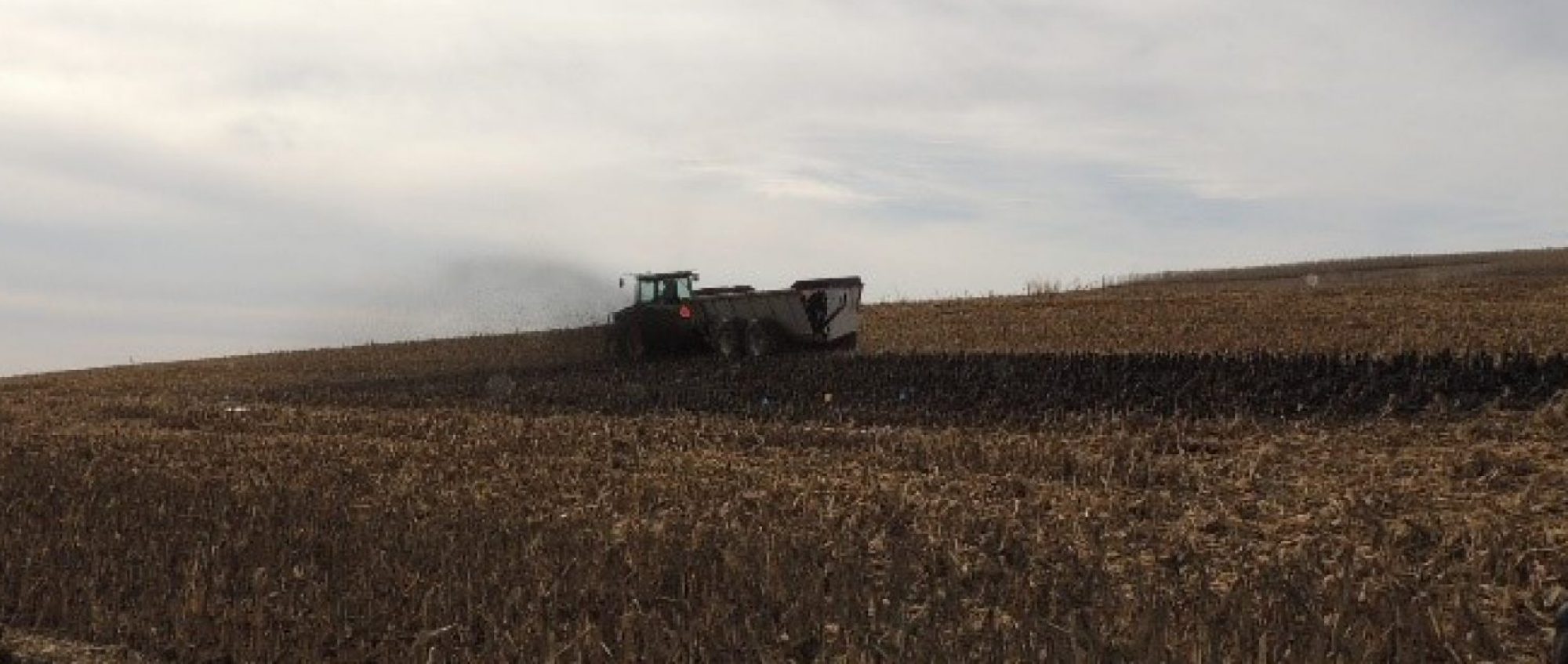
Cover crops and injection methods lend themselves well to both incorporate the nutrients well ahead of the time of planting fruits and vegetables but to also decrease runoff of manure applications. Photo by N. Rector, Michigan State University Extension.

Plan Manure Application Timing Carefully

  • Apply manure in the fall or at the end of the season to all planned vegetable ground or fruit acreage, preferably when soils are warm, non saturated, and cover-cropped.
  • If applying manure in the spring (or the start of a season), spread the manure two weeks before planting, preferably to grain or forage crops.
  • DO NOT harvest vegetables or fruits until 120 days after manure application.
  • Remember to document rates, dates, and locations of manure applications. Incorporate manure into the soil
  • Incorporate manure immediately after application. Although it is known that many harmful pathogens do not survive long in the soil, research is still needed on soil microbes and pathogen interactions. Some pathogens, such as Listeria monocytogenes, may survive and grow in the soil.
  • If it is necessary to apply manure or slurry to vegetable or fruit ground, incorporate it at least two weeks prior to planting and observe the suggested 120-day pre harvest interval.
  • If the 120-day waiting period is not feasible, such as for short season crops like lettuce or leafy greens, apply only properly composted manure.

Choose appropriate crops

  • Avoid growing root and leafy crops in the year that manure is applied to a field.
  • Apply manure to grain or forage crops.
  • Apply manure to perennial crops in the planting year only. The long period between application and harvest will reduce the risks.

Recommended Reading

Page Manager: Natalie Rector, Michigan State University Extension and Elizabeth A Bihn, Cornell University

Potential Routes for Pathogen Transport to Water

The movement of pathogens to water is dependent upon multiple environmental and transport factors.

Ground Water Contamination by Manure Pathogens

Thomas Harter, Groundwater Hydrologist at University of California-Davis discusses potential for ground water contamination: “While invisible to the human eye, most pathogens are giants of the micro-world … A typical bacterial pathogen is … much too large to fit between the clay or silt particles of many clay, silt, or loam soils…Only in sandy soils, the pore space is indeed large enough to provide ample traveling space for pathogens. Even there, pathogens frequently collide onto grain surfaces where they tend to become permanently attached. Ultimately, most pathogens are strained or filtered out of the water cycle long before reaching groundwater or a stream. Even if pathogens reach an aquifer, the aquifer itself will filter most remaining pathogens over relatively short distances (100 ft – 300 ft)…”

Dan Shelton, Environmental Microbial Safety Lab Research Leader, USDA Agricultural Research Service identifies some important exceptions including: “sandy or rocky soils, which generally allow for greater infiltration, …heavy soils (e.g., clay) containing significant cracks or fissures, or channels created by decayed plant roots or burrowing worms, (creating potential contamination of shallow ground water or tile drains)… and soils/subsoils throughout the Appalachian region derived from limestone geological formations (known as karst). Finally, improper installation of wells can allow for direct contamination of groundwater via the leaching of organisms along the well casing.”

Protozoa and bacterial pathogens are commonly too large to fit between the particles in most soils.
Source: Thomas Harter, University of California-Davis.

Surface Water Contamination by Manure Pathogens

Pathogen contamination of surface water is more common than contamination of groundwater. Direct contact of animals with surface water or runoff from animal housing is a significant risk. Land application sites with high runoff and erosion potential provide an additional potential pathogen connection to surface water. Thus, soil and nutrient conservation practices that minimize runoff and erosion are key BMPs for pathogen risk reduction.

Environmental Factors That Influence Pathogen Survival

Jeanette Thurston-Enriquez, USDA Agricultural Research Service scientist, summarizes environmental factors that reduce the survival of pathogens:

  • High temperatures. Each pathogen has a different susceptibility but generally high temperatures are very effective in reducing populations.
  • Time. Bacteria are living organisms, so they can’t live forever…
  • Sunlight. Has a couple of effects on pathogens. It desiccates (reduces moisture levels) them and the UV light also inactivates pathogens…
  • Desiccation. Is one of the best ways to inactivate pathogens in the environment.

Macropores, caused by earthworms, roots and cracks, allow pathogens to travel unfiltered through some soil.
Source: Cornell University http://soilandwater.bee.cornell.edu/Research/pfweb/index.htm

Recommended Resources on Pathogen Transport to Water

Pathogen transport in the environment is summarized in Dr. Jane Frankenberger’s web cast presentation found in the pathogen webcast archive. Additional information on survival time can be found starting on page 25 of USDA NRCS technical note, Waterborne Pathogens in Agricultural Watersheds.

Page Developers: Rick Koelsch, University of Nebraska, and Janice Ward, US Geological Survey
Reviewed by: Dan Shelton, USDA ARS, Sheridan Haack, USGS

Page Updated & Maintained by: John Brooks (john.brooks@ars.usda.gov)

Pathogens and Potential Risks Related to Livestock or Poultry Manure

Links to PEDv (Porcine Epidemic Diarrhea Virus).

Microorganisms

Microorganisms (e.g. virus, bacteria, protozoa, and fungi) surround us, on us, and in us; they are ubiquitous and everything in the world is governed by them.  They are part of our everyday lives.  They influence the the quality of our soil, food grown on that soil, and how our body reacts to that food. They are diverse, ranging from a simple mix of protein and DNA to complex multi-cellular  small “animals”.  Most environmental microorganisms spend their entire lives as quiet members of their ecological society, but some reach a level of infamy.  Pathogens may only represent a very small portion of all microorganisms, but they are often the most visible, thanks to readily reported outbreaks, food recalls, and proliferation of internet news blogs and sites.

What is a Pathogen?

A pathogen is a biological agent that causes disease or illness; this disease can occur in humans, animals, or crops. Zoonotic pathogens refers to pathogens naturally transmitted from animals to humans and are often heard about on news sites or involved in food recalls.

All animals including pets, livestock, wildlife and humans, are possible hosts of potential human pathogens. We will focus on pathogens originating from livestock and poultry that might be transported to humans via air, water, soil, crop, and fomites (inanimate objects) contacted directly or indirectly by manure.

Zoonotic Pathogens

There are four general classes of zoonotic pathogens:

  1. viruses
  2. bacteria
  3. protozoan parasites
  4. helminth parasites

Zoonotic viruses are those found mainly in animals that cause disease in people who come into contact with the animal or share a vector (transmitter of disease) like a mosquito (West Nile Virus is a virus of birds which mosquitoes carry and can transmit to people). Viruses can only multiply when they are inside a host cell.

  • Until very recently, it was considered that most fecal or urine transmitted viruses of livestock were not zoonotic, but things have changed somewhat in recent years, and we are now in a steep learning curve as to how important ruminants and poultry are as reservoirs of these zoonotic viral agents.

Zoonotic bacterial pathogens are, like all bacteria, single celled microorganisms that can survive and, under favorable conditions, reproduce in terrestrial and aquatic environments. The zoonotic bacteria are those that typically cycle in domestic animals without causing disease in their typical hosts. However, when they get transmitted into people, the disease that is produced can be severe.

  • Examples of zoonotic bacteria are Salmonella spp., strains of Escherichia coli such as E. coli 0157:H7, Listeria monocytogenes, and Campylobacter spp.

Zoonotic protozoan parasites, are protozoa that are found in other animals and which can infect people. There are basically two roles that humans can play in this scenario. They can be accidental hosts in the life cycle of the protozoan, where the protozoan undergoes the same development in the human as it does in its normal reservoir host. Or, the human may be an intermediate host in the life cycle of the parasites, just like any other vertebrate; in this case, the reservoir host shed many stages into the environment with the goal of infecting as many intermediate hosts as possible.

  • In the case of zoonotic protozoa relative to domestic farm animals, only a few have proven to be of significant concern relative to the infection of people.
    • Species of Cryptosporidium found in horses, cattle, pigs, and sheep can accidentally infect people, with C. parvum of young ruminants being the most common offender.
    • Giardia of livestock typically does not seem to occur in people, but it does seem that they might be infected with the human form and could then serve as a source of stages that might be passed to humans.

Zoonotic helminth parasites are worms, nematodes (roundworms), cestodes (tapeworms), or trematodes (flukes), that have cycles similar to protozoa. Again, people can be infected accidentally by the worm in the same manner as a reservoir host or they can be serving as just another vertebrate intermediate host in the life cycle of the parasite.

  • Fortunately, in the case of domestic farm animals, the helminth parasites are for the most part not zoonotic with respect to people. The only forms with stages that might be infectious to people from manure would be the egg of the pig roundworm, Ascaris suum.
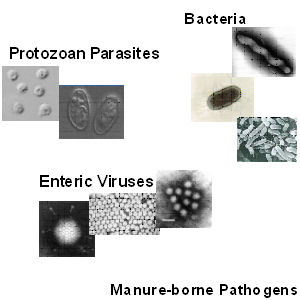
Photo source: Jeanette Thurston-Enriquez webcast presentation.

Detailed discussion of protozoan parasites, bacteria, and viruses can be found on pages 5, 12, and 18, respectively, of the USDA NRCS technical note

Waterborne Pathogens in Agricultural Watersheds

Several outbreaks of human illness and death have been attributed to drinking water contaminated with livestock manure. Of 66 drinking water outbreaks in affluent nations, the probable cause of 12 of the outbreaks was livestock manure (see Hrudey and Hrudey, 2004 in Research Summaries. These included:

  • An outbreak at the 1999 Washington County Fair, New York (E. coli O157:H7; of 781 confirmed cases, 71 people were hospitalized, and 2 died);
  • An outbreak in Walkerton, Ontario, Canada in 2000 (E. coli O157:H7 and Campylobacter jejuni; 2,300 people were ill, 65 were hospitalized and 7 died).

These outbreaks were indicative of the capability of the pathogens to survive and be leached through soil to groundwater sources of drinking water.

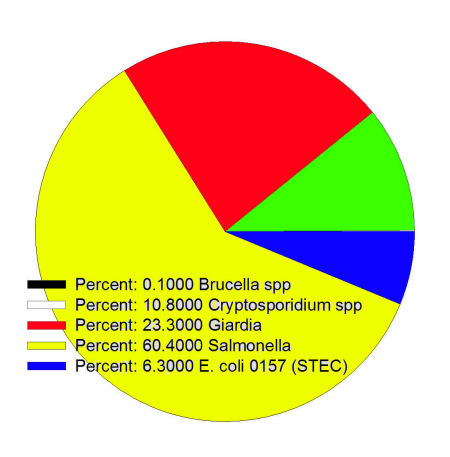
2008 distribution of confirmed zoonotic diseases. Data source:[ http://www.cdc.gov/mmwr/preview/mmwrhtml/ss5512a4.htm Centers for Disease Control MMWR Surveillance Summaries].

Not all illness outbreaks are livestock related. For example, animal manure was initially suggested as the source of the largest drinking water outbreak in U.S. history – the Cryptosporidium outbreak in Milwaukee, WI in 1993. Several years later following advances in microbiology and genetics, human sewage was identified as the likely contributor.

Antibiotic Resistant Bacteria in Agricultural Manures

An antibiotic-resistant bacterial population is one in which resistance is either intrinsic or has been acquired from exposure either to antibiotics or to other antibiotic resistant bacterial populations. The increased frequency of antibiotic resistant pathogens has become a serious public health concern as demonstrated with outbreaks of methicillin-resistant Staphylococcus aureus (MRSA) and antibiotic resistant Salmonella such as Salmonella DT104. Little research and information is available on the presence of antibiotic resistant bacteria originating in manure and manure land applied environments, and, thus, little is known about their fate and transport in soil, water, crops, and agronomic systems.

A listing of possible zoonotic pathogens can be found on pages 6 – 10 of an EPA literature review.

Authored by: Michael Jenkins and John Brooks, USDA ARS, Dwight Bowman and Janice Liotta, Cornell University.

Question or concerns, contact John Brooks (john.brooks@ars.usda.gov)

Identifying the Source of Pathogen Contamination of Water

Tracking the source of pathogens has been the focus of considerable scientific effort. The Environmental Pathogens Information Network (EPI-Net) provides information including fact sheets addressing “Tracking Microbial Pathogens” and “Role of Indicators in Pathogen Detection”.

Tracking Methods

Sheridan Haack, PhD, Research Hydrologist/Microbiologist, US Geological Survey, Michigan Water Science Center summarizes tracking methods as follows:

“There are three general ways to determine the sources of microbial contamination of water. The first, and most obvious, is to search the landscape for direct contributions and potential sources and to establish that microorganisms (or the source material) could move from the source area to water. There are several methods, ranging from dye-tracing studies to sophisticated hydrologic modeling, that can establish these connections…

The second method is to examine the affected water for changes in water quality that might arise from the potential source. Nutrients (nitrogen or phosphorous), certain chemicals such as chloride, or the ratios of chemicals such as bromide and chloride, have been used to indicate sources such as septic effluents or manure. More recently, sophisticated analyses have shown that chemicals such as human-use pharmaceuticals or personal care products may be useful in tracking fecal pollution from wastewater treatment plant effluents…

In rural environments, pathogens may originate from confined or pastured livestock, home septic systems, wildlife, or rural community waste treatment systems. Source identification can be challenging. CC2.5 LPELC

Finally, a logical (if not simple or inexpensive) approach is to evaluate whether the fecal indicator bacteria (or pathogens) themselves indicate the source, which is termed “microbial or bacterial source tracking” (MST or BST). In the last 5 years, several reviews of the state of this science have been produced (see references). In general, these reviews indicate that each method can produce some useful results for distinguishing between human, livestock and wildlife sources of fecal pollution, especially for small-scale studies with limited source inputs. However, all these methods have technical difficulties, and most are not ready to be broadly used in support of management decisions. The best approach to source determination is to acquire multiple lines of evidence using several techniques.”

Page Manager. Rick Koelsch, University of Nebraska, and Janice Ward, US Geological Survey.
Reviewed by: Dan Shelton, USDA ARS, Jeanette Thurston-Enriquez, USDA ARS

Best Management Practices (BMPs) to Prevent Manure Pathogen Movement to Water Resources

Multiple Barrier Approach

Management practices targeting pathogens focus on establishing multiple barriers between the pathogen source and water, with each barrier designed to lessen the risk of pathogens.

Keep Pathogens Off the Farm

Barrier 1 targets reducing the potential for pathogens to enter the farm through:

  • Identifying and quarantine of infected animals. The farm’s veterinarian is an important partner in implementing the first two barriers.
  • Preventing transport of infected manure onto the farm on clothing, boots, or equipment; Controlling pets, rodents, and other animals that can introduce pathogens to the farm.

Cross-Contamination Between Animals

Barrier 2 focuses on minimizing cross-contamination among animals including:

  • Keeping calf-raising areas clean;
  • Controlling pets, rodents, and other animals that can transport pathogens between groups of animals;
  • Ensuring that all feeds and feeding utensils are clean.

Barriers 1 and 2 will vary with species from this dairy targeted approach. A species specific bio-security program encouraged by industry or veterinarian organizations is the foundation for the first two barriers.

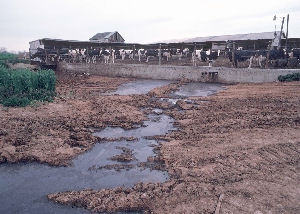
Uncontrolled runoff from open lot housing is a high risk source of pathogens.
Image courtesy USDA NRCS photo gallery.

Manure Collection, Storage, and Treatment

Barrier 3 addresses manure collection, storage, and treatment. Practices include:

  • Elimination of runoff from animal housing and manure storage (e.g. runoff collection ponds, vegetative filters).
  • Extended storage of manure. Liquid systems receiving manure daily typically produce a 10-fold reduction in pathogens. Two storage facilities (no fresh manure additions for two months prior to land application) further reduce risk.
  • Composting. Well managed composting systems can eliminate most pathogens.
  • Anaerobic digestion. Digesters operating at 100 degrees F can produce a 100-fold or greater reduction in pathogens.

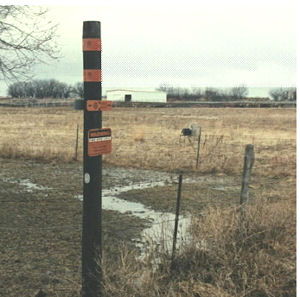
Avoiding application on tile-drained areas during periods of tile flow is an example of a Barrier 4 practice.
Source: Jane Frankenberger, Purdue University.

Land Application of Manure

Barrier 4 focuses on minimizing risk associated with land application of manure through such practices as:

  • Immediate incorporation of manure into soil. This practice must be balanced with residue loss and increased erosion potential.
  • Implementing sound soil conservation and runoff management practices in crop land (e.g. reduced tillage systems, grassed filters).
  • Applying manure from higher risk animals (e.g. calves) to crop land with lowest risks of runoff, erosion, or groundwater infiltration.
  • Applying manure to tiled fields only when the soil is relatively dry. Tile drained fields present a unique risk due to macropores caused by roots, earthworms, or cracks. Managing drainage water by raising drain outlets before manure application also reduces pathogen risk.

Recommended Resources About Manure-borne Pathogens

Page Managers: Rick Koelsch, University of Nebraska, and Janice Ward, US Geological Survey
Reviewed by: Dan Shelton, USDA ARS, and Jane Frankenberger, Purdue University

Question or concerns, contact John Brooks (john.brooks@ars.usda.gov)