The online Bioenergy Training Center provides educational training resources for Extension educators focused not only on the technical feasibility of bioenergy generation, but also on approaches and processes that assist communities in understanding the comprehensive implications of bio-based alternative energy. The intended outcome of the courses is to bring viable bioenergy projects into communities by providing Extension educators with tools and knowledge they can use to make this happen.
What Did We Do?
Developed three peer-reviewed, research-based online modular courses. Content was developed by experts from across the North Central Region. Included in one of the modules is a bioenergy and renewable energy community assessment toolkit.
Screen shot of the front page of the Bioenergy Training web site.
What Have We Learned?
The curriculum went live on the web in February 2013. We have not received any feedback on it to date. However, based on the reviews of individuals who used the bioenergy and renewable energy community assessment toolkit in 2012, it does a very good job of helping developers and communities objectively assess renewable energy projects.
Future Plans
Use the curriculum as a foundation for distance learning courses targeting other audiences.
Authors
M. Charles Gould, Extension Educator, Michigan State University, gouldm@msu.edu
Over 50 individuals participated in some aspect of curriculum development.
Additional Information
The Bioenergy Training Center web site is being revamped. It will be posted here at a later date.
Acknowledgements
Curriculum materials and training programs of ‘The Bioenergy Training Center’ were made possible through a grant from the National Water Resources Program, National Institute of Food and Agriculture, U.S. Department of Agriculture. NIFA/USDA Agreement No. WISN-2007-03790. Project Title: “Energy Independence, Bioenergy Generation and Environmental Sustainability: The Role of a 21st Century Engaged University”.
The authors are solely responsible for the content of these proceedings. The technical information does not necessarily reflect the official position of the sponsoring agencies or institutions represented by planning committee members, and inclusion and distribution herein does not constitute an endorsement of views expressed by the same. Printed materials included herein are not refereed publications. Citations should appear as follows. EXAMPLE: Authors. 2013. Title of presentation. Waste to Worth: Spreading Science and Solutions. Denver, CO. April 1-5, 2013. URL of this page. Accessed on: today’s date.
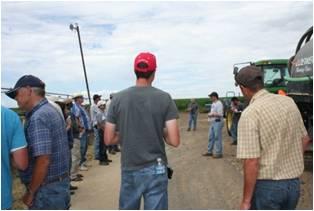
Teaching Best Management Practices (BMP) or introducing new agricultural waste management practices to livestock producers and farmers is a challenge. This poster describes a series of on-farm field days designed to deliver information and demonstrate on-site several waste management techniques, most of them well established in other parts of the country but sparsely used in Idaho. During these field days, Extension personnel presented each technique and offered written information on how to apply them. But without a doubt, presentations by the livestock producers and farmers who are already applying the techniques and hosted each field day at their farms was the main tool to spark interest and conversations with attendees.
Four field days were delivered in 2012 with more programmed for 2013. Demonstrated techniques reduce ammonia and odor emissions, increase nitrogen retention from manure, reduce run-off risks, and reduce emissions of greenhouse gases. Topics addressed on each field day were, a: Dairy manure collection and composting, 20 attendees. b: Dairy manure land application ten attendees. c: Grape vine prunings and dairy manure composting, 50 attendees. d: Mortality and offal on-farm composting, 40 attendees. In all cases farm owners and their managers presented and were available to answer attendees’ questions, sharing their experience, and opinions regarding the demonstrated practices. Many attendees expressed their interest and willingness to adopt some of the demonstrated practices. On-farm field days are an excellent tool to increase understanding and adoption of BMP and new technologies. Hearing experiences first hand from producers applying the techniques and being able to see them in action are excellent outreach tools. On-farm field days also fit the fast pace, busy schedule of modern producers who can later visit with Extension and other personnel if they need more details, information, and help on how to adopt the techniques they are interested in.
Why Hold Field Days on Ag Waste Management?
The dairy industry is the number one revenue commodity in Idaho. At the same time Idaho is ranked third in milk production in the nation. Idaho has more than 580,000 dairy cows distributed in 550 dairy operations (Idaho State Department of Agriculture 1/2013). The Magic Valley area in south-central Idaho hosts 54% of those dairies and 73% of all dairy cows in the state (Idaho Dairymen’s Association internal report, 2012). Odors from dairies and other animal feeding operations are a major issue in Idaho and across the country. In addition, the loss of ammonia from manures reduces the nutrient value of the manure and generates local and regional pollution. Dairy farmers of all sizes need more options on how to treat and dispose of the manure generated by their operations. Odor reductions, capture of nitrogen in dairy manure, reduction of greenhouse gases emissions, off-farm nutrients export, water quality protection, and reduction of their dairy operation’s environmental impact are some of the big challenges facing the dairy industry in Idaho and around the country. There are many Best Management Practices (BMP) that are proven to work on providing results related to the challenges mentioned before. Some of these practices are widely adopted in certain parts of the country or in other countries, with a lack of adoption by dairy producers and farmers in other parts of the country. This poster shows a series of Extension and research efforts designed to introduce and locally test proven BMP to dairy producers and crop farmers in southern Idaho in an effort to increase their adoption and incorporate those BMP as regular practices in Idaho agriculture. The four projects described were delivered in 2012 and some will continue in 2013.
What Did We Do?
To demonstrate and test BMP we chose to develop on-farm research projects to collect data and couple these projects with on-farm field days to demonstrate the applicability of the BMP in a real-world setting. Extension personnel developed the research and on-farm field days and did several presentations at each location. But without a doubt the stars during those field days were the dairy producers and farmers who hosted the research and demonstration events and who are already using or starting to use the techniques showcased. These pioneer producers are not only leading the way in using relatively new BMP in southern Idaho, they also share their experiences with other producers and with the academia so everybody around can learn from them. Topics addressed in each field day were, a: Dairy manure collection and composting, 20 attendees. b: Dairy manure land application, 10 attendees. c: Grapevine prunings and dairy manure composting, 50 attendees. d: Mortality and offal on-farm composting, 40 attendees.
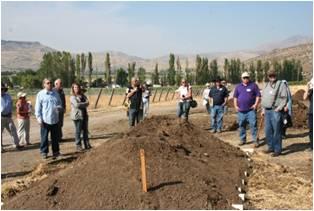
On-farm manure collection and composting field day.
Some highlights from each project are: a. The dairy manure collection and composting field day demonstrated the operation and use of a vacuum manure collection system and a compost turner. Dairy managers and machinery operators shared their experiences, benefits and challenges related to the use of these two technologies. During the field day attendees also visited the whole manure management system of the dairy and were able to observe diverse manure management techniques. As a result of this project Extension personnel determined the necessity of generating educational programs for compost and manure management operators for dairy employees. A composting school in Spanish and English proposal was presented and a grant was obtained to develop and deliver them in 2013.
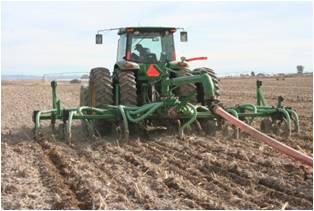
b. The dairy manure land application field day featured the demonstration of a floating manure storage pond mixer and pump, and a drag hose manure injection system. We also showed an injection tank that wasn’t operated during the demonstration. The floating pond mixer serves as lagoon mixer and pump. It mixes and pumps the manure through the drag hose system to the subsurface injector. This system dramatically reduces the time required to land apply liquid and slurried manures. It also significantly reduces ammonia and odor emissions to near background levels, as well as avoids runoff after applications. This project included research of emissions on the manure injection sites (see Chen L., et al. in this conference proceedings).
Demonstrating dairy manure subsurface injection using a drag hose system.
c. The grapevine prunings and dairy manure composting project involves research on the implications of increasing the carbon content of dairy manures using grapevine prunings and other carbon sources to retain more nitrogen in the compost, and how it varies among three diferent composting techniques. This project includes two field days, one during the project (2012), and another one at the end of it in 2013. The demonstration includes how to compost using mechanically turned windrows (common in Idaho), passive aerated, and forced aerated windrows (both very rarely used in Idaho). Another novelty in this project is that it aims to bring together dairy producers and fruit & crop producers, or landscaping insustry so they can combine their waste streams to produce a better compost and to reduce the environmental impact of each operation. Several producers of the diverse audience who attended showed interest in adopting some of the composting techniques presented during the field day.
d. The mortality and offal on-farm composting project was located at a diversified sheep farm that includes sheep and goat dairy and cheese plant, meat lambs, and chickens. A forced aerated composting box was used to compost lamb offal, hives, lamb and chicken mortalities, and whey from the cheese plant. A very diversified audience attended the field day and the composting system generated a lot of interest. The farm owner was so pleased with the system that she created a second composter with materials she had on-hand to increase her composting capabilities and compost all year round. The producer stopped disposing of lamb offal, hives, and mortalities at the local landfill.
What Have We Learned?
On-farm field days are a great tool to demonstrate and encourage the application of otherwise seldom applied techniques. They also can serve a dual purpose of demonstration and research, allowing for quality data collection if designed properly. Farmers’ collaboration and full participation during all phases of the project is paramount and pays off by having a very enthusiastic and collaborative partner. Identiying progressive and pioneer producers that are already applying new BMP or are willing to take the risk is very important to develop this kind of on-farm experience. In general these individuals are also willing to share their knowledge, experience, and results with others to increase the adoption of such techiques. Having a producer hosting and presenting during the field day, at their facilities (as opposed to a dedicated research facility) generates great enthusiasm from other producers and helps to “break the ice” and bring everybody to a friendly conversation and exchange of ideas if properly facilitated.
Future Plans
On both projects, a. manure collection and composting and b. manure injection we will generate a series of videos to demonstrate the proper application of BMP, and educational printed material will also be published. Project c. grape prunings and manure composting is still going on and we will finish collecting data by mid 2013. A second field day will be offered and videos and printed educational material will be developed. Project d. will see an expansion with a mortality composter for dairy calves being installed at a dairy, and with a field day following after the first compost batch is ready. Additional programs are in the works; these programs incorporate the on-farm demonstration and research dual purpose and have high participation from the involved producers.
Authors
Mario E. de Haro-Marti, Extension Educator, Gooding County Extension Office, University of Idaho Extension. mdeharo@uidaho.edu
Lide Chen, Waste Management Engineer
Howard Neibling, Extension Irrigation and Water Management Specialist
Mireille Chahine, Extension Dairy Specialist
Wilson Gray, District Extension Economist
Tony McCammon, Extension Educator
Ariel Agenbroad, Extension Educator
Sai Krishna Reddy Yadanaparthi, Graduate student
James Eells, Research Assistant. University of Idaho Extension.
Acknowledgements
Projects a. and b. were supported by a USDA-NRCS Conservation and Innovation Grant (CIG). Project c. was supported by a USDA-NRCS Idaho CIG. Project d. was supported by a University of Idaho USDA-SARE mini grant. We also want to thank Jennifer Miller at the Northwest Center for Alternatives to Pesticides for her help and support with projects c. and d. Finally, we want to thank all producers involved in these projects for their support and openess to work with us, and for their innovative spirit.
The authors are solely responsible for the content of these proceedings. The technical information does not necessarily reflect the official position of the sponsoring agencies or institutions represented by planning committee members, and inclusion and distribution herein does not constitute an endorsement of views expressed by the same. Printed materials included herein are not refereed publications. Citations should appear as follows. EXAMPLE: Authors. 2013. Title of presentation. Waste to Worth: Spreading Science and Solutions. Denver, CO. April 1-5, 2013. URL of this page. Accessed on: today’s date.
Why Is Training So Important for Manure Contractors?
Manure and compost companies have strived over the years to provide a service to both feedyards and crop producers in the most cost-effective manner possible. Unfortunately, little attention has been given to environmental impacts, by this important segment of the cattle feeding industry. This project, through training and demonstrations, will establish a program to provide for long-term implementation of best management practices (BMP) to be used during the land application of manure or compost. This will give producers a greater assurance that using manure or compost in their nutrient management programs has tremendous benefits and can be applied in a manner that is protective of the environment.
This event was conducted to determine which method of calibration might be appropriate when calibrating a manure spreader in the field. We used several different scales, dump gate configurations, and tarp placements to determine which method was the easiest and most reliable at determining actual tons/acre of manure applied.
The visual and measured observations of the manure spreader show that most of the manure is spread in a 10ft wide swath directly behind the spreader. There is a small amount of manure that extends out to 12-14ft behind the spreader, but the bulk of the manure is applied in 10ft strips. Manure collected from tarp to tarp varied greatly depending upon where it was placed in the 10 ft stip. If the tarps were placed on the edge, then they received 25-50% of the estimated tons per acre that the tarps placed directly in the center of the strip received.
Tarp aspect ratio was changed to accommodate the narrow distance between the back wheels on manure trucks. 28”x112” Tarps = 1/2000th of an acre. One pound on a standard tarp equals one ton of manure per acre.
Overlap measurements should also be considered when raw manure is applied with trucks that have vertical beaters or horizontal spinners that apply manure wider than the truck footprint. Application width and overlap are the primary factors influencing “single” pass estimates.
The authors are solely responsible for the content of these proceedings. The technical information does not necessarily reflect the official position of the sponsoring agencies or institutions represented by planning committee members, and inclusion and distribution herein does not constitute an endorsement of views expressed by the same. Printed materials included herein are not refereed publications. Citations should appear as follows. EXAMPLE: Authors. 2013. Title of presentation. Waste to Worth: Spreading Science and Solutions. Denver, CO. April 1-5, 2013. URL of this page. Accessed on: today’s date.
While large-scale farms have typically been the focus of anaerobic digestion systems in the U.S., an emerging need has been identified to serve smaller farms with between 50 and 500 head of cattle. Implementing such a small, standardized, all-in-one system for these small farm applications has been developed. Small-scale digesters open the playing field for on-farm sustainability and waste management.
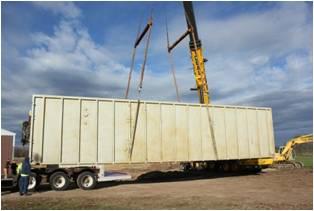
Unloading the first biodigester unit.
This presentation on small-scale digestion would discuss the inputs, processing, function, and outputs of BIOFerm™ Energy Systems’ small agitated plug flow digester (EUCOlino). This plug-and-play digester system has the ability to operate on dairy manure, bedding material, food waste, or other organic feedstocks with a combined total solids content of 15-20%. A case study would be presented that describes the site components needed, the feedstock amount and energy production, as well as biogas end use. Additional details would include farm logistics, potential sources of funding, installation, operation, and overall impact of the project.
This type of presentation would fill an information gap BIOFerm™ has discovered among dairy farmers who believe anaerobic digestion isn’t feasible on a smaller scale. It would provide farmers who attend with an understanding of the technology, how it could work on their specific farm and hopefully reveal to them what their “waste is worth”.
Why Study Small-Scale Anaerobic Digestion
To inform and educate attendees about small-scale anaerobic digestion surrounding the installation and feasibility of the containerized, paddle-mixed plug flow EUCOlino system on a small dairy farm <150 head.
Biodigester unit being installed at Allen Farms.
What Did We Do?
Steps taken to assist in financing the digestion system include receiving grants from the State Energy Office and Wisconsin Focus on Energy. Digester installation includes components such as feed hopper, two fermenter containers, motors, combined heat and power unit, electrical services, etc…
What Have We Learned?
Challenges associated with small project implementation regarding coordination, interconnection, and utility arrangements.
Future Plans
Finalize commissioning phases and optimize operation.
Steven Sell, Biologist/Application Engineer, BIOFerm™ Energy Systems
Gabriella Huerta, Marketing Specialist, BIOFerm™ Energy Systems
Additional Information
Readers interested in this topic can visit www.biofermenergy.com and for more information on our plants, services and project updates please visit us on our website at www.biofermenergy.com. You will also see frequent updates from us in industry magazines (BioCycle, REW Magazine, Waste Age). BIOFerm will also be present at every major industry conference or tradeshow including the Waste Expo, Waste-to-Worth and BioCycle– stop by our booth and speak with one of our highly trained engineers for further information.
The authors are solely responsible for the content of these proceedings. The technical information does not necessarily reflect the official position of the sponsoring agencies or institutions represented by planning committee members, and inclusion and distribution herein does not constitute an endorsement of views expressed by the same. Printed materials included herein are not refereed publications. Citations should appear as follows. EXAMPLE: Authors. 2013. Title of presentation. Waste to Worth: Spreading Science and Solutions. Denver, CO. April 1-5, 2013. URL of this page. Accessed on: today’s date.
Why Study Nutrient Concentrations in Poultry Manure?
The nutrient management planning process requires continual nutrient analysis of generated poultry litter to determine accurate agronomic land application rates. To better understand the challenges that nutrient management planners have faced with these nutrient concentration changes in poultry litter, an analysis was conducted of sample results submitted to the West Virginia Department of Agriculture Nutrient Management Lab, from 1994 to 2010. The number of produced Broilers in WV for 2010 was 87,600,000; the number of turkeys grown in WV during 2010 was 3,100,000 and the number of Layers averaged 1,200,000. NASS did not report pullet numbers. Data was analyzed by bird type including, Broilers, Layers, Pullets and Turkeys.
Lab analysis included TKN, Ammonia, P2O5, K2O, Cu, Ca, Mg, WEP (Water Extractable Phosphorus) and Moisture content. Ammonia concentrations increased during the study period for all bird types, broilers and turkeys had ammonia concentrations averaging 15 lbs per ton in 1995 and had doubled to 30 lbs per ton of litter in 2010. This increase of ammonia may be attributed to the adoption by poultry growers of long term in-house litter storage. P2O5 concentrations in broiler litter have consistently declined over the study period likely due to addition of phytase enzyme to feed allowing the reduction of P in the broiler diets. Average P2O5 levels in 1995 were 60 lbs per ton and had dropped to 40 lbs per ton of litter by 2012. This data can also provide estimates of watershed nutrient loading used in the Chesapeake Bay, TMDL process and improve the Bay watershed model.
Ed Rayburn and Joe Moritz, West Virginia University, Morgantown WV
The authors are solely responsible for the content of these proceedings. The technical information does not necessarily reflect the official position of the sponsoring agencies or institutions represented by planning committee members, and inclusion and distribution herein does not constitute an endorsement of views expressed by the same. Printed materials included herein are not refereed publications. Citations should appear as follows. EXAMPLE: Authors. 2013. Title of presentation. Waste to Worth: Spreading Science and Solutions. Denver, CO. April 1-5, 2013. URL of this page. Accessed on: today’s date.
To examine the financial, operational and health benefits of re-using composted bedding in the equine industry.
What Did We Do?
Stable waste, consisting of manure, urine and wood shavings, is a readily compostable feedstock that generates heat and can be transformed into finished homogenous compost, which can be used as bedding for horses and other livestock. This transformation can be completed in as little as 2 weeks with in-vessel technologies, 15-25 days in aerated site-built systems and 20-30 days in aerated static pile (ASP) systems. If composting is done in a biologically active, aerobic environment such as the systems mentioned above, the process destroys weed seed, parasites and harmful pathogens. These benefits are the result of system controls such as a correct ratio of C:N, moisture, porosity of the pile, and temperature. The in-vessel composting system offers the most comprehensive control of these factors ensuring the most favorable results.
The biological process that occurs when the stable waste is blended utilizes the leachable N and binds it in the organic matrix keeping it secured. There is also a reduction in N during the process as it becomes volatile and escapes through vaporization. The phosphorus is utilized by the bacteria during the process, reducing the amount available to leach by at least 50%. Since both N and Ph are needed for cellular growth, they get locked in the cells of the growing bacteria. This process generates heat, removing the moisture, killing pathogens and creating drier and more absorbent material for bedding re-use.
IOS Ranch, a private 20 horse show stable on Bainbridge Island, Washington, was the study site for this paper. They purchased an Earth Flow in vessel system and it is from this system that the lab results and observational data were collected. Their bedding of choice is medium sized bulk shavings. Also studied over the same period of time was the Earth Flow in-vessel system at Joint Base Myers/Henderson in Arlington, Virginia. The US Army Caisson horses stabled there are bedded on pelletized bedding. Lab data from this composting mix contributed to this study as well.
Washington State University, encouraged by the potential of financial savings, started using composted material as bedding in the school’s dairy farm. An unexpected benefit of this decision was the reduction of mastitis in the dairy herd. The change in bedding was the only variable altered in the care of the herd when this observation was noted. A study conducted by Cornell University’s Waste Management Institute studied the financial effects of using manure solids (DMS) as bedding. This study showed an average of $37,000 was saved annually by the diary farms who switched to re-use bedding. It was from these observations that we decided to apply the same questions to the equine industry.
A study conducted by Caitlin Price Youngquist of the Snohomish Conservation District, and funded by Western SARE is searching for the health benefits to horses with the use of composted stable waste as bedding. Preliminary examination has shown an increase in foot and leg health and a decrease in thrush, scratches and dermatitis seen on the horses in the study. General foot and leg health was also attributed to compost bedding by Dr. Hannah Mueller of Cedarbrook Veterinary Clinic and Northwest Equine Stewardship Center. She documented relief for a horse with chronic hives and a horse with a tracheotomy. The reduction of dust has been cited as a benefit to the horses suffering from heaves and other dust related ailments such as skin and respiratory irritations. The compost material has the unique quality of a large capacity for absorption while at an already higher level of moisture that makes the compost bedding less dusty. Both pellets and shavings exhibit this attribute.Youngquist’s assumption for the benefit composted bedding offers is based in the process itself. She states, “The compost has been through a very hot phase to kill all pathogens and parasites. It now has a thriving microbial population that competes aggressively with the fungal and bacterial pathogens that cause infections and irritations on skin and hooves (similar to the concept of a pro-biotic).”
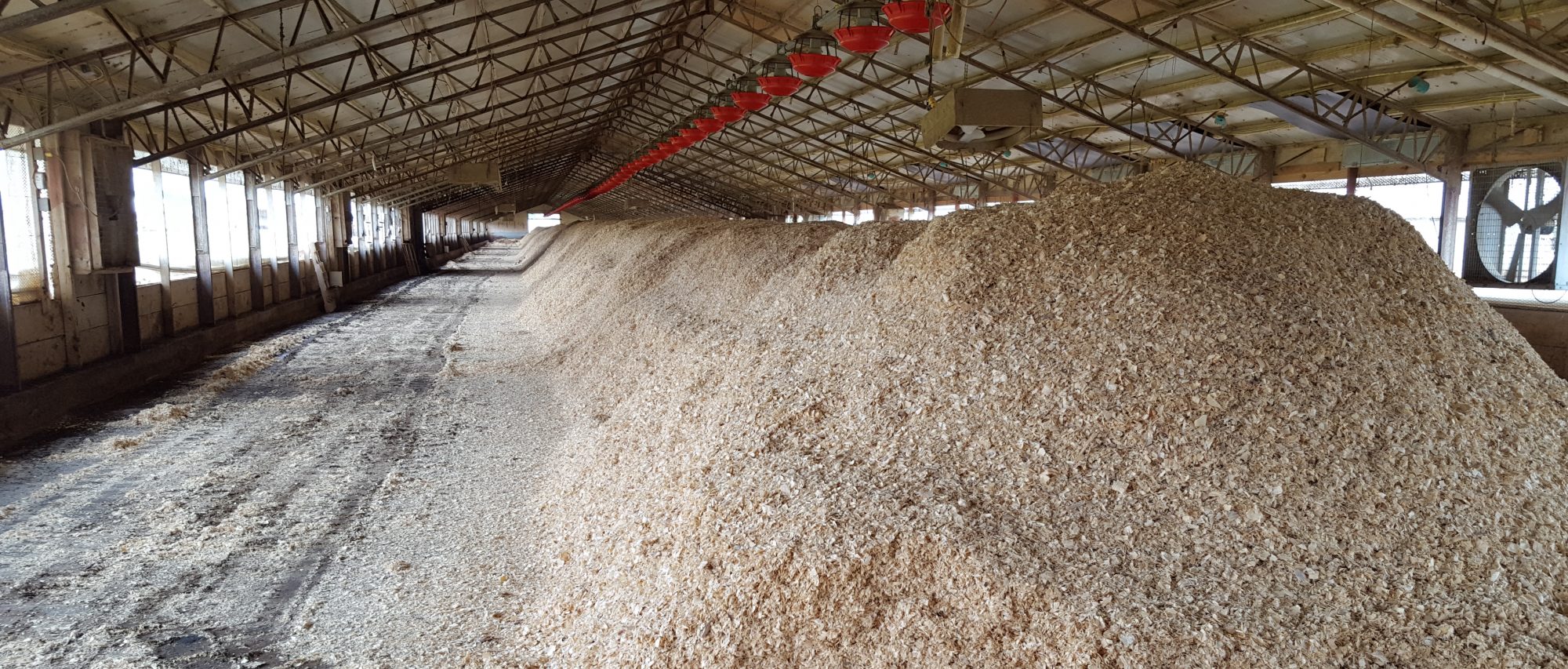
Stable waste compost as bedding can be used in its entirety or screened to collect the larger remaining pieces of shavings for bedding, leaving the fines for soil amendment. Testing has shown in either case the composted material to have high absorbency, more so than green shavings. When mixed with 50% new or green shavings, the stall is at its most efficient for health and comfort for the horse. The composted material offers higher absorption, soaking up the urine off the stall floor. With a top dressing of new shavings the stall is aesthetically pleasing to the human eye, light in color and offering the horse a barrier to the wetter, compost material below. The compost bedding is odor free when reintroduced to the stall. The introduction of at least 50% new shavings also supports the ongoing composting system, refilling the system when it has its 40-50% reduction of volume and the eventual breakdown of the shaving pieces with multiple trips through the system. Continuing research is being done to understand the effect of pelletized bedding used in the bedding re-use loop without the introduction of a larger substance to affect the integrity of the material as it continues to be re –used.
The first test done was to measure the absorption ability of the three types of bedding mixes. Two inches of material was placed in a plastic container. The first test done on 2” of green shavings, the second test done on 2” of a 50/50 mix of green shavings and compost, and the third test done on 2” of compost. Each of the variations was weighed before the introduction of water. One gallon of water was poured over the material and allowed to stand for 2 minutes. The container was then drained of any standing water which was measured. The container was again weighed in each case after the water had been drained. This procedure allowed for the measurement of absorption by both the increase in weight and the volume of water not absorbed by the material.
The new shavings taken from a loose pile absorbed the least, the 50/50 mix the next higher amount and the compost bedding absorbed the most moisture. This is impressive when one considers that the density of compost bedding is higher before the introduction of the test water. The compost material is comprised of the same woody fiber as the shavings but the edges have softened and loosened, and it is possible that the breakdown of the resins, which can be hydro phobic, allows for additional absorption ability.
We also tested for the moisture content of each bedding type with a simple oven test. The material was measured by a two cup measuring cup and poured into a glass baking dish. The material was weighed before going into the oven, set at 200°. The material was then weighed again to determine the moisture content after 12 hours.
These preliminary tests were performed to study initial benefits noted with bedding re-use. These are not scientific studies and are only intended to show possible indications for the purpose of this paper and to encourage further study. With composting and bedding re-use, barns close the waste stream loop and create a value added product.
What Have We Learned?
The viability of composted stable waste to be re-used as bedding is proven to provide financial benefits by saving on the cost of material purchase and in the disposal of stable waste. It provides further savings in health care costs.
Laboratory Results for Composted Stable Waste
Laboratory Results for Composted Stable Waste
Future Plans
We will continue to support the Snohomish Conservation District study run by Caitlin Youngquist by supplying composted stable waste and collaboration.
We plan to run our dust measurement during the summer months when we actually have dust in the Pacific Northwest. A furnace filter attached to the intake side of an 18” x 18” fan would be left on at ground level in a newly bedded stall for three minutes while the horse was hand walked around the stall. This would be repeated for the three bedding variations. The filter would be weighed before being attached to the fan and again after the three minute period.
Study of pellets as bedding re-use material will be done, measuring the health benefits and the viability of the product over multiple uses.
A controlled trial on direct contact allergens will be conducted on the three bedding mixtures.
We will continue to educate the equine industry and encourage a broad scale adoption of this closed waste system.
Authors
Mollie Bogardus, MBA Sustainable Business, Equine Specialist, Green Mountain Technologies, Inc. and Michael Bryon Brown, President, Green Mountain Technologies, Inc.
Bogardus, Mollie. “Equine Applications/Case Studies/ IOS Ranch and Fort Myer/Henderson.” Green Mountain Technologies. Green Mountain Technolgies, Inc., n.d. Web. 15 Mar. 2013. http://compostingtechnology.com/equine/.
Cohen, Jamie. “Composted Horse Manure: The Pros and Cons.” The Florida Horse Feb. 2013: 23. Print.
“Equine Applications.” Green Mountain Technologies- lab results. N.p., 12 Dec. 2012. Web. 1 Mar. 2013. http://compostingtechnology.com/equine.
LeaMaster, Brad, James R. Hollyer, and Jennifer L. Sullivan. “Composted Animal Manures: Precautions and Processing.” Cooperative Extension Service,College of Tropical Agriculture and Human Resources, University of Hawai‘i. University of Hawaii at Manoa, n.d. Web. 6 Mar. 2013. http://www.ctahr.hawaii.edu/oc/freepubs.
Price Youngquist, Caitlin. “Composted Horse Manure and Stall Bedding Pilot Project – YouTube.” YouTube. Snohomish Conservation District, 17 Jan. 2013. Web. 1 Mar. 2013. https://youtu.be/B91U5UjuaXI.
Schwartz, Mary, Jean Bonhotal, and A. Edward Stachr. “Use of Dried Manure Solids as Bedding for Dairy Cows.” Cornell Waste Management Institute. Cornell University, n.d. Web. 1 Oct. 2012. http://cwmi.css.cornell.edu>.
Wheeler, Eileen , and Jennifer Smith Zajaczkowski. “Horse Stable Manure Management.” Cornell Cooperative Extension, Orange County Equine, Saratoga County Equine. Penn State University, n.d. Web. 6 Mar. 2013. http://cceequine.org.
Zaborski, Ed. “Composting to Reduce Weed Seeds and Plant Pathogens – eXtension.” eXtension – Objective. Research-based. Credible.. University of Illinois at Urbana Champaign, 22 Oct. 2012. Web. 2 Oct. 2012. http://www.extension.org/pages/28585/composting-to-reduce-weed-seeds-and….
Acknowledgements
This report could not have been done without the support of Philippe Le Dorze at IOS Ranch. His interest and pursuit of knowledge pushed us to continue to search for improvements and greater knowledge.
The staff at Joint Base Myer/Henderson, Amy Fagan especially, were also willing participants in the pursuit of the perfect compost recipe. Paul Brezovec at Concurrent Technologies Corp was a tremendous support to the project and continues to encourage the use of Earth Flow vessels for other bases.
A special thanks to Caitlin Price Youngquist for her ongoing dedication, collaboration and interest in the phenomena of bedding re-use.
The authors are solely responsible for the content of these proceedings. The technical information does not necessarily reflect the official position of the sponsoring agencies or institutions represented by planning committee members, and inclusion and distribution herein does not constitute an endorsement of views expressed by the same. Printed materials included herein are not refereed publications. Citations should appear as follows. EXAMPLE: Authors. 2013. Title of presentation. Waste to Worth: Spreading Science and Solutions. Denver, CO. April 1-5, 2013. URL of this page. Accessed on: today’s date.
Current Best Management Practices (BMPs) only measure past land application of nutrients at Animal Feeding Operations (AFO) and Concentrated Animal Feeding Operations (CAFO). Because the current BMP calculates nutrient application at the end of the year, the CAFO operator finds out if they have over applied CAFO-generated nutrients, when it is too late to adjust nutrient applications.
Over application of nutrients in land application fields limits a CAFO operator’s ability to reuse his/her green water or manure solids as nutrients. Green water, manure solids, and chemical fertilizers are fungible assets and should be managed as resources, not wastes. Over application can result in high (>30 ppm) or very high (>50 ppm) soil nitrate concentrations beneath land application fields that must be mined from the soil. Where there is sufficient hydraulic head in the land application fields, excess nitrate can leach through the soils and root zone to groundwater. When ground water quality standards are exceeded, the nutrients are being disposed of as wastes rather than reused as a resource and EPA or other regulatory agencies can require costly soils and ground water investigations and abatement/remediation.
To prevent turning the manure and green water resources into an environmental liability and financial burden, we developed the online CAFOweb software to allow CAFOs to manage their nutrients in real time from the fields. Real time forecasting works best when all nutrient and water contributions are quantified using chemical analyses of soil and plant tissue coupled with and the meter readings that allow the operator to determine if he is operating at peak efficiency. The CAFOweb data management and interpretations allow CAFO operators to make informed real time decisions on land application of nutrients at agronomic rates, insuring “wastes” are converted to assets or worth. Real time management of dairy-generated nutrients retains the value of the CAFO facility for future generations.
Why Develop Software for Managing Manure Nutrients?
Currently BMP calculates nutrient application at the end of the year causing the CAFO operator to find out if they have over applied CAFO-generated nutrients, when it is too late to adjust nutrient applications. We developed CAFOweb as online software to allow CAFOs to manage their nutrients in real time from the fields.
What Did We Do?
To prevent turning the manure and green water resources into an environmental liability and financial burden, we developed the online CAFOweb software to allow CAFOs to manage their nutrients in real time from the fields.
What Have We Learned?
The best way to preserve the value of your dairy is to predict nutrient application rates.
Future Plans
In the future, we hope to continue monitoring dairies to see how CAFOweb affects CAFO operators in making informed real-time decisions on land application of nutrients at agronomic rates. Also in the plans is developing new modules for CAFOweb to manage other aspects of CAFOs such as freshwater and air quality.
The authors are solely responsible for the content of these proceedings. The technical information does not necessarily reflect the official position of the sponsoring agencies or institutions represented by planning committee members, and inclusion and distribution herein does not constitute an endorsement of views expressed by the same. Printed materials included herein are not refereed publications. Citations should appear as follows. EXAMPLE: Authors. 2013. Title of presentation. Waste to Worth: Spreading Science and Solutions. Denver, CO. April 1-5, 2013. URL of this page. Accessed on: today’s date.
“Drain only the amount of water needed to ensure equipment access and healthy crop production, and not a drop more.” -Dr. Wayne Skaggs
Drainage water management is a practice that has been around for years. When a farmer sees a drain tile running, even though it hasn’t rained for a month, he must ask himself, “Why?”. In the past, plugging the tile was an option. This was effective but problems could occur if the plug was not removed after a heavy rainfall.
For over 35 years, Agri Drain Corporation has manufactured and supplied products for water management. These products have evolved, and today, are used for the implementation of drainage water management and subsurface irrigation.
Water Level Control Structure for drainage water management.
Agri Drain’s Water Level Control Structures are well known as a device used to manage the water table without plugging the tile. Agri Drain recently introduced the “Water Gate”, a float activated head pressure valve. The Water Gate is used in conjunction with a Water Level Control Structure, allowing drainage water management to be utilized on ground that may not have been viable in the past.
The benefit of Drainage Water Management is twofold, a potential yield increase and nutrient retention, resulting in improved water quality. We will explain how both these goals can be met, benefiting the farmer and the environment. Related: “Preferential Flow of Manure in Tile Drainage“
Why Be Concerned About Subsurface Drainage and Water Quality?
Agri Drain supports the practice of drainage water management as a way to improve water quality and potentially increase crop yields.
What Did We Do?
For over 35 years, Agri Drain Corporation has manufactured and supplied products for water management. These products have evolved, and today, are used for the implementation of drainage water management and subsurface irrigation.
What Have We Learned?
Agri Drain is a member of Agricultural Drainage Management Coalition (ADMC). ADMC exists as a resource of the latest technologies in drainage water management systems. ADMC is committed to assisting the agricultural and environmental communities in improving water quality and increasing yields for food and energy producers. A five-state Conservation Innovation Grant (CIG) was secured by ADMC to demonstrate the effectiveness of drainage water management. Agri Drain supplied many of the products used in this demonstration. The results of this study can be viewed at admcoalition.com under the CIG Executive Summary.
Check Out These Other Presentations About Tile Drainage
The authors are solely responsible for the content of these proceedings. The technical information does not necessarily reflect the official position of the sponsoring agencies or institutions represented by planning committee members, and inclusion and distribution herein does not constitute an endorsement of views expressed by the same. Printed materials included herein are not refereed publications. Citations should appear as follows. EXAMPLE: Authors. 2013. Title of presentation. Waste to Worth: Spreading Science and Solutions. Denver, CO. April 1-5, 2013. URL of this page. Accessed on: today’s date.
Computer models are excellent ways to integrate years of scientific research into decision tools that producers and policy makers can use to reduce the environmental impact of agricultural phosphorus. Models are playing more important roles in efforts to manage phosphorus at the farm and watershed scales, so it is increasingly important to make sure models are well developed to meet the needs of users, give reliable predictions, and are consistently updated to keep pace with scientific knowledge.
What Did We Do?
Our research over the past 10 years has concentrated on developing scientifically sound, reliable models that can be used to better manage agricultural phosphorus. This includes developing state-of-the-art models for soil phosphorus cycling and loss to the environment in surface runoff and leaching from soils, manures, and fertilizers. We have also concentrated on making sure models of different complexity, from daily processed-based models to annual empirical models, are based on the same principles and give similar predictions so there are a variety of model choices available to meet user needs.
What Have We Learned?
It is certainly possible to develop reliable, scientifically sound, phosphorus management models, as our research success demonstrates. The best model development requires interdisciplinary collaborations and excellent communication between experimentalists, model developers, and model users. Such a framework of interconnected experimentation and model development should symbiotically advance the science of agricultural P and environmental protection beyond the point that the two proceeding independently can achieve.
Future Plans
Model development research continues to make sure that available models are kept up to date with scientific knowledge and meet the needs of users concerning ease of use and data requirements.
Authors
Peter Vadas, Dairy Systems Scientist, USDA-ARS Dairy Forage Research Center, peter.vadas@ars.usda.gov
The authors are solely responsible for the content of these proceedings. The technical information does not necessarily reflect the official position of the sponsoring agencies or institutions represented by planning committee members, and inclusion and distribution herein does not constitute an endorsement of views expressed by the same. Printed materials included herein are not refereed publications. Citations should appear as follows. EXAMPLE: Authors. 2013. Title of presentation. Waste to Worth: Spreading Science and Solutions. Denver, CO. April 1-5, 2013. URL of this page. Accessed on: today’s date.
Onions are valued as food and medicine primarily for the flavor and medicinal properties of their sulfur compounds. A field study was conducted at KSU Research Farm. The soil in five plots was mixed with sewage sludge, five plots were mixed with yard waste compost, five plots were mixed with laying hen manure each at 15t acre-1, and five unamended plots that never received soil amendments were used for comparison purposes. Plots were planted with onion, Allium cepa L. var. Super Star-F1. The objectives of this investigation were to: i) determine the concentrations of organosulfur compounds (dipropyl disulfide and dipropyl trisulfide) in onion bulbs and ii) investigate the effect of mixing soil with three amendments (sewage sludge, yard waste, and chicken manure) on the concentration of sulfur compounds in onion bulbs. Gas chromatographic/mass spetrometric (GC/MS) analyses of onion oil in chloroform extracts revealed the presence of two major fragment ions that correspond to dipropyl disulfide and -trisulfide. Concentration of these two organic sulfur compounds was greatest (1.5 and 0.8 mg 100 g-1 fresh weight, respectively) in onion bulbs of plants grown in chicken manure and lowest (0.4 and 0.07 mg 100 g-1 fresh weight, respectively) in onion bulbs of plants grown in yard waste compost treatments. We concluded that chicken manure could be exploited in growing onions with health-promoting properties.
Why Study Chicken Manure and Onions?
The objectives of this investigation were to: i) determine the concentrations of organosulfur compounds (dipropyl disulfide and dipropyl trisulfide) in onion bulbs and ii) investigate the effect of mixing soil with three amendments (sewage sludge, yard waste, and chicken manure) on the concentration of sulfur compounds in onion bulbs.
What Did We Do?
A field study was conducted on a Lowell silty-loam soil (2.0% organic matter, pH 7) at Kentucky State University Research Farm, Franklin County, KY. Plots (n=20) of 2 ×10m each were separated using grass strips to prevent cross contamination between adjacent treatments. The soil in five plots was mixed with sewage sludge (SS) from Metropolitan Sewer District, Louisville, KY at 15 t acre-1 (on dry weight basis). Five plots were mixed yard waste (YW) compost made from yard and lawn trimmings, and vegetable remains (Con Robinson Co., Lexington, KY) at 15 t acre-1 (on dry weight basis), and five plots were mixed with chicken manure (CM) obtained from University of Kentucky Poultry Research Facility, Lexington, KY at 15 t acre-1. The native soil in five plots was used as a no-mulch (NM) control treatment (roto-tilled bare soil) for comparison purposes. Amendments were incorporated into the topsoil with a plowing depth of 15 cm. Seedlings of onion, Allium cepa var. Super Star F1 were planted under the four soil management practices. At harvest, onion bulbs were blended with chloroform. After cleaning-up the extract, one μL (n=3) of the filtrate was injected into a gas chromatograph (GC) model 5890A equipped with a mass spectrometric detector (GC/MSD) model 5971A operated in total ion monitoring with electron impact ionization (EI) mode and 70 eV electron energy for identification and confirmation of individual peak. Concentrations of the two sulfur compounds (dipropyl disulfide and dipropyl trisulfide) in onion bulbs grown under four soil management practices were statistically analyzed using ANOVA. Means were compared using Duncan’s multiple range test.
What Have We Learned?
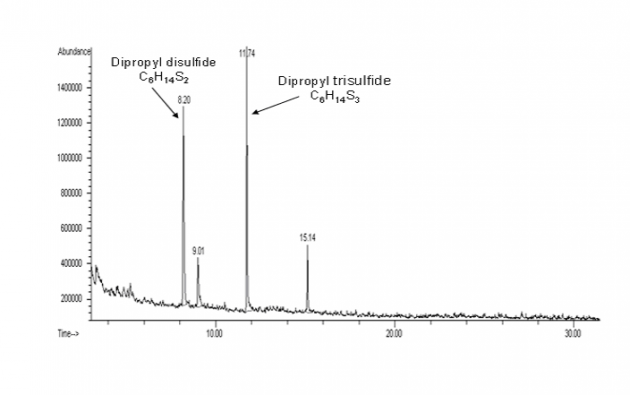
Mass spectrometric analysis of purified chloroform extracts prepared from onion bulbs revealed the presence of two organosulfur compounds, dipropyl disulfide and dipropyl trisulfide (Figure 1). Analyses of onion bulbs of plants grown under three soil management practices and plants grown in no-mulch treatments showed fragments with identical molecular ions at m/z 150 (Figure 2) and at m/z 182 (Figure 3), along with other characteristic fragment ions which are consistent with the assignment of the molecular formula of dipropyl disulfide (C6H14 S2) and dipropyl trisulfide (C6H14 S3), respectively, known as major constituents of onion bulbs. Dipropyl disulfide spectral data, which showed a molecular ion peak (M+) at m/z 150, were in agreement with those previously reported in onion bulbs. [1] Dipropyl trisulfide was also assigned on the basis of its mass fragmentation pattern, which gave a molecular ion peak (M+) at m/z 182, along with other characteristic fragment ion peaks as determined by GC/MSD in total ion mode. Figures 2 and 3 also indicated that the two sulfur compounds have a common fragment ion at m/z 48 that can be used for monitoring dipropyl disulfide and –trisulfide in onion extracts. Concentrations of dipropyl disulfide and dipropyl trisulfide were significantly higher (P< 0.05) in onion bulbs of plants grown in soil amended with chicken manure compared to other soil treatments (Figure 4). This response may be due to improved soil porosity, soil water holding capacity and nutrient retention in chicken manure treated soil. There were about 1.5 mg of the disulfide and 0.8 mg of the trisulfide per 100 g onion bulb. These results are in agreement with the results reported by the onion oil manufacturer and wholesaler in India (Shiva Exports India-2007), [2] who reported that out of all the compounds present in onion, dipropyl disulfide comprises the largest amount of the sulfur compounds present in onion oil.
Chicken manure used in this study was obtained from laying hens fed diets containing 19% crude protein and approximately 0.8% sulfur amino acids, which provided approximately 0.2% sulfur to the diet. Other minor sources of sulfur in the diet were sulfate salts of several trace minerals. The diets were formulated to meet or exceed the requirements published by the National Research Council [3] and commercial feeding recommendations. To the best of our knowledge, no reports in the literature have documented the importance and value of chicken manure in increasing organic sulfur compounds, having health-promoting activity. >
Figure 1. Gas chromatographic-mass spectrometric (GC/MS) chromatogram of onion, Allium cepa L. var. Super Star-F1 extract prepared in chloroform.
Figure 2. Electron impact mass spectrum of dipropyl disulfide (C6H14S2) extracted from onion, Allium cepa L. var. Super Star F1 bulbs indicating the molecular ion m/z 150.
Figure 3. Electron impact mass spectrum of dipropyl trisulfide (C6H14S3) extracted from onion, Allium cepa L. var. Super Star F1 bulbs indicating the molecular ion m/z 182, along with other characteristic fragments ions.
Figure 4.Concentrations of dipropyl disulfide (upper graph) and dipropyl trisulfide (lower graph) in onion bulbs of plants grown in soil amended with chicken manure (CM), sewage sludge (SS), yard waste (YW), and no-mulch (NM) soil. Statistical comparisons were carried out between soil treatments. Bars accompanied by different letter are significantly different (P< 0.05) from each other, using Duncan’s multiple range test.
Future Plans
Future objectives will include the impact of soil amendments on the nutritional composition of field-grown vegetables and monitoring bioaccumulation of trace-elements in edible plants.
Authors
Eric T. Turley, Co-Investigator, Kentucky State University-College of Agriculture, Food Science, and Sustainable Systems- Division of Environmental Studies and Sustainable Systems, Frankfort, KY 40601, USA, eric.turley@kysu.edu
Regina R. Hill, Research Assistant, Kentucky State University-College of Agriculture, Food Science, and Sustainable Systems- Division of Environmental Studies and Sustainable Systems, Frankfort, KY 40601, USA
George F. Antonious, Professor, Kentucky State University –College of Agriculture, Food Science, and Sustainable Systems- Division of Environmental Studies and Sustainable Systems, Frankfort, KY 40601, USA
Acknowledgements
We thank Jami Rogers for her assistance in preparing onion extracts. This investigation was supported by a grant from USDA/CSREES to Kentucky State University under agreement No KYX-10-08-43P.
The authors are solely responsible for the content of these proceedings. The technical information does not necessarily reflect the official position of the sponsoring agencies or institutions represented by planning committee members, and inclusion and distribution herein does not constitute an endorsement of views expressed by the same. Printed materials included herein are not refereed publications. Citations should appear as follows. EXAMPLE: Authors. 2013. Title of presentation. Waste to Worth: Spreading Science and Solutions. Denver, CO. April 1-5, 2013. URL of this page. Accessed on: today’s date.
Manage Cookie Consent
To provide the best experiences, we use technologies like cookies to store and/or access device information. Consenting to these technologies will allow us to process data such as browsing behavior or unique IDs on this site. Not consenting or withdrawing consent, may adversely affect certain features and functions.
Functional
Always active
The technical storage or access is strictly necessary for the legitimate purpose of enabling the use of a specific service explicitly requested by the subscriber or user, or for the sole purpose of carrying out the transmission of a communication over an electronic communications network.
Preferences
The technical storage or access is necessary for the legitimate purpose of storing preferences that are not requested by the subscriber or user.
Statistics
The technical storage or access that is used exclusively for statistical purposes.The technical storage or access that is used exclusively for anonymous statistical purposes. Without a subpoena, voluntary compliance on the part of your Internet Service Provider, or additional records from a third party, information stored or retrieved for this purpose alone cannot usually be used to identify you.
Marketing
The technical storage or access is required to create user profiles to send advertising, or to track the user on a website or across several websites for similar marketing purposes.
 Waste to Worth home | More proceedings….



 Authors