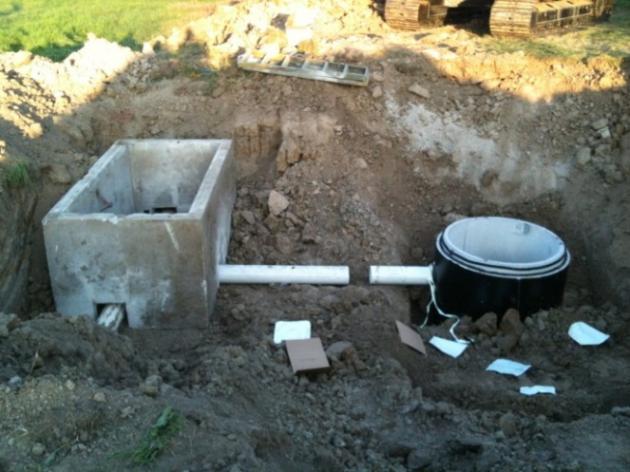
Mortality Composting in the Semi-Arid West

Waste to Worth: Spreading science and solutions logoWaste to Worth home | More proceedings….

Why Is Proper Mortality Management Important?

Proper management of animal mortalities has important implications for nutrient management, water quality, animal health, and farm/ranch family and public health.  To best ensure human health and safety, reduce regulatory risks, and protect environmental resources, livestock producers should become familiar with best management practices (BMPs) for dealing with dead animals. Producers should also be aware of state laws related to proper disposal or processing of mortalities. 

Mortality composting is an increasingly popular and viable alternative when compared to other disposal practices because of cost savings, bio-security benefits, and reduced environmental risks.  Static mortality composting differs from traditional composting in both management intervals and carbon to nitrogen ratios.   The objective of this workshop is to provide those who advise livestock producers with the knowledge, tools, and resources to develop a mortality management plan, with specific focus on the static composting option.   

The Rocky Mountain based authors conducted demonstrated research, reviewed pertinent literature, studied USDA-NRCS standards, and documented mortality composting systems already in-use by regional producers. 

Recording of the author’s presenting the workshop
Options for managing dead animals
Principles of mortality composting
Managing animal mortality compost piles
Economics of mortality composting

Curriculum Materials

Data from these activities provided a basis for the following tools:

  1. Decision aid spreadsheet that evaluates the costs of mortality composting against other mortality disposal options (in English and Spanish),
  2. How-to-manual on mortality composting in English and Spanish),
  3. Video illustrating on-the-ground mortality composting
  4. PowerPoint presentation explaining mortality composting principles, methods and resources (in English and Spanish).

Learning Objectives

This 90 minute in-service workshop will provide background and step-by-step considerations for mortality composting, with an emphasis on the practice in the semi-arid environments of the western United States.  However, fundamentals of the workshop will apply to all climates.   To the right, you will find recordings of the authors presenting the workshop using the slides from the curriculum materials.

Presenters

Thomas Bass, Livestock Environment Associate Specialist, Montana State University tmbass@montana.edu. Mr. Bass has been an Extension Specialist in the area of livestock and environmental management for 12 years.  He has been involved in composting research and demonstrations for much of his career. 

Jessica Davis, PhD, Colorado State University.  Dr. Davis is an Extension Specialist and the director of the Institute for Livestock and the Environment, a diverse group of CSU faculty working together to solve problems at the interface of livestock production and environmental management. She is the principal investigator and originator of this SARE project.    

John Deering, MS, Colorado State University.  Mr. Deering, is a regional Extension Specialist in Eastern Colorado.  He is an economist by training with an emphasis on agriculture and business management.  He developed the economic tools and narratives associated with the products of this project.

Michael Fisher, MS, Colorado State Univeristy.  Mr. Fisher is an area Extension Agent, with an emphasis in livestock production, meat science, range management, and overall ranch management.  He is an important conduit between producers, other government agencies, and industry groups in north eastern Colorado.      

Additional Information

This project was funded by the Western Region Sustainable Agriculture Research and Education (SARE) program.

Archive webcast: https://connect.extension.iastate.edu/p93vve55l1f/?launcher=false&fcsContent=true&pbMode=normal

Curriculum Materials

Companion Video: https://www.youtube.com/watch?list=PL62C6899F81B769B7&v=1DwUrOxpTxw&feature=player_detailpage

Manual (eng): http://livestockandenvironment.org/wp-content/uploads/2012/02/CompostingManual-final-webview.pdf

Manual (span): http://livestockandenvironment.org/wp-content/uploads/2011/03/CompostingManual_spanish_web-2.pdf

Ppt: https://extension.colostate.edu/docs/pubs/ag/mortality.pdf

Ppt (span): http://livestockandenvironment.org/wp-content/uploads/2011/03/Mortality-Spanish.pptx

Partial Budget: http://livestockandenvironment.org/wp-content/uploads/2011/03/Partial-Budget-Form-English.xls

Partial Budget (span): http://livestockandenvironment.org/wp-content/uploads/2011/03/Partial-Budget-Form-Spanish.xls

The authors are solely responsible for the content of these proceedings. The technical information does not necessarily reflect the official position of the sponsoring agencies or institutions represented by planning committee members, and inclusion and distribution herein does not constitute an endorsement of views expressed by the same. Printed materials included herein are not refereed publications. Citations should appear as follows. EXAMPLE: Authors. 2013. Title of presentation. Waste to Worth: Spreading Science and Solutions. Denver, CO. April 1-5, 2013. URL of this page. Accessed on: today’s date.
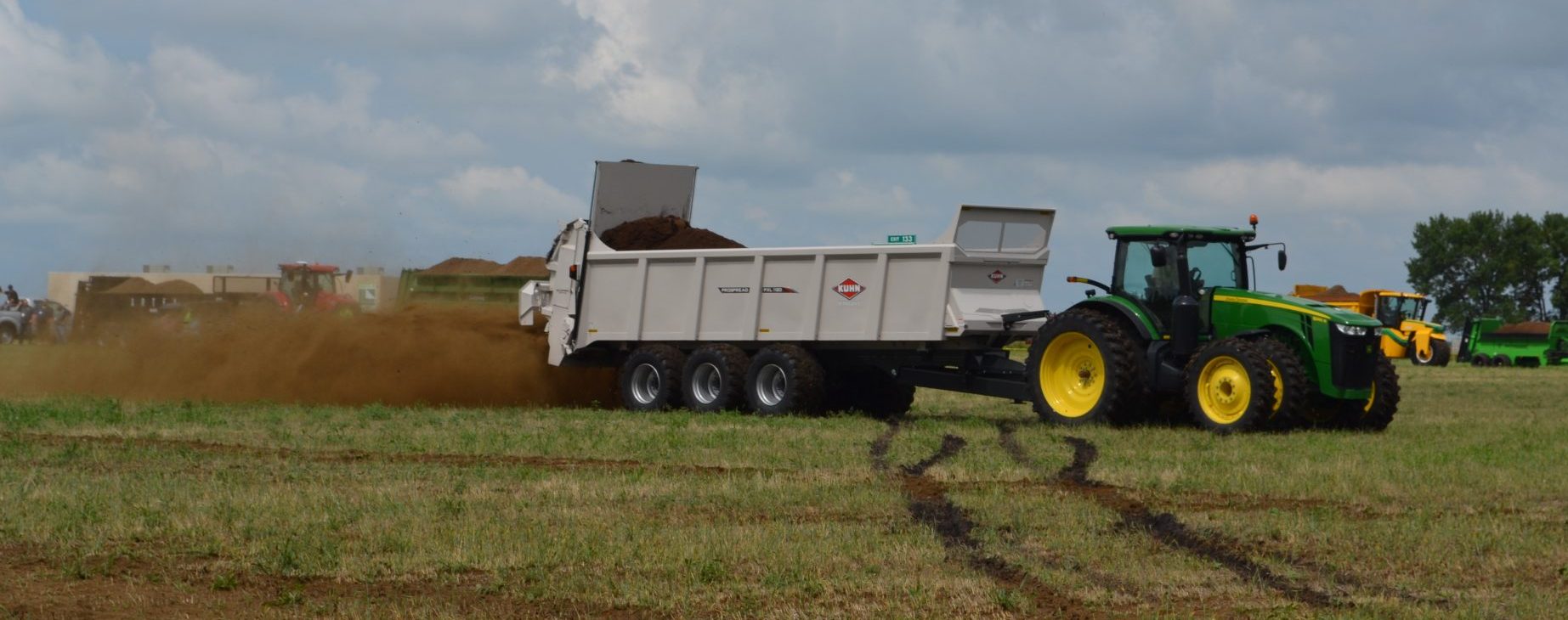
The Farm Manure to Energy Initiative: Using Excess Manure to Generate Farm Income in the Chesapeake’s Phosphorus Hotspots

Waste to Worth: Spreading science and solutions logoWaste to Worth home | More proceedings….

Abstract

Currently, all the Bay states are working to achieve nutrient reduction goals from various pollution sources.  Significant reductions in phosphorus pollution from agriculture, particularly with respect to phosphorus losses from land application of manure are needed to support a healthy aquatic ecosystem.  Producers in high-density animal agricultural production areas such as Lancaster County region of Pennsylvania, the Delmarva Peninsula, and the Shenandoah Valley region of Virginia, need viable alternatives to local land application in order to meet nutrient reduction goals.

Field demonstrations will be monitored to determine whether the technologies are environmental beneficial, and economically and technically feasible. Specific measures of performance include: reliability and heat distribution, in-house air quality, avoided propane or electricity use, costs to install and maintain, fertilizer and economic value of ash or biochar produced, air emissions, and fate of poultry litter nutrients. Technology evaluation results will be shared on a clearinghouse website developed in partnership with eXtension.

The Farm Manure to Energy Initiative is also supporting efforts to develop markets for nutrient rich ash and biochar co-products. Field trials using nutrient rich ash and biochar from poultry litter thermochemical processes for fresh market vegetable production are currently underway at Virginia Tech’s Eastern Shore Agricultural Research and Experiment Station.

Purpose

The Farm Manure to Energy Initiative is a collaborative effort to evaluate the technical, environmental, and economic feasibility of farm-scale manure to energy technologies in an effort to expand management and revenue-generating opportunities for excess manure nutrients in concentrated animal production regions of the Chesapeake Bay watershed.

What Did We Do?

The project team went through a comprehensive review process and identified three farm-scale, manure to energy technologies that we think have the potential to generate new revenue streams and provide alternatives to local land application of excess manure nutrients.  Installation and performance evaluation of two of these technologies on four host farms in the Chesapeake Bay region are underway. Partners have also completed a survey of financing options for farm-scale technology deployment and published a comprehensive financing resources guide for farmers in the Chesapeake Bay region.

What Have We Learned?

To date, we have not identified any manure to energy technologies that also provide alternatives to local land application of excess manure nutrients for liquid manures.  Thermochemical manure to energy technologies using poultry litter as a fuel source seem to show the most promise for offering opportunities to export excess nutrients from phosphorus hotspots in the Chesapeake Bay region. Producing heat for poultry houses is the most readily available energy capture option.  We did not identify any vendors with a proven approach to producing electricity via farm-scale, thermochemical manure to energy technologies. With respect to the fate of poultry litter nutrients, preliminary air emissions data indicates that most poultry litter nitrogen (greater than 98%) is converted to non-reactive nitrogen in the thermochemical process. Phosphorus and potash are preserved in the ash or biochar coproducts. Preliminary field trial results indicate that phosphorus in ash and biochar is bioavailable and can be used as a replacement for commercial phosphorus fertilizer, but bioavailability varied according to the thermochemical process.

Future Plans

We are currenty in the process of installing and measuring the performance of farm-scale demonstrations in the Chesapeake Bay region.  We are collaborating with the Livestock and Poultry Environmental Learning Center to develop a clearinghouse website for thermochemical farm-scale manure to energy technologies that will be hosted on the eXtension website.  Performance data from our projects will be shared on this website, which can also be used as a platform to share information about the performance of other farm-scale, thermochemical technology installations around the U.S. Technical training events using farm demonstrations as an educational platform will be hosted during the later half of the project. Additional field and row crop trials to demonstrate the fertilizer value of the concentrated nutrient coproducts are also planned using ash from farm demonstrations.

Authors

Jane Corson-Lassiter, USDA NRCS, Jane.Lassiter@va.usda.gov; Kristen Hughes Evans, Executive Director, Sustainable Chesapeake

Additional partners in the Farm Manure to Energy Initiative include: Farm Pilot Project Coordination, Inc., University of Maryland Center for Environmental Studies, University of Maryland Environmental Finance Center, Virginia Cooperative Extension, Lancaster County Conservation District, the Virginia Tech Eastern Shore Agricultural Research and Extension Center, National Fish and Wildlife Foundation, Chesapeake Bay Funders Network, Chesapeake Bay Commission, and International Biochar Institute.

Additional Information

www.sustainablechesapeake.org

www.fppcinc.org

Acknowledgements

Funding for this project is provided by a grant from the USDA Conservation Innovation Grant program, the National Fish and Wildlife Foundation via the U.S. EPA Innovative Nutrient and Sediment Reduction Program, the Chesapeake Bay Funders Network, as well as technology vendors and host farmers participating in the technology demonstrations.


The authors are solely responsible for the content of these proceedings. The technical information does not necessarily reflect the official position of the sponsoring agencies or institutions represented by planning committee members, and inclusion and distribution herein does not constitute an endorsement of views expressed by the same. Printed materials included herein are not refereed publications. Citations should appear as follows. EXAMPLE: Authors. 2013. Title of presentation. Waste to Worth: Spreading Science and Solutions. Denver, CO. April 1-5, 2013. URL of this page. Accessed on: today’s date.
Money from Something: Carbon Market Developments for Agriculture

Waste to Worth: Spreading science and solutions logoWaste to Worth home | More proceedings….

Abstract

* Presentation slides are available at the bottom of the page.

For more than a decade, the potential to earn revenue from climate-saving activities in agriculture has been touted throughout farm-related industries. This presentation will assume a basic knowledge of the concept of carbon markets as a kind of ecosystem service market. The focus will instead be put on current market opportunities and the importance of learning from past mistakes. Included in the discussion will be carbon offset opportunities for methane capture from manure digesters and composting and nitrous oxide reduction from controls on nitrogen fertilization. Participants will learn about voluntary and compliance market opportunities and the value of offsets versus transactions costs in today’s markets. Sources of market information will also be discussed.

Topics:

  • Ecosystem services markets: Carbon credits and more.
  • Types of offsets relevant to livestock and crop producers (e.g., methane and nitrous oxide).
  • Rules of the road: How to read the key parts of project protocols.
  • Once and future markets: Consider the differences between voluntary and compliance markets.
  • Show us the money: Have any producers really made money from carbon markets?

Purpose

During the past decade, the potential to earn revenue from greenhouse gas reductions in agriculture, especially from anaerobic digestion projects, generated some enthusiasm for this emerging ecosystem market. In 2005, dairies in Washington and Minnesota received the first carbon credit payments for their digesters through the Chicago Climate Exchange (CCX), a pilot cap-and-trade market established in 2003. With the failure of the 111th Congress to complete passage of a national cap-and-trade law in the summer of 2010, the CCX closed shop. What has happened since that time? What is the potential today for livestock producers to benefit from carbon markets or carbon pricing? We look at current markets and summarize the opportunities.

What Did We Do?

The Washington State University (WSU) Energy Program monitors technology, policy and market developments about anaerobic digestion as part of its land-grant mission to support industry and agriculture in Washington state. Because of the potential value of digesters to dairy producers, we follow developments in a wide range of existing and potential ecosystem markets, including renewable energy and fuels, carbon/GHGs, nutrients, and water. Preparation for this presentation included surveys of academic and popular literature, interviews with project developers and market insiders, and analysis of the participation in carbon trading by existing livestock digester projects in the U.S.

What Have We Learned?

The existing landscape of livestock anaerobic digestion projects illustrates three major types or models of carbon market finance: utility-based programs, voluntary carbon markets and compliance-based cap-and-trade markets.

Utility-Based Opportunities

Vermont is home to at least 15 operational dairy-based digesters. Only two digesters serve farms with more than 2,000 cows. Of the balance, about half are below and half above 1,000 cows. All of the Vermont digesters produce renewable electricity and participate in one or more utility-based incentive programs. One example is the Vermont’s Sustainably Priced Energy Enterprise Development (SPEED) program, which establishes standard offer contracts between utilities and renewable energy project developers. The goal of the SPEED program is to support in-state production of renewable power from hydro, solar PV, wind, biomass, landfill gas and farm methane with an overall portfolio target of 20 percent by 2017.

A key mechanism of the program is the long-term (20-year) Standard Offer contract and default pricing for the different types of renewable power. Default prices were calculated to allow developers to recover their costs with a positive return on investment. The default prices established for the first two rounds of farm methane projects were $0.16/kWh and $0.14/kWh, respectively. This compares to an average retail price of $0.146/kWh for electricity in the state. The default prices do not account for the environmental attributes of the green power for farm methane projects.

Many of the Vermont digesters participate in the Cow Power Program, established by  the former Central Vermont Public Service (CVPS), now a part of Green Mountain Power, in 2004. The Cow Power Program offers customers the opportunity to purchase the environmental attributes (renewable energy and GHG reduction) from participating dairy digester projects at a rate of $0.04/kWh. This value was passed along to the suppliers of the dairy-based green power.

These two Vermont programs continue to operate in tandem and provide maximum benefit to Vermont’s diary digester projects. By one estimate, customers participating through the Cow Power program have provided to dairy digester operators more than $3.5 million in value for the environmental attributes created in the past eight years.

Other examples of this type of type of utility-based standard offer or incentive pricing for farm power can be found in North Carolina and Wisconsin.

Voluntary Carbon Offsets Opportunities

Voluntary carbon markets are built on decisions by utilities, corporations, and other businesses to offset their carbon footprint impacts through the purchase of third-party verified carbon credits. While the voluntary carbon market has suffered ups and downs, especially during the recent economic downturn, corporations continue to respond to pressures such as corporate stewardship policies or carbon disclosure programs that require accounting for environmental and greenhouse gas impacts. 

The voluntary market is inhabited by both nonprofit and for-profit organizations that bring sellers and buyers together. The types and value of offsets are more varied, depending on the appetites and budgets of the buyers.

For example, the voluntary carbon market has been a preferred option for Washington-based Farm Power, which has agreements with The Carbon Trust (Portland, OR) and Native Energy (Burlington, VT) for carbon credits generated from the capture and destruction of methane from its farm digester projects in Washington state. Both The Carbon Trust and Native Energy use designated registries and protocols, such as the Carbon Action Registry (CAR) or Verified Carbon Standard (VCS), as the vehicle through which credits are registered, verified, and eventually retired on behalf of their customers.

The Climate Trust – Retires registered carbon offsets on behalf of at least five Oregon-based utilities that are required by state law to offset the GHG impacts that occur from installing new power plants in the state. The Trust also sources offsets for the Smart Energy program created by NW Natural as an opportunity for customers to support production of “carbon-neutral” natural gas through farm-based biodigesters.

Native Energy – Has a diverse base of individual and business customers. They source carbon offsets for a wide range of large, environmentally conscious businesses, such as eBay, Stonyfield Farm, Brita, and Effect Partners, who provided some funding up front for offsets from Farm Power’s Rainier Biogas project. Offset values vary widely depending on demand, supply, and the “value” of the project’s story. In a few cases, offset values may loosely track the prices for compliance-grade carbon offsets with a discount for funding provided in advance of project implementation.

Compliance Cap-and-Trade Offsets Opportunities

Finally, the compliance market opportunity refers to cap-and-trade programs established by state governments to reduce GHG pollution. These are formal regulatory systems. The government establishes caps on GHGs for targeted sources and issues permits or allowances that are distributed, sold, or auctioned to regulated entities for each ton of emissions they generate. Allowances are typically tradable instruments, so entities can easily manage their allowance needs and accounts. The goal of cap-and-trade systems is to use market-based mechanisms to achieve pollution reductions at the lowest possible cost and with the least disruption to the economy.

Systems might also allow covered entities to use offsets generated voluntarily by non-covered entities to meet some portion of their emission reduction target. Allowed offsets are generated using approved protocols, verified by approved third-party verifiers, and registered/sold through approved registries. 

Two domestic cap-and-trade programs survived the past decade and are in operation today—the Regional Greenhouse Gas Initiative (RGGI), which involves nine Northeastern states, and the California market, established by Assembly Bill 32 (AB 32) and administered by the California Air Resources Board (CARB). Each of these systems operates under its own sets of rules.

The table below highlights features of these two market approaches.

Regional Greenhouse Gas Initiative (RGGI)

AB 32 – California Market

Nine states: Connecticut, Delaware, Maine, Maryland, Massachusetts, New Hampshire, New York, Rhode Island, and Vermont

California only (may establish a market connection with Ontario, Canada)

Covers the electricity sector: 200 power plants

Covers power and industrial entities that generate more than 25,000 metric tons of CO2e annually; will expand to include the transportation fuel sector in 2015

Allowances based on U.S. short tons of CO2

Allowances based on metric  tons of CO2

Allowances are auctioned

Allowances are auctioned, with a minimum floor price of $10/MtCO2e

Offsets are very limited – few types, very strict rules, only 3% of compliance allowed

Offsets are allowed in four categories: livestock methane, forestry, urban forestry, and ozone-depleting substances; entities may use offsets for up to 8% of their compliance obligation

Current auction prices: ~ $2.00

Current auction prices: ~$13.50; offset values are estimated to lag allowance prices by about 25%


Among farm digester project developers, interest in the California market is guarded. Agricultural methane capture and destruction is one of just four approved offset categories. The demand for these offsets could become strong, and the rules allow projects from any state to participate. On the other hand, the costs for monitoring equipment can be significant, $15,000 or more for start up, with similar sums every year for verification and registration.  These monitoring and transaction costs will tend to favor projects with larger livestock numbers (1,500+ dairy animal units, or AUs). To date, 60 existing digester projects have listed with the Climate Action Registry—a first step to participation in the California market. Of these projects, 36 have registered more than 800,000 verified carbon credits.

Conclusions:

Values for carbon (i.e., GHG reductions) can be observed in the marketplace and measured in terms of market goodwill or as prices for environmental attributes or carbon credits from voluntary and compliance markets.

Developers of smaller farm digester projects (<1,500 AUs) may find their best value through utility-based incentive programs or through participation in voluntary carbon markets.

Developers of larger farm digester projects (>1,500 AUs) should explore the potential costs and benefits of registering to participate as an offset project in the California carbon market.

Future Plans

The WSU Energy Program will continue to monitor market developments related to this topic and encourage livestock producers to consider methane capture and anaerobic digestion as means to control odors, manage nutrients, and produce valuable biogas resources.

Authors

Jim Jensen, Sr. Bioenergy and Alternative Fuel Specialist, Washington State University Energy Program jensenj@energy.wsu.edu

Additional Information


The authors are solely responsible for the content of these proceedings. The technical information does not necessarily reflect the official position of the sponsoring agencies or institutions represented by planning committee members, and inclusion and distribution herein does not constitute an endorsement of views expressed by the same. Printed materials included herein are not refereed publications. Citations should appear as follows. EXAMPLE: Authors. 2013. Title of presentation. Waste to Worth: Spreading Science and Solutions. Denver, CO. April 1-5, 2013. URL of this page. Accessed on: today’s date.

Sustainable Dairy Cropping Systems

Waste to Worth: Spreading science and solutions logoWaste to Worth home | More proceedings….

Abstract

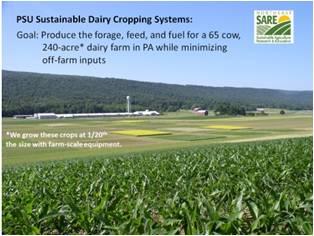
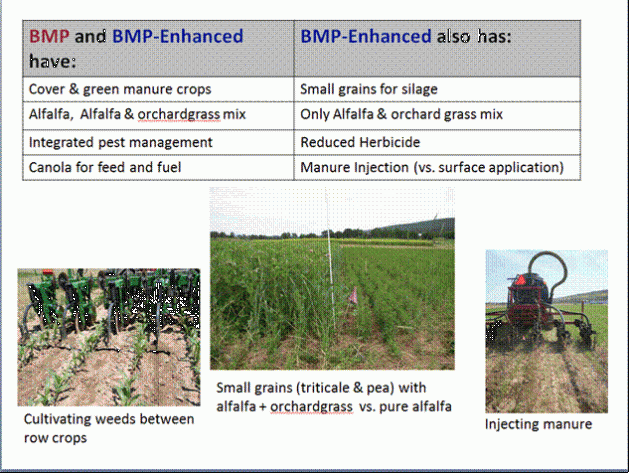
An interdisciplinary team of Penn State and USDA-ARS researchers are evaluating a Sustainable Cropping System to test the hypothesis that a dairy farm can minimize off-farm inputs and environmental impacts, and be productive, profitable and sustainable. Established in 2010 at the Penn State Agronomy Research Farm, the farm produces grain, forage and tractor fuel at 1/20th the scale of an average sized Pennsylvania dairy of 240 acres. The farm includes two diverse 6-yr crop rotations that include manure injection, perennial legumes, cover and green manure crops; a cover crop roller, winter canola, and a straight vegetable oil tractor. Within each crop rotation two management practices for no-till crop production are compared:

1. Forage Rotation compares injected manure (IM) to broadcast manure (BM); and

2. Grain Rotation compares a combination of weed management strategies designed to reduce herbicide (RH) use relative to a “standard” herbicide (SH) weed management program.

The two diverse cropping systems are designed to provide all the forage and feed for 65 lactating cows housed in a tie-stall barn, 10 dry cows and 75 young-stock. Crops are analyzed for crude protein, neutral detergent fiber, and net energy of lactation; the production of a “virtual dairy herd” is simulated using the 2001 NRC dairy nutrition model. Performance of the two farm scenarios (BMSH or IMRH) is compared. Income-over-feed costs are monitored monthly to evaluate impact of forage quality and quantity on profitability. The economic performance of the two cropping systems: BMSH vs. IMRH will be highlighted.  In 2010, the IMRH scenario had a slight trend of higher income over feed cost compared to the BMSH scenario. Related: Manure value & economics

Why Is a ‘Systems’ Approach Important for Dairies?

New agronomic management practices and technologies are often evaluated in one or two specific crops for a few growing seasons. Management practices on farms however are integrated into crop rotations, where a combination of practices can have cumulative effects on multiple aspects of the agroecosystem. This project takes an interdisciplinary approach to develop sustainable dairy cropping systems and monitor multiple indicators of systems performance. Utilizing ecological principles and innovative practices, we designed two six-year dairy crop rotations to minimize off-farm inputs and environmental impacts for a typical-sized Pennsylvania dairy farm. Within each rotation we have been comparing innovative manure or weed management strategies, as well as evaluating two green manure crops, and a tactic to sustain mycorrhizae populations in canola. The two crop rotations also compare two approaches to integrating winter canola into a dairy crop rotation.

What Did We Do?

Two cropping systems were developed to compare diverse strategies that include canola in a dairy farm rotation. The two rotations consist of 12 crop entries, each main plot being 90’ x 121’with split plots of 45’ x 121’.

Agronomy farm at Penn State University where the cropping systems are being evaluated.

The splits within the two cropping system rotations are:

Forage rotation: Corn silage/winter wheat underseeded red clover – Corn silage – canola – alfalfa (3 yr)Split plots in the forage rotation compare the use of manure shallow disk injection versus surface-applied, broadcast manure.

Grain rotation: Alfalfa (2 yr)-Canola – Rye –Soybeans/Rye -Corn grain

To reduce herbicide use, split plots evaluate a combination of mechanical and cultural weed control practices used to reduce herbicides use (banding herbicides over the crop row, inter-row cultivation, companion cropping annual with alfalfa, and one plowing event).

What Have We Learned?

By assessing the performance of the innovative practices and the dairy cropping systems from a multidisciplinary perspective, over the past three years we have gained an understanding of their performance, as well as agroecosystem interactions, benefits, and trade-offs. Overall the cropping systems and the majority of the innovative practices are providing multiple agroecosystem benefits, although a few practices need to be modified to improve their performance.

In the first three years, both of the sustainable dairy cropping systems (inject manure and reduced herbicide (IMRH) and broadcast manure and standard herbicide (BMSH)) produced almost all of the virtual dairy herd’s feeds and forage, and all of the farm’s tractor fuel needs along with some additional canola oil to sell. The economics of the virtual farm show the purchased feed costs per cow are about half of what they would be on a “typical” dairy operation.

The assumptions made for the virtual dairy farm is that it is a start-up herd with the land and buildings in place. Loans were taken out to purchase animals and to remodel the facilities. This explains why the breakeven income over feed costs is high compared to what is observed on established dairy farms in Pennsylvania. When summarizing the cash flow plans for both scenarios, the IMRH has been trending with more income per cow compared to the BMSH. Even with the high breakeven income over feed costs, the BMSH has averaged about $1.00 and IMRH about $1.85 above breakeven for 2011-2012 on average.


Future Plans

We are still simulating and analyzing the virtual dairy herd production and economic performance and plan to conduct additional advanced economic analyses over the next three years. We will continue to monitor the cropping systems, learn how to improve their performance, and share this information through scientific literature and outreach educational activities and materials.

Authors

Virginia Ishler, Dairy Complex Manager and Nutrient Management Specialist, Penn State University, vishler@psu.edu

Heather Karsten, Associate Professor of Crop Production/Ecology, Penn State University

Glenna Malcolm, Post Doctoral Researcher, Penn State University

Tim Beck, Extension Educator, Penn State University

Additional Information

Detailed information about this project as well as publications and other resources can be found at http://plantscience.psu.edu/research/areas/crop-ecology-and-management/cropping-systems

A link to our 2012 Project summary report on the NESARE website. https://projects.sare.org/sare_project/lne09-291/

Acknowledgements

Funding has been provided NESARE (Northeast Sustainable Agriculture Research and Extension) and collaboration with USDA-ARS.


The authors are solely responsible for the content of these proceedings. The technical information does not necessarily reflect the official position of the sponsoring agencies or institutions represented by planning committee members, and inclusion and distribution herein does not constitute an endorsement of views expressed by the same. Printed materials included herein are not refereed publications. Citations should appear as follows. EXAMPLE: Authors. 2013. Title of presentation. Waste to Worth: Spreading Science and Solutions. Denver, CO. April 1-5, 2013. URL of this page. Accessed on: today’s date.
Manure Application Method and Timing Effects on Emission of Ammonia and Nitrous Oxide

Waste to Worth: Spreading science and solutions logoWaste to Worth home | More proceedings….

Abstract

We conducted a field study on corn to evaluate the effect of liquid dairy manure applied pre-plant (injection or surface broadcast with immediate or 3-day disk incorporation) or sidedressed at 6-leaf stage (injected or surface-applied) on emission of NH3 and N2O. Manure was applied at a rate of 6500 gal/acre, which supplied an average of 150 lb/acre of total N and 65 lb/acre of NH4-N. Ammonia emission was measured for 3 days after manure application using the dynamic chamber/equilibrium concentration technique, and N2O flux was quantified using the static chamber method at intervals of 3 to 14 days throughout the season. Ammonia-N losses were typically 30 to 50 lb/acre from pre-plant surface application, most of the loss occurring in the first 6 to 12 hours after application. Emission rates were reduced 60-80% by quick incorporation and over 90% by injection. Losses of N2O were relatively low (1 lb/acre or less annually), but pronounced peaks of N2O flux occurred from either pre-plant or sidedress injected manure in different years. Results show that NH3 emission from manure can be reduced substantially by injection or quick incorporation, but there may be some tradeoff with N2O flux from injection.

Why Study Land Application Emissions of Ammonia and Nitrous Oxide?

Figure 1. Injection equipment used for pre-plant application (top) and sidedress application (bottom) of liquid dairy manure.

Manure is a valuable source of nitrogen (N) for crop production, but gaseous losses of manure N as ammonia (NH3) and nitrous oxide (N2O) reduce the amount of N available to the crop and, therefore, its economic value as fertilizer. These N losses can also adversely affect air quality, contribute to eutrophication of surface waters via atmospheric deposition, and increase greenhouse gas emission. And the decreased available N in manure reduces the N:P ratio and can lead to a more rapid build-up of P in the soil for a given amount of available N. The most common approach to controlling NH3 volatilization from manure is to incorporate it into the soil with tillage or subsurface injection, which can reduce losses by 50 to over 90% compared to surface application (Jokela and Meisinger, 2008). Injecting into a growing corn crop at sidedress time offers another window of time for manure application (Ball-Coelho et al., 2006). While amounts of N lost as N2O are usually small compared to NH3, even low emissions can contribute to the greenhouse effect because N2O is about 300 times as potent as carbon dioxide in its effect on global warming (USEPA, 2010). We carried out a 4-year field experiment to evaluate the effect of dairy manure application method and timing and time of incorporation on a) corn yield, b) fertilizer N credits, c) ammonia losses, and) nitrous oxide emissions.

What Did We Do?

Figure 2. Average (2009-2011) NH3-N emission rates as affected by method and timing of manure application.

This field research was conducted at the Univ. of Wisconsin/USDA Agricultural Research Station in Marshfield, WI, on predominantly Withee silt loam (Aquic glossudalf), a somewhat poorly drained soil with 0 to 2% slope. Dairy manure was applied either at pre-plant (mid- to late May) or sidedress time (5-6-leaf stage). Pre-plant treatments were either injected with an S-tine injector (15-inch spacing; Fig. 1) or incorporated with a tandem disk immediately after manure application (< 1 hour), 1-day later, or 3 days later. All plots were chisel plowed 3 to 5 days after application. Sidedress manure applications were either injected with an S-tine injector (30-inch spacing) or surface applied (Fig. 1). Fertilizer N was applied to separate plots at pre-plant at rates of 0, 40, 80, 120, 160, and 200 lb/acre as urea and incorporated with a disk. Liquid dairy manure (average 14% solids) was applied at a target rate of 6,500 gal/acre. Manure supplied an average of 158 lb total N and 62 lb NH4-N per acre, but rates varied across years and application times.

Ammonia emission was measured following pre-plant and sidedress manure applications in 2009-2011 with the dynamic chamber/equilibrium concentration technique (Svensson, 1994). Measurement started immediately after manure application and continued through the third day. Ammonia measurement ended just before disking of the 3-day incorporation treatment, so the 3-day treatment represents surface-applied manure. Nitrous oxide was measured using the static, vented chamber technique following the GRACEnet protocol (Parkin and Venterea, 2010). Measurement began two days after pre-plant manure application and continued approximately weekly into October.

What Have We Learned?

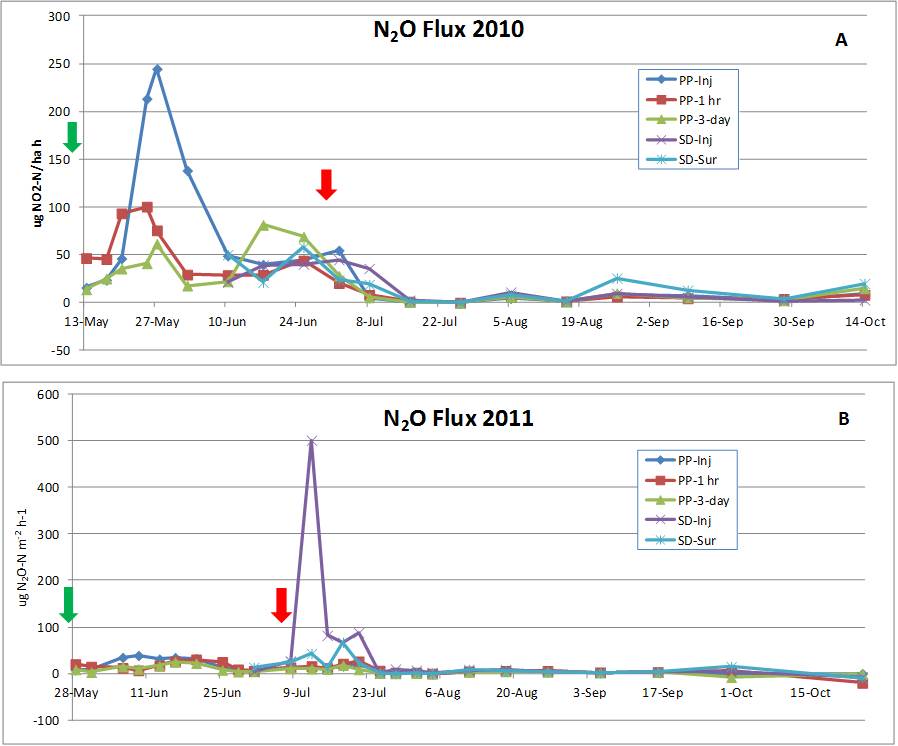
Figure 3. Nitrous oxide (N2O) flux as affected by method and timing of dairy manure application from May to October of 2010 (A) and 2011 (B). Arrows show times of manure application. Note differences in scale for 2010 and 2011.

The 3-year average annual NH3 emission rate from surface applied (3-day incorporation) manure was relatively high immediately following application but declined rapidly after the first several hours to quite low levels (Fig. 2). Cumulative NH3-N loss over the full measurement period averaged over 40 lb/acre from surface application but was reduced by 75% with immediate disking and over 90% by injection. Ammonia losses varied somewhat by year, but patterns over time and reductions by incorporation were similar. The pattern of ammonia loss, 75% of the total loss in the first 6 to 12 hours, emphasizes the importance of prompt incorporation to reduce losses and conserve N for crop use.

Nitrous oxide flux was quite low for most manure treatments during most of the May to October period in both years (Fig. 3). However, there were some increases in N2O flux after manure application, and pronounced peaks of N2O emission from the injection treatment at either pre-plant (2010) or sidedress (2011) time. Greater emission from injection compared to other treatments may have occurred because injection of liquid manure places manure in a relatively concentrated band below the surface, creating anaerobic (lacking in oxygen) conditions. Nitrous oxide is produced by denitrification, a microbial process that is facilitated by anaerobic conditions. Reasons for the difference between 2010 and 2011 are not readily obvious, but are probably a result of different soil moisture and temperature conditions.

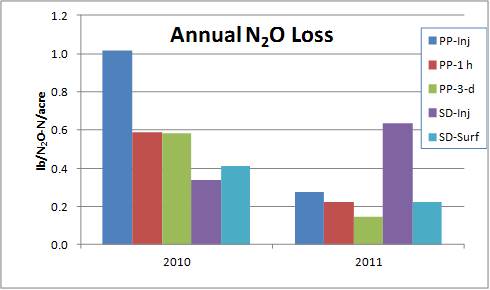
Figure 4. Annual (May-Oct.) loss of N2O as affected by method and timing of liquid dairy manure application. 2010 and 2011.

Based on these results, injection of liquid dairy manure resulted in opposite effects on NH3 and N2O emission, suggesting a trade-off between the two gaseous N loss pathways. However, the total annual N losses from N2O emissions (1 lb/acre or less; Fig. 4) were only a fraction of those from ammonia volatilization, so under the conditions of this study N2O emission is not an economically important loss. As noted earlier, however, N2O is a potent greenhouse gas, so even small amounts can contribute to the potential for global climate change. The dramatic reduction in NH3 loss from injection, though, may at least partially balance out the increased N2O because 1% of volatilized N is assumed to be converted to N2O (IPCC, 2010). Immediate disk incorporation was almost as effective as injection for controlling NH3 loss and, on average, resulted in less N2O emission than injection. But the separate field operation must be done promptly after manure application to be effective. A possible alternative is to use sweep injectors or other direct incorporation methods that place manure over a larger volume of soil and/or create more mixing with soil, thus creating conditions less conducive to denitrification and N2O loss.

Manure application timing and method/time to incorporation significantly affected grain yield in 2009, 2010, and 2012 and silage yield in 2012. Pre-plant injection produced greater yields than one or more of the broadcast treatments in 2009 (grain) and 2012 (grain and silage). Overall, yield effects of application and incorporation timing were variable from year to year, probably because of differences in weather and soil conditions and actual manure N rates applied. The fertilizer N equivalence of manure was calculated by comparing the yield achieved from each manure treatment to the yield response function from fertilizer N. Fertilizer N equivalence values were quite variable by year, but 4-year averages expressed as percent of total manure N applied were 52% for injection (pre-plant and sidedress), 37% for 1-hour or 1-day incorporation, and 34% for 3-day incorporation. So, when expressed as a percent of total manure N applied, N availability generally decreased as time to incorporation increased, which reflects the amounts of measured NH3 loss.

In summary, ammonia volatilization losses increased as the time to incorporation of manure increased. Injection of manure resulted in the lowest amount of NH3 volatilization, but higher N2O emissions. In this study, reducing the large NH3 losses by injecting manure provided more environmental benefit compared to the small increase in N2O emissions. In addition, injection or immediate incorporation resulted, on average, in higher fertilizer N value of manure for corn production. The decreased need for commercial fertilizer N could potentially result in greater profitability and a smaller carbon footprint.

Future Plans

We have started other research to evaluate yield response, N cycling, and emission of NH3 and N2O from various low-disturbance manure application methods in silage corn and perennial forage systems.

Authors

Bill Jokela, Research Soil Scientist, USDA-ARS, Dairy Forage Reserch Center, Marshfield, WI, bill.jokela@ars.usda.gov

Carrie Laboski, Assoc. Professor, Dept. of Soil Science, Univ. of Wisconsin

Todd Andraski, Researcher, Dept. of Soil Science, Univ. of Wisconsin

Additional Information

Acknowledgements

The authors gratefully acknowledge Matt Volenec and Ashley Braun for excellent technical assistance in conducting this research. Funding was provided, in part, by the USDA-Agricultural Research Service and the Wisconsin Corn Promotion Board.

The authors are solely responsible for the content of these proceedings. The technical information does not necessarily reflect the official position of the sponsoring agencies or institutions represented by planning committee members, and inclusion and distribution herein does not constitute an endorsement of views expressed by the same. Printed materials included herein are not refereed publications. Citations should appear as follows. EXAMPLE: Authors. 2013. Title of presentation. Waste to Worth: Spreading Science and Solutions. Denver, CO. April 1-5, 2013. URL of this page. Accessed on: today’s date.

Valuing Feedstocks for Anaerobic Digestion – Balancing Energy Potential and Nutrient Content

Waste to Worth: Spreading science and solutions logoWaste to Worth home | More proceedings….

Why Study the Interaction Between Energy and Nutrients for Digestion?

To improve the energy production and revenue generation, many farm digester operators are including off-farm feedstocks in the blend.  Off-farm feedstocks are raw materials with high carbon concentrations that can be degraded anaerobically.  Common off-farm feedstocks include food service or retail waste, food processing byproducts, residuals from biofuels production and FOG (fat, oil & grease) resulting from food preparation.  Typically, off-farm feedstocks have a higher energy potential when compared to manure.  Manures generally have biogas potential in the range of 280 to 500 L of biogas/kg of VS, compared to off-farm feedstocks which can range from 300 to 1,300 L of biogas/kg of VS [1].  In addition to the increased biogas production, revenue can also be generated from tipping fees collected for feedstock brought onto a farm.  The tipping fee is typically comparable to the cost of disposing of the material at a landfill or wastewater treatment plant. 

The purpose of this ongoing project is to evaluate the biogas potential and impact on nutrient management of off-farm feedstocks for anaerobic digestion.  

What Did We Do?

The Anaerobic Digestion Research and Education Center (ADREC) has carried out hundreds of biogas methane potential tests (BMP’s) over the past 5 years.  The purpose of the BMP is to evaluate if a feedstock is anaerobically degradable and predict the biogas production under ideal conditions.  As part of the biogas testing, many feedstocks were also characterized for their nutrient composition.

What Have We Learned?

While off-farm feedstocks do offer opportunities to improve the profitability of anaerobic digestion systems, operators must also consider the costs associated with bring material onto the farm.  Water contained in off-farm feedstock contributes to the manure volume and adds cost during land application.  Nutrients contained in feedstocks need to be measured and considered in the context of nutrient management planning.  In addition, the regulatory and record keeping requirements associated with off-farm feedstock should also be factored into any cost-benefit analysis.

Future Plans

ADREC is planning to continue the BMP evaluations as part its normal fee for service activities.

Authors

Dana Kirk, Specialist, Michigan State University, kirkdana@anr.msu.edu

Louis Faivor, Technician, Michigan State Univeristy

Additional Information

http://researchgroups.msu.edu/adrec/about


[1] KTBL.  2012.  Biogas Profitability Calculator.  http://daten.ktbl.de/biogas/showSubstrate.do?zustandReq=3#anwendung


The authors are solely responsible for the content of these proceedings. The technical information does not necessarily reflect the official position of the sponsoring agencies or institutions represented by planning committee members, and inclusion and distribution herein does not constitute an endorsement of views expressed by the same. Printed materials included herein are not refereed publications. Citations should appear as follows. EXAMPLE: Authors. 2013. Title of presentation. Waste to Worth: Spreading Science and Solutions. Denver, CO. April 1-5, 2013. URL of this page. Accessed on: today’s date.

Small and Backyard Poultry Flocks

Waste to Worth: Spreading science and solutions logoWaste to Worth home | More proceedings….

Abstract

Because of their size, it is possible to raise most poultry species (chickens, turkeys, ducks, geese, pigeon, etc.) with only a minimal amount of acreage. This has made them increasingly popular in rural, suburban, and urban areas throughout the United States. They are suitable for 4-H/classroom projects, backyard flocks, as well as small- and medium-sized production flocks. Many of those who have started raising poultry have limited experience with poultry production.

What Topics Will Be Covered In This Presentation?

Example of a small layer flock (3 Buff Orpingtons) in a backyard

An overview of the situation with small and backyard flocks with regards to waste management

What Did We Do?

Visits to different small and backyard flocks, as well as information provided during presentations and webinars.

What Have We Learned?

Poultry production in the US started out as small farm operations. Over the decades poultry production has evolved from farming to an industry. World War II created a huge demand for poultry products. As farm workers were drafted into the army production become more mechanized. After the war ended many of the returning soldiers did not return to a life on the farm. New urban markets for poultry products developed, furthering fueling the modernization of poultry production. Today we have come full circle. It is becoming more common to see small chicken flocks raised in backyard poultry flocks. Niche markets have also been developed for organic and pasture poultry production.

The front yard of a home with a backyard chicken flock

Although flock size is small, chickens kept in backyards still produce a considerable amount of manure that needs to be managed. Many backyard flock owners also raise their own vegetables and use the manure produced as a valuable fertilizer. For others, however, the manure can be allowed to accumulate and, when not properly stored, can become an odor nuisance. Pasture-raised poultry flocks, given sufficient acreage, spreads the manure over a large area reducing, or eliminating, odor problems.

For both backyard and confined small poultry flocks, composting of both manure and any dead birds has become common.

Future Plans

Use of composted manure as fertilizer for raised garden beds

In the 1950s more than 40 state colleges and universities had poultry science departments. Discoveries in nutrition, genetics, physiology, health and food science helped poultry production become an important food industry.  Today only 6 universities have poultry departments. With the loss of university poultry depeartments and retirmements of key extension people, there has been a loss of updated extension publications to provide guidance to small and backyard poultry flock owners. Since very little information is available addressing the management needs of these smaller poultry flocks, many producers have turned to outdated books as well as non-science-based and anecdotal information for their education needs. A new eXtension community of practice for small and backyard poultry has been developed to fill this information void.

Author

Dr. Jacquie Jacob; Poultry Extension Associate; University of Kentucky, 906 Garrigus Building; Lexington, KY; 40546-0215, jacquie.jacob@uky.edu

Additional Information

www.eXtension.org/poultry


The authors are solely responsible for the content of these proceedings. The technical information does not necessarily reflect the official position of the sponsoring agencies or institutions represented by planning committee members, and inclusion and distribution herein does not constitute an endorsement of views expressed by the same. Printed materials included herein are not refereed publications. Citations should appear as follows. EXAMPLE: Authors. 2013. Title of presentation. Waste to Worth: Spreading Science and Solutions. Denver, CO. April 1-5, 2013. URL of this page. Accessed on: today’s date.
Smartphone Apps for Manure Management

Waste to Worth: Spreading science and solutions logoWaste to Worth home | More proceedings….

graph

The home screen of the Manure Calculator app.

Abstract

Technology is driving many exciting possibilities in agriculture. The increase in use of smartphones, tablets, and other mobile devices is changing the way people consume information and interact with each other. One exciting opportunity is to utilize smartphone apps to make farm record keeping easier.  With that in mind, two apps were created for livestock and poultry farms, “Manure Calculator” and “Manure Monitor”.

Why Create Apps for Livestock and Poultry Environmental Stewardship?

Concerns about the digital divide and access to technology often mean that educators try to ensure educational materials are available in paper or other common formats. The creation of apps seems like a tool that would be available only to a select group. The reality is that mobile technologies are leapfrogging the traditional use of computers or laptops and many are gaining access to digital information through mobile devices of their own or those accessed through an adviser or educator. We believe that mobile apps have potential to actually increase the reach of credible, research-based information to audiences that may be underserved through traditional educational outreach.

One of the problems with record-keeping is that these are seen as an ‘add-on’ or additional chore beyond what a farmer would normally do. Incorporating records or planning processes into mobile devices can lower this inconvenience factor since users usually keep their mobile devices with them all the time and are comfortable using them.

Last, but not least, farmers are becoming more aware of the need to communicate their actions and stewardship ethics to audiences not familiar with agriculture. Social media, blogs, and crowdsourcing sites (like Reddit or Wikipedia) make it more possible than ever for farmers to interact with people that have questions or are skeptical about certain farming practices. Keeping records or developing plans on a mobile device makes it easier to share actions and activities and potentially counteract negative or misleading information that is circulated through the same media.

graph

Home screen for the Manure Monitor app.

What Did We Do?

“Manure Calculator” has three sections. 1) calculate the amount of manure spread (calibrate your spreader) 2) calculate the amount of nutrients applied by using either your own manure test or using book values and 3) calculate the economic value of that manure. The app keeps a history of past entries and allows the user to email a single entry or an entire history to themselves for record keeping purposes. The value section was based on an existing spreadsheet from the University of Nebraska. The book values section was based on the ASABE 384.2 Manure Production and Characteristics standard.

Future Plans

We believe that two of the concerns for app development are:

1) The cost to develop apps. When looking at such a specific topic as manure management or environmental records, the cost is usually the first question asked by other educators or agency staff and it can be substantial. Our plan is to make this app code available to others that would like to customize or build on the app for their clientele (specific species or specific state). This will hopefully lower the cost of development for others AND lead to app versions that are more useful to farmers. It is also important to recognize that creating both of these apps was actually less expensive than funds needed to develop some of the traditional educational modules in this same project.

2) Integration into software. We believe apps can be even more useful if they provide a simple way to enter data into software being used for comprehensive planning or record keeping procedures. Software companies interested in integrating these apps into data entry will be welcomed.

Author

Jill Heemstra, University of Nebraska jheemstra@unl.edu

Acknowledgements

This program originated thanks to funding from the USDA National Institute for Food and Agriculture (NIFA) Beginning Farmer and Rancher Development Program (BFRDP) under award #2009-49400-05871. This project is a joint effort between University of Nebraska, Montana State University, Livestock and Poultry Environmental Learning Center and the National Young Farmers Educational Association (NYFEA).

App developer: Jeff Abele from Move Creative http://movecreative.com

We would like to thank the following people for their feedback and reviews of the apps:

Leslie Johnson, Charles Shapiro, William Kranz, Larry Howard, and Rick Koelsch, University of Nebraska; Mark Risse and Melony Wilson, University of Georgia; Laura Pepple, University of Illinois; Amanda Douridas, Ohio State University; Thomas Bass, Montana; Saqib Mukhtar, Texas AgriLife Extension; Rhonda Miller, Utah State University; and many others.

The authors are solely responsible for the content of these proceedings. The technical information does not necessarily reflect the official position of the sponsoring agencies or institutions represented by planning committee members, and inclusion and distribution herein does not constitute an endorsement of views expressed by the same. Printed materials included herein are not refereed publications. Citations should appear as follows. EXAMPLE: Authors. 2013. Title of presentation. Waste to Worth: Spreading Science and Solutions. Denver, CO. April 1-5, 2013. URL of this page. Accessed on: today’s date.
Extension Outreach Response to Livestock Mortality Events Associated With Algal Toxin Production in Georgia Farm Ponds

Waste to Worth: Spreading science and solutions logoWaste to Worth home | More proceedings….

Purpose

Excessive nutrient enrichment in watersheds can create harmful algal blooms (HABs) in aquatic systems, including ponds, which are frequently used to water livestock. Harmful algal blooms are typically dominated by cyanobacteria (commonly referred to as “blue green algae”) many of which produce toxins that can be harmful to fish, wildlife and humans.  In May 2012, our laboratory began receiving reports of cattle mortalities associated with HABs. We began an outreach effort to screen and identify algal species and toxins in water samples submitted by private citizens from ponds throughtout Georgia. Prior to this effort, no state or federal laboratories offered such a service. Private laboratories conduct these services, however the collection protocols and analytical costs preclude the average citizen from utilizing them. Rapid detetion of a HAB is critical for farmers so that access to the water source can be restricted. We recognized the need to provide such a service and to educate the public regarding exposure effects, preventative measures, and treatment of HABs.

During Summer 2012 sampling events we commonly encountered Microcystis blooms in both farm ponds used by humans for fishing and recreation (above) and for watering livestock (below).

What Did We Do?

We documented dense blooms of  planktonic cyanobacteria, predominantly Microcystis aeruginosa, and  extremely high levels of the potent hepatotoxin, Microcystin, in water samples submitted by Georgia cattle producers (Haynie et al. 2013). Many of these samples were submitted by producers who had experienced cattle mortalities, potentially due to algal toxin exposure.

Through a collaborative effort with UGA’s Agriculture and Environmental Services Laboratories, we established a water screening service that includes algal speciation and toxin detection. This service became available to the public in Februrary 2013. This effort included a detailed outreach letter to extension agents, sampling protocol and materials for water sample collection and shipping. This screening service is avalible for either a $30.00 (algal identification) or $45.00 (toxin analysis and algal identification) fee. The submitter will receive an electronic report within 24 hours with results, interpretation, and recommendations.

We have begun promoting this service and educating the public about HABs by participating in various short courses, meetings and outreach opportunities.

What Have We Learned?

We have demonstrated that HABs and cyanotoxins are common in Georgia agriculture ponds. Therefore, the potential for livestock exposure and subsequent effects including mortality are likely to occur. Education and establishment of a rapid toxin detection service is warranted and will be beneficial to producers. The livestock deaths have highlighted an important issue for Georgia farmers and pond owners that will likely be increasingly prevalent under projected climatic models.

Future Plans

We will continue our outreach efforts by participating in University and industry sponsored workshops and meetings. We will use these opportunities to educate and inform the public about the newly available algal screening service. We have included, in recently submitted grants, funding to subsidize testing expenses in order to encourage more farmers/pond owners to use this service. We intend to utilize the testing service to gather spatially referenced data on the prevalence of HABs and toxin levels in GA ponds. This information, which is not currently available,  will inform nutrient management plans and BMPs that will ultimately improve nutrient management and water resources in Georgia.  We hope that this effort will serve as a model for other states experiencing similar increases in frequency and severity of HABs in agricultural settings.

Authors

Rebecca S. Haynie, Post Doctoral Associate, Warnell School of Forestry and Natural Resources, University of Georgia, Athens, GA 30602 hayniers@uga.edu

Susan Wilde, Assistant Professor, Warnell School of Forestry and Natural Resources, University of Georgia, Athens, Georgia 30602

David Kissel, Director and Professor, Agriculture and Environmental Services Laboratory, University of Georgia, 2400 College Station Road, Athens, Georgia 30602-9105

Leticia Sonon, Program Coordinator, Soil, Plant, and Water Analysis Laboratory, University of Georgia, 2400 College Station Road, Athens, Georgia 30602-9105

Uttam Saha, Program Coordinator, Feed and Environmental Water Analysis Laboratory, University of Georgia, 2400 College Station Road, Athens, Georgia 30602-9105

Additional Information

Haynie, R. S., J. R. Morgan, B. Bartelme, B. Willis, J. H. Rodgers Jr., A.L. Jones and S. B. Wilde.  Harmful algal blooms and toxin production in Georgia ponds. (in review). Proceedings of the Georgia Water Resources Conference. Athens, Georgia. April 2013.

UGA Agriculture and Environmental Services Laboratory: http://aesl.ces.uga.edu/

Burtle, G.J. July 2012. Managing Algal Blooms and the Potential for Algal Toxins in Pond Water. University of Georgia Cooperative Extension Temporary Publication 101.

Haynie, R.S., J.R. Morgan, B. Bartelme, S. B. Wilde. Cyanotoxins: Exposure Effects and Mangagement Options. Proceedings of the UGA Extension Beef Cattle Shortcourse. Ed. L. Stewart. Athens, Georgia. January 2013.

News article: https://www.wsbtv.com/news/local/experts-say-toxic-algae-may-pose-threat-kids-pets/242741856/

Acknowledgements

Drs. Lawton Stewart, Gary Burtle (Animal and Dairy Science, College of Agriculture and Environmental Sciences, UGA)  coordinated sample delivery from pond owners to our laboratory. Brad Bartelme, James Herrin and Jamie Morgan (Warnell School of Forestry and Natural Resources, UGA) contributed significant technical assistance with algal screening and sample processing.

The authors are solely responsible for the content of these proceedings. The technical information does not necessarily reflect the official position of the sponsoring agencies or institutions represented by planning committee members, and inclusion and distribution herein does not constitute an endorsement of views expressed by the same. Printed materials included herein are not refereed publications. Citations should appear as follows. EXAMPLE: Authors. 2013. Title of presentation. Waste to Worth: Spreading Science and Solutions. Denver, CO. April 1-5, 2013. URL of this page. Accessed on: today’s date.

Design, Construction and Implementation of a Pilot Scale Anaerobic Digester at the University of Missouri-Columbia’s Swine Teaching and Research Farm

Waste to Worth: Spreading science and solutions logoWaste to Worth home | More proceedings….

* Presentation slides are available at the bottom of the page.

Abstract

Self-scraping system in hog confinement building.

Animal manure is often utilized by the American agriculture industry as fertilizer without considering the potential energy production. It is well established that on-farm anaerobic digestion (AD) can be effective in providing energy, reducing greenhouse gas emissions, and controlling air and water pollutions. Knowledge of the ADs on biogas production, digested and stored manure nutrients, and air emissions must reach parties of interest. A modular, pilot-scale, mesophilic AD system is being installed for the new swine finishing facility at University of Missouri-Columbia Research Farm.

The new AD design utilizes three insulated, reinforced fiber-glass tanks of 2500-gallon in size, which are commercially available. One tank is designed for feedstock storage and mixing, and the other two tanks are for digestion. The dual-tank set up provides research flexibility as either single stage with two-stream parallel replication or dual-stage single-stream experiments. The design employs small biogas (generated by the AD) boilers for heating the digester tanks and system building.  It also features a feedstock-digestate heat-exchanger for heat reclamation to reduce net energy input; which will be critical to the small and mid-size AD systems not generating electricity (no waste-heat from engines).

Valve control box (under construction). This allows extra manure and effluent to be discharged directly to the lagoon or to pump fresh manure directed back to the digester.

The system also includes a geothermal heat exchanger for biogas cooling to collect condensate in the biogas along with a small iron sponge to reduce H2S concentrations which improves the biogas quality. Excess biogas will be burned in boiler and the heat produced will be dissipated through a dual purpose radiator. The radiator provides building heat in winter and releases heat outside in summer. The goals of this project are to demonstrate AD for small and mid-size swine productions, quantify and characterize manure nutrient changes due to AD and storage, and develop baseline emission factors for raw and digested manure. This paper reports the design, construction and implementation of the AD system.

Why Study Small-Scale Anaerobic Digestion?

The purpose of this project is to establish a pilot scale, on-farm anaerobic digester (AD) that demonstrates and evaluates the potential energy production, manure management, and overall economic viability of such systems. This research will provide invaluable information for small to medium sized swine farms seeking viable energy alternatives, practical manure management practices and air quality improvements.

What Did We Do?

Current digester system enclosed in greenhouse.

Construction began in the Fall of 2012, at the University of Missouri-Columbia’s Swine Teaching and Research Farm. This modular, pilot-scale, mesophilic AD system is being constructed next to a four-room swine finishing research barn. Each of the finishing room has individual deep-pit storage, with a  pull-plug system for draining the manure to the lagoon. Manure scraper systems are installed in two of the rooms to more frequently collect the manure. The AD system is comprised of three insulated, reinforced fiber-glass tanks, each with a capacity of 2500-gallons. The first tank is designed for feedstock storage and pre-mixing, while the other two are for digestion. The dual tank set up allows flexibility for researchers to conduct experiments either with a single stage, two-stream parallel replication or dual-stage single-stream digestion process. The system employs a biogas (generated by AD) boiler for heating the digestion tanks to maintain continuity. A 3,000 gallon biogas bladder storage unit stores the biogas for a few hours. A feedstock-digestate heat exchanger is designed for heat reclamation to increase net energy output; which will be critical to a small to mid-size AD systems that do not generate electricity (no waste-heat from biogas engines). The boilers also supply heat to the AD housing through radiators, while the excess biogas will be flared off.

What Have We Learned?

Designing and implementing an AD system is complex and time consuming. It is very important to involve a good engineering or technical support team. If the barn is not designed to accommodate an AD system, significant consideration is needed to manage the manure collection and transport, and to maintain manure freshness and solids content. Project management is critical to consider planning and coorperation between the farm personnel and management, utility and construction companies, and the engineering support firm.

Future Plans

Pilot test will be conducted to examine and fine-tune the system. The AD system is designed for research and demonstration purposes. Submitted proposals include plans for studying the improved efficiency due to better design and heat-exchangers, effects of feedstock, co-digestion, feedstock pre-treatment on biogas production, and characterizing greenhouse gas emissions from untreated manure and AD-treated manure.

Authors

Brandon Harvey, Research Assistant, Agricultural Systems Management, University of Missouri bchfzf@mail.missouri.edu

Teng Lim, Assistant Professor, Agriculture Systems Management, University of Missouri. Kevin Rohrer, Engineer, Martin Machinery, LLC.

The authors are solely responsible for the content of these proceedings. The technical information does not necessarily reflect the official position of the sponsoring agencies or institutions represented by planning committee members, and inclusion and distribution herein does not constitute an endorsement of views expressed by the same. Printed materials included herein are not refereed publications. Citations should appear as follows. EXAMPLE: Authors. 2013. Title of presentation. Waste to Worth: Spreading Science and Solutions. Denver, CO. April 1-5, 2013. URL of this page. Accessed on: today’s date.