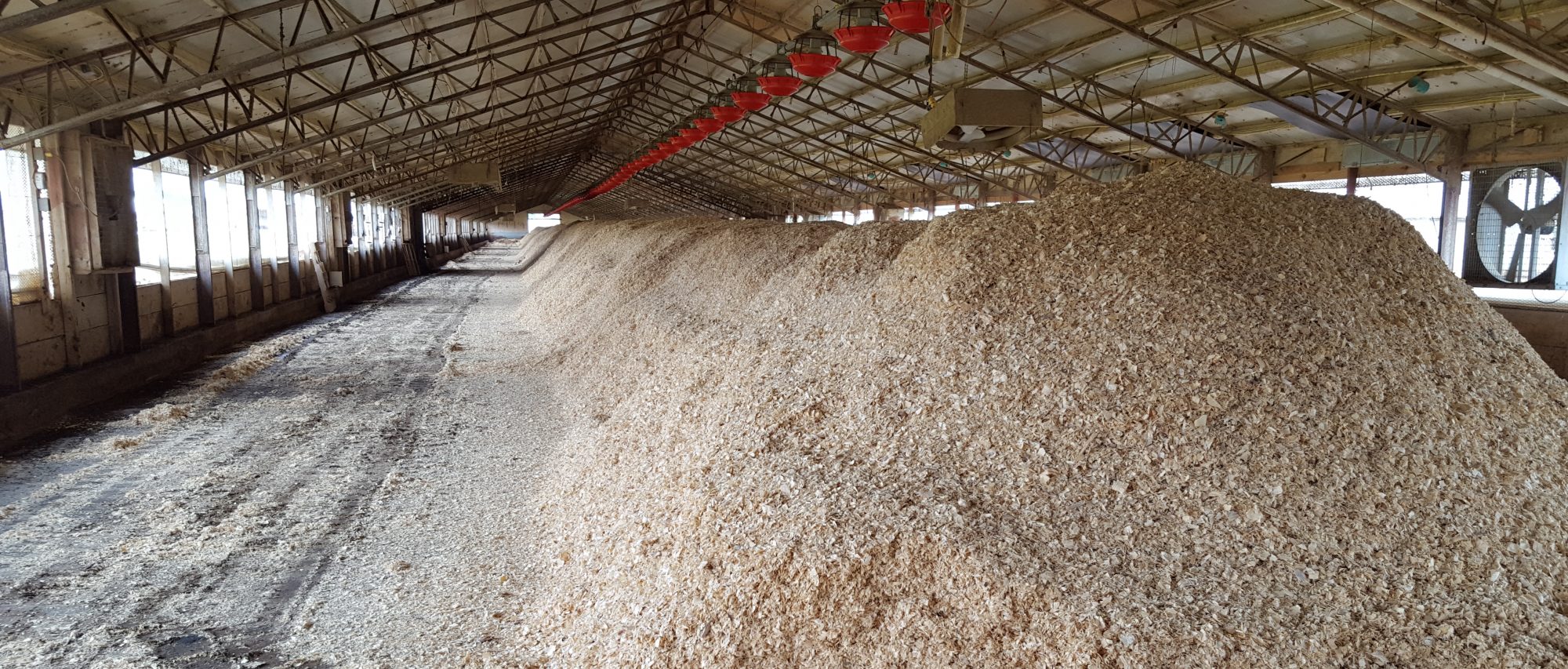
Reducing H2S, NH3, PM, & Odor Emissions from Deep-pit Pig Finishing Facilities by Managing Pit Ventilation

Reprinted, with permission, from the proceedings of: Mitigating Air Emissions From Animal Feeding Operations Conference.

The proceedings, “Mitigating Air Emissions from Animal Feeding Operations”, with expanded versions of these summaries can be purchased through the Midwest Plan Service.

This Technology is Applicable To:

Species: Swine (maybe Dairy and Poultry)
Use Area: Animal Housing
Technology Category: Management
Air Mitigated Pollutants: Odor, Hydrogen Sulfide, Ammonia, Particulates (PM10)

System Summary

A recent study determined that a large majority (75 to 80 %) of the total NH3 and H2S emissions from a 2000-head tunnel-ventilated deep-pit pig-finishing barn for 45 days during August and September 2004 were emitted from the pit exhaust stream even though only 20 to 30 % of the total barn’s ventilation air was being provided by pit fans. This information allows producers with deep-pit facilities to strategically utilize catch and treat emission control technologies, such as biofilters, ONLY on pit fans airstreams that would result in large reductions (>50%) in the emissions of hazardous gases, odor, and particulate matter by treating only a small portion of the total ventilation air (figure 1). Another follow up study found that emissions of certain pollutants, may be reduced slightly (10 to 20%) by simply eliminating pit fans altogether for a deep-pitted pig building.

The phenomenal of a majority of the barn’s airborne pollutants being emitted by pit fans, may also be true for other swine production phases or for even other species (dairy and poultry) housed in deep pit facilities. This would mean that emission reductions of >50 % for certain pollutants are potentially possible when emission control technologies like biofilters are strategically placed on large emitting pit fan sources in deep-pit buildings. If only small reductions (<20%) of certain pollutants are needed, this maybe accomplished by the elimination of pit fans altogether.

Applicability and Mitigating Mechanism

  • Pit Fan(s) airstreams contain a majority of the critical airborne pollutants (NH3, H2S, PM10, odor) from deep-pitted pig buildings
  • If biofilters are strategically used on pit exhaust air, sizable (>50%) emission reductions of some pollutants are possible for either existing or new deep-pit facilities

Limitations

  • Information only available presently for deep-pit pig finishing barns but anticipated similar results for other swine plus dairy and poultry housed in deep-pit buildings
  • Valid for NH3, H2S, odor, and certain PM fractions, not known if greenhouse gases will also be concentrated in the pit fan exhaust air of deep-pit facilities

Cost

There is no additional cost of this “technology” since a well-designed and operating ventilation system is required in any animal facility and especially in a deep-pitted pig building. There actually may be a cost saving if producers decided to install no or only a limited number of pit fans instead of the standard number for the livestock industry which is approximately 20% of the total barn’s ventilation system. A cost savings is often realized since the installation of pit fans is typically more expensive than wall fans plus pit fans have higher maintenance requirements and are more frequently in need of replacement.

Authors

Larry D. Jacobson1, Brian P. Hetchler1,David R. Schmidt11Bioproducts & Biosystems Engineering, University of Minnesota
Point of Contact:
Larry D. Jacobson, jacob007@umn.edu

The information provided here was developed for the conference Mitigating Air Emissions From Animal Feeding Operations Conference held in May 2008. To obtain updates, readers are encouraged to contact the author.

Snap-Shot Assessments of Nutrient Use on Dairy Farms

Nutrient Use Efficiency

Escalations in feed and fertilizer cost, and ebbing milk prices are motivating many dairy farmers to find new ways to improve nutrient use efficiency (NUE) on their farms. But how can NUE be determined and monitored easily on dairy farms, and what improvement in NUE can be realistically expected? Over the past several years researchers at the U.S. Dairy Forage Research Center and the University of Wisconsin-Madison have been developing and using rapid assessment methods to provide snap-shot assessments of feed, fertilizer, and manure use on dairy farms in various settings. The most recent work was a survey of 54 Wisconsin dairy farms known as On Farmers’ Ground.

Snap-Shot Assessments of Nutrient Use on Dairy Farms Webcast

This webcast describes and demonstrates the usefulness of using rapid assessment methods to provide snap-shot assessments of feed, fertilizer, and manure use on dairy farms in various settings.

Resources Available Through “On Farmers’ Ground”

  • Fact Sheet which outlines the procedures used to provide ‘snap-shot’ assessments of feed, fertilizer and manure use. Some examples are provided of the information obtained using snap-shot assessment techniques.
  • Survey Questionnaire designed to compile information on herd size and composition, livestock facilities, land use, management practices, and motivations and goals related to feed, fertilizer and manure management.
  • Manure Tracking Book used to systematically tract how, when and where farmers spread manure, and factors that influenced farmer decisions related to manure management.
  • Final Farmer Report which contains analytical results of feed and manure samples taken during the farm visits, including information on how farmers may use these results to improve feed and manure management. The Final Farmer Report also contains estimates of manure collection, as well as a series of farm maps depicting crop rotations, manure spreading practices, nitrogen and phosphorus applications as fertilizer, manure and legume-fixed N, and farm cropland areas that are impacted by USDA-NRCS 590 Nutrient Management Standards.
  • Four scientific journal articles related to the On Farmers’ Ground project

Author

J. Mark Powell
Soil Scientist-Agroecology, USDA-ARS US Dairy Forage Research Center
Professor of Soil Science, University of Wisconsin-Madison
1925 Linden Drive West
Madison, WI 53706
<mark.powell@ars.usda.gov>

Copper Sulfate Foot Baths on Dairies and Crop Toxicities

Environmental Issues for Land Applying Copper Sulfate

A rising concern with the application of dairy wastes to agricultural fields is the accumulation of copper (Cu) in the soil. Copper sulfate (CuSO4) from cattle footbaths is washed out of dairy barns and into wastewater lagoons. The addition of CuSO4 baths can increase Cu concentration significantly in manure slurry, from approximately 5.0 grams per 1,000 liters to 90.0 grams per 1,000 liters. The Cu-enriched dairy waste is then applied to agricultural crops, thus raising concerns about how soils and plants are impacted by these Cu additions.

Once added to the soil, the Cu+2 from CuSO4 can:

  1. remain in the soluble form of Cu+2 which is available to plants;
  2. adsorb to organic matter;
  3. adsorb to clay particles; or
  4. be converted to less available mineral forms.

Typically, the majority of Cu strongly adsorbs to soil organic matter and clay surfaces. In fact, Cu binds to organic matter more strongly than any other micronutrient. Dairy manure is rich in organic matter and will naturally have greater Cu adsorption than dairy lagoon water which is low in organic matter. In soils with pH values greater than 7.0, soluble Cu+2 will react with water to form either Cu(OH)2 or associations with Fe-oxides. Thus, almost all Cu added to soil typically stays in soil. For more information regarding soil Cu reactions, read Copper Deficiency in Cereal Grains.

The potential for groundwater contamination, via enhance downward Cu transport, will be greater in sandy, acidic soils or under irrigated conditions. And although increasing soil organic matter content will increase Cu adsorption, Cu associated with dissolved organic phases could also be transported downward. However, most studies suggest that soluble Cu transported through soils does not exceed the national drinking water standard of 1.3 mg/L. For more information regarding Cu transport, read Kinetics of copper desorption from soils as affected by different organic ligands.

Research Findings for Land Applying Copper Sulfate

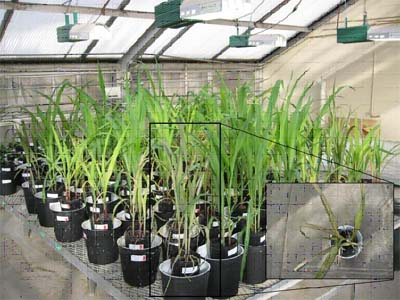
With the strong binding of soluble Cu to soils, very little of the applied Cu is plant-available. Overall, the potential for Cu toxicities in plants is relatively small given the amount of Cu that is added through dairy-waste application. Preliminary results from the USDA–ARS in Kimberly, Idaho, showed that extractable soil Cu concentrations ranging from 1 to 154 parts per million (ppm) in a calcareous soil had no effect on alfalfa or corn silage biomass yields, while plant survival was drastically impeded at concentrations greater than 323 ppm.

Copper application rates used in this study to achieve reductions in yields and plant survival greatly exceeded rates typically seen for dairy manure applications. In a similar study in New York, Flis et al. (J. Animal Science, 2006, 84:184-185, supplement 1) applied CuSO4 at 0, 6.3 and 12.6 pounds Cu per acre to corn silage, orchardgrass, and timothy grass using Cu rates equivalent to those typical to dairy waste applications. Corresponding soil Cu concentrations were 11, 13 and 18 ppm, respectively. The varying Cu application rates had no effect on grass or corn silage yields, although tillering and regrowth rates were significantly reduced for the grasses.

While these results are encouraging in the short-term, repeated applications of dairy manures could potentially raise Cu concentrations to levels toxic to plants, with very limited possibilities for remediation. A few fields in Idaho that have received frequent applications of lagoon water have shown evidence of Cu accumulation. Because Cu is so tightly bound by the soil, it is very difficult to remove. Succeeding crops can only remove 0.1 pound Cu per acre per year. As it stands now, if a grower waits until Cu plant toxicity symptoms occur (including plant death), they will continue to see Cu toxicities in that field for an indefinite period of time.

Corn growing in various copper- treated soils. Inset photo: Corn two days following a 1,000 ppm soluble Cu treatment. Photo courtesy Jim Ippolito.


In terms of regulation, there is an existing EPA 503 “worst case scenario” standard that limits annual loading of Cu from biosolids to 66 pounds Cu per acre and limits lifetime loading to 1,339 pounds Cu per acre (limits are based on biosolids land application). For more information read Land Application of Biosolids. Reaching these limits is almost impossible with dairy waste applications, and would devastate most agricultural crops long before the lifetime loading limits were met. New York has set lower lifetime loading limits for Cu at 75 pounds per acre to avoid the potential of irreversible toxic accumulations of Cu in the soil. (For more information, see Table 5 in Composting Facilities.

Recommendations for Land Applying Copper Sulfate Hoof Baths

While more studies are needed to develop an official threshold for Cu in alkaline Idaho soils, based on what we know thus far, it would be advisable to cease Cu additions to soils with greater than 50 ppm extractable Cu. This value is advisable for producers raising alfalfa for dairy cow consumption in order to avoid Cu accumulation above National Research Council recommendations. To determine if you currently have a Cu accumulation problem in your soil, or to identify a developing accumulation, request an analysis for diethylenetriaminepentaacetic acid (DTPA) extractable Cu every two to three years from an accredited soil testing laboratory.

Recommended Reading

Authors

Jim Ippolito. Research Soil Scientist, USDA–ARS, Northwest Irrigation and Soils Research Laboratory, 3793 N. 3600 E., Kimberly, ID, 83341; 208/423-6524; jim.ippolito@ars.usda.gov

Amber Moore. Assistant Professor and Extension Soil Specialist, University of Idaho – Twin Falls Research and Extension Center, 315 Falls Avenue East, Evergreen Bldg., P.O. Box 1827, Twin Falls, ID, 83303-1827; 208/736-3629; amberm@uidaho.edu

Research Summary: Evaluation of a Synthetic Tube Dewatering System for Animal Waste Pollution Control

Research Purpose

The objective of this field study was to evaluate the performance of a Geotube® dewatering system under field conditions by quantifying the mass removal efficiency of solids, nutrients, and metals from well-mixed dairy-lagoon slurry dewatered by this system.

Activities

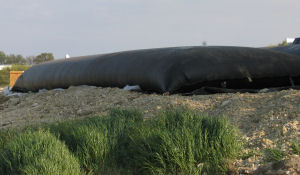
A Geotube dewatering system was set-up to treat the lagoon slurry mix from the primary lagoon of a 2000-head lactating cow open-lot dairy (Fig. 1). After two synthetic tubes were filled to a height of approximately 1.5 m with the slurry mixture (Fig. 1), the pumping of effluent ceased and tubes were left to dewater for six months. During the pumping of slurry mix into tubes, both alum and polymer were added.

Slurry samples were collected before pumping it into the system (hereafter influent, IF), after mixing it with alum and polymer (hereafter IFCM), and effluent (hereafter EF) samples were collected as it ‘drained’ out of the system. Additionally, residual solids (RS) samples were also collected after both tubes had dewatered for six months. Samples were analyzed for solids, nutrients and metals following EPA and standard analytical methods.

Figure 1. Geotube® dewatering system: before (L) and after (R) filling with effluent.


Geotube dewatering system before filling Geotube dewatering system filled


What We Have Learned

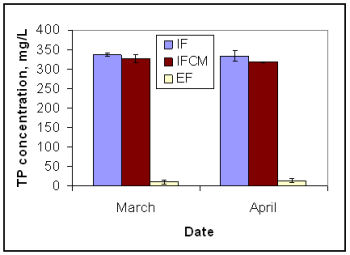
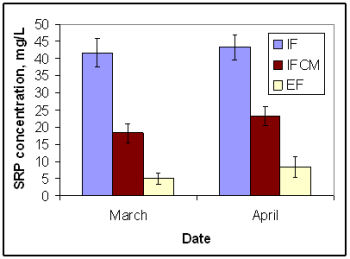
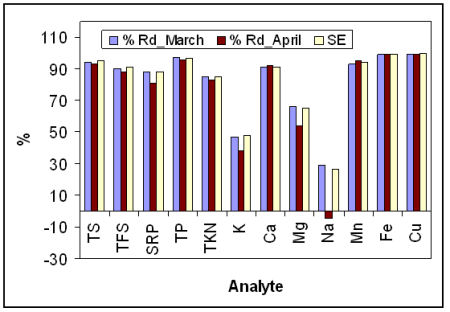
This system effectively removed high percentage of total phosphorus (TP), 97% (Fig. 2) and soluble reactive phosphorus (SRP), 88% (Fig. 3), well above 50% reduction goal set by the phosphorus Total Maximum Daily Loads (TMDLs) for the North Bosque River in east central Texas.

Geotube® also successfully filtered solids (95%) from the lagoon slurry. This system was less effective in removing K (<50%) (Fig. 3), since K is highly soluble.

Geotube® dewatering system successfully reduced Ca, Mn, Fe, and Cu concentration by 91, 60, 99, and 99%, respectively (Fig. 3). However, this system was not highly effective in removing Na (<26%) from dairy lagoon slurry (IF).

Figure 2. Average total phosphorus (TP) concentration at different sampling date


Figure 3. Average soluble reactive phosphorus (SRP) concentration at different sampling date.


Figure 4. Average % reduction (Rd) and separation efficiency (SE) of effluent constituents using Geotube® dewatering system.


Why is This Important?

Water quality degradation due to phosphorus (P) contribution as a non-point source (NPS) pollutant from effluent and manure applied to waste application fields (WAFs) is a major concern in the Bosque River watershed in east central Texas. Geotube® dewatering system can be used as one of the best management pactices to minimize pollution from dairy effluent to be applied to field, but it must address the disposal of solids and costs.

For More Information

Contact mukhtar@tamu.edu or (979)458-1019. For more information, refer to the following publication.

Mukhtar, S., L. A. Lazenby, S. Rahman. 2007. Evaluation of a synthetic tube dewatering system for animal waste pollution control. Applied Engineering in Agriculture 23(5): 669-675

Authors: Saqib Mukhtar and Shafiqur Rahman, Texas A&M University

This report was prepared for the 2008 annual meeting of the regional research committee, S-1032 “Animal Manure and Waste Utilization, Treatment and Nuisance Avoidance for a Sustainable Agriculture”. This report is not peer-reviewed and the author has sole responsibility for the content.

Odor Emissions and Chemical Analysis of Odorous Compounds from Animal Buildings

Why Study Odor Emissions from Animal Housing?

  • To determine odor emission characteristics by using common protocols and standardized olfactometry, from four mechanically-ventilated National Air Emissions Monitoring Study (NAEMS) sites, two dairy and two swine.
  • To develop a comprehensive chemical library that delineates the most significant odorants, and correlate this library with olfactometry results.
  • To disseminate information to stakeholders including producers, agencies, regulators, researchers, local government officials, consultants, and neighbors of animal operations.

Current Activities

Data is being collected from the four NAEMS sites (dairy sites in Wisconsin and Indiana and pig sites in Iowa and Indiana). Data collection is about ¼ completed (first 13 week cycle completed in April, 2008 and second cycle started in May, 2008) Raw data compilation in a U of MN website based spreadsheets for this first round is nearly completed. Olfactometry data is being done at the U of MN, Iowa State, and Purdue labs while GC-MS data is analyzed at West Texas State University and GC-MS-O data is processed at Iowa State University.

What We Have Learned

Sorbent tubes for both GC-MS data and GC-MS-O data have been successfully used to trap VOC in the emissions streams from the four barns without “breakouts” occurring. Approximately 15 to 20 compounds are being identified and with airflow data, actual emission data of these compounds should be able to be calculated.

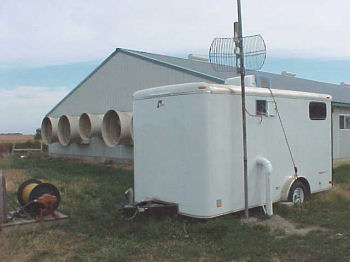
instrumentation trailer making air quality measurements and air flow rates as part of the NAEMS study


Why is This Important?

This study is supplementing the National Air Emissions Monitoring Study (NAEMS) with comprehensive measurements of odor emissions. The NAEMS will help livestock and poultry producers comply with EPA regulations concerning regulated gases and particulate matter by monitoring these pollutants continuously for 24 months, in order to determine which types of farms are likely to emit threshold levels of contaminants under the current regulations. Although odor plagues the animal industry with the greatest overall challenge, it is not included in the NAEMS, because the EPA does not regulate it and therefore did not include it in the Air Consent Agreement.

This project adds odor emission measurements at four NAEMS sites during 12 months of the study. Both standard human sensory measurements (using dynamic forced-choice olfactometry), and a novel chemical analysis technique (GC-MS-O) for odorous compounds found in these emissions is being done in this study. The sensory and chemical methods would be correlated to gain both quantitative and qualitative understanding of odor emissions from animal buildings.

For More Information

Contact Larry D Jacobson, University of Minnesota, BBE Department, 1390 Eckles Ave, St. Paul, MN 55108. email: jacob007@umn.edu or phone 612-625-8288.

Larry D. Jacobson, Ipek Celen and Brian Hetchler, University of Minnesota

This report was prepared for the 2008 annual meeting of the regional research committee, S-1032 “Animal Manure and Waste Utilization, Treatment and Nuisance Avoidance for a Sustainable Agriculture”. This report is not peer-reviewed and the author has sole responsibility for the content.

Phosphorus Mass Balance on Livestock and Poultry Operations

Introduction

This fact sheet has been developed to support the implementation of the Natural Resources Conservation Service Feed Management 592 Practice Standard. The Feed Management 592 Practice Standard was adopted by NRCS in 2003 as another tool to assist with addressing resource concerns on livestock and poultry operations. Feed management can assist with reducing the import of nutrients to the farm and reduce the excretion of nutrients in manure.

Please check this link first if you are interested in organic or specialty dairy production

The Natural Resources Conservation Service has adopted a practice standard called Feed Management (592) and is defined as “managing the quantity of available nutrients fed to livestock and poultry for their intended purpose”. The national version of the practice standard can be found in a companion fact sheet entitled An Introduction to Natural Resources Conservation Service (NRCS) Feed Management Practice Standard 592. Please check in your own state for a state-specific version of the standard.

Mass balance is calculated as the difference between imported and exported mass across the farm boundary. Estimating mass balance can provide critical information for (comprehensive) nutrient management planning and to manage the movement of nutrients and manure. Estimation of whole-farm P mass balance is used to determine the acres of land needed for crop production to use manure P. Environmental risk to surface and ground waters is increased if the amount of P imported into the farm (e.g., from fertilizers, feeds, and animals) exceeds the amount of P exported from the farm (e.g., crops, animals, manure, milk, meat, eggs, and fibers).

In Table 1 are estimates of P excretion derived by mass balance calculations using standard diets, animal performance, and the acres needed for land application at a crop removal rate of 50 pounds P2O5/acre per year. Mass balance estimates vary among farms, depending upon specific inputs and outputs, and should be calculated specifically for each farm when doing nutrient management planning.

Table 1. Examples of annual phosphate (P2O5) excretion and acreage needed for various livestock enterprises per 1,000 head of production to maintain zero P mass balance (imported P = exported P) annually.
Livestock Enterprise Pounds P2O5 Acres needed
Growing-finishing beef 17,500 350
Horses 22,000 440
Lactating dairy cows 86,000 1,720
Dairy heifers 27,000 540
Laying hens 1,200 24
Cow-calf beef 48,000 960
Sheep 13,500 270
Swine breeding herd with phytase 37,000 740
Swine growing-finishing with phytase 3,600 72
Turkeys with phytase 1,300 26

Ways to affect P mass balance

Farms may consider moving manure off site to reduce P mass balance if not enough acreage is available. Additionally, potential feeding strategies to reduce P balance (and excretion), feed costs, and necessary land base include the following:

  1. Routinely complete laboratory analyses of feeds and re-balance rations as needed to meet animals’ P requirements.
  2. Formulate rations to meet the animal’s P requirements for maintenance, lactation, growth, and pregnancy. In general for a lactating Holstein cow, 1 gram of P for each pound of milk produced is sufficient to meet these combined requirements. Based on this, ration P should equal 0.32 to 0.38% in DM depending on feed intake and milk yield (NRC, 2001). Greater concentrations are not necessary unless feed intake is depressed.
  3. Beef and dairy cattle rations may not need P supplementation at all to meet the animals’ requirements if basal ration ingredients have high P concentrations. Discontinuing P supplementation may reduce land base required by 25 to 50% (depending on the amount of over-supplementation in the original feeding program).
  4. If typical rations (e.g., corn silage, soybean meal, alfalfa, and corn grain) contain more P than needed to meet requirements, and if land base is limiting, alternative feedstuffs should be considered. The cost of using alternative feedstuffs may be less than the cost of using common “least-cost” feeds and managing excess manure P.
  5. Swine and poultry are able to absorb only part of the P in diets, so formulate based on “available P.” Grains for swine and poultry can vary from 14 to 50% in available P. In contrast, over 90% of ration P is available to cattle and sheep due to rumen microbial phytase.
  6. Supplemental phytase in corn-soybean meal based-diets for swine and poultry increases the P availability so that 25 to 35% less total ration P is needed.
  7. Pelleting and reducing the particle size of rations can increase the efficiency of P use by swine and poultry by 5 to 10%.
  8. Formulating rations for specific production phases, genotypes and genders. “Phase- feeding” programs for growing swine, poultry and lactating dairy cows can reduce P imports and excretion at least by 5 to 10%.

References

National Research Council. 2001. Nutrient Requirements of Dairy Cattle. 7th rev. ed. Natl. Acad. Sci., Washington, DC.

“Extension programs and policies are consistent with federal and state laws and regulations on nondiscrimination regarding race, sex, religion, age, color, creed, national or ethnic origin; physical, mental or sensory disability; marital status, sexual orientation, or status as a Vietnam-era or disabled veteran. Evidence of noncompliance may be reported through your local Extension office.”


Disclaimer

This fact sheet reflects the best available information on the topic as of the publication date. Date 5-25-2007

This Feed Management Education Project was funded by the USDA NRCS CIG program. Additional information can be found at Feed Management Publications.
Image:Feed mgt logo4.JPG

This project is affiliated with the LPELC.

Image:usda,nrcs,feed_mgt_logo.JPG

Project Information

Detailed information about training and certification in Feed Management can be obtained from Joe Harrison, Project Leader, jhharrison@wsu.edu, or Becca White, Project Manager, rawhite@wsu.edu.

Author Information

David Beede
C.E. Meadows Professor
beede@msu.edu
Dale Rozeboom
Associate Professor
rozeboom@msu.edu
Department of Animal Science
Michigan State University

Reviewer Information

Brian Perkins – Consulting Nutritionist

Katherine Knowlton – Virginia Tech

Partners

Image:Logos2.JPG

Understanding Nitrogen Utilization in Dairy Cattle

Contents


Introduction

This fact sheet has been developed to support the implementation of the Natural Resources Conservation Service Feed Management 592 Practice Standard. The Feed Management 592 Practice Standard was adopted by NRCS in 2003 as another tool to assist with addressing resource concerns on livestock and poultry operations. Feed management can assist with reducing the import of nutrients to the farm and reduce the excretion of nutrients in manure.

The Natural Resources Conservation Service has adopted a practice standard called Feed Management (592) and is defined as “managing the quantity of available nutrients fed to livestock and poultry for their intended purpose”. The national version of the practice standard can be found in a companion fact sheet entitled “An Introduction to Natural Resources Feed Management Practice Standard 592”. Please check in your own state for a state-specific version of the standard.

Nitrogen (N) is the building block of proteins in feeds and forages. Protein is typically the most expensive component of the purchased feeds used in dairy rations. Nitrogen is also receiving more attention as a component of nutrient management plans on dairy farms and potential ammonia emissions.

Understanding how N is used in dairy cattle is important in improving both profitability and decreasing excretion from the cow into the environment. It is important to remember that dairy cows do not have a protein requirement. They really need amino acids available in the small intestine to support tissue growth and milk production. Basically, N utilization in dairy cattle is composed of two components. The first is providing an adequate supply of N and carbohydrates in the rumen to support the growth of rumen microorganisms and the production of microbial crude protein (MCP). The second part of the system is the utilization of amino acids in the small intestine to provide for the needs of the cow.

Please check this link first if you are interested in organic or specialty dairy production

Definitions

N = nitrogen; CP = crude protein; NPN =nonprotein nitrogen; TDN = total digestible nutrients; MP = metabolizable protein; MCP = microbial crude protein; SP = soluble protein; RDP = rumen degradable protein; RUP = rumen undegradable protein; NRC = National Research Council

Feed Nitrogen Fractions

Even though all feeds contain N, there is variation in the quantity of N in each feed and it’s availability and utilization in the dairy cow. Forage testing laboratories determine the quantity of N in the sample and multiply this value by 6.25 to obtain the crude protein (CP) value printed on the analysis report. This calculation assumes that feeds contain 16% N on a dry matter (DM) basis. An example calculation is:

Alfalfa silage = 3% N * 6.25 = 18.75% CP (both on a DM basis)

The challenge is that feeds could have the same CP value, but have a different feeding value to the dairy cow. Consider the following examples:

Alfalfa hay, alfalfa silage and alfalfa pasture – All 20% CP.

Raw and roasted soybeans – Both with 40% CP

Even though these feeds have the same CP level, we would not expect the same level of N utilization and milk production. If we are feeding 4 pounds/cow/day of raw soybeans to a dairy cow producing 80 pounds of milk, replacing these with 4 pounds of roasted soybeans would increase predicted milk production on a protein basis by 2-3 lbs. What is the reason for this?

One reason is that there are a number of N compounds found in feeds. This means that we need to better define the types of N compounds present in feeds. A simple to start is to classify feed N as either true protein or NPN. These can be defined as:

True protein = The N in feeds found in complex and linked structures as amino acid combinations. Examples are: albumins, globulins and amino acids. These feeds will vary in both the rate and extent of degradation that occurs in the rumen.

NPN = This is the N in simple compounds such as ammonia or urea (not as amino acids). These are considered to be rapidly available in the rumen.

The above breakdown is a start, but the true protein component needs to be better defined for use in ration formulation or evaluation programs. This is most commonly done in the following manner:

RDP = that portion of the total N intake that is degraded in the rumen. The NPN fraction is included in RDP.

RUP = that portion of the total N that is not degraded in the rumen and passes intact to the small intestine. There is a portion of the RUP fraction that is not available or digested in the small intestine and passes out in the feces. This is fraction C in the system described by Van Soest (1994).

Ruminal N Metabolism

A portion of the feed N that enters the rumen will be degraded to compounds such as peptides, amino acids or ammonia. The primary mechanism for this breakdown in the rumen is microbial proteolysis. The solubility, structure, and particle size of the feed will all influence the amount of degradation that takes place. There will always be a portion of the feed N that enters the rumen that is not degraded (RUP).

All RDP does not breakdown and be converted to ammonia at the same rate. Van Soest (1994) provided an overview of a system to define N sub-fractions that would permit better characterization of feed N availability and use in the dairy cow. This system includes the following fractions:

A – This is mainly NPN, amino acids, and peptides that are “instantly” available in the rumen.

B1 – This fraction has a fast rate of degradation in the rumen.

B2 – This fraction has a variable rate of degradation in the rumen.

B3 – This fraction has a slow rate of degradation in the rumen.

The use of this approach assists in doing a better job of describing N utilization in the rumen and improving the efficiency of feed N use. The use of this approach does require additional feed analysis data and computer formulation programs designed to utilize this information.

Microbial Protein

Microbial protein (MCP) is produced in the rumen by the rumen microorganisms. The key factors that determine the quantity of MCP synthesized is the quantity of ammonia available in the rumen and the supply of fermentable carbohydrates to provide an energy source. The availability of peptides may also stimulate the production of MCP by some rumen microorganisms. The NRC (2001) predicts MCP production as 13% of the discounted TDN (total digestible nutrients) available in the rumen.

Microbial protein can provide 50 – 80% of the amino acids required in the intestine by the dairy cow. Optimizing MCP production helps in increasing the efficiency of N use in the cow and controlling feed costs.
The benefits of MCP are related to:

  • MCP averages about 10% N (60-65% CP).
  • MCP is a good source of RUP.
  • MCP has a high digestibility in the intestine.
  • The amino acid profile of MCP is fairly constant.
  • MCP has an excellent ratio of lysine to methionine.

Protein Systems

There are 2 systems used to evaluate and balance rations for dairy cows on a protein basis. These are the CP (crude protein) and MP (metabolizable) protein systems. The CP system has been the most commonly used system.

The CP system is easy to use and has tabular feed composition and animal requirement information. This system assumes that all N in different feeds is similar in use and value to the cow. The Dairy NRC (2001) indicated that CP was a poor predictor of milk production. Nutritionists have modified the CP system to better meet their needs. They have added SP, RDP and RUP as additional factors to consider when using CP as the base for formulating dairy rations on a protein basis.

The Dairy NRC (2001) has suggested moving to a MP system to better define and refine protein formulation and utilization. This system fits with the biology of the cow. The challenge is that this system is not tabular and requires the use of computer programs to calculate both MP requirements and the MP supplied by feeds and MCP. The industry is changing to an MP approach. This system should provide an opportunity to improve the efficiency of protein use in dairy cattle. The use of this system will also decrease N excretion to the environment and lower potential ammonia emissions.

Total N Use in Dairy Cows

It is important to realize that the dairy cow is a dynamic rather than static system. This means that the actual value of a feed N source will vary depending on a number of factors. These include:

  • The proportion of the total N intake used in the rumen versus the small intestine.
  • The length of time the feed remains in the rumen (rate of passage).
  • The rate at which the feed is degraded in the rumen (rate of digestion).
  • The amino acid profile of the RUP fraction.
  • The digestibility of the RUP and MCP fractions in the small intestine.

This situation is similar to the energy value of feeds that occurs due to differences in dry matter intake (DMI) and rate of passage. Dairy cows with higher levels of DMI have a higher rate of passage and lower feed energy values. This is the reason for discounting feed energy values based on level of DMI and milk production (NRC, 2001).

The NRC (2001) computer model was used to determine the RDP and RUP for soybean meal in a ration for dairy cows. The base ration was for a cow producing 80 pounds of milk and contained 5 pounds of DM from soybean meal. This ration was then evaluated for cows producing 60, 100 or 120 lbs. of milk. The ration ingredients were all kept in the same proportion, but total ration DMI was adjusted using the NRC program predicted intakes. This would be similar to cows fed a 1-group TMR. The RDP and RUP values for soybean meal in this ration were:

Milk, lbs/day RDP, % of CP RUP, % of CP
60 60 40
80 59 41
100 56 44
120 54 46

The reason for the higher RUP value in higher producing cows is the decreased amount of time the soybean meal stays in the rumen. Thus, there is less time for N degradation and proteolysis to take place. This example also indicates the challenge with using tabular values to describe the RDP and RUP fractions in feeds. This is the reason that computer programs that can integrate DMI, rate of passage and rate of digestion are needed as we continue to refine formulation and evaluation approaches.

Summary

Nitrogen is the most expensive component of purchased feed costs on most dairy farms. Ration programs that incorporate the concepts of feed fractions and variable feed contributions to the animal provide an opportunity to fine tune nutrition and improve the efficiency of nutrient use. This will also lower nutrient excretion to the environment and usually improves income over feed cost.

References

NRC, 2001. National Research Council. Nutrient Requirements of Dairy Cattle. 7th rev. ed. National Academy of Science, Washington, DC.

Van Soest, P.J. 1994. Nutritional ecology of the ruminant. Cornell University Press, Ithaca, NY.

“Extension programs and policies are consistent with federal and state laws and regulations on nondiscrimination regarding race, sex, religion, age, color, creed, national or ethnic origin; physical, mental or sensory disability; marital status, sexual orientation, or status as a Vietnam-era or disabled veteran. Evidence of noncompliance may be reported through your local Extension office.”

Disclaimer

This fact sheet reflects the best available information on the topic as of the publication date. Date 4-12-2007

This Feed Management Education Project was funded by the USDA NRCS CIG program. Additional information can be found at Feed Management Publications.

Image:Feed mgt logo4.JPG

This project is affiliated with the Livestock and Poultry Environmental Learning Center.

Image:usda,nrcs,feed_mgt_logo.JPG

Project Information

Detailed information about training and certification in Feed Management can be obtained from Joe Harrison, Project Leader, jhharrison@wsu.edu, or Becca White, Project Manager, rawhite@wsu.edu.

Author Information

L.E. Chase
Cornell University
lec7@cornell.edu

Reviewer Information

Mike Hutjens – University of Illinois

Floyd Hoisington – Consulting Nutritionist

Partners

Image:Logos2.JPG

Interpreting Milk Urea Nitrogen (MUN) Values


Introduction

This fact sheet has been developed to support the implementation of the Natural Resources Conservation Service Feed Management 592 Practice Standard. The Feed Management 592 Practice Standard was adopted by NRCS in 2003 as another tool to assist with addressing resource concerns on livestock and poultry operations. Feed management can assist with reducing the import of nutrients to the farm and reduce the excretion of nutrients in manure.

The Natural Resources Conservation Service has adopted a practice standard called Feed Management (592) and is defined as “managing the quantity of available nutrients fed to livestock and poultry for their intended purpose”. The national version of the practice standard can be found in a companion fact sheet entitled “An Introduction to Natural Resources Feed Management Practice Standard 592”. Please check in your own state for a state-specific version of the standard.

Milk processing plants and DHI can provide dairy managers with milk urea nitrogen (MUN) values on bulk milk and individual cow milk samples. Milk Urea Nitrogen is a useful tool that can allow dairy managers to monitor changes in the feeding and management of their herds. The following points can allow you to interpret MUN test results from your herd.

Please check this link first if you are interested in organic or specialty dairy production

Milk Urea Nitrogen (MUN)

Milk urea nitrogen is the fraction of milk protein that is derived from blood urea nitrogen (BUN). In Holstein’s, MUN normally represents about 0.19 percentage points of the normal 3.2% total milk protein.

Casein and/or whey proteins that contribute amino acids for human use or cheese production are not included in MUN values. Average MUN values will range from 10 to 14 milligrams per deciliter (usually reported as a whole number such as 12). When cows consume feed containing protein, If bacteria cannot capture the ammonia and convert it to microbial protein, the excess ammonia is absorbed part of the protein is degraded to ammonia by rumen microbes (rumen degraded protein or RDP). across the rumen wall. Because ammonia can shiftblood pH, the liver converts ammonia to urea to be excreted or recycled. Urea diffuses freely across cell membranes, therefore MUN concentrations represent blood urea concentrations. Thus, if BUN values are elevated, MUN will be elevated. If MUN values are high, your herd is possibly wasting feed protein along with excreting excess nitrogen into the environment. If MUN values are too low, the rumen bacteria yield can be reduced thereby limiting milk production and milk protein yield.

Feeding Factors That Impact MUN

The key factor is providing adequate rumen available carbohydrates to provide the energy for the rumen microbes to convert ammonia into microbial protein. The following feeding situations could lead to higher MUN values in your herd.

  1. Feeding too much total crude protein in the ration may result in the excess protein being wasted.
  2. Feeding too much rumen degraded protein (RDP) and/or soluble protein can raise MUN even if ration crude protein was normal.
  3. If rumen acidosis occurs, microbial protein growth will be inhibited and ammonia is not captured.
  4. Rations low in fermentable carbohydrate (such as starch, sugar, and/or digestible fiber) can reduce microbial growth leading to higher MUN values.

Target MUN values

Every herd can have a different optimal MUN depending on the time of feeding relative to milking time, total mixed rations (TMR) compared to component-fed herds, cow eating patterns, and other factors that affect BUN values. The power of a MUN tests is to monitor changes in feeding and management programs within a herd.

  1. Develop a MUN baseline that is “normal” for your herd (values may range from 8 to 16).
  2. When the farm baseline changes by more than 2 to 3 points (normal variation), look for changes in your herd that caused this MUN shift.
  3. Look at weekly averages as large variations occur day to day.
  4. DHI and milk plant MUN values will vary due to machine standards and sampling differences.

Feed and Management Changes Leading To Higher MUN Values

  1. New crop corn silage may not have the same level of fermentable carbohydrate (less starch or starch is not available).
  2. Putting cows on lush pasture can increase total and degradable protein intake.
  3. Shifting to a different crop of hay silage that is wetter or higher in crude protein can elevate MUN.
  4. Grinding your grain coarser may reduce the rate of fermentation in the rumen.
  5. Shifting from processed corn silage to unprocessed or improperly processed corn silage means less fermentable starch is available.
  6. Shifting to a more degradable protein source (shifting from heat-treated soybeans to raw soybeans for example) results in more rumen ammonia.

Feed and Management Changes With Low MUN Values (< 8-9)

If the rumen does not maintain a minimum level of ammonia, milk yield and milk protein yield may drop because of reduced microbial protein synthesis. If your herd MUN is low, consider adding supplemental protein, different protein sources and/or other ration change and then monitor your herd for changes in MUN concentrations.

Herd vs. Individual MUN Values

Herd MUN values are similar to herd somatic cell counts when interpreting results. DHI processing centers may provide MUN group averages summarized by lactation number, days in milk, and milk production. Pennsylvania workers recommend a minimum of 8 to 10 cows per group in order to calculate an unbiased group MUN value. There are a number of factors that can influence your MUN values. These include:

  • Breed – Holsteins usually have a lower MUN value than other dairy breeds. However, this may be due to body weight rather than a breed difference.
  • Season – MUN values tend to be higher in the summer months.
  • Sampling time – MUN values usually peak 3-5 hours after feeding.
  • Milking frequency – Herds milked 3x tend to have higher MUN values than herds milked 2x.

AM-PM samples – The AM MUN value is usually lower than PM samples taken from the same herd. When comparing MUN values in your herd between months, be sure to account for differences in sampling times.

Fine Tuning MUN Values

MUN is one tool to evaluate ration protein and energy status. Remember that MUN’s can be impacted by heat stress (MUN values are higher in the summer). Evaluate the following management factors along with herd or group MUN values.

  1. Check rations to determine if the crude protein is too low (less than 15 percent for example) or too high (over 18 percent crude protein). Review the level of RDP (60-65% of the total crude protein), RUP (35-40 percent of total crude protein), and SP (50% of RDP).
  2. Check ration starch levels (24 to 28 percent of the ration dry matter) and ration sugar levels (4 to 6 percent of total ration dry matter).
  3. Evaluate the ratio of true milk protein to milk fat. For Holsteins, the ratio of milk true protein to milk fat is 82 percent (for example 3.0 percent true milk protein and 3.7 percent milk fat). A low MUN could result in a value of less than 75 percent.
  4. Evaluate manure consistency. Cows with low MUN could have firm manure compared to cows with looser manure and higher MUN’s. However, there are a number of others factors that can contribute to manure consistency differences in a herd.

Applying MUN Values to Calculate Nitrogen Losses

Wisconsin workers have developed an equation to predict the loss of nitrogen based on body weight and MUN values. Other equations are also available and could be used.

Urinary excretion of nitrogen = Body weight x 0.0129 x MUN (mg/dl)

Two examples are calculated below using a low (10 mg/dl) and average (14 mg/dl) MUN’s.

1500 lb Holstein cow x 14 MUN x 0.0129 = 271 grams of urinary nitrogen 1500 lb Holstein cow x 10 MUN x 0.0129 = 194 grams of urinary nitrogen

The difference of 77 grams represents a loss of one pound of dietary protein or 2.2 lb of soybean meal plus the added environmental risks of disposing of the urinary nitrogen. This is equal to about 52 lbs. of N excreted per cow during a 305-day lactation.

Take Home Message

  • MUN values can be used to the efficiency of microbial protein synthesis there by reducing nitrogen excretion into the environmental
  • MUN values will vary from herd to herd, so the key benefit is to make comparisons within a herd or groups of cows in a herd
  • If MUN levels (10-14 mg/dl) are outside normal ranges, look at ration balancing results, milk components, feeding management and nutrient balance.

References

Jonker, J.S., R.A. Kohn and J. High. 2002. Use of milk urea nitrogen to improve cow diets. J. Dairy Sci. 85:939-946.

Kauffman, A.J. and N.R. St-Pierre. 2001. The relationship of milk urea nitrogen to urine nitrogen excretion in Holstein and Jersey cows. J. Dairy Sci. 84:2284-2294.

Nousiainen, J., K.J. Shingfield and P. Huhtanen. 2004. Evaluation of milk urea nitrogen as a diagnostic of protein feeding. J. Dairy Sci. 87:386-398.

Wattiaux, M.A., E.V. Nordheim and P. Crump. 2005. Statistical evaluation of factors and interactions affecting Dairy Herd Improvement milk urea nitrogen values in commercial Midwest dairy herds. J. Dairy Sci. 88:3020-3035.

“Extension programs and policies are consistent with federal and state laws and regulations on nondiscrimination regarding race, sex, religion, age, color, creed, national or ethnic origin; physical, mental or sensory disability; marital status, sexual orientation, or status as a Vietnam-era or disabled veteran. Evidence of noncompliance may be reported through your local Extension office.”


Disclaimer

This fact sheet reflects the best available information on the topic as of the publication date. Date 6-20-2007

This Feed Management Education Project was funded by the USDA NRCS CIG program. Additional information can be found at Feed Management Publications.

Image:Feed mgt logo4.JPG

This project is affiliated with the LPELC.

Image:usda,nrcs,feed_mgt_logo.JPG

Project Information

Detailed information about training and certification in Feed Management can be obtained from Joe Harrison, Project Leader, jhharrison@wsu.edu, or Becca White, Project Manager, rawhite@wsu.edu.

Author Information

Mike Hutjens
Extension Dairy Specialist
University of Illinois, Urbana

Larry E. Chase
Extension Dairy Nutritionist
Cornell University, Ithaca, NY

Reviewer Information

Dave Casper – Agri-King, Inc.

Jim Drackley – University of Illinois

Partners

Image:Logos2.JPG


Nutritional Aspects of bST

Introduction

This fact sheet has been developed to support the implementation of the Natural Resources Conservation Service Feed Management 592 Practice Standard. The Feed Management 592 Practice Standard was adopted by NRCS in 2003 as another tool to assist with addressing resource concerns on livestock and poultry operations. Feed management can assist with reducing the import of nutrients to the farm and reduce the excretion of nutrients in manure.

Research studies with lactating cows supplemented with bST resulted in increases in milk production (6 to 15 pounds with 5 to 15 percent increases in dry matter intake. The increased feed intake was not sufficient in the initial four to six weeks to provide the energy needed for higher milk yield and also provide sufficient nutrients for body weight gain. The increased yield due to bST was related to greater mammary gland partitioning of nutrients from diet and body reserves. Based on a series of research studies and reports, the following nutritional and management guidelines should be considered when bST is administered to lactating dairy cows.

Please check this link first if you are interested in organic or specialty dairy production

Lactation Changes

Initial research studies indicated a lactation response from 6 to 41 percent milk increase. Field responses were 5 to 15 pounds more milk. The shape of the lactation curve is changed immediately with a vertical shift upward. No response occurs if nutrient needs are not met. bST is a tool to allow dairy managers to manipulate the lactation curve of cows that drop too fast, experience long calving intervals.

Dry Matter Intake Responses

Feed intake increases gradually and lags milk yield increases by 4 to 6 weeks. Dry matter intake increases 3 to 15 percent after the initial lag to support increased milk yield and body condition. Calorimetry and digestibility studies indicated bST-treated cows do not change digestive processes, maintenance requirements, or nutrient needs for milk synthesis.

Increased heat production associated with bST is exactly the amount predicted based on milk yield and dry matter intake increases. Research since bST was approved for commercial sale has shown that an additional function of bST is to increase dissipation of additional heat through increased sweating ability. In heat stressed conditions, as with non-supplemented cows, dissipating the heat can be a management concern. Milk increases were related to post-absorptive use of nutrients for milk synthesis. Current equations from the Dairy NRC for dry matter intake, nutrient needs, and milk synthesis apply to the higher producing cows. Improvements in feed efficiency (pounds of fat-corrected milk per unit of net energy) were related to diluting maintenance requirements and diverting nutrients from body tissue to milk.

Protein Considerations

Protein level and deqradability in the ration can impact bST responses. bST-treated cows produced 9.7 pounds more milk with a 40 percent rumen undegraded protein or RUP (of crude protein content) ration compared to 5.9 pounds of 3.5% fat corrected milk on a ration containing 33 percent RUP. Cows fed 17 percent crude protein rations with bST produced 9 pounds more milk compared to cows fed 14 percent crude protein rations with an increased 6.6 pounds with bST. RUP had a greater impact than level of protein. Canadian researchers found similar results with rations higher in crude protein. Cows fed a 16 percent crude protein diet for 28 days and treated with bST produced 23.8 percent more milk (9.9 pounds) compared to controls while the cows receiving the higher RUP diet with bST increased milk yield 18.8 percent or 6.6 pounds.

Energy Relationships

Energy intake and balance will be key factors. Higher dry matter intake must be allowed and achieved. An additional 3 to 15 percent increase in total ration dry matter will require higher quality forage, use of palatable feeds, excellent bunk management, shifting to total mix diets, optimal fiber levels (19 to 20 percent ADF, 28 to 32 percent NDF), adequate non-structural carbohydrate (35 to 40 percent), and limiting total ration moisture below 55 percent. Wisconsin data revealed cows on the lower forage diets produced more milk (heifers, 1,683 pounds more milk; older cows, 1,890 pounds more milk). More energy can be consumed by incorporating more grain, higher quality forage, and/or digestible by-product feeds.

Studies with supplemental sodium bicarbonate reported bST and buffer responses were additive increasing milk yield. Feed intake (increased 5.5 pounds), milk yield (increased 8.2 pounds), and fat test responses were favorable compared to control cows with buffer and bST. Mid-lactation responses in bST-treated and buffer supplemented cows showed similar responses.

Added dietary fat is another method to increase energy intake. bST-treated cows increased 3.5% FCM by 6.8 pounds per cow per day. With one pound of protected fat and bST, cows produced 14.3 pounds more 3.5% FCM. Milk protein percent was decreased (3.30 vs. 3.44) with added fat and tended to be lower with bST.

Body condition must be monitored because cows direct more nutrients to milk and away from body reserves. Cows receiving bST gained 4 to 10 percent less weight than controls. Body condition scores were 3.7 for control cows while supplemented cows averaged a lower score of less than 3.0. Restoring body condition is more efficient in late lactation compared to cows that are dry (not lactating). It may be more economical to replace some weight in the dry period at lower efficiencies than stopping bST use in late lactation. Cows in negative energy balance (any for any reason) can experience poorer reproduction performance (increased days to first heat, decreased estrus expression, and reduced conception rate). Also, if cows are in negative energy balance, little or no milk response to supplemented bST will occur.

Nutrient Metabolism

Lipid Metabolism

bST is lipolytic which increases body fat mobilization (adipose tissue) and increases blood concentration of non-esterified fatty acids. Cows in negative energy balance temporarily increase milk fat. Milk fat composition shifted to a greater proportion of long chain fatty acids (from adipose tissue mobilized) which is typical and a small change for any cows in negative energy balance. When animals are in positive energy balance, milk fat percentage was not altered. Treatment with bST reduces lipid synthesis in adipose and is probably one mechanism by which BST partitions more energy toward milk production.

Carbohydrate Metabolism

Meeting the glucose need for lactose synthesis represents a major challenge, especially before feed intake increases. A reduction in glucose oxidation, mobilization of glycogen reserves, glucose made from propionate in the liver (gluconeogensis), amino acid conversion to glucose, and hydrolysis of adipose-released glycerol are possible, but limited sources.

Protein Metabolism

Milk protein yield increases as milk yield increases. The change in percentage of the milk protein is dependent on the amount of amino acids available to the mammary gland. Cows in positive amino acid balance had no change in milk protein percent. Meeting the metabolizable protein requirements from microbial and RUP sources associated with higher milk yields and milk protein test due to bST supplementation is required. If cows were in negative amino acid balance, the percentage of milk protein declines when bST was administered. The primary source of additional amino acids (if cows are deficient) prior to increased feed intake could be from mobilized body reserves (not desirable and limited amount available).

Mineral Metabolism

Mineral demand is also increased with bST use. The rate of absorption from the digestive tract or mobilization of body reserves are primary sources for several macrominerals needed for milk synthesis. Milk mineral content is not altered and blood concentrations of calcium and phosphorus were unchanged.

Economics of bST

The economics of supplementing bST will depend on the individual cow milk response and price of milk when using bST. The following costs are associated with cow/herd increasing 10 pounds of milk per cow per day.

  • Cost of bST ($6.60 per injection for 14 days): $0.47
  • Added cost of dry matter to support 10 pounds of milk (4 lb D.M. @ 8 cents): $0.32
  • Increase in labor to identify cows and inject bST: $0.02

The additional total investment for bST supplementation is 81 cents per cow per day. If the milk response was 10 pounds of milk per cow per day valued at 13 cents a pound ($13.00 per cwt), the profit margin would be 49 cents a cow a day or $118 per lactation (242 days on treatment ). The cost of bST can vary due to contract prices and shipping charges.

Impact on the Environment

bST would reduce the impact on the environment as cows can produce more milk per cow to lower maintenance nutrient needs, increase feed efficiency, and fewer cows are needed to supply the same amount of milk. This technology also increases the potential profitability per cow. No differences in nutrient digestibility occur leading to higher fecal or urinary losses.

Take home message

  • bST increases the need for more nutrients related to higher milk yield per cow
  • Profitability of bST supplemented cows increases.
  • bST application is beneficial for the environment (fewer cows and higher feed efficiency)

“Extension programs and policies are consistent with federal and state laws and regulations on nondiscrimination regarding race, sex, religion, age, color, creed, national or ethnic origin; physical, mental or sensory disability; marital status, sexual orientation, or status as a Vietnam-era or disabled veteran. Evidence of noncompliance may be reported through your local Extension office.”


Disclaimer

This fact sheet reflects the best available information on the topic as of the publication date. Date 5-26-2007

This Feed Management Education Project was funded by the USDA NRCS CIG program. Additional information can be found at Feed Management Publications.

Image:Feed mgt logo4.JPG

This project is affiliated with the LPELC.

Image:usda,nrcs,feed_mgt_logo.JPG

Project Information

Detailed information about training and certification in Feed Management can be obtained from Joe Harrison, Project Leader, jhharrison@wsu.edu, or Becca White, Project Manager, rawhite@wsu.edu.

Author Information

Michael F. Hutjens
Department of Animal Sciences
University of Illinois, Urbana

Reviewer Information

Roger Cady – Monsanto

Deb Wilks – Consulting Nutritionist

Partners

Image:Logos2.JPG


Silage Management Considerations

Introduction

This fact sheet has been developed to support the implementation of the Natural Resources Conservation Service Feed Management 592 Practice Standard. The Feed Management 592 Practice Standard was adopted by NRCS in 2003 as another tool to assist with addressing resource concerns on livestock and poultry operations. Feed management can assist with reducing the import of nutrients to the farm and reduce the excretion of nutrients in manure.

The Natural Resources Conservation Service has adopted a practice standard called Feed Management (592) and is defined as “managing the quantity of available nutrients fed to livestock and poultry for their intended purpose”. The national version of the practice standard can be found in a companion fact sheet entitled “An Introduction to Natural Resources Feed Management Practice Standard 592”. Please check in your own state for a state-specific version of the standard.

Regardless of the size of a dairy operation, producers know problems can occur in every silage program. This fact sheet describes possible causes and solutions for nine potential problems in managing silage in bunker silos, drive-over piles, and bags.

The nine potential problems include:

  • High ‘forage in’ versus ‘silage out’ loss in bunker silos, drive-over piles, and silage bags
  • Large variation in DM content and/or nutritional quality of the ensiled forage
  • Missing the optimum harvest window for whole-plant corn
  • High levels of butyric acid and ammonia-nitrogen, particularly in ‘hay-crop’ silage
  • High levels of acetic acid in wet corn silage
  • Aerobically unstable corn silage during feedout
  • Excessive surface-spoiled silage in bunker silos and drive-over piles
  • Poorly managed bagged silage
  • Safety issues for bunker silos and drive-over piles.

Dairy producers should discuss these problems and solutions with everyone on their silage team, including their nutritionist and custom operator, as a reminder to implement the best possible silage management practices.

Four Excel spreadsheets to help producers make decisions about bacterial inoculants, packing density, and sealing strategies for bunker silos and drive-over piles are discussed.

Please check this link first if you are interested in organic or specialty dairy production

High ‘Forage In’ versus ‘Silage Out’ Loss in Bunker Silos, Drive-over Piles, and Silage Bags

Solutions

  • Select the right forage hybrid or variety.
  • Harvest at the optimum stage of maturity and DM content.
  • Use the correct size of bunker or pile, and do not over-fill bunkers or piles.
  • Employ well-trained, experienced people, especially those who operate the forage harvester, pack tractor, or bagging machine. Provide training as needed.
  • Apply the appropriate lactic acid bacterial (LAB) inoculant.
  • Achieve a uniform packing density in bunkers and piles (a minimum of 15 lbs of DM per ft3).
  • Provide an effective seal to the surface of bunkers and piles and consider using double polyethylene sheets or an oxygen barrier (OB) film.
  • Follow proper face management practices during the entire feedout period.
  • Schedule regular meetings with your forage team.

Large Variation in DM Content and/or Nutritional Quality of the Ensiled Forage

Causes

  • Interseeded crops that are not at the optimum stage of maturity at harvest.
  • Multiple cuttings or multiple forages ensiled in the same silo.
  • Delays in harvest activities because of a breakdown or shortage of machinery and equipment.
  • Seasonal or daily weather that affects crop maturing and field-wilting rates.
  • Variation among corn hybrids.

Solutions

  • Use multiple silos and smaller silos that improve forage inventory control.
  • Ensile only one cutting and/or variety of ‘hay-crop’, field-wilted forage per silo.
  • Minimize the number of corn and/or sorghum hybrids per silo.
  • Shorten the filling-time, but do not compromise packing density.
  • Harvest during stable weather, especially for ‘hay-crop’ forages.

Missing the Optimum Harvest Window for Whole-plant Corn

Causes

  • Harvest equipment capacity is inadequate and/or the crop matures in a narrow harvest window.
  • Warm, dry weather can speed the maturing process and dry-down rate of the crop.
  • Wet weather can keep harvesting equipment out of the field.
  • Sometimes it is difficult to schedule the silage contractor.

Solutions

  • Plant multiple corn hybrids with different season lengths.
  • Improve the communication between the dairy producer, crop grower, and silage contractor.
  • Change harvest strategy, which might include kernel processing, shorter theoretical length of cut (TLC), or adding a pack tractor.

High Levels of Butyric Acid and Ammonia-nitrogen, particularly in ‘Hay-crop’ Silage

Causes

  • The forage is ensiled too wet, and clostridia dominate the final fermentation process.
  • Alfalfa and other legumes, which experience a rain event in the field after mowing, are at a higher risk because rain leaches soluble sugars from the forage.

Solutions

  • Chop and ensile all forages at the correct DM content for the type and size of silo.
  • Proper packing to achieve a minimum density of 15 lb of DM per ft3 excludes oxygen and limits the loss of plant sugars during the aerobic phase (Visser, 2005; Holmes, 2006).
  • Apply a homolactic LAB inoculant to all forages to ensure an efficient conversion of plant sugars to lactic acid.
  • Do not contaminate the forage with soil or manure at harvest, and put the forage on a concrete or asphalt base.
  • If it is not possible to control the DM content by wilting in the field, the addition of dry molasses, beet pulp, or ground grain can reduce the chance of a clostridial fermentation and the problems associated with butyric acid silages.

High Levels of Acetic Acid, particularly in wet Corn Silage

Causes and symptoms

  • If the whole-plant has a low DM content, it is predisposed to a long, heterolactic fermentation.
  • This silage has a strong ‘vinegar’ smell, and there will be a 1- to 2-foot layer of bright yellow, sour smelling silage near the floor of a bunker silo or drive-over pile.

Solutions

  • Ensile all forages at the correct DM content, and especially not too wet.
  • Apply a homolactic LAB inoculant to ensure an efficient conversion of plant sugar to lactic acid.

Aerobically Unstable Corn Silage during Feedout

Research has not explained why corn silages differ in their susceptibility to aerobic deterioration. Microbes, primarily lactate utilizing yeast, as well as forage and silage management practices contribute to aerobic stability of an individual corn silage. Nevertheless, there are several practical steps dairy producers need to be aware of, which can help minimize feedout problems.

Solutions: At harvest and filling time.

  • Harvest at the correct stage of kernel maturity, and especially not too mature.
  • Ensile at the correct DM content, and especially not too dry.
  • In normal conditions, do not chop longer than ¾-inch TLC if the crop is processed or ½-inch, if not processed.
  • Achieve a uniform packing density of at least 15 lbs of DM per ft3.
  • If aerobic stability continues to be a problem, consider using a LAB inoculant that contains the heterolactic bacteria, Lactobacillus buchneri (Kung et al., 2003).

Solutions: At feedout.

  • Maintain a rapid progression through the silage during the entire feedout period.
  • The feedout face should be a smooth surface that is perpendicular to the floor and sides in bunker or pile.
  • Proper unloading technique includes shaving silage down the feedout face and never ‘digging’ the bucket into the bottom of the silage feedout face.
  • Remove 6 to 12 inches per day in cold weather months; 12 to 18 inches per day in warm months.
    • Feed from ‘larger feedout faces’ in cold weather months.
    • Feed from ‘smaller feedout faces’ in warm weather months.
  • Minimize the time corn silage stays in the commodity area before it is added to the ration.
  • It might be necessary to remove silage from a bunker or pile and move it the commodity area two times per day.
  • When building new silos, size them correctly to allow adequate feedout rates.
  • Consider using a silage facer as an alternative to a front-end loader.

A ‘Facer Cost Analysis’ Excel spreadsheet by Holmes (2003) calculates the breakeven cost of a facer for silage removal compared to a front-end loader.

The breakeven cost of the facer, when converted to an annual cost, equals the sum of improvement in DM recovery value and additional labor, equipment, and fuel use costs. The labor, equipment, and fuel use could actually be savings if the facer operates at a faster rate than the front-end loader. The spreadsheet and a complete discussion of the topic are available on the UW-Extension Team Forage web site.

Excessive Surface-spoiled Silage in Bunker Silos and Drive-over Piles

Solutions

  • Achieve a uniform density (minimum of 12 to 14 lbs of DM per ft3) within the top 3 ft of the silage surface.
  • Shape all surfaces so water drains off the bunker or pile, and the back, front, and side slopes should not exceed a 3 to 1 slope.
  • Seal the forage surface immediately after filling is finished.
  • Two sheets of polyethylene or a single sheet of OB film is preferred to a single sheet of plastic (Berger and Bolsen, 2006; Bolsen and Bolsen, 2006b).
  • Overlap the sheets that cover the forage surface by a minimum of 3 to 4 feet.
  • Arrange plastic sheets so runoff water does not contact the silage.
  • Sheets should reach 4 to 6 feet off the forage surface on the perimeter of a drive-over pile.
  • Put uniform weight on the sheets over the entire surface of a bunker or pile, and double the weight placed on overlapping sheets.
    • Bias-ply truck sidewall disks are the most common alternative to full-casing tires.
    • Sandbags, filled with pea gravel, are an effective way to anchor the overlapping sheets, and sandbags provide a heavy, uniform weight at the interface of the sheets and bunker wall.
    • Sidewall disks and sandbags can be stacked, and if placed on pallets, they can be moved easily and lifted to the top of a bunker wall when the silo is being sealed and lifted to the top of the feedout face when the cover is removed.
    • A 6- to 12-inch layer of sand or soil or sandbags is an effective way to anchor sheets around the perimeter of drive-over piles.
  • Prevent damage to the sheet or film during the entire storage period.
    • Mow the area surrounding a bunker or pile and put up temporary fencing as safe guards against domesticated and wild animals.
    • Store waste polyethylene and cover weighting material so it does not harbor vermin.
    • Regular inspection and repair is recommended because extensive spoilage can develop quickly if air and water penetrate the silage mass.
  • Discard all surface-spoiled silage because it has a significant negative effect on DM intake and nutrient digestibility (Whitlock et al., 2000; Bolsen, 2002).
  • Full casing discarded tires were the standard for many years to anchor polyethylene sheets on bunker silos. These waste tires are cumbersome to handle, messy, and standing water in full casing tires can spread the West Nile virus, which is another reason to avoid using full casing tires on beef and dairy operations (Jones et al., 2004).

Poorly Managed Bagged Silage

The bag silo has become a popular storage system on many farms in the USA. While bagged silage requires specialized equipment, bagging machines can be rented or many silage custom operations provide them. Bags are also used to store extra silage when forage yields exceed the capacity of existing silo structures. Nevertheless, bagged silage is not trouble-free. Bolsen and Bolsen (2006a) surveyed 15 nutritionists, dairy producers, and silage contractors and asked, ‘better bagged silage: what is important?’. Selected responses from participants are presented here.

Better bagged silage: what is important?

  • Bags should be located on a well-drained, firm surface and preferably on concrete or asphalt.
    • Keep bags out of the mud.
    • Provide feeders easy access to all bags.
  • Low silage DM densities are a problem in bags (Visser, 2005). A skilled bagging machine operator is essential to insure a consistent, uniform fill and achieve an acceptable density.
  • Mark (paint) bags with a number, date, crop, farm/field, use description (i.e., which cattle to feed).
  • Record the DM content of all forage going into a bag, especially field-wilted, hay-crop silage, and mark the location of potentially ‘problematic silage’ (i.e., too wet, too dry, too mature, etc.).
  • Do not bag alfalfa ‘too wet’. The DM target should always be 35 to 45 percent.
  • Check all bags at least three times per week and mend/patch the punctures and holes.
  • The silage removal rate at feedout must be sufficient to prevent the exposed silage from heating and spoiling, especially if multiple bags are open at same time.
    • Caution: The first bags used in the 1970s had diameters of 8 to 9 feet, but some :*Remove only enough plastic for silage needed daily.
  • Monitor the DM content of all silages and make appropriate changes in the ration when DM content changes more than two percentage units.
  • Remember: Good bagged silage is no accident; it takes sound management and attention to detail!

Safety Issues for Bunker Silos and Drive-over Piles: Major Hazards and Preventive Measures

Consistently protecting workers, livestock, equipment, and property at harvest, filling, and feeding does not occur without thought, preparation, and training (Murphy and Harshman, 2006).

Tractor roll-over

  • Roll-over protective structures (ROPS) create a zone of protection around the tractor operator. When used with a seat belt, ROPS prevent the operator from being thrown from the protective zone and crushed by the tractor or equipment mounted on or drawn by the tractor.
  • Install sighting rails on above ground walls. These rails indicate the location of the wall to the pack tractor operator but are not to hold an over-turning tractor.
  • Form a progressive wedge of forage when filling bunkers or piles. The wedge provides a slope for packing, and a minimum slope of 3 to 1 reduces the risk of a tractor roll-over.
  • Use low-clearance, wide front end tractors and add weights to the front and back of the tractors to improve stability.
  • When two or more pack tractors are used, establish a driving procedure to prevent collisions.
  • Raise the dump body only while the truck is on a rigid floor to prevent turnovers.

Entangled in machinery

  • Keep machine guards and shields in place to protect the operator from an assortment of rotating shafts, chain and v-belt drives, gears and pulley wheels, and rotating knives on tractors, pull-type and self-propelled harvesters, unloading wagons, and feeding equipment.

Run-over by machinery

  • Never allow people (especially children) in or near a bunker or pile during filling.
  • Properly adjust rear view mirrors on all tractors and trucks.

Fall from height

  • It is easy to slip on plastic when covering a bunker, especially in wet weather, so install guard rails on all above ground level walls.
  • Use caution when removing plastic and tires, especially near the edge of the feeding face.
  • Never stand on top of a silage overhang in bunkers and piles, as a person’s weight can cause it to collapse.

Crushed by an avalanche/collapsing silage

  • The number one factor contributing to injuries or deaths from silage avalanches is overfilled bunkers and drive-over piles!
  • Do not fill higher than the unloading equipment can reach safely, and typically, an unloader can reach a height of 12 to 14 feet.
  • Use proper unloading technique that includes shaving silage down the feeding face and never ‘dig’ the bucket into the bottom of the silage. Undercutting, a situation that is quite common when the unloader bucket cannot reach the top of an over-filled bunker or pile, creates an overhang of silage that can loosen and tumble to the floor.
  • Never allow people to stand near the feeding face, and a rule-of-thumb is never being closer to the feeding face than three times its height.
  • Fence the perimeter of bunkers and piles and post a sign, “Danger: Do Not Enter. Authorized Personnel Only”.

Complacency

  • Think safety first! Even the best employee can become frustrated with malfunctioning equipment and poor weather conditions and take a hazardous shortcut, or misjudge a situation and take a risky action (Murphy, 1994).

Achieving a Higher Silage DM Density in Bunker Silos and Drive-over Piles

A high DM density in the ensiled forage is important (Holmes, 2006). Why? First, density determines the porosity of the silage, which affects the rate at which air can enter the silage mass during the feedout phase. Second, achieving a higher density increases the storage capacity of a silo.

Thus, a higher DM density typically decreases the annual storage cost per ton of crop by increasing the tons of crop that can be put in a given silo volume and decreasing the ‘forage in’ vs. ‘silage out’ loss that occurs during the fermentation, storage, and feedout periods.

Case Study Dairy

The Holmes-Muck Excel spreadsheet calculations for the average silage density in a drive-over pile of corn silage at a case study dairy are in Table 1. The actual 2003 pile of corn silage had a DM density of 11.5 lbs per ft3 and an estimated silage DM recovery of 77.5% (i.e., a 22.5% ‘shrink’ loss).

The following changes were made for the 2004 corn silage: 1) the maximum pile height was lowered from 16 to 14 feet, 2) the forage delivery rate increased from 75 to 90 tons per hour, 3) the average forage DM content increased from 32 to 34%, 4) a second tractor was added to assist in packing, and 5) the estimated forage layer thickness decreased from 8 to 5 inches. These changes resulted in a predicted silage DM density of 15.8 lbs per ft3. The estimated silage DM recovery was 85.0% (i.e., a 15.0% ‘shrink’ loss) for the 2004 silage, which was based on the data by Ruppel (1992).

Profitability of LAB inoculated Corn Silage for Lactating Dairy Cows

Dairy producers, dairy nutritionists, and custom silage operators are sometimes concerned about whether it is economical to use an LAB inoculant when making whole-plant corn silage. Presented in Table 2 is an example from an Excel spreadsheet, which shows the profitability of inoculating whole-plant corn silage with LAB for lactating dairy cows. The dairy herd in this example had an average milk production of 75 lbs per cow per day and a ration DM intake of 52 lbs. The increase in net income with LAB-treated corn silage, calculated on a per cow per day and per cow per year basis, comes from improvements in both forage preservation and silage utilization. The additional ‘cow days’ per ton of crop ensiled from an increased silage recovery (1.5 percentage units) and an in¬creased milk per cow per day (0.25 lbs) gave an added net income of 13.0¢ per cow per day and $39.53 per cow per year. The increase in net return per ton of whole-plant corn ensiled with an LAB inoculant was $5.73. The Excel spreadsheet is on the Kansas State University silage web site.

Profitability of LAB inoculated Corn Silage for Growing Cattle

Presented in Table 3 is an example from an Excel spreadsheet, which shows the profitability of inoculating corn silage with LAB for growing cattle.

The cattle in this example had an average weight of 650 lbs, a DM intake of 2.62% of body weight, a ration DM intake to gain ratio of 7.1, and an average daily gain of 2.39 lbs. The cattle performance responses to LAB-treated corn silage were a 0.06 lb increase in avg. daily gain (2.39 vs. 2.45 lbs) and an improved ration DM to gain ratio of 0.15 (6.95 vs. 7.1). The DM recovery response was 1.5 percentage units for LAB-treated silage compared to the untreated silage (84.0 vs. 82.5). The gain per ton of ‘as-fed’ whole-plant corn ensiled was 92.0 lbs for the LAB-treated vs. 88.45 lbs for untreated corn silage, which was an increase of 3.55 lbs. With a cattle price of $1.20 per lb and a LAB cost of $0.75 per ton of crop ensiled, the net benefit per ton of crop ensiled was $3.51. The Excel spreadsheet is on the Kansas State University silage web site.

Spreadsheet: Profitability of Sealing Bunker Silos and Drive-over Pile

An Excel spreadsheet to calculate the profitability of sealing corn silage and alfalfa haylage in bunker silos and drive-over piles was developed from research conducted at Kansas State University between 1990 to 1995 and equations published by Huck et al. (1997). The authors noted that about 75% of the total tons of corn and sorghum silage made in Kansas from 1994 to 1996 were not sealed, and the value of silage lost to surface spoilage was between 7 and 9 million dollars annually.

Presented in Table 4 are examples from the spreadsheet. The profitability of properly sealing bunkers and piles with standard 5- or 6-mil plastic or an improved oxygen barrier film makes it clear that producers should pay close attention to the details of this ‘highly troublesome’ task. Further information about the improved OB film is at http://www.silostop.com.

Table 1. Spreadsheet calculations of the average silage densities in a drive-over pile of corn silage on a case study dairy (Intermediate calculations not shown.)1, 2
Component Actual: 2003 corn silage Predicted: 2004 corn silage
Bunker silo wall height, ft (0 for drive-over pile) 0 0
Bunker silo maximum silage height, ft 16 14
Forage delivery rate to the pile, fresh tons/hr 75 90
Forage DM content, % (note:decimal) 0.32 0.34
Estimated forage packing layer thickness, inches 8 5
Tractor #1 weight, lbs3 35,000 (80) 35,000 (80)
Tractor #2 weight, lbs3 0 35,000 (95)
Estimated average DM density, lbs/ft3 11.5 15.8
1From B. J. Holmes, UW-Madison, and R. E. Muck, US Dairy Forage Research Center, Madison. Available at: http://www.uwex.edu/ces/crops/uwforage/storage.htm
2Numbers in bold are user inputs.
3Estimated packing time as a percent of filling time is in parenthesis.
Table 2. Profitability of LAB-treated corn silage for lactating dairy cows.1
Corn silage, other forage, and grain/supplement inputs:
Ration ingredient DM intake, lb DM, % As-fed, lb/day $/lb Feed cost, $/day
Corn silage 15.0 33.3 45.0 0.0175 0.79
Other silage/haylage 9.0 45.0 20.0 0.030 0.60
Other forage/hay 4.0 88.0 4.6 0.060 0.27
Grain/supplement 24.0 88.0 27.3 0.095 2.59
Total 52.0   96.9   4.25
Corn silage inventory and inoculant cost:
Corn silage required/cow/year, ton 7.94
LAB cost/ton of crop ensiled, $ 0.75
1Numbers in bold are user inputs.


Table 2 (cont.).Profitability of LAB-treated corn silage for lactating dairy cows.1
Component Untreated corn silage LAB corn silage
Preservation efficiency:
Silage recovery, % of crop ensiled2 85.0 (1.5) 86.5
Silage recovered/ton of crop ensiled, lb 1,700 1,730
Amount of corn silage fed/cow per day, lb 45.0 45.0
Cow days/ton of crop ensiled 37.74 38.41
Extra cow days/ton of crop ensiled   0.67
Milk production/cow/day, lb   75.0
Milk gained/ton of crop ensiled, lb   49.9
Milk price, $/lb   0.135
Increased milk value/ton of crop ensiled, $   6.74
Utilization efficiency:
Increased milk/cow/day, lb   0.25
Increased milk value/ton of crop ensiled, $   1.30
Preservation + utilization efficiency:
Extra milk value/ton of crop ensiled, $   8.04
Increased feed cost/extra cow day, $   3.46
Increased feed cost/ton of crop ensiled, $   2.31
Increased net return/ton of crop ensiled, $   5.73
Added cost of LAB:per cow/day, $   0.02
Added cost of LAB:per cow/year, $   5.96
Added income as milk:per cow/day, $   0.15
Added income as milk:per cow/year, $   45.53
Net benefit with LAB:per cow/day, $   0.13
Net benefit with LAB:per cow/year, $   39.53
1Numbers in bold are user inputs.
2Shown in parenthesis is the response to LAB inoculant expressed in percentage units.


Table 3. Profitability of LAB-treated corn silage for growing cattle.1
Ration ingredients DM basis Untreated ration LAB ration Untreated ration LAB response2 LAB ration
   % DM, % DM, % lb/day   lb/day
Corn silage 87.5 0.333 0.333 14.88   14.88
Grain or supplement 12.5 0.90 0.90 2.12   2.12
Total 100     17.0   17.0
Avg. cattle wt., lb 650          
Cattle price, $/lb 1.20          
Avg. daily gain, lb       2.39   2.45
DM intake, lb/day       17.0   17.0
Ration DM/lb of gain, lb       7.1 -0.15 6.95
Silage/lb of gain, lb as-fed       18.7   18.3
DM recovery, % of the ensiled crop       82.5 +1.5 84.0
Gain/ton of as-fed crop ensiled, lb       88.45   92.0
Increased gain/ton of as-fed crop ensiled, lb         3.55
Value of the extra gain/ton of crop ensiled, $         4.26
Cost of LAB/ton of crop ensiled, $         0.75
Net benefit/ton of LAB-treated crop ensiled, $         3.51
1Numbers in bold are user inputs.

2From Bolsen et al. (1992).


Table 4. Profitability of sealing corn silag and alfalfa haylage in bunker silos and drive-over piles with standard 5- or 6-mil plastic and OB film.1
Inputs and calculations Bunker 1 corn standard Bunker 2 corn OB film Bunker 3 alfalfa standard Bunker 4 alfalfa OB film Pile 1 alfalfa OB film
Silage value, $/as-fed ton 32.50 32.50 60.00 60.00 60.00
Density in the top 3 ft, lb as-fed, ft3 39 39 35 35 40
Silo width, ft 40 40 40 40 100
Silo length, ft 120 120 120 120 250
Silage lost in the original top 3 feet:
unsealed, % of the crop ensiled 50 50 50 50 50
sealed, % of the crop ensiled 22.5a 12.5a 20a 10a 10a
Cost of covering sheet, ¢/square ft 4.0 10.0 4.0 10.0 10.0
Silage in the original top 3 ft, ton 280 280 250 250 1,500
Value of silage in original top 3 ft, $ 9,125 9,125 15,120 15,120 90,000
Value of silage lost if unsealed, $ 4,565 4,565 7,560 7,560 45,000
Value of silage lost if sealed, $ 2,055 1,140 3,025 1,510 9,000
Sealing cost, $ 670 960 670 960 5,900
Net value of silage saved by sealing, $ 1,840 2,460 3,860 5,090 30,100
1Numbers in bold are user inputs.
aAdapted from Bolsen and Bolsen (2006b).


References

Berger, L.L. and K.K. Bolsen. 2006. Sealing strategies for bunker silos and drive-over piles. In: Proc. Silage for Dairy Farms: Growing, Harvesting, Storing, and Feeding. NRAES Publ.181. Ithaca. NY.

Bolsen, K. K. 2002. Bunker silo management: four important practices. Pg. 160-164. In: Proc. Tri-State Dairy Nutrition Conference. Ft. Wayne, IN. The Ohio State University, Columbus.

Bolsen, K.K., R.N. Sonon, B. Dalke, R. Pope, J.G. Riley, and A. Laytimi. 1992. Evaluation of inoculant and NPN additives: a summary of 26 trials and 65 farm-scale silages. Kansas Agric. Exp. Sta. Rpt. of Prog. 651:102.

Bolsen, K.K. and R.E. Bolsen. 2006a. Better bagged silage: what is important? Presentation at the Penn State Dairy Nutrition Workshop. http://www.das.psu.edu/research-extension/dairy/nutrition/pdf/bolsen-bag-silageppt.pdf/

Bolsen, K.K. and R.E. Bolsen. 2006b. Common silage pitfalls. Pg. 5-13. In: Proc. of the Penn State Dairy Nutrition Workshop: http://www.das.psu.edu/research-extension/dairy/nutrition/pdf/bolsen-silage-pitfalls.pdf/

Holmes, B.J. 2003. Bunker silo facer: why invest? UW-Extension Team Forage web site: http://www.uwex.edu/ces/crops/uwforage/storage.htm

Holmes, B.J. 2006. Density in silage storage. Pg. 214-238. In: Proc. of Silage for Dairy Farms: Growing, Harvesting, Storing, and Feeding. NRAES Publ. 181. Ithaca, NY.

Huck, G.L., J.E. Turner, M.K. Siefers, M.A. Young, R.V. Pope, B. E. Brent, K.K. Bolsen. 1997. Economics of sealing horizontal silos. Kansas Agric. Exp. Sta. Rpt. of Prog. 783:84.

Jones, C.M., A.J. Heinrichs, G.W. Roth, and V.A. Isher. 2004. From harvest to feed: understanding silage management. Publ. Distribution Center, The Pennsylvania State University, 112 Agric. Admin. Bldg, University Park, PA 16802.

Kung, L., Jr., M.R. Stokes, C.J. Lin. 2003. Silage additives. Pg. 305-360. In: Silage Science and Technology. D. Buxton, R. Muck, and J. Harrison, eds. ASA, CSSA, and SSSA Publ., Madison.

Murphy, D.J. 1994. Silo filling safety. Fact sheet E-22. Agric. and Biol. Engineering Dept, The Pennsylvania State University, University Park, PA.

Murphy, D.J. and W.C. Harshman. 2006. Harvest and storage safety. Pg. 171-187. In: Proc. of Silage for Dairy Farms: Growing, Harvesting, Storing, and Feeding. NRAES Publ. 181. Ithaca, NY.

Ruppel, K.A. 1992. Effect of bunker silo management on hay crop nutrient management. M.S. Thesis, Cornell University, Ithaca, NY.

Visser, B. 2005. Forage density and fermentation variation: a survey of bunker, piles and bags across Minnesota and Wisconsin dairy farms. Four-state Dairy Nutrition and Management Conference. MWPS-4SD18. Ames, IA.

Whitlock, L.A., T. Wistuba, M.K. Siefers, R. Pope, B.E. Brent, and K.K. Bolsen. 2000. Effect of level of surface-spoiled silage on the nutritive value of corn silage-based rations Kansas Agric. Exp. Sta. Rpt. of Prog. 850:22.

“Extension programs and policies are consistent with federal and state laws and regulations on nondiscrimination regarding race, sex, religion, age, color, creed, national or ethnic origin; physical, mental or sensory disability; marital status, sexual orientation, or status as a Vietnam-era or disabled veteran. Evidence of noncompliance may be reported through your local Extension office.”


Disclaimer

This fact sheet reflects the best available information on the topic as of the publication date. Date 6-20-2007

This Feed Management Education Project was funded by the USDA NRCS CIG program. Additional information can be found at Feed Management Publications.

Image:Feed mgt logo4.JPG

This project is affiliated with the LPELC.

Image:usda,nrcs,feed_mgt_logo.JPG

Project Information

Detailed information about training and certification in Feed Management can be obtained from Joe Harrison, Project Leader, jhharrison@wsu.edu, or Becca White, Project Manager, rawhite@wsu.edu.

Author Information

Keith Bolsen
Professor Emeritus
Cattle Nutrition and Forage Management
Kansas State University
keithbolsen@hotmail.com

Twig Marston
Associate Professor, Beef Extension Specialist
Kansas State University
twig@k-state.edu

Reviewer Information

Bill Weiss – The Ohio State University

Dwight Roseler – Consulting Nutritionist

Partners

Image:Logos2.JPG