Inhibition Of Total Gas Production, Methane, Hydrogen Sulfide, And Sulfate-Reducing Bacteria From In Vitro Stored Swine Manure Using Condensed Tannins

Waste to Worth: Spreading science and solutions logoWaste to Worth home | More proceedings….

Abstract

Management practices from large-scale swine production facilities have resulted in the increased collection and storage of manure for off-season fertilization use.  Odor produced during storage has increased the tension among rural neighbors and among urban and rural residents, and greenhouse gas emissions may contribute to climate change.  Production of these compounds from stored manure is the result of microbial activity of the anaerobic bacterial populations present during storage.  We have been studying the bacterial populations of stored manure to develop methods to reduce bacterial metabolic activity and production of gaseous emissions, including the toxic odorant hydrogen sulfide produced by sulfate-reducing bacteria.  Quebracho and other condensed tannins were tested for effects on total gas, hydrogen sulfide, and methane production and levels of sulfate-reducing bacteria in in vitro swine manure slurries.  Quebracho condensed tannins were found to be most effective of tannins tested, and total gas, hydrogen sulfide, and methane production were all inhibited by greater than 90% from in vitro manure slurries.  The inhibition was maintained for at least 28 days.  Total bacterial numbers in the manure were reduced significantly following addition of quebracho tannins, as were sulfate-reducing bacteria.  These results indicate that the condensed tannins are eliciting a collective effect on the bacterial population, and the addition of quebracho tannins to stored swine manure may reduce odorous and greenhouse gas emissions.

Why Would We Want to Inhibit Gas Production of Stored Manure?

Develop methods for reducing odor and emissions from stored swine manure.

What Did We Do?

Tested the effects of addition of condensed tannins to in vitro swine manure slurries on  production of total gas, hydrogen sulfide, methane, and on the levels of hydrogen sulfide-producing sulfate reducing bacteria.

What Have We Learned?

Addition of condensed tannins to in vitro swine manure slurries reduces production of total gas, with quebracho condensed tannins being the most effective.  0.5% w/v Quebracho condensed tannins reduced total gas, hydrogen sulfide, and methane by at least 90% over a minimum of 28 days.  Levels of sulfate reducing bacterial were also significantly reduced by addition of the tannns.  This technique should assist swine producers in lowering emission and odors from stored manure.

Future Plans

We are interested in scaling up the testing to on-farm sites and also testing the tannins for reducing foaming from manure storage pits.

Authors

Terence R. Whitehead, Research Microbiologist, USDA-ARS-National Center for Agricultural Utilization Research, Peoria, IL 61604, terry.whitehead@ars.usda.gov

Cheryl Spence, USDA-ARS-National Center for Agricultural Utilization Research, Peoria, IL 61604

Michael A. Cotta, USDA-ARS-National Center for Agricultural Utilization Research, Peoria, IL 61604

Additional Information

Whitehead, T.R., Spence, C., and Cotta, M.A.  Inhibition of Hydrogen Sulfide, Methane and Total Gas Production and Sulfate-Reducing Bacteria in In Vitro Swine Manure Slurries by Tannins, with Focus on Condensed Quebracho Tannins. (2012) Appl. Microbiol. Biotech. http://link.springer.com/article/10.1007/s00253-012-4562-6/fulltext.html

Development and Comparison of SYBR Green Quantitative Real-Time PCR Assays for Detection and Enumeration of Sulfate-Reducing Bacteria in Stored Swine Manure.  (2008) J. Appl. Microbiol. 105: 2143-2152.  http://onlinelibrary.wiley.com/doi/10.1111/j.1365-2672.2008.03900.x/pdf

USDA-ARS-NCAUR Bioenergy Research Unit Home Page: http://ars.usda.gov/main/site_main.htm?modecode=36-20-61-00


The authors are solely responsible for the content of these proceedings. The technical information does not necessarily reflect the official position of the sponsoring agencies or institutions represented by planning committee members, and inclusion and distribution herein does not constitute an endorsement of views expressed by the same. Printed materials included herein are not refereed publications. Citations should appear as follows. EXAMPLE: Authors. 2013. Title of presentation. Waste to Worth: Spreading Science and Solutions. Denver, CO. April 1-5, 2013. URL of this page. Accessed on: today’s date.
Combination of Borax and Quebracho Condensed Tannins Treatment to Reduce Hydrogen Sulfide, Ammonia and Greenhouse Gas Emissions from Stored Swine Manure

Waste to Worth: Spreading science and solutions logoWaste to Worth home | More proceedings….

Abstract

Livestock producers are acutely aware for the need to reduce gaseous emissions from stored livestock waste and have been trying to identify new technologies to address the chronic problem.  Besides the malodor issue, toxic gases emitted from stored livestock manure, especially hydrogen sulfide (H2S) and ammonia (NH3) are environmental and health hazards for humans and animals and under scrutiny by the Environmental Protection Agency for regulatory control of concentrated animal farm operations (CAFOs). 

These odorous and toxic gases are produced by bacteria during the fermentation of the stored manure.  Sulfate reducing bacteria convert sulfate (SO4) to sulfide (H2S) during the fermentation.  During storage of swine manure, about 60% of NH3 nitrogen is also loss.  If NH3 loss can be prevented, the fertilizer value of swine manure would improve and reduce the need for additional commercial nitrogen fertilizer.

There are very few technologies available to reduce H2S, NH3 and greenhouse gas emissions from stored livestock manure, which meet the criteria of being: inexpensive, safe for farmers and animals, and environmentally sustainable. Previous research has shown that borax and quebracho condensed tannin are effective in inhibiting H2S production in stored swine manure. The present research demonstrates that a combination of borax and quebracho condensed tannin is highly effective in reducing all gaseous emissions (H2S, NH3, CO2, CO, N2O and CH4) and in retaining more nitrogen in swine manure. Lesser amounts of borax and quebracho condensed tannin are needed when combined to achieve a similar reduction in H2S production to using much larger amounts of either product alone. 

Phytotoxicity studies show that the level of tolerance of crops to borax-tannin combination treated swine manure is:  alfalfa > corn > wheat > soybean >> dry beans.  Quebracho condensed tannin does not appear to be toxic to crops.

Why Study Tannins?

Develop methods for reducing emissions from stored swine manure.

What Did We Do?

Tested the effects of addition of combinantions of borax and quebracho condensed tannins to swine manure slurries on  production of gaseous emissions and more retaining nitrogen in the manure.

What Have We Learned?

Addition of various combinations of borax and quebracho condensed tannins to swine manure slurries was highly effective in reducing all gaseous emissions (H2S, NH3, CO2, CO, N2O, and CH4) and in retaining more nitrogen in swine manure.  Lesser amounts of borax and tannin are needed when combined to achieve  a similar reduction in H2S production to using much larger amounts of either product alone.   Phytotoxicity studies show that the level of tolerance of crops to borax-tannin combination treated swine manure is:  alfalfa > corn > wheat > soybean >> dry beans. 

Future Plans

We are interested in transferring this research to on-farm sites.

Authors

Melvin Yokoyama, Professor, Dept. of Animal Science, Michigan State University, E. Lansing, MI 48824, yokoyama@msu.edu

Terence R. Whitehead, Research Microbiologist, USDA-ARS-National Center for Agricultural Utilization Research, Peoria, IL 61604

Cheryl Spence, USDA-ARS-National Center for Agricultural Utilization Research, Peoria, IL 61604

Michael A. Cotta, USDA-ARS-National Center for Agricultural Utilization Research, Peoria, IL 61604

Donald Penner, Dept. of Crops and Soil Sciences, Michigan State University, E. Lansing, MI 48824

Susan Hengemuehle, Dept. of Animal Science, Michigan State University, E. Lansing, MI 48824

Janis  Michael, Dept. of Crops and Soil Sciences, Michigan State University, E. Lansing, MI 48824

Additional Information

Whitehead, T.R., Spence, C., and Cotta, M.A.  Inhibition of Hydrogen Sulfide, Methane and Total Gas Production and Sulfate-Reducing Bacteria in In Vitro Swine Manure Slurries by Tannins, with Focus on Condensed Quebracho Tannins. (2012) Appl. Microbiol. Biotech. http://link.springer.com/article/10.1007/s00253-012-4562-6/fulltext.html

Development and Comparison of SYBR Green Quantitative Real-Time PCR Assays for Detection and Enumeration of Sulfate-Reducing Bacteria in Stored Swine Manure.  (2008) J. Appl. Microbiol. 105: 2143-2152.  http://onlinelibrary.wiley.com/doi/10.1111/j.1365-2672.2008.03900.x/pdf

USDA-ARS-NCAUR Bioenergy Research Unit Home Page: http://ars.usda.gov/main/site_main.htm?modecode=36-20-61-00


The authors are solely responsible for the content of these proceedings. The technical information does not necessarily reflect the official position of the sponsoring agencies or institutions represented by planning committee members, and inclusion and distribution herein does not constitute an endorsement of views expressed by the same. Printed materials included herein are not refereed publications. Citations should appear as follows. EXAMPLE: Authors. 2013. Title of presentation. Waste to Worth: Spreading Science and Solutions. Denver, CO. April 1-5, 2013. URL of this page. Accessed on: today’s date.
Anaerobic Digestion of Finishing Cattle Manure

Waste to Worth: Spreading science and solutions logoWaste to Worth home | More proceedings….

Purpose

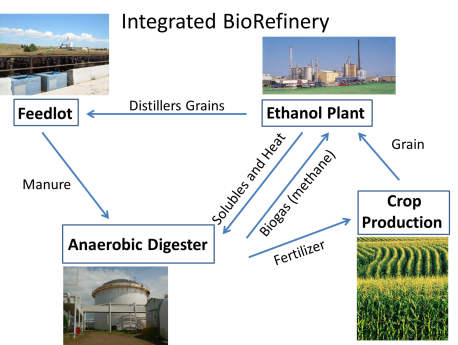
The concept of utilizing feedlot manure in an anaerobic digester to power an ethanol plant, which then produces feed for cattle, has been called a closed loop system.  In this system inputs are minimized and outputs are used by another component.  This research looked at differences in manure quality within this system.  Trial 1 considered incorporating distillers grains into the cattle diet and the effects on methane potential of the manure.  For this system to be utilized by the feedlot industry in Nebraska, the manure collected for anaerobic digestion must be collected from soil-based open feedlot pens which account for over 95% of the feedlot cattle raised in Nebraska.  Trial 2 addressed the methane potential of open-lot feedlot manure and its feasibility for anaerobic digestion.

An integrated biorefinery utilizes distillers grains for cattle feed and cattle manure for biogas generation to power an ethanol plant.  This system has been referred to as a “closed loop” system due to energy recycling within the segments.

What Did We Do?

Seven continuously stirred anaerobic digesters were used to compare degradation of manure from 2 cattle diets (Trial 1) and 2 cattle housing methods (Trial 2).  In Trial 1 manure was collected from confinement cattle on a control diet with 82.5% dry rolled corn or 40% of the corn was replaced with wet distillers grains plus solubles (WDGS), a byproduct of the ethanol industry.  For Trial 2, manure was collected from cattle in complete confinement or soil-based open feedlot pens with all cattle on a similar byproduct diet.  In both trials, organic matter (OM) degradation and methane production was measured for digesters on each treatment.  In Trial 1, samples of effluent removed from the digesters were also used to identify differences in microbial community structure (Eubacterial and Archaeal) due to treatment.

What Have We Learned?

Trial 1.  Organic matter degradation was slightly improved for manure from cattle fed WDGS (P = 0.10).  Methane production was 0.137 L/g OM fed for WDGS manure and 0.116 L/g OM fed for the corn-based diet (P = 0.05).  Microbial communities identified using 454-pyrosequencing revealed structuring of the microbial community based on diet (P < 0.001).  This suggests that the microbial food chain that contributes to methane production is greatly influenced by the diet fed to cattle, and dietary manipulation may provide opportunities to increase or decrease methane production from cattle manure.

Trial 2.  Manure collected from open-lot pens had an OM content of 26% compared to 88% for manure from complete confinement.  This resulted in decreased methane production and OM degradation (P < 0.01) for digesters fed open-lot manure.  However, methane was produced from open-lot manure suggesting that if ash buildup can be avoided open lot manure may be a viable feedstock for anaerobic digestion.

Future Plans

We are currently exploring new technologies that may enhance the use of open lot manure in anaerobic digestion.  We are also identifying key microbes involved in methane production in order to better understand how things such as cattle diet affect methane production.

Authors

Andrea Watson, graduate student, University of Nebraska awatson3@unl.edu

Samodha Fernando, assistant professor, University of Nebraska

Galen Erickson, professor, University of Nebraska

Terry Klopfenstein, professor, University of Nebraska

Additional Information

A summary of these trials is available at beef.unl.edu/reports; 2013 Beef Report pg. 98-99.

Acknowledgements

Funding provided by Nebraska Center for Energy Sciences Research

The authors are solely responsible for the content of these proceedings. The technical information does not necessarily reflect the official position of the sponsoring agencies or institutions represented by planning committee members, and inclusion and distribution herein does not constitute an endorsement of views expressed by the same. Printed materials included herein are not refereed publications. Citations should appear as follows. EXAMPLE: Authors. 2013. Title of presentation. Waste to Worth: Spreading Science and Solutions. Denver, CO. April 1-5, 2013. URL of this page. Accessed on: today’s date.

Money from Something: Carbon Market Developments for Agriculture

Waste to Worth: Spreading science and solutions logoWaste to Worth home | More proceedings….

Abstract

* Presentation slides are available at the bottom of the page.

For more than a decade, the potential to earn revenue from climate-saving activities in agriculture has been touted throughout farm-related industries. This presentation will assume a basic knowledge of the concept of carbon markets as a kind of ecosystem service market. The focus will instead be put on current market opportunities and the importance of learning from past mistakes. Included in the discussion will be carbon offset opportunities for methane capture from manure digesters and composting and nitrous oxide reduction from controls on nitrogen fertilization. Participants will learn about voluntary and compliance market opportunities and the value of offsets versus transactions costs in today’s markets. Sources of market information will also be discussed.

Topics:

  • Ecosystem services markets: Carbon credits and more.
  • Types of offsets relevant to livestock and crop producers (e.g., methane and nitrous oxide).
  • Rules of the road: How to read the key parts of project protocols.
  • Once and future markets: Consider the differences between voluntary and compliance markets.
  • Show us the money: Have any producers really made money from carbon markets?

Purpose

During the past decade, the potential to earn revenue from greenhouse gas reductions in agriculture, especially from anaerobic digestion projects, generated some enthusiasm for this emerging ecosystem market. In 2005, dairies in Washington and Minnesota received the first carbon credit payments for their digesters through the Chicago Climate Exchange (CCX), a pilot cap-and-trade market established in 2003. With the failure of the 111th Congress to complete passage of a national cap-and-trade law in the summer of 2010, the CCX closed shop. What has happened since that time? What is the potential today for livestock producers to benefit from carbon markets or carbon pricing? We look at current markets and summarize the opportunities.

What Did We Do?

The Washington State University (WSU) Energy Program monitors technology, policy and market developments about anaerobic digestion as part of its land-grant mission to support industry and agriculture in Washington state. Because of the potential value of digesters to dairy producers, we follow developments in a wide range of existing and potential ecosystem markets, including renewable energy and fuels, carbon/GHGs, nutrients, and water. Preparation for this presentation included surveys of academic and popular literature, interviews with project developers and market insiders, and analysis of the participation in carbon trading by existing livestock digester projects in the U.S.

What Have We Learned?

The existing landscape of livestock anaerobic digestion projects illustrates three major types or models of carbon market finance: utility-based programs, voluntary carbon markets and compliance-based cap-and-trade markets.

Utility-Based Opportunities

Vermont is home to at least 15 operational dairy-based digesters. Only two digesters serve farms with more than 2,000 cows. Of the balance, about half are below and half above 1,000 cows. All of the Vermont digesters produce renewable electricity and participate in one or more utility-based incentive programs. One example is the Vermont’s Sustainably Priced Energy Enterprise Development (SPEED) program, which establishes standard offer contracts between utilities and renewable energy project developers. The goal of the SPEED program is to support in-state production of renewable power from hydro, solar PV, wind, biomass, landfill gas and farm methane with an overall portfolio target of 20 percent by 2017.

A key mechanism of the program is the long-term (20-year) Standard Offer contract and default pricing for the different types of renewable power. Default prices were calculated to allow developers to recover their costs with a positive return on investment. The default prices established for the first two rounds of farm methane projects were $0.16/kWh and $0.14/kWh, respectively. This compares to an average retail price of $0.146/kWh for electricity in the state. The default prices do not account for the environmental attributes of the green power for farm methane projects.

Many of the Vermont digesters participate in the Cow Power Program, established by  the former Central Vermont Public Service (CVPS), now a part of Green Mountain Power, in 2004. The Cow Power Program offers customers the opportunity to purchase the environmental attributes (renewable energy and GHG reduction) from participating dairy digester projects at a rate of $0.04/kWh. This value was passed along to the suppliers of the dairy-based green power.

These two Vermont programs continue to operate in tandem and provide maximum benefit to Vermont’s diary digester projects. By one estimate, customers participating through the Cow Power program have provided to dairy digester operators more than $3.5 million in value for the environmental attributes created in the past eight years.

Other examples of this type of type of utility-based standard offer or incentive pricing for farm power can be found in North Carolina and Wisconsin.

Voluntary Carbon Offsets Opportunities

Voluntary carbon markets are built on decisions by utilities, corporations, and other businesses to offset their carbon footprint impacts through the purchase of third-party verified carbon credits. While the voluntary carbon market has suffered ups and downs, especially during the recent economic downturn, corporations continue to respond to pressures such as corporate stewardship policies or carbon disclosure programs that require accounting for environmental and greenhouse gas impacts. 

The voluntary market is inhabited by both nonprofit and for-profit organizations that bring sellers and buyers together. The types and value of offsets are more varied, depending on the appetites and budgets of the buyers.

For example, the voluntary carbon market has been a preferred option for Washington-based Farm Power, which has agreements with The Carbon Trust (Portland, OR) and Native Energy (Burlington, VT) for carbon credits generated from the capture and destruction of methane from its farm digester projects in Washington state. Both The Carbon Trust and Native Energy use designated registries and protocols, such as the Carbon Action Registry (CAR) or Verified Carbon Standard (VCS), as the vehicle through which credits are registered, verified, and eventually retired on behalf of their customers.

The Climate Trust – Retires registered carbon offsets on behalf of at least five Oregon-based utilities that are required by state law to offset the GHG impacts that occur from installing new power plants in the state. The Trust also sources offsets for the Smart Energy program created by NW Natural as an opportunity for customers to support production of “carbon-neutral” natural gas through farm-based biodigesters.

Native Energy – Has a diverse base of individual and business customers. They source carbon offsets for a wide range of large, environmentally conscious businesses, such as eBay, Stonyfield Farm, Brita, and Effect Partners, who provided some funding up front for offsets from Farm Power’s Rainier Biogas project. Offset values vary widely depending on demand, supply, and the “value” of the project’s story. In a few cases, offset values may loosely track the prices for compliance-grade carbon offsets with a discount for funding provided in advance of project implementation.

Compliance Cap-and-Trade Offsets Opportunities

Finally, the compliance market opportunity refers to cap-and-trade programs established by state governments to reduce GHG pollution. These are formal regulatory systems. The government establishes caps on GHGs for targeted sources and issues permits or allowances that are distributed, sold, or auctioned to regulated entities for each ton of emissions they generate. Allowances are typically tradable instruments, so entities can easily manage their allowance needs and accounts. The goal of cap-and-trade systems is to use market-based mechanisms to achieve pollution reductions at the lowest possible cost and with the least disruption to the economy.

Systems might also allow covered entities to use offsets generated voluntarily by non-covered entities to meet some portion of their emission reduction target. Allowed offsets are generated using approved protocols, verified by approved third-party verifiers, and registered/sold through approved registries. 

Two domestic cap-and-trade programs survived the past decade and are in operation today—the Regional Greenhouse Gas Initiative (RGGI), which involves nine Northeastern states, and the California market, established by Assembly Bill 32 (AB 32) and administered by the California Air Resources Board (CARB). Each of these systems operates under its own sets of rules.

The table below highlights features of these two market approaches.

Regional Greenhouse Gas Initiative (RGGI)

AB 32 – California Market

Nine states: Connecticut, Delaware, Maine, Maryland, Massachusetts, New Hampshire, New York, Rhode Island, and Vermont

California only (may establish a market connection with Ontario, Canada)

Covers the electricity sector: 200 power plants

Covers power and industrial entities that generate more than 25,000 metric tons of CO2e annually; will expand to include the transportation fuel sector in 2015

Allowances based on U.S. short tons of CO2

Allowances based on metric  tons of CO2

Allowances are auctioned

Allowances are auctioned, with a minimum floor price of $10/MtCO2e

Offsets are very limited – few types, very strict rules, only 3% of compliance allowed

Offsets are allowed in four categories: livestock methane, forestry, urban forestry, and ozone-depleting substances; entities may use offsets for up to 8% of their compliance obligation

Current auction prices: ~ $2.00

Current auction prices: ~$13.50; offset values are estimated to lag allowance prices by about 25%


Among farm digester project developers, interest in the California market is guarded. Agricultural methane capture and destruction is one of just four approved offset categories. The demand for these offsets could become strong, and the rules allow projects from any state to participate. On the other hand, the costs for monitoring equipment can be significant, $15,000 or more for start up, with similar sums every year for verification and registration.  These monitoring and transaction costs will tend to favor projects with larger livestock numbers (1,500+ dairy animal units, or AUs). To date, 60 existing digester projects have listed with the Climate Action Registry—a first step to participation in the California market. Of these projects, 36 have registered more than 800,000 verified carbon credits.

Conclusions:

Values for carbon (i.e., GHG reductions) can be observed in the marketplace and measured in terms of market goodwill or as prices for environmental attributes or carbon credits from voluntary and compliance markets.

Developers of smaller farm digester projects (<1,500 AUs) may find their best value through utility-based incentive programs or through participation in voluntary carbon markets.

Developers of larger farm digester projects (>1,500 AUs) should explore the potential costs and benefits of registering to participate as an offset project in the California carbon market.

Future Plans

The WSU Energy Program will continue to monitor market developments related to this topic and encourage livestock producers to consider methane capture and anaerobic digestion as means to control odors, manage nutrients, and produce valuable biogas resources.

Authors

Jim Jensen, Sr. Bioenergy and Alternative Fuel Specialist, Washington State University Energy Program jensenj@energy.wsu.edu

Additional Information


The authors are solely responsible for the content of these proceedings. The technical information does not necessarily reflect the official position of the sponsoring agencies or institutions represented by planning committee members, and inclusion and distribution herein does not constitute an endorsement of views expressed by the same. Printed materials included herein are not refereed publications. Citations should appear as follows. EXAMPLE: Authors. 2013. Title of presentation. Waste to Worth: Spreading Science and Solutions. Denver, CO. April 1-5, 2013. URL of this page. Accessed on: today’s date.
Influence of Swine Manure Application Method on Concentrations of Methanogens and Denitrifiers in Agricultural Soils

Waste to Worth: Spreading science and solutions logoWaste to Worth home | More proceedings….

Abstract

Soil microbial communities have been proposed as indicators of soil quality due to their importance as drivers of global biogeochemical cycles and their sensitivity to management and climatic conditions. Despite the importance of the soil microbiota to nutrient transformation and chemical cycling, physio-chemical properties rather than biological properties of soils are traditionally used as measures of environmental status. In general, much is unknown regarding the effect of management fluctuations on important functional groups in soils systems (i.e., methanogens, nitrifiers and denitrifiers). It is only recently that it has been possible, through application of sophisticated molecular microbiological methods, to sensitively and specifically target important microbial populations that contribute to nutrient cycling and plant health present at the field-scale and in differentially managed soil systems.

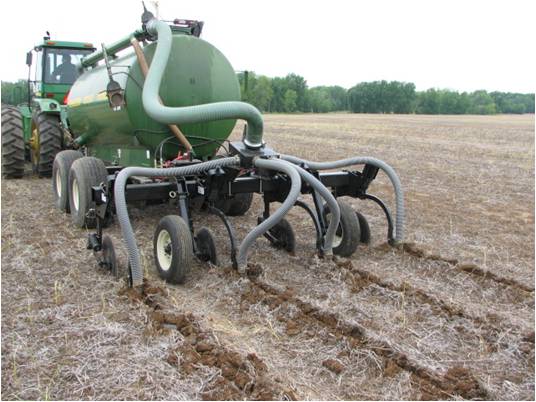
Fig. 1. Swine slurry surface application.

In this study, quantitative, real-time PCR (qPCR) was used to quantify changes in denitrifiers (narG) and methanogens (mcrA) in agricultural soils with three different swine effluent application methods including surface application, direct injection, and application in combination with soil aeration. Results show that concentrations of bacteria were high in all treatments (2.9 ± 1.4 X 10⁹ cells per gram of soil); about 25% higher than in controls with no slurry added. Concentrations of methanogens and denitrifiers were slightly higher (around 50%) when slurry was applied by injection or aeration (5.3 ± 2.4 X 10⁷ cells and 2.8 ± 1.8 X 10⁷ cells per gram of soil, respectively) as compared to no till  (2.4 ± 1.6 X 10⁷ cells and 1.6 ± 1.0 X 10⁷ cells per gram of soil, respectively).

These results suggest that application method has little influence on concentrations of functional groups of microorganisms. These results will be discussed in light of results of GHG sampling conducted during the same study.

Fig. 2. Swine slurry application by direct injection.

Why Study Greenhouse Gases and the Manure-Soil Interaction?

Although agricultural production has been identified as a significant source of green house gas (GHG) emissions, relatively little scientific research has been conducted to determine how manure management strategies effect GHG production upon land application. Even fewer studies have taken into consideration the microorganisms associated with applied manures. Microbial communities are responsible for nutrient transformation and chemical cycling in soil systems and many important functional groups (i.e., methanogens, nitrifiers and denitrifiers) are extremely sensitive to environmental management and climate conditions. The goal of this study was to evaluate how swine slurry land application methods effect microbial communities associated with nitrogen cycling and GHG production.

Fig. 3. Swine slurry application in combination with soil aeration.

What Did We Do?

We used molecular microbial methods to quantify changes in nitrifiers (amoA), denitrifiers (nirK, nosZ and narG) and methanogens (mcrA) in agricultural soils receiving swine slurry applied by (A) surface application (Fig. 1) (B) direct injection (Fig. 2) or (C) application in combination with soil aeration (Fig. 3). Soil samples were taken from triplicate plots 13 days after effluent application.

Above – Fig. 4. Concentration of methanogens (mcrA) and nitrate reducing bacteria (narG) as measured by quantitative, real-time PCR analysis of targeted genes (in parentheses). Swine slurry was applied by three methods surface, direct injection (Inj) or in combination with aeration (Aer). Chemical fertilizer (Fert) and plots with no fertilizer (Control) were also included. Initial slurry was removed before application. Cells in soils from plots with surface applied slurry were sampled at two depths (1.3 cm and 5.1 cm). Error bars represent the standard deviation of triplicate plot samples.
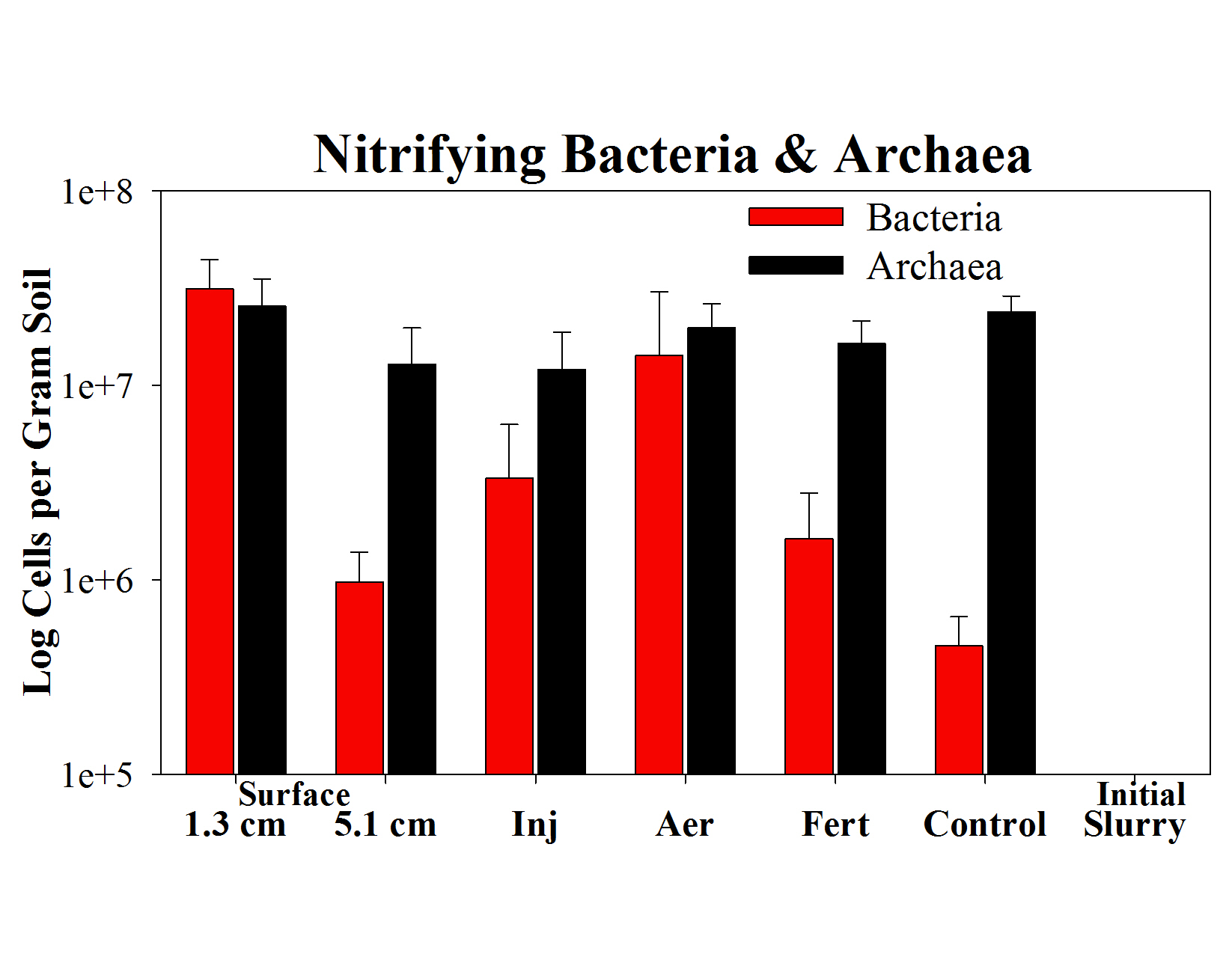
Below – Fig. 5. Concentration of nitrifying bacteria or archaea as measured by quantitative, real-time PCR analysis of the amoA specific for each group. Swine slurry was applied by three methods surface, direct injection (Inj) or in combination with aeration (Aer). Chemical fertilizer (Fert) and plots with no fertilizer (Control) were also included. Initial slurry was removed before application. Cells in soils from plots with surface applied slurry were sampled at two depths (1.3 cm and 5.1 cm). Error bars represent the standard deviation of triplicate plot samples.

What Have We Learned?

  1. Sampling cell concentrations at different soil depths (1.3 cm or 5 cm) from plots with surface applied slurry significantly influenced results (Fig. 4, Fig. 5 and Fig 6).
  2. Slurry applied by any method significantly increased (7 logs) concentrations of nitrate reducing bacteria and methanogens (Fig 4). Methanogens were present in the slurry while nitrate reducers were not measurable in slurry or control plots.
  3. Nitrifying bacteria significantly increased in concentration after slurry addition (i.e. 7, 31, 2 and 68 times higher than control plots for slurry applied by injection, aeration or surface application (1.3 cm and 5 cm), respectively); concentrations of nitrifying archaea did not change from initial levels after slurry addition (Fig. 5).
  4. Concentrations of bacteria, fungi and denitrifiers on plots with slurry applied were two to nine times higher than concentrations in controls with no slurry (Fig. 6).

Future Plans

Findings from this study underscore the importance of measuring both microbial populations and gas production when evaluating the impact of manure application on emissions. Emission data provided important information about the kind and rate of GHG emissions (see reference below for details; Sistani et al (2011) Soil Sci. America J. 74(2): 429-435). However, microbial analyses showed that select groups of nitrifiers and denitrifiers (but not all groups) were affected by manure application. Findings from microbial analyses will be the basis for development of future studies to target and manipulate specific microbial populations in ways that inhibit their ability to produce GHG.

Fig. 6. Change in concentration of targeted population in each treatment relative to that in the control with no slurry or fertilizer added. Concentrations of bacteria (16S RNA gene), fungi (18S RNA gene), nitrite reducing bacteria (nirK) or nitrous oxide reducing bacteria (nosZ) were measured by quantitative, real-time PCR analysis of targeted genes (in parentheses). Swine slurry was applied by three methods surface, direct injection (Inj) or in combination with aeration (Aer). Chemical fertilizer (Fert) and plots with no fertilizer (Control) were also included. Initial slurry was removed before application. Cells in soils from plots with surface applied slurry were sampled at two depths (1.3 cm and 5.1 cm). Error bars represent the standard deviation of triplicate plot samples.

Authors

Dr. Kimberly Cook, Research Microbiologist, USDA Agricultural Research Service, kim.cook@ars.usda.gov

Dr. Karamat Sistani, Research Soil Scientist, USDA Agricultural Research Service

Additional Information

USDA-ARS Bowling Green, KY Location Webpage: http://www.ars.usda.gov/main/site_main.htm?modecode=64-45-00-00


Relevant Publications:

Sistani, K.R., Warren, J.G., Lovanh, N.C., Higgins, S., Shearer, S. 2010. Green House Gas Emissions from Swine Effluent Applied to Soil by Different Methods. Soil Sci. America J. 74(2): 429-435.

Acknowledgements

We would like to thank Jason Simmons and Rohan Parekh for valuable technical assistance. This research is part of USDA-ARS National Program 214: Agricultural and Industrial By-products

The authors are solely responsible for the content of these proceedings. The technical information does not necessarily reflect the official position of the sponsoring agencies or institutions represented by planning committee members, and inclusion and distribution herein does not constitute an endorsement of views expressed by the same. Printed materials included herein are not refereed publications. Citations should appear as follows. EXAMPLE: Authors. 2013. Title of presentation. Waste to Worth: Spreading Science and Solutions. Denver, CO. April 1-5, 2013. URL of this page. Accessed on: today’s date.

Manure management and temperature impacts on gas concentrations in mono-slope cattle facilities

Waste to Worth: Spreading science and solutions logoWaste to Worth home | More proceedings….

Why Study Air Emissions from Mono-slope Beef Barns?

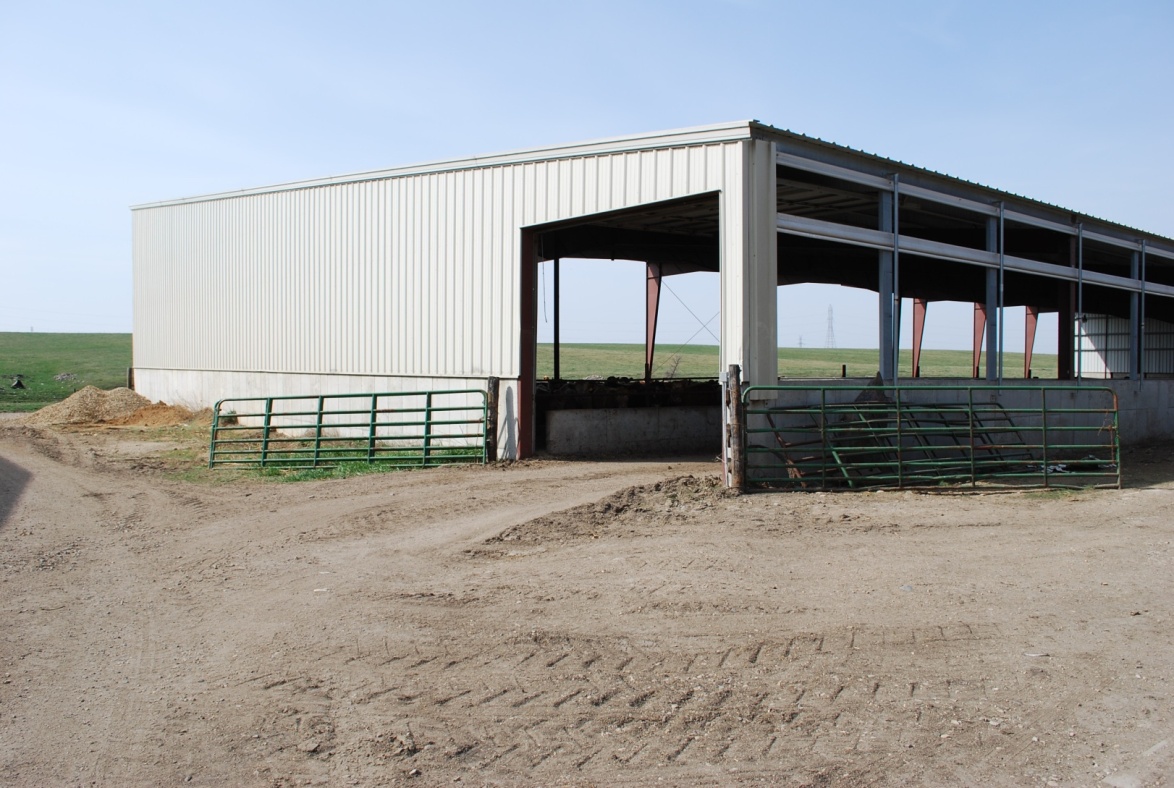
Mono-slope buildings (Figure 1) are one type of roofed and confined cattle feeding facility that is becoming increasingly popular in the Northern Great Plains. However, little is known about the impact of these housing systems and associated manure management methods on the air quality inside and outside the barn.  The objective of this study was to determine gas concentrations in mono-slope beef cattle facilities and relate these concentrations to environmental and manure management factors.

Figure 1. View of a monoslope cattle facility from the northeast. Adjustable curtains in the rear (north) wall are used to limit airspeed through the barn during colder weather.

What Did We Do?

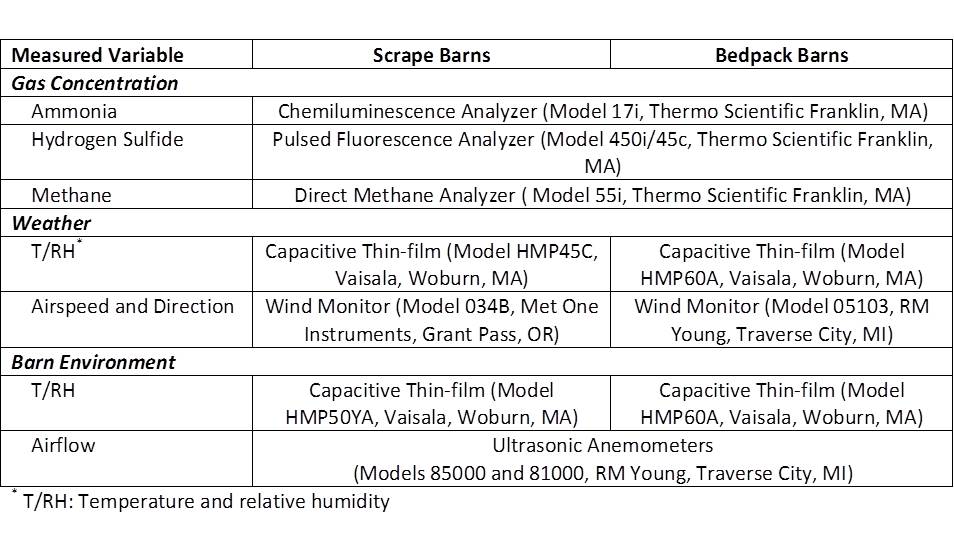
Four producer-owned and operated beef deep-bedded mono-slope facilities were selected for monitoring. Two barns maintained deep-bedded manure packs (Bedpack), whereas two barns scraped manure and bedding from the pens weekly (Scrape). Each site was monitored continuously for one month each quarter for two years to capture both daily and seasonal variations. At each facility, the environment-controlled instrument trailer and associated equipment were located adjacent to the barn. The trailer contained:  a gas sampling system (GSS) that consisted of Teflon tube sample lines connected to a computer-controlled sampling manifold, gas analyzers, computer, data acquisition system, calibration gas cylinders, and other supplies. In addition to the sampling lines, there were environmental instruments to measure the airflow and weather conditions for two pens in each barn. The analyzers and sensors used are summarized in Table 1.

Table 1. Analyzers and sensors used for air quality and environmental monitoring

Ammonia, hydrogen sulfide and methane concentrations were sequentially sampled from two south wall locations and three north wall locations per pen. The maximum hourly mean concentrations measured at the north or south wall of either pen in the barn were used in this analysis. The seasonal average hourly means of maximum concentrations and corresponding environmental variables were calculated.

What Have We Learned?

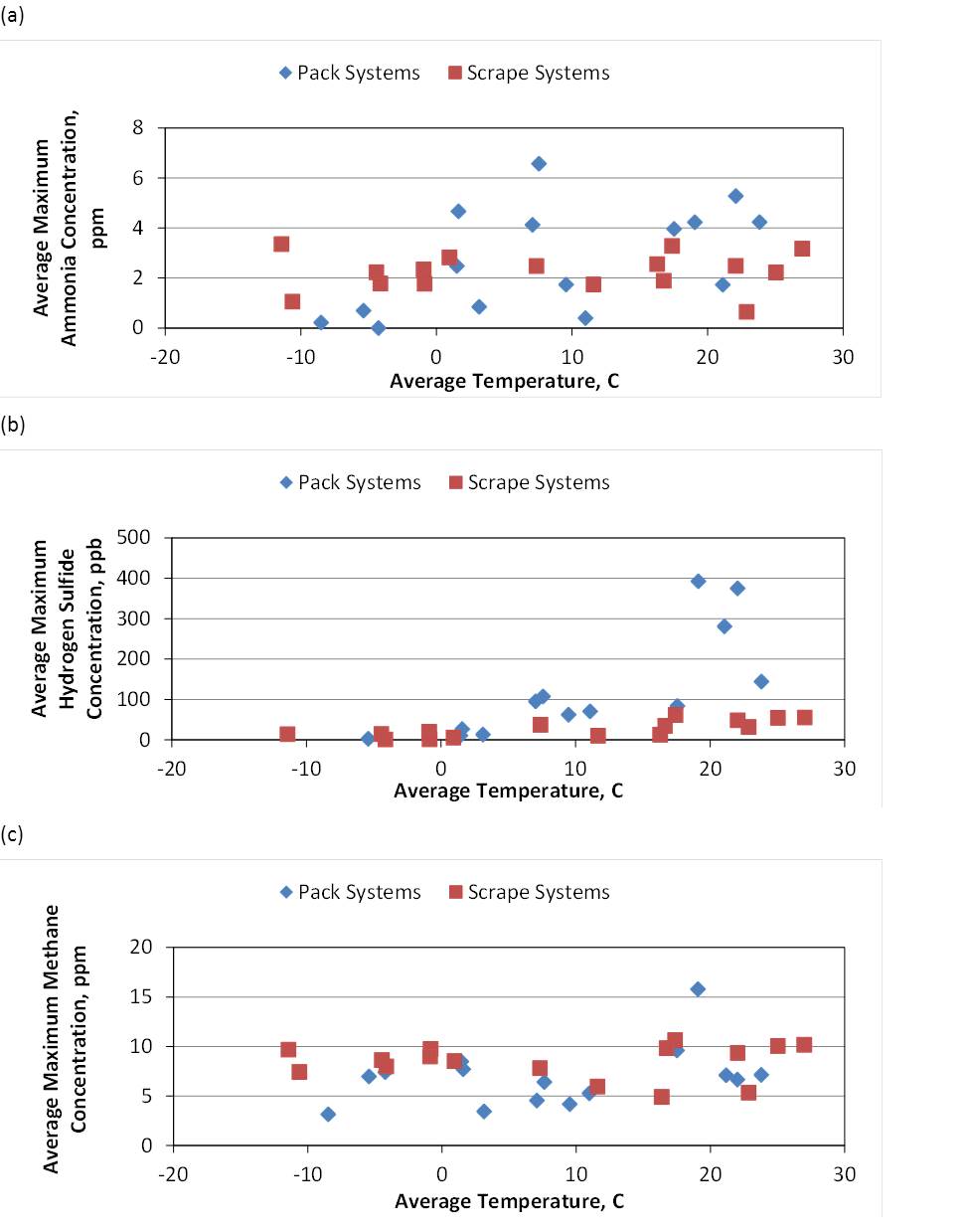
Figure 2. Seasonal averages of maximum hourly mean ammonia (a), hydrogen sulfide (b) and methane (c) concentrations for the bedpack and scrape manure management systems monitored in four monoslope cattle facilities, as influenced by ambient temperature.

The seasonal average hourly maximum ammonia concentration ranged from 0.6 to 3.3 ppm with the Scrape barns and from 0.2 to 7.1 ppm with the Bedpack barns (Fig 2a). The range of maximum hydrogen sulfide concentrations was 0 to 61 ppb in the Scrape barns and 0 to 392 ppb in the Bedpack barns (Fig 2b). The maximum methane concentration ranges were 4.9 to 10.6 and 3.1 to 15.8 ppm in the Scrape and Bedpack barns, respectively (Fig 2c). There are indications of differences between gas release rates for bedpack and scrape manure management systems and increased release rates with temperature for ammonia and hydrogen sulfide. Methane concentrations were more consistent between systems and for different temperature conditions.

This project expands the knowledge base of gaseous concentrations from deep-bedded beef barns. This integrated project also provides management techniques that producers can implement to minimize emissions, and improve air quality.

Future Plans

Emission values will be calculated using these concentration data, in conjunction with airflow data, which also varies with site and temperature conditions.

Authors

Erin L. Cortus, Assistant Professor, South Dakota State University, erin.cortus@sdstate.edu

Md Rajibul Al Mamun, Graduate Research Assistant, South Dakota State University

Ferouz Y. Ayadi, Graduate Research Assistant, South Dakota State University

Mindy J. Spiehs, Research Animal Scientist, USDA ARS Meat Animal Research Center

Stephen Pohl, Professor, South Dakota State University

Beth E. Doran, Extension Beef Program Specialist, Iowa State University Extension and Outreach

Kris Kohl, Extension Ag Engineer Program Specialist, Iowa State University Extension and Outreach

Scott Cortus, Engineering Research Technician, South Dakota State University

Richard Nicolai, Associate Professor (Retired), South Dakota State University

Additional Information

Acknowledgements

Project funded by Agriculture and Food Research Initiative Competitive Grant no. 2010-85112-20510 from the USDA National Institute of Food and Agriculture. Technical assistance provided by Alan Kruger, John Holman, Todd Boman, and Bryan Woodbury.

The authors are solely responsible for the content of these proceedings. The technical information does not necessarily reflect the official position of the sponsoring agencies or institutions represented by planning committee members, and inclusion and distribution herein does not constitute an endorsement of views expressed by the same. Printed materials included herein are not refereed publications. Citations should appear as follows. EXAMPLE: Authors. 2013. Title of presentation. Waste to Worth: Spreading Science and Solutions. Denver, CO. April 1-5, 2013. URL of this page. Accessed on: today’s date.

Effects of Corn Processing Method and Dietary Inclusion of Wet Distillers Grains with Solubles (WDGS) On Enteric Methane Emissions of Finishing Cattle

Waste to Worth: Spreading science and solutions logoWaste to Worth home | More proceedings….

Abstract

The use of wet distiller’s grains with solubles (WDGS) in feedlot diets has increased as a result of the growing U.S. ethanol industry.  However, few studies have evaluated the use of WDGS in finishing diets based on steam-flaked corn (SFC), the processing method used extensively in the Southern Great Plains.  The effects of corn processing method and WDGS on enteric methane (CH4) production, carbon dioxide (CO2) production and energy metabolism were evaluated in two respiration calorimetry studies.  In Exp. 1, the effects of corn processing method (SFC or dry rolled corn – DRC) and WDGS inclusion (0 or 30% of diet dry matter- DM) were studied using a 2 x 2 factorial arrangement of treatments and four Jersey steers in a 4 x 4 Latin square design.  In Exp. 2, the effects of WDGS inclusion rate (0, 15, 30, or 45% of diet DM) on CH4 and CO2 production were measured in a 4 x 4 Latin square design. Results indicate that cattle consuming SFC-based diets produce less enteric CH4 and retain more energy than cattle fed  DRC-based diets.  When dietary fat levels were held constant, dietary inclusion of WDGS at 15% of diet DM did not affect enteric CH4 production, WDGS inclusion at 45% of diet DM significantly increased enteric CH4 production and WDGS inclusion at 30% of diet DM had variable effects on enteric CH4 production.

Purpose

Our objectives were to determine the effects of corn processing method and WDGS inclusion rate on enteric methane losses from finishing cattle using respiration calorimetry.

What Did We Do?

Steer in open circuit respiration calorimetry chamber.

Eight steers were used in two studies.  In each study steers were fed one of four diets at 2 x maintenance energy requirements in a 4 x 4 Latin square design.  Each period of the Latin squares included a 16 d adaptation period followed by 5 days of total fecal and urine collection and measurement of gas exchange in respiration chambers.  In Experiment 1 dietary treatments consisted of corn processing method (steam flaked -SFC or dry rolled -DRC) and WDGS inclusion rate (0 or 30% of DM).  All diets were balanced for ether extract.   In Exp. 2, cattle were fed SFC-based diets containing 0, 15, 30 or 45% WDGS (DM basis).  The calorimetry system consisted of 4 chambers with an internal volume of 6500 L.   Outside air was pulled through chambers using a mass flow system.  Gas concentrations were determined using a paramagnetic oxygen analyzer and infrared methane and carbon dioxide analyzers (Sable Systems, Las Vegas, NV)  Data were statistically analyzed using the Mixed procedure of SAS.

What Have We Learned?

In Exp. 1. no iteractions between grain processing method and WDGS inclusion were detected (P > 0.47).  Cattle fed DRC-based diets had greater (P < 0.05) CH4 production (L/steer, L/kg of DMI, % of gross energy intake, and % of digestible energy intake) than cattle fed SFC-based diets probably the result of differences in ruminal fermentation and ruminal pH.  Methane losses as a proportion of GE intake (2.47 and 3.04 for SFC and DRC-based diets, respectively) were similar to previous reports and to IPCC (2006) values but were somewhat lower than EPA (2012) values.  Grain processing method did not affect CO2 production (13 to 14 Kg/d).  WDGS  inclusion rate did not affect CH4 or CO2 production.  In Exp. 2, CH4 production (L/d) increased quadratically (P = 0.03) and CH4 production as L/kg of DMI and as a proportion of energy intake increased linearly (P < 0.01) with increasing concentrations of WDGS in the diet.  Feeding WDGS did not affect (P > 0.23) total CO2 production.  Conclucions: Our results indicate that cattle consuming DRC-based finishing diets produce approximately 20% more enteric CH4 than cattle fed SFC-based diets.  When WDGS comprised 30% or less of the diet and diets were similar in total fat content, feeding WDGS had little effect on enteric CH4 but when fed at higher inclusion rates enteric CH4 production was increased by approximately 40%.

Future Plans

Over 80% of the enteric methane emissions of the U.S. beef cattle herd are produced by cows, calves, and yearling on pasture.  Therefore, additional research will study the effects of supplementation strategies and forage quality on enteric methane production by cattle.

Authors

N. Andy Cole; Research Animal Scientist/Research Leader; USDA-ARS-CPRL, Bushland, TX andy.cole@ars.usda.gov

Kristin E. Hales, Research Animal Scientist, USDA-ARS-MARC, Clay Center, NE

Richard W. Todd, Research Soil Scientist, USDA-ARS-CPRL, Bushland, TX

Ken Casey, Associate Professor, Texas AgriLife Research, Amarillo, TX

Jim C. MacDonald, Associate Professor, Dept. of Animal Science, Univ. of NE, Lincoln

Additional Information

Hales, K. E. , N. A. Cole, and J. C. MacDonald.  2013. Effects of increasing concentrations of wet distillers grains with solubles in steam-flaked corn-based diets on energy metabolism, carbon-nitrogen balance, and methane emissions of cattle. J. Anim. Sci. (in press)

Hales, K. E. , N. A. Cole, and J. C. MacDonald.  2012. Effects of corn processing method and dietary inclusion of wet distillers grains with solubles on energy metabolism, carbon-nitrogen balance, and methane emissions of cattle. J. Anim. Sci. 90:3174-3185.

Acknowledgements

Mention of trade names or commercial products in this article is solely for the purpose of providing specific information and does not imply recommendation or endorsement by the USDA.  USDA is an equal opportunity provider and employer.

We wish to thank USDA-NIFA for partial funding through Project # TS-2006-06009 entitled “Air Quality: Odor, Dust and Gaseous Emissions from Concentrated Animal Feeding Operations in the Southern Great Plains”

The authors are solely responsible for the content of these proceedings. The technical information does not necessarily reflect the official position of the sponsoring agencies or institutions represented by planning committee members, and inclusion and distribution herein does not constitute an endorsement of views expressed by the same. Printed materials included herein are not refereed publications. Citations should appear as follows. EXAMPLE: Authors. 2013. Title of presentation. Waste to Worth: Spreading Science and Solutions. Denver, CO. April 1-5, 2013. URL of this page. Accessed on: today’s date.
Greenhouse Gas Emissions From Land Applied Swine Manure: Development of Method Based on Static Flux Chambers

Waste to Worth: Spreading science and solutions logoWaste to Worth home | More proceedings….

Abstract

A new method was used at the Ag 450 Farm Iowa State University (41.98N, 93.65W) from October 24, 2012 through December 14, 2012 to assess GHG emission from land-applied swine manure on crop land. Gas samples were collected daily from four static flux chambers.  Gas method detection limits were 1.99 ppm, 170 ppb, and 20.7 ppb for CO2, CH4 and N2O, respectively.  Measured gas concentrations were used to estimate flux using four different models, i.e., (1) linear regression, (2) non-linear regression, (3) non-equilibrium, and (4) revised Hutchinson & Mosier (HMR). Sixteen days of baseline measurements (before manure application) were followed by manure application with deep injection (at 41.2 m3/ha), and thirty seven days of measurements after manure application.  

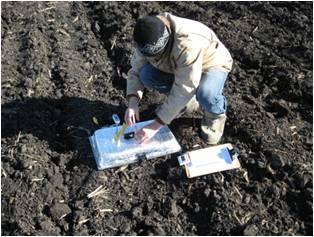
Static flux chamber (pictured) method was developed to measure greenhouse gas emissions from land-applied swine manure from a corn-on-corn system in central Iowa in the Fall of 2012.  Gas samples were collected in vials and transported to the Air Quality Laboratory at Iowa State University campus. 

Why Study Greenhouse Gases and Land Application of Swine Manure?

Assessment of greenhouse gas (GHG) emissions from land-applied swine manure is needed for improved process-based modeling of nitrogen and carbon cycles in animal-crop production systems.

What Did We Do?

We developed novel method for measurement and estimation of greenhouse gas (CO2, CH4, N2O) flux (mass/area/time) from land-applied swine manure. New method is based on gas emissions collection with static flux chambers (surface coverage area of 0.134 m^2 and a head space volume of 7 L) and gas analysis with a GC-FID-ECD.

Baseline (post tilling) greenhouse gas (GHGs) emissions monitoring was followed with swine manure application in the Fall of 2012 (pictured) and about 10 weeks of post-application monitoring of GHGs.

New method is also applicable to measure fluxes of GHGs from area sources involving crops and soils, agricultural waste management, municipal, and industrial waste.  New method was used at the Ag 450 Farm Iowa State Univeristy (41.98 N, 93.65 W) from October 24, 2012 through December 14, 2012 to assess GHG emission from land-applied swine manure on crop (corn on corn) land. Gas samples were collected daily from four static flux chambers. Gas method detection limits were 1.99 ppm, 170 ppb, and 20.7 ppb for CO2, CH4, and N2O, respectively.

What Have We Learned?

Measured gas concentrations were used to estimate flux using four different mathematical models, i.e., (1) linear regression, (2) non-linear regression, (3) non-equilibrium, and (4) revised Hutchinson & Mosier (HMR). Sixteen days of baseline measurements (before manure application) were followed by manure application with deep injection (at 41.2 m3/ha), and thirty seven days of measurements after manure application.   Preliminary net cumulative flux estimates ranged from 115,000 to 462,000 g/ha of CO2, -4.65 to 204 g/ha of CH4, and 860 to 2,720 g/ha N2O.  These ranges are consistent with those reported in literature for similar climatic conditions and manure application method.

Greenhouse gases (GHGs) were analyzed in the Air Quality Laboratory (ISU) using dedicated GHGs gas chromatograph.  The picture above shows an example of gas sample analysis for CO2, GH4 and N2O.  Each ‘peak’ represents one of the tagget GHGs.  Gas concentrations were used in a mathematical model to estimate GHG flux (mass emitted/area/time).

Future Plans

Spring 2013 measurements of GHG flux from land-applied swine manure are planned.  The spring study will follow the protocols developed for the Fall 2012 season.  Estimates of the Spring and Fall GHG flux will be used to develop GHG emission factors for emissions from swine manure in Midwestern corn-on-corn systems.  Emission factors will be compared with literature data.

Authors

Dr. Jacek Koziel, Associate Professor, Iowa State University Department of Agricultural and Biosystems Engineering koziel@iastate.edu

Devin Maurer, Research Associate, Iowa State University Department of Agricultural and Biosystems Engineering

Kelsey Bruning, Undergraduate Research Assistant, Iowa State University Department of Civil, Construction and Environmental Engineering

Tanner Lewis, Undergraduate Research Assistant, Iowa State University Department of Agricultural and Biosystems Engineering

Danica Tamaye, Undergraduate Research Assistant, University of Hawaii College of Agriculture, Forestry, and Natural Resource Management

William Salas, Applied Geosolutions

Acknowledgements

We would like to thank the National Pork Board for supporting this research.


The authors are solely responsible for the content of these proceedings. The technical information does not necessarily reflect the official position of the sponsoring agencies or institutions represented by planning committee members, and inclusion and distribution herein does not constitute an endorsement of views expressed by the same. Printed materials included herein are not refereed publications. Citations should appear as follows. EXAMPLE: Authors. 2013. Title of presentation. Waste to Worth: Spreading Science and Solutions. Denver, CO. April 1-5, 2013. URL of this page. Accessed on: today’s date.

Methane Emissions from Dairy Cattle

Reprinted, with permission, from the proceedings of: Mitigating Air Emissions From Animal Feeding Operations Conference.

This Technology is Applicable To:

Species: Dairy
Use Area: Animal Housing
Technology Category: Diet Modification
Air Mitigated Pollutants: Methane

System Summary

There are a large number of options that can potentially be used to mitigate methane emissions from dairy cattle. The basic result of using these approaches is an improvement in the efficiency of nutrient use in the animal and increased productivity. Methane emissions per unit of milk produced will decrease as a result of these changes. An important component is continuing to improve forage quality. Higher quality forages have higher digestibility in the cow and less methane emissions than lower quality forages. A second approach is to better balance the diet protein and carbohydrate fractions to improve the efficiency of both rumen fermentation and feed nutrient use. Methane emissions will be reduced as a result. There are also opportunities to provide specific feed additives to decrease methane emissions from the cow. Their use is currently limited due to lack of data to demonstrate their efficacy in lactating dairy cows. Ionophores are one feed additive that does have data indicating improved feed efficiency and decreased methane emissions.

Applicability and Mitigating Mechanism

Potential mitigation options include:

  • Improved forage quality
  • Rations balanced to improve efficiency of rumen fermentation
  • Use of ionophores in rations

Limitations

  • Many options will require some financial investment
  • Management changes may be needed
  • Requires a systems approach
  • Feed additives that could be helpful in reducing methane emissions have not been tested in animal trials
  • Cost to benefit ratio cannot be defined for many practices that could be use

Cost

The cost of practices that could be implemented on a dairy farm to reduce methane emissions will be highly farm specific. Each farm will need to evaluate the available mitigation options to determine the best choices for their situation. The costs for implementation will also vary between farms due to differences in their current cost structures. The initial benefits to the farm will be improved efficiency of animal production, efficiency of nutrient use and improved profitability.

Authors

Larry Chase, Cornell University
Point of Contact:
Dr. L.E. Chase, lec7@cornell.edu

The information provided here was developed for the conference Mitigating Air Emissions From Animal Feeding Operations Conference held in May 2008. To obtain updates, readers are encouraged to contact the author.

Gas Impermeable Film and Sheet for Control of Methane and Odors in Agricultural Applications

Reprinted, with permission, from the proceedings of: Mitigating Air Emissions From Animal Feeding Operations Conference.

The proceedings, “Mitigating Air Emissions from Animal Feeding Operations”, with expanded versions of these summaries can be purchased through the Midwest Plan Service.

This Technology is Applicable To:

Species: Swine, Dairy, Beef, Poultry
Use Area: Manure Storage, Manure Treatment
Technology Category: Covers
Air Mitigated Pollutants: Odors, Methane, Ammonia

System Summary

For many years, food packaging has incorporated barrier layers to contain odors, flavors, oils and moisture along with the food contents while excluding contamination and oxygen. Until recently, agricultural films and geomembranes were monolithic structures employing only a single polymer or blend. Recent advances in extrusion and lamination equipment allow the incorporation of these barrier layers in large scale agricultural structures and operations such as floating covers over animal waste storage, containment geomembranes for biogas generation, silage storage and fumigation films.

To view the video in full screen, click the icon second from right on the bottom of the viewer.
Download a copy of this video

Co-extruding a thin layer of ethylene vinyl alcohol (EVOH) in a linear low density polyethylene (LLDPE) geomembrane dramatically reduces the permeability to a wide range of gases and volatile organic carbon molecules including: methane, ammonia, carbon dioxide, oxygen, aromatic hydrocarbons, aliphatic hydrocarbons, methyl bromide and most odorous compounds. Methane permeabilites for four geomembranes are given below.

Methane Permeability (cc/(m2*day))
PVC LLDPE HDPE Barrier LLDPE
0.76 mm (30 mils) 1.0 mm (40 mils) 1.0 mm (40 mils) 0.5 mm (20 mils)
900 690 300 <1

Applicability and Mitigating Mechanism

  • Barrier to noxious gases and odors
  • Useful in cover and containment systems

Limitations

  • EVOH is a crystalline polymer and is not elastic. It is flexible but should not be used as part of an elastomeric structure.

Cost

Engineered floating covers with ballasted weight systems, gas extraction systems and rainwater removal systems costs vary greatly. For waste lagoon of about 1/2 acre in size, the cover system can cost from $150,000 to $200,000. Addition of the barrier layer to the geomembrane adds less than $5,000.

Authors

Gary Kolbasuk, Raven Industries, Engineered Films Division
Point of Contact:
Gary.Kolbasuk@Ravenind.com

The information provided here was developed for the conference Mitigating Air Emissions From Animal Feeding Operations Conference held in May 2008. To obtain updates, readers are encouraged to contact the author.